






















































































In the Olympus of Headphones, Three Visions of Listening • Part One

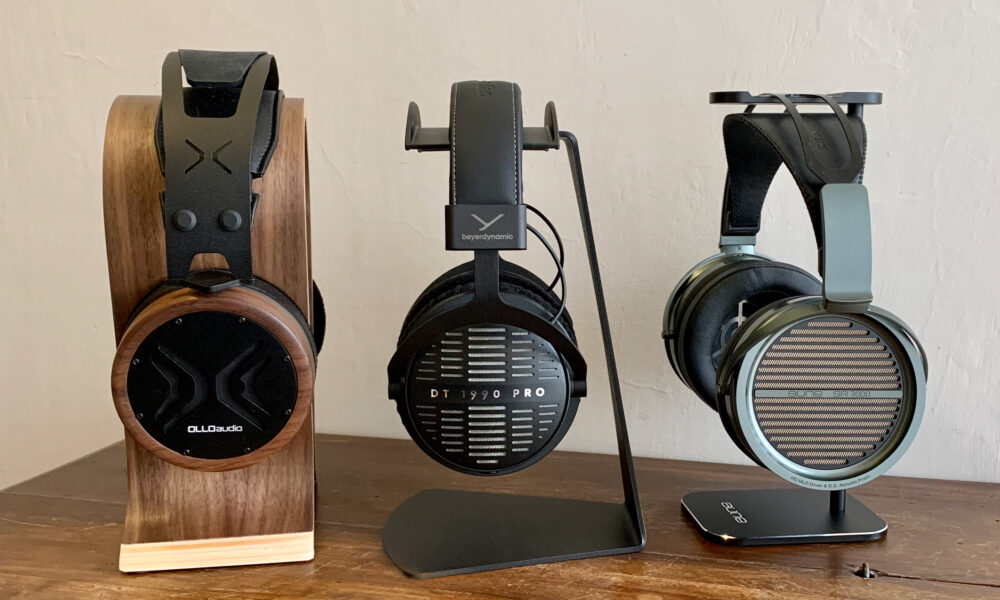
Three different interpretations of music compared, no winners, just clear differences
Table Of Content
- INTRODUCTION
- Context and headphone type
- Test Methodology
- General approach
- Volume matching
- Test conditions
- Reference Setup, Desktop
- Secondary Setup, Scalability
- TEST PLAYLIST
- The headphones involved in the comparison
- Technical specifications comparison
- Packaging
- Case and transport
- OLLO X1
- Beyerdynamic DT 1990 PRO MKII
- AUNE SR7000
- Build quality, materials and comfort
- OLLO X1
- Beyerdynamic DT 1990 PRO MKII
- AUNE SR7000
- Earpads, ergonomics and comfort
- OLLO X1
- Beyerdynamic DT 1990 PRO MKII
- AUNE SR7000
- Accessories and included equipment
- OLLO X1
- Beyerdynamic DT 1990 PRO MKII
- AUNE SR7000
- Design and design philosophy
- OLLO X1
- Beyerdynamic DT 1990 PRO MKII
- AUNE SR7000
- First sound impressions
- Part 1 summary
- Closing thoughts, Part 1
INTRODUCTION
Hello everyone.
Get comfortable, because today we’re taking a trip into the world of high end headphones.
We’re not looking at them individually, instead we’re putting them side by side to understand which nuances and micro differences really separate one from another.
The goal is simple, to understand which one could truly satisfy your ears, depending on your personal taste.
In this comparison we’ll look at several high end headphones, very different products in terms of design, philosophy and sound approach, but all sharing one clear objective, delivering a believable, coherent and engaging listening experience.
This comparison starts exactly from that point.
Not from the idea of deciding which one is the absolute best, but from understanding how they sound, what they do better and who they are really made for.
This is not a competition.
There won’t be a winner.
Every headphone is the result of very specific design choices, and those choices lead to different interpretations of music. The purpose of this comparison is to highlight those differences in a clear and direct way, helping listeners understand which one may suit their personal taste better.
For this reason, the review is divided into two parts.
In this first part we focus on everything tangible, build quality, comfort, accessories and overall design philosophy.
In the second part we’ll move into the actual listening comparison in much greater detail.
Context and headphone type
Before getting into the comparison itself, it’s important to define the context.
All the headphones involved in this test belong to the high end segment of the market, positioned somewhere between upper mid range and premium level.
From a technical standpoint, these are all dynamic driver headphones, so no planar or electrostatic designs, sharing an approach focused on quality listening, both for home use and for more technical applications.
The designs are different, most of the models use an open back design, while one adopts a closed back configuration.
That said, the closed model clearly aims to deliver a more spacious and airy presentation, reducing some of the typical limitations associated with closed back designs.
This difference in design has a direct impact on sound presentation, soundstage and isolation.
All the headphones are fully wired, with no wireless solutions involved, a choice consistent with the goal of maximizing signal quality and maintaining full control over the audio chain.
This means the comparison takes place between products sharing a similar technological foundation, but differing significantly in design philosophy and interpretation of sound.
Test Methodology
General approach
I carried out the comparison through direct A/B listening sessions, rapidly switching between the headphones on the same musical passages, while also spending time with longer sessions to evaluate long term behavior and listening fatigue.
This double approach is essential. Immediate comparison highlights the differences, while extended listening helps reveal the true character of a headphone.
Volume matching
Listening levels were carefully matched.
Even small volume differences can alter the perception of dynamics, detail and presence, so I paid close attention to this aspect in order to avoid misleading results.
I performed the tests across different genres and types of music, allowing the headphones to be evaluated in multiple listening scenarios.
Another important aspect concerns the connection type. Since two of the headphones only support single ended output, I carried out all tests using a 6.3 mm single ended connection, keeping the conditions as consistent as possible throughout the comparison.
Test conditions
All listening sessions were performed in a controlled environment, using lossless audio files with different resolutions, ranging from 44.1 kHz up to 384 kHz.
The goal was to work under stable and repeatable conditions, avoiding external variables that could influence the comparison.
The source used for the tests was a MacBook Air M2, with the music library stored on an external USB-C SSD, ensuring speed, stability and complete independence from network related issues.
This means all playback happens locally, eliminating possible interference caused by streaming services or internet connections.
I connected the Mac to the DAC through a Supra USB-C to USB-B cable.
The connection between the DAC and the headphone amplifier was made using a custom built cable, based on a small gauge shielded dual conductor design, with silver plated Litz conductors derived from aerospace grade wiring.
I also paid close attention to power delivery. The DAC uses its original high quality power supply, while the entire chain is connected to a filtered and shielded HiFi power strip.
Playback was managed through Audirvana 3.0.5, a player capable of optimizing the audio stream while minimizing operating system interference, ensuring a clean and consistent playback experience.
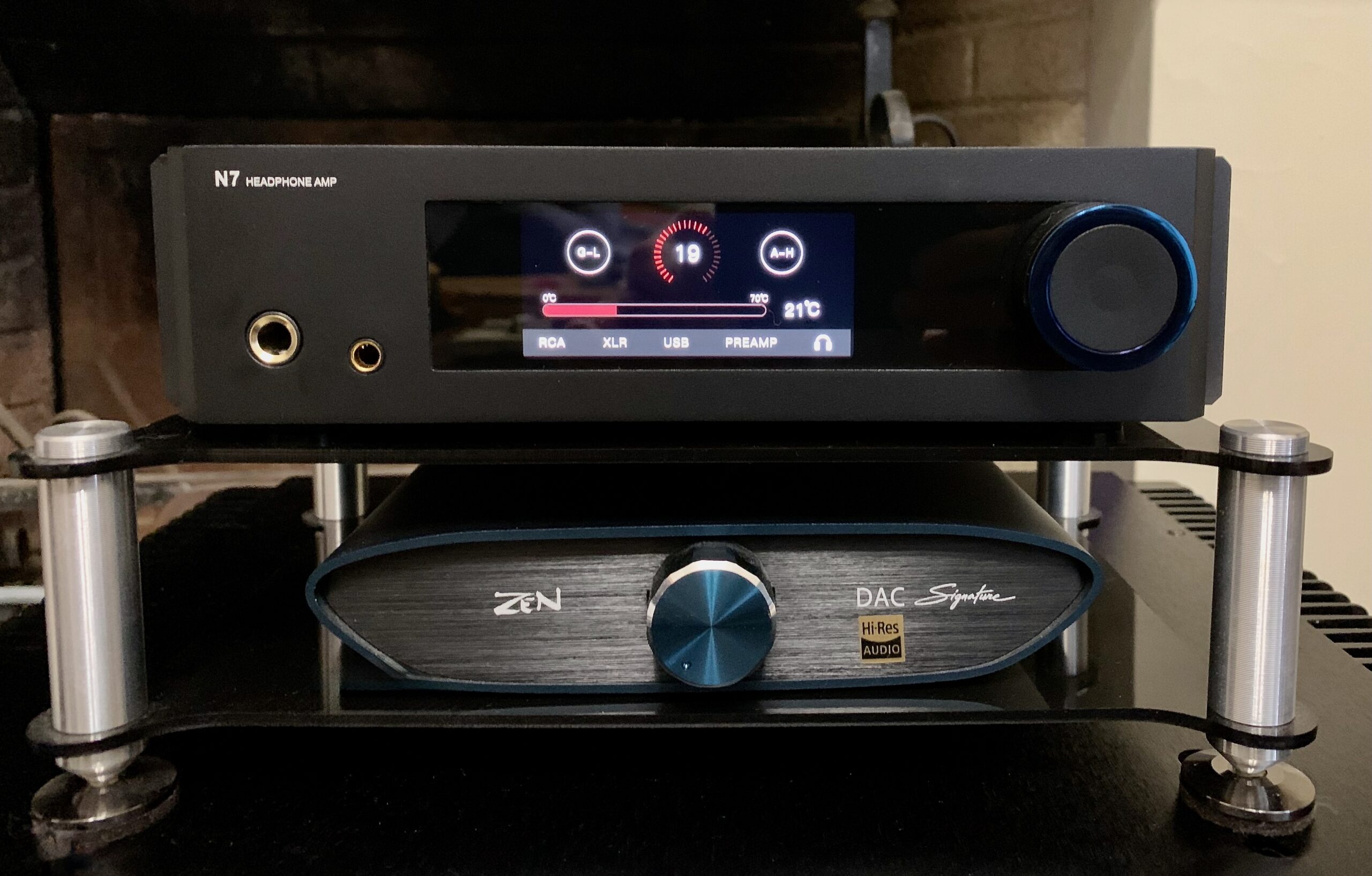
Reference Setup, Desktop
The comparison was carried out using a stable and coherent chain, selected to avoid strong coloration and to guarantee proper control and headroom.
Headphone amplification, AUNE N7, a pure Class A amplifier with a neutral presentation and excellent driving capability.
DAC, iFi Zen DAC Signature V2, a balanced DAC with good transparency and a natural musical presentation.
This configuration represents the main reference setup for the entire comparison.
I chose this chain because it can drive demanding headphones without difficulty, while maintaining a balanced and believable presentation without emphasizing any specific area.
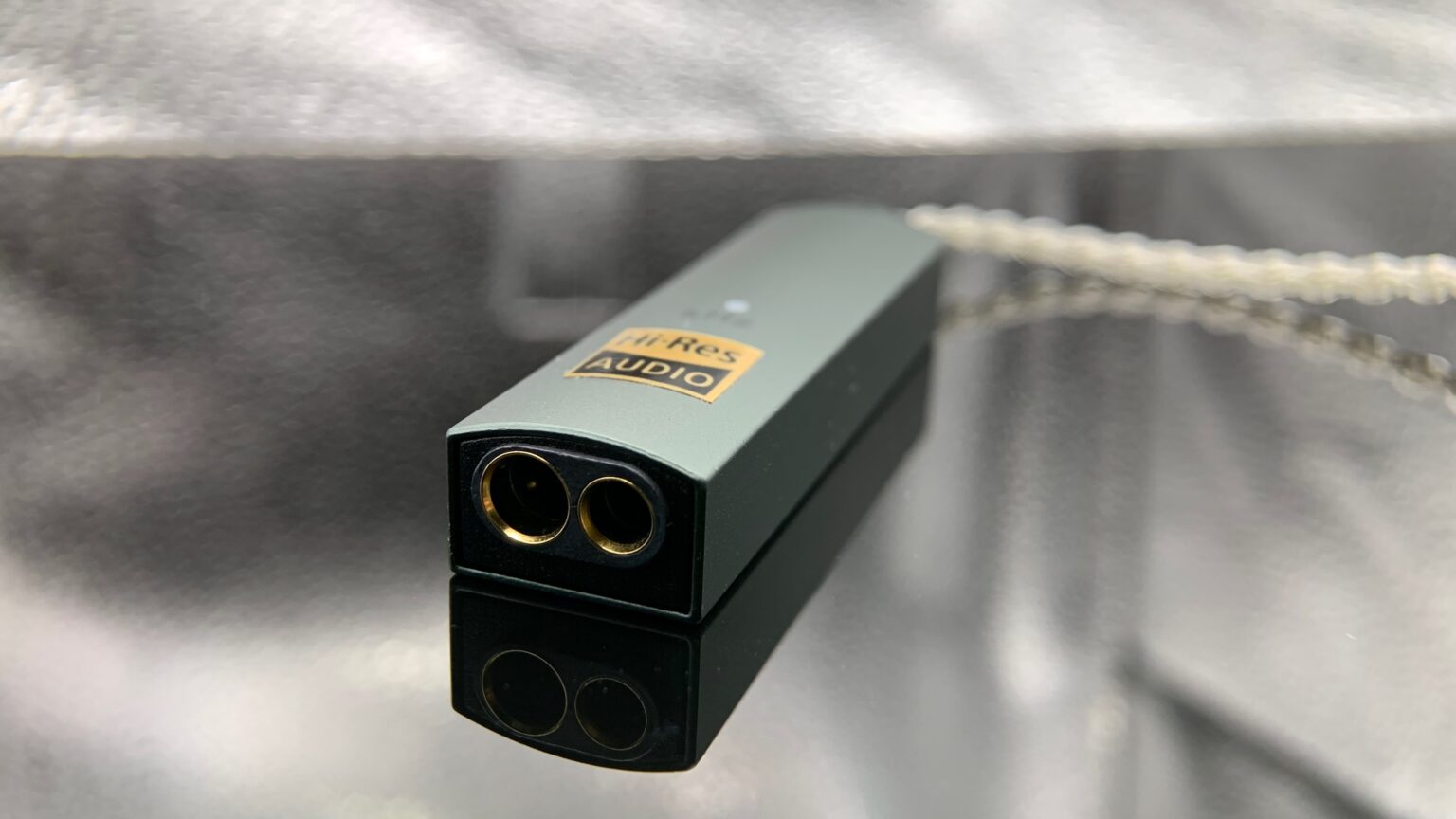
Secondary Setup, Scalability
Alongside the main setup, I also carried out a secondary test using a simpler source, exclusively to evaluate how the headphones scale in a more realistic everyday scenario.
In this case, I used an iPhone 17 as the source, both through Apple Music and Foobar2000, while keeping the same lossless library used for the main setup.
As a portable DAC, I used the iFi GO Link Max, chosen for its relatively neutral presentation and its ability to maintain a coherent sound without introducing strong variations compared to the desktop chain.
The GO Link Max also uses an integrated cable, a solution that minimizes connection related variables and keeps the signal path as stable as possible.
I didn’t use this secondary setup to define absolute sound quality, but rather to understand how well each headphone maintains its own character with a simpler chain, and how much it benefits from a more capable desktop setup.
TEST PLAYLIST
For the comparison, a playlist covering different genres was selected, with the goal of evaluating all the critical areas of listening.
Rock, for dynamics, impact and complexity.
Classical music, for soundstage, depth and layering.
Jazz, for naturalness, micro detail and instrument separation.
Soul and vocal tracks, for timbre and vocal presentation.
Each track was selected with a very specific purpose in mind, helping make the comparison as meaningful and consistent as possible. Some of these tracks are songs I’ve been using for years because I know exactly how they should sound.
The full playlist will be referenced throughout Part Two during the listening analysis.
The headphones involved in the comparison
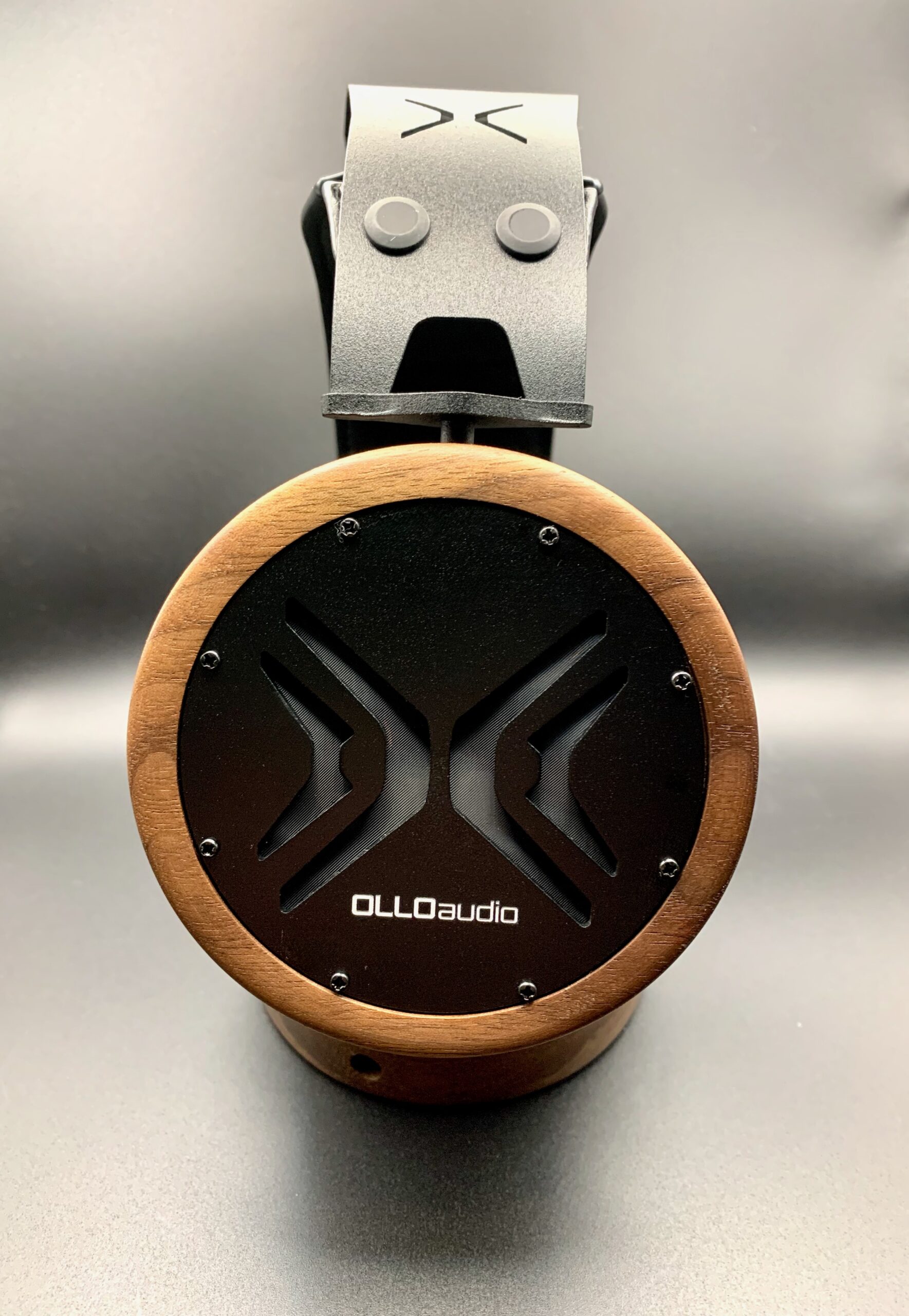
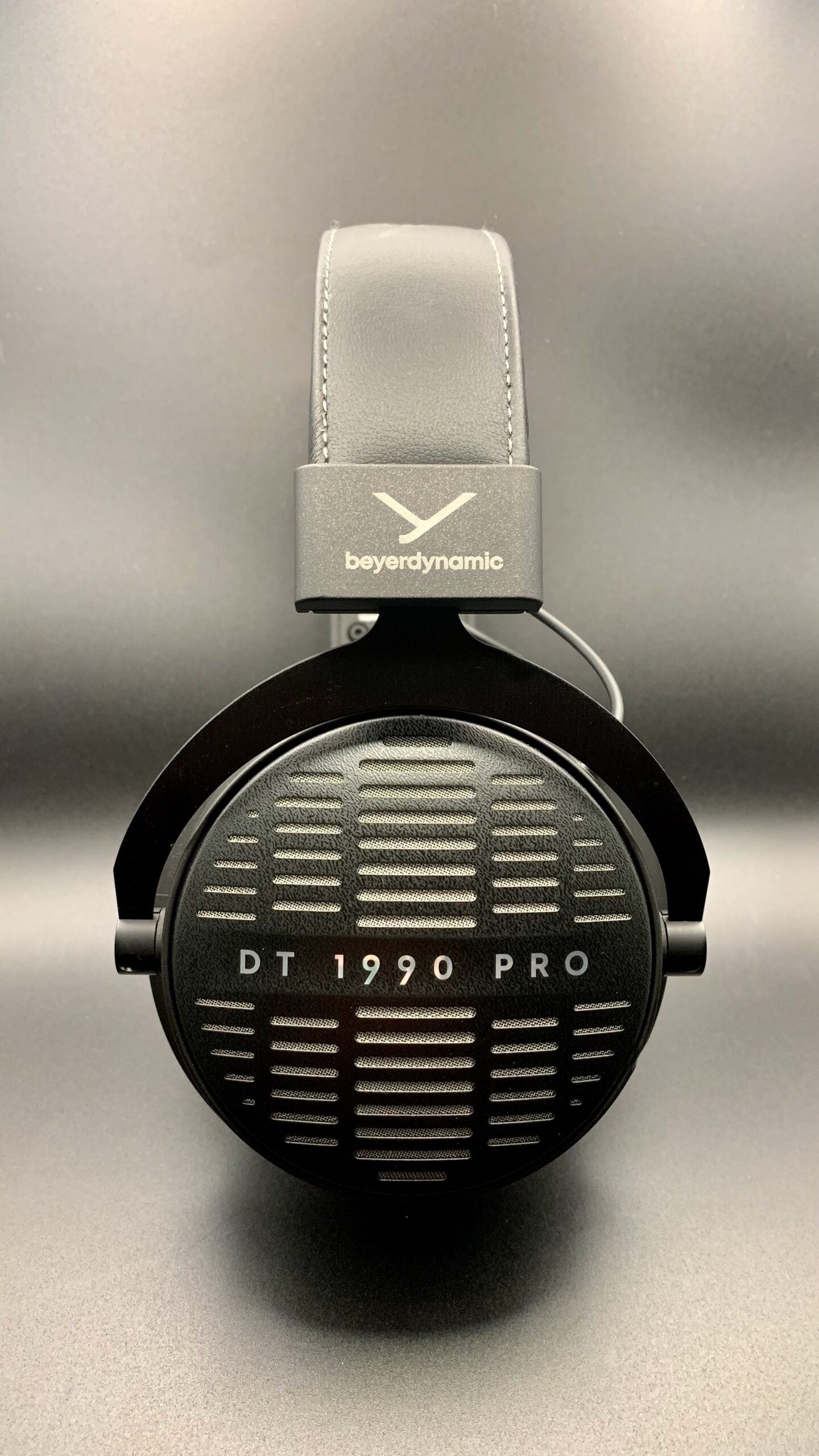
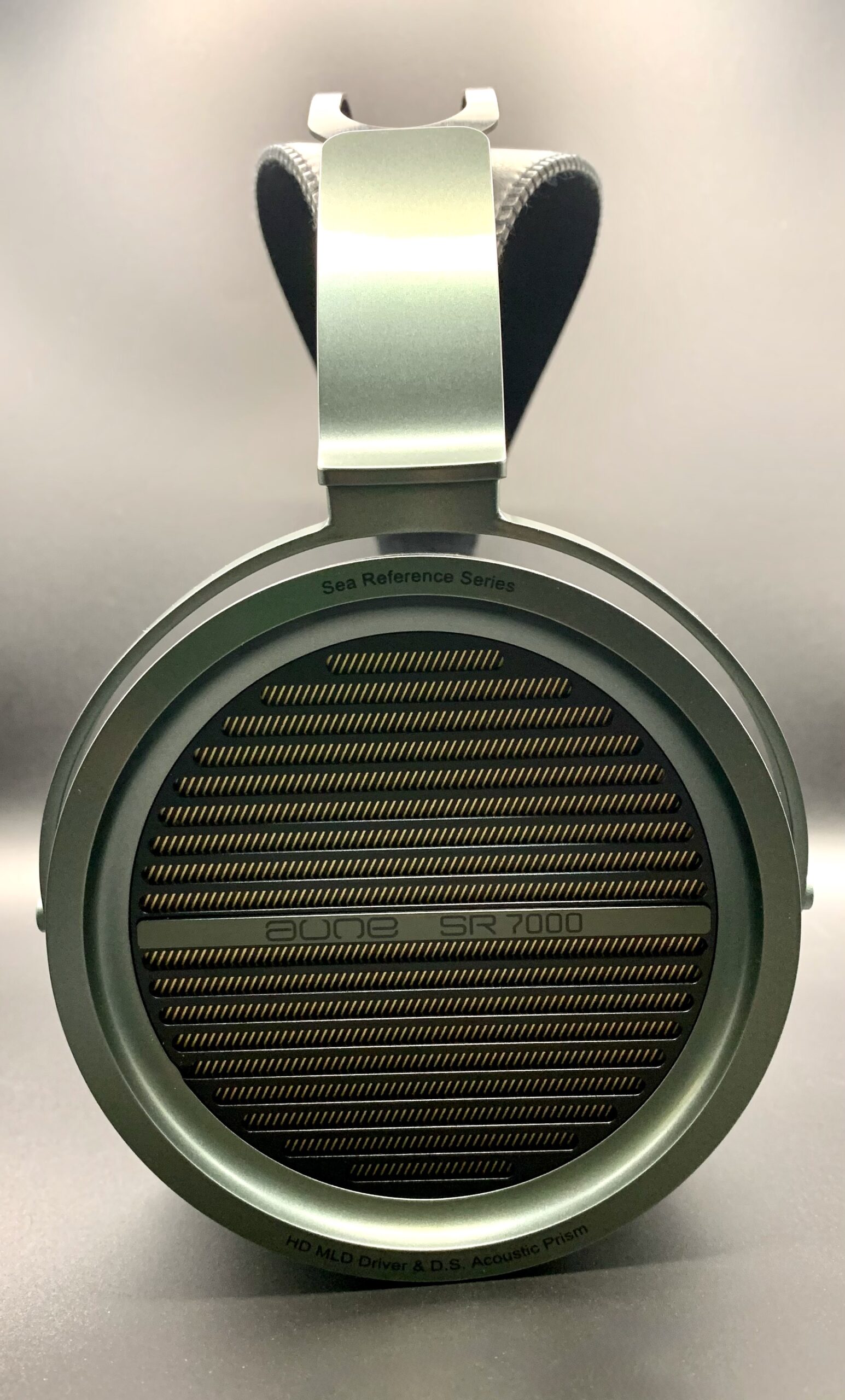
The headphones featured in this comparison are:
• OLLO X1
• Beyerdynamic DT 1990 PRO MKII
• AUNE SR7000
I’ll analyze these three high end models from every angle, from build quality to sound, from comfort to long term listening fatigue.
Let’s start from the more tangible aspects, beginning with packaging and accessories.
Technical specifications comparison
Before moving into the practical analysis, it’s useful to look at the main technical specifications of the headphones involved in the comparison.
These numbers alone do not explain how a headphone sounds, but they help understand some of the design choices and provide context for the differences that will emerge during listening.
| Specification | OLLO X1 | DT 1990 PRO MKII | AUNE SR7000 |
| Type | Open back | Open back | Closed back |
| Driver | Dynamic | Dynamic | Dynamic |
| Impedance | 32 Ω | 30 Ω | 32 Ω |
| Sensitivity | ~108 dB | ~94 dB | ~108 dB |
| Frequency response | 5–30,000 Hz | 5–40,000 Hz | 5–40,000 Hz |
| Weight, without cable | ~390 g | ~376 g | ~300 g |
| Connection | Dual entry 3.5 mm jack | Mini-XLR / 3.5 mm jack | Dual entry / Balanced |

Packaging
The three headphones already show very different approaches starting from the packaging itself, reflecting quite clearly the philosophy behind each product.
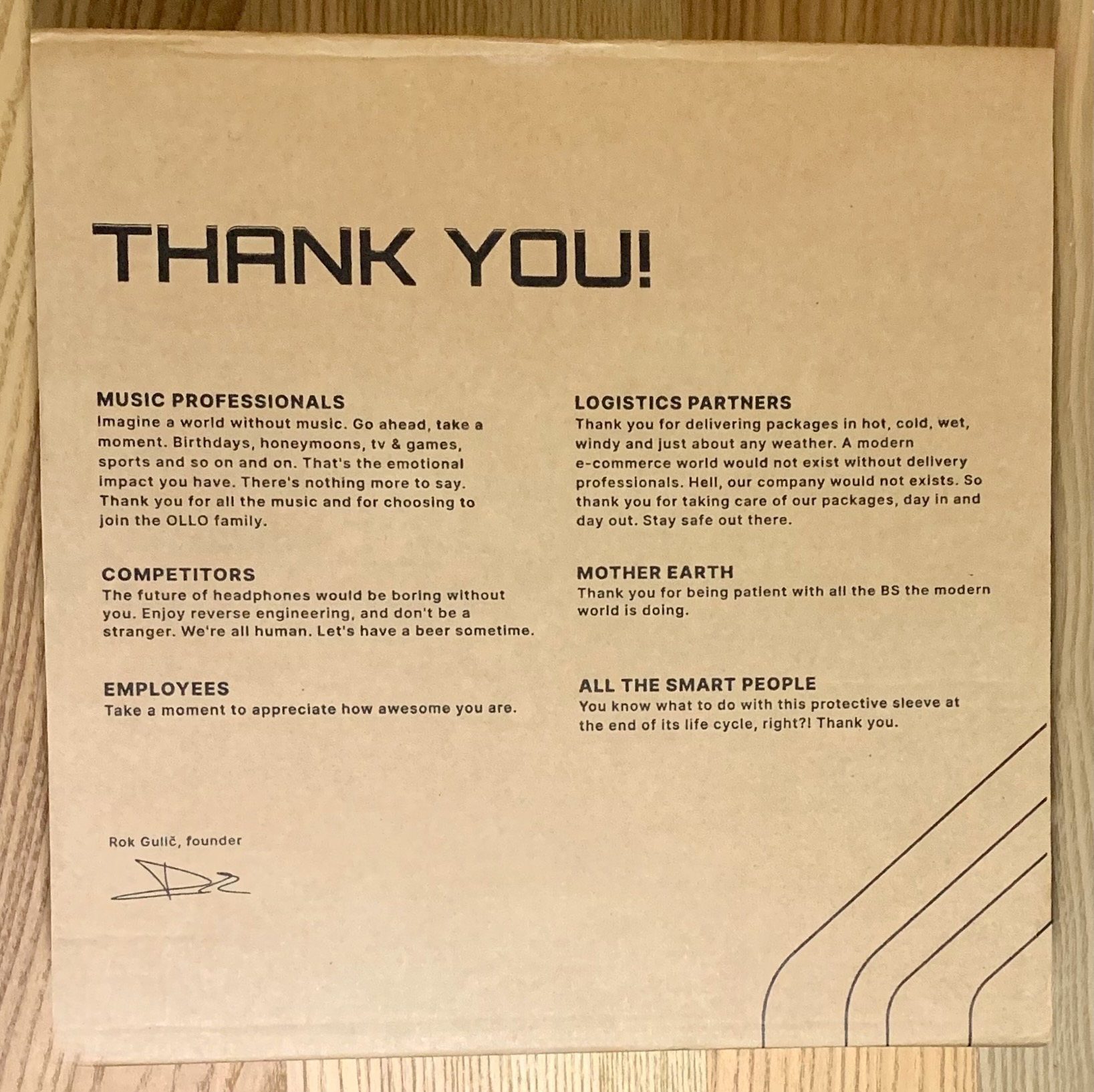
The OLLO X1 focuses on an essential but functional presentation, with simple packaging, well organized and clearly oriented more toward practicality than visual impact. The box itself is made from sturdy cardboard, with minimal but well executed graphics.
The Beyerdynamic DT 1990 PRO MKII follows a more minimal approach, using a printed cardboard box with a glossy finish that unfortunately tends to keep fingerprints quite easily. The internal organization is clean and rational.
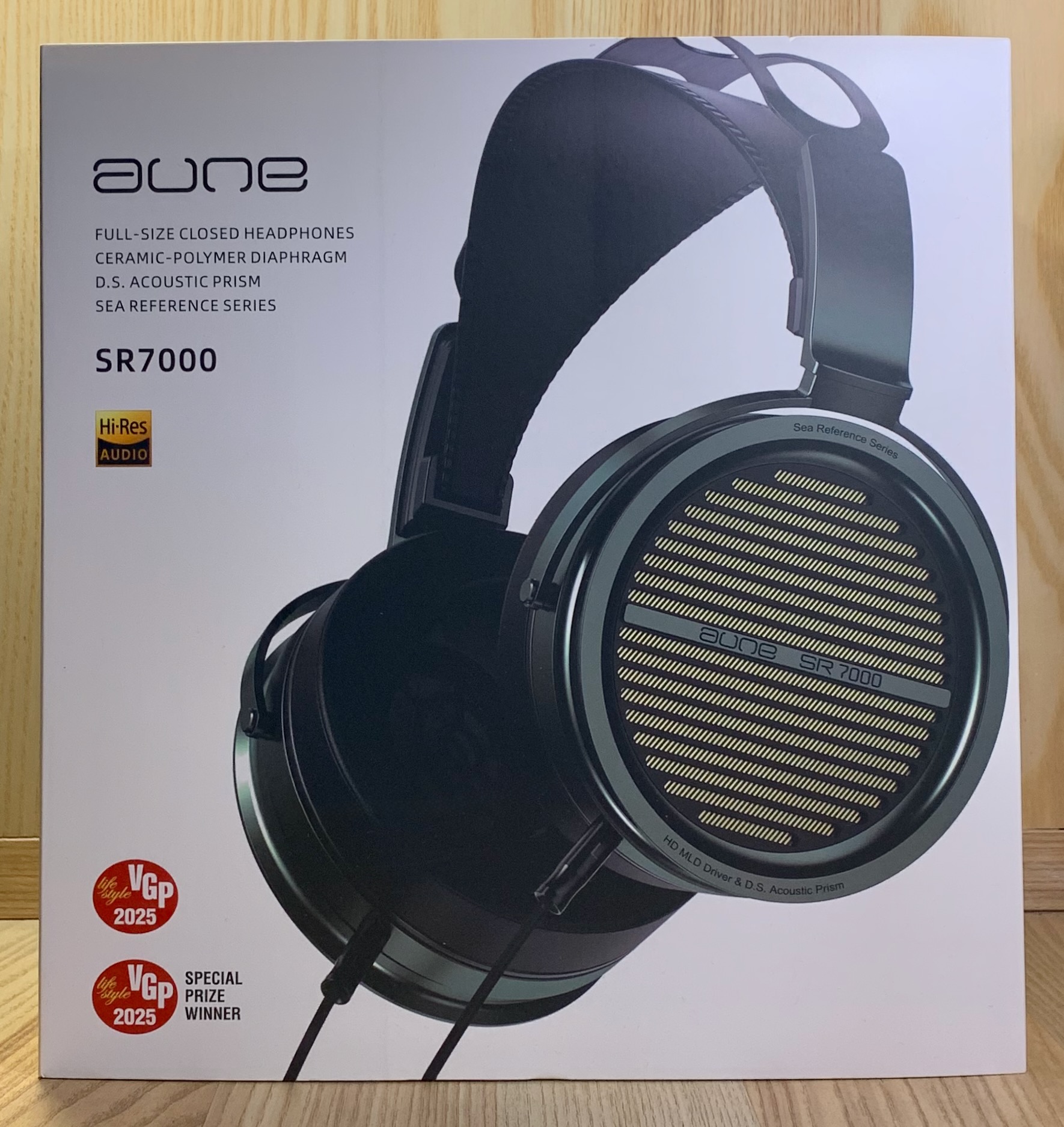
The AUNE SR7000 takes a more aesthetic oriented approach, with packaging focused more on visual impact and premium presentation. The external sleeve and book style opening give a more refined and scenic unboxing experience.
Overall, the differences are pretty clear, more essential and functional in the case of OLLO, more minimal with Beyerdynamic, and more visually focused and premium feeling with AUNE.
Case and transport
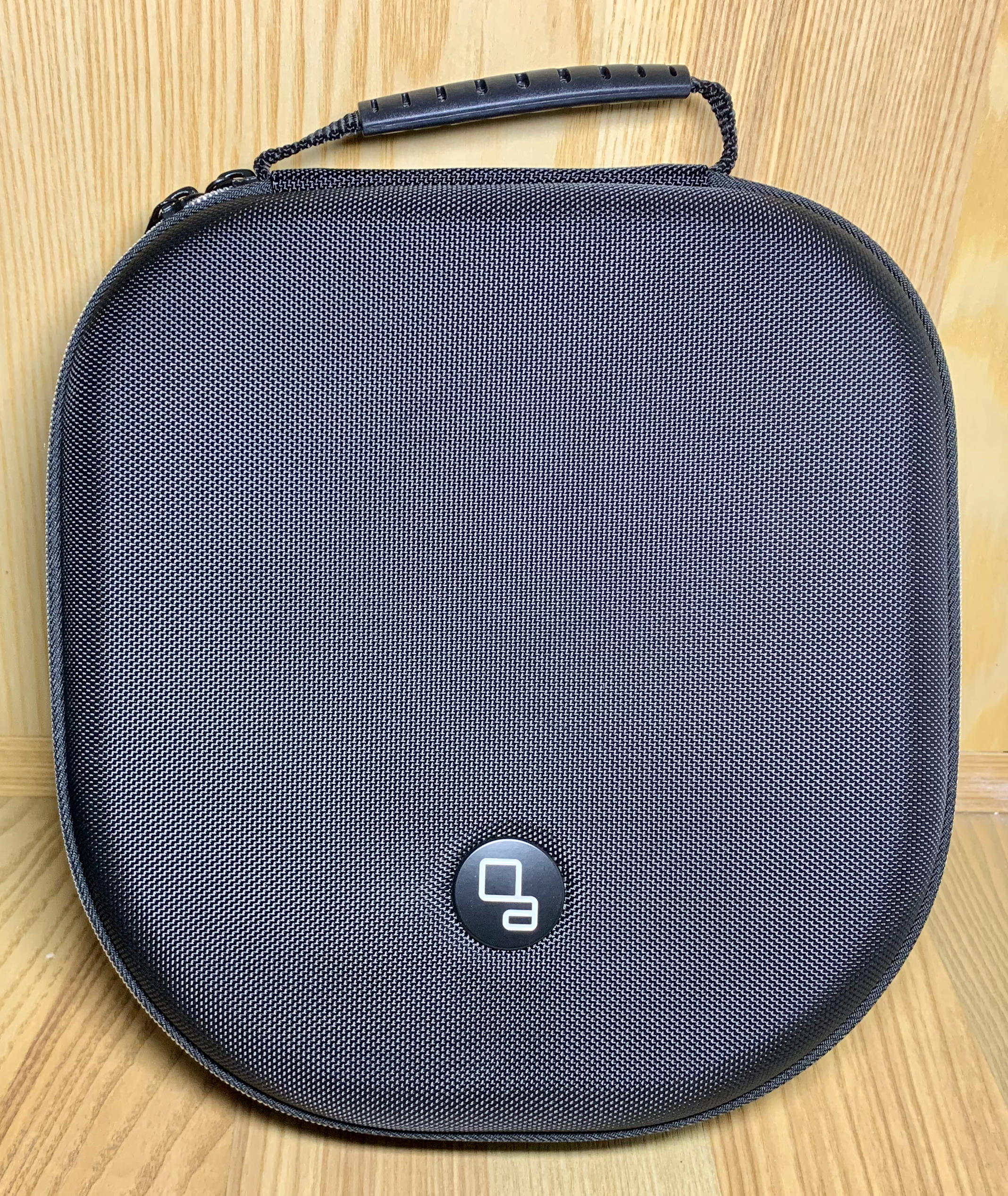
All three headphones include a carrying case, but with noticeable differences in perceived quality and overall approach.
OLLO X1
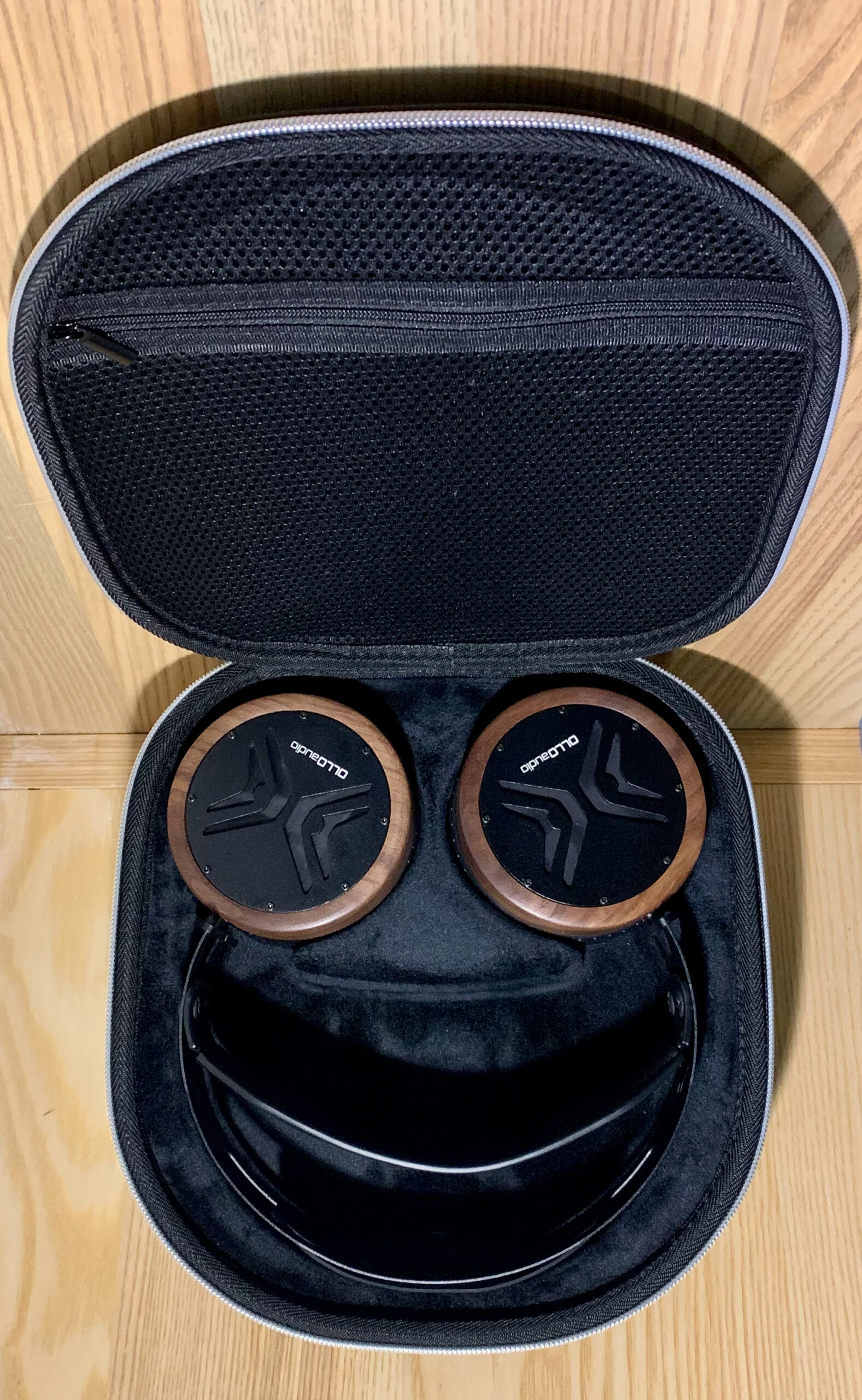
The X1 comes with a practical and functional case, clearly designed more for protection than aesthetics. Thanks to the 180 degree rotating earcups, the case is very compact and flat, making it easy to fit inside a backpack or bag. Visually it’s quite pleasant, with a finish that resembles woven fabric, even if the material itself is plastic. The texture feels good in the hand and slightly rough, helping prevent slipping. On the upper side there’s a small synthetic fabric handle with a rubber insert, making transport easier.
Inside, the layout is simple but effective, the headphones sit in a stable molded compartment lined with soft velvet-like material, preventing movement during transport. The cable is stored on the opposite side, inside the lid, within a zippered pocket. The available space is generous enough to fit a second cable or small accessories such as a dongle.
Beyerdynamic DT 1990 PRO MKII
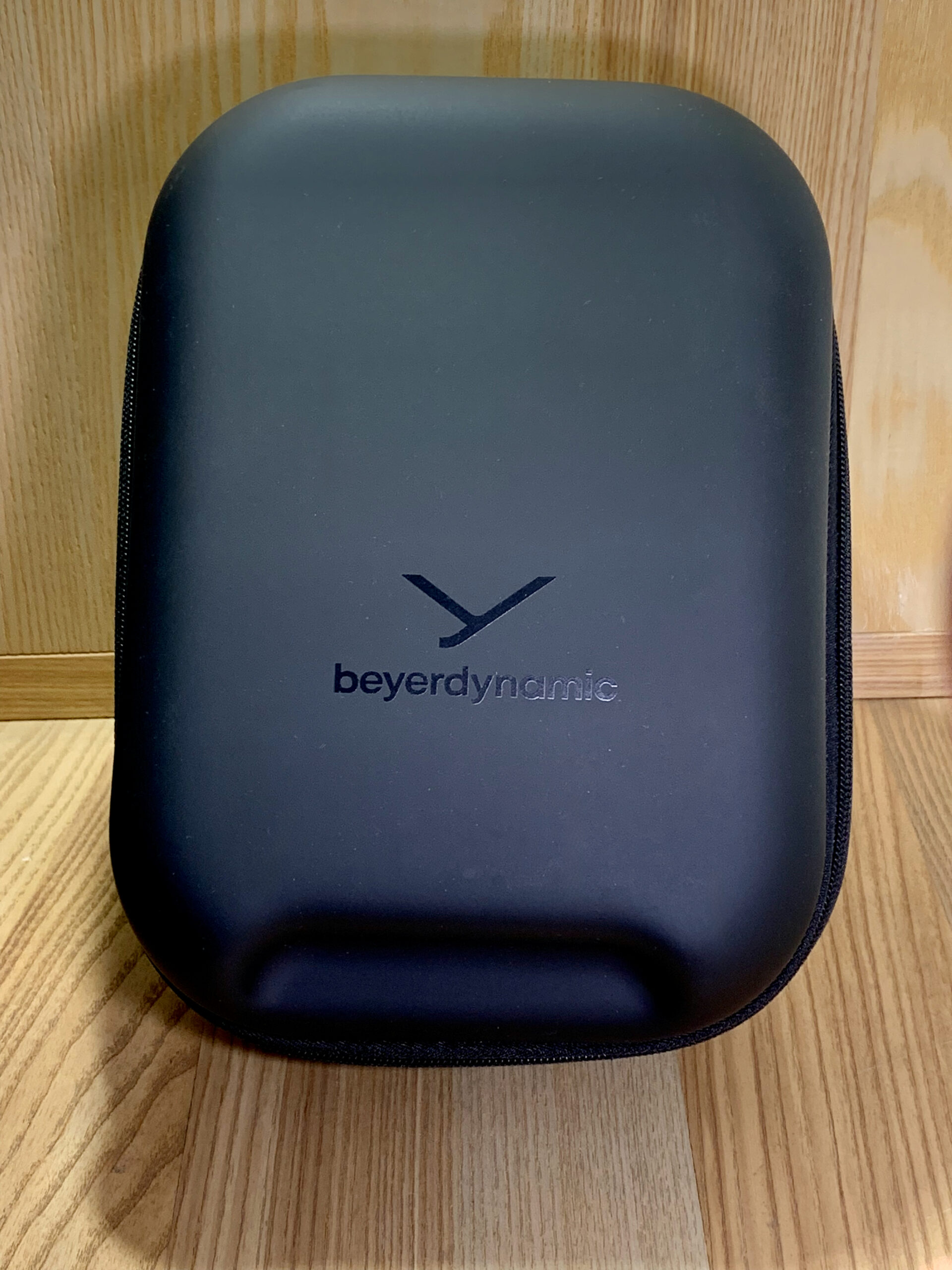
The DT 1990 PRO MKII follows a similar philosophy, with a solid and well organized case mainly focused on protection. The soft rubberized finish feels pleasant and visually coherent with the Beyerdynamic style, even if it tends to attract fingerprints quite easily. The main issue concerns usability, the case is rectangular and fairly bulky, but completely lacks a handle or any effective grip solution. There is only a small recessed area which, in everyday use, feels rather impractical.
Personally, I found it surprisingly awkward to carry around considering how solid and premium the case actually feels.
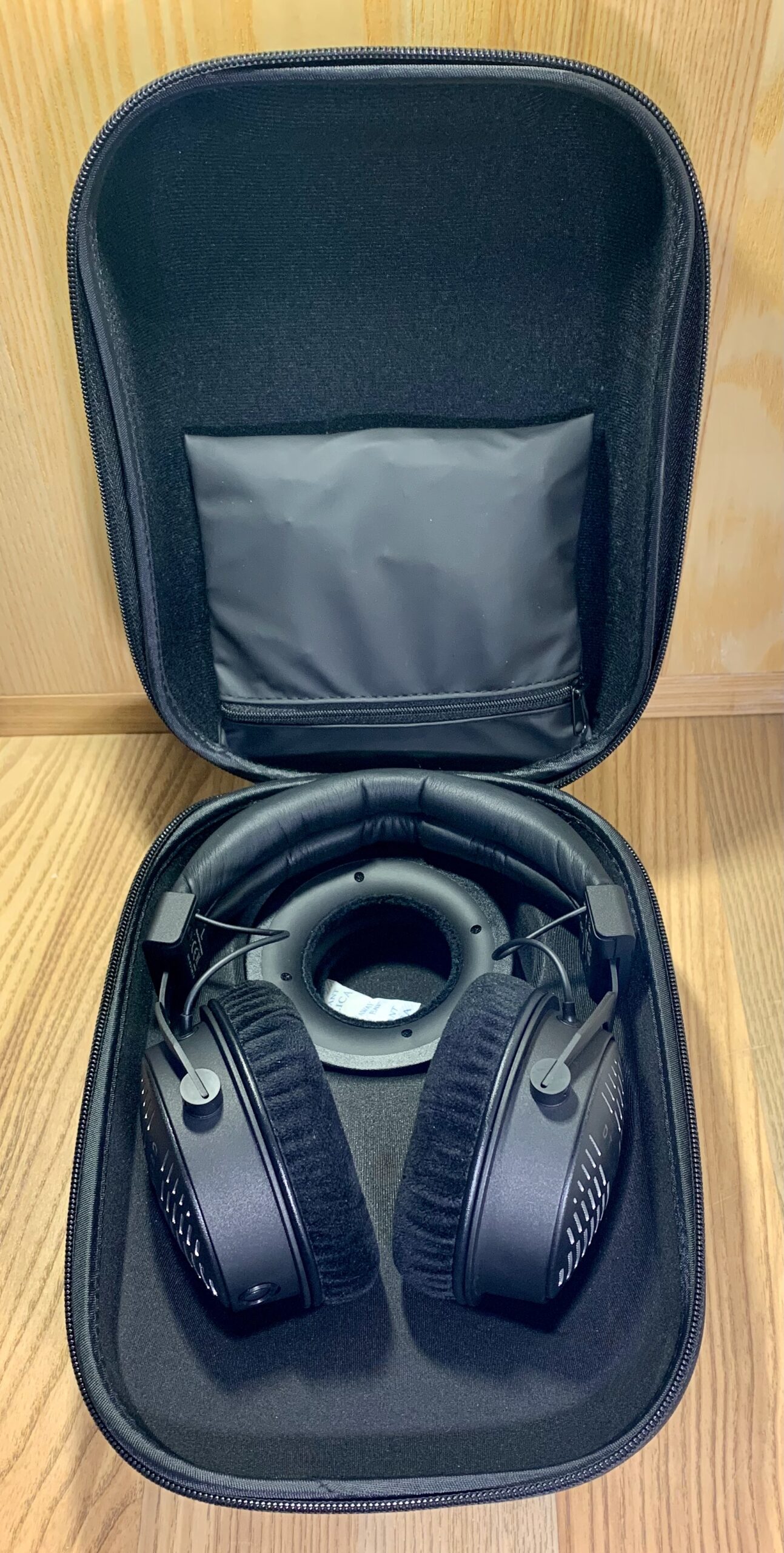
Inside, I found the organization well structured and protective, with velvet lined molded sections and dedicated compartments for both the headphones and the additional pads, keeping everything separated and tidy. The cables are stored inside a small pocket in the lid, though the available space feels slightly undersized if you want to store both cables together. Just a little more room would have made it much more practical. There’s also no extra space for additional accessories.
AUNE SR7000
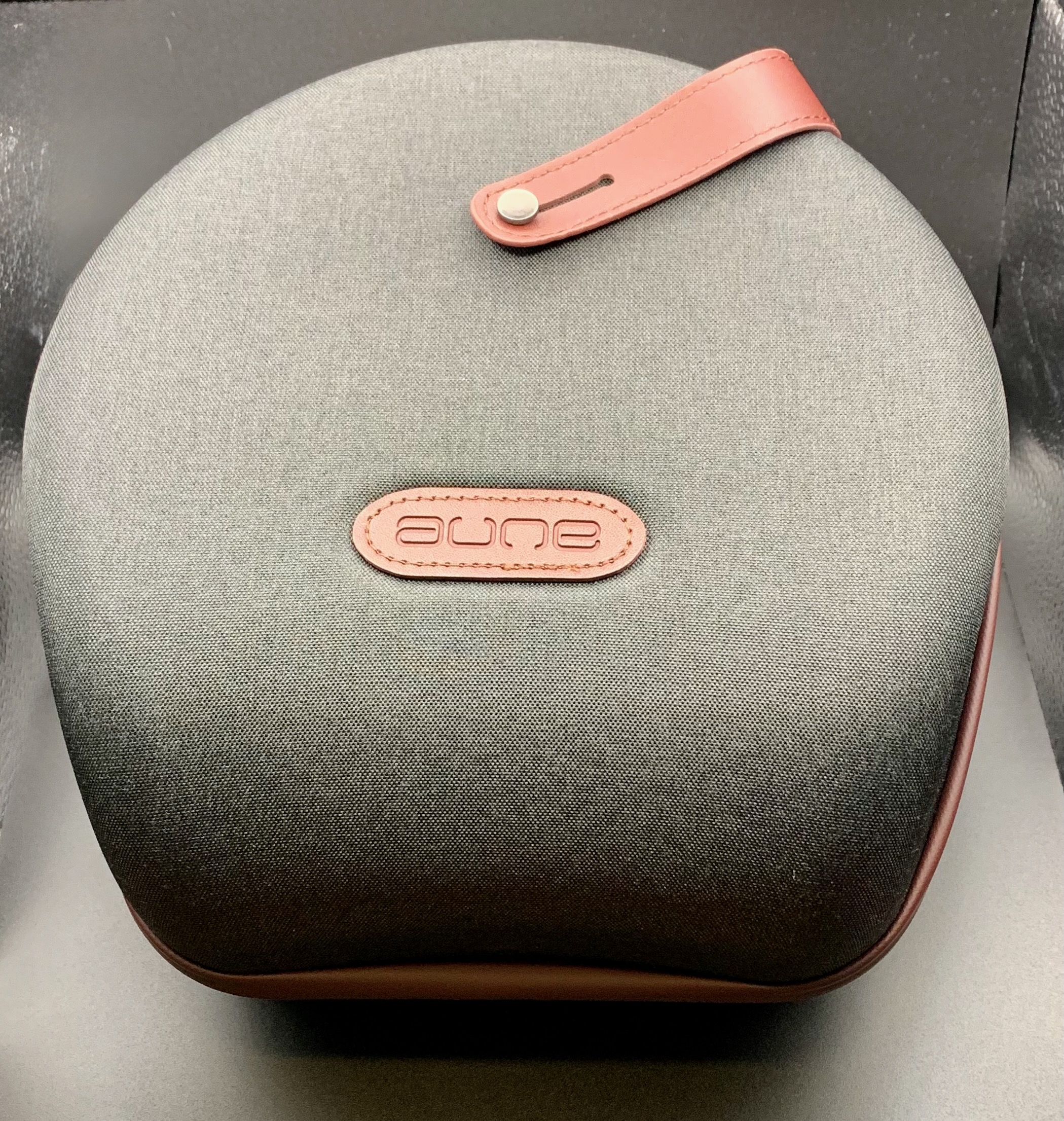
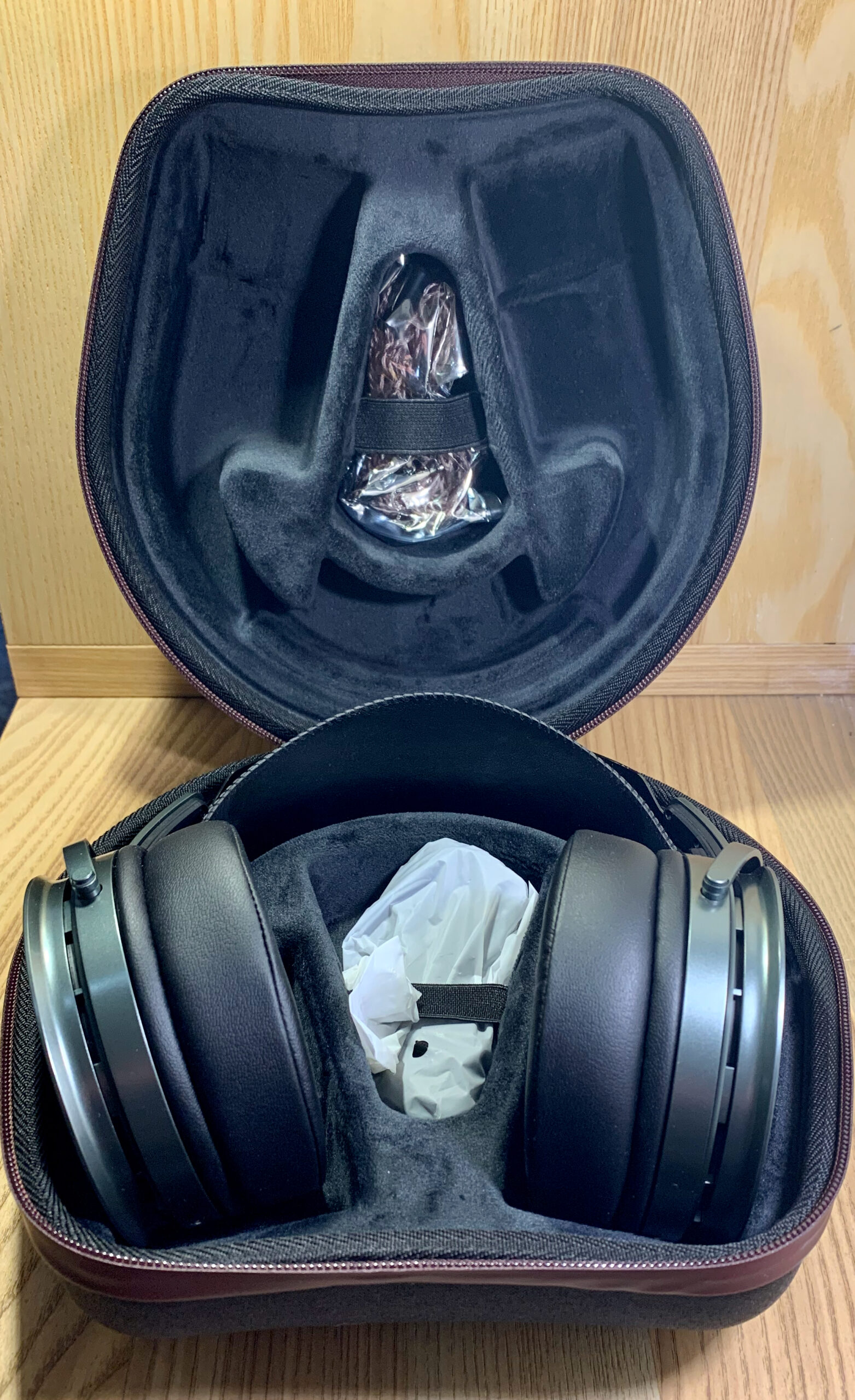
The SR7000 stands out with a more refined case, both visually and in terms of overall presentation, showing greater attention to finish quality and premium feel. A handle on the upper side makes transport easier. Overall it’s the most successful case of the group, both for visual quality and internal organization, making it the most pleasant one to use as well.
Inside, I found the organization extremely well thought out, with precise velvet lined molded sections and dedicated spaces allowing both headphones and cables to be stored neatly and securely. The cables are positioned in the central area, both inside the case and the lid, secured through elastic bands, a simple but very effective, clean and elegant solution.
In all cases the case is well integrated into the packaging and protected by internal padding that limits movement during transport.
From a protection standpoint, all three solutions are perfectly adequate for daily use, with Beyerdynamic and AUNE leaning slightly more toward structural protection, while OLLO focuses more on compactness and practicality without feeling less robust.
In terms of size and portability, OLLO is the most compact and easiest to carry around, Beyerdynamic the bulkiest, while AUNE sits somewhere in the middle but with a more refined overall management.
Practicality also varies between them, OLLO feels immediate and functional, Beyerdynamic more rigid in daily handling, while AUNE ends up being the most complete and user friendly solution overall.
Build quality, materials and comfort
The headphones involved in this comparison also show very different approaches from a construction standpoint, clearly reflecting the philosophy behind each manufacturer.
Perceived quality is high across all three models, but there are important differences in material choice, structure and overall tactile feeling. These differences directly affect comfort and the long term listening experience as well.
OLLO X1
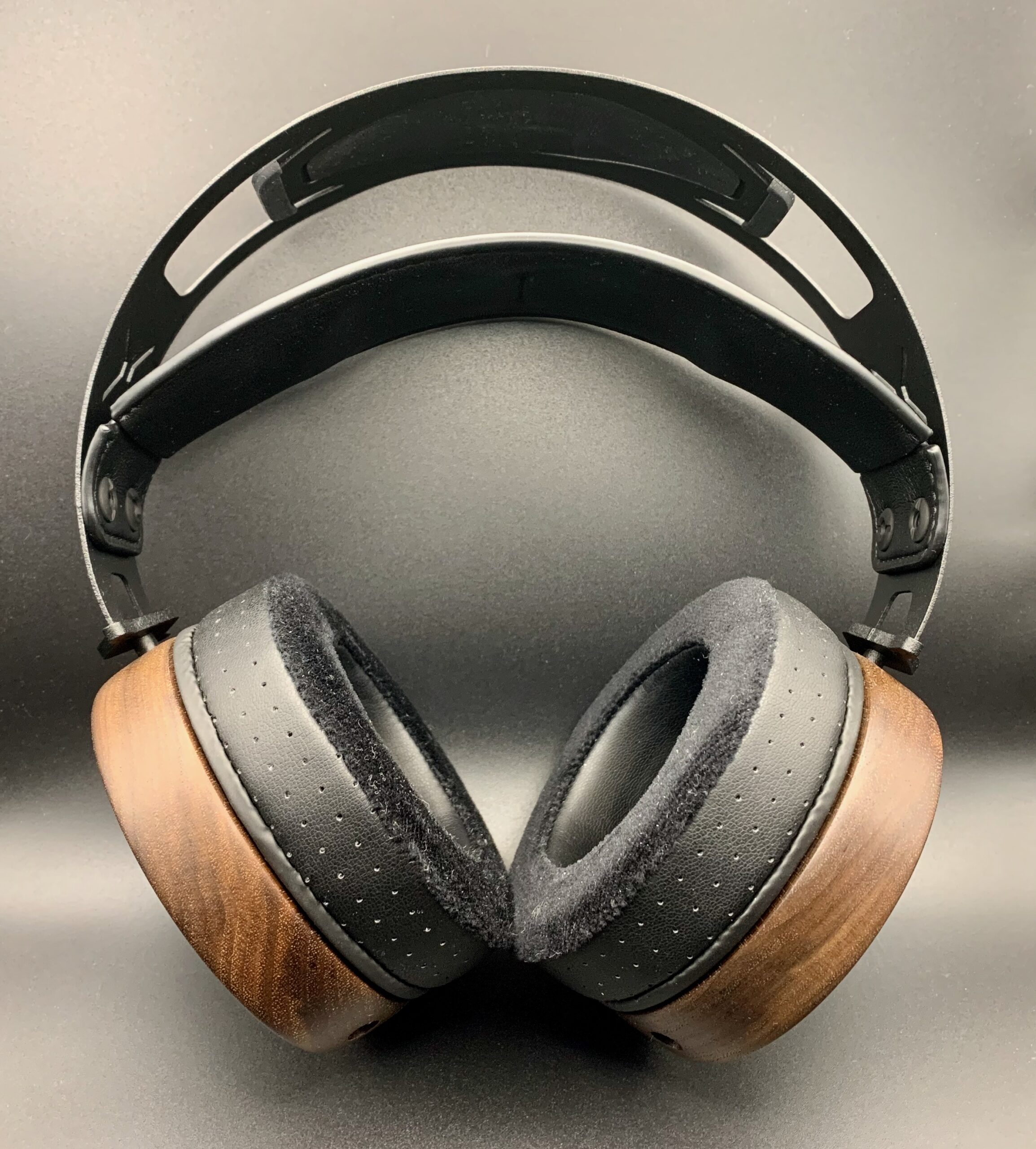
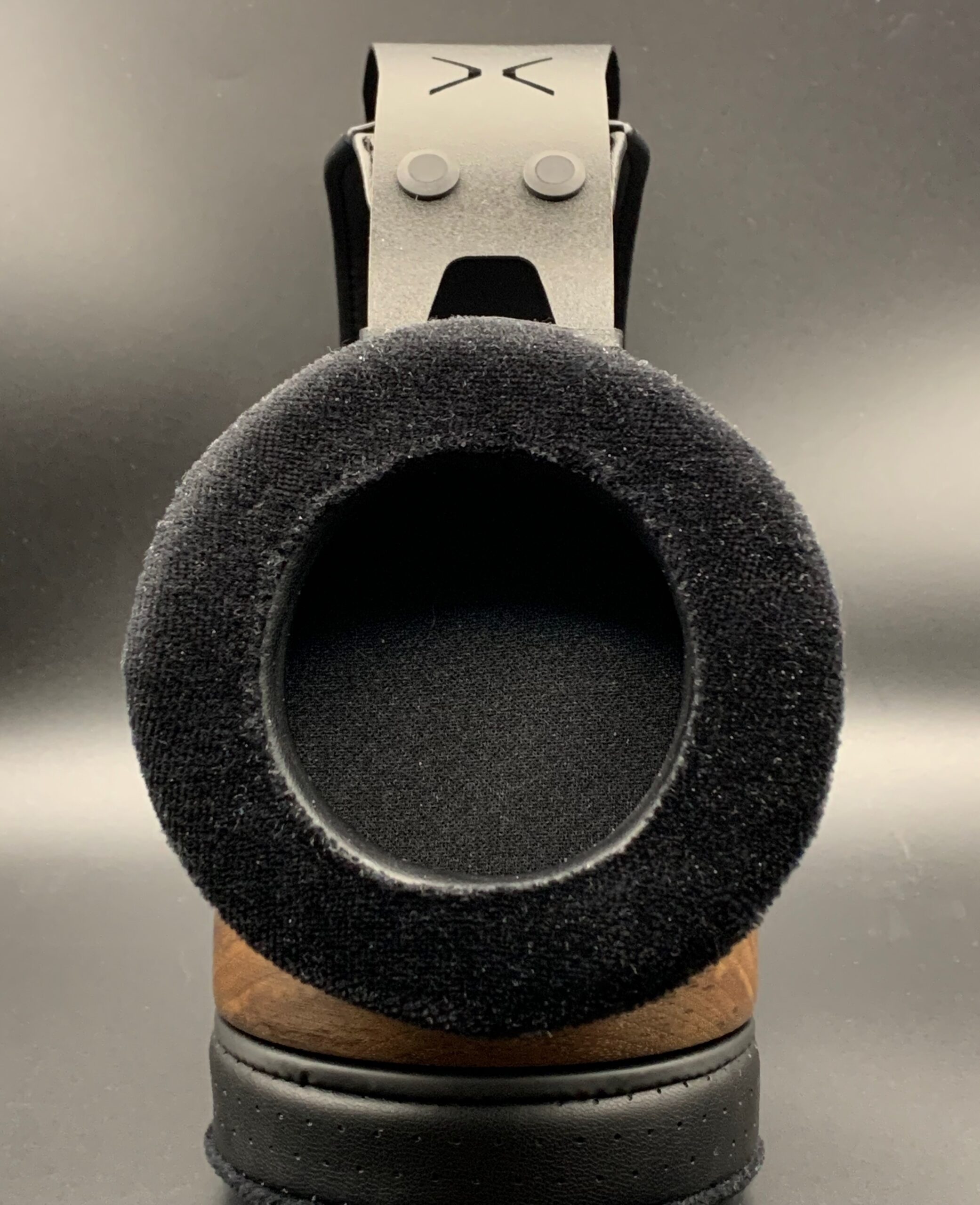
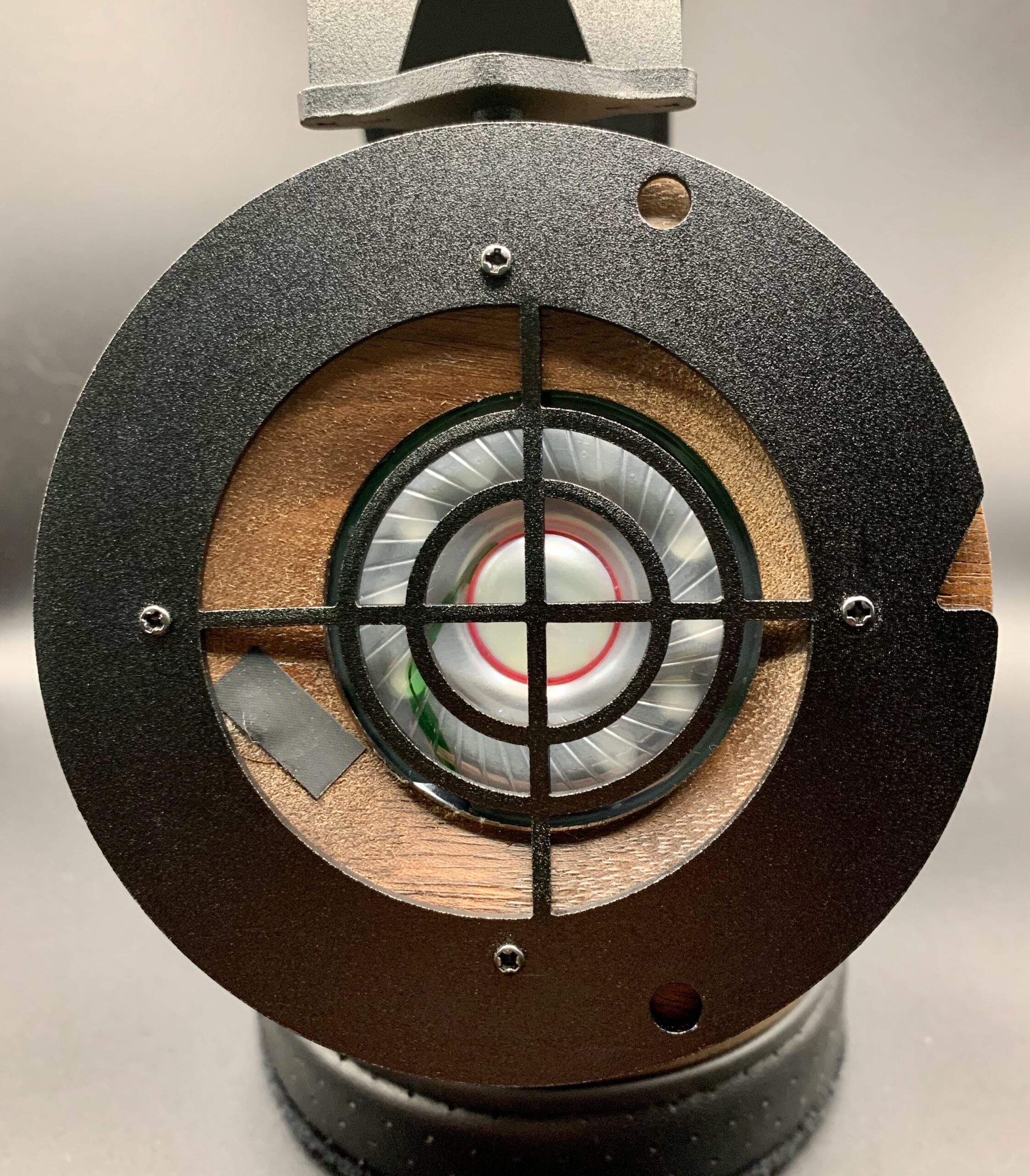
The X1 stands out for its very precise and recognizable approach. The use of wood is not simply aesthetic, but an integral part of the project itself. The structure feels solid yet flexible, with robust headbands clearly designed to last over time. The elastic suspension system distributes the weight extremely well, almost completely eliminating the sensation of pressure on the head. Comfort is excellent, especially during longer sessions, mainly thanks to this weight distribution system. During longer listening sessions, I almost forgot they were on my head.
Beyerdynamic DT 1990 PRO MKII
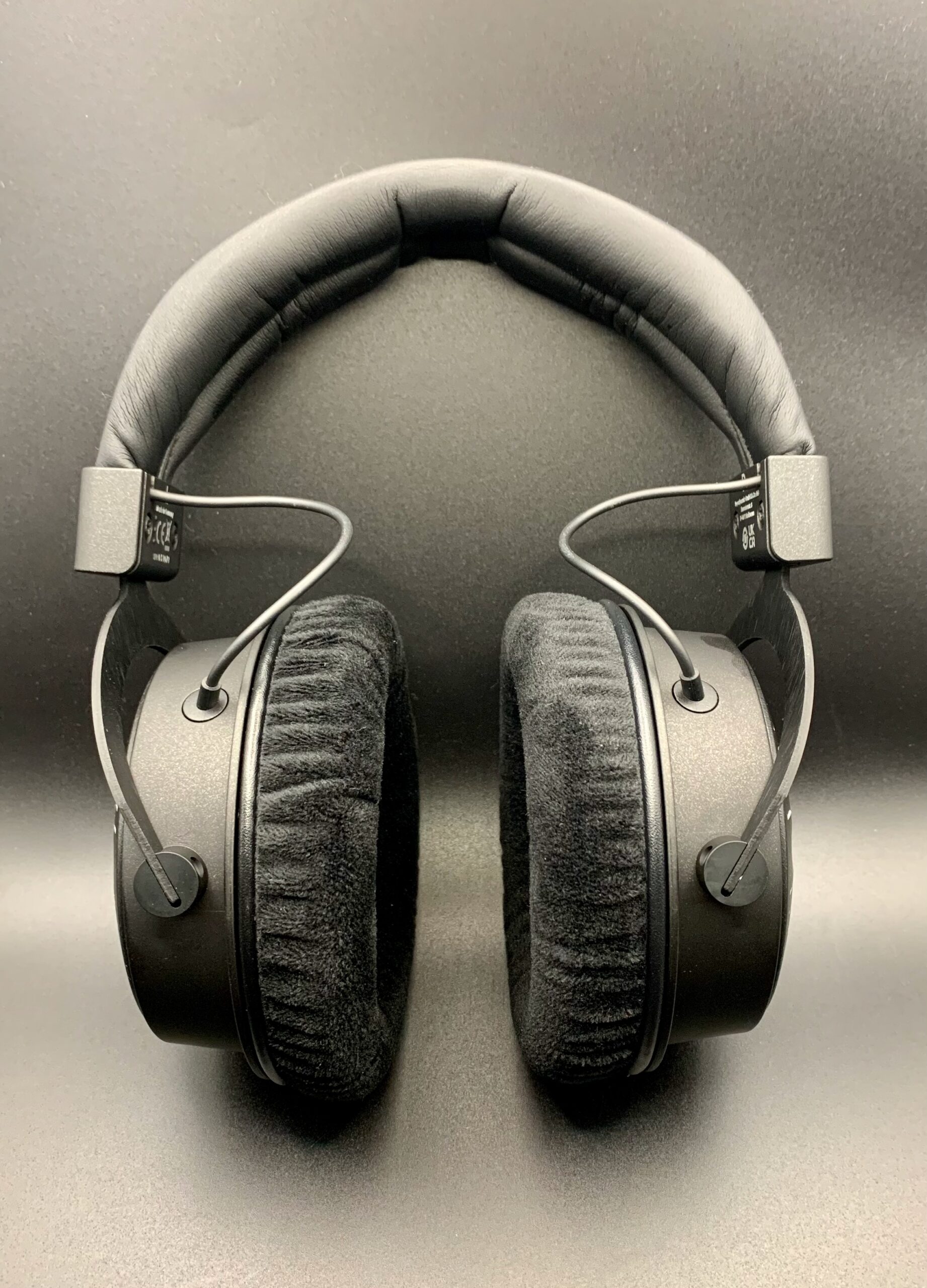
The DT 1990 PRO MKII follows a more massive and solidity focused approach. The overall feeling is that of an extremely robust product, almost “tank-like” in the way it feels. Clamp force is stronger compared to the other two and at first it may feel slightly intrusive, especially for people wearing glasses. With time it tends to loosen up a little and becomes easier to manage, but it still remains the headphone you feel the most on your head out of the three.
AUNE SR7000
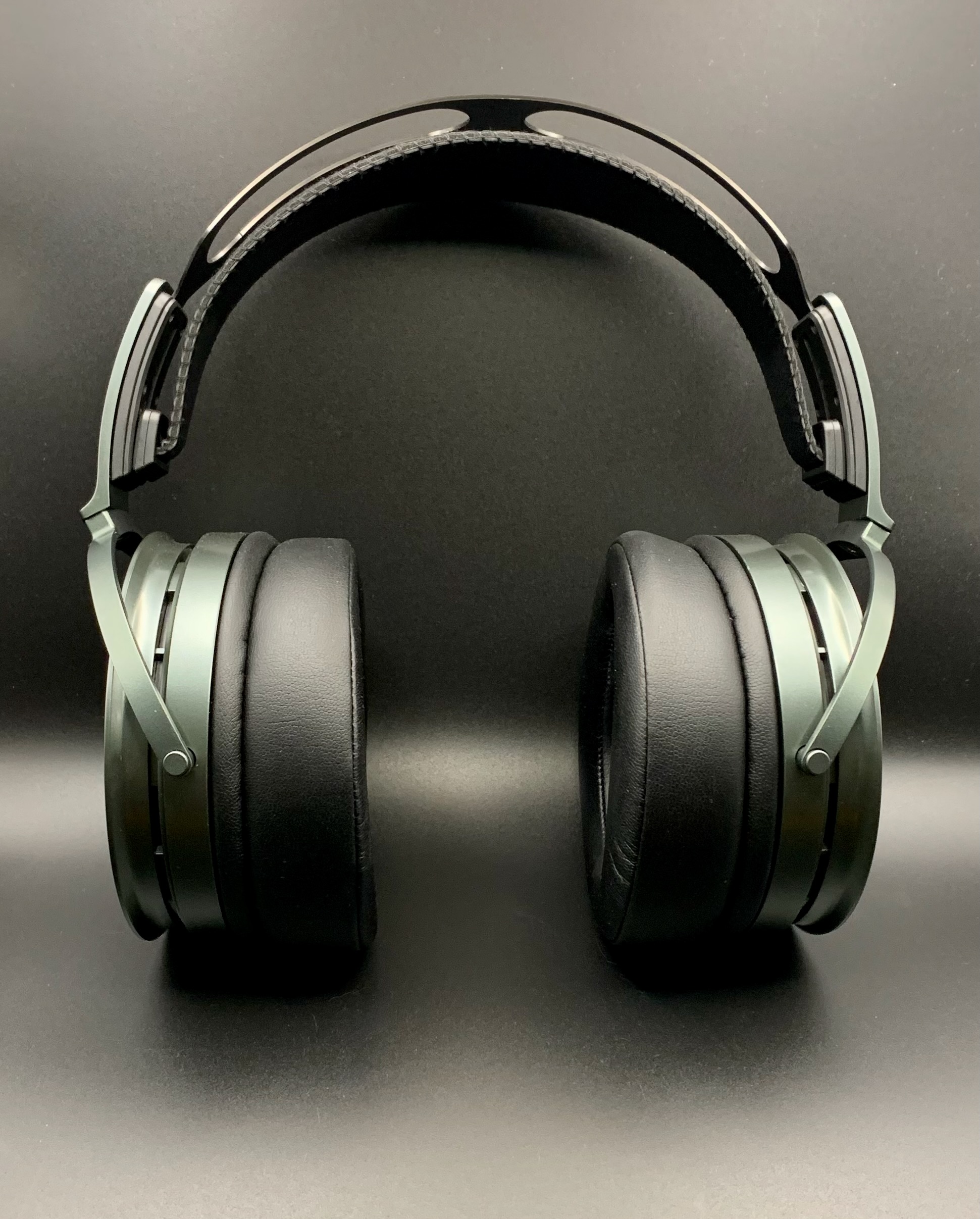
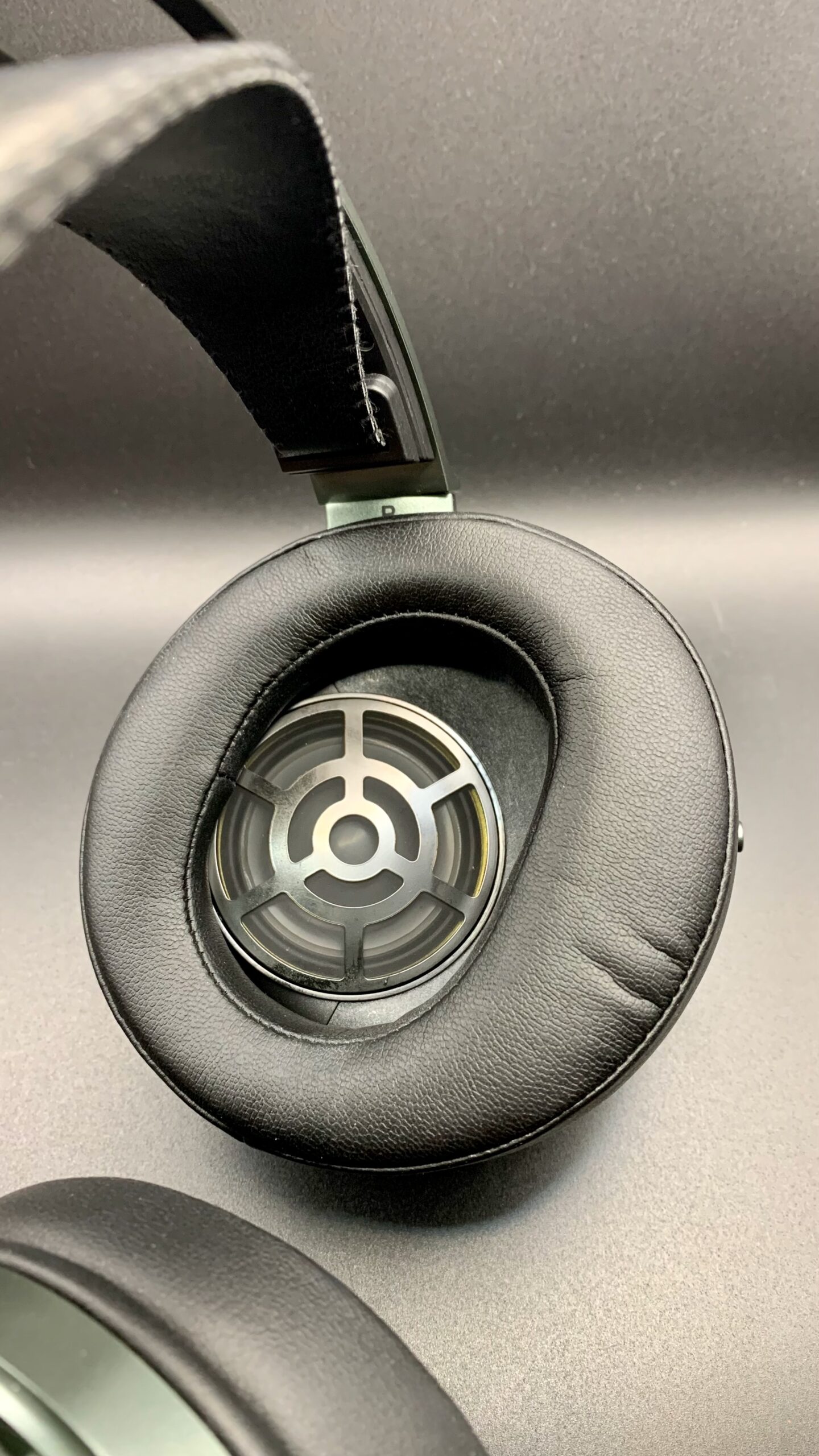
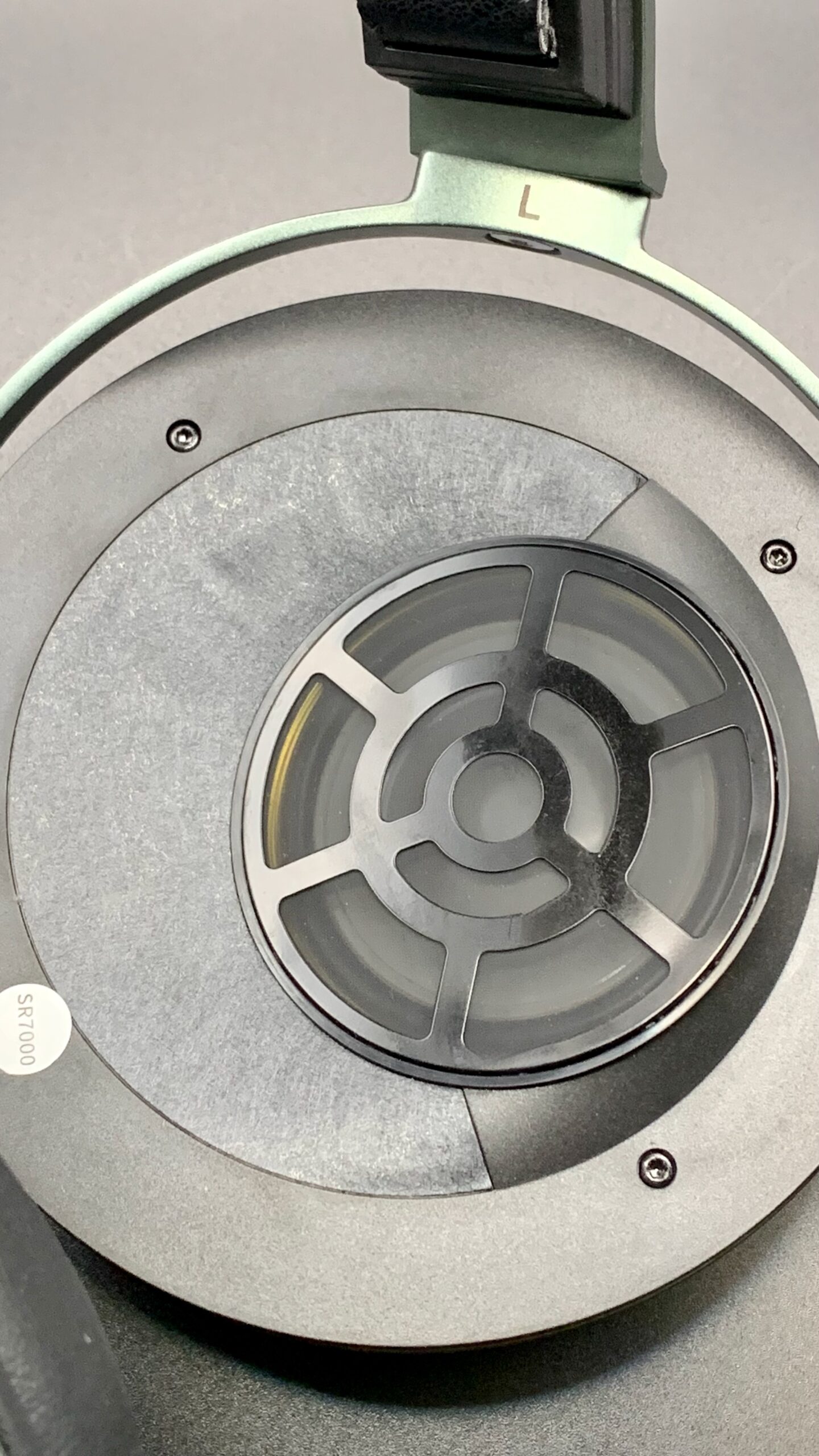
The SR7000 positions itself as the most balanced of the group. It’s extremely light, something that at first may give the impression of being more fragile, even if this is more a perception than a real limitation. That feeling disappeared pretty quickly once I started using them regularly. Build quality is very good, with solid attention to detail throughout. From a comfort perspective it is probably the best of the group, lightweight, well balanced and very easy to wear even after several hours of listening.
Overall, three very distinct philosophies emerge, OLLO focused on a technical and functional design with strong attention to weight distribution, Beyerdynamic centered around solidity and stability, and AUNE aiming for balance, lightness and overall comfort.
Earpads, ergonomics and comfort
The differences between these three headphones also become very evident in the earpad and earcup design, something that directly affects comfort, spatial perception and listening fatigue during longer sessions.
OLLO X1
The X1 uses fairly large and well shaped earcups, with good internal depth that prevents the ear from touching the driver directly. The padding feels soft and evenly distributed, contributing to the overall sensation of lightness already helped by the suspension system. Even after long sessions, comfort remains very good, with effective heat management as well.
Beyerdynamic DT 1990 PRO MKII
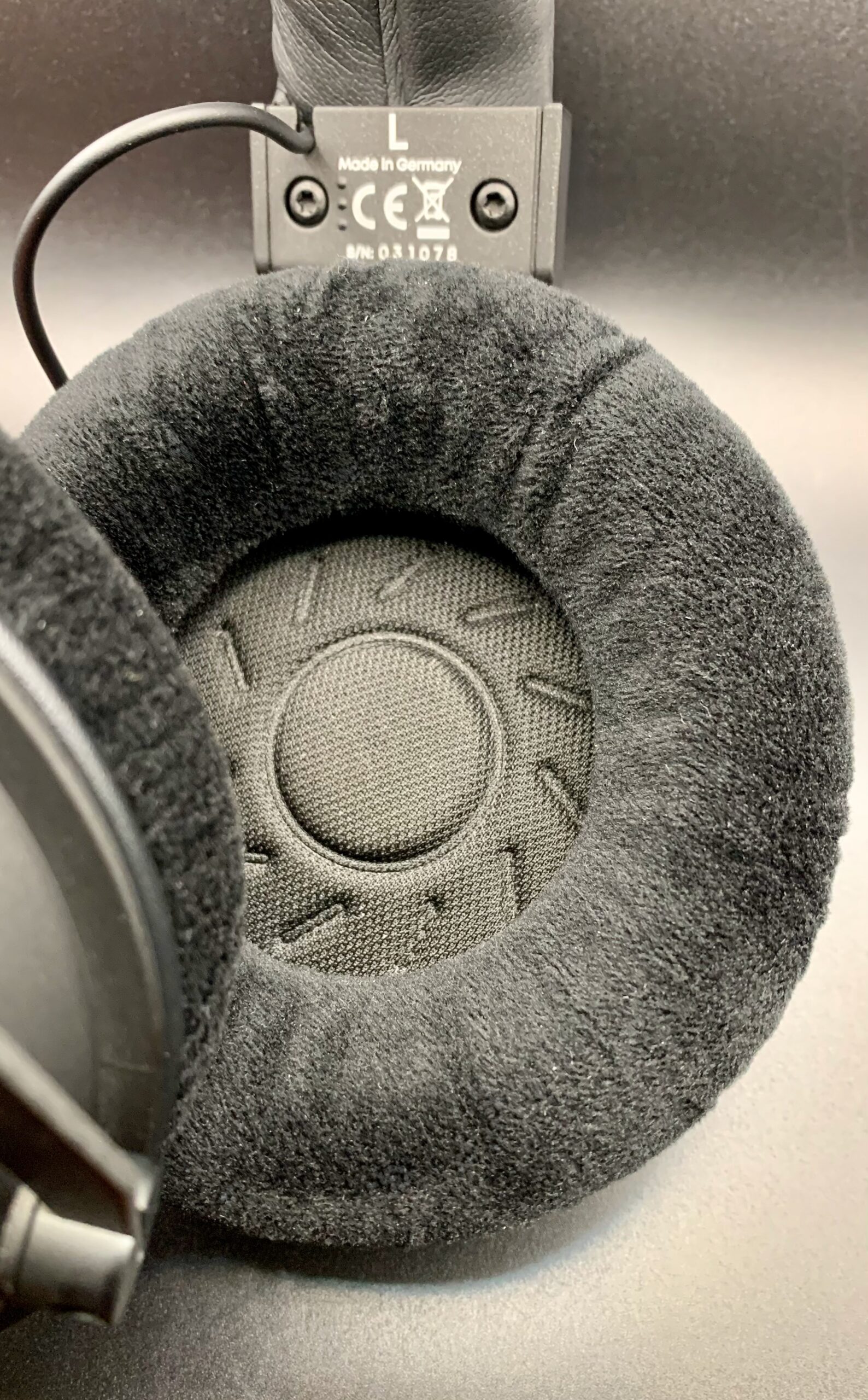
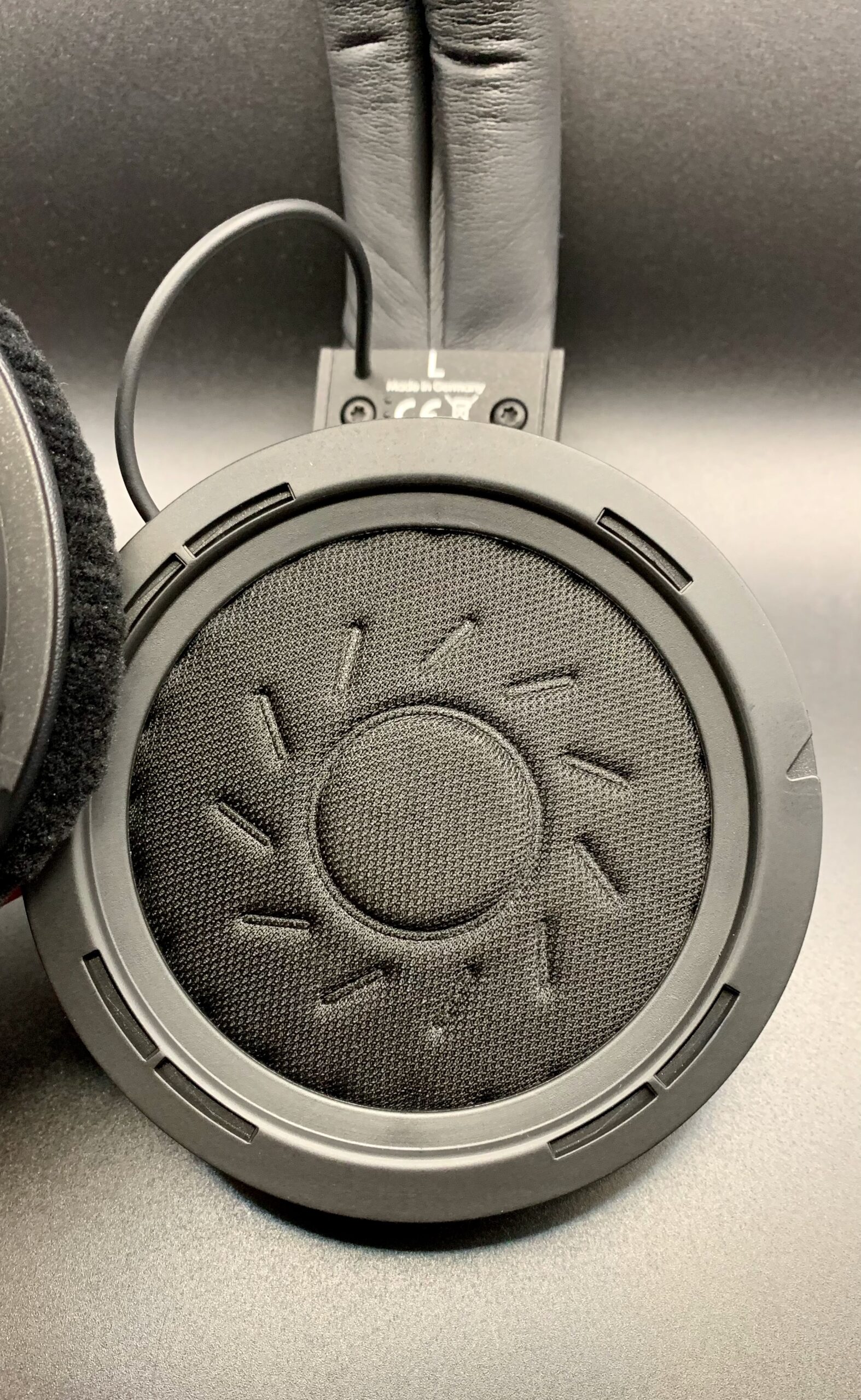
The DT 1990 PRO MKII keeps the classic Beyerdynamic approach, with deep pads but not particularly wide internally. The overall feeling is one of solidity and stability, also thanks to a stronger clamp force compared to the other two headphones.
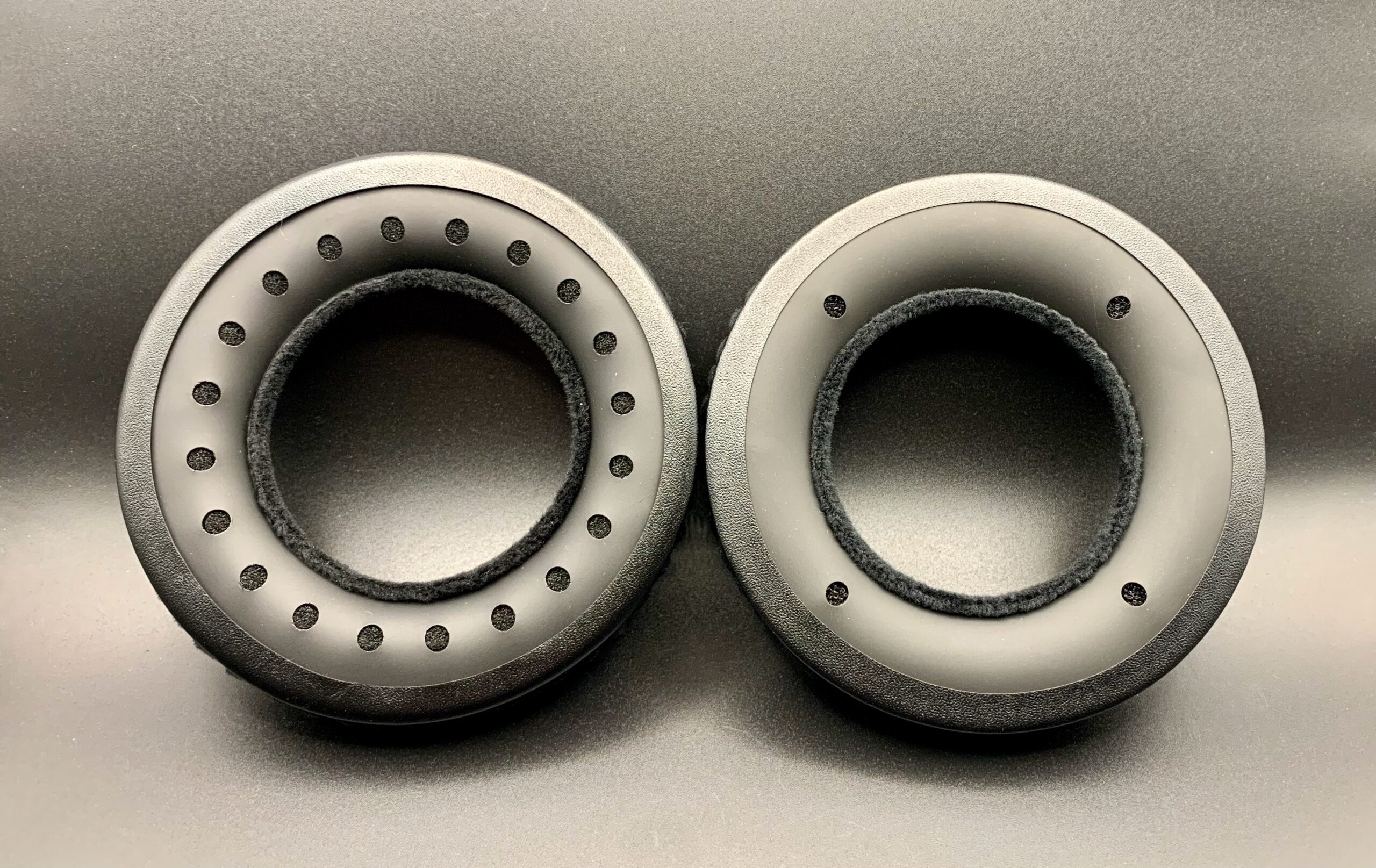
Personally, after about an hour I started noticing some pressure around the lower part of the ear. Some discomfort tends to appear during longer sessions, especially around the earlobe area, which needs to be positioned carefully to avoid touching the inner part of the pad. It’s something that improves slightly over time, but it still remains the least forgiving headphone of the group in this regard. Pad breathability is excellent though, helping keep heat under control even during long listening sessions.
AUNE SR7000
The SR7000 instead focuses on a very successful balance between softness, lightness and adaptability. The pads are extremely comfortable and very well shaped, with moderate clamp force and a very even distribution of pressure. The overall sensation is that of the least fatiguing headphone of the group, especially during very long sessions.
Overall, three different approaches clearly emerge, OLLO more technical and lightweight in weight management, Beyerdynamic more stable and structured, AUNE more focused on comfort and natural fit.
Accessories and included equipment
The included accessories vary depending on the positioning and philosophy behind each product. Cables, adapters and bundled accessories are of good quality across all three headphones, but there are clear differences in terms of completeness and flexibility of use.
OLLO X1
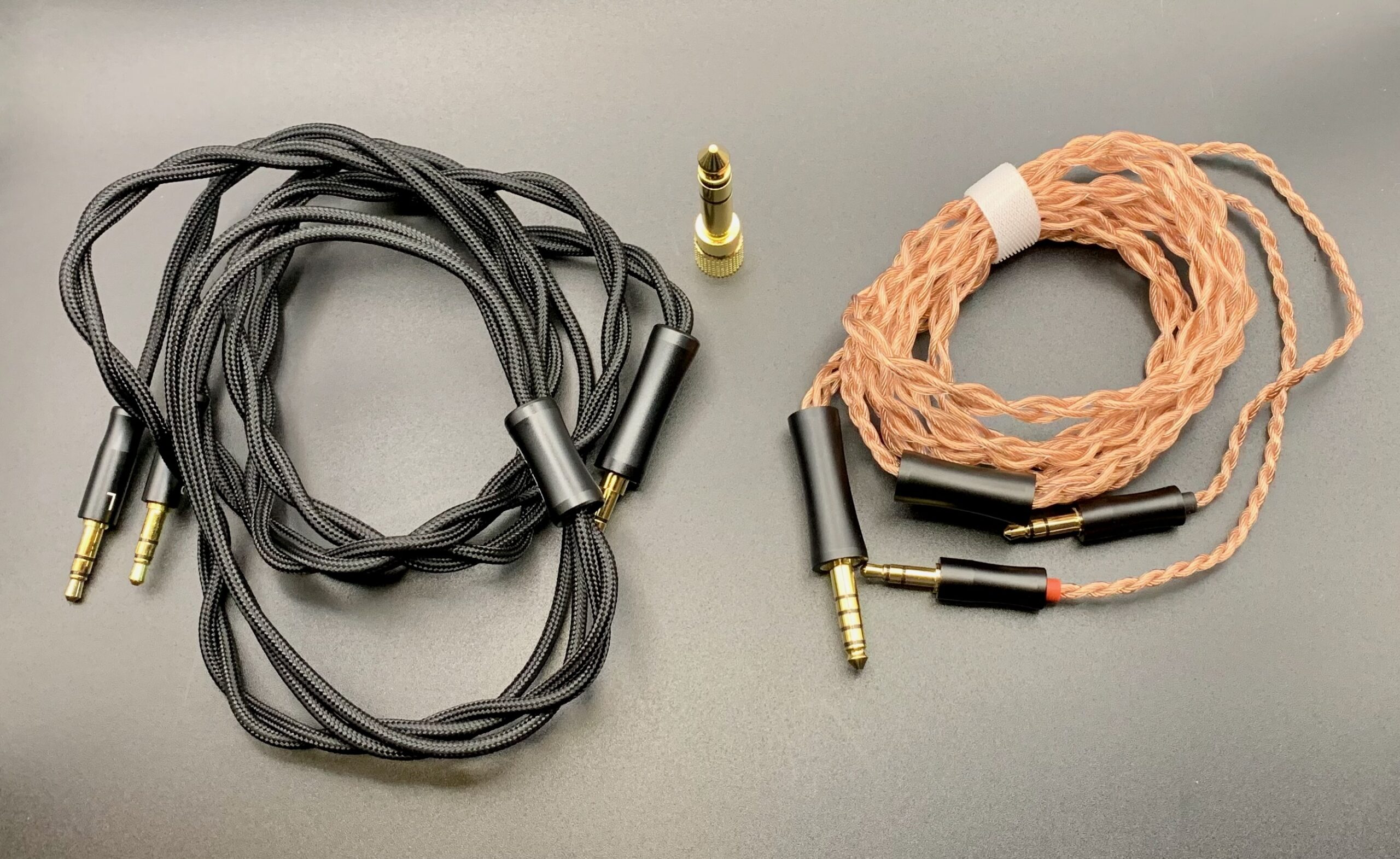
The X1 follows a more minimal approach, with an essential package that includes a single ended cable only. The choice is coherent with the overall philosophy of the product, but still leaves room for customization, thanks to the use of a standard connector it’s possible to use higher quality aftermarket cables or balanced cable solutions.
Beyerdynamic DT 1990 PRO MKII
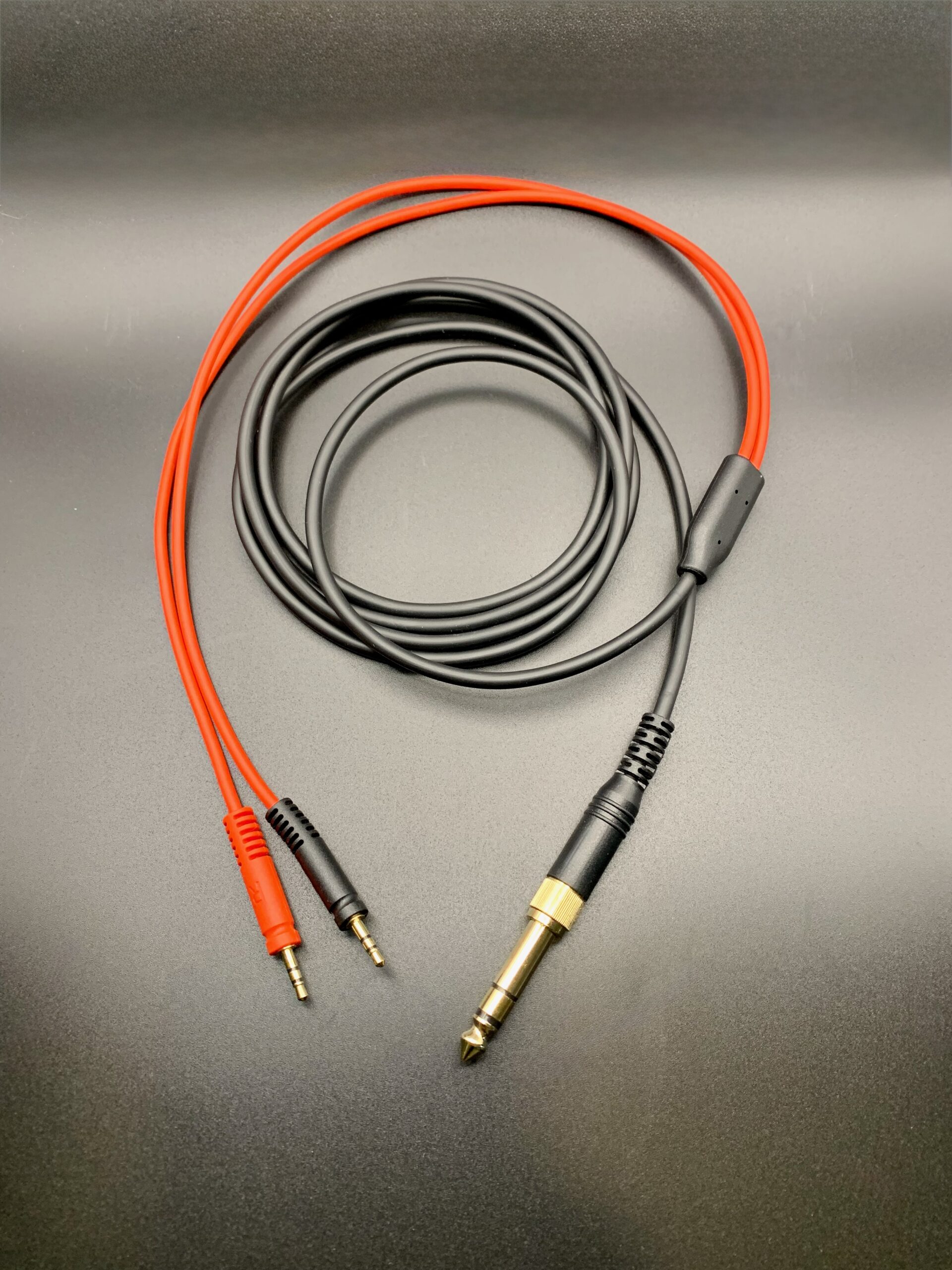
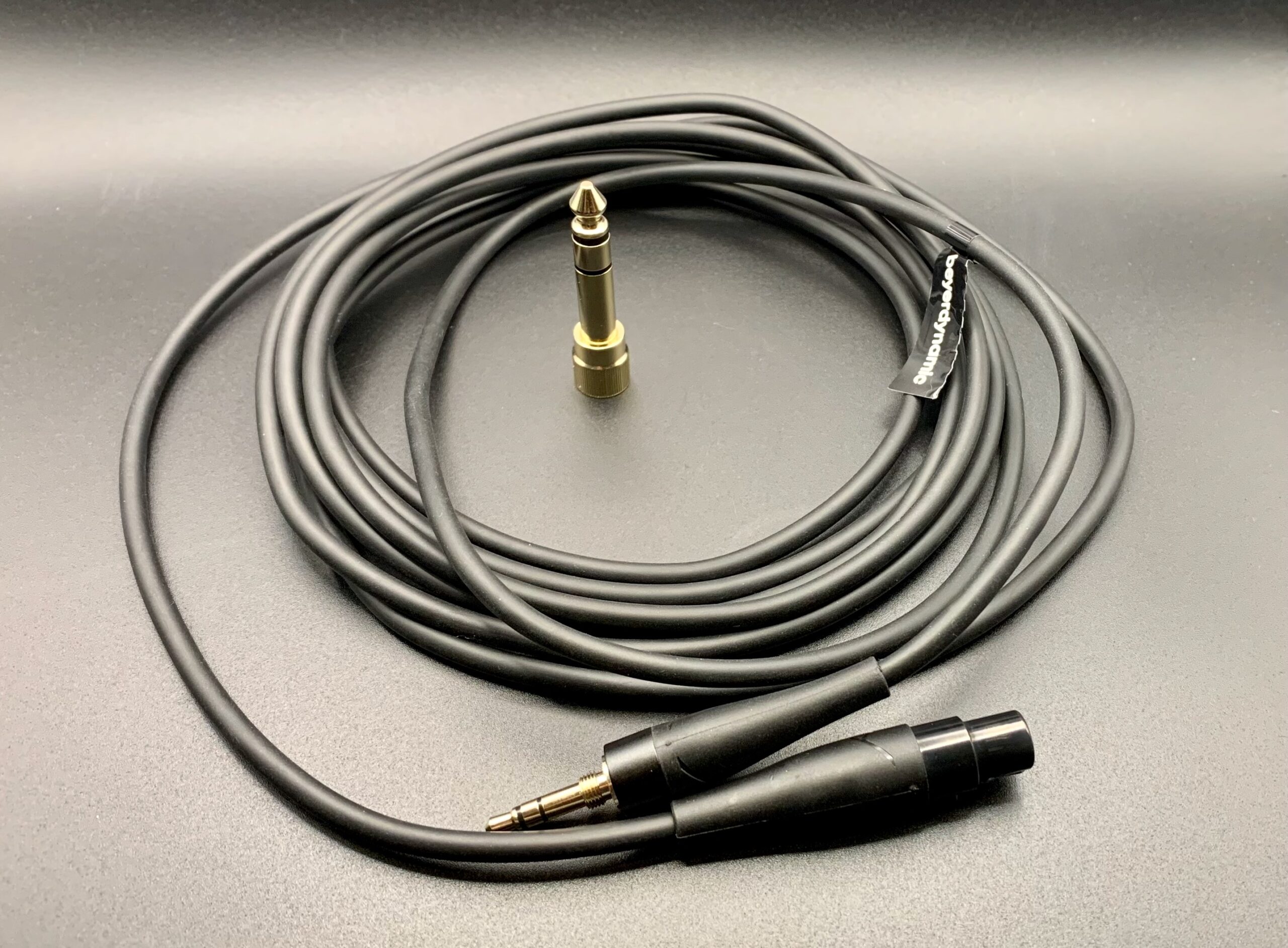
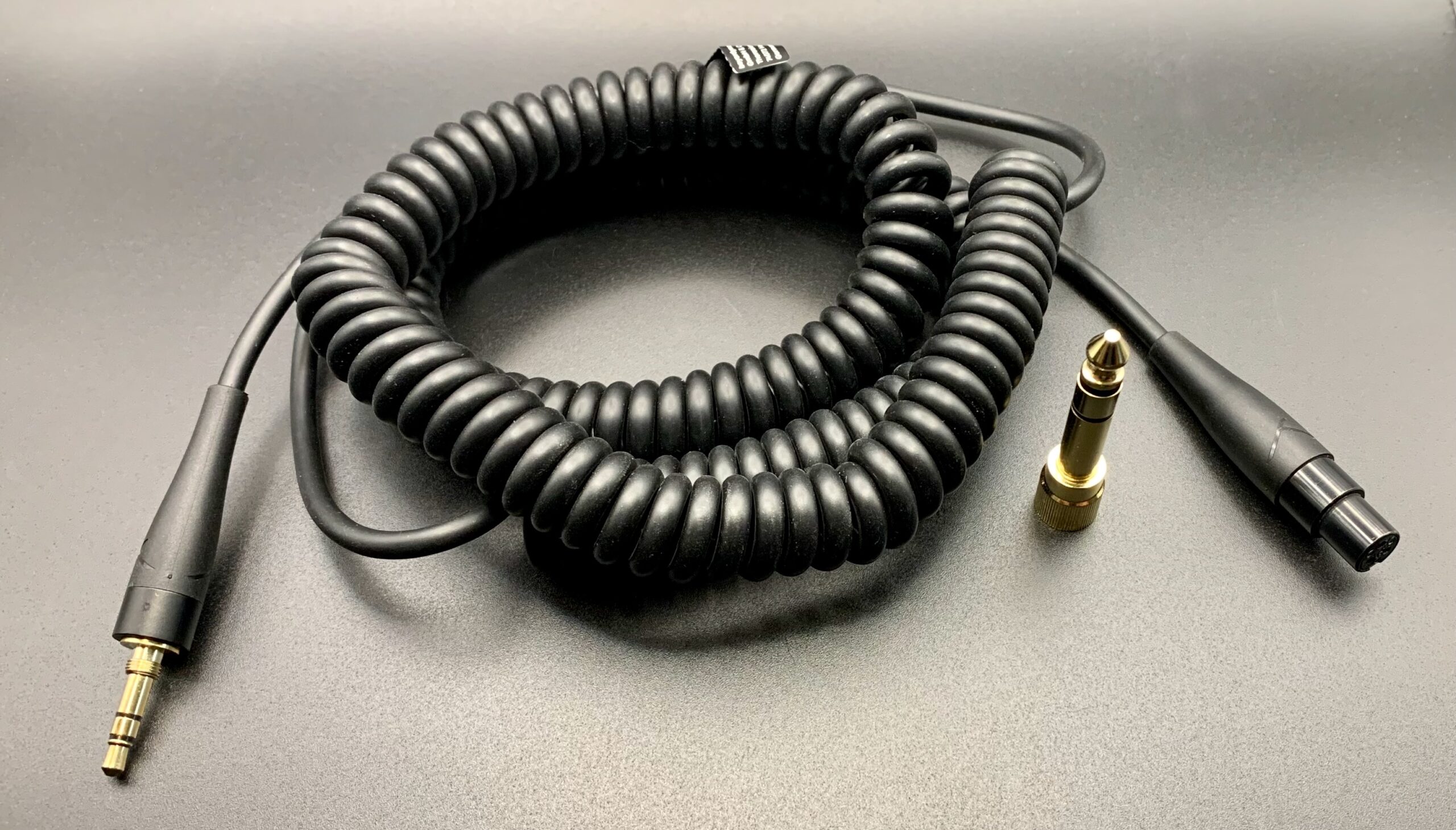
The DT 1990 PRO MKII is the most complete under this aspect. It includes two single ended cables, one coiled and one straight, with different lengths, offering greater flexibility depending on the use case. On top of that, it also includes interchangeable pads, allowing the sound signature to be adjusted and adding another level of customization. It should be noted though that balanced connectivity is not supported, the headphone uses a single sided mini XLR connection on the headphone side, a solution that does not allow independent channel separation and therefore limits the use of balanced cables.
AUNE SR7000
The SR7000 sits somewhere in the middle, but with a very interesting bundle. Alongside the single ended cable, it also includes a balanced cable, both featuring good build quality and pleasing aesthetics. A solution that expands usability without the need for additional accessories.
Overall, three distinct approaches emerge, OLLO more essential and open to customization, Beyerdynamic more complete and versatility oriented, and AUNE well balanced with a package already ready for different usage scenarios.
Design and design philosophy
This is where we really get into the core of these three headphones, because the differences are not simply aesthetic, they come from very different design philosophies.
OLLO X1
The X1 is probably the most “radical” in concept. It was not created to chase a target curve or to impress at first listen, but to solve a very specific problem, reducing human error during listening decisions.
The entire project revolves around consistency and predictability. The wood is not there for visual appeal, but acts as an active part of resonance management. Internal damping, the unforced tuning and the interaction with the ear are all designed to avoid emphasis and unpredictable behavior.
The goal is not spectacular perfection, but what can honestly be described as operational reliability.
Beyerdynamic DT 1990 PRO MKII
The DT 1990 PRO MKII follows a different but equally clear philosophy. It is not designed to impress, but to function as a tool.
The Tesla driver focuses on speed, control and precision, while the overall project aims for a more mature balance compared to the previous generation, especially in the treble region. The philosophy itself does not change, it simply becomes more refined.
Everything converges toward a few key concepts, precision, control and coherence. This is not a headphone trying to be immediately appealing, but one that takes time to fully appreciate.
AUNE SR7000
The SR7000 instead takes a more balanced and less ideological approach, but one that feels extremely well calibrated. The goal here is neither pure analysis nor correction of errors, but rather a coherent, enjoyable and technically solid presentation.
The project looks for a balance between musicality and precision, avoiding extremes and aiming for a listening experience that feels immediate while still remaining believable. It’s a headphone that works more through integration than through subtraction or rigid control.
Overall, three very different philosophies clearly emerge, OLLO focused on predictability and operational coherence, Beyerdynamic on precision and control, and AUNE on the balance between technical performance and musicality.
These are not just theoretical design choices, they become very evident during actual listening as well.
First sound impressions
Even from the very first listening sessions it becomes quite clear how the design choices directly reflect on the sound presentation.
The differences are definitely there, in some cases more obvious, in others more subtle, but all three headphones operate at a very high level, where the real difference is not overall quality itself, but the way music is interpreted.
Some focus more on impact and energy, others on balance and naturalness, others again on precision and control. Different approaches, perfectly coherent with what we already saw in the design philosophy section.
What becomes immediately apparent is that these are not “easy” products built to impress within the first few seconds, but headphones that need a bit of time to be fully understood and appreciated. None of them gave me an instant wow effect, but all of them became more interesting the longer I listened.
These first impressions will be explored much more deeply in Part Two, where we’ll move into the actual listening comparison in detail.
Part 1 summary
Before moving into the second part, it may be useful to summarize what emerged so far.
This summary is not meant to be a ranking and does not aim to define a winner, but simply to offer a quick overview of the differences between the three headphones, highlighting their respective strengths and overall design approach.
Rating guide
| Rating | Meaning |
| Adequate | Meets expectations without standing out |
| Good | Solid and convincing performance |
| Very good | High level performance with distinctive qualities |
| Excellent | Reference level within the category |
| Parameter | OLLO X1 | DT 1990 PRO MKII | AUNE SR7000 |
| Packaging | Good | Adequate | Very good |
| Case and transport | Very good | Good | Excellent |
| Accessories and cables | Adequate | Excellent | Very good |
| Build quality | Very good | Excellent | Very good |
| Earpads / Ergonomics | Very good | Good | Excellent |
| Comfort | Very good | Good | Excellent |
| Design philosophy | Excellent | Excellent | Very good |
The differences that emerged are more related to approach and philosophy than to absolute quality, which remains consistently high across all three models.
Closing thoughts, Part 1
In this first part we defined the context of the comparison and analyzed all the construction and design related aspects.
What becomes quite clear is that we are dealing with three genuinely high level headphones. You can already feel it from the packaging, from the attention given to presentation, but above all from the quality of the materials and the solidity of the projects behind them.
These are products developed with a very specific idea in mind, where every choice, from construction to included accessories, follows a coherent direction.
In the second part we’ll move into the real core of the comparison, with a deeper listening analysis. All the main aspects will be evaluated, detail retrieval, musicality, soundstage, dynamics, impact and behavior across the different frequency ranges.
That’s where the differences between these three headphones will emerge more clearly, along with the way each one interprets music.
And ultimately, that is where this comparison finds its real meaning.




No Comment! Be the first one.