





































































Preface
For some time, I had been looking for an amplifier that could do two things at once, without compromise: drive any headphone with authority while also fitting into a more structured system as a proper preamplifier.
Table Of Content
- Preface
- First Impressions
- Balanced Architecture
- Packaging and Accessories
- Technical Specifications
- A note on the N7D version
- Balanced Signal Path and Internal Structure
- Design: Ideas and Choices
- Connections and Controls
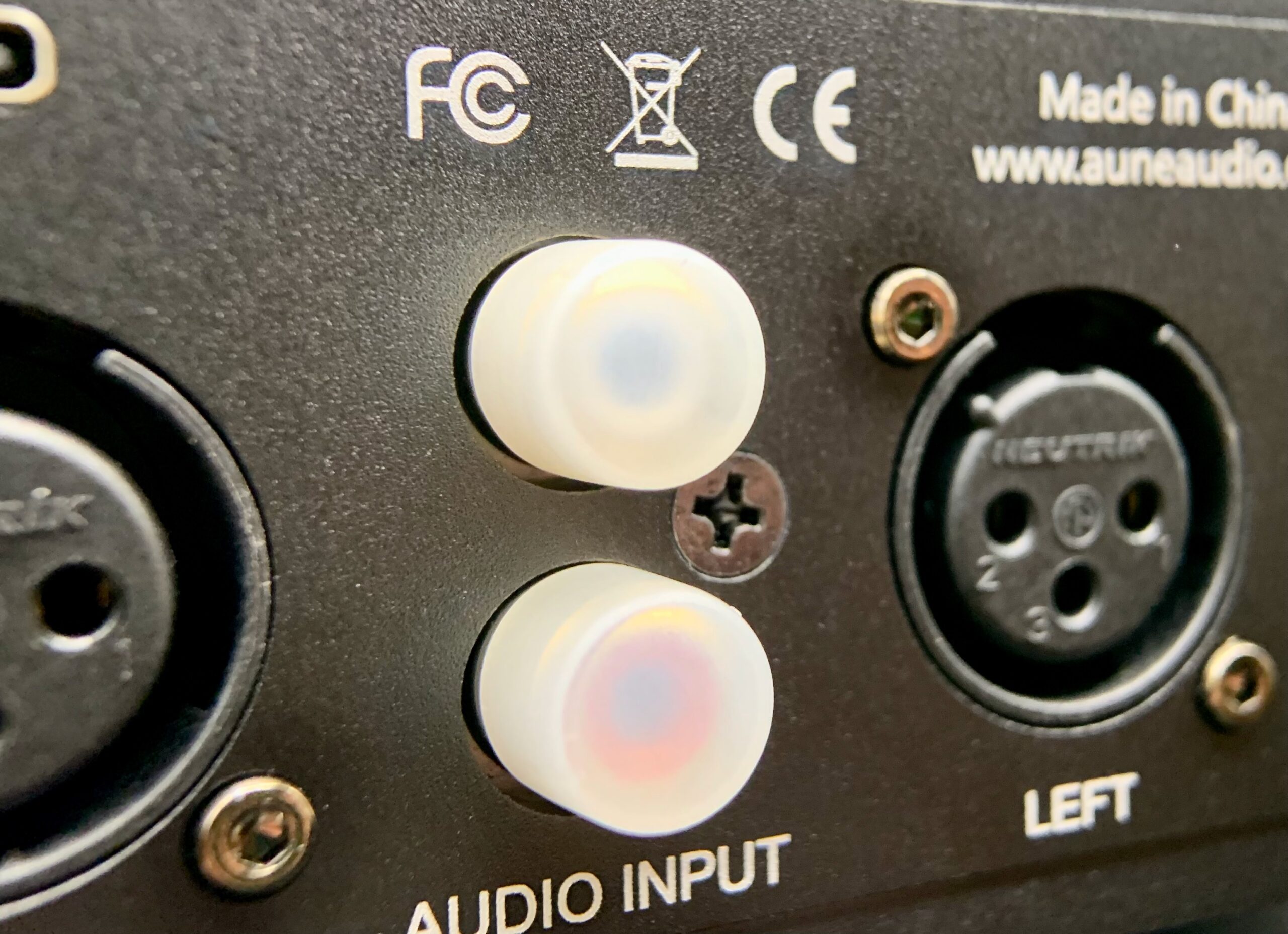
- Analog inputs
- Headphone outputs
- Line outputs
- Balanced Input & Output
- XLR Input
- Balanced Headphone Output (4.4 mm)
- Line Output (Preamp)
- General Sound Signature
- Upstream Sensitivity and Long-Term Listening
- Bass
- Midrange
- Treble
- Soundstage and Imaging
- Power
- Balanced vs Single-Ended (Real-World Use)
- Pairing with Topping D70
- How the N7 reshapes the presentation
- Comparison with Aune S17
- How they differ in practice
- Pairing with iFi Zen DAC Signature V2
- Used as a Preamp in Place of the AM Audio A5 with AM Audio A-40 Reference S2
- How it performs in a high-end chain
- Sources and real-world listening
- Final Thoughts
- Listening Experience and System Role
- Technical Perspective and Positioning
- VOTE
- 🟢 PRO
- 🔴 CONS
- Q/A
- Is it suitable for planar headphones?
- Is it quiet with IEMs?
- Can it replace a preamplifier?
- Yes, but don’t expect a dramatic change.
- Is it an analytical amplifier?
- Does it improve any system?
- Is it better in balanced or single-ended?
- Does it run hot?
- Is it an upgrade over the Aune S17?
- Acknowledgments and Personal Note
In recent years, the market has been flooded with highly technical solutions. Perfect on paper, but often not that engaging when it comes to actual listening. Impeccable measurements, yet a certain underlying coldness that, over time, tends to wear you out.
The Aune N7 comes from a different idea. Rather than chasing perfect measurements, it focuses on building a Class A amplifier that puts musicality at the center, without giving up power or control.
I used it both in a desktop setup, with dedicated DACs, and in my main system, as a preamplifier feeding a high-end power amp. The goal was simple: to understand whether it’s just a good headphone amplifier, or something more.
First Impressions
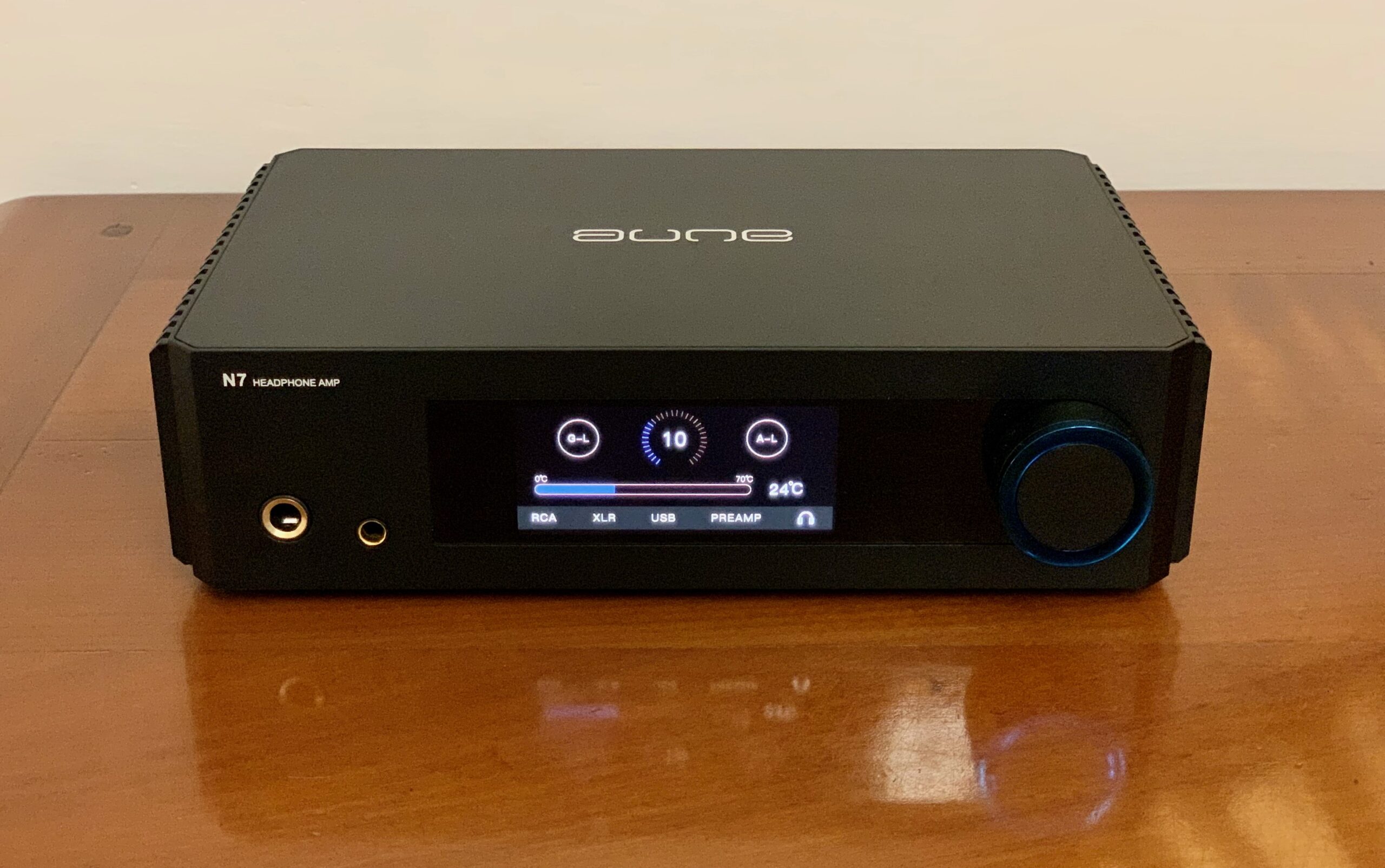
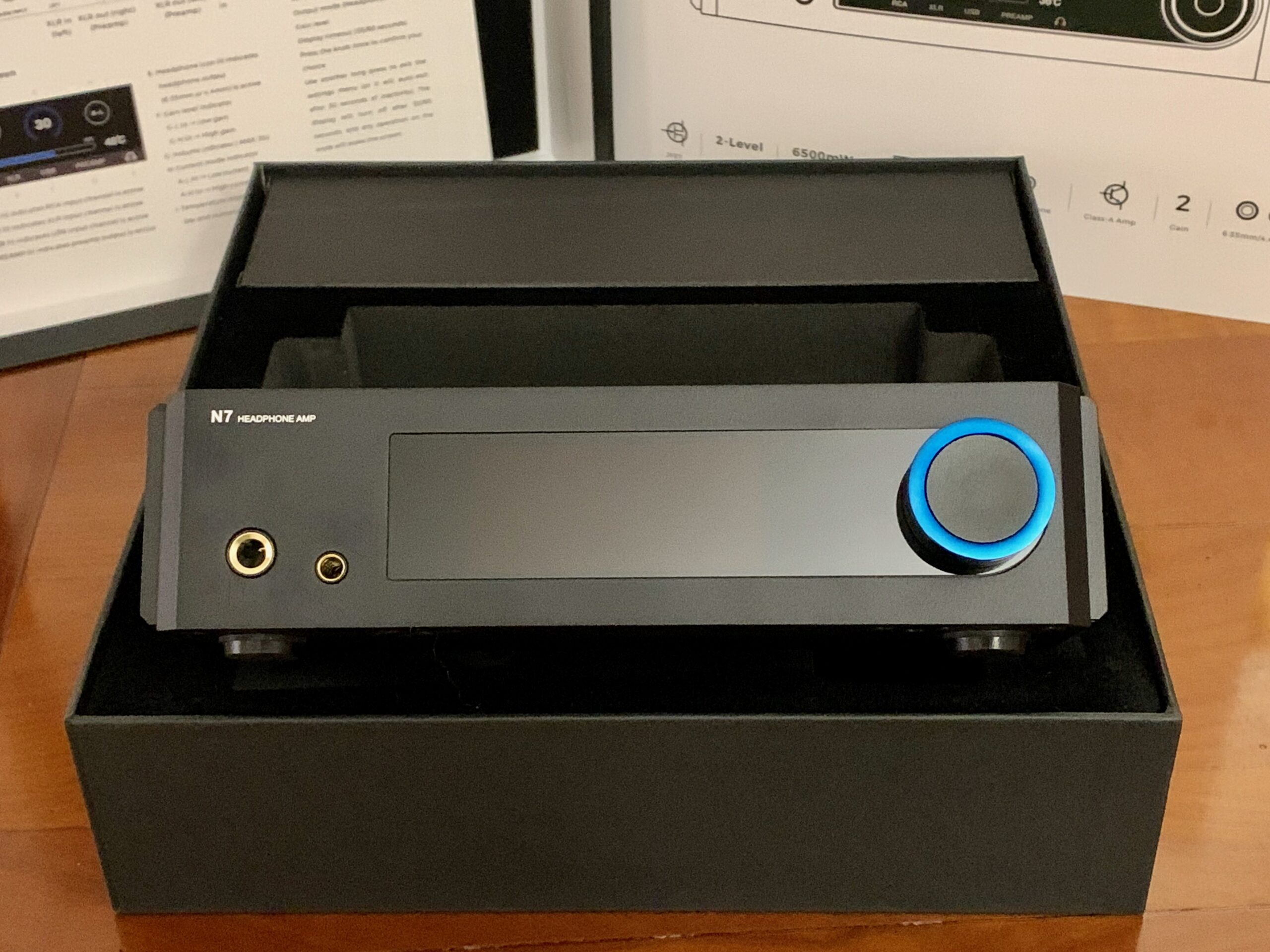
The first thing that struck me about the N7 is that it doesn’t try to show off.
It’s clean, solid, without unnecessary exaggeration. Simple lines, no flashy design tricks, but a presence that immediately conveys the sense of a serious piece of equipment, designed to perform rather than to be admired.
In hand, it feels substantial. It’s not one of those products that look bigger than they are. Here you get real material, real density, and an overall sense of reliability.
The volume knob is one of those details you notice right away. The steps are firm, precise, never loose. This isn’t your typical “fake” digital control, you can tell there’s something different behind it, something more mechanical, more tangible.
After a few minutes, the character of the product starts to come through. It’s not rushed, not nervous, it doesn’t try to impress at first glance. It’s one of those pieces of gear you understand only after spending real time listening.
And to me, that’s always a good starting point.
Balanced Architecture
The N7 is built around a fully balanced architecture, and this is more than just a checkbox on the spec sheet.
This isn’t simply about having XLR connectors or a balanced headphone output. The signal is handled in a symmetrical way throughout the entire circuit, from volume control to output stage, with two identical paths working in parallel.
It’s a more complex design choice, but one with a clear goal: maintaining signal integrity, reducing interference, and preserving consistency across the entire chain.
This isn’t something that jumps out immediately as an effect, but it plays a key role in that overall sense of stability, coherence, and naturalness that defines the N7.

Packaging and Accessories
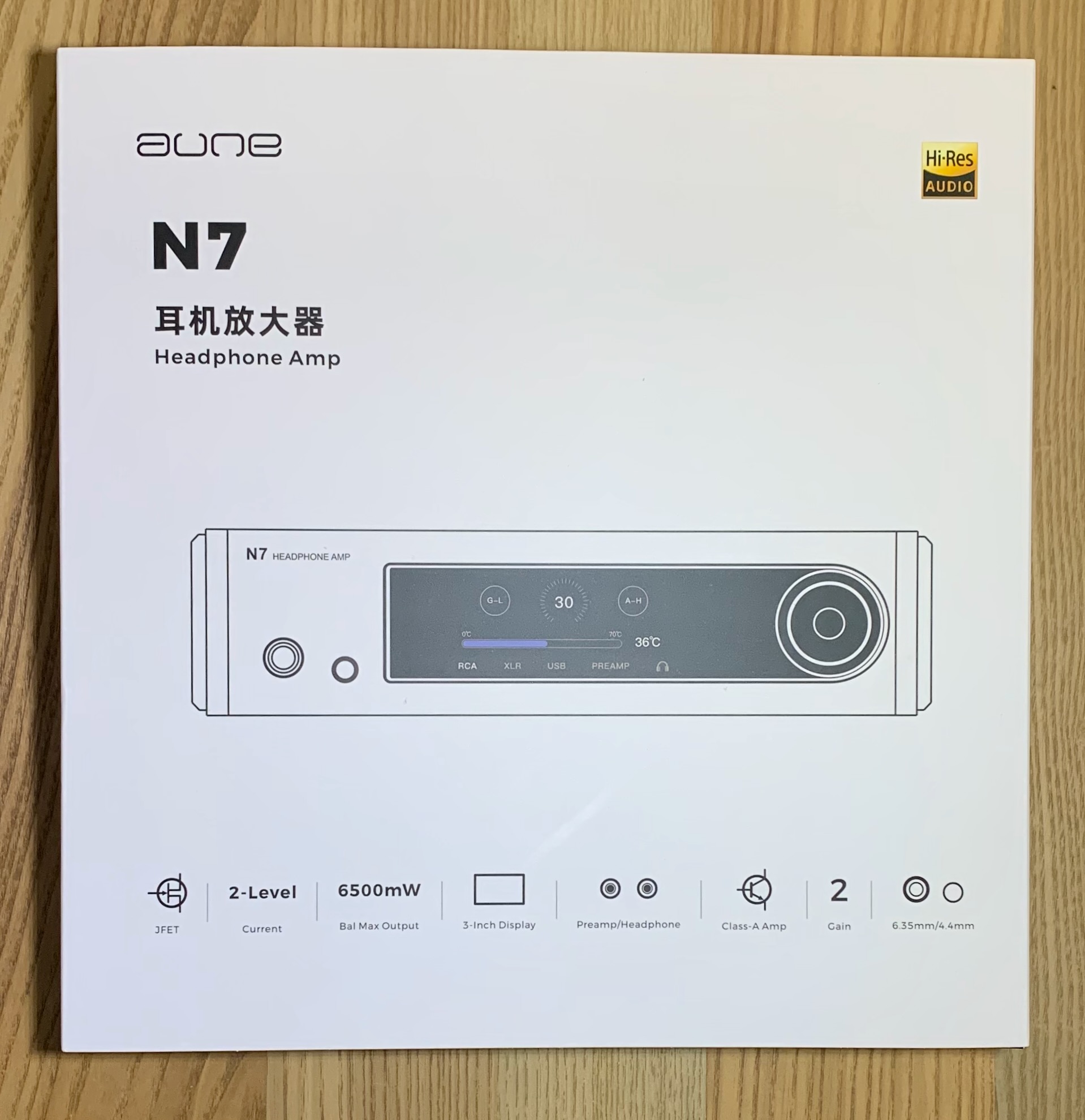
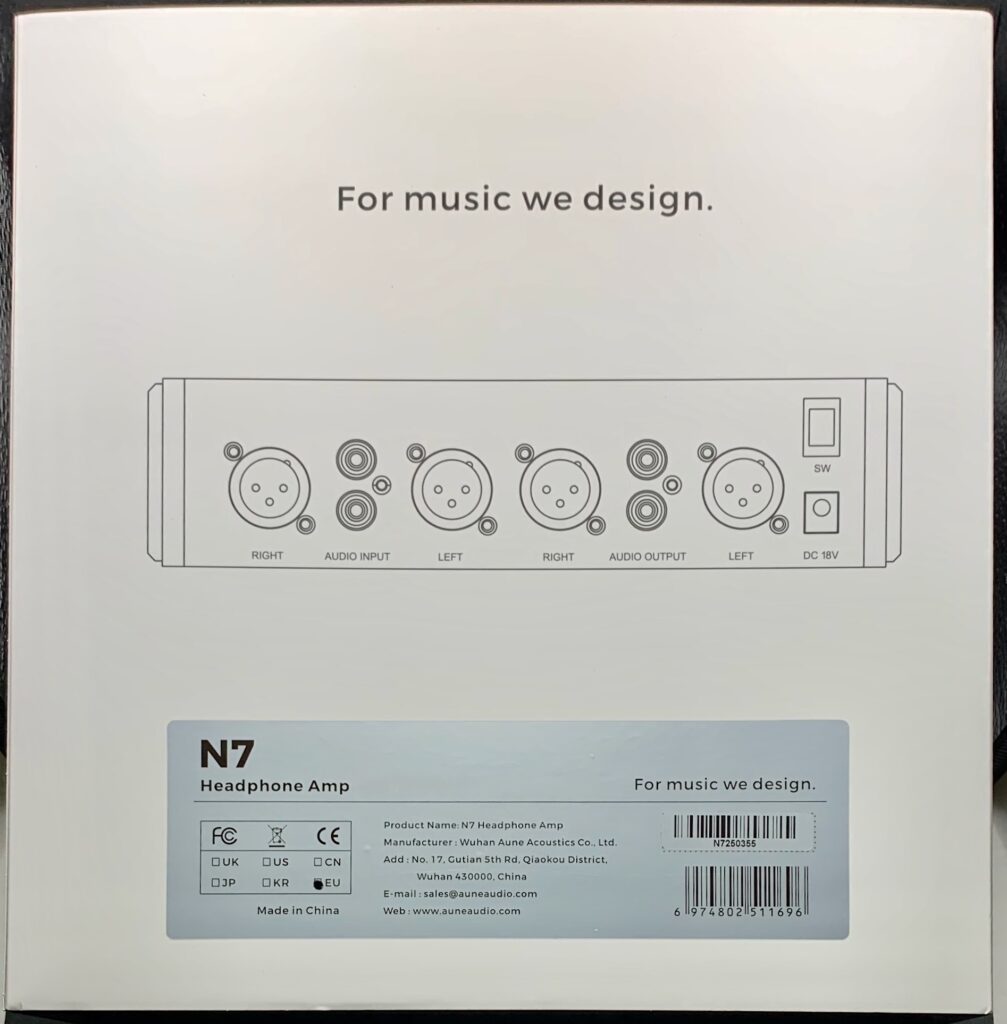
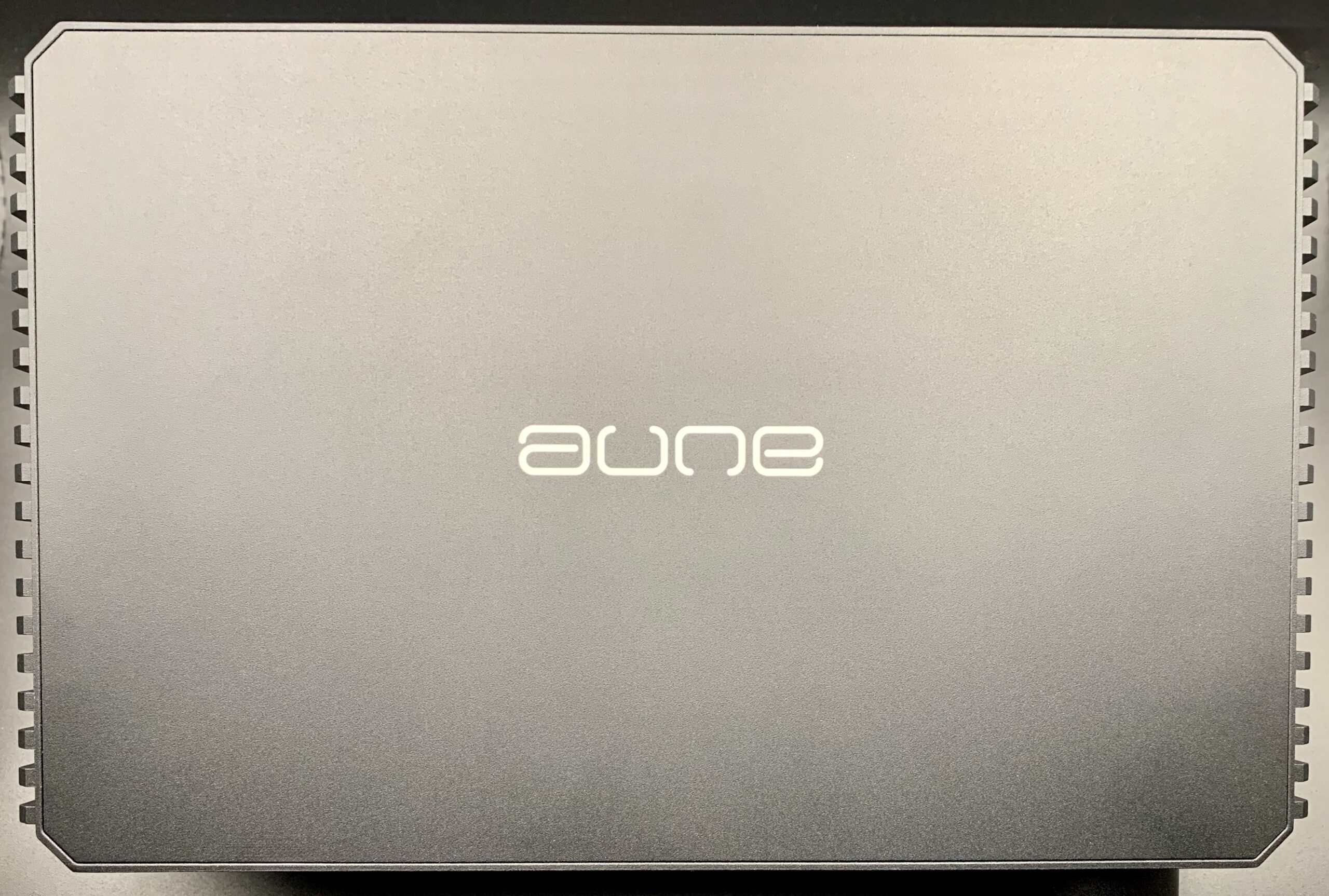
The packaging is simple, no unnecessary “wow effect”, but perfectly in line with the product.
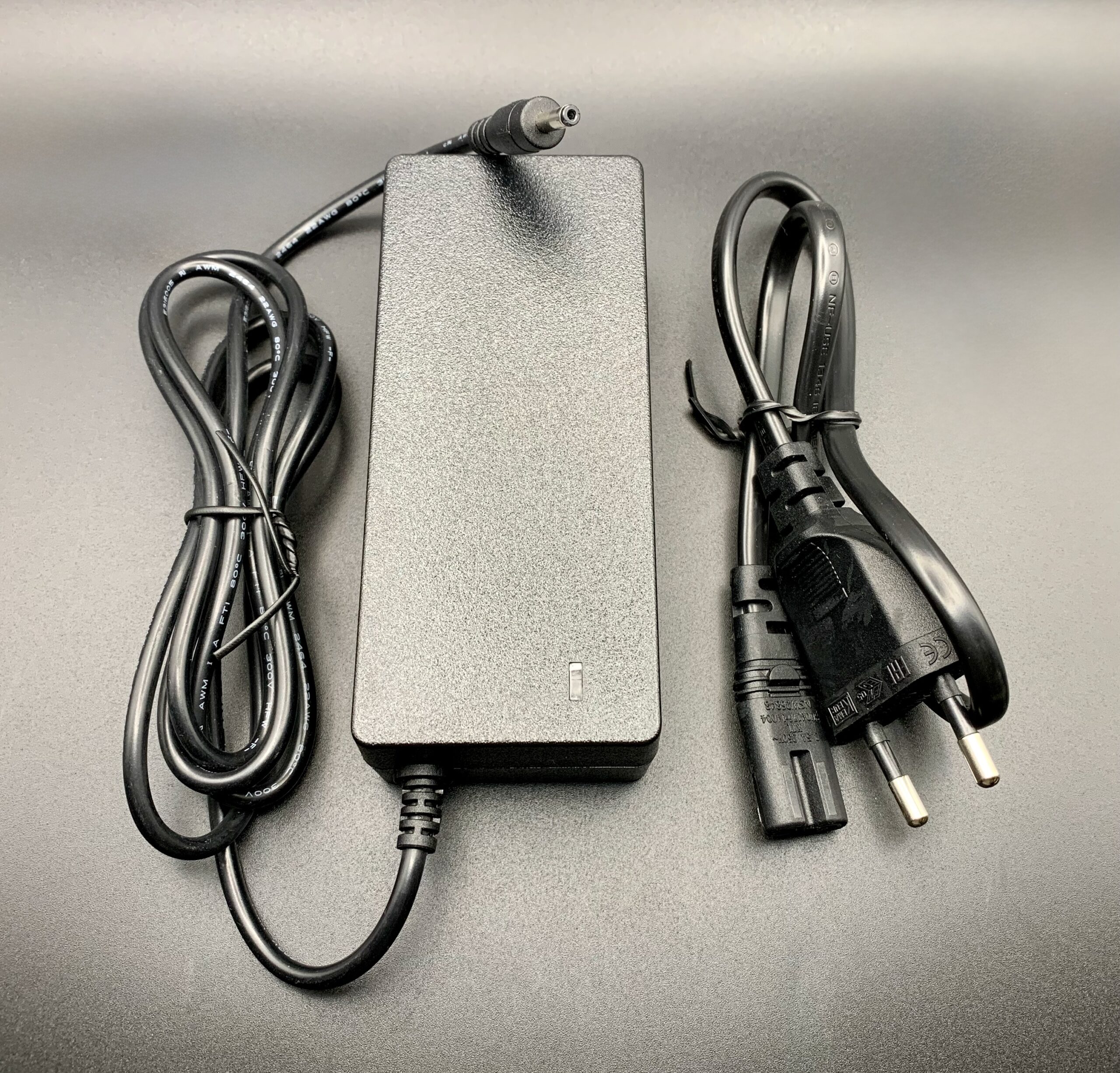
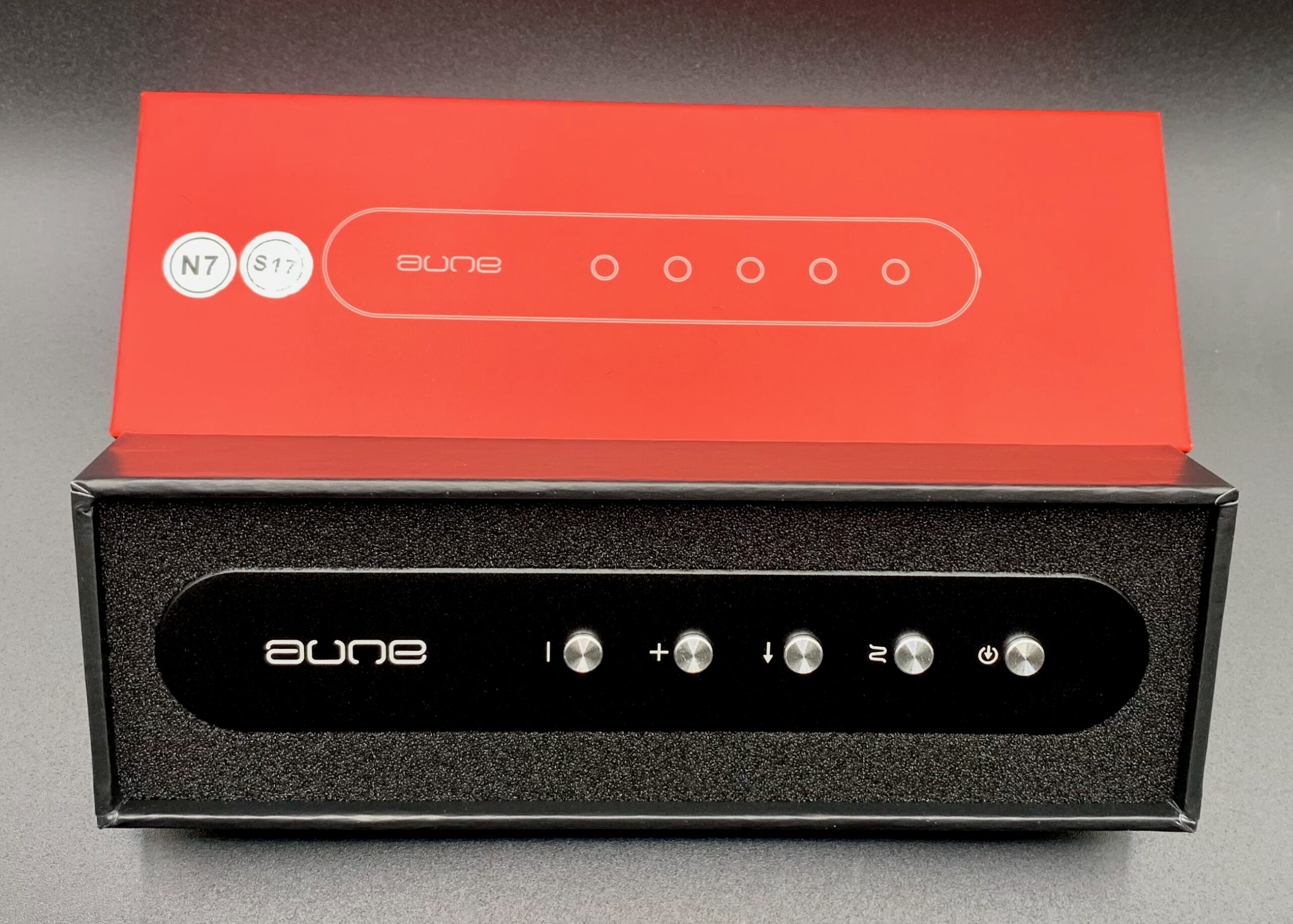
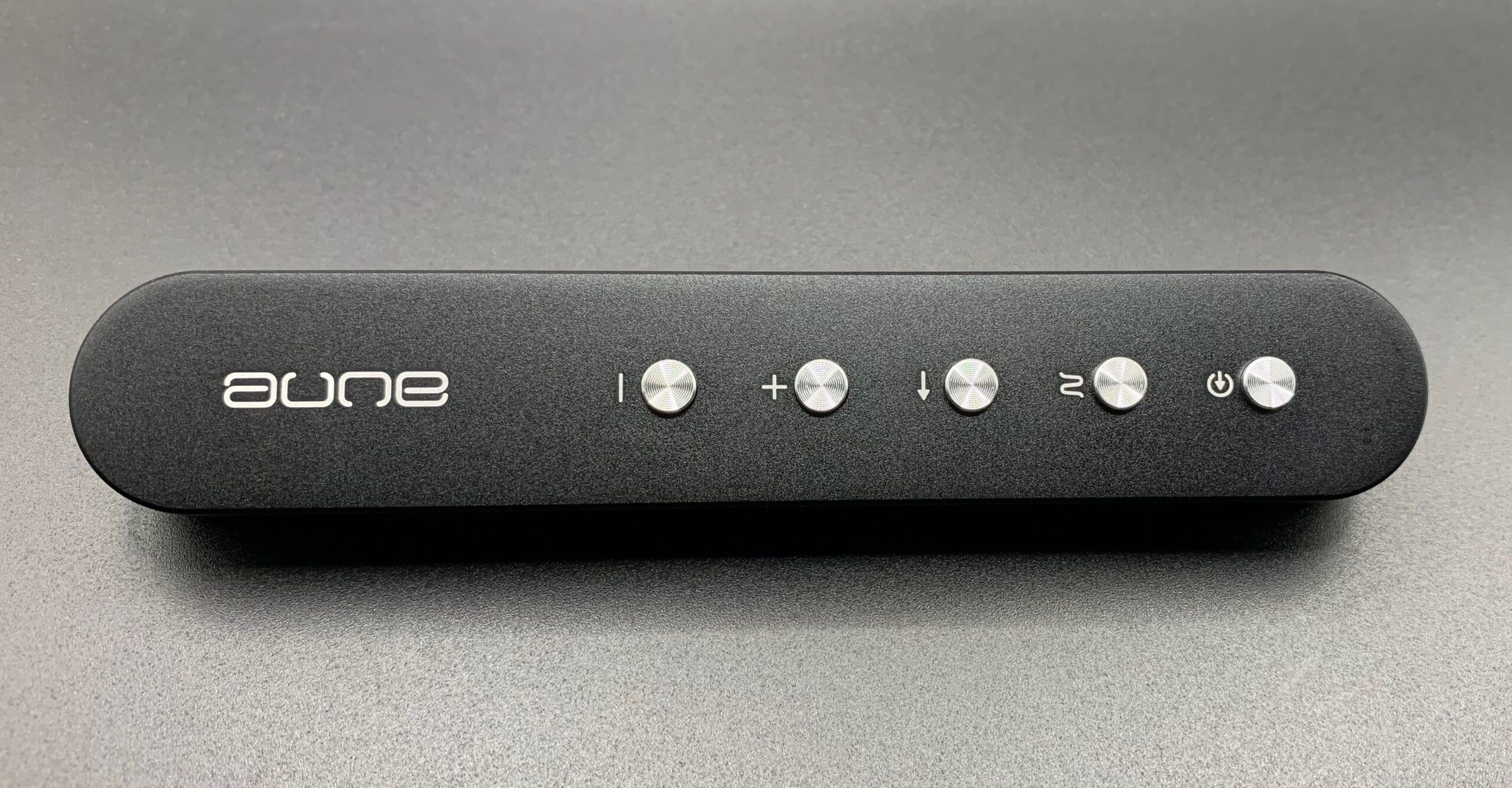
Inside, you get exactly what you need, nothing more, nothing less. Power cable, unit, manual, and a remote that, on paper, almost looks too basic… until you actually start using it.
And that’s where you realize something important: the Aune N7 wasn’t designed just as a desktop headphone amp.
The remote is minimal, almost essential, but it does exactly what it’s supposed to do. Volume, input selection, direct control. No extras, but more importantly, no need to get up every time. Once you place it in a chain with a power amp and speakers, it completely changes the experience.
It’s one of those details that tells you there was a clear idea behind it: this is meant to work in a proper system, not just sit on a desk.
The weight follows the same logic. It’s not an overbuilt brick, but it’s definitely not one of those lightweight units that move just by touching the cables. It stays put, stable, even with heavier cables and balanced connectors pulling on it.
And this leads to a broader point.
These days you often see massive, heavy products with impressive chassis… and surprisingly little inside. A lot of volume, very little substance. The Aune N7 is the opposite. It doesn’t try to impress with size or weight, but once you use it, you realize everything is proportioned, everything makes sense.
It’s built to work, not to show off.
Technical Specifications
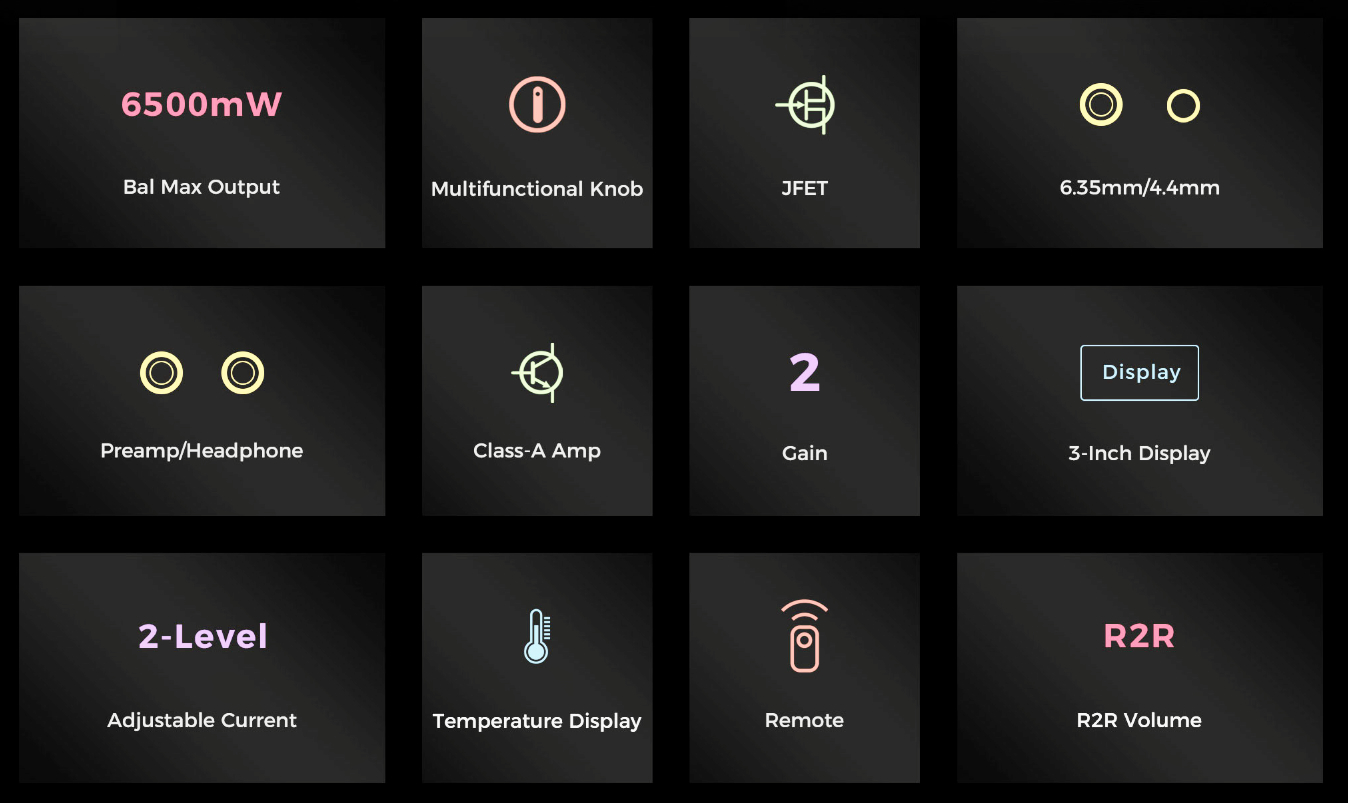
Before getting into the sound, it’s worth taking a moment to look at the specs. Not just to list them, but because in this case, they actually tell you something.
These aren’t the usual numbers thrown in for marketing. There’s real engineering behind them, with deliberate and non-trivial design choices, especially considering how compact the N7 is.
It’s one of those products where you immediately understand there are no shortcuts. True Class A operation, a fully discrete circuit, an R2R volume control… all choices that make sense not only on paper, but also in actual listening.
And what’s not so common these days is that all of this is packed into a headphone amplifier that doesn’t take up half a rack or weigh as much as a 30 kg power amp.
Here are the main specifications:
| Feature | Specification |
| Amplification | Pure Class A, discrete circuit |
| Architecture | Fully balanced |
| Input stage | JFET |
| Output stage | BJT |
| Volume control | R2R resistor ladder (30 steps) |
| Power (32Ω) | ~6.5W |
| Power (600Ω) | ~370mW |
| THD+N | < 0.0004% |
| SNR | ~105 dB |
| Output impedance | ~1Ω |
| Power consumption | ~36W |
What stands out is not any single spec, but the whole picture.
The power is real, not just there for show. The volume control isn’t a cheap digital implementation, but a proper resistor-based solution. The architecture is fully balanced and the circuit is discrete, so no all-in-one chips doing everything.
This is real engineering, condensed into a compact form.
And that’s the key point: the N7 doesn’t try to look like a big, overbuilt product, but inside it carries design choices you’d expect from a much higher-end piece of gear.
That same design philosophy also extends to another version of the product.
A note on the N7D version
There is also a DAC-equipped version, the N7D, which adds an integrated digital section while keeping the same overall philosophy.
I haven’t tested it directly, so this is not meant to be a judgment on its sound. But if even a small part of what Aune has done with the S series, or even with something compact like the Yuki, carries over into this model, the result could be a very complete and versatile product.
A device able to offer the same natural and coherent listening experience, while adding the convenience of an internal DAC, would make the N7D a very compelling option for those looking for an all-in-one unit without giving up a serious Class A foundation.
More than for any single feature, its appeal would lie in the overall balance: naturalness, versatility, and coherence.
Balanced Signal Path and Internal Structure
The fully balanced architecture is not just about connectivity, it sits at the core of how the N7 operates.
While it offers both RCA and XLR inputs and outputs, the amplifier clearly performs at its best when used in balanced mode. The signal path remains symmetrical, supported by a 4-channel R2R volume control and a fully discrete differential stage.
This approach allows for better signal-to-noise ratio, improved channel separation, and greater stability, especially as the system becomes more complex or when longer cable runs are involved.
It’s not about changing the sound, but about preserving it more effectively throughout the entire signal path.
Design: Ideas and Choices
The Aune N7 is clearly a project built around a very specific idea.
It wasn’t designed to chase numbers or to fit within the usual compromises of this price range. Instead, it focuses on a classic approach, done properly: true Class A operation, a fully discrete circuit, and a current management system designed to maintain stability and consistency even as demand increases.
One interesting aspect is the ability to choose between two Class A operating modes with different current levels. This isn’t a marketing feature, but a practical way to adapt the amplifier’s behavior depending on how you use it. One mode runs at a lower bias current, offering a more efficient and cooler operation, while the other increases the current to deliver the best possible performance in terms of consistency, control, and overall coherence.
The difference lies in the bias current, not in the amplification class itself.
The power supply follows the same philosophy. This isn’t a cheap, “good enough” solution just to make it work, but a section designed to provide clean, stable current, reducing noise and properly supporting the Class A stage when needed.
There are no shortcuts here. Every choice seems to point in the same direction: signal continuity and real-world sound quality, even at the cost of greater complexity.
It’s a well-thought-out design, not something built to show off. And over time, that matters more than any spec sheet.
Connections and Controls
One of the most interesting things about the N7 is that it wasn’t designed as just a headphone amplifier.
It’s clearly meant to sit at the center of a system, with a level of versatility that goes beyond typical desktop use.
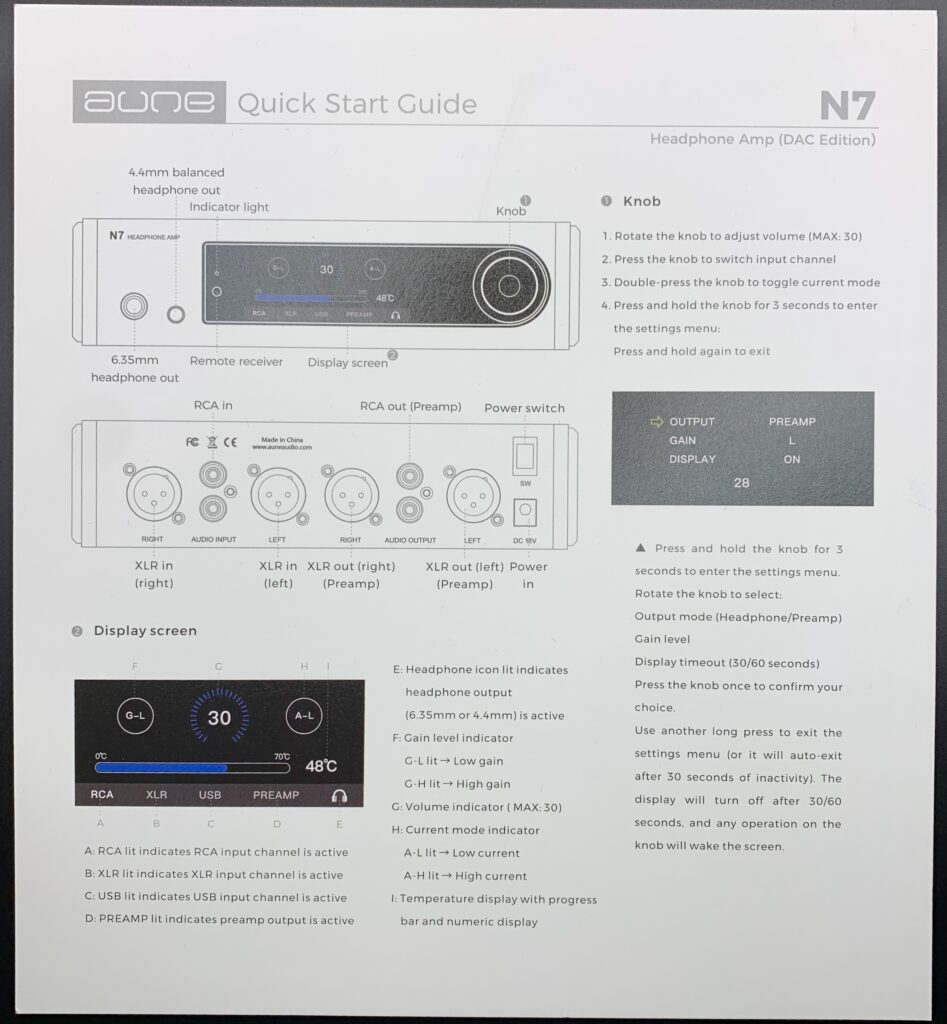
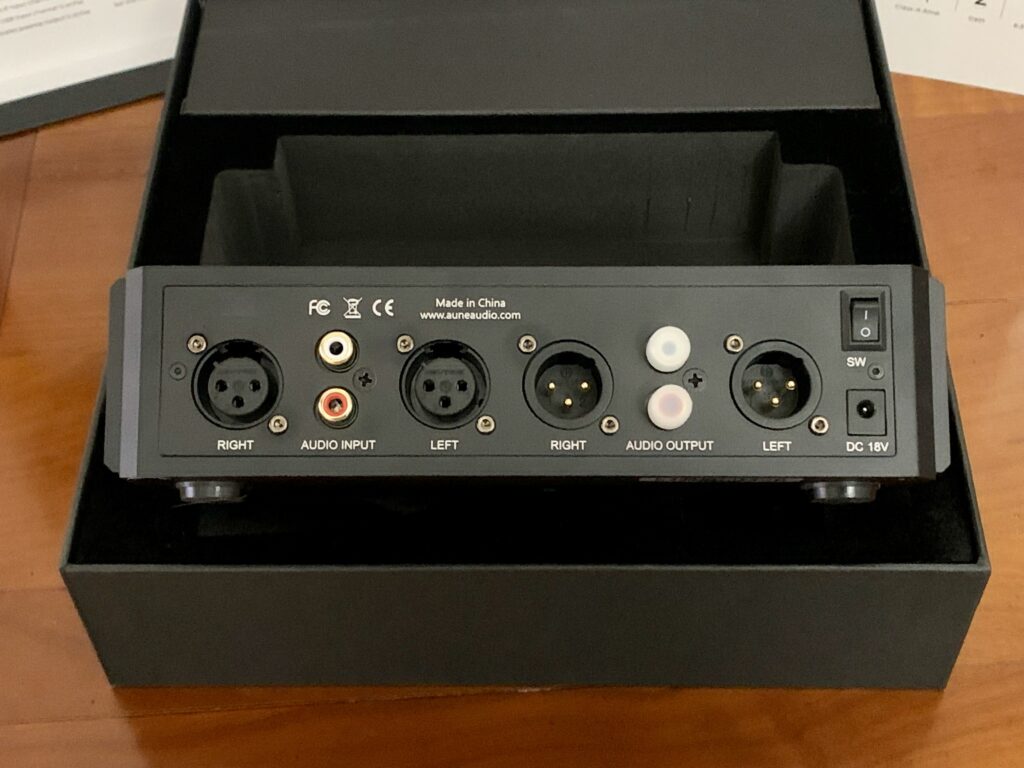
In terms of connectivity, everything you need is there, both for headphones and for a full system setup:
Analog inputs
• RCA
• XLR
Headphone outputs
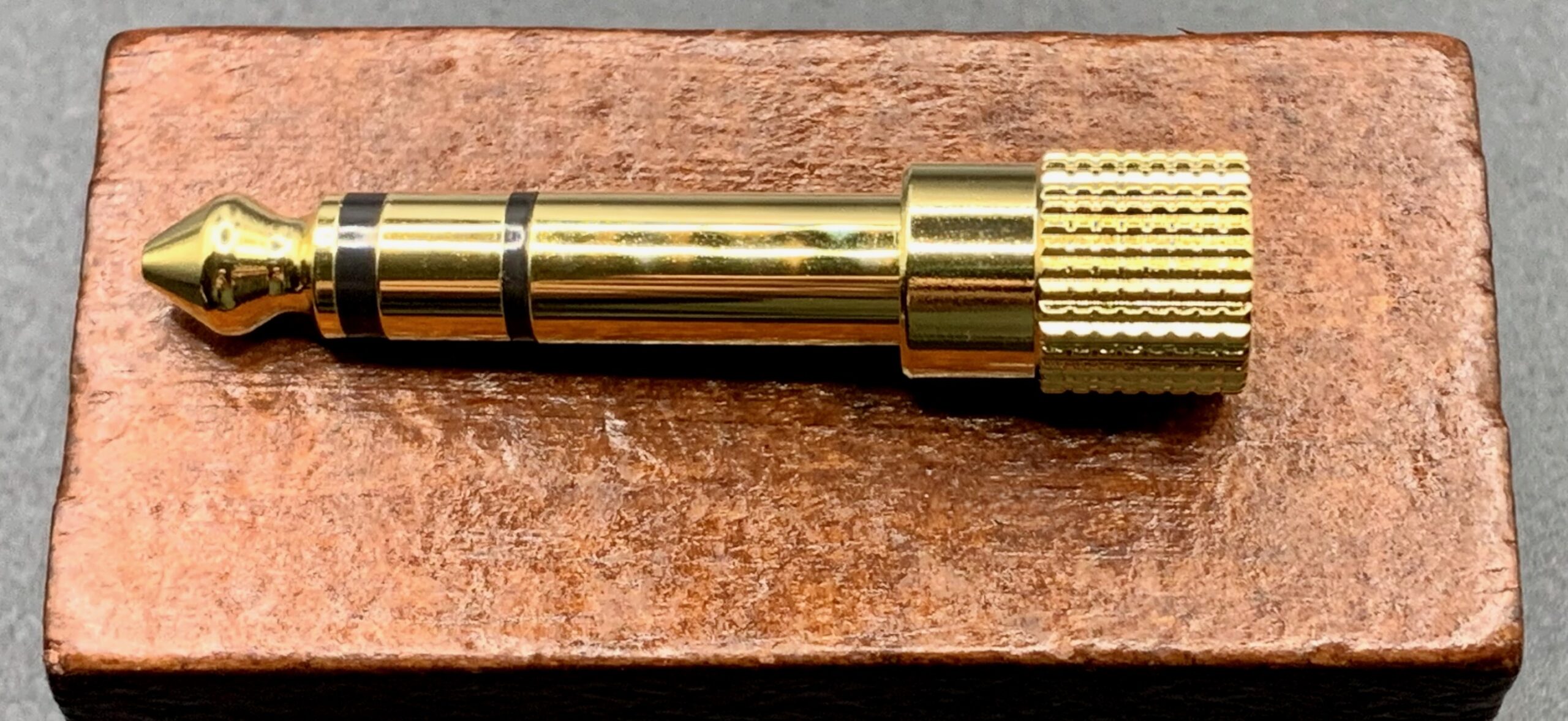
• 6.35 mm
• 4.4 mm balanced
Line outputs
• RCA
• XLR
In practical terms, this means you can use it in multiple ways without changing anything in your chain.
As a pure headphone amp, it works flawlessly. But once you place it between a source and a power amp, the perspective changes. It becomes a true control center, handling volume, input selection, and overall operation in a way you wouldn’t necessarily expect from a product like this.
The stepped volume control is precise and gives a strong sense of solidity. Each step is clear and consistent, although the 30 available steps, especially with more demanding headphones, can sometimes make you wish for a bit more fine adjustment.
The interface is minimal. It does what it needs to do, but it’s not immediately intuitive. After a few days it becomes second nature, but it’s not designed to impress, it’s designed to work.
Overall, it’s a very straightforward approach. Everything is there to be used, not to show off.
Balanced Input & Output
One of the most interesting aspects of the N7 is how it handles balanced operation, both at the input and output stages.
XLR Input
Using the XLR input helps maintain a cleaner signal, especially in more complex setups or with longer cable runs. Balanced transmission is designed to reduce external noise and interference, and while the difference may not always be dramatic in simpler systems, it becomes increasingly relevant as the system grows.
Balanced Headphone Output (4.4 mm)
With headphones, the advantage goes beyond noise reduction. In balanced mode, the N7 can deliver more voltage and current, resulting in better control and authority. This is particularly noticeable with planar headphones or more demanding loads.
It’s not just about higher volume, but about stability and effortlessness under load.
Line Output (Preamp)
When used as a preamp via XLR, the N7 maintains a cleaner and more stable signal path. It doesn’t change the character of the sound, but it helps preserve its integrity throughout the system, especially in more structured setups.
General Sound Signature
You start to understand the character of the N7 fairly quickly, but you only really appreciate it after a few hours.
It’s not an amplifier that hits you right away with boosted detail or “wow” effects. It does something much harder: it puts you in a position where you can just listen, without fatigue.
The tuning is natural and balanced, with a slight warmth that never turns dark or closed in. There’s no emphasis on any particular frequency range, nothing trying to stand out. Everything stays in its place, with a level of coherence that’s not easy to find in this range.
You can hear the Class A approach, but not in the overly “romantic” way it’s often described. It’s not thick or slow. It’s about continuity. Notes flow without interruption, without that subtle sense of artificiality you sometimes get with more aggressive or analytical amplification.
The work done on the circuit and power supply is also clearly audible. The background is clean and silent, with no noise or grain. But more importantly, nothing ever feels forced or artificially enhanced.
Upstream Sensitivity and Long-Term Listening
There’s one important point, though.
This kind of amplification doesn’t forgive what comes before it. If the signal is good, the N7 delivers it with naturalness and coherence. If the source is weak or the file is mediocre, it won’t perform miracles. It won’t create information that isn’t there, and it won’t fix what’s already compromised. At best, it makes things a bit more listenable, but the substance remains the same.
It’s one of those products that only gives its best when the rest of the chain is up to the task.
And when that happens, the amplifier disappears.
All that’s left is the music.
Over time, what really stands out is how little fatigue it introduces.
Even after long sessions, there’s no sense of tension or need to stop.
And that’s not something you notice immediately, but something you appreciate the more you listen.
Bass
The N7’s bass doesn’t try to impress, and that’s exactly why it works.
It’s not the kind that hits you with slam and gives you the illusion of more energy. The impact here is more controlled, more realistic. But once you start listening carefully, you realize there’s much more going on than it first appears.
What really comes through is the quality of its structure. The bass is full and solid, but never bloated. It doesn’t intrude, it doesn’t blur, and it doesn’t take up space that isn’t its own. It remains clear and readable, even when the track gets complex.
Sub-bass is there, and it extends well, but it never tries to stand out just to impress. It shows up when it should, and most importantly, it stays coherent with the rest of the spectrum. You never get the feeling of a “boosted” bass, but rather something that belongs naturally to the whole.
What really stands out is the texture. You can easily pick up on variations, the type of attack, the body of the instrument. It’s not a spectacular bass, it’s a correct one.
And this kind of presentation doesn’t win you over in five minutes. It doesn’t create that demo effect. But once you start listening to full albums, different genres, recordings of varying quality, you realize it’s much harder to achieve than an emphasized bass.
Because it’s not meant to impress. It’s meant to work, every time.
Midrange
If there’s one area where the N7 clearly stands out, it’s here.
The midrange has a very natural presence, but above all, it feels believable. It’s not pushed forward to grab attention, nor pulled back to sound more “hi-fi”. It simply sits where it should.
Vocals are the first real test, and here the N7 does a very clean job. It doesn’t thicken them, it doesn’t artificially smooth them out, but it reproduces body and texture in a convincing way. You can clearly hear the difference between a rougher voice and a softer one without anything feeling forced.
The same applies to instruments. Guitars, in particular, come across as very realistic. They never become sharp, but they’re not smoothed out to the point of losing character either. That sense of material, of string, of vibration is always there.
This is where Class A comes into play, but not as a “warm” effect for its own sake. It’s more about continuity. Notes connect naturally, without breaks, without that slight hardness you sometimes notice with more aggressive amplifications.
It’s a midrange that doesn’t try to impress, but one that rarely becomes tiring. And more importantly, it works with everything.
Treble
The upper range follows exactly the same philosophy as the rest of the N7.
There’s extension and air, but never that sense of trying to highlight every detail at all costs. It’s not a bright sound, not the kind of amplifier that immediately draws your attention to cymbals or the farthest reverb tails.
Everything feels more integrated, more natural.
The treble is clean, never grainy or rough, and most importantly, it never becomes aggressive. Even with less-than-perfect recordings, where other amplifiers can turn edgy, the N7 maintains control.
On the downside, a bit of bite on the attack is softened. Transients are slightly smoother, less sharp. This isn’t the kind of presentation that puts everything under a microscope.
But it’s a deliberate choice, consistent with the overall tuning.
It doesn’t aim to impress with detail, but to maintain balance and long-term listenability. And over time, that approach makes a lot of sense.
Soundstage and Imaging
The stage is well constructed, with a good overall sense of space.
Width is there, but it’s the depth that really makes the difference. Rather than expanding everything sideways, the N7 focuses on layering, creating a sense of space that feels more believable than spectacular.
That said, it’s important to clarify one thing.
The stage doesn’t originate here. If the upstream signal is well structured, with a good recording and headphones capable of reproducing it, the N7 keeps it clean and readable, without compressing or blurring it. If the stage is flat to begin with, the amplifier won’t rebuild it.
What it does instead is refine it. It can make the presentation slightly smoother or more cohesive, improve instrument separation, but it won’t artificially “expand” the space.
Instruments remain well placed, with a natural positioning that makes the music easy to follow.
This isn’t a stage that tries to impress. It’s a stage that respects what’s there.

Power
The N7’s power isn’t just a number, you can actually hear it.
This isn’t one of those cases where you get big watt figures on paper but something feels missing in practice. Here, the first impression is headroom, but more importantly, control.
Even with more demanding headphones, it never struggles. It doesn’t compress, it doesn’t harden, and it doesn’t change character as you raise the volume. It stays stable, and that’s what stands out the most.
The sense of headroom is very clear. You’re never pushing it to the limit, never feeling like you have to “drive” the amplifier to get the best out of your headphones. Everything comes through naturally, without any sense of effort.
And this applies both in headphone use and when used as a preamp. The signal remains clean and solid, with no signs of strain even as demand increases.
It’s not just powerful. It’s usable power, always under control.
Another aspect worth mentioning is consistency across different headphones.
The N7 doesn’t drastically change its character depending on the load.
It adapts, but it always keeps its core identity intact.
Balanced vs Single-Ended (Real-World Use)
Even without a strict A/B comparison, it’s clear that the N7 is designed to perform at its best in balanced mode.
The overall impression is one of greater headroom, with dynamics that feel more open and a stronger sense of control, especially with more demanding headphones. It’s not a dramatic shift in character, but something you notice in how effortlessly everything is handled.
In single-ended mode, the N7 still performs very well, maintaining its coherence and tonal balance. But balanced operation seems to better exploit the amplifier’s internal structure, resulting in a presentation that feels more stable and complete.
Pairing with Topping D70
From signal to shape
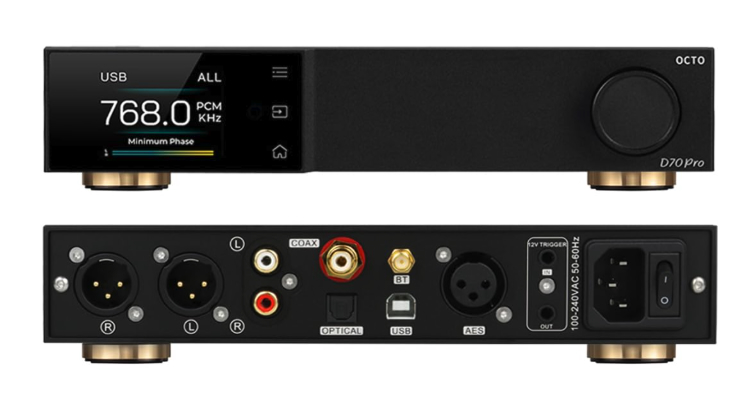
The pairing with the D70 is interesting, but it needs to be understood in the right way.
The D70 is a very clean, very correct source. It does its job without adding anything of its own. It’s precise, well organized, with a clearly defined soundstage and excellent separation. It’s one of those DACs that gives you the feeling that everything is under control.
Once you place the N7 into the chain, the way that signal comes through changes.
Not because it’s altered, but because it takes shape.
That’s the first thing you notice. On its own, the D70 presents a sound that is very well defined, almost “outlined”. With the N7 in the chain, everything becomes more continuous, less segmented. All the information is still there, but it connects more naturally.
How the N7 reshapes the presentation
In the bass, the D70 keeps things tight and direct. It’s precise, but can feel a bit light in physical presence. The N7 adds body without boosting it. It doesn’t change the quantity, it changes the substance. The bass becomes more tangible, while remaining controlled.
In the midrange, the synergy becomes even more evident. The D70 is clean and correct, but slightly distant. The N7 brings everything closer, without forcing it. Vocals gain weight and substance, without turning artificially warm. They simply become more believable.
The treble follows the same logic. The D70 is more explicit and open, highlighting details more clearly. The N7 presents them in a more natural way, less forward but also less fatiguing. You don’t lose information, but the way it’s delivered changes.
And then there’s the soundstage.
The D70 builds a well-defined space, with clear separation. The N7 doesn’t expand it artificially, but makes it more coherent. Instruments are not just separated, they feel more “inside” the space, more realistic in their placement.
In the end, what really changes is the relationship between the two.
The D70 defines the signal.
The N7 gives it shape.
And when used together, you realize that the balance between precision and musicality is what makes the whole system work.
Comparison with Aune S17
Same philosophy, different expression
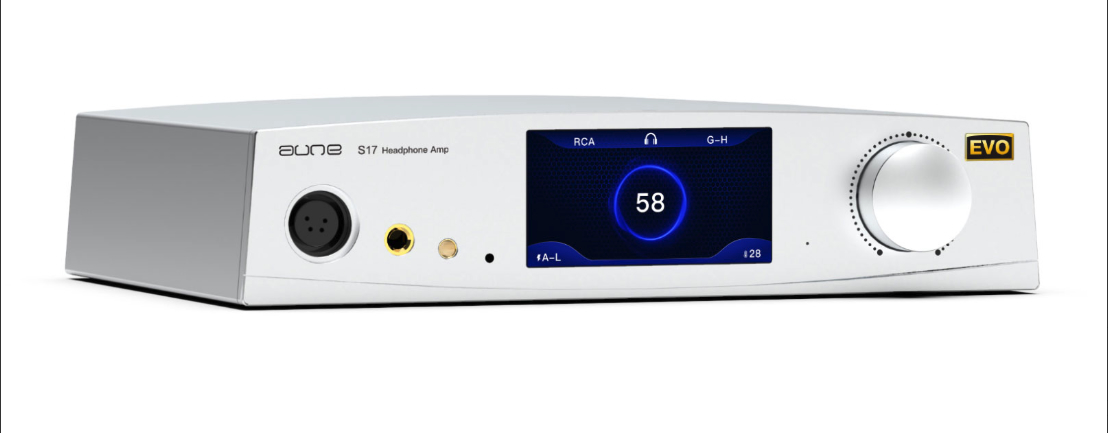
The comparison with the S17 is probably the most interesting one, because this isn’t about opposing philosophies, but two different interpretations of the same approach to amplification.
You can immediately tell they come from the same family. There’s a shared foundation, a similar idea of sound, a coherence that connects them. But when you listen, they take two different paths.
The S17 is more direct, more immediate. It has a more pronounced sense of dynamics, a sharper attack, and an overall feeling of greater energy. It’s one of those amplifiers that makes you notice the difference right away, adding more contrast between notes and making everything feel a bit more “alive”.
The N7 is different. It doesn’t go in that direction. It doesn’t try to highlight detail or impact, but instead focuses on continuity. Everything is smoother, more connected, less “stepped”. The dynamics are there, but less emphasized.
How they differ in practice
In the bass, the S17 is more incisive, faster, with a stronger sense of punch. The N7 is fuller, rounder, less aggressive but also more coherent with the rest of the spectrum.
In the midrange, the difference is more about presentation than quality. The S17 is more open and energetic, while the N7 is more natural and relaxed. Neither is better, just two different ways of reaching a similar result.
The treble follows the same pattern. The S17 is brighter, more incisive, more forward. The N7 is smoother, less fatiguing, more integrated.
In the end, the real difference lies in the approach.
The S17 is more spectacular, in the best sense of the word. It gives you something extra right away in terms of energy and contrast.
The N7 is more balanced, more continuous, easier to listen to over long sessions.
And what’s interesting is that it doesn’t feel like a compromise, but a matter of character.
They are very close in terms of overall quality, but designed for two different ways of experiencing music.
Pairing with iFi Zen DAC Signature V2
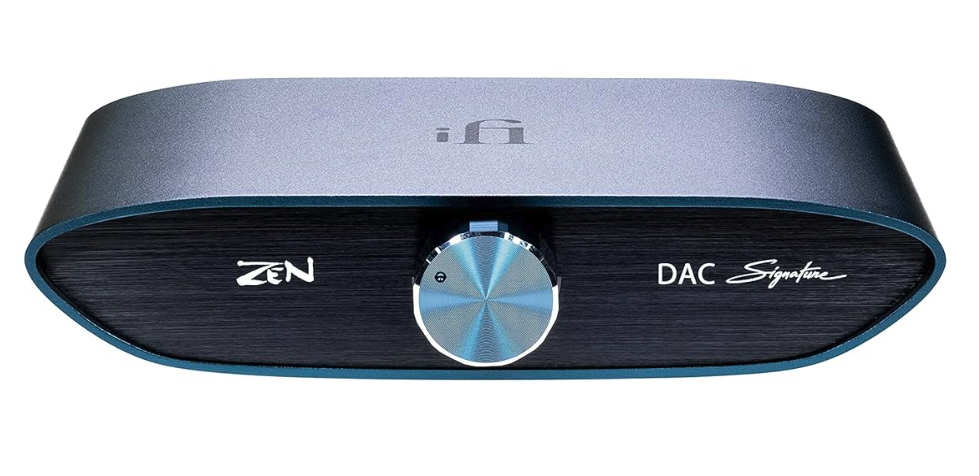
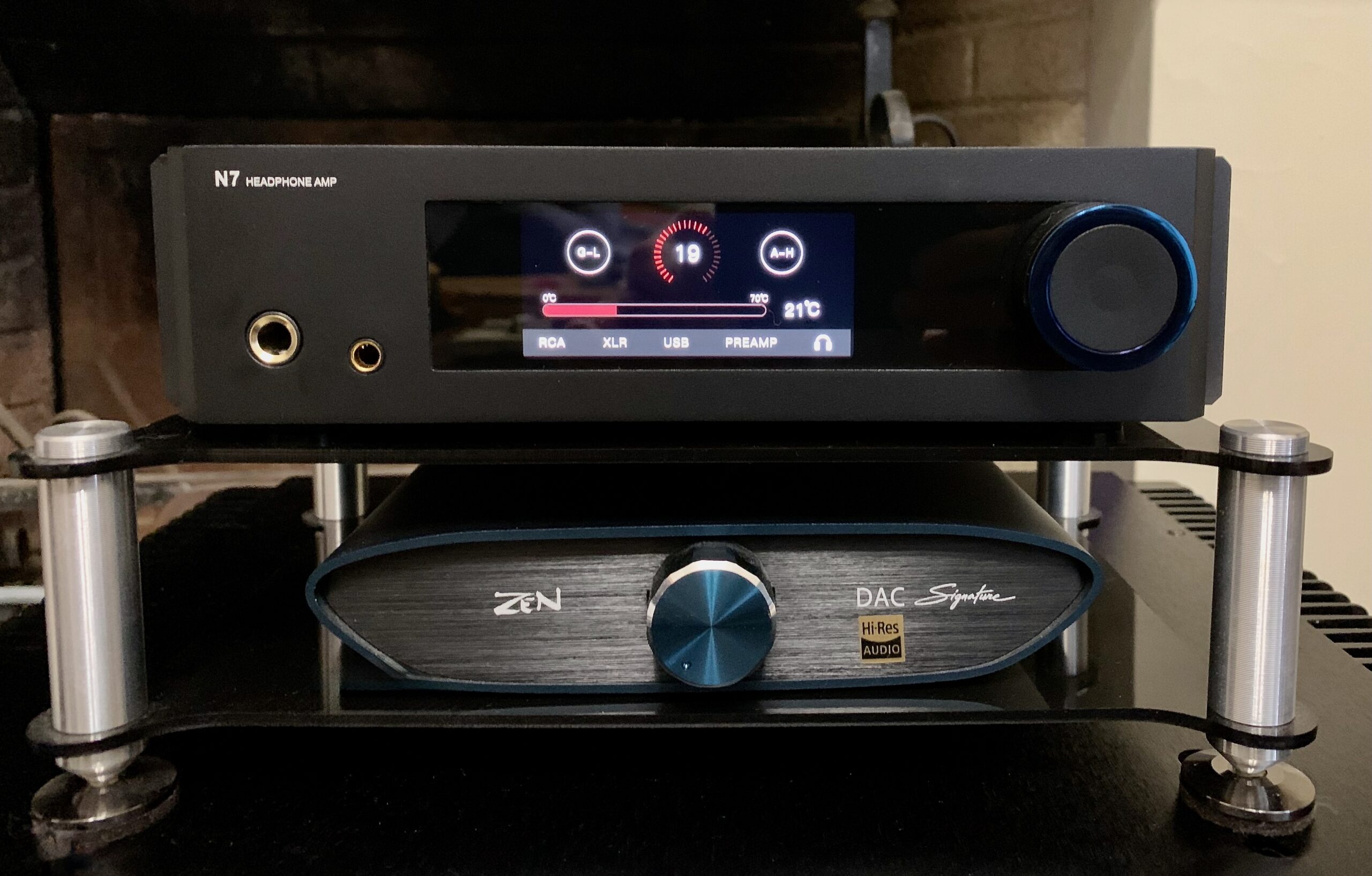
The first test I did was with the iFi Zen DAC Signature V2, and I have to say, this is one of those pairings that just works right away, without needing to convince yourself.
The iFi is a very clean DAC, with a solid analog foundation and an already well-balanced sound. It’s not sterile, not cold, but also not obviously colored. It has a strong base, with a natural presentation and good dynamic control.
Placed in front of the N7, something interesting happens.
The DAC provides a clean, well-structured signal, without forcing anything. The N7 takes that signal and makes it more fluid and cohesive, without altering its nature. There’s no overlap, no conflict between the two. Each one does its job.
The result is a very well-balanced system.
The bass keeps its control but gains a bit more body, the mids become more present without turning forward, and the treble opens up without losing information. Everything flows naturally, without any sense of break or discontinuity.
It’s one of those situations where you don’t feel the need to change anything. You’re not looking for more detail, more impact, or more brightness. You just listen.
And in the end, that’s the clearest sign.
When a pairing truly works, you stop thinking about it.
Used as a Preamp in Place of the AM Audio A5 with AM Audio A-40 Reference S2
A delicate transition
This was probably the most delicate test.
Removing a preamp like the AM Audio A5 from the chain is not something you do lightly. We’re talking about a component built around a very clear philosophy: absolute transparency, minimal intervention, pure Class A. It’s also perfectly matched with the A-40 Reference S2 power amp, sharing the same approach and character.
Placing the N7 in this context means putting it under real pressure.
The first thing you notice is that nothing breaks. There’s no moment where you stop and feel like something has been lost. The tonality remains coherent, the system doesn’t lose its identity. And that’s already a significant result.
That’s also because, at their core, these components speak a similar language. Class A operation, continuity, absence of forced presentation… those elements are present on both sides.
How it performs in a high-end chain
Of course, the A5 remains a reference. Its transparency and its ability to disappear are hard to match. It’s one of those preamps that never makes you think about what’s happening, everything just passes through.
The N7 doesn’t quite reach that level of purity.
But what’s surprising is how close it gets without ever feeling out of place.
The image remains stable and believable, with good depth. The power amp continues to operate with its usual authority, without any sense of limitation or restraint. There’s no compression, no obvious loss of dynamics.
The musicality is all there. Perhaps slightly softer, a bit more relaxed compared to the A5, but never artificial.
Sources and real-world listening
I tried different sources, both digital and analog.
With a DAC, the result is very clean and coherent, with a solid overall balance. But it’s with vinyl that I really felt the character of the N7. The presentation remains fluid and natural, without any stiffness. Nothing is taken away, but nothing is added either. It simply lets things flow.
And it’s at that point that I started taking it seriously.
Because entering a system of this level without creating issues is already difficult.
Doing it while maintaining coherence and musicality is something else.
It doesn’t replace an A5 in absolute terms, and that’s not the point.
But it integrates into that system with a level of credibility I didn’t expect. And in the end, you don’t feel its absence as strongly as you might think.
And more than anything else, that tells you exactly what kind of component you’re dealing with.
Final Thoughts
The Aune N7 is one of those products you only truly understand when you stop analyzing it.
At first, you listen to figure out what it does best, where it pushes, where it stands out. Then, without even realizing it, your approach changes. You’re no longer evaluating, you’re just listening.
This isn’t an amplifier that relies on spectacle. It doesn’t try to impress you with immediate effects or with details put there just to stand out. It’s built to be coherent, to hold everything together, to never get in front of the music.
But there’s one clear condition.
It doesn’t give you anything for free. It doesn’t fix what isn’t right upstream, and it doesn’t even try. If the chain is up to the task, it delivers a natural, fluid, effortless listening experience. If it isn’t, it won’t try to hide it.
And that’s exactly what makes it credible.
Listening Experience and System Role
It’s one of those components that changes the way you listen. Not because it does something spectacular, but because it puts you in the right condition to enjoy the music.
You find yourself listening late without even thinking about it. Moving from one record to another, from vinyl to digital, without ever feeling the need to stop. No fatigue, no urge to change anything. Just music.
Then you look at the clock, and it’s late. Much later than you expected.
You tell yourself it’s the last one. Just one more track, then you’re done.
And then another hour goes by.
And that’s exactly when you understand what this amplifier really does.
It doesn’t change what you listen to.
It changes how much you listen.
Technical Perspective and Positioning
One last aspect worth mentioning is how much the fully balanced design contributes to this result.
Used in balanced mode, the N7 consistently delivers a greater sense of control, stability, and coherence, reinforcing its role not just as a headphone amplifier, but as a true system component.
In absolute terms, there are more resolving or more powerful amplifiers.
But considering sound quality, versatility, and real-world usability, the Aune N7 positions itself as one of the most complete solutions in its price range.
It’s not the most extreme amplifier out there.
But it’s one of the easiest to live with, and one of the hardest to give up.
VOTE
9.3 / 10
🟢 PRO
- natural, coherent sound that never feels forced
- highly believable and well-structured midrange
- excellent long-term listenability, even in extended sessions
- real power, always under control
- versatile: excellent both as a headphone amp and as a preamp
- solid build, with no “showpiece” design shortcuts
🔴 CONS
- not aimed at those looking for extreme analytical detail or studio-type sound
- bass focuses more on quality than physical impact
- minimal interface, requires a short adjustment period
- stepped volume control is not always perfectly precise
Q/A
Is it suitable for planar headphones?
Yes, without any issues.
The N7 has both the power and, more importantly, the current to drive most planar headphones, even demanding ones. It’s not just about volume, but stability: it stays controlled even when the load increases.
Is it quiet with IEMs?
Yes, and it’s actually one of the surprises.
Despite being a Class A design, the background is very clean. With sensitive IEMs, there’s no noticeable noise. The low output impedance also helps avoid issues in most cases.
Can it replace a preamplifier?
Yes, and it’s one of its strongest points.
This isn’t a “workaround” use, but a real alternative. It offers full connectivity, precise volume control, and integrates well even in higher-end systems.
Yes, but don’t expect a dramatic change.
The N7 always operates in Class A, but you can choose between different bias current levels. The difference is more about consistency than character. One setting feels slightly fuller and more fluid, the other a bit more relaxed and efficient. It’s a fine adjustment, useful to adapt the system rather than change it.
Is it an analytical amplifier?
No, and that’s intentional.
It’s not designed to highlight every detail, but to maintain coherence and naturalness. The detail is there, but it’s not pushed forward.
Does it improve any system?
No.
If the upstream chain is good, it will bring it out very well. If the signal is weak, it won’t fix it. This isn’t a “problem solver”, it simply reveals what’s already there.
Is it better in balanced or single-ended?
If you have the option, balanced is the natural choice.
You get a bit more headroom, better control, and a slightly more stable presentation. Single-ended still works very well, but the design clearly performs at its best in balanced.
Does it run hot?
It’s a Class A amplifier, so some heat is expected.
It never becomes unmanageable, but it does need some space to breathe. Nothing unusual, just consistent with this type of design.
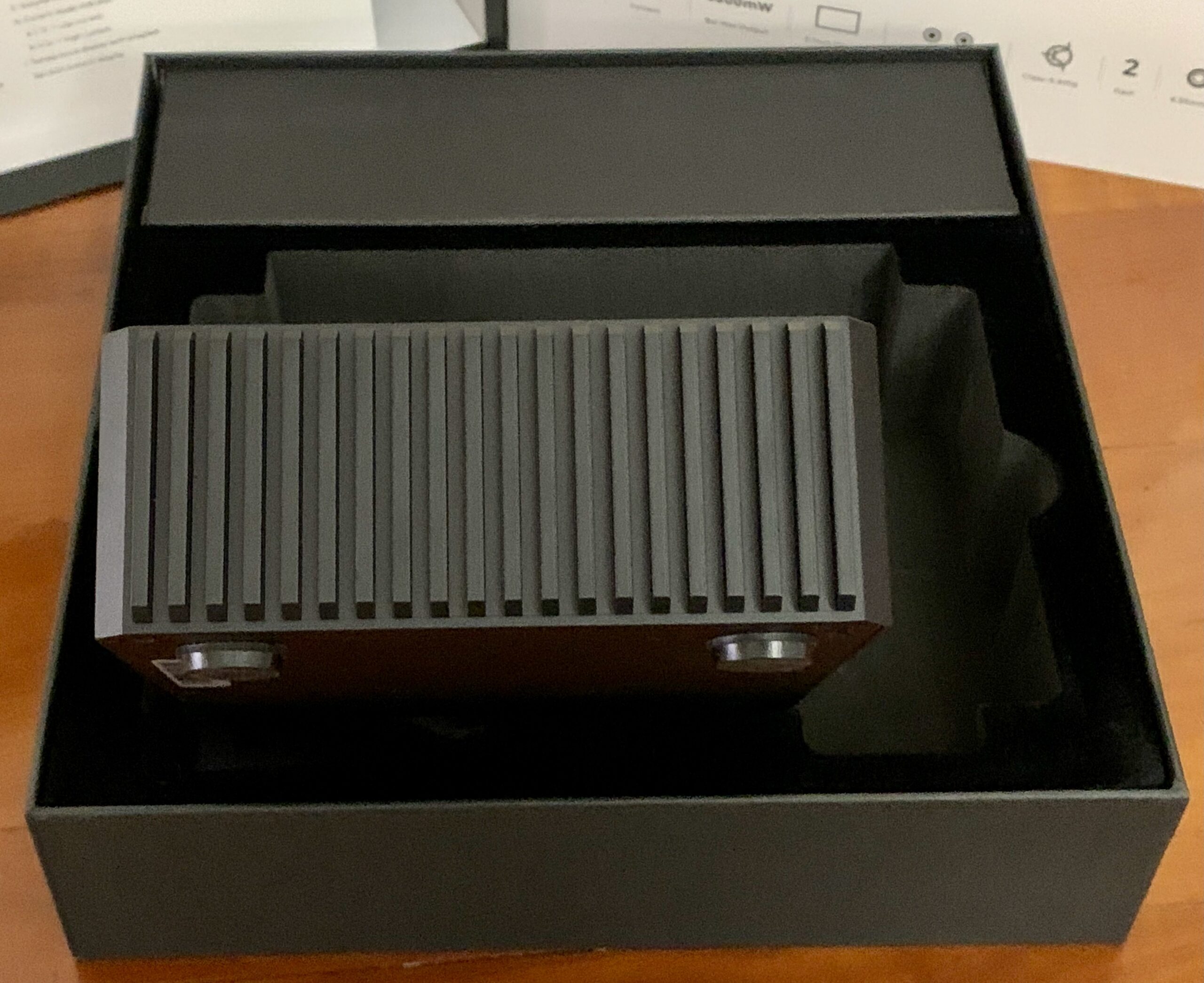
As a reference, my AM Audio power amp runs much hotter, to the point where you can’t keep your hand on it. The N7 gets warm, but remains perfectly manageable. You can rest your hand on it without any issue.
Is it an upgrade over the Aune S17?
It depends on what you’re looking for.
If you want more impact, sharper attack, and a more direct presentation, the S17 is still a very solid choice.
If you’re after more fluidity, better coherence, and a more relaxed long-term listening experience, the N7 offers something different.
It’s not a clear upgrade, it’s a shift in approach.
Acknowledgments and Personal Note
I would like to thank Aune for providing the N7 for review. No compensation, no approval requests, no constraints: this review is based entirely on my personal listening experience, without filters or compromises.
I listened, I wrote, and now I leave it to you. As always, the music does the rest.
The opinions expressed are independent and based on real-world use, with tracks, albums, and situations I know well. What you read is exactly what I heard.
For those interested, the Aune N7 is available through the official Aune international website, Amazon, and the official Aune Italian website.




No Comment! Be the first one.