











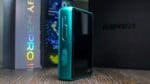










































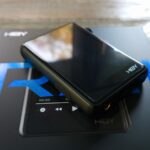







iBasso just dropped something that makes you look twice. It’s the DC-Tonfa, a dongle DAC they co-developed with e☆イヤホン (e-Earphone), one of Japan’s biggest headphone shops. Announced through MUSIN on July 6, general release set for July 17, 2026.
Table Of Content
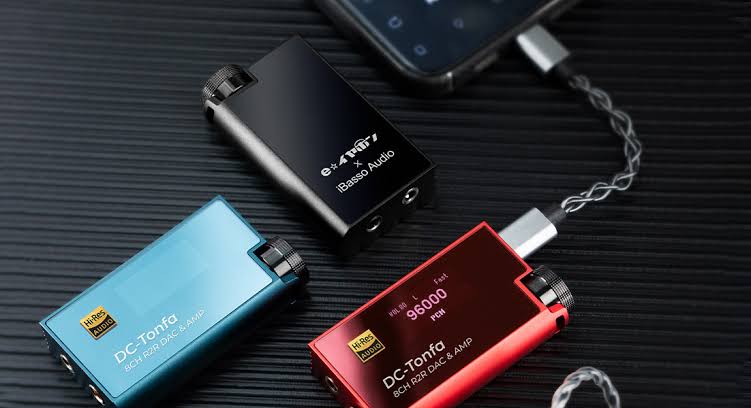
Here’s the part that matters. iBasso stuffed a discrete 24-bit, 8-channel full-balance R2R ladder DAC into a dongle body. That’s the kind of architecture you usually find sitting on a desk, not dangling off the bottom of your phone. Most dongles run Delta-Sigma chips because they’re cheap, tiny, and easy to drop into a design. Going R2R at this scale is a fight against physics, and the spec sheet suggests iBasso knew exactly what they signed up for.
So what does that actually mean for you? The R2R stage uses 312 Viking thin-film resistors with a low temperature coefficient, backed by a 60-resistor hardware compensation network and an FPGA correction algorithm. That’s iBasso throwing real engineering at the classic miniature-R2R headache, where linearity falls apart at low signal levels and the whole thing drifts as it heats up. On the digital side there’s a proprietary FPGA algorithm plus two Accusilicon femtosecond clocks knocking down jitter.
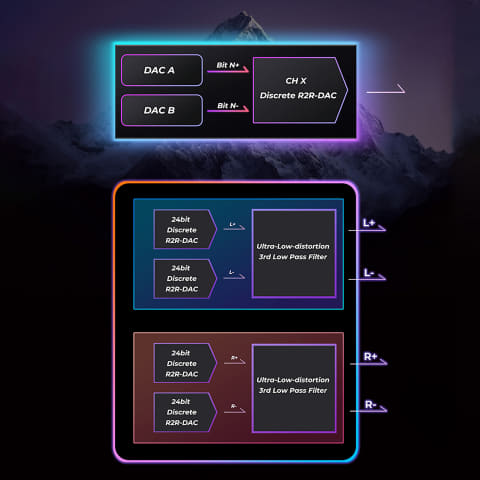
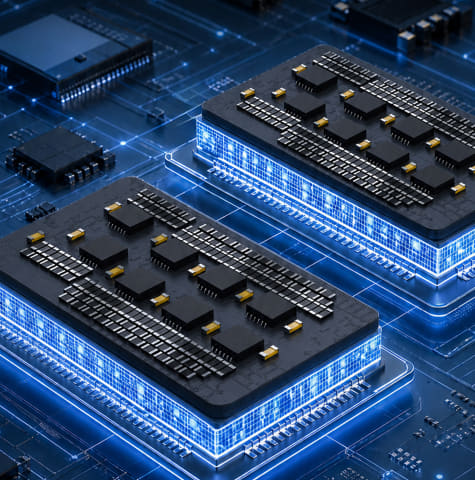
The amp section isn’t an afterthought either. Two TI dual op-amps paired with four BUF634A buffers, and the power rail leans on an ADI LT3042 ultra-low-noise LDO regulator (0.8µV noise, 100dB PSRR). Clean juice feeding a punchy output stage, basically. Off the 4.4mm balanced (bal) output you get 800mW + 800mW into 32Ω, which is genuinely desktop-replacement territory for something this small. There’s a 3.5mm single-ended jack too for when you don’t need the extra grunt.
Now the measured side, because I know some of you want numbers. iBasso lists THD+N at 0.004%, SNR at 122dB, dynamic range at 123dB, channel separation at 124dB, and output impedance at a low 0.5Ω. Output swing runs 5.2Vrms on high gain, 2.6Vrms on low. Here’s the honest read: that 0.004% THD figure looks worse than iBasso’s own Delta-Sigma dongles on paper, and it will. That’s R2R for you. The ladder topology doesn’t measure as clean as a modern sigma-delta chip, and anyone who buys R2R is chasing texture and tone, not a flatter distortion graph. So don’t panic at the number, it’s a deliberate trade-off baked into the design.
Format support goes where you’d want it. PCM up to 768kHz, native DSD512, plus SPDIF output, so it can moonlight as a digital source feeding a bigger stack or a gaming rig. It flips between UAC2.0 and UAC1.0 as well, handy for finicky devices and consoles.
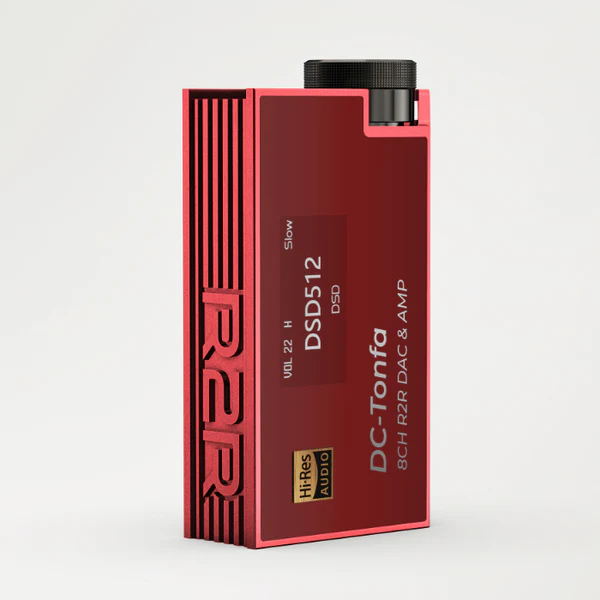
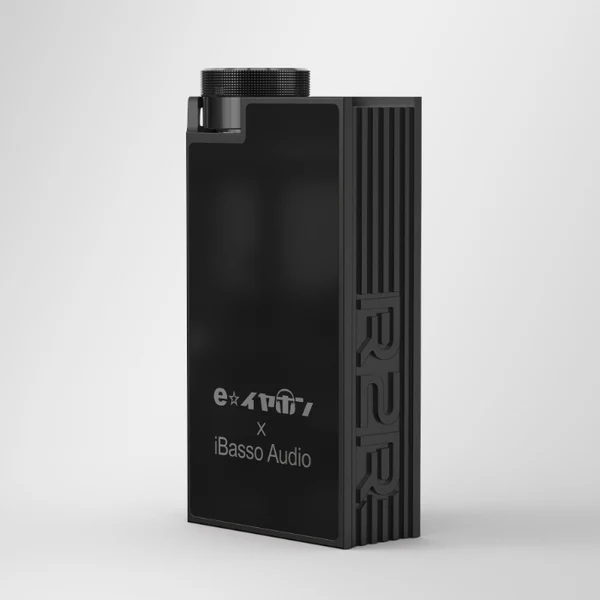
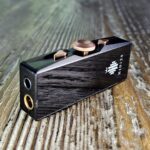
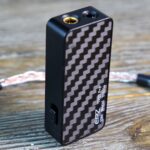
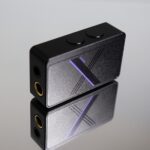
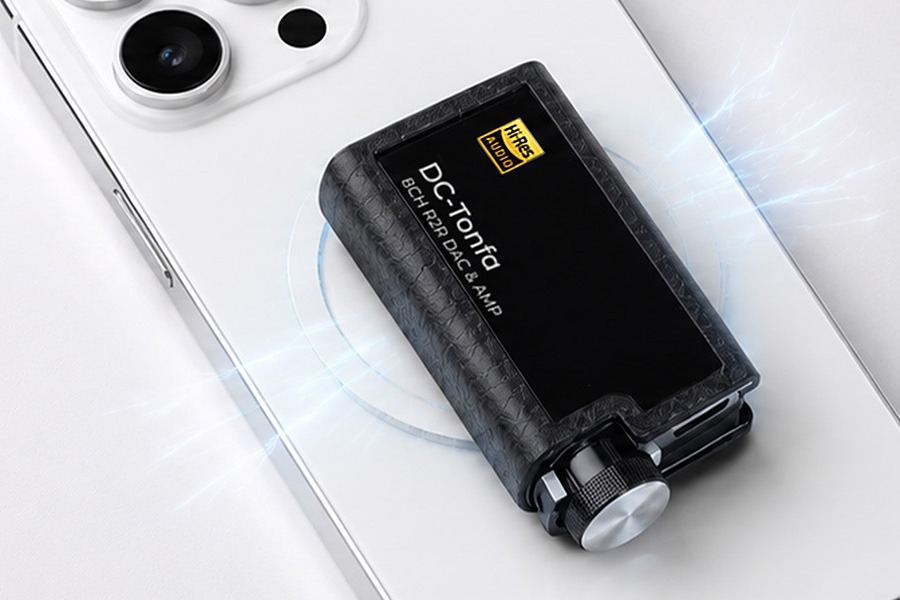
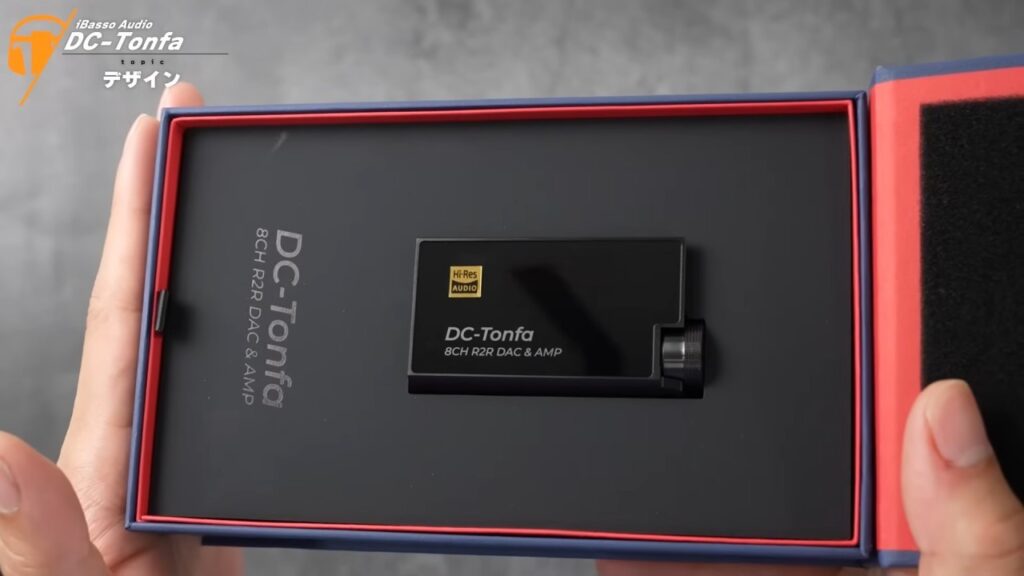
The body is aluminum alloy with tempered glass front and back, a 0.96-inch OLED display, and a multifunction dial for volume and settings. It weighs 45g and measures 61 × 34.6 × 15mm, so it’s compact but has some heft, which R2R gear tends to. There’s an “R2R” engraving on the side and both the iBasso and e-Earphone logos on the back. Three colors: black, blue, red. The black one is the shade e-Earphone’s ゆーでぃ (Yuudi) picked himself, and he’s also the guy who led the sound tuning.
That tuning angle tells you what to expect. e-Earphone chased musicality over clinical accuracy, going for a sound that pulls the groove and air out of a track rather than one that measures ruler-flat and lifeless. Whether it holds up in real listening is the whole point of a proper review, but the intent is on the table. You also get NOS (Non-Over Sampling) mode plus four proprietary digital filters, so there’s room to nudge the character yourself.
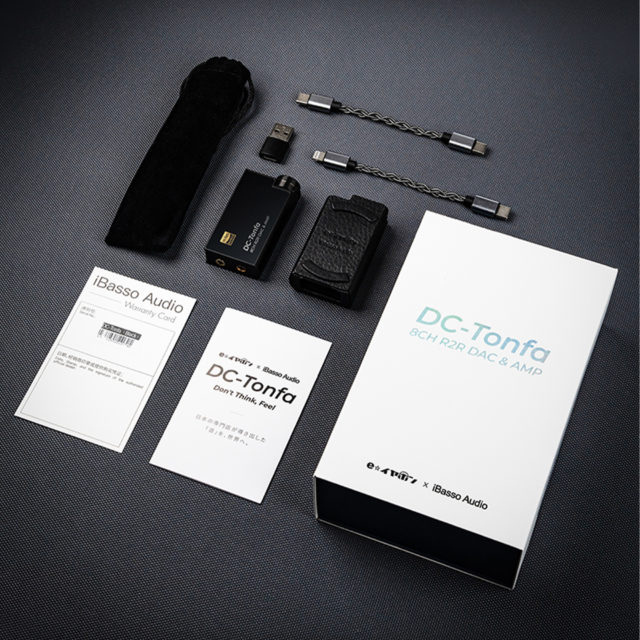
The accessory bundle is a nice touch, as detailed in the PHILE WEB launch coverage. There’s a MagSafe-compatible protective case cut so the display stays visible, and it snaps onto the back of a MagSafe phone so the DAC rides along. The USB-C OTG cable is detachable, and iBasso throws in USB-C to C, USB-C to Lightning, and a USB-C to A adapter. For settings there’s an “iBasso UAC” app on Android (digital filter, gain, channel balance) plus a browser-based control panel for Windows and macOS that needs no install. One catch: iOS doesn’t support the UAC app, so iPhone users lose the deep settings menu.
Now the real but factor, availability. Right now the Tonfa is a Japan exclusive, sold only through e-Earphone and MUSIN’s direct channels, priced at ¥54,450 including tax. At today’s rate that’s roughly $337, though that carries Japan’s consumption tax baked in, so a tax-free global MSRP would likely land closer to $300 if iBasso brings it out worldwide. And that “if” is the whole question, because as of now there’s no confirmed international release or pricing. Early units showed up at Portafes 2026 Summer in Akihabara on July 11 and 12, with pre-orders opening July 13.
Bottom line, on paper the DC-Tonfa is one of the more ambitious dongles of the year. A desktop-class R2R design squeezed into your pocket, a specialty-shop tuning, and enough power to drive most IEMs and plenty of full-size headphones. The catch is you might not be able to buy it. Until iBasso confirms a global launch, most of us outside Japan are watching from the sidelines. We’ll be chasing a review unit to hear whether the sound lives up to the sheet, because R2R in a dongle is exactly the kind of thing that’s easy to promise and hard to pull off.
How It Stacks Against the DC-Elite
If you follow iBasso’s dongle line, the obvious question is where this sits next to the DC-Elite, their $449 flagship. And the answer is more interesting than a simple better-or-worse, because these two are chasing completely different things.
The DC-Elite is a chip-based design. It runs a single ROHM BD34301EKV, a flagship current-output DAC pulled from the DX320 MAX DAP, and pairs it with six op-amps and a proper 24-position stepped attenuator. That gets you numbers the Tonfa can’t touch on paper: THD+N of 0.00031% into 32Ω, roughly 13 times cleaner than the Tonfa’s 0.004%. So if you’re the kind of listener who wants the flattest, most transparent, most technically correct presentation, the Elite is built for you. Its whole personality is neutral to slightly cool, forward vocals, sharp imaging, reference-grade cleanliness. Its review here.
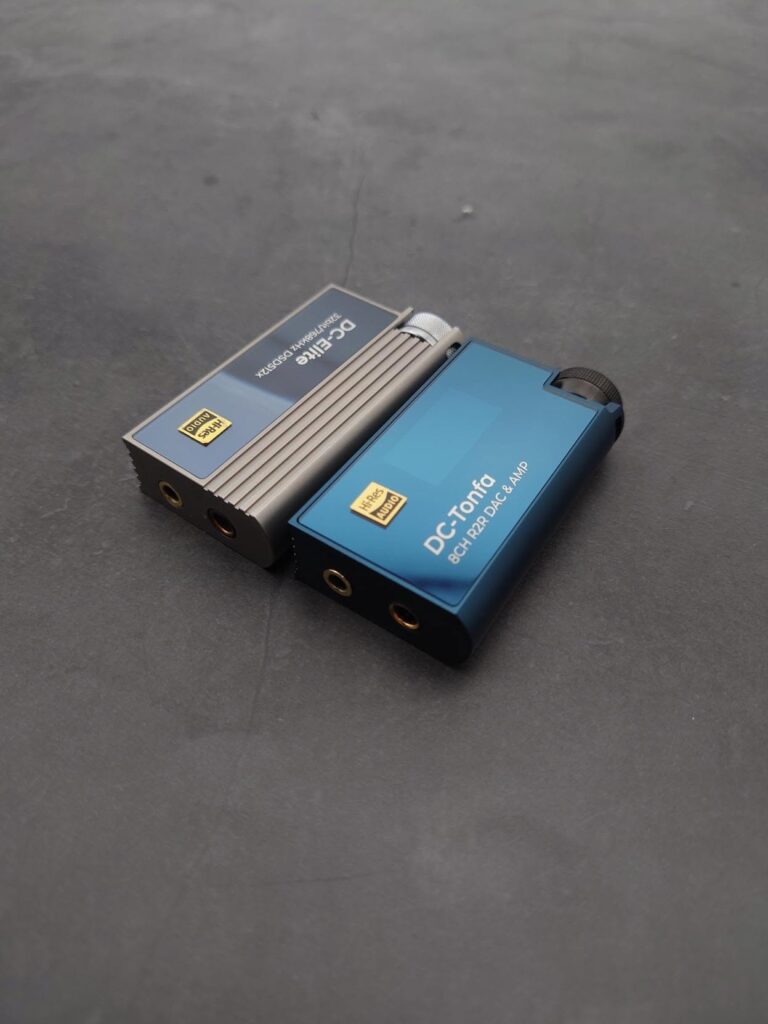
The Tonfa throws that rulebook out. R2R ladder instead of a chip, tuned by a specialty shop for feel rather than measurement. On the numbers it looks worse and it doesn’t care, because it’s selling texture, body, and that analog-ish warmth people chase in resistor-ladder gear. Different tool, different buyer.
Power tells its own story, and here’s the twist: the cheaper Tonfa actually hits harder. It pushes 800mW into 32Ω off balanced, while the pricier Elite tops out around 280mW. So for driving hungrier headphones the Tonfa has real muscle over its own flagship sibling, which almost never happens in a lineup. The Elite claws some of that back with its stepped attenuator and dead-silent noise floor, which sensitive IEM users will appreciate more than raw watts.
Build-wise the Elite still feels like the premium object, titanium chassis, analog volume dial, the works. The Tonfa answers with aluminum and glass, an OLED screen, a MagSafe case, and modern touches the Elite doesn’t have. So what does this all mean for your wallet? If you want measured perfection and a neutral reference sound, the Elite earns its price. If you want power, an R2R flavor, and modern conveniences for less, the Tonfa is the more intriguing buy, assuming you can actually get one.
Now the real but factor, availability. Right now the Tonfa is a Japan exclusive, sold only through e-Earphone and MUSIN’s direct channels, priced at ¥54,450 including tax. At today’s rate that’s roughly $337, though that carries Japan’s consumption tax baked in, so a tax-free global MSRP would likely land closer to $300 if iBasso brings it out worldwide. And that “if” is the whole question, because as of now there’s no confirmed international release or pricing. Early units showed up at Portafes 2026 Summer in Akihabara on July 11 and 12, with pre-orders opening July 13.
Bottom line, on paper the DC-Tonfa is one of the more ambitious dongles of the year. A desktop-class R2R design squeezed into your pocket, a specialty-shop tuning, and enough power to drive most IEMs and plenty of full-size headphones. The catch is you might not be able to buy it. Until iBasso confirms a global launch, most of us outside Japan are watching from the sidelines. We’ll be chasing a review unit to hear whether the sound lives up to the sheet, because R2R in a dongle is exactly the kind of thing that’s easy to promise and hard to pull off.
DC-Tonfa vs DC-Elite at a Glance
| DC-Tonfa | DC-Elite | |
|---|---|---|
| DAC type | Discrete 8-ch R2R ladder | ROHM BD34301EKV chip |
| Character | Warm, musical, R2R texture | Neutral to cool, reference |
| THD+N | 0.004% | 0.00031% (32Ω) |
| SNR | 122dB | 121dB |
| Balanced power (32Ω) | 800mW | 280mW |
| Volume | Digital dial | 24-step analog attenuator |
| Chassis | Aluminum + glass | Titanium + glass |
| Display | 0.96″ OLED | LED indicator only |
| DSD | DSD512 | DSD512 |
| Weight | 45g | 60g |
| Price | ¥54,450 (~$337) | $449 |
| Availability | Japan only | Global |
Specifications at a Glance
- DAC: 24-bit discrete 8-channel full-balance R2R ladder
- Resistors: 312x Viking thin-film (low temperature coefficient)
- Compensation: 60-resistor hardware network + FPGA correction algorithm
- Clock: 2x Accusilicon femtosecond clocks
- Amp stage: 2x TI dual op-amps + 4x BUF634A buffers
- Power regulator: ADI LT3042 ultra-low-noise LDO (0.8µV noise, 100dB PSRR)
- Balanced output (4.4mm): 800mW + 800mW into 32Ω
- Single-ended output: 3.5mm
- Output level: 5.2Vrms (high gain), 2.6Vrms (low gain)
- THD+N: 0.004%
- SNR: 122dB
- Dynamic range: 123dB
- Channel separation: 124dB
- Output impedance: 0.5Ω
- PCM: up to 768kHz
- DSD: native DSD512
- Digital filters: 4 proprietary filters + NOS mode
- SPDIF output: yes
- USB mode: switchable UAC2.0 / UAC1.0
- Display: 0.96-inch OLED
- Control: multifunction dial (digital volume)
- Chassis: aluminum alloy + tempered glass front and back
- Weight: 45g
- Dimensions: 61 × 34.6 × 15mm
- Colors: black, blue, red
- Cable: detachable USB-C OTG (includes USB-C to C, USB-C to Lightning, USB-C to A adapter)
- Case: MagSafe-compatible protective case (included)
- App: iBasso UAC (Android: filter/gain/channel balance) + browser control panel for Windows/macOS. iOS does not support UAC
- Price: ¥54,450 (tax incl.) ≈ $337
- Release: July 17, 2026
- Availability: Japan-exclusive (e-Earphone + MUSIN direct)
Quick Answers
What is the iBasso DC-Tonfa? The iBasso DC-Tonfa is a portable USB-C dongle DAC/amp co-developed by iBasso and Japanese retailer e-Earphone, built around a discrete 24-bit, 8-channel full-balance R2R ladder DAC. It released July 17, 2026 as a Japan exclusive.
How much does the DC-Tonfa cost? It’s priced at ¥54,450 including tax in Japan, roughly $337 USD at current rates. No global price has been confirmed, though a tax-free international MSRP would likely sit near $300.
How much power does the DC-Tonfa output? It delivers 800mW + 800mW into 32Ω from the 4.4mm balanced output, with a 3.5mm single-ended jack also available. That’s desktop-replacement territory for a dongle.
What are the DC-Tonfa’s measurements? iBasso lists THD+N at 0.004%, SNR 122dB, dynamic range 123dB, channel separation 124dB, and output impedance 0.5Ω. The relatively higher THD reflects its R2R architecture, a deliberate trade-off for tonal texture over clinical measurement.
Can you buy the DC-Tonfa outside Japan? Not yet. As of release it’s sold only through e-Earphone and MUSIN’s direct channels in Japan, with no confirmed international distribution.
DC-Tonfa vs DC-Elite: which is better? They target different listeners. The DC-Elite ($449) uses a ROHM BD34301EKV chip for a neutral, reference sound with far lower distortion (0.00031% THD+N). The DC-Tonfa (~$337) uses a discrete R2R ladder for a warmer, more musical character, and delivers more power (800mW vs 280mW into 32Ω) despite the lower price. Choose the Elite for measured accuracy, the Tonfa for R2R flavor and drive.


No Comment! Be the first one.