


































































Disclaimer:
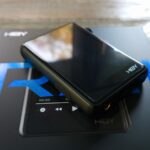
Good morning, readers! Fosi Audio continues its evolution with a brand new portable product designed to be a cross between a dongle and a DAP. The Fosi Audio MD3 has the aesthetics of a DAP, but since it’s battery-free, we can define it as a dongle with a display for full control without the need for an app.
Table Of Content
I believe it was specifically designed for iPhones with MagSafe, given its ability to attach to the back of smartphones via magnet, but it works great on all devices.
The review, as always, will be completely unbiased and uninfluenced.
I would like to remind you that I am just a person who enjoys trying out new items and listening to a lot of music; I am not an expert.
My opinions are obviously subjective.
Tech Specs:
- Chipset: DAC: ESS Sabre ES9039Q2M / Amplifier Chips: ESS ES9603Q ×4
- Input: USB-C(Top): Audio Decoding/Image – Transfer/Charging
- USB-C(Bottom): Audio Decoding/Image & Transfer/Firmware Upgrade
- Output: 3.5mm Single-Ended, 4.4mm Balanced
- USB Audio Class: UAC 2.0, UAC 1.0
- Max Sampling Rate: UAC 2.0: PCM 32bit/384kHz, DSD256(Native) UAC 1.0: PCM 16bit/48kHz
- Max Output Power (1kHz, THD+N<1%) 3.5mm: ≥80mWx2 @32Ω 4.4mm: ≥180mWx2 @32Ω
- Frequency Response: 20Hz-48kHz(±0.2dB)
- SNR 3.5mm: ≥115dB – 4.4mm: ≥116dB
- Dynamic Range: 3.5mm: ≥115dB – 4.4mm: ≥116dB
- THD+N: 3.5mm: ≤0.00075% – 4.4mm: ≤0.00084%
- Noise Floor: 3.5mm:<1.7μV – 4.4mm:<2.7μV
- Headphone Impedance: 16-300Ω
- Weight (without cable): 50g(±2g)
- Dimensions: 70x45x12mm
Packaging:
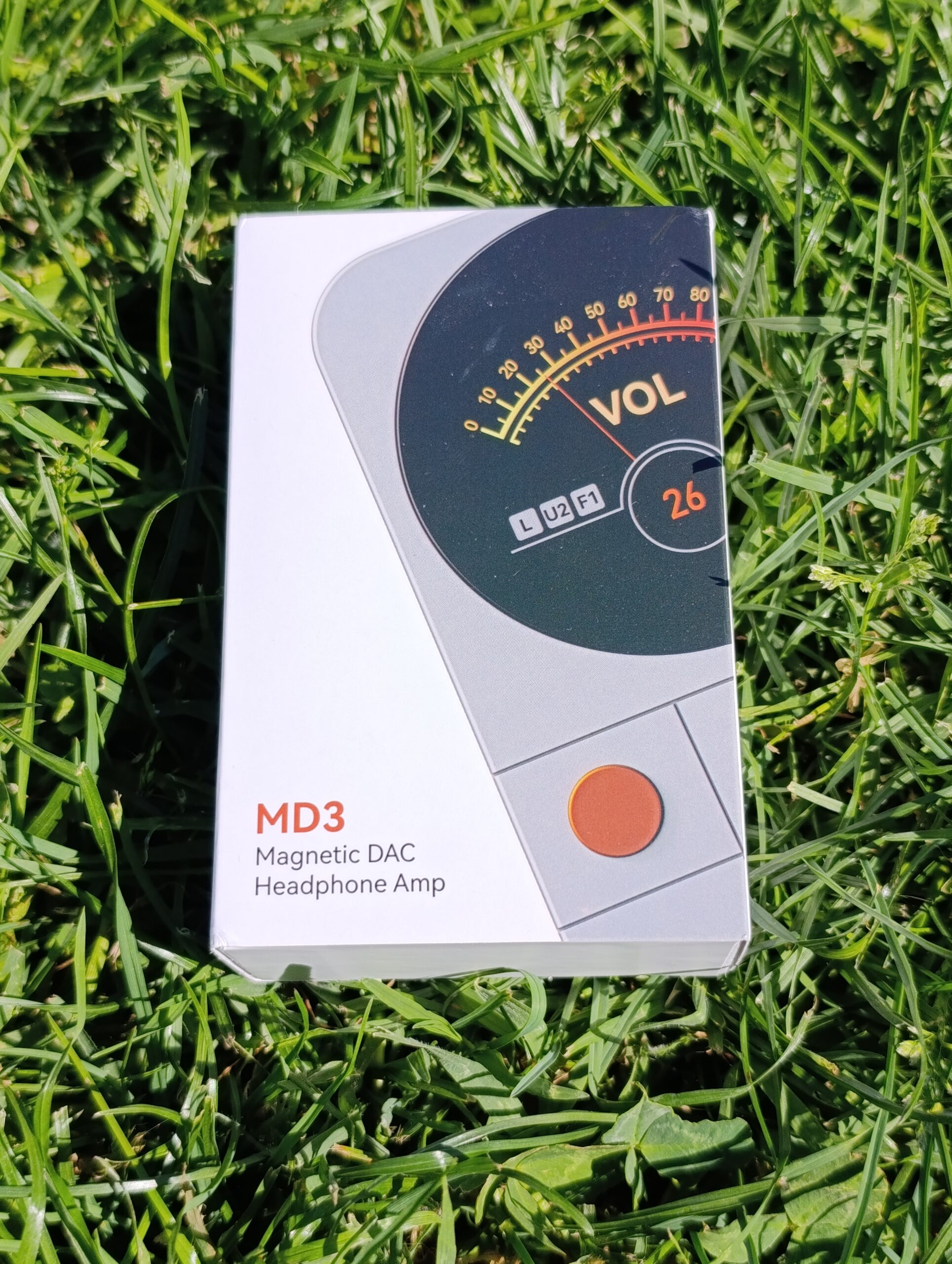
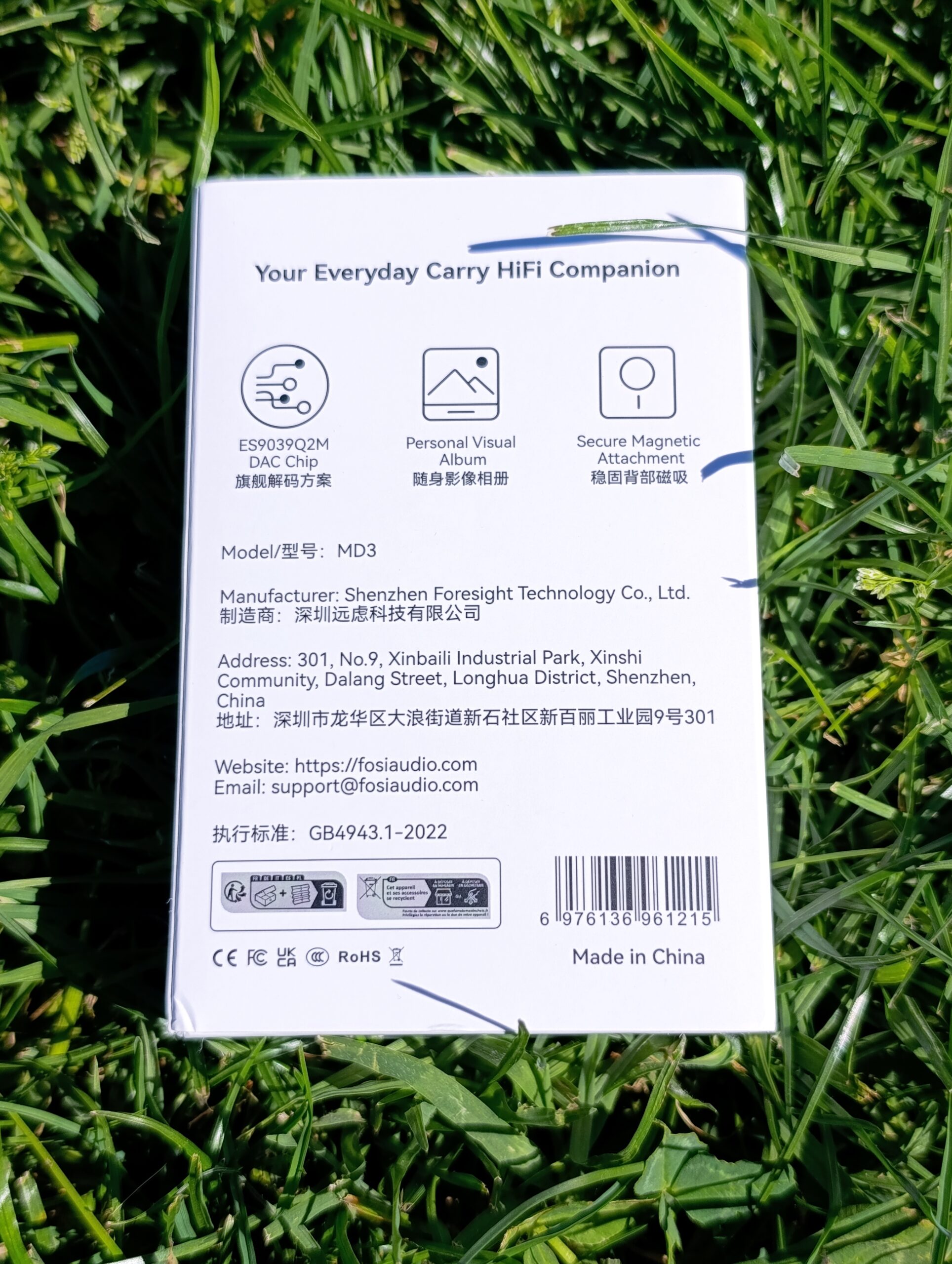
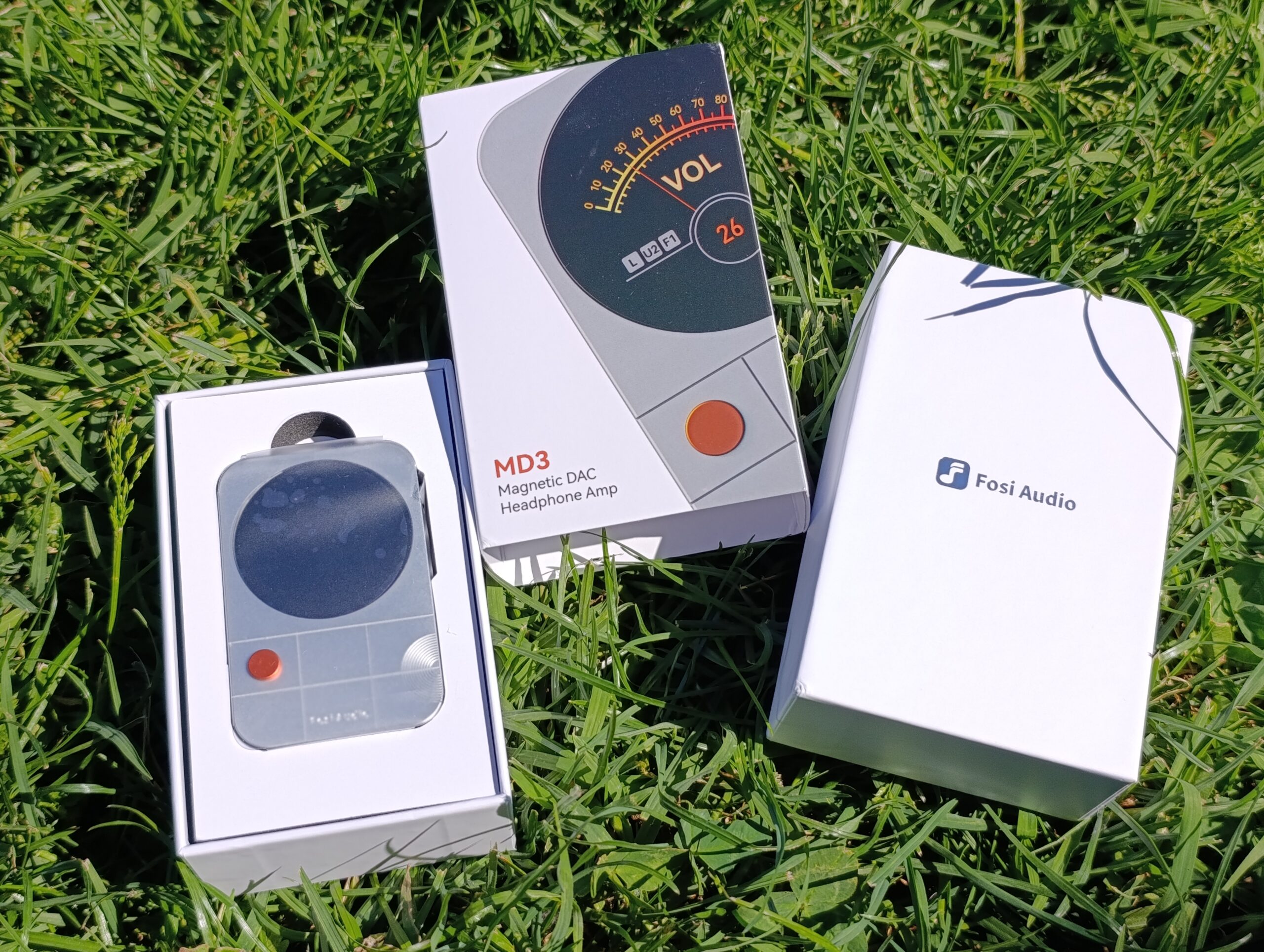
The Fosi Audio MD3 arrives in a well-designed Fosi package, containing everything you need to use it with various devices:
- Dual Type-C to Type-C cable, including an angled one
- Type-C to USB adapter
- Manual and warranty
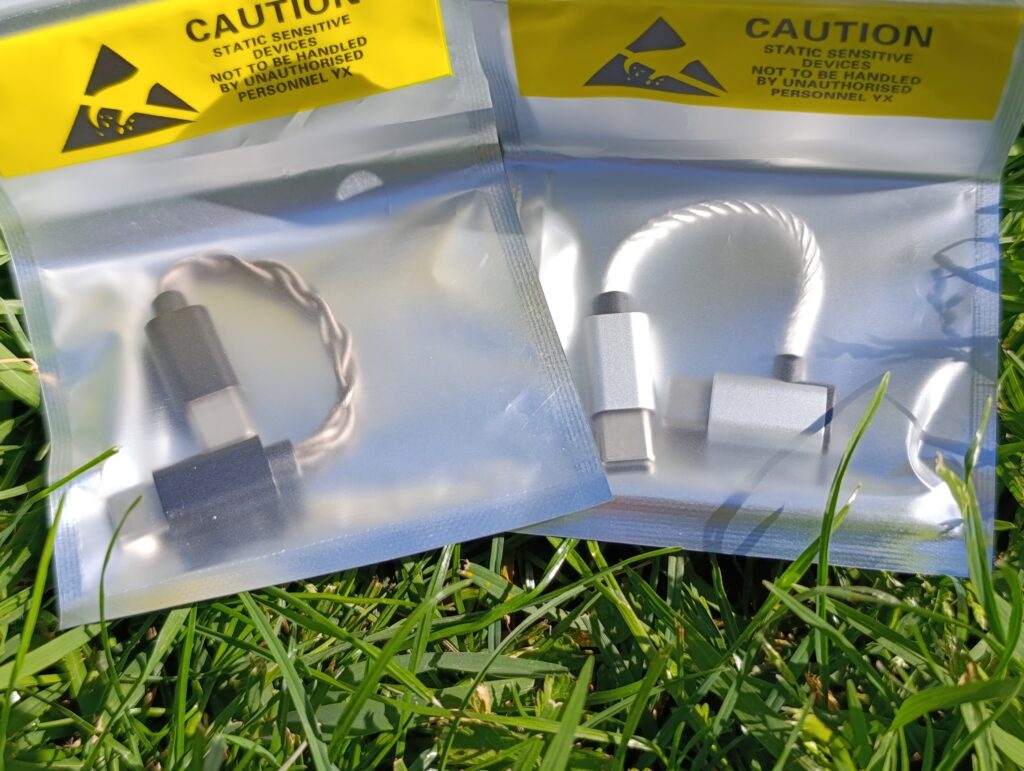
Perhaps a small silicone case would be nice, but unfortunately, it’s not included.
Build quality/First impressions:
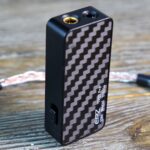
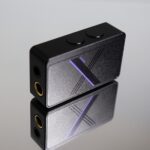
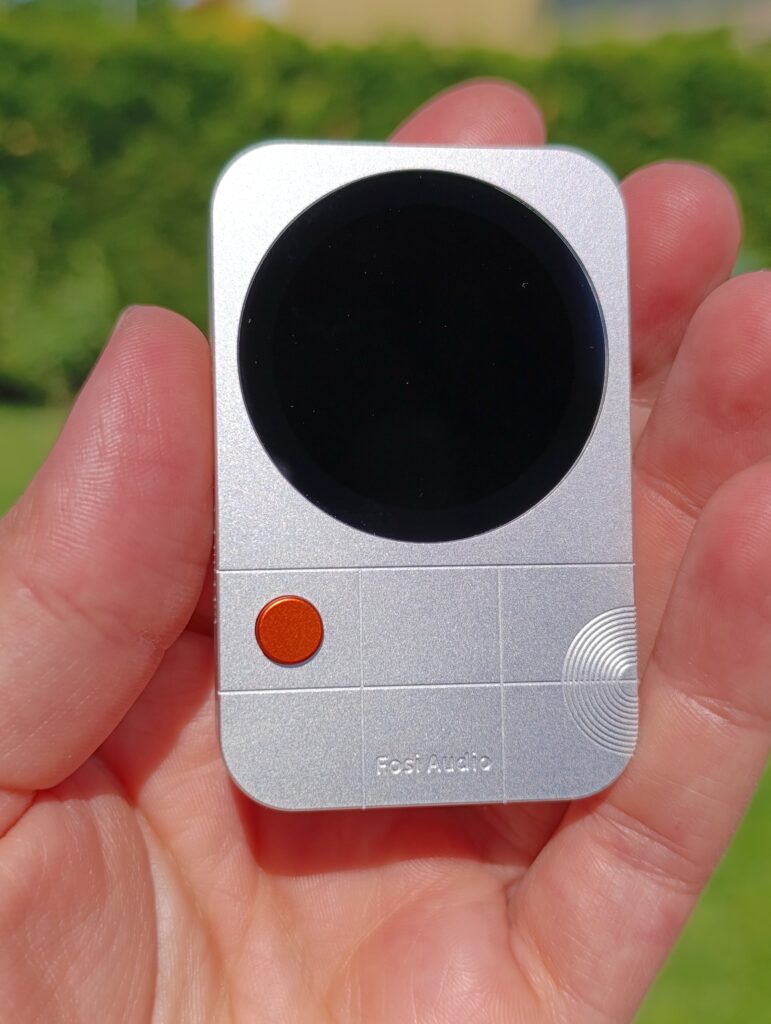
The design immediately identifies the manufacturer. Fosi has now decided to use this combination of colors and materials to stand out from the market and is succeeding very well. The Fosi Audio MD3 is one of a kind; its 1.28″ smartwatch-style central screen allows for complete control of the device.
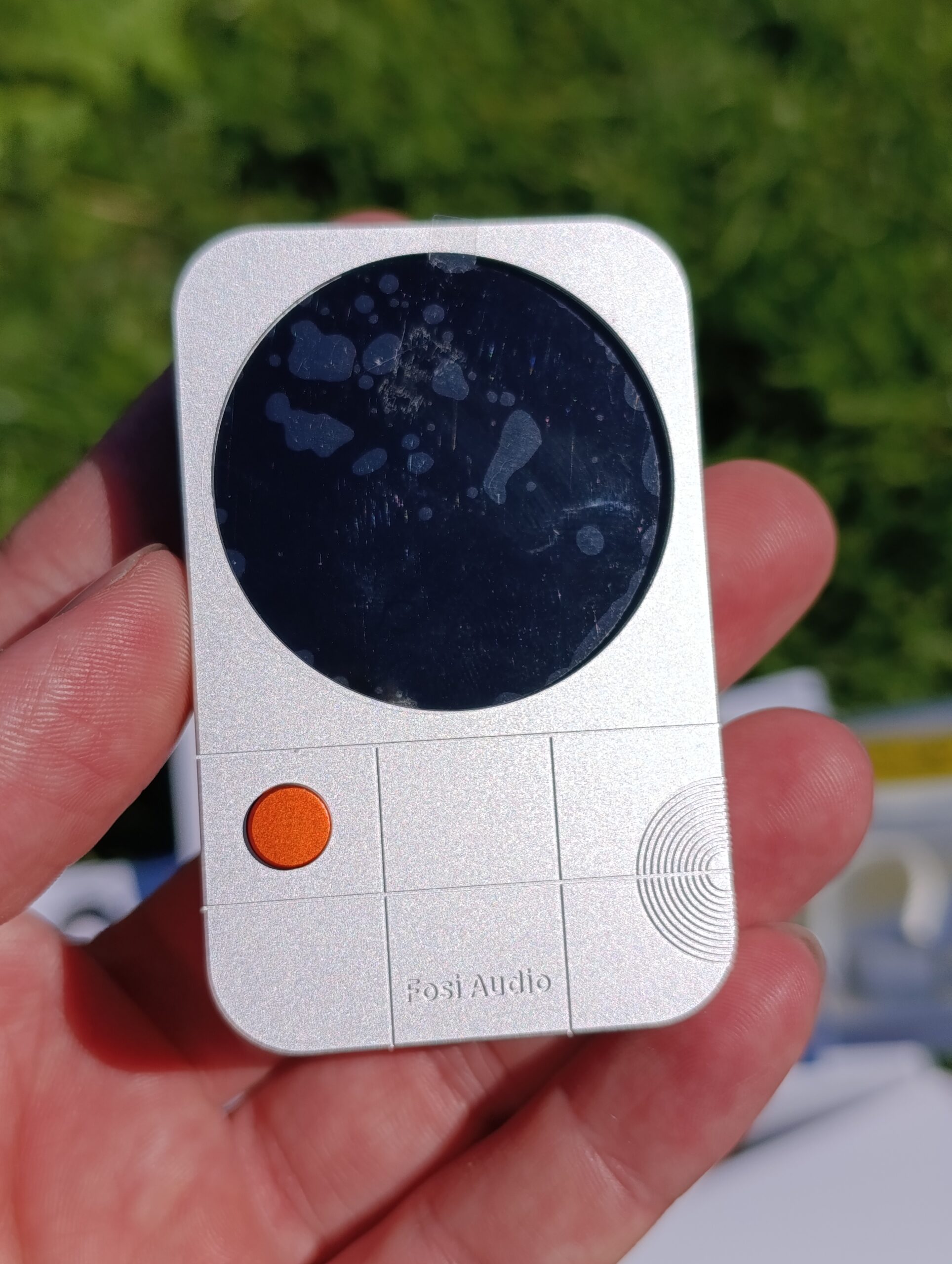
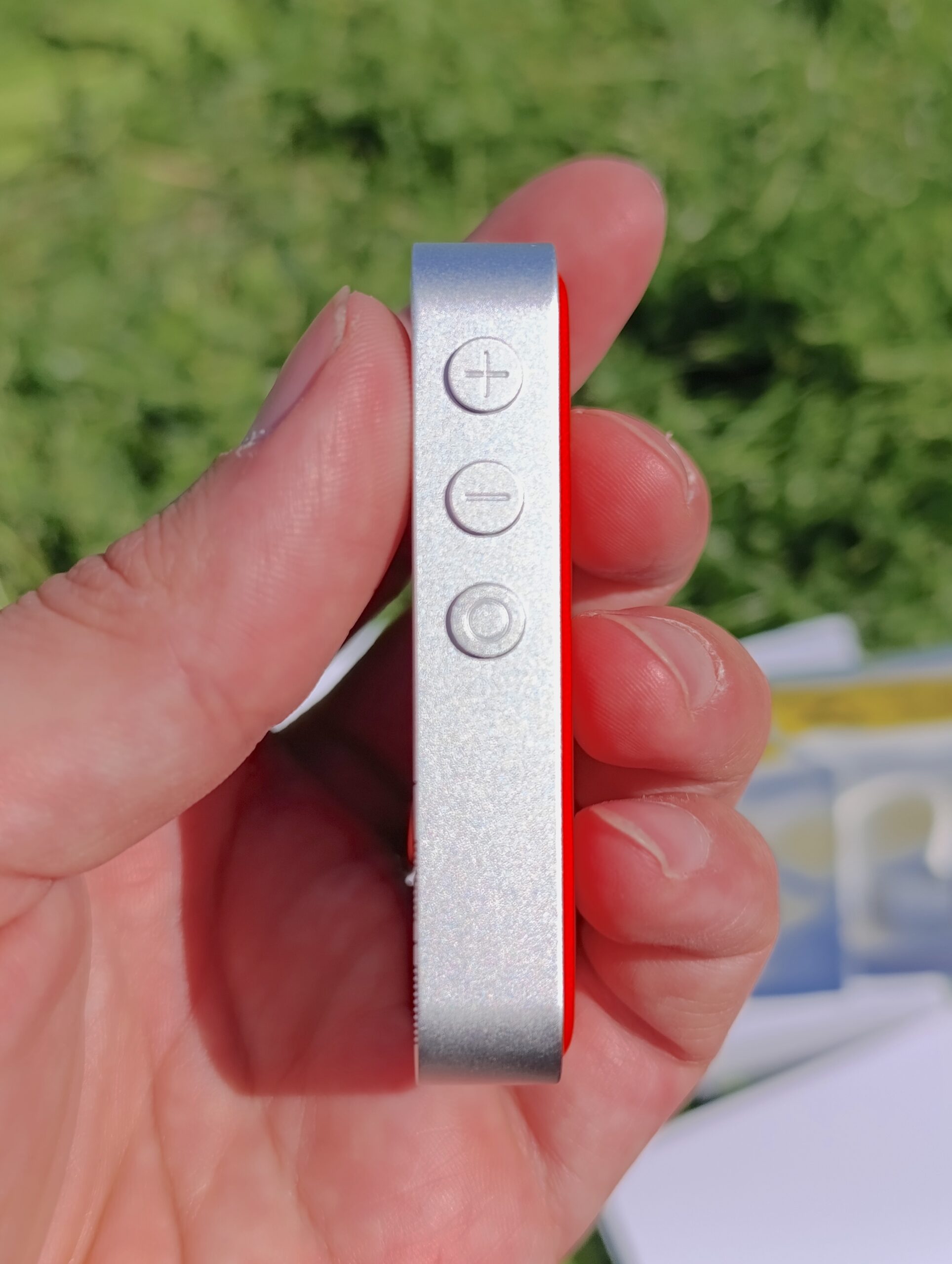
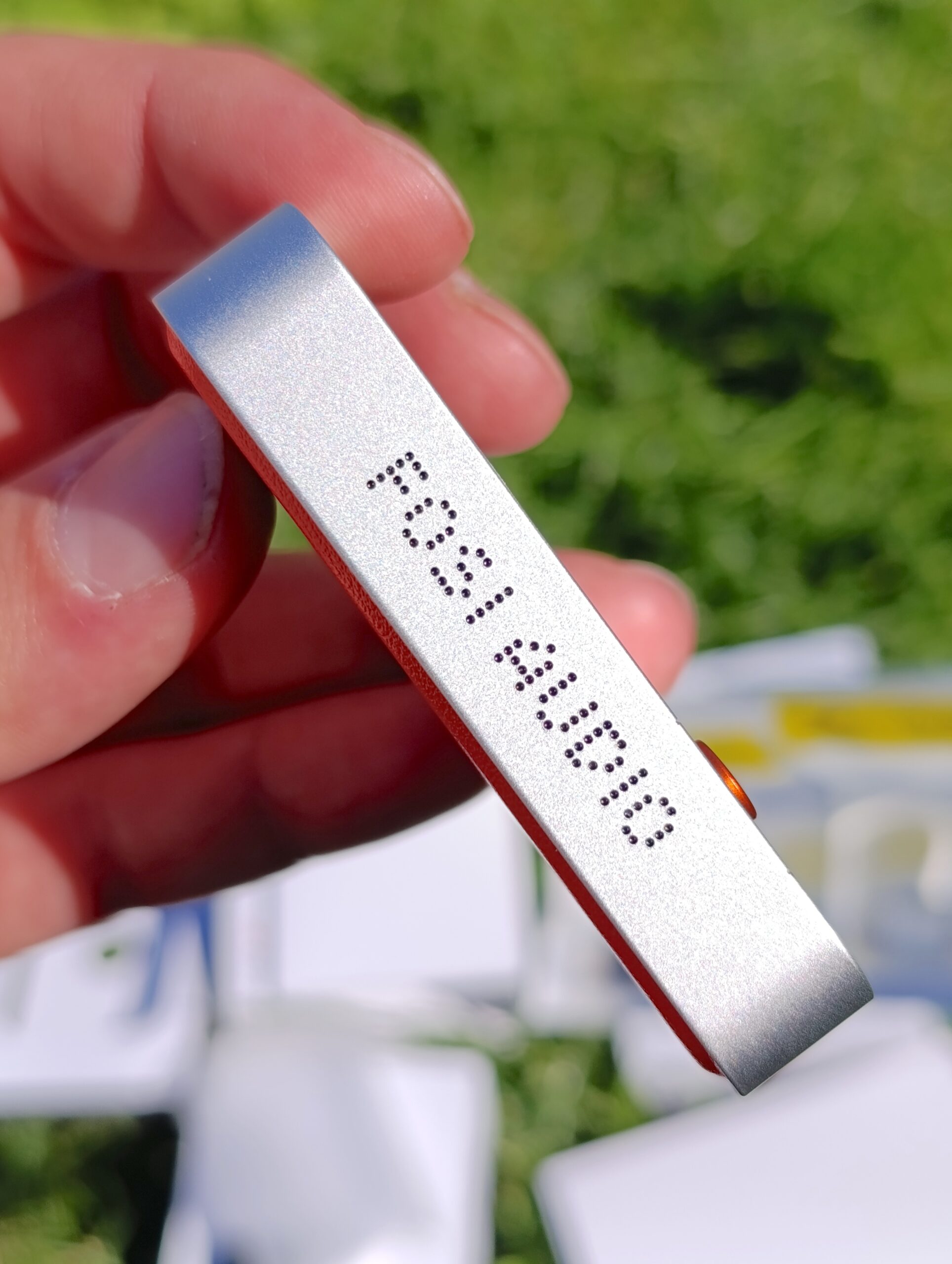
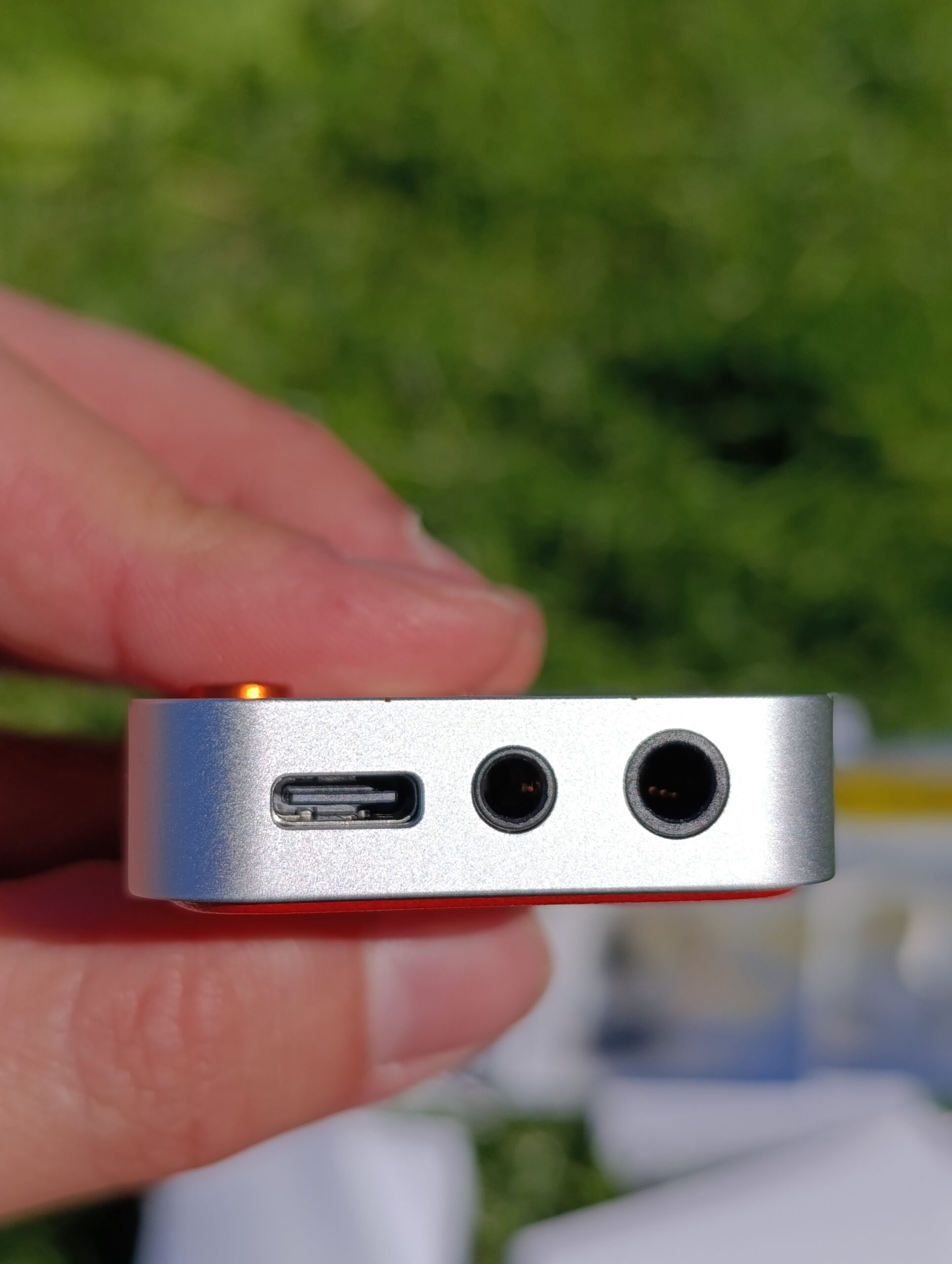
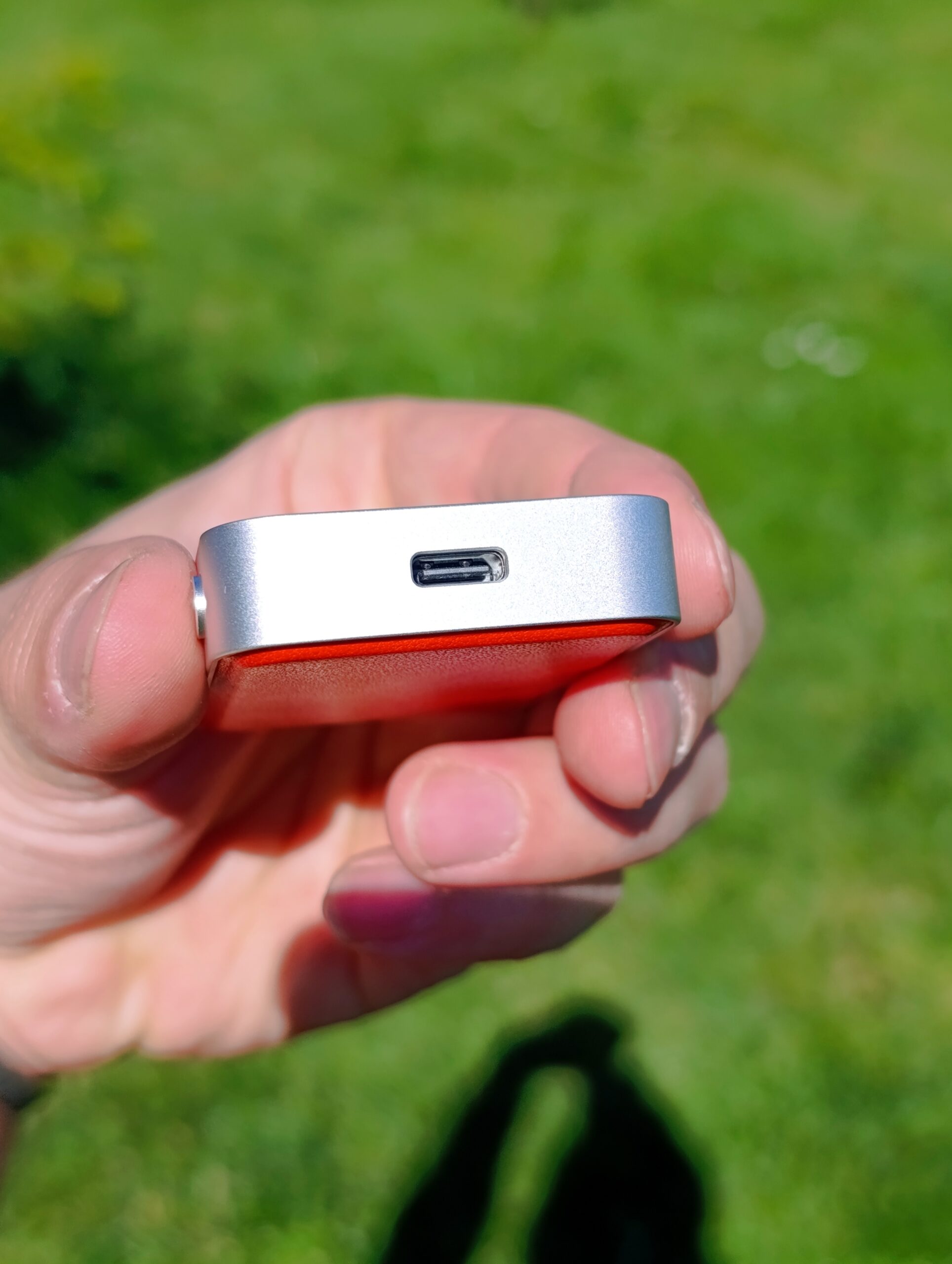
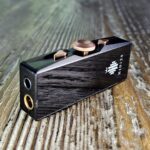
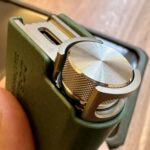
On the front, there’s an orange button that switches between the various animations or photos on the front display. On the right side, there are the volume up and down buttons, along with the menu button for accessing various settings and filters. There’s a Type-C input at the top, and a Type-C input at the bottom. They have almost the same functions, except that only one can perform firmware updates and other functions. This is an excellent choice, considering it’s designed for mobile use. Below, there are two outputs: 3.5 mm and 4.4 mm. However, I noticed something I haven’t found mentioned anywhere: the 3.5 mm output also appears to be optical, as it features a very bright red light typical of optical outputs. It’s strange that this isn’t mentioned in the technical specifications.
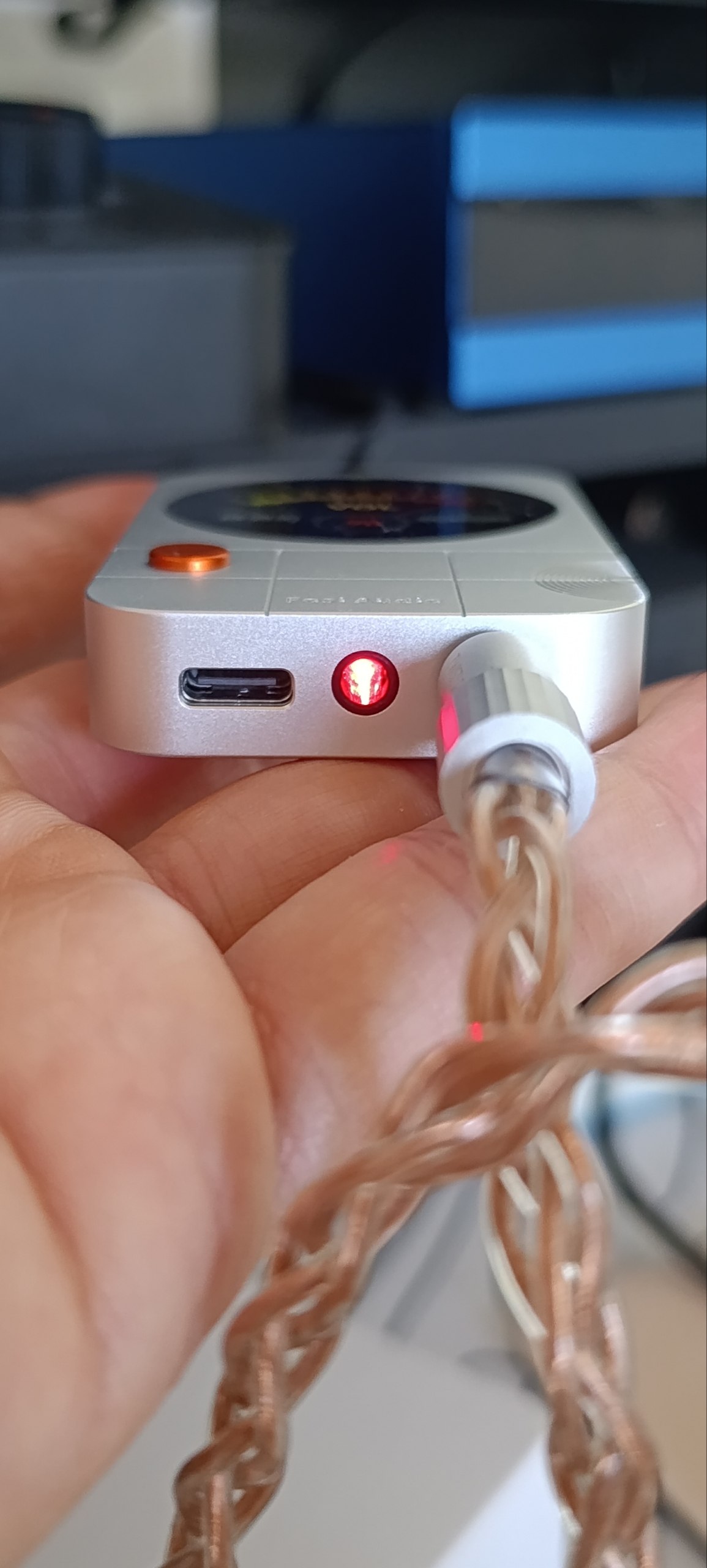
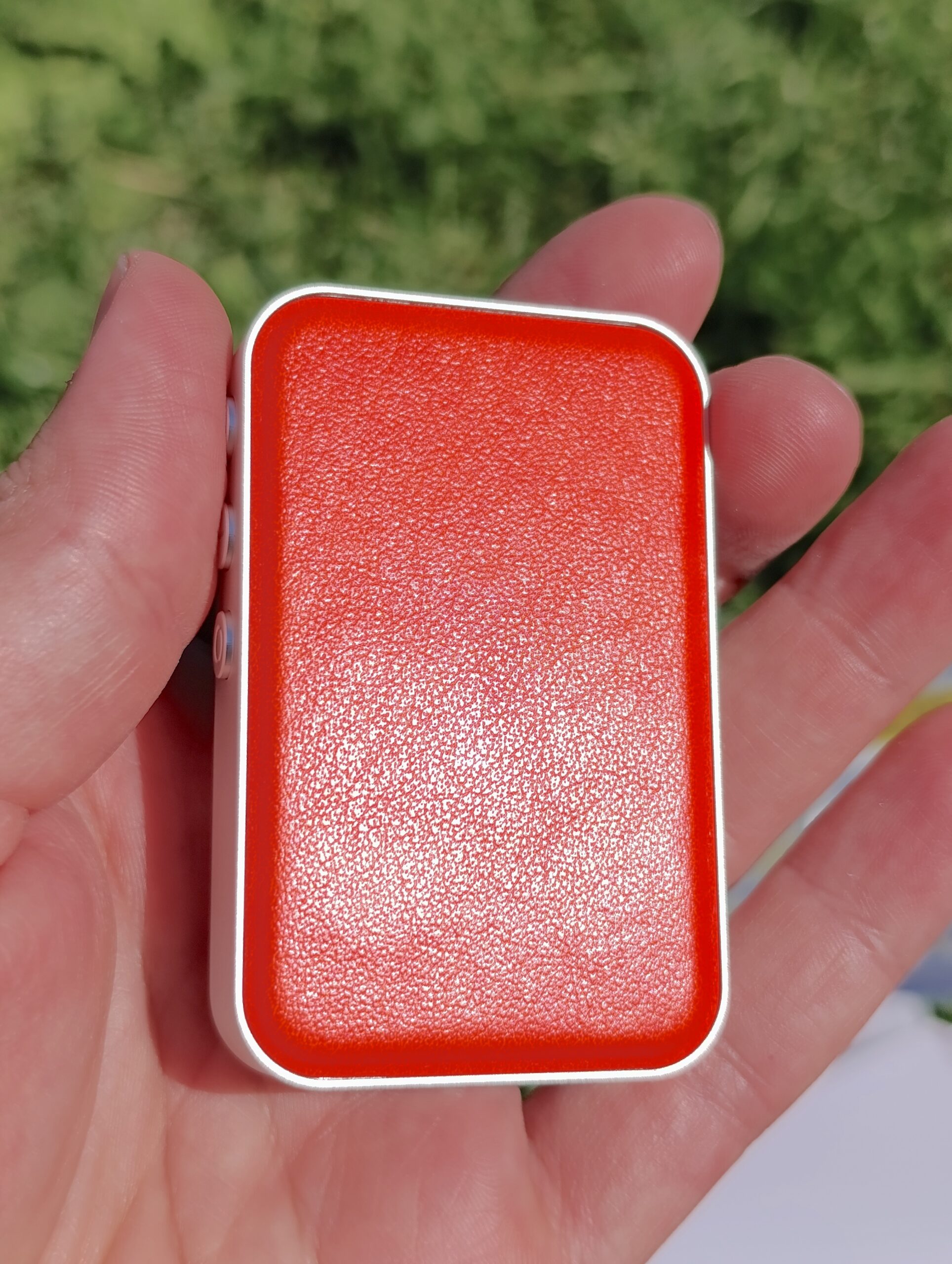
On the back, there’s an orange leatherette finish that hides a magnet for attaching the Fosi Audio MD3 to the back of smartphones with a magnet and cases with a magnetic clasp. Magnet.
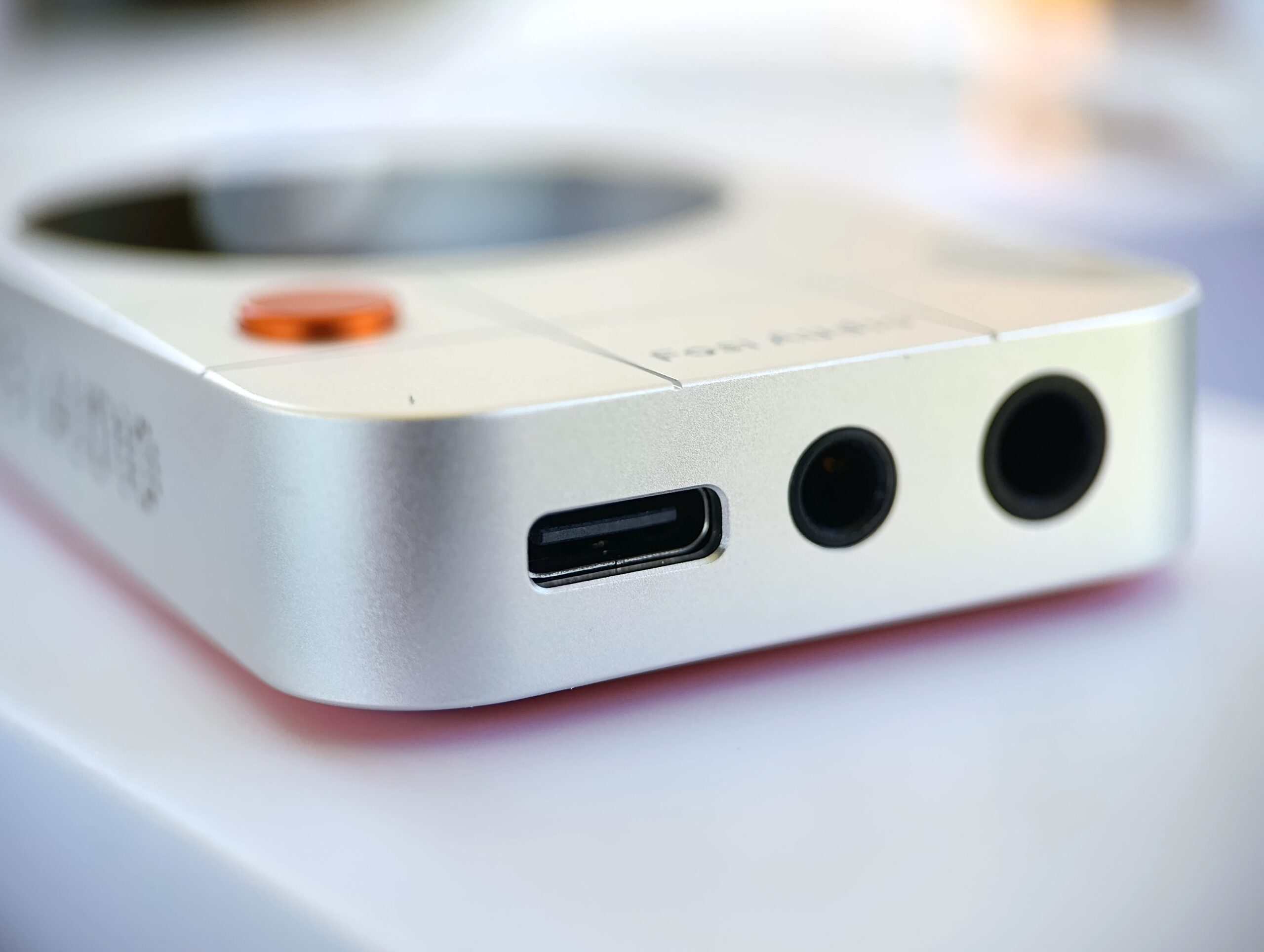
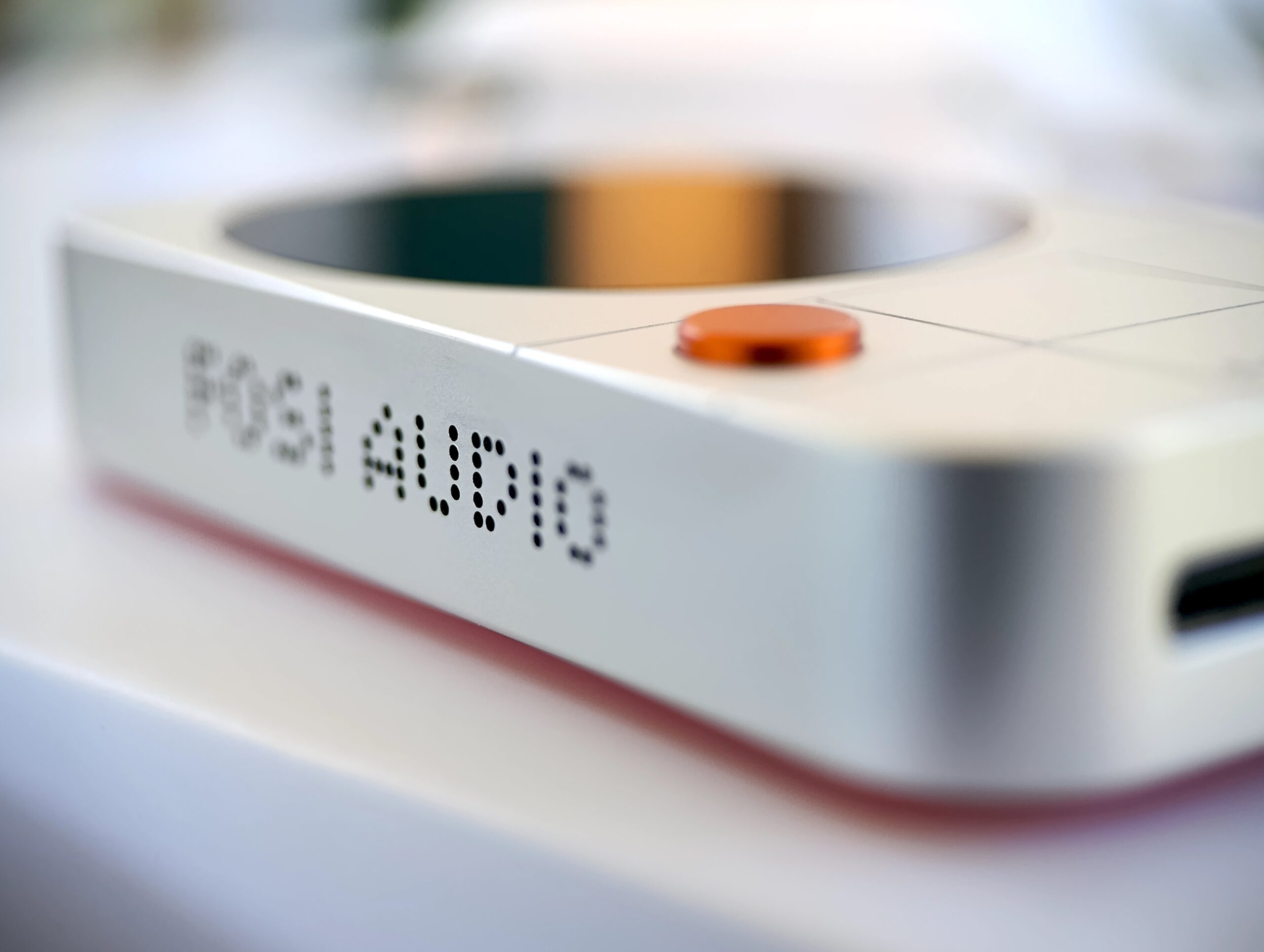
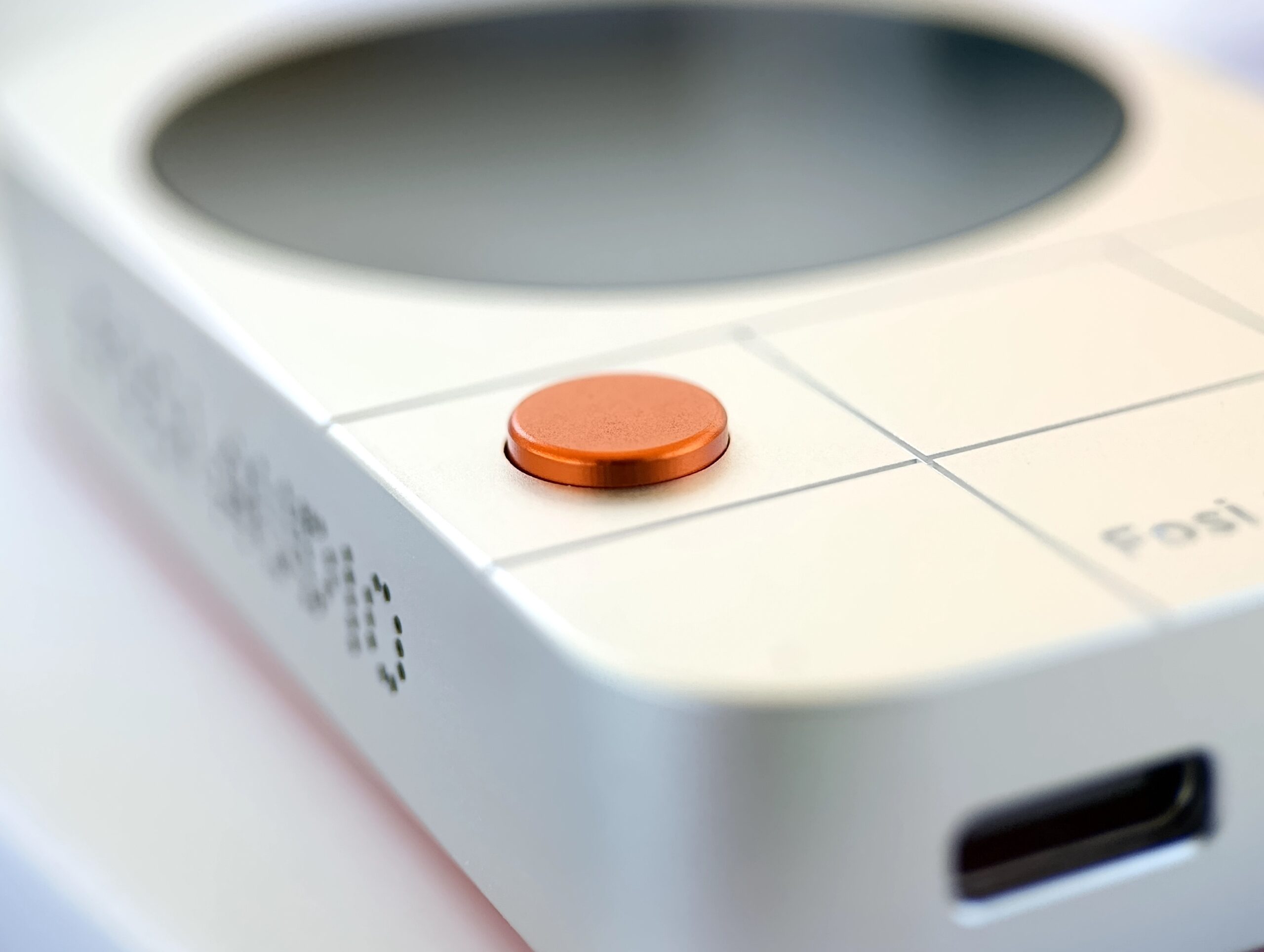
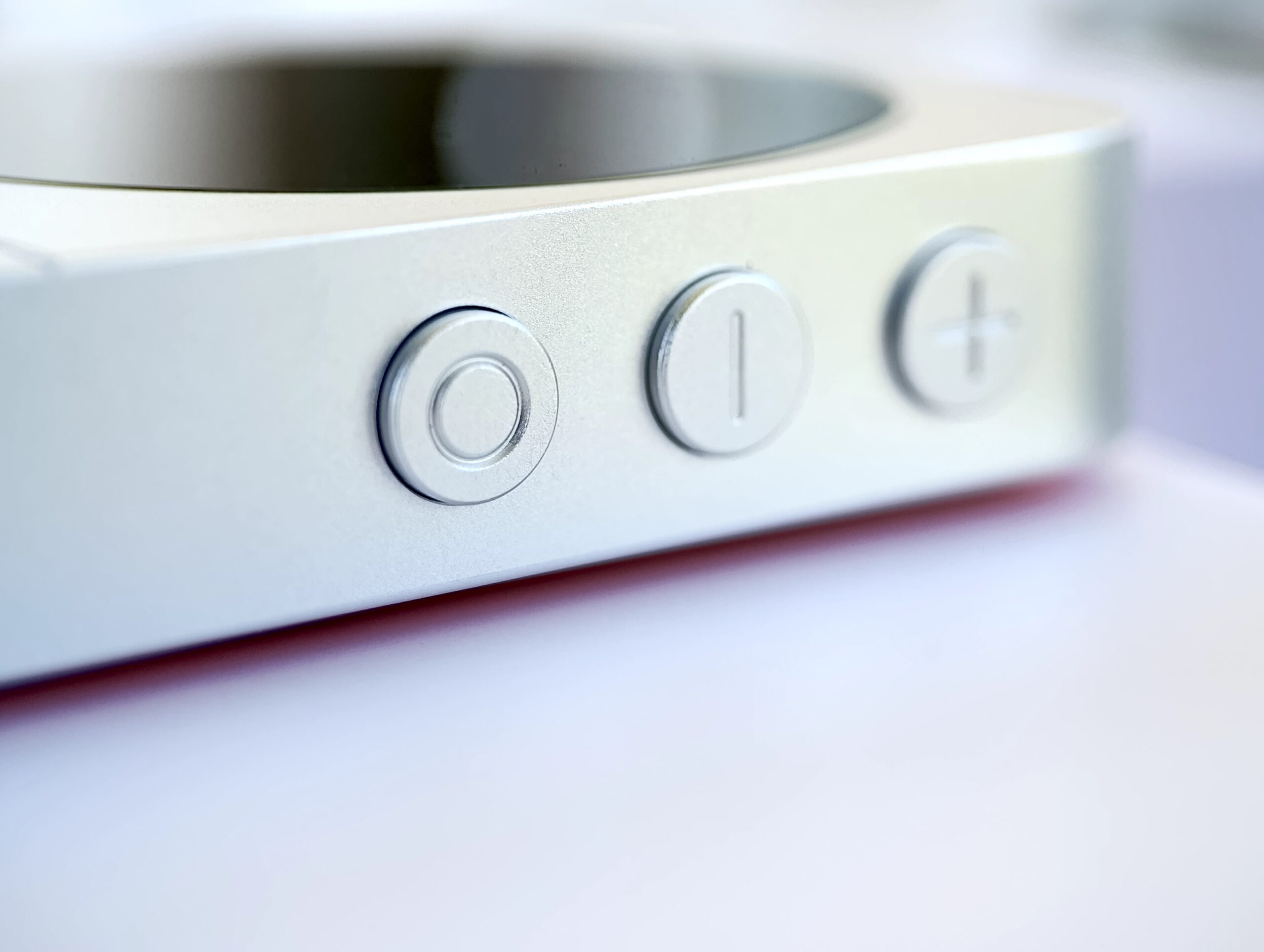
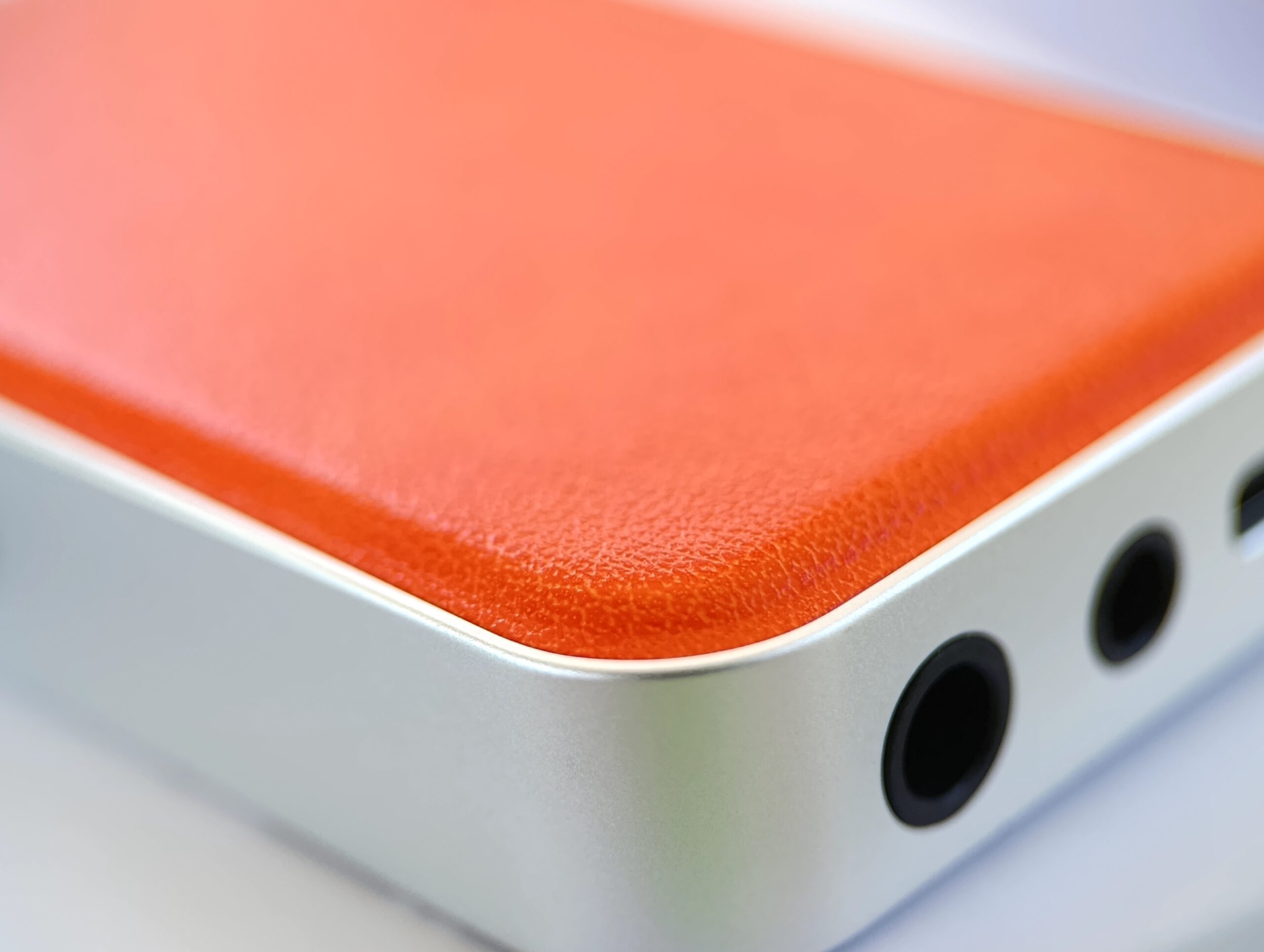
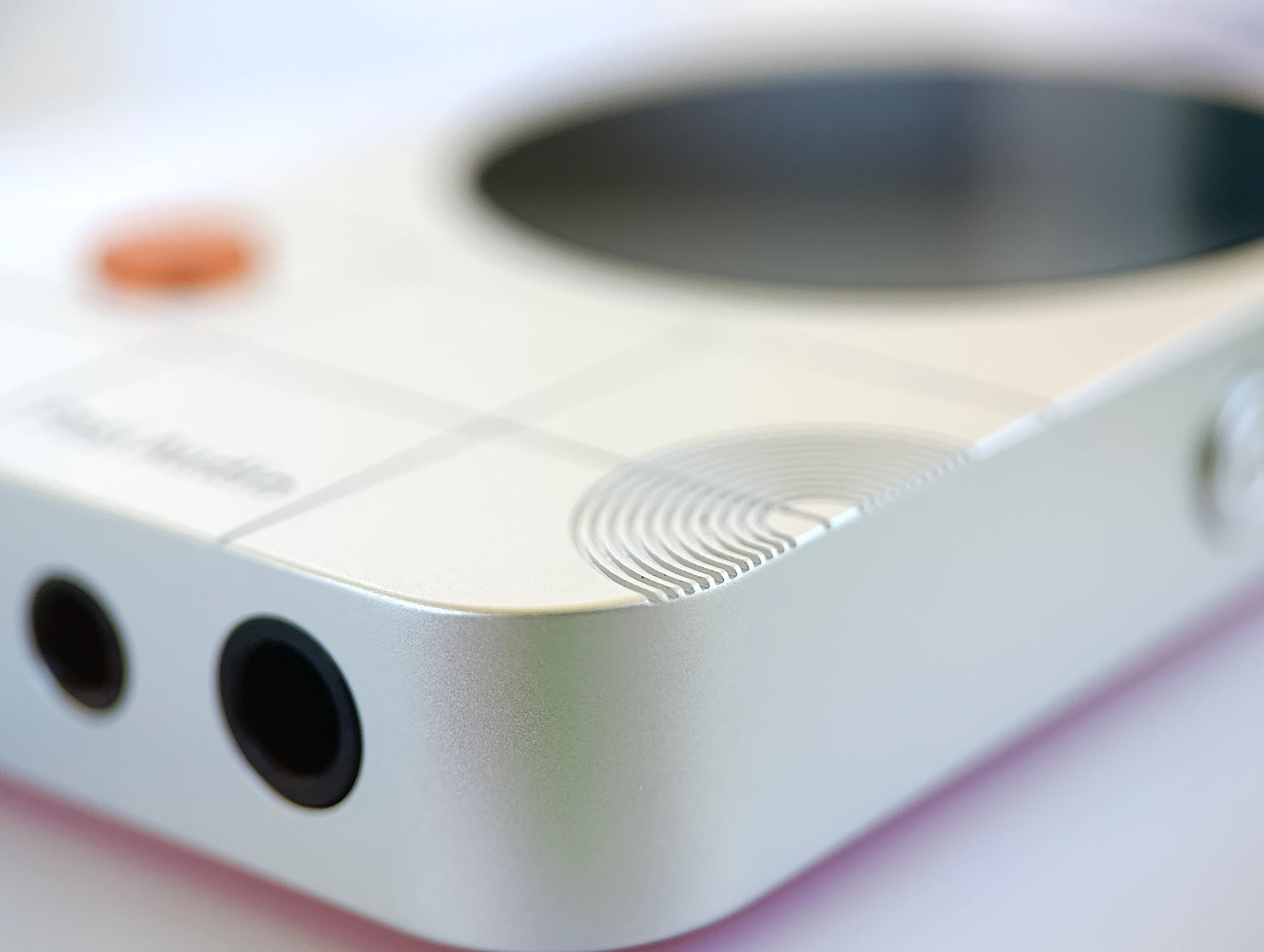
The materials are excellent, the buttons have good feedback, even though the orange one has a bit more tolerance.
Power:
The Fosi Audio MD3 features an interesting technical configuration: an ESS Sabre ES9039Q2M DAC and ESS ES9603Q ×4 amplifier chips.
This low-power solution also works well with Apple devices and delivers superior sound quality. It may not be the right accessory to drive any type of full-size headphones, but it handles planar IEMs without issue. The inclusion of 100 volume steps is a great choice.
It’s certainly not the most powerful DAC made, but it’s definitely a nice accessory for iPhone users. iPhones typically don’t support all chipsets and configurations, but this should work (I say should because I have an Android).
Sound Signature:
Describing the sound signature of a DAC doesn’t make much sense these days: they all sound more or less neutral, free from coloration or alterations, but I can say that this Fosi Audio MD3 has a background free of any noise, one of the cleanest I’ve heard to date, even with very sensitive IEMs. I can say that the IEMs connected to it don’t show any shortcomings due to a lack of proper driving ability, and they all sound at their full potential. A very positive note is the bass, which has a nice body and drivability. The quadruple amplification, in my opinion, really pushes the sound.
8 Digital Filters:
- Minimum Phase:
- Linear Phase Apodizing Fast Roll-off:
- Linear Phase Fast Roll-off
- Linear Phase Fast Roll-off low-ripple
- Linear Phase Slow Roll-off
- Minimum Phase Fast Roll-off
- Minimum Phase Slow Roll-off
- Minimum Phase Fast Roll-off Low Dispersion
As always, detecting differences requires such a trained ear that I believe few people actually hear the difference. It’s also a bit awkward to tell which filter you’re on; unlike other dongles that flash a certain number of times depending on the filter, this one only flashes once to indicate you’ve changed filters, making identification more tentative. Fortunately, turning the dongle off and on again resets it to its standard settings.
Display Visual Effects:
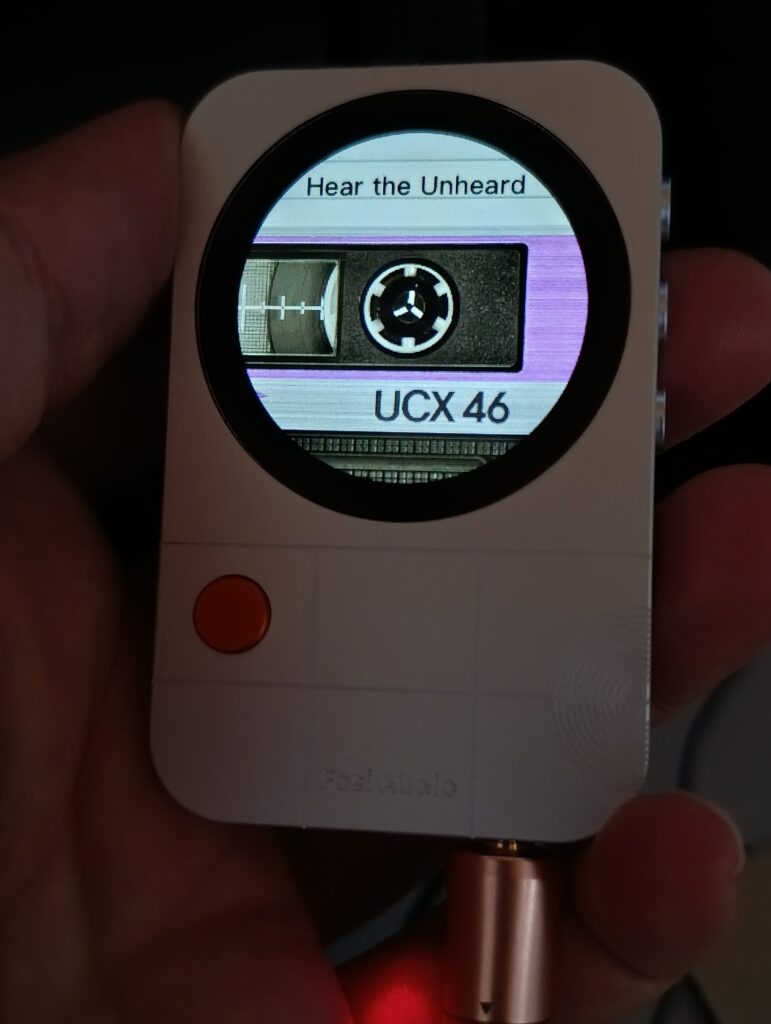
The screen could have even more features, like a truly functional VU meter would have been really cool. It currently uses GIFs with looping animations, and there should be the option to add images and, I think, GIFs, though they probably have to meet some conditions. I hope they release a tool or instructions for creating custom ones when the device is released. The display is a great feature, although it obviously increases the size of the DAC; compared to those with a small display, there are no real functional benefits, only aesthetic and design ones.
Fosi Tool: https://cc.fosiaudio.com/#/md3
Conclusion:
Making comparisons is pretty pointless, as I said. These days, dongles all sound pretty similar. Power varies, and in this case, the Fosi Audio MD3 isn’t the most powerful, but it sounds clean against a completely dark background. It’s a DAC with a display, the only one currently available, and after my tests, I can say that attaching it to the back of your smartphone requires a good magnet to hold it securely. In my case, I don’t have a magnet, just a metal plate, which isn’t exactly the same as a Magsafe ring.
Fortunately, the Fosi Audio MD3 can be used with any device without any compatibility issues.
The device may be a bit bulky overall, but that depends on the user. Even under heavy loads, the device doesn’t heat up, a sign of low power consumption. The display can also be turned off to reduce power consumption even further.
It lacks even a basic equalizer; a very simple EQ could perhaps be added via a firmware update.
Otherwise, it’s a different device, fun and easy to use, but above all, it sounds good and is perfect if you don’t need to drive full-size planars.
8.8/10
Pros:
- Build Quality / CNC shell
- Stylish Design
- 360mW at 32ohm Balanced
- Neutral sound
- No background noise or weird sound while playing
- Good soundstage & details
- Independent volume
- 1,28 inch display
- Works with iPhone
- 8 Digital Filters
Cons:
- No App
- Chunky boy
- No EQ
- Display should be used actively with a live VU meter
Q/A:
Who is the Fosi Audio MD3 for?
The Fosi Audio MD3 is a next-generation dongle/DAC, a little bulkier than a classic one but with several interesting features. Particularly suited to iPhone users, it can be used on multiple devices. A product suitable for everyone.
Who should avoid the Fosi Audio MD3?
Those looking for something compact will probably prefer a simpler product, it is almost a DAP size and I can understand that some users do not like this idea.
Similar alternatives to consider?
There are no similar products on the market right now, but there are countless dongle options. This one is definitely highly optimized, and if you’re an iPhone user, you shouldn’t have any compatibility issues. There are other Fosi Audio models that are equally good and more compact.
More informations:




No Comment! Be the first one.