

























































































Preface
When you talk about Beyerdynamic, you’re stepping into the world of professional audio. For decades, the German brand has been a trusted name among musicians, sound engineers, and recording studios, building its reputation on durability, reliability, and a clear design philosophy.
Table Of Content
- Preface
- First Impressions
- Packaging and Accessories
- A Complete Accessory Package
- Ergonomics from the Very First Detail
- A Carrying Case Designed to Be Used
- Technical Specifications
- Design Philosophy and Engineering
- Designed for the Stage
- One Driver, One Clear Direction
- Function Before Appearance
- From Design to Listening
- Build Quality
- Comfort and Isolation
- A Fully Moldable Ear Hook
- The Cable: My Only Real Complaint
- Overall Sound Signature
- Looking at It Through a Musician’s Eyes
- A Tuning That Makes Sense
- Bass
- Midrange
- Treble
- Soundstage and Imaging
- Driving, Pairing and Synergy
- My Favorite Pairings
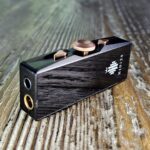
- Aune Yuki
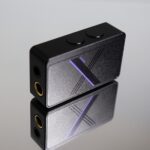
- iFi GO Link Max
- Final Thoughts on Pairing
- Who Is It For?
- A Surprisingly Good Everyday Companion
- Built to Be Used
- Final Thoughts
- The One I Kept Reaching For
- 🟢 Pros
- 🔴 Cons
- Frequently Asked Questions
- Acknowledgments and Personal Note
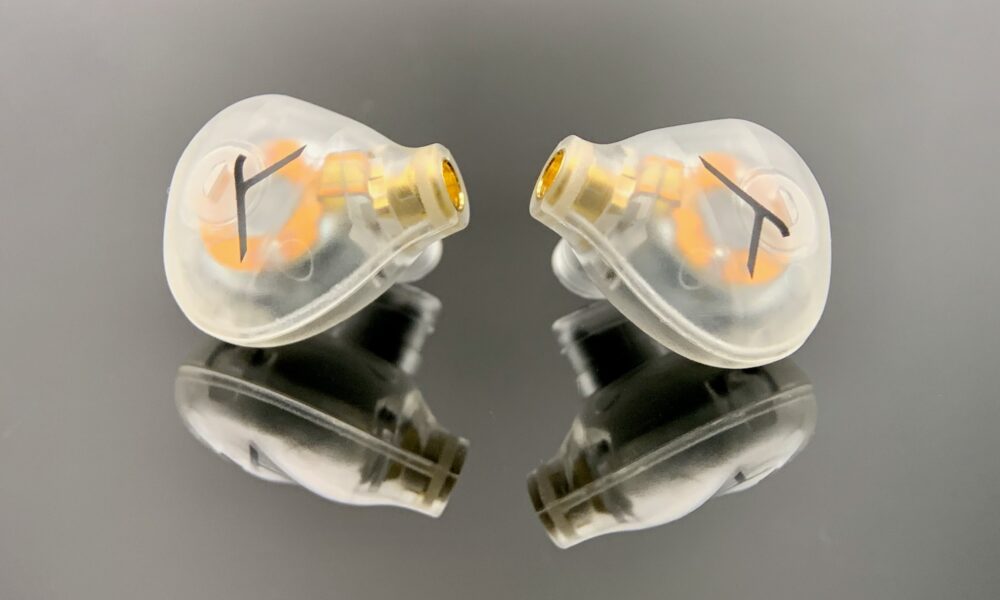
With the new DT IE series, Beyerdynamic brings that same approach to the professional in-ear monitor market. The DT 30 IE is the entry level model in the lineup, but calling it simply “entry level” would be unfair. Beyerdynamic designed the DT 30 IE with a very specific goal in mind: creating a lightweight, durable, and comfortable stage monitor versatile enough to adapt to different instruments and performance environments.
It’s important to clarify one thing right from the start. The DT 30 IE wasn’t designed primarily as an audiophile IEM, nor as a tool for mixing or mastering. Its purpose is different. Beyerdynamic designed the DT 30 IE to accompany musicians through rehearsals, live performances, and long practice sessions, offering comfort, reliability, and a sound signature that prioritizes clarity without causing listening fatigue.
That’s exactly why I approached this review by setting aside my usual HiFi expectations. The question I asked myself wasn’t simply, “How does it sound?” but whether Beyerdynamic had successfully brought its professional expertise into an in-ear monitor that truly excels at what it was designed to do.
As always, every impression in this review is based on several days of listening, using different sources and music I know extremely well. Only after understanding the thinking behind its design can the DT 30 IE be judged for what it really is, rather than for what it was never meant to be.
First Impressions
My first impressions of the DT 30 IE were mixed. On one hand, it’s immediately clear that you’re dealing with a product designed by people who truly understand the professional audio world. On the other, its sound signature isn’t something you fully grasp after just a few tracks.
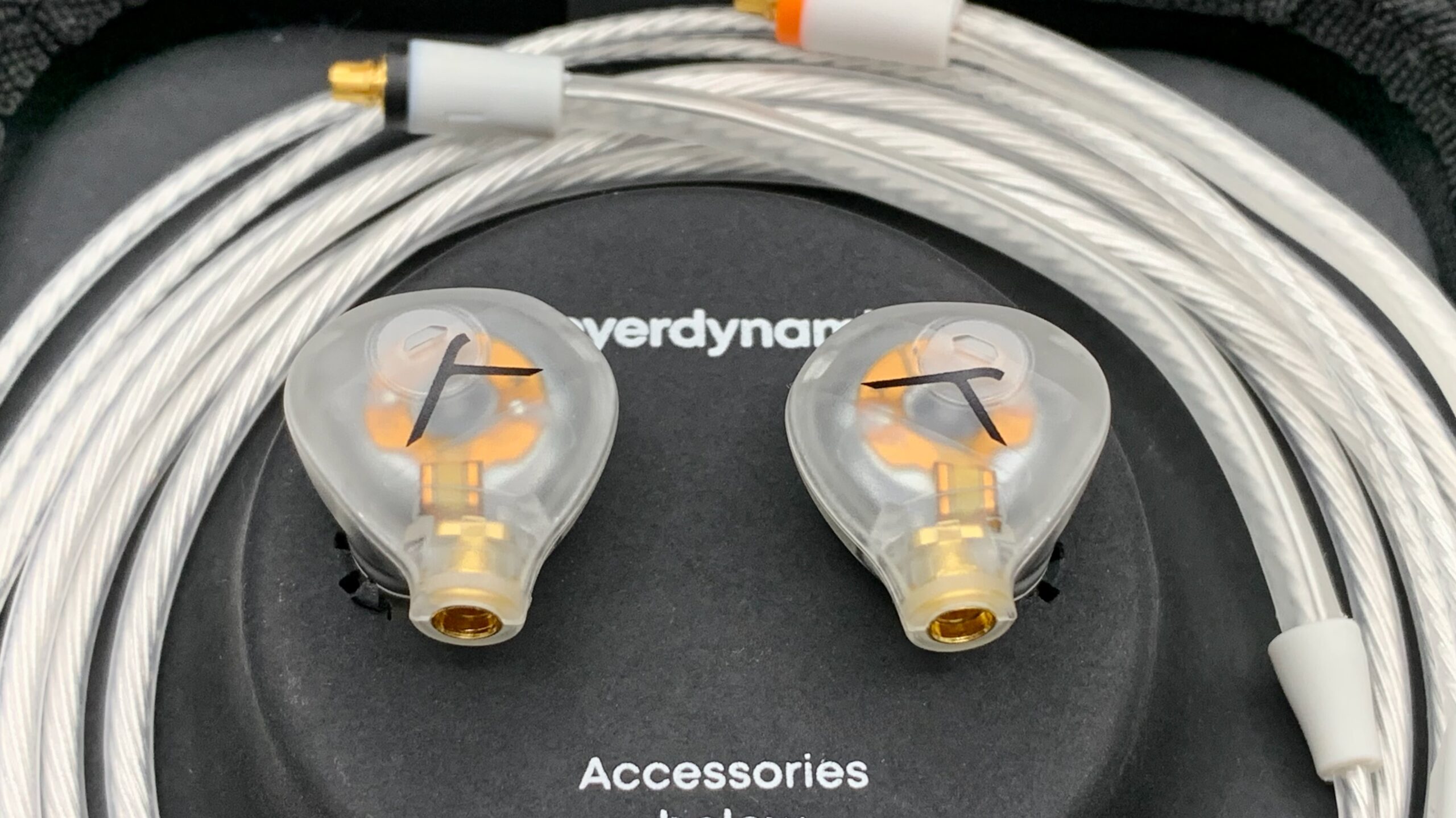
Straight out of the box, what stands out most is its incredibly compact size and almost imperceptible weight. Insertion is quick and effortless, and after just a few minutes the earpieces practically disappear in your ears. Passive isolation also proved to be excellent from the very beginning, allowing comfortable listening at moderate volume even in noisy environments.
The build quality inspires confidence, while the design clearly prioritizes functionality over aesthetics. Everything feels purpose-built for intensive, everyday use, without unnecessary embellishments.
The first few hours of listening, however, left me with some questions. I was expecting a more linear tuning and a little more openness in the upper frequencies. The sub bass immediately made its presence known, with more authority than I had anticipated, while the treble struck me as slightly laid back, although never to the point of sounding absent.
That initial impression was exactly what encouraged me to spend more time with the DT 30 IE. As I switched between different sources, explored a wider variety of music, and simply logged more listening hours, I began to realize that this wasn’t the result of an arbitrary tuning. It was a deliberate design choice. One that, as we’ll see throughout the rest of this review, defines both the character of the DT 30 IE and the role it was designed to fulfill.

Packaging and Accessories
A Complete Accessory Package
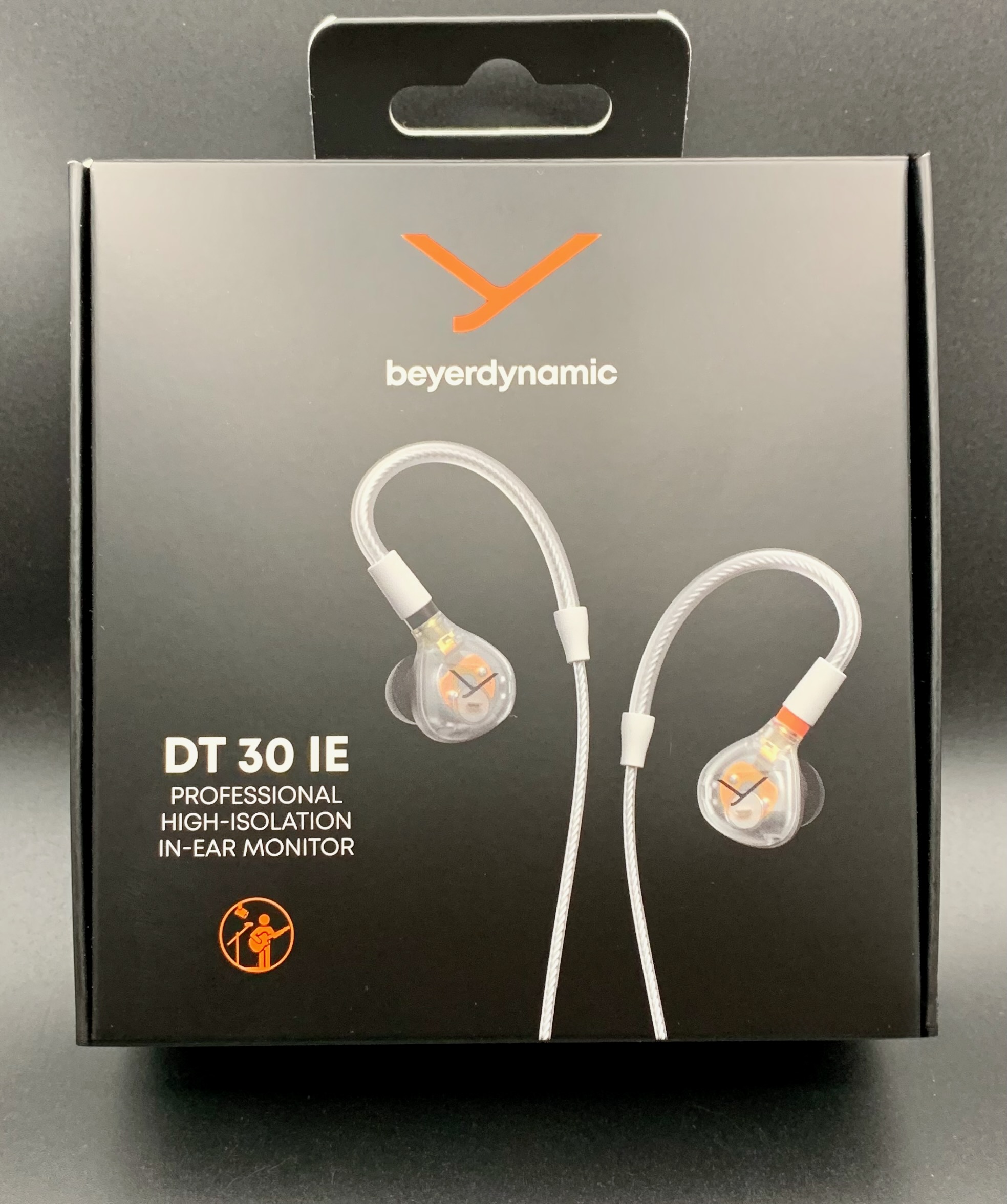
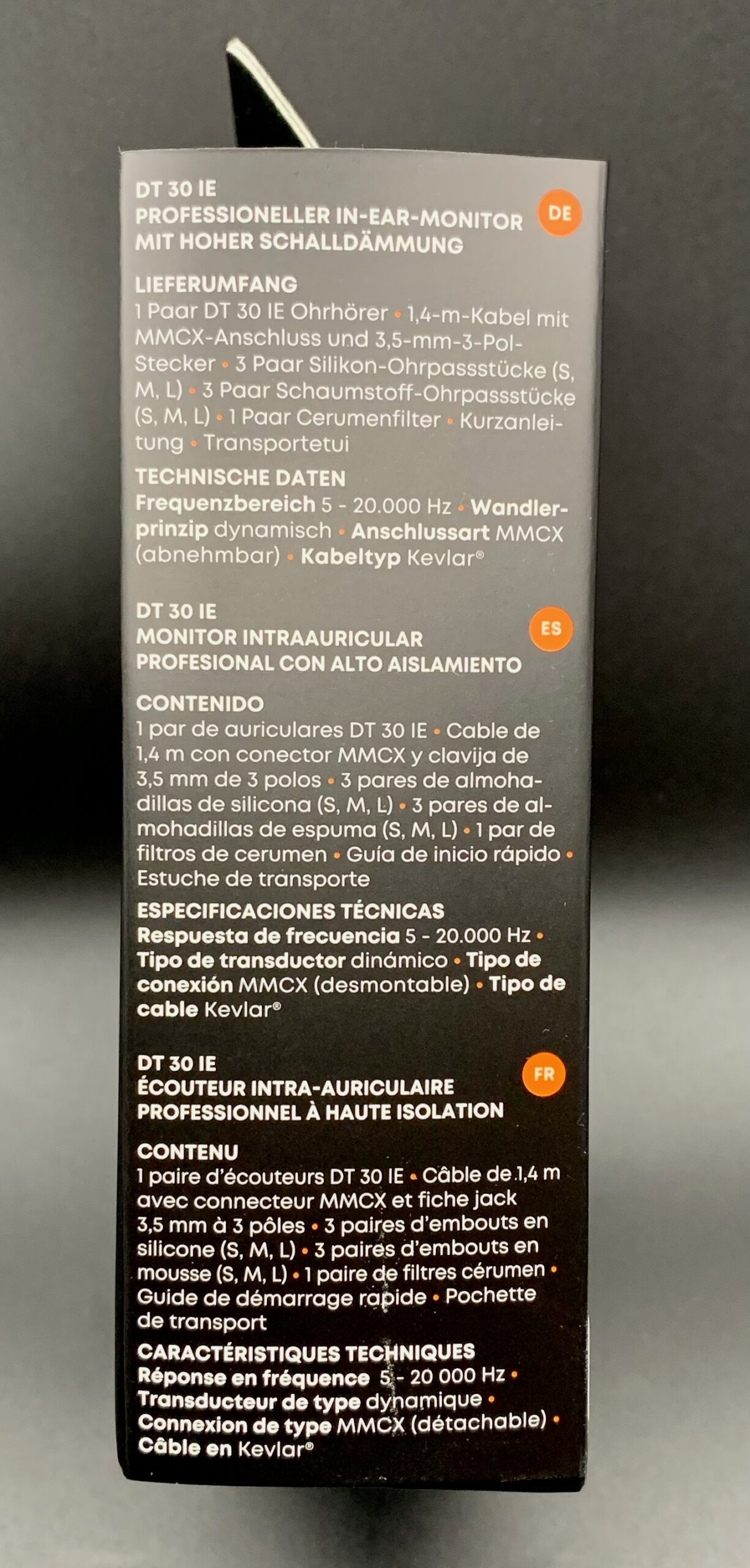
The DT 30 IE‘s packaging perfectly reflects its overall philosophy: simple, well-organized, and focused on practicality. There are no flashy extras or unnecessary accessories, just everything you need to start using the IEMs right out of the box.
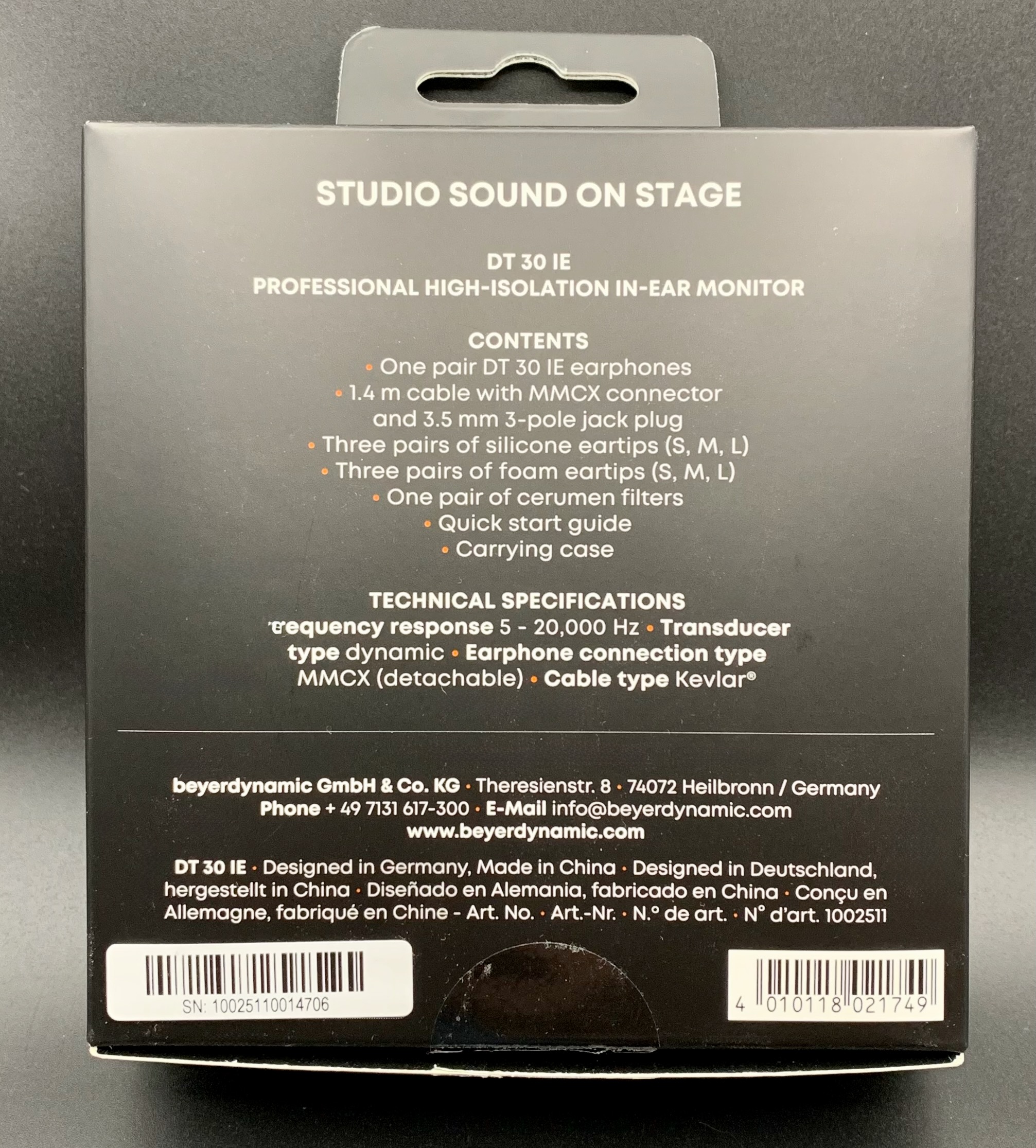
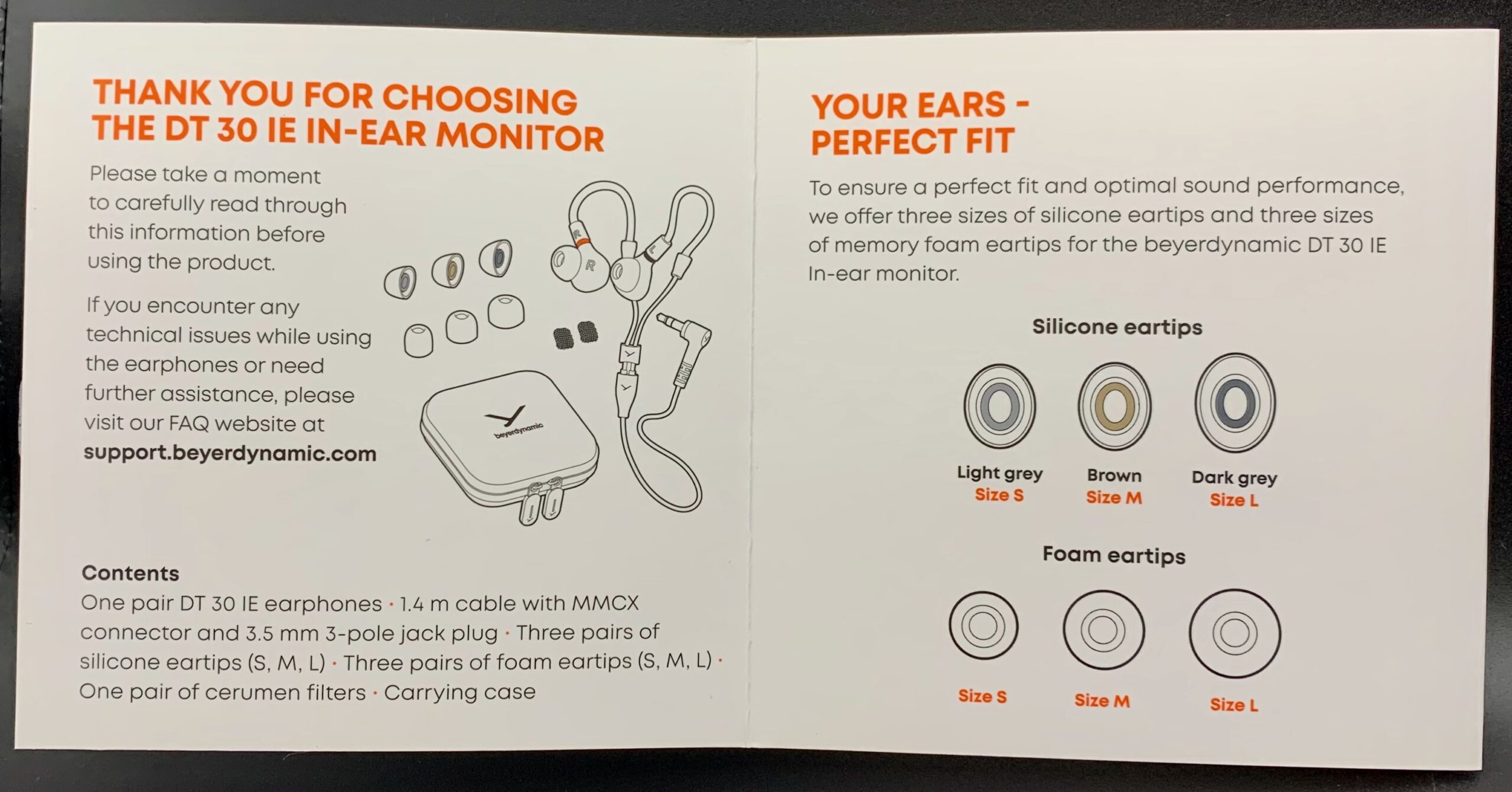
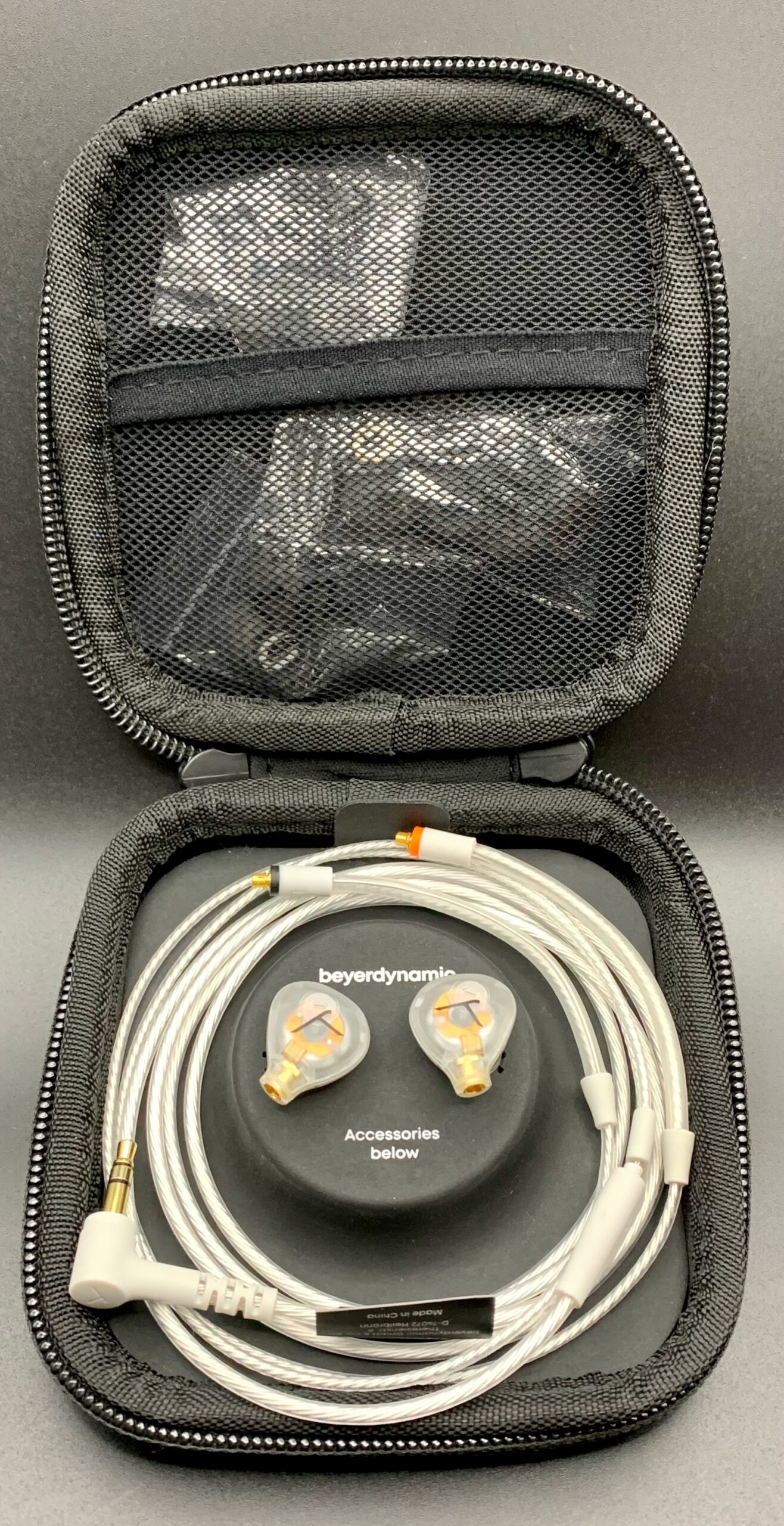
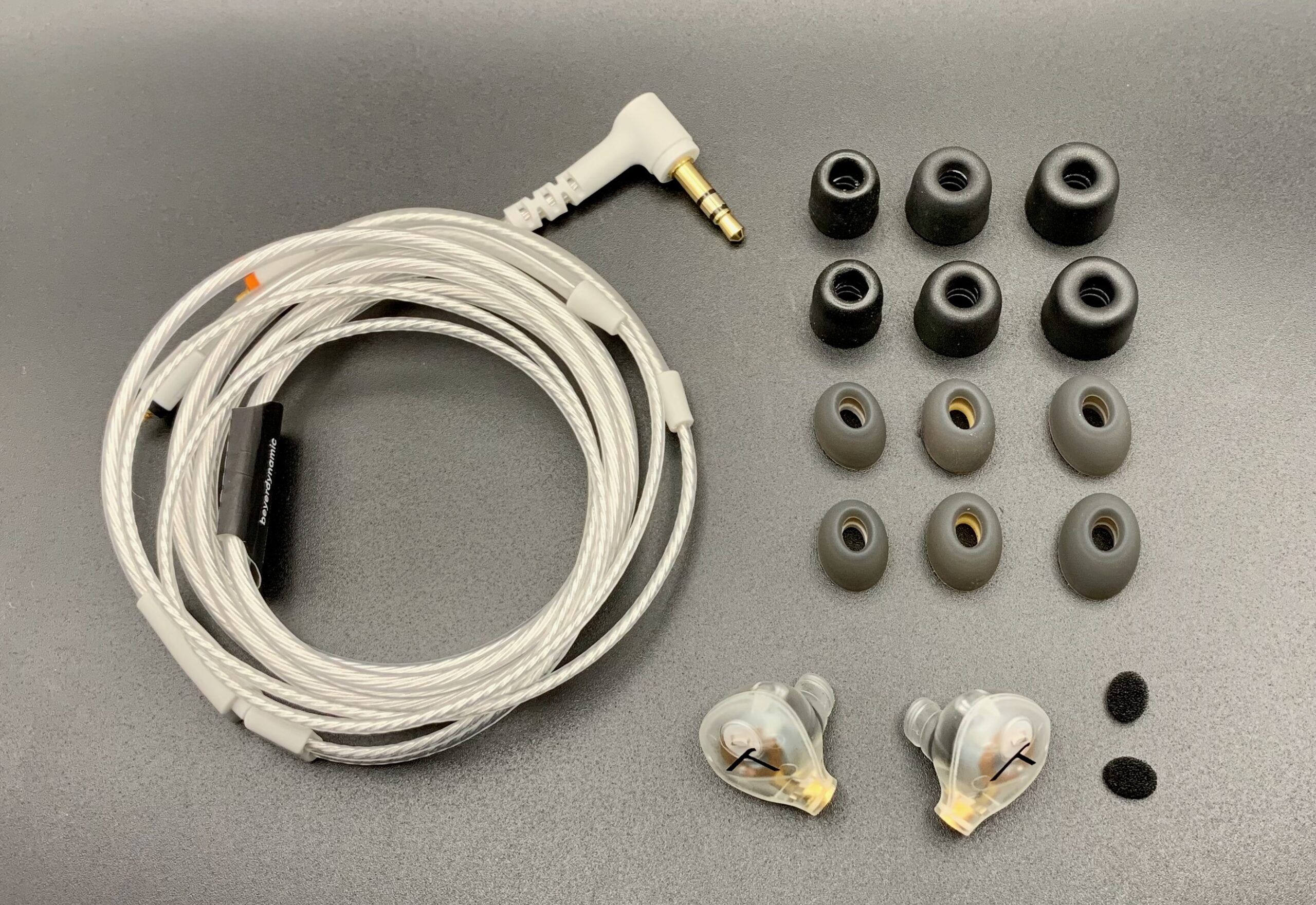
Inside the package you’ll find the IEMs, the detachable cable, a sturdy hard carrying case, three pairs of silicone ear tips in S, M, and L sizes, and three pairs of foam tips in the same sizes. Beyerdynamic also includes a spare set of wax filters, a small but welcome detail that highlights the company’s attention to long-term maintenance and product longevity.
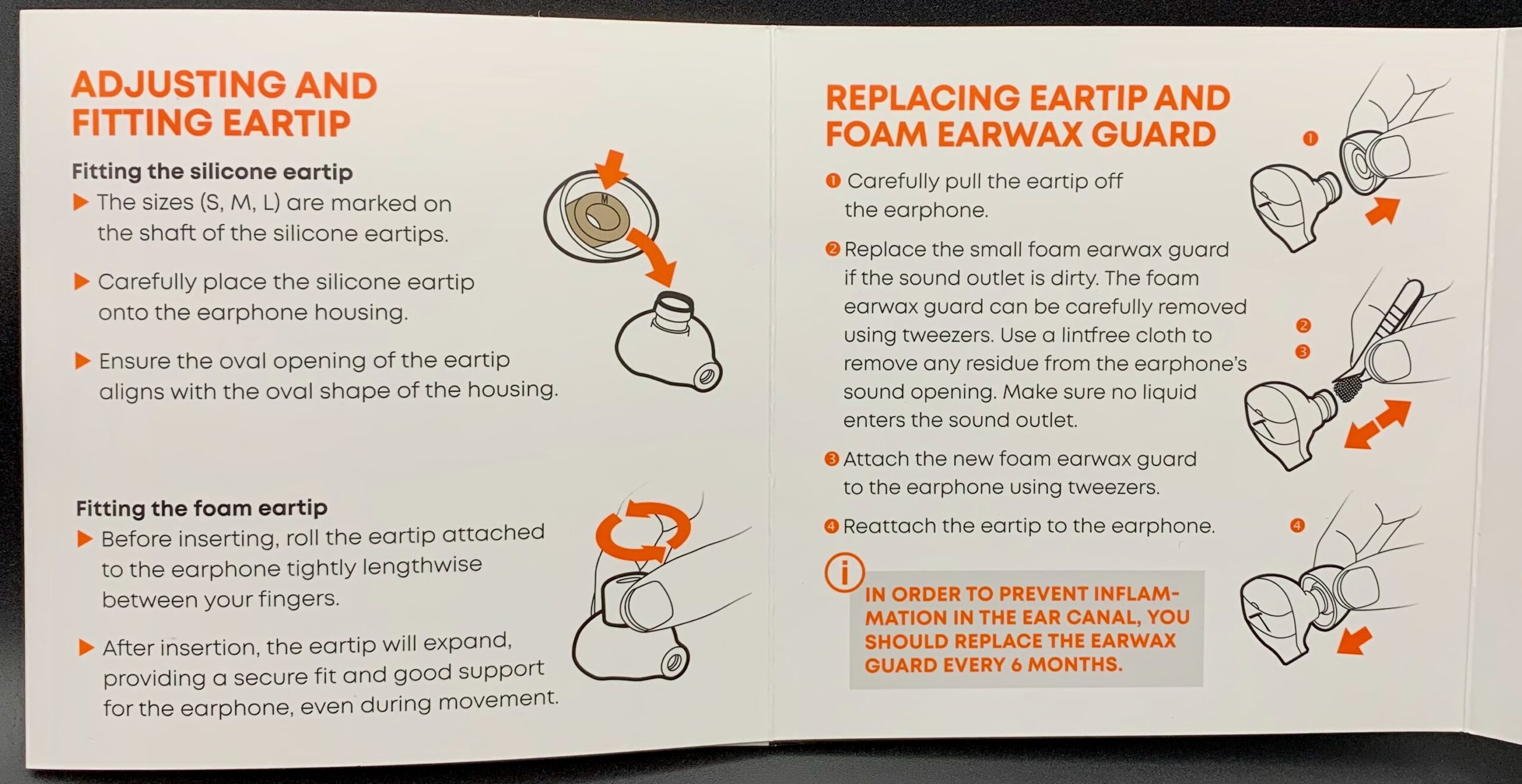
I particularly appreciated the inclusion of both silicone and foam tips. Choosing the right ear tip isn’t just about comfort; it also has a significant impact on passive isolation and, ultimately, on sound quality. Since the DT 30 IE was designed as a stage monitor, achieving the proper fit is essential to getting the best performance out of it.
Ergonomics from the Very First Detail
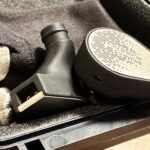
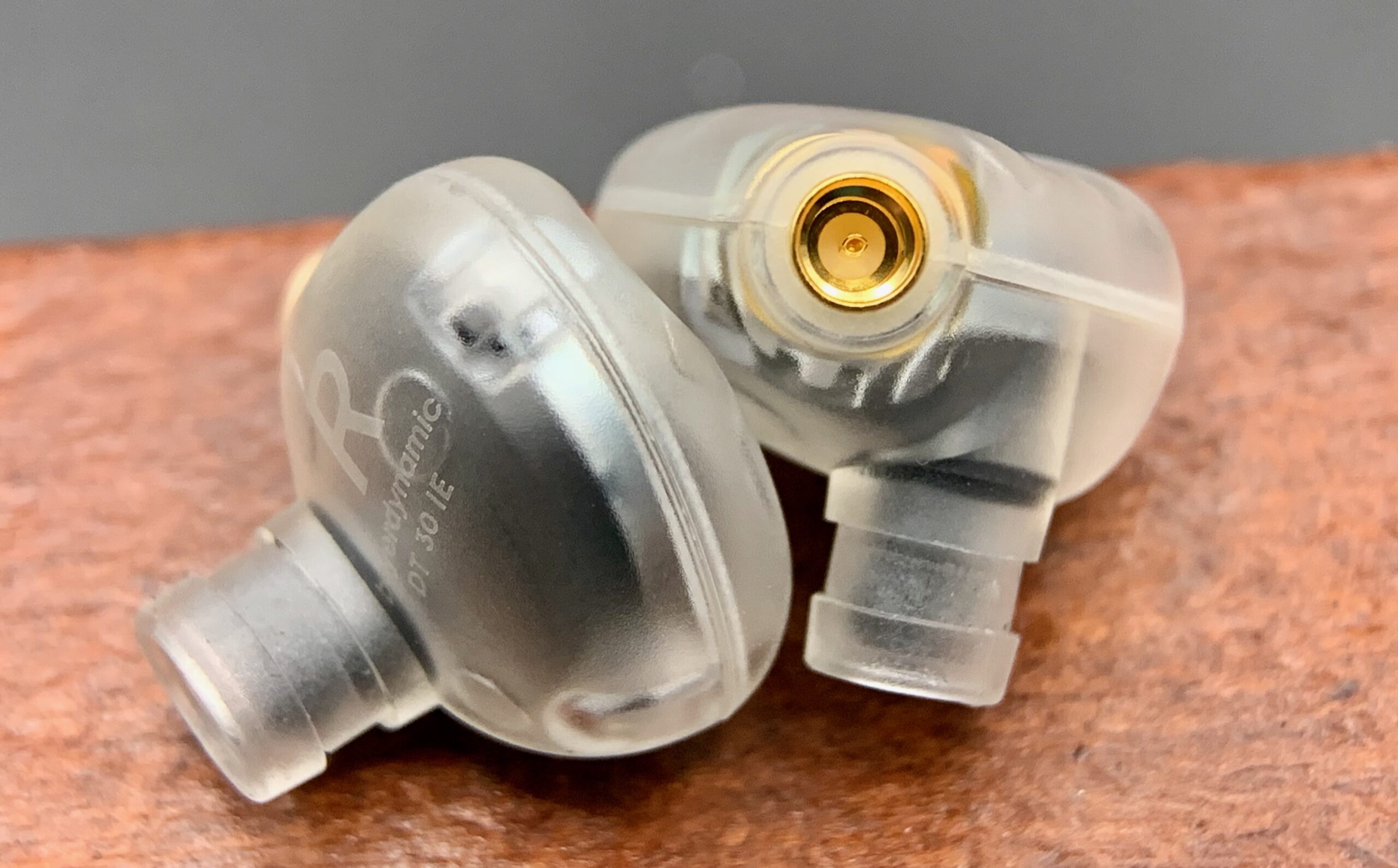
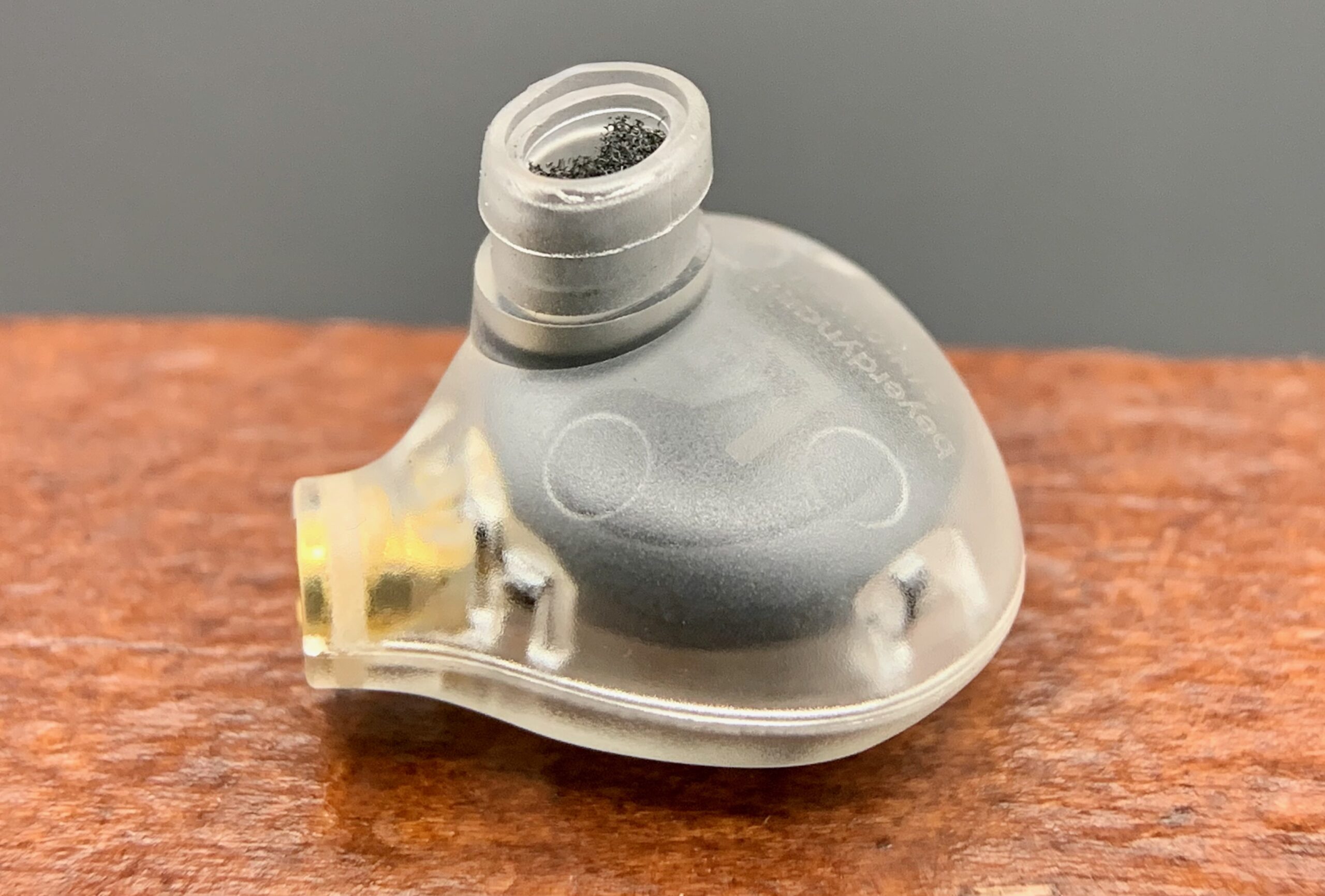
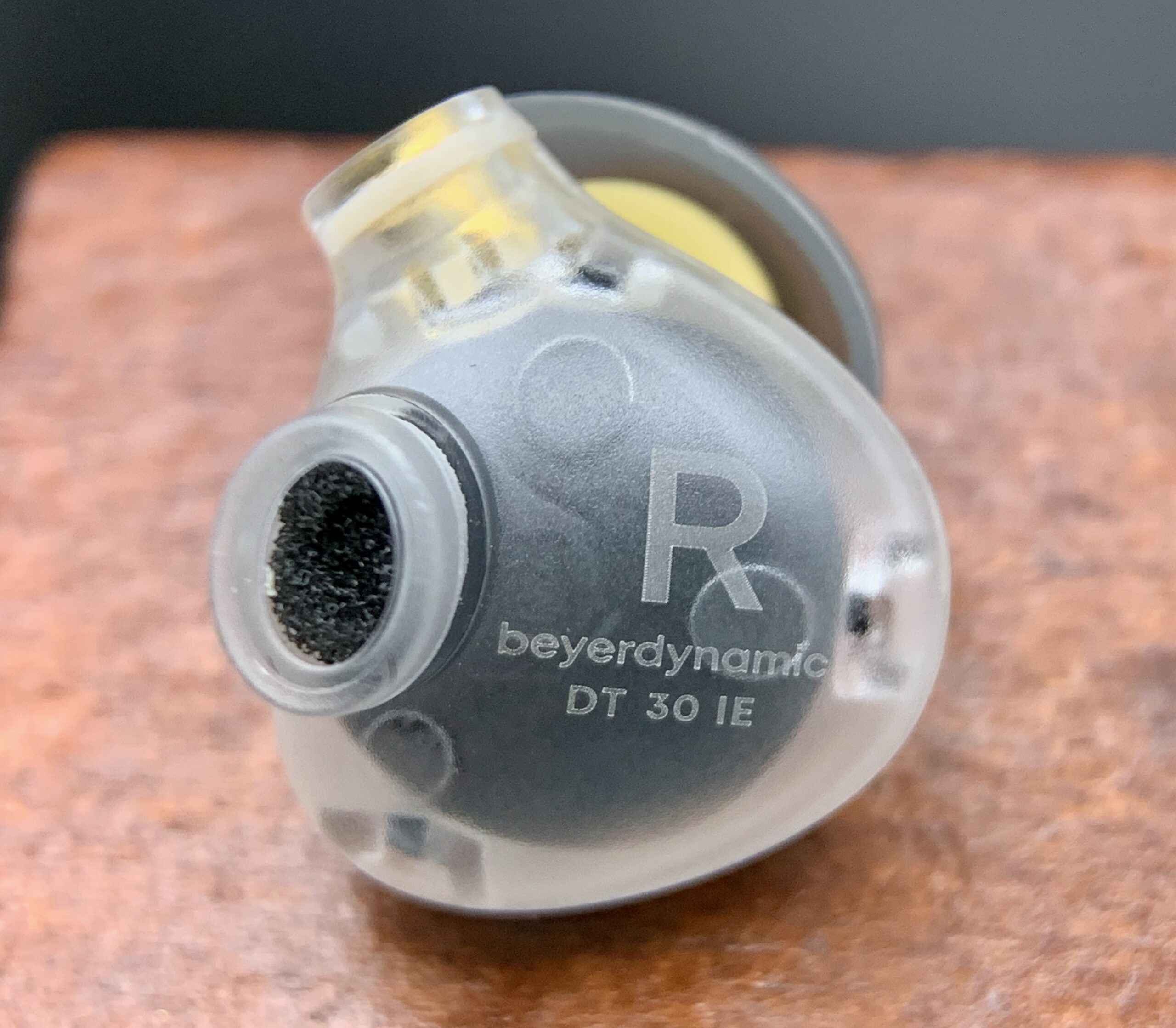
One detail I particularly appreciated could easily go unnoticed at first glance. The silicone ear tips aren’t perfectly round. Instead, they feature a slightly oval profile, a shape that’s echoed by the IEM’s nozzle itself.
This isn’t simply a styling choice. The human ear canal is rarely perfectly circular and is generally slightly oval in shape. By adopting a geometry that more closely matches real anatomy, the silicone tips, unlike foam tips that naturally conform to the ear canal, can achieve a more even fit, distributing pressure more uniformly while improving comfort, stability, and passive isolation.
It’s one of those thoughtful design details that many people will probably overlook during a quick unboxing, yet it says a great deal about the level of engineering behind the DT 30 IE. Small touches like this can make a surprisingly big difference, especially during long listening sessions.
A Carrying Case Designed to Be Used
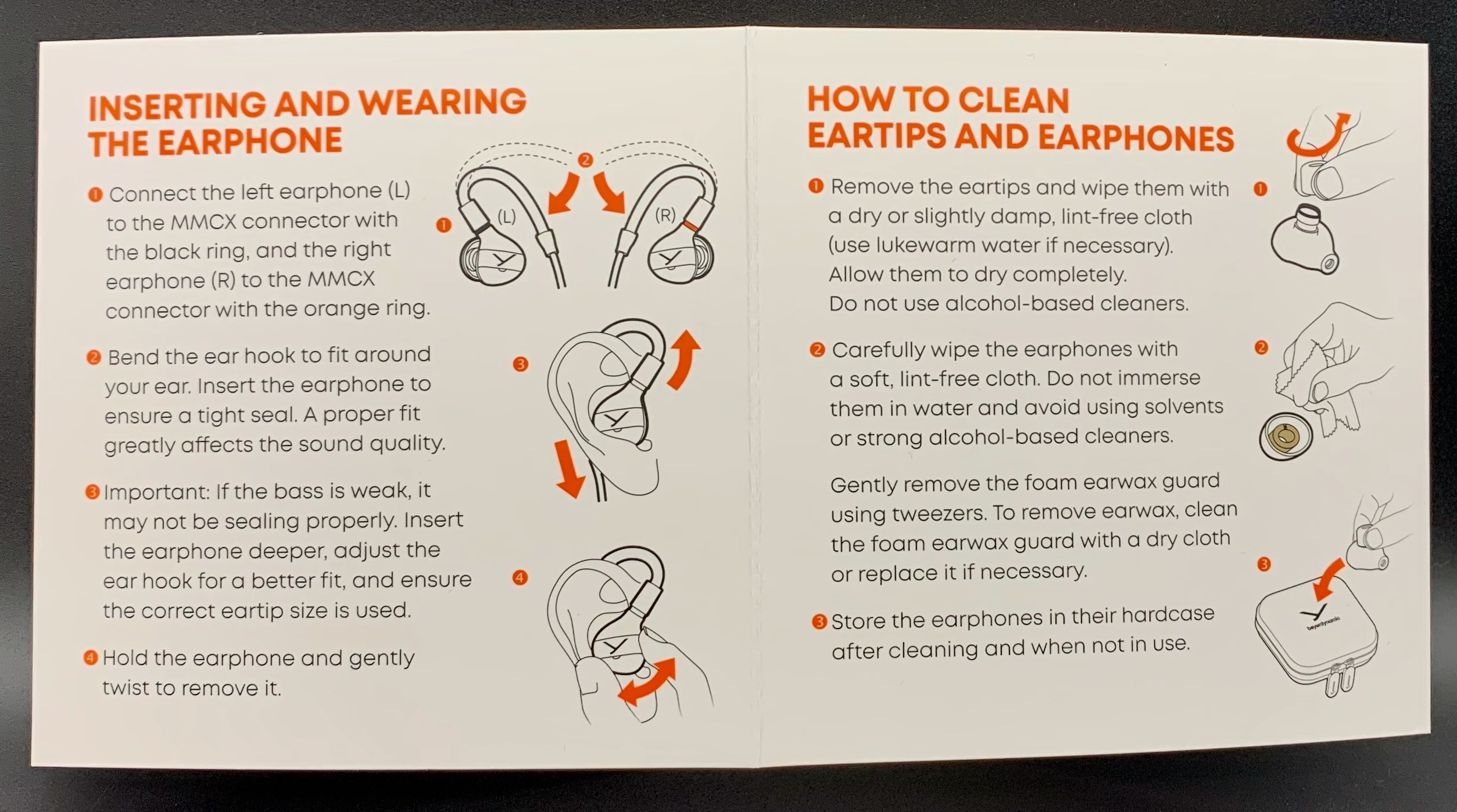
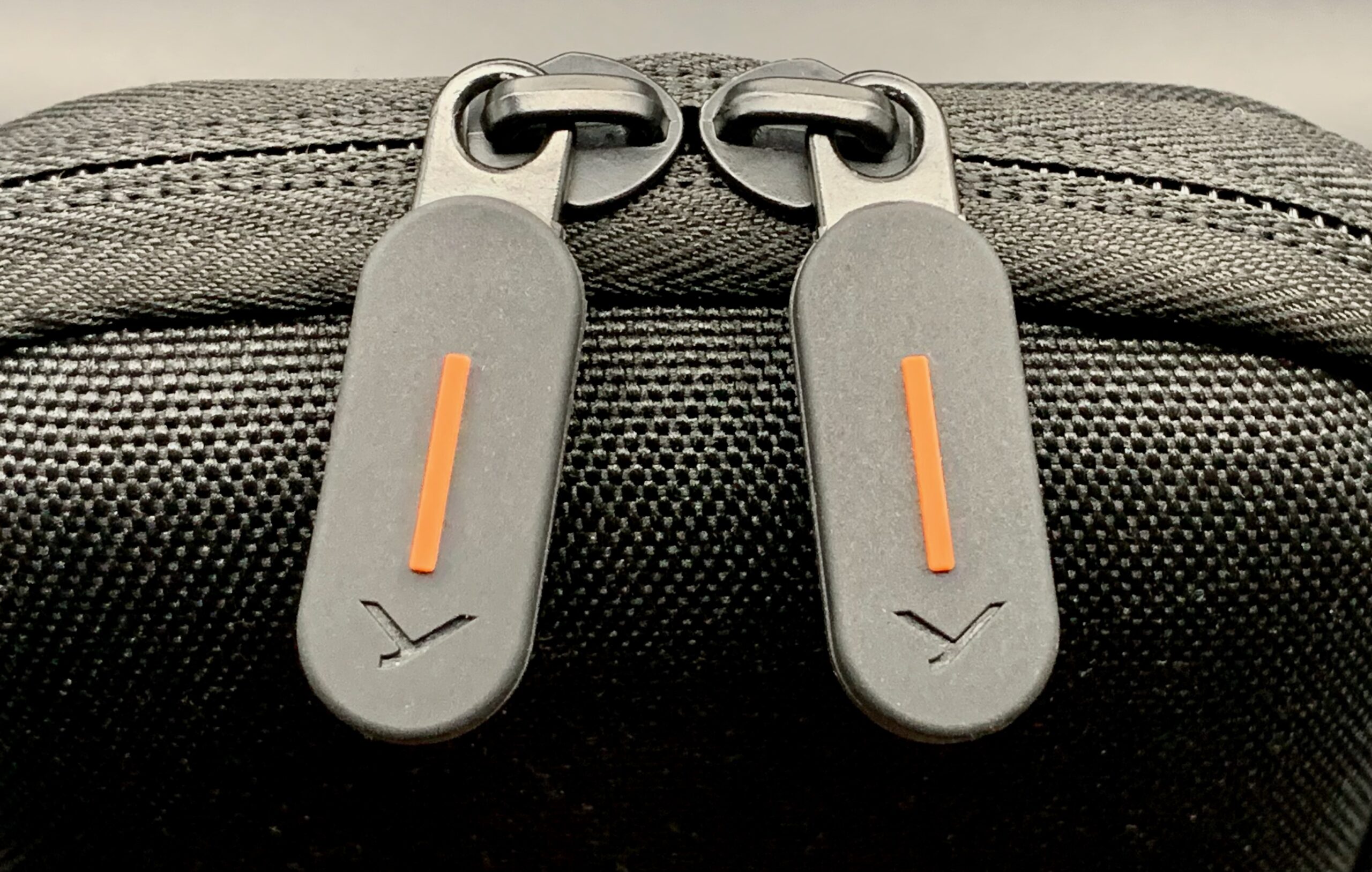
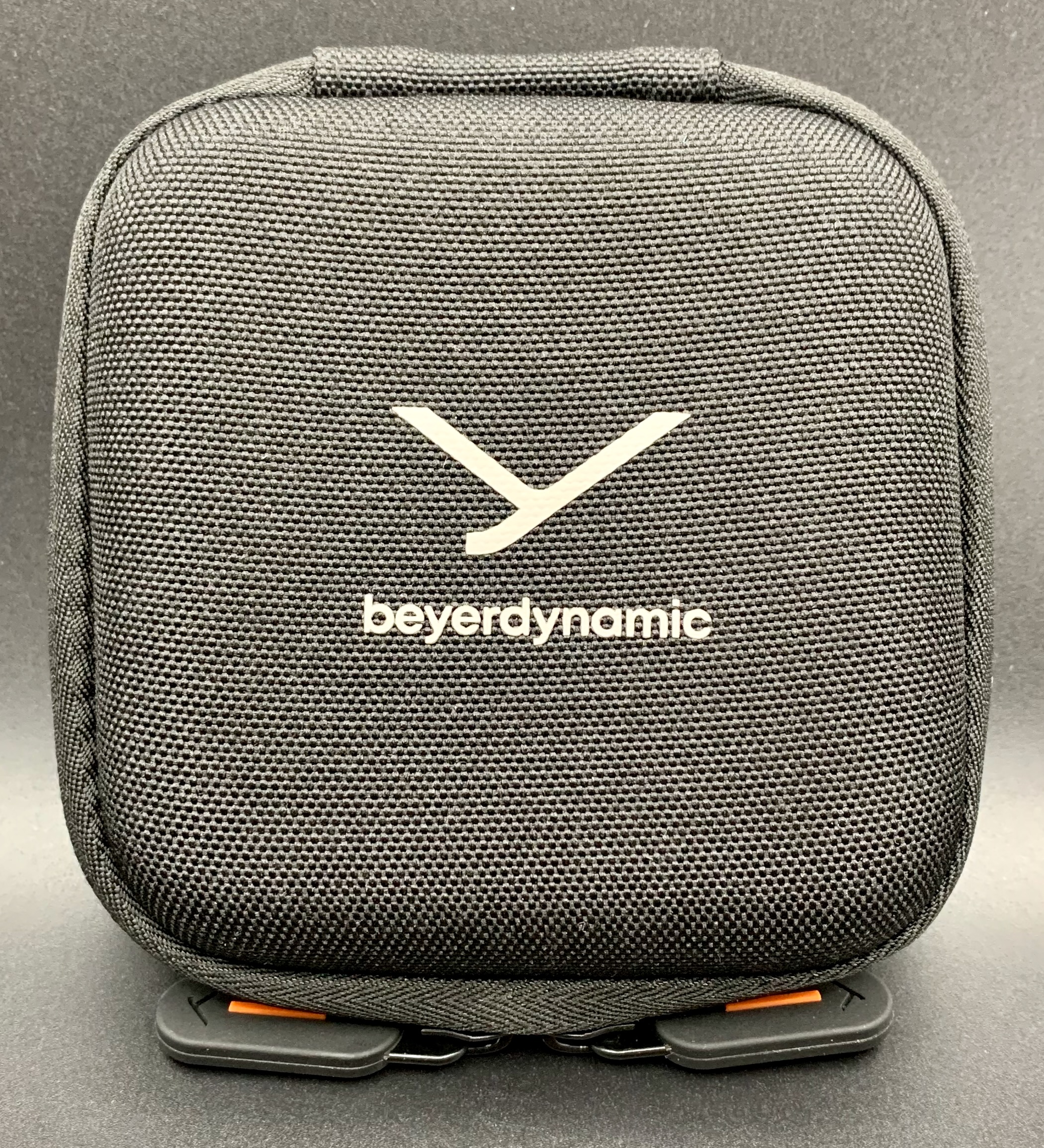
The hard carrying case is compact, well-made, and sturdy enough to protect the IEMs during transport. Once again, Beyerdynamic’s practical approach is evident. Rather than including a simple pouch, they’ve provided a case designed to follow musicians from the rehearsal room to the stage and everywhere in between.
I also appreciated its generous size, which lets you store the IEMs without having to wrap the cable with surgical precision, as well as the handy internal pocket that’s perfect for keeping spare ear tips close at hand. It’s a simple but genuinely practical solution that many other manufacturers could learn from.
Overall, the accessory package is complete and perfectly in line with the product’s price range. It doesn’t try to impress with luxury presentation or unnecessary extras. Instead, it provides everything that’s genuinely useful for everyday professional use, without leaving you feeling that anything important has been overlooked.
Technical Specifications
Before diving into the listening impressions, let’s take a look at the manufacturer’s specifications.
These figures provide a useful overview of the technical concept behind the product, offering a first look at the driver, materials, and overall design. That said, it’s worth remembering that a specification sheet never tells the whole story.
The quality of an IEM doesn’t depend solely on driver size, impedance, or sensitivity. What really makes the difference is the acoustic design, the quality of the components, how well they work together, and the tuning carried out by the engineers. Two IEMs with very similar specifications can deliver completely different listening experiences.
For that reason, I’ve always considered technical specifications a starting point rather than a way to judge a product. Ultimately, listening is what tells us whether Beyerdynamic’s design choices have resulted in an in-ear monitor that truly achieves the goals it was created for.
| Specification | Details |
| Model | Beyerdynamic DT 30 IE |
| Type | Professional in-ear monitor |
| Driver | Dynamic TESLA.11 |
| Driver Size | 11 mm |
| Driver Principle | Dynamic |
| Frequency Response | 5 Hz – 40 kHz |
| Impedance | 18 Ω |
| Sensitivity | 114 dB SPL @ 1 mW / 500 Hz |
| Maximum SPL | 137 dB SPL |
| THD | < 0.02% @ 1 kHz |
| Passive Isolation | Up to –39 dB |
| Ingress Protection | IP54 |
| Weight (without cable) | 2.7 g per earpiece |
| Connector Type | Gold plated MMCX |
| Cable | Detachable, Kevlar reinforced, 1.4 m |
| Plug | Gold plated 3.5 mm stereo jack |
| Included Accessories | Hard carrying case, 3 pairs of silicone ear tips, 3 pairs of foam ear tips, spare wax filters |
Design Philosophy and Engineering
Designed for the Stage
To truly understand the DT 30 IE, you first need to understand the thinking behind its design. Beyerdynamic didn’t create this IEM primarily for audiophiles. Instead, it developed a tool for people who experience music on stage, in the rehearsal room, or during live performances.
The goal was to create a universal stage monitor that could suit a wide range of musicians while delivering comfort, reliability, and a natural sound even after hours of continuous use. It’s a very different approach from many consumer-oriented IEMs, which are often voiced to grab your attention immediately with elevated bass and lively treble.
One Driver, One Clear Direction
At the heart of the DT 30 IE is Beyerdynamic’s new 11 mm TESLA.11 dynamic driver, developed entirely in-house. Rather than opting for a multi-driver configuration, the company chose a single dynamic driver to prioritize tonal coherence, natural timbre, and the absence of the crossover discontinuities that can sometimes affect multi-driver designs.
It’s a deliberate decision that values consistency across the frequency range over chasing technical specifications for their own sake.
Function Before Appearance
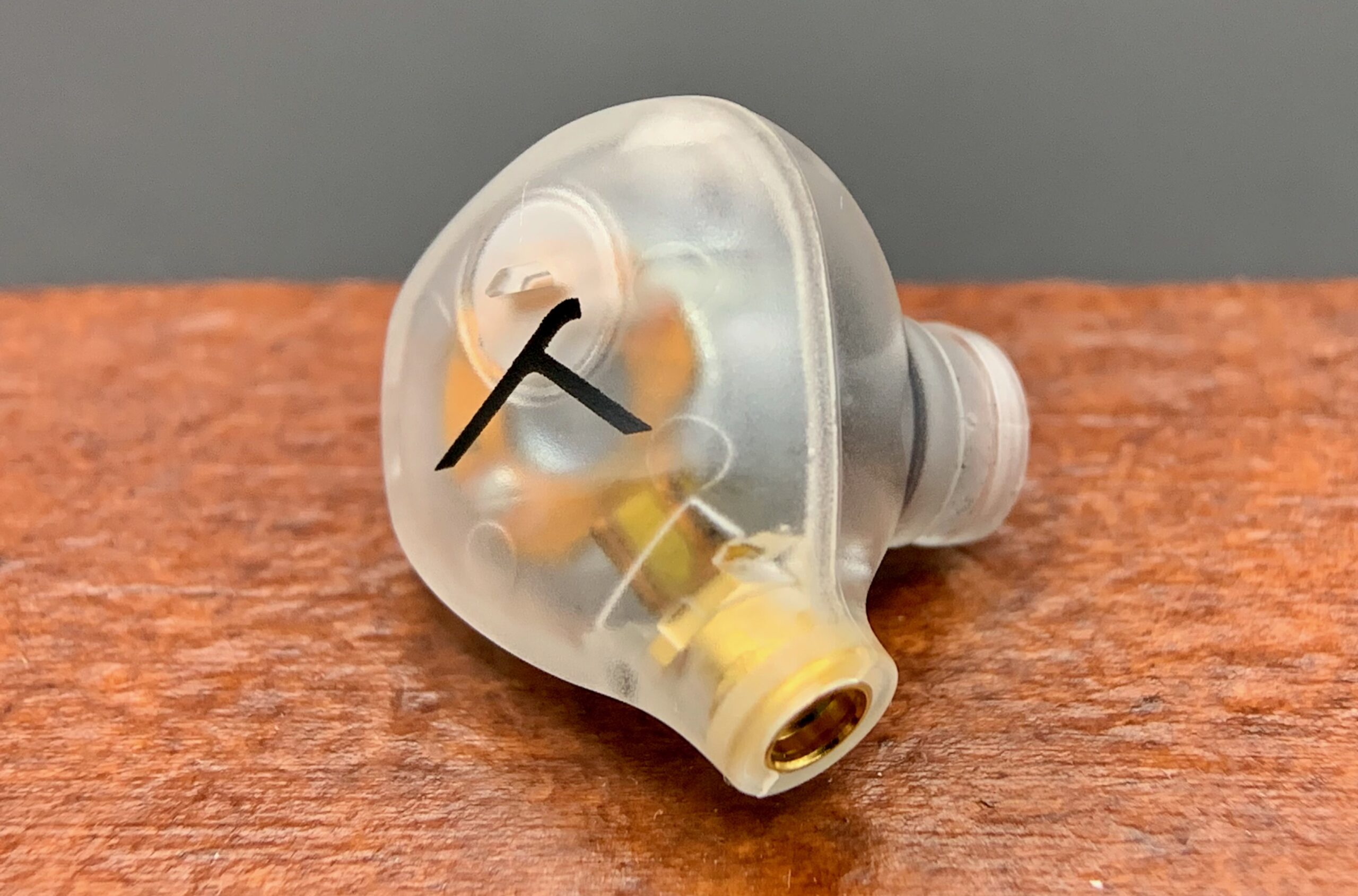
Ergonomics played a major role throughout the development process. Beyerdynamic analyzed a wide variety of ear shapes to achieve a secure fit, an exceptionally lightweight design, and excellent passive isolation. These are all essential qualities for stage monitoring, where comfort and isolation have a direct impact on performance.
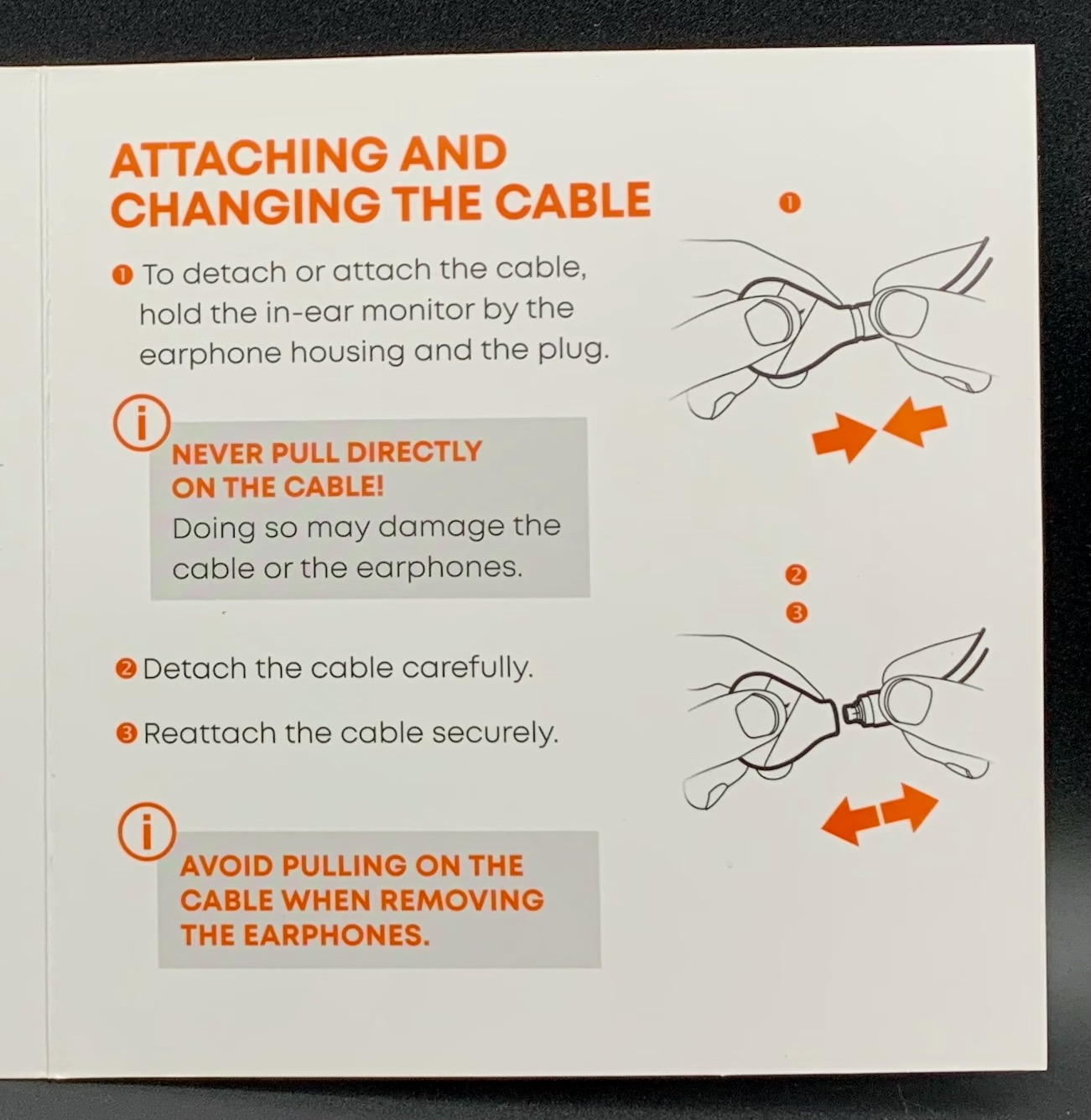
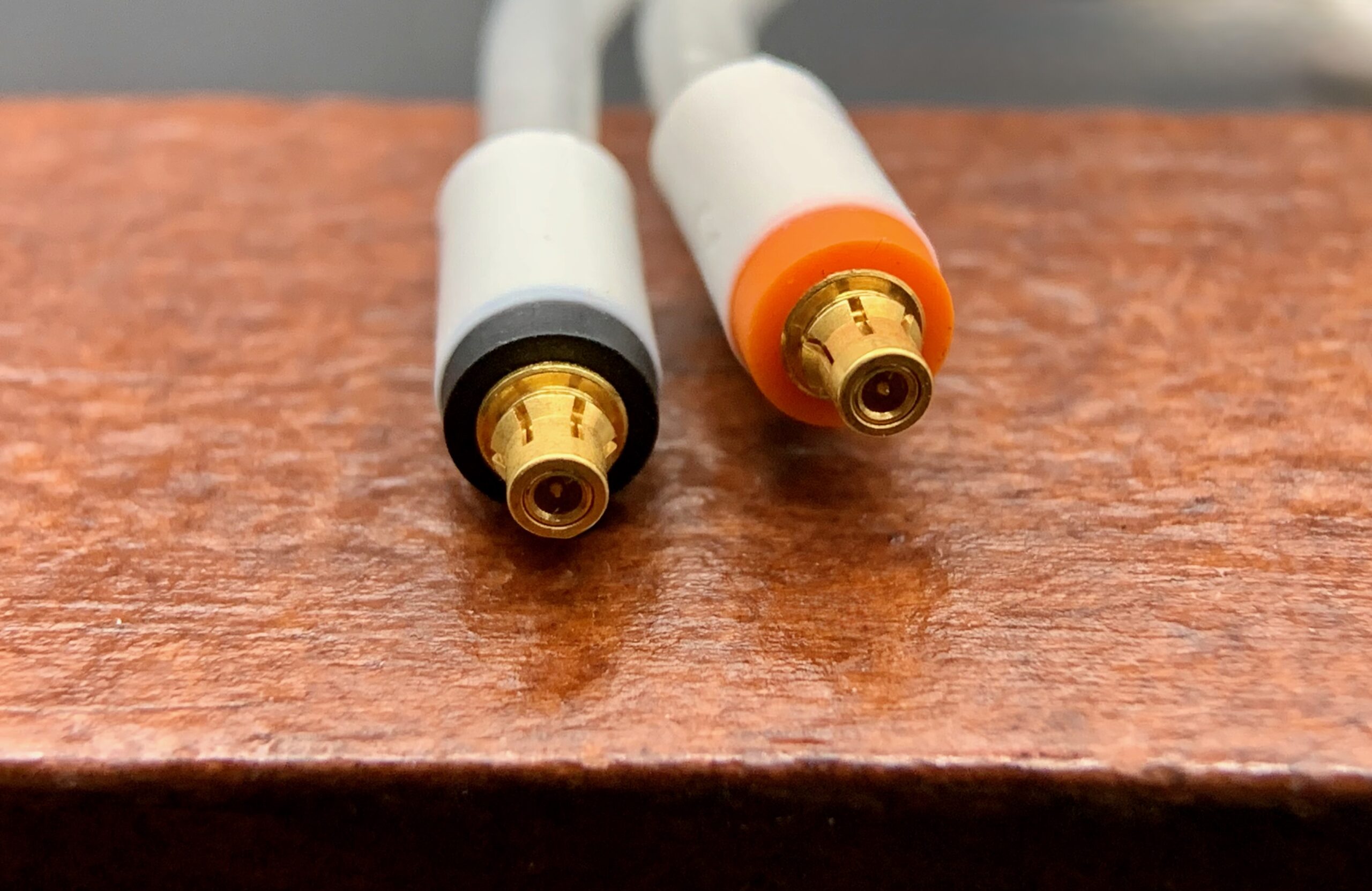
The choice of materials follows the same philosophy. The detachable reinforced MMCX cable, the IP54 certification against dust and water splashes, and the availability of replaceable components all point toward a product designed to withstand demanding professional use over the long term.
From Design to Listening
After spending several days with the DT 30 IE, I came away with the feeling that Beyerdynamic stayed true to that original concept when tuning its sound. Rather than chasing an immediately impressive presentation, the DT 30 IE prioritizes balance, intelligibility, and long-term listening comfort, qualities that make perfect sense in a live environment.
It’s an approach that clearly sets it apart from many IEMs designed primarily for HiFi listening, and one that we’ll explore in greater detail throughout the sound analysis.
Build Quality
From a construction standpoint, the DT 30 IE immediately feels like a professional tool. The design is simple and understated, with no unnecessary styling cues, but every detail appears to serve a purpose: functionality and long-term durability.
Comfort and Isolation
The extremely compact dimensions and featherweight construction are among this IEM’s strongest qualities. Once inserted, it almost disappears in the ear, and even after several hours of listening I never experienced discomfort or pressure points. In this respect, Beyerdynamic has done an excellent job.
Passive isolation is equally impressive. With the right ear tips, outside noise is reduced very effectively, an essential characteristic for stage use but one that’s equally valuable during everyday commuting and travel.
A Fully Moldable Ear Hook
One feature I particularly appreciated is the cable’s over-ear support system. Instead of using the traditional pre-shaped ear hook or the classic spring-steel memory wire integrated into the cable, Beyerdynamic opted for a fully moldable solution. The cable exits the IEM almost perfectly straight and, once the IEM is in place, can be shaped to follow the exact contour of your ear.
It may seem like a minor detail, but in everyday use it makes a remarkable difference. Since no two ears are exactly alike, I’ve used plenty of IEMs with pre-formed ear hooks that were either too tight or too loose, eventually becoming uncomfortable after a few hours. Here, that simply isn’t an issue, because the cable adapts to your ear, not the other way around.
There’s another advantage that’s especially valuable for musicians. If you prefer routing the cable behind your neck, you can also shape the lower section so that both sides naturally follow the back of your neck. It’s a simple but extremely practical solution that improves stability, keeps the cable neatly in place, and makes cable management on stage considerably easier during a performance.
The Cable: My Only Real Complaint
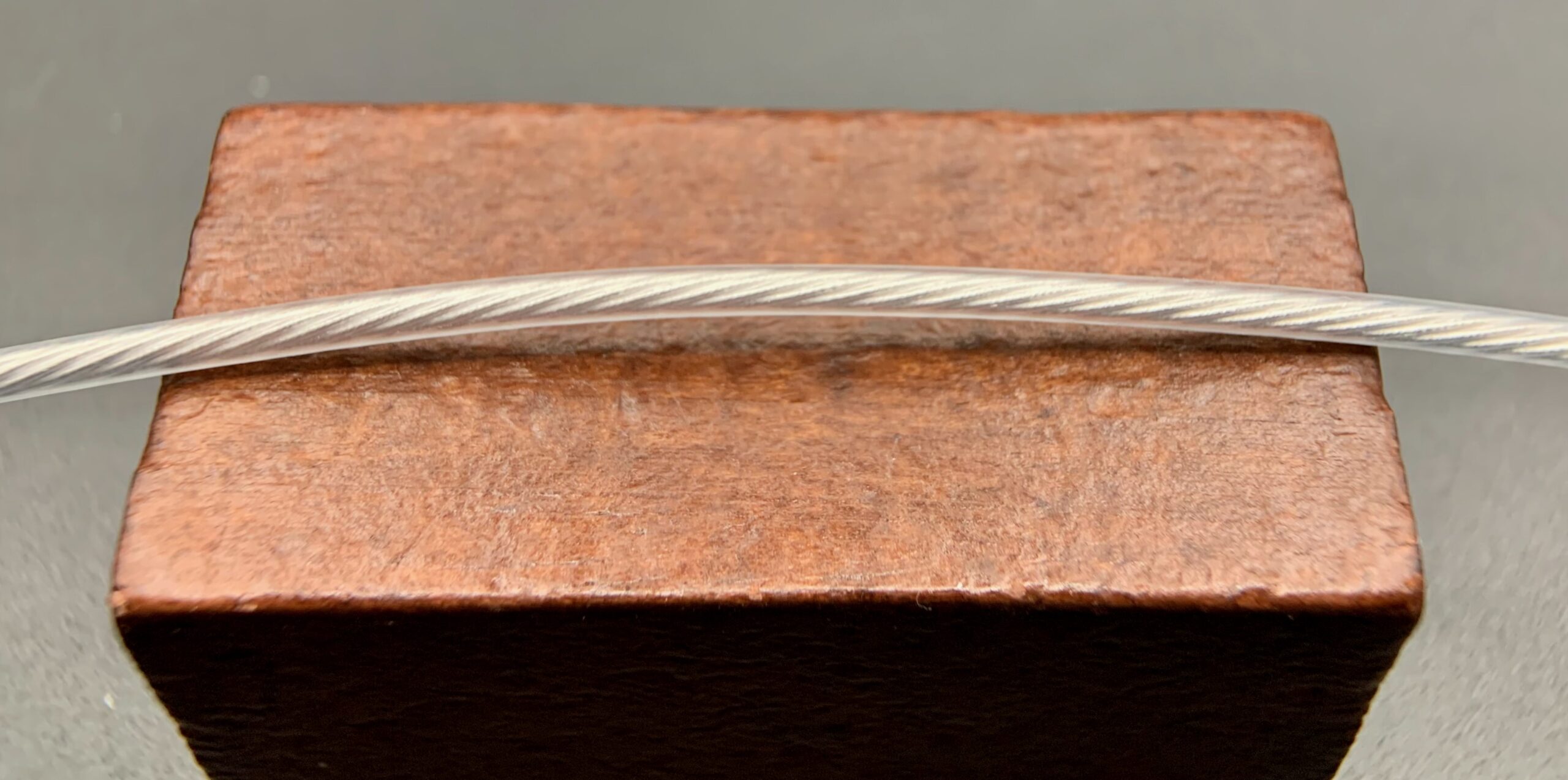
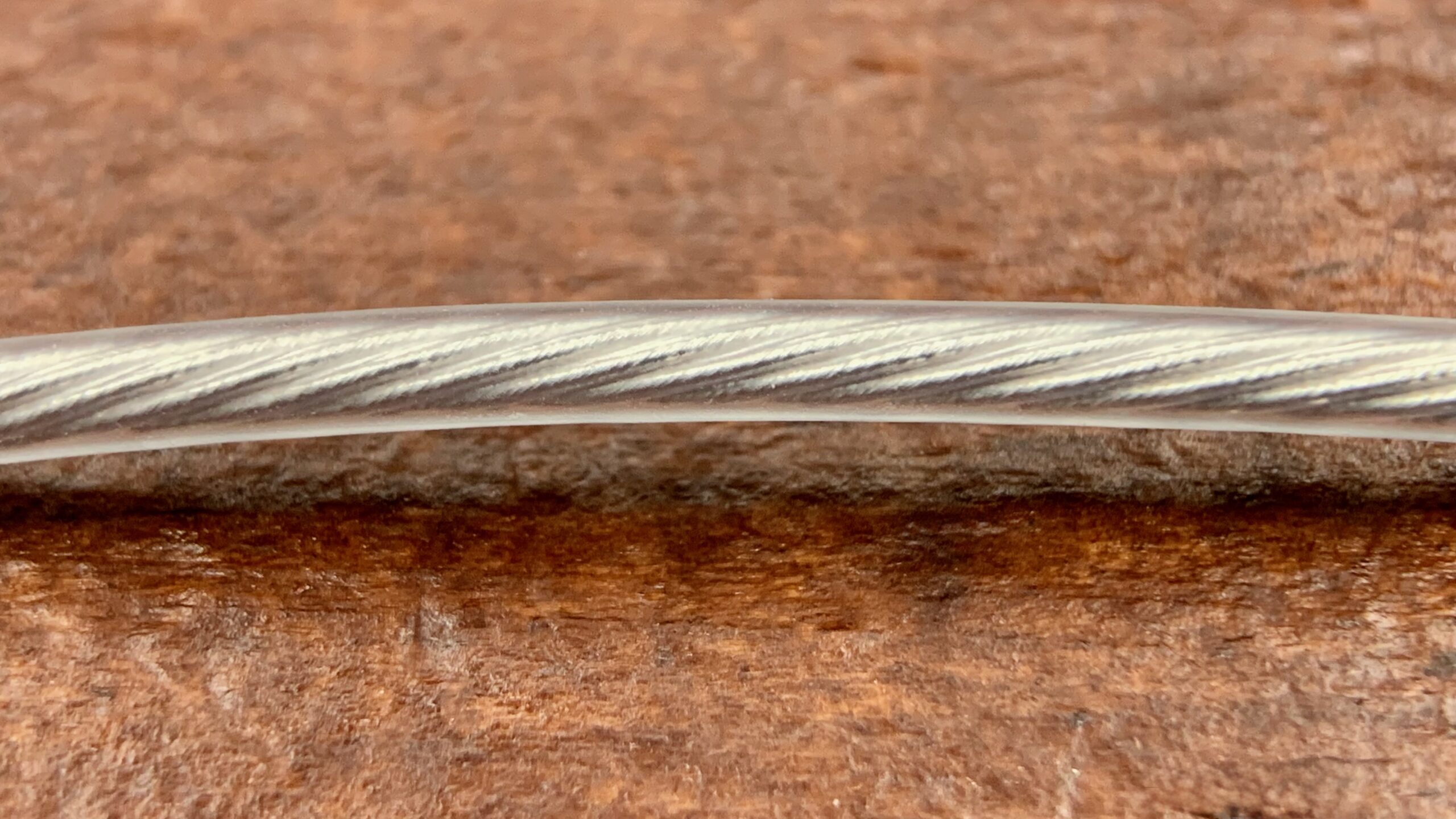
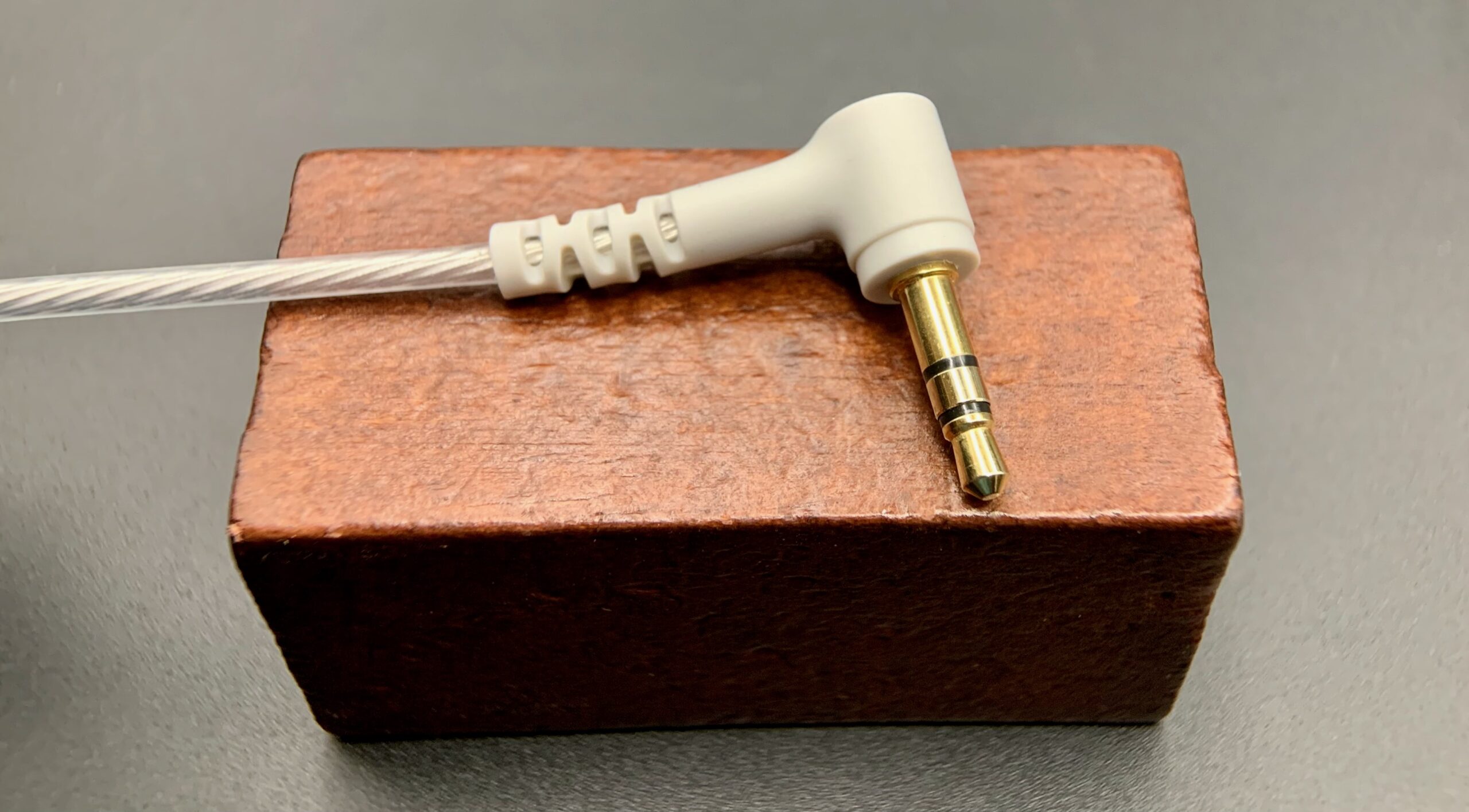
The only aspect that left me less convinced is the cable. In terms of durability, I have no complaints at all, but its heavily rubberized jacket creates a fair amount of friction against clothing and tends to catch as you move. It’s also rather stiff and lacks the flexibility I personally appreciate for everyday use.
It’s probably a choice made with long-term durability in mind, but from an ergonomic perspective, I think there was still room for improvement.
Overall Sound Signature
The DT 30 IE‘s sound signature is anything but accidental. It’s the natural result of the design choices that shaped its development. Rather than chasing an immediate “wow” factor, Beyerdynamic set out to create a balanced, controlled monitor that stays true to its professional purpose.
The first impression is one of an overall neutral tuning, although it doesn’t follow the traditional studio-monitor approach. Instead, Beyerdynamic has made a few deliberate tuning choices that give the DT 30 IE its own personality. The low end carries a little more weight than you might expect, particularly in the sub bass region, adding authority and physical impact without sacrificing control. It’s a presentation that feels natural and gives kick drums, bass guitars, and floor toms a convincing sense of solidity.
The midrange is probably the strongest part of the tuning. Vocals and acoustic instruments sound remarkably natural, maintaining excellent intelligibility and a convincing tonal balance throughout.
The upper frequencies follow a different philosophy from many modern IEMs. The treble is certainly present and capable of delivering plenty of detail, but Beyerdynamic deliberately keeps it smooth and controlled rather than pushing it forward. This approach creates an exceptionally relaxed presentation that completely avoids harshness, even if it sacrifices a little of the sparkle and air found in some competing models.
Looking at It Through a Musician’s Eyes
This brings me to a personal observation. Over the years I’ve had the opportunity to know and spend time with quite a few musicians, and there’s one thing many of them seem to have in common. Even though they often have incredibly well-trained ears, they rarely listen to music the way audiophiles do.
They’re not chasing the last bit of reverberation, the singer’s breathing, or the smallest hidden detail in a recording. Their attention is focused on the performance itself, the groove, the interaction between the instruments, and the music as a whole.
It’s simply a different perspective. Audiophiles often analyze sound, while musicians experience music as a language. During a rehearsal or a live performance, it’s far more important to hear the timing, the dynamics, your own instrument, and the interaction with the rest of the band than it is to extract every last microscopic detail from the recording.

A Tuning That Makes Sense
I believe the DT 30 IE was tuned with exactly this philosophy in mind. It doesn’t try to place every tiny nuance under a microscope. Instead, it delivers a balanced, relaxed, and highly intelligible presentation that remains comfortable even after many hours of listening. It’s an approach that some audiophiles may question, but one that makes perfect sense when viewed in the context for which this in-ear monitor was designed.
Overall, the DT 30 IE delivers a remarkably coherent and balanced presentation, with no part of the frequency range overpowering the others. Even the added emphasis in the sub bass feels like a deliberate functional choice rather than an attempt to create a more spectacular sound.
It became increasingly clear to me that Beyerdynamic prioritized a tuning designed to support musicians through long hours on stage, where listening comfort, natural timbre, and control matter far more than an exaggerated frequency response. That coherence is what makes the DT 30 IE such an interesting product. It doesn’t try to please everyone. Instead, it stays true to its identity, offering a sound signature that clearly reflects the role it was designed to fulfill.
Bass
The bass was probably the biggest surprise during my time with the DT 30 IE. The real star here isn’t the mid bass, but the deepest part of the low end. It’s the sub bass that truly defines this IEM’s character. Its presence is immediately noticeable, reaching deep with authority and delivering a sense of physical impact that I honestly wasn’t expecting from a monitor tuned this way.
That said, this isn’t bass emphasis for its own sake. The low end remains controlled, fast, and well articulated, never bleeding into the midrange or compromising the clarity of the rest of the mix. Kick drums, in particular, benefit from this tuning, sounding tight, punchy, and carrying the kind of energy that makes well recorded rock music so engaging.
The driver is also quick enough to handle complex bass lines and demanding rhythmic passages with ease, maintaining good instrument separation throughout. It’s a bass presentation that’s undeniably present, yet always disciplined, clearly reflecting Beyerdynamic’s decision to place greater emphasis on the deepest part of the frequency spectrum rather than the mid bass.
Midrange
If there’s one part of the frequency response that truly defines the DT 30 IE, it’s the midrange.
Both male and female vocals are reproduced with remarkable balance. They never sound recessed or artificially pushed forward, instead occupying a natural and believable position within the soundstage. The same is true for guitars, piano, brass instruments, and acoustic recordings, all of which retain a convincing timbre that’s instantly recognizable.
What impressed me the most was the DT 30 IE‘s ability to deliver a clean, uncolored midrange. Even in busy recordings, instruments remain easy to distinguish without sounding congested, making it effortless to follow every part of the arrangement.
This is a midrange that values naturalness over spectacle, and for that very reason, it perfectly reflects the professional philosophy behind this in-ear monitor.
Treble
The treble is probably the aspect of the DT 30 IE that will divide listeners the most.
High frequencies are clearly present, well controlled, and capable of delivering plenty of detail, but Beyerdynamic has deliberately chosen not to emphasize them. The overall impression is of a gentle roll-off in the uppermost frequencies, enough to create a smoother, more relaxed presentation without sacrificing musical information.
The DT 30 IE reproduces cymbals, overtones, and reverberation accurately, but without the sparkle that characterizes many more audiophile-oriented IEMs. That choice results in a slightly more intimate presentation, with less air and openness than models that place greater emphasis on upper-treble extension.
Personally, I believe this is an entirely deliberate tuning decision and one that perfectly matches the DT 30 IE‘s intended purpose. Even during very long listening sessions, I never experienced fatigue, harshness, or unwanted sibilance, and that’s a genuine advantage for anyone who plans to wear these IEMs for hours at a time.
Listeners accustomed to a brighter presentation may initially feel that a little air is missing. On the other hand, those who prefer a more relaxed and natural listening experience will likely appreciate this tuning, which gives up a touch of excitement in favor of long-term listening comfort.

Soundstage and Imaging
The DT 30 IE isn’t an IEM designed to impress with an unusually wide soundstage. Instead, Beyerdynamic has clearly opted for a presentation that feels more intimate and realistic, where every instrument occupies a well-defined position without relying on artificial tricks to exaggerate the sense of space.
Depth is equally convincing, contributing to a believable recreation of the musical event while always remaining faithful to the recording itself. At no point did the presentation feel compressed or congested, nor did I get the impression that Beyerdynamic was chasing the exaggerated three-dimensional effect found in some IEMs designed primarily for audiophile listening.
Where the DT 30 IE truly excels is in its imaging. Instrument placement is precise, stable, and easy to follow even during complex passages. Every element maintains its position without overlapping the others, resulting in a presentation that feels organized, coherent, and easy to read.
Once again, the design philosophy becomes clear. On stage, it’s far more important to locate your own instrument accurately and keep track of the rest of the band than it is to experience an artificially expansive soundstage. From that perspective, the DT 30 IE performs its role exceptionally well, delivering a believable and consistently controlled stereo image.
If I had to sum it up in a single sentence, I’d say that Beyerdynamic chose precision over spectacle. It may not be the most immediately impressive approach for dedicated audiophile listening, but it makes perfect sense for the job the DT 30 IE was built to do.
Driving, Pairing and Synergy
With an impedance of just 18 Ω and high sensitivity, the DT 30 IE is an exceptionally easy IEM to drive. Even when plugged directly into a smartphone, tablet, or laptop, it reaches more than adequate listening levels without requiring much power.
That doesn’t mean, however, that every source sounds the same.
During my evaluation I paired it with several portable DACs and headphone amplifiers. While none of them fundamentally changed its character, each brought out slightly different aspects of its tuning.
More analytical sources give the DT 30 IE a greater sense of openness and definition, helping to compensate for its gently relaxed treble. Perceived detail improves, the presentation breathes a little more, and the overall sound feels slightly more spacious while remaining true to its original tuning.
Warmer or smoother sounding sources, on the other hand, further emphasize the sub bass and the relaxed nature of the upper frequencies. The result is still enjoyable and never fatiguing, but it can make the presentation feel even more laid back, to the point where some listeners may perceive a slight reduction in sparkle.
For that reason, I personally believe the DT 30 IE performs at its best with neutral or slightly bright DACs. They complement its excellent midrange while adding just a touch more air and openness to the upper frequencies without disturbing its overall balance.
My Favorite Pairings
Aune Yuki
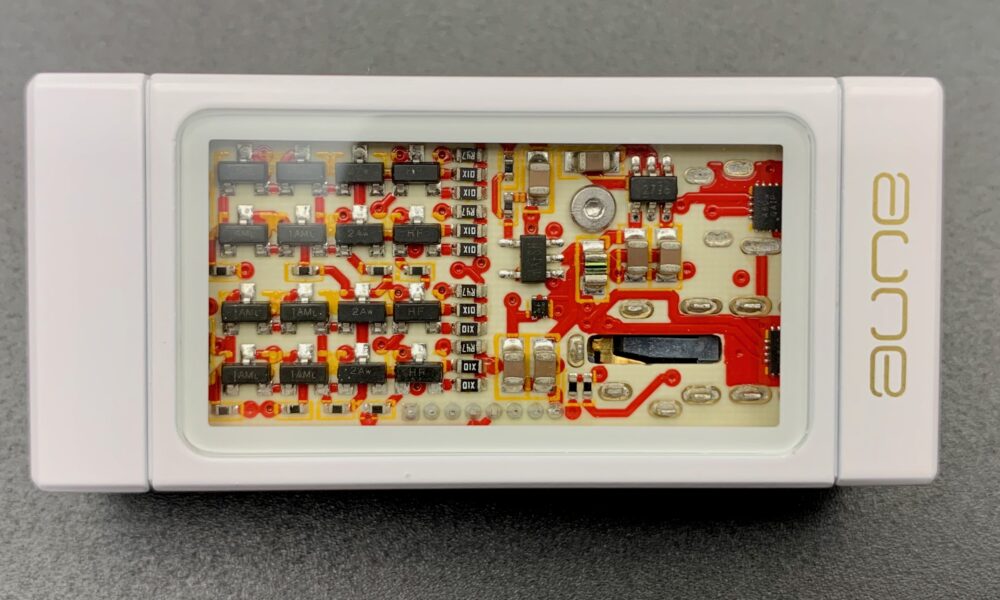
Among all the DACs I used during this review, the Aune Yuki provided the best overall synergy with the DT 30 IE. Its neutral presentation, combined with a slight touch of brightness, complements the tuning beautifully without changing the IEM’s identity.
The midrange retains all of its natural timbre, while the treble gains just enough extra presence to create a greater sense of openness and a slightly airier presentation. It’s not a dramatic transformation, but rather a subtle refinement that, to my ears, makes the listening experience even more enjoyable.
What impressed me most was the long-term listening comfort. Even after several hours, I never experienced any fatigue. The Yuki preserves everything that makes the DT 30 IE appealing while adding just enough sparkle to suit my personal preferences.
For my taste, this is the pairing I would recommend without hesitation.
iFi GO Link Max
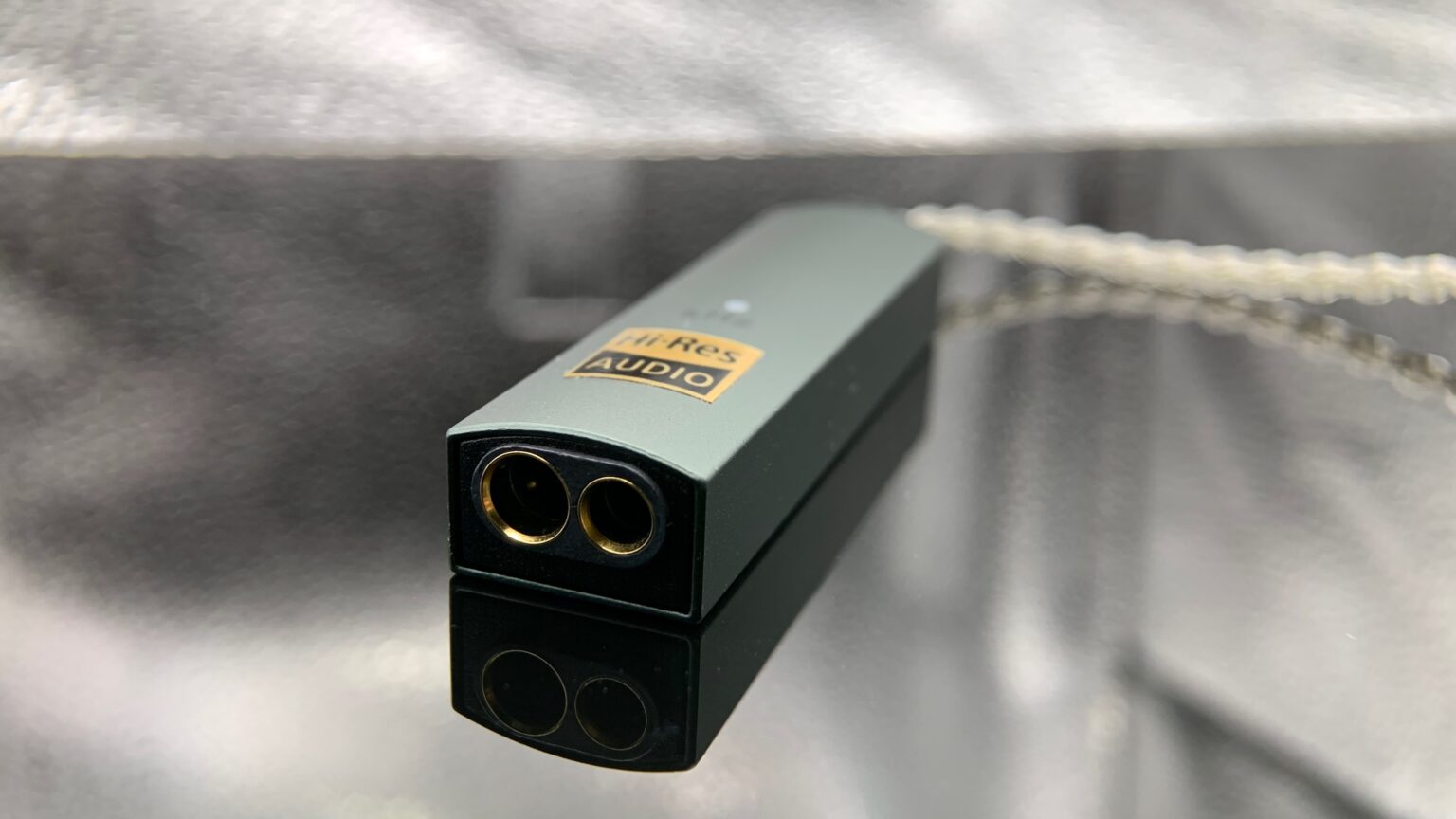
The iFi GO Link Max delivers a noticeably different result. Its warmer, more musical character combines with the DT 30 IE‘s tuning to further emphasize the low end, particularly the sub bass.
The result remains engaging and enjoyable, especially with energetic recordings, but on bass-heavy tracks the presentation can occasionally become a little too dominant, taking away some of the balance I appreciated with the Aune Yuki.
It is still a smooth, fatigue-free listen, simply one that leans more toward warmth and musicality than neutrality. Listeners who enjoy a fuller low end will likely appreciate this pairing, but personally I still prefer the greater balance offered by the Aune Yuki.
Final Thoughts on Pairing
If I had to recommend a source for the DT 30 IE, I would choose something with a neutral tonal balance and a touch of extra openness in the treble. It doesn’t require a particularly powerful amplifier. Instead, it benefits most from a high-quality DAC capable of preserving its excellent midrange while giving the soundstage a little more breathing room.
Who Is It For?
I believe the DT 30 IE is aimed first and foremost at musicians. Whether you’re a professional or simply someone who enjoys playing an instrument, these IEMs offer a reliable, comfortable monitor that always keeps the performance easy to follow. This is exactly the kind of product I imagine being used on stage, in the rehearsal room, or during long practice sessions.
That said, reducing the DT 30 IE to “just” a stage monitor would be unfair.
A Surprisingly Good Everyday Companion
During my review period I also had the chance to use it in a completely different scenario. One afternoon I went to pick up my wife at the train station in Florence, and instead of driving I decided to use public transportation. It seemed like the perfect opportunity to see how the DT 30 IE would perform in everyday life.
The setup was simple: an iPhone 17, an xDuoo Link3, and the DT 30 IE.
It turned out to be a very pleasant surprise.
Passive isolation is genuinely impressive. On the tram, inside the station, and even while walking past an active construction site with jackhammers, trucks, and heavy machinery, the DT 30 IE never completely blocked out outside noise, but it reduced it to little more than background ambience between songs.
That was the moment I truly understood the philosophy behind the DT 30 IE. When you’re listening on the move, you’re not analyzing microdetail or listening for the last bit of reverberation in a recording. You simply want to enjoy your music without constantly raising the volume or arriving at your destination with tired ears. In that respect, the DT 30 IE performs exceptionally well.
The low end retains its body even in noisy environments, while the slightly relaxed treble, which may initially seem restrained in a quiet room, actually feels perfectly balanced outdoors. At no point did I feel that anything was missing.
Built to Be Used
For that reason, I wouldn’t recommend it only to musicians. I would also recommend it to anyone looking for an IEM for everyday use. Commuting to work, traveling by train or subway, taking a walk, or even exercising. The IP54 rating, excellent passive isolation, featherweight design, and reassuringly solid construction make it an ideal daily companion.
Personally, I’d describe it as a true “workhorse IEM” in the best possible sense of the expression. It’s the kind of product you grab without a second thought because you know it can handle everyday life. It doesn’t mind a bit of sweat, it feels tough enough to survive accidental knocks, and it simply gives you the confidence to take it anywhere.
Even the cable, although I’m still not a fan of its rather rubbery finish, reinforces that feeling of durability. It’s sturdy, inspires confidence, and clearly built to withstand heavy use. Thinking about my son, who somehow manages to put every piece of gear through the toughest possible test, this is probably one of the few IEMs I’d hand over without worrying too much.
Let’s just say… he definitely didn’t inherit that part from me.
Final Thoughts
The Beyerdynamic DT 30 IE is one of those products that can easily be misunderstood if it’s judged with expectations that don’t match its intended purpose.
If you approach it as a traditional audiophile IEM, looking for maximum extension at both ends of the spectrum, an ultra-wide soundstage, or every last bit of microdetail, you’ll probably end up focusing on the very things it deliberately chooses not to do.
Viewed for what it actually is, however, a professional in-ear monitor designed to accompany musicians through rehearsals and live performances, its design choices suddenly make perfect sense.
The authoritative sub bass, the natural midrange, the deliberately smooth treble, the outstanding comfort, the excellent passive isolation, and the reassuring build quality all come together to create a product whose tuning feels purposeful rather than accidental.
Personally, I still think that a little more openness in the upper treble would have made it even more appealing for dedicated HiFi listening. That’s probably the only aspect where I would have preferred a slightly different tuning.
The One I Kept Reaching For
That said, the longer I listened, the less I found myself analyzing the sound and the more I simply enjoyed the music. Over the years, that’s become something I value more and more.
Some products impress you during the first ten minutes and gradually become tiring. The DT 30 IE follows the opposite path. It doesn’t rely on flashy tuning or exaggerated detail to grab your attention. Instead, it wins you over with consistency, naturalness, and a presentation that remains relaxed no matter how long you listen.
By the end of the review, I realized something rather interesting. Even though I still prefer other IEMs when I want to sit down and listen critically, the DT 30 IE had quietly become the one I reached for most often whenever I left the house. Going to work, walking around town, commuting on public transport, or simply enjoying music without overthinking it.
In the end, the best product isn’t always the one that impresses you the most. Sometimes it’s simply the one you naturally keep choosing.
The DT 30 IE won’t be the perfect IEM for everyone, and I don’t think it was ever meant to be. It’s an honest, intelligently designed tool built for a very specific purpose. If that purpose matches the way you enjoy music, I think it’s unlikely to disappoint.
🟢 Pros
- Extremely solid construction built to withstand years of use.
- Excellent comfort, even during very long listening sessions.
- Outstanding passive noise isolation.
- Natural, lifelike, and highly musical midrange.
- Deep, well-controlled sub bass with excellent discipline.
- Clear and highly intelligible vocals and instruments.
- Very easy to drive, even from modest sources.
- IP54 certification and a replaceable cable make it well suited for both professional and everyday use.
- One of the few IEMs that transitions effortlessly from the stage to everyday life.
🔴 Cons
- The treble is slightly relaxed, resulting in less air and openness than some competitors.
- The cable prioritizes durability but feels fairly stiff, and its rubberized finish creates noticeable friction against clothing.
- Not the ideal choice for those looking for a perfectly neutral monitor for mixing or mastering.
- With warmer sources, the sub bass can become a little too dominant.
Frequently Asked Questions
Is the Beyerdynamic DT 30 IE an audiophile IEM?
Not primarily. It was designed first and foremost as a professional stage monitor for musicians. That said, its balanced tuning and outstanding comfort also make it an excellent choice for everyday music listening.
Is it suitable for mixing and mastering?
Personally, I see it more as a stage monitor than a studio reference monitor. Its tuning prioritizes long-term listening comfort and naturalness over the absolute neutrality typically required for critical mixing and mastering work.
Does it have enough bass?
Absolutely. Probably more than many people would expect from a professional monitor. The sub bass is deep and authoritative, adding weight and impact while remaining well controlled.
Is the treble lacking?
Not at all. The treble is present, detailed, and well behaved, but Beyerdynamic deliberately tuned it to be smoother than many modern IEMs. The result is a more relaxed, fatigue-free presentation, although with slightly less air than some competitors.
Does it need a dedicated DAC?
No. Thanks to its high sensitivity and low impedance, the DT 30 IE is easy to drive from smartphones, tablets, and laptops. A good DAC can still improve the overall presentation, especially in terms of openness and refinement.
Is it suitable for everyday use?
Definitely. During my review it proved to be just as convincing outside the professional environment. Excellent comfort, outstanding passive isolation, low weight, and rugged construction make it a great companion for commuting, traveling, and even exercising.
Is it worth buying if I’m not a musician?
That depends on what you’re looking for. If you want a spectacular sounding IEM with a very bright presentation and an expansive soundstage, there are probably better alternatives. If, however, you appreciate a natural presentation, excellent comfort, and a product built to last, the DT 30 IE is well worth considering.
Acknowledgments and Personal Note
I’d like to thank Beyerdynamic for providing the DT 30 IE and allowing me to review it with complete editorial freedom.
As always, this review was written independently. I received no compensation, and no one asked to review or approve the content before publication. Everything you’ve read is based solely on my own listening experience and personal impressions.
If you’re considering buying the DT 30 IE, I recommend visiting Beyerdynamic’s official website for the latest technical specifications and checking Amazon for the current price, as it may vary over time.
If you’ve made it this far, thank you for taking the time to read my review. I hope my impressions have been helpful.
As I always say, nothing replaces listening with your own ears.
Enjoy the music!





No Comment! Be the first one.