






































































Muse Hifi M3 Ultra Review
Intro
Hello, this review and feature covers the latest from the audio brand Muse Hifi named the Muse Hifi M3 Ultra ($109). I was asked recently to check out the M3 Ultra and immediately jumped at the opportunity as it is a very low cost (in relation to the market) tube amp (dual JAN6418 tubes) dongle dac that has all of the audio qualities that I’m looking for in a portable dac/amp. I am still awaiting the M3 Ultra to arrive and so it gives me time to create an intro to build anticipation. At the moment I only have one other tube amp source device and that is the Shanling UA7 which I reviewed late in 2025 and was very smitten with. Of course, the UA7 also costs $262 at the moment which is a pretty large jump in price. I’m yearning to find out what Muse Hifi was able to do for much-much less. At the cost of $109 the M3 Ultra is in a prime position to grab the market by the horns and if I’m being perfectly honest… I’m all for it.
Table Of Content
- Intro
- Muse Hifi
- The M3 Ultra is Here!
- Non-Affiliated Purchasing Links
- Packaging / Accessories
- Unboxing
- Build / Aesthetic / Internals / Controls
- Build Quality
- Aesthetic / Design
- Internals
- Controls
- Specifications
- Features
- DAC Chips
- Max Output Power
- JAN6418 Vacuum Tubes
- Not Many Features, and That’s Why I Like It
- Sound Impressions
- Source Reviews From My Perspective
- What’s It Sound Like?
- Musicality Through-and-Through
- Technically Speaking
- Not For Everyone
- Bass Region
- Bass Cont…
- Midrange
- Vocals
- Treble Region
- Treble Cont…
- Technicalities
- Soundstage
- Separation / Imaging
- Detail Retrieval
- Comparisons
- Shanling UA6 ($127)
- Non-Sound Stuff
- Sound Differences
- Final Thoughts on this Comparison
- Last Words on the Muse Hifi M3 Ultra
- No Brainer!
- Who It Isn’t For?
- Conclusion
- Other perspectives
- M3 Ultra Pros
- M3 Ultra Cons
Muse Hifi
Okay folks, I want to give a little shout out to the people of Muse Hifi for a moment because this brand is basically a baby in audio years. I believe they got their start somewhere around 2022 and so they might be four years old by now. What is at least marginally surprising is how many products that they’ve released in that short time. From what I understand Muse Hifi has three different series of products in the M-series, U-series, and S-series as well as some desktop source devices and even iems as well. In fact, the only Muse Hifi product that I’ve ever had my hands on is the Muse Hifi East 6 which I reviewed way back in March of 2024. For the record, that set is so criminally underrated with its only downfall being its ridiculously odd fitment. Other than that, it truly is tuned remarkably well. Anyways, Muse Hifi’s product lineup is pretty vast already and going by the community temperature revolving around this brand I’d say that they are highly praised. I mean well qualified products that far exceed market standards in many regards. They always carry huge numbers and solid chipsets using all the audio buzzwords that get people like me in a tizzy to test. I gotta tell you all, I want to try the entire lot. The M5 Ultra, Muse 300 BT, Muse 300, M6, the M4 and many more. All of them are so wildly appealing to me. I praise this new brand because they don’t “cheap out” on their products and literally load them with goodies. Here’s to hoping I get to test more of their lineup down the road. Nice work so far Muse Hifi!
The M3 Ultra is Here!
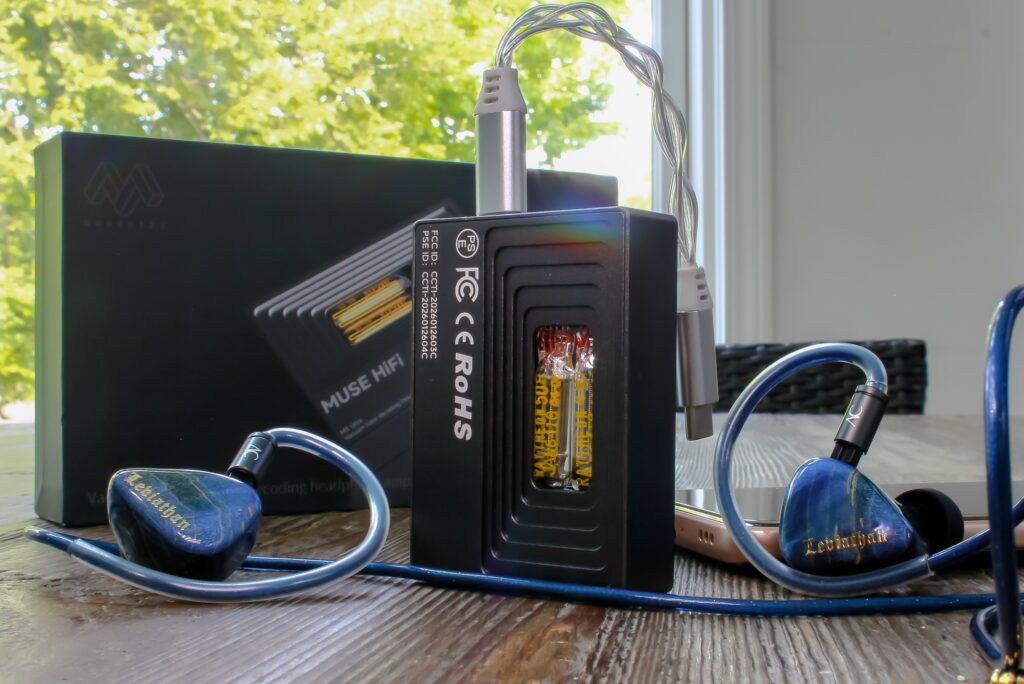
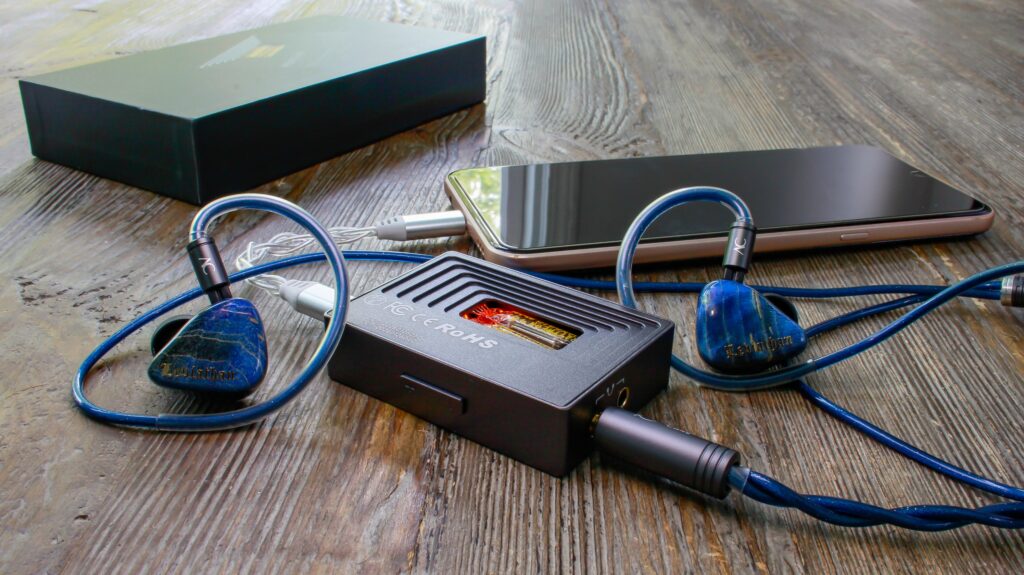
My word that went quickly. Quick shipments have been happening a lot lately and I’m not complaining at all. In fact, I shouldn’t even talk about it. But I digress because the M3 Ultra has arrived and I am so happy about that. This is what I can tell you right now; the M3 Ultra is a beautifully built device, absolutely bare bones, and the only thing that matters is the audio. I love it. No screen, just music. Exactly what I’ve been trying to get my hands on. Friends, you may want all the bells and whistles, and I get it, but I can say with absolute certainty that it is so nice to have a simple plug and play device which simply sounds awesome. That is the M3 Ultra for me thus far. The moment I got the M3 Ultra was the same moment that I plugged it into my phone, attached the ODA Leviathan T800 (review soon), and headed deep into musical bliss for a 2-hour listening session that only stopped because I had to take my daughter to her friend’s house. I can already tell that this is going to be a very fun review period for me. This is why I only review what I like and what I can recommend from my perspective. Because I like to explain what brings me joy. That’s the stuff that is fun to talk about and the M3 Ultra lands squarely in that zone for me. Be that as it may, I have some work to do. I have to get to know this device from every angle, every sonic trait, and try like hell to explain this device as thoroughly as possible. So, without further ado, the Muse Hifi M3 Ultra….
Non-Affiliated Purchasing Links:
Packaging / Accessories
Unboxing
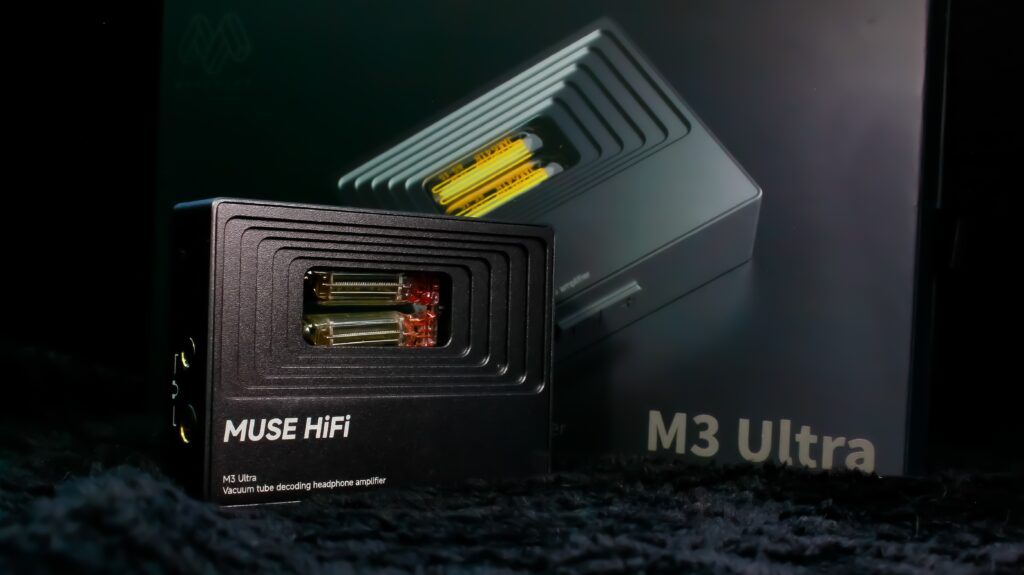
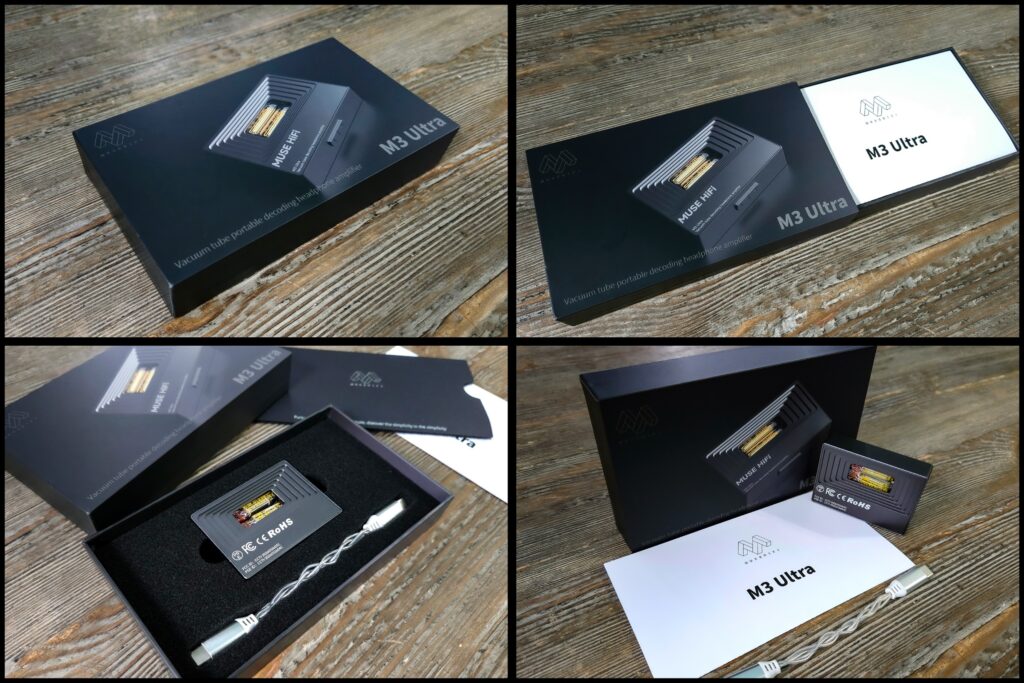
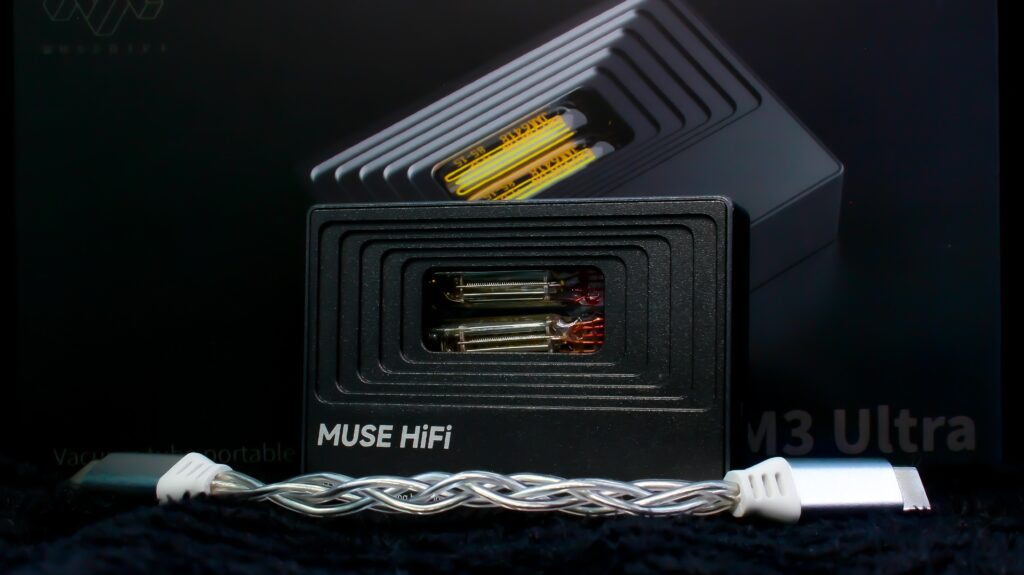
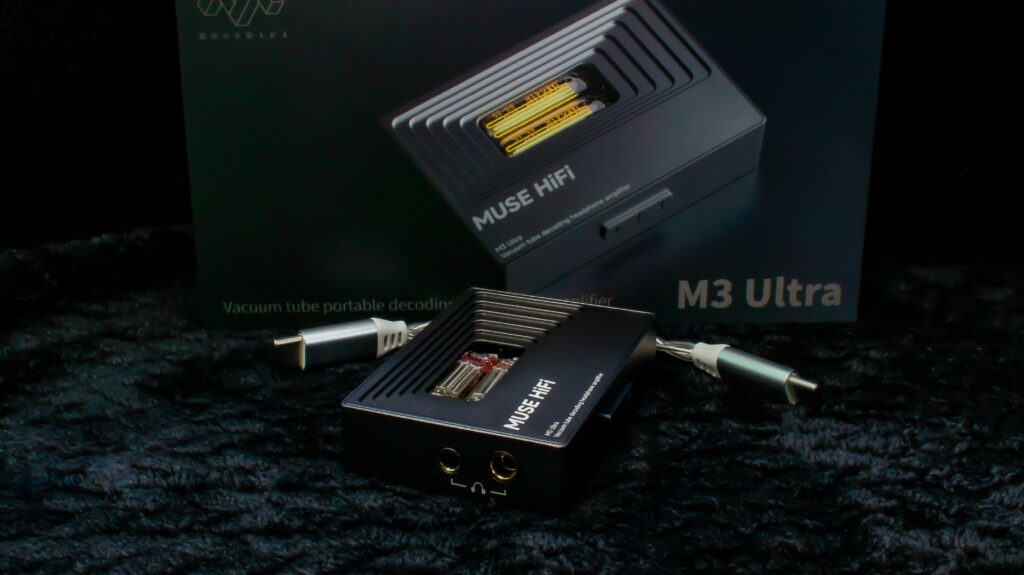
The Muse Hifi M3 Ultra arrived at my home in a fairly compact package and a slender rectangular black box (6 ½” x 3 ¾” x 1 ¼”) with a simple photo of the M3 Ultra on the cover and some specs on the back. The cover is actually a sleeve of sorts, and you simply grab a side tab and pull the inner box/contents out. Once you do that, you’ll immediately see some reading material (simple listing of buttons and ports). Take that off and then take off the foam protective covering underneath and you’ll finally see the slick looking Muse Hifi M3 Ultra in all its glory sitting rightly in foam cut-outs. Also, next to the M3 Ultra is a short type-c to type-c data cable as well. The package is simple, it’s small, and it won’t blow your mind. But Muse Hifi does give you exactly what you need to get to listening to your music.
Build / Aesthetic / Internals / Controls
Build Quality
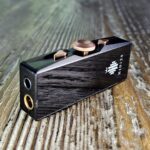
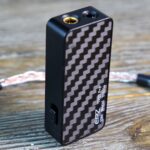
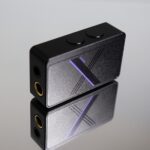
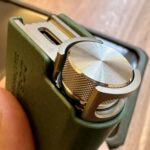
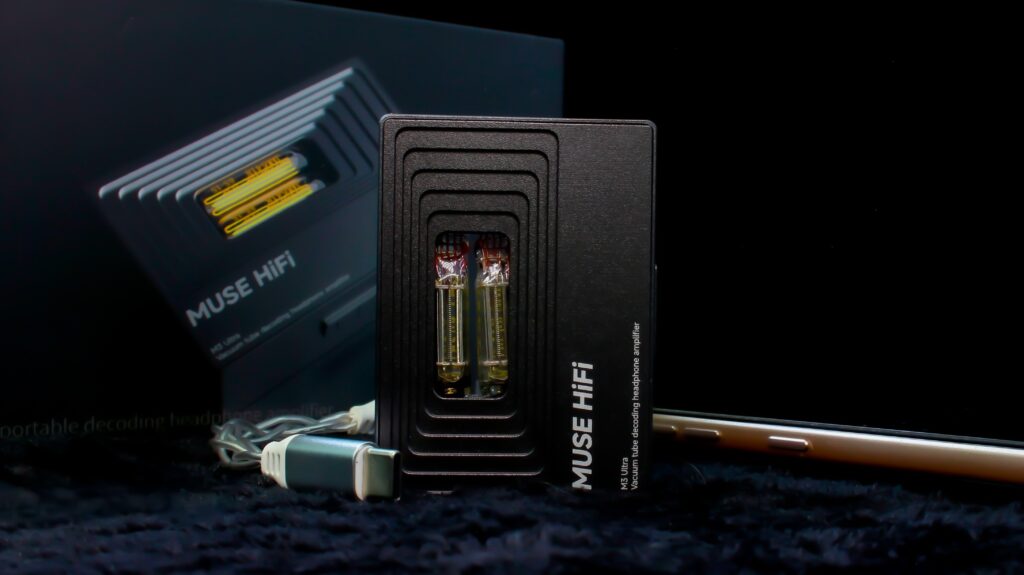
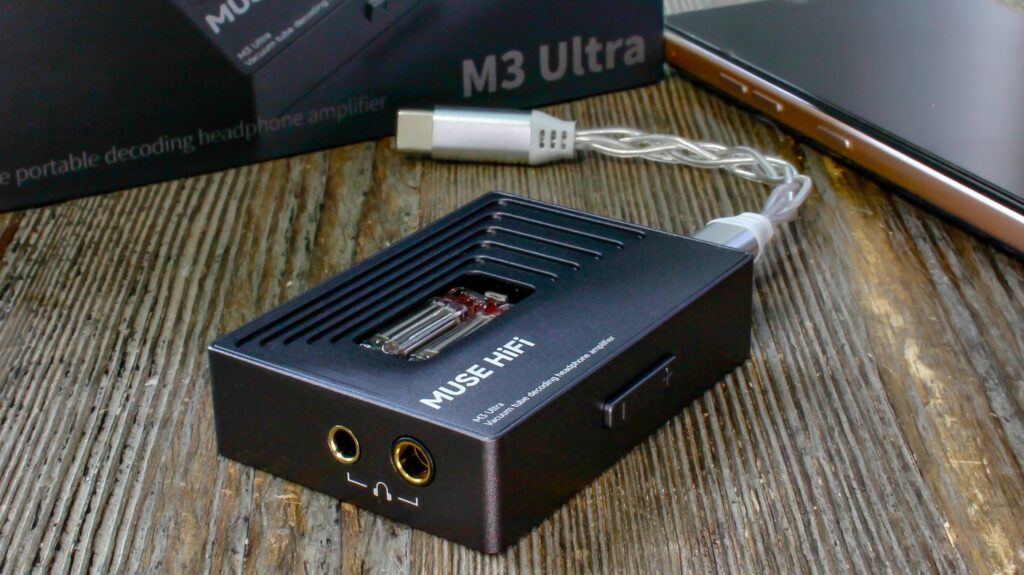
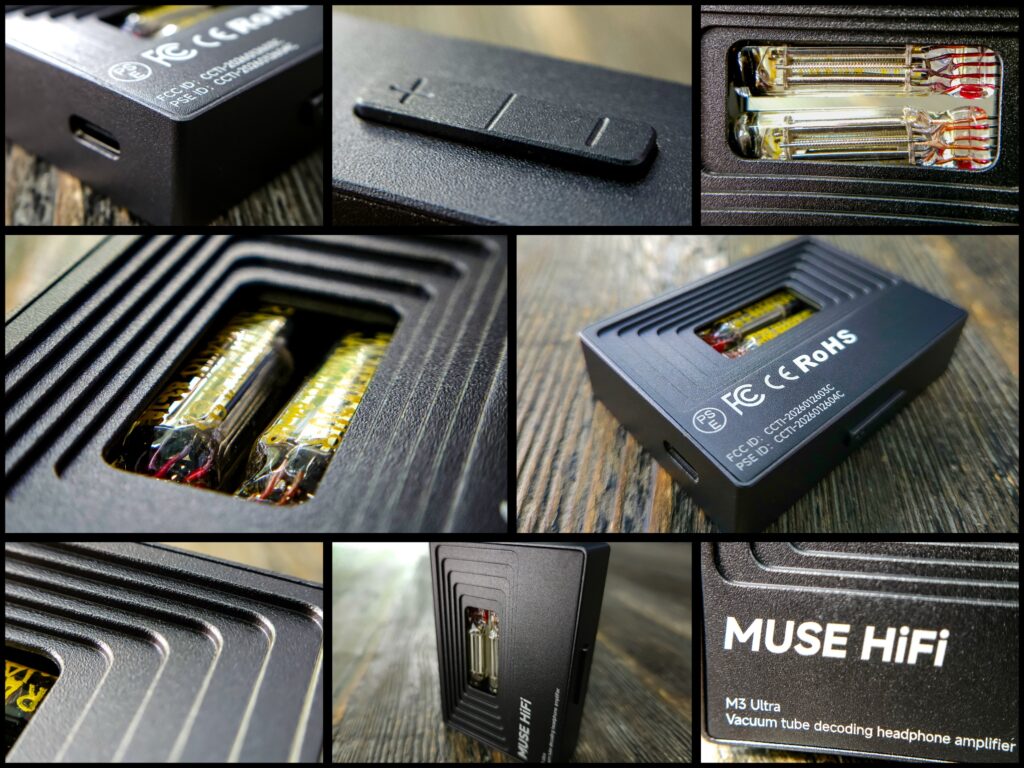
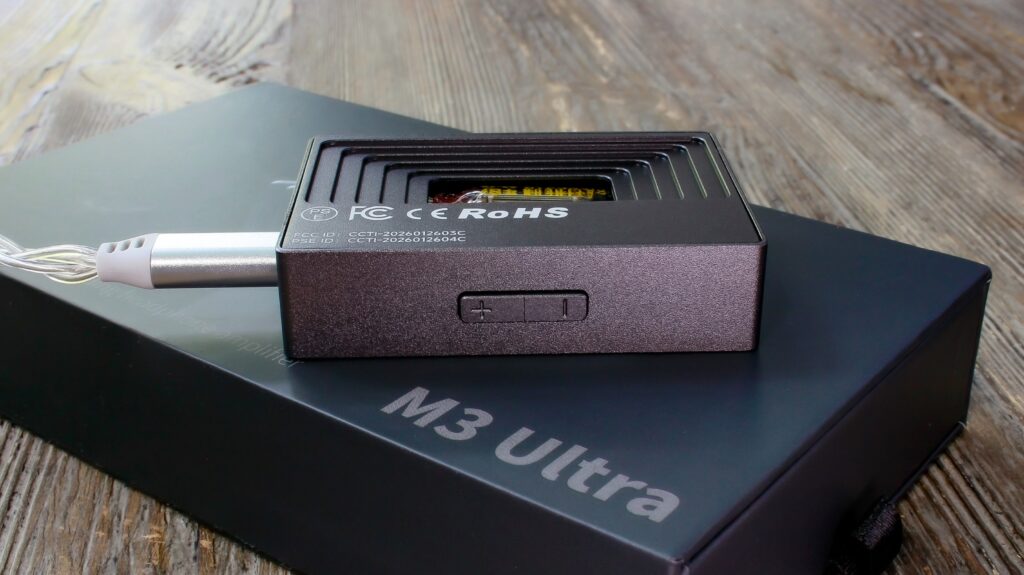
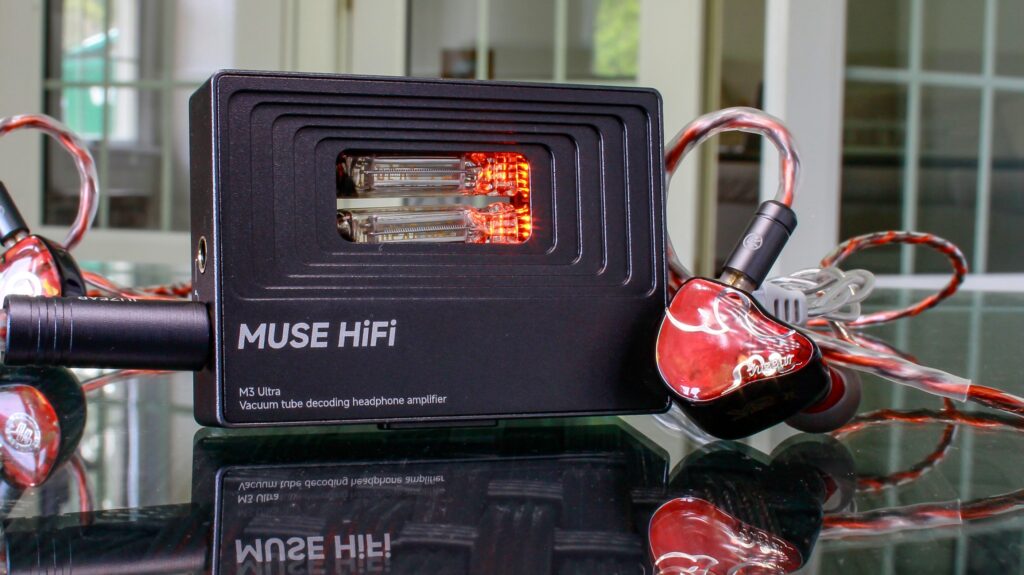
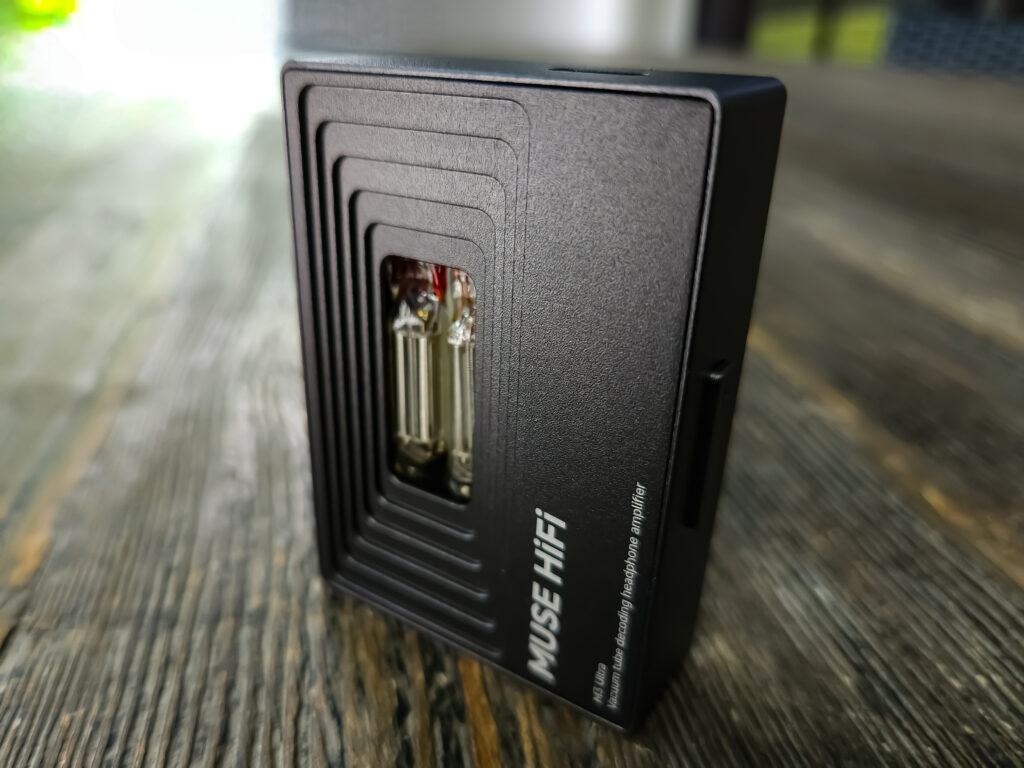
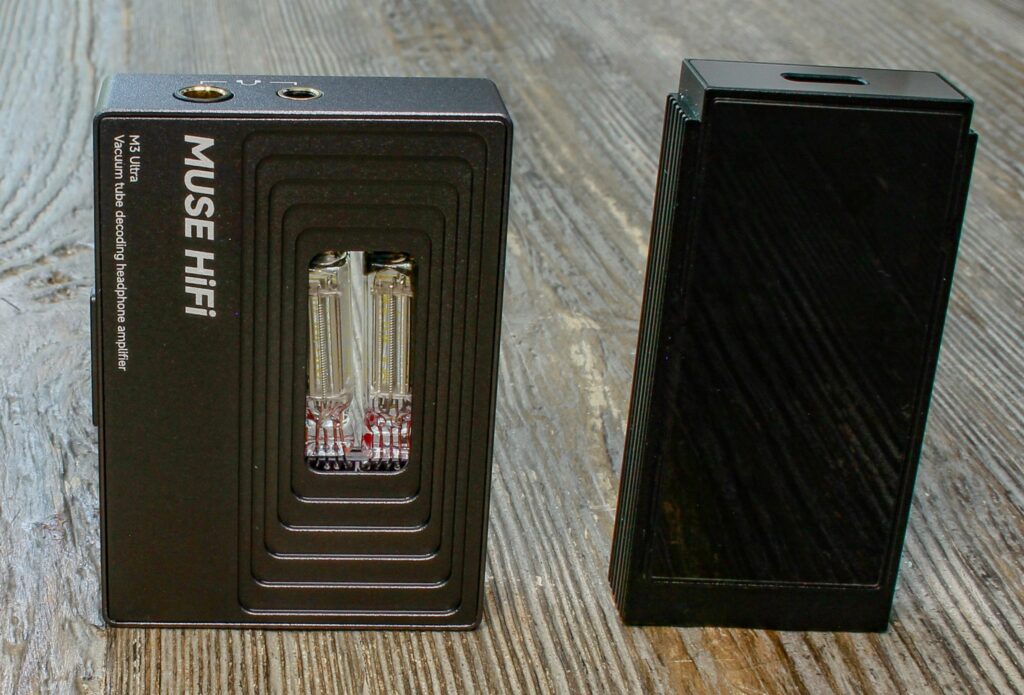
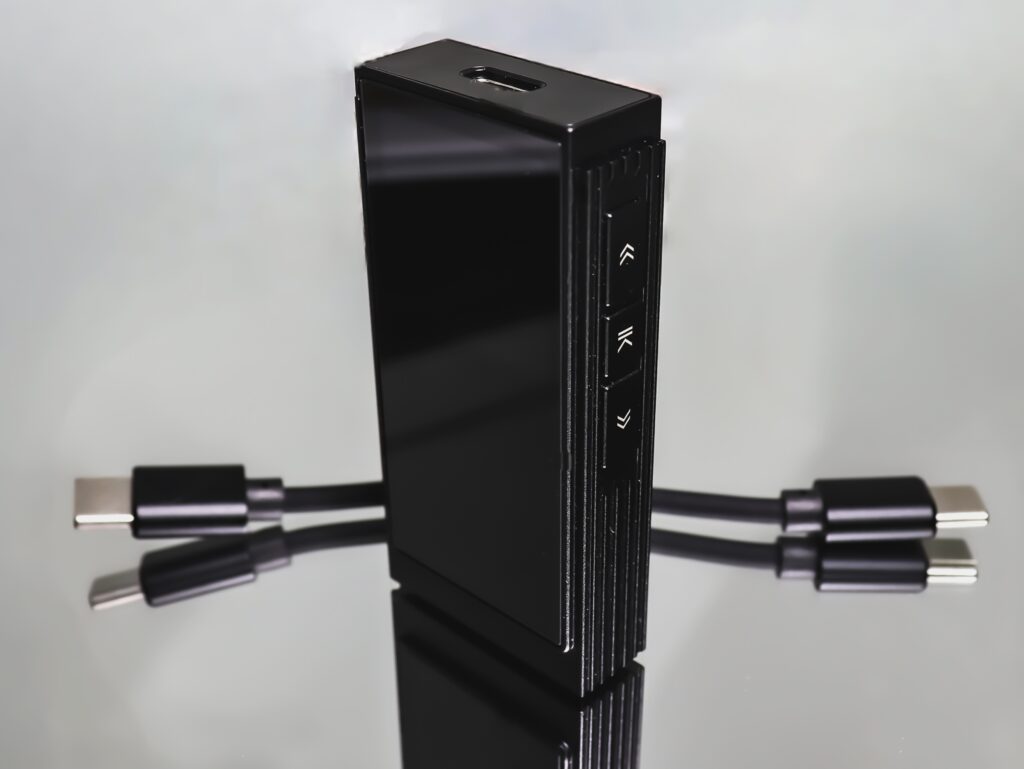
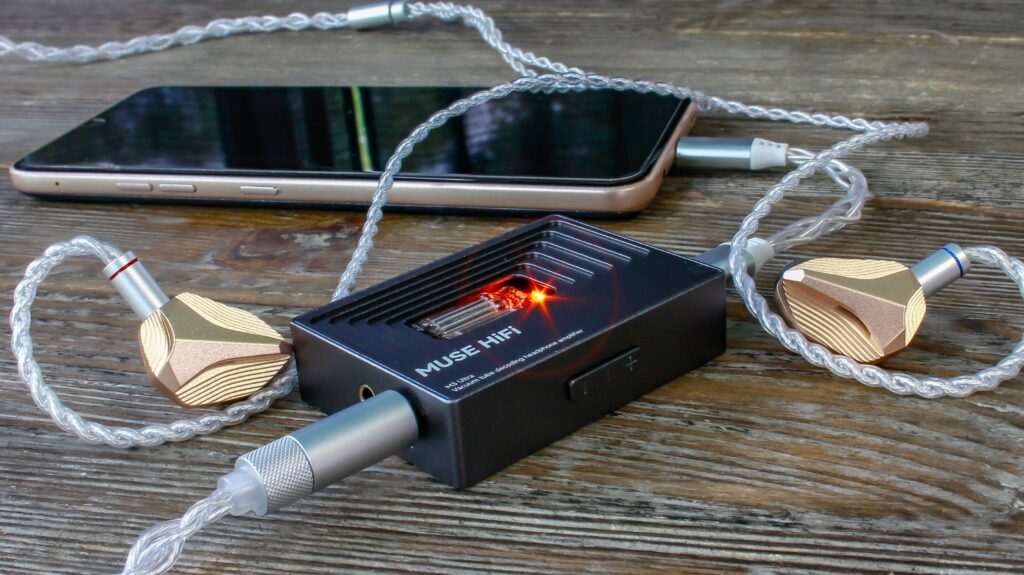
In my opinion, one of the M3 Ultra’s best qualities (distant second to its sound) is the actual build quality and construction of this device. Weighing right around 55 grams and built like a tank in very much a precision-based way. The overall footprint of the M3 Ultra is right around 65 x 16 x 46.5mm and while it’s not a small dongle dac it also isn’t too gaudy and huge. One of the main selling points are the gorgeous JAN6418 dual tubes dead smack in the middle of the chassis. From my perspective, the M3 Ultra has to be built with exceptional care as the entire build is constructed to reduce vibrations for those physically sensitive tubes. Remember, this is a portable dac/amp which means it’ll be sitting in pockets, moving around (at times) etc. So, Muse Hifi had to make the entire build around that (I’ll explain more later) functionally purposeful. Friends, nothing about this build is cheap. It feels like a mature audiophile source device rather than some chintzy piece of gear. Also, there are barely any buttons. Just two volume buttons, and that’s it. I love it. Obviously, you have the USB-C port as well as both 3.5 se and 4.4 balanced ports. I think Muse Hifi did a very nice job.
Aesthetic / Design
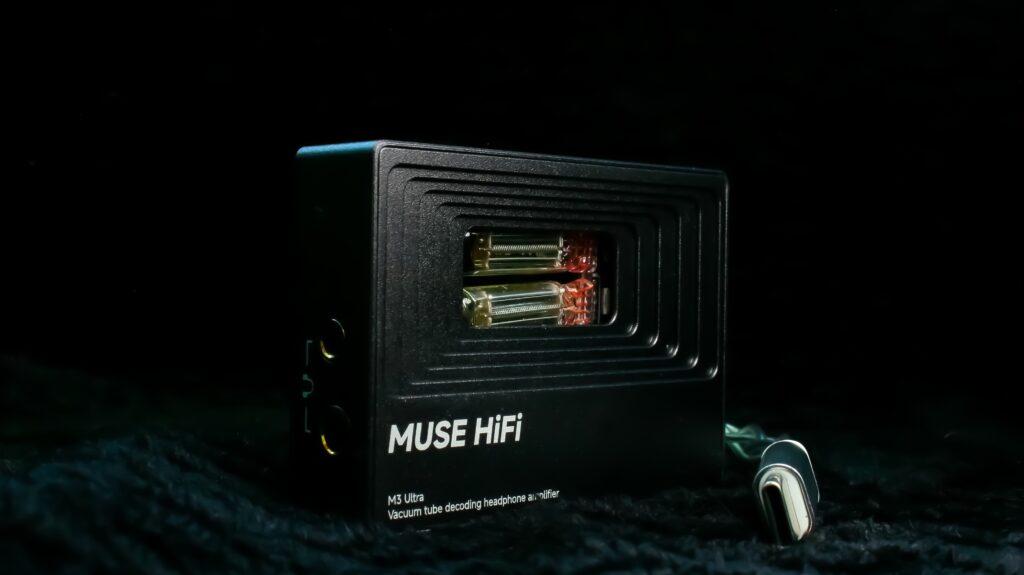
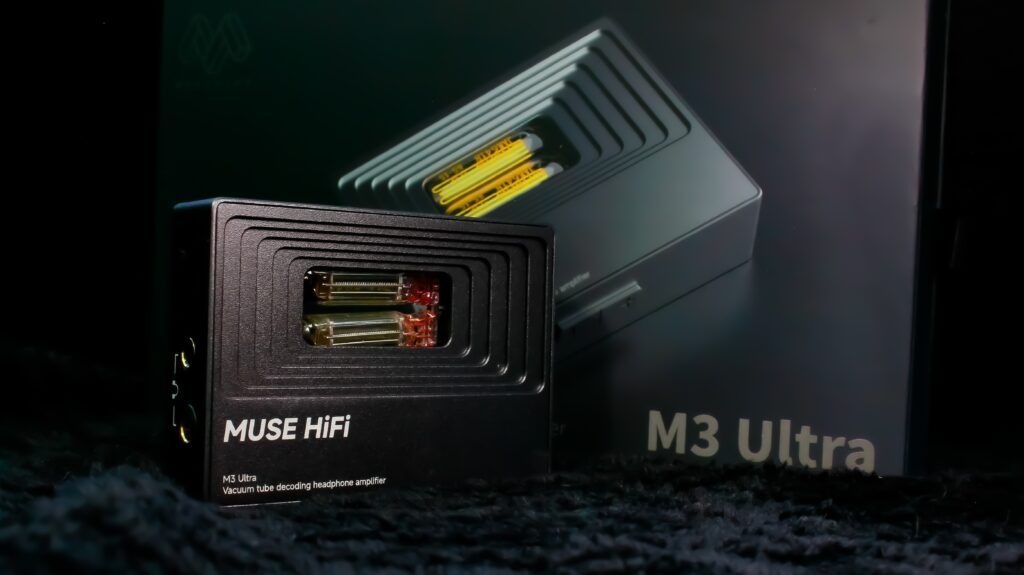
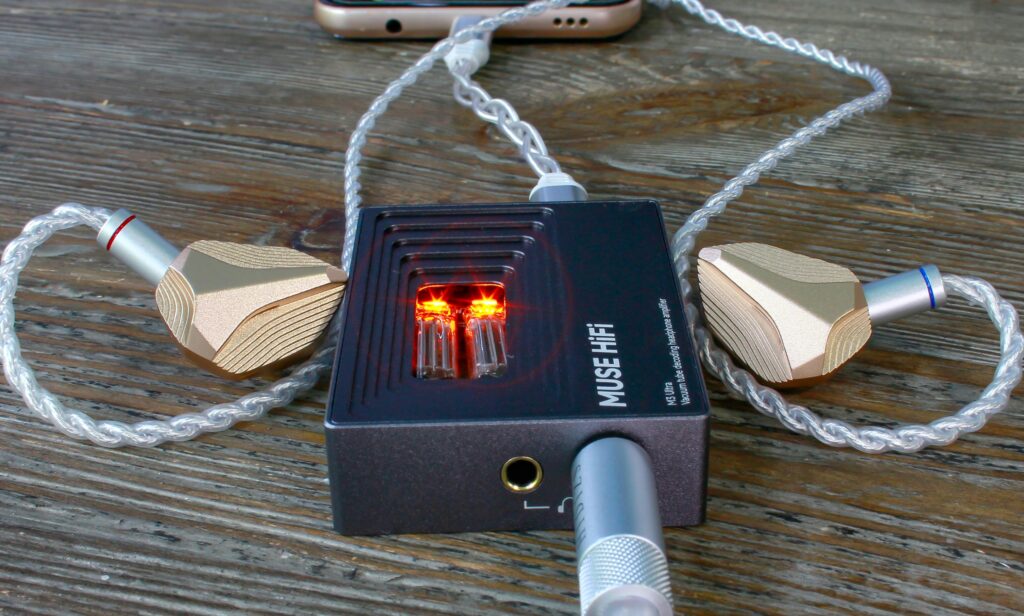
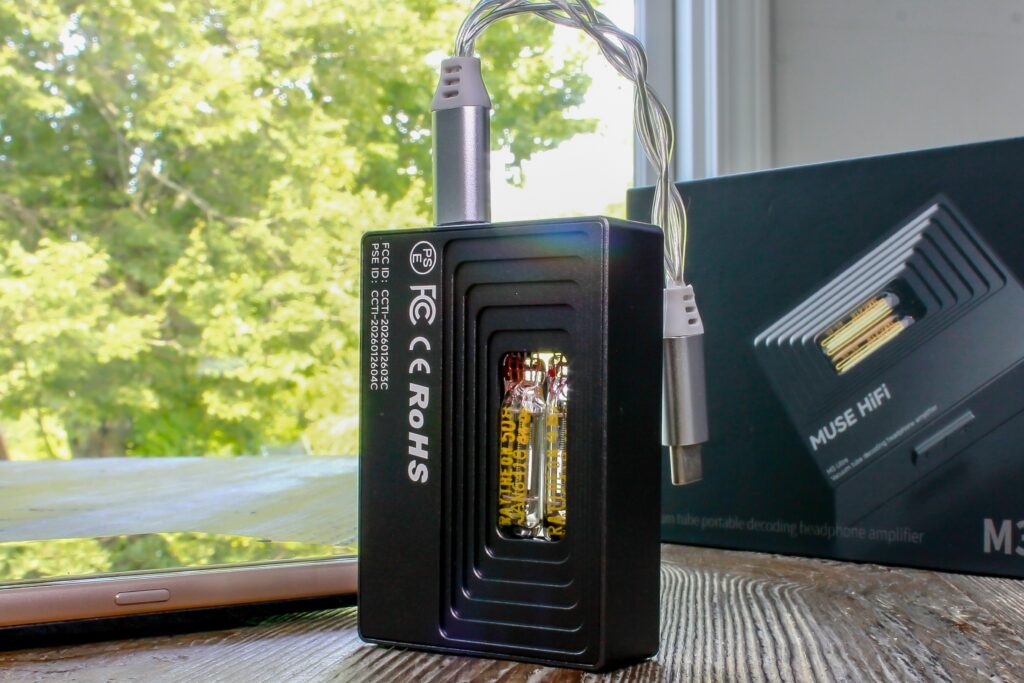
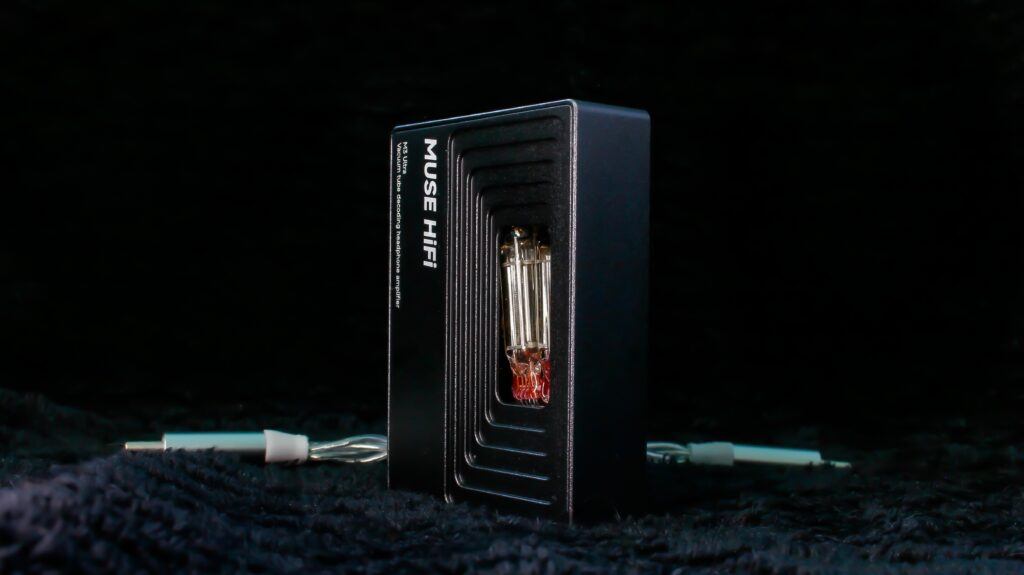
The actual look and feel around the design may be a bit less adored across the board. However, I think this device looks super dope. I really like that the M3 Ultra is this small square with all of the large to small step-down ridges until you get to the prize in the middle, the JAN6418 dual tubes. Both sides of the M3 Ultra share the exact design language. For all intents and purposes Muse Hifi crafted a device which is functionality first, business first, purpose first. However, in making a purpose first device they actually crafted one of the slicker looking devices at the same time. Again, the step-down ridges look like the steps of the coliseum and the glowing JAN6418 dual tubes look so electric against the contrasting dark gray chassis. I really don’t feel that this device looks anything other than premium. Perhaps a screen would’ve added more luster to the design, but I’m glad they didn’t put one in. I have enough screens around me all day. Anyways, definitely a nice little device that is also pretty cool looking.
Internals
The Internals are what makes this device what it is. Muse Hifi went all out stacking the M3 Ultra with every sonic advantage to be utterly awesome at $109. First off, I love the addition of the ESS Sabre ES9028Q2M dac chip. This chip is generally a more technically proficient chip and typically any device that has it will be slightly more analytically inclined. However, I love that Muse Hifi paired this chipset with the warm and rich sound of the JAN6418 dual tubes. Not to mention the additional power output provided from the ES96003Q amplifier chip to give the M3 Ultra the huge amount of power on tap (480 mW). They also chose the Advanced SA9137L USB chipset which is generally thought of as a solid choice. There’re definitely more internal components, but these are the ones anyone could possibly care about. I will speak more on each later.
Controls
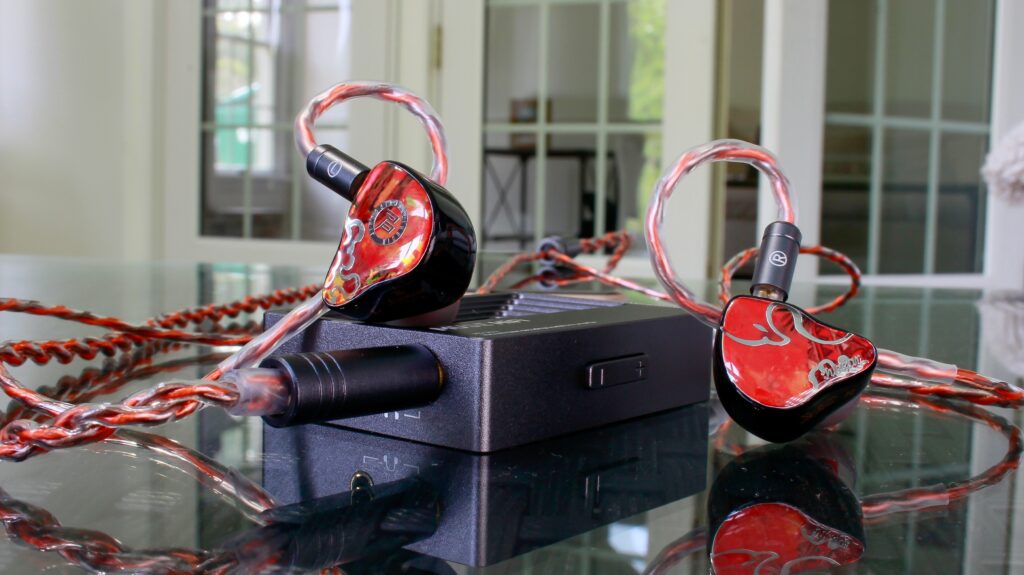
Again, I definitely was ready for a simple music playing device without a ton of buttons and settings. Granted, I love those too, but I just yearned for simplicity. The Muse Hifi M3 Ultra scratches that itch very well as it is only equipped with two buttons… Volume Up and Volume Down buttons. All they do is control the volume, and that’s it. This was a design choice by Muse Hifi. They actually set out to create something simple, easy, plug-and-play. Anyways, there isn’t much to speak on here.
Specifications
• Product Type:
USB Portable DAC / Headphone Amplifier
• DAC Chip:
ESS ES9028Q2M
• Amplifier:
ESS ES9603Q
• USB Interface:
Savitech SA9137L
• Vacuum Tubes:
Dual JAN6418 Subminiature Tubes
• Inputs:
USB-C
• Outputs:
3.5mm Single-Ended
4.4mm Balanced
• PCM Support:
Up to 32-bit / 384kHz
• DSD Support:
Native DSD256
• Output Power:
3.5mm: 460mW @ 32Ω
4.4mm: 480mW @ 32Ω
• Signal-to-Noise Ratio:
3.5mm: 120dB (A-Weighted)
4.4mm: 121dB (A-Weighted)
• THD+N:
3.5mm: 0.0004%
4.4mm: 0.0003%
• Circuit Design:
Fully Balanced Architecture
• Special Features:
Dual JAN6418 tube output stage
Triple vibration suppression system
Tube microphonics reduction
Dual-clock architecture
Hardware volume control
• Dimensions:
65 × 46.5 × 16mm
• Weight:
Approximately 55g
Features
DAC Chips
I think one of the better decisions that Muse Hifi made was to incorporate the ESS Sabre ES9028Q2M dac chip. It’s actually an older chip. In fact, ESS names the ES9028Q2M a “Legacy Chip”. Basically, other chips have come and gone. However, there is more than meets the eye. At first, one might think “Why in the hell would they use such an old chip?”. Slow down, this isn’t Muse Hifi’s 1st rodeo. They sought out this chip. One suspected reason is that the ES9028Q2M chip is a seasoned, mature, and well understood chip. Many of these designers understand this chip very well and it serves as a good baseline. It’s a very compact and an efficient chip too. You see, the sound of this device doesn’t come from the chip itself. A lot has to do with the JAN6418 tubes, the ES9603Q amp stage along with the anti-vibrational work that they’ve been able to do as well. For a chip that has been long believed to have that ESS glare I think the problem for all of those years had much more to do with implementation of this chip. Not an inherent and unavoidable issue with the chip itself. The truth is, this chip is not expensive, and its “analytical lean” works wonderfully with the warmth of the JAN6418 dual tubes. I think Muse Hifi chose a chip that is older, very capable, and is a dac with a very stable understanding and foundation. In my “opinion” the decision was all about cost, functionality, and predictability. I think another chip which would’ve done a fantastic job is the CS43198 chip, but Muse Hifi nailed this device, and I wouldn’t change anything at all.
Max Output Power
One of the first things any of us seek out when learning of a new source device is power. We want to know VRM’s and mW’s. It’s typical to see a $109 dongle dac with output power maxing out around 250mW’s to 350mW. However, due to the usage of the ES9603Q amp stage the M3 Ultra actually gets a very solid boost in both single ended listening and balanced. Seriously, it has some of the more powerful single ended specs in comparison with the balanced side specs that I’ve seen in a long time. On 3.5 single ended the M3 Ultra has a huge 460mW of power. That’s huge. Also, in balanced listening the M3 Ultra gets you a max output of 480mW of power. Also… pretty darn huge. Now, as far as actual real world driving power, I don’t have a bunch of super difficult to drive cans laying around. I do have a couple as well as some slightly more difficult to drive iems, but nothing that would stress out this little beast. For instance, the Sendy Apollo Pro sounds great with the M3 Ultra with plenty of volume headroom and plenty of good dynamics. Obviously, a dedicated amp would bring it to peak sound, but the M3 Ultra is no slouch at all. Any planar that I own is driven to almost peak performance and truthfully that tuby sound is unquestionably awesome with many of my planars. Shoot… especially the planars. Sets like the Binary Dynaquattro which has always been known to be a harder to drive set sounds quite awesome. What it comes down to is this, expect the M3 Ultra to drive almost any iem very-very well and even some portable friendly over ear cans. However, I wouldn’t trust it completely with big planars or super current heavy studio headphones. Still, for a dongle dac 480 mW is pretty nice to see.
JAN6418 Vacuum Tubes
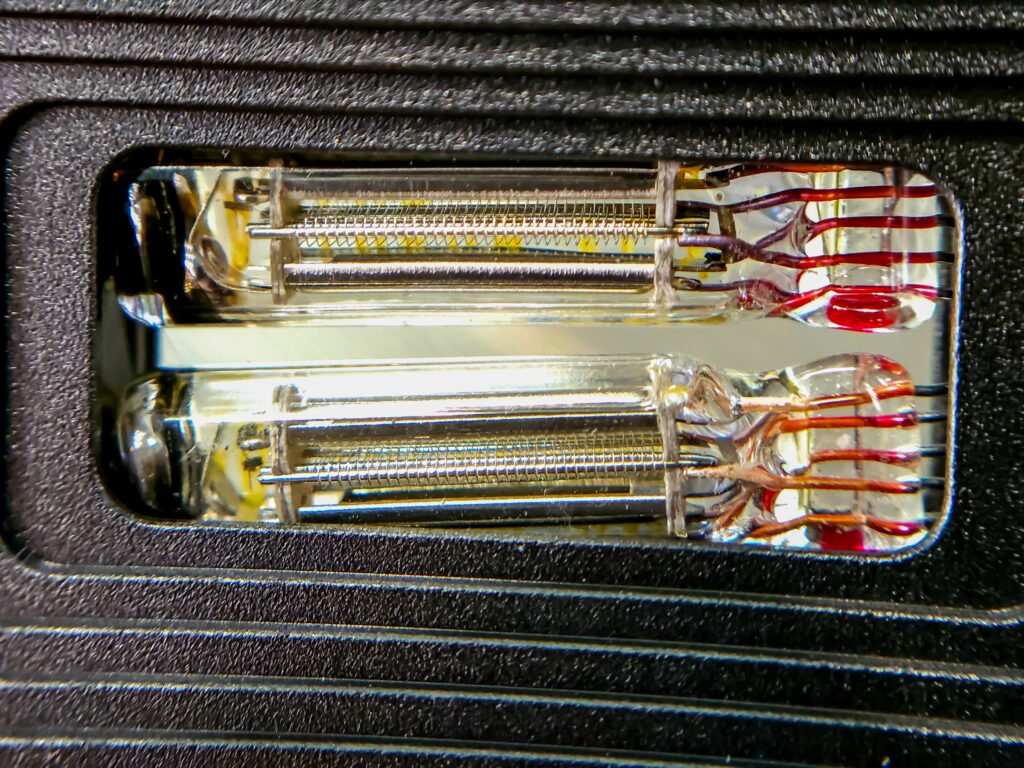
Yes, this is most certainly a feature. In fact, I’d say it’s “Thee Feature” of this dongle dac. I find it very nice to see an actual working vacuum tube output stage in such a small device. Granted, many other source devices have used the vacuum tube model, but it’s still not a common occurrence and to do so for $109 is quite awesome. Now, the biggest advantage of using the JAN6418 model tubes is without question… size. Muse Hifi can actually fit these tubes into their device without it becoming a huge device. Another great thing is that we have two JAN6418 tubes which can run one tube per channel. This is nice as the M3 Ultra will support better stereo separation and a more dimensional and cleaner sonic result. Furthermore, the tubes really dial in the sound to give it that organic and earthy musical presentation. I love the tube sound and the M3 Ultra really does an excellent job of providing that in such a small form. I’d even say it does so better than the much more expensive Shanling UA7. Which is saying a lot. Now, just like any tube the JAN6418 dual tubes are obviously very sensitive. Muse Hifi had to figure out a good way to calm vibrations and microphonics. This is where I find the engineering of the assembly around the tubes really fantastic, kudos to Muse Hifi. They actually used a three-part method of correcting the obvious issue of tube ringing and noise. 1st, they crafted their multi-stage analog processing which cleans up the signal path so sonic tube artifacts don’t turn into obvious noise. Next, they tackled the microphonic effects with their cancelation circuit. Lastly, Muse Hifi used silicone damping to absorb some of the vibrations before they reach the JAN6418 dual tubes. So, it isn’t just the tubes which are awesome, it’s the tech which houses those tubes as well.
Not Many Features, and That’s Why I Like It
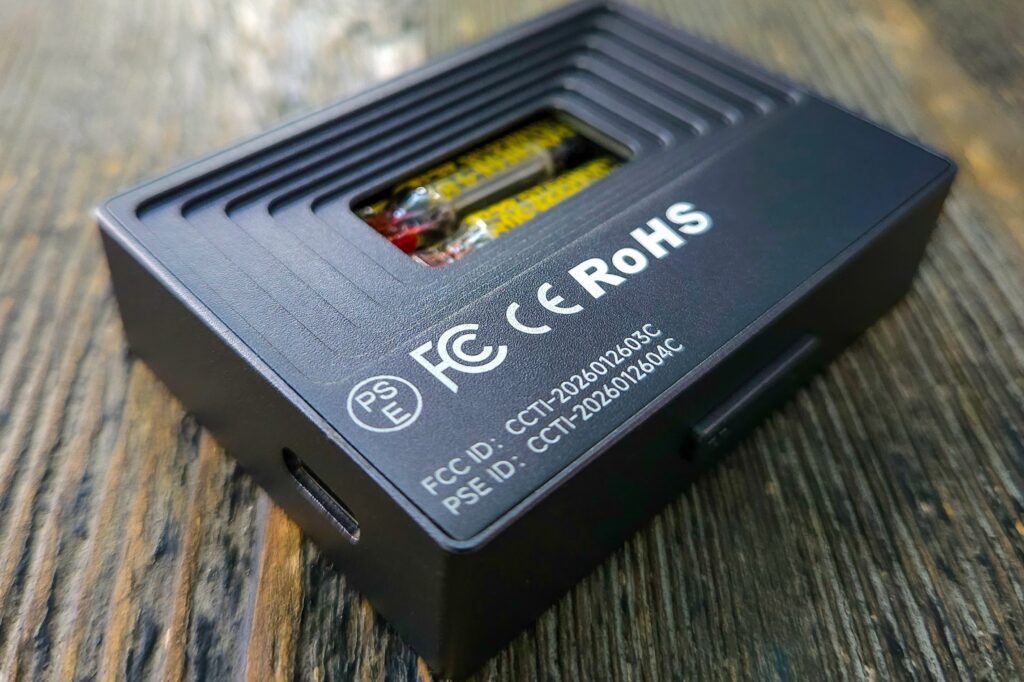
So, the list of features is pretty light. I know you all want the latest and greatest source devices equipped with all the multi-tech bells and whistles and every last feature you can get your hands on or the source isn’t worth your money. Folks, the beauty of the M3 Ultra is that it doesn’t have any of that. It just freaking sounds good! Plug it in, attach an iem, and hit play on your device. That’s it. No worries about sound filters, no worries about what gain mode I’m in (Gain Modes are mostly dumb, change my mind), no screen to constantly pay attention to, and no extra companion app which needs attention, firmware updates, or whatever else will take you away from actually just listening to your music. Just plug-and-play, breathe easy, it’s all set up for you already. Now, you can change the volume from the M3 Ultra and that’s about it. In almost all areas of life regressing in technology and features is typically thought of as a bad thing. Not always with audio. Well, I should note that the actual “tech” which Muse Hifi used to make the sound is actually fairly advanced for $109. What the M3 Ultra lacks would be the Non-Sound Stuff. Also, “lacks” is a mighty strong word, and a mighty subjective word in this instance. Of course, I 100% understand if the Muse Hifi M3 Ultra simply isn’t as advanced as some may like. There’s no doubt that I have many sources which carry those bells and whistles and so I totally understand. Anyway, I’m sure that cost had a lot to do with the lesser feature set. Keeping the cost under $120 for a dual tube dongle dac, which is already loaded with high-quality audio components requires leaving out some of the less important attributes. That said, the Muse Hifi M3 Ultra is exactly what Muse Hifi set out to create; a no fuss dongle dac which serves its purpose and does so at a very high level for the price.
Sound Impressions
*Note: before I dive into the sound portion of this review, I first want to cover a few things to better help understand my process. First off, I did not burn in the M3 Ultra. It really sounded awesome right away and so there was no need. Second, I used far too many iems/ headphones in this review to list them down here.
Source Reviews From My Perspective
Source reviews are always a bit different from any other type (iem, headphones) of review in that they more-so “add” to the sound, or they persuade the final sound rather than serve as the dominant part of the audio chain. Mostly. However, when it comes to the M3 Ultra and other tuby dac/amps with their “tube” flavoring; I find that these sources typically add quite a bit more influence on the final sound than a regular dac/amp setup. Hence why tube amps are so highly regarded. Now, the M3 Ultra plays a larger part in what you hear as it actively shapes the final result through the ES9028Q2M chip, the JAN6418 dual tubes, and then the ES96003Q amp stage. The M3 Ultra controls the power delivery, noise, vibration, and even sound filtering. There’s a lot going on from point A to Z. Having said all of that, I’d still say that the transducer, the iem, headphone, etc. do the most to form the sound that hits your ears. Which brings me back to how I conduct most any source review. That is, I will speak on how the source “influences” the sound. As I said earlier, the M3 Ultra persuades, it tops off, and it provides the atmosphere for the iem to do its thing. To my ears I’d say that most sources can affect tonality (warm, cool, neutral), definitely the noise floor, output dynamism, transient attack-through-decay (to a degree), along with subtle nudges in note weight, smoothness, crispness, or analytical and musical traits. Obviously, they are only a piece of the final pie or just a link in the audio chain, but when it comes to tube amp setups, I personally feel that they simply affect a larger portion. Let’s check out what the M3 Ultra sounds like.
What’s It Sound Like?
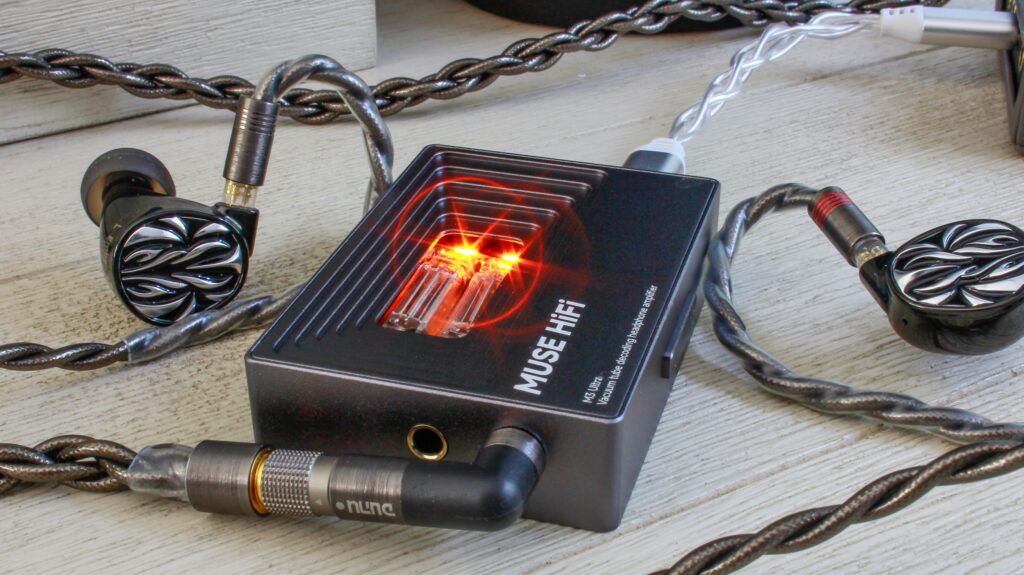
One thing I adore about tube amps is that generally you have no question of what you will be getting. Typically, that is some added warmth, some weight, fullness, richness, and some good ole’ added romantic emotionality to your music. I’d echo that when talking about the M3 Ultra. Most certainly above neutral in overall warmth, which only accentuates when you pair it with a warm iem. However, that warmth is not usually the type which clogs, overtly veils, or smears the mix. The M3 Ultra does add an organic timbre/tonality to just about everything I’ve tested it with though. It provides this wonderfully earthy feel to all of my tracks which comes across a hint relaxed yet it doesn’t leave out the rest of the mix. In fact, for a device featuring dual JAN6418 vacuum tubes the M3 Ultra actually has a decent balance. One of my favorite aspects of the M3 Ultra influence is how it always seems to nudge all of my iems to being more timbrally accurate with that fleshier and fuller note tone, flow, and note body. With some sets it can come across downright creamy and dreamy. Especially sets which already feature a warmer sound, like the ODA Leviathan T800, or the Aful Explorer, or the Letshuoer Ember. You’d think the sound would be caked in mud and bass smear, but I find it to be anything but that. Truly a nice sounding unit folks.
Musicality Through-and-Through
So if you haven’t guessed, the Musehifi M3 Ultra is musicality through-and-through, with some of the better music shaping rhythmicity that I’ve heard from any source under $120. This is unquestioned in my mind folks, and I’ve heard a lot in my days. Without the shadow of a doubt the Muse Hifi M3 Ultra is about as organically mellifluous as you’ll get for its cost. Of course, that doesn’t mean it will fit your preferences. I always talk about brighter and more technically capable sets and sources as being the more “polarizing” types. However, overtly warm and richly rendered sets and sources can also be equally polarizing too. Now, I think that more consumers/hobbyists enjoy warm & rich over bright & crisp, but that doesn’t mean that a source like the M3 Ultra won’t be at least marginally polarizing. I had to say that. I have to give the good and the bad, always. However, in my mind the M3 Ultra has some of the more clean-lined and creamy note definition that I’ve ever heard at this cost. That alone makes it such a tantalizing device and one of the most naturally engaging dongle dacs that I’ve come across at this cost. Musicality is everywhere, every inflection, every vocal intonation, every tuneful volume shift sounds at least mildly harmonious and always spatially well dimensioned. To that last point, even sets which usually sound a hair more congested or narrow in stage can be helped in that regard by the M3 Ultra.
Technically Speaking
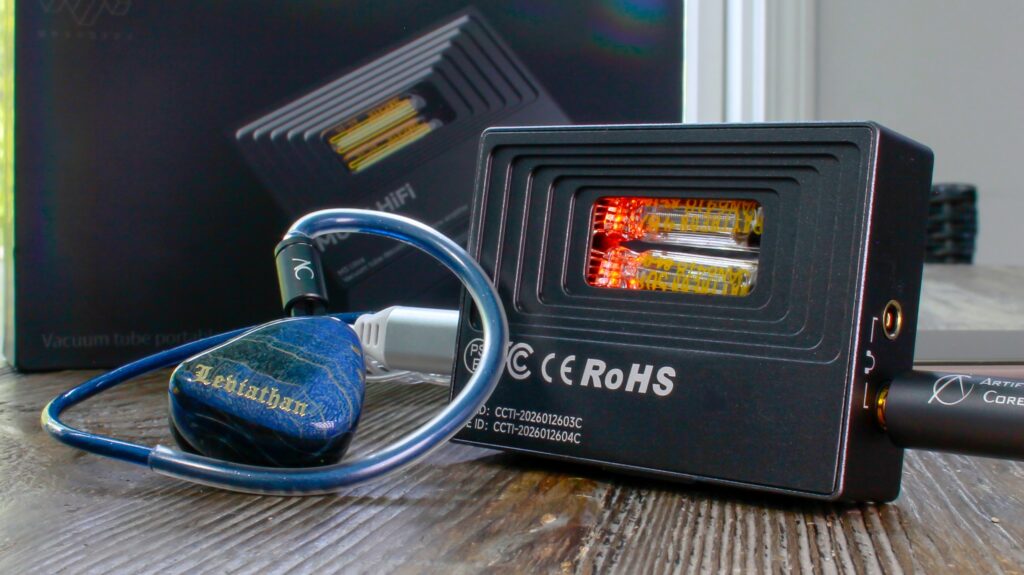
Now, when it comes to the technical aspects of the Muse Hifi M3 Ultra you certainly don’t have an analytical or clinical precision added to your iems. Definitely more analytically tuned sets will still present the spectrum in a very clean and precise way, but they will also have that warm-toned influence pushing the final sound. Having said that, the M3 Ultra might surprise you. I say that because this device really adds a strong dynamic output which pushes all of my iems to keep controlled with a certain note rigidity that is very evident. No, it won’t be overly brilliant, lean, dry, or lightning fast, but the M3 Ultra has very nice added clarity and spaciousness providing respectable note separation without collapsing into outright congestion or a cramped/narrow sound field. If anything, the M3 Ultra adds a holographic euphonic dimensional feel to all of the sets that I’ve tested with it. To varying degrees depending on the set, keep that in mind. Furthermore, the M3 Ultra doesn’t totally sacrifice detail retrieval due to its warmth and richer replay. Also, the output drive adds some nice macro-dynamic control and punch across all of my iems. So, while I’d never-ever call the M3 Ultra an analytical lover’s dream device, I would say that it is respectable when it comes to the technical stuff, especially for a tuby source.
Not For Everyone
Be that as it may, there are most definitely other talented and fantastic sounding dongle dacs at this cost. Don’t get me wrong. I mean, devices like the Aful SnowyNight (still awesome), the Shanling UA6 (my favorite balanced sounding dongle under $150), the Cayin RU3, the Fiio KA15, the Simgot Dew4x, EPZ TP50, Tanchjim Space II (Review coming soon), Shanling H0 (flat out awesome dac/amp), Hiby W4, Shanling UP6 ($127 at Aliexpress), and so many more (yes, I know I am forgetting a multitude of devices, so please forgive me). Also, those devices won’t be quite as polarizing as they all carry a more balanced and neutral take on the spectrum, letting iems/headphones more-so be what they are, rather than shaping the sound to the degree of the M3 Ultra. Just something to consider. I can tell you this, right now, the M3 Ultra is unabashedly one of the more symphoniously immersive source devices that I’ve had the pleasure of listening to for under $120. No it doesn’t have the screens of all of those other dongle dacs and no it doesn’t have the gain modes, the sound filters, and the companion apps. It doesn’t have the gimmicky stuff, the bells and whistles. Friends, what the M3 Ultra has (at a very high level) is premium musicality in a plug and play design. I am very happy with this device. Kudos to Muse Hifi!
Bass Region
The low-end influence is very persuasive towards any transducer that I attach to it. To my ears the flavor of the vacuum tubes is always warmer in atmosphere which leads you to believe that the warmth you hear is also a boosting of the bass. However, that isn’t necessarily the case. In fact, in overall emphasis the bass on the M3 Ultra is fairly well balanced. Remember, the actual dac chip is the more analytically inclined ES9028Q2M chip. Again, these two (JAN6418 tubes & ES9028Q2M) contrast each other wonderfully. That all said, the M3 Ultra’s low-end does feel a hair boosted & obviously colorful with a full-bodied expression that is ever-so-slightly softened at the edges. That softness is another character trait of tube devices. Also, that character trait is another deceiving attribute as that softness doesn’t diminish definition to the extent of what we are used to hearing when bass has a softer feel. I say that because the M3 Ultra definitely adds rigidity, guttural density, and a concrete note body to any set at varying degrees and it isn’t a sloppy bass… at all. Of course, sets tuned with more bass weight will come across pretty darn bulbous and bullish. Furthermore, sets tuned with a very clean and punchy bass with clean note outlines won’t sound quite as soft at the edges. Again, it varies. The low-end seems to emphasize body & flow more-so than straight-up hard lined slam which really adds to the somewhat relaxed and musical presentation.
Bass Cont…
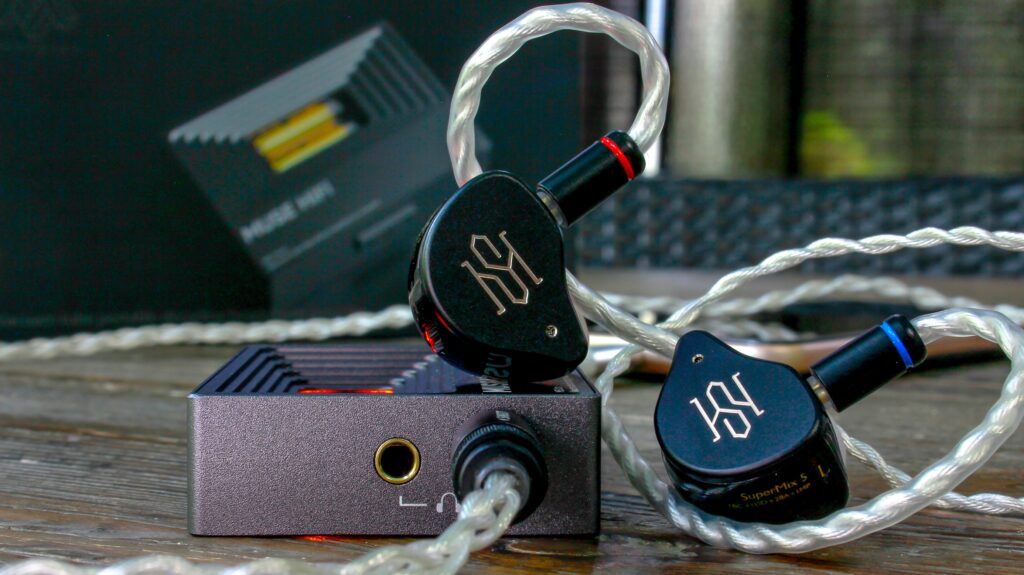
For any leaner bass sets the M3 Ultra will most certainly add to the experience down low as it will slightly fill-out the body of bass notes. It will definitely help the overall character of the bass sound less sterile and more rigid. In all honesty, I find that it helps leaner bass sets to come across more naturally. The bonus is that the added weight doesn’t mean less clarity and doesn’t make the sound less defined. Just… warmer and a hair fuller. Contrastingly the M3 Ultra will provide those bigger bass sets with more authority making them thicker in this region. Of course, note texture can slightly blur and notes will come across a bit rounder and less acutely precise. Other character traits of the M3 Ultra’s low-end is a touch less textured low-end delivery but also sound more palpable and more kinetic, more tactile. Again, this bass is all about fluid wave-like movement with great tonal control. However, there is good and bad with everything. I personally like a hair more texture in my bass, but the positives far outweigh any negative that I’ve heard thus far. One last thing about the bass region, the bass definitely fills out the midrange, especially the lower mids. Both vocals and instrumentation come across more intimate and fuller in body. I’d even say that the upper mids & treble sounds smoother as well. Think of the bass influence across the spectrum like a tad less full frequency sharpness, more richness, a touch more smoothness, and loads of musicality.
Midrange
Now, the midrange is where the Muse Hifi M3 Ultra really begins to show that wonderful tube flavoring without robbing many sets of their clarity or precision. To my ears the midrange comes across smooth, rich, even buttery, but also very clean. This is a midrange which persuades a more holographic and spatial rendering of the sound field as well. I find that note definition is hardly touched on most sets but the M3 Ultra will most assuredly sand down sharper edges or more glaring areas of the midrange. It’s a midrange with this warmly glazed but also very transparent nature, somehow upholding micro-dynamics (to an extent) while also sounding less edgy, more intimately pronounced, and always tuneful. Not surprisingly it is the midrange which truly shows it’s worth using the M3 Ultra as it adds such a dulcet and sweet-toned tonality and earthy-organic timbre to darn near any iem. The cooler Simgot EA1000 is one of the best pairings, or the energetic and dynamic Penon 10th Anniversary (for example), and really… any other set that could use a touch more smoothness to contrast the dynamic immediacy of their tuning. The beauty of the M3 Ultra is that it doesn’t turn those warm, smooth, and richly tuned sets into a puddle of mud. You see, the warmer atmosphere is not veil, like we are used to hearing. Clarity is still high folks. So, a set like the warm Aful Explorer isn’t going to turn into a complete mess of smeared blur. Granted, it also won’t become even cleaner either. However, when I couple in the emotionality and engaging musicality and smoothness with the holographic and spatially awesome sound of the midrange, I am usually absolutely loving what I’m hearing.
Vocals
In my humble opinion, I find that the biggest beneficiary of the M3 Ultra is mostly always vocals using most iems/headphones. The lower mid males always sound chestier, more authoritative, bolder, and more bodied. Almost always male vocalists will come across with a velvetier feel, a smoother demeanor, yet also very tactile. Lower register instruments sound the same way as the M3 Ultra influences weight and richness while leveling off some of the coarser and more abrasive moments in my music using different sets. I actually find male vocals to come across prominent, dripping with moist fluidity. Very much viscous in tone flow without losing that clarity I was talking about. Also, the same can be said of the upper midrange females, just to a lesser degree. The upper mids definitely provide a touch of emotional warmth for female vocalists as they come across more tonally saturated and slightly denser too. As good as male vocalists typically sound, it’s the females which always seem to steal the show for me. They always sound more embossed against the backdrop of a melody, more highlighted and lustrous, with that emotive and very pronounced or forward projection of their vocals. To add to that, almost always, a glaring set (talking about you Sivga Que UTG, Simgot ET142, or you NF Acous NA20 etc.) with boosted upper-mids/lower treble which may make you want to turn your volume down (at times) will certainly sound more measured and less shouty. Really, vocals, instruments, spatial recognition, and that organic persuasion are almost always benefits for any of my sets when paired with the M3 Ultra. The mids are very nice.
Treble Region
Okay, now in my personal opinion I find the treble to actually come across pretty airy, extended, and actually does provide some measure of details retrieval influence to my iems/headphones. This is not uncommon in tuby devices, but it’s also absolutely not the norm. There is some levity coming from the treble and it isn’t dark or rolled-off as I first suspected prior to hearing the M3 Ultra. Of course, the M3 Ultra’s treble will also add radiance to most of my sets unless the set I’m listening to is rolled-off and darker. However, the treble also follows suit with the rest of the mix and is definitely a smoother treble. Just because the sound is airy and uplifts the tonal color of the mix doesn’t mean it’s some clinical and razor-sharp crisp king. I’ll go back to the Simgot EA1000 again which is a set with a brighter top end that can become somewhat fatiguing over time. I most certainly noticed a sanding-down of the edgier moments making the EA1000 even more musical with a more measured approach. All that said, I still find the treble to be very clean and open sounding which really aids the sound field presentation. I’m positive this open and airy demeanor and less intense sound up top is due (in large part) to the ES9028Q2M dac chip in conjunction with the JAN6418 dual tubes making for such a nice sound together.
Treble Cont…
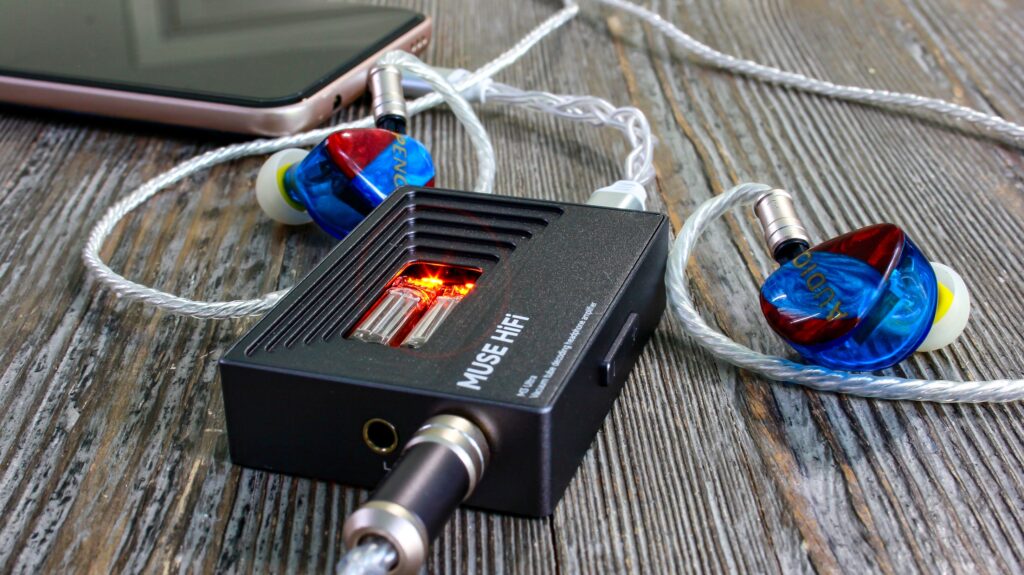
In all truth, the emphasis within treble and how it impacts the rest of the mix is very similar to that of its bass region. Meaning, it’s boosted just enough to provide some influence across the mix but not enough to ever become a detriment. It’s actually a very nicely tuned treble for anyone who desires a very emotionally gripping portrayal of their music. Friends, I adore this dac/amp with any set that carries upper treble brilliance. I love that the M3 Ultra doesn’t derail detail retrieval and doesn’t kill all energy while also bringing those brighter sets back down to earth. Most importantly, this isn’t a dull or bland treble. Oddly enough, the Muse Hifi M3 Ultra will absolutely reciprocate any speed that my iems have up top. For instance, the Letshuoer Cadenza 12 has some extremely fast treble replay with very tight and crispy transients. Probably some of the best balanced armature treble that I’ve ever heard. The M3 Ultra doesn’t entirely diminish the fine-lined, clean-lined, and acute edge detail of the Cadenza 12, but instead it stays reasonably in line and responds in kind, just with its own flavor tonally. Sure, there is less sparkle from other dac/amps, daps, or dongle dacs, but the M3 Ultra doesn’t overtly taper or wane the C12’s note integrity. Obviously, you will either enjoy this “type” of sound flavor, or you won’t. I have come to enjoy the M3 Ultra and what it brings to the treble, for many sets, but not all of them. Like anything it will come down to your particular preferences. It’s not a bad treble though.
Technicalities
Soundstage
I think that many of you are going to be at least marginally surprised at the sound field presentation. I’m quite positive that many people would not expect a $109 dongle dac to actually “provide” a more holographic sound field. This is one aspect of a solid tuby display in which there is a clear euphonic effect that adds front to back spatiality along with a pretty spacious soundstage as well. I’d go so far as to say that the soundstage is a definite “Pro” and is likely one of the best dongle dacs under $120 when it comes to its soundstage. Having said that, the M3 Ultra also presents the sound field as a hair more intimate and more immersive than it is stadium-like. I love these types of stages. Personally, I like a semi-forward display of the field of sound, yet I also love a very full stage which fills out my mind space in a spherical or holographic way. I will say that the stage width is awesome. Depending on your iems of choice you can have a very wide stage for the cost. Height is less massive, but still good enough to hold that spherical sound field. That means… It’s good. Lastly, it’s the depth of field that really separates the M3 Ultra from other dongle dacs. So often these dongle dacs will have a less deep and somewhat flatter 2D representation of the stage and it will depend wholly on what iems/headphones you choose. Not with the M3 Ultra. This dongle dac will actually endow the sound field with depth. Basically, the soundstage is very-very strong on this one.
Separation / Imaging
Now, note separation is pretty distinct, for a couple reasons. First, the M3 Ultra has an expanded stage, it adds space for notes to operate, so to speak. Next, it has a clean upper treble and good clarity across the mix, even with the warmer atmosphere. Lastly, the bass is very nicely controlled and depending on the iem/headphone you choose separation can be pretty nice. I do think that note separation is good, but not one of the M3 Ultra’s best qualities. Let’s put it this way, none of you should expect a warmer, smoother, and richer sounding dongle dac to have good note separation. Oddly enough, the M3 Ultra can present a very distinct sound field. In the end it definitely depends on the set. When it comes to imaging the M3 Ultra does even better with easy to discern spatial cues, influencing noticeably good instrument placement. Better said, the M3 Ultra won’t diminish any sets’ imaging ability and will likely provide a better soundscape than other dongle dacs within its range for the purpose of imaging. Definitely a “Pro” for me.
Detail Retrieval
Okay, there is a caveat to everything that I’m going to say concerning the M3 Ultra’s ability to draw out minute details to the forefront. I’ll say it like this; for a warm, smooth, rich, and less brilliant influence on the sound, the M3 Ultra does surprisingly well at drawing out details. Clearly the M3 Ultra is a musicality-first, emotionally engaging, and smoothly rendered dongle dac before anything else. This set is all about tone-flow, fluidity, and rhythmical tunefulness and obviously not an analytically focused dongle dac. So, the caveat that I have is that for the class and for the tuning the M3 Ultra has some pretty solid detail retrieval. I’d say it’s certainly better than other warm leaning dongle dacs in its range due to the fact that it has other qualities which help greatly. Most notably a clean presentation, nice clarity, open upper treble, controlled bass, and it keeps up with tighter transient iems/headphones. Basically, nothing about its tuning really depreciates the subtleties from rising to the surface other than its smoother cadence, its richer note weight, and warmer presence across the mix. So, good for what it is.
Comparisons
Shanling UA6 ($127)
I have thoroughly enjoyed the Shanling UA6 from the first moment it came into my possession. I actually reviewed the UA6 all the way back in May of 2025 (UA6 Review) and concluded then that it absolutely has a seat within the top dongle dacs for its cost. What an easy recommendation. Folks, this thing is so dope and loaded with features along with four Cirrus Logic CS43131 dac chips and plenty of driving power. But I’ll speak on that in a minute. In fact, the UA6 has many qualities and abilities that the M3 Ultra simply doesn’t have and for many will be the clear winner between the two. Unless you prize musicality and the M3 Ultra’s special flavor over everything else. Let’s check them out.
Non-Sound Stuff
Both devices are built very well, and both look so dope! While the UA6 is very cool looking, I do find the M3 Ultra to be the more attractive and less typical design aesthetic. Having said that, the M3 Ultra is much fatter though, it’s bulkier, and slightly less easy to carry. Now, as far as features, let’s start with dac chips, the UA6 has four CS43131 to the M3 Ultra’s ES9028Q2M chip. However, the JAN6418 dual tubes are in my opinion the more enticing of the two. Though both devices are very intriguing. The max output of the UA6 is a very respectable 361 mW on 4.4 balanced and 112 mW for 3.5 se listening. The M3 Ultra on the other hand has much more power on 4.4 balanced with 480 mW and absolutely decimates the UA6 on 3.5 se with 460mW’s of power, which is flat out awesome. Of course, every other feature set the UA6 destroys the M3 Ultra. Two different philosophies folks. The UA6 has a very nice screen, all of the sound filters, it pairs with a companion app, gain options, as well as more controls (buttons) and a full settings menu to change things even further. However, one of the best abilities the UA6 has is an onboard battery. The battery is able to reduce battery drain, provide a cleaner signal output (blacker background, noise free), and buffers sudden power spikes. Obviously, the M3 Ultra has very specific tech which is used to create this awesome sonic presentation and the UA6 is a bit more typical, but both devices are very special.
Sound Differences
This is where we see an even greater differential between both devices, which I didn’t think was possible. However, they are two very different devices tonally and so I won’t go too long on this. Anyways, the M3 Ultra is much warmer, smoother, richer and provides a thicker and more bodied sound. The UA6 is much closer to neutral, less coloration, leaner in presentation, and clearly has the more cleanly transparent sound. Of course, the M3 Ultra has musicality on tap that the UA6 simply cannot match. It really all comes down to your preferences. The bass is definitely more potent and authoritative on the M3 Ultra, it has a more intimate vocal delivery, it has a less crisp but more emotionally engaging treble and influences far less spikes in brilliance leading to glare. The UA6 has the better balance across the mix with excellent technical skills. Both are class acts for their tuning style and price points.
Final Thoughts on this Comparison
Two of my absolute favorite dongle dacs under $150 and they both present the spectrum in two totally different ways. Truly, they both contrast each other very well. I think that anyone who desires features as well as a solid sonic delivery than the UA6 is an easy winner. However, if a person holds musicality as the most important aspect of a dongle dac then the M3 Ultra clearly is the more polished of the two. Both devices are highly qualified in respect to their price points, and they both have their own reasons why one may consider one better than the other.
Last Words on the Muse Hifi M3 Ultra
I’d say that Muse Hifi has a winner here folks. Like I’ve said multiple times in this review what makes the M3 Ultra special is what it brings to the listening experience. I say that because we have been absolutely inundated with similar dongle dacs for years now. Similar in build, in features, in output, and only slight variations in actual sound influence. Finally, we have something different and you don’t have to spend $200 to get that different sound. Friends, this is what makes the M3 Ultra special. It does the sonic stuff exceptionally well for a very low cost, but it does that one thing in such a convincing way too. I totally understand anyone who sees this plug and play style dongle dac as less feature rich and therefore less worthy of your dollar. Fair enough. After all, that’s how we are patterned to to think anymore. More features is a mainstay within the consumer consciousness going back and forth internally on every last purchase saying, “It doesn’t have this, but it does have that, it has that too, but it doesn’t have this, ooh… but it does have that” and the whole time the one real defining purpose for every dongle dac released to market is…to sound good. That’s the real tail of the tape folks. Does it sound good, or does it not? Sure, all of the other stuff is great. I think so too. However, we are talking about a vacuum tube dongle dac for less than $120. I just reviewed the Shanling UA7 last year and it has the same JAN6418 dual vacuum tubes and it costs $267. Granted, it has a million features, but when it comes to sound these two are very close. At the very least I can say with total assurance that anyone who desires to hear a device with that tuby flavor but doesn’t want to spend an arm and a leg has a very viable and quality product in the M3 Ultra.
No Brainer!
To sum up the Muse Hifi M3 Ultra, I would say that it provides a level of smooth musicality that I haven’t heard in quite some time, especially at this cost. Again, so many devices clutter the market in this range, and they’re all created to sound a certain way. Of course, some are better than others and even better than the M3 Ultra in different ways, but they don’t vary to a crazy degree when it comes to tone color and tuning. Brands do this because they want to make money and they’re too scared to try something that’s truly different. Understandable, they have a business to run and we buy the products. But the M3 Ultra is that one “different” sound. The M3 Ultra gives the listener a real tube character with fantastic output power as well as a full and immersive sound instead of l chasing specs and ultimately (truthfully) just chasing the competition. Friends, for me the M3 Ultra is one of the easier no-brainer devices and one of the easiest recommendations that I could give. Absolute no brainer.
Who It Isn’t For?
I’ve said a lot in this review. Much of what I’ve said sounds like high praise, and for good reason. Despite that I am not blind to the fact that the M3 Ultra definitely has some shortcomings and downsides both tonally and the obvious flaws of being less feature rich. However, let’s pretend we’ve made peace with the lack of features. It’s all up to sound quality now. I could say that there are a huge number of dead neutral fans that want zero part of the source adding any coloration whatsoever, and as little influence as possible. I’d also say that the M3 Ultra will not fit those who have very low impedance headphones which are much harder to properly drive. Those folks will likely have to spend a lot more. Another issue is in the gentler way one has to conduct their listening sessions as this is a tube design and so you cannot just toss the M3 Ultra into a bag. Well, you shouldn’t. Anyone who has a more rugged and active lifestyle may want to rethink purchasing this device. Obviously, the tube design means it is more inherently vulnerable to breaking, to impact, and the tube design means you may experience some ringing and other sound artifacts. Still, for the cost of $109 I cannot think of any good reason why the Muse Hifi M3 Ultra isn’t a great purchase. Again, no brainer folks.
Conclusion
To conclude my full review and feature of the Muse Hifi M3 Ultra, I first want to thank HiFiGo for providing the M3 Ultra for review. Thank you very much. I also thank the reader (that’s you) for clicking the link to this review. It is the number one thing you can do to help mobileaudiophile.com along with sticking around long enough to let Google know that we have decent enough content. We are really trying to get better. So, thank you for trusting us and we do hope each review is of some help to you. Thank you very much.
Other perspectives
Finally, please check out other reviews of the Muse Hifi M3 Ultra, not just mine. It can only help you in making an educated decision. Please don’t read this review and then hit the “buy now” button. Please read, watch, or listen to other opinions as it is the number one way short of listening prior to purchase that you will know what you are getting. We are all very different. Each one of us have different likes and dislikes, different abilities to even hear the music, different music libraries, different wants and desires in our source devices, and we all haven’t been down the same journey through audio. This makes an enormous difference in how we each perceive music through devices. Some have a lot less experience and some reviewers have been doing this forever. Each is a valid and useful perspective. Also, there are so many ridiculously talented reviewers out there. So many smart and witty reviewers, and so many who will help you to possibly understand the M3 Ultra in a different light. Anyways, with that said, I think I’m done. Please take good care, stay as safe as possible and always… God Bless!!
M3 Ultra Pros
-Built very well typical of Muse Hifi products, all-alloy (aluminum)
-Visually distinctive design (step down ridges leading to the vacuum tubes is such a cool design choice!)
-No extra features, just simple, easy, plug and play, very refreshing (definitely might be a con for many, not for me)
-Powerful output with 3.5 (460 mW) and 4.4 balanced (481 mW)
-Excellent use of the older ES9028Q2M dac chip paired with the dual JAN6418 vacuum tubes and the ES96003Q amp stage. Perfect mix
-Very quiet noise floor with highly effective anti-vibrational tech for a portable tube device
-Carries that creamy, warm, tuby sound that’s surprisingly very clean, high clarity
-Fuller bass, richer mids (awesome vocal influence), smooth overall presentation
-Oddly enough it sounds great with different certain signatures, but especially leaner, analytically based, brighter sets
-Overall, an excellent value and one of the better sounding dongle dacs under $150, hands down.
M3 Ultra Cons
-Not ideal for those neutral, analytical or “vanilla” lovers
-Slightly bulkier than your average dongle dac
-Obviously you have to be careful with the vacuum tubes
-Bass is full and tactile, but not quite as precise or defined as most solid state dongle dacs
-Has awesome power for what it is, but truly demanding headphones will give this dongle dac an issue
-Slightly more battery drain than your typical solid state dongle dac (obviously that varies for many different reasons)




No Comment! Be the first one.