






















































Dita Audio Mecha Review
Intro
Hello, this review and feature covers the latest from the audio brand Dita Audio named the Dita Audio Mecha ($899). Friends, as if I couldn’t be any more impressed with Dita Audio, they went and crafted a set like the Mecha and simply blew the doors off of my expectations for a top tier single dynamic driver earphone. I’d like to thank the good folks over at Dita Audio as well as the Audio Geek USA Tour for providing the Mecha for review. No doubt without both parties I simply wouldn’t have nearly the opportunity to feature such a set, and I am very grateful.
Table Of Content
- Intro
- Dita Audio
- Competition
- Non-Affiliated Purchasing Links
- Mecha Pros
- Mecha Cons
- Gear used for testing
- Accessories
- Carrying Case
- Cable
- Build / Design / Internals / Fit
- Build Quality & Design
- Internals
- Fit /Comfort
- Drivability
- Output Power
- Source Pairing
- Sound Impressions
- What’s it sound like?
- Organic?
- Bass Region
- Sub-Bass
- Mid-Bass
- Downsides to the Bass Region
- Midrange
- Lower-Midrange
- Upper-Midrange
- Instruments (condensed)
- Downsides to the Midrange
- Treble Region
- Nice timbre
- Impressed
- Downsides to the Treble Region
- Technicalities
- Soundstage
- Separation / Imaging
- Detail Retrieval
- Is it worth the asking price?
- The Why…
- That lovely sound…
- The Why (between the 20’s)
- Conclusion
- Other Perspectives
Dita Audio
Like I said, the Dita Audio Mecha is a single DD earphone which falls right in line with Dita Audio’s penchant for the dynamic driver. If ever there was a brand who specializes in the single DD configuration… It is without question Dita Audio. Oddly enough the Mecha is the only “single DD” earphone from Dita Audio that I’ve personally heard. However, I did have the pleasure of reviewing the 1DD/1BA Dita Project-M (Project-M Review) last year at some point and came away with nothing but good things to say about it. A very impressive hybrid set. I feel there’s almost a mystique around Dita products which adds such a classy and dare I say… “bougie” allure. I can tell you that I was instantly impressed with the Mecha and can understand why someone would drop $899 on them. Every way you turn this set you’ll see class, or a panache refinement that emanates from the build and aesthetic, to the sound. I admit I don’t know very much about any of Ditas “other” iems, but I am impressed with what I have heard.
Competition
As always, the greatest hurdle for any iem is the competition around those products. At $899 the Mecha is obviously surrounded by truly awesome products. You have to be a “Dita Audio” to be able to sell single dynamic driver earphones at the cost that they do and still be able to sell those products. You have to specialize in this configuration to the point that everyone knows what they are getting to have success. No doubt any single DD has their back against the wall while about a hundred different multi-driver hybrids, tribrids, and quadbrids flexing their muscles catching the gaze of the consumer. Without question it is the competition within the price point that the Mecha will have to contend with. Here’s the kicker; Dita Audio isn’t scared folks. They’ve been at this game for some time now and they have a very solid following of “believers” who will scream from the rooftops if need be, to speak on the sound value of Dita Audio’s products. I know not everyone is convinced… but I am. Because I’ve heard the Mecha.
With all that said, I do need to tell you all that this is mostly going to be a “sound review”, as I did not receive all of the packaging with the Mecha. I do have the cable and carrying case, but that’s about it. So, we can skip most of the boring stuff and head straight into what we all came here for… The Sound. So, without further ado… the Dita Audio Mecha…
Non-Affiliated Purchasing Links:
Mecha Pros
-The titanium build is absolutely awesome
-Pure class design
-Nice accessories
-One of the best aspects of the Mecha is the amazingly wonderful timbre
-Organic, semi-rich, very natural tone and timbre with a very nice tonal balance
-Clean, yet warm, and very lush presentation. Extremely engaging and dynamic
-Punchy, deeply extended, rich, and textured bass response
-Wonderful midrange! Clean, clear, and beautifully rendered
-Sparkly and airy treble that doesn’t tend to cause fatigue. Nice extension
-Great soundstage
-Imaging is spot on
Mecha Cons
-May be too heavy for some folks
-Neutral lovers, or even analytical lovers will want to pass on the Mecha
-While nicely detailed “per the tuning”, the Mecha is not a detail beast
-Fit may be a concern for some
Gear used for testing
–IBasso DX240 with Amp8 MK2
Accessories
*Note: As I said, I only have the carrying case and the cable, so this section will be rather short.
Carrying Case
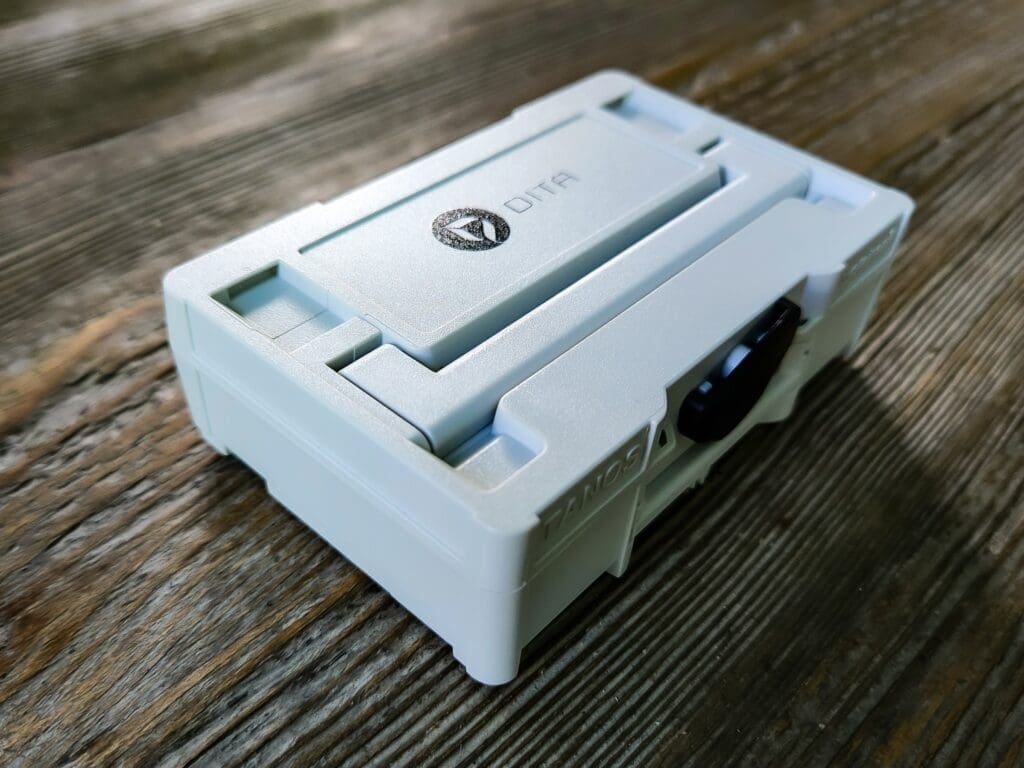
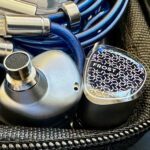
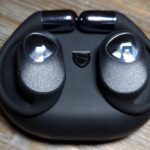
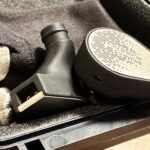
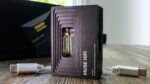
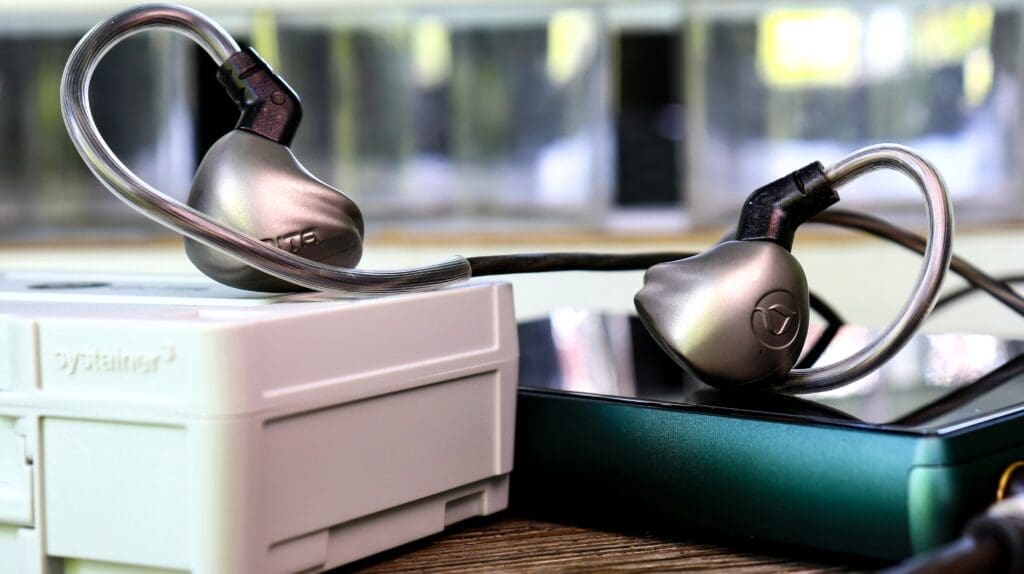
The carrying case provided is the classic Dita Audio Tanos “stackable” Systainer case made of thick and hard white ABS plastic with a very cool handle. It’s a dope case folks. Now, it isn’t the largest case on planet earth, but it is just large enough to fit the Mecha earphones and cable. Sadly, the case doesn’t have enough room for extra eartips and other accessories. So, it isn’t the largest case I’ve ever used. If only Dita Audio could offer a case which is deeper to where I’m not worried about the earphones when I close it. However, what makes this case awesome is how well it locks closed with the T-loc patented enclosure. I never had to worry it was going to spring open on me. Also, inside of the case is a soft silicone insert to protect your precious Mecha earphones. You can remove this insert as you wish. Really not a bad case at all, just a bit small.
Cable
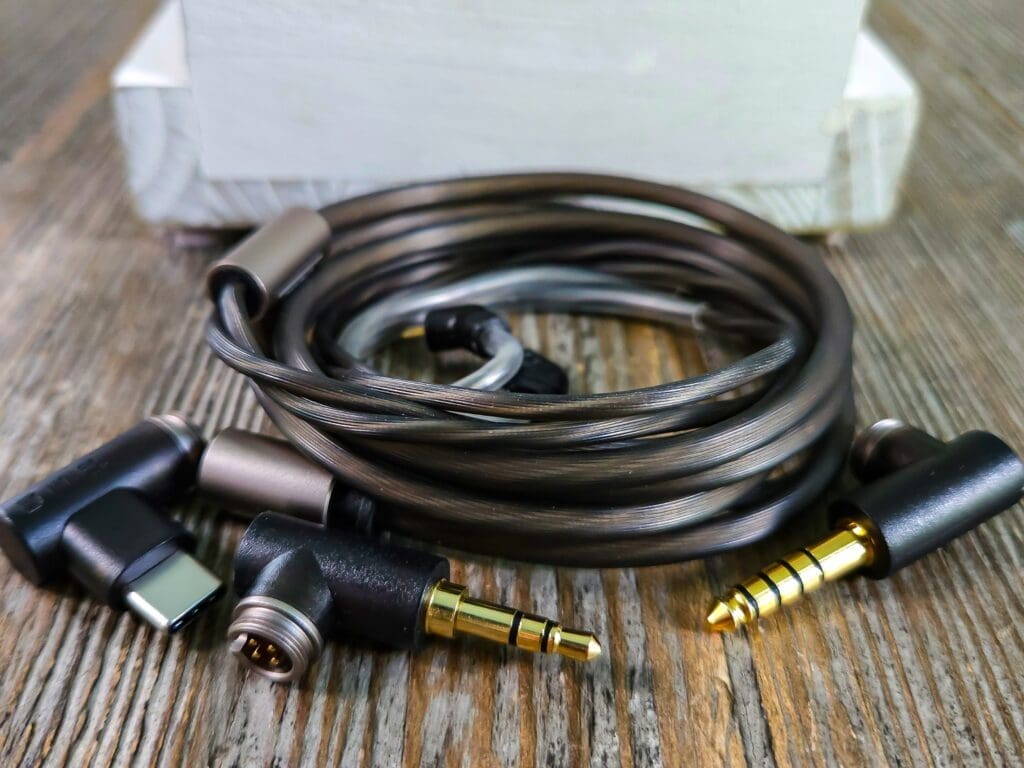
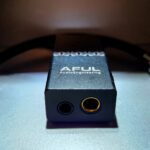
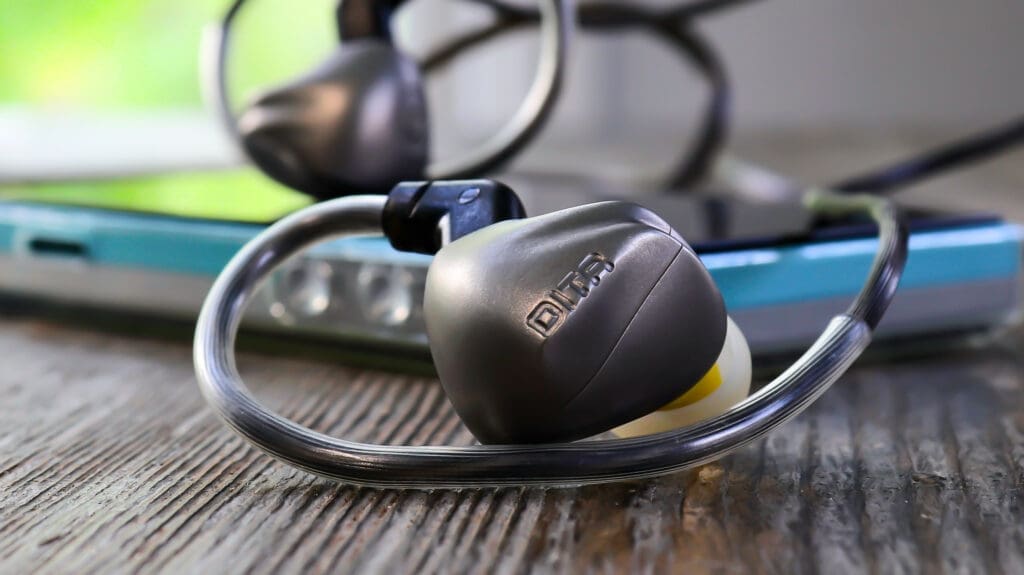
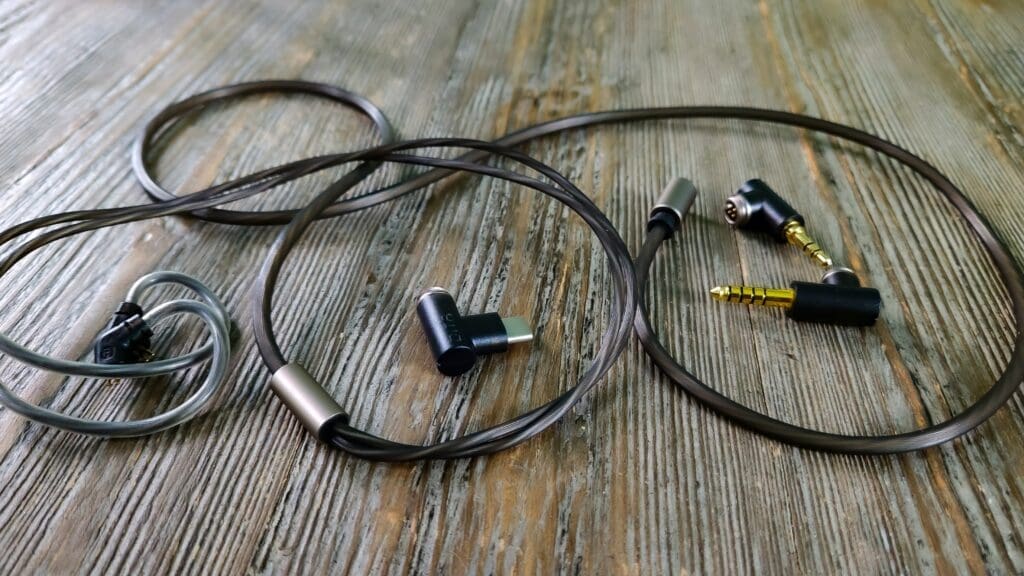
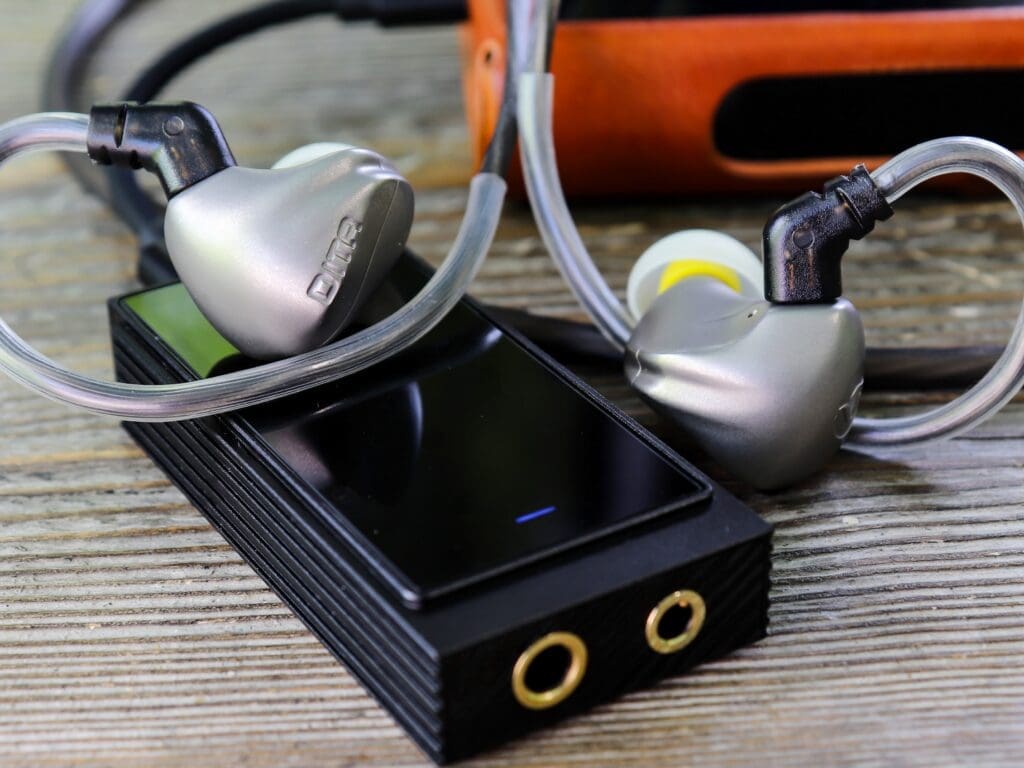
Now, the cable is a bit of a mixed bag. Named the “Churro” and made precisely for the Mecha per Dita Audio standards and made to blend beautifully with the sonic characteristics of the Mecha. Full disclosure: I don’t mind this cable at all folks. I actually grew to really enjoy the usefulness of the Churro. At any rate, I could see some folks wanting a slightly more aesthetically pleasing cable. However, I actually went through many cables with the Mecha only to land back on the Churro for critical listening. Great job Dita Audio! I thought for sure I was going to use a different cable. So, the Churro is a modular cable which comes with a slightly harder rigid and “ridged” anti-tangle design which I can relay, does not tangle and does not add any microphonic noise. I can roll up the Churro and I have no issues with it becoming a spider web of tangly mess. Having said that, it does spring apart at times due to the rigidity of the TPE sleeve. Now, it’s a flush 2-pin cable which comes packaged with a 3.5 single ended, 4.4 balanced, and a USB type-c dac adapter. Made of high purity single-crystal-copper and silver plating the Churro seems to really mesh well with the Mecha. I honestly don’t have anything bad to say about the Churro other than I would possibly choose a different color. That’s it. Not bad at all Dita Audio.
Build / Design / Internals / Fit
Build Quality & Design
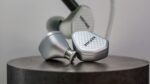
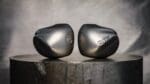
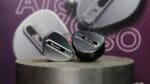
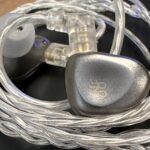
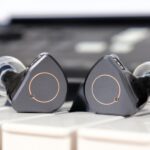
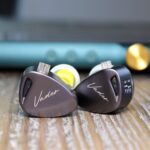
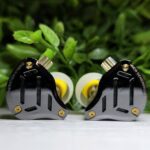
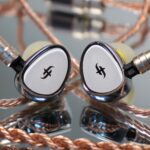
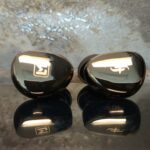
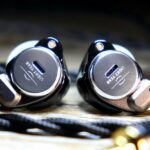
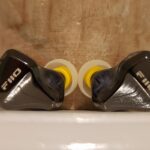
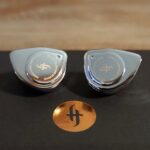
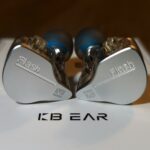
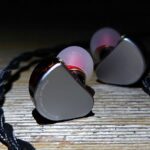
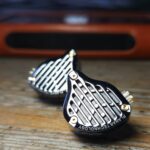
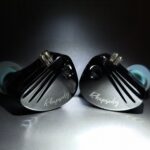
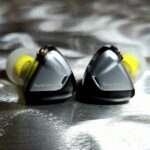
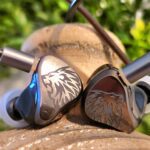
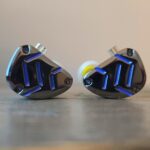
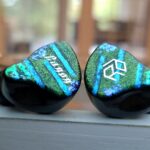
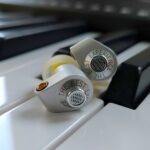
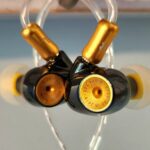
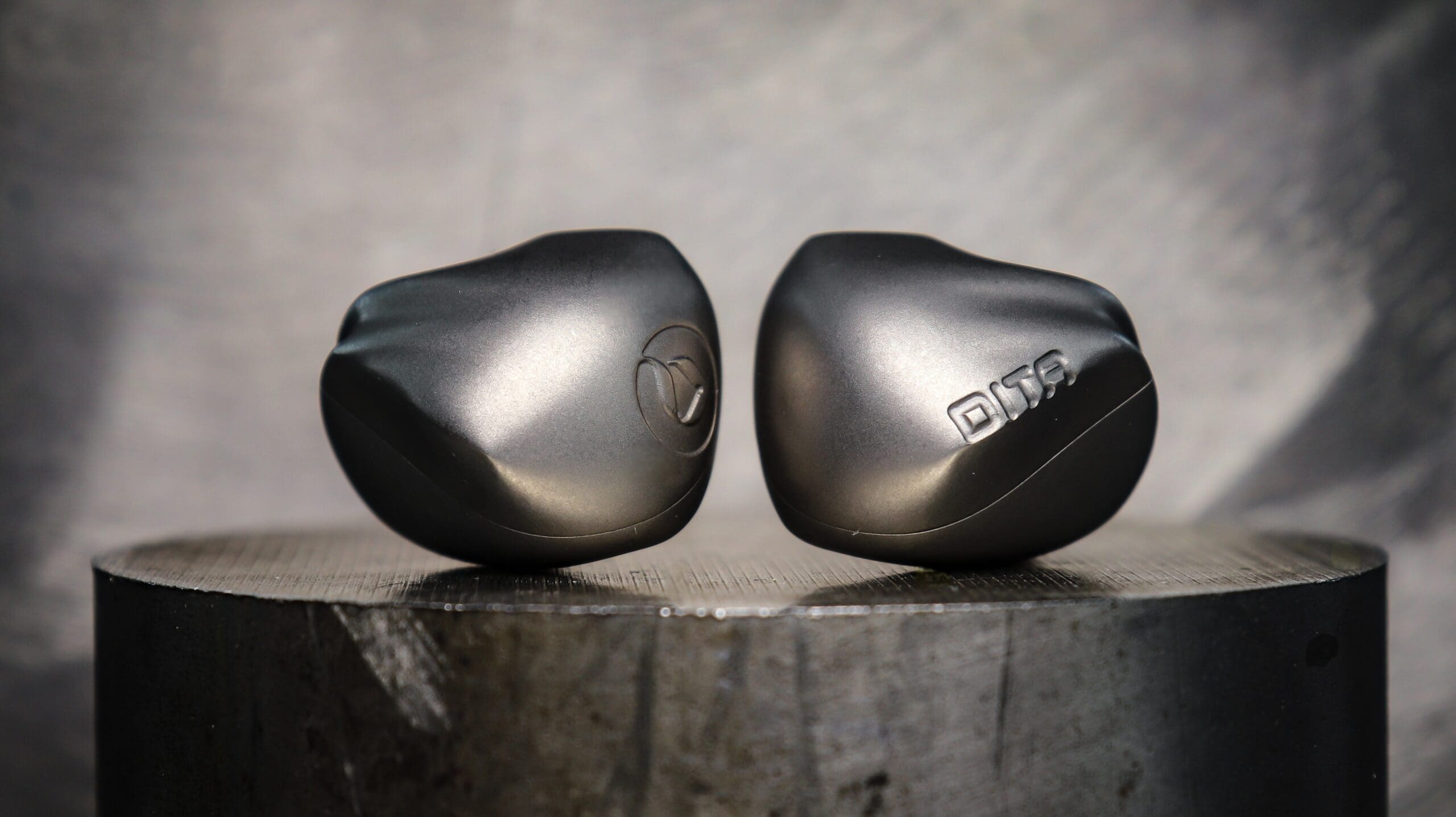
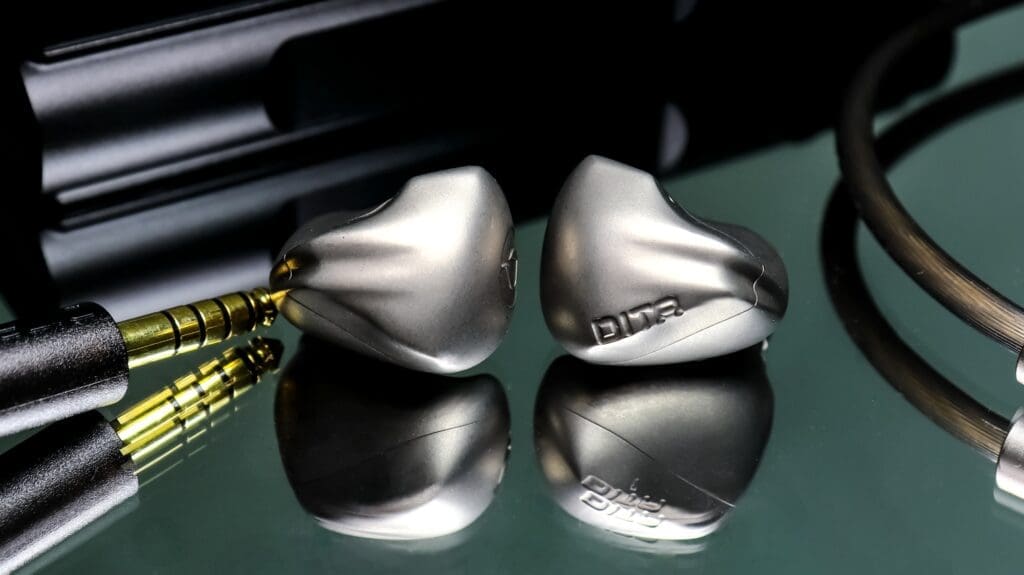
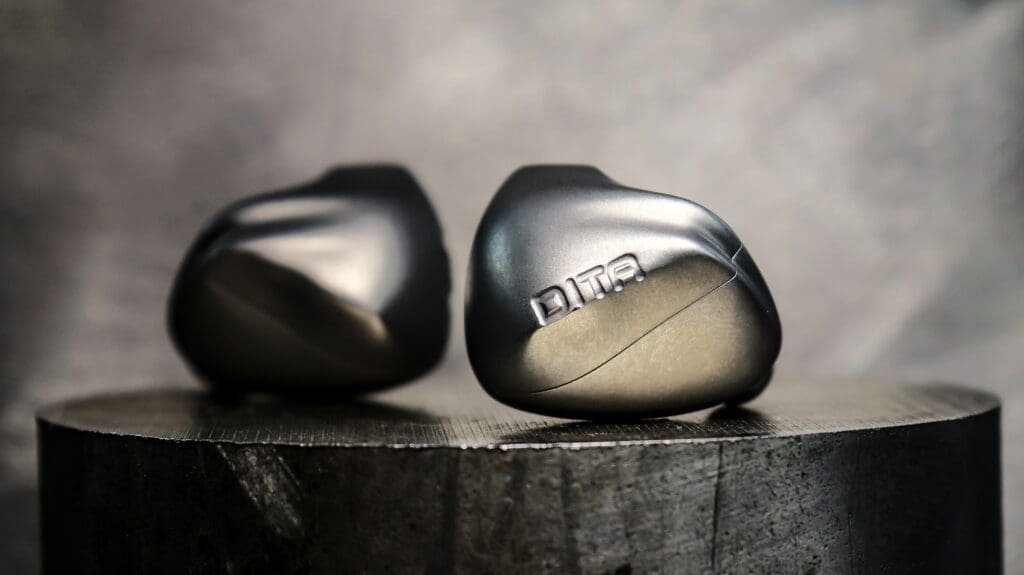
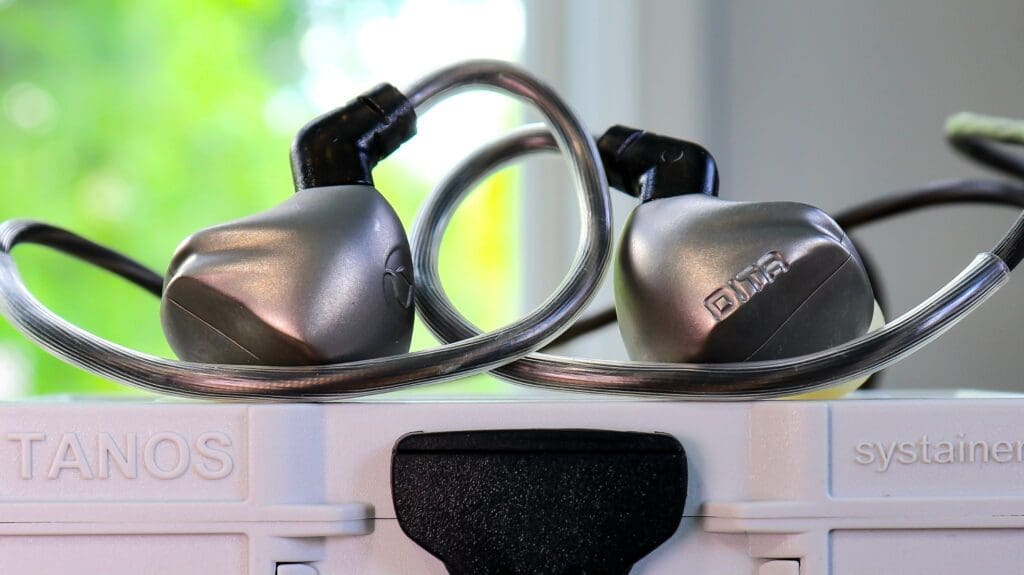
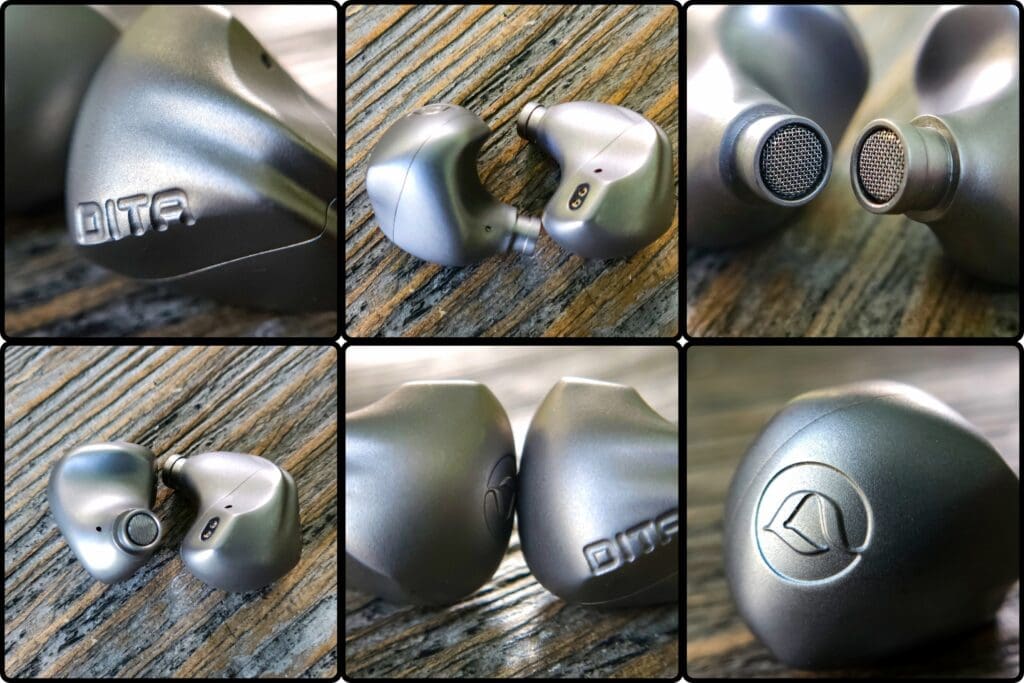
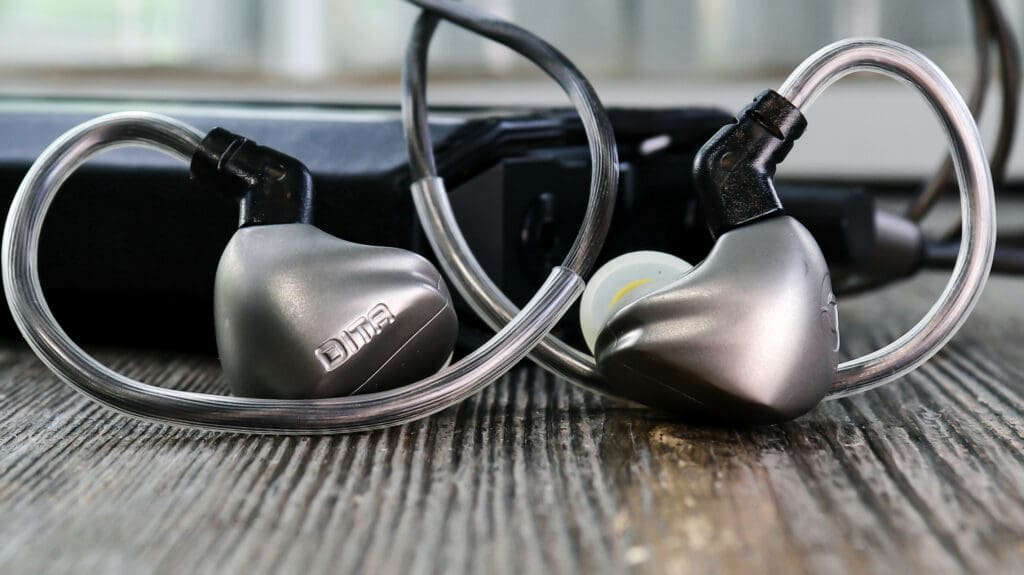
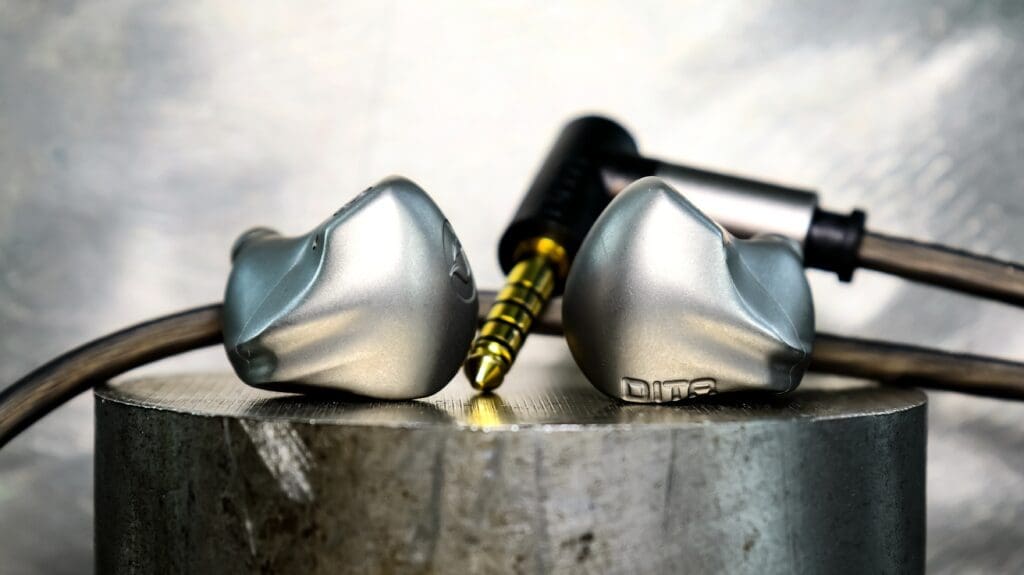
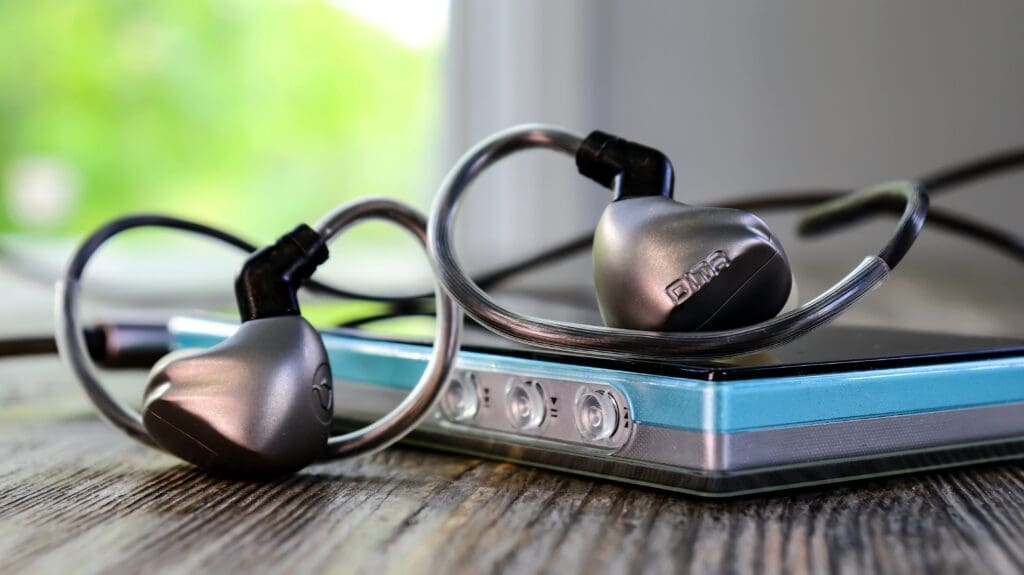
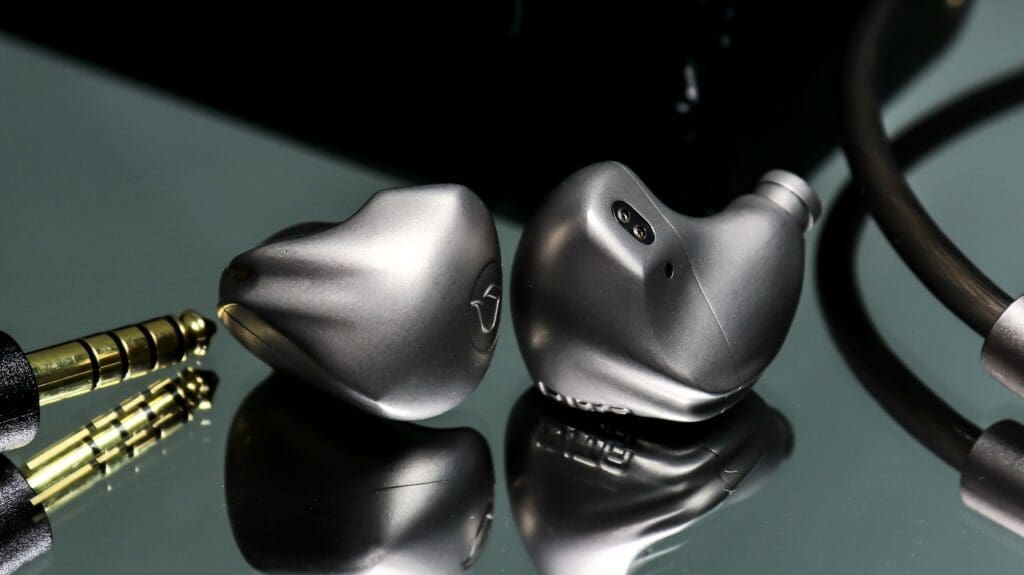
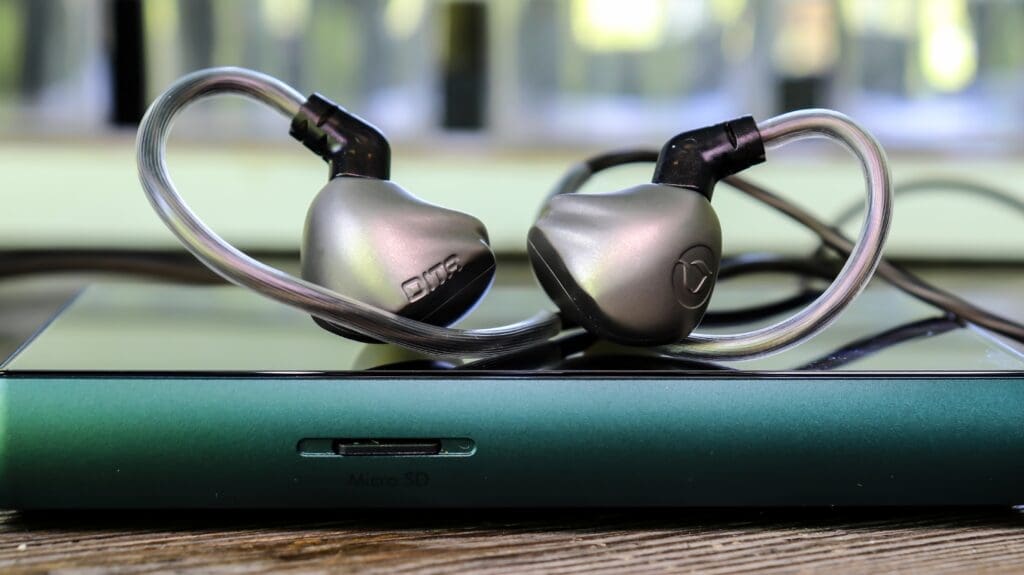
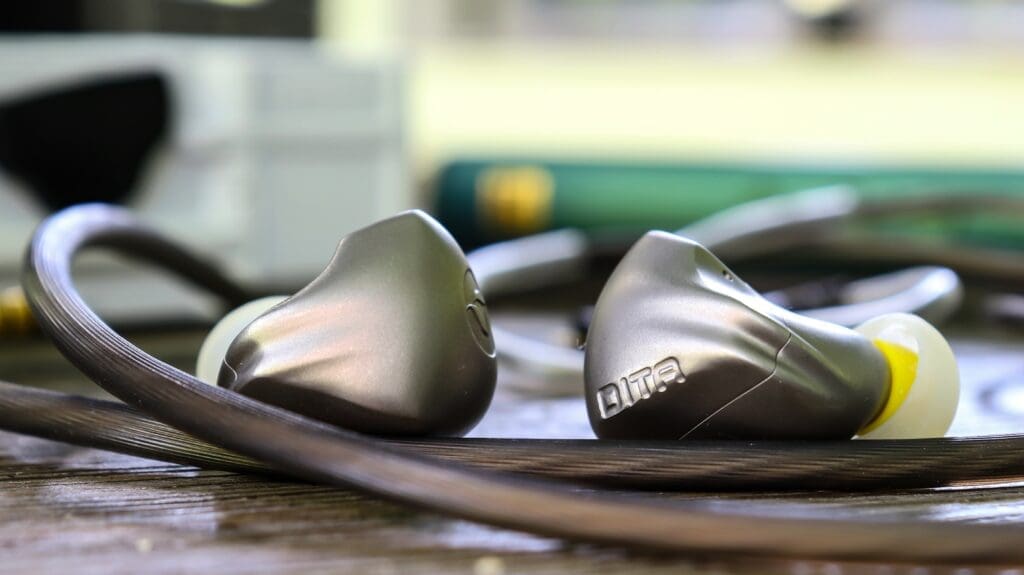
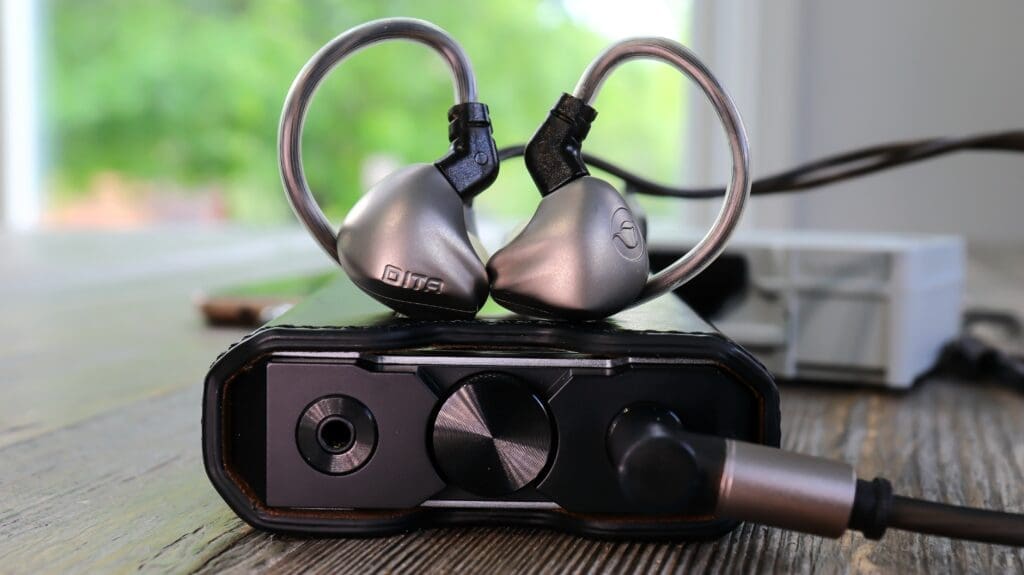
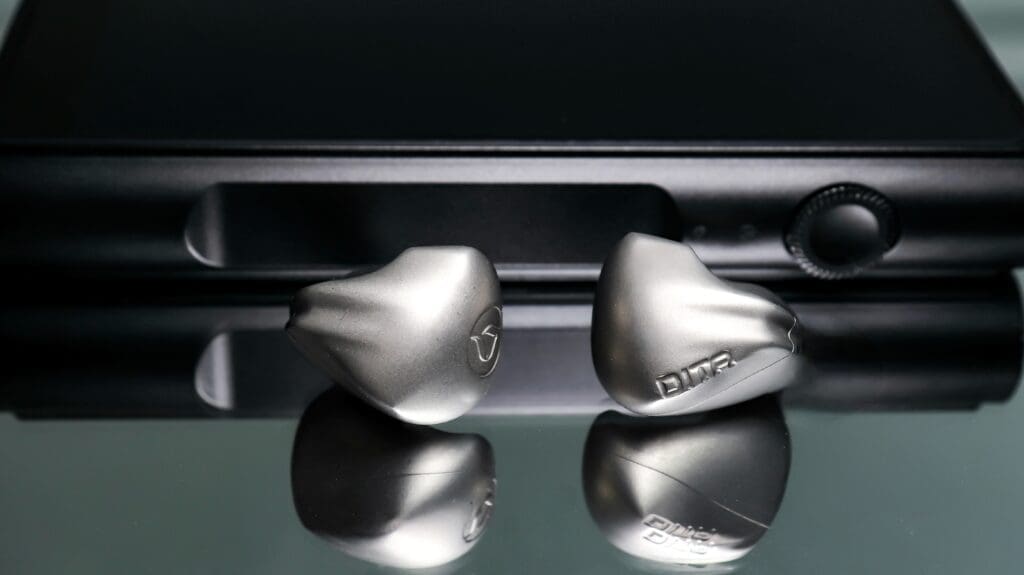
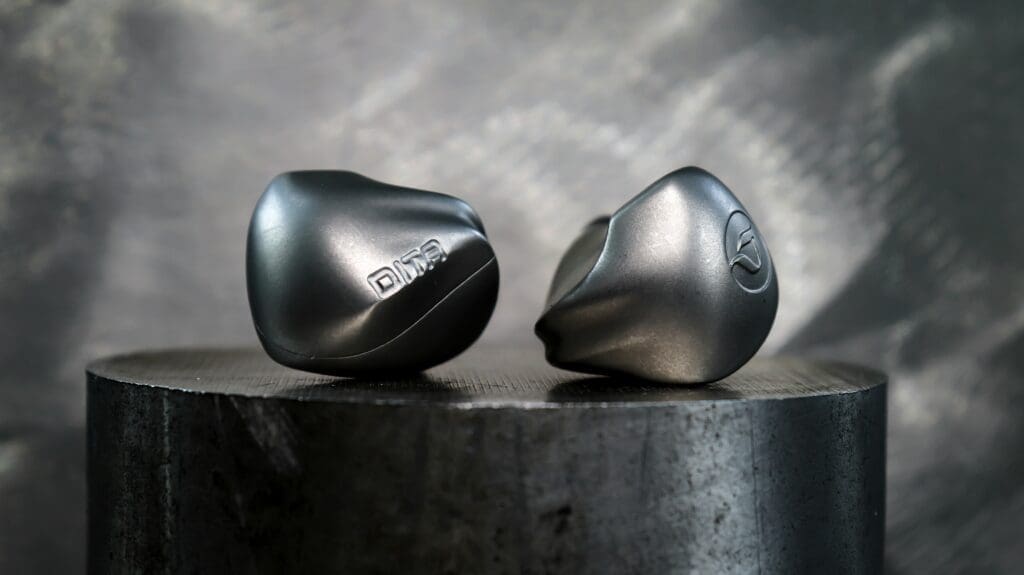
The overall build of the Dita Mecha is quite impressive folks. Made of two-piece silver colored titanium which was CNC machined to Dita Audio standards. Truly a beautifully designed set folks. Now, the Mecha may be a hair too heavy for some people as it is made of titanium, and the fit may be a problem for some as well. However, that’s where the complaints end because the Mecha is designed to the tee of perfection for my ears. I adore every smooth and comfortable curve of these shells. Each earpiece has a two-piece design with a gorgeous seam enclosed perfectly. You’ll notice one side has the Dita logo while the other has “Dita” inscribed at the bottom of the faceplate. Like most any Dita earphone, the Mecha has a very unique shape which somehow fits the human ear very well. The nozzles are about medium length, not too long, not too short. Truly a beautifully crafted set and a very durable build. You’ll also notice two vents, one on the top near the back and one small vent near the nozzle. Really class act folks. It’s minimalist, it’s sleek, and the Mecha is impressive in just about any way you turn it. Truly impressive.
Internals
Like I said, the Mecha is a single dynamic driver earphone which comes equipped with a new generation dynamic driver. To be exact the driver is Dita Audio’s 10mm “LiMa Carbide” driver. The diaphragm itself is made of a mix of lithium and magnesium which is not an easy process folks. I won’t go into all the details, but this driver material is no joke. Each driver has a dual magnet structure to enhance performance and dynamics. The enclosure is a dual vented design which was meticulously crafted to produce the perfect sonics within the acoustic cavity. You can’t just slap a driver in a shell and expect it to sound good friends. No sir, a design such as the Mecha takes experience and the know-how of well-trained engineers as well as exhaustive R&D to find the right tonal balance. Dita Audio absolutely nailed the sound folks and the driver along with the acoustic structure surrounding the driver was delicately and precisely made.
Fit /Comfort
I’ve already alluded to the fact that for me the Mecha fit wonderfully. I really had zero issues with the size, weight, or the nozzle insertion. However, I can foresee some folks having a difficult time. Granted, I honestly feel that Dita Audio formed this set around my particular ears because the way they sit in my ears is absolutely perfect. Perfectly comfortable folks. Weight distribution is great, never feels heavy or fatiguing, and I could listen for hours with zero issues. Still, I don’t how well the Mecha will fit your ears.
Drivability
Output Power
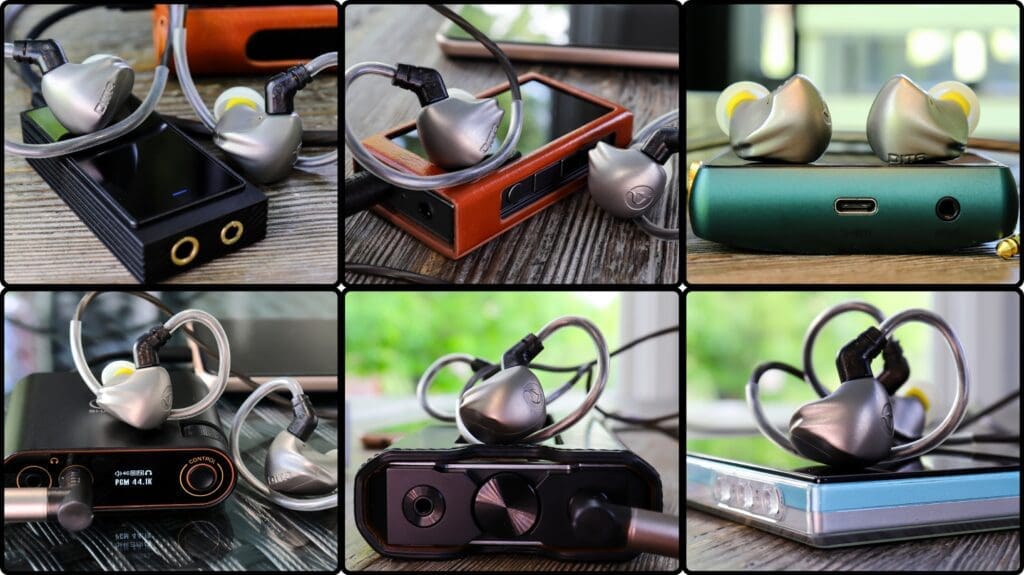
Based off of Dita Audio’s website the Mecha is rated at an impedance of around 32 ohms as well as a sensitivity of around 113 db’s. So, without question the Mecha is a very sensitive iem which doesn’t require a ton of power to drive to good dynamics. Just for review purposes I always test earphones with all of my weaker sources starting at two older Android phones, then three weaker 3.5 dongle dacs followed by the KZ AN01 and my iPad. All of these sources have very low output and all of them brought the Mecha to good fidelity and dynamic punch. However, please don’t let that lead you astray because the Mecha handles heavy power like a champ folks. From my dongle dacs on high gain to my daps and bigger dac/amps the Mecha only seemed to get better paired with a higher output of juice. I suspected as much going into this review and all of those thoughts were confirmed as I fed the Mecha some greater power. So, you don’t need more juice, but more juice will certainly drive this single DD to a better overall sound. Honestly, the biggest change is the fact that notes within the sound field simply sound more focused. If that makes sense. The bass sounds more hard-lined and punchy, more agile, tighter. What’s nice is that the Mecha always retains that nice smooth sound and wonderful timbre.
Source Pairing
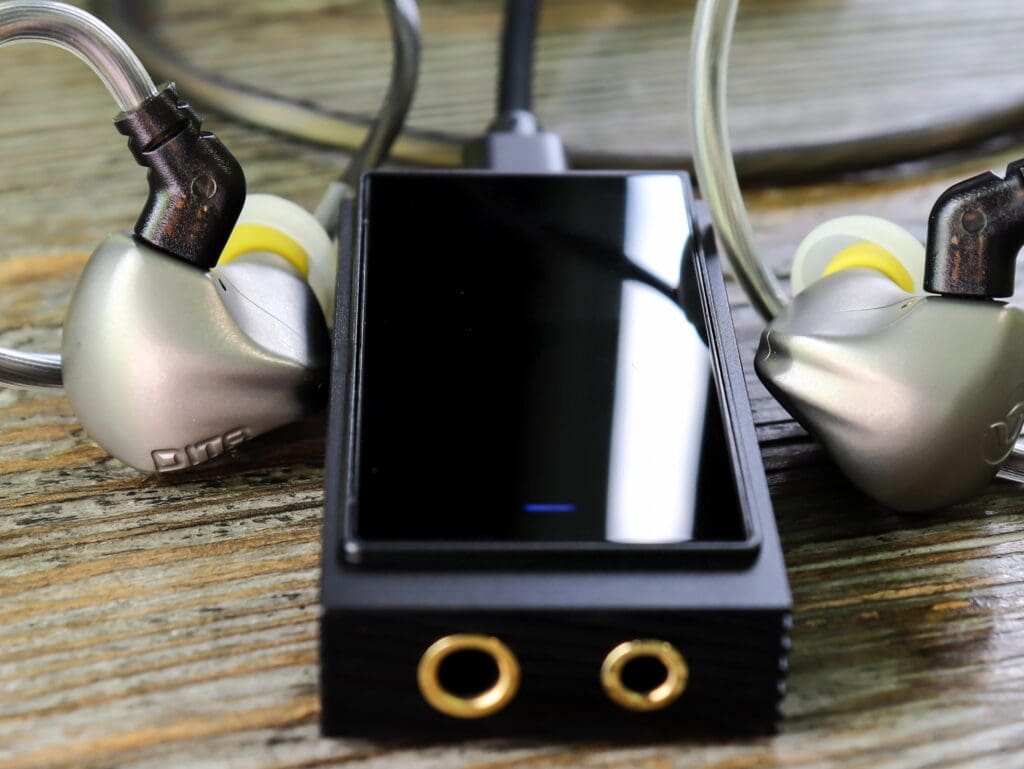
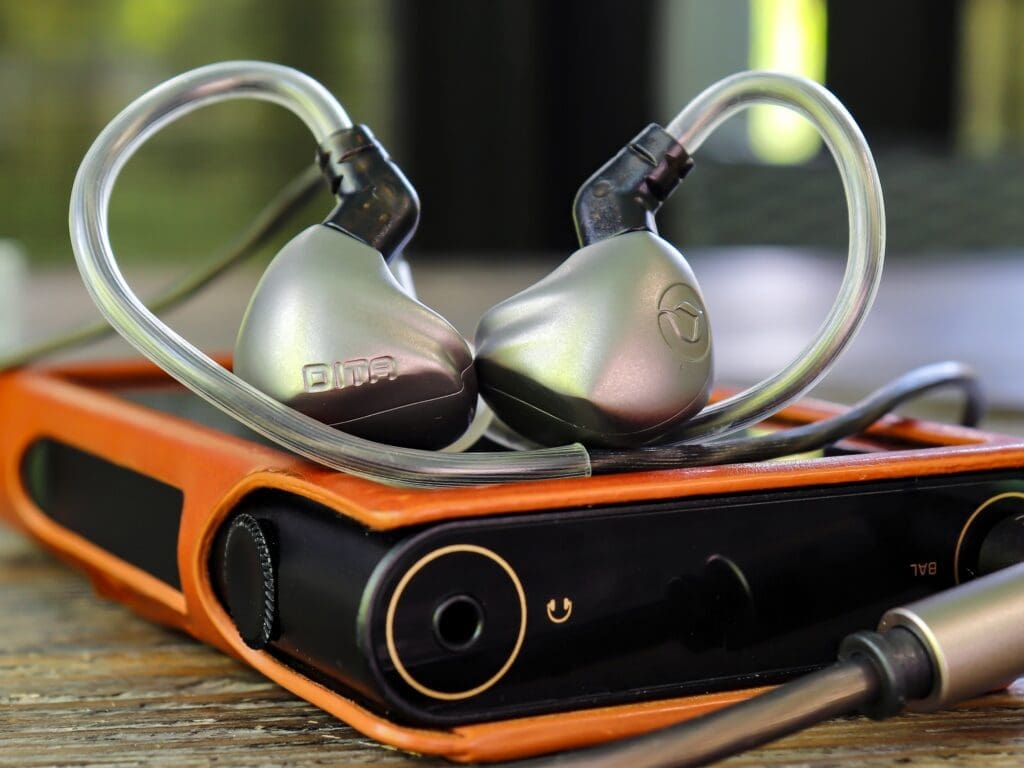
As far as pairing the Mecha with other sources I found that any source device ranging from warm/neutral to neutral does the trick. Folks this is a set which will perform to the ability of the source as it’s kind of a chameleon in that sense. I really don’t find a whole lot of prejudice from the Mecha as to tonal Pairings and feel that many source tonalities will sound really great. However, if you can find a slightly more neutral source with a good technical foundation then you’ll definitely like what the Mecha can do. Again, give the Mecha some juice and give it a quality source. It may surprise you just how well the Mecha adapts. Truly a nice set. In my collection I have a multitude of source devices and there were very few which didn’t impress me attached to the Mecha. This is an awesome trait folks. Not every set handles just about any source tonality as well as the Mecha.
Sound Impressions
*Note: before I dive into the sound portion of this review, I first want to relay that I did not burn-in the Mecha simply due to the fact that this is not my unit, but a tour unit. So obviously I have zero idea how well burn-in will or will not help. I use flac or better files which are stored on my devices. I listen mainly with UAPP (USB Audio Player Pro) as well as Hiby Music Player. Also, I used the Churro cable with the 4.4 balanced adapter and KBear 07 eartips for all critical listening.
What’s it sound like?
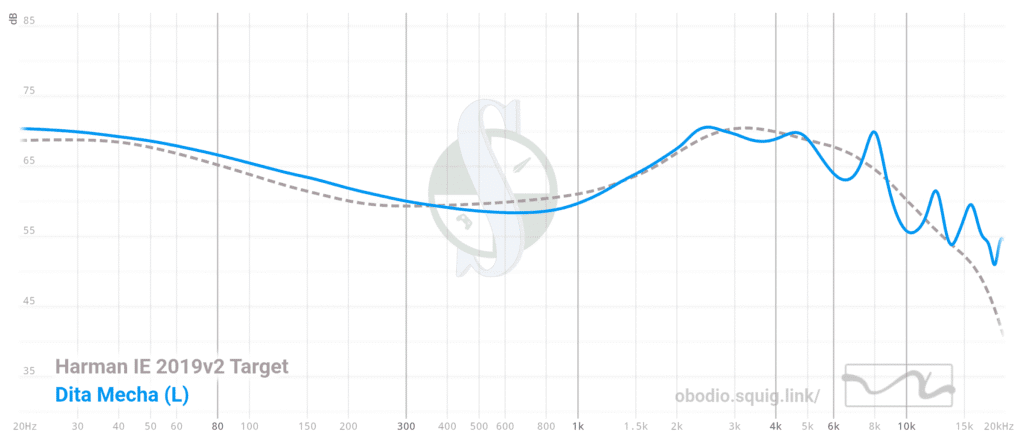
To my ears the Dita Audio Mecha comes across very natural and organic to the ear. In my opinion its best feature is actually the timbre. Certainly, a set which can qualify as a “timbre beast”. To add to that, the Mecha has such a sweet tonal balance across the frequency with a boosted bass region seemingly taking the helm as the most lifted of all. Having said that, the treble most certainly contrasts that bass very well. Again, a very nice tonal balance for a smoothly rendered sound which doesn’t negate some good ole’ note defining crispness. I find it quite amazing that Dita Audio was able to tune the Mecha in such a way that it almost sounds like a multi driver set. I say that because the Mecha has obvious layers to its sound, it isn’t just a flat plane of music, it’s immersive, it’s extremely expressive dynamically, and the Mecha has exuberant macro-dynamics which are glazed over in a slightly warm atmosphere. It really is a special sounding set folks. At any rate, the Mecha comes across with what I’d call a U-shaped sound signature as the midrange doesn’t sound pushed too far back into the sound field. Yes, the bass and treble are conservatively boosted, but the midrange has some real solid presence against the rest of the mix. Vocals sound embossed against the backdrop and either right in line with other instruments or just in front as well as dead center (depending on the track). So, U-shaped. I suppose a slight V-shaped signature would work too, based on your interpretation of what that means of course.
Organic?
Notes have that subtle richness to them. They sound natural in body, in structure, and they’re what I would call “lifelike” or close to realistic. You have that subtle warmth which cascades across the mix without coming even close to adding veil. In my opinion real life sounds have that richness to them. Authentic music has some warmth, some smooth character, some velvet undertones too. Yet real life sounds also have some vibrant inflections, as well as a 3D-like soundscape. Now, I’m not saying that the Mecha will blow your mind or anything. However, I am saying that if you enjoy something which sounds organic to life with a genuine representation of what instruments and voices sound like, then maybe you’ll enjoy the Mecha. Having said that, it isn’t perfectly organic. You do have a very nicely lifted bass which does meander into the midrange leaving the lower mids (in particular) a hair less crystal clear. Also, the upper-mids can exhibit some slight glare at times and in the right tracks. So, it isn’t perfect, but boy is it close. Also, I am being extremely picky and extremely critical because those two slight deviations from perfectly organic don’t displease me in the slightest. Truly a job well done for a single dynamic driver earphone.
Bass Region
The bass region can bring it folks! Looking at the graph, the Mecha carries about a 13-14 dB bass shelf. Which is definitely significant and substantial in emphasis without coming across blurry. However, that emphasis only shows its teeth when called upon. I’m telling you; Dita Audio tuned this bass region in a very fun way but also in a very mature manner. They really rode that line wonderfully. I love the way the bass is rendered on this set. The Mecha is tuned with an almost sneaky full-bodied bass that comes across much punchier and more dynamic than it does ultra-rich, wide, bulbous, or bullish. Not that it isn’t full-bodied either, because it certainly is. Just listen to the bass drop in “Golden Child” by Lil Durk. Trust this, the Mecha can flat-out rumble and boom with some muscle. Yet it’s kept in control with a tighter transient response, clean note outlines, nothing fuzzy, grainy, and again… nothing sounds blurred. I love it. What the Mecha has is a very natural sound down low, and a very textured presentation which never feels overemphasized or oversaturated to my ears. You won’t hear any veil cast from the bass region, and you won’t hear any bloom or anything muddy. This is a low end which shows up when a track calls for it and does so with authority. I’d say that’s what I love the most. It is meaty, it’s robust, it slams very hard too. But that slam is focused, clean, hard edged, nothing soft, it’s pointed in its attack. Really a very well-tuned region with solid note definition and a very agile bass at that.
Sub-Bass
Without a doubt the Mecha has a sublevel focus within the bass region. And no doubt I hear very nice extension down low, very deep, hearty, and juddering at times. I said earlier that the bass almost creeps up on you with what I’d call a sneaky bass. Of course, I say that because the sub-bass doesn’t make its presence felt in a negative way and doesn’t force its emphasis upon the frequency outside of when it’s called upon to do so. It really is a clean sublevel bass that is very satisfying to the ear (if you enjoy that type of tuning). In the track “World on Fire” by Stick Figure you’ll hear a heavy hitting bassline that can be felt with a nice haptic vibration making the sound very tactile, palpable, and without any hanging fat. You won’t hear a long lagging reverb, but a more exact presence from attack through sustain. You can definitely feel any sublevel rumble, whether that is double bass, bass guitar, or the booming kick drum. They all sound very nice to the ear. Another thing I find awesome is that the sub-bass generally doesn’t smear with the mid-bass. Have I said that I like this tuning yet? Anyways, there’s an obvious separation between the sub & mid-bass and nothing has ever sounded blatantly one-noted to my ears.
Mid-Bass
Now, the mid-bass is less emphasized, but I don’t feel there is any lack at all. The truth is that the Mecha is smartly tuned. Dita Audio made sure to hold the mid-bass back just a hair so to let the area breathe a bit and so you aren’t hearing too much emphasis spill over into the midrange. Having said that, the Mecha has some serious slam folks. To add to that, stuff like bass guitars really do have that full-bodied and very rich drone. Like “Groove” by Ray Wylie Hubbard. Folks, the sound comes across so very guttural but also very rounded, pointed, full, yet the bass doesn’t mask other frequencies to a fault at all. Of course, you cannot get around some masking taking place on some more bass I fused and complicated tracks but generally speaking this is a very clean region for such an emphasis. Kick drums are very satisfying such as those in “Glass House” by Kaleo. I hear some very booming hollow thuds in every kick-drum beat. You’ll hear that tacky snap on attack followed by the thrumming hollow boom. One right after the other. Nice to hear. So, you’ll definitely have all the emphasis you’d ever want, but you’ll also hear a tidy mid-bass which doesn’t tend to create any smearing. The moral of the story is that Dita was able to make a single DD sound both big and meaty but also very clean and versatile. Nice work.
Downsides to the Bass Region
The largest issue with the bass region is that the actual amount of emphasis may be a hair more than some may enjoy. Granted, I find the clean slam to be very transient-quick and clean without a ton of smearing lag and friends… I love it. Still, I’m not the next guy and I cannot say for sure that everyone will fall in love with the emphasis afforded to this region. I can tell you right now that there will be some light masking happening in heavier bass jams as I really don’t think you can get around that without dialing back the emphasis. However, this should be expected folks. Having said that, the Mecha’s bass really does a nice job of not being a burden to the rest of the mix but instead adds just enough warmth and weight to add some richness to the overall sound yet without sounding congested, muddy, or veiled. I suppose the only other possible subjective gripe that some may have is that the bass is not that heavy atmospheric style which lags till every harmonic resonant reverb reaches completion. Yes, many folks totally dig a big and full bass with a wide and elongated presence. In truth, many tracks sound fantastic with that style of tuning. Nevertheless, the Mecha stays relatively tight with a focused punch, solid density of notes, and a clean profile.
Midrange
To my ears the midrange offers a very well laid-out expression of my music. The Mecha has this smoothly executed fluidity that sounds subtly rich in body and velvet in cadence. Timbre is the midrange superpower on this set folks. It simply has a very organic and naturally fashioned sound without losing out on good and energetic enough dynamics. Just a very nice midrange for instrumentation & vocalists to perform well in. Couple those smoothly rendered inflections with adequate crispness and pretty nice resolution and what you have is a very well-tuned region. I love that it has an almost semi-forward placement within the sound field too. Meaning, it isn’t pushed too far into the backdrop of a track like many V-shaped sets. Also, the mids generally aren’t as forward as a set that I’d call mid-centric. Honestly, the Dita Mecha is tastefully tuned, for my taste anyways. Nowhere near analytical, but technically astute. Not thin, dry, and clinical, but manicured, unsullied, and it has a fairly black background. Basically, the Mecha doesn’t need to thin the midrange out and add any undue vibrance to sound resolute and transparent. Most certainly it’s the result of very good drivers and very solid tuners. Definitely, the midrange of the Dita Audio Mecha is very nice to the ear.
Lower-Midrange
The low-mids carry just a smidgen of warmth spilled over from the bass region. In fact, I’d say that Dita added in just enough warmth and weight to add some real nice note body to male vocalists. To my ears vocalists really do come across nicely portrayed with just enough energy to sound a hair more uplifted yet with just enough warmth to keep a smoother demeanor. Also, male voices are definitely not recessed, withdrawn, murky, or bland. They have a certain tempered projection usually which really goes over well for voices like Jason Isbell in “Wind Behind the Rain” for instance. The inflections in his vocals jut out with a definite convexity. Again, not withdrawn or recessed, but instead I hear some solid presence. Now, I don’t know if the Mecha will meet the demands of hardcore male vocalist lovers, but to me they come across well defined, not too edgy, clean note outlines, nice note density. Take the cover track “The Sound of Silence” which was sung by David Draiman of Disturbed. His voice has so much organically bodied structure to it through the Mecha. The density of his low notes is flat-out awesome and when he belts out his voice is crystal clear folks. Instruments in this region follow the same trajectory too. Natural, not too pushed back, good presence. Perhaps not to the point of the upper mids, but nice nonetheless for a single DD.
Upper-Midrange
Listening to female vocalists on the Dita Audio Mecha is a treat folks. I hear that nice vibrance and female uplifting energy which adds that last little touch of shimmer to their voices. They can sound soft, flowery, sweet, and breathy as well as resounding, symphonic, and always tuneful. Add to that I hear nice note weight which gives females a touch of moistness to their voices. I don’t hear a dry presentation in this area. Really nicely done. The only possible issue that I’ve heard is some slight shout in the right tracks. Very few and far in between, but I’ve heard it. I have to add that I am not one which gets bothered by infrequent subtle jolts of sharpness. It doesn’t bother me, especially when females tend to sound so fulfilling to the ear. If I wanted to, I could literally pick from about 30-40 notes of different females created during critical listening which really sounded great. I usually speak on Norah Jones track “Don’t Know Why” because her voice can so easily sound distant on many iems. I love a set which pushes her soft and sweet vocals to the forefront of the stage. The Mecha does so in a very organic and subtly prominent manner. Again, it’s tastefully tuned. I don’t feel that the upper mids are too forward or too energetic for me. I’ve really been able to get lost into the sound of this set and female vocals are a huge reason for that.
Instruments (condensed)
I don’t enjoy generalizing how I hear instruments within my reviews because every track is different. How an instrument sounds on one track can be very different from the next and so it’s kind of a crap shoot when we reviewers try to explain instruments in a broad perspective. That said, I’ll quickly cover some notes that I jotted down. So, I hear a nice snap for percussive instruments brought on by the energy in the upper regions. The fundamental tones of a cymbal strike sound full, not weak. Snares tend to have a slightly embellished and hard “pap” with a definite crispness on some tracks. I really enjoy the satisfying edge and harmonics of stringed instruments too. I hear better details than I would’ve guessed. Like the finger slides on an acoustic guitar, the satisfying edginess of a bow across strings. However, stringed instruments have that melodic quality and seemingly correct pitch which is nice to hear. Woodwinds come across well too. Piano has that natural tunefulness and all its wonderful resonant harmonics sound very nice. Sure, I could point to tracks that go against some of the things I’ve said but in general instruments come across very nicely on the Mecha.
Downsides to the Midrange
There’re a few small preferential issues which some folks may have, and I notice from time to time. For one, there are definitely moments where I yearn for a warm, overtly weighted, super-rich, and robust sounding midrange. So, people who desire that bass infused type of midrange where velvet smoothness overtakes the senses will not find that here. Yes, the Mecha has very nice note weight, has some subtle warmth, and it does sound semi-rich to my ears, but it isn’t going to satisfy those folks. Next, the Mecha is not a detail monster. Yes, the Mecha does very well in the details department, but it simply isn’t tuned to be an analytically technical set with clinical, dry, perfectly separated and overly airy notes. The Mecha is very clean, nice resolution, nice details “per the tuning”, and it has a nicely balanced sound altogether, but it’s not a detail beast. Thankfully! Lastly, there are moments of some subtle shout. Believe me when I say that I barely typed those words. I only typed them for those who desperately despise any vibrance. Once more, the shout never bothered me at all. Also, when I say “shout” what I really mean is that pinna gain sharpness which can rear its ugly head at times. At the end of the day, I really want to say that the midrange is one of the Mecha’s best qualities. The bass may have a few words to say about that, but man is it nice. Great musicality, very fluid, rhythmic, but also nicely detailed and very clean. Just a great midrange.
Treble Region
The treble region is one which does a wonderful job of countering the elevation in the bass range. In truth, Dita made sure to create a nice balancing act between all of the regions as a whole and the treble is simply a very nice supporting actor in a great play. As far as the treble emphasis is concerned; it’s definitely got some brilliance to it. That said, I would call it a moderately bright treble as labeling it “bright” is almost a misnomer. What I’d say is that the Mecha’s treble has adequately bright highs with an airy quality to them. This is the type of treble which adds perceived space, it promotes instrument separation, it adds that nice shimmer and sparkle across the mix. It’s the type of treble which is emphasized to the point that percussion has that hard and pointed snap, even though the overall sound is on the smoother side. I hear just enough treble bite on certain instruments providing that acute edge. Like I said, the treble has just enough lift to provide some levity spectrum-wide. You won’t hear any fatigue inducing forced resolution in an attempt to aid transparency. The Mecha doesn’t need that. Half the reason why the Mecha is so engaging is because it is a very musically gifted iem. To lose that musicality just for a hair better transparency would’ve been maddening. Thankfully Dita Audio is about as professional as it gets, and they tuned the treble to both offset the bass as well as promote the upper frequencies. Again, a nice balancing act.
Nice timbre
Granted, this is a single DD iem and so I’d ask you to temper your expectations or at least put these words into the correct boxes. You aren’t going to hear a top shelf EST driver here. It isn’t the easiest thing to tune an unbelievably articulate treble region with a single dynamic driver. It just isn’t going to happen with the same fine-tuned exactness as some other drivers. Also, overall, the treble is still on the smoother side of the aisle. Nothing sounds jagged, too edgy and abrasive or too sheened out in treble smear. Perhaps some folks who desire a dark treble may consider the Mecha too edgy, or too bright, but I really don’t feel that is the case. I hear solid notes, a good note body, but also a wave-like cadence that makes for a very compelling listening session. What I enjoy about the treble is how well it was incorporated into the overall sound. A natural cohesion from frequency to frequency should be expected with a single DD and no doubt that is exactly what we have here. Without question there are upsides to every driver type and just as well there are downsides. The Mecha’s treble tuning quite literally utilizes all of those upsides and comes in the form of very nice timbre.
Impressed
I find transients come across fairly naturally with pretty well-defined note contours that are fairly distinct. I don’t hear lagging transients either. Add to that some cleanly rendered notes and what you’re left with is some above average detail retrieval. Beyond detail retrieval the Mecha also has some very solid extension into the highest of highs. Stuff like the secondary harmonics of a cymbal strike never seem to sound splashy or tizzy. I’m sure I could find some tracks which would make me a liar but for the most part I feel comfortable saying that. Also, I can hear those solid harmonics coming off of Lindsey Stirling’s violin which honestly never sounded “off”, or “out of place”. Have I said that the Mecha sounds organic yet? I have a Playlist used just for extension within the treble and while I’m not about to list off every last track within my notes, I will say that by-and-large the Mecha performed well. It definitely isn’t perfect and most certainly there are sets which are tuned to be more precise in the treble region, but I cannot help but be at least somewhat impressed by how well Dita tuned the treble to harmoniously and coherently come together as a whole.
Downsides to the Treble Region
One thing is for sure; this is not a treble head’s delight. You won’t see the treble bois coming out of the woodwork to pick up a pair of Mecha iems. Of course, I feel that most people will be like myself and really enjoy the presentation. However, the Mecha doesn’t always have that ultra defined bite and treble punch all the time, or the perfectly contoured notes that some of these high mid-fi hybrids may have. Also, it doesn’t have that emphasis which will take you right to the cusp of being too bright. It’s much more dialed back than that, in my opinion. Of course, the bonus with the Mecha is how cohesive the sound will be across the spectrum along with a much truer to life timbre (more often than not). Other than that, maybe those who desire a much more rolled-off and darker treble might not enjoy how the Mecha displays its highs. Perhaps the Mecha will be too bright, too brilliant. Again, the Mecha is all about balance and I couldn’t be happier with how the treble was tuned.
Technicalities
Soundstage
When I think of the Mecha’s soundstage I think of better than average width, great height, and nice depth. All the way around the soundstage feels somewhat expansive. I wouldn’t call the Mecha’s stage stadium-like, and I wouldn’t call it the best I’ve heard, but it does come across nicely 3D with a holographic depth and layering capability. What I notice is that the extension both ways (upper-treble & sub-bass) really does widen the stereo image. Couple that with a decent depth of field and what you are left with is a 3D stereoscopic mental image. Of course, a lot of this depends on the track and how each track is recorded. There’re always variables in how the sound is perceived, so please keep that in mind. However, in my opinion the soundstage is pretty vast. Like any all-alloy set the Mecha does seem to gain a bit of depth and expanse simply due to the fact that the internal cavity is made of titanium. That’s not always a guarantee, but it does seem to help the Mecha.
Separation / Imaging
Now, when it comes to actual instrument separation, I find the Mecha is right in that sweet spot for smooth musicality and analytical precision. Having said that, nobody is going to hear the Mecha and think that it’s ability to separate instruments is tops in class. It simply wasn’t tuned to be that. However, the Mecha does do a nice job. Transients are generally tighter, yes the sound has a smoothness to it, but clarity and resolution is very high also along with a definite airiness to e sound. Nothing comes across congested with the Mecha and rarely is bass masking an issue. What this all boils down to is better instrument separation then one may expect for a single dynamic driver earphone. Imaging follows suit very well also. I wouldn’t call it top tier, but the Mecha does a nice job of placing instruments within the sound field. Obviously if you have a super complicated and congested track then imaging is not going to be perfect, but for the most part I have almost zero issues hearing each instrument and voice distinctly within the sound field.
Detail Retrieval
I’m starting to sound like a broken record but even with detail retrieval the Mecha performs admirably. In fact, I don’t have much issue at all discerning the subtleties within my music. Sure, the Mecha isn’t some super analytical, dry, clinical, or treble boosted set that will draw every last micro-detail to the surface, but for what it is and how it was tuned, the Mecha does well. One thing the Mecha does well with are those subtle micro-dynamic volume shifts and the driver seems to have some very nice agility to pick up on some of those things. Now, again, I’m not saying top level detail retrieval. Yet for a musically centered iem the Mecha may surprise you.
Is it worth the asking price?
Here we are folks, the $899 dollar question. Can a single dynamic driver earphone actually be worth the price of just under $1k in 2025? This is where I have to journey along with some nuance folks. There are caveats to everything in life and you’ll especially see those caveats when you are talking about expensive pieces of equipment. I’ll put it like this, the Dita Audio Mecha is most certainly worth the cost of ownership to those who can afford such a set. Let’s just be real, the Mecha is going to be out of the price range of many folks across the hobby. Obviously, many people will react with a bit of scorn for any set over a certain price range, it’s just the truth. To many the Mecha will not be worth the cost. That’s a mortgage payment for many folks. That being said, I’ve reviewed many sets in the higher tiers and there’s definitely a reason I chose to review the Mecha. I did so because it caused my listening sessions to be more like soaking sessions. Soaking in my music. I had to remember to critically listen. I put off other reviews… solely because of the Mecha! I’m telling you, it’s that good. I’m not saying it’s the best in its price point, and I’m not saying that you should dump your savings on an $899 iem. I am saying that if you have the funds, and if you adore a fun yet totally mature sound, then maybe this is the set for you. I’ll tell you why next…
The Why…
Because this set is formed using 100% titanium alloy with one of the nicest matte finishes that I’ve seen. Just a beautiful iem. The simplicity of the design, the minimalist approach, the completely classy aesthetic and the odd yet wholly ergonomic shape is very nice to see. Add to that the Mecha is very lightweight for an all-alloy iem. I can attest that the build and construction alone contribute to longer listening sessions without what would consider “fatigue”. Now, I don’t know about the unboxing as I didn’t receive the entire packaging, but the cable is a very useful modular style wire which doesn’t tangle and doesn’t cause any microphonic noise. Also, the case isn’t bad at all. Albeit maybe a hair smaller than I’d like.
That lovely sound…
However, it’s always the sound which really makes any iem worth its weight. After all, what’s a pretty iem if it sounds terrible? Thankfully the people of Dita Audio are true professionals who have all the expertise and experience to craft a set of single DD earphones that sound downright awesome. In my opinion they sound very close to a multi-driver set in how well the Mecha layers the sound along with very nice dimensionality. When you add in the fact that the timbre is so very organic, and the sound is so well balanced, along with that perfect cohesion of the spectrum; what you have is a set which will likely be a solid contender for a dope all-rounder. Well, that’s exactly what I would call the Mecha. Dita Audio made sure that the Mecha did everything very well. No area of the mix is left out, no crazy peaks, nothing muddy or veiled, no annoying sibilance. Just a very well done iem.
The Why (between the 20’s)
The Mecha comes through with that hard-edged and tight bass with a deep extension into the guttural depths along with some transient tight slam that is very satisfying. The midrange has that nice note weight, semi-rich, it’s smooth but also has that crisp edge when needed. I love vocalists on the Mecha as well because they come across very prominent, semi-forward, great clarity and vocals have some density to them. They aren’t dry or too sharp. Also, I like the shimmer in the upper mids which never seems to go over the top. Next, the treble has just enough glitter and brilliance to add some energy to the region and some levity across the mix. I hear nice details, nice extension into the upper treble, and nothing which sounds sibilant, glaring, or harsh. Details are better than expected, separation and imaging are very nice, and the stage has solid width, height, and depth. Again, it’s just a complete sound. What’s awesome is just how well the Mecha turned out for a single DD. It truly shows just how complex a simple configuration can sound. It’s no surprise that I have been a very happy listener who doesn’t want to send the Mecha on its way to the next reviewer, however, I suppose I must. At any rate, I couldn’t responsibly say that the Mecha is not worth the cost when I know what some people would pay for this type of sound. Yes, the Mecha is worth the price to own it.
Conclusion
To conclude my full review of the Dita Audio Mecha, I first have to thank the good folks over at Dita Audio for providing the Mecha to Audio Geeks Tours. In the same breath, I thank Audio Geeks as well. I wouldn’t be able to hear this set any other way and I am very pleased to say that I’ve had a solid two weeks with a top-notch single DD. Thank you very much to both parties. I also need to thank you, the reader, for taking your busy time to click the link which brought you here. To mobileaudiophile.com it is very important and means a lot to us. Thank you very much.
Other Perspectives
Okay, so you’ve read this entire review, or bits and pieces, and you are about to hit the “buy now” button. Whoa whoa whoa… Hold on. Please, before you do that just take some extra time to check out some other thoughts. I say this because I want you to spend your money on something that will add joy to your life and the best way to be at least somewhat sure of that is to get as many perspectives as possible. Especially since we are all so different. We don’t have all the same likes and dislikes, music libraries, audio gear, hearing abilities, and we haven’t all been down the same road in audio. We can be very different. So, just humor me and check out some other opinions. With that all said, I think I’m done folks. Please take good care, stay as safe as possible and always… God Bless!!





No Comment! Be the first one.