

































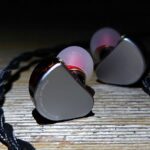










EPZ 550 Review
Intro
Hello, this review and feature covers the latest from the audio brand EPZ Audio named the EPZ 550 ($499), also known as the “Purple Phoenix”. For review purposes I’ll stick with “550”. Friends, this set is unquestionably a flagship level set for EPZ and is the direct successor from the very well regarded EPZ 530 Pro and EPZ 530 all balanced armature iems. We have actually seen a dramatic influx of all-BA sets of late, especially in the mid-fi range, as the collective audio world is beginning to see both the benefit and the sound value of the balanced armature driver tech when implemented well. EPZ happens to be one of those brands leading that charge. Granted, there are a number of $300-$500 all-BA sets crafted from many different brands which put vast amounts of R&D into these sets hoping to create the best they can for the money as well as diminish the few Downsides which typically come with an all-balanced armature iem. I am actually still awaiting this set, but I am overjoyed to get the chance to get to know the 550. Without question, I promise I will take every moment with them very seriously and try very hard to not get lost in casual listening delight. Also, I should mention that EPZ was nice enough to send this set out as a tour unit through the US and I happen to be the 1st person to get my hands on them this side of the pond. Tracking says I have a couple of days to wait and so I’m going to once again brush up on EPZ, on their intentions for the 550, and get a good understanding of what went into the creation of this absolutely-absurdly beautiful iem. I promise to leave no stone unturned giving proper time for this one. Thank you EPZ!
Table Of Content
- Intro
- EPZ
- Reviews
- They Arrived!
- All Balanced Armatures
- Non-Affiliated Purchasing Links
- Packaging / Accessories
- Unboxing
- Eartips
- Carrying Case
- Cable
- Build / Aesthetic / Internals / Fit
- Build Quality
- Aesthetic / Design
- Internals
- Fit / Comfort
- Drivability / Pairings
- Sensitivity
- More Juice
- Source Pairing
- Sound Impressions
- What’s It Sound Like?
- Signature
- Birdsweet
- Technically Speaking
- Not For Everyone
- Bass Region
- Sub-Bass
- Mid-Bass
- Bleed?
- Downsides to the Bass Region
- Midrange
- Mids cont…
- Lower-Midrange
- Upper-Midrange
- Females
- Downsides to the Midrange
- Treble Region
- Highly Technical
- Pretty Solid
- Downsides to the Treble Region
- Technicalities
- Soundstage
- Separation / Imaging
- Detail Retrieval
- Comparisons
- Softears Studio4 ($427)
- Non-Sound Stuff
- Sound Differences
- Between the 20’s
- Final Thoughts on this Comparison
- ODA Amarantine A500 Wood Edition ($499)
- Non-Sound Stuff
- Sound Differences
- Between the 20’s
- Final Thoughts on this Comparison
- Genres
- Genres Which Work
- Not So Great Genres
- Last Words on the EPZ 550
- The Why…
- That Sound
- Conclusion
- Other Perspectives
- 550 Pros
- 550 Cons
EPZ
EPZ Audio was born in 2019, I think. Actually, I believe that EPZ Audio was more into OEM/TWS work for years prior to becoming what we know as “EPZ” today. You could say that it is the audio face of the larger/older brand. That said, 7 years is nothing to sneeze at. For any brand to make it past year 3 is an accomplishment in this market. I think that we can all agree that EPZ has had many successes in the personal audio realm with a handful of very popular budget iems, higher end mid-fi iems too, and some well received dongle dacs as well. In fact, they haven’t had many misses at all, at least that I’m aware of. From what I’ve read, the bulk of EPZ’s historical expertise is a specialty in medical and military acoustics as well as resin building. I also feel it is at least marginally well known that EPZ is actually a huge player behind the scenes for other brands conducting manufacturing and R&D. I realize that many of you could care less, but I think it’s very interesting that one brand has its hand in so many areas of the audio market. I’ve actually learned a lot in my waiting for the 550 to arrive.
Reviews
I’ve personally reviewed a handful of EPZ products over the years, and I can say that they all have their own place in the market. They all were solid offerings for their time and respective price points. Perhaps, not all sets/products from EPZ match everyone’s preferences. In fact, not all of their products perfectly match my own, but there’s no denying the fundamental quality of their products. EPZ creates what they tell us they are going to create. No fluff, no amazing promises, no hype. Just a target tuning and a target audience that EPZ wanted to hit with each one. Also, they make some very nice price-to-performance contenders, and it seems that EPZ is only getting started. Below are some of the reviews that I’ve personally conducted from EPZ. Mostly all budget offerings, but solid. Feel free to check them out if you’d like.
Q5 Review – G10 Review – Star One Review – Q1 Pro Review – TP50 Review – TP20 Pro Review – Q5 Pro Review – TP35 Review – P50 Review – TP35 Pro Review
They Arrived!
Well that was faster than I would’ve thought. The EPZ 550 actually arrived at my home a few days ago and I forgot to write anything as I’ve been literally listening to this set non-stop, drenched in the sound of the 550. Actually, I have a lot to say about this one. As always, I definitely feel that the number one speed bump (so to speak) for the EPZ 550 will most certainly be the competition surrounding them. That should go without saying. However, the 550 certainly come together as a very nice all-around package, build, design/aesthetic (unbelievable) and a very solid tuning. Of course, the $400-$500 mid-fi market is absolutely loaded with wonderful iems. The 550 should compete well per its signature and driver configuration, but once again, the 550 really is a complete package for the cost. However, these are premature thoughts. I still have a lot of listening and comparisons to do. I have hundreds upon hundreds of critical listening tracks spread across 11 different review playlists to run this set through. Basically, I have a lot of work that needs done before I am anywhere near comfortable relaying my thoughts.
All Balanced Armatures
Man, I love a good all balanced armature set of earphones! I can’t really explain why in a good and easy to understand way either. I think because (in my audio journey) the absolute worst iems that I’ve ever heard were all-BA iems. On the flip side, some of the “best” iems that my ears have ever heard were also all balanced armature earphones. Of all the full range driver types it is without question the balanced armature which gets the worst rap. There are so many ways that they can go wrong. Timbral issues are a constant thing, sibilance issues, thin sounding notes, lack of bass weight and depth, the list goes on and on. It is rare for a brand to get it right. However, I am telling you all right now, out of all driver types, when an all-BA set is done well… It is very hard to beat. For a driver type which can have terrible timbre when tuned poorly, the BA can also have some of the best timbre, even paired against DD’s, when tuned well. One of the most difficult, time consuming, and R&D filled driver types which takes forever trying to place each driver perfectly and so much can go wrong. I love an all-BA set when they are done well because I have at least a marginally good idea what it must have taken to create it. Lately I’ve reviewed a number of absolutely fantastic all-BA iems. Sets like the ODA Hesperus A300 Wood Edition, ODA Amarantine A500 Wood Edition, Letshuoer Mystic 8, KZ Sonata, and of course the wonderful Ziigaat Luna. So, naturally I was very curious about this one. Definitely some high expectations. Needless to say, that EPZ met and exceeded those expectations for this reviewer.
With that said, let’s get this review underway. So, without further ado… the EPZ 550 everyone….
Non-Affiliated Purchasing Links:
–EPZ
Gear used for testing
–IBasso DX240 with Amp8 MK2
-Many more sources used including weaker Android 3.5 set phones, iPad, and a few weaker 3.5 se dongles
Packaging / Accessories
Unboxing
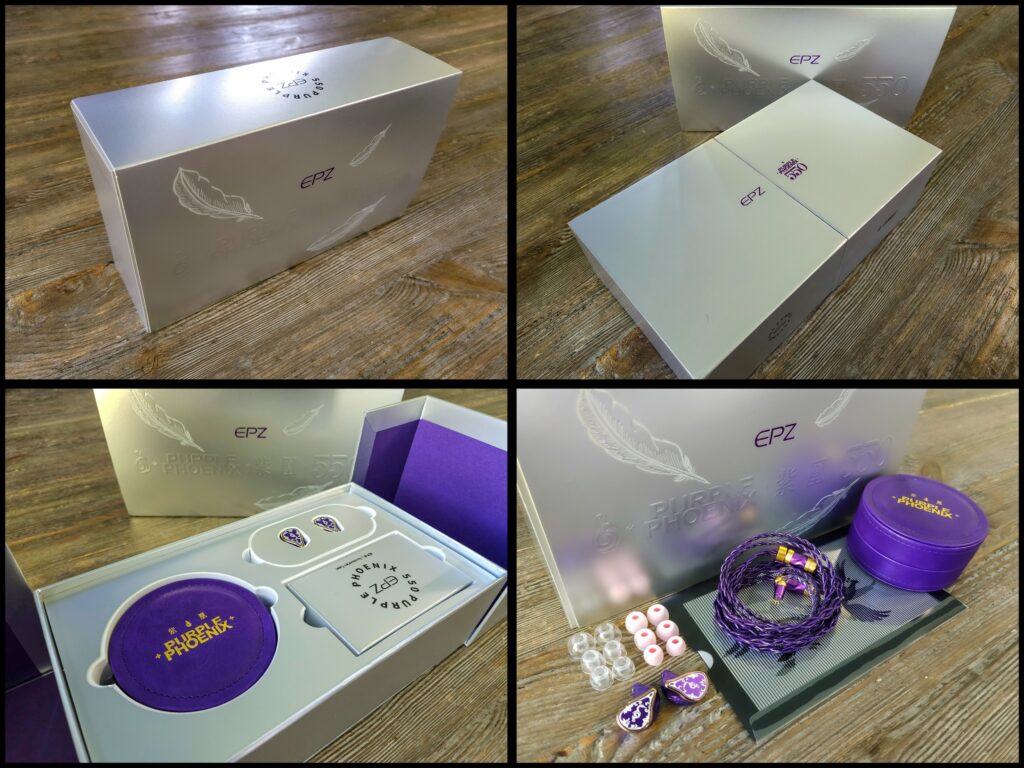
The EPZ 550 arrived at my home in a longer rectangular white box with a sleeve covering and a very elegantly and artistically expressed design on the sleeve. I like simple, I like elegant, I like classy and thus far the 550 embodies those descriptors. Those are my 1st impressions of this set as it arrives. In fact, I can’t see how everyone wouldn’t think the exact same thing. So, take off the sleeve and you will uncover a split box which opens from the center on both sides. Pick up both sides and you are met with a purple-colored envelope describing the inspiration for the design of this set. Inside of that envelope is a magic motion picture of a Phoenix which is a nice touch. Take out the envelope and right away you’ll see the beautiful and meticulously sculpted 550 earphones sitting in cardboard covered foam cutouts within a plastic tray/holder. Beneath the 550’s on the same layer is a box which contains eartips and cable. Also on the same layer is the cylindrical purple carrying case too. Honestly, the package is very nice. Everything looks so clean and very much Apple-Esque in appearance. Certainly, you can tell that EPZ sees this set as a flagship iem because the packaging and unboxing experience definitely looks that way.
Eartips
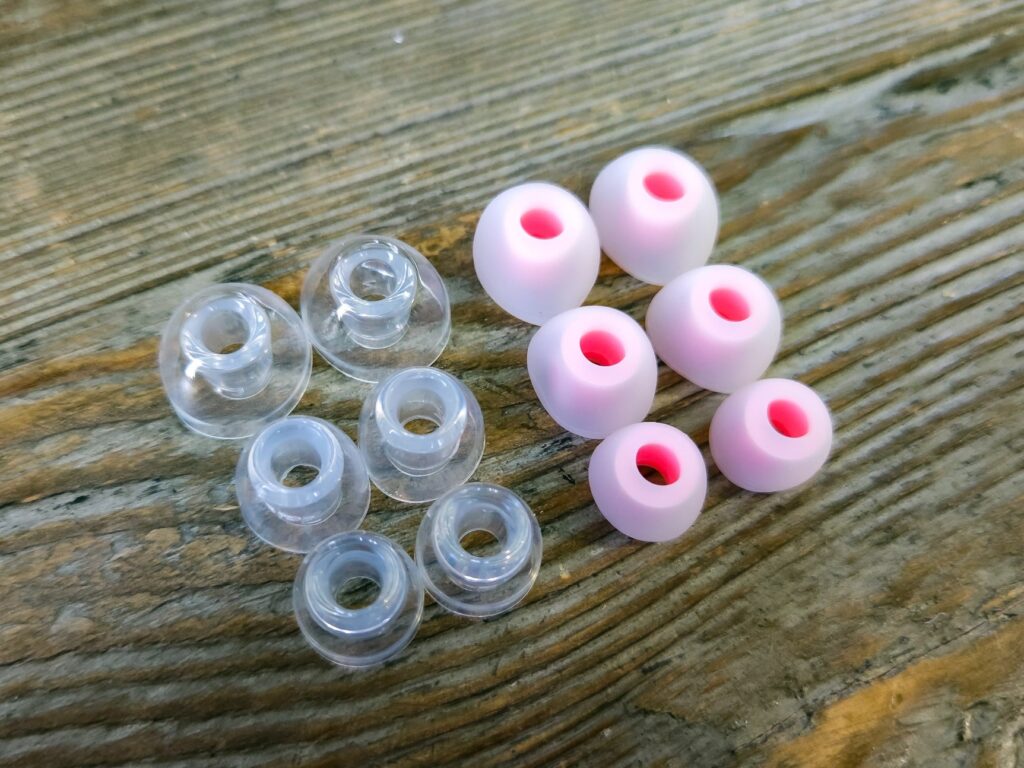
EPZ provided a total of six pairs of eartips and two distinct styles of tips within the packaging and each are pretty solid choices in helping to tune the 550 a hair further. The first set of three (S, M, L) eartips are a EPZ’s own EPZ M100 crystal clear liquid silicone eartips which are very tacky (as most liquid silicone eartips are) with a wide bore, a somewhat rigid flange and have a fairly deep fit too. I personally like these eartips a lot and use them often on other sets, but I do not like them for the EPZ 550. I need a firm flange for my ears unless I am going with a very deep fit. Nice eartips which are very much usable, but not for me when using the 550’s. The next set of three (S, M, L) are a white silicone (Acoustune AET07 style) eartip with a pink and rigid stem, a semi-wide bore size and a decently firm flange. Not quite as firm as the KBear 07’s or AET07 tips. I do like these tips as well but once again I needed something even firmer to get a good fit. So, as per usual I went through every set of eartips at my disposal (quite literally a mountain of tips). I found a few different sets of tips that brought out different aspects of the 550’s tuning. That said, I actually landed on some of my favorite budget eartips for this set, the KBear 07 eartips. I love how the bass became a hair more crisp, punchy, and the upper mids gained a touch of air & shimmer without glare. As simple as the 07’s are, they truly are fantastic eartips and always a quality option.
Carrying Case
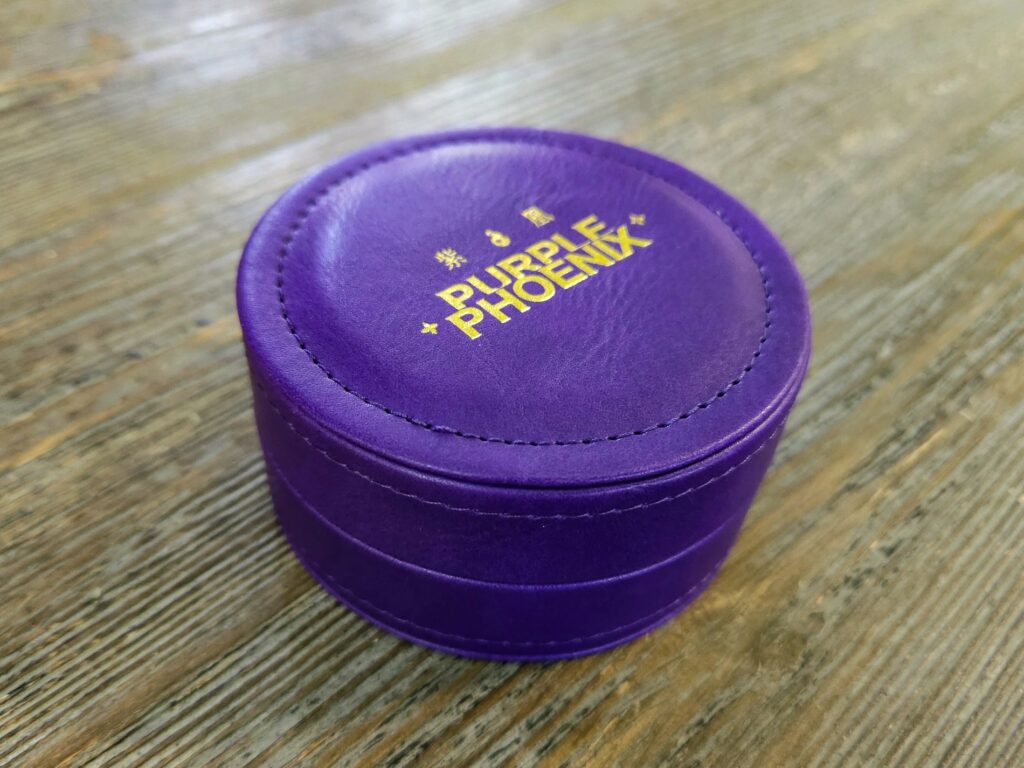
I really like this case folks. I really do. The case provided with the 550’s is a cylindrical style (hockey puck) case and is cladded in this bright/deep purple faux leather material. A very cool looking case and a very well-functioning case at that. In the center of the top of the case, you’ll see the words “Purple Phoenix” in gold lettering, you’ll see some slick looking stitching encircling the top as well. Now, this case opens from the top and closes with some nice clamping pressure so as to not fall off as it’s held tight with friction and does so satisfyingly. This case is not enormous though. I could only fit the 550’s, and its cable. I suppose I could’ve tried to fit more but I wasn’t stretching things being that this was a tour product and other reviewers are awaiting them. At any rate, a nice addition. I know that nobody really cares very much about carrying cases, but I like to highlight even the subtle things which make a total package what it is.
Cable
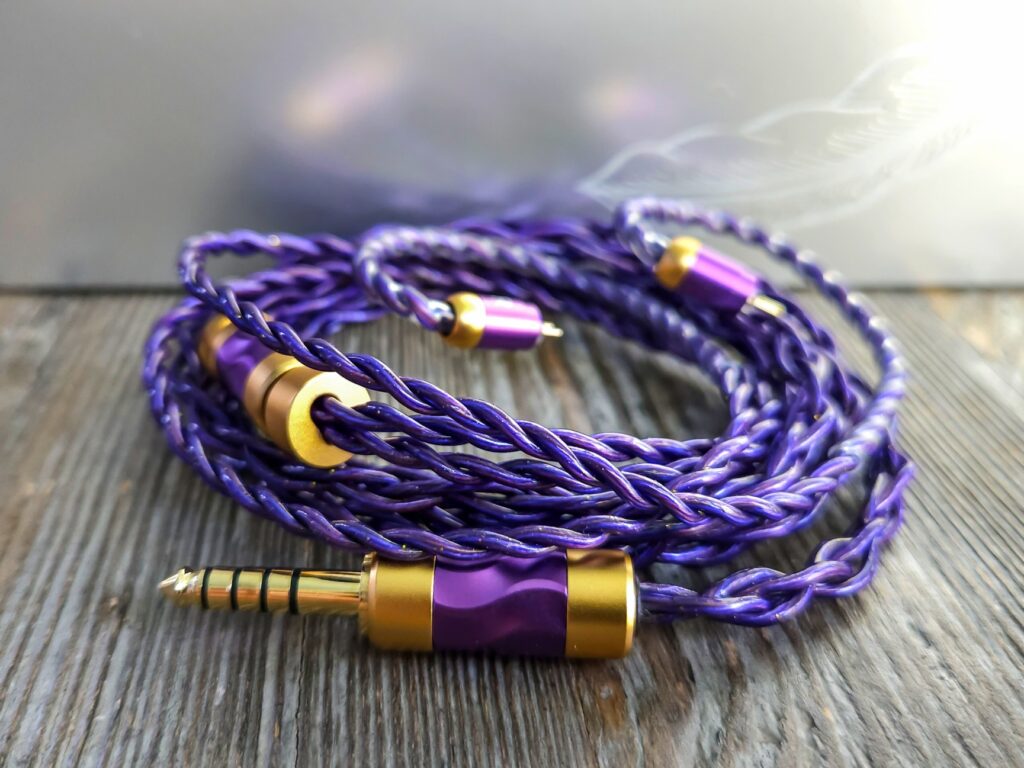
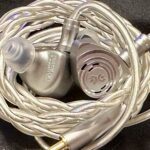
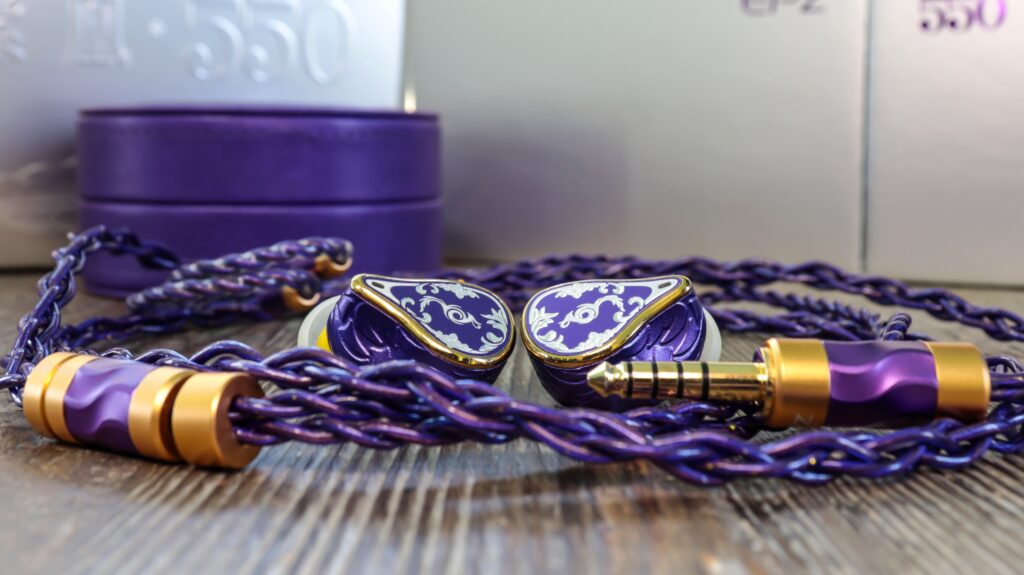
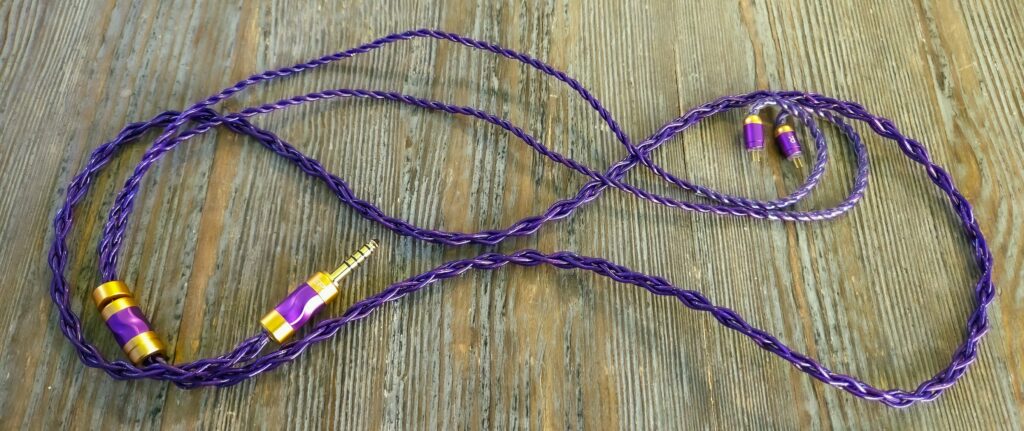
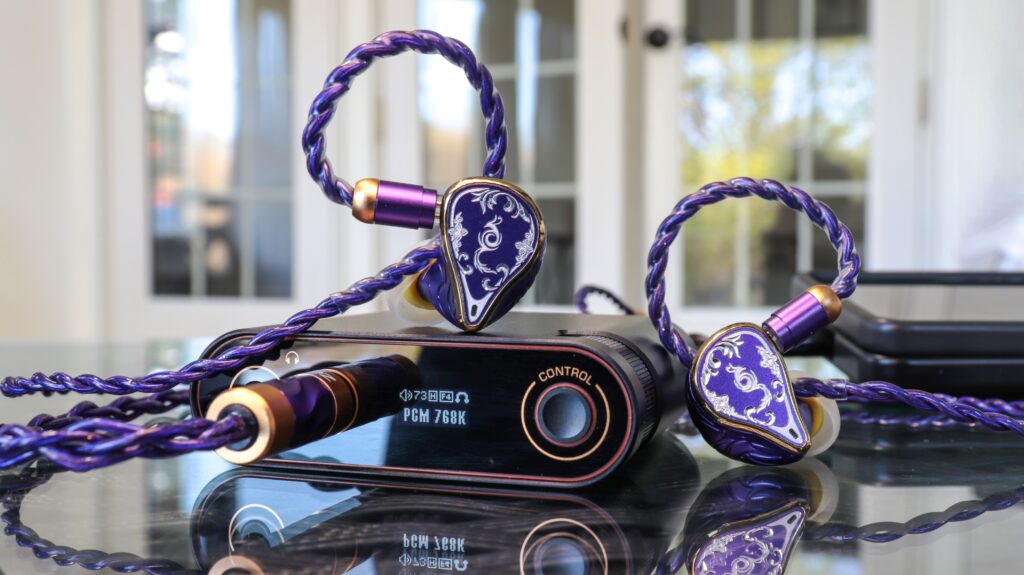
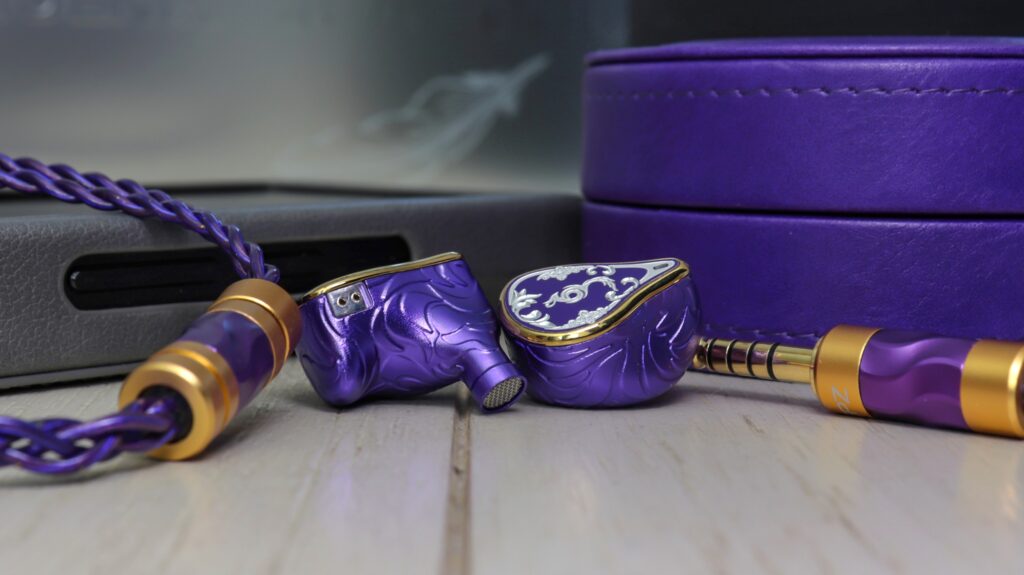
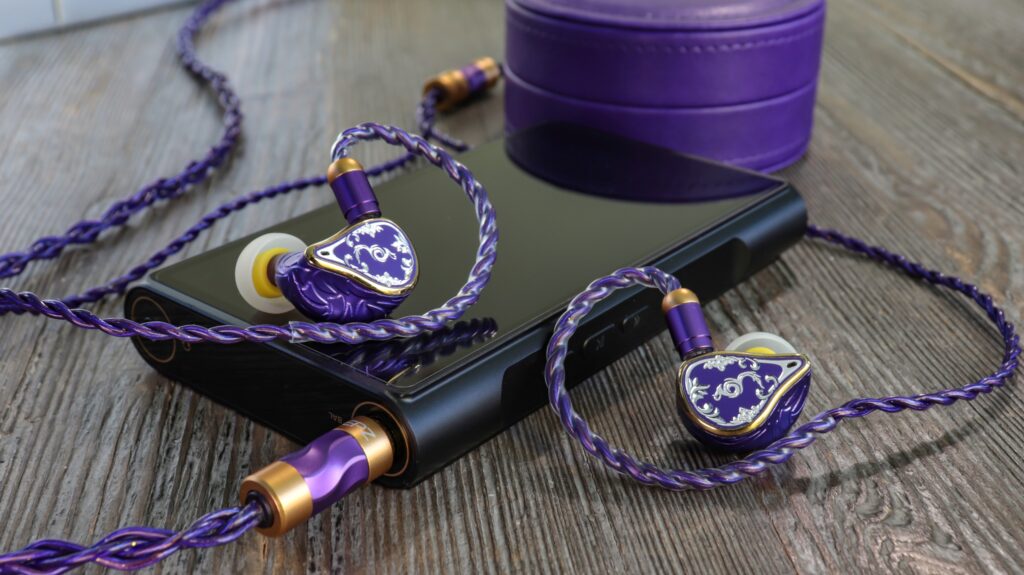
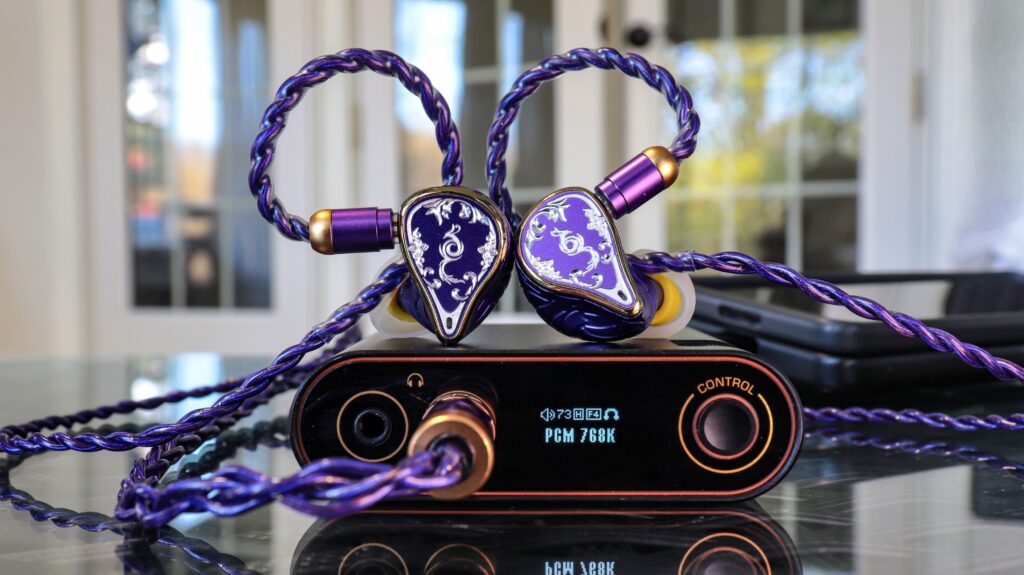
Now we get to my favorite accessory that comes with the 550’s… the cable. I love this cable so much. Folks, I am most certainly a self-proclaimed cable aesthetic snob, and I will go at lengths to find cables that look nice. I don’t know why, but I have to. With every set. The cable provided is a beautifully striking iem (EPZ 550) color matching deep purple (violet purple) 2-pin, 4-core, 6N OCC monocrystalline copper cable with a silver plating and terminating in a “stock” 4.4 balanced connection. All of the fittings appear to be made out of aluminum with color contrasting between gold and violet purple. I love that I have zero need to cable swap as the look is perfect and the sound is great, it isn’t too heavy, but it’s still fat enough to look luxurious and I hear zero microphonics whatsoever. Just a baller of a cable and the perfect addition to this package.
Build / Aesthetic / Internals / Fit
Build Quality
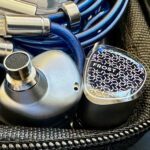
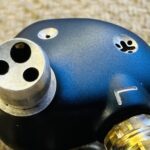
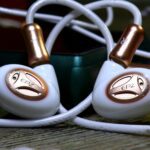
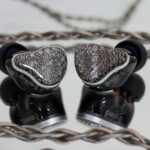
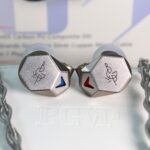
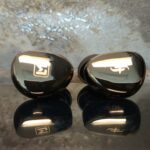
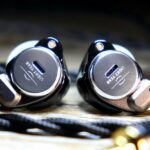
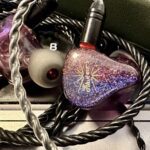
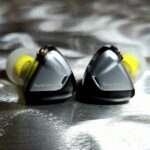
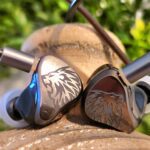
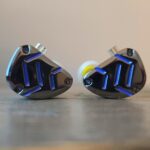
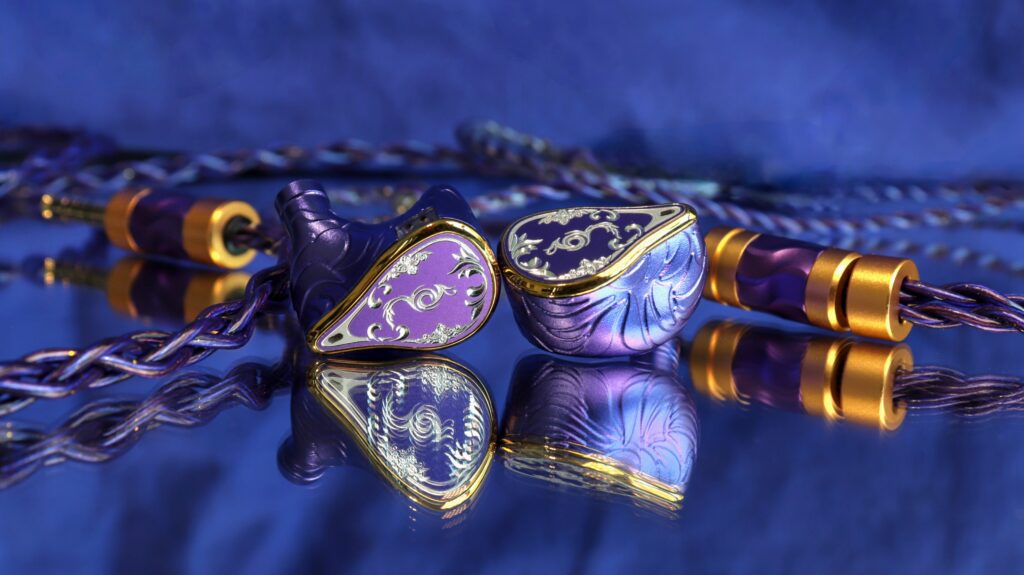
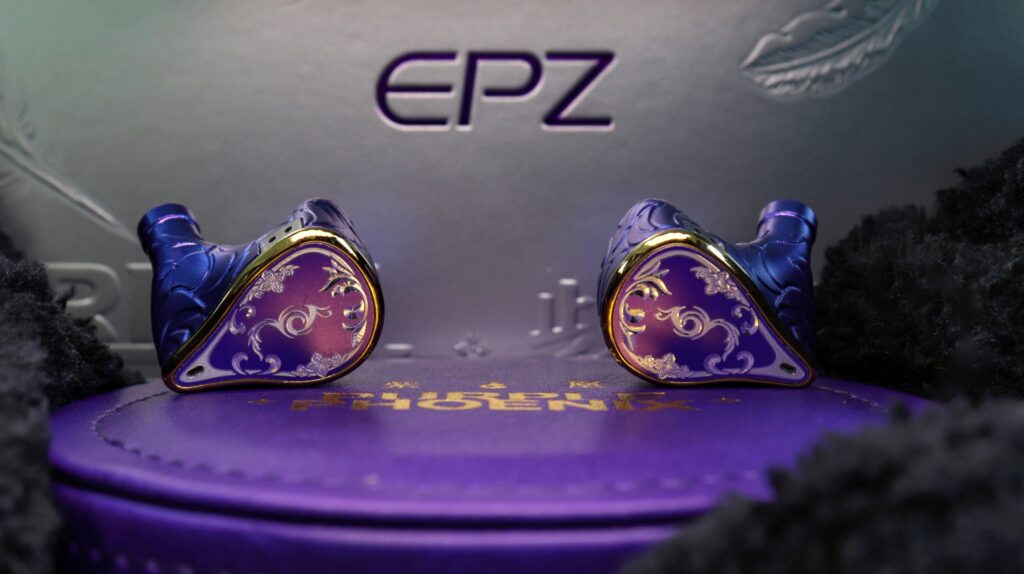
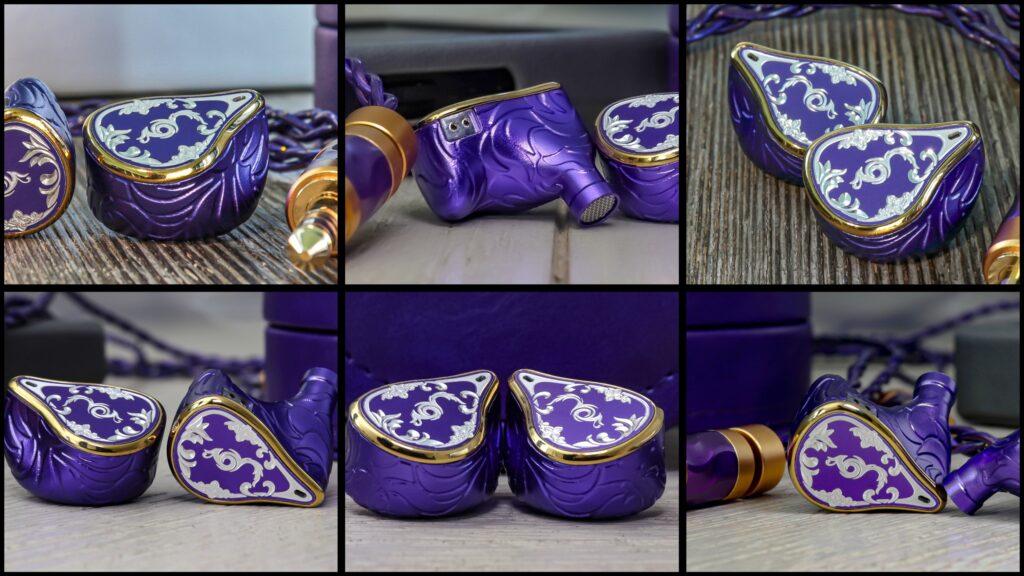
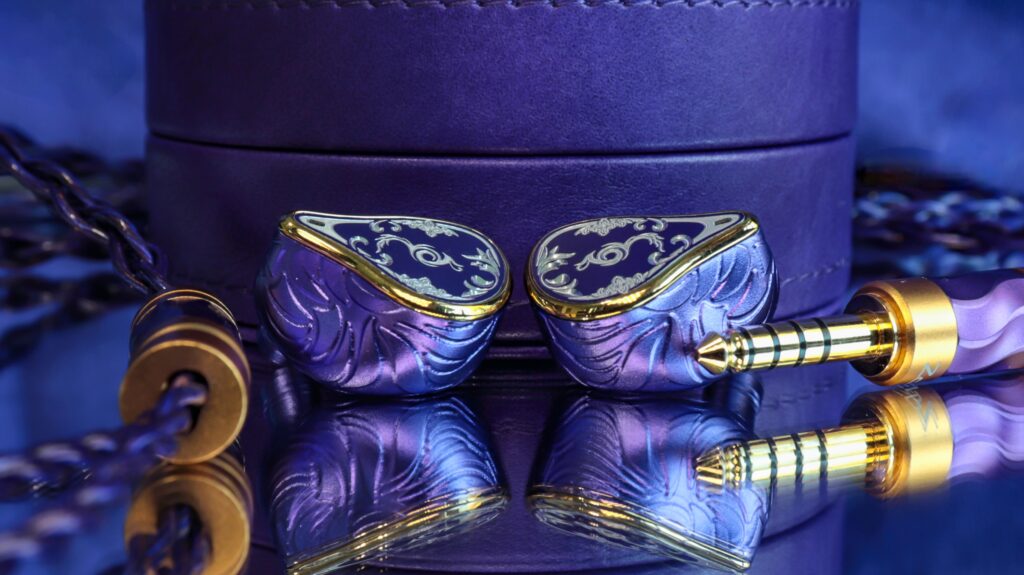
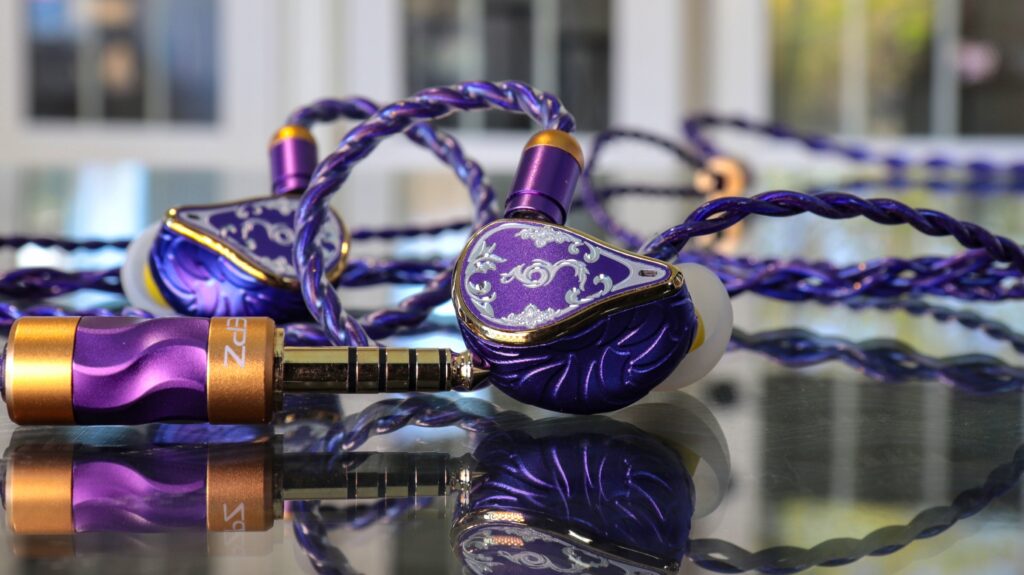
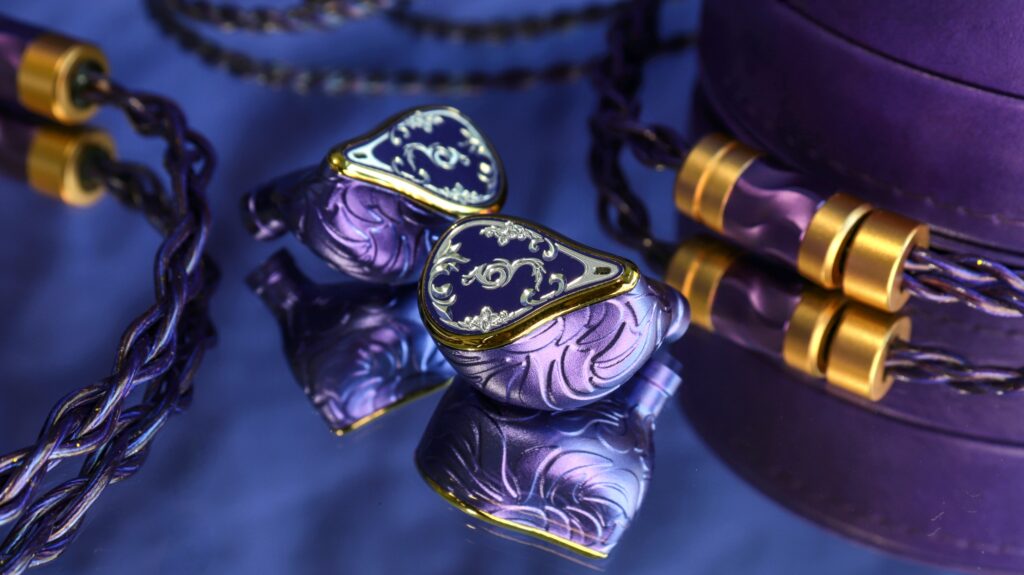
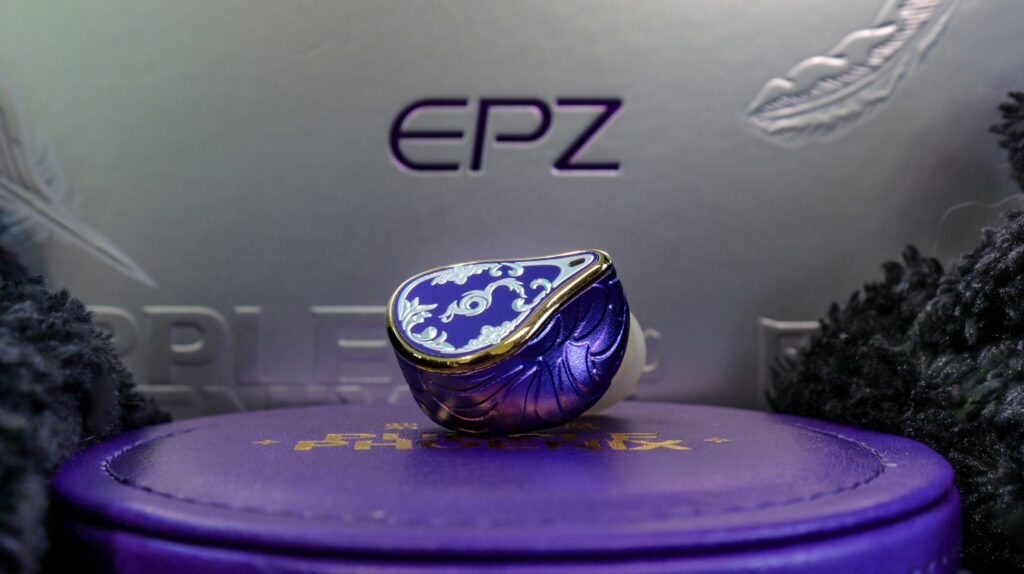
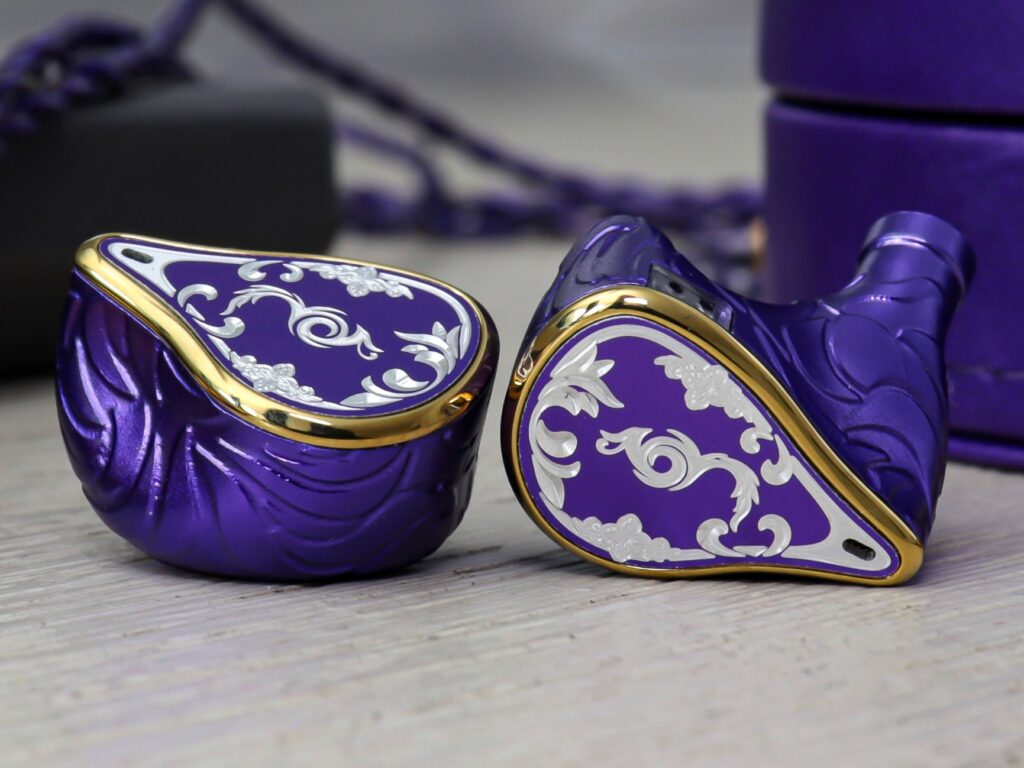
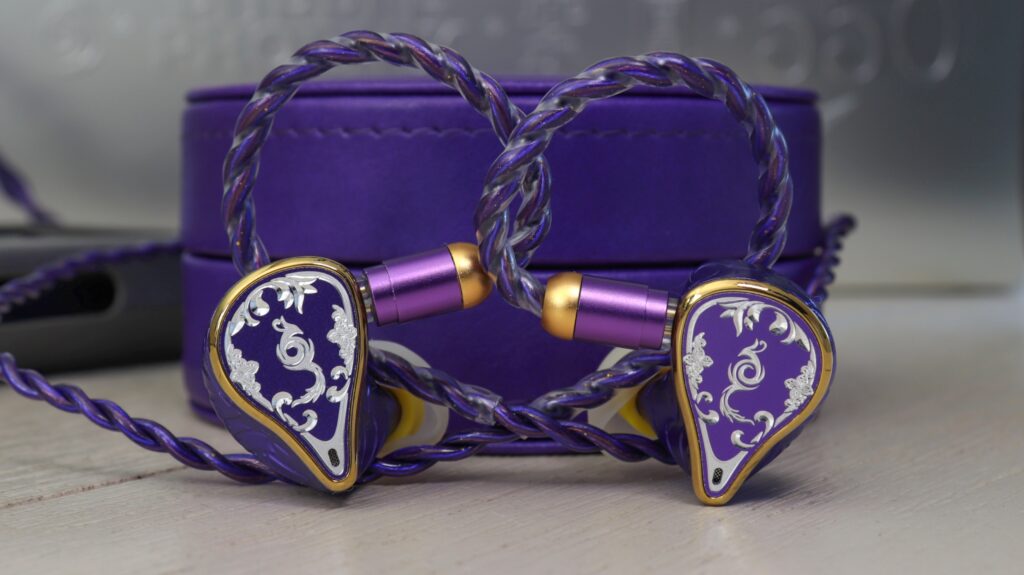
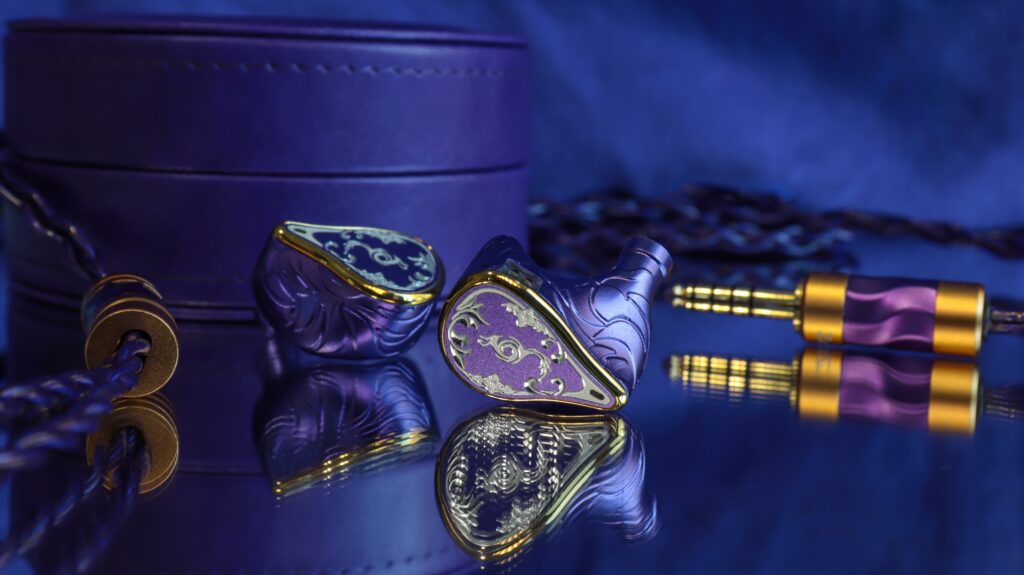
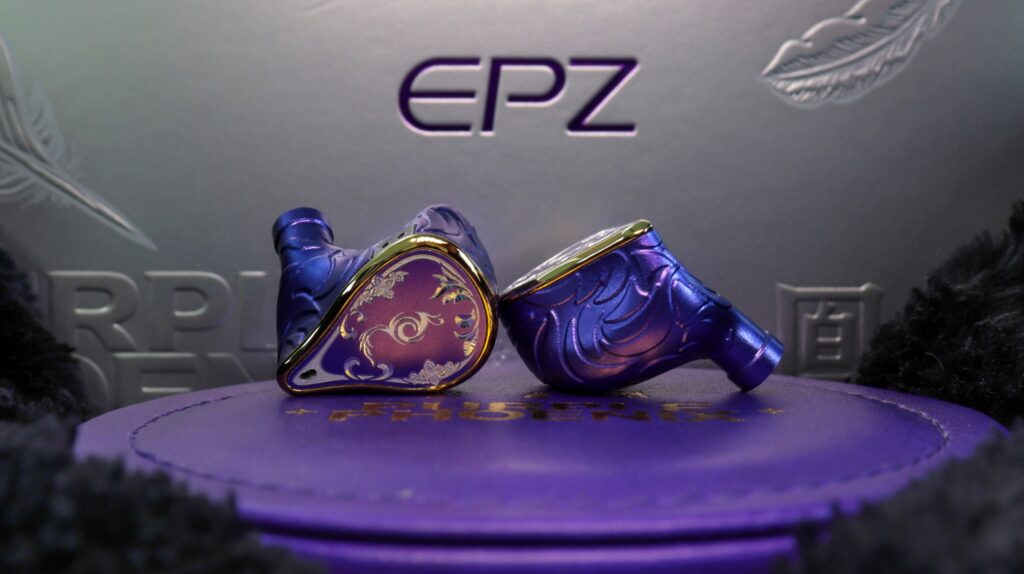
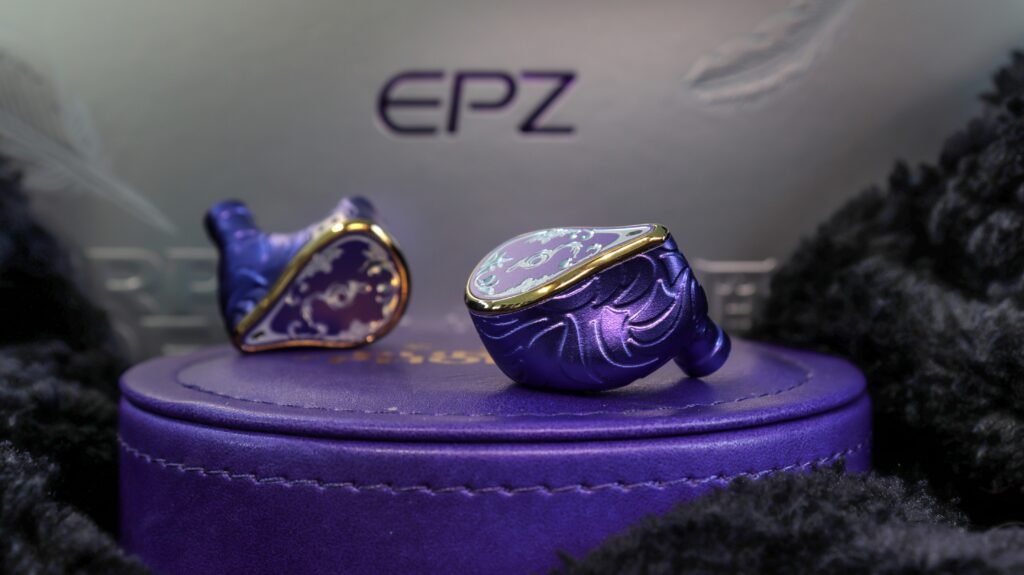
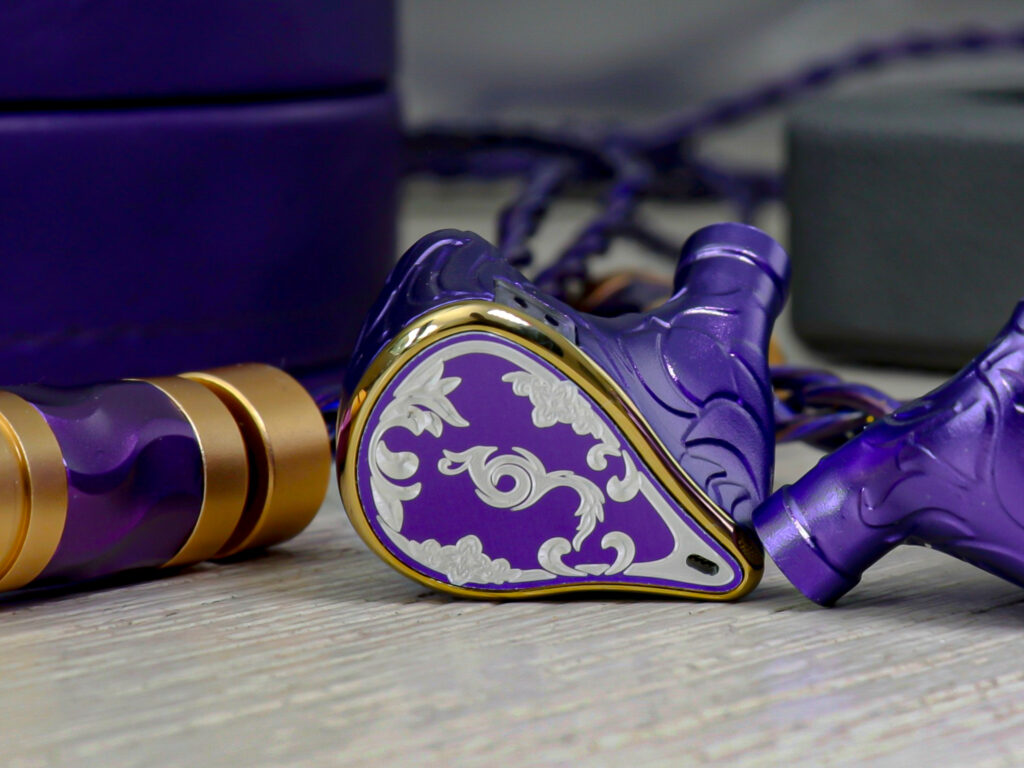
Folks, I don’t know how I’m going to give this build any justice using written word. I know I’m going to have a problem when it comes to aesthetics. However, I will give it my best. Friends, the EPZ 550 is built like it should cost +$1k. I don’t know how EPZ did it in an efficient manner. Guys and gals, the 550 are made entirely out of aluminum alloy. However, they are honed/carved, CNC machined out of one single block of aluminum. Many sets are made of aluminum, but the 550’s look, feel, and fit are the most grown-up and meticulously crafted set that EPZ has ever tried to create. The Faceplates are also carved ridiculously intricately in what EPZ calls their Phoenix inspired guilloché finish. The Shells also have carved, engraved patterns adding texture to the design. The nozzles are a hair over medium length, somewhat deeper fit, standard sized 6mm nozzles with a very deliberate lip for holding on your eartips. EPZ added a new rear venting system which reduces ear pressure, reduces resonances, and improves sound texture. This set is not overly large either. In fact, it is very comfortable and they used aluminum as the material of choice making the 550 very lightweight too (5-6 grams). Very comfy. All things considered, this set is built wonderfully. This cannot go unsaid. Truly a wonderful job.
Aesthetic / Design
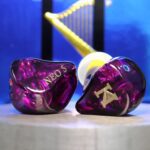
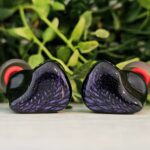
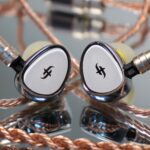
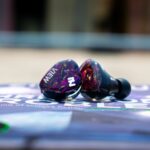
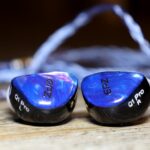
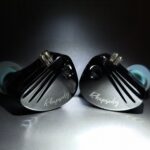
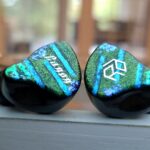
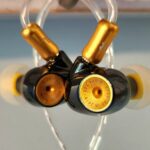
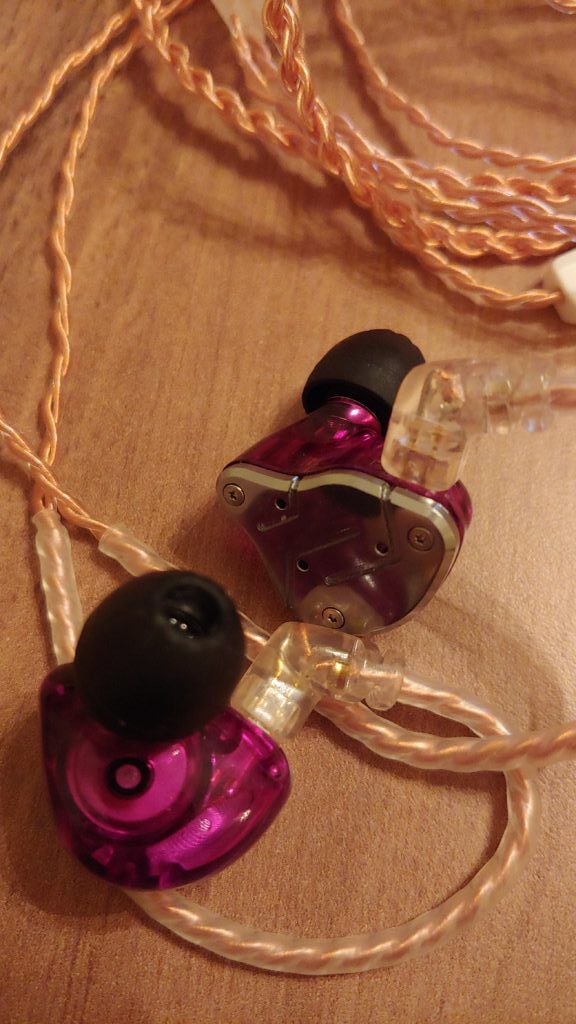
Now we get to one of the great strengths of the EPZ 550, the look. Rarely would I say that a design scheme would be a reason to purchase a $499 iem, but this is one case where that might just be a reality for some people. This set is unequivocally and unquestionably one of the most beautifully designed iems that I’ve seen. I’ve reviewed many kilo-buck iems which don’t even come close to the artistic craftiness and elegant charm of the 550. I mean, the deep purple, the gold accents, the white carved out Phoenix inspired faceplates adorned over the purple base color and golden border is simply gorgeous. Also, the deep purple & shell is texturized in a wavy pattern which suits the overall design perfectly. Absolutely stunning! Please, go right now and fist pump every artist and designer who came up with this look. You have earned your paycheck. Wonderful job!
Internals
As I said earlier, the EPZ 550 is a 5-driver all balanced armature set of iems which are all either Sonion or Knowles drivers. EPZ uses a three-way electronic and physical crossovers to shape the sound, transition between frequencies, and manage phase alignment. Now, EPZ decided upon two Sonion 38AM007 Sonion balanced armature bass drivers to cover the low-end, very nice drivers. For the midrange EPZ used two Sonion 26A005 balanced armature drivers which cover from the bass to low-mid transition (200-300hz) to the lower treble transition. Also, EPZ went with One Knowles “high frequency” balanced armature driver to carry out the treble on this set. EPZ did some cool stuff inside of this set as they used certain Knowles acoustic dampers in the crossover path as well as internal acoustic cavities to smoothen out the edgier areas of the tuning. Furthermore, EPZ’s research and development came up with (what EPZ calls) an ultra-compact acoustic cavity also milled out of the same singular block of aluminum making internal resonances less noticeable and the compactness makes this set much smaller than it would have been.
Fit / Comfort
When it comes to fitment, I simply needed to find eartips which seal. Once I did that, I found the 550 to be one of the more comfortable sets for my ears. Granted, I feel like I say this in just about every review anymore, but I mean it just the same on this set. Folks, the 550 are very light (5-6 grams) and honestly feel like nothing in the ear. Nicely ergonomic build. I’d go out on a limb and say that the EPZ 550 is going to fit the great majority of hobbyists perfectly fine.
Drivability / Pairings
Sensitivity
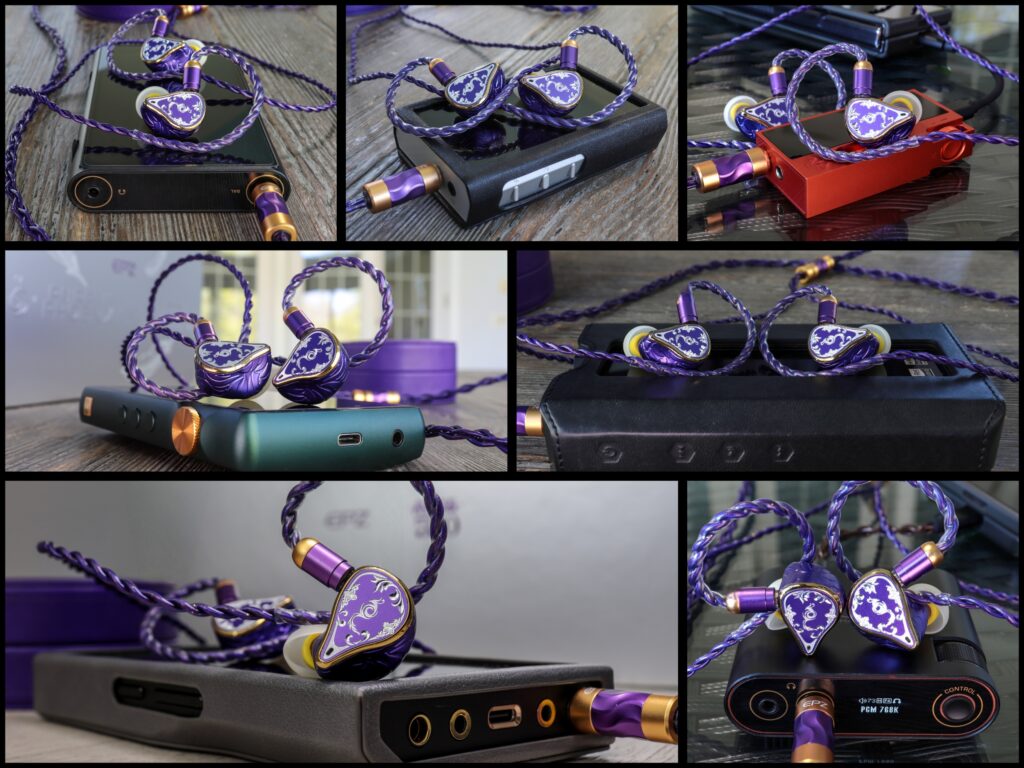
There’s no doubt that the EPZ 550 is most definitely a very sensitive iem and a very clean sounding iem, even from weaker sources. In truth, we make a big deal about source power in this hobby. Everything is about scaling. Of course there is truth to that, but is it always “amping” or “output power” which is the reason for that scaling? Anyways, the 550 are sensitive enough to both loudly and cleanly replay on just about any device that I have in my collection. I always, without fail, will test every set with my old Samsung smartphones with 3.5 single ended ports, with my iPad, and with my ultra weak (25-35 mW) 3.5 single ended dongle dacs. Some say this is a waste of time, and I say… nobody is forcing you to read this! But I digress, the 550 is a pretty sensitive set which has zero issue sounding effortlessly nice in even weak sources. Nothing I have was a problem for this set. Even my smartphones. So, if all you have is $500 to spend on the 550, a 3.5 se smartphone, and no money for a better source; just know that you will be fine in the meantime as you save up for that better source.
More Juice
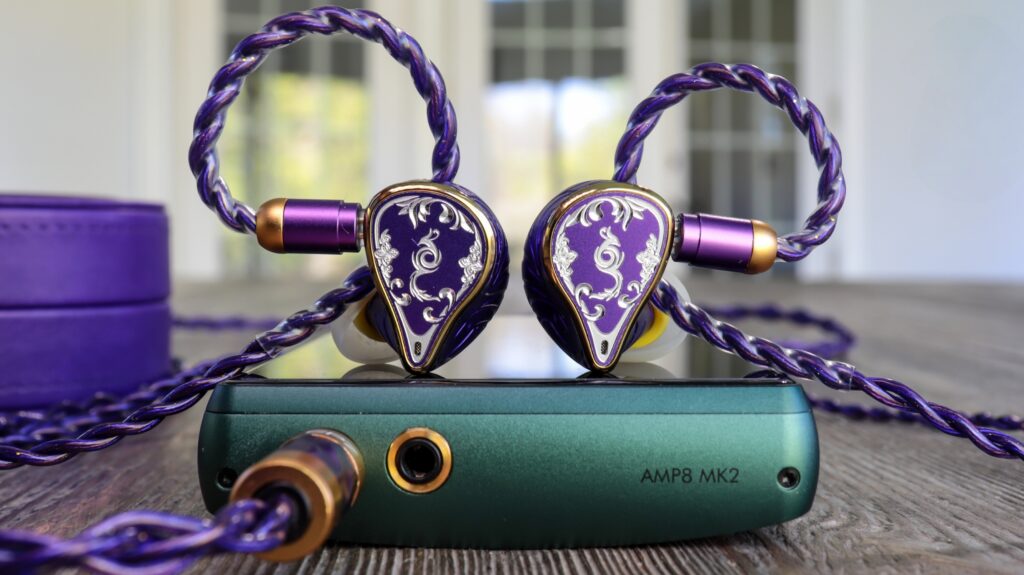
While the 550 sounds good on even weaker sources, it actually scales well with better sources. As far as “output power scaling” from bigger amp sections, the scaling is marginal. However, you’ll certainly hear a slightly better dimensioned soundstage, better clarity, better bass texture and grip, and more control in the treble. Having said that, I find that the scaling of this set more-so comes from simply using better quality sources. The 550 aligns well with whatever source I was using at any given time tonally. That said, adding power output actually does make for a more cleanly layered sound. I don’t want to go too far with that though and I don’t want you thinking that you need some $1k dap to properly get the most out of the 550. I mean, it helps, but not necessary. So, to sum it up, just like 99% of iems there is a noticeable improvement with good clean amping. Just don’t expect some monumental and life changing difference. Lol.
Source Pairing
This is where you’ll see the 550 shine. At least it does for me. I find this set to be able to adapt and sound good with just about any source device. Sure, some tonal Pairings are better than others “subjectively”, for me and my ears. But the 550 can become a chameleon and if you ask me it has that perfect middle ground tonality, texture, and there aren’t any areas of the mix which are exaggerated, spiky, too boosted, or sharp. Really, pick a warm source to a neutral source, and everything in between and you’ll hear a set which will adapt to that source giving you a slightly different tonal version of its tuning. Now, personally I enjoy a source which sits in between, warm/neutral to neutral, very clean background, and a source which isn’t overly smoothened in texture. This set is already close to neutral-natural. Really it is neutral with hints of warmth down low and some measured brilliance up top, very transparent, very clean sounding, excellent clarity, and effortlessly sweet toned. Any source which will expound on that clarity and expound on its multi-layered abilities will really help to provide an awesome listening experience because the timbre intangibles are already there.
Sound Impressions
*Note: before I go deep into the sound of the EPZ 550, I first want to clarify that I didn’t really have time to burn this set in. Nor do I feel it needs it. However, you may want to anyway. I used KBear 07 eartips for most of my critical listening rather than the included eartips. I also used the included cable for all critical listening as well. For all critical listening I use flac or better files (some MP3) which are stored on my devices and rarely do I ever stream music. I typically use UAPP (USB Audio Player Pro) as well as Hiby Music Player or Eddict Player depending on the dap I’m using.
What’s It Sound Like?
One of the first things which jumped out at me when listening to the EPZ 550 was how clean and clear the sound is. That’s easily recognizable. Next was how very sweet toned and musically engaging this set is. The 550 isn’t going to appeal to those who desire an ultra-extended, boosted, or booming bass and it won’t be ideal for those who want warm, rich, overtly smooth, and thick timbre. This is for fans of a very mature sound who also enjoy to engage with their music. In my opinion, everything about this set is sweet, melodic, effervescent, euphonic, and any other descriptive word meaning harmonious or symphonic. It carries a smooth cadence with well defined notes, fine precision and a spacious stage resulting in a multi-layered listening experience. Now, I don’t necessarily consider this set to have an all-rounder style tuning. Just a heads up. The 550 will sound best with particular genres and I will cover that later. But I do think that anyone who can recognize the sheer skill and mellifluous nature of the 550 will absolutely enjoy this set very much.
Signature
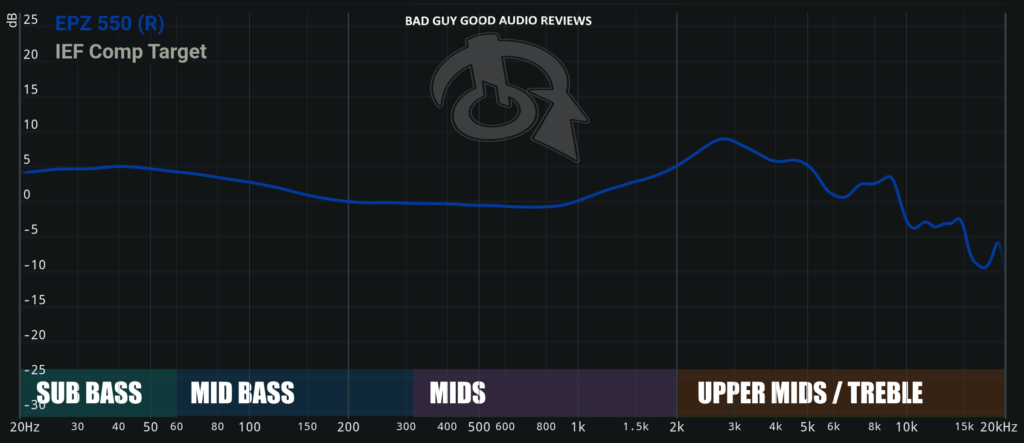
In my opinion I’d say the 550 has a U-shaped to W-shaped reference leaning signature with a mildly boosted low-end, forward midrange, and a nicely boosted treble. If anything, I’d say the midrange is the most prevalent and most prominent region making for a great vocal lovers iem. However, everything is about balance with this set. No one frequency truly oversteps their bounds; no range overshadows another. You can expect to hear everything in crystal clear HD with a black background on just about any source you use (within reason). This is a set with a cadent flow, smoothly rendered, yet crisp at note peaks (when called upon), and a great mix of fluidity and analytical accuracy. I hear wavy & porcelain smooth lines, unsullied, and focused note contours which define every last intonation, uncovering every breath, every finger slide, every subtle micro-dynamic shift. Very similar to how the Letshuoer Mystic 8 does it (to an extent), yet for hundreds of dollars less. Of course, this set will not suit everyone, but for those who can appreciate a true audiophile reference leaning sound which is still immersive and engaging… you’ll really appreciate this one.
Birdsweet
To my ears the 550 has a nice punch to it and some vigorous enough macro-dynamic energy which I wouldn’t consider either flat or dull. I say this set is “reference” leaning because of its neutral sound, the balance across ranges, and because I don’t hear any extensive tone altering artificial coloration. Be that as it may, I also plainly hear solid dynamics (in respect to the tuning) which are doled out in a controlled manner, nothing loose or sloppy. Almost as though every inflection sounds measured, weighed, and strategically considered. Something I said about the Mystic 8 and slightly less so in the SoftEars Studio 4. I think what draws my description away from “flat reference” is the fact that some of that low-end warmth does infuse into the sound, there is some note body, not lean analytical dryness. There’s a moistness to the sound, some viscosity. Granted, it won’t appease rich and smooth lovers, but enough to help make notes more believable. However, I would still say that the overarching sound is closer to neutral-natural rather than earthy, rather than straight warm-organic. There’s this persistent and transparent clarity and resolve which generally outlines most notes, distinctly separating even complex tracks, and there’s an airiness too, and none of those characteristics seem to kill musicality. A very birdsweet sound yet in the same breath a very symphonic sound. Not “musical” in the warm, bassy, and fun sense… the traditional sense. But musical in its tone-flow, musical in its sweet timbre, and musical in its ability to draw out emotion from my music.
Technically Speaking
Now, before I dive into each 3rd of the mix, I should preface everything by saying that the EPZ 550 is very highly resolving and will absolutely illuminate the subtleties (details) in your music. Later on, I’ll speak at much greater length on this, but as you read on just know that the 550 is very articulate in how it can sound acutely focused, with knife cut note outlines whilst also not coming across etched, grainy, dry, or sterile. There is a very fine line that EPZ walked with this set, and I give them kudos. I hear transients which are tighter than natural with the type of concentrated and clean-lined clarity and clean background that notes sound denser, compacted, concise. If that makes sense. There’s volume in the cleanliness without sounding “lush”. Note body doesn’t sound overly lean because there is a certain dynamic immediacy, texture, which feels and sounds palpable. Again, a very fine line to walk. Now, please don’t confuse my words here and don’t confuse my intent. I am not writing a hype piece. There have been plenty of other iems which carry this type of sound (to a degree) and plenty which rival the 550 (to a degree). However, when a thing is good, I’ll tell you it’s good and I’ll explain why. Great detail retrieval, succinct and tight transients, distinctly separated notes, natural crispness, multi-layered stage, and a very well dimensioned sound field give the 550 a reason to boast. Coincidentally, these traits are also reasons for me to speak highly of this set. No hype, just a quality set which should be enjoyed by many people within the hobby who enjoy its particular signature.
Not For Everyone
I think we can all agree that I enjoy this set. No doubt, I wouldn’t use the words I’m using if I didn’t. As easy as I can say it; I understand and enjoy the tuning strategy. However, I am not denying that this tuning won’t be for everyone. “Mild bass boost” and “reference leaning” are your first keywords which will either draw you in… or chase you away. There are plenty of subjective issues that I know some of you will have, and I will speak on those things as we go along. I simply wanted to bring this review back down to earth. In truth, there are plenty of moments where I am yearning for just a few more sublevel and mid-bass db’s to offset the highs on the 550. I simply don’t want to lead anyone astray and I want to fully explain my thoughts. Again, not for everyone and probably a hair polarizing for some of you as well. Does that make this a bad set? The answer is a very BOLD… NO! From my perspective the 550 is one of the best all-BA sets in its range in respect to its purpose and tuning and I am utterly happy with what EPZ has accomplished. However, as I said, there are moments that I’d like just a touch more low-end to offset the highs. Also, the highs on the 550 can get a hair glaring in very rambunctious and brighter recordings. It doesn’t bother my ears at all, but I have to assume that anyone sensitive to glare may have an issue. I do feel a hair more bass representation would go a long way to solve that, but all things considered, I love the sound. With that said and everything taken into account, I do believe wholeheartedly that the 550 is a fabulous iem if it fits you. There’s so much more, let’s check out each 3rd of the mix.
Bass Region
Let’s just get one key point out of the way concerning the 550; this set is not in any way even close to basshead. In fact, I’d be confused why any bassheads would even be considering this set. Okay, now that I’ve lost all bassheads, I can speak to those who are more apt to appreciate fantastic BA bass. Tight, controlled, with a smoother tempo but also fast stop-and-go punch when called upon. The bass is covered by two Sonion drivers which create a mostly relaxed and natural feel in the bass, yet with somewhat tighter transients. Without question the 550 carries a quality-over-quantity style bass tuning with just enough quantity to keep bass guitars honest, and enough oomph to feel and sound punchy. In fact, the bass is easily one of the 550’s most skilled regions. There’s not a passage of music too complex down low for this set either. For instance, “Anthem, Pt. 3” by Blink-182 is no problem at all. Every rapid-fire drumbeat has a clear beginning and end. They sound rounded, separated, and with solid articulated dynamism and vibrance. Possibly not as hefty as I’d like, but also not too edgy and with a natural and authentic timbre. Not quite as textured as a top shelf planar, but it has realistic texture. Close to a tightly tuned and moderately boosted DD driver, yet cleaner. The 550 bass region is the type which never adds lag. It never sounds smooshy or blurred. Couple that with a controlled and fairly present dynamic vibrance. It’s hard to not respect. The bass isn’t necessarily more forward than any other region but stays cohesively stout, like a well formed, concise, and moderately authoritative foundation. It doesn’t slam like a bold dynamic driver, and isn’t atmospheric like a DD, but the 550 carries a very good representation of balanced armature bass. My opinion of course.
Sub-Bass
To my ears the sublevels of the EPZ 550 sound decently extended featuring a well-defined note body. I hear what I’d call an organic roll-off, nothing abrupt, yet it also isn’t ultra prominent and won’t reach to the deepest depths. Just enough emphasis to command the region. You’ll hear some haptic “feel” when a track calls for some rumble, but the sublevels will never overwhelm the mix and so it maintains that cohesive overarching sound balance that EPZ was shooting for. Still, I hear some decent enough rumbles in “Josh Tillman and the Accidental Dose” by Father John Misty. There’s that nice bass guitar reverb, sounding rigid, fairly dense, great tactility, coming across pretty guttural too, with actual vibrational feedback. Something you won’t often hear from a moderately emphasized BA driver. So expect a very clean sub-bass, a very well separated sub-bass, and expect a sublevel weight that is just north of neutral and reasonably dynamic. Do not expect the juddering weight of a basshead set. Again, those folks will be let down. That all said, I really do feel that the sub-bass is grade A for its quality. Very clean-lined, and while it isn’t bulbous in its profusion, it is natural. There’s no fuzz, no smearing at all, and the sub-bass is always high in resolution.
Mid-Bass
The mid-bass is much of the same. Once again, you have very nice clarity along with adequate levels of slam. Just enough to carry a solid Hip-Hop bass drop. I’d call the mid-bass “moderately warm and full in body”. I don’t feel it’s necessarily lacking either. Honestly, the weight, the punch, and the note body in the mid-bass sounds pretty natural. Perhaps you are missing that last little bit of robust authority and those who desire a more rugged and bulbous mid-bass will likely yearn for a more bullish slam. However, the mid-bass is right there with instrumentation; giving kick drums that solid surface snap and plenty of hollow booming resonance like in “Billie Jean” by Weezer. Those successive quick, hard, and satisfying kick drumbeats hit one after the other and the 550 does a tremendous job of both sounding natural as well as very precise. Again, just like the sub-bass, the mid-bass carries a faster than natural transient cycle leaving space between note lines yet the density and rigidity in each note body is very appealing to me. Another quality feature of the bass is the surface texture. The 550 generally offers a high clarity and natural sound, but it also carries that nice balanced armature tactility. I think much has to do with what BA drivers are used and having two Sonion drivers representing the bass range obviously helps. I am nothing but impressed by the bass folks. Still, this will be a somewhat polarizing take as the 550 doesn’t follow the late trend of beefing up the low-end to the point that it is a focus of the tuning. If I were to give it an analogy, I’d say that the low-end of the 550 is a fantastic lead actor in an ensemble cast of other lead actors. I hope that makes sense.
Bleed?
I also happen to enjoy that very subtle bleed from the bass region into the midrange. Admittedly, I typically like a more robust low-end which has some weight inducing bleed into the mids. I like some warmth, some organic fullness. Yet in the same breath, I can get lost in a clarity rich set (like the 550) very easily and even begin to desire that sound much more… from time to time. As I always say; I love every signature when done well. I say that because I do appreciate how that slight bleed over adds a touch of resonant fullness to bass guitar, piano sounds nicely grounded making lower harmonics sound firm and many other examples that I’ll cover in the next section. It’s my opinion that EPZ did a solid job in adding just enough warmth without smearing any of the transparency and cleanliness. Once again, the last thing anyone can say is that this bass is blurry, bloated, smeared, or muddy. It’s about as clean as it gets without sounding dry and flavorless.
Downsides to the Bass Region
The biggest and most obvious downside is definitely the lack of emphasis afforded to the bass. This is one of those types of sets which will either be lived or not loved right away by that fact alone. You have to enjoy something which comes across more naturally, rather than boosted. I am singing the praises of EPZ today and I will continue because I appreciate the way they absolutely nailed their target tuning. They nailed it folks. Despite all of the good that this bass does and despite how wildly skilled it is, there’s no question that a little more added strategic emphasis down low would do wonders to make this overall tuning more of an all-rounder style. The bass plays a huge role in that, of course. Besides straight emphasis, I could get ridiculously picky and say that the 550’s very nice surface texture won’t be to the extent of a good planar. Its bass depth and timbre won’t necessarily match a good dynamic driver. Though, I’m back and forth on that. I happen to feel the 550 does a nice job of coming across similarly in texture and timbral qualities to a less emphasized and sprightly DD yet has a touch tighter transients (perceivably) which almost sounds less authentic. In truth, this is an all-BA set and friends… EPZ told us exactly the sound they were going for. So basically, nobody should be surprised that the 550’s bass region is clean, balanced, well defined and NOT following the bigger bass trend.
Midrange
I know I said the bass region was a shining light of this tuning, but the real gem region is definitely the midrange. What I hear on a daily basis after a long day of work is one of the better-balanced armature midrange performances that I’ve heard since the Letshuoer Mystic 8. If you didn’t know, that is an enormous compliment. Friends, the 550 isn’t chock full of heavy warmth and syrupy richness and isn’t what I’d call the picture of mellifluous romanticism in iem form. That distinction goes to other iems. To me, the 550 is a set which can’t decide whether it’s a hyper clarity detail beast, or whether it’s an emotionally charged and dulcet vocal master. As a reviewer, I’m always trying to find my angle to explain everything as best I can and when it came to the 550’s midrange I realized I had a couple angles to take. In all actuality, I found myself saturating in my music more than I was dissecting it. At any rate, is the 550 an analytical stud of a set or does it do better at capturing the sentiment in a song? More and more I began to lean on both. Truth is, every vocal modulation is articulated, nuanced, and every up and down accentuation of a voice is captured. The mids are well separated, highly resolving, and airy whilst also sounding engaging and musically gifted as well. To add to that, the 550 midrange offers a multi-layered experience with clean imaging, easy to discern, and the sound field comes across well dimensioned.
Mids cont…
So we know that the mids are highly articulate, very well detailed, and very tuneful too. However, making up that birdsweet and clean sound is a very natural timbre. I called it neutral-natural in my intro and I stand by that still. Having said that, I’d also say that the note body leans on the thinner side of the aisle yet with solid note density. This is caused by tight transients, high levels of clarity and very concise note contours. Call it “note rigidity caused by clarity”. Not to mention an open sound & illuminated sound with plenty of uplifting shimmer. Again, there’s nothing lush about this tuning. The mids feel more reference inspired than they do rich and lavish and while that description would typically lead me to believe it’s a clinical sound… that simply isn’t the case. Hence why this set is so nice. The mids have this sound which for some reason leads me to one word… “unforced”. It’s effortless. There’s a certain effervescent soft glow which clads every note. Of course, the midrange has all the bite and crisp edges you need when a track calls for it, but there’s nothing abrasive or coarse. Nothing feels or sounds artificially sharpened, I hear no tuning tricks, no bursting highs putting spotlights on details. Details come through well from balance, driver skill, and a transparent sound needing no added brilliance to illuminate them. The nuance comes from the tuning as this articulate sound is more about refinement rather than aggressive and excited pinna gain. The beauty of all of this is that the midrange is not overly dry, it’s not papery, it isn’t flat, and it isn’t grainy. No sir, this midrange actually has a very smooth and very fluid cadence.
Lower-Midrange
The low-mids are (in my opinion) one of its more unsung and quiet strengths. More often than not they sound slightly warmed from the bass bleeding ever-so-slightly into the mids. As I said earlier, notes aren’t battered in richness. This may be a good thing, and it may not (for you), but I can tell you that clarity is high, resolution is crystalline, transparent, and really helps distinguish each note. The smoother cadence and flow help male vocalists and instruments sound lifelike and not flat or dry. Another thing which really does help the lower midrange is the fact that I don’t hear some huge recession. Many male vocalists sound fairly prominent actually. Instrumentation is the same. They mostly come across very well defined, natural sounding, and notes never sound veiled. So essentially the low-mids have solid lucidity & intelligibility. Just like the entire frequency range. Furthermore, the lower midrange has that nice note separation, the easy to discern subtle detail retrieval (depending on the track). I have many examples of male lead singers who truly shine with the 550. Artists like the male accopella group Home Free in “I Still Haven’t Found What I’m Looking For” for example which have every type of male voice coming through very cleanly. Voices like David Draimen of Disturbed in “The Sound of Silence” is another. His amazing voice sounds stout, very focused and highlighted and even his moments of deeper pitch come through unblemished. I like that the 550’s subtle lack of richness doesn’t strip his voice of command and presence. So, very nice, semi forward, slightly warmed, and very well controlled.
Upper-Midrange
Now, as good as the bass is, the low-mids are, or any other region on this set… to me the bread and butter of the 550 has got to be female vocalists in the upper midrange. I might go so far as to say that the 550 was crafted and created to play back female vocals. Such a finely controlled, hyper transparent yet smoothly rendered and harmonious sound. Those Sonion drivers do a wonderful job of making vibrance sound fluid. They help crispness sound defined with few moments of coarseness. Again, the sound is very similar to the Mystic 8 in this regard, where even in brighter and more lustrous moments; the 550 doesn’t seem to come across harsh. Sure, those sensitive to glare might have an issue, but also… know what you’re getting. EPZ told us, they showed us the graph, and the 550 hits that mark on the dot and the upper mids sound wonderful for it. They can be a tad thinner and brighter. I feel that the note control, tone control, and cadent smoothness sands down more strident moments, but I’m not you. Anyway, the upper mids are a touch more forward (we’ve established this), they’re lively, very agile, fantastic in complex passages of music, and they have an airiness about them. Vocals and lead instruments always seem to have a strong sense of focus and even a sense of immediacy to them. Tight and glass-lined transients add separation and coincide with a multi-layered and holographic sound field highlighted by clear and prominent females which are locked, dead center. The upper mids have the type of sprightly presence which doesn’t really sound too thinned or too etched, but when needed they have plenty of bite and note edge.
Females
As I said, female vocalists really do well on this set if you enjoy females with a glow about them. I’ve heard a few females which can become a hair too strident but those are far and few in between for me. However, I always check the track “The Otherside” by CAM because her voice has this way of hitting that perfect sharp frequency. I can confirm that her voice is a hair too sharp on the 550. Also, Megan Trainor in “Sensitive” is another, a bit too much (track only used for testing, don’t judge me, lol). However, those are the rare moments. For the most part female voices can go from feathery soft to resounding and never cross that line for me. Vocalists like Caitlyn Smith in “High” are one of those tracks. Such a tuneful and sweet toned sound with the 550 in my ears. Even in the vibrant and chaotic chorus the 550 remains controlled. Then you have voices like Billie Eilish, Adele, and Norah Jones which all sound so effortlessly dulcet and powerful at the same time. I could keep going but I think you get the idea, females sound great.
Downsides to the Midrange
I spoke very highly of the midrange. I am very well aware of this. Of course, I did so because I adore the sound in the mids. Now, I’ve been in this hobby for a long time, and I know when a set will be too bright for some folks, maybe a hair too polarizing. I hate to say it too because I find the rise in the pinna gain to be very well controlled. However, there will most certainly be some folks who will find it a bit harsh. This is why we do reviews and this is why I tell you to read and watch a lot of them. Not everyone likes what I like, plain and simple. I’ve said so many times that I can adore a “slightly” brighter sound like the 550 just as well as I adore a smooth, warmed, rich, and earthy sound. So I totally understand all of you smooth, lush, and dark lovers that cannot enjoy anything but that. This set is not for you. I actually have no idea how you’ve made it this far in the review, but if you have, I can give you many sets in this price range which will fit your preferences. The 550 could use some more mid-bass weight and bleed. Whenever the upper mids are the focus of any iem that will typically make for a polarizing sound, and I’d definitely say that if the 550 has a focus… it’s in the upper-mids. Again, I truly hate to add any downside to a set that I enjoy this much, but I also have to give you the truth.
Treble Region
This naturally brings us to the treble region on the EPZ 550, and I intend to explain it to the best of my ability from my perspective. Let’s put it this way, the treble will be dicy for some of you, and it will be one of the reasons that others choose to purchase this set. I talked about the balance of this iem a few times to begin the sound section, and part of that balance revolves around quality. I mean, the quality of sound in each region. The bass is quality, the mids are quality, and the treble is not left out as it is a quality treble. This is a treble which revolves around lustrous clarity with a strong presence throughout. It’s very airy and open, plenty of treble bite & note punch, while remaining smooth, extended, and noticeably vibrant. It has a very linear control and command of the region with excellent note separation, and it’s all provided by a single Knowles balanced armature. There is a definite mid-treble prominence with a strong presence, but the overall boost is moderate. Without a strong bass to counter that presence, it may be too much for some. Still, A clean sound with no floating artifacts, graininess, and no metallic timbre moments. In fact, timbre is one of the best qualities of the treble for me. It’s slightly sparkly, its cadence is wavelike and smooth, and while the timbre does have some “zing” to it, the sound is still rather natural. I think a lot has to do with the natural-ish roll-off in the upper treble, the highly qualified driver, along with that linear tuning.
Highly Technical
I love a technically proficient treble that doesn’t sound technical or clinical for casual listening. I also adore expert sound tuners who don’t feel the need to artificially boost this range in hot pursuit of added details. Kudos to EPZ. Friends, I hear every last micro-detail. A fairly well-known track to use for this purpose when relating to the treble is “Code Cool” by Patricia Barber. I’m telling you, the attack and decay of the cymbals is so clear and natural folks. Or, those very-very subtle sibilant breaths in her vocals add so much sound info that other sets simply cannot resolve. You have to understand that darker and more rolled-off sets or even harsher and more brilliantly tuned sets will either blur or wash out those subtleties. Like, the reverb harmonic trails from the drums (not treble, but relevant), or the brush work on those snares which are well pronounced. Also, the background is straight black folks which actually does help the 550 to pick up the room reverb & ambience in the track. Another track that I always use is “Ice Bridges” by Billy Strings because it has so much lightning-fast treble work going on and is very complex. I love how well that steel-string treble and breakneck speed banjo sound articulate, they have a snap to them and have loads of quick resolving surface textures. Every note has a clearly defined beginning and end, distinct, with bite, and with a well contoured note body all the time. Once again, the beautiful thing is that it all remains cohesive and smooth.
Pretty Solid
All things considered, the treble does a nice job of taking either a supportive role in a track, or it can be the focus. Any way you slice it the treble region of the 550 is pretty solid, and a huge contributing factor for the snap in percussion, the natural edge in a string pluck, and it’s the treble which provides the air across the mix. This is a treble which adds to the sound in a very meaningful way. It shapes how percussions come across, the resounding ring of a piano, the treble uplifts those high range instruments, gives presence to vocals and simply brings levity to the sound as a whole. There are so many ways that balanced armature treble can go wrong and EPZ made it so the 550 does just about everything right per the target sound they were shooting for. Think of semi-brilliant to brilliant, with a glowing radiance along with carved notes that sound forward yet not etched. Think of a complex treble arrangement which is able to sound stabilized, separated, and distinct note outlines without smearing. Rarely have I heard anything that comes across as a smear of treble tizz. I should also note that extension into the upper treble is nice. Not overly extended, but natural. Extended enough to add width to the stage and provide that air I was talking about. Now, I’m about to speak on the issues in the treble, and there are definitely some to be aware of, but really folks… EPZ did a nice job.
Downsides to the Treble Region
The most glaring downside of the treble will certainly be its prominence, its brighter hue and how that more radiant refulgence can affect a sensitive listener. If you are a rolled-off treble lover or a fan of a darker treble, then you are not going to enjoy this set. Let’s be clear, none of the “issues” that I make note of here are not actual “faults” with the tuning, but rather they are subjective tonal or technical quirks that some hobbyists might possibly have. This is a mid-treble lifted set with a presence tilt and that presence can push the tonal color of this set a hair brighter. We know this. However, the treble is also the type that will absolutely make a poorly recorded track sound like a poorly recorded track. It really isn’t that forgiving. I could also point out that there is some very subtle sibilance which can be heard in tracks which have a proclivity for those “S” trails on vocals and instrumentation. I honestly am never bothered by it, but at times it’s there. Take that for what you will. In truth, most of these issues are going to be positives for people too and so everything is entirely dependent on your preferences.
Technicalities
Soundstage
Another quality attribute of the EPZ 550 is the soundstage and how the soundstage presentation adds to the tuning. As far as actual size of stage, I’d simply say the 550 has a very full and outstretched feel. Width is just past my ears. I wouldn’t call it top in class, but I would say the width is very good and not closed-in or narrow. I actually find the width to make the overall sound come across fairly spacious. Height is probably typical to most iems, maybe a hair taller. What I like is that nothing feels squashed and stuff like more zingy and brilliant strings, hi-hats or cymbals have that good top stage expression. So, definitely not squashed. The real jewel of the stage and the reason that it comes across so well dimensioned is the depth though. It is the depth of field which provides that front to back layering of sounds, so well separated, imaged beautifully, and so distinct. It’s the depth which gives this set that 3D type of holographic presentation. Really nice folks. I should add that the sound field is somewhat more intimate as far as perceived distance from the listener. I wouldn’t call it “in your face”, but it is not pushed back either. Honestly, the stage is simply nice.
Separation / Imaging
Sound separation is another high-quality ability of the EPZ 550. I’ll be honest folks, for whatever reason (I have a pretty good understanding of why) the EPZ 550 is one of the easier sets that I’ve listened to in quite some time for tracking instruments, hearing distinct and clean separation, and being able to easily psycho-acoustically render the stage in my head in a way that really adds to the sound for me. After looking at the graph… nobody should be surprised either. Any set with that graph is going to be a stud at separating instruments, and any other technical discipline. Imaging is right in line with the sound separation too. I can easily pick apart a stage and place every element rather easily. To add to that, every element has nice resolve, with clean-cut, and clean-lined transparency. Even with the smoother cadence and tone flow I can generally hear pinpoint placement on just about any track. Obviously, some tracks are easier to pick apart than others. Now, add that nice separation, solid imaging, and well dimensioned stage together and what you get is very nice layering abilities. Due to the 550’s nice stage depth, fast transient response, and clean imaging I found that the EPZ 550 has the capacity to create multi-layered environments for my music. Whether top to bottom or front to back I hear nothing squished, nothing smeared, and nothing congested. Clean, clean, clean.
Detail Retrieval
After reading this review this far, what do you think I’m going to say about detail retrieval? It’s good. At the least the 550 presents the minutiae within my music above average, but I actually find that it does even better than that. Everything about this tuning lends itself to good details. In both the macro and micro sense. You have nothing masking anything, no area usurps dominance and mucks up the sound. Clean notes with tight transients, and airy and open stage, and a black background help this set quite a lot. Now, what I find to be awesome is that with this good detail retrieval I don’t hear an overly dry and papery sound. This set still has great musicality and engagement. This is where the 550 seems to separate itself from some other highly technical iems in the price point. At any rate, detail retrieval is easy to dissect, easy to discern, and you can do so without being forced to track everything.
Comparisons
Softears Studio4 ($427)
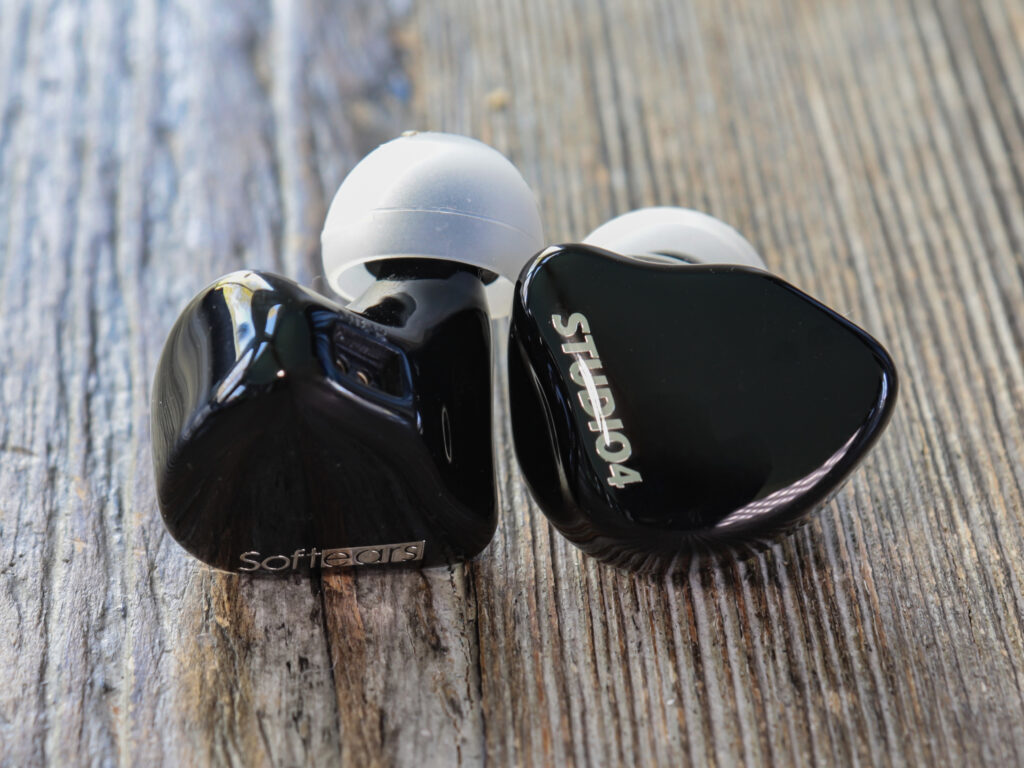
The 1st set that I chose for comparison is one of my favorite all balanced armature iems on the market. Coincidentally, it is also tuned very similarly to the EPZ 550. That set is the Softears Studio4. I have to make a confession. So, I have a reviewing rule that I live by. That is; if I don’t enjoy the set that I’m reviewing, then I won’t review it. Well, I will review a product if I don’t like it but if I feel that a great majority of folks will. However, when I first received the Studio4 I honestly didn’t like it at all, why is it so expensive, only four drivers etc. etc. It just wasn’t for me. Fast forward 3-4 months later and I decide to listen to them again. Why not? I could kick myself because during that moment I absolutely fell in love with this set. Suddenly I could hear why everyone loved them so much as well. I’ve done this a lot, I confess. I have many iems that I chose to not review, however I made a huge mistake on the Studio4. It is one of my top all-BA iems in my collection. Unfortunately, too much time had passed and I never reviewed them. That said, I’ve used this set multiple times for comparisons, in Facebook posts, Reddit posts as well as other social media outlets. Basically, I made amends. With that all said, the Softears Studio4 is what I’d call a reference tuned iem (to a degree), or at least a neutral, studio monitor style set. Very well done, technically wonderful, very enjoyable for casual listening in the right genres too. Just a great set. So, naturally I felt it was a great iem to compare. If nothing else, it’ll give you all a slightly less expensive all-BA set, similarly tuned, and highly qualified if you cannot afford the 550.
Non-Sound Stuff
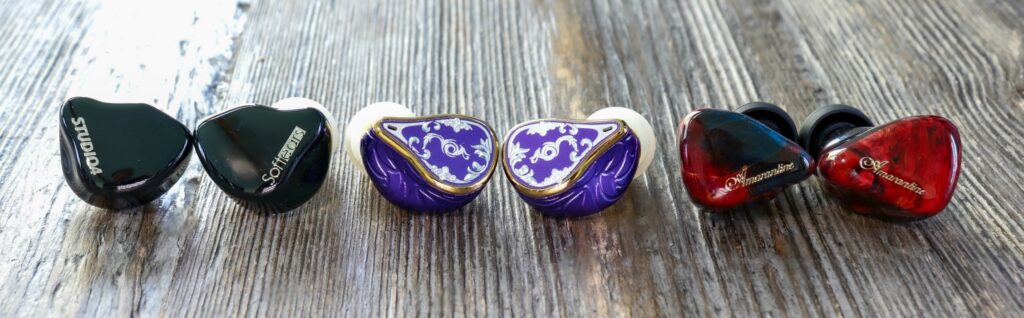
To begin, the EPZ 550 absolutely slays the Studio4 when it comes to unboxing. Not even close. Everything is better for the 550…everything. As far as build, this is also not even close. The Studio4 has a somewhat cheaper looking (appearances aren’t everything) all-resin build against the stunning and wonderfully built 550. Friends, just trust me, the 550 is in another league. Now we go to aesthetics. Um, this is getting embarrassing. The 550 is so much more beautiful, so much more intricate. Friends, when it comes to design/aesthetic these two iems shouldn’t even be mentioned in the same breath. Granted, I actually like the ultra-simplistic design of the black Studio4 at times, but there’s no competition here. As I said, the Studio4 carries four custom balanced armature drivers, and the model of each driver is not disclosed (I wish they were). They also use a 3-way crossover. I think that the 550 has the upper hand (in theory and on paper) by disclosing that they did use both Sonion and Knowles drivers. Five of them to be exact, and it too has a 3-way electronic crossover as well as physical crossover. Both are very well done though the 550 definitely seems to be earning its $499 price tag a bit better. Let’s check out the sound differences.
Sound Differences
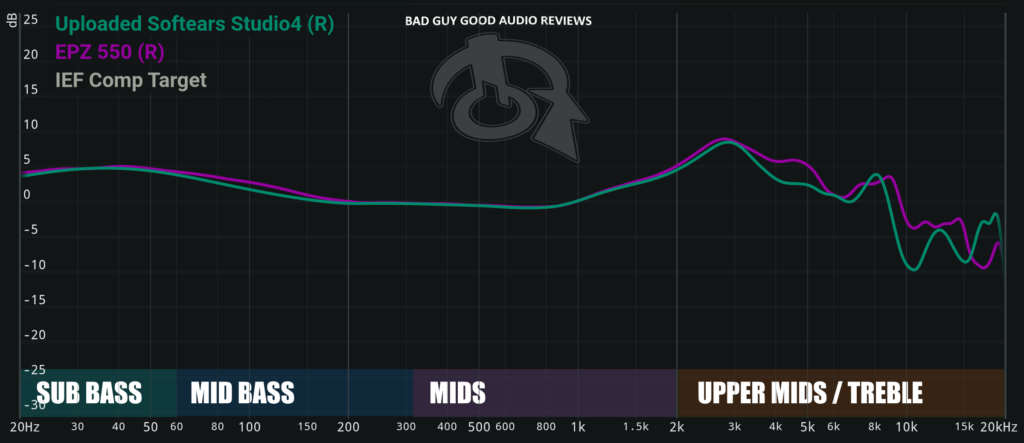
I’ll be honest, these two are very close in sound. Very close. However, there are some note structure differences as well as some tonal differences which actually makes these two fairly different. The graphs would tell you that they are damn near the same set. This is not the case, let’s check em’ out. So, the Studio4 is a hair more sensitive, but both can be played with weaker sources. I absolutely feel that the 550 can pair well with more source tonalities. Also, the 550 scales a touch better too. Both sets run neutral though the 550 has a little bit more pronounced brilliance up top which gives it a hair more shimmer. Also, the 550 has a smoother cadence and flow against the more edgy Studio4. I think that comes down to drivers. To my ears the Studio4 is the better “palette cleanser” style iem, better for studio mixing, perhaps better for stage use (debatable) while the 550 does audiophile style casual listening better. Honestly, the 550 just has that extra measure to it. Perhaps it’s the better dimensioned stage, or the more present and organic timbre. It has more sparkle to it too. So, it’s almost a preference battle, in a way, even though these two are so close sonically.
Between the 20’s
To begin, the bass on the 550 is definitely more present, better textured, and even tighter with a deeper sublevel rumble. We are talking very close in differences, by the way. To my ears the Studio4 bass is more reserved, definitely extremely clean, but less impactful. Though, neither set has a bulbous bass. I like the 550’s better. Just a hair more of a bass presence and dark vibrance sounds more foundational. The midrange of the 550 is unquestionably better if you enjoy vocals, correct timbre, and if you simply love a sweet-toned sound that leans musical. The Studio4 is flatter, studio-like where vocals sound very measured, cooler, and less sweet. The 550’s mids are more forward, and they feel more engaging. Both are highly detailed, great separation, and very transparent. Looking at the treble region, the 550 has more sparkle, more treble bite, clearer, more open, bringing out more micro details, yet may be a hair more fatiguing. The Studio4 has the smoother treble, less defined, less emphasized, less presence yet still very-very well controlled. Again, both sets have that awesome BA note definition, both clean, transparent, both highly technical with a good analytical foundation. Both are awesome in detail retrieval, both have fantastic instrument separation, and both have laser focused imaging. However, the 550 begins to pull away in how dimensional its stage is. Not to mention the 55p stage is larger, deeper, and has that holographic layering to a greater degree.
Final Thoughts on this Comparison
Did I say that I loved both sets yet? Well, if I didn’t then I’ll say it again; “I love both the 550 and Studio4… a lot”. I hate saying one is better than the other, but the 550 definitely has a leg up on the Studio4. It’s just the truth. It’s a better tuned iem, better drivers, and simply a much-much better package, build, and design. Let’s put it this way, I find that the 550 is worth every penny of that $499, but I have many more reservations for the cost of the Studio4. Again, two fine sets that really do well for using all balanced armature drivers.
ODA Amarantine A500 Wood Edition ($499)
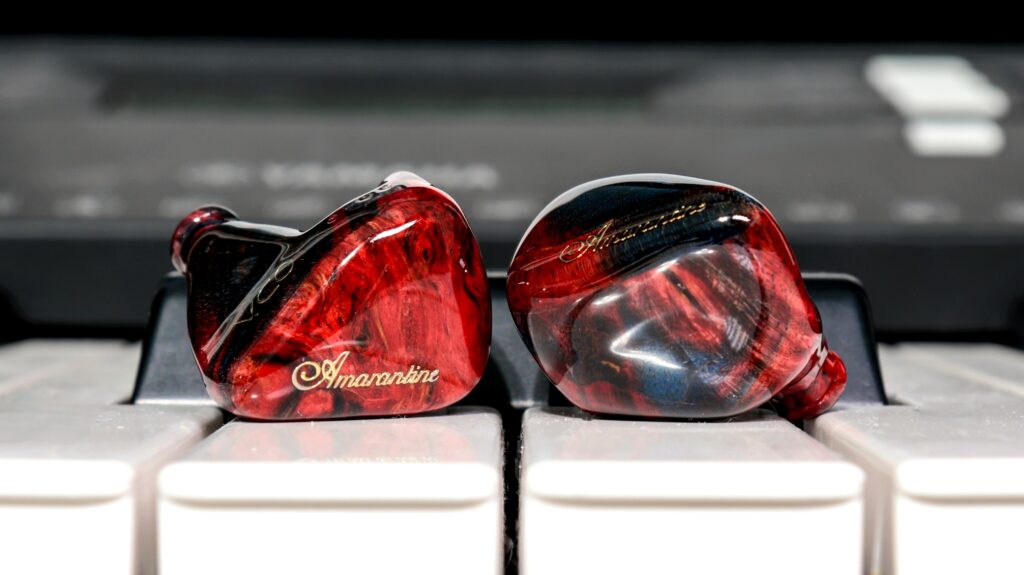
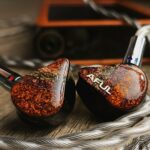
Now we are getting into a tougher battle for the 550. The next set that I chose was another set that I absolutely adore named the ODA Amarantine A500 Wood Edition (Amarantine WE for review purposes). I actually reviewed the Amarantine WE a few months ago (Amarantine WE Review) and was (I still am) very fond of it. This set also comes equipped with five balanced armature drivers (models not disclosed) yet with a slightly different arrangement of those drivers than the 550. Friends, I’d go so far as to say that the Amarantine WE is one of the best sets PERIOD at its cost if you enjoy an all-rounder style iem. However, is it necessarily “better” than the 550? Is the 550 “better” than it? Or are they just different? Let me just put it like this; I love these two equally, even more so than the Studio4, but I listen to them on different occasions and for slightly different purposes at times. That should tell you something. Let’s take a look at how they differ and hopefully it will help explain the EPZ 550 a bit better.
Non-Sound Stuff
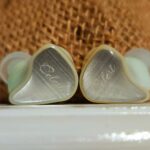
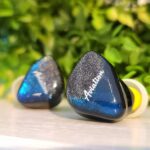
When it comes to unboxing, I find that both offer a nice accessory package. Both have nice eartips, nice carrying case, and both have a great cable. However, the EPZ 550 genuinely has a much more lavish and elegant unboxing experience, and probably also has a slightly better cable too. When it comes to the build, this is a tough one. The Amarantine WE is made entirely out of stabilized wood and is built amazingly. That said, the EPZ 550 is also built just as good using aluminum instead. Both are lightweight, both are ridiculously comfortable, and both sets feel solid in hand. As far as design/aesthetic, I am torn. Look at the 550 folks! Also, look at the Amarantine WE! One has that beautiful wood grain highlighted by color contrast, blood red base color, the black and deep blue highlights, beautiful. Of course, there’s no denying that the 550 is the more elegant, the more sophisticated, the more intricately and artistically designed of the two. Still, both sets are expertly crafted. Both sets use five balanced armature drivers to cover the spectrum, but EPZ chose a 3-way electronic crossover doling out the frequency as well as a physical crossover while the Amarantine WE uses a 3-way physical crossover. Now, I have no idea what drivers ODA chose to use as they do not disclose this. Though their cheaper model, the ODA Hesperus A300 Wood Edition used Knowles BA’s so, I’d imagine the drivers are pretty stellar.
Sound Differences
This comparison is a little more cut n’ dry as these two sound fairly different from each other. Overall, the Amarantine WE carry a slightly warmer hue, more of a bass emphasis, more musically inclined, even though its technical skills may surprise you. Also, as you already know the 550 is almost all neutral with just a touch of warmth. Timbre on both sets is very nice to my ears. I find the Amarantine WE a hair more organic while the 550 is closer to neutral-natural. I find the 550 is a hair more mid-focused and more vibrant carrying more of an analytical skew towards its sound. Both sets have that smoother and fluid tone flow though the 550 carries a crisper and more edgy sound when a track calls for it. Note weight is thicker, richer, and more robust on the Amarantine WE while technically the 550 stands out and is simply a much higher resolution and higher clarity iem, even if the Amarantine WE don’t disappoint at all in the technical stuff considering it’s more fun and more robust sound. Let’s take a look at each 3rd of the mix…
Between the 20’s
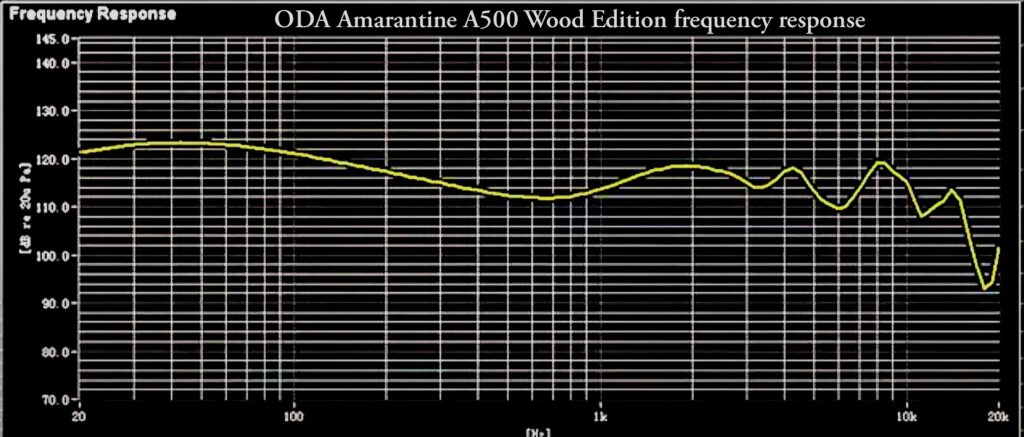
When it comes to bass, the Amarantine WE are certainly lifted much more with a 10-12 dB boost compared to the 550’s 6-7 dB boost. The sublevels dig deeper, more haptic. The mid-bass slams harder and adds more warmth and richness frequency wide. The 550 is much tighter, cleaner (to an extent), and has more obvious surface texture to notes. Looking at the midrange, both sets have a more forward midrange, though the 550 clearly has the more intimate and pronounced midrange. I find vocals win out on the 550, it has better clarity, more detailed, and simply a sparkler sound. The Amarantine WE carry the richer, warmer, more organic, juicier, and smoother midrange with a more traditionally musical sound. For the record, I love both midranges’ equally. Next, the treble of the 550 shows up as more brilliant, just as extended, but it also has that nice crispness and treble punch. On the other hand, the Amarantine WE’s treble is a bit more reserved, less fatiguing, and smoother. The 550 has better overall detail retrieval, tighter transients, crisper definition, better contour to notes, and better sound separation. While the Amarantine WE do very well in the technical stuff, but is much more emotionally charged, more engaging and not as precise. Both soundstage are great, wide, tall, deep, but the 550 has a more holographic sound field, with slightly better imaging and layering abilities.
Final Thoughts on this Comparison
I’ll say it again, these are both two absolute bangers under $500. If you are seeking out a top shelf all-BA iem under $500 then look no further than these two sets. Each represents a different tuning, two different styles of engagement, and both have two different versions of what “musical” can sound like. Yes, the 550 has the better technical presentation, but the Amarantine WE wins out for straight-up emotional-addictive mellifluousness. I love them both once again and I’m so glad they are both in my collection and I don’t have to pick between the two.

Genres
It is my opinion that the EPZ 550 is not quite an all-rounder set. While it is one of the better tuned all-BA iems under $500, there are still some limitations to its tuning. Of course, it is these limitations which make this set what it is. At any rate, I will try to name and suggest some genres which I have checked out, and feel will work best with this set. Having said that, please understand that this is not set in stone. We reviewers like to think that our opinion is the end-all-be-all and the audio world is all black and white, no gray. However, friends, anyone who has been in this hobby long enough knows that everything is subjective, nothing is concrete, and nothing is black and white. It’s all gray all the time. I say that because in every genre which usually will playback wonderfully on the 550, there are plenty of tracks in every one of them which won’t come across quite as awesome. That’s life in audio folks. It should be understandable too, but apparently some of you really feel strongly about this subject (the peanut gallery always speaks). Also, in the less great genres, I hear plenty of tracks which do come across great. I feel the need to explain this in every review, and I will continue to do so because I do not want to lead anyone astray with my opinions.
Genres Which Work
To begin, I adore almost any vocal forward, string heavy Singer-Songwriter stuff. Even more Vocal-Centric Pop music, Folk music, Acoustic type stuff too. This set is expertly engaging with its mid-forward, clean, and high-res sound. Genres like “most” Jazz works great for me. With the 550 I hear such amazing separation of notes, high clarity, driver speed, as well as a transparent midrange which meanders through every Ultra complex Jazz piece with a scalpel. I especially enjoy Jazz combos with vocals. Ooh, I adore Classical or Orchestral music on this set. It seems born and bred for it. I’m telling you right now, that 3-dimensional sound field, up and down layering, front to back layering, and speedy transients along with its brilliance simply helps Orchestral stuff to shine. Any Bluegrass stuff is fantastic for all the same reasons that I’ve expressed already. Some Rock music is great, and most Country slays on this set. I also have found that EDM is actually quite awesome. No, the 550 doesn’t carry that ultra deep sublevel rumble, but it does have the speed and texture that I want. Synth lines are very well articulated, and the sparkle up top gives rises and intricate hi-hats the shimmer needed. Anyways, there are more genres which work but I’m going to stop there for now. This review is already way too long.
Not So Great Genres
When it comes to genres which don’t work quite as well, I’ll start where I stopped in the last section. While many EDM tracks come across great, there are plenty which require that deeper and more rigid slam and sub-bass meat. So not everything works great. Hip-Hop, Rap, bass heavy Pop, and even some R&B will sound a hair too clinical and less punchy or visceral. If that makes sense. Those who adore a warm Rock ballad are not going to like the 550’s portrayal of the genre. Especially brighter moments will be too much for some folks. Metal is the same as those hot electric guitars in treble heavy mixes will sound sort-of sheened out in treble at times. Granted, the 550 handles it well. Also, those heavy double kicks aren’t quite the same as when you have a beefy DD doing the kicking. At any rate, the genres which won’t work are those which tend to prioritize warmth, big bass slam & rumble, or if you enjoy iems which are very forgiving of poorly mastered stuff and more energetic genres rather than the 550 which can get a tad lustrous.
Last Words on the EPZ 550
I have had so much fun in this review period. Of course, I have fun in every review period and being able to speak in a subject that is near and dear to my heart. However, this one was extra special for me. In my opinion, the EPZ 550 actually does represent pretty awesome sound value. Friends, I am not exaggerating when I say that the $500 EPZ 550 is right on par with the $950 Letshuoer Mystic 8 in many ways. Sure, the Mystic 8 has some technical skills that the 550 doesn’t have, but the upgrade is so incremental that it almost makes no sense to spend the extra money. I feel that needs to be said. The sound value, price-to-package, price-to-performance, and joy that a set like this can bring is flat-out enthralling at times. How many moments did I sit and soak in my music with the 550 in my ears? How many times did I hit “previous track” needing to once again hear that key passage again? The dulcet nature of the 550 is something which is hard to elaborate on, it’s very difficult to explain and impossible to quantify. Friends, I’ve said this before on other sets and in other reviews and each time I say it I mean it. That is; the EPZ 550 doesn’t even carry my favorite sound signature, and I still reach for this set over many-many other iems which do carry my favorite style of tuning. That’s no small thing. I just cannot recommend this set enough to anyone who desires what I’ve tried to explain in this review. The $499 price tag is absolutely worth the cost for this special mid-fi priced all balanced armature set.
The Why…
Because I honestly feel that the unboxing experience is one of the best that I’ve come across at this cost. The style, the colors, the elegance of it all is simply top level. Great job EPZ. EPZ adds in solid accessories across the board, eartips, cable, case too. All very nice. Then you have a build that can only be described as exceptional. What other word do I use? Carved in such an intricate manner from the shells to the faceplates out of one solid chunk of aluminum. Also, the 550 is very comfortable, and very lightweight. Never a problem in the ear. No wear fatigue at all. The fit is a touch deeper than some sets, but once the right tips are found, the 550 is an all-day set. I’d also say that this is one set whose design alone is a huge selling point. The aesthetic appeal of this iem is really quite nice. Of course, the look won’t be for everyone (obviously), but I don’t think that anyone could look at this set and at least not be impressed with the craftsmanship of it. However, all of that stuff is secondary to the sound. It’s the tuning and end result of that tuning which takes this set from a good iem, to a fantastic all-BA set for its cost.
That Sound
I’ve already gone over this but the sound of the EPZ 550 is stellar for what it was tuned to be. Let me be clear, the 550 is most certainly tuned in a way which may be polarizing to some, but for those who can appreciate the 550’s tuning it will be one of the better sets under $500. The musicality, the engagement factor, the precision, and the emotionally charged sound all combine to offer a sound that is both technically astute and harmonious. This is a sound which is clarity rich, highly detailed, great sound field dimensionality and it has fantastic control. The bass reaches deep yet is not overcooked, doesn’t cause veil, and the bass is very well defined, textured, and can take in just about any track. Also, the midrange is probably the star of the show. Very nice neutral-natural timbre which sounds as crisp as it is smooth. While mid-centric may not define this set perfectly, it is the midrange which takes the 550 from a reference leaning flat iem into a musically enthralling iem. Vocals are gorgeous, both male and females, and the 550 does a great job of keeping its control without loads of glare or shout. The treble has bite, has nice extension, great timbre quality, very well detailed, great separation, and is simply a nice treble presentation. Technically this set stands out very nicely, yet it doesn’t come across to dry or to clinical. Lastly, the stage is spacious, well layered, and holographic. Really, there isn’t much not to like folks. This is one of the easier recs from me.
Conclusion
To conclude my full review and feature of the EPZ 550, I first have to thank EzpZ Audio for sending over the 550 to review in the 1st place. Thank you very much. It has been an absolute blast getting to know this talented iem. I cannot wait to see where EPZ goes from here. Also, thanks go out to you, the reader, who decided to use your free time to check out my thoughts. This means the world to us at Mobileaudiophile.com. Truly it does. Every click matters folks. So, thank you very much.
Other Perspectives
Now that you’ve read my words about the EPZ 550, I really want you to go read other people’s opinions. Like I say in every review; we are all different. Each and every one of us. Different likes and dislikes, different music libraries, different source devices, different hearing abilities, and we haven’t all been down the same road in audio which greatly affects how we view some products. So please take the time to check out other thoughts as it is of the utmost importance that you get your purchase right. Beyond that, I think I’m finished friends. I hope you are all doing well, stay as safe as possible and always… God Bless!!
550 Pros
-The unboxing is one of the best in the price point
-Build Quality is top shelf
-Extremely intricate design/aesthetic makes the 550 one of the most beautiful iems
-Great accessories (cable, case, tips)
-All day comfort, lightweight, ergonomic
-Great tonal balance, very clean, transparent, and yet engaging sound
-Solid neutral-natural timbre
-Clean and well defined bass, just enough oomph, high quality
-Midrange is so well tuned. Awesome for both male and female vocalists
-Highly musical and highly technical
-Treble has sparkle, great control, high resolution, nice extension
-Highly detailed
-Imaging is spot on and pin point
-Multi-layered sound field
-Stage is spacious, airy, and very well-dimensioned
-Simply a fantastic sounding all-BA iem
550 Cons
-Look may not be for everyone (is this a con?)
-Not for bassheads or even marginal quantity bass lovers
-Those sensitive to upper mid glare may have an issue with the 550’s upper mids
-Mid-treble can get a hair bright for warm, dark lovers
-This is one set which will highlight all poorly recorded tracks
-Not for anyone who desires a rich, ultra-smooth, and warm tuning





No Comment! Be the first one.