
















































Letshuoer DX1 Review
Intro
This review and feature covers the latest from the audio brand Letshuoer named the Letshuoer DX1 ($159). I am most certainly a bit late to the party in the DX1, but it’s definitely better late than never. Truth is, if the box says “Letshuoer” on the cover then I’ll likely be interested. Especially if the set I’m reviewing looks as gorgeous as the DX1 does. One of the most intriguing aspects of the DX1 is the fact that it is indeed a single dynamic driver earphone. There is something so utterly awesome about mid-fi and up single DD’s. I love to see where the driver tech has taken us, and I adore seeing different brands giving their best shot at that single DD sound. Granted, the DX1 is hardly mid-fi, but instead it’s more like high budget at $159, but I still believe that it represents a more premium design, drivers, and tuning for Letshuoer. Now, I haven’t actually heard the DX1 just yet as shipping says another day to go, but I’m most certainly excited to hear what Letshuoer was able to do with these aluminum-magnesium dynamic drivers. We shall see.
Table Of Content
- Intro
- Letshuoer
- Reviews
- Sets like the…
- Well-Oiled Machine
- Competition
- Non-Affiliated Purchasing Links
- DX1 Pros
- DX1 Cons
- Gear used for testing
- Packaging / Accessories
- Unboxing
- Eartips
- Carrying Case
- Cable
- Build / Design / Internals / Fit
- Build Quality / Design
- Internals
- Fit / Comfort
- Drivability / Pairings
- Output Power
- More juice
- Source Pairing
- Sound Impressions
- What’s it sound like?
- Tonality
- Niche?
- Who’s it for?
- Smooth, yet fast…
- Bass Region
- Sub-Bass
- Mid-Bass
- Downsides to the Bass Region
- Midrange
- Very Nicely Done…
- Lower-Midrange
- Upper-Midrange
- Downsides to the Midrange
- One more thing
- Treble Region
- Technically Speaking
- Downsides to the Treble Region
- Technicalities
- Soundstage
- Separation / Imaging
- Detail Retrieval
- Comparisons
- Fiio FD15 ($149)
- Differences
- Sound Differences
- Between the 20’s
- Final thoughts on this comparison
- Is it worth the asking price?
- Unique
- The Why…
- Conclusion
- Other Perspectives
Letshuoer
What can I say that I haven’t already said in previous reviews covering Letshuoer products? I’ve basically praised this brand left and right. I love Letshuoer’s attention to detail, their unwillingness to settle, their total knack for crafting premium iems and audio products. Also, I enjoy their artistry too. Of course, there are a few not so artistic looking designs, but Letshuoer and all of their sister brands seem to go the extra mile often. Whether it be those awesome HeyGears builds, or their all alloy builds such as we see in the DX1… Letshuoer always seems to try to impress. Always solid unboxing experiences, always nice box, cables, carrying cases and a slew of tips. Also, they switch up their tunings all the time. I don’t hear a “house sound” so to speak. Now, there are some of their products which I chose to not review, but those are very few and far in between. Honestly, I have been nothing but impressed with this brand and I can’t wait to continue to watch what they come up with in the future.
Reviews
So, I’ve personally reviewed and featured a little over a handful of Letshuoer’s iems, and each one of those sets featured tunings which were unique as well as high performing in respect to their target. Now, there are a few which I strayed from reviewing for my own personal reasons, but wow has Letshuoer made some legendary iems folks. Of course, I’ve reviewed sets from Artti, Letshuoer’s sister company. However, I’ll keep these examples within the Letshuoer branding. I’ll speak on some of those below:
Sets like the…
Sets like the ultra-famous Letshuoer S12 Pro (S12 Pro Review). It was the first-best planar that Letshuoer had created up until that time. In many folks’ eye’s the S12 Pro eclipsed the 7hz Timeless and many others. Next was the Letshuoer DZ4 (DZ4 Review) which was, and still is, a mid-centric vocal lover’s paradise within the price point. Then I reviewed the Letshuoer S15 (S15 Review) which in my mind was the best musically gifted and rhythmic planar ever made with some of the most organic timbre. It totally bucked the “planar timbre” trend. Truly a special set for warm, lush, and rich lovers. Next was the wonderfully tuned, ultra natural and balanced Letshuoer Cadenza 4 (Cadenza 4 Review). What a performer the C4 is folks! So melodic, so well-tuned! Then came one of my favorites under $100 still, the Letshuoer S08 (S08 Review). In all honesty, it is a baby S15. Wonderfully organic, rich and warm timbre. It has big earthy bass and is so fluid. Best planar under $100 in respect to a musical tuning. After the S08 came one of the best planars under $500 in the Letshuoer S12 2024 Edition (S12 2024 Edition Review). Epic tuning, fun, and another organic set that doesn’t skimp on details and technical ability. For only $199 the S12 2024 is really a special deal. Lastly, I reviewed the flagship all BA set, the Letshuoer Mystic 8 (Mystic 8 Review) which is a total departure from other tunings from Letshuoer. What an amazing sound folks. That neutral/natural take in the spectrum, wholly mellifluous, and completely tuneful. I can’t say enough good words about the Mystic 8. Well, about most of Letshuoer’s iems.
Well-Oiled Machine
I say all of that to at least try to communicate how well Letshuoer is able to read the community, and craft sets which are on-point in both design, build, and tuning. As I’ve said a few times; they are very unique against the market. This is a brand with all the resources that they need at their disposal and many years of experience in their belt. Founded by a man named Danny To way back in 2016 Letshuoer (then it was “Shuoer”) came out of the gate hot with some huge success crafting some really fun sounding sets. Most certainly Letshuoer has refined their abilities, honed their skills, and now they seem to be a well-oiled machine. Again, I can’t wait to see where Letshuoer goes from here.
Competition
Without a doubt the number one hurdle for the DX1 to climb over is the competition in the $150 to $200 price point. Like all price ranges the hobby is chock full of fantastic iems. I feel it is especially difficult for a single DD in this range. I hate to be the bearer of bad news, but the $150 to $200 price range has some of the most lauded and praised single dynamic driver earphones on the market. The good news is that the DX1 did finally arrive at my home (two days later than expected) and I have to say, for its particular tuning it is an extremely clean sounding set and most definitely sits comfortably against the best. Having said that, I’m still in the honeymoon phase and a lot can change. I haven’t performed burn-in yet, I haven’t messed with tips or cable, and I haven’t really had a good long listening session yet. Trust me, I’ll remedy that right now. At any rate, I think it’s time to get this show on the road. So, without further ado, the Letshuoer DX1…
Non-Affiliated Purchasing Links:
DX1 Pros
-Build Quality is clearly awesome with its stainless steel chassis
-Such a classy design, beautifully crafted, awesome aesthetic
-Very nice unboxing at $159
-Mid-centric, wonderful neutral/balanced tuning
-Extremely clean sound
-Top class timbre
-Bass is clean, snappy, and with a sharp attack
-Awesome for vocalists, midrange is very melodic without any harshness
-Nicely detailed for an under $200 single DD
-Very smooth operator, there’s this undeniable cleanliness in its fluidity that’s simply wonderful for an under $200 single DD
DX1 Cons
-Bass is a bit underwhelming in terms of weight & emphasis
-Missing some bass rumble & depth
-Sound altogether will be a hair lackluster for some folks
-Not the most dynamic listen
-Not for treble heads or fans of an energetic treble presentation
-I think for the cost it’d be nice to see a bit better of a cable
-These types of builds will always pose as a fit problem for some folks
-Some driver flex when inserting the DX1 with certain tips
-Soundstage is intimate, not closed-in but also not wide or vast
Gear used for testing
–IBasso DX240 with Amp8 MK2
-Many not listed
Packaging / Accessories
Unboxing
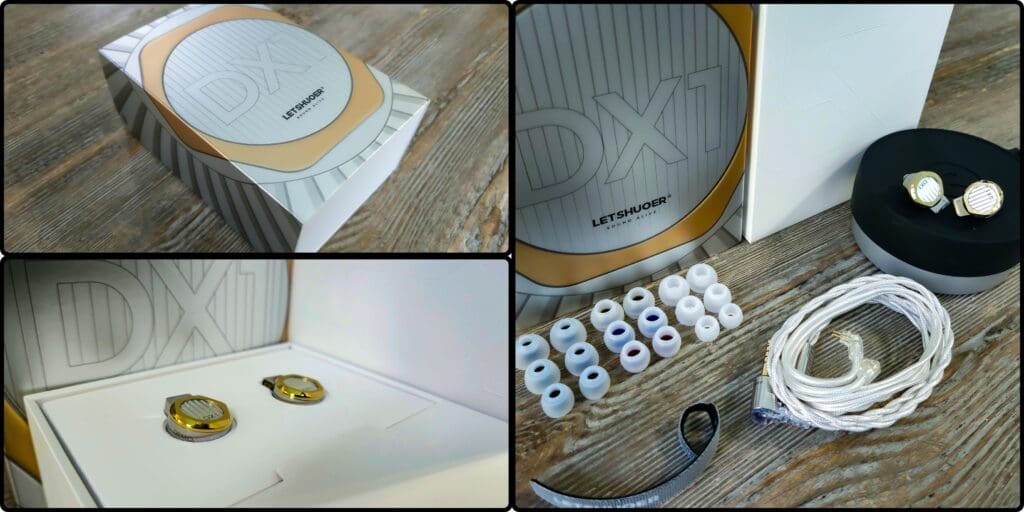
The Letshuoer DX1 arrived at my home in a fairly large box. However, it’s also one of the more ornate and dope looking boxes I’ve seen, in any price point. It’s a very stylish silver & gold box with a very large “DX1” embossed on the center of the cover sleeve. I won’t go into crazy detail as you can see the photos, but it’s a slick looking box. Anyways, take off the gorgeous sleeve and you’ll see an all-white cardboard box which honestly is still pretty stylish, very Apple-like. Take off the cover and the beautiful DX1 earphones will be sitting in white cut-outs. Next to the DX1 you’ll notice a white tab. Pull the tab (lift off) and you’ll see a small “Accessories” box. Take off that layer and you’ll see the carrying case (Side note: I love these Letshuoer cases). I really don’t want to ruin the unboxing for you, so I’ll just add that within the packaging you’ll also find the cable as well as the tips. Just know that the unboxing is rather cool. Always Letshuoer makes this experience very satisfying. At least it is for me. Though, I’m easily amused. Lol.
Eartips
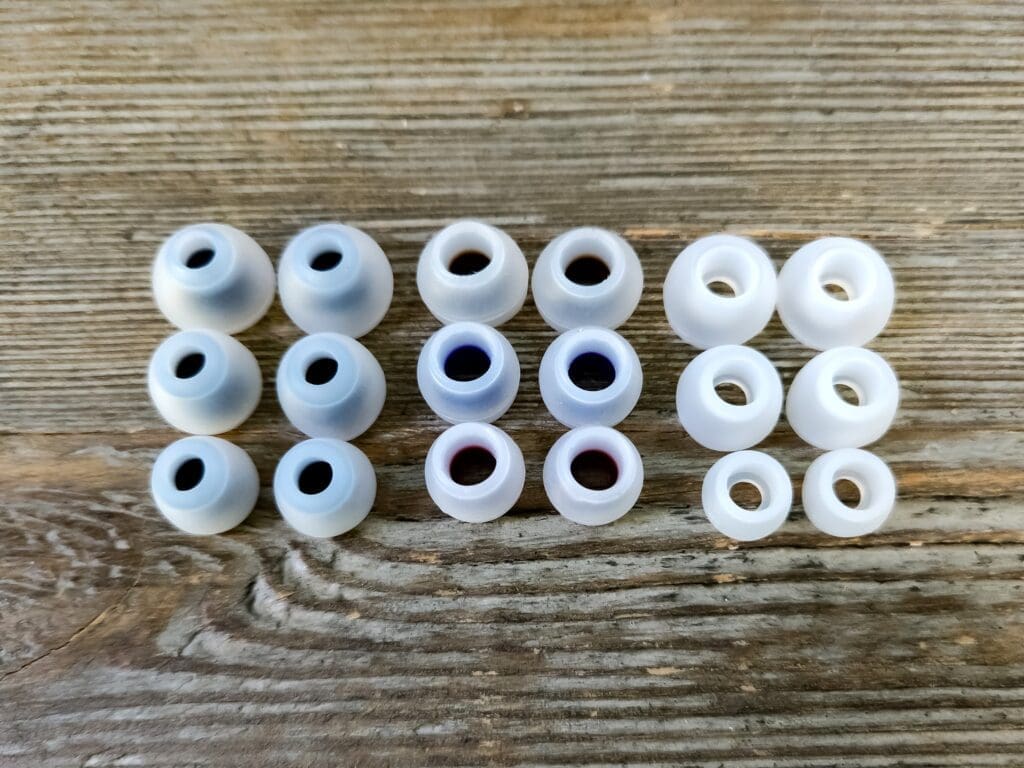
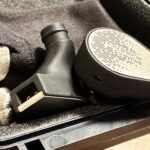
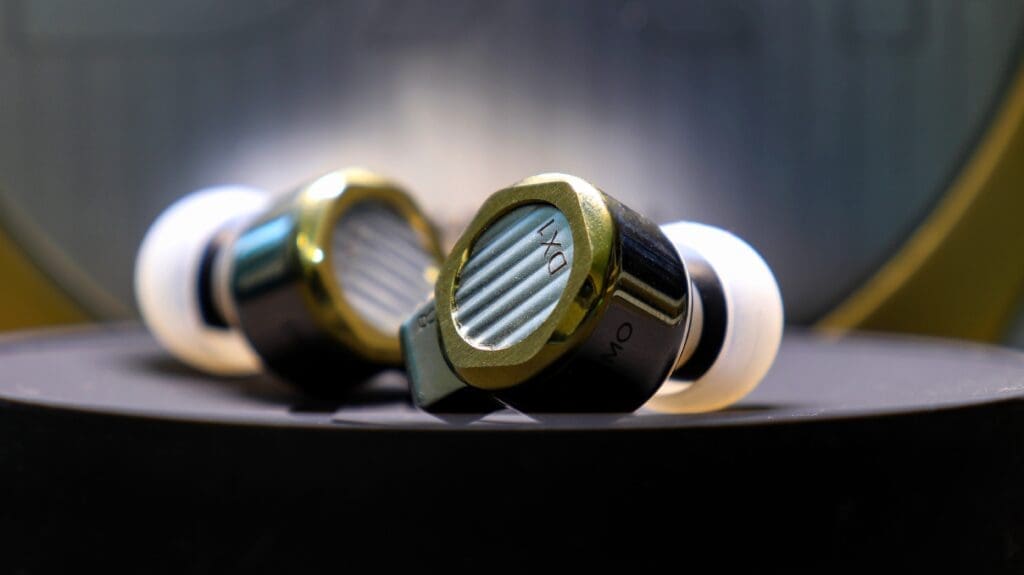
So, Letshuoer really did try to make good selections of eartips within the packaging. I know this because they added in other 3rd party tips, which I can appreciate very much. They provide nine pairs of eartips in total over three different styles of tips. The first set of three eartips(S, M, L) are white silicone narrow bore eartips with a fairly rigid stem and firm flange. You’ve seen these types of tips. They are typical narrow bore style. The next set of three (S, M, L) are a semi-wide white silicone eartips with a black stem. These are much more like KBear 07 eartips than anything else. Very close in form, build, firmness, and bore size. Basically, they are 07’s. I really like these tips. Of course, I really enjoy these tips quite a lot with the DX1. Lastly, Letshuoer added in three pairs of TR I Clarion tips. The Clarions are a white silicone eartip with different colored stems depending on size. Clarions have a very wide bore which is great for opening up the sound. I did use the Clarions here and there for critical listening, but for the most part I used the KBear 07 style Letshuoer tips from the packaging which really helped me with getting a seal. Having said that, make sure to go through the tips to find the right fit for you as well as the right sound. Also, go through your tip collection as you may find a set that pairs even better for your particular ears. Just because I like the sound with one particular set of tips doesn’t mean that you will. At any rate, Letshuoer provides a nice haul of tips which was good to see.
Carrying Case
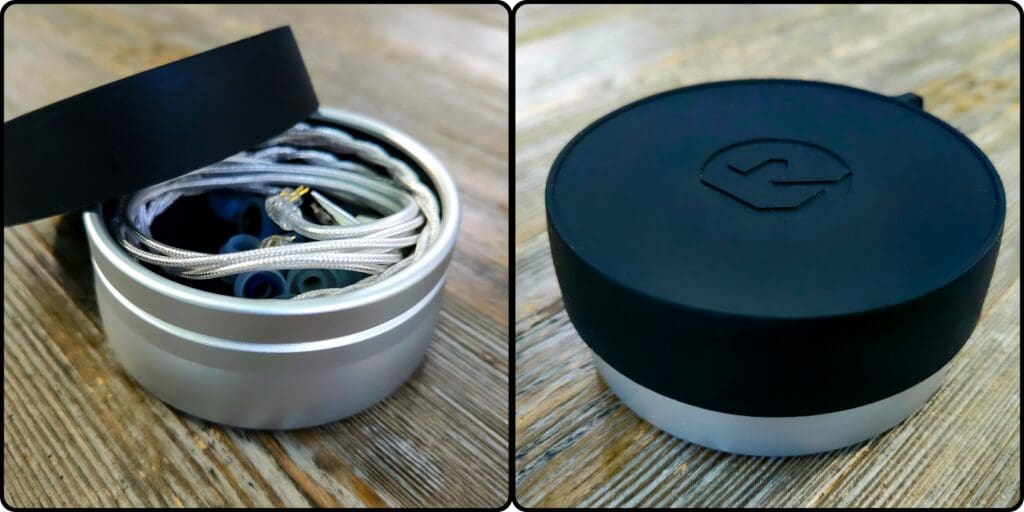
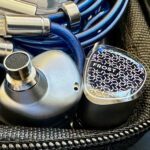
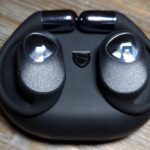
I love this carrying case. It is the exact same case that was provided with Letshuoer’s flagship Mystic 8. I find it to be so cool, and it looks pretty classy as well. Anyways, the case is a circular aluminum case with a thick side wall of aluminum. It feels very durable in hand. However, the case lid doesn’t thread on, it doesn’t snap on, and there’s no magnetic clasp holding it on. Actually, the case’s lid is made entirely out of thick black rubber which uses friction to hold it on. You can feel the lid suction to the case and fill up with air. It’s a cool thing to see. Again, I’m easily amused. At any rate it’s a pretty nice case which is probably just large enough to fit the DX1, the cable, and maybe some tips. It isn’t the largest case on planet earth. However, it is a great case to just throw in a bag and not worry about. Certainly, a nice addition.
Cable
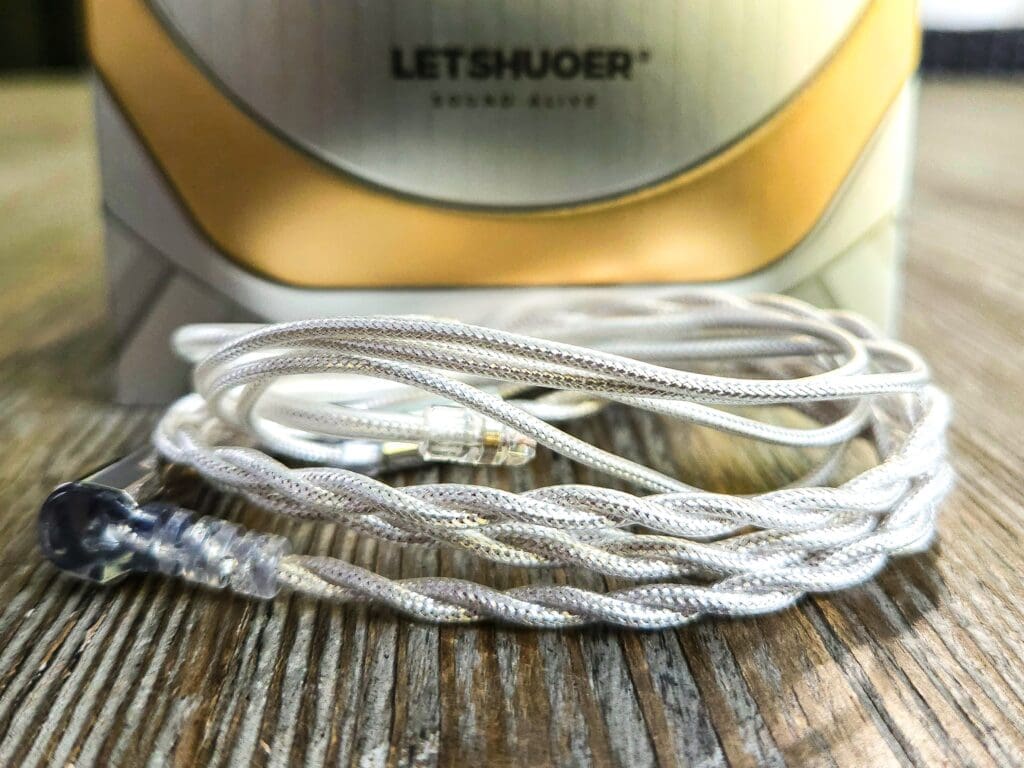
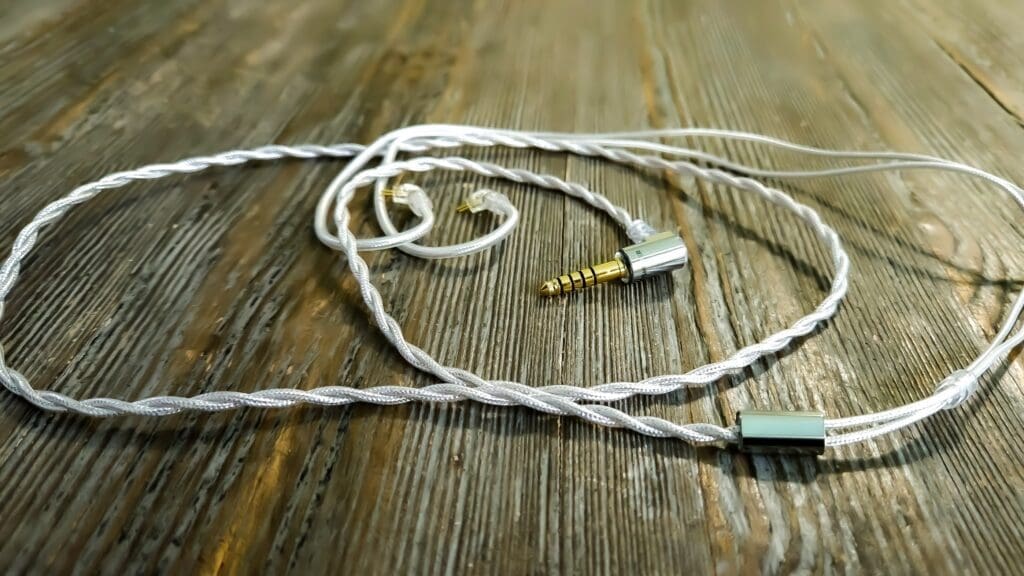
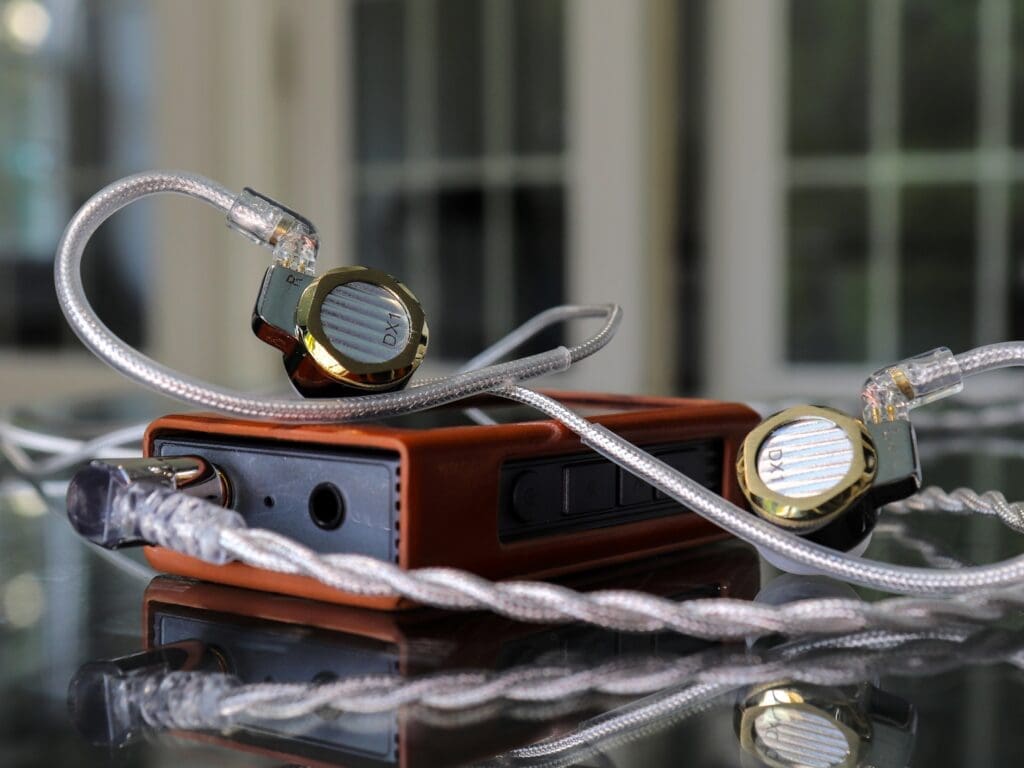
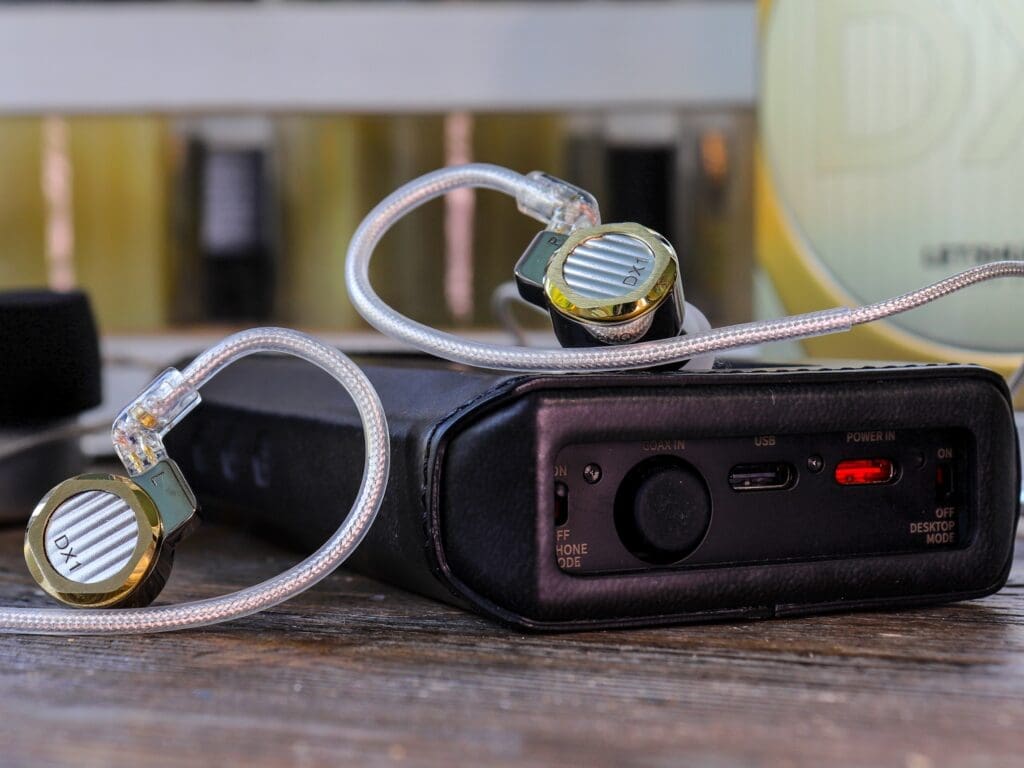
Now, the cable I would call about average for the price point. It isn’t anything spectacular like we are starting to see in the $150 market. I’d like to see a bit ffatter cable with a modular system. However, it also isn’t a bad cable by any means. Just a hair thin and less luxurious than I’d like. Having said that, I do think I know why Letshuoer chose this cable. I’d say it is for functional purposes. Obviously, they don’t want to give us some huge cable that will pull and tug on the DX1 when they’re in our ears. I think they may have over-thought this one. Again, it isn’t bad at all, and I chose to use it for all critical listening. You can purchase this cable in a 3.5 single ended variant or the 4.4 balanced variant. So, the cable is a white braided wire, 2-pin, with right angle Jack’s. It is made of 256 cores of silver-plated monocrystalline copper as well. Again, it certainly serves its purpose and does so pretty darn well. However, I would’ve liked to see a slightly better-looking cable with these beautiful earphones.
Build / Design / Internals / Fit
Build Quality / Design
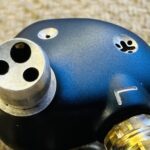
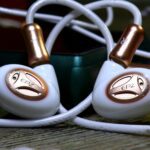
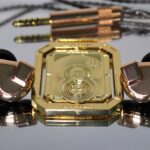
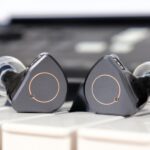
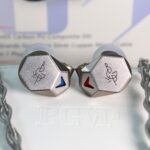
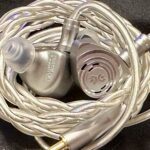
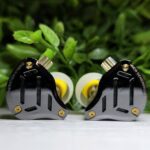
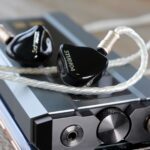
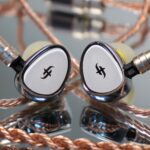
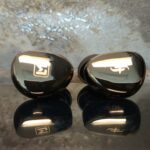
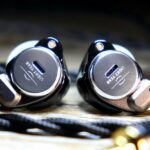
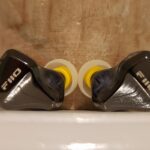
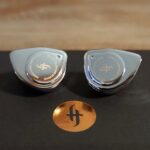
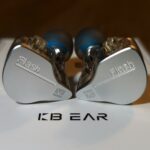
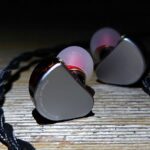
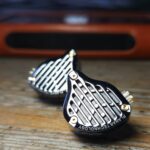
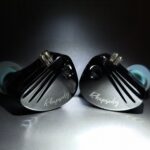
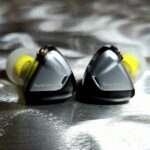
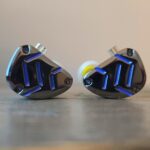
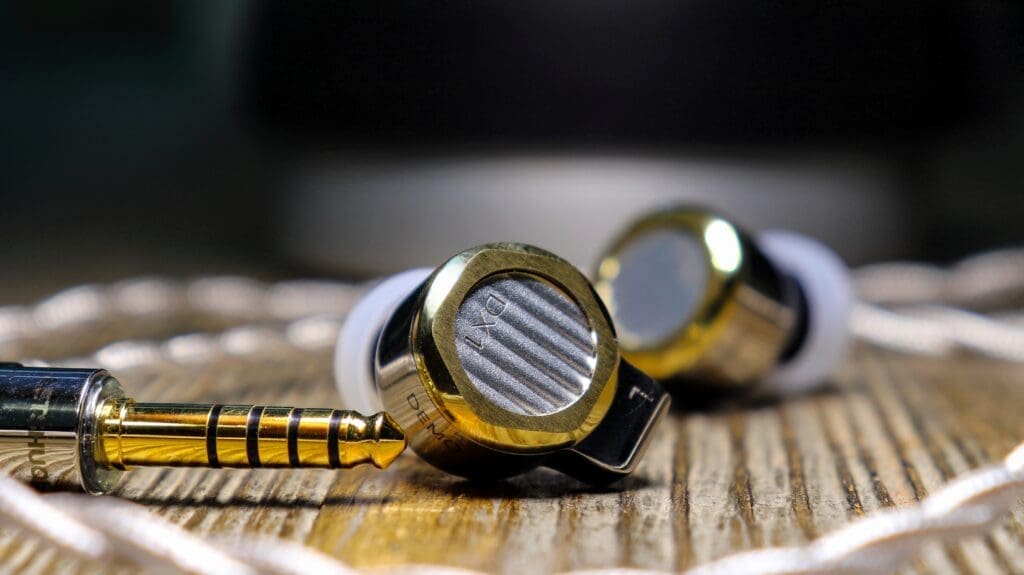
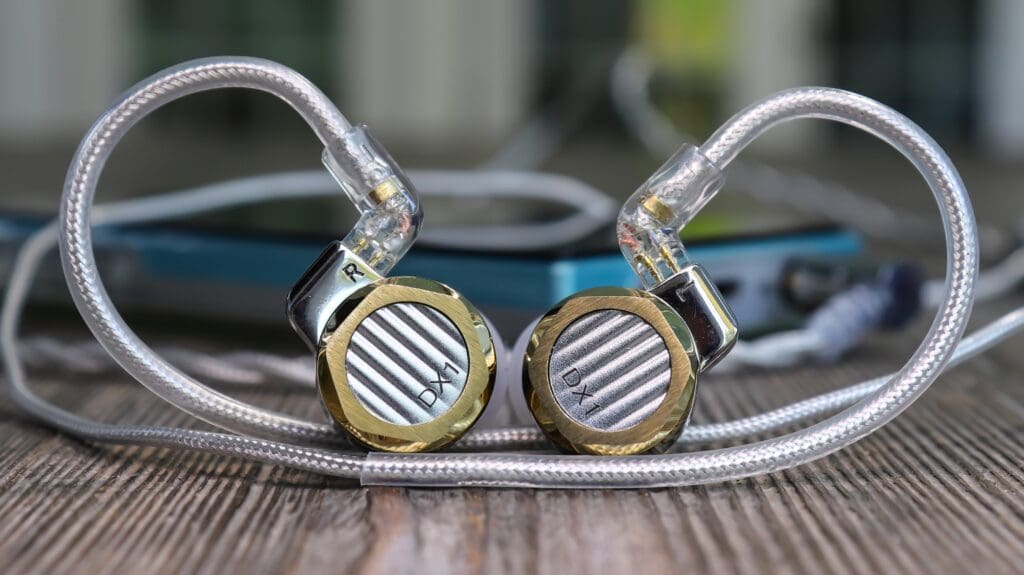
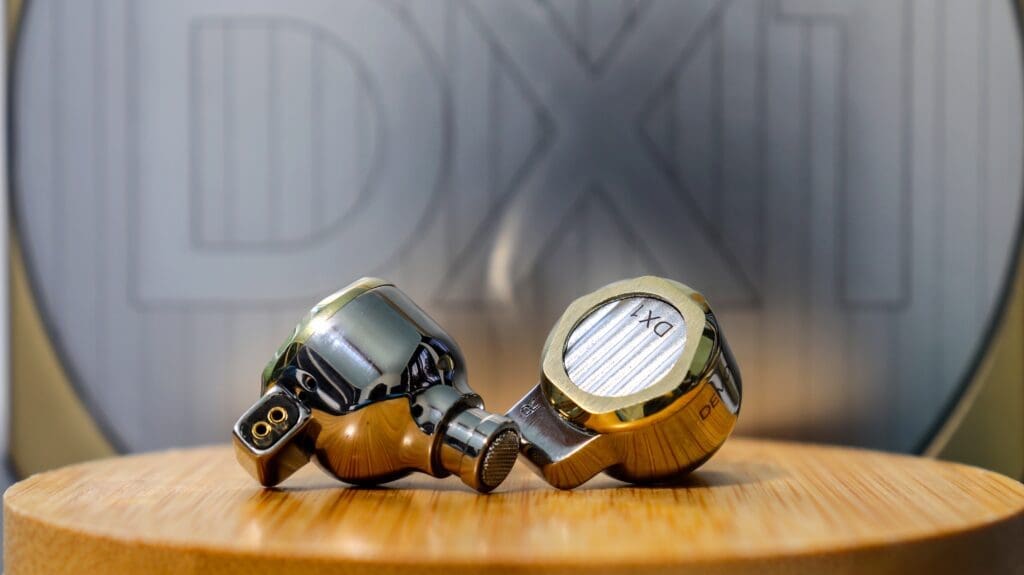
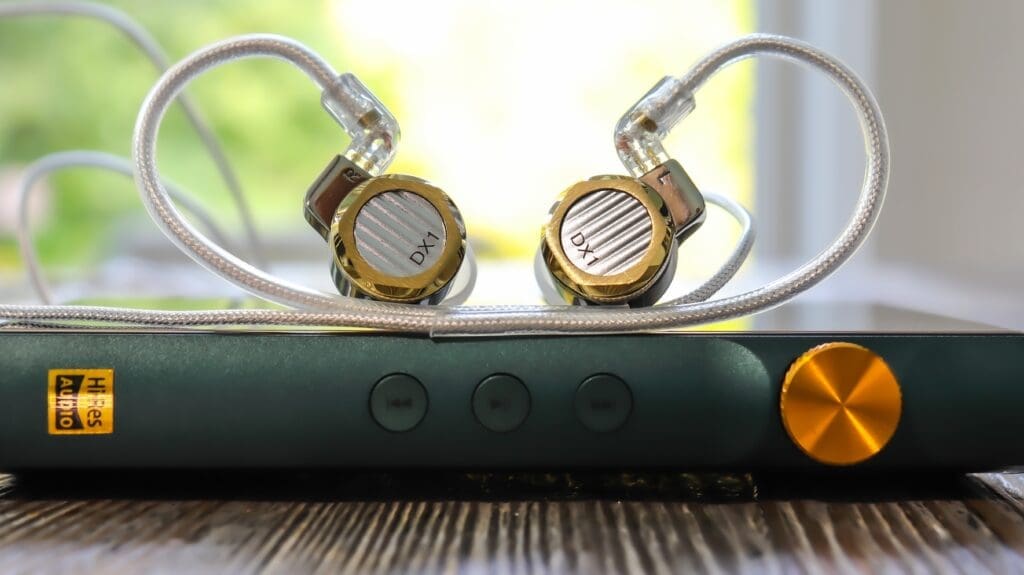
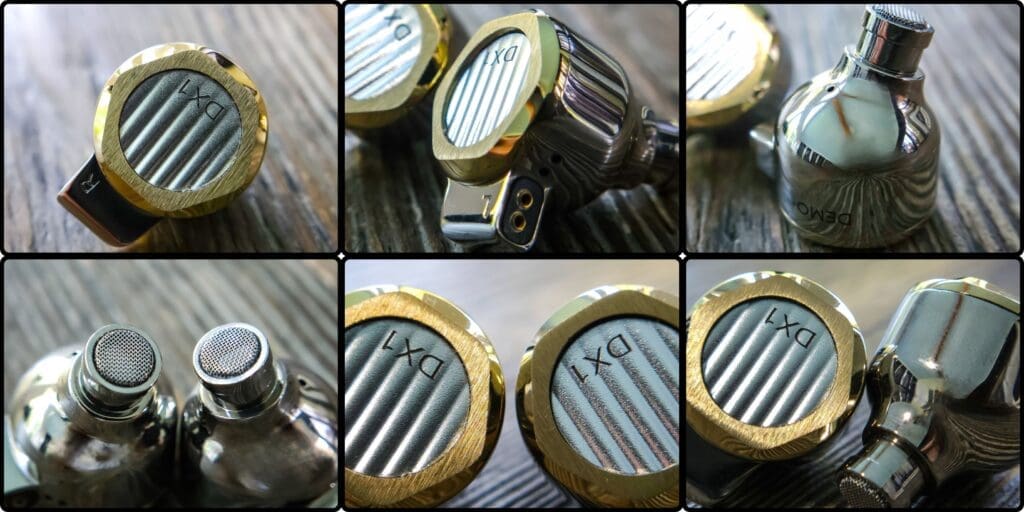
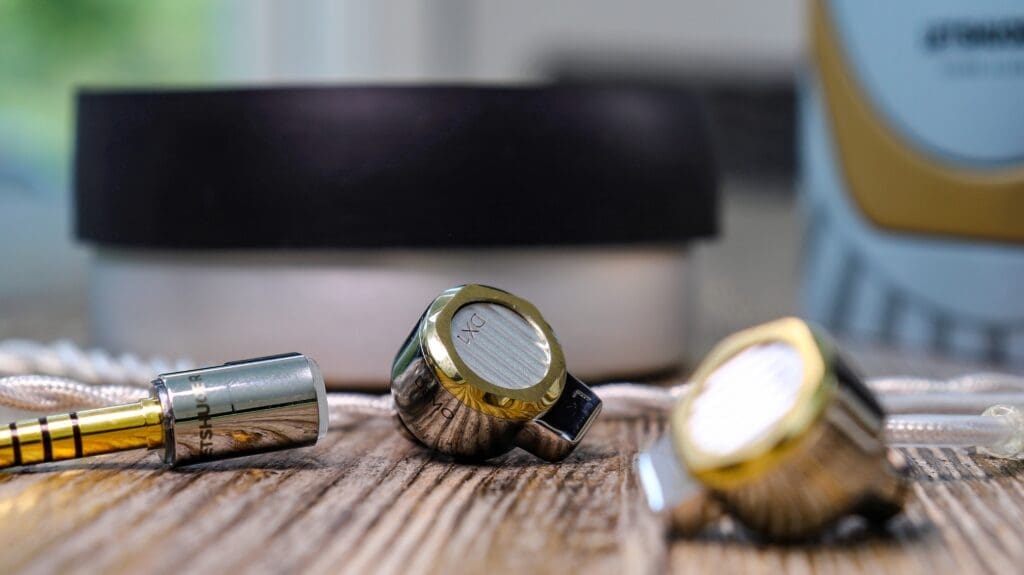
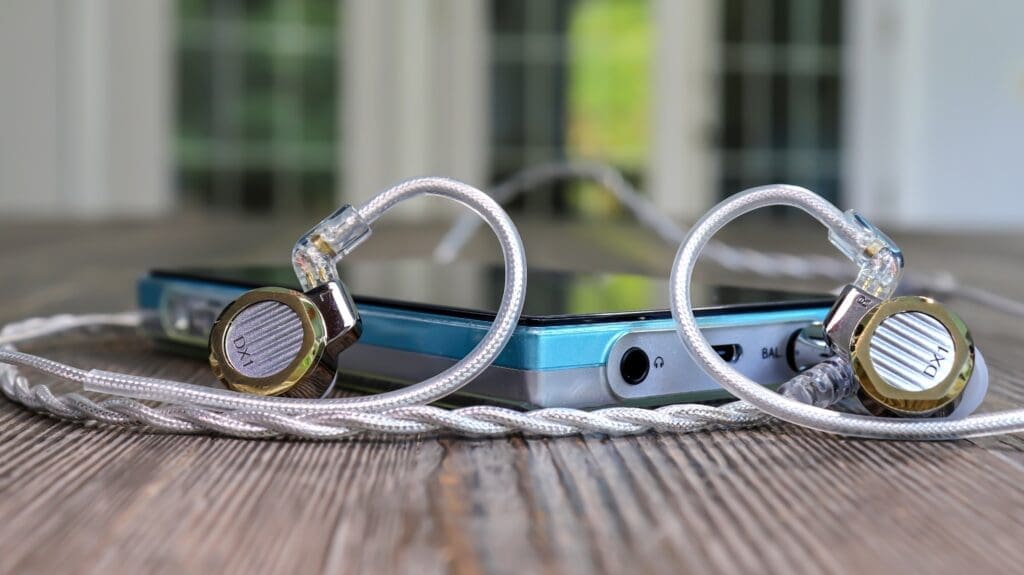
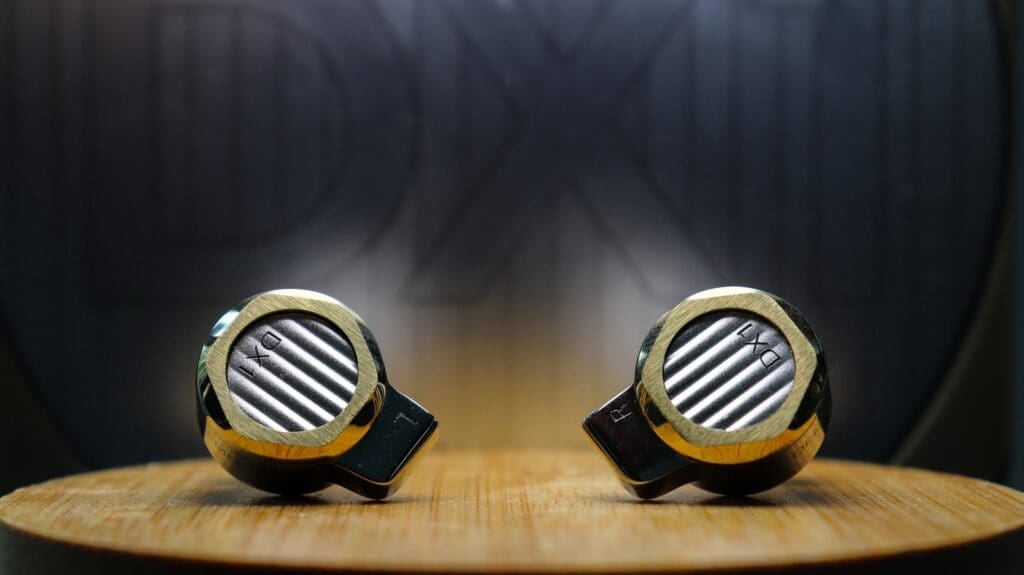
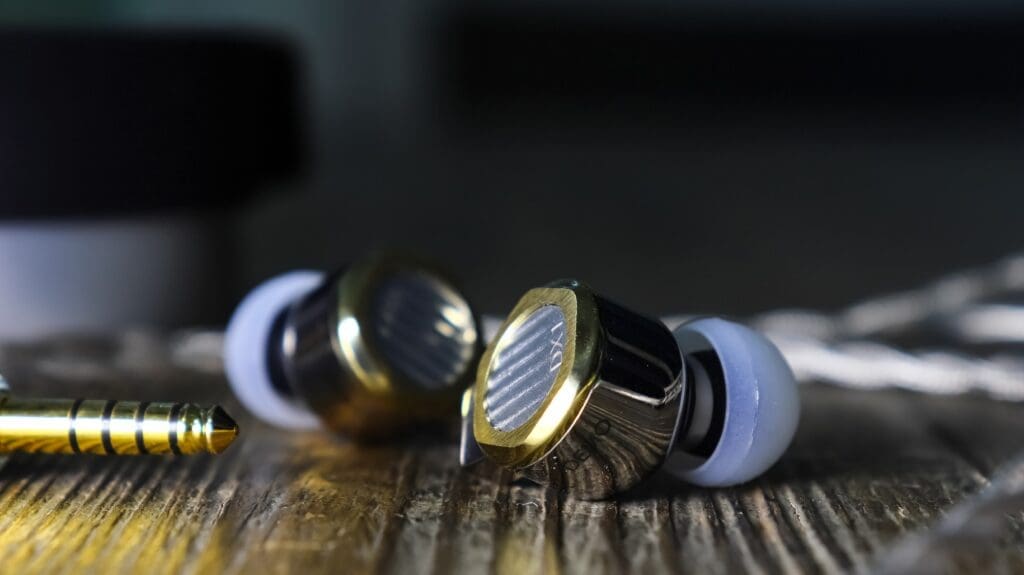
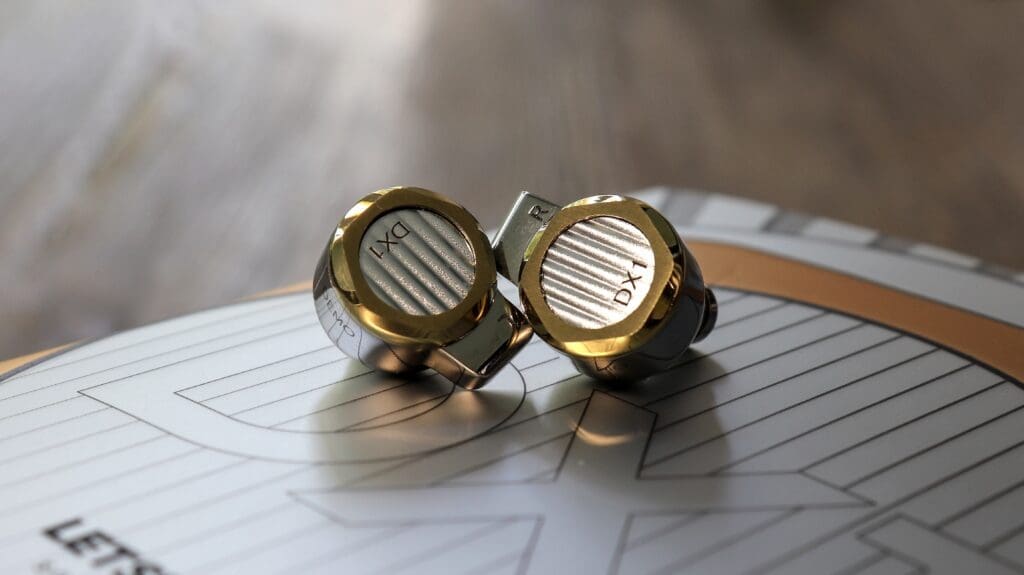
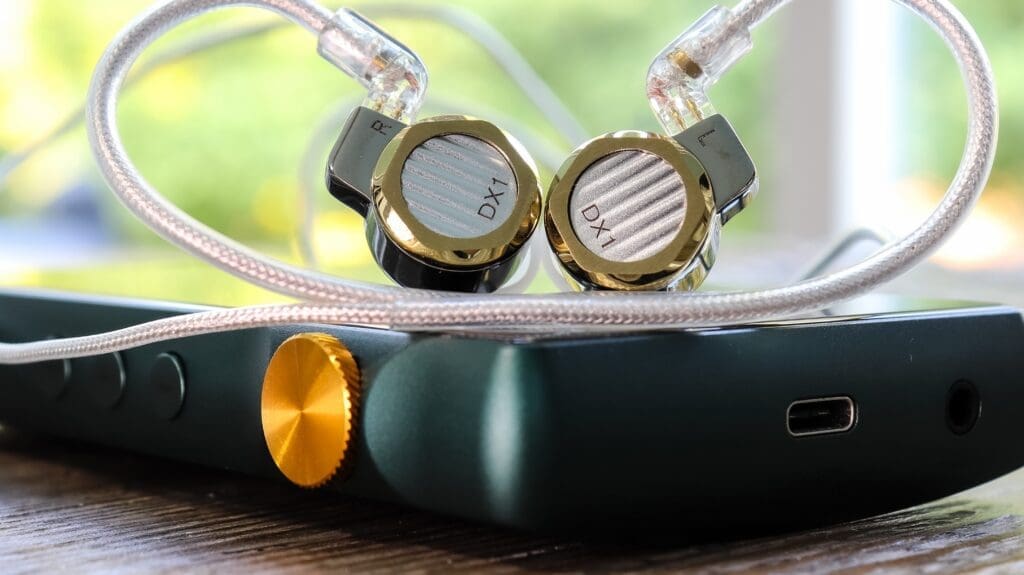
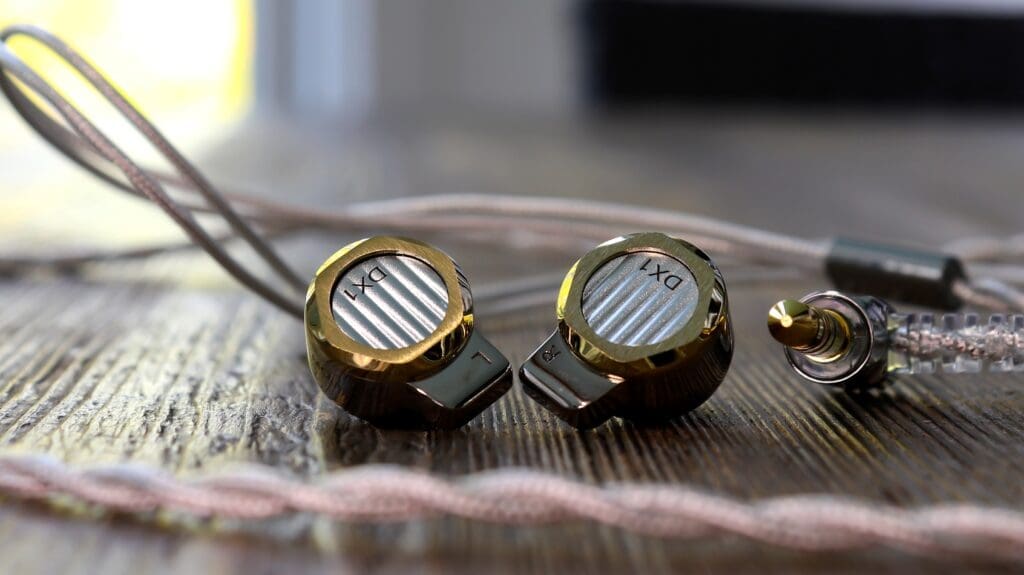
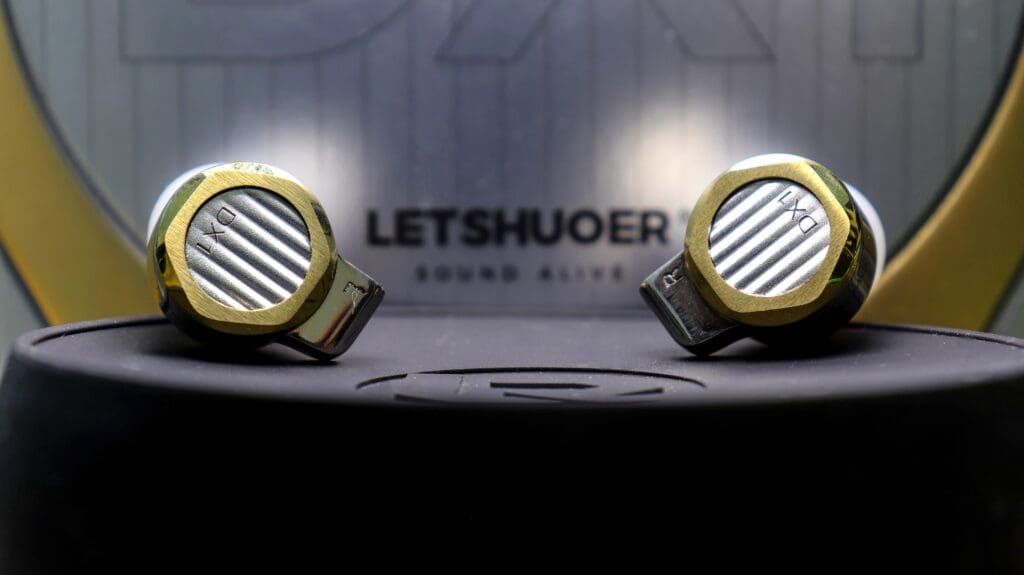
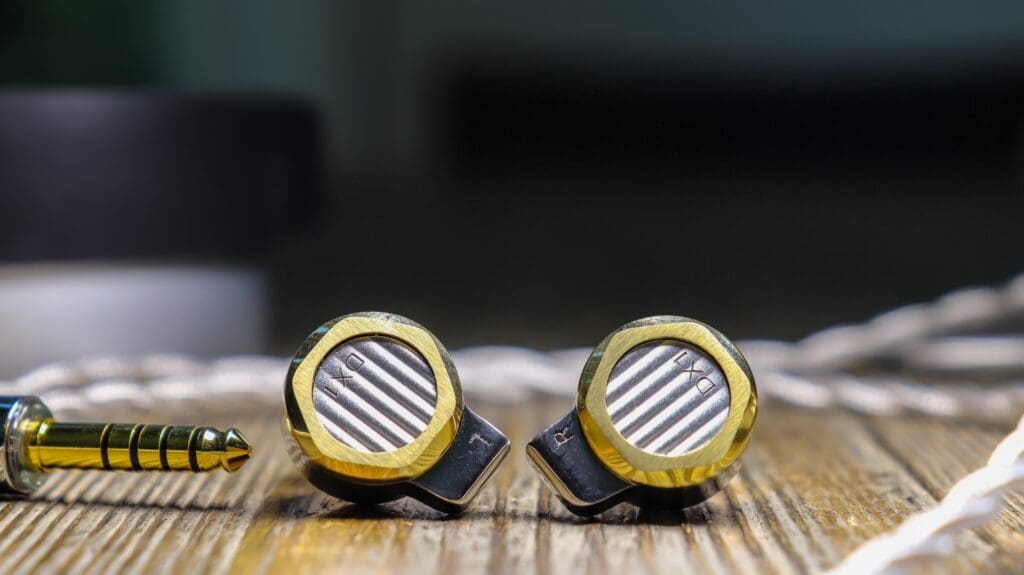
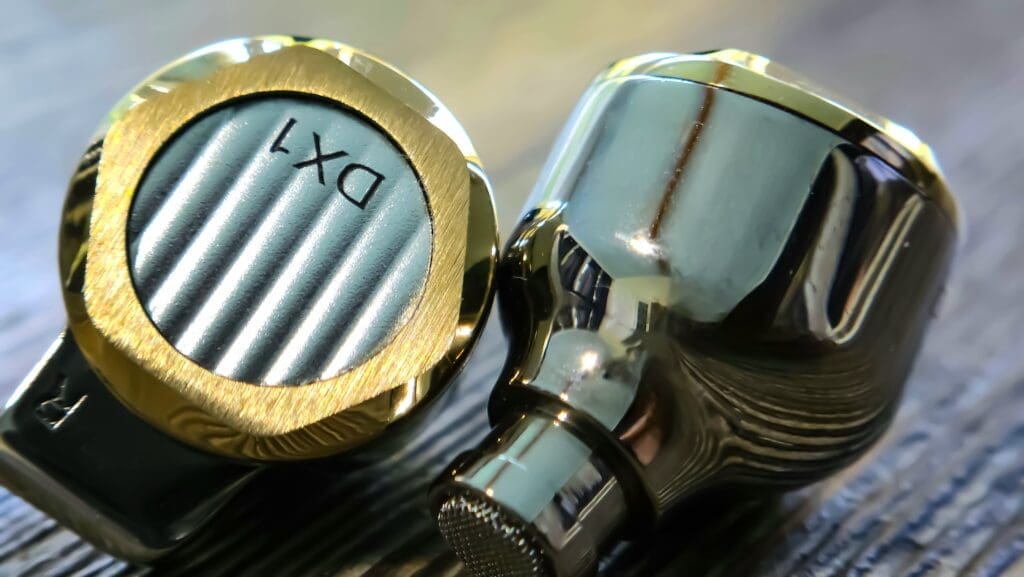
Without question build quality is one of the biggest highlights in my eyes. Letshuoer has iem design and build down to the tee, and they’ve proven that over the course of a number of years. Anyways, the Letshuoer DX1 looks more like a premium or luxury set of earphones rather than a high-budget set of $150 earphones. The DX1 are actually very small earphones. Very similar to many of the Fiio single DD’s like the FD15, FD5, FD3, etc. or even some of the older Dunu sets. Just small circular earphones. However, they are made entirely out of electroplated stainless steel and formed beautifully. The finish is this mirror gloss finish while the panel that Letshuoer chose is an almost hexagonal gold colored panel. It looks striking against the high polished silver. Just gorgeous. Again, these are very small folks, and the nozzles aren’t very long so it may make more sense for you to find longer eartips, or wider eartips to get a seal. I will say that they are very ergonomic though. There’s only one small vent towards the nozzles near the front as well as two small vent holes near the rear. Honestly, I adore this look folks. Easily one of the most stylish and classy earphones anywhere near the $150 price range.
Internals
Letshuoer chose to go with a very neat driver within the DX1. Like I said, the DX1 houses only a single dynamic driver. To be exact, they went with an 11mm driver unit which incorporates an aluminum-magnesium diaphragm with an alloy nanoparticle coated topology coating in a diamond pattern. These topological drivers usually will have some pattern overlaid which helps disperse the sound in a more balanced and clean way whilst also better handles certain vibration frequencies making distortion much less easy to occur, even at louder volumes. That’s the thought anyways. Now, in the promotional material Letshuoer states that all of the internal components are self-developed by Letshuoer, in house. They also used notch filters to regulate the 5khz area. It basically attenuates the 5k region to a degree. I think we can all appreciate that. They say that the result is a smoother overall sound. If you ask me, I’d say they nailed it because this set is extremely smooth, very clean, and never distorts. Job well done Letshuoer.
Fit / Comfort
Okay, now this is an area where we may have some issues for some folks. These smaller circular earphones always give at least someone some fits. Especially with the slightly shorter nozzles. Now, I can tell you that right when I found tips which sealed I was perfectly fine. In fact, better than perfectly fine, they fit like a glove folks. There is one small issue that I should bring up and that is that I did have some driver flex when putting the DX1 in my ears. I have to be careful how I put them in. Different eartips have different results. I usually never have issues with driver flex, but I did get some suction going on inserting the DX1. Just something to consider. Even with the front and back venting I do have to be careful.
Drivability / Pairings
Output Power
The Letshuoer DX1 promotional material states that it comes with an impedance of right around 30 ohms and a sensitivity of 108 db’s. Basically, this is a very sensitive iem which does not need a tone of power to properly drive to good dynamics or volume. There is no source in my arsenal which cannot drive the DX1 very well. That includes old Android phones with 3.5 se ports, my iPad, the weak KZ AN01, AZ20, and even those super weak 3.5 se Amazon dongle dacs with Conexant chips. I always test every set with these devices just in case one of you does not have a more powerful source. So have no fear, if you don’t have at least a solid dongle dac you need not worry, the DX1 will replay very well.
More juice
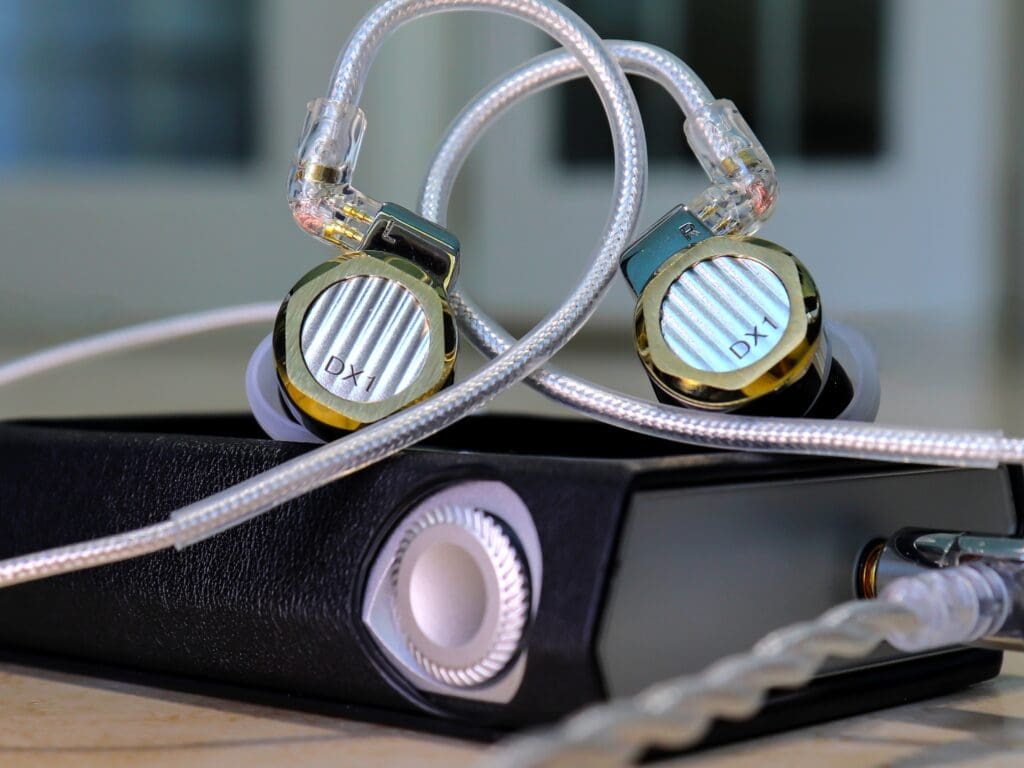
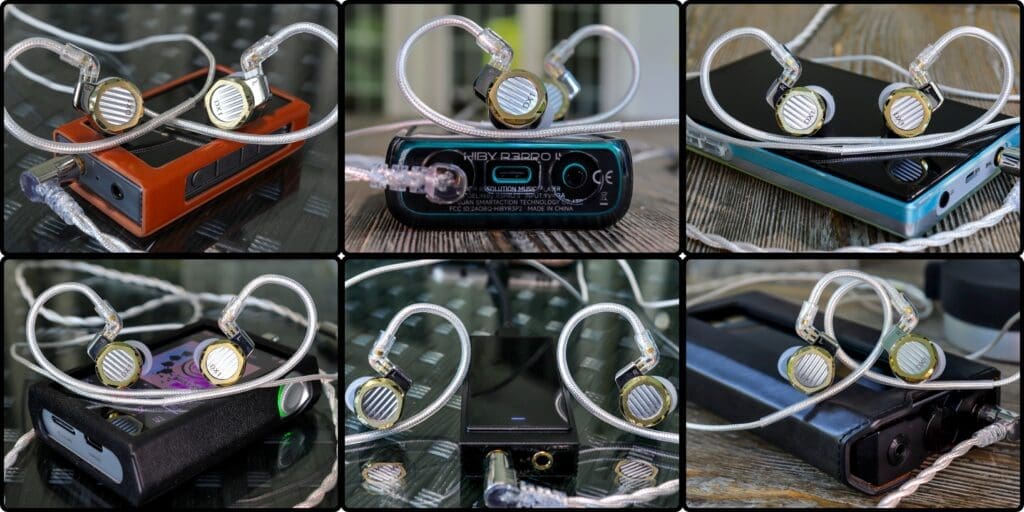
However, that doesn’t mean that the DX1 won’t scale well with more power and better sources. I think that is pretty obvious with just about any set though. If you give it a more talented source, better dac chips, better amping, better circuitry, then you’ll likely get better sound. That said, the DX1 clearly sounds even more dense in note weight, better macro-dynamics, more articulate, and simply more refined with a little more juice. What do I mean by “a little more”? I’m talking; a good and quality dongle dac. What’s a good dongle dac? In my mind once you get past those 3.5 se tiny dongle dacs and get into those dacs like the EPZ TP35, EPZ TP20 Pro, Moondrop Dawn Pro or 4.4, iBasso DC03 Pro, stuff like that (there’s about 50 more “under $50” that I don’t have the patience to write out). Dongle dacs with better dac chips and amping power. They don’t have to be expensive. Furthermore, the DX1 really became even more refined with my more powerful and better-quality devices. Sources like my Shanling M6 Ultra, the Fiio Q15, the iBasso DX240 (w/Amp8), Hiby R3 Pro II, Fiio JM21, amongst many others with slightly better internals & amping power. Despite that, there is unquestionably a point where the amping benefit caps off, so please don’t think you need some ultra powerful device with this set.
Source Pairing
As far as tonal pairing with different source tonalities, I find that a warm to neutral source works best for me. Preferably something warmer. I like the added warmth and subtle weight improvement down low. I do find the DX1 more pristine with a source tonality that is closer to neutral, but a warmer source hits that sweet spot for me with this set. Having said that, I don’t necessarily feel the DX1 needs a warmer source at all. I do so because I want just a hair more bass weight, body, and fullness. The DX1 is what I’d call “bass lite” and so anything to prop up the low-end enough without clouding the mix in veil is definitely a good thing with this set. Plus, the DX1 is so clean sounding that a little extra warmth really doesn’t smooth over the definition of its note delivery. I should add that I have plenty of neutral sources which also sound very nice. So, take this section with a grain of salt. It really comes down to your personal preferences.
Sound Impressions
*Note: I simply want to preface this section with a few notes. First off, I did burn in the Letshuoer DX1 for right around three full days. As honest as I can be; it really didn’t change anything. Not that I could tell anyways. There weren’t any real issues to begin with and so burn-in wasn’t needed I don’t think. I listen mainly to flac or better files which are stored on my devices. The Android music players of my choice are UAPP (USB Audio Player Pro), Hiby Music Player, and at times Poweramp. I mostly used the KBear 07 style white Letshuoer eartips with the black stem, and at times I used the TRI Clarion tips which come packaged with the DX1 for critical listening.
What’s it sound like?
The Letshuoer DX1 is truly a very close-to-accurate depiction of sound. Letshuoer really did a tremendous job of crafting a tuning which comes across very fluent, very natural, and very unsullied. It’s one of the more crystal-clear single DD iems that I’ve personally heard under $200. The only caveat to that would be a less than naturally emphasized bass region and the slight lack of treble sparkle. However, to bump up the warmth of the bass would also mean you’d be changing the overall tone and timbre of the DX1 to a degree. Also, to add more sparkle and air would completely derail the wonderful midrange display that the DX1 carries. Which would totally alter the sound and what makes the DX1 special. So, considering what I just said; I do not feel that the Letshuoer DX1 is an all-rounder type of set. To my ears the DX1 does some things in a very special way however and it certainly has a specialty which will prop it up against the sea of iems that it’s priced around.
Tonality
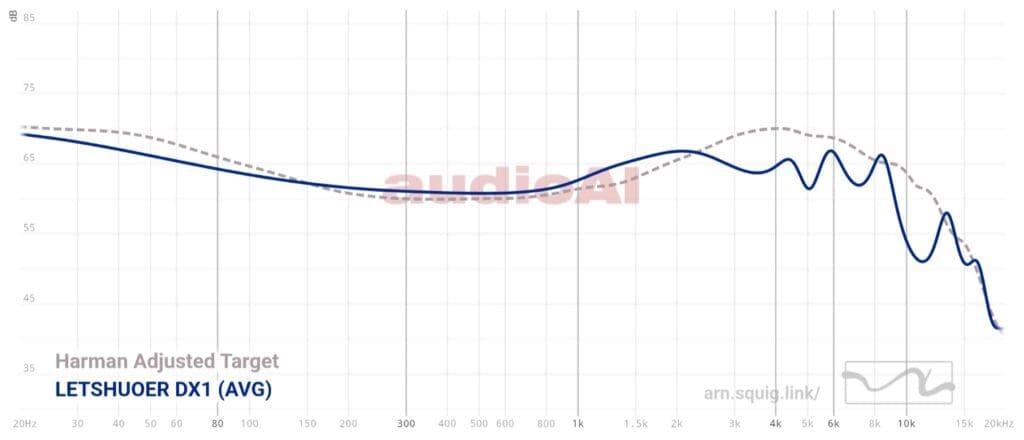
To my ears I would say the Letshuoer DX1 carries a slightly more relaxed sound, or you could say a slightly laid-back W-shaped sound signature. I say “W” because the DX1 definitely has a non-recessed midrange which comes through with a very healthy prominence against the rest of the mix. It stands to reason too. I mean, when the bass isn’t over-emphasized, and the treble only seeks to keep a balance, then the midrange is naturally going to sit “more-so” in the anterior of the sound field, closer to the listener, yet still relatively balanced as well. The tonal color of this set is warm/neutral with a foot over on the neutral side. Just a slight tinge of warmth which is brought on by a moderate boost to the sub-bass coupled with a less intense treble. To be perfectly honest, I find the DX1 to carry a wonderful balance of each frequency range. Perhaps I could use a nice mid-bass bump, but that would also steal some of the clarity that I’ve grown to love on the DX1. Also, when I say clarity… I mean crystal clear. No background noise whatsoever, no grain at all, no slight fuzz floating around the sound field. No sir, the sound is utterly clear of any residual artifacts, coming across as one of the more clean “smooth style” tunings I’ve heard under $200. There’s a handful of sets which carry such clarity, but usually those sets aren’t as midrange focused also. So, there are some definite caveats to enjoying this set. I personally adore the DX1.
Niche?
However, I also know what types of tracks and genres to enjoy with it. I really began to appreciate the DX1 for what it is… and not for what I want it to be. In casual listening I sought out tracks which cater to its tuning style, and it became very clear to me that this is a set which should only be judged for how well it hits the target sound that Letshuoer was shooting for. You see, it’s almost a niche tuning. That’s not to say it cannot fit many genres just fine, because it can. However, in my opinion, the DX1 specializes in Vocal Centered, Classical, Acoustic & Instrumental tracks, lighter Rock, and even some Jazz and Blues. It has such a nuanced and textured midrange which prioritizes a smooth delivery over aggressive dynamics and macro-dynamic vibrant expressions. I would stray from any genres like Hip-Hop, EDM, Heavy Metal, etc. In a nutshell, any genre which focuses on a clear & natural presentation will most fit the DX1. My opinion of course.
Who’s it for?
With that said, the DX1 isn’t the most fun sounding iem my ears have ever heard. In fact, far from it. Well, let me clarify, the DX1 isn’t the most “traditionally” “fun” sounding set. As in; it doesn’t carry a bass heavy, earlobe shaking, and booming authoritative bass. That guilty pleasure style of “fun”. Essentially, the DX1 doesn’t have that exciting, rambunctious, and totally lively treble either. So, bassheads and treble heads take notice; this one is probably not for you. However, I suppose “fun” is entirely subjective and so I hope I’m explaining myself clearly enough. The DX1’s presentation comes with an almost even helping of musicality to analytical precision and it does so in a mostly even-handed way. Balance is everywhere. No one area of the mix is dominant, and no area is left out either. This is a set for those folks who adore prominent vocal presentations in an intimate setting done in a very mature manner with audiophile clarity. It’s for those who love to hear instrumental tracks with all their favorite instruments coming through with remarkable projection. Here’s the thing; that “projection” of midrange notes is not overly energetic, which makes it an absolute pleasure to listen to. I find that goes for high or low volumes. At no point is the pinna rise going to add unwanted glare (unless you are pretty darn sensitive), at no point is the bass going to mask any sounds, and at no point are you going to complain about a midrange recession. Well, I would think not.
Smooth, yet fast…
As I said, the DX1 has that nice musical/analytical balance which seems to teeter one way or the other depending on your music choice. It’s no doubt that the overall clarity of the DX1 certainly helps to create a more focused sound. Yet, the smooth delivery and cadence brings upon a very fluid and rhythmic quality which really doesn’t seem to undermine the DX1’s technical capabilities. By-and-large a set will “mostly” be one or the other. Usually, a smoother delivery would be at least partially helped by a more evident bass presence. Of course, we don’t see that here. On the flip side, usually a more detail rich and technical sound will be helped by a boosted treble or upper mid presentation. Well, I can say for sure that there is neither an overtly boosted low-end or a vibrant and lustery treble. Just a nice and unsullied sound which is both melodic as well as nicely detailed. Let’s check out each 3rd of the mix…
Bass Region
The low-end of the Letshuoer DX1 is exactly as I suggested earlier… that is, not the most emphasized. Well, there is a nice sublevel bump which does add some haptic feel to any track which displays it. However, it’s no secret that the mid-bass certainly lacks that dynamic punch and full-bodied slam. Of course, the word “lacks” is assuming that the DX1 is missing something. Well, like I said earlier, this set needs to be judged per the target. What I hear is a bass that serves as a solid supporting actor, never really center stage, never really out in front. Yet there is some relatively meaty sub-bass rumble when a track calls for it and just enough overall bass presence to offset the treble and create a nice balance. In all honesty, I happen to enjoy the midrange all the more because of the clarity afforded to the mids from lack of mid-bass bleed. At least on this set I can appreciate it. This is also a fairly speedy bass for a single DD, with plenty of quick release speed and recovery ability. Never will the low-end take up space or create any masking issues. However, I wouldn’t call the bass region the most well-defined low-end. I find that most notes are a hair softened on attack. Not quite to the point that I’d call them outright pillowy, but they aren’t concrete, hard, and rigid. So, there are some subtle issues beyond its less intense dynamic bass presence. This should go without saying but… bassheads will not find this set enjoyable… at all.
Sub-Bass
The sublevels are where the emphasis begins and almost where it ends as well. No doubt about it I can definitely hear some deeper haptic rumble whenever that rumble shows up in my music. There’re many tracks which will almost trick you into thinking there is some solid bass emphasis. The sublevels do come across with a fairly clean and speedy note cadence that doesn’t seem to get tripped up by more complicated tracks and it does so with adequate note density. I have many tracks within my notes which show off the depth of the DX1’s decent extension down low. Tracks like “Undoer” by Geese which has a deep bass guitar riff are a good example of a track which features that weight and thus the DX1 reciprocates with some pretty guttural weight of its own. I have quite a few tracks like this with a noted low droning muscle down low. There are many instances where the sub-bass will coexist with the mid-bass and provide some of the weight too. What I enjoy about a more emphasized sublevel bass and less intense mid-bass is the clarity though. Nothing is ever muddy or murky and nothing comes across as one-noted. Honestly, the DX1 has a nice sounding sub-bass.
Mid-Bass
Now, the mid-bass on the other hand doesn’t come across nearly as full-bodied. In fact, the mid-bass comes across soft instead. Tracks that I’d usually expect to hear a more robust and authoritative sound will sound pretty underwhelming at times. Like “Royals” by Lord. Really the bass is simply there yet without any substance to it, or mass. It comes across pretty softened on attack as well. Not that crisp snap, that tight, dark-vibrant note speed. It’s softened a bit, almost pillowy at times. Obviously, there are tracks which tell a different story and do come across a bit cleaner and tighter on attack. However, decay through sustain is fairly quick leaving not a lot of actual meat to a bass note. If there’s no sublevel sound fortifying those notes, then the bass will sound a hair flat. Also, I don’t find the mid-bass to be the picture of note definition, due in part to the softer initial attack at the crest of most notes down low. Now, it does have some redeeming qualities which I’ve already spoken about briefly. No doubt it’s clean and it promotes a cleaner spectrum altogether. Also, it’s a supporting actor and I’ve learned not to judge the DX1 by the individual sum of its parts, but as a whole. As a whole this set sounds very nice.
Downsides to the Bass Region
There’s definitely some room to improve the tuning here. I feel that Letshuoer could’ve given a slight bit more oomph in the mid-bass. It doesn’t have to be much. Of course, that is how I’d improve the sound for me. I say that but in the same breath I love the sound of this set and I’d be willing to give up some of those moments of mid-bass slam and boom for the clarity and unsullied sound of a refined signature. No doubt about it the DX1 has wonderful clarity and there are so many genres which cater to that. So, for what the DX1 is… It’s great. For whom the DX1 is targeted for… it’s great. Ya I’d love to hear more muscle and a fuller note body, but that might also screw up what makes this set special. This hobby is all about give and take. Add a little here and lose a little there. So, the moral of the story is this; if you are a basshead… just keep moving along, keep swimming, this is not the set for you. If you are even a moderate bass weight enthusiast, keep swimming. Honestly, I’m okay with it folks. The sum of the parts has nothing on what this set sounds like as a whole.
Midrange
The midrange is unquestionably the bread and butter of the Letshuoer DX1 and in my opinion the focal point of its sound. In fact, I’d go so far as to say that the entire tuning style, theme, and the target (as a whole) are all devised to create a wonderful midrange sound. To my ears the midrange carries one of the more natural and melodic midrange presentations that I’ve heard under $200. One thing that you’ll notice almost immediately is that the DX1’s midrange seems to bolster up instruments and vocalists with such a clean-lined clarity and with very nicely projected inflections. As though the singer, or that acoustic guitar is right next to you. I hear absolutely nothing artificial sounding across the spectrum and certainly not in the midrange. The idea to go “bass-lite” and to not add as much treble luster certainly helps in creating a midrange sound which comes across as more prominent, almost embossed in a very rich and articulate presence. Every note sounds very concise, very natural, and every note has a certain roundness to it as well. I really enjoy that the DX1 didn’t need to boost low-end warmth to give the midrange that rich note body. Nor did Letshuoer have to heighten or overemphasize the highs to bring upon a sense of clarity. Again, the DX1’s entire signature is so well balanced with one of the more impressive mid-centric tuning’S than I’ve heard in some time for this range.
Very Nicely Done…
The midrange is all smooth in cadence yet has enough natural crispness and clean-lined edge articulation to sound nicely separated from note to note. I don’t hear anything which feels cramped or pushed together. The presence isn’t so wide that notes begin to overlap or mask. Again, it has compacted notes, great density, it’s rich yet not in a warm & full-bodied way. Also, the DX1 offers a very much glass-lined surface texture. Again, very clean with proper note weight and edge accentuations. So often we hear either abrasive, grainy, or overly smoothened textures as it’s very rare that the timbre comes across so lifelike to the ear. This is one of the huge reasons why the DX1 is so captivating within its midrange. Everything sounds proper folks! Every piano, every string, the violin, mandolin, cello, and really just any instrument short of those which need bass weight and fullness to sound correct. They all sound very nice to the ear. Beyond tone and timbre, you’ll also hear nice note separation as the richness in this region isn’t your typical warmth infused weight and body. It’s the presence of the region which seems to create the rich and vibrant tones. So, you don’t have the mashing-together of notes. Furthermore, Imaging is actually spot-on, and the sound comes across well layered. I mean, every instrument has its placement, left to right and front to back. Very nicely done.
Lower-Midrange
I find male vocalists to come across in rare form on this set where they don’t need that warm weight to sound authoritative and full bodied. Males sound like… males. Every vocal intonation of Alex Warren‘s “Ordinary” has this nicely presented presence boost which has this forward anterior position, yet without the boxy effect. His voice also carries this authentic sounding vibrance which seems to project his vocals and resulting harmonics at the listener. Another track named “Sand in My Boots” by Morgan Wallen shows off the DX1’s ability to take a gravelly and edgy southern voice and make it sound refined even, not knife-edged or coarse. To keep the vibrance without the abrasiveness is good to hear. On many sets you can detect some grain during his vocals, but not with the DX1. The lower midrange is so clean and clear with solid transparency that there’s nothing making this region murky at all. However, macro-dynamics aren’t going to wow anyone, and the lower midrange is not the most energetic of frequency ranges. Then again, I’d hate to mess up that awesome timbre for a bit more energy.
Upper-Midrange
The upper mids are in my opinion the Crown Jewel of the midrange and thus, probably the star of the show altogether. No doubt the entire midrange in general is quite exemplary for a $159 single dynamic driver earphone. The way Letshuoer has sparse out the frequencies is very neat. At any rate, the upper midrange has just enough shimmer as well as a very moistened opulent style note body. Female voices come across with absolute fluidity and each vocal note sounds very concise to my ears. The same goes for any instrumentation. Just extremely natural and without any real chance of glare or harshness whatsoever. It’s a neat thing to hear a set with such natural focused vibrancy which doesn’t overextend into sharpness. Females across the board sound very clean, very forward, very melodic as well with a very realistic to life timbre. Lush yet contoured notes help female voices to carry with great projection. From soft and breathy to resounding and powerful I find that most female vocalists have a certain controlled richness which sounds rounded while all instruments play along with clean-lined clarity and placed very well within the sound field. The upper mids also show off the keen ability to sound both well separated and distinct without needing to have air, openness, and an abundance of treble presence creating the space between instruments.
Downsides to the Midrange
As honest as I can be, I don’t find many issues with this range. It really is one of the better midrange displays that I’ve heard anywhere near the $150 price point. Just gorgeous mids! The only thing that I can think of would be tonal subjective issues that some may have. Like, those who much more enjoy that very warmly-rich and lush sound with a wider presence to notes and a less vibrant replay may not enjoy the clean, crystal clear, and natural sound of the DX1. Also, polar opposite to those folks would be the type of hobbyist who only enjoys that lifted, dry, and overtly analytical style. Beyond those subjective tonal issues, I have heard moments in a couple very complicated tracks which thrle DX1 couldn’t perfectly resolve. Of course, most hybrid sets can’t either. Other than that, I can’t see any other issues.
One more thing
Folks, I really do feel that Letshuoer nailed this tuning in a way that I haven’t heard before at this cost. I mean absolutely pitch perfect midrange with some of the most realistic and lifelike timbre that I’ve come across. I adore how both male and female voices share the stage so well with all instruments and never seem to sound congested. Never do you hear any real masking of sounds, no blending of sounds, no graininess, no shout, and nothing which sounds off timbre-wise, or unauthentic. The imaging of this set within the midrange is superb with a great ability to layer the sound field for a mostly holographic stereo image. Really a stereoscopic replay of my music which doesn’t sacrifice any of its timbre to sound both detailed and transparent. I couldn’t leave this section without stating that the Letshuoer DX1 has (in my opinion) the most naturally realistic and true to life midrange that I’ve heard under $200. Truly a wonderful job Letshuoer!
Treble Region
The treble is what many might consider “dull” or “less energetic” than many other sets. However, I have a much different take. What Letshuoer was able to craft is a treble region which is fast, tight, with great transient swiftness and very nice resolution without increasing the emphasis past comfort. The emphasis is actually moderate at best as the DX1 never crosses that sharpness line for my ears. This is a very smooth and delectable treble which never comes across aggressive or tarnishes the note integrity. Everything is clean, everything is precise, yet nothing is sharp and nothing is coarse sounding. Violin sounds very silvery as the tighter transients and smooth demeanor help them to come across as very clean sounding with just enough edge to satisfy. Flute, acoustic guitar, trumpet, etc. all come across as somewhat lean, but very natural in timbre. The treble has a decent enough attack edge and precision to sound focused, and it has enough note density to not come across dry to my ears. The DX1 also carries just enough crispness to add that nice toned-down sparkle to the treble region. It all just sounds well controlled. No doubt it isn’t perfect, and many folks like dark lovers as well as treble heads will likely not completely be in love with its sound. But the way the treble maintains the emphasis balance whilst also having enough brilliance to uplift and enough crispness to define is nice to hear. However, the fact that the treble is never in “fatiguing” territory while still being uplifted enough to illuminate the spectrum, add sparkle to the upper mids, and snap for percussion is a fantastic combination of attributes.
Technically Speaking
Another aspect of the treble that I wanted to get to is the nice detail retrieval within the treble region without the need for oversaturated treble peaks. While I’d never call the DX1 a detail beast, I still find detail retrieval fairly easy to discern within the treble region. Most details within this range are in the form of secondary harmonics and I really don’t feel like I miss much. While extension into the highest of highs is not going to blow your mind, they still come across with enough upper treble vibrance and volume to hear the crash of a cymbal strike. The solid thing is that the harmonics of most all cymbals that I paid attention to never sounded like treble splash, or treble tizz. Nothing metallic or smeared either. Letshuoer did a nice job of tuning the DX1 with a very nice amount of note control and decent enough note clarity to sound vivid and clean. Spacing between notes never feels cluttered and transients are generally on the speedy side of the aisle. Again, the treble region really doesn’t tend to sound cramped. Again, as I said earlier; everything is clean, everything is precise, yet nothing is sharp and nothing is coarse sounding. It’s just smooth and easy to listen to. Also, if you want to focus on details, you can do that too. This treble display may not be for treble heads, and it won’t be for treble haters, but I’m going to go out on a limb and say that the majority of hobbyists will really appreciate the treble tuning on this set.
Downsides to the Treble Region
I’d definitely say that treble heads will not jump for joy with this set. It’s too toned down and doesn’t carry that treble head bite and clean edged note contour that I think most treble-bois seek out. Also, the treble really isn’t that bright, or brilliant. Like I said, it has a moderate emphasis. It really doesn’t carry that lustery or radiant style emphasis. Also, this isn’t the airiest sounding treble I’ve ever heard either. Certainly not the type of treble which stretches a soundstage or adds that bright lean openness to the sound field. That said, you also don’t have a set in the DX1 which features forced resolution. The DX1 has all the resolution one would want, and it was done by creating a smart tuning and good drivers. Not bad by any stretch of the imagination.
Technicalities
Soundstage
The stage size of the Letshuoer DX1 is certainly not its strong suit. That said, I don’t feel the stage is “bad” per say. It’s just not some epic and chasmic display of psycho-acoustic auditory vastness. That said, with the particular tuning that the DX1 carries it simply isn’t conducive for a more outstretched stage. That doesn’t mean it isn’t a good stage presentation. I think we all too often equate a big stage as a good stage. When that simply isn’t always the case. What makes a good stage to my ears is a well laid-out stage. It’s all about the presentation. I cannot tell you how many times I’ve heard Intimate and less grand stages sound far better then something which sounds wider, taller and vaster, yet the layout simply doesn’t sound right. Or, Imaging is terrible, or the depth isn’t there. However, with the DX1 it’s about average in width and height, yet it has some very good depth of field. To my ears it has that 3d holographic style. Despite that, the stage is very much an intimate affair. Closer to the listener, not pushed back, not pushed out. It’s close. The important thing is that nothing sounds cramped, nothing sounds congested. I just got done bragging on this set for its imaging and its nice sound separation and so I feel the intimacy of the stage is actually very nice to my ears. I like the small venue soundstage with the singer “right-in-front-of-you” vibe. On occasions anyways. Not bad at all, but not enormous.
Separation / Imaging
The sound separation ability of the Letshuoer DX1 is actually not bad at all. In fact, I’d say the DX1 is certainly above average in comparison to other sets within the $100 to $200 range. Of course, the DX1 isn’t what I’d call a technical beast. It isn’t an overly analytical set that was tuned to promote the technical aspect of music. However, for such a fluid and unabashedly melodic sounding set, I find instrument separation to be far better than I ever thought a balanced sounding rhythmically gifted single DD could sound. Again, the sound is so clean folks. The sound is effortlessly clear with wonderful resolution, no real masking of sounds, black background, tight transients, it’s smooth throughout but clean note contours. It all adds up to a set which isn’t going to come across blended or congested. Basically, separation of elements within the sound field are well done on the DX1. Now, Imaging is just as good, if not better. There has never been a moment where I felt the DX1 wasn’t able to clearly and distinctly position instruments or voices within the sound field in a very coherent manner. Voices are usually dead center, and instrumentation always seems to be nicely displayed from right to left, as well as front to back.
Detail Retrieval
Another surprising aspect of the DX1’s tuning happens to be its detail retrieval abilities. I have been very happy with the DX1 as it has a very innate ability to bring the finer minutiae to the surface with its excellent clarity. Honestly, from the midrange through the treble the DX1 has those tight and controlled transients which offer a fairly precise decay which keeps the sound field from coming across better separated and more speckless than other single DD’s within its price point. Now, the beauty of this set is that it doesn’t go ultra-analytical and clinical. To hear this type of musicality and rhythmicity along with fine-lined accuracy and precision is pretty cool to hear. Sure, Letshuoer had to lessen the bass intrusion and dial back other areas of the mix. However, the detail retrieval of the DX1 is easily above average in my opinion.
Comparisons
Fiio FD15 ($149)
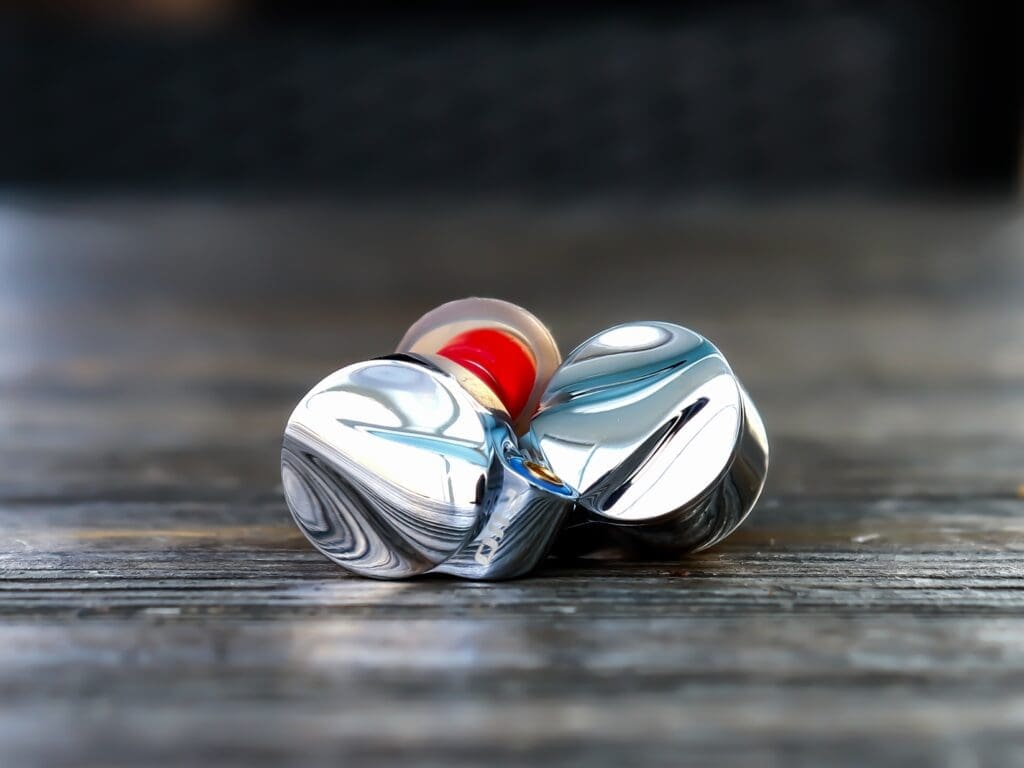
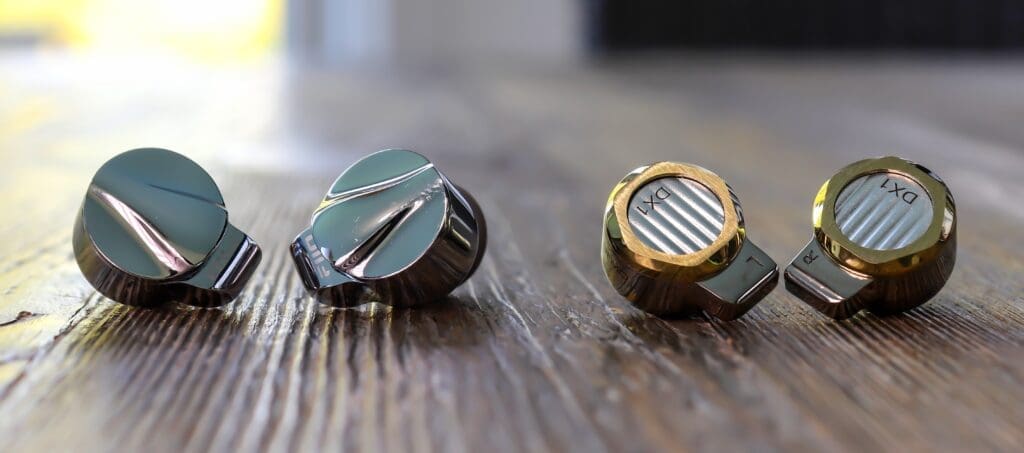
The Fiio FD15 (FD15 Review) is a set which flew way under the radar and one which captivated me from the 1st listen. What a wonderfully put together and wonderfully tuned iem. The FD15 comes with a huge 13.8mm magnalium DLC dynamic driver. In my opinion the FD15 is certainly up high in the rankings of best single DD under $200.
Differences
First off, the DX1 is a hair more expensive at $10 more. Both sets have similar shapes as they are both the circular style iem, and both are made completely of stainless steel & are both absolutely stunning as well. Both sets represent some of the finest craftsmanship that under $200 can provide. I do find the DX1 a hair easier to get a good fit, but the difference isn’t very vast. Now, the FD15 comes with tuning nozzles whereas the DX1 does not. Both sets come with a very lavish unboxing although Fiio does add a better cable in my opinion. Though, the DX1 has the more appropriate carrying case. Honestly, if you ask me the “non-sound” differences are small and the two are about neck to neck.
Sound Differences
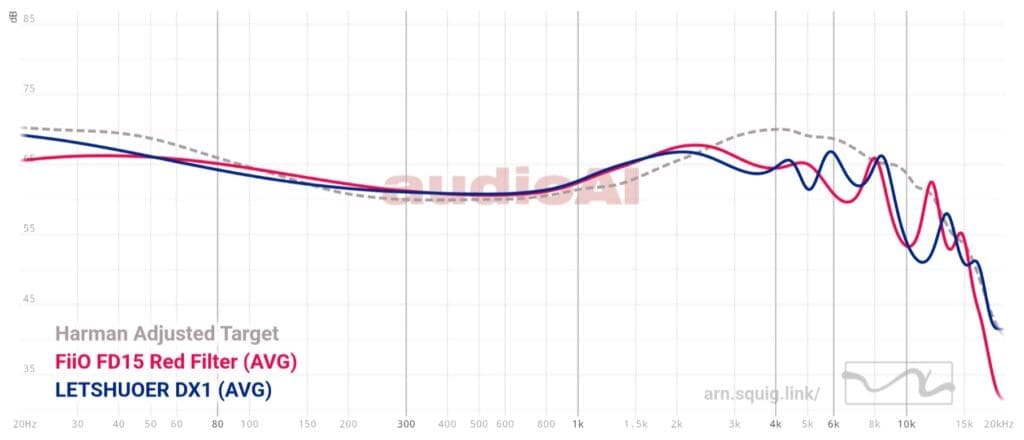
However, there are differences between the two when it comes to sound. First off, the DX1 has a more neutral take on its tonality whereas the FD15 has a warmer, more dynamically expressive sound, more of a tonal contrast too. The DX1 carries a bit more crispness and more upper mid energy, slightly livelier, though neither set is anywhere close to unpleasantly glaring. Both sets offer a very easy listen, nothing out of control, nothing piercing. Both carry a very nice balance of the spectrum. Honestly, the biggest difference between the two comes down to the FD15’s low-end weight, which happens to command more emphasis which ultimately adds a hair more warmth than the DX1.
Between the 20’s
The FD15 clearly has the boomier and more authoritative, robust style mid-bass presentation. Though the DX1 has the deeper, haptic sublevel bass. Still, when comparing the bass between the two, the FD15 most certainly has a more forward and focused bass presence. I do find the DX1 has the tighter and cleaner decay but the FD15 has good note definition in its bass. The midrange of both sets is their bread and butter, and both sets offer a forward and very clean presentation. However, the DX1 is even more forward with more of a midrange focus, better resolution, cleaner note delivery. Having said that, the FD15 carries better note weight, sounds fuller in note body too. For me, I’d say that vocals sound more realistic on the DX1 but both sets do vocals very well. Technically, the DX1 has better detail retrieval, better note separation, and slightly better layering of the sound field within the midrange. The treble region has more of a crispness on the DX1, more bite, speedier. Both sets have a very even keeled treble region without any rambunctious peaks, and nothing that induces sibilance. Also, both sets come with that semi-brilliant sound, nice shimmer, subtle sparkle, and both sets have great treble timbre. I simply feel that the DX1 has slightly better treble note contours, more precise, better note distinction, more of a controlled edge to its notes. Having said that, the FD15 is smoother, easier in the ears (neither are hard in the ears) too. Again, detail retrieval slightly goes to the DX1. It stands to reason too. Note separation as well as layering of the sound field. However, the stage size is much wider on the FD15, vaster, and simply more full sounding. The DX1 sounds even more intimate and less chasmic.
Final thoughts on this comparison
My comparisons always seem to come down to sets that I love. I truly enjoy both of these iems folks. I feel Fiio absolutely knocked the FD15 out of the park, and so did Letshuoer with the DX1. No doubt that this comparison is between two timbre king single DD’s under $200. I mean, 1A and 1B. It’s like that. Both offer tremendous balance of the spectrum. In all honesty, it all comes down to whether you’d like a hair more warmth and bass weight, or a more forward mid-centric sound better for vocalists. Both sets are really great.
Is it worth the asking price?
Boy, this is really a very easy question to answer for me. As simply as I can put it; the Letshuoer DX1 is very unique compared to its competition. I suppose that the competition should always enter into the conversation when answering a question such as this. “Is it worth the asking price?”. I don’t know how many reviews I’ve done that I debate even having this section. You already know I enjoy the set because I chose to review it. However, just because I like a product doesn’t mean that it’s not overpriced. Or maybe there are better sets priced around any given product. Still doesn’t make that product bad. To answer honestly (and I always do) … for many, the DX1 will be overpriced. I say that for a couple reasons. First, it doesn’t have the most physical bass presence. Right there alone you knock-off many potential buyers. Without a doubt those bass lovers won’t even think twice about this set. Also, there are so many quality single dynamic driver earphones priced under the DX1. In fact, there are quality single DD’s as low as $25! I could easily list off fifty of them without blinking. Next, not everyone has $160 burning a hole in their pockets. That’s a lot of money for many people across the globe, no doubt about that. To those people I’m sure the DX1 does seem overpriced.
Unique
However, I’m in a unique position to be able to test the DX1 out for myself. Shoot, I’ve spent about a month in total with this set. The truth is; I don’t feel that there are a ton of choices which carry this style of tuning. No doubt the DX1 is one of the more special iems to make its way to market in a while. In fact, I’ll go a step further and say that there really aren’t many sets of any driver configuration which match this mid-centric and clean-lined natural sound around the price point. Coincidentally, it’s the uniqueness of this set that people will be paying for. I said when I opened this section that this is an easy answer for me. That’s because I feel the Letshuoer DX1 is an absolute no-brainer purchase for anyone who aligns with its tuning. After all, these are the folks I’m speaking to right now. I’m not talking to the basshead, and I’m not talking to the treble-junkie. I’m talking to the timbre heads. To those people who adore good vocalist driven, accurate instrument, mid-centric sets. So, I assume that for those folks, and for me, without question the Letshuoer DX1 is worth every penny.
The Why…
Because have you looked at this iem!? What an awesome looking stainless steel in ear monitor. It has so much class in every curve, every mirror polished angle that I look at it. Really a beautiful iem. The stainless silver-on-gold is simply a beautiful design. To add to that, the small size, the way it hugs the ear, and its ergonomically gifted shape help the DX1 to be a long session set for most anyone. Next, it’s packaged very well. Great tips, nice enough cable, great carrying case, dope packaging. However, the sound is what separates the DX1 from so many iems under $200. That creamy style note delivery is enthralling to say the least as the DX1 so easily manages to be in an island when it comes to natural timbre, cleanliness, and overall balance of the spectrum. It’s extremely musical, yet it’s precise. The DX1 offers wonderful note separation, yet without any forced air to the sound. It has very nice detail retrieval, yet without any forced resolution. There’s no doubt, the Letshuoer DX1 is one of the best vocal centric iems under $200, hands down. Also, I hear great layering of the sound field and fantastic resolution. One of the cleaner sounding sets that I’ve heard in quite some time under $200. Again, the DX1 is an actual no brainer for anyone who can dig its signature. Yes, it’s worth the cost of ownership.
Conclusion
To conclude my full review of the Letshuoer DX1, I first have to give a huge thank you to the good folks over at Letshuoer, and especially Sherry. Thank you so much for providing this set to me for review. Letshuoer is another one of those brands who give their product and live with the results. Of course, they also know that I only review what I enjoy, and they are okay with that. At any rate, I thank you. I wouldn’t be able to review a set like this without you. I also need to thank you, the reader. Thanks so much for taking the time out of your day to read any word that I write. It means the world to us at Mobileaudiophile.com. You are the reason that any of us do this work.
Other Perspectives
Now you’ve just read my super unreasonably lengthy review of the Letshuoer DX1. I’m sorry, I try to cut down my word totals, but I just cannot seem to do it. At any rate, you’ve braved my word babble and possibly learned something about the DX1. Maybe. However, I really hope you’d now go and read somebody else’s thoughts about the DX1. This hobby is ridiculously subjective and each of us are about as unique in our likes and dislikes as anything in life. We are different. What I enjoy, the next guy (or girl) may not enjoy. It’s that simple. What I hear, the next person may not. Also, we reviewers judge these sets from our perspectives, taken from our personal journey through audio. That journey shapes our opinions. No doubt there will be no two exactly alike. So please, take the time to listen to, read, or watch other reviews and thoughts and hopefully you will have a strong understanding about the DX1 when all is said and done. With that all said, I think I’m ready to bring this one to a close. So, take good care, stay as safe as possible and always… God Bless!!




No Comment! Be the first one.