












































Preface
Over the last few years, the dongle DAC market has become incredibly crowded. I feel like I say that in almost every review, yet a few months later I find myself looking at an even longer list of new releases.
Table Of Content
- Preface
- Who Is xDuoo?
- First Impressions
- The Design Philosophy: Ideas and Choices
- The MicroSD Slot: The Real Game Changer
- A Library Always With You
- More Than a Traditional Dongle
- Packaging and Accessories
- Technical Specifications
- Connectivity and Controls
- Ports and Connectivity
- Display and Status Indicators
- Controls and User Experience
- ESS Digital Filters
- FIR1 – Minimum Phase
- FIR2 – Linear Phase Fast Roll-Off Apodizing
- FIR3 – Linear Phase Fast Roll-Off
- FIR4 – Linear Phase Fast Roll-Off Low Ripple
- Overall Sound Signature
- Bass
- Midrange
- Treble
- Soundstage and Imaging
- Power Output
- Power Consumption and Portable Use
- Operating Temperature
- Comparison with the BASN PA60
- Comparison with the xDuoo Link2 Max
- Listening Tests
- Final Thoughts
- 🟢 Pros
- 🔴 Cons
- Frequently Asked Questions
- Acknowledgements and Personal Note
Every month brings another device promising more power, more detail, higher resolution and increasingly impressive specifications. The funny thing is that after a few days of listening, many of them end up sounding far more similar than their marketing would have you believe.
When xDuoo approached me about the new Link3, my mind immediately went back to the excellent experience I had with the Link2 Max, which I reviewed here on Mobileaudiophile. Surprisingly, what caught my attention first wasn’t the output power, nor the new ESS DAC implementation.
It was that tiny MicroSD card slot.
At first glance it might seem like a small addition, almost an afterthought. In reality, it completely changes xDuoo’s approach to the device. Rather than being just another DAC connected to a smartphone, the xDuoo Link3 borrows some of the practicality of a dedicated DAP without actually becoming one.
After several weeks of listening, countless hours with both IEMs and full size headphones, daily commuting and more than a few late night sessions, it was finally time to find out whether this idea truly works or if it remains nothing more than an interesting concept.
Let’s find out together.
Who Is xDuoo?
Within the portable audio world, xDuoo is anything but a newcomer.
Based in Shenzhen, the company has spent years building a strong reputation among audio enthusiasts thanks to a remarkably diverse catalog that ranges from dongle DACs and DAPs to portable DAC/amps, desktop gear and even tube amplifiers. Before establishing its own brand identity, xDuoo also gained valuable experience as an ODM manufacturer for several other audio companies.
One of the things I have always appreciated about xDuoo is its willingness to create products with a distinct personality instead of simply following whatever trend happens to dominate the market at a given moment. The popular XD05 series is a perfect example of this approach, as are the many tube amplifiers that helped make the brand particularly well known among headphone enthusiasts.
The same philosophy can be found throughout its portable lineup. Over the years, xDuoo has released products across very different price brackets while generally maintaining a solid balance between performance, build quality and value.
The xDuoo Link3 fits perfectly into that tradition. Once again, the company has chosen to take a slightly different path, offering a product that tries to stand out rather than blend into an increasingly crowded market.
First Impressions
My very first reaction when I picked up the Link3 was surprisingly simple:
“Wow… this is not a dongle.”
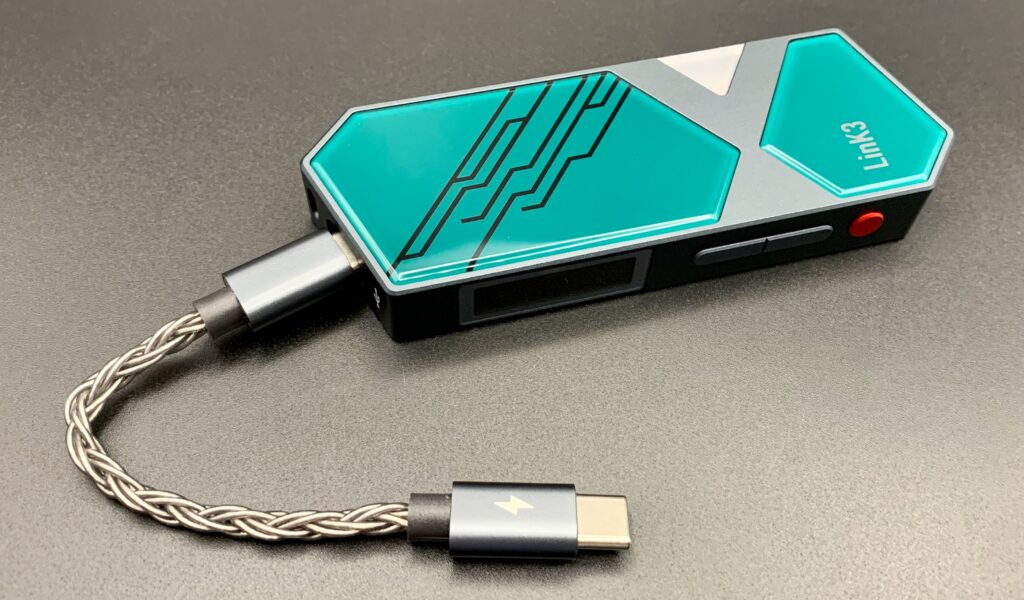
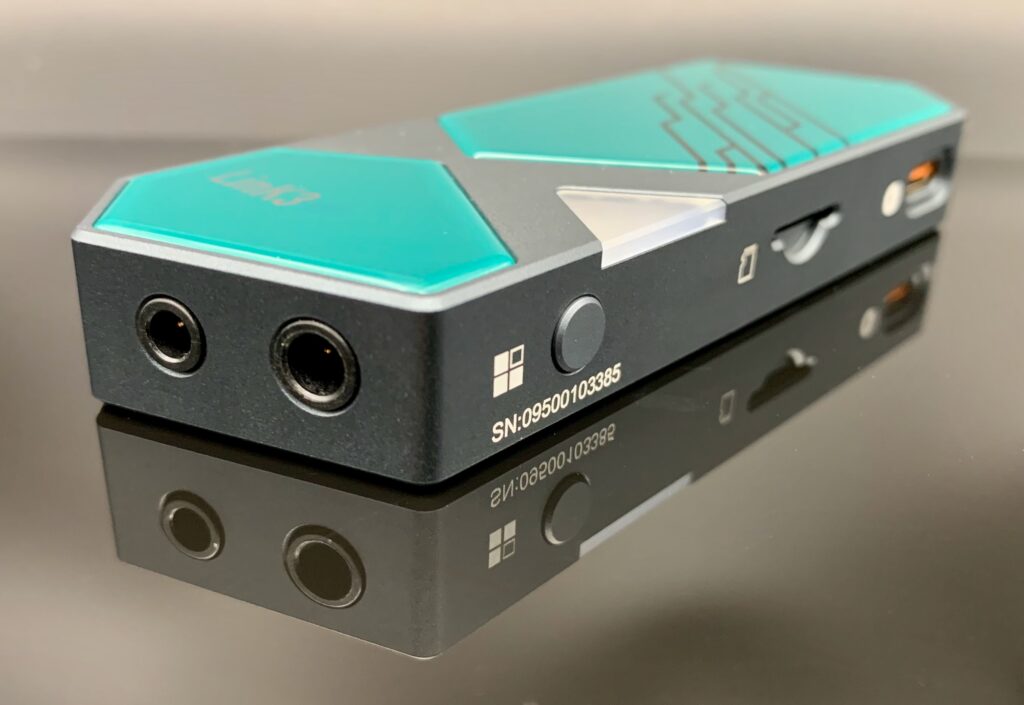
Pictures don’t really prepare you for its actual size. This is nothing like the tiny USB DACs that disappear behind a smartphone or vanish into a jeans pocket.
The Link3 is larger, thicker and noticeably bulkier than most of its competitors.
After a few minutes, however, it becomes obvious that this wasn’t an accident.
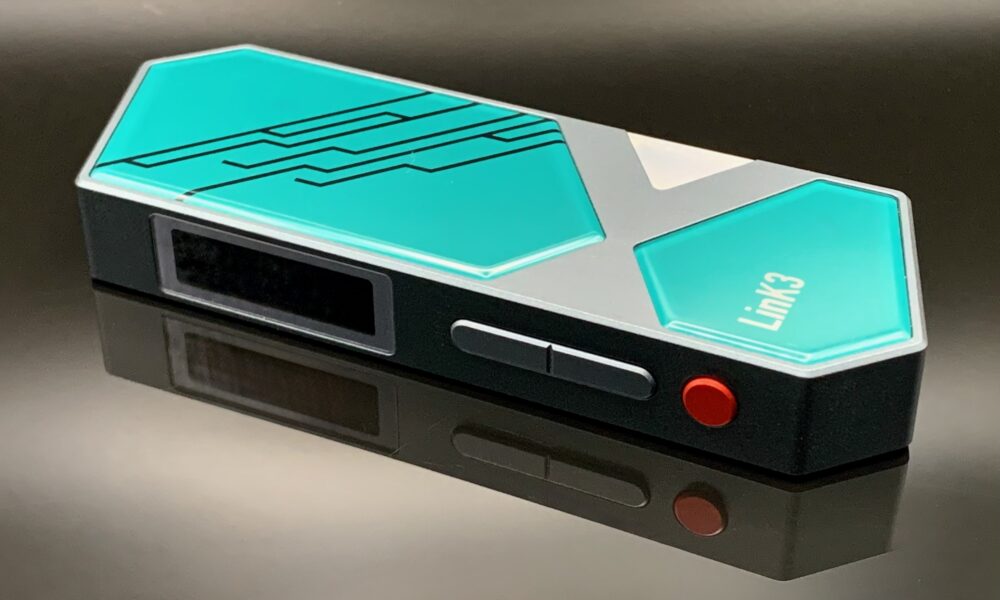
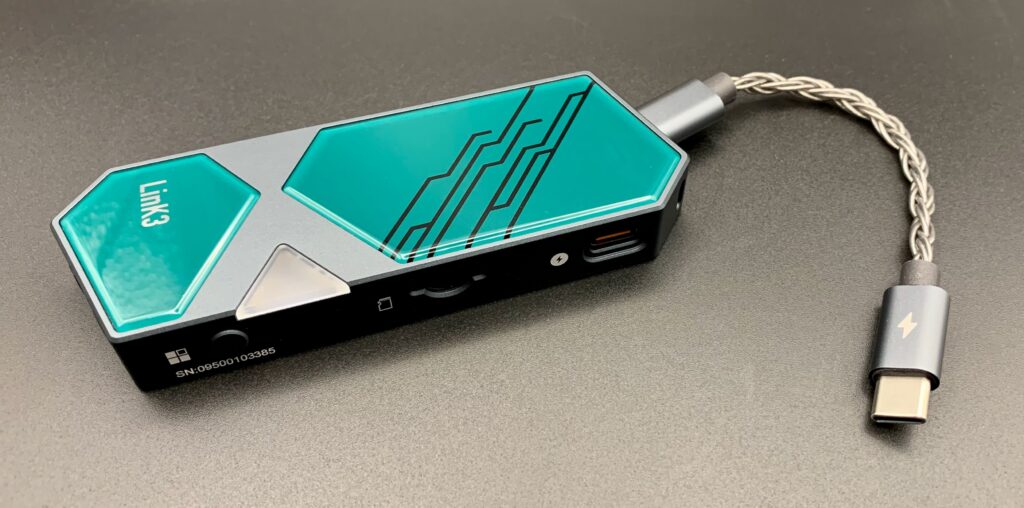
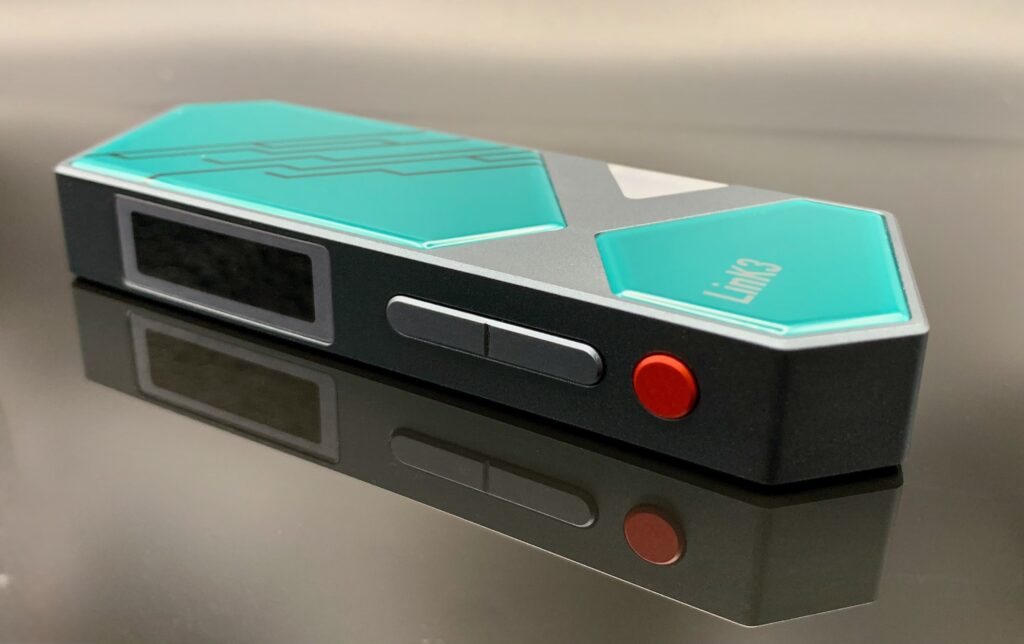
xDuoo wasn’t trying to build the smallest dongle on the market. Instead, the goal seems to have been creating one of the most complete and versatile devices in the category. The metal chassis feels reassuringly solid in the hand, the color display makes everyday operation effortless and the physical controls immediately give the impression of using a dedicated audio device rather than just another smartphone accessory.
In many ways, that’s probably the best way to describe the Link3.
It sits somewhere between a traditional dongle DAC and a DAP.
It doesn’t offer the full independence of a dedicated music player, yet it goes far beyond what most people expect from a USB DAC.
A few days of use are enough to understand who this product is really for. With the Link3, xDuoo didn’t focus on maximum portability. Instead, it focused on giving listeners as many features as possible without forcing them to move to a dedicated DAP.
After a few weeks of use, I found myself thinking of the xDuoo Link3 as a transportable device rather than a truly pocketable one. It is easy enough to carry in a backpack, travel bag or protective case, but it is rarely something you forget is there. That’s simply the trade off for a feature set and level of functionality that go well beyond what most dongles in this category can offer.
And that distinction becomes increasingly clear the longer you spend with it.
The Design Philosophy: Ideas and Choices
In today’s market, almost every dongle DAC seems to follow the same philosophy. Smaller, thinner and increasingly invisible.
With the Link3, xDuoo decided to go in the opposite direction.
The feeling I get is that the engineers started with a very simple question: what do modern dongles actually lack?
Their answer appears to have been greater operational independence.
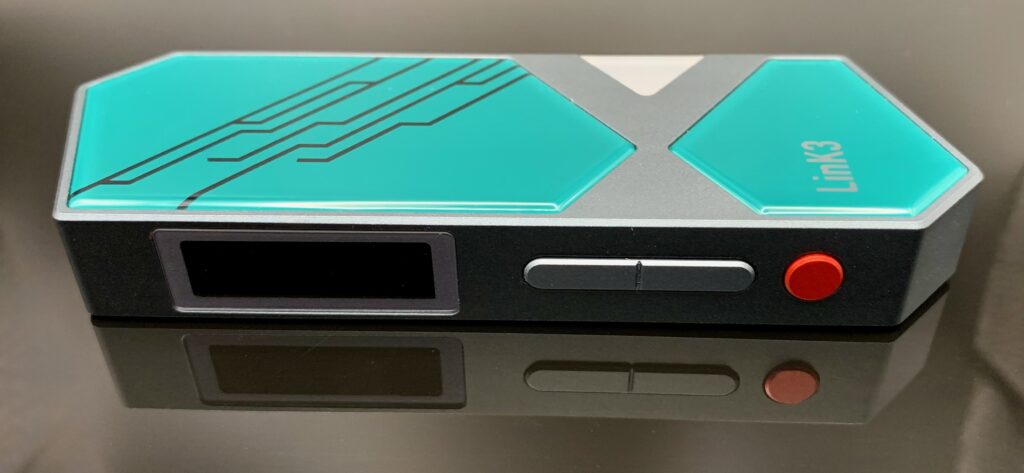
That’s why the Link3 comes equipped with a built-in display, full physical controls, MicroSD support up to 2TB and even a dedicated external power input. These are features normally associated with DAPs, not something you expect to find on a USB DAC.
The technical side of the project is equally ambitious. At its core sits the proven XMOS XU316 USB processor, while digital conversion is handled by a dual mono configuration built around two ESS ES9039Q2M DACs. This approach allows complete channel separation, helping improve stereo imaging and overall spatial precision.
xDuoo relies on a pair of SG8262 chips for amplification, delivering a level of output power that comfortably exceeds what most dongles in this category can offer.
The most interesting feature, however, may be the dual power architecture.
Through the dedicated USB Type-C power port, the Link3 can be externally powered while in use. Once connected, the device activates its Super Power mode, significantly increasing the available output and making it much more comfortable when paired with demanding headphones.
It’s a clever solution, especially for listeners using high impedance models in the 300 or even 600 Ohm range who want extra driving capability without giving up the convenience of a portable setup.
More than anything else, this design reveals what the Link3 is really trying to be.
Not a traditional dongle.
Not quite a DAP.
Something that borrows the strengths of both worlds.
The MicroSD Slot: The Real Game Changer
If there’s one feature that truly sets the Link3 apart from almost everything else on the market, it’s undoubtedly the MicroSD slot.
At first glance, it might look like a simple extra feature, one of those additions that look good on a specification sheet but rarely make a meaningful difference in everyday use.
In reality, the exact opposite is true.
A Library Always With You
Once HUB mode is enabled, the connected device sees the MicroSD card as a standard external storage drive. In practical terms, this means your entire music library can live inside the Link3 and remain instantly accessible whenever you need it.
At a time when many smartphones have abandoned expandable storage and streaming has become the default way of consuming music, this approach feels almost old fashioned.
For many enthusiasts, however, that’s precisely what makes it so appealing.
A 1TB or even 2TB card can hold an enormous collection of music, including high resolution FLAC files, PCM recordings up to 768kHz and even DSD libraries, all without relying on an internet connection or consuming valuable smartphone storage.
The benefits become even more obvious while traveling. Whether you’re on a plane, sitting on a train or spending time abroad for work, having your entire collection available at all times means you never have to worry about network coverage, connection quality or mobile data usage.
In my own case, with a library made up of thousands of albums in different formats, this feature turned out to be far more useful than I originally expected. I spend a considerable amount of time traveling and having immediate access to all of my music, without compromises and without depending on streaming services, is one of those advantages you learn to appreciate more and more over time.
More Than a Traditional Dongle
This is where the hybrid nature of the Link3 really becomes apparent.
It’s not a DAP because it still relies on a smartphone, tablet or computer as the source.
At the same time, it’s far more than a traditional dongle because it offers capabilities that normally belong to entirely different categories of devices.
And that’s probably why the Link3 feels so refreshing.
Rather than copying what everyone else is doing, xDuoo decided to try something different.
Packaging and Accessories
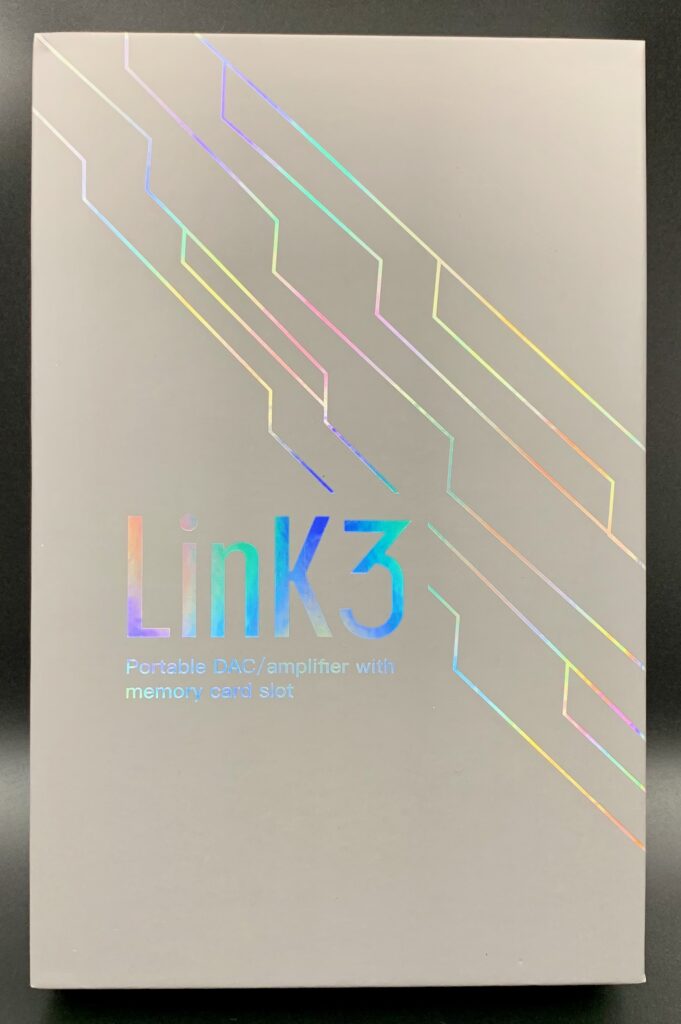
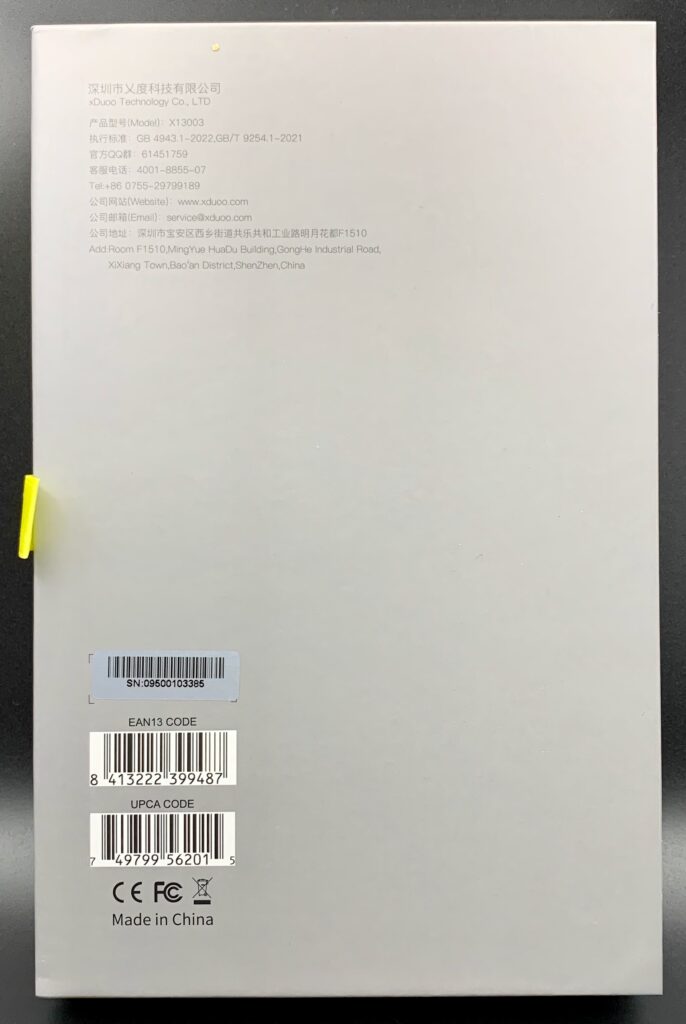
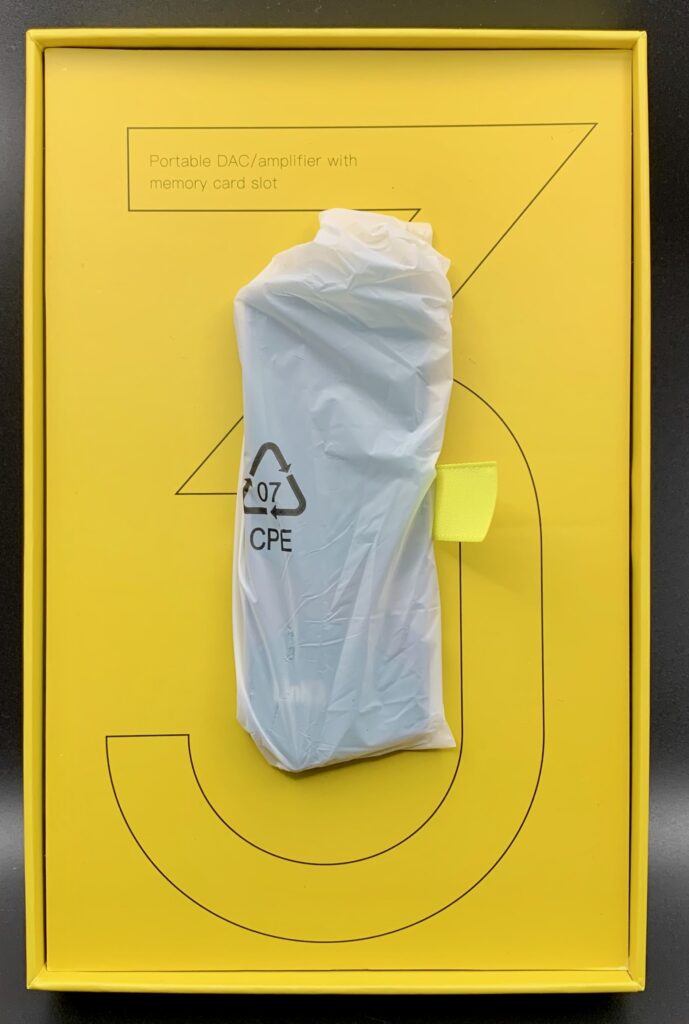
The xDuoo Link3 arrives in packaging that follows a fairly straightforward and practical philosophy, yet still manages to feel well presented and pleasant to unbox. There are no flashy extras or unnecessary accessories, just everything needed to get started right away.
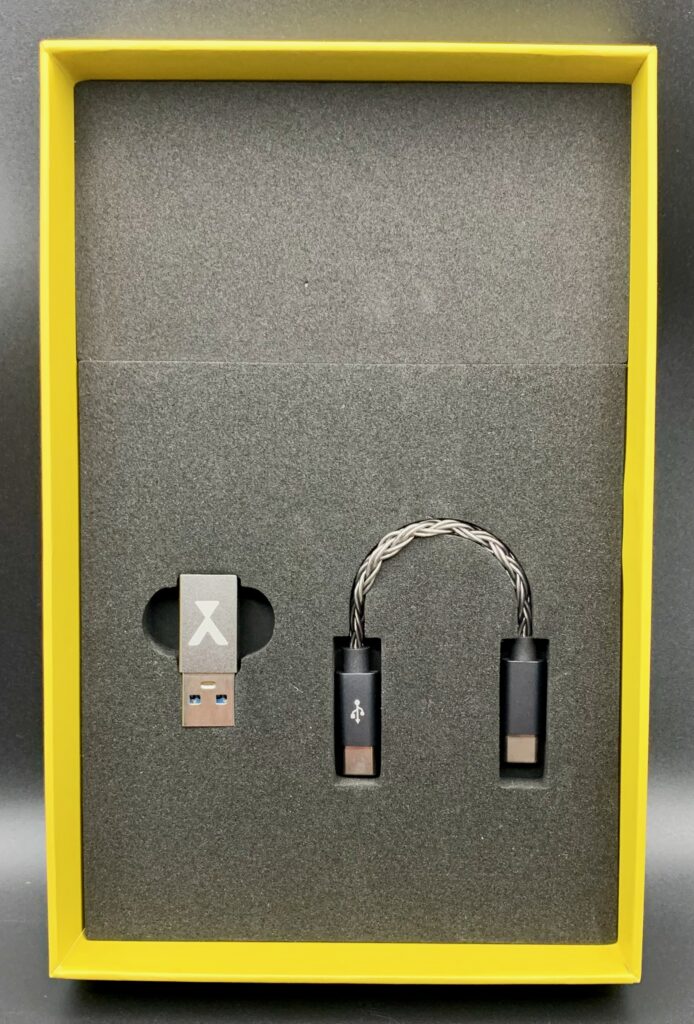
Inside the box you’ll find the Link3 itself, a detachable USB-C to USB-C cable, a USB-C to USB-A adapter, the user manual and the warranty documentation. The bundle is fairly minimal, but it feels perfectly appropriate for the type of product we’re dealing with.
One thing I particularly appreciated was xDuoo’s decision to use a removable cable rather than a permanently attached solution. Not only does this make replacement easier in the event of wear and tear, it also gives enthusiasts the freedom to experiment with aftermarket cables and tailor their portable setup to their own preferences.
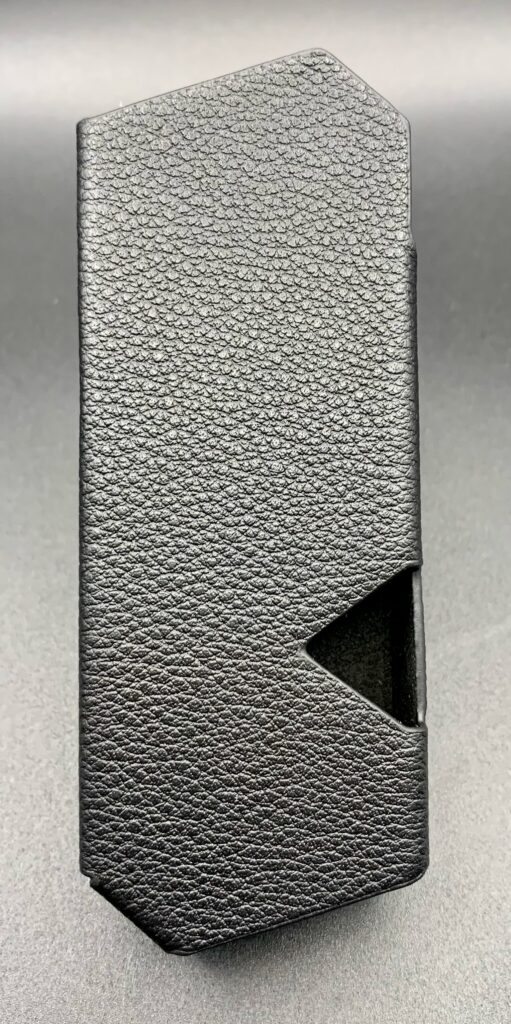
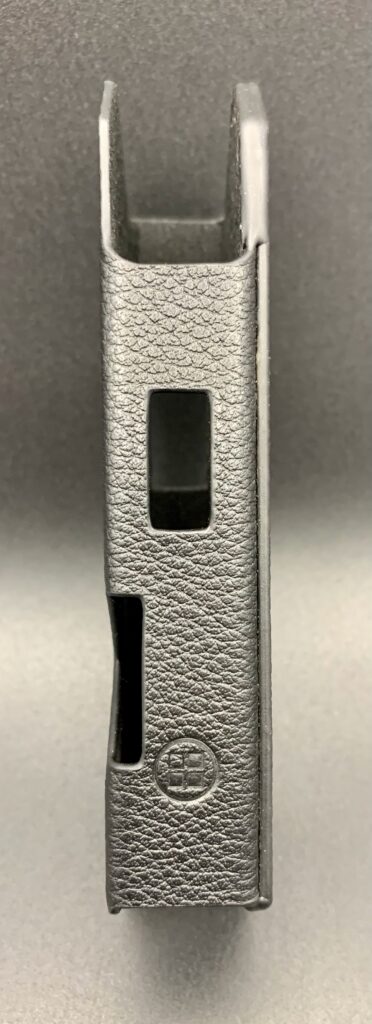
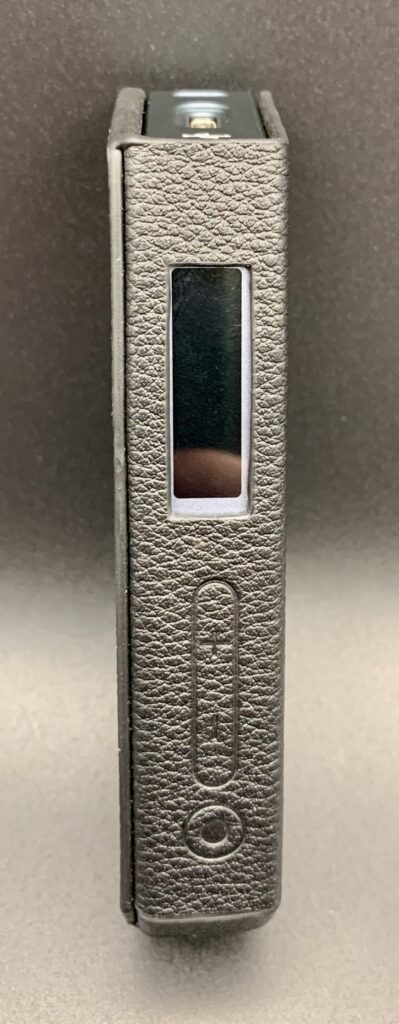
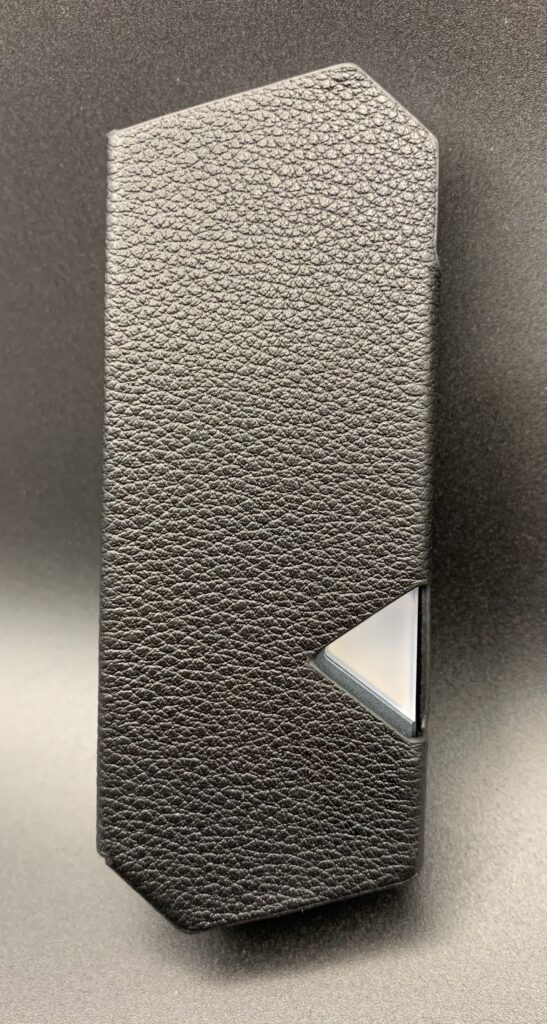
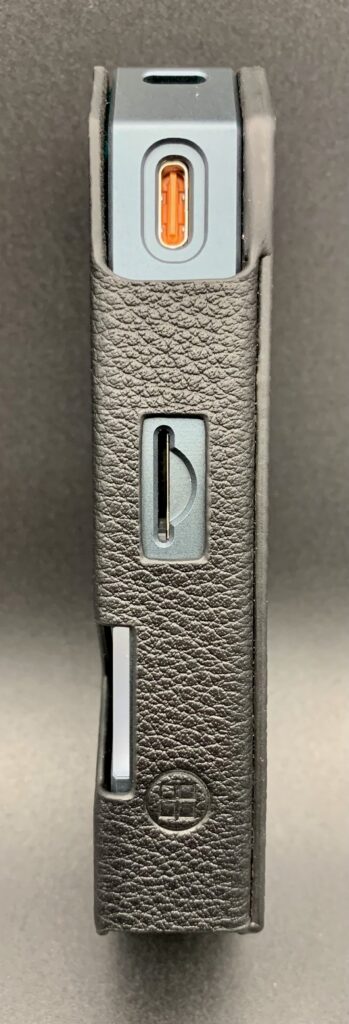
If I had one small request, it would be the inclusion of a carrying case or protective pouch. xDuoo does offer an optional case separately, but given the size of the device and its portable nature, I would have liked to see a protective case included in the package.
Overall, the presentation is clean, sensible and refreshingly free from unnecessary gimmicks.
Much like the Link3 itself, everything here feels focused on practicality rather than spectacle.
Technical Specifications
As always, a quick disclaimer before diving into the numbers. It’s not uncommon to find slight differences between official websites, online stores and promotional material, especially when it comes to output power figures or secondary specifications.
In the case of the Link3, however, I had no trouble understanding exactly what the device offers thanks to the level of detail provided in the user manual.
More than any individual specification, what stands out is the overall concept behind the product. Dual ESS DACs, dual power modes, MicroSD support up to 2TB and output power that goes far beyond what most people would normally associate with a USB dongle DAC.
| Feature | Specification |
| DAC Chip | Dual ESS ES9039Q2M |
| USB Chip | XMOS XU316 |
| Amplification | Dual SG8262 |
| PCM Resolution | Up to 32-bit / 768kHz |
| DSD Support | Up to DSD512 |
| Outputs | 3.5mm single-ended, 4.4mm balanced |
| Standard Power | 360mW @32Ω (3.5mm), 700mW @32Ω (4.4mm) |
| Super Power Mode | 500mW @32Ω (3.5mm), 1000mW @32Ω (4.4mm) |
| Gain | Low / High |
| EQ Modes | Music, Movie, Game, Off |
| DAC Filters | 4 selectable ESS digital filters |
| Volume Control | 100 hardware steps |
| USB Modes | UAC 1.0, UAC 2.0, HUB |
| Expandable Storage | MicroSD up to 2TB |
| Display | Color TFT |
| Compatibility | Android, iOS, Windows, macOS, Nintendo Switch, PlayStation |
| External Power Input | Yes, with Super Power mode |
| Dimensions | 107 × 38 × 15 mm |
| Weight | 70g (without cable) |
| Chassis Material | CNC machined aluminum |
Looking at the table alone, it becomes immediately clear that the Link3 occupies a rather unusual position in today’s market.
It’s noticeably larger than a traditional dongle DAC, but that additional size allows xDuoo to include features normally reserved for far more complex, and often far more expensive, devices.
Connectivity and Controls
If there’s one aspect that immediately confirms the Link3‘s hybrid nature, it’s the way xDuoo approached connectivity and user controls.
Unlike many dongle DACs that offer little more than a USB input and a headphone output, the Link3 feels much more like a complete audio device.
Ports and Connectivity
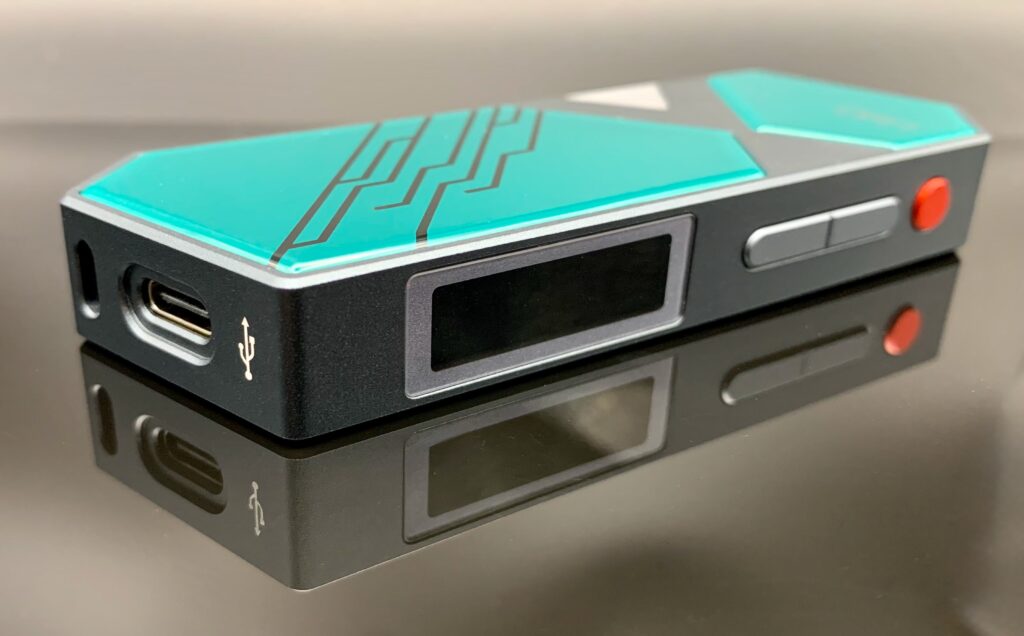
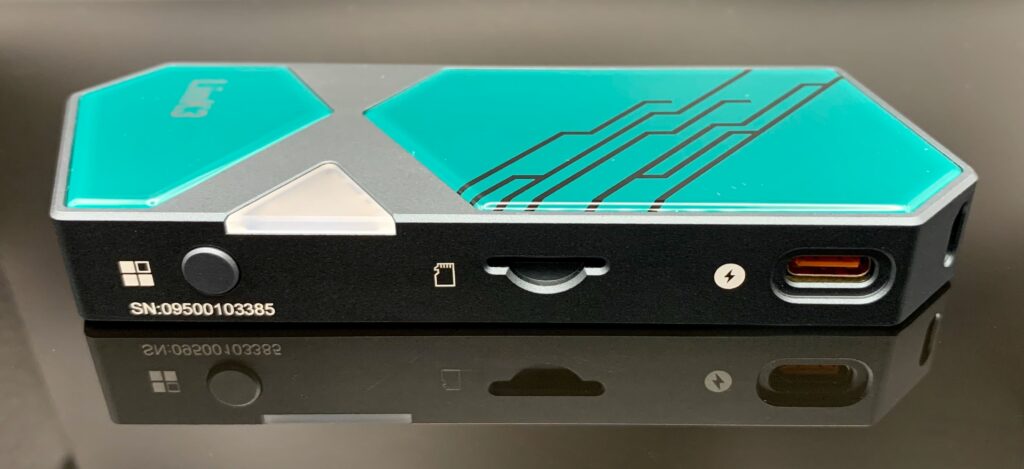
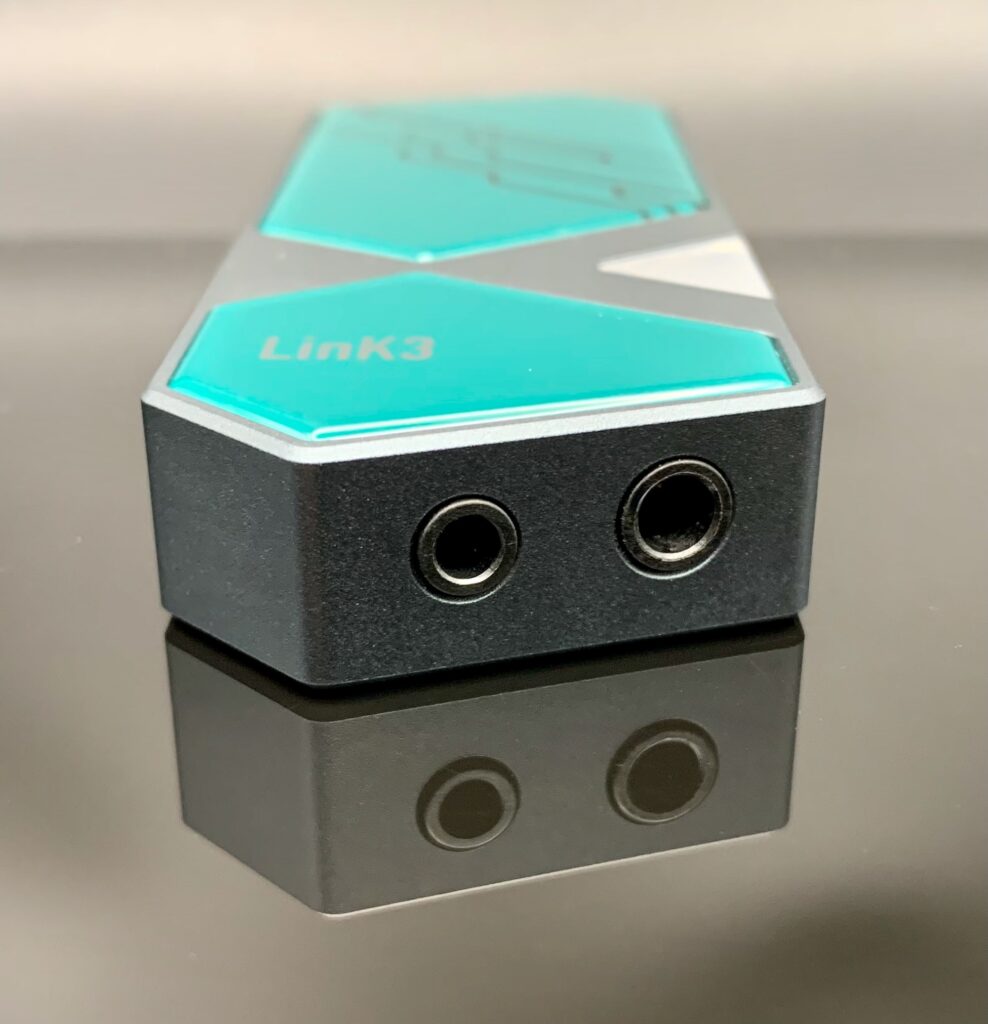
On the listening side, you’ll find both a 3.5mm single-ended output and a 4.4mm balanced output, making it compatible with virtually any IEM or headphone without major limitations.
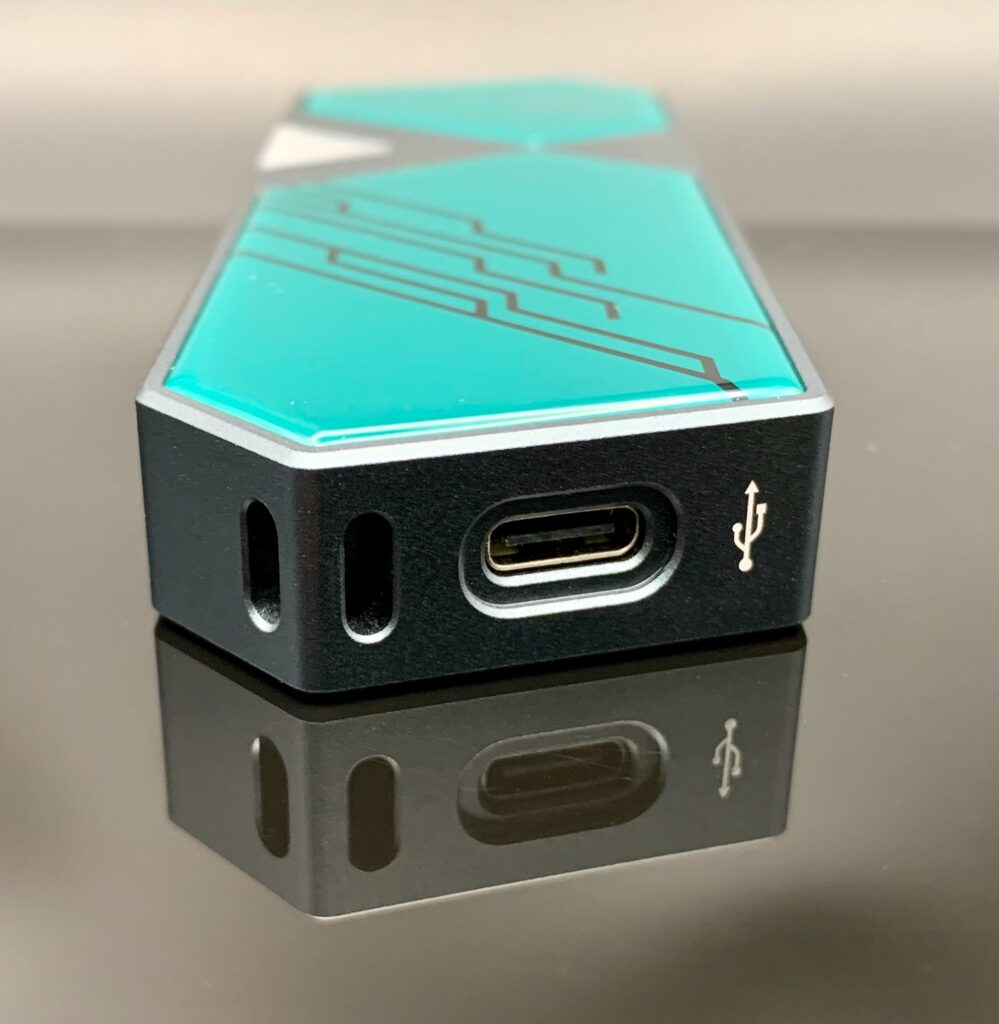
The primary USB-C port handles audio data transmission, while a second dedicated USB-C port is reserved exclusively for external power. This port doesn’t just power the Link3 itself, it can also charge the connected device, a surprisingly useful feature during long listening sessions on the go. It’s also the connection that enables Super Power mode, unlocking the device’s highest output levels.
Of course, there’s also the MicroSD slot, supporting cards up to 2TB, one of the most distinctive features of the entire design and something we’ve already covered in detail earlier in the review.
Among the many thoughtful design touches, xDuoo also included a dedicated lanyard attachment point near the USB-C input. It may seem like a minor detail, but considering the size of the Link3 and its transportable nature, it is actually a very practical addition. Whether attached to a wrist strap or a carrying cord, it helps reduce the risk of accidental drops while traveling. It is one of those small features that probably won’t influence a purchasing decision on its own, yet it reflects the amount of thought that went into the overall design and the attention xDuoo paid to real world usability.
Display and Status Indicators
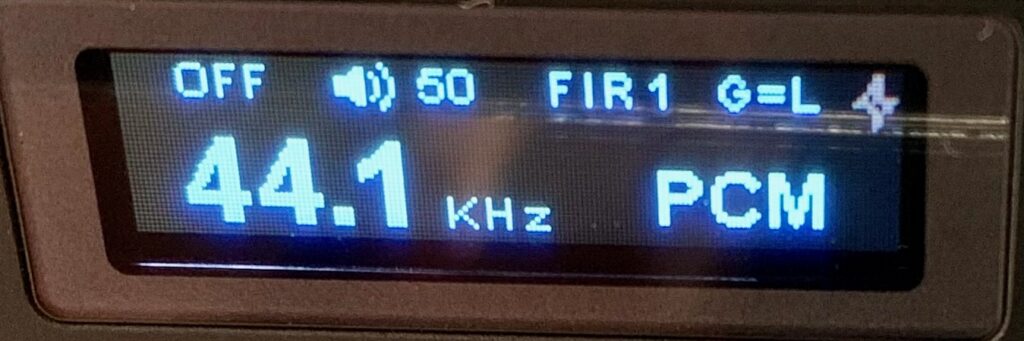
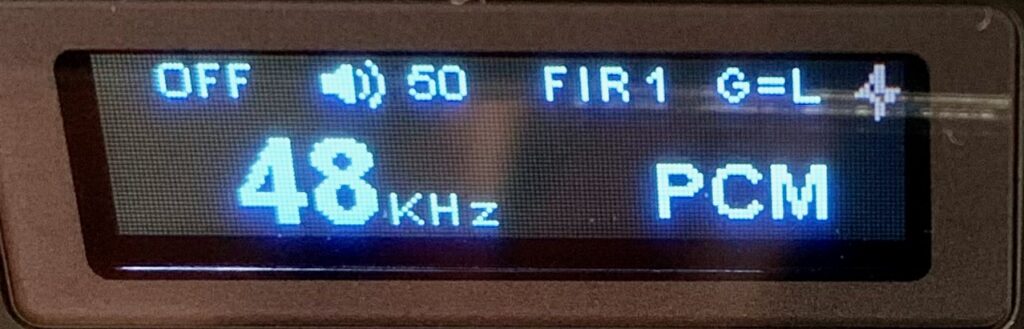
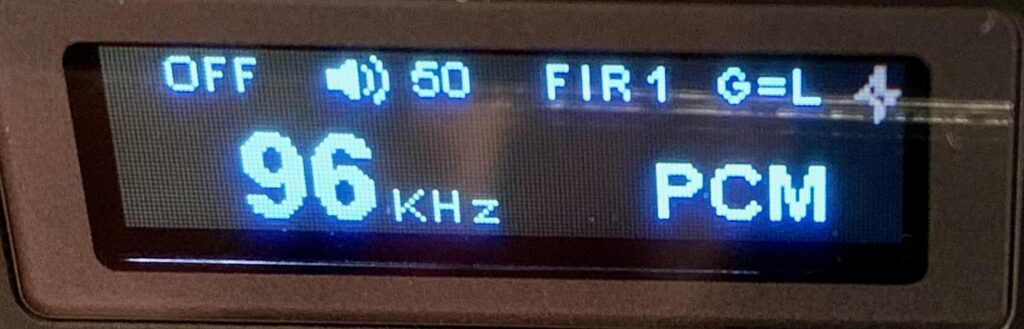
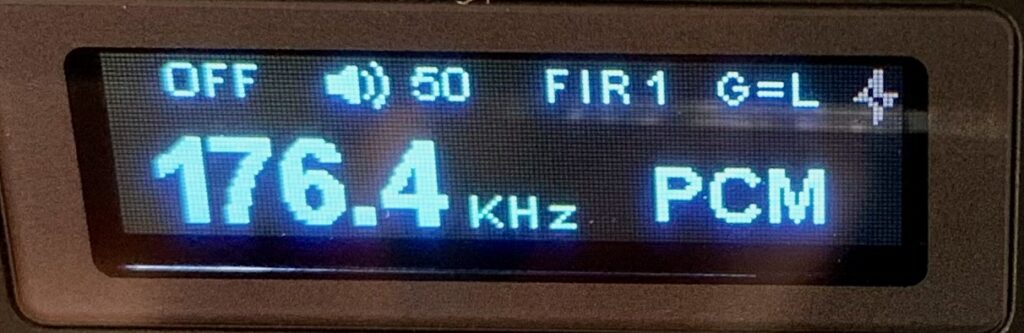
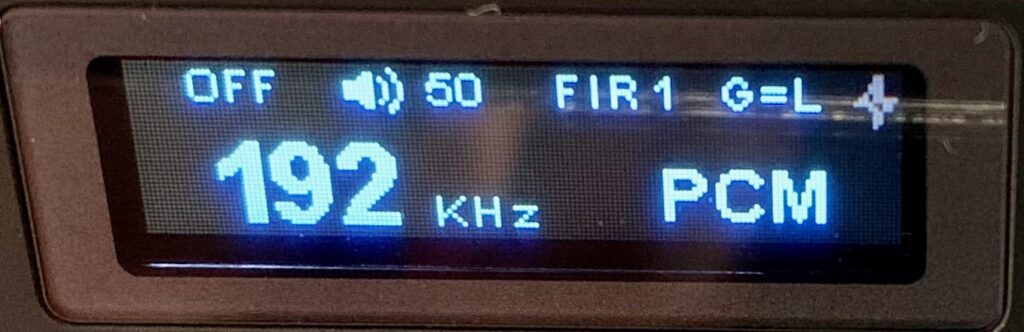
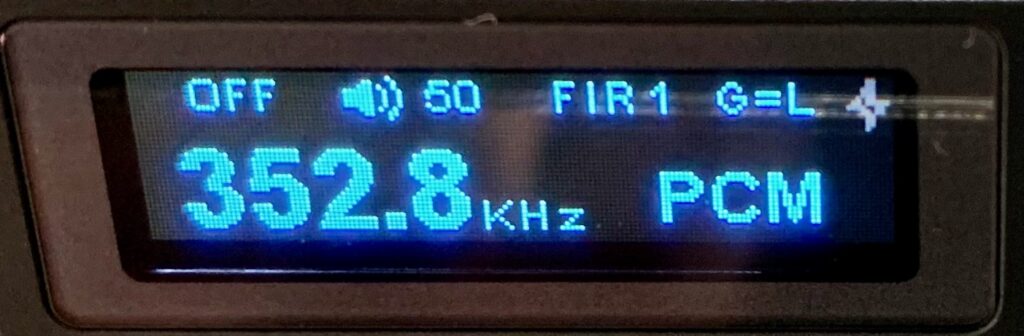
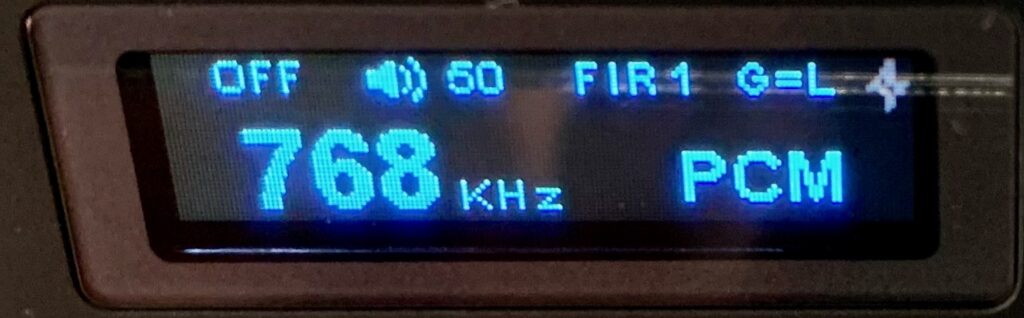
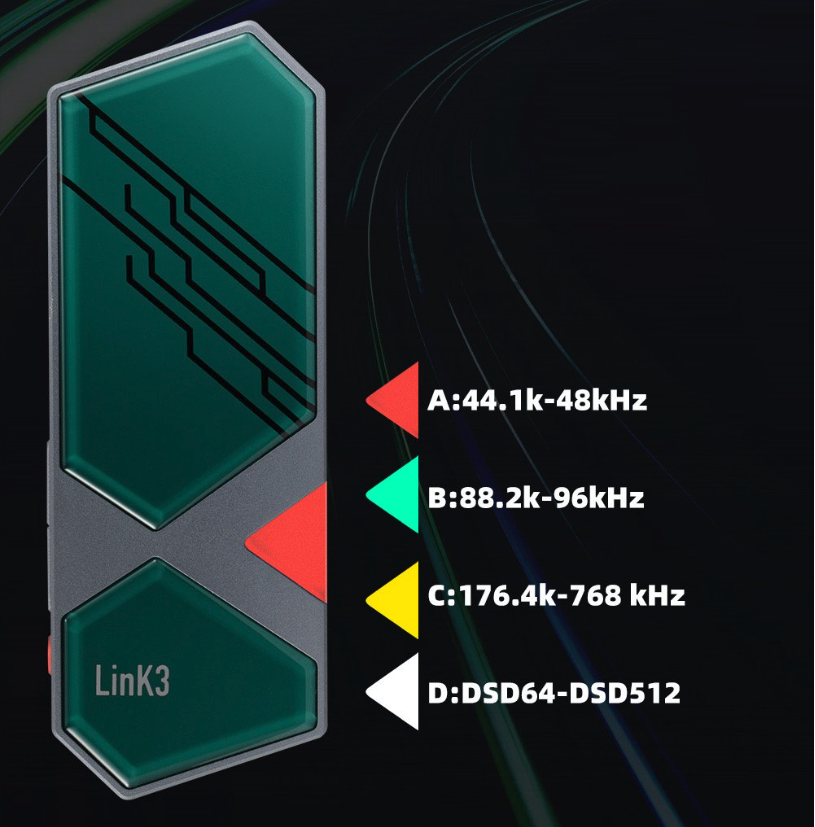
One feature I ended up appreciating more than expected is the color TFT display. This isn’t there simply to look good. It provides genuinely useful information at a glance, including volume level, gain setting, selected filter, EQ mode, sample rate and external power status.
Complementing the display is a status LED that changes color according to the resolution of the file being played:
- Red for 44.1kHz to 48kHz content
- Cyan for 88.2kHz to 96kHz content
- Yellow for 176.4kHz up to 768kHz content
- White for DSD playback
It’s a simple touch, but one that makes it easy to confirm that the audio stream is being processed correctly.
Controls and User Experience
As for physical controls, xDuoo opted for a straightforward but effective layout. Dedicated volume buttons provide precise adjustment across 100 hardware steps, while the multifunction button handles playback controls and menu navigation.
The onboard menu also offers a respectable amount of customization. Users can switch between Low and High gain, select one of four ESS digital filters, adjust display brightness, set automatic screen timeout and activate the built-in EQ presets designed for music, movies and gaming.
Personally, I spent almost the entire review period with EQ disabled and FIR1 selected. That combination consistently felt like the most balanced and natural presentation to my ears. Still, I always appreciate when a manufacturer gives users the freedom to experiment and tailor the device to their own preferences.
Overall, the interface is easy to learn and becomes second nature after only a few minutes of use. Once again, the Link3 makes its purpose clear. xDuoo created it to be far more than a dongle you simply plug in and forget about. It has its own identity, its own personality, and a level of user control that goes well beyond what most people expect from this category.
ESS Digital Filters
The xDuoo Link3 offers four selectable digital filters that can be accessed directly through the onboard menu.
As is often the case with modern ESS-based DACs, the differences are real, but generally quite subtle. Don’t expect dramatic changes in tonality or a completely different listening experience. These filters are better viewed as fine tuning tools rather than ways of fundamentally reshaping the sound signature.
The available options are:
FIR1 – Minimum Phase
This is the default setting and probably the one most users will spend the majority of their time with. It aims to strike a balance between natural timbre, detail retrieval and temporal coherence.
FIR2 – Linear Phase Fast Roll-Off Apodizing
Designed to reduce some of the artifacts that can appear in less-than-perfect digital recordings, it tends to deliver a slightly smoother and more refined presentation, particularly in the upper frequencies.
FIR3 – Linear Phase Fast Roll-Off
This is the filter most focused on theoretical accuracy. It maintains an extremely linear response and is often preferred by listeners who prioritize maximum neutrality.
FIR4 – Linear Phase Fast Roll-Off Low Ripple
Its goal is to minimize residual ripple in the frequency response while maintaining a very controlled and neutral overall presentation.
During my listening sessions the differences were never dramatic, but they were certainly noticeable, especially between FIR1, FIR2 and FIR3.
At first I found myself gravitating toward FIR2. It sounded slightly softer and more relaxed, particularly with recordings that weren’t especially well mastered. Over time, however, I kept returning to FIR1. The more I listened, the more it felt like the most natural and balanced option, and ultimately the one that best reflected the overall character of the Link3.
For that reason, the vast majority of the impressions and listening notes throughout this review were made using FIR1.
Overall Sound Signature
If I had to describe the xDuoo Link3 in a single word, that word would probably be balance.
I know it sounds generic, maybe even a little overused, but it perfectly reflects the feeling that stayed with me throughout the entire review period.
Looking at the specifications alone, a dual ES9039Q2M implementation might suggest an extremely analytical, almost surgical presentation, carrying that familiar ESS flavor many audiophiles immediately associate with maximum detail retrieval and technical performance.
To some extent, that’s true.
The xDuoo Link3 is undeniably detailed, precise and highly capable of extracting information from a recording.
Stopping there, however, would completely miss the point.
What impressed me most was the work xDuoo has done around the DAC section itself. The company managed to preserve all the resolution and detail retrieval you would expect, while avoiding the trap of sounding cold, metallic or overly monitor-like.
The end result is surprisingly musical.
It doesn’t have the almost liquid flow of some tube based designs, but it delivers a timbre that feels natural, engaging and easy to listen to for hours at a time.
Throughout my testing, using the Baker as my reference IEM for their linearity and the Matilo for their more energetic and fun presentation, the Link3 consistently showed an impressive ability to adapt. It allowed the character of each transducer to come through without imposing an overly dominant personality of its own.
That is probably its greatest strength.
It doesn’t try to impress you during the first five minutes.
It simply lets you enjoy the music.
Bass
The low end is one of the areas where the Link3 impresses the most.
This is not a device designed to impress through exaggerated sub bass quantity or oversized impact. Instead, xDuoo focused on control, articulation and presence.
The effect becomes particularly obvious with the Matilo. Punch is strong, physical impact is satisfying and bass lines remain composed even during faster passages.
Dense recordings are handled with confidence as well. Electric bass, kick drums and synthesizers maintain good separation, avoiding the congestion that can sometimes affect devices tuned more aggressively toward warmth and musicality.
Quantity feels appropriate.
Quality is clearly above average.
Rather than relying on brute force, the Link3 wins through maturity.
Midrange
The midrange is probably where the Link3‘s musical nature becomes most apparent.
Vocals are well positioned within the soundstage, natural in tone and sufficiently full-bodied to remain convincing across both acoustic recordings and more modern productions.
There is no sense of the midrange being recessed or sacrificed in favor of the frequency extremes.
Everything feels balanced.
Guitars retain their body and harmonic richness, pianos sound convincingly textured and female vocals emerge clearly without becoming aggressive or fatiguing.
This is a presentation built around coherence rather than spectacle.
Over long listening sessions, that approach pays off.
Treble
The upper frequencies follow the same philosophy.
Extension is excellent, detail retrieval is strong and micro information is reproduced with impressive precision.
What surprised me most is the absence of the artificial brightness that sometimes accompanies less refined ESS implementations.
The xDuoo Link3 remains a highly resolving source.
Details are there.
Ambient cues are easy to pick out.
Reverberation trails are reproduced naturally.
Yet none of this turns the listening experience into a constant hunt for tiny details.
The result is an airy, highly detailed presentation that remains comfortable and fatigue free even during extended sessions.
Soundstage and Imaging
If tonal balance is one of the Link3‘s strengths, spatial performance is probably the area that surprised me the most.
For a portable device, the soundstage is genuinely impressive in both width and depth.
It easily outperforms many competing dongles in terms of lateral expansion, but what makes the presentation particularly convincing is the accompanying sense of front-to-back layering.
Instruments are not simply spread from left to right.
There is a genuine perception of distance and positioning.
The effect becomes especially noticeable with the Aune SR7000. The stage develops in a believable way and instruments occupy clearly defined locations within the virtual space.
The Ollo X1, a headphone I know extremely well, also highlighted the Link3‘s ability to organize space effectively without creating an artificially oversized presentation.
Imaging clearly benefits from xDuoo’s dual mono architecture. Individual sound sources are easy to locate and positioning remains stable, precise and coherent throughout the performance.
Power Output
Power is one of the most interesting aspects of the Link3.
Even in its standard operating mode, the device provides more than enough output for the vast majority of IEMs and a surprisingly large number of full size headphones.
Using both the Aune SR7000 and the Ollo X1, I never felt as though I was approaching the limits of the amplifier section. There was always enough headroom available, even during more dynamic recordings.
Where things become particularly interesting, however, is when external power enters the equation.
By connecting a dedicated power source to the secondary USB-C port, the Link3 activates its Super Power mode, significantly increasing the available output.
We’re talking about figures that reach up to 1000mW at 32Ω from the balanced output.
That is a substantial amount of power for a device that still belongs to the dongle category and provides an extra layer of confidence when pairing it with more demanding headphones.
What impressed me most is that this additional power doesn’t seem to alter the sonic character of the device.
Throughout my testing I wasn’t able to detect meaningful changes in tonality, presentation or overall sound quality. The Link3 simply gains a larger power reserve while maintaining the same musical balance and overall character.
Personally, I suspect that most users will never truly need this mode.
To fully exploit it, you’re generally looking at headphones that are genuinely power hungry, perhaps 300Ω or even 600Ω designs, or particularly inefficient planar magnetic models that demand substantial current.
Even so, it’s reassuring to know the capability is there.
The Link3 offers a level of power reserve that sits well beyond what most people would normally expect from a dongle DAC.
Once again, the core philosophy behind the entire project becomes obvious.
The xDuoo Link3 doesn’t want to behave like a typical dongle.
It wants to offer something more.
Power Consumption and Portable Use
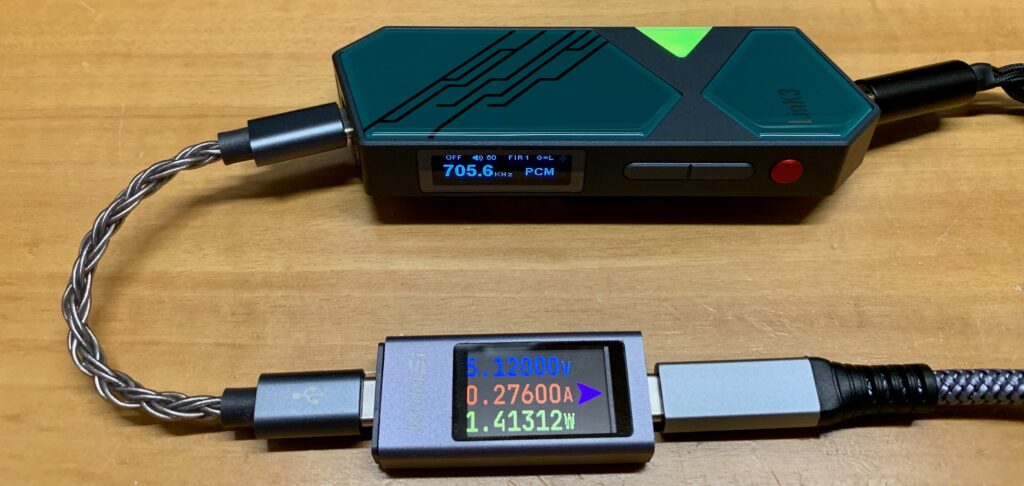
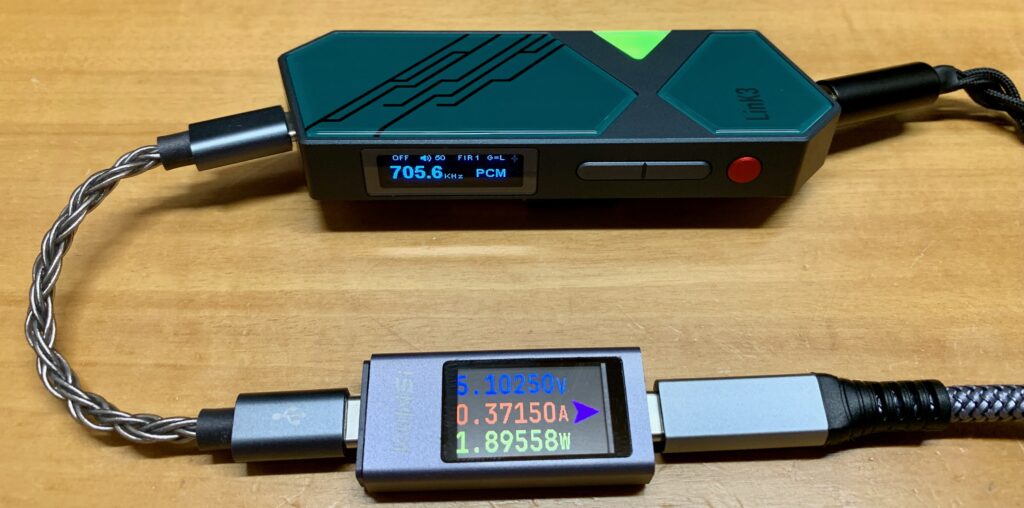
One aspect that rarely gets discussed when talking about dongle DACs is power consumption. Most of the attention tends to focus on sound quality and output power, while forgetting that all of this processing has to be powered somehow.
During my testing, the Link3 proved to be more demanding than many traditional dongles, especially when its more advanced features were actively used. After all, we’re talking about a device that combines dual ESS ES9039Q2M DACs, a color display, full hardware controls, MicroSD support and a surprisingly capable amplification stage.
When connected to a laptop or desktop computer, this is largely irrelevant. In portable use, however, it becomes something worth considering, particularly during longer listening sessions.
HUB mode and MicroSD operation increase power consumption even further, which is hardly surprising given the additional functionality involved.
Personally, I don’t see this as a flaw. Rather, it feels like the natural trade off of a design that aims to offer considerably more than what most people would normally expect from a dongle DAC.
Operating Temperature
The xDuoo Link3 ‘s thermal behavior follows much the same logic as its power consumption.
During everyday use with IEMs and easy to drive headphones, operating temperatures remained perfectly reasonable and broadly in line with many other mid to upper tier dongles I have tested.
Things become more noticeable once you start taking full advantage of everything the device has to offer. Driving more demanding full size headphones at higher volume levels while simultaneously using HUB mode and MicroSD storage causes the chassis to become noticeably warmer.
At no point did the heat become excessive or uncomfortable, nor did it affect daily usability in any meaningful way. The increase in temperature is simply easy to notice when the device is being pushed harder.
Ultimately, this is a fairly predictable consequence of the Link3‘s design philosophy. More power, more processing and more features inevitably generate more heat that needs to be dissipated.
Throughout the entire review period, I experienced no instability, connection issues or unexpected behavior that could be attributed to thermal management.
Comparison with the BASN PA60

The comparison with the BASN PA60 is particularly interesting because, at least on paper, the two devices share a surprisingly similar technical foundation. Looking at the specifications alone, you might expect them to perform much closer than they actually do.
Before going any further, it’s worth saying that I genuinely enjoyed the PA60. It offers a pleasant tonality, a balanced presentation and an overall sense of naturalness that makes it very easy to enjoy on a daily basis.
Moving to the Link3, however, reveals something extra.
This isn’t the kind of difference that immediately jumps out within the first thirty seconds. The advantage becomes apparent gradually, as you spend more time focusing on the finer details of a recording.
The first thing I noticed was instrument separation and the ability to extract subtle information from the mix. The Link3 presents a slightly cleaner and more defined image, giving individual elements more room to breathe within the soundstage.
Where the difference becomes even more noticeable is in tonal realism.
The Link3 reproduces note decay in a particularly convincing way. Piano recordings are a perfect example. The lingering harmonic trail that follows the initial strike of a key feels more complete and believable, helping the instrument sound more natural and lifelike. It’s a subtle refinement, but once you hear it, it’s difficult to ignore.
The upper frequencies reveal another small advantage. Both devices deliver a healthy amount of detail, but the Link3 sounds more open and airy while simultaneously being less sharp and less likely to emphasize imperfections in the recording.
Vocals are much closer between the two. Both offer a natural and well-balanced midrange that prioritizes realism over spectacle.
The low end once again gives the Link3 a slight edge. Bass notes feel denser, fuller and carry a stronger sense of physical weight while maintaining good control. By comparison, the PA60 sounds a little leaner and more restrained.
In the end, I consider the Link3 the superior performer, though not by such a margin that it overshadows the PA60.
The BASN remains an excellent product and continues to deliver a highly enjoyable listening experience.
The difference is simply that, after a few hours of listening, the Link3 reveals a level of technical and musical maturity that gradually becomes harder to ignore.
Comparison with the xDuoo Link2 Max
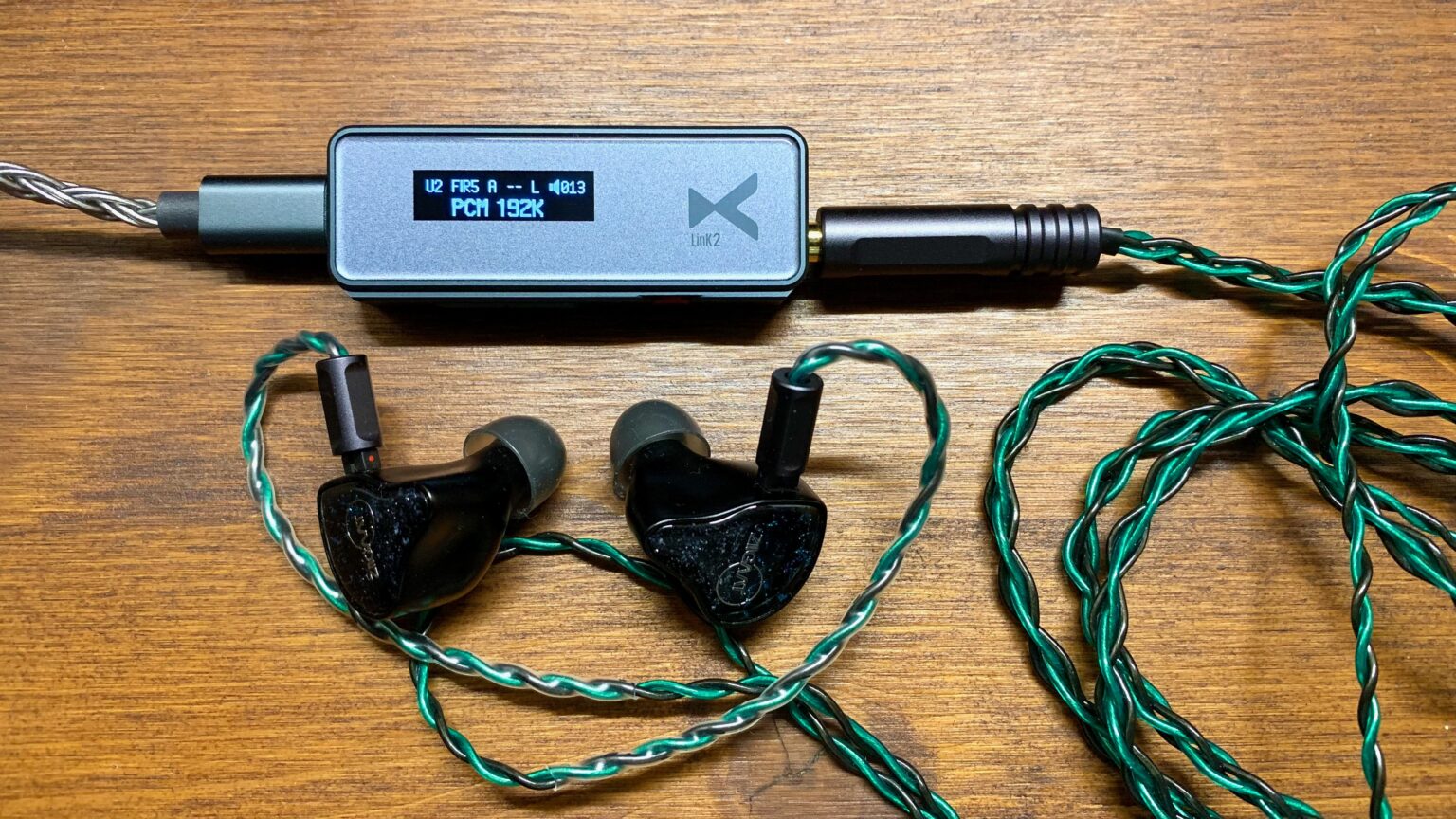
This was probably the comparison I was most curious about.
Not only because the Link2 Max has been one of my favorite xDuoo products over the last few years, but also because it remains one of the dongles I most frequently recommend to people looking for a strong balance between sound quality, power and price.
Naturally, my expectations were quite high.
After many hours of listening, however, my conclusion became fairly straightforward.
At least to my ears, the Link3 belongs in a higher category.
The difference isn’t limited to a single aspect of the presentation. It affects virtually every part of the listening experience.
Switching from the Link2 Max to the Link3 feels almost as if a thin veil has been lifted from the music. The overall character doesn’t change dramatically, but there is a noticeable increase in clarity across the entire frequency range.
Definition improves.
Detail becomes easier to perceive.
Instrument separation gains precision.
There is also a greater sense of openness and air, helping create a soundstage that feels more spacious and more convincingly organized.
Bass sounds fuller and more authoritative without sacrificing control, while the treble manages to be both more extended and less fatiguing.
The most significant improvement, however, lies in the overall sense of naturalness.
Acoustic instruments sound more believable, small nuances become easier to appreciate and the listening experience flows more effortlessly. Instead of focusing on the equipment, you find yourself focusing on the music.
That doesn’t mean the Link2 Max suddenly becomes a mediocre product.
Quite the opposite.
It remains one of the strongest performers in its price category and a device I would still recommend without hesitation.
The reality is simply that after spending a few days with the Link3 and then returning to the Link2 Max, you become aware that the overall performance level has moved forward.
Throughout my listening sessions I never felt this was a minor refinement or a routine generational update.
These are two products playing in different leagues.
The Link2 Max still offers a wonderfully relaxed and easygoing presentation that some listeners may actually prefer, particularly those who are not chasing maximum resolution.
Even so, the final outcome of the comparison remains unchanged.
Both are excellent.
They’re just not operating at the same level.
Listening Tests
Choosing one or two tracks to describe the behavior of a DAC is never easy.
In theory, a DAC shouldn’t have a sound signature at all. Its job is simply to convert a digital signal into an analog one as faithfully as possible. In reality, implementation, power supply design, output stage and countless other variables inevitably influence the final result.
That’s why even devices built around similar chipsets often end up being described as more musical, more analytical, warmer or cooler sounding.
To keep my comparisons as consistent as possible, I always rely on the same references. For this review I used the Yanyin Baker for IEM listening and the Ollo X1 for full size headphones. Both have proven to be extremely neutral and exceptionally revealing when it comes to exposing differences between sources.
Keith Jarrett – The Köln Concert Part I
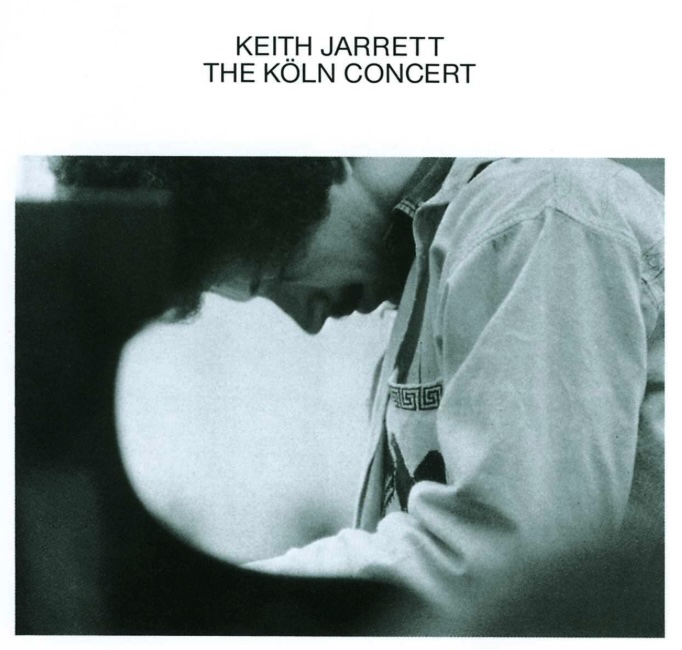
This historic solo piano performance remains one of my favorite tracks for evaluating timbre, naturalness and a device’s ability to reproduce note decay.
Jarrett’s piano is rich, harmonically dense and filled with notes that bloom and slowly fade into the acoustic space. There are no complex arrangements here, no layers of instruments competing for attention. What you hear is a piano, the surrounding venue, the reverberation of the room and the natural extension of every note.
In this environment, the Link3 proved particularly convincing.
The combination of detail retrieval and natural presentation allows both the initial attack of each key and the gradual harmonic decay to come through clearly. Notes feel complete rather than truncated, and the atmosphere of the recording remains beautifully intact.
The result is an immersive listening experience that creates a genuine sense of presence, something I rarely associate with a product that technically belongs to the dongle category.
Eagles – Hotel California (Hell Freezes Over, 1994)

This track moves the evaluation into completely different territory.
The famous live version of Hotel California is one of the recordings I return to most often when assessing soundstage, separation, depth and spatial reconstruction.
The introduction alone provides a remarkably rich sonic landscape. Nylon string guitars, a 12 string acoustic guitar and multiple percussion instruments weave together a complex and layered presentation. As the performance progresses, additional instruments and vocals enter the mix, further increasing the challenge.
The xDuoo Link3 manages to maintain an impressive balance between detail and cohesion.
The guitars retain their sparkle without becoming sharp or aggressive. Percussion remains clearly separated, while the soundstage delivers a convincing sense of scale and space around the performers.
More importantly, the Link3 never turns the performance into an analytical exercise.
Rather than placing every tiny detail under a microscope, it communicates the performance as a whole. The experience feels less like studying a recording and more like being part of it.
For listeners who care about emotional connection as much as technical performance, that may be the most important quality of all.
Final Thoughts
The xDuoo Link3 is one of those products that leaves a stronger impression than its specification sheet initially suggests.
Yes, it’s powerful.
Yes, it’s well built.
And yes, the technical package is undeniably impressive.
What ultimately won me over, however, was its overall balance.
In a market that often seems obsessed with ever bigger numbers and an almost relentless pursuit of microscopic detail, the Link3 takes a different approach. It remains highly resolving, precise and technically capable, yet it never turns listening into an analytical exercise.
Its greatest strength is its musicality.
Not the kind of musicality that comes from coloring the sound or softening the edges, but a more natural and believable presentation that allows you to enjoy music as a whole while still preserving detail, dynamics and transparency.
Personally, I find this approach far more satisfying than some of the hyper analytical presentations that impress during the first few minutes and then slowly become fatiguing over longer sessions.
The biggest surprise, however, is the MicroSD implementation.
At first glance it might seem like a secondary feature, something added simply to stand out from the competition. In everyday use, it became one of the things I appreciated most.
Being able to carry an entire music library with you, without relying on an internet connection, streaming services or the limited storage of a smartphone, is one of those conveniences that becomes more valuable the longer you live with it.
You can start with a modest 128GB card and already store hundreds of albums in high quality formats, then expand your collection as needed. My own approach ended up being very similar to the way I organize my home NAS. One card contains the music I listen to regularly, while another is dedicated to new releases and products I need to evaluate.
Simple.
Practical.
Surprisingly effective.
In the end, that flexibility is what makes the Link3 stand out from so many competitors.
It isn’t the smallest dongle on the market, and it probably wouldn’t be my first choice for a quick walk with a smartphone in my pocket.
What it does offer is something increasingly rare, a combination of strong sonic performance, genuine versatility and thoughtful day to day usability.
The xDuoo Link3 is not the best dongle I have ever heard.
It is, however, one of the smartest and most complete dongles I have ever used.
🟢 Pros
- Convincing and natural musicality
- Excellent balance between detail retrieval and listening enjoyment
- Plenty of power even in standard mode
- Super Power mode genuinely useful with demanding headphones
- MicroSD support up to 2TB, a unique feature in this category
- Bright and informative color display
- Solid and well executed build quality
- Excellent instrument separation and immersive soundstage
- PCM 768kHz and DSD512 support
- Wide compatibility with smartphones, tablets and computers
🔴 Cons
- Not particularly pocket friendly due to its size and weight
- Protective case not included in the package
- HUB mode noticeably increases smartphone battery consumption
- Its size makes it better suited for transport than true on the go use
- Some advanced features may be unnecessary for users driving only easy to power IEMs
Frequently Asked Questions
Can the xDuoo Link3 replace a DAP?
That depends entirely on your needs. If you mainly use a smartphone as your source and listen either to local files or streaming services, the Link3 can significantly reduce the need for a dedicated DAP. It is not a standalone player, but thanks to the MicroSD slot and its extensive feature set, it comes closer to the DAP experience than many competing dongles.
Is the MicroSD feature genuinely useful or just a marketing gimmick?
For users who rely exclusively on streaming services it may feel like a secondary feature. For anyone with a local music library, however, it can easily become one of the main reasons to buy the Link3. Having up to 2TB of music stored directly inside the device remains an extremely practical solution.
Is Super Power mode really necessary?
For most users, probably not. Even in standard mode the Link3 provides more than enough power for the vast majority of IEMs and many full size headphones. Super Power mode becomes particularly interesting when driving high impedance or especially demanding headphones.
Does Super Power mode change the sound?
During my testing I did not notice any meaningful sonic differences. The impression is that it simply increases the available power reserve without altering the overall character of the device.
Is it suitable for sensitive IEMs?
Yes. Throughout my testing I did not encounter noticeable background noise with most of the IEMs I used. As always, results may vary depending on the sensitivity of individual models.
Do the digital filters really make a difference?
The differences are there, but do not expect dramatic changes. In my case I could hear subtle but recognizable variations between some of the filters. After extensive listening I consistently returned to FIR1, which I found to be the most natural and musical option over longer sessions while still maintaining excellent detail retrieval.
Is it easy to carry around?
That depends on your definition of portability. The xDuoo Link3 is easy to carry in a bag, backpack or protective case, but it does not belong to the ultra compact dongle category designed to stay permanently attached to a smartphone in your pocket.
Is it worth upgrading from the Link2 Max?
In my opinion, yes. The xDuoo Link3 offers noticeable improvements in almost every meaningful area, including definition, instrument separation, note body, soundstage and overall naturalness.
What is the xDuoo Link3 ‘s biggest strength?
If I had to choose only one aspect, I would say balance. It manages to be detailed without sounding cold, powerful without feeling excessive and versatile without becoming complicated. Add the excellent MicroSD implementation and you get one of the most interesting and complete dongles currently available.
Acknowledgements and Personal Note
I would like to thank xDuoo for providing the Link3 for review. No compensation was received, no approval was requested and no editorial restrictions were imposed. This review is based entirely on real world use and personal listening experience.
For additional technical information and official specifications, you can visit the xDuoo website.
I listened, I tested, I compared.
Everything written here is based solely on my experience with the product, using headphones, IEMs and music that I know extremely well.
What you have read is exactly what I heard.
Now I’ll let the music tell the rest of the story.






No Comment! Be the first one.