











































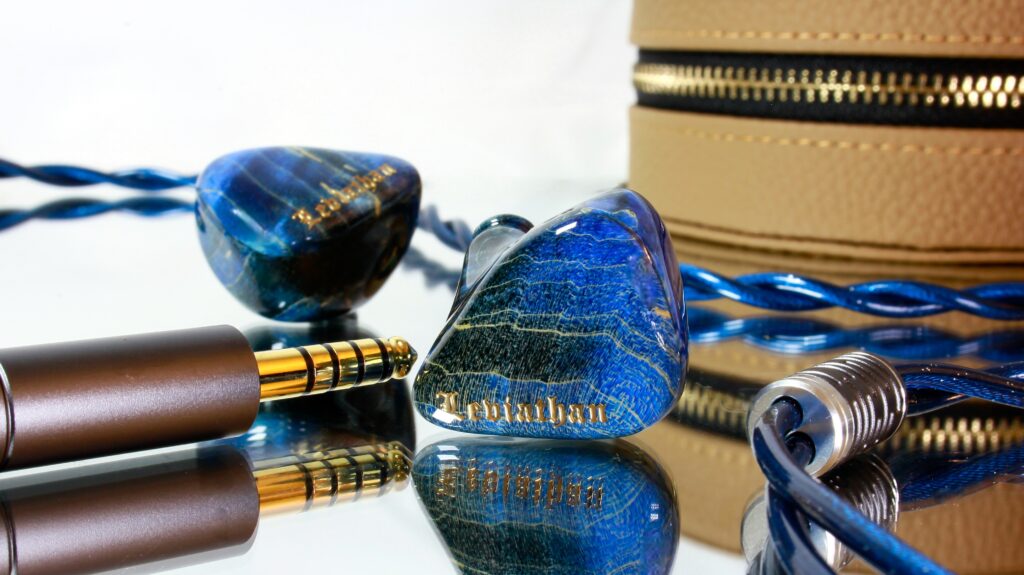
ODA Leviathan T800 Review
Intro
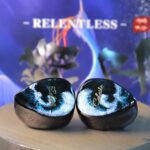
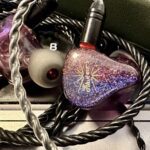
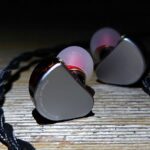
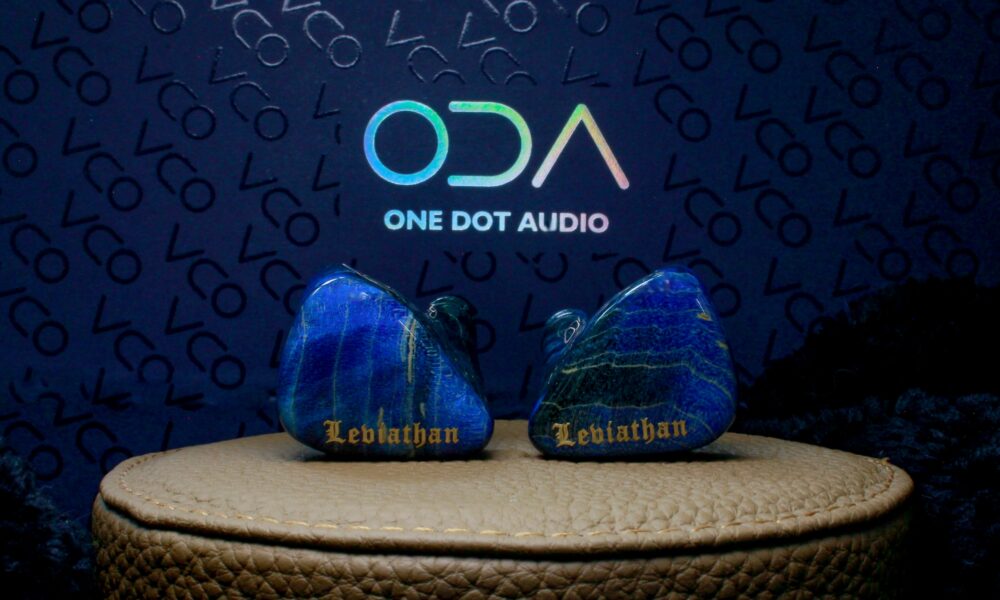
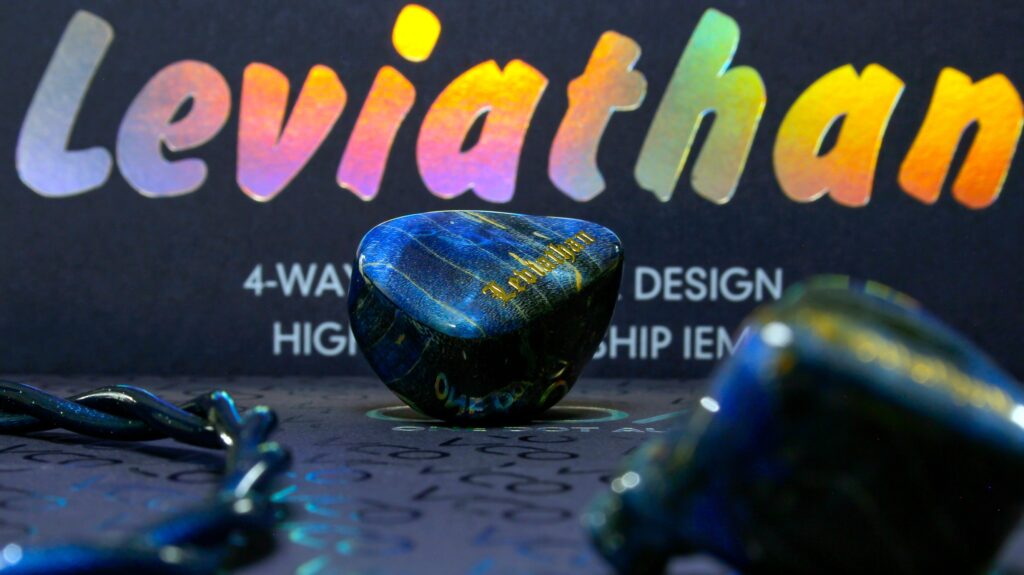
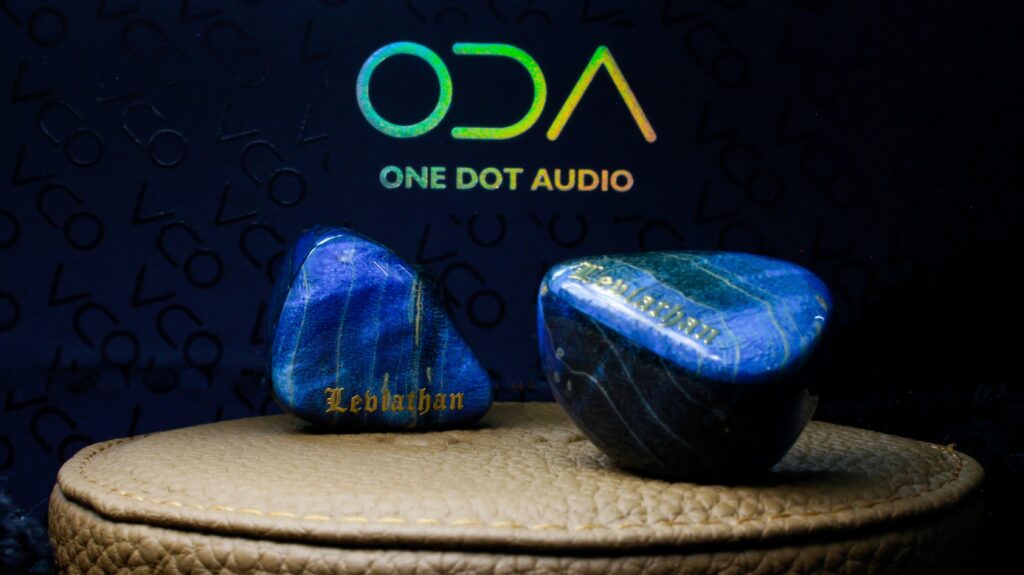
Hello everyone, this review and feature covers the latest flagship level iem from the young but very talented audio brand ODA (One Dot Audio) named the ODA Leviathan T800 ($1,299). I have the distinct honor of trying out the best from one of the true up-and-coming brands and I cannot wait to get the Leviathan in my possession. From what I can find within the ODA marketing page, the Leviathan comes equipped with a total of eight drivers (1DD, 1FD, 6BA’s) and those hallmark beautiful ODA stabilized wood shell chassis. Friends, I haven’t received this set yet, but from what I can find the Leviathan looks to easily be their most ambitious product yet. Of course, it’s also their most expensive product to date which makes this review period all the more intriguing for me. Again, it is an honor for me, and I promise to give you my every thought as it is.
Table Of Content
- Intro
- One Dot Audio
- Impressed
- Great Serpent of the Sea
- The Arrival
- Non-Affiliated Purchasing Links
- Gear used for testing
- Packaging / Accessories
- Unboxing (Spoilers)
- Eartips
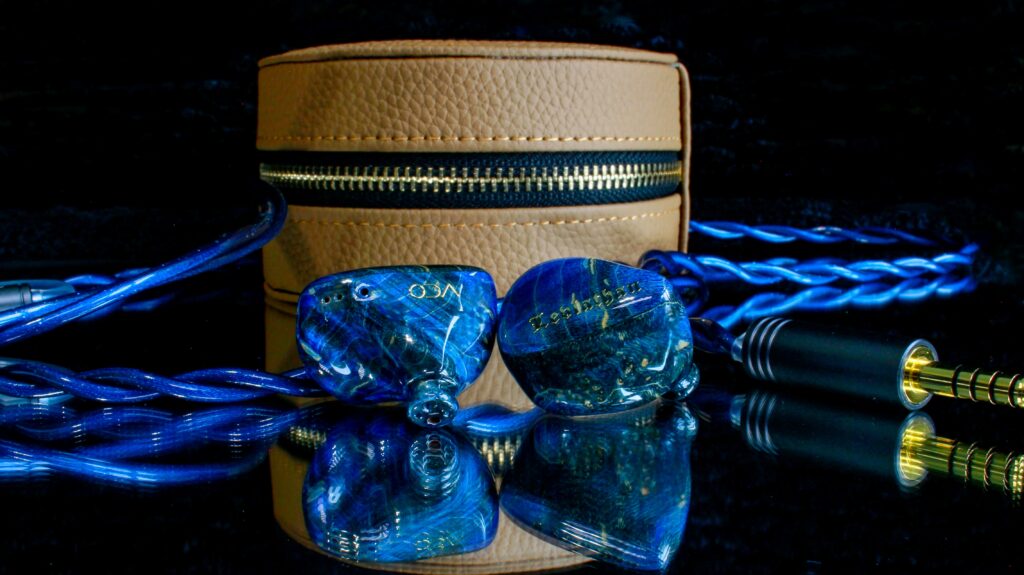
- Carrying Case
- Cable
- Build / Aesthetic / Internals / Fit
- Build Quality
- Design / Aesthetic
- Internals
- Fit / Comfort
- Drivability / Pairings
- Sensitivity
- Output Power
- Source Pairing
- Sound Impressions
- Palette Cleanse
- What’s It Sound Like?
- Sound Signature / Tonality / Timbre
- Musical/Analytical
- Bass Region
- Sub-Bass
- Mid-Bass
- Downsides to the Bass Region
- Midrange
- Mids Cont…
- Lower-Midrange
- Upper-Midrange
- Females
- Downsides to the Midrange
- Treble Region
- Treble Head?
- Cadent Treble & Precision
- Downsides to the Treble Region
- Technicalities
- Soundstage
- Separation / Imaging
- Detail Retrieval
- Comparisons
- Letshuoer Cadenza 12 ($2,299)
- Non-Sound Stuff
- Sound Differences
- Final Thoughts on this Comparison
- Genres
- Genres Which Work
- Not as Perfect Genres
- Last Words on the ODA Leviathan T800
- Fingers Crossed
- The Why…
- Conclusion
- Other perspectives
- Leviathan Pros
- Leviathan Cons
One Dot Audio
I have nothing but high praise for ODA. One Dot Audio hails from China, a Shenzhen based brand created from the hearts and minds of a small group of audio enthusiasts. I’d love to hear their official story and timeline because ODA is one of those smaller boutique style companies that should be known worldwide, yet they remain small and passionate with the good decision of manageable growth instead of pushing an overhyped social media presence. The only person that I know within the brand is one that maintains a high level of integrity with every move that he makes taking very-very special care over ODA’s products. I’m telling you, I respect that so much. This is a brand who obviously loves what they do, they are passionate about their craft, and they make purposeful and smart moves with their business decisions. Sure, that is an outside-looking-in perspective, but I do not think I’m far off at all. You know a tree by its fruit and from every discernable vantage point that I have; the audio brand ODA is the real deal.
Impressed
I’ve only reviewed two of ODA’s products thus far. Granted, they’ve only had three different series. Those being the Dolphin D100, the Hesperus A300, the Amarantine A500, and now the Leviathan T800. Add to that they all have their own special edition sets as well which are typically labeled “Wood Edition” or “Korean Edition”. Now, the Leviathan is supposed to actually be a “Korea or Wood Edition” set but I asked my contact what to call it and he said, “ODA Leviathan T800”. So, whether anyone refers to it as a “Wood Edition” or not is up to you but my info comes from the man himself. Anyway, I’ve actually only reviewed a couple all balanced armature Wood Edition sets. The first one being the wonderful and criminally underrated ODA Hesperus A300 Wood Edition. A simple 3 driver all BA set that is tuned beautifully. Friends, you would think that the A300 WE had 12 drivers inside those beautiful stabilized wooden shells. Next came my favorite all balanced armature set market wide, the ODA Amarantine A500. This set is one that should be promoted from the mountain tops. Wonderfully tuned, beautifully balanced, strong and punchy bass, some of the best vocals anywhere near $500, and not a fatiguing set at all. Just a handsome iem. I’m sure there will be a set from ODA that comes along which doesn’t fit my preferences, but thus far I’ve only been impressed.
Great Serpent of the Sea
One thing that I’ve congratulated many brands over is their use of themes to design, build, and tune their products. It’s an excellent way to bring creativity and art into the overall aesthetic of a set. For the T800 obviously ODA chose “Leviathan”. Now, Leviathan is me toned all through mythical stories as well as even religious texts like the Bible as well. However, I think this theme is based around the great monster of the sea using words which more describe something so massive and so vast, untamed, and is spoken more in reverence of its might, its power, and the stories passed down from sailor to sailor. Spoken as though it’s too endless in depth, too gargantuan in size, too much of a raw force to contain. ODA connects the with the Leviathan earphones as the sound of a phenomenally vast sea and the earphones “Leviathan” as the way to command or almost tame the sea. As though Leviathan is the only being large enough and commanding enough. Just by the sound of that I imagine this set will be nicely balanced yet have plenty of raw and deep bass. It would have to. To call something Leviathan and give it weak bass would be an insult to the mythical character. Also, I know ODA, they do it right. Also, the wood grain and navy-blue colorway reinforces the oceanic theme making them feel more earthy, more organic, age old with an almost royal color theme. It fits the idea of deep oceanic waters, of the abyss, and its colors seem to me (without seeing them in person yet) that there’s actually some mystery to the rather than bright and super loud colors. I love the idea of a theme, and I love that ODA chose this path. Now I’m very happy to see all of the ways that the Leviathan T800 fits that theme.
The Arrival
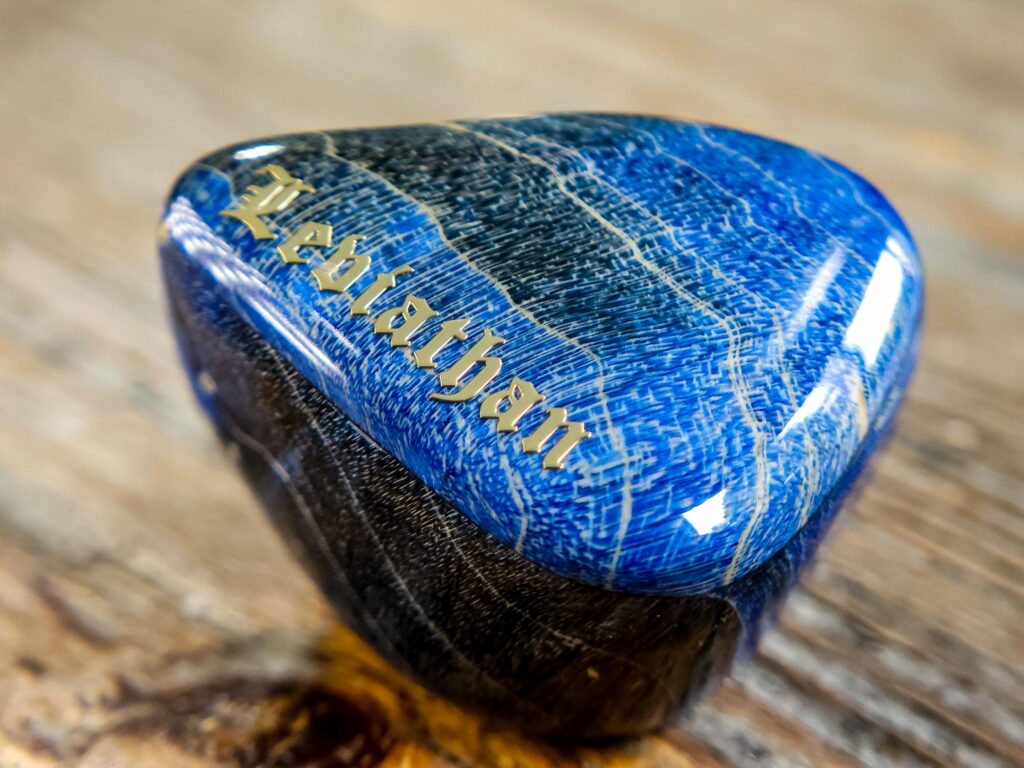
The day that the Leviathan showed up I was out of town, which was about as agonizing as you’d think. However, imagine my anticipation knowing that it’s sitting in my bedroom just waiting for me. Lol. Anyways, after hurrying home, what I found was a very well packaged set that sounds very good right out of the box. Like, flat-out awesome! Everything fits the Leviathan theme… to the tee. Of course. I didn’t take this set out of my ears for quite some time and quickly wrote a Facebook 1st impressions post. Honestly though, this is just casual listening, and I really don’t take anything into account besides how this set interacts with my music on a very basic level. I’m not zeroing in on pieces and parts of tracks to find out how well the bass notes are contoured, how perfectly cohesive the sound is (or not), or how well the brush work comes through in Jazz tracks etc. etc. Hence, I have a ton more work to do, and by work, I mean; having a wonderful time doing something that I love, but also critical listening. Actually, before I begin that long step in the process, I have to first conduct some burn-in of the Leviathan (likely 2-4 full days), which is not my favorite part of the process. With all of that said, I am ready to get this one underway. So, here is my full review of the ODA Leviathan T800…
Non-Affiliated Purchasing Links:
Gear used for testing
–IBasso DX240 with Amp8 MK2
Packaging / Accessories
Unboxing (Spoilers)
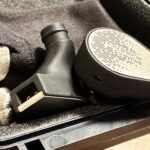
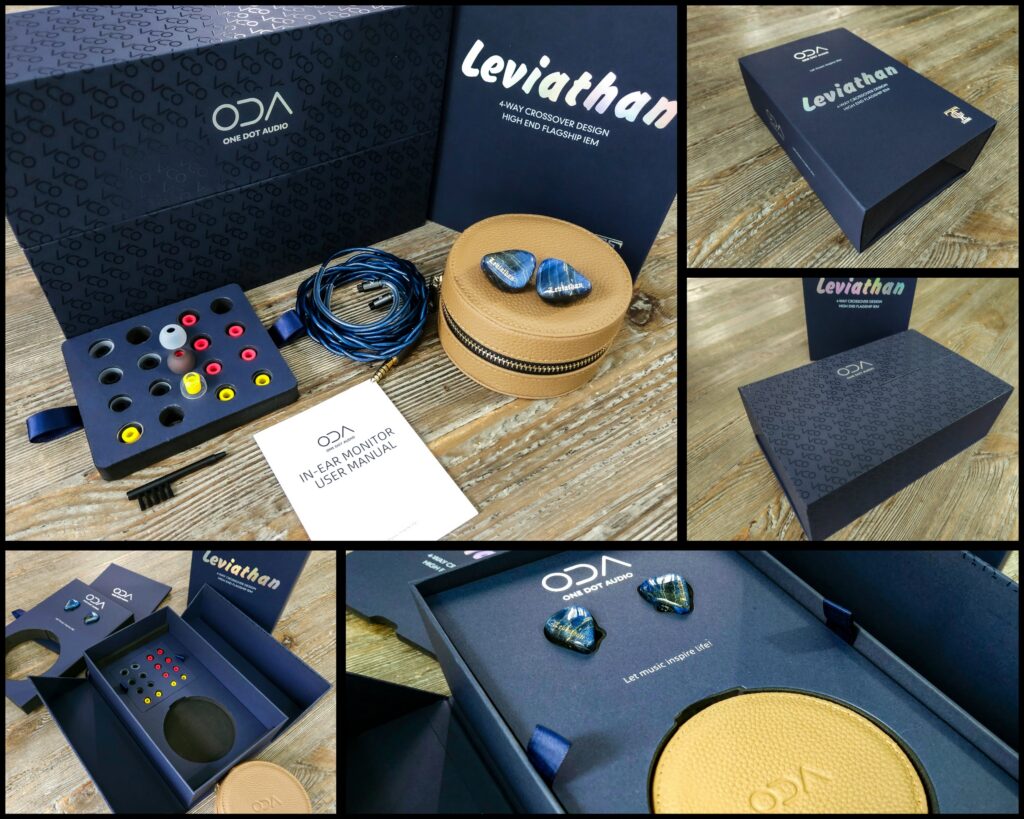
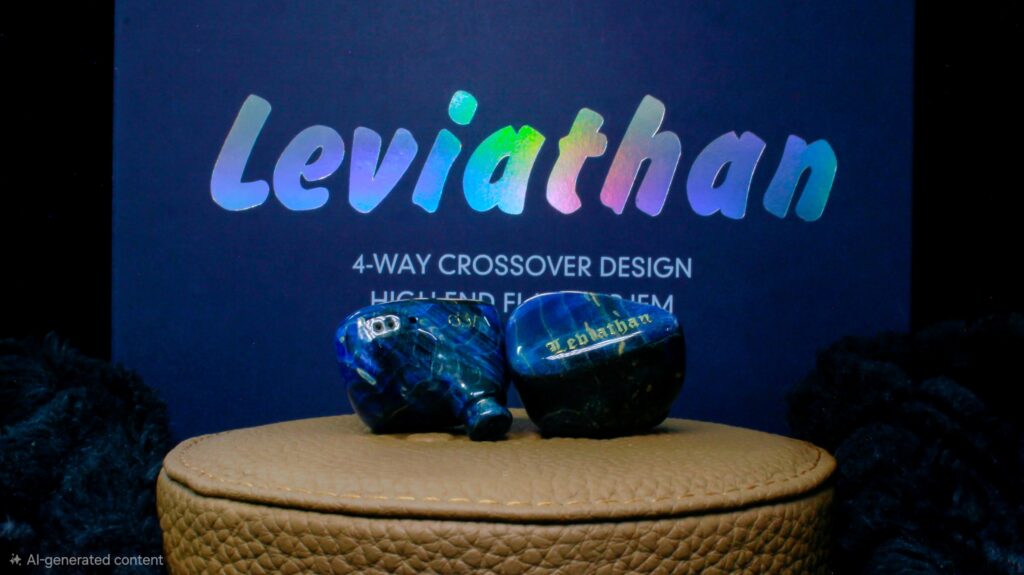
The ODA Leviathan T800 arrived at my home in a fairly large (9 ½” x 6” x 3”) dark blue box covered in a nice-looking sleeve. It has the name “Leviathan” centered in the middle with “ODA” at the top. On the back of the sleeve are some specifications for the Leviathan as well but All-in-all the packaging looks rather minimalist and not overly “showy”. Just the way I like it. Stay classy. So, take off the sleeve and you’ll see a beautifully minimally adorned box which splits in the middle as both sides open outwards. You’ll see many small lettered “ODA’s” printed in glossy wording all over the box for a nice look. Once you open both sides of the box, you’ll see a foam piece the length of the box covered in the same dark blue cardboard mimicking the design of the sleeve. Under that is when you first catch a glimpse of the Leviathan sitting inside of the same cardboard cladded foam, and man are they gorgeous. Sitting right next to the earphones is the nice looking round & leather carrying case as well. Take out that layer of foam and underneath you’ll see many sets of eartips which are also sitting in the same foam cut out for their sizes within a block that you can remove. Under that layer is a nozzle cleaning tool and under that is some reading material. Lastly, inside of the carrying case you’ll find the gorgeous blue colored cable. This is definitely an unboxing fitted for a flagship as I downplayed it quite a bit. Nice one ODA.
Eartips
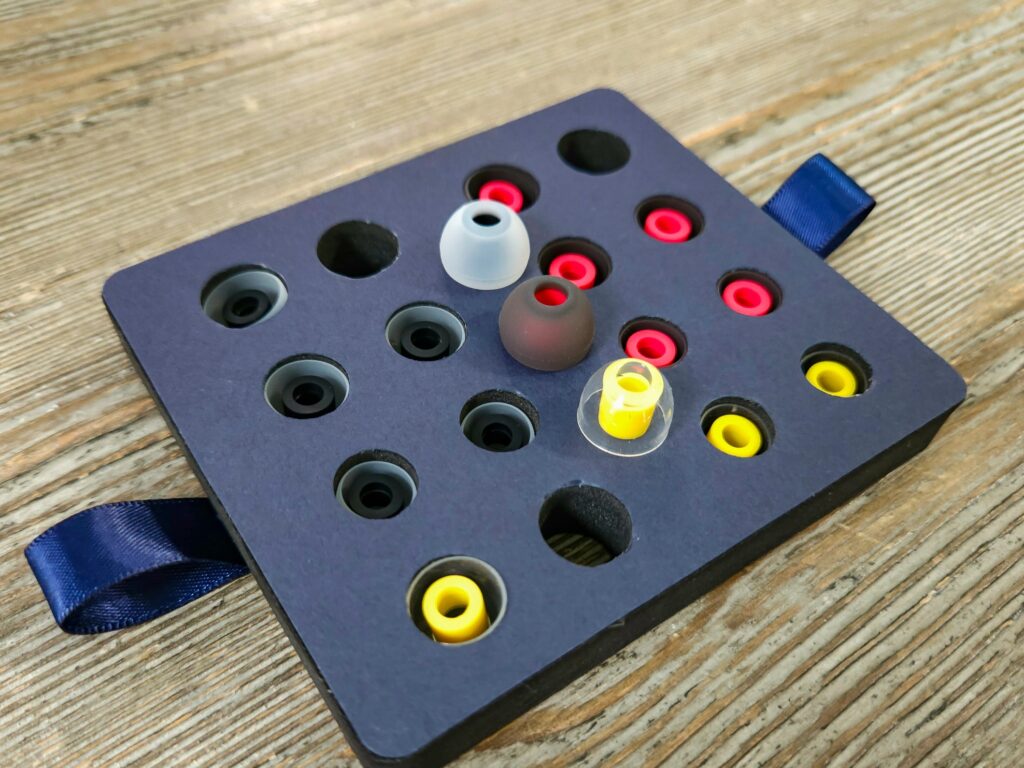
Altogether ODA provides a total of eight pairs of eartips over three styles of tips. The first style are two pairs (S, L) of liquid silicone tips with a crystal-clear flange, fairly flimsy flange, yellow rigid stem and a semi-wide bore. I found these a hair too flimsy for my ears. Next, they provide three pairs (S, M, L) of eartips which are dark gray silicone tips with a semi wide bore and semi-firm flange. This style is very similar to KBear 07 tips, yet different colorway. Definitely solid eartips. The last set of three (S, M, L) are a white silicone eartip with a black rigid stem, firm flange and also a semi-wide bore. Out of the three sets I like the white/black silicone tips the best and I even used them for a little while. However, with a set like this you should always exhaust every last set of aftermarket tips that you have looking for a good pairing for your particular ears. I definitely did just that. I went through every tip in my huge arsenal of eartips and I landed in about five different sets which seemed to work best and one set that I easily liked the most. The tips that suit my preference the best are the Divinus Velvet Wide Bore eartips. There’s something magical happening in those upper mids and bass with this set of tips that I simply couldn’t get past. As for the included tips, they’re great. I could’ve gone with a pair of those and could have been perfectly happy, but I cannot help myself.
Carrying Case
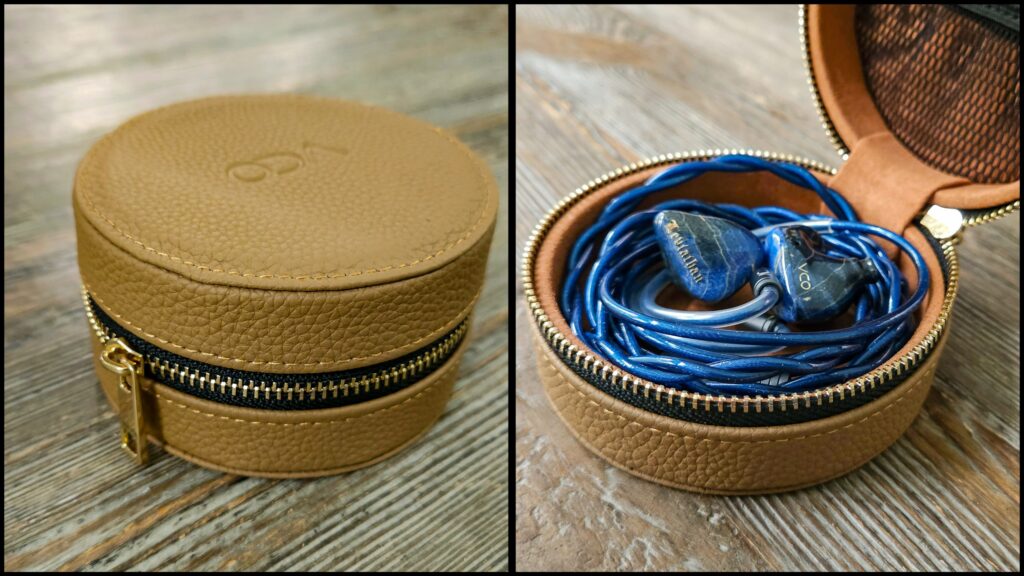
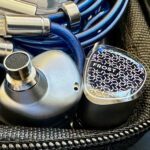
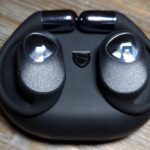
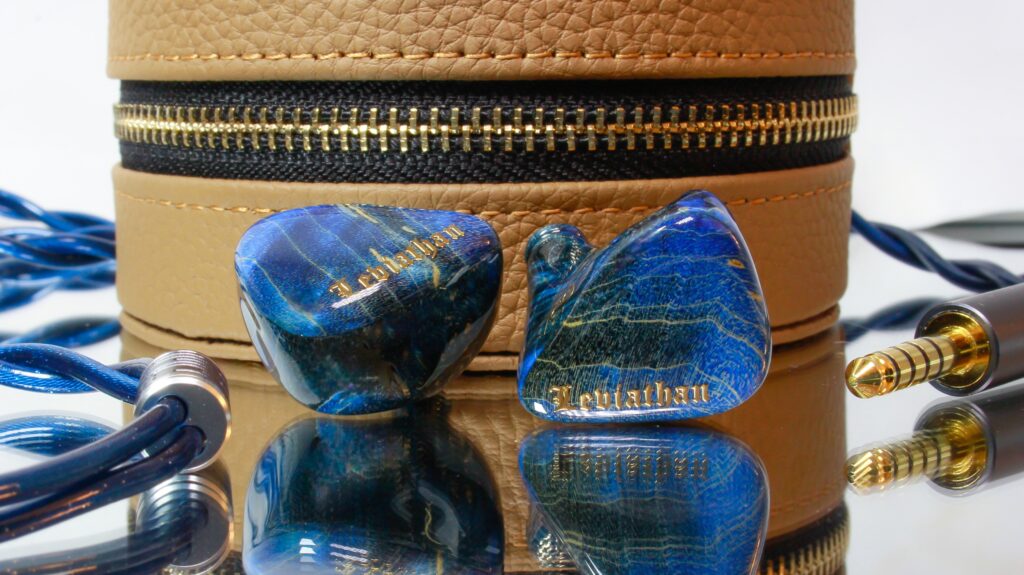
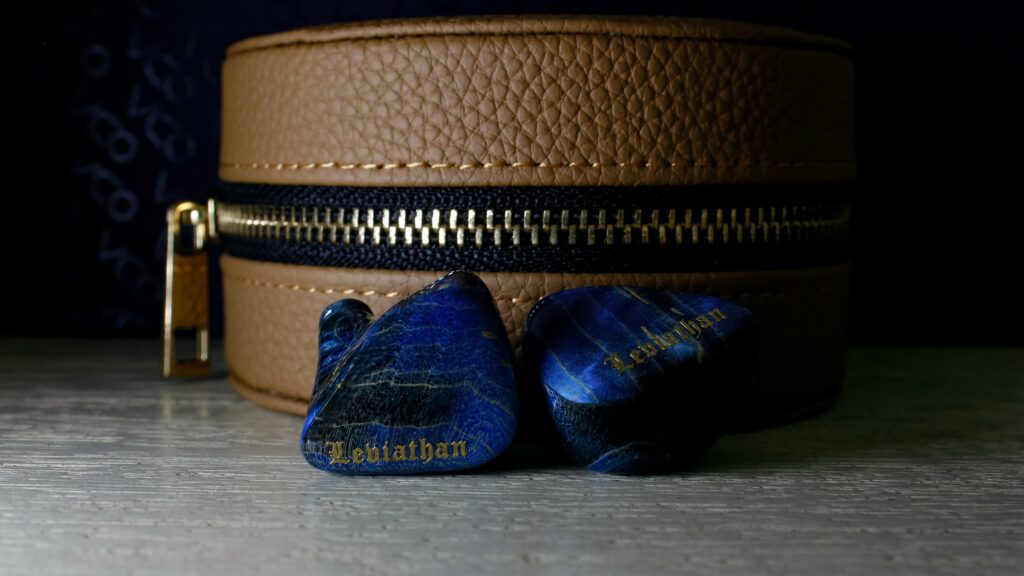
Of course, ODA also provides a nice round carrying case within their packaging that is also very fitting of a flagship level iem. It is a beautifully crafted cylindrical “hockey-puck” style zipper case which has plenty of room within it to safely carry the Leviathan and cable as well as a few other small goodies (3 ¾” x 2”). The case is cladded in a nicely tailored light brown or tan leather along with a nicely contrasted gold colored zipper. You’ll notice “ODA” centered in the middle of the case top. Inside of the case is a soft fabric which feels like rawhide along with a small mesh pocket to carry certain accessories. I find the case to be the perfect size for gently storing in a bag and storing the Leviathan at home. Definitely a solid choice for a case.
Cable
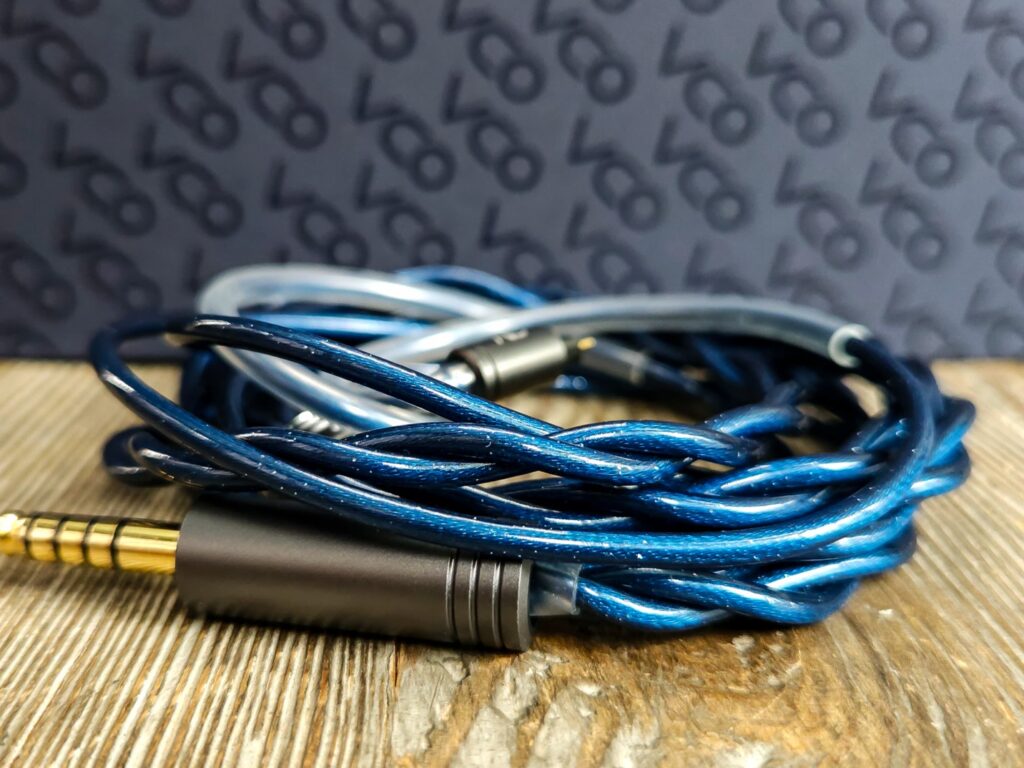
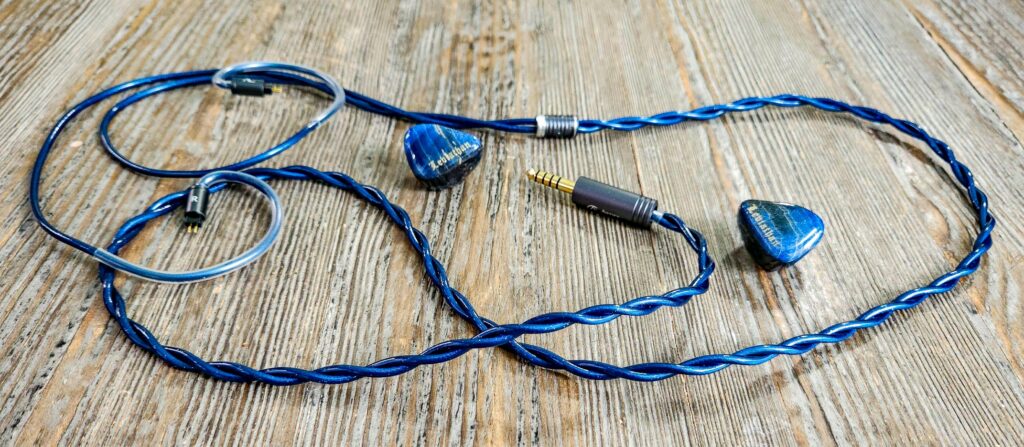
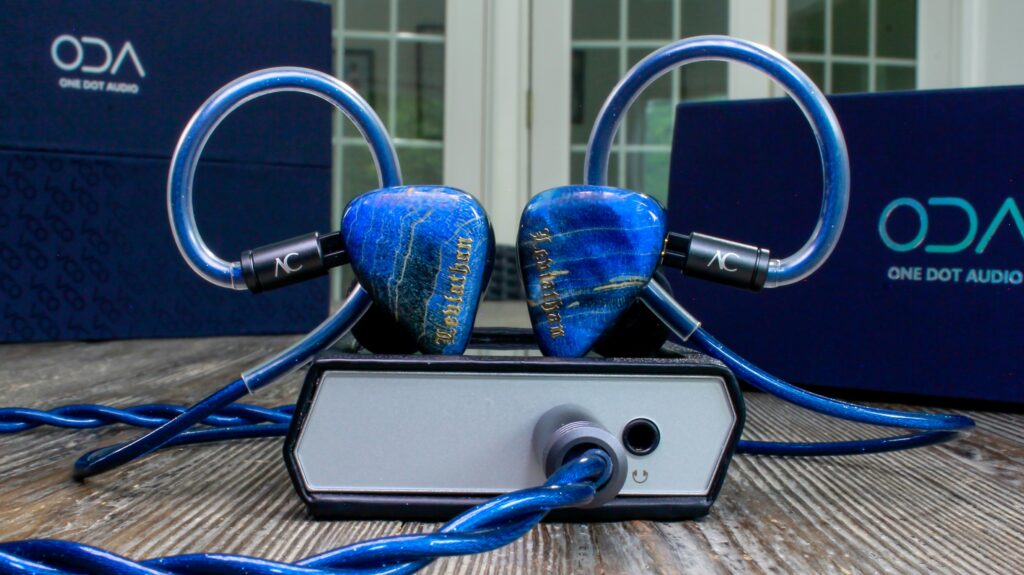
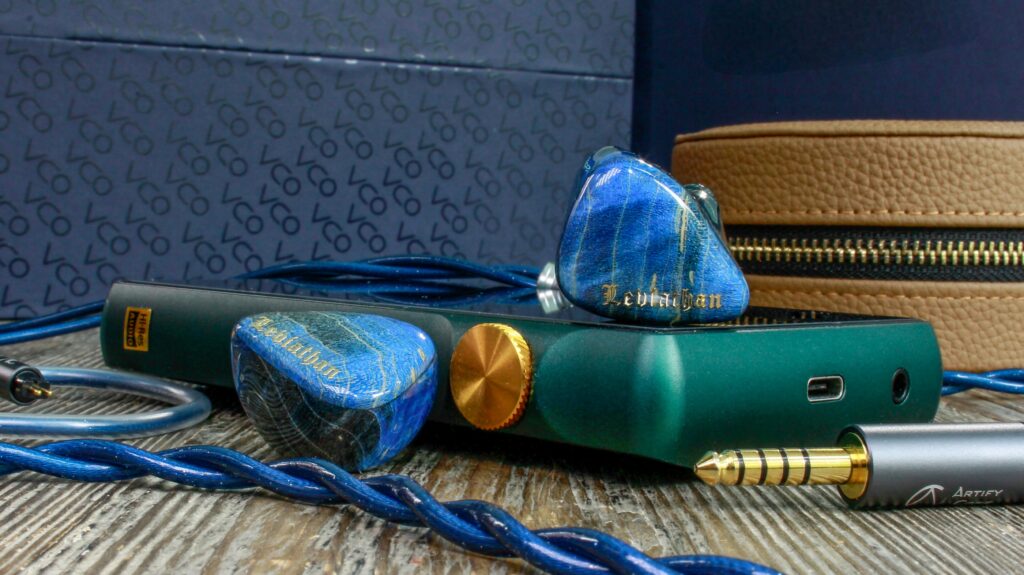
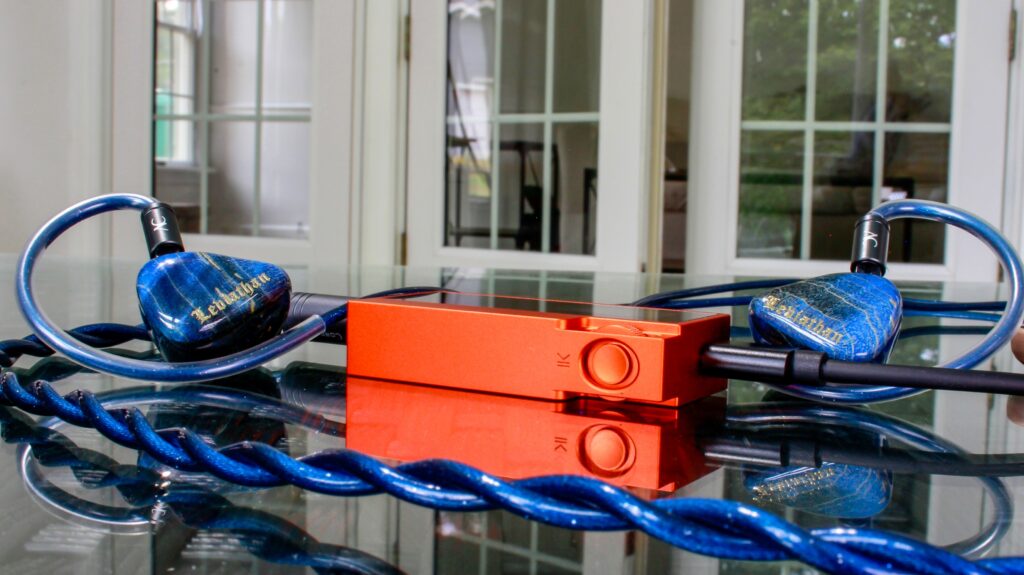
I have to tell you all that the cable which comes with the ODA Leviathan T800 is one of the nicer cables that I’ve received with kilo-buck earphones. It’s actually the Artify Core Abyss priced at around $180 on its own and is a definite high-end cable from the brand and very cool to see packaged with the Leviathan. Colored in a beautiful blue, matching the Leviathan perfectly. To be exact it is a 2-pin, 2-strand wire in a rotating shielded coaxial structure made out of OCC (Ohno Continuous Casting) single-crystal-copper and plated in silver while ending in a 4.4 balanced connector. ODA mentions it is a 21.0 AWG Litz Type 1 used for the rotating coaxial design which is actually supposed to prioritize low noise, stability, and consistent geometry. I don’t know about all of that, but it’s certainly a very nice cable. Now, it isn’t what I’d call “stiff”, but it also isn’t “soft” either. The good thing is that it is very manageable, decently pliable, and also nicely fat and luxurious making for such a nice aesthetic with the Leviathan. I was actually very pleased to see this cable was added with this set. Definitely a solid decision on ODA’s part.
Build / Aesthetic / Internals / Fit
Build Quality
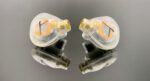
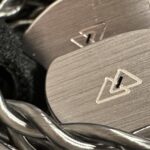
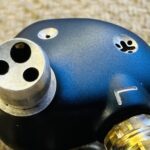
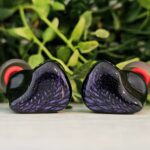
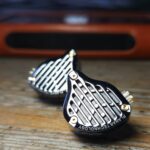
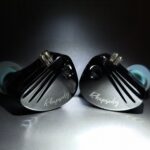
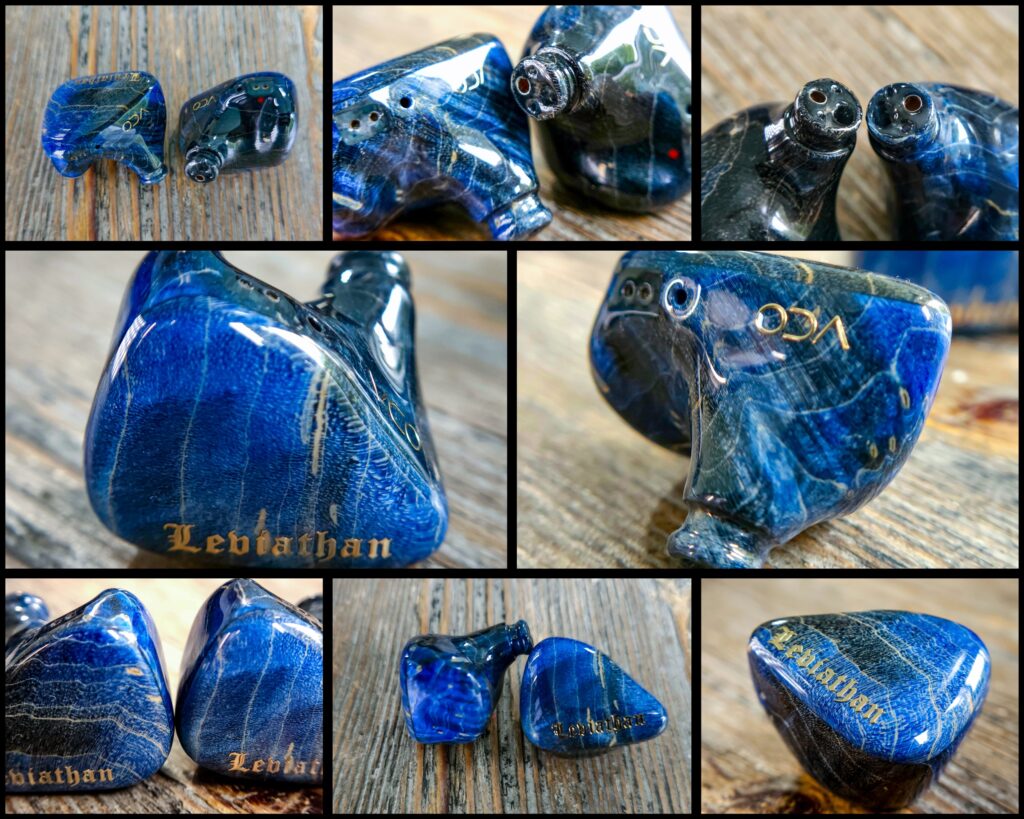
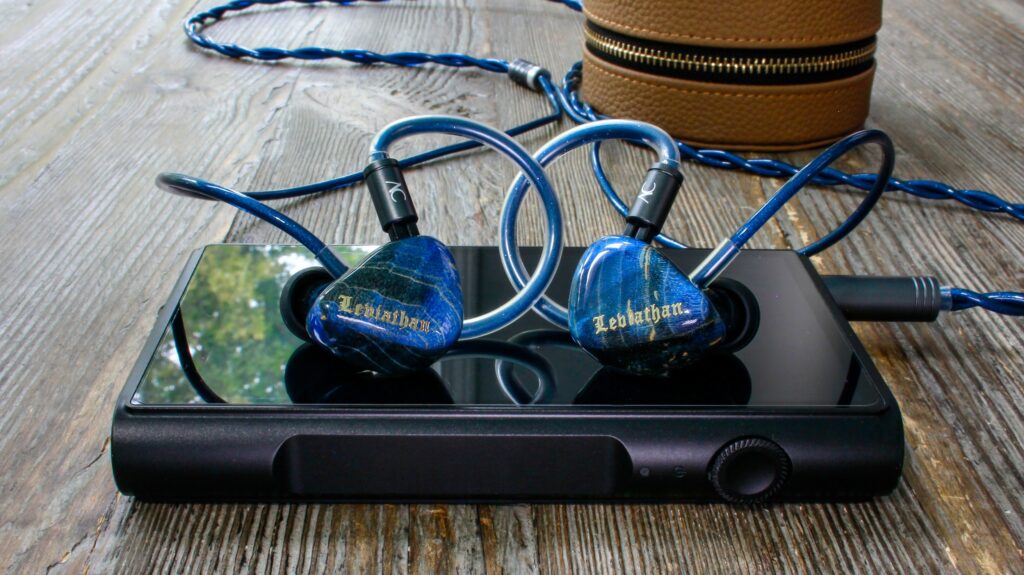
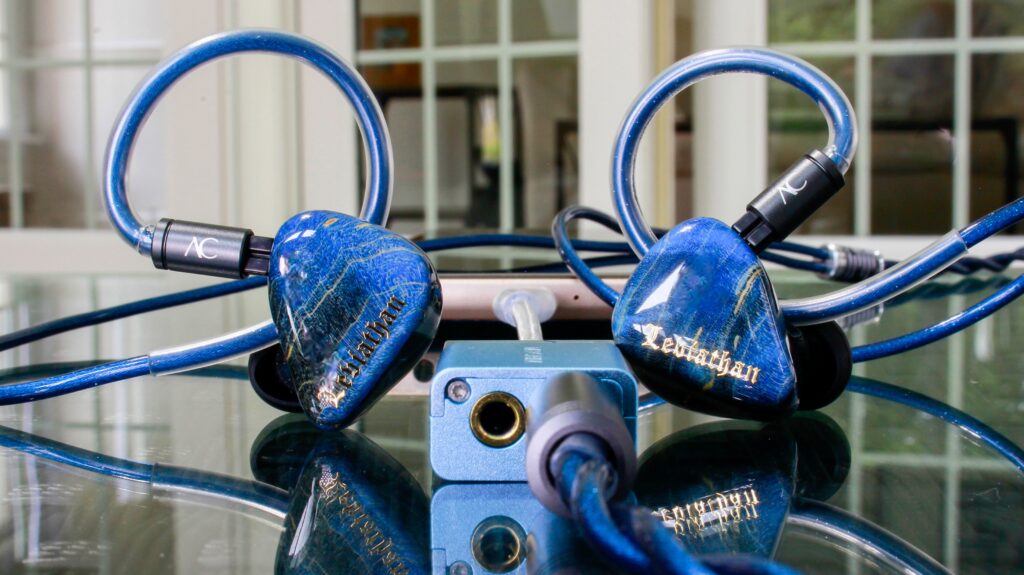
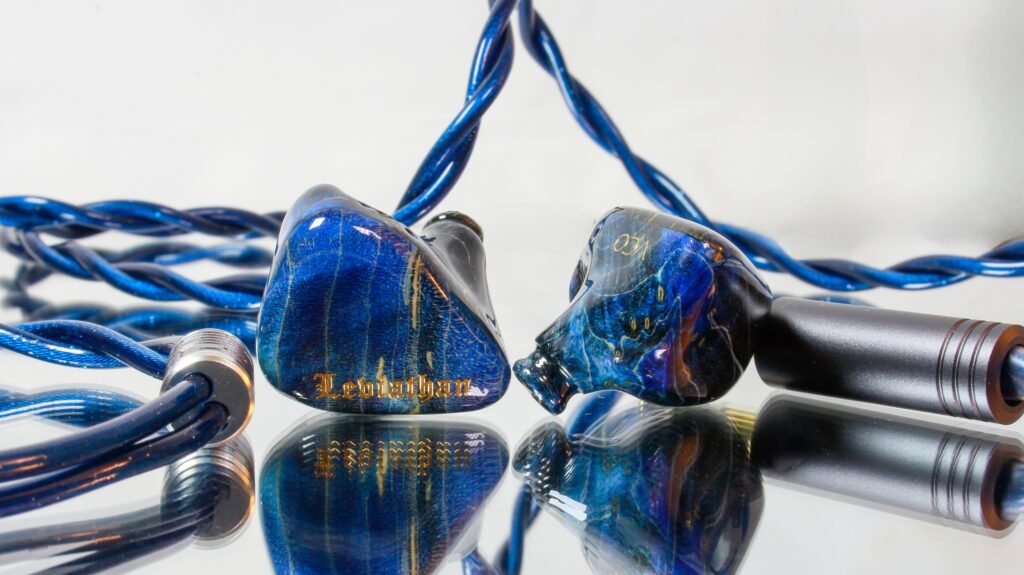
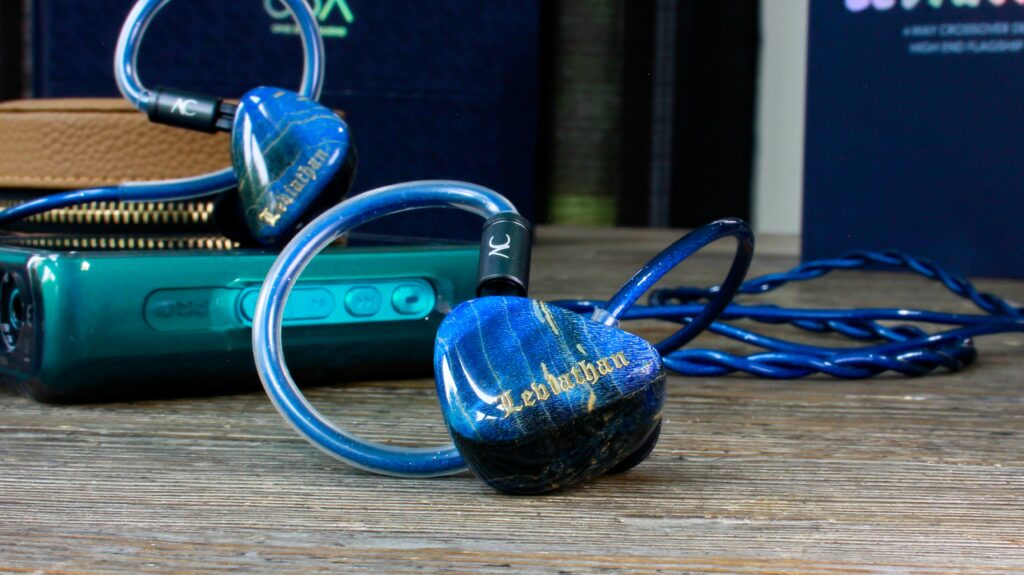
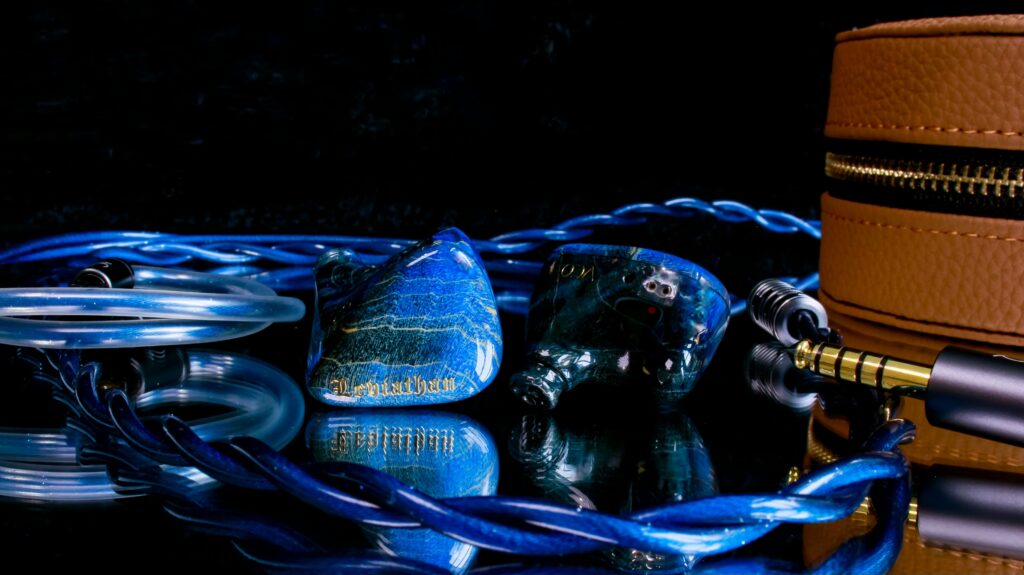
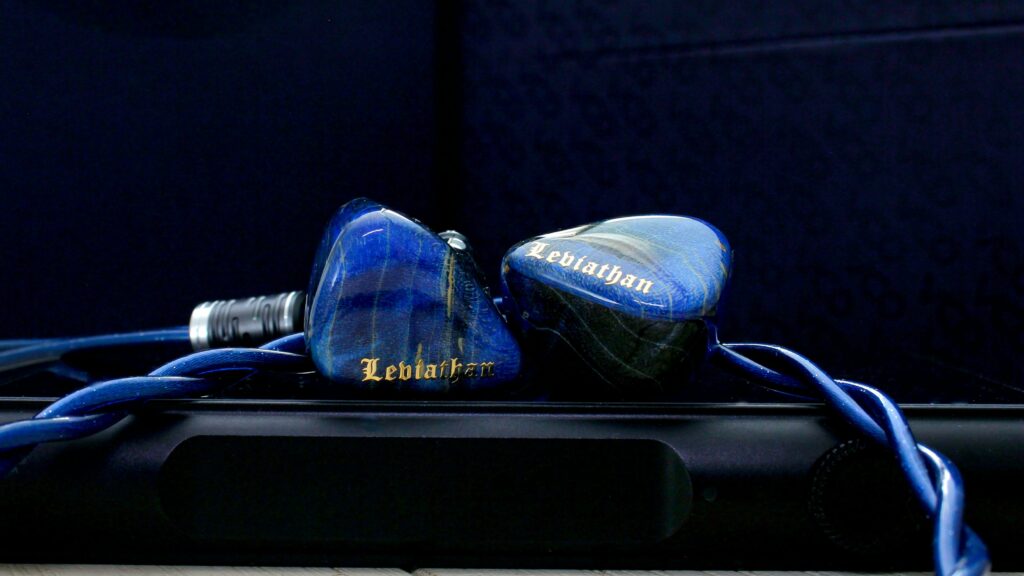
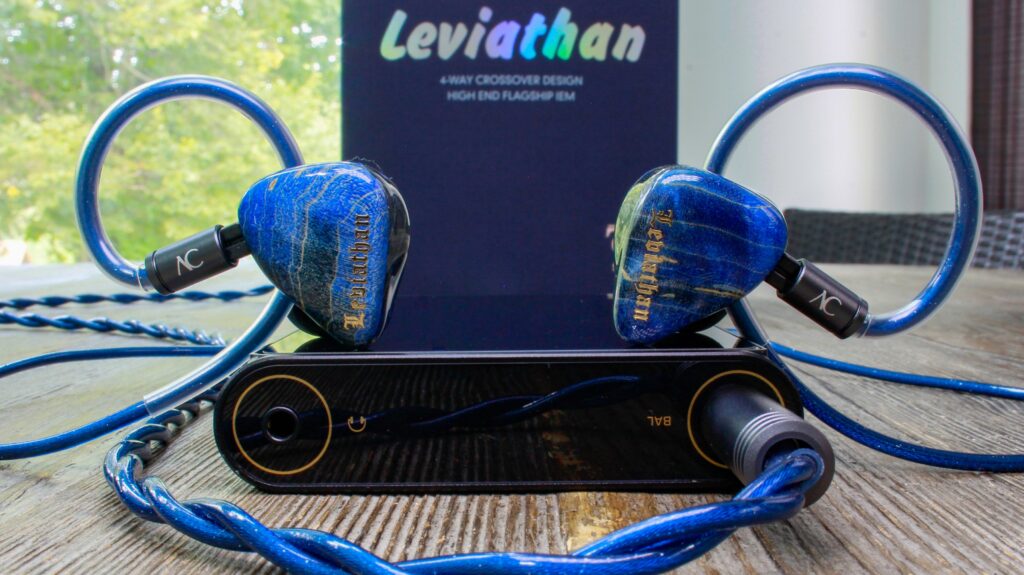
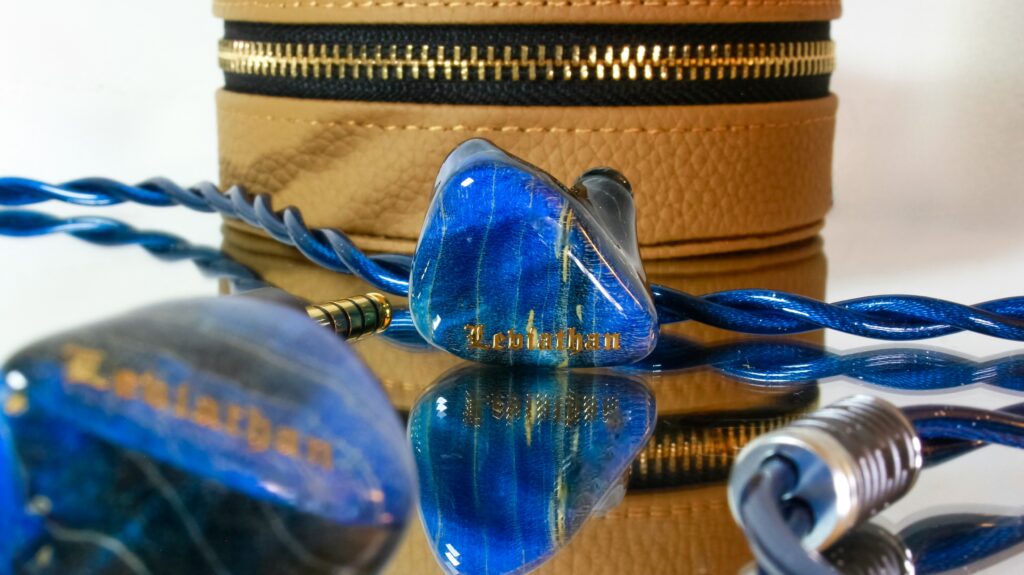
Friends, if nothing else, the Leviathan is built truly wonderfully. Made entirely out of honed out (CNC Machined) stabilized wood and absolutely built for a king. ODA is becoming known for their amazing wood builds. I think this is their best build yet and I didn’t think anything could overtake the Amarantine A500. I was wrong. The crazy part is that even the internal tubes/nozzle path are also carved out of wood rather than the use of actual tubes inside of the casing. Absolutely awesome. The beauty of wood is that it doubles as part of the acoustic design as well because wood does a tremendous job of soaking up different resonances making for “at times” cleaner and even more organic sound (again, at times). Folks, the build is simply honed to perfection as every last curve is as smooth as porcelain. I love how ODA tried to mimic the ergonomics of this set to the human ear as they sit very nicely in my ears. The nozzles are right around the standard width, maybe a hair larger at around 6.5 mm and you’ll notice the four tube ways at the nozzle coming from different drivers. I should add that the Leviathan is fairly large. Definitely not too large, but large enough to feel substantial in hand yet not so grand that smaller ears should have a problem. Friends, ODA has all but perfected the wood build and I am here for it. There is so much that goes in behind the scenes in the making of stabilized wooden shells as it is not a simple process. Very nicely built.
Design / Aesthetic
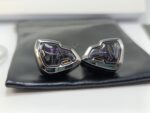
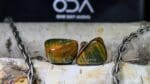
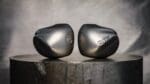
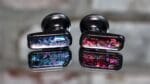
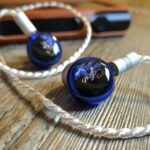
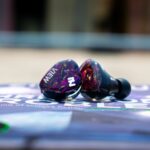
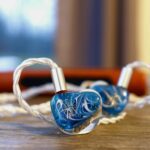
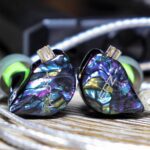
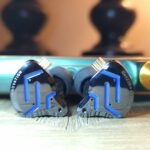
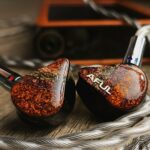
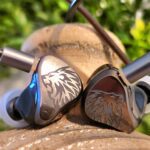
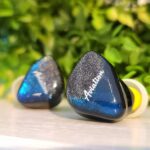
One of my favorite aspects of this iem is the actual look, the aesthetic. That oceanic theme of the Leviathan calming the vast abyss is alive and well in the artistic and very creative design choice. Clearly whoever colored/stained this set made sure that every last minute and subtle grain has been preserved. The high-density wood looks so beautiful folks. I adore the navy-blue colorway mixed streaks of gold and contrasting blacks. It honestly takes on that Leviathan spirit so well with one of the bolder, one of the more handsome, and again, one of the more royal looks. They did this with color folks. So many kilo-buck sets are adorned in metals with meticulously carved faceplates which specifically detail the theme of the set. What I like about the Leviathan is that ODA didn’t need to do that. They used perfectly placed colors mixing and flowing around the shells, to the faceplates, up the nozzles, then back around and they truly captured the spirit of such a great and monstrously mighty serpent within the abyss. I know I get a bit romantic with this stuff, but I love an artist’s hand creating from an artistic mind… something beautiful. Again, a very bold look, cautiously and skillfully placed colors that deserve a moment of appreciation. I’ve said similar things about many other iems over the years, and I will continue to dedicate a passage of my review for the work these artists and brands put into their craft.
Internals
As I said in the opener, the Leviathan is outfitted with eight drivers in total per side. That’s one dynamic driver, one flat dynamic driver (flat diaphragm), and six balanced armature drivers. Now, ODA has always been somewhat guarded about their drivers used, and for an understandable reason. They don’t want their sets to be all about drivers, driver brands, materials etc. From what I have been able to find out, the Leviathan uses a 10mm custom wool bio-diaphragm DD to cover the lows. To cover the bulk of the midrange are four balanced armature drivers. Also, to cover the upper mids, treble and air region they used the remaining balanced armature drivers and the flat driver (flat diaphragm dynamic driver). Again, I can’t get into specifics as I just don’t have the knowledge of that yet, but I can attest that the drivers are so very cohesively tuned together. ODA also speaks about using a four-way crossover as well to split the frequency band more precisely, but I don’t know the internal crossover component values or any real details on it. Another huge part of the tuning comes from the usage of wood as the acoustic cavity because wood is known to absorb unwanted resonances very well and give off a slightly more organic feel to music. I think that was the approach of this entire tuning actually. Hence why they went with a wool DD for the lows which is said to have a more earthy tone and less edginess. I like what ODA did here.
Fit / Comfort
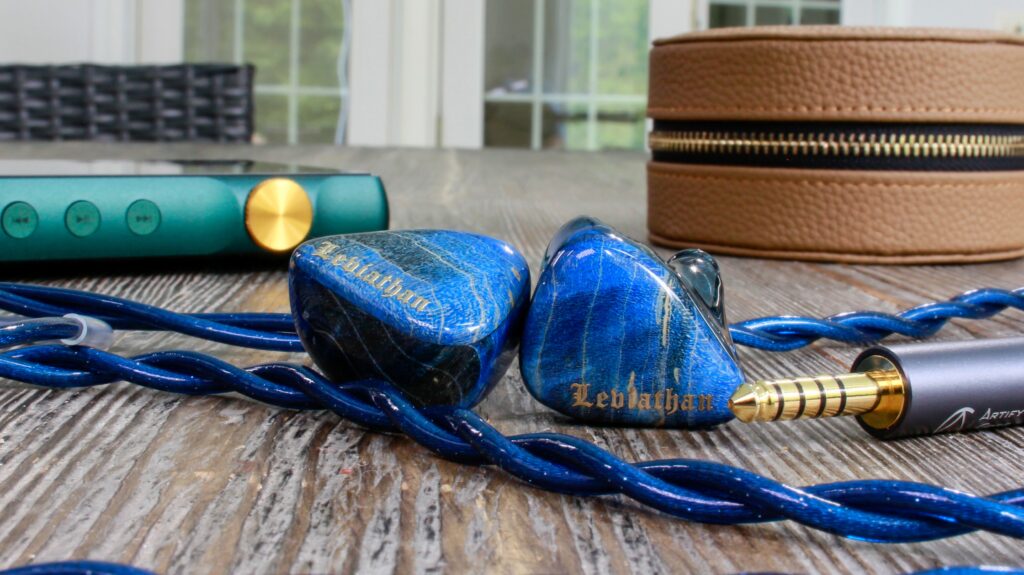
Now, as far as fitment and comfortability is concerned, the Leviathan may “possibly” be a mixed bag. I only say that because this set is fairly large. I don’t think they are so large that smaller ears would have a huge problem, but they simply aren’t small. Of course, they had to fit 8 Drivers inside of these shells which is a task in and of itself. I can tell you that I have zero issues at all with the fit and they sit in my ears as good as any set. Not too large and the curvature of the Shells seats in ears very well. Furthermore, this is not a super heavy set either which means that they won’t be feeling tiresome after longer listening sessions. These are just some things to consider.
Drivability / Pairings
Sensitivity
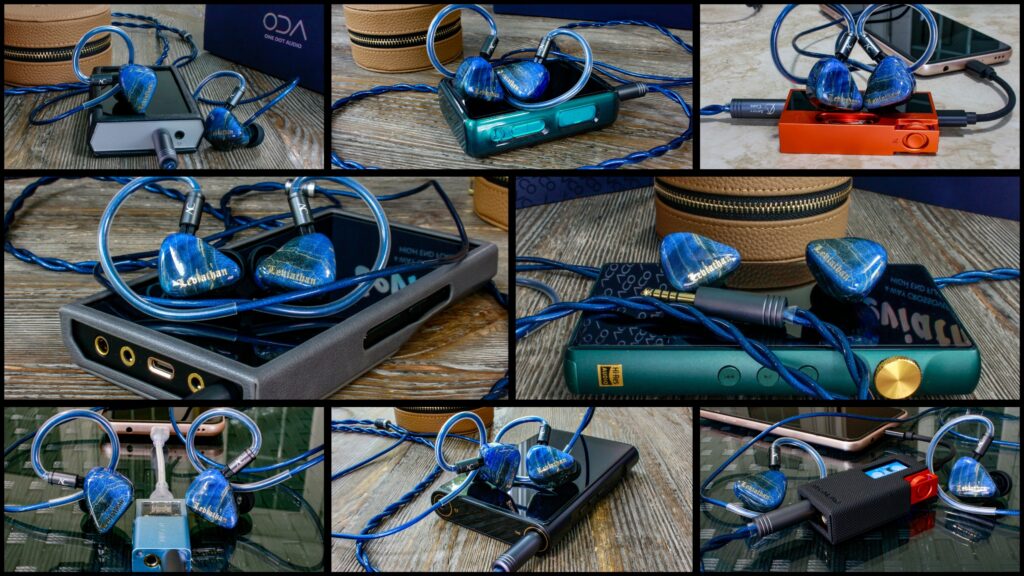
The ODA Leviathan T800 is definitely a set that I’d call “sensitive” which can be played well off of even weaker sources. It is rated with an impedance of around 21 ohms and a sensitivity of about 110 db’s which means that just about anything can drive this set effectively and with good headroom. Why anyone would use a cheap source on a set that costs $1.2 k is beyond me, but I’m sure stranger things have happened. However, for review purposes I always do my due diligence whether it makes sense to the audio world or not. As always and with every review I tested the Leviathan using my weakest sources. Devices like two old Android 3.5 smartphones, weak (20-30mW) no name Conexant dongle dacs, my iPad, and I did so long enough to establish that weaker sources sound pretty darn good with the Leviathan T800. Having said all of that, try to find a good and quality source with ample power output to really drive this set to the standard that it’s at. Of course, I actually love the Leviathan with some under $100 to $150 dongle dacs and listened for hours with them. Still, power does at least marginally apply in bringing this set to its peak. I still believe that good quality sources and components are what really helps here, but power does come into play.
Output Power
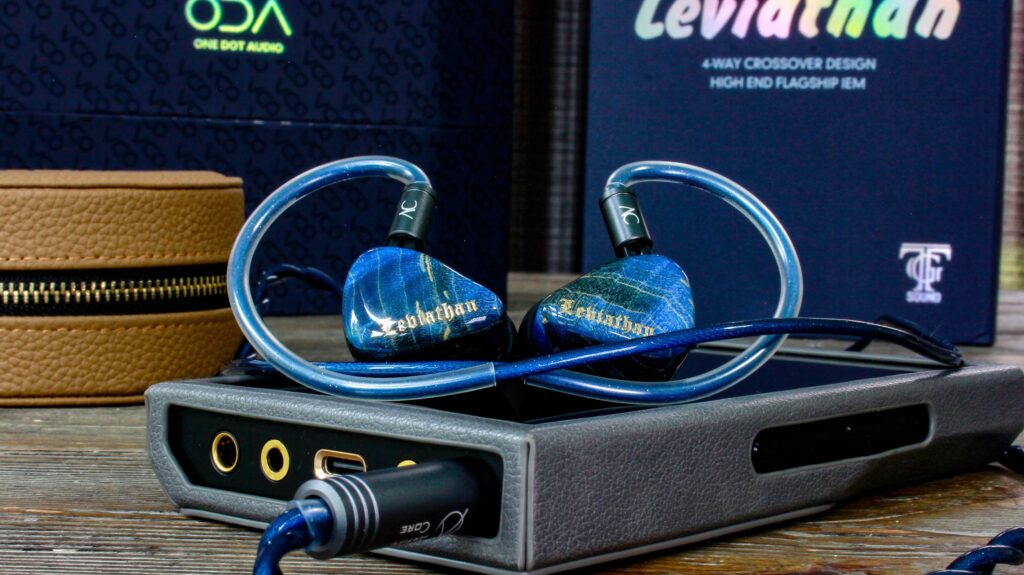
Again, by-and-large the biggest contributing factor in bringing the ODA Leviathan T800 to its best sound is with better and higher quality sources with reasonable power output. The real scaling here isn’t from raw loudness but rather from refinement of the source. Still, I absolutely hear a noticeable enough difference with more power. I’m not talking huge desktop power either, I’m talking a good dongle dac, dac/amp, or dap. My Shanling UA7, Fiio Q15 both add plenty of headroom, plenty of clarity, and they give the Leviathan a sense of control. This only gets better as I use better sources like the Hiby R6 Pro II, the iBasso DX240, or the Shanling M6 Ultra among others. However, to be perfectly honest I love the sound of this set with the brand new Shanling UA6 II (review coming soon), the Hiby R3 Pro II, the Shanling M1 Plus, EPZ TP50, among many other less expensive source devices. Sure, those won’t give you the same fidelity as more expensive sources with better components, but they still make for a great listening experience. Basically, a little more power helps enough to always consider how you are driving this set, but it is already very sensitive so finding better quality sources should really be the aim. Especially for a kilo-buck flagship. Just my opinion.
Source Pairing
When it comes to tonal pairing between source and the Leviathan, I’d first say that this set is very close to an all-rounder tonal character. I mean, very close. I actually find that most any source which operates at a tonal coloration between warm/neutral and neutral will sound absolutely heavenly with the Leviathan. Of course, there are some warmer sources which still create an awesome listening experience. Sources like the Muse Hifi M3 Ultra for example. It’s very warm, yet very holographic and dimensional and the highs are more airy, more open. That type of tuning works with the Leviathan in my opinion. Even a warm sound. I’d say that any brighter source which would begin to strip the Leviathan of its organic and musical nature would be a source I’d try to stay away from. Any source so cool that it begins to have an etched effect, any source which begins to dry or lean notes, or any source which neuters the low-end are going to be sources I’d stay away from. Having said that, just about every source in my arsenal sounds good. That’s what you get when the set is well balanced dynamically and not so emphasized one way or the other that a source is going to over exaggerate the lows to sound muddy, the upper mids to cause glare, or the highs to sound too abrasive. I think the real tragedy for source pairing is one that lessens the organic and clean sound with a dryer atmosphere while leaning out the note body of the Leviathan. I’d try to find a source that is clean, spacious, musical to slightly musical, and a source which has a tonal coloration between warm/neutral and neutral. Which is almost all sources nowadays minus some tube devices and some random outliers. All my opinions, of course.
Sound Impressions
*Note: before I dive headfirst into my explanation of the sound, I first must relay a couple notes that I made covering how I conduct critical listening. First off, I did burn-in the Leviathan for around two full days. I simply couldn’t wait any longer. I know I said 2-4 days, but this set was just irresistible for me. Also, I didn’t hear any true change. If I were you, I’d simply “listen-in” and if there are changes, well, good. Next, I used Divinus Velvet Wide Bore eartips for all critical listening as they simply sound best for me and my preferences. All of my listening was done with flac or better files which are stored on my devices (some MP3), and rarely do I ever stream anything. I listened with a multitude of sources during my sessions of all different tonalities. I try to give you a good estimation of how this set sounds as a whole. Lastly, I am a fan of just about any and every genre of music and I have specific playlists of stored music which represent every aspect of critical listening that I can think of and that includes just about every genre.
Palette Cleanse
I am always seeking out the best sound that I can find. I’m sure we all are. We want to hear our music in the best representation possible per our own particular preferences. I have to admit that I vary wildly and my preferences change by the day. It’s one of the truths about reviewing so many sets all the time. Brain burn is constantly happening. One of my absolute rules prior to critical listening and every now and again during the process is to do a palette cleanse. What do I mean by “palette cleanse”? I’m happy you asked. A palette cleanse for me involves getting either the Truthear Hexa, Softears Studio4, or HiSenior Mega 5P and having a good listening session. Something which strips my involuntary subconscious sound bias enough to hear a product in a fresh way. Whether this helps, or not, in judging iems in a subjectively objective way is questionable. Still, I think it’s worth it. For this review I’ve listened mostly to the Studio4, which is an absolutely awesome set. Friends, the difference between the two when I put the Leviathan in my ears is stark. However, one thing that became plainly obvious was how dynamically even and balanced the sound of the Leviathan truly is. To have something this immense and immediate in its sound force while also coming across as delicate and very highly detailed is a testament to ODA. Anyways, let’s dig a bit deeper.
What’s It Sound Like?
When I think of the Leviathan T800 the first things which come to mind are controlled dynamism, flagship level refinement, dynamic balance, and holographic euphonic dimensionality, in no particular order. I could easily keep going as once I start; I really can’t stop. You see, the Leviathan has so many sonic features to its sound that it’s hard to put the blinders on and delegate any passage of this review to one topic at a time. I don’t want my jovial expressions to take this review over a cliff though and so I’m very glad that my reviews are structured the way that they are. Still, these opening sound paragraphs can get pretty scattered on me, and for that I am sorry. However, I am very happy with this set and not because it is a flagship and not because it costs $1.2k or any other plastic reason. I’m happy because somehow at $1.2k the sound value is high for me. My listening sessions result in many moments of released serotonin, eyes closed while soaking in my music. It’s simply a very well-tuned set for those who desire a musical sound which is also highly capable technically and for those who really value a nicely laid out 3D sonic world. It’s more than that though. The ODA Leviathan T800 really does present the entire soundscape with remarkable clarity and clinical precision without anything actually sounding… clinical. Not a sterile, dull, or drab moment to make note of.
Sound Signature / Tonality / Timbre
If I were to try to label the Leviathan as any one sound signature, I’d probably say it’s U-shaped to a warm W-shaped signature. I say that because there is this pervasive subtle warmth which slightly layers an otherwise neutral canvas at all times. The type which doesn’t blur, it doesn’t veil (never) and always feels open. Also, the mids aren’t recessed or pushed back, the bass definitely is boosted and very present within the mix and the treble is not attenuated at all. Again, the balance is very nice allowing each area of the mix to sound forward enough to have presence. So yeah, probably balanced, warm, U to W-shaped. As far as the tonal coloration of the Leviathan, I’d say it sits somewhere between warm and warm neutral. Perhaps balanced warm/neutral best represents what I hear. Basically, the tonal sonic character of this set is exactly what I’d want if I were crafting an organic, bass strong, and earthy sound that still has openness, cleanliness, and sparkle. Again, a good “dynamic” balance. I’m not strictly speaking about emphasis when I say that. Which walks me right into the timbre. To my ears the timbre is very natural as the Leviathan presents a realistic tone with a type of cadence which remains smooth at all times whilst keeping very defined note edges and clean crispness that doesn’t sound coarse or knife edged. It’s fluid, its cadence is smooth, like porcelain rather than velvet, with the kind of rhythmic demeanor that feels and sounds truly engaging and a dimensional display of the soundstage that offers layering in all directions. Folks, this is a set with great note integrity, note contour that’s rigid and firm and frequency-wide note body which hedges on rich yet is carried along with tighter transients.
Musical/Analytical
My best guess at a Musical/Analytical split percentage would probably be something like 60/40. Of course, that changes per the track and genre and how engaging or not any single track is. However, I definitely would say that tone-flow and tunefulness are the focus of this set. Musical engagement certainly reigns supreme with this melodic cohesiveness which includes every region of the spectrum with very nicely feathered-in transitions. That wave-like and frictionless fluency of sound and bold macro-dynamic expression sounds just as fun as it is mature. Once more, the working together of all eight drivers provides this effortless ensemble of musicality which uses every square inch of the sound field. All the same, one quality of this tuning that seriously contradicts what a typical “musical” sound entails is how technically on point and precise every note is within that melodious and layered field of sound. So the subtleties (details) come out very well (with some caveats), note separation is distinct, black background, clean space, and transients are natural to tight frequency wide. I’d definitely say it’s “musicality-first” but I hardly agree with that because the Leviathan definitely endues that all-rounder energy which can be whatever a track asks of it at any time. You see, the Leviathan is a set with a powerful fullness, unabashed vigor and can be straight up fun whilst also coming across speedy, dexterous, and has the attack through release start-and-stop speed to take on most any complicated track. So whether 60/40 is a good representative split is up for debate. What isn’t up for debate is how purely gratifying and genuinely engaging the Leviathan can be. Let’s look closer at each 3rd of the mix…
Bass Region
If there was a true focus of the Leviathan I’d probably have to say that the bass is a contender for that. This is a bass which is very deep and palpable in every moment with a very purposeful and bold punch. There is nothing even remotely weak here folks. The style of bass which you can feel as well as hear the physicality without that physical replay becoming a detriment to the rest of the mix. A very well-tuned low-end which hedges on quality over quantity yet with enough quantity to reverse that statement depending on the track. I cannot tell you how many times I ran through my bass Playlists just hear that robust punch over and over again. What gets me is how cleanly defined this bass is as each undulating bass line carries fairly distinct notes, concrete note density, and never sounds swollen, too convex, or too bulbous. This low-end is all about clean foundation, grounded presence, while also displaying some of that nicely weighted and dark vibrance, feeling as energetic as it is unmovable. I should note that ODA did not tune this set strictly for the bass-bois and I definitely wouldn’t call it basshead. As present and emphasized as the bass is, it still is only a solid supporting actor in an awesome ensemble cast. Perhaps that is a good reason why the bass is so enthralling at times.
Sub-Bass
In my opinion the bass region probably leans sublevel heavy with a slightly less endowed mid-bass. To an extent anyways. I can tell you with absolute assurance that the sublevel rumble can provide a juddering rumble when a track calls for it. Bold, deep extension, and vibrational goodness. The kind of sub-bass that carries that haptic and tactile feel in every kinetic bass drop, kick drum, or rolling bass guitar riff. The bonus is that it’s nowhere near sloppy for its size. Always cleanly defined with relatively tight transients for a more potent sub-bass. Just listen to “Got Your Back” by Washed Out, “Kids With Guns” by The Gorillaz, or “So Sensitive” by Ice Cube (among countless others) and I’m sure you’ll come away feeling and thinking similar thoughts as I did. It’s big, it’s meaty, but it’s clean. You really can’t ask much more out of a bigger sublevel bass. Obviously, the Leviathan’s sublevels won’t sound as snappy and tightly wound as a less emphasized and sprightlier iem, but I have listened to hundreds of tracks with good and focused sub-bass emphasis and none of them sounded muddy, veiled, or loose. This is a sub-bass featuring that good grip with a stop-and-start ability to sound full, to sound robust, but to never smear the sound field (unless a track is recorded as such). This is very important for me. Besides all of that, the sublevels aren’t tuned to overtake or overwhelm a track. This is flagship balance folks. It has an enveloping feel to generate physicality, to sound authoritative, but it doesn’t smear the mids. It really doesn’t bloat the mid-bass or veil the clarity across the mids but rather sounds focused, foundational, textured, and well measured. Obviously, this type of sublevel emphasis is not for everyone, but I find the quality of the Leviathan’s sub-bass is also very obvious. Very nice, very satisfying.
Mid-Bass
The mid-bass (to me) is all about impact, punch, and a full-bodied approach while holding tight to the tuning philosophy of “big and clean”. It has nice texture, good fast-twitch attack through decay control, solid rigidity, solid weight, and it never sounds flabby or slow. However, the one overarching feature of this mid-bass is that it isn’t tuned to be basshead or blur your music in bulbous slam as some might like. This mid-bass is all about support for the rest of the frequency. Tuned to act as a working partner for the sublevels and the midrange with a warm character that doesn’t force its weight to the point of veil or murkiness. ODA did a very nice job separating each region, crossover work, understanding what role each region plays and the mid-bass ties right into their measured approach. Now, this is also not some razor thin and ultra-agile bass, but it is a very focused bass. There’s a difference. Better said, it isn’t plasticky, thin, and isn’t dry (thankfully) yet it has a nicely detailed sound relative to the emphasis. Again, very much a moist and rigid feel, while each note is contoured well without betraying the overall musical tuning of this set. In my opinion the timbre is very nice, almost earthy in flavor, with the only “slightly” unnatural attribute is its fairly quick transient speed. I’m okay with that. I’d like to think much of what makes this mid-bass timbre so organic is the tasteful & well integrated use of that wool diaphragm DD. I adore the fullness of a good kick drum on this set like “Glass House ” by Kaleo with that clean attack, the snap on contact, followed by that big and hollow boom with no unneeded resonant harmonics mucking up the sound. Again, big and clean. I also love a good bass drop on this set or that satisfyingly edgy and guttural drone of a solid bass guitar. Very tasteful and well measured where quality and quantity work side-by-side. Nice work ODA.
Downsides to the Bass Region
Okay so while I don’t find any true Downsides to this bass region, there are always going to be potential quirks or subjective issues that some listeners might have. My experience has been very positive, and I have only enjoyed the experience of the Leviathan. However, the main “issue” would probably revolve around emphasis and how much emphasis ODA added to this region. Let’s face it, this is a warm, full, and physical bass and fans of a leaner presentation are obviously not going to enjoy such a sound tuning. Fans of that flat reference bass sound are going to want to check out other flagship sets in this range. There are plenty of them. On the flip side, I could say the same for those bassheads amongst us. This set was not tuned to be strictly bass focused. Everything is measured on this set, everything is musically engaging, organic, legato, but also everything is clean for such an approach. ODA couldn’t tune a basshead set which also renders the midrange clear, transparent, tuneful and they couldn’t keep the bass as defined and tight as they have on the Leviathan with that bass-boi style tuning. Basically, you won’t get that all-encompassing stereo sub-woofer effect here. While the bass won’t be for everyone, I find it very difficult to truly pick apart this bass. Especially when I enjoy it as much as I do.
Midrange
Everything always centers on the midrange. The mids present most of the music that we hear and in my opinion, ODA tuned this set to uplift and promote the Leviathan’s mids. Easily a highlight of this set. As good as the bass region is & as good as the treble is, it’s the midrange which pulled me in. To my ears the mids are very tuneful, emotionally engaging, and crystal clear in respect to its warmer sound. Smooth in cadence with that clean porcelain style demeanor that always feels rich, full in body, but also highly technical too. There’s something so nice about a sound that is wholly musical, forward in presence, and very rhythmic while at the same time presenting that highly resolute clarity, great note separation, and enough air and control to sound well layered in all directions and never stuffy. Again, this is flagship stuff people. No doubt you can find amazing sets for far less and there’s also no doubt that I find great joy in many much-much less expensive iems, but the way that ODA stitched each transition together, the well-defined note integrity, the open sound while remaining rich and bodied, the detail retrieval. I guess I’m just trying to say that there’re most certainly levels to this game folks. I do want to get across that the Leviathan’s midrange is very clear and nicely detailed, but it isn’t hyper-etched. It’s too smooth for that, too viscous in body, too fluid and will never match the technical ability of a set tuned strictly for the technical stuff. The Leviathan’s mids balances musicality and technical ability very well and thankfully isn’t tuned to be a top shelf kilo-buck technical set. Instead, ODA opted for the all-rounder style.
Mids Cont…
One of Leviathan’s key attributes is being able to position both male or female vocalists up on a pedestal highlighting every intonation with presence and a robust feel yet without odd timbral issues. There’re no spikes in glare, or the nasty kind of sibilance, no graininess, there’s nothing metallic, and the Leviathan’s mids keep a black background. Instruments follow the same path as much of what makes this midrange so nice for me is the organic timbre, the controlled dynamic energy, the note separation, and how that timbre, the dynamism, and the separation of the Leviathan’s midrange draw out the emotional sentiment in a voice or from an instrument. It’s warm/neutral, unprocessed and realistic sound walks hand-in-hand with the musicality-first moniker that I’ve personally given this set. There’s an intimacy within the midrange that helps every inflection sound alive, never flat, but also extremely well layered. It is another example of these duality attributes which coexist very well. Stuff like “rich and full yet articulate and clarity rich” or “forward and fairly intimate, yet well dimensioned and holographic”. I’d definitely say that the Leviathan presents one of the better midrange experiences for a “non-mid-centric” iem that I’ve personally heard. Now, there’s no doubt that I can find less expensive vocal or mid-centric iems which focus the midrange more fully and might even present vocals just as well, if not better. The problem is that they typically aren’t as well balanced across the mix, fun, articulate, or as well rounded as the Leviathan.
Lower-Midrange
The lower midrange gains a nice bit of body and warmth from the bass crossing over into the midrange giving stuff like male vocals that full and emotional portrayal of my music. Certainly, clear for a set with a bigger bass that bleeds into this range, but more-so the low-mids are smooth, richly weighted, authoritative, and able to really drive home those chesty style vocalists very well. Maybe that comes from the slightly more forward or “less recessed” placement within the sound field mixed with the organic timbre? Whatever is the main contributing factor to the low-mids sounding so nice I don’t care because males sound fantastic to me. Another thing that I love about the low-mids is that this range never feels cramped, too dull, or less dynamic. Even with the body, the warmth, and the smoother style I hear plenty of micro-details (when I’m paying attention to them), nice enough transparency, and what I’d call an almost euphonic or ethereal sound field in this range. There’s something awesome about male sung rich notes which are well defined, well layered, and separate while also sounding authoritative. I always use Disturbed singer David Draimen‘s vocal prowess in the track “The Sound of Silence ” as it’s such an easy track to judge from. I find that the Leviathan is made for a voice like his. Whether it’s his more gravelly and guttural moments or his more resounding passages in this track the Leviathan uplifts all of it. Or “Heavy Hearts ” by SYML whose voice is much higher in register as the Leviathan splits time between the low-mids and upper-mids but his voice is absolutely clean, bold, and hauntingly well projected.
Upper-Midrange
Clear, vivid, present, and evocative without crossing into shout or glare. That is only a handful of different coexisting descriptors which speak on the Leviathan’s upper midrange. I happen to think the upper mids on this set might also be its most exemplary area of the mix. Highly debatable, but once you get this set you can be the judge. I find that it’s the upper midrange which seems to provide the Leviathan with a sense of vibrant immediacy, well, more-so than other areas of the mix. This range has a touch more crispness and bite, snare snap, percussive splash, string harmonics, vocal presence, and the leading edge of most notes generally sound more tactile. I find that it’s the upper mids which really give this set some controlled energy and open feel with its pinna boost adding tonal levity, even in the face of a warmer and boosted bass. No doubt the upper mids definitely carry a more taut and shimmery display which also sounds a hair less rich, but never thin or less emotionally charged and musical. Which is very important. ODA walked somewhat of a fine line making sure to uphold what makes this set great and in doing so they might just have created one of the better upper-mid presentations (with some caveats). There is one aspect of this set that I really haven’t spoken much about and that is just how awesomely cohesive the sound is. I speak on that here because it’s the upper midrange which really shows off how well those transitions actually are. The Leviathan is so cohesively “in tune” frequency-wide that it almost sounds like it has some single DD DNA yet with the highly technical and articulate structure of a hybrid set.
Females
The goodness of an upper midrange always hangs on one element of its sound in my mind, that is… female vocals. They come across forward, prominent, with a poignant presence which doesn’t betray the organic timbre that I’ve become accustomed to. In addition, the upper mids give females a nice dose of air and a lustrous glow which really adds to the experience. Like Rachael Price of Lake Street Dive in the emotional track “Twenty Five” as her chesty and rich vocals find a perfect home on this set. The Leviathan has this uncanny way of sounding both lucid and romantic at the same time. I can hear that in her more resounding swells within this track as it handles her brighter inflections wonderfully giving her vocals the richness and the solid note contour without the glare. There are too many great female vocal displays to note here but listening to a voice like Kacey Musgraves in the track “Deeper Well” which is highly immersing and downright mesmeric in my opinion. Every note casts a quietly luminous, centered, and grounded feel with her almost conversational delivery. Of course, I can’t speak on every female led track with this set, but the ODA Leviathan T800 truly shows off just how nicely female vocalists can sound with its euphonic sound and organic tuning with its naturally weighted and clarity-rich portrayal of this region.
Downsides to the Midrange
Let’s just get one thing straight, there are honestly no straight “technical flaws” that I hear with this midrange. Everything that I could possibly call a “downside” is completely preference based. I’d first say that anyone who desires a neutral-natural tonality with less bass influence will probably not find the Leviathan to have the crystal-clear transparency that they’d like. I’ve said many times already just how musical and emotionally rich the midrange sounds, and while separation, detail retrieval, Imaging, layering and a tight transient response are all definite attributes of this midrange sound, it still is not neutral and analytically tuned. This is kilo-buck territory folks, and I can tell you from experience that there are other sets which will come across even cleaner, more detailed, with an even more transparent articulation of the range with even better note intelligibility. Please don’t think for even a second that what I just said was a rebuke of this set. Truthfully, it would be a tragedy if ODA changed anything about this tuning just to come across more clinical and acutely focused. No sir! Still, the Leviathan might have a lack of razor-sharp edge, ultimate bite, and possibly less incisiveness than they’d like. I could see that. The only other subjective personal quirks that some hobbyists might have would come from straight lush, overtly rich, and velvety smooth lovers that detest any luminosity at all. Trust me, I know plenty of them. Now, I don’t know why anyone would be looking in the kilo-buck range for a set like that, which (truthfully) they could find for $50? Eh, stranger things have happened. Anyways, I simply adore the mids and BRAVO to One Dot Audio.
Treble Region
The treble region is one which offers sparkle, measured brilliance, and excellent upper treble extension coming across as technically on point in my opinion. Having said that, everything is balanced to the rest of the mix and as I iterated; the brilliance is measured, and the entire treble tuning keeps that smoother cadent flow sounding more controlled and bodied than it sounds clinical or dry. For the record, I like what ODA did here as they weren’t trying to blow the doors off of us with technical prowess but instead made sure to keep that balanced integrity strong in this region. Just enough moderate brilliance and uplifted tonal hues to contrast the bass region, but also enough to illuminate the subtleties, provide that nice sparkle, give percussion its snap, and generally provide the entire spectrum with vibrant but toned-down energy. Just the right amount of energy. What I love about the treble is something that I love on sets from $25 and up. That is… nothing is forced! No strident and sharp forced resolution. Some quick words which describe the treble for me are supple, rich, nimble, graceful, textured, airy, and agile. Note that I didn’t say bright, cold, sterile, or knife-edged. Truth is that the treble was tuned to perfectly and cohesively transition from the mids and to give the Leviathan that top end foundational lift without adding any problem areas in doing so.
Treble Head?
I should also note the obvious that the Leviathan’s treble will not appease those treble heads within the community. Friends, if you are a true-blue treble head who seeks out that wondrous treble shimmer and sprightliness with clinical control and brighter hues, I’d direct you towards the Letshuoer Cadenza 12 (2024) or the Kinera ThorKing, among many many others (yes, I know I didn’t name your favorite set, forgive me). In fact, I do believe that true treble head quality is definitely going to be found in the kilo-buck territory when seeking out actual quality treble. In my opinion, it’s not the bass or the mids which offer the greatest hurdle to these brands when trying to create something which is “quality”. I feel it is the treble. Treble is tough folks. I don’t know if we’ve ever found the perfect driver type to truly capture a perfectly realistic treble sound without it costing an arm and a leg. I say all of that to hopefully help some of you out, if you are in fact a self-proclaimed “treble head”. Having said that, the treble of the Leviathan is exactly what it should be to maintain that cohesive sound, quality of overall timbre, that good dynamic balance, and the balance of smoothness and crisp detail is very well done and perfectly within the framework of ODA’s target tuning.
Cadent Treble & Precision
Once again, the timbre of this range stands out for me. Well, maybe I should have said that it doesn’t stand out because it is never anything other than organic. So many moments in my listening where trouble area cymbals on certain tracks present the secondary harmonics of a cymbal strike with a high-resolution crash without the overdrawn splash. I’d say they sound more sweet-toned and refined and organically precise than anything else. Like in the track “Waltz for Debby” by Bill Evans Trio as the cymbals carry that clean and delicate style shimmer and the hi-hats have that nicely crisp feel without any metallic sheen at all. Or Billy Strings track “Meet Me at the Creek” which sounds effortlessly controlled, airy, and has that clean crispness and speed to keep up. Those pick attacks sound great folks. I mean, snappy, with very defined and contoured note edges. But also, I like how the string plucks sound sweetly textured allowing extending harmonics to carry a subtle brightness and a very rich harmonic take on this track without coming across as abrasive. However, the speed, the control, and the sheer ability to never sound smeared is a great quality of the Leviathan’s treble. Another track is “Prélude à l’après-midi d’un faune” by Debussy which has flute solos that are absolutely endearing with the Leviathan’s liquid style note body, slightly radiant, allowing breath and harmonic detail to shine through and articulated clearly while never adding any undue pierce. It’s just… nice. While there are other treble focused iems in this range which would likely sound more intricate, structurally accurate, and precise, I also feel that the Leviathan balances the smooth tone flow of a cadent treble sound so very well with its own sort of precision.
Downsides to the Treble Region
I think the real downside to the treble region would be its smoother sound which isn’t quite as crisp and edge defining as some would like. Definitely treble heads will likely not entirely enjoy the output up top, but the Leviathan has many redeeming qualities about its treble that don’t fit into the “treble head” box. Still, there are plenty who greatly desire a more clinical and biting treble. Maybe those who prefer that top level EST style note delivery? I’d also say that anyone who only enjoys a darker and rolled-off sound up top is going to think that Leviathan is too brilliant and luminous. However, I have a hard time coming up with honest issues because the Leviathan really doesn’t have any in this range. Just like every other area of the mix any issues that arise would only be subjective tonal or emphasis preferences. I find the treble to perfectly fit within the style of this tuning and the target that ODA was going for.
Technicalities
Soundstage
I can tell you right away and with zero hesitation that the soundstage of the ODA Leviathan T800 is very large, very vivid, very well dimensioned, and what I would call holographic. In fact, one of its best qualities is its soundstage. There’s nothing better than hearing a greatly tuned iem which also feels and sounds wide, tall, deep and rendered in more of a 3D soundscape. The Leviathan’s stage has all of the intangible features of a holographic stage as the width of the soundstage is quite wide, but not abnormally wide. The width fits the sound tuning nicely with some great, even excellent lateral separation. Also, the stage has that nice vertical height providing clear vertical layering of sounds with nothing ever sounding compacted or constricted. Finally, the depth of field is flat out awesome where foreground lead vocalists, and up-front instruments clearly are closer and more intimate with the listener. However, I easily pick up on the background percussive instruments, room ambience, etc. Now, as I’ve said the sound field is a hair more intimate rather than stadium-like or a 2D wall of sound in front of me. I happen to enjoy this type of stage a lot, but you may not.
Separation / Imaging
Sound separation is definitely a strong suit of this set. Even with its more smoothly cadent sound and richer note body the Leviathan still has better note separation than one may think. When a set carries a very spacious 3D stage, tight-to-natural transients, high resolution, clean note outlines, good airiness and spatiality, among other traits you’ll very likely also have a set with good separation. Coincidentally, each of those attributes that I just listed is a quality that the Leviathan carries. Unless a track is unreasonably complicated, a terrible recording, or ultra bass heavy I have found in my sessions with the Leviathan that all instruments occupy clearly placed positions in the sound field. Definitely another strong suit of this set. Now, as far as imaging is concerned, there is nothing at all vague about the Leviathan’s ability to strategically position instruments and voices. It has a rock-solid center image, not ever wandering around my head space. You have spot-on placement left to right, forward and backwards, as well as bottom to top. Sound separation ties directly into how well the imaging is on this set as the clean separation really helps to precisely allocate where each element of the sound field is located.
Detail Retrieval
Not bad at all folks, ODA did a solid job of making something musical and enjoyable also sound clean and fairly well detailed. Of course, you aren’t going to use this set as some forensic tool seeking out every last detail in every last track. Still, the Leviathan is exactly what I’ve been saying this whole review… It’s clean, balanced, tidy, and well controlled. Now, “despite” it’s clean sound, if straight detail retrieval is what you are after then I’d say you could do better for a lot cheaper. There are sets which cost 5 x less in price and are analytically tuned which would probably offer a more detailed experience. However, it’s the “whole experience” that we are after which is why the Leviathan is such a fantastic iem. Musicality and cleanliness, fun and maturity, smoothly rendered yet nicely defined and reasonably well detailed in respect to the Leviathan’s tuning.
Comparisons
Letshuoer Cadenza 12 ($2,299)
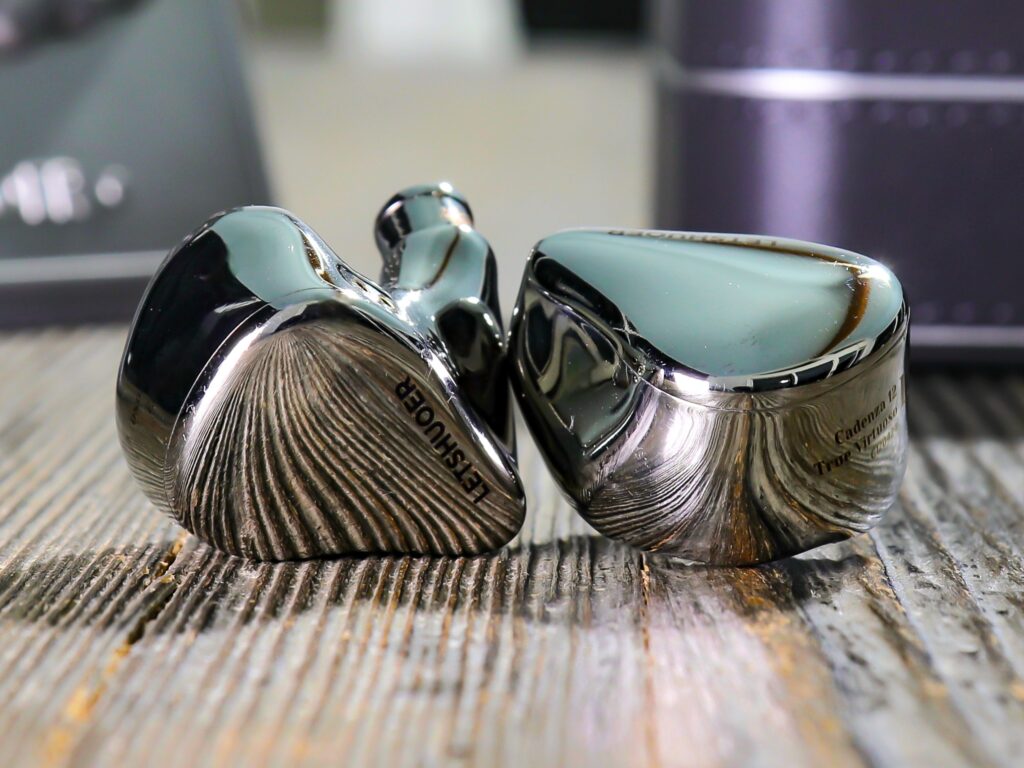
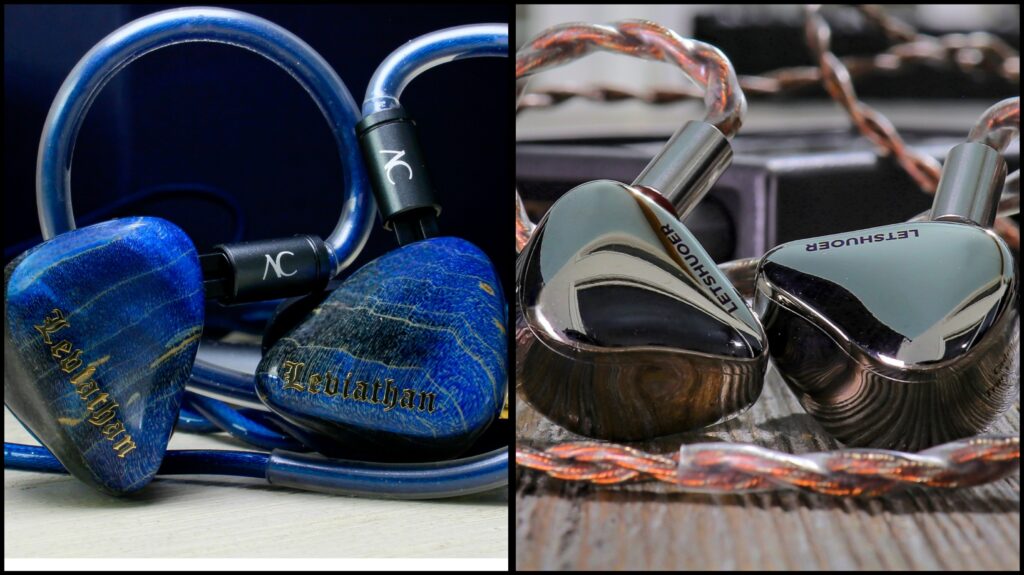
I reviewed the Letshuoer Cadenza 12 (2024) sometime in 2025 and easily declared it one of the best kilo-buck iems that my ears have heard in many different metrics. Though, there are other ways that it lacked a bit too. Now I’m going to keep this comparison much shorter than I typically would because these two iems are fairly different from one another. Truth is, it’s like comparing two totally different flavors which are both expertly made within the flagship market. Now, the beautiful Cadenza 12 (C12 for review purposes) is a 12-driver (1DD and 11BA) per side titanium built and gorgeous set which also includes a mighty 6-way crossover and was a massive undertaking by Letshuoer. The set is something to behold and I spoke as much about it in my review. However, the Cadenza 12 is also somewhat polarizing in its sound. Let’s put it this way, if you want to “Read your music with a magnifying glass” this is probably the set to get, with its crisp, and bright neutral-natural, extremely high resolved U-shaped sound. However, in what ways does it differ from the Leviathan? Let’s check it out.
Non-Sound Stuff
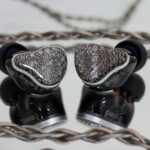
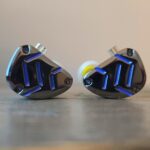
To begin, the C12’s unboxing is almost unmatched across the market. I love the Leviathan’s beautiful presentation, but Letshuoer really outdid themselves on this one. Of course… we don’t buy iems for unboxing experiences. Both do well, let’s just say that. I do like the cable of the Leviathan a lot more. As far as build, both iems are built to a premium standard yet both use different materials to get there. I feel that the wonderfully beautiful, stabilized wood of the Leviathan narrowly outclasses the titanium of the C12, but both are simply built to flagship levels. At these prices, both iems are built uniquely and done so with expert quality. The design/aesthetic goes to the Leviathan in my opinion. As cool as the mirrored titanium of the C12 is, it simply wasn’t poured over in artistic integrity and craftsmanship like the Leviathan. I love both designs and take nothing away from but c’mon folks, the Leviathan is on another level. Now, you have 12 drivers of the C12 to 8 on the Leviathan, but we all know that more drivers don’t necessarily mean better sound. It’s just a difference. Also, price is a key difference too. At over $2k for the C12 it is much more expensive. Of course, Letshuoer has recently dropped the price to around $1.6k. I’m sure that is temporary, but it’s nice to see that lowered.
Sound Differences
Like I said, I’ll be quick because these two are very different in my opinion. Beginning with the tonality and timbre the Leviathan is tuned warmer, more organic, closer to natural with a much more musical sound, much easier in the ears. The C12 has that U-shaped neutral-natural profile, which is crisp, bright, and highly technical. Both sets do well technically, but the C12 is literally tuned to be analytical. Now, when comparing the low-end it is obvious that the Leviathan has a much deeper, fuller and more bold bass region to the C12’s snappier, and tidier bass. Just more fun without losing quality. The C12 is much less of a focus. I love the rich and musical midrange of the Leviathan though. Vocals absolutely slay in this set and while I do enjoy the C12’s mids, I also have to be cognizant of what track I am playing. The C12 can get a hair bright whereas the Leviathan has an easy in the ears tuning that is very earthy, organic, and euphonic. That all flips in the treble because the C12’s treble might be some of the most skilled treble market-wide. A stunning display of bite, crispness, and clean-lined detail. I enjoy the Leviathan and how well measured its treble is, but the C12 is on another level folks. Technically the C12 was simply tuned to operate in a clinical, dryer, and more analytical way. It was made for details and a high-resolution playback. The Leviathan balances musicality and the technical stuff much better. However, the C12 is the more technically inclined iem. It does edge the Leviathan in detail, note separation, transient speed is tighter too. However, I find the Leviathan to have just as good imaging and layering of the sound field. Though, the stage size, depth, and dimensional cues go to the Leviathan.
Final Thoughts on this Comparison
Both are bona-fide studs which represent the best of both brands but also they represent two entirely different tunings. In fact, the difference is so stark that this comparison is almost unfair to both sets. That said, I only compare to help explain the iem that I’m reviewing and not to show off a “duel to the death”, so to speak. I honestly find both iems to counter each other very-very well and they are both perfect for any collection. I personally prefer the sound of the Leviathan, but I am not taking anything away from Letshuoer’s Cadenza 12. Both are as premium as it gets for their respective price range.
Genres
I always include some words in genres that work and some which might not be as ideal for every set that I review. Please keep in mind that these are only my opinion and I don’t necessarily reflect your preferences. What I find good or bad for any single genre, you may feel different. I am speaking in a very generalized way here folks. Just because I tell you that the Leviathan doesn’t sound as good with one genre, or another doesn’t mean it won’t sound good with all tracks from that genre. These are extremely broad and extremely generalized thoughts. In the same breath I can tell you that genres which do seem to pair well with this set may also have plenty of tracks which won’t sound quite as perfect. Nothing in this hobby is ever black and white. This is a gray hobby where subjectivity rules the day. Anyways, I hope these help at least a little bit.
Genres Which Work
First off let me just say that the Leviathan is good across most any genre. The only thing which subtly holds it back or makes it less ideal for a few genres is its warmer tone. That’s it. In my opinion the Leviathan is pretty much an all-rounder iems folks. I won’t go deep into these as my word count is getting huge, but I’d say that any Hip-Hop, Rap, R&B, EDM, Pop music and any other genre which makes use of its tightly controlled yet authoritative bass will shine on this set. However, with those warm and lush mids I love Bluegrass, Folk, Country, too. But it’s also very clean, helping Jazz to come through wonderfully. That layered stage just shines here. Anything Acoustic or even one guitar Singer-Songwriter stuff sounds unbeatable on this set. Another genre that I flat-out love is “most” Orchestral or Classical music. That big holographic stage, vertical layering, depth, and altogether clean portrayal of the frequency really helps for most Orchestral tracks. Also, any Rock music (Classic, Progressive, Alternative, Grunge) really sounds great with the Leviathan. Honestly, this set works across the board for most everything folks. Again, it’s simply subjective tone issues which might be a slight problem for some.
Not as Perfect Genres
I’m not going to speak on particular genres here because I don’t find the Leviathan bad in any genre. I just think that it’s slightly less crisp and smoother treble might not match some folks’ taste perfectly. I love most Metal tracks in this set, but the Leviathan could use a touch more bite and energetic brilliance on both cymbals and guitars for some folks. I’d also say that any track or genre which relies on that ultra basshead sub-woofer style won’t be perfect in the Leviathan. I’m actually going to stop there because the Leviathan doesn’t sound bad with any genre friends. Once again, I just think that it might not be as brightly rendered and as clinical as some people would like in different genres and its foundational warm/smooth sound might not be perfect for everyone’s taste too. Altogether it is very close to what I’d call an all-rounder.
Last Words on the ODA Leviathan T800
I was so thrilled to be able to hear such a well-rounded and well done iem from an up-and-coming brand which has only offered the hobby some pretty amazing iems thus far. To say I was excited to hear the Leviathan is understatement folks. Sure, it probably implanted some bias going into this review, but after so many weeks listening to one set that bias changes and all of a sudden you are listening to a product for what it is. What I discovered with the Leviathan is that it may be one of the best iems that I’ve heard at $1299. Flat-out and hands-down. A truly remarkable iem. I don’t know how else to say it friends. ODA did a masterful job with everything from the unboxing, to the build, the expert craftsmanship of the design, the awesome theme, and of course the sound is what sets this set apart. I am absolutely smitten with the Leviathan, and I can tell you that it is a perfect set for my personal rotation. As though ODA made this iem just for me… Lol. Obviously, they didn’t do that, but they did make a set which checks almost all of the boxes. I am utterly impressed with the Leviathan which speaks to the ability and experience of ODA to make such a fine iem. I couldn’t say this quickly enough that the ODA Leviathan T800 is worth every penny in my humble opinion.
Fingers Crossed
I actually went into this review crossing my fingers folks. Now, I knew that ODA had created at least two amazing all-BA sets in the Hesperus A300 Wood Edition and the Amarantine A500 Wood Edition, but we aren’t talking about $200 to $500 with the Leviathan. This is a true-blue $1,299 kilo-buck flagship. That’s different territory folks. This means my critical listening tightens, this means it gets judged with more nuance too. I wish that wasn’t true, but it is. Ya know, I made a Facebook “1st Impressions” post awhile back in where I spoke in the fact that I have turned away at least four kilo-buck iems, recently. I am not one of those reveiwers who needs or seeks out samples folks. I do this for the joy of it. Anyways, those sets that I turned away were praised far and wide by different reveiwers and here I am saying no becasue for the cost they didn’t do anything that a $400 set couldn’t do. Sets with elaborate EST and Bone-Conduction setups, multi-driver setups, adorned in ornate carvings. Nope, not good enough for over $2,000, for various reasons. So, in comes the Leviathan, fingers crossed, very anxious, yet also very thrilled too. The fact that even in the 1st listen I was struck at how well this set was tuned was a testament to ODA. The whole dynamic of this set was and is appealing…still. I say all of that to hopefully bring upon at least some semblance of trust in me when I say that the ODA Leviathan T800 is a true flagship and one which stands up to the cost, very well.
The Why…
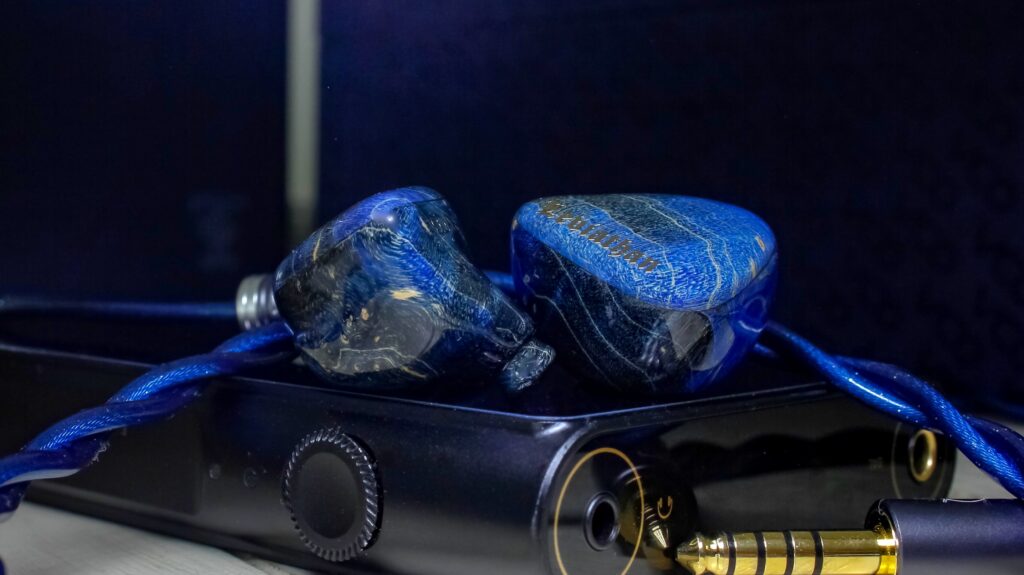
Because of every word that I’ve spoken within this entire lengthy review. The unboxing is great, premium, and put together as a flagship should. They provide a high level Artify Core Abyss cable and all the tips you’d need. Oh, and that build! ODA is slowly, or fastly becoming one of the best when it comes to wood-built shells. It’s a flawless design folks. Every grain within the wood appears perfectly and the colorway is simply stunning. My pictures do not do this set justice. It’s a fairly large set, but it’s also a very comfortable iem too. The shape and ergonomics definitely help me (personally) have long sessions without discomfort. However, as always, it’s the sound that puts the Leviathan atop the pedestal that it is on. That deep, palpable, penetrating bass with its tight and controlled style is so fun yet also one of the most mature big bass presentations out there. Also, the mids are a warm vocal-lovers dream. That forward and ethereal, euphonic, and holographic feel in conjunction with that earthy and slightly vibrant tone simply comes across in a fantastic way for both males and females. I love the mids folks. Also, the treble is no slouch at all. Very clean, just crisp enough, very well extended, smoothly rendered, yet highly detailed. In fact, the Leviathan is detailed well across the board. From the bass through the treble, I hear almost every last micro-detail in high resolution which is saying a lot of a musicality-first set. Then you look at the holographic and awesomely dimensioned stage which is a huge reason why the Leviathan is such an enticing set. I know I left out reasons, but I am very happy with this iem. A definite no-brainer set at its cost. Nice work ODA.
Conclusion
To conclude my full review and feature of the ODA Leviathan T800, I want to first thank the good folks over at ODA for sending out the Leviathan for review. This is a brand who asks nothing out of me except honesty, and I couldn’t be more impressed with them as a whole. Jason, thank you. I also thank the reader for clicking the link to this review. Thank you very much. It is the number one thing you can do to help mobileaudiophile.com along with sticking around long enough to let Google know that we have decent enough content. We are really trying to get better. So, thank you for trusting us and we do hope each review is a help for you in some aspect of the buying process.
Other perspectives
Finally, please check out other reviews. I am so late to the party with this set and there are a multitude of reviews captured about the ODA Leviathan T800. It can only help you in making an educated decision. Please don’t read this review and then hit the “buy now” button. Please take in other perspectives, please read, watch, or listen to other opinions. We are all so very different folks. Each one of us have different likes and dislikes, different abilities to even hear the music, different music libraries, and we all haven’t been down the same journey through audio. This makes an enormous difference in how we each perceive music through devices. Some have a lot less experience and some reviewers have been doing this forever. Each is a valid and useful perspective. Also, there are so many ridiculously talented reviewers out there. So many smart and witty reviewers, and so many who will help you to understand the Leviathan in possibly a different light. Anyways, with that said, I think I’m done. Please take good care, stay as safe as possible and always… God Bless!!
Leviathan Pros
-Packaging fitting of a flagship
-Great Artify Core Abyss cable
-The build is next level, all wood, absolutely dope in every way
-Comfort is great for me, though the shells are rather large
-Also, the design/aesthetic of this set is so cool
-Warm leaning, rich, and totally organic sound, musicality-first with excellent technicals
-Fantastic tonal and dynamic balance, very clean
-Strong, deep, tight, tactile, and well extended bass
-Fantastic vocal delivery with its naturally flavored mids, really nice
-Sparkly and smoothly rendered treble has awesome extension without the sharpness
-Detail retrieval
-Sound separation and imaging
-Stage carries a very holographic display, intimate yet very well dimensioned
Leviathan Cons
-Size may be too large for smaller ears
-Extreme bassheads will not find what they are after here
-Extreme treble heads or even neutral-natural lovers won’t find that here either
-While $1,299 isn’t a bad cost at all, there potentially may be some availability issues. That is simply my fear and I could totally be wrong
-May be too smoothened for some folks
-Bass presence could be a problem for those reference bass lovers




No Comment! Be the first one.