
























































































































The Story of Playing For Change
Before the Gear
Every now and then, I like to put DACs, amplifiers, and headphones aside.
Table Of Content
- The Story of Playing For Change
- Before the Gear
- The Most Universal Language
- A Reflection
- A Journey Begins
- An Idea That Seems Obvious Today
- A Little History
- An Idea Comes to Life
- When the Star Isn’t the Star
- When the Greats Return to the Streets
- Back to Where It All Began
- When a Project Becomes a Mission
- Don’t Just Listen. Watch.
- Where Should You Start?
- A Song Fifty Years Long
- Closer Than We Think
- Final Thoughts
Not because they aren’t important.
But because, before the gear, there is always one thing.
Music.
Here at Mobileaudiophile, we spend a lot of time talking about headphones, amplifiers, DACs, recordings, and sound quality. That’s only natural. They’re the tools that help us experience music at its best.
The system is the means.
Music is the destination.
And that led me to a simple question.
Why do we listen to music?
The Most Universal Language
Music is probably the most universal language humanity has ever created.
It can begin with a single voice, the beat of a drum, the sound of a piano, the strings of a guitar, or even something as simple as clapping your hands. Instruments change. Cultures change. Languages change. Yet the emotion always finds a way through.
It is one of the very few languages capable of transcending age, nationality, culture, and even beliefs.
You don’t need to understand the lyrics of a song to be moved by it.
You simply need to listen.
Even in Ancient Greece, music played a central role in society. It was part of religious ceremonies, theatre, and education. The choruses of Greek tragedies were far more than background accompaniment. They were an essential part of the story itself.
More than two thousand years have passed since then.
Yet the power of music hasn’t changed.
A melody can take us back to childhood in a matter of seconds. It can make us smile as we remember someone we love. Or leave a lump in our throat as it brings back a difficult memory.
It can fill us with energy.
Help us relax.
Move us.
Or simply give us a few moments of peace.
Music doesn’t just accompany our lives.
It becomes part of who we are.
A Reflection
That’s exactly why I decided to write this editorial.
Over the years, I’ve met countless hi-fi enthusiasts. People with wonderful systems, built with knowledge and passion, carefully treated listening rooms, meticulous attention to every detail, and an endless pursuit of sonic perfection.
Then came the moment to choose what to listen to.
And, more often than not, the same ten or twenty albums would appear.
The same songs.
The same familiar tracks used to evaluate a system.
There’s absolutely nothing wrong with that.
I have my own favorite albums too.
But sometimes I can’t help wondering if we end up listening to our equipment more than we listen to the music.
A Journey Begins
Today, we have access to millions of albums. We can explore music from every corner of the world and discover artists we would probably never have come across just a few years ago.
And yet, more often than not, we keep coming back to the same ten albums.
So I asked myself a simple question.
Why not have a chat, just like friends do?
Why not step outside our musical comfort zone every now and then and discover something we never expected to enjoy?
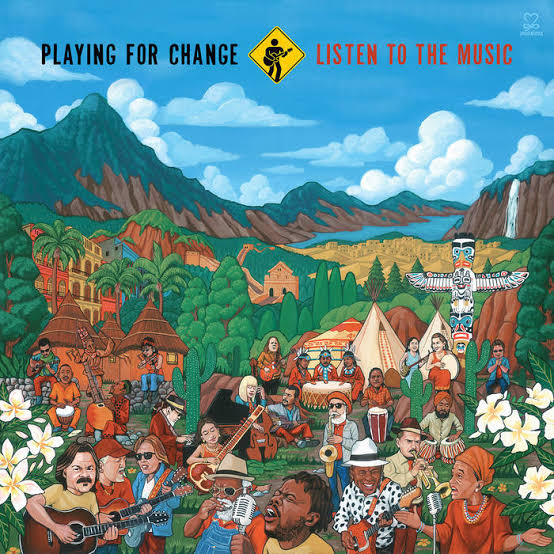
And that’s where an extraordinary project called Playing For Change comes in.
Few projects remind us more clearly that music belongs to no one.
And that’s exactly why…
it belongs to everyone.
An Idea That Seems Obvious Today
Today, seeing musicians collaborate from different parts of the world hardly surprises anyone. An internet connection, a few audio files sent across continents, and the job is done. Over the past few years, especially after the pandemic, this way of creating music has become almost routine.
Music history itself offers examples of collaborations recorded separately. Many readers will remember Frank Sinatra’s Duets albums, where artists such as Bono, Luciano Pavarotti, Aretha Franklin, and many others recorded their performances independently before they were brought together into a single recording. It was a fascinating project that showed how technology could bring distant musicians together.
But Playing For Change wasn’t born from technology.
It was born from an encounter.
From a voice heard on a street corner.
And from a question that was both simple and revolutionary.
Could a single song travel around the world, collect the voices of people who had never met, and become one shared emotion?
Today, we already know the answer.
Back in 2005, nobody could have imagined what was about to happen.
A Little History
To understand how Playing For Change began, we need to go back to 2005.
We’re in Santa Monica, California, on the famous Third Street Promenade. Like so many streets around the world, it’s filled with shops, cafés, tourists… and street musicians.
On that particular day, one voice makes people stop.
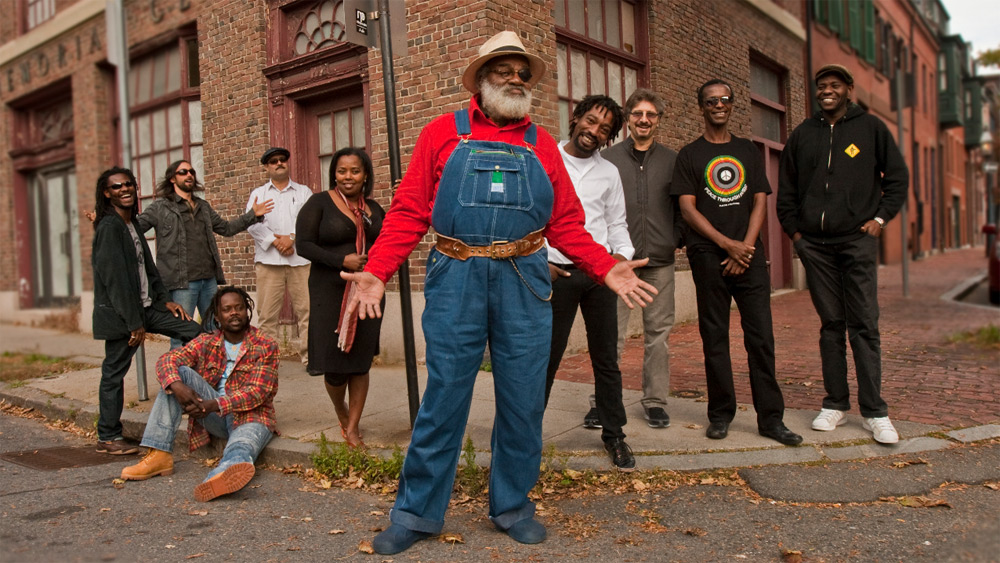
That voice belongs to Roger Ridley, a street performer singing Stand By Me with remarkable warmth, authenticity, and soul.
Among the crowd is Mark Johnson, a music producer and recording engineer. He stops to listen, but it isn’t just Ridley’s performance that captures his attention.
It’s the people.
For a few minutes, age, language, and nationality simply disappear.
People stop.
They listen.
They smile.
And in that moment, an idea is born.
What if that same song could continue its journey on the other side of the world?
Not with famous artists gathered in an expensive recording studio, but with musicians encountered along the way, each in their own country, their own environment, and with their own musical story.
An Idea Comes to Life
Mark decides to give it a try.
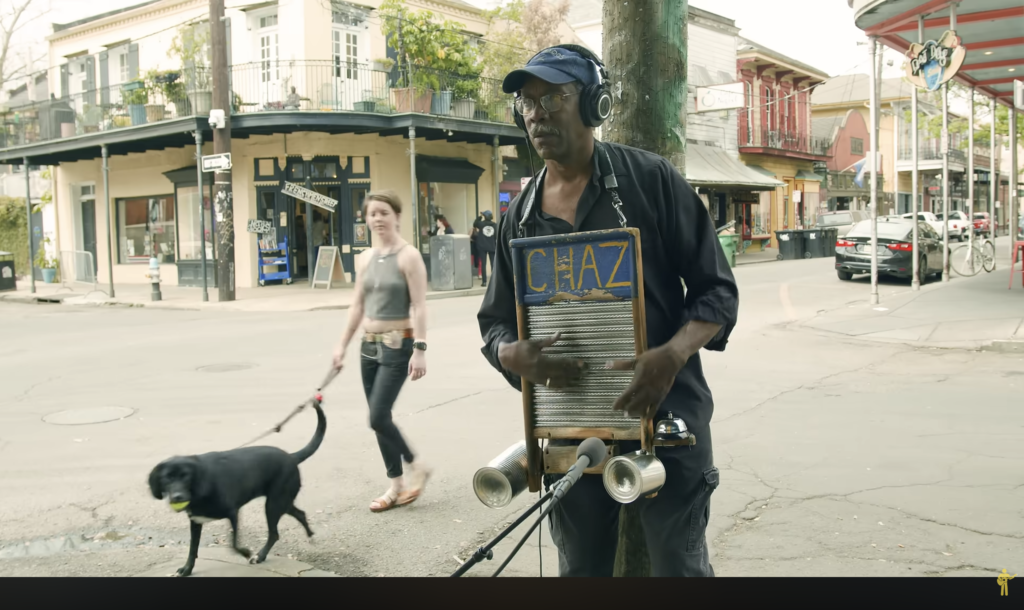
He builds a portable recording studio and begins traveling the world. Each musician listens through headphones to everything that has been recorded so far, then adds their own performance.
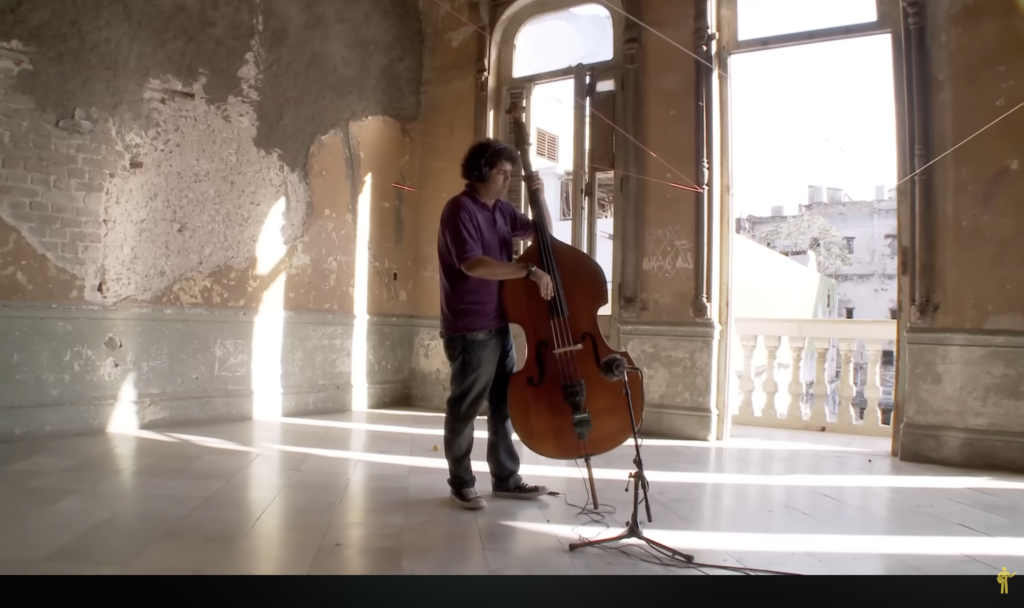
A guitar recorded in South Africa meets a voice from the United States.
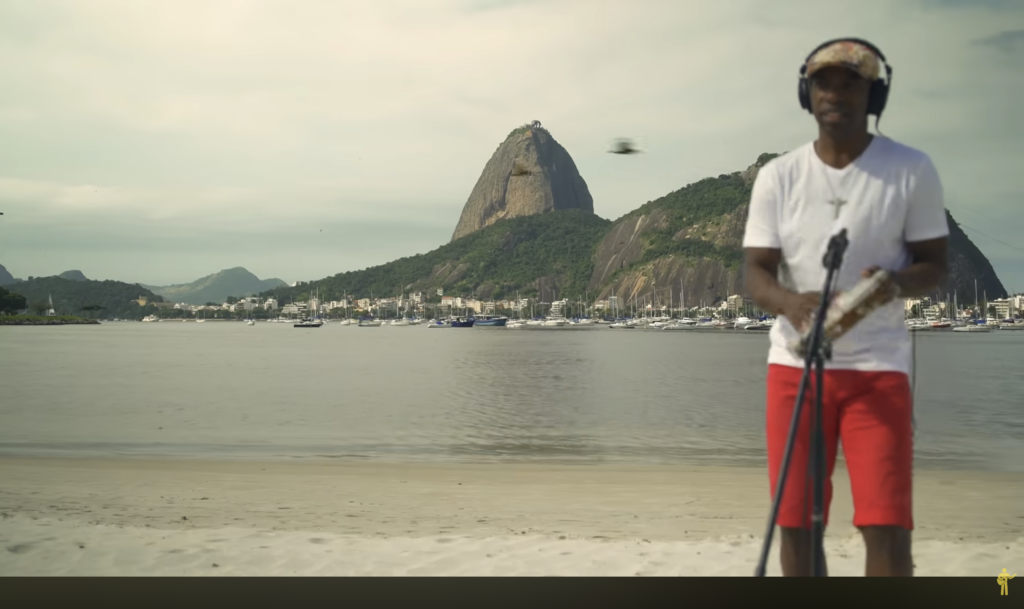
Percussion arrives from Brazil.
A choir joins in from Africa.
Another musician adds a new piece from yet another corner of the world.
None of them know one another.
None of them know who will record the next part.
And yet, when all those pieces come together, they sound as if they had been performed in the same place, at the same moment.
It isn’t simply a musical experiment.
It’s proof that music can cross geographical, cultural, and linguistic boundaries without ever losing its identity.
That’s how this remarkable project was born, and it still reminds us today that music can reach places where words sometimes cannot.
When the Star Isn’t the Star
There’s one aspect of Playing For Change that, more than anything else, makes it truly special.
At a time when the music industry often seems to revolve around famous names, charts, and streaming numbers, this project chooses a completely different path.
The protagonist isn’t the celebrity.
It’s the musician.
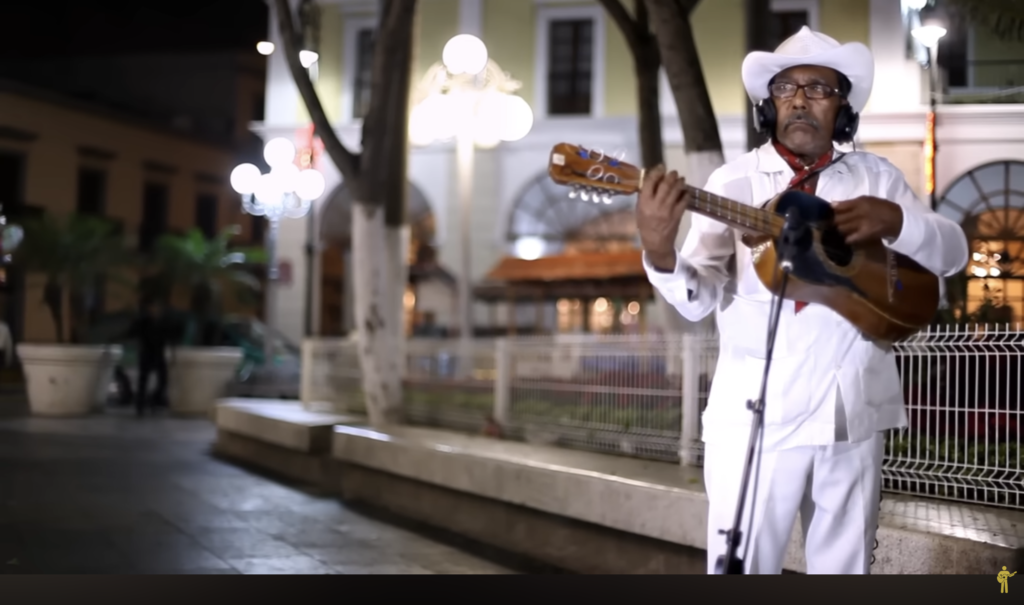
It could be a singer performing on a street corner every day, a percussionist bringing life to a local celebration, a guitarist playing outside a small café, or a choir keeping the musical traditions of its community alive.
The number of records they’ve sold doesn’t matter.
Nor does the number of followers they have.
Only one thing matters.
What they are able to express through music.
And that’s perhaps its most beautiful message.
Every musician has a story to tell.
Each culture has its own voice.
Every people has a musical tradition worth listening to.
As you watch these videos, you begin to notice something remarkable. The faces that move you the most often belong to people who, just a day before, were complete strangers.
Yet the moment they begin to play, every label disappears.
There are no A-list musicians.
No B-list musicians.
Only people speaking the same language.
The language of music.
When the Greats Return to the Streets
In the beginning, Playing For Change was almost entirely about street musicians. Artists unknown to the general public, people who made music their life and turned a sidewalk, a town square, or a street corner into their stage every single day.
Then something changed.
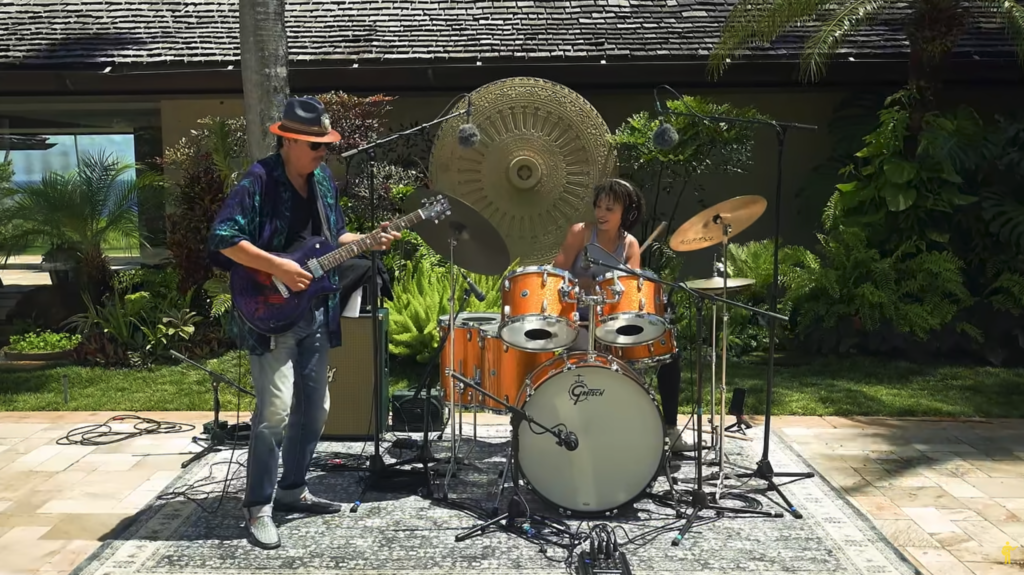
As the project grew, world-renowned musicians began joining in almost naturally. Carlos Santana, Los Lobos, Taj Mahal, Keb’ Mo’, Stephen Marley, Buddy Guy, and many others chose to become part of this remarkable journey.
What surprised me most, though, is that none of them came to steal the spotlight.
In this project, the name on the album cover and the number of sold-out concerts suddenly become irrelevant. A guitarist who has performed in front of thousands of people finds himself, at least symbolically, playing alongside someone who, until the day before, was performing for a handful of passersby.
There are no leading roles.
No supporting acts.
Only a song coming to life, one musician at a time.
Back to Where It All Began
Some people might say that, for established artists, it’s simply a way of staying connected with ordinary people.
Maybe they’re right.
The real reasons belong to each artist, and none of us can know what truly inspired them to take part.
But I prefer to believe something else.
There’s a scene in Rocky III that always comes to mind. Apollo Creed takes Rocky back to the old gym where so many great fighters began their careers. Not because Rocky has forgotten how to box, but because he has lost something much more important.
His hunger.
His fire.
What the movie famously calls the Eye of the Tiger.
Maybe musicians need something similar.
Maybe returning, even symbolically, to the streets, playing without the distance created by a giant stage, and sharing a song with people from every corner of the world is a way of reconnecting with what music truly is.
The music that exists before success.
Before the spotlight.
Before platinum records.
Maybe that’s just my interpretation.
But every time I watch one of these videos, I can’t help feeling that, for a few minutes, even the biggest artists return to the place where it all began.
When a Project Becomes a Mission
As the years went by, Playing For Change continued to grow.
More musicians.
More countries.
And more people began to see themselves in an idea that had started almost by chance on a street in Santa Monica.
But eventually, Mark Johnson and his team realized that recording these performances was no longer enough.
Throughout their travels, they had encountered extraordinary talent, often in places where music was far more than a passion.
It was a way of preserving culture.
A way of offering young people new opportunities.
And, in many cases, a source of hope for the future.
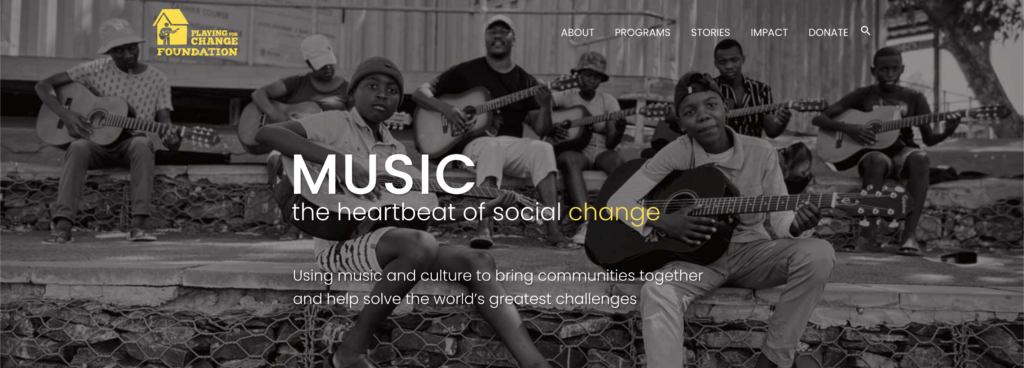
That realization led to the creation of the Playing For Change Foundation.
The goal was never simply to support musicians.
It was to create opportunities.
To build music schools.
To provide instruments.
And to involve teachers.
And to help entire communities pass on their musical heritage to future generations.
Today, the Foundation supports educational programs in different parts of the world, proving that a song can do far more than move us emotionally.
It can build bridges between people.
Preserve traditions.
And offer opportunities to those who might otherwise never have the chance to share their talent.
And perhaps that’s the most beautiful part of its journey.
What began as a music project has become something far greater.
A meaningful way of giving back to the world a small part of all the music that the world gave to its founders.
Don’t Just Listen. Watch.
There’s one last piece of advice I’d like to share.
Don’t treat Playing For Change as background music.
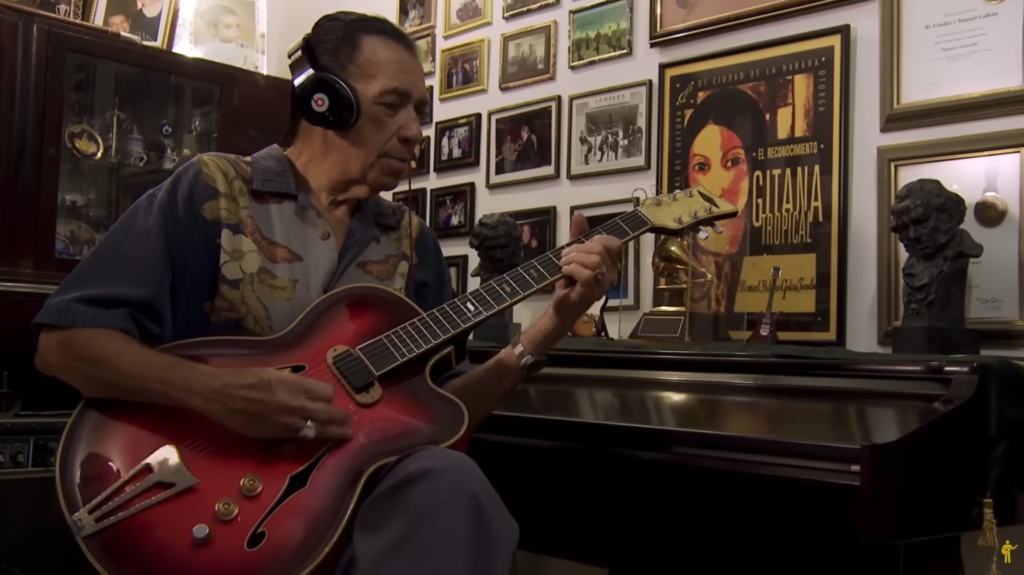
Open YouTube, switch to full screen, and give yourself a few uninterrupted minutes.
Watch.
Look at the places where each performance was recorded.
The streets.
The town squares.
The markets.
The small villages.
Watch the musicians’ faces as they listen to someone else’s performance and add their own.
Notice the smiles.
The knowing glances.
The effortless way people who have never met seem to speak the same language.
At some point, you’ll realize that you’re no longer watching a simple musical performance.
You’re witnessing a conversation.
A conversation made of notes, emotions, and mutual respect.
And perhaps that’s the real magic of Playing For Change.
You can listen to music anywhere.
But to truly understand these stories…
you have to watch them too.
Where Should You Start?
If you’ve made it this far, you’re probably wondering one thing.
Where do I begin?
I could tell you to start with Stand By Me. After all, it’s the song that started everything and, even today, it captures the true spirit of Playing For Change better than any other.
But that would be the obvious answer.
I discovered it in a completely different way.
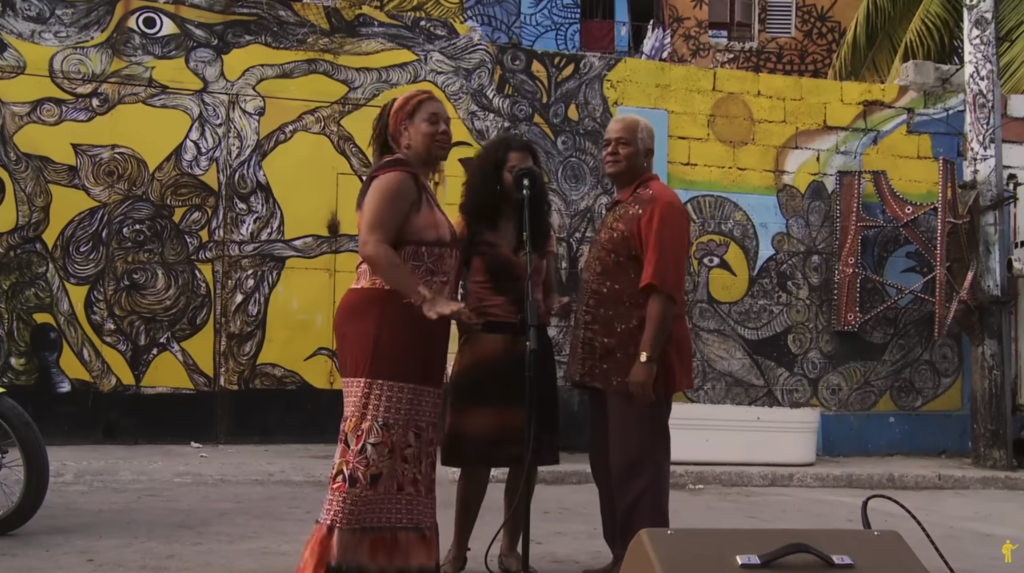
The very first video I watched was La Bamba. The title caught my attention, so I clicked on it.
I had no idea it would become the beginning of a wonderful journey.
When it ended, watching another one felt like the most natural thing in the world.
Then another.
And another.
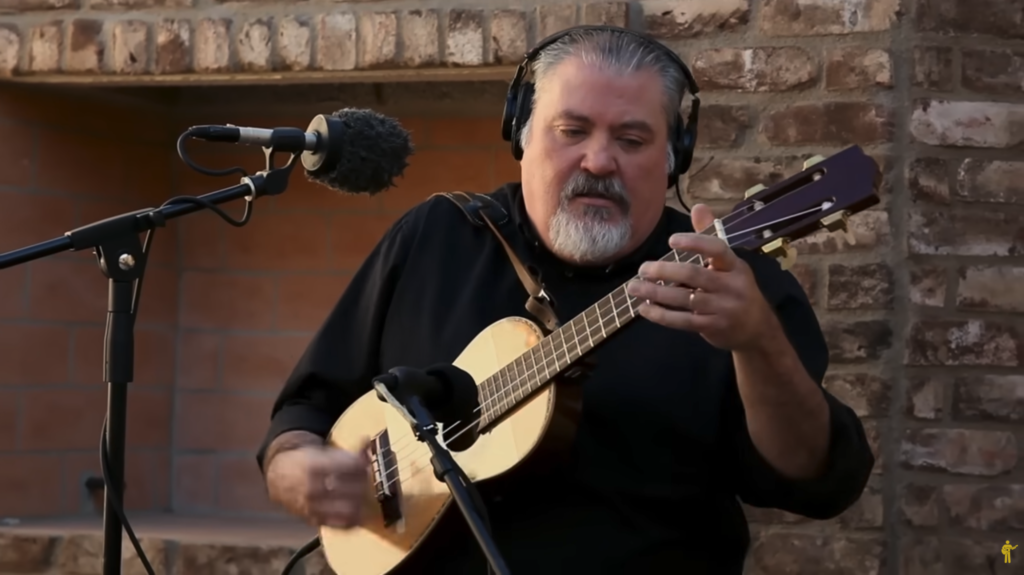
Next came Riders on the Storm, featuring the legendary Robby Krieger, followed by an incredible version with Carlos Santana, driven by an outstanding rhythm section and a drummer whose energy is simply contagious.
Then came Guantanamera.
And from that moment on, what happened to me is probably what happens to most people.
One video becomes two.
Two become five.
Before you even realize it, you’ve travelled around the world without ever leaving your couch.
And that’s exactly what makes it so special.
There is no right place to begin.
There is only the first step.
But I do have one suggestion.
Just this once, try a little experiment.
Forget your DAC.
Your amplifier.
Your speakers.
Even your headphones.
Don’t ask yourself whether the bass goes deep enough or whether every cymbal strike is reproduced perfectly.
Look at the people.
Watch their smiles.
Their expressions.
The way they listen to one another, even though they’re thousands of miles apart.
Because, just this once, the most important quality isn’t the sound.
It’s the emotion.
And that’s where I believe the real magic lies.
A Song Fifty Years Long
Before I bring this story to a close, I’d like to share something personal.
I have a dear friend named Claudio.
We’ve known each other for more than fifty years.
We grew up together.
We shared our teenage years, nights out, first crushes, first disappointments, and, of course, music.
Back then, music wasn’t just something we listened to.
It was the soundtrack to our lives.
The reason to get together.
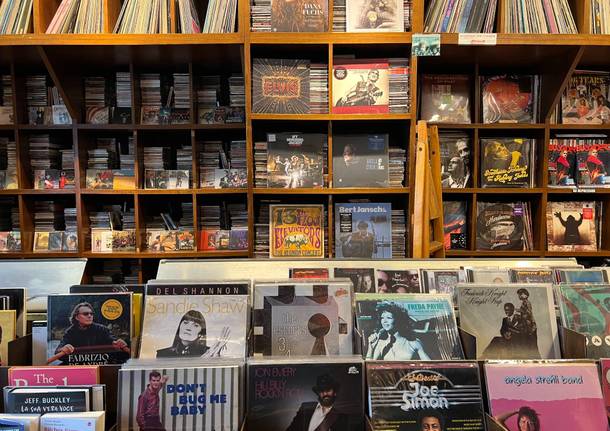
To lend each other a record.
To talk about a new album.
Or simply to spend time together.
Then, as life so often does, it took us in different directions.
I’ve been living in Florence for more than thirty-five years.
Claudio stayed in the town where we grew up.
More than three hundred kilometers separate us now, and as the years have gone by, work, family, and life’s commitments have made it harder and harder to meet.
And yet, our friendship has never drifted apart.
For one very simple reason.
Music.
Even today, we still call or message each other just to say:
“You have to hear this album.”
“Have you heard this recording?”
“Watch this concert.”
“I think you’re going to love this artist.”
We don’t call each other to talk about hi-fi.
We call each other to talk about music.
Sometimes, all it takes is a message.
A link.
Or simply the title of a song.
And in an instant…
it’s as if we’re twenty years old again.
Closer Than We Think
Maybe that’s the true power of music.
It can’t stop time.
Nothing can.
But it can make distances disappear, even if only for a few minutes.
It can bring back a memory.
It can make us feel close to someone we love.
That’s one of the reasons this project moves me so deeply.
Because when I watch musicians playing together from opposite sides of the world, I don’t just see a beautiful musical project.
I see something I know very well.
People far apart.
Connected by the same passion.
And I believe that’s one of the greatest gifts music can give us.
A reminder that, even when life takes us far from one another, sometimes all it takes is a single song to bring us close again.
Final Thoughts
When I started writing this article, I thought I was going to tell the story of Playing For Change.
Instead, I realized I was writing about something much bigger.
I was writing about what music is still capable of doing.
Helping us discover people we might never have met.
Opening the door to cultures we might never have known.
Helping us remember the people we’ve loved.
And sometimes…
Helping us stay close, even when life takes us in different directions.
As hi-fi enthusiasts, we spend a great deal of time searching for the best possible way to listen to music.
And it’s a wonderful passion.
A passion I’ll always treasure.
But every now and then, it’s worth stopping for just a moment to remember one simple truth.
The system is the means.
Music is the destination.
This time, our journey led us to Playing For Change.
Next time, it will lead us somewhere else.
Because Arcotondo Tells isn’t about a project.
It isn’t about an artist.
It isn’t about an album.
It’s about music.
And if, after reading these pages, you find yourself wanting to discover something you’ve never listened to before…
Then I’ll know I’ve achieved exactly what I hoped for.
The system is the means.
Music is the destination.


No Comment! Be the first one.