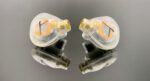






















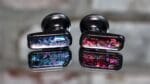


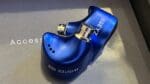





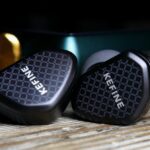
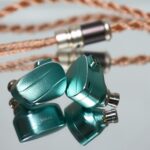
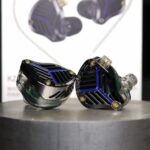



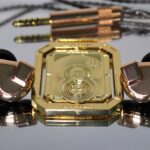

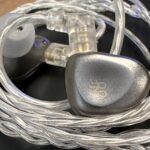

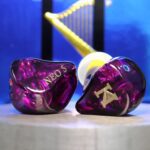
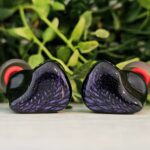
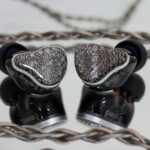




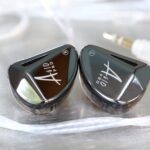






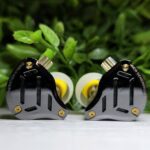




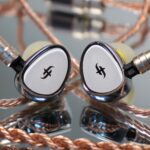
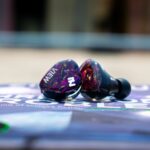




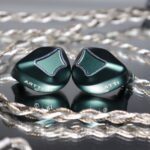
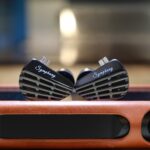
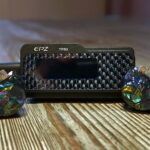
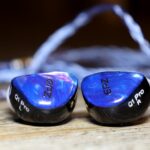



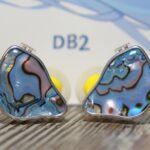
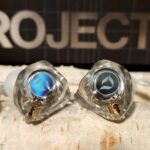


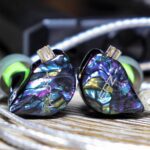
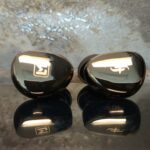

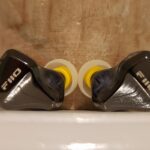
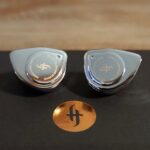
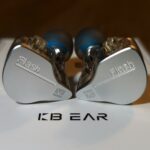
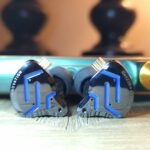

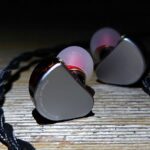
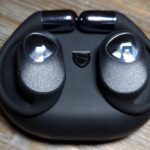



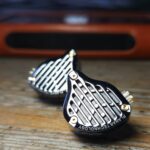
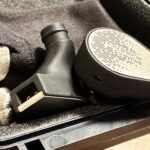
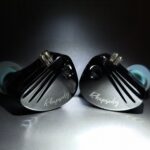








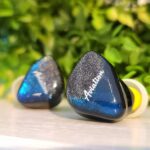
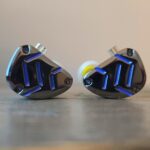
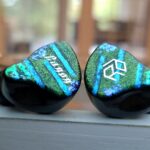
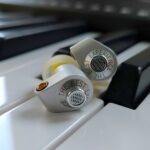
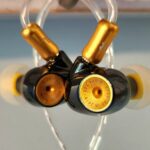





Binary Acoustics teased this one in pieces for weeks. The 1900 is finally on shelves at $235 through HiFiGo, released July 15, 2026.
Table Of Content

The name isn’t random. It comes from Giuseppe Tornatore’s The Legend of 1900. Back in May the brand posted a teaser image of a man playing piano on a ship’s deck in the middle of the ocean, said nothing about what it was, just asked if anyone recognized the movie. Now we know why. Binary’s own copy leans hard into the character: a pianist born on an ocean liner who turns whatever he hears, Irish folk tunes, New York street songs, popular melodies drifting off the deck, into something that only sounds like him. The brand frames the tuning the same way, aimed at pop, jazz, and rhythm-driven electronic rather than at a measurement target. We called this direction from the artwork back in May, and the brand confirmed it.
Driver architecture
Six drivers per side: 1DD + 1PR + 4BA. A 10mm dynamic driver, a 6mm passive radiator, four balanced armatures.
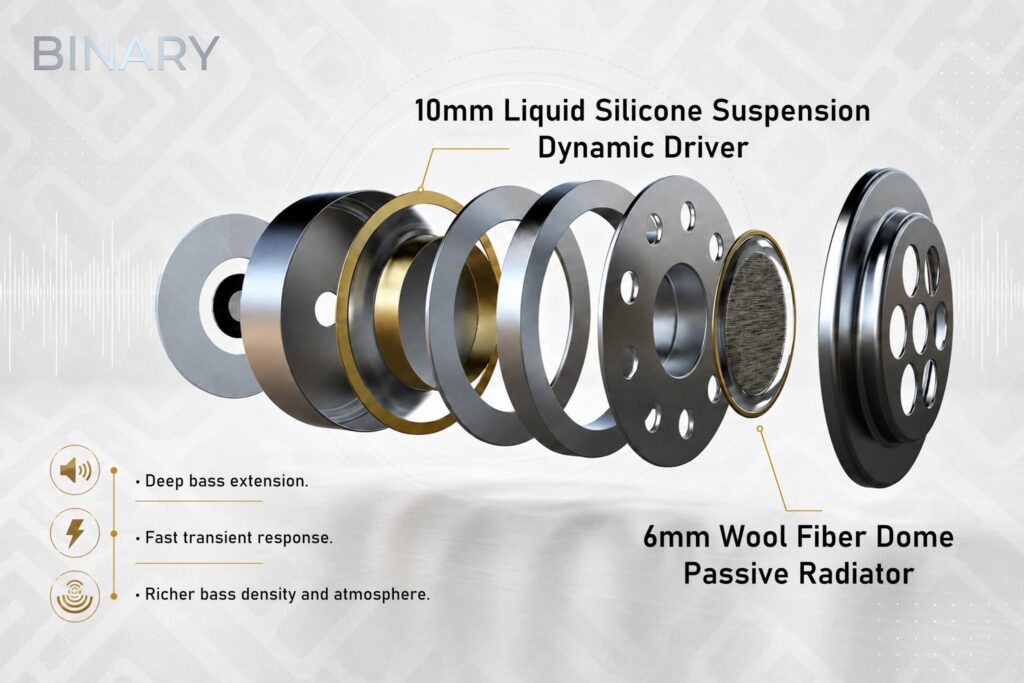
A note on the count, because some coverage is already running with “2DD+4BA.” That’s wrong. A passive radiator has no voice coil and no motor, it doesn’t convert an electrical signal into anything. It moves because the dynamic driver pressurizes the air inside the shell and that pressure pushes it. Calling it a second dynamic driver inflates the spec sheet and misdescribes how the bass is actually being made. Binary’s own official documentation lists it as “10mm DD + 6mm Passive Diaphragm + 4BA.”
The dynamic driver uses liquid silicone suspension. The passive radiator is a wool fiber dome.
What the spec sheet tells you before you listen
Speculating ahead of a listen is risky. But material choices leak information.
Liquid silicone suspension is good at killing resonance. It keeps diaphragm motion in check, so I’d expect the mids to land closer to neutral with a slight warm tilt instead of anything painted or bloated. That same control usually carries into the treble, pointing toward a softer, more extended top rather than a bright and hard one.
The passive radiator matters because it takes some of the bass load off, which leaves the dynamic driver relatively free. Mids benefit from that. You’d expect vocals and instruments to sit without crowding each other. But 6mm is small. Wool fiber dome is a smart pick for damping, and at that diameter the contribution probably reads as lower-mid fullness rather than actual sub-bass depth, which could thicken vocals a touch.
We took that read to the brand on Facebook and got the marketing answer: deeper bass extension, faster transients, richer density. Their own technical documentation is more honest about it. There, the radiator’s job is described as passive damping and resonant reinforcement, optimizing bass decay and internal standing waves while adding density and atmosphere. Read that carefully, because it’s a different claim. Damping and standing-wave control is not the same thing as extension. That’s closer to my read than to their comment reply, and it’s the more credible version.
The CanJam Singapore impressions push back the other way, describing dynamic, punchy bass with good sub-bass extension credited to the DD+PR pairing. Those come from HiFiGo’s own roundup though, not an independent listen, so weight them accordingly. We’ll know once a unit lands.


There was no visual clue about the treble anywhere. Based on driver structure I wasn’t expecting an aggressive top end, more like something smooth, slightly pulled back, still holding resolution. Show impressions describe crisp high-resolution technicality with a fun, head-bobbing musicality.
The crossover is the interesting part
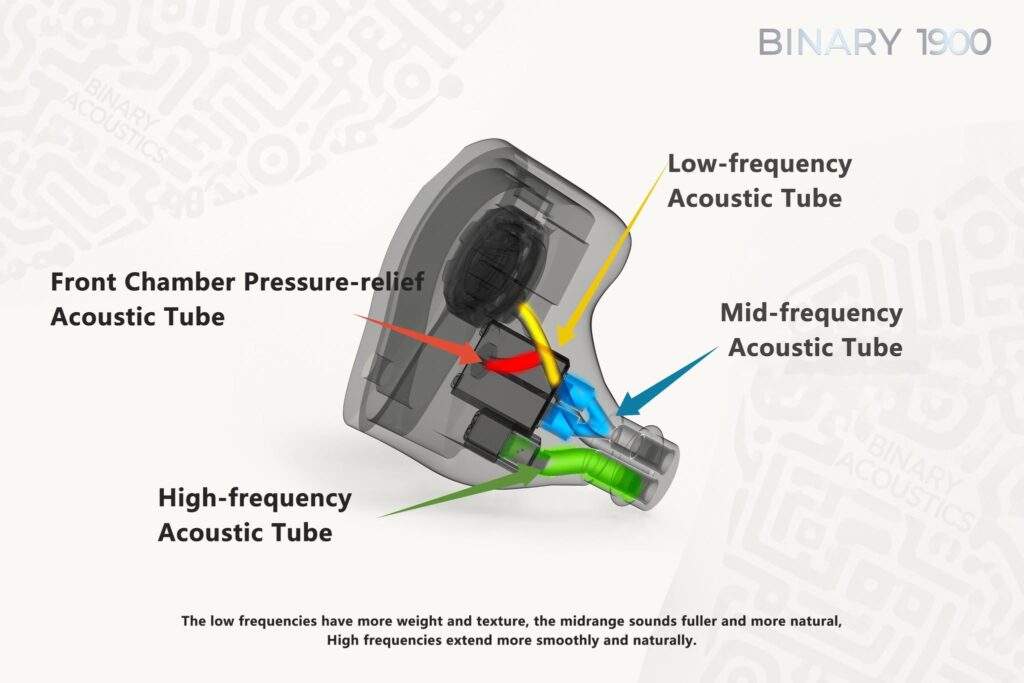
Binary runs an independent three-tube acoustic crossover alongside a precision second-order RC three-way crossover. Acoustic and electrical filtering at the same time. The independent tubes split bass, mids, and treble into dedicated signal paths so the dynamic driver and the four BAs each stay in their intended range.
There’s a second layer most coverage is skipping: the four BAs are themselves split through a two-way crossover, two for midrange and two for treble. So you’ve got a three-way system with a nested division inside the armature array. Binary’s stated goal for all this is consistent phase response across the full range, which is the actual hard part of stacking six drivers per side.
The treble circuit uses a Panasonic non-inductive film capacitor. That’s a real component callout rather than a vague “premium parts” line, and film caps in the treble path are a reasonable place to spend money.
The cutaway diagram the brand posted shows four separate tubes: low-frequency, mid-frequency, high-frequency, plus a front chamber pressure-relief tube. That last one manages pressure behind the dynamic driver, basically a more organized take on standard venting. The Amazon listing mentions two pressure-relief vents and a deep-damping nozzle instead of a conventional external metal mesh.
Specs
- Price: $235, released July 15, 2026
- Drivers: 10mm DD + 6mm passive diaphragm + 4BA per side
- Impedance: 10Ω @ 1kHz
- Sensitivity: 124dB/Vrms @ 1kHz
- Frequency range: 8-40kHz (1/4″ free field, -3dB)
- THD: <1% @ 1kHz
- Housing: 3D-printed resin chamber, CNC 316 stainless steel faceplate
- Cable: silver-plated OFC, 0.78mm 2-pin, 3.5mm or 4.4mm
- In the box: cable, 6 pairs of silicone tips, storage case, manual
10Ω and 124dB/Vrms means easy to drive, a dongle DAC or a phone output will do. But 10Ω is low, so source output impedance could matter and hiss is worth watching for on bal outputs.
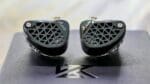
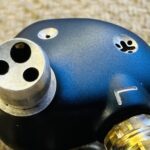
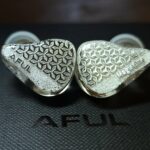
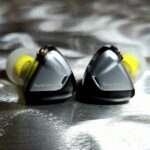
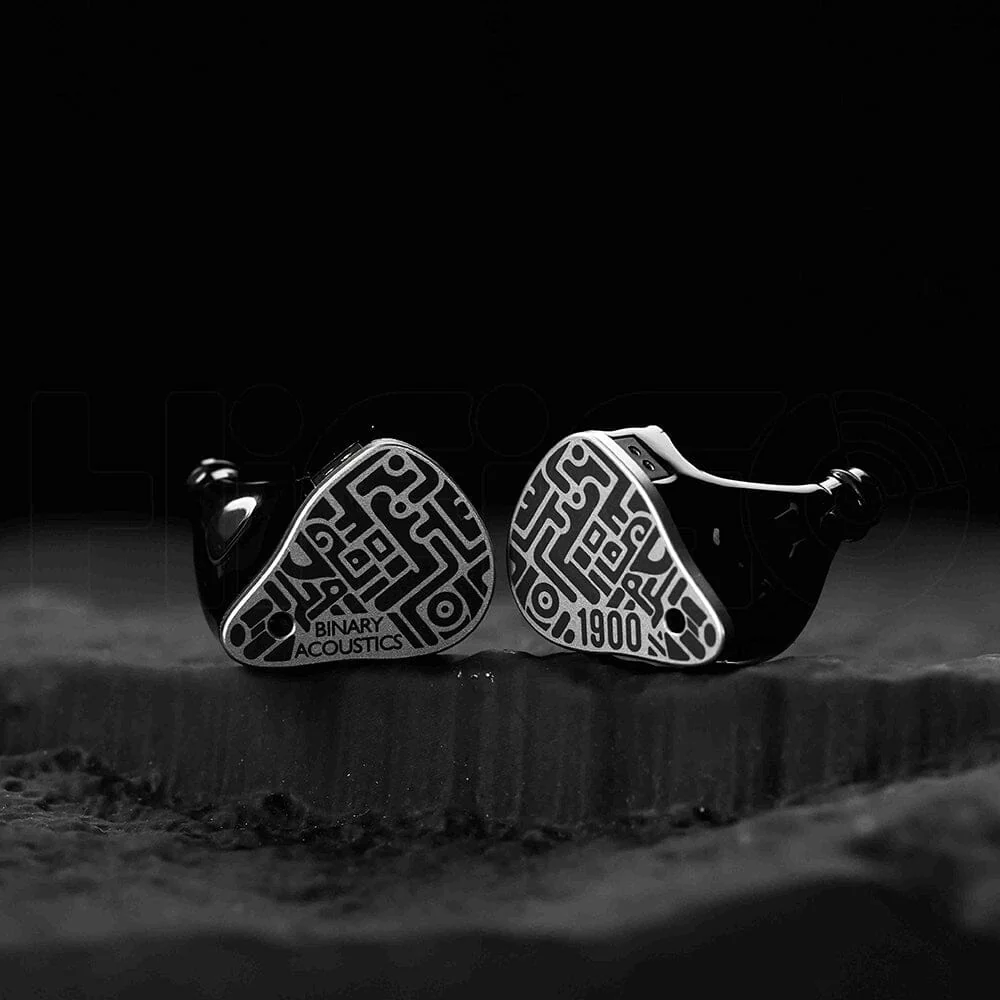
Faceplate is laser annealing marked rather than printed or plated, which means the pattern is in the metal, not on it. Binary says it won’t peel or lose finish. The shells use translucent black internal coloring, and the design brief describes the lines as tracing both a liner’s route across the sea and a tangle of city streets and piano keys.
The tuning target
Binary’s frequency graphic marks three zones: 0-200 Hz labeled “modern and direct,” 200-8000 Hz “vivid and agile presentation,” above 8000 Hz “responsive transients.” Marketing language, obviously. But the official doc doesn’t hedge either, it says the sound is modern and direct with powerful impact, free-spirited and untamed. Nobody’s aiming at a neutral reference target here.

CanJam Singapore notes highlight a balanced profile with a clean midrange. The Facebook comments read it the same way, somebody wrote that it’d be musical rather than chasing neutrality.
Against the Chopin
Binary positions the 1900 directly against its own Chopin, which is useful because Chopin is the set most people in this price band already know.
Chopin runs 1DD+3BA on an 8mm dynamic driver. The 1900 goes to a 10mm DD with the passive radiator and four BAs. Binary’s own comparison claims more bass quantity, better bass texture, a more refined midrange, and better detail retrieval, with a tuning that’s more immediately engaging and pop-oriented.
the vS
Take that with the appropriate salt, it’s a manufacturer comparing two of its own products and there’s a $65 gap to justify. Chopin sits around $170. But the driver math at least supports the direction.
Where it lands
$235 is a reasonable ask for this configuration. The competition at this price is brutal though, Performer 8S and Da Vinci are on the same shelf.
We’re in contact with Binary. Full review goes up when a unit arrives, and we’ll find out how much of this holds after our JDS Labs amp and dac bundle and a timeless dac which has its own community.
Click to see more and / or purchase before the review lands.





No Comment! Be the first one.