













Hidizs is a brand we’ve known for years. Compact, reasonably priced, always moving. Not the kind of company that drops a Colorfly C4-style brick on the table and calls it portable..(Even tough I bet even the Colorfly team hadn’t thought of it being carried around). Their thing has always been modern, fast, urban, sleek. Not built for the uncles and the grandfathers with listening rooms. Built straight for the young, and the young-ish. The evidence was the AP series. Started with the AP80, went through several variations, ended in my mind with the AP80 Pro Max. Alongside it, a string of dongles, the most recent being the S9 Pro Plus Balanced DAC Amp. A consistent throughline: small form factor, real output numbers, no faking about what kind of listener they are building for.
Which is why seeing Hidizs at High End Vienna 2026 surprised me honestly. That show is an arena for the big players. European crowd, Far Eastern crowd, both with expectations that don’t always overlap, and neither of them typically looking for a $100 Game Boy-shaped music player. But that continental friction, Hidizs leaning hard into a Westernized approach while bringing something genuinely new to the floor, is exactly what gave birth to the AP30 Music Boy.
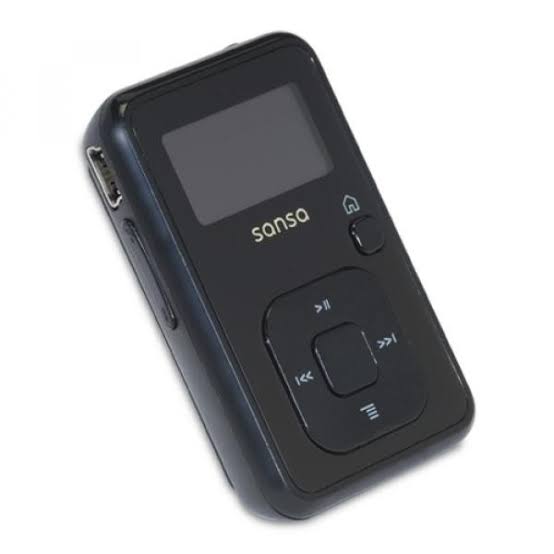
There is something happening right now in the Chinese portable audio market that does not have a clean Western name for it yet. It sits somewhere between nostalgia product and genuine audiophile tool, and most companies attempting the crossover get exactly one of those two things right. To understand what the AP30 is reaching for, you have to go back about twenty years. The Sansa Clip was a nothing device.
A small plastic clip-on player that cost less than a nice dinner. No touchscreen, no Android. No pretensions about what it was. And yet it became genuinely beloved in ways that much more expensive hardware never achieved, because it understood that the ideal portable player is one you forget you are carrying until music comes out of it. Small. Light. Radio and mp3 playing with microsd storage… It knew what it was. The community hacked it, ran Rockbox on it, held onto specimens long past the point of rational justification. The Sansa Clip was a tool that got out of its own way.
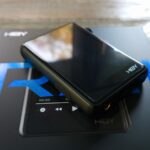
The HiBy R1 was the near-modern descendant of that lineage. At around $85, it runs HiByOS on a Linux-based system, measures 83.5 by 51.1 by 12.35mm, and weighs 70 grams. The translucent polycarbonate shell, rounded edges, colored buttons, all of it reads more like something from the late 90s to early 2000s than a recently audiophile product. That is not an accident. The CS43131 DAC handles decoding up to DSD256 and PCM 32-bit/384kHz, the battery runs to roughly 13 to 15 hours of real-world playback, and Bluetooth 5.1 with LDAC and aptX is aboard. No balanced output, cannot function as an external USB DAC. Real limitations. But the R1 is not pretending to be something it isn’t. It is the Sansa Clip with a touchscreen and a Cirrus Logic chip inside, and that is exactly enough.
The Hidizs AP30 Music Boy is approaching the same category from a completely different angle, and that difference is worth thinking about.
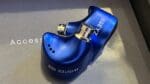
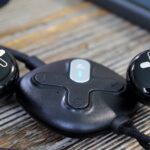
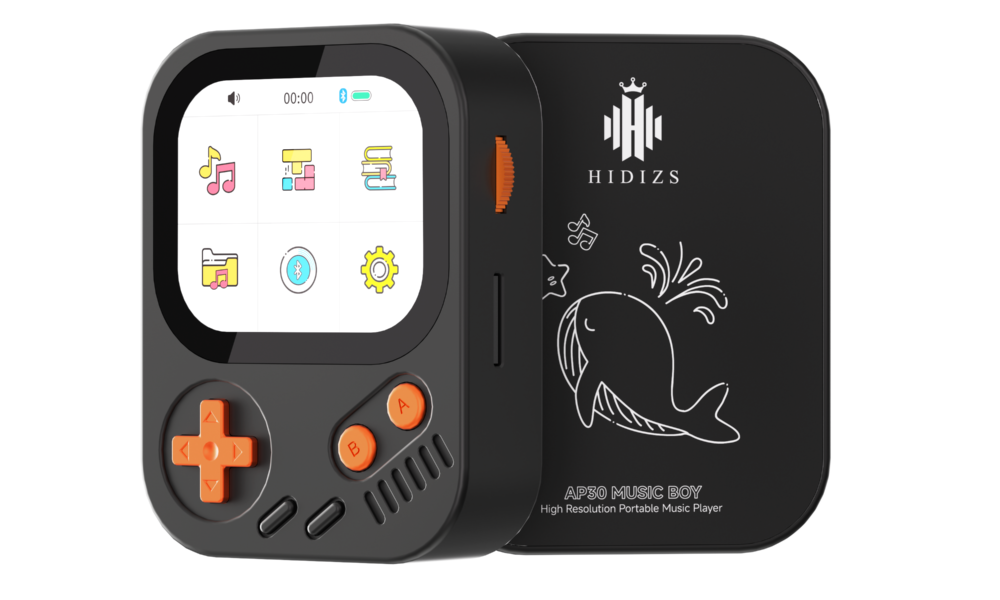
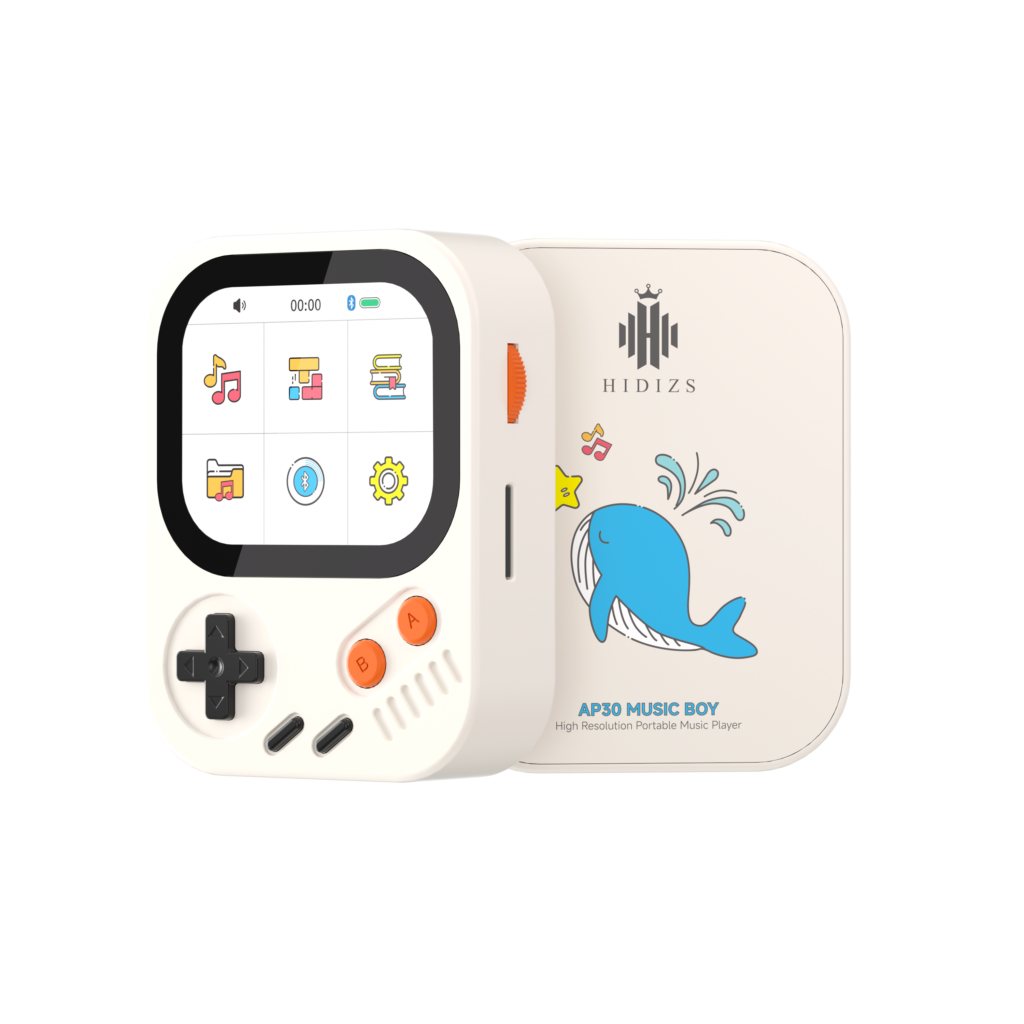
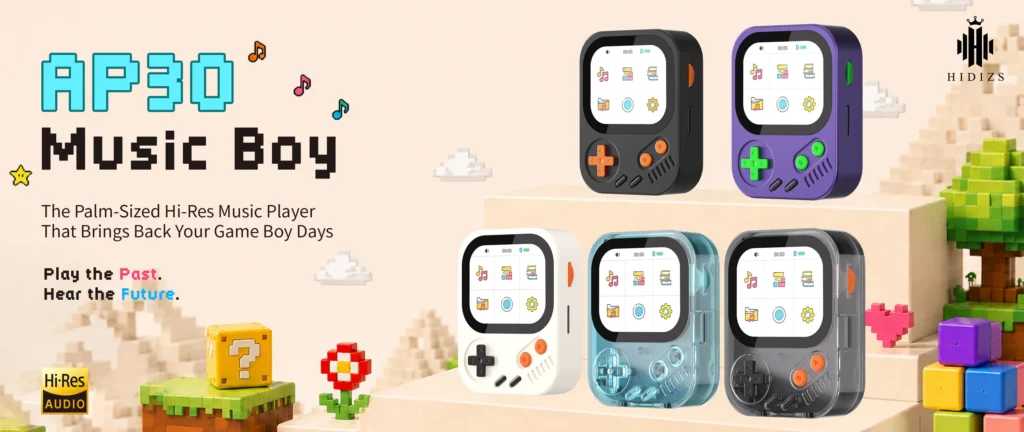
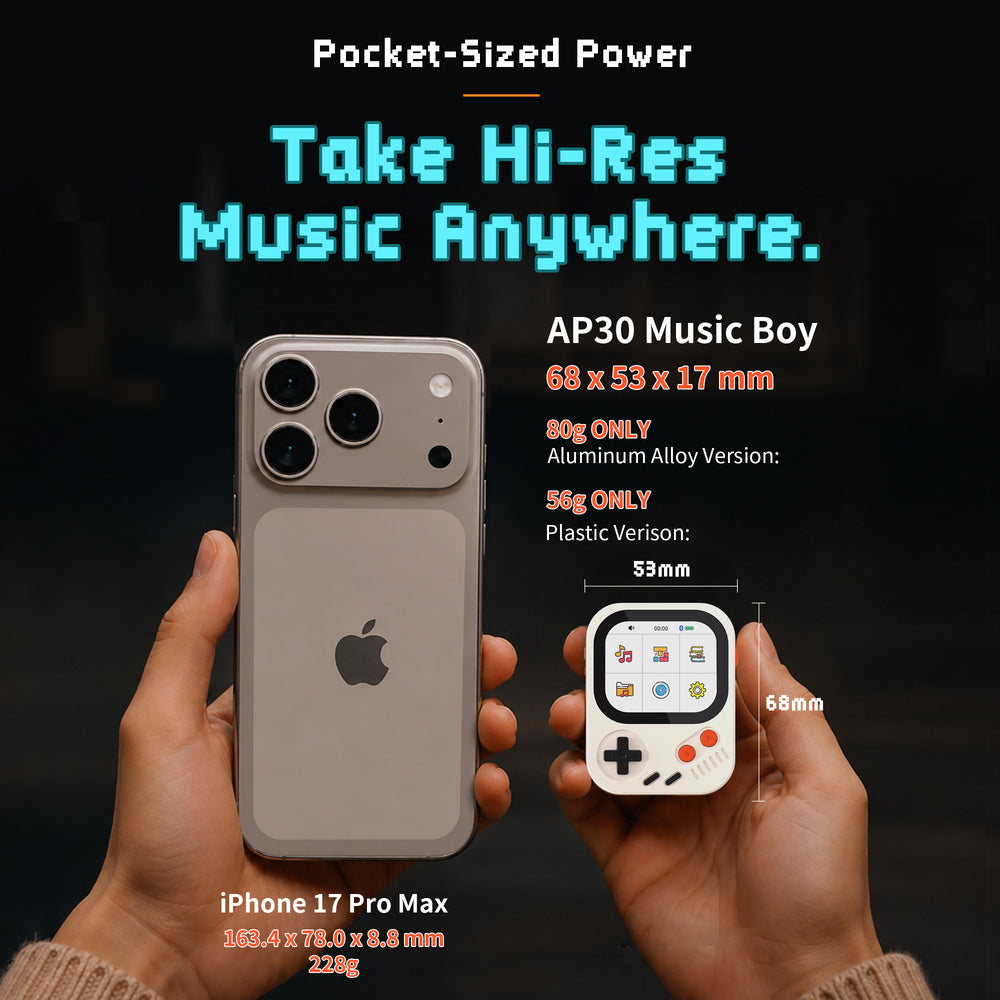
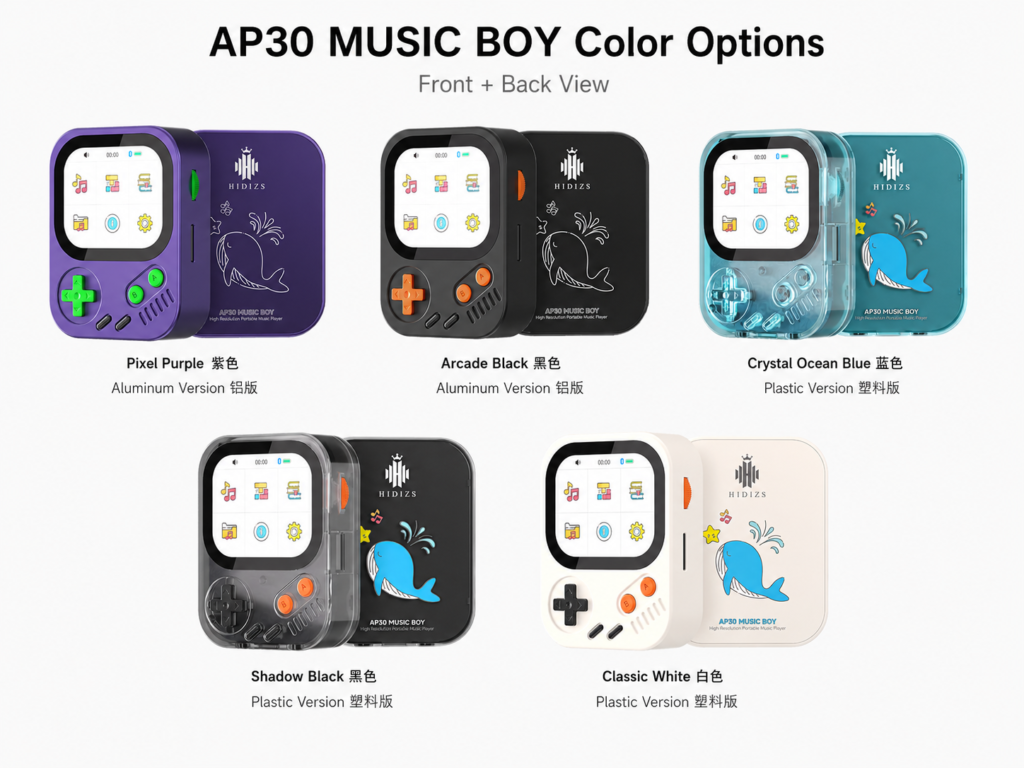
The R1 is quiet about what it looks like. The AP30 is not. The Game Boy silhouette is the whole premise. D-pad, action buttons, a square color screen behind a chunky black bezel. Five colorways across two materials: plastic versions in Classic White, Shadow Black, and Crystal Ocean Blue at 80 or 56 grams depending on the chasis material, aluminum builds in Arcade Black and Pixel Purple. The back carries an engraved whale motif connected to ocean conservation symbolism, and the whole unit measures 68 by 53 by 15 millimeters. Smaller than most carrying cases for the IEMs you would plug into it.
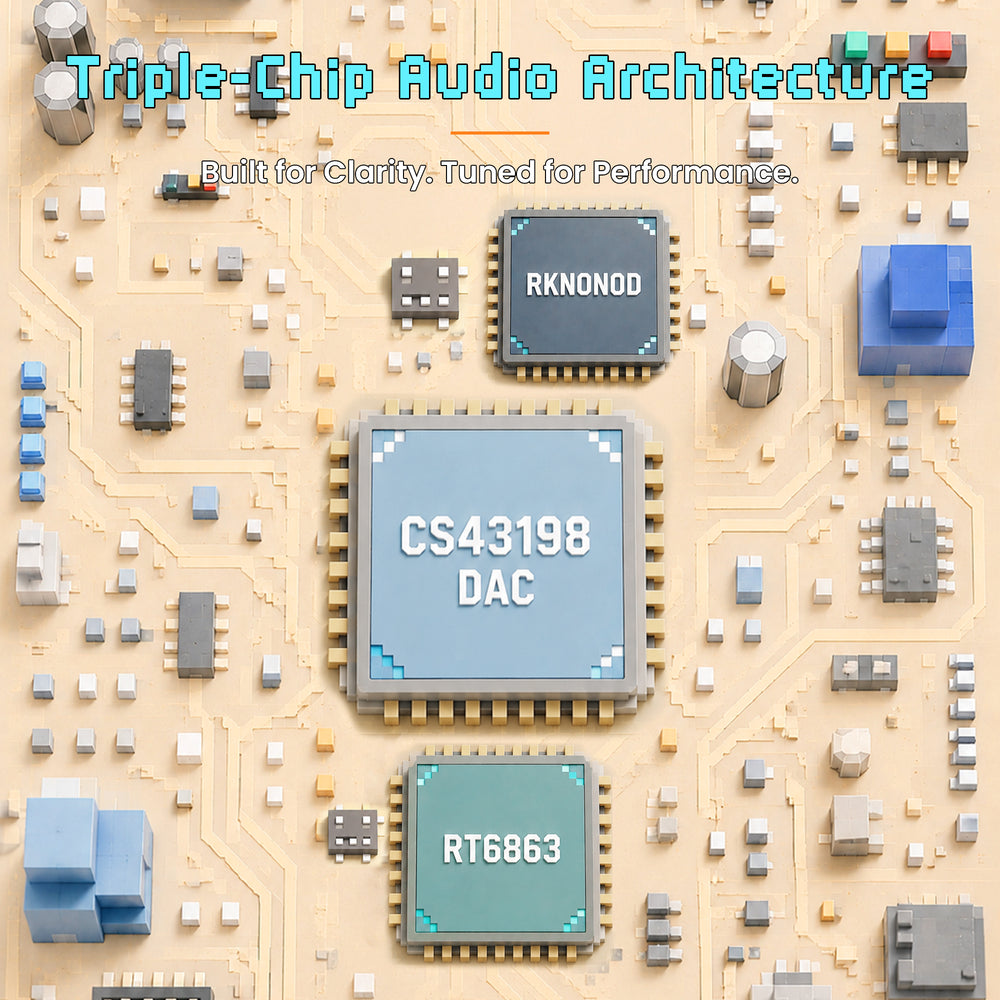
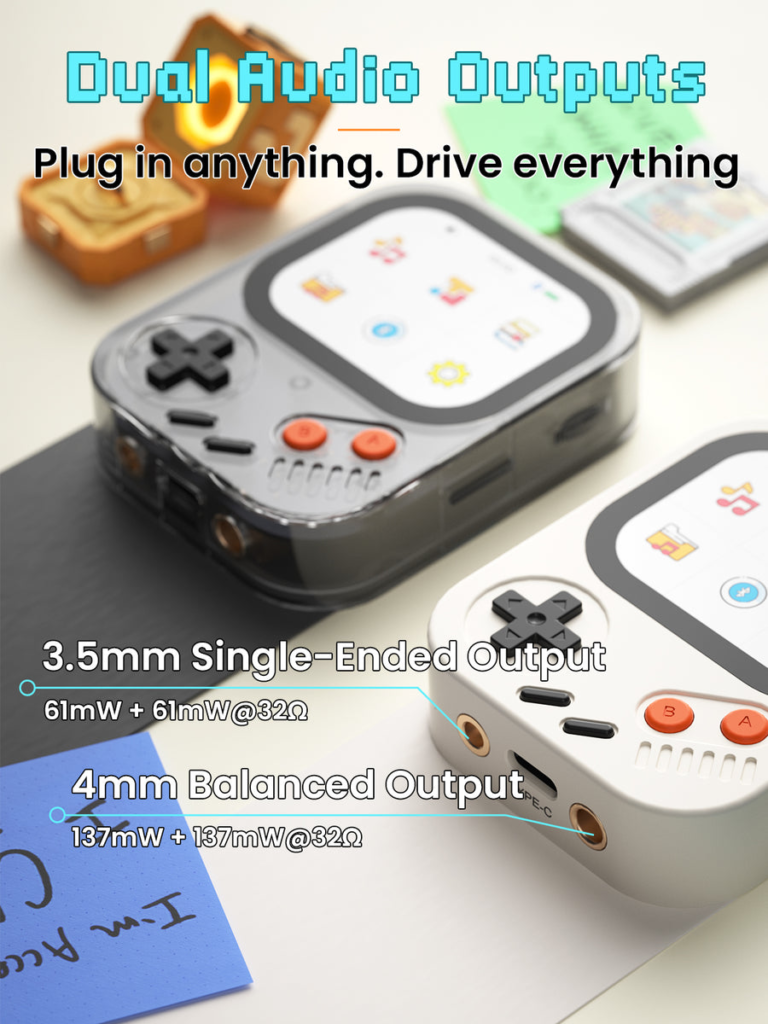
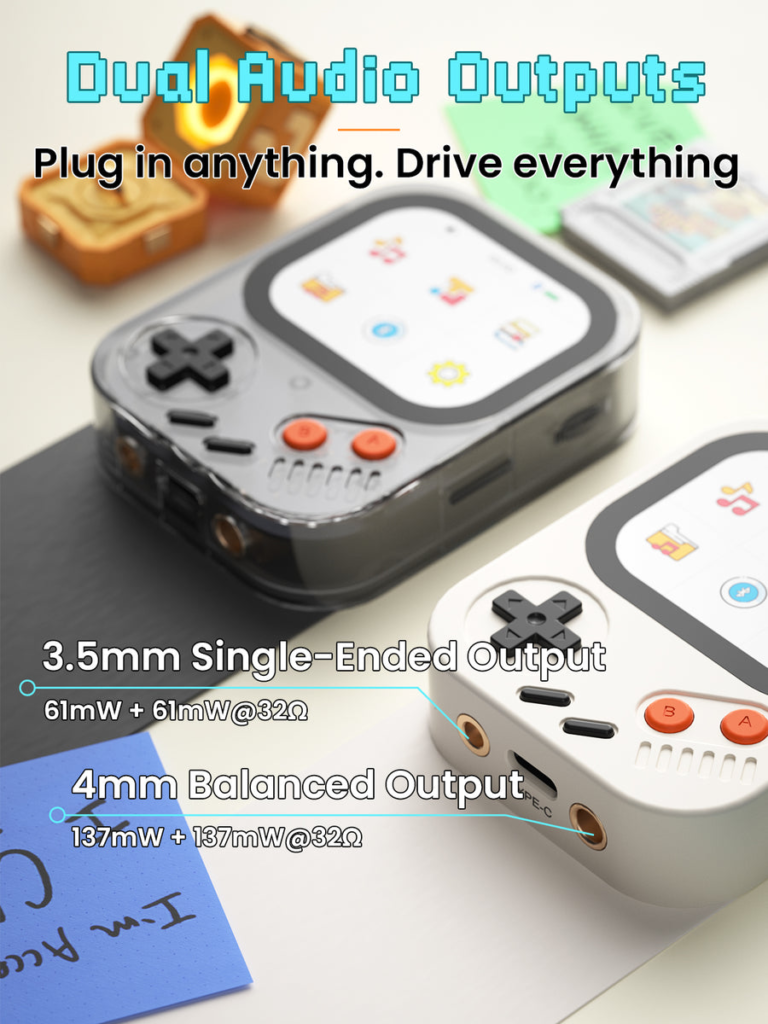
The audio hardware is a triple-chip arrangement. The CS43198 handles conversion, the RKNONOD is the main processing chip, the RT6863 is the amplifier stage. The CS43198 is a step above the R1’s CS43131 in Cirrus Logic’s hierarchy. Both chips share a house sound that tends toward clarity with a degree of warmth, but the 43198 has more headroom and a slightly more refined noise floor in the implementations I have heard it used well. Whether Hidizs’ implementation qualifies is a question units in the field will answer. The 3.5mm single-ended output is rated at 61mW per channel into 32 ohms. The 4.4mm balanced reaches 137mW into the same load. The R1 has no balanced output at all. That 4.4mm jack is a real gem at this size and price tier.
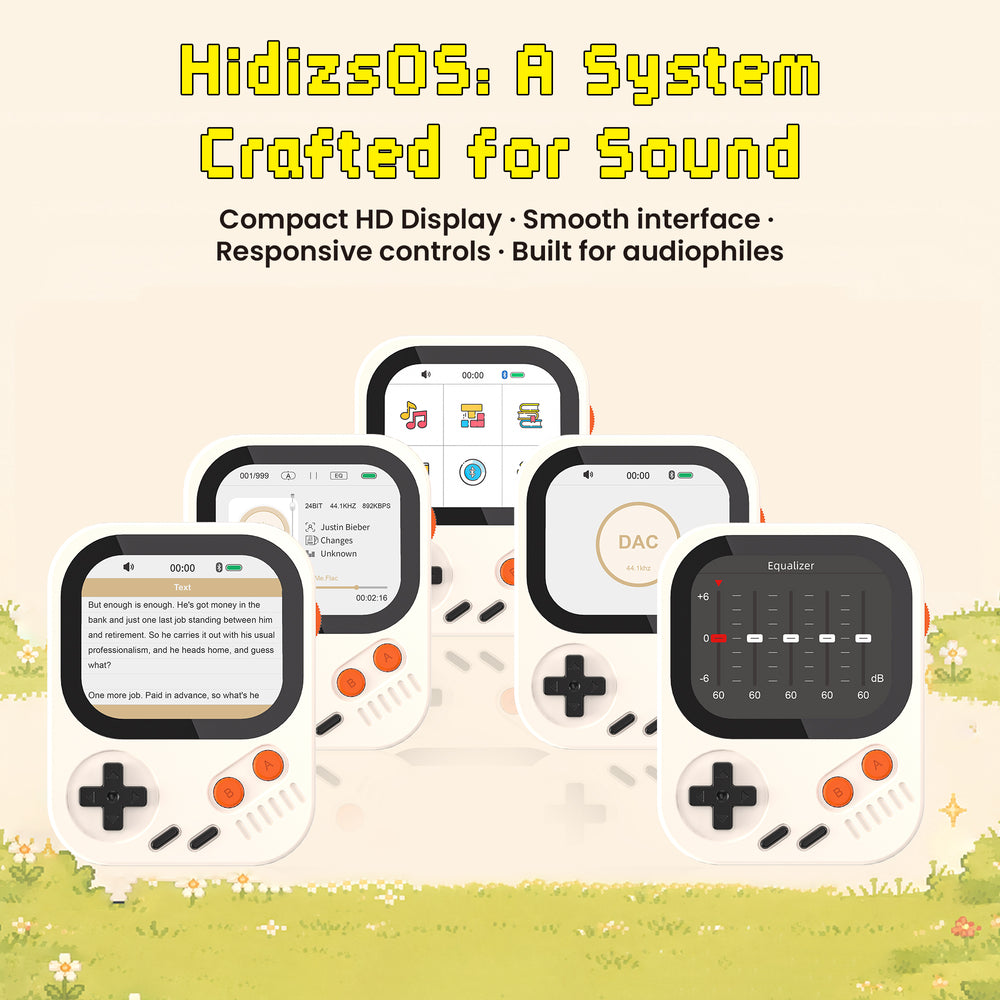
HidizsOS runs on a 2-inch 296 by 240 IPS panel, decoding extends to DSD256 and PCM at 24-bit/192kHz. The resolution ceiling is fine, the screen is smaller and lower resolution than the R1’s 800×480 panel, and the OS is proprietary where HiByOS has years of firmware refinement behind it. Those are the areas where the AP30 carries more uncertainty going into a review. Battery is 1200mAh with estimated runtime of 10 to 12 hours single-ended and 8 to 10 hours balanced. Shorter than the R1’s 15 hours, which is the honest cost of running a balanced amplifier stage in a body this small.
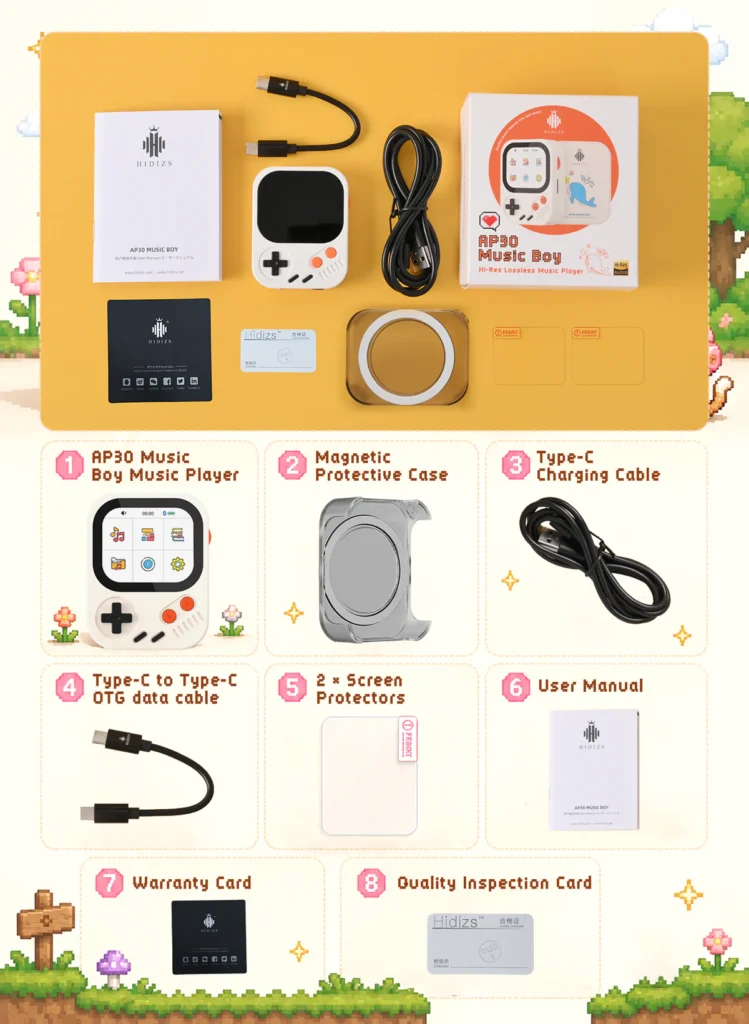
It attaches via neck strap, bag clip, or a magnetic case that snaps it to the back of a phone. The magnetic case option is either a genuinely clever wearable audio solution or a gimmick, depending on how the magnet performs in daily carry. The concept is sound. A 56-gram player riding on the back of your phone and feeding your IEMs via 4.4mm balanced is a cleaner solution than most dongle stacks people are currently walking around with.
Hidizs showed the AP30 at High End Vienna 2026 alongside the AP80 Ultra and the MP145 Pro, in a hall shared with Gryphon Audio Designs, Bowers & Wilkins, Dynaudio, MBL, Cessaro, Dan D’Agostino Master Audio Systems, DALI, Cambridge Audio, Mark Levinson, Fyne Audio, Musical Fidelity, Chord Electronics, Yamaha, Eversolo, Meze Audio, Noble Audio, Astell&Kern, Lotoo, Aesthetix, Ortofon and Viva Audio. On the ChiFi side, FiiO, iFi Audio, BQEYZ, Moondrop, Linsoul, Kinera, Truthear, Aune, 64 Audio, xDuoo, Cayin, Sivga, ddHiFi, Dan Clark Audio and Soundaware were present, alongside boutique names Alsyvox, TransRotor, Wadax, Ideon Audio, Pylon Audio, Fezz Audio and Clearaudio. The AP30 is the personality product in a lineup that earned its place in that earphone-dedicated room.
Both devices are modern Sansa Clips. The R1 gets it. The AP30 is a Sansa Clip that got into cosplay and convinced you the costume was the point. With muscles beneath it. Whether that’s charming or too much probably depends on who you are. I find I am curious rather than skeptical, which is not where I expected to land.
Unit not yet received. Full review pending. In the meantime, take a look at the official website. And tell us about your expectations / thoughts. BTW, pricing TBA via Kickstarter





No Comment! Be the first one.