































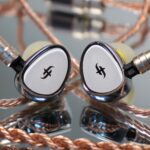




















Sivga M260 Review
Intro
Hello, this review and feature covers the latest from the audio brand Sivga Audio named the Sivga M260 ($43). From what I can tell at this early hour (I was just made aware I’d be receiving the M260) the M260 looks to be an upgrade to its older sibling the M300 (in some regards). Or maybe a side grade? Time will tell, when it actually arrives. For now, I can only speculate. However, there is a lot I can glean from some market material. For one, obviously these are flat head earbuds. Two, it actually has a detachable cable (HUGE!). Three, all I see everywhere is that the M260 is supposed to look like retro earbuds. People are calling them “retro inspired”. Now, I don’t know about that. I mean, all flathead earbuds are retro in my opinion. At any rate, I’m not gonna lie, they do have that vibe. I’ll go with retro I suppose. Four, this set is gorgeous. At least by the pictures. Five, I see prices ranging from $39 to $43, which is silly if this is a detachable cable, all-alloy set, metal grille, nice driver (on paper). I could keep going but I’ll stop boring you. I’m actually just kind of pumped to get my hands on this set and hear them for myself.
Table Of Content
- Intro
- Sivga
- 2016
- The M260 Arrives
- Non-Affiliated Purchasing Links
- Packaging / Accessories
- Unboxing
- Foam Earpads
- Carrying Case
- Cable
- Build / Aesthetic / Internals / Fit
- Build Quality
- Aesthetic / Design
- Internals
- Fit /Comfort
- Drivability / Pairings
- Sensitivity
- Added Output Power & Better Sources
- Source Pairing
- Sound Impressions
- No Hype, Just Joy
- What’s It Sound Like?
- Musicality-First?
- Technical Stuff
- Bass Region
- Sub-Bass
- Mid-Bass
- Downsides to the Bass Region
- Midrange
- Subtle Gripe
- Lower-Midrange
- Upper-Midrange
- Downsides to the Midrange
- Treble Region
- Technical Stuff
- Downsides to the Treble Region
- Technicalities
- Soundstage
- Separation / Imaging
- Detail Retrieval
- Comparisons
- Sivga M300 ($65)
- Non-Sound Stuff
- Sound Differences
- Final Thoughts on This Comparison
- Genres
- Genres Which Work
- Not So Great Genres
- Last Words on the Sivga M260
- The Why…
- That Sound!
- Conclusion
- Other perspectives
- M260 Pros
- M260 Cons
Sivga
This is the part where I brag on the brand if they are worth bragging on and in my humble opinion Sivga is well worth some digital praise and an internet fist bump. I say that because; take a moment and peruse their lineup folks. Everything they make is gorgeous. Their designs alone have pushed their name to the forefront of the hobby. Truthfully, I easily put Sivga in the top three brands in straight up build quality and design. Whoever Sivga is using to design their products should get a freaking raise. Now, I haven’t tried any of their over ear cans (unfortunately but soon I hope). Still, have any of you seen the Sivga M300?! It costs a mere $58 and is absolutely stunning! I reviewed the M300 not long ago (sometime last year) and the wood housing contrasted by golden accents might just be one of the best-looking earbuds on the market, period. They also sound very-very good. The Sivga Que UTG is another gorgeous, simple, and classy designed earbud. How about the Sivga Nightingale Pro? One of my favorite planar earphones on the market with an all-rounder skewed sound but it also has that beautiful design. At any rate, the point is that Sivga can really make nice looking products and are becoming very well known for how nice those builds are. Also, of course, everything I’ve tested from Sivga is very well tuned to whatever target Sivga was going for from each respective model.
2016
Sivga actually got their start in Dongguan, China all the way back in 2016 which means that Sivga has some staying power. They aren’t the new kids in the block anymore, but Sivga is still producing products which are relevant, fresh, and they move the needle of the collective consciousness of the audio community. It is also said that Sivga is the sister brand of Sendy Audio as well which says a lot. It speaks volumes of their unwillingness to craft anything subpar. No doubt I am watching Sivga closely and I am personally very impressed. Oh, here’s that fist bump… 👊!
The M260 Arrives
That didn’t take too long. Much shorter than I typically have to wait. That said, I was on vacation when they got to my home and so I had to wait longer to finally get them in my possession. Anyway, the M260 arrived in a sleek little box. I got to listening right away. Of course, I chose to swap cables to a 4.4 balanced connection right away. Thankfully Sivga decided to make this a removable cable design. The M300 unfortunately did not have that luxury, still an awesome earbud. Honestly, so far, I have nothing negative to say about the M260. The fit seems amazing for my ears. I like going over the ear with earbuds as it just works better for me and the M260 is perfect for that. However, even hanging them from my ears has a nice fit. With all that said, I am going to give this set some run-in for about four days. After which I am going to test this set out for at least 3 weeks, maybe four before I give my full thoughts. Sets like this I like to make sure I have plenty of time to really understand them before I speak. So, without further ado, the Sivga M260…
Non-Affiliated Purchasing Links:
Gear used for testing
–IBasso DX240 with Amp8 MK2
Packaging / Accessories
Unboxing
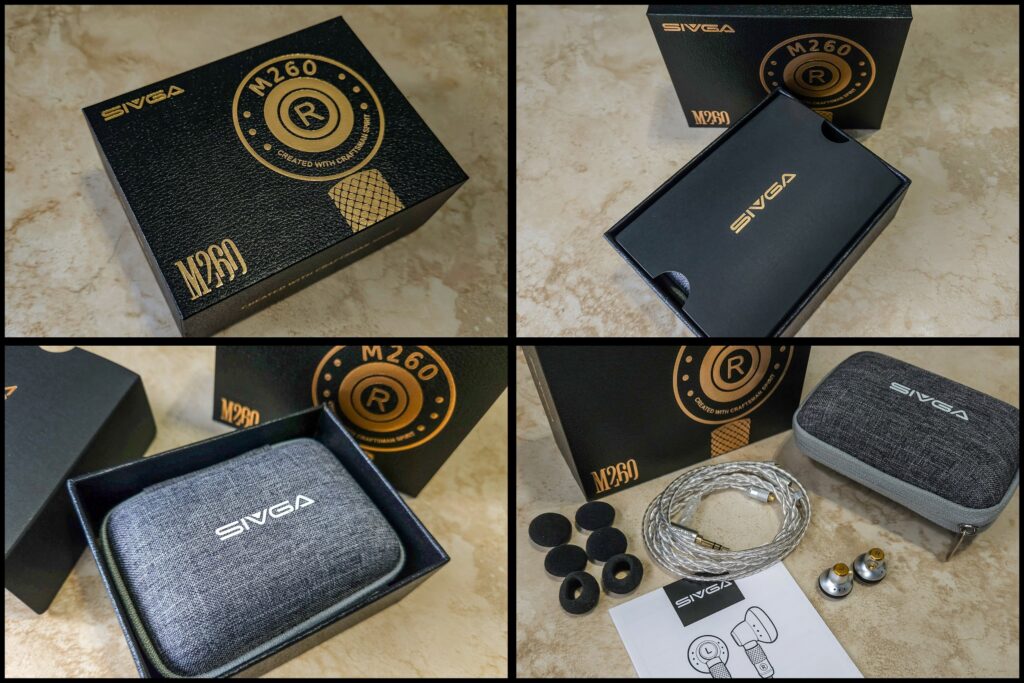
As I said, the Sivga M260 arrived at my home and sat there for some time before I was able to actually hear them. Which is agonizing for me. Nevertheless, when I finally was able to take a peek at the box and contents I was happy with what arrived. A nicely made small black box (4 ¾” x 3 ¾” x 1 ¾”) with a classy, designed cover featuring golden lettered wording. Nothing too ornate or gaudy. All class all the time. Everything with this brand is either handsome or elegant. Anyways, take off the box top and you’ll see a sleeve internally which covers the carrying case. Take out the sleeve, take out the case and when you open it up, you’ll see the cable and foam ear pads. That’s about it. Sivga gave us the essentials and nothing more. Shoot, for $38-$43 just having a nice carrying case is quite nice. Also, the cable is nice too. So, to put a book end on this section, Sivga made a nice budget packaging.
Foam Earpads
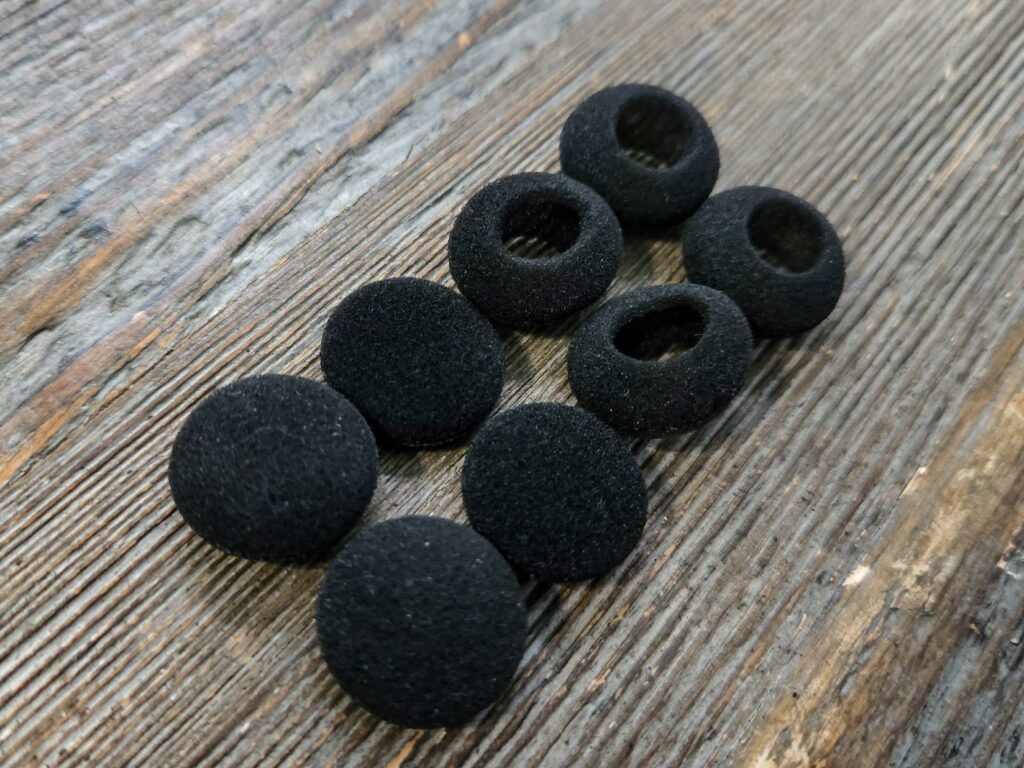
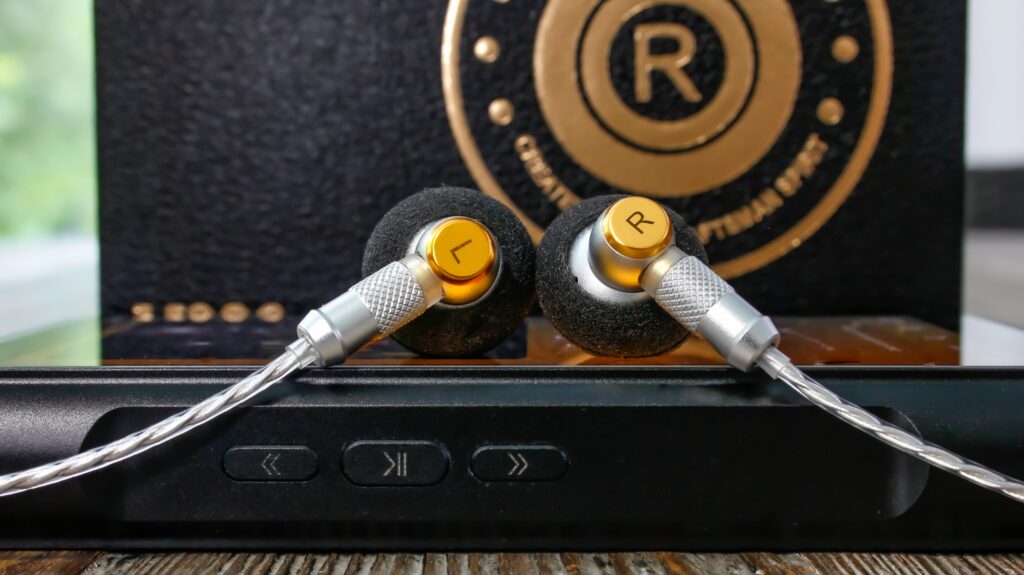
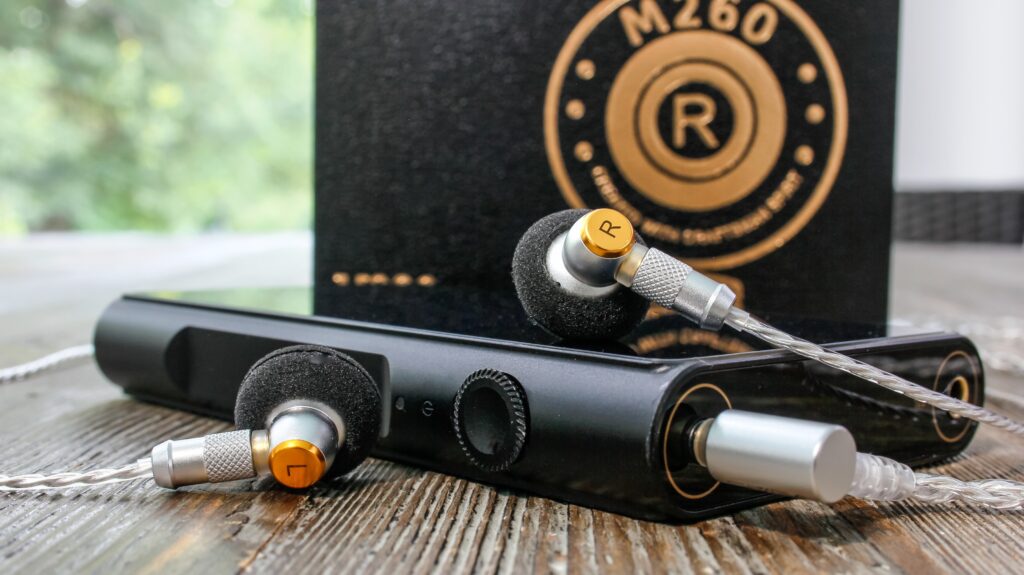
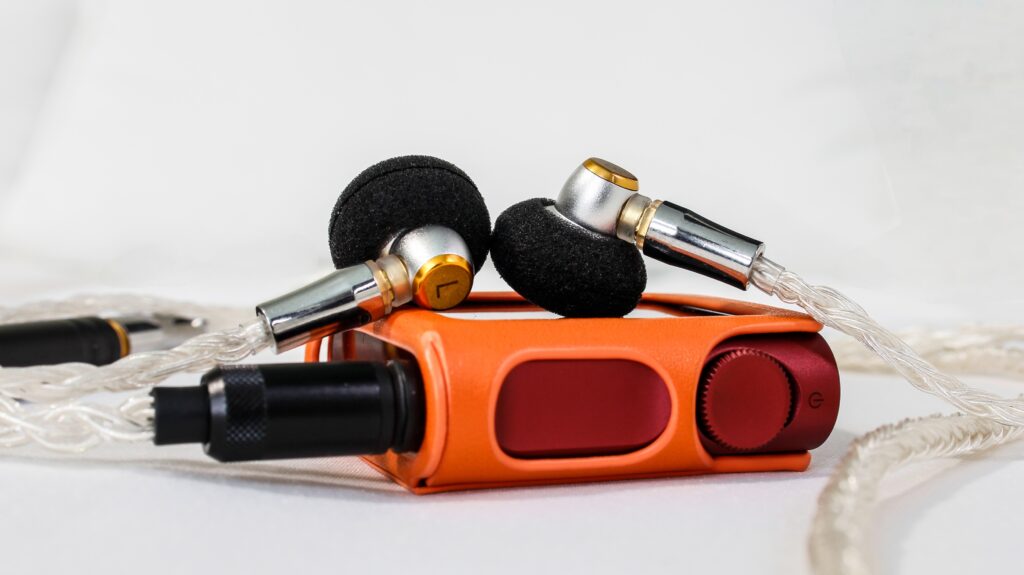
As one would expect from a set of flat head earbuds, Sivga provides a total of four sets of earpad foams. That is, two sets of full coverage foams which are typical to most sets in the range. Not much to say about it actually. They also added in two sets of donut foam covers which basically have an open center. The donut foams usually help add some lift to the upper mid and treble areas, maybe add a tad of air, and help in overall clarity. Full coverage is usually more comfortable (at times) and usually add a touch more friction to keep the earbuds in place. For me personally, with the M260 I enjoy the full coverage foams the best. While the donut foams are definitely the crispier and cleaner way of listening to the M260, I enjoy having that touch of edge sanded down in the upper regions making a very nicely tuned set.
Carrying Case
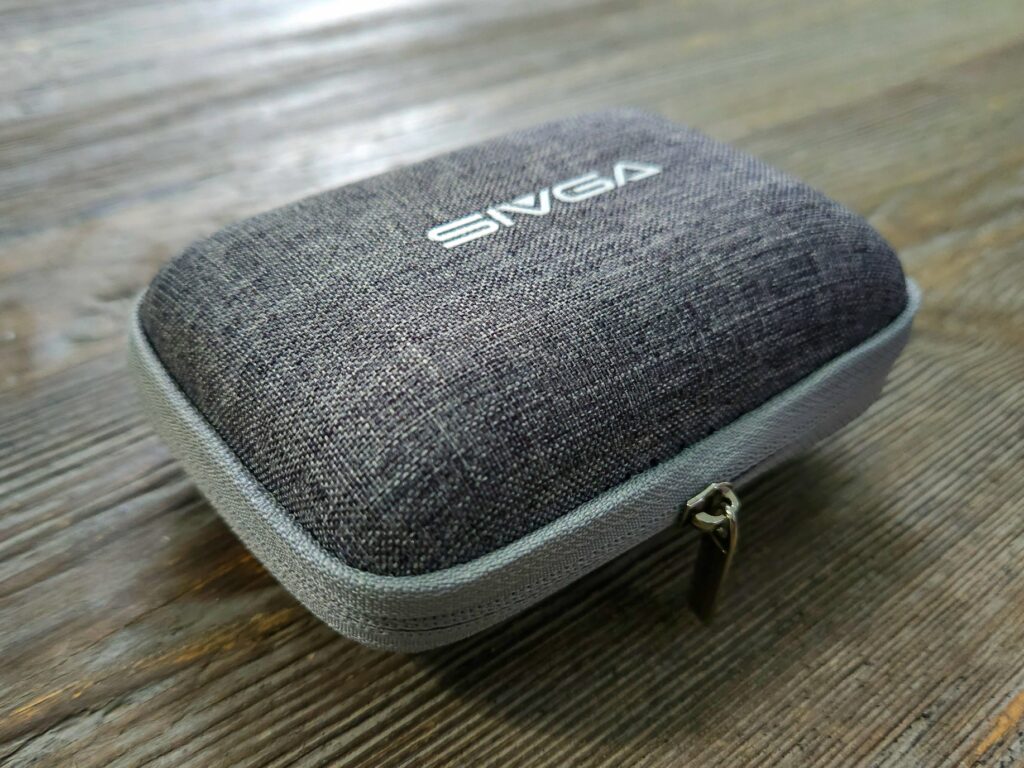
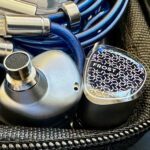
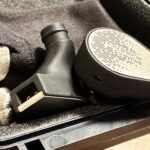
This one perplexed me. There was no way I was expecting Sivga to add a carrying case to the deal. Not at this price. Especially when you figure in the cost of making this set, all alloy, gorgeous, nice cable too. No way would expect Sivga to also add in a case. Well, to my surprise they did add a case, and it’s not just some cheap throw away case either. It’s actually really nice. Something I’d expect with a set costing at least twice the price. It’s one of those Oxford fabric zipper cases which do a very good job of protecting my gear. The fabric is a gray colored cladding which looks solid. Certainly not cheap. I have plenty of room inside of the case too as it is fairly large (4 ¼” x 3 ¼” x 1 ½”) and able to easily fit the earbuds, the cable, all of the earpads, and also a dongle dac. I have been throwing the case into my bookbag for work and haven’t had any issues. Just a nice addition.
Cable
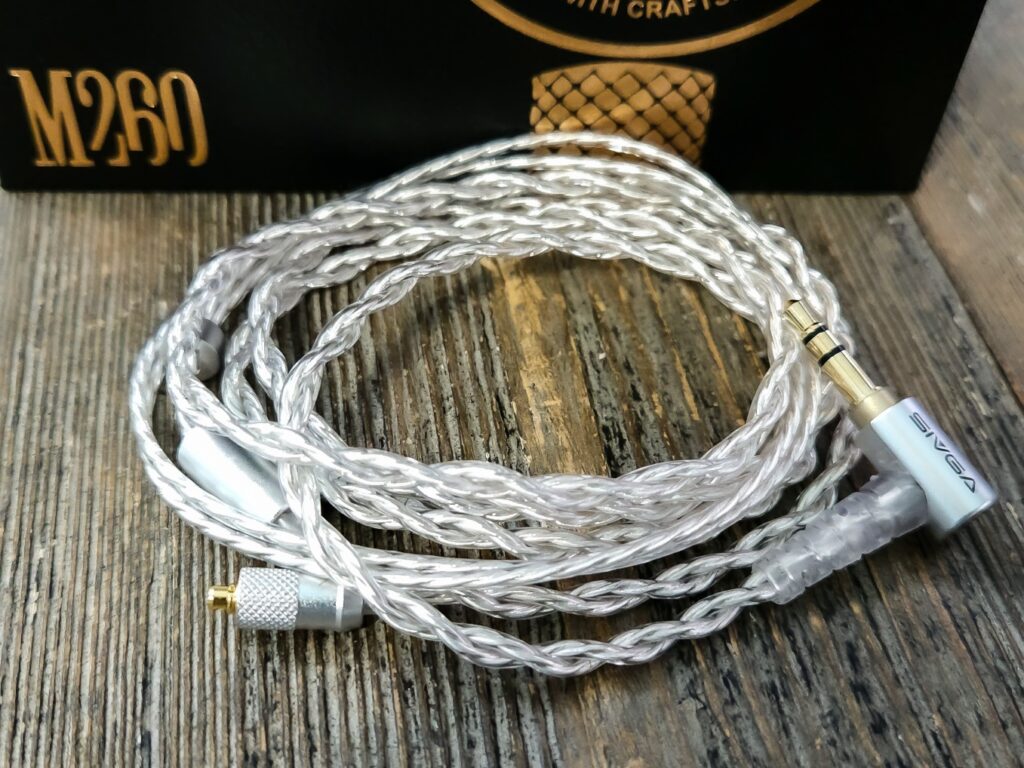
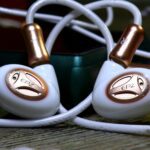
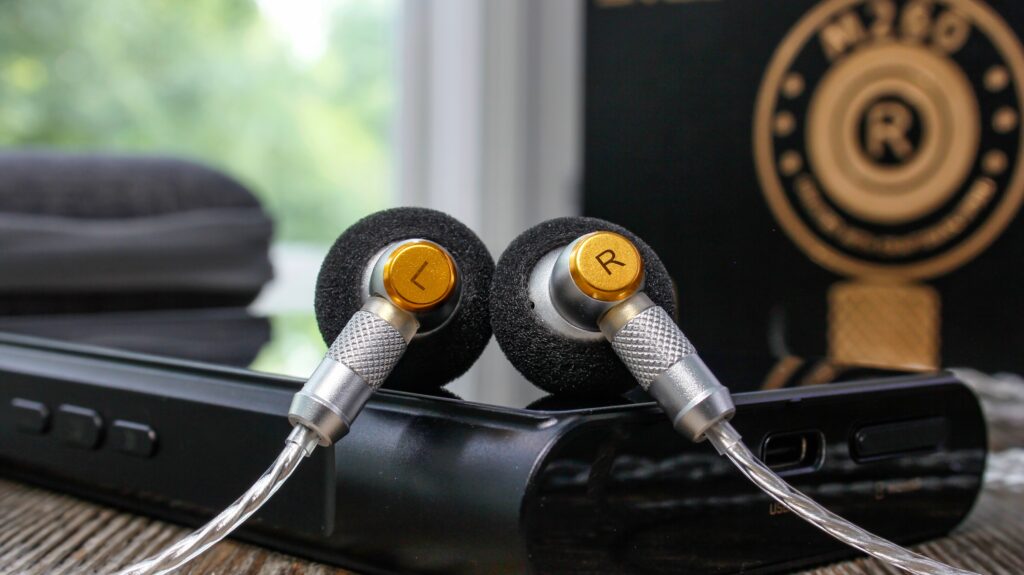
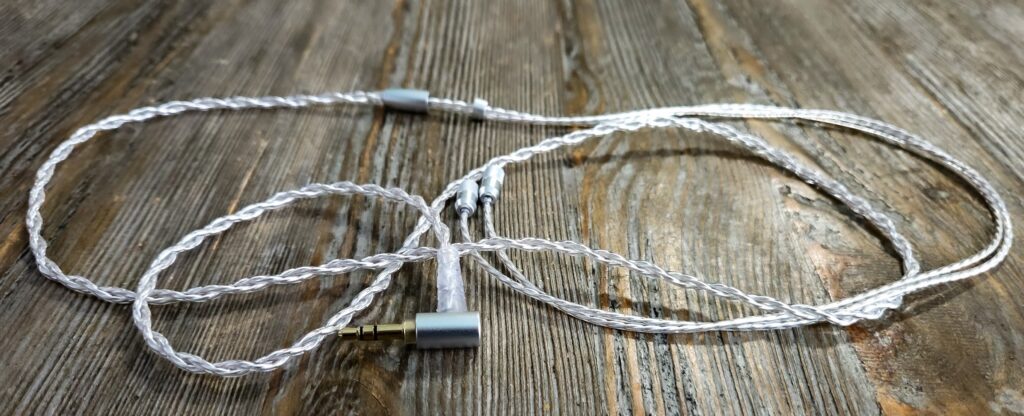
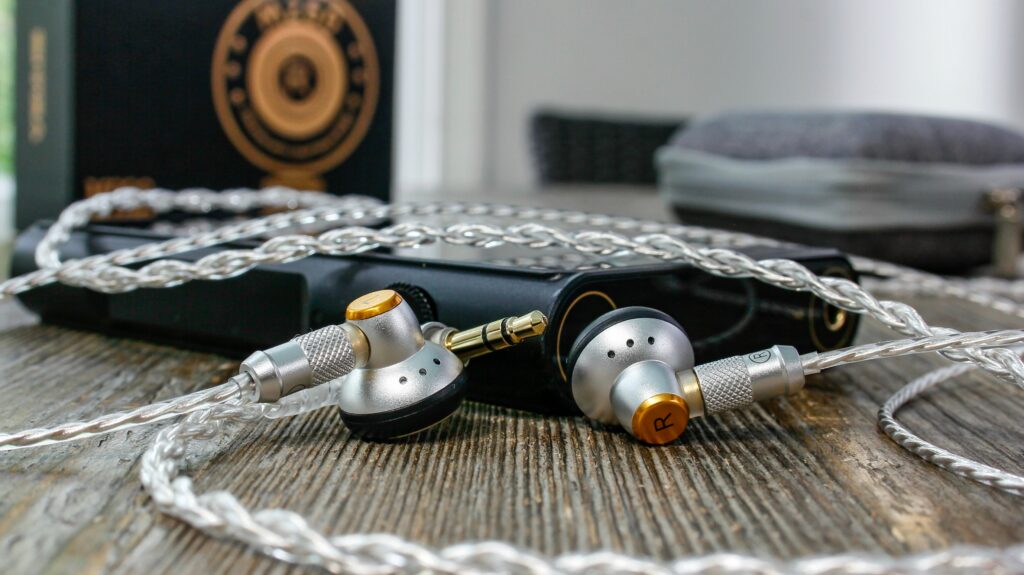
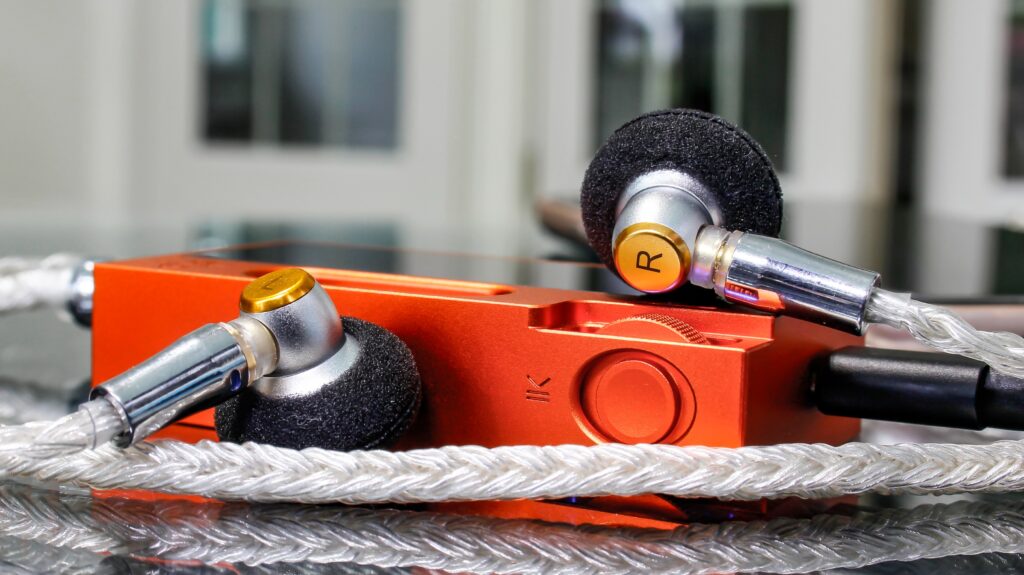
Now, the cable provided is not bad at all for a budget set. Not bad by a long shot. To be quite honest, I find it extremely rare that a budget flathead earbud even comes with a detachable cable. It is so rare. I also have zero idea why it’s so rare. Seriously, we have iems down to $5 with detachable cables and we just can’t seem to figure it out with flathead earbuds for cheap? Well, Sivga figured it out and I am very-very happy for that. In fact, it is one of its stronger “Pros” in my opinion. Needless to say, I used a 3rd party 4.4 balanced cable for most critical listening, but that’s not to say that the included cable isn’t a very nice wire for the cost. It’s actually a nice-looking twisted cable, white with a glossy sheath, aluminum fittings (Y-Split, Connectors, 3.5 jack housing etc.). It looks very solid with the earbuds too as it fits the color scheme perfectly. Before I go further, you can purchase this set with either a 3.5 single ended connection or a USB-C DSP connection. I opted for the 3.5. So, to be exact the cable is listed at 1.2 M in length. I have the 3.5 se right angle jack along with mmcx connectors. The material used is 4N silver plated oxygen-free-copper. Now, the USB-C Cable utilizes a Realtek ALC5686 dac supporting up to 32-bit/384kHz audio. So, maybe I should have gone with the USB-C Cable, but I’m pretty happy with the included 3.5 as well. Like I said, I did swap cables to a white KBear ST24 Plus 4.4 balanced cable and I have really enjoyed the pairing. I do feel that the 4.4 connection brings out the best in this set. Though I have many sources with 3.5 connection which also sounds very nice with the included cable too.
Build / Aesthetic / Internals / Fit
Build Quality
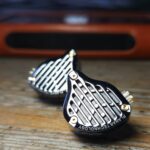
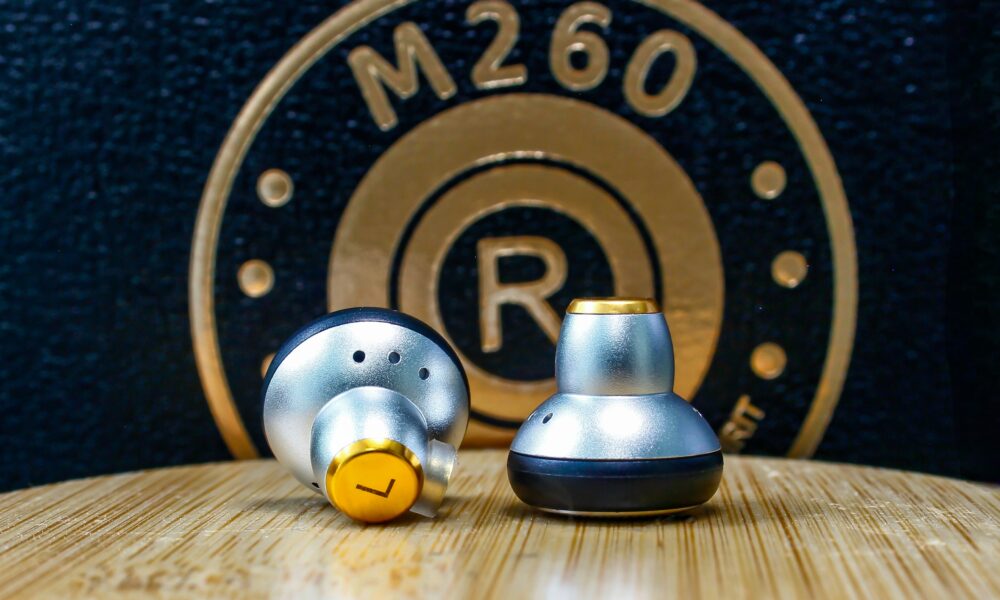
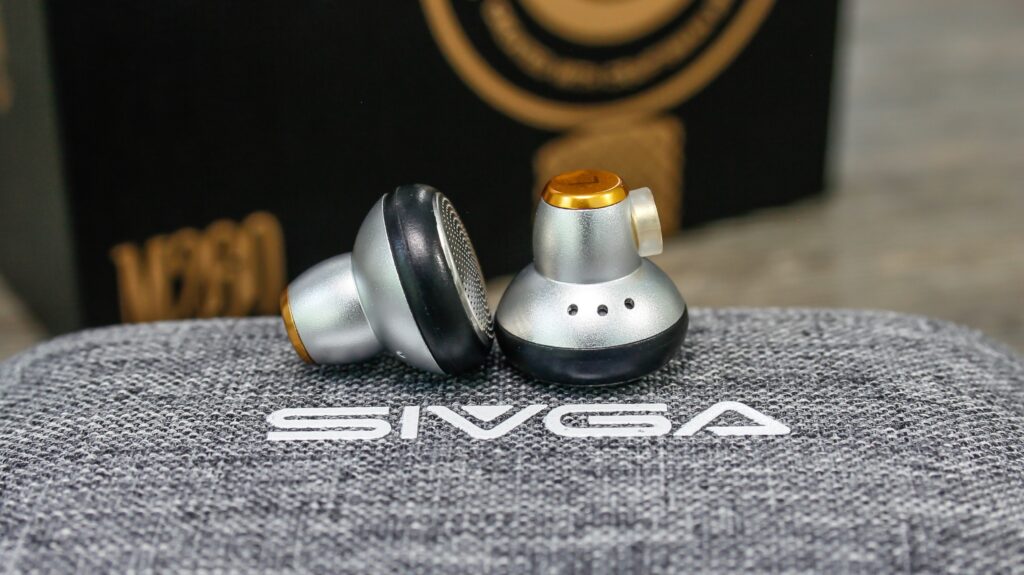
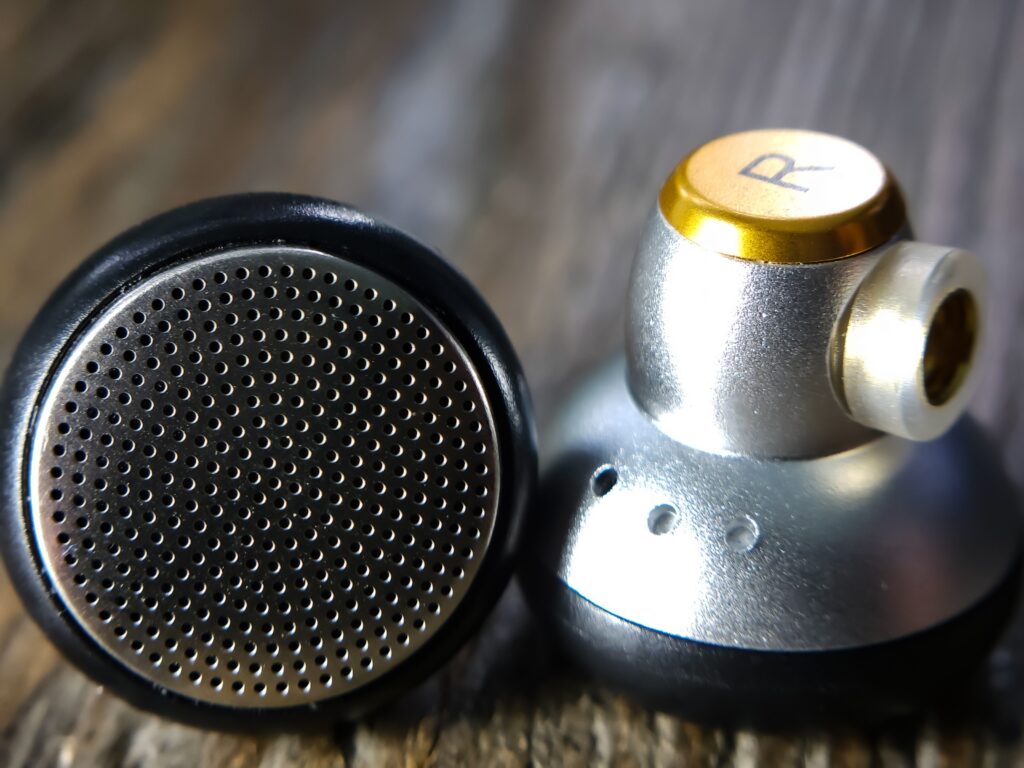
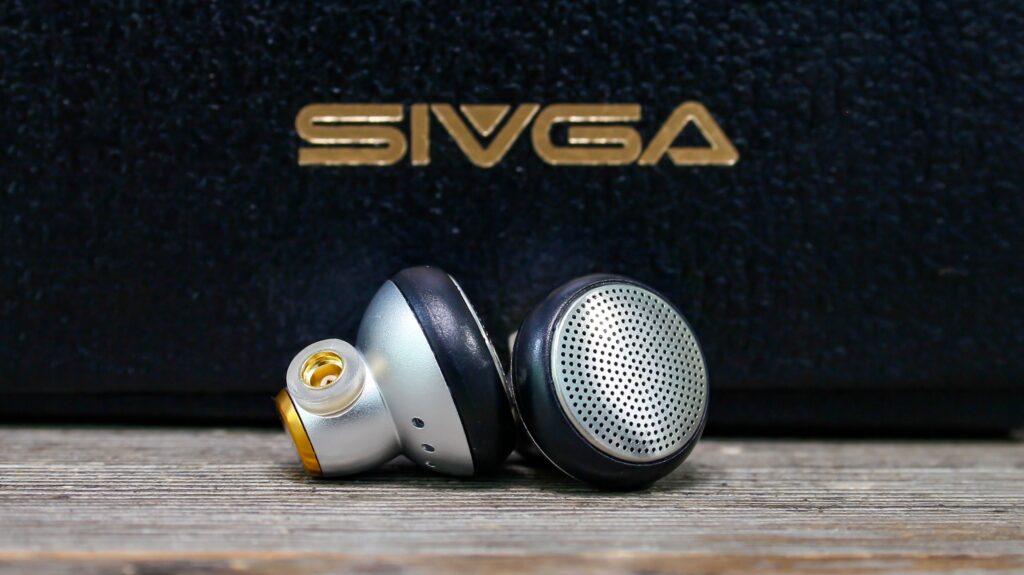
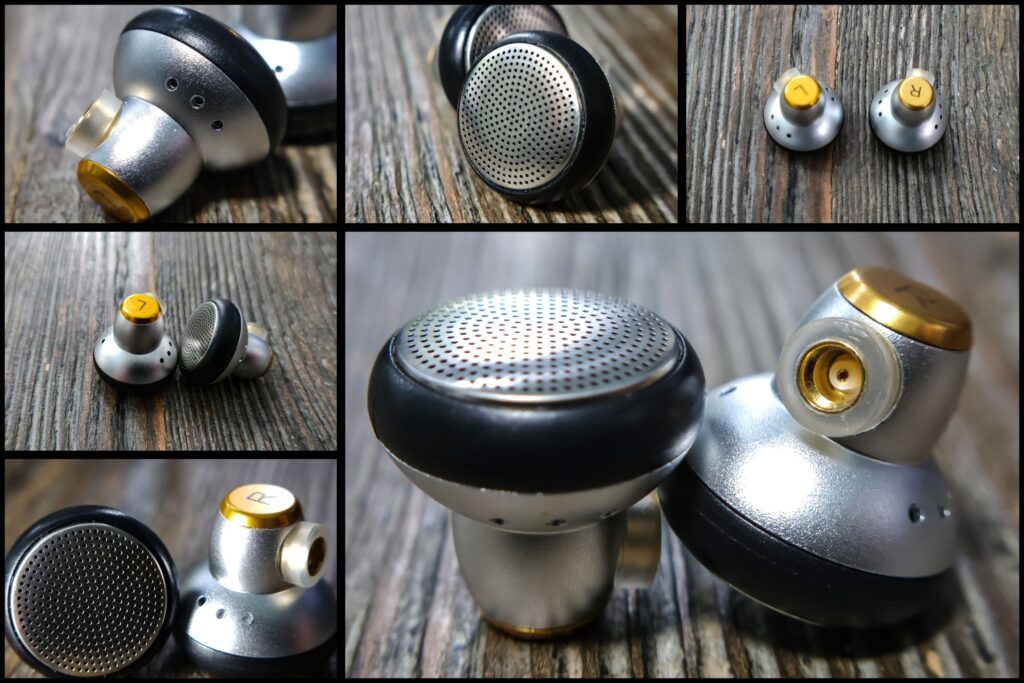
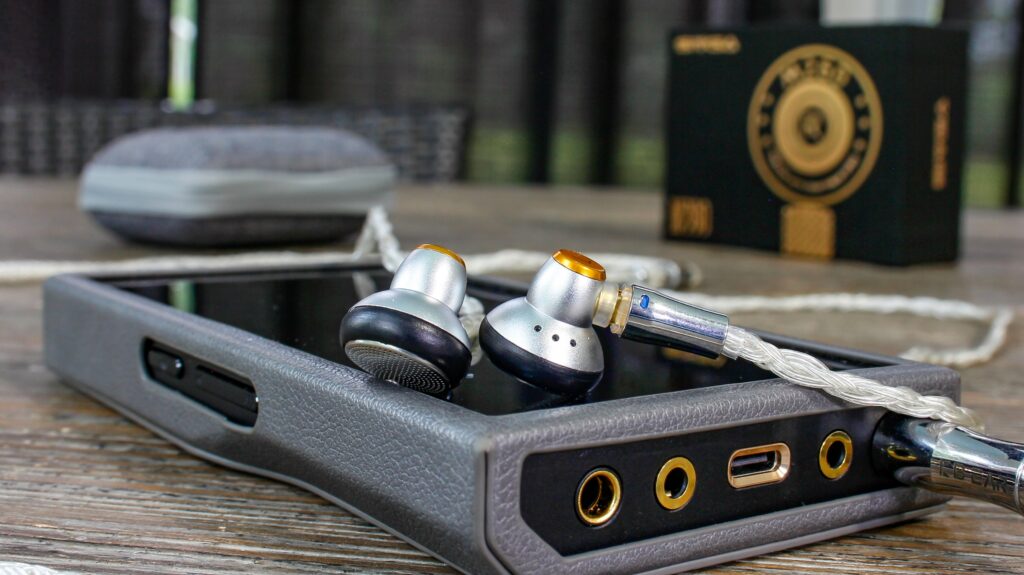
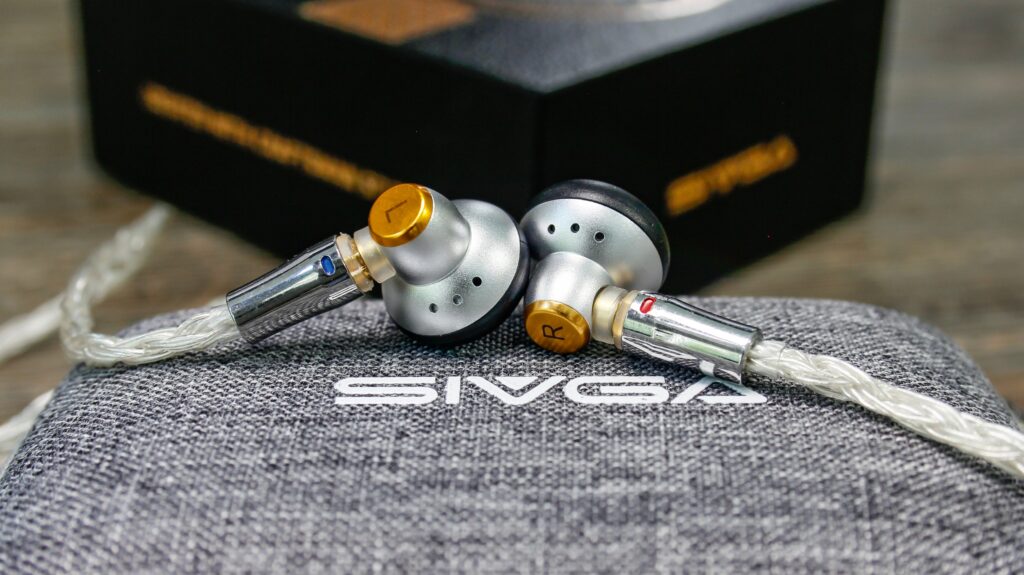
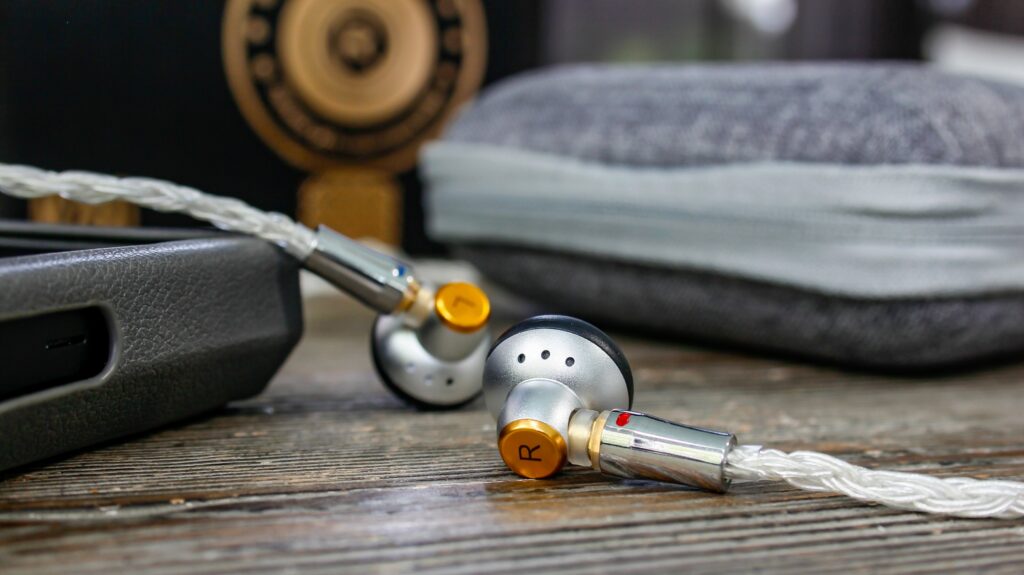
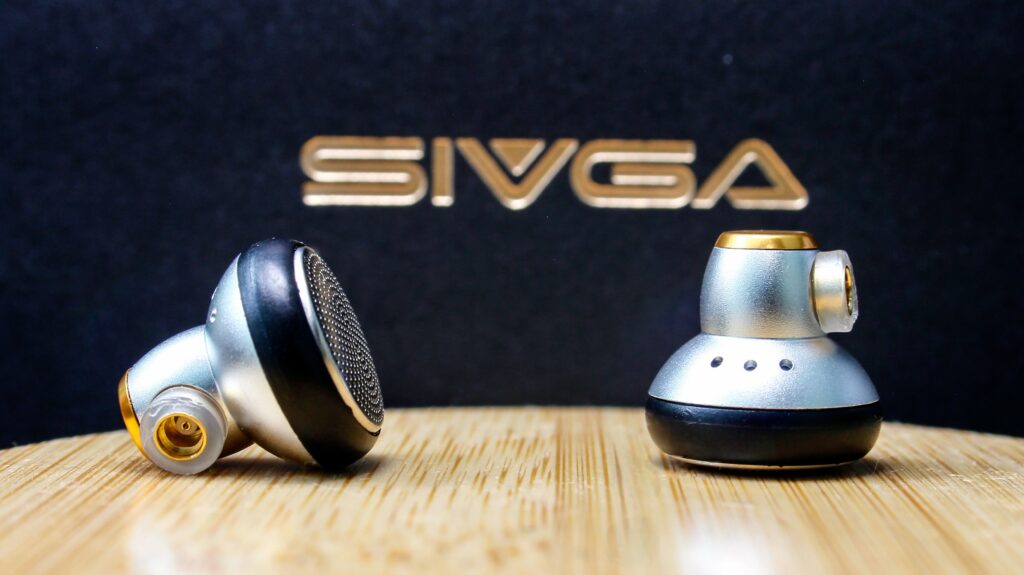
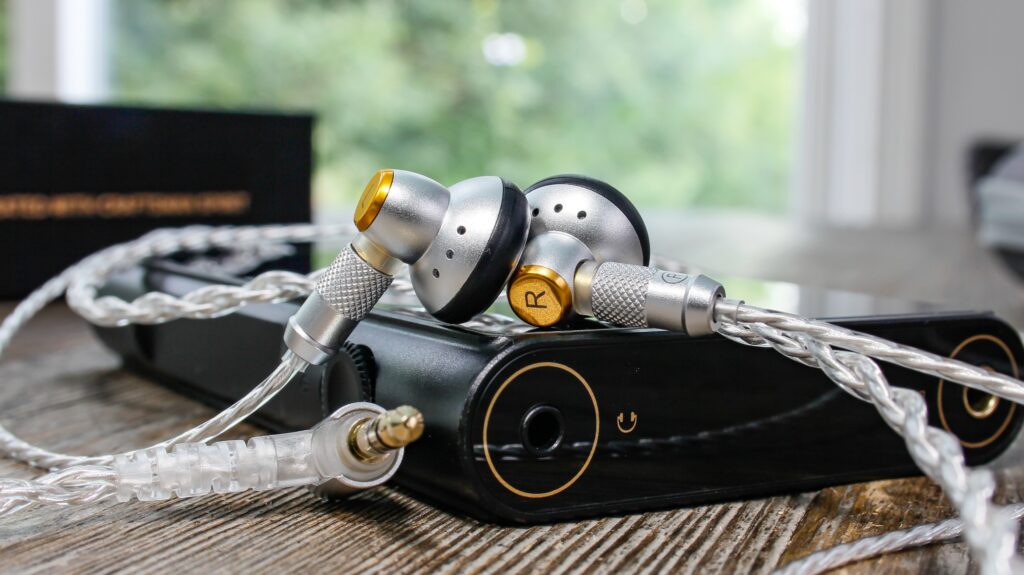
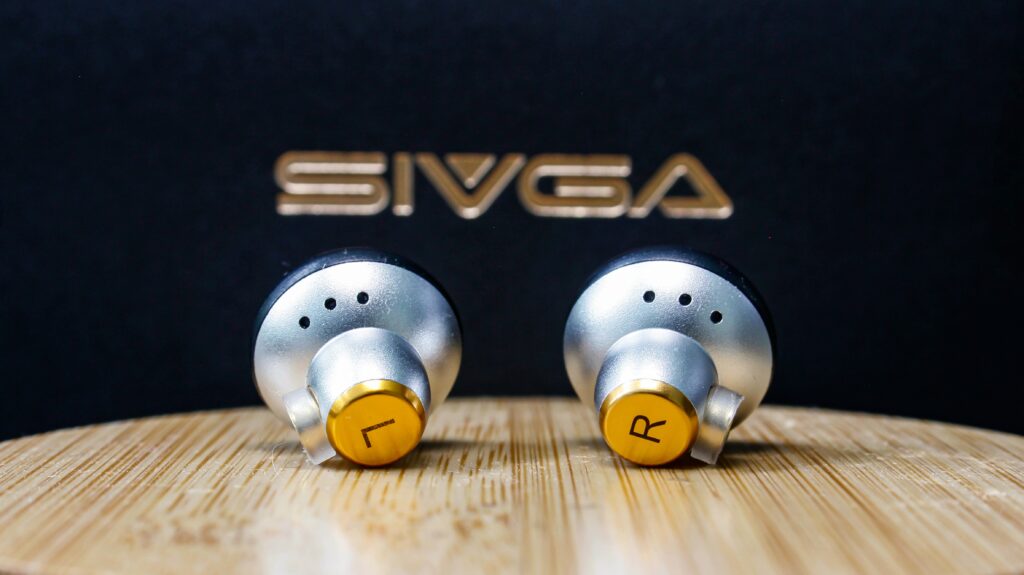
I am really impressed. I could end there but… you know me. So, the M260 is built far better than the usual $40 and under flathead earbud. I mean, much better than most. The M260 is pretty lightweight but also very sturdy, durable, and not flimsy in the slightest. Made entirely out of lightweight aircraft grade aluminum with a CNC machined chassis and a gorgeous open metal grill design. The body of the M260 is very small. This set is easily one of the smaller shells that I’ve used for an earbud. Coincidentally, the size is also what makes this set so comfortable for me and able to use over the ear rather than hanging. Anyway, I don’t have an actual weight, but there’s no way this set is over 8 grams. It’s very lightweight. Definitely I can see why others have called this a retro style design as it is a semi-open back design with plenty of venting from the exposed grill and the vent holes aligning on the back side of the shells. Overall, I’d say that the build quality is another huge “Pro” about this set. A fine job on this one.
Aesthetic / Design
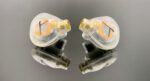
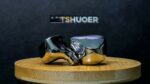
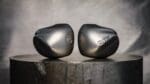
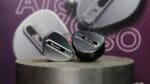
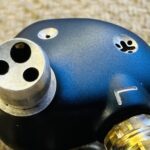
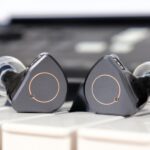
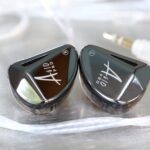
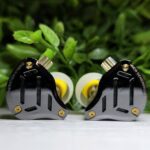
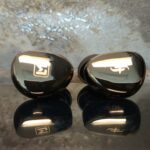
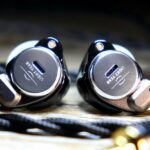
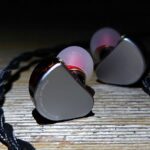
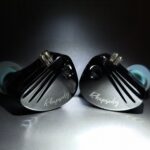
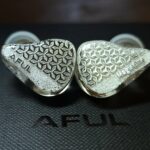
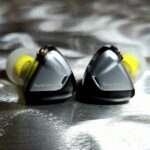
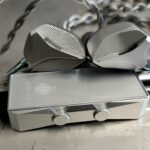
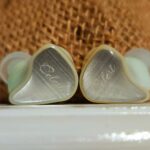
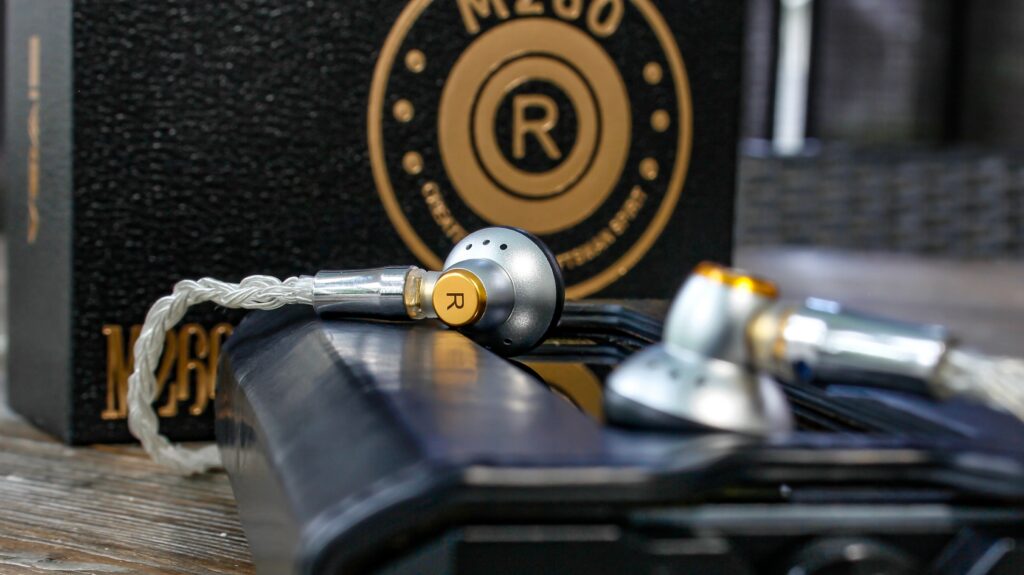
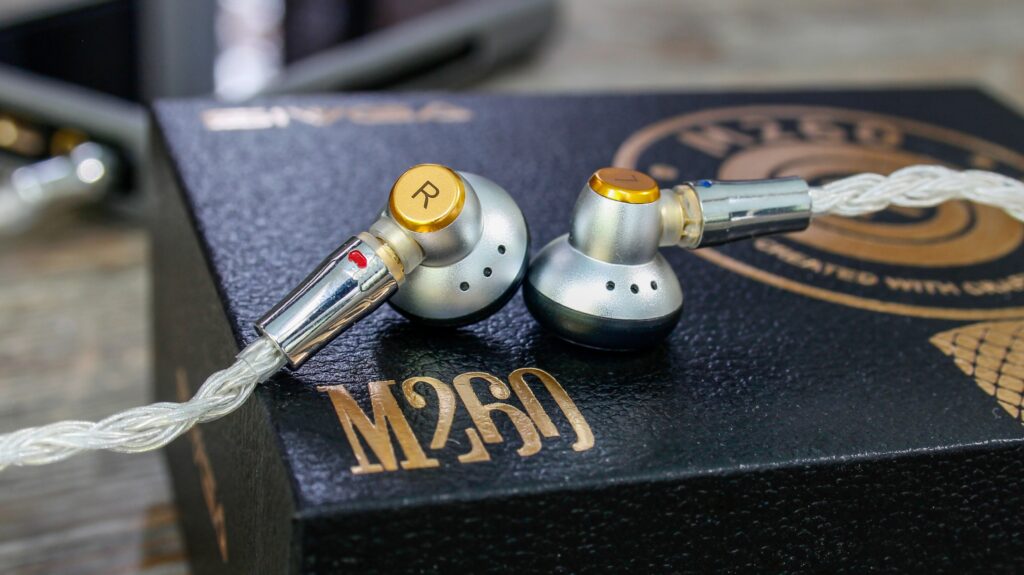
One of my favorite aspects of this set is the very unique and elegant design language that Sivga used in the M260. It’s a very nice-looking set of earbuds. It has a matte silver/gray aluminum housing with a back plate made of gold colored aluminum which marks an “L” for left or an “R” for right. The M260 has a black bordered metal grill which serves as a nice contrast. Just like Sivga’s other products the M260 falls right into line and is absolutely gorgeous for such a low cost. Easily one of the better-looking earbuds under $40.
Internals
As far as the internal components of the Sivga M260, they decided to go with a large sized 14.2 mm dynamic driver. It’s actually a copper-ring composite bio-cellulose diaphragm driver. I was surprised to see the bio-based driver rather than your typical PET style diaphragm, which says a lot about Sivga. It isn’t always about the driver and it’s always about how they are tuned, but man does it help to have a good and quality driver in the first place and the M260 has just that. Sivga lists a CCAW (copper clad aluminum wire) voice coil helping with response efficiency over your typical fully copper coil. Sivga also made the wise decision to use N50 neodymium magnets which is supposed to give this set that firm and precise driver control and sensitivity too. What it comes down to is Sivga gave themselves every opportunity to craft a very fine set of earbuds. If you ask me… they did just that.
Fit /Comfort
As I’ve already said a few times in this review, the Sivga M260 is easily one of the best fitting and more comfortable flathead style earbuds that I’ve used under $100. The smaller stature really helps this set for me. Like I told you, I always try to go over the ear for my cable which takes all of the weight away and helps to secure the earbuds. However, most earbuds have a longer stem which tends to look ridiculous over the ear. Usually, I will resort to simply letting them hang. Not with the M260. They are so small with no real stem at all which makes the fit absolutely 100% perfect. I am beyond happy with the fitment. However, even when hanging from the ear (as you are supposed to do) this set is very comfortable for me. When hanging they are a hair less secure in my ears but still sit very well. Anyway, this set is one of the easiest earbuds I’ve ever used for long listening sessions. Very comfortable. I have no clue how they’ll fit you, but I am willing to bet the M260 will fit you like a glove too.
Drivability / Pairings
Sensitivity
Sivga saw to it to make sure that the Sivga M260 was able to be played adequately and with plenty of volume and dynamic presence no matter the source you are using. In fact, the M260 is rated with an impedance of only 16 ohms as well as a very sensitive 118 db’s. Friends, this set of earbuds is very versatile. I’m telling you, I have used the M260 with a plethora of sources, way more than I listed at the outset of this review. I didn’t list the two different Android smartphones with simple 3.5 se jacks, or the weak no name Conexant dongle dacs (20-30 mW of output), the Roseselsa RZ200 (pretty darn weak), my iPad, and even my Android tablet as well. Side note: I love testing gear on super weak sources. Hearing a weak source play awesomely with different review transducers (earphones, earbuds, headphones) is always fun. Anyways, I actually really enjoyed the M260 with a few of these weaker sources using its included cable. In fact, I took the M260 out for an entire day with the Roseselsa RZ200. Honestly, it’s a really awesome pairing for such a low cost. If I was stuck on a deserted island with just the M260, a smartphone, and the RZ200, I’d be happy. Well, until the battery dies. But I digress, the M260 was made for those who can’t always get the greatest and most powerful dongle dac, dap, or dac/amp which is a cool thing. Versatility is a definite “Pro”.
Added Output Power & Better Sources
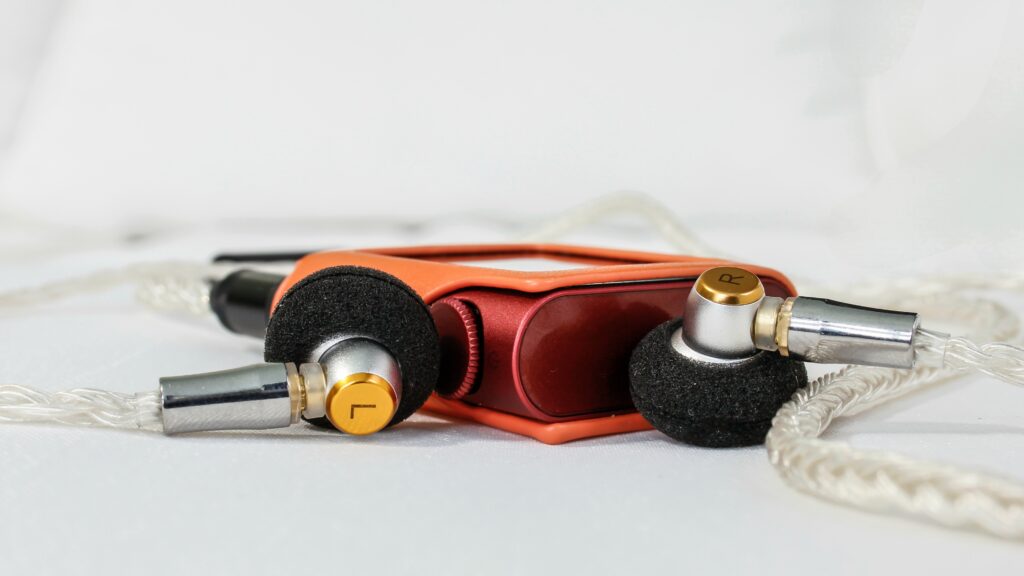
Now that I’ve gushed on the M260’s ability to play well off of weaker and less expensive sources, I also want to brag about the M260 off of more powerful sources with better internal components. It’s not that the M260 “needs” power to “drive” them. It’s not about power or volume. Also, It’s about clarity and refinement within the greater headroom. Clean power can do that. Especially with the M260. I find that a decent dongle dac can push these drivers very well to where you can hear that refinement and control even at higher volumes. The M260 doesn’t break apart, add grain, fuzz, distortion, or any other negative side effect that more power can do. Also, I’m talking about dongle dacs here. Not some million-watt desktop setup. Just better sources will do wonders. For instance, just using the Shanling UA6 (361 max mW) opens up the sound field even further. I get better dimensionality, cleaner separation of elements within the stage, tighter note control, better attack through sustain stop & go dynamic thrust, the bass sounds punchier with more of a haptic force on attack, stuff like that. Furthermore, I can hear subtle improvements as I use better and more competent sources. So, it isn’t about “power” per say. Yes, power helps to an extent. This is a very sensitive set and so power in and of itself is not going to drastically change how you hear the M260. It’s using better, cleaner, and more capable sources along with extra power which seems to bring out the best in this set.
Source Pairing
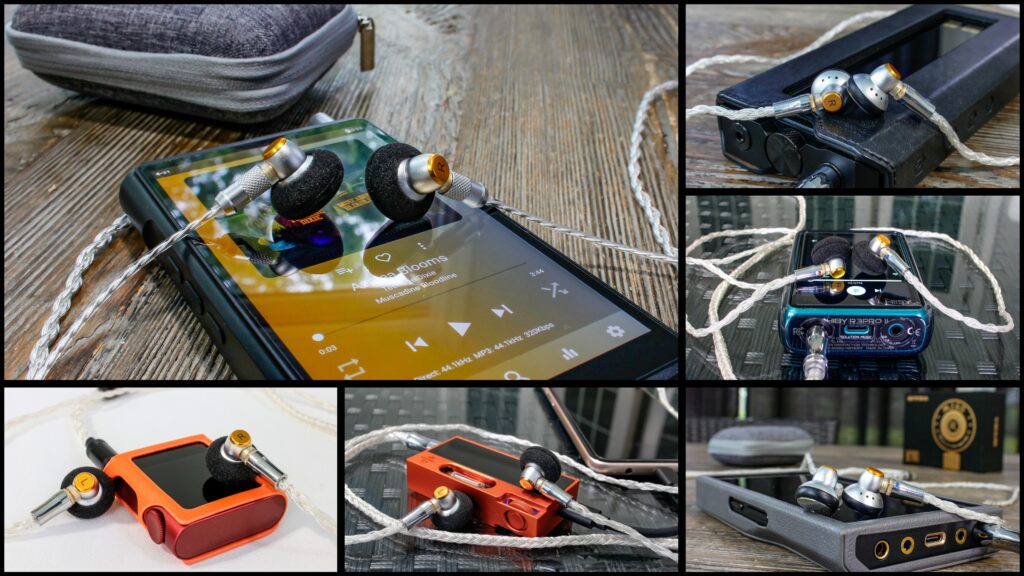
When it comes to tonal pairing of the M260 with different source tonalities I’d say that a fairly wide range of sources work pretty well. Some subjectively better than others and some subjectively worse. First off, the M260 has a warm/neutral to neutral tonal color (perhaps closer to neutral), it’s smooth, very clean, very airy, and it isn’t overly analytical. Certainly, more musical at heart with just enough edge. To my ears there is some brilliance, some edge to the sound, with just enough low-end warmth for balance. Now, if it were up to me, perfect world, I’d say that a warm/neutral dongle dac, dap, etc. with “at least” adequate output (at least 100 mW, which is every dongle dac above $35) works the best. Again, power is the least of our concerns with this set. It is much more about cleanliness, low output noise, smooth top end, and straight up source quality. However, when “pairing” tonalities there are a few I’d stray away from. For me it’s easy; I won’t use anything bright, anything super incisive and ultra crispy, nothing which exasperates the already edgy and sprightly top end. I like something which preserves the clean musical nature of this tuning. Something very clean, resolute, with a black background, warm/neutral to neutral, and smoother in demeanor. Having said that, almost all of my sources tended to at least sound good. My absolute favorites are the Hiby R3 Pro II, Shanling M1 Plus, Shanling M0 Pura, Shanling UA7, Hiby R6 Pro II 2025, Fiio Q15, and of course my beloved Shanling M6 Ultra (never selling it), just to give you an idea. Basically, a whole range of sources work fine and there’s a great chance that whatever you have will sound perfect.
Sound Impressions
*Note: Before I dive deep into the sound, I have a few caveats and notes that I should relay to you to set some review parameters. First off, I actually burned-in the M260 for a substantial amount of time, around five full days. Truth be told, I was in the middle of a few other reviews and kind of forgot about it. Also, truth be told, I don’t think the M260 needed any of it. It sounded good right out of the box and still sounds good. I used the full coverage foam ear covers for all critical listening. Also, I “mostly” used a 4.4 balanced cable (KBear ST24) for all listening as well. All music in my playlists for critical listening is flac or better files which are stored on my devices (some MP3). For listening I literally use songs from every genre.
No Hype, Just Joy
I’m just going to say it; the M260 offers a fairly high sound value for the cost. I say that and I typically don’t even really enjoy flathead earbuds as much. I’m an in-ear guy who likes to occasionally switch things up and listen to flathead… every now and again. Never would I have thought that I’d hear a $38 flathead earbud that I’d enjoy as much as slightly more expensive flatheads. I’m not saying the M260 is going to alter the course of your life and I’m not saying that it is the greatest value in audio. I am saying that they present solid price-to-performance though, and if you ask me, the M260 will be an adored set of earbuds by many who take the chance on them. No hype here folks, just genuine joy. Okay, now that I’ve gotten that out of the way, let’s begin to break down the sound, shall we?
What’s It Sound Like?
The Sivga M260 is all about crisp clarity, resounding resolution, and a smooth balance of the spectrum. The sound hits my ears in a very projected and forward way. Airy yet intimate, rich in intelligibility, musicality, and very high in resolution. In fact, the first thing which comes to mind when describing the M260 are the words “clarity-forward”. All sounds project towards me in an impressively cohesive manner. So often budget earbuds can sound disjointed or somehow not as uniform as the M260. It definitely isn’t purely lush and surely not creamy, but also not purely clinical or dry either. Again, it’s balanced, right in the middle, with a slight lean towards the musical side. Nothing ever sounds too thin to me, though, nothing sounds rich either. However, each note has a well defined and natural body. I began calling sets tuned in this way “clarity-rich”. When each note is so tailored and clean-lined that each note almost sounds so nicely condensed, compact, and transient tight that they carry a clarity-rich density to them. The type of rich which doesn’t require warmth. There’s also a certain dynamic precision carried along by a smoother cadent flow which is actually very gratifying to hear. Again, flathead earbuds are not my favorite way to hear my music, although the M260 made listening very enjoyable, and even fun. I wouldn’t say that any one area of the mix presumes dominance over another but there is a slight tilt towards the upper mids to treble without sounding offensive, abrasive, or coarse.
Musicality-First?
With all of that said, I have a hard time calling the M260 a straight-up “musicality-first” tuned set. However, there’s no denying how musically fluid the sound can be. Really, to me every track has a high engagement factor. Traditionally a musicality-first set has some warmth which brings that rhythmic feel to the sound. Despite that, the M260 is far from warmly rendered, dark, or an ultra-lush sounding set. No doubt there is a tug of war between the clean-lined clarity and the smoother portrayal of my music, but it never loses that brilliant clarity coupled with a nice cadent flow. It isn’t the thicker and warmer note rendering which creates the smoothness (notes are naturally bodied), it’s the balanced cohesiveness which does that, along with no jagged peaks, no odd timbral moments, and there’s nothing acrid or grainy. Everything is legato through these earbuds for me. Which brings me to timbre. In my opinion, when these earbuds seat in the ears well the timbre comes across very close to natural, with some minor caveats. Especially with full coverage foams. I’d say the timbre certainly focuses on clarity and note articulation with just enough warmth to sound pleasant, providing a slight glaze across the brighter hues giving overall timbre a “natural-ish” quality and one which is very easy to get lost in. Very immersive and enthralling without being overly energetic. It’s a nice balancing act leaning nuanced, controlled, and polished over lush, earthy, & organic coloration.
Technical Stuff
I’d also say that the M260 has some nice technical abilities. Notwithstanding, I also wouldn’t refer to the M260 as “technical” in nature. This isn’t a tuning meant to spotlight or highlight micro-details as you don’t have the type of forced brilliance to overtly illuminate the tiny subtleties. Yet micro-details are sort-of etched-out due to the high clarity-forward sound, black background, and the fact that no area of the mix masks, veils, or blurs any other area. Again, it’s balanced in its emphasis. Of course, these earbuds typically also will have a more open sound and so by virtue of the style of earphones that they are, the sound has good note separation, openness, and good sound field space. I’m actually having a hard time explaining them (for some reason). Hence you are seeing me repeat myself a few times over. Another bonus for the technical stuff is that transients aren’t slow, they don’t lag, and notes never sound cramped. All sounds, especially midrange notes are distinct and never collapse into a washed-out mess of sound overlap. I’ll speak on this more later, but imaging doesn’t exactly stand out, it’s closer to average for me, though layering of sounds is quite good for such a low-cost earbud. Lastly, the soundstage is actually quite spacious. It’s pretty wide, tall, and it has good depth too. So, while I wouldn’t call the M260 an analytical leaning set meant for technical listening, I would say that it is very solid for a set with a smoother cadence and fantastic tunefulness.
Bass Region
The low-end of the Sivga M260 is what one should expect from a set of earbuds; basically, it isn’t some bass canon. We should all expect this which is a very typical knock against flathead style earphones. Usually a roll-off in the sublevels due to not sealing in the ear canal like in-ear earphones. That loss of acoustic pressure and ultimately a less robust bass shelf. Granted, there are some bass heavy boom sticks out there. Despite that, usually those bass heavy earbuds run a real risk of being too mid-bass heavy and muddy. Earbuds are all about finesse folks. Enough bass to sound authentic without coming across too lean or too anemic. I’d say that the M260 has just enough bass to both balance the spectrum, offset the highs, and sound relatively realistic. Without question it won’t be as haptic and deeply bulbous as most any in-ear, but for a flathead earbud there is a reasonable amount of rumble. Certainly light, yet with solid texture and control. I’d say the bass as a whole is stout yet not oversaturated, pretty tight, snappy, and fairly rigid.
Sub-Bass
Don’t expect much from the sublevels as the M260 definitely has the earbud trademark sub-bass roll-off. Perhaps not to the degree of most flathead earbuds, but nothing close to a typical in-ear. Having said that, I still hear decent sub-bass depth which can reach fairly low when a deeply recorded sub-bass moment happens in my music. Like “Paradigm” by The Head and the Heart. Usually, this track will sound juddering and guttural right out of the gate. On the M260 it still has that guttural gravelly bassline riff, but it simply isn’t as vibrational as an in-ear. When it comes to earbuds though… the M260 definitely has some solid weight in the lowest of lows. I find the sublevels to be more of a supportive partner to the rest of the frequency. Not as foundational as one may like, but kinetic enough to lightly feel bass guitar growl and some kick drum oomph. What makes this sub-bass especially nice is how transient tight it is and how well it keeps up with just about any track. Furthermore, the timbre is actually pretty realistic too. Not bad at all.
Mid-Bass
To my ears it’s the mid-bass that carries the low-end of the Sivga M260. Without question I hear more than I feel with this bass. Which isn’t always a bad thing. I’d explain the mid-bass like this; controlled, clean, moderately weighted, fairly dense, fast, and punchy. The mid-bass has that quick stop and start dynamic thrust which helps tremendously in more complicated bass tracks, and it simply carries more life than the sub-bass, more foundational, with a bigger presence. Still, rhythmic elements in my music, percussion, speedy synth moments, bass guitar riffs, all sound agile, dexterous, and each note has a clean lined edge. For the most part anyway. Tracks like “Anthem Pt. 3” by Blink-182 shows off what I’m saying about the bass region. This track has rapid fire drums kicking hard and tight and the M260 keeps up without a problem. However, beyond speed, the M260 also has a nice slam when a track calls for it. Like the bass drops in “2040” by Lil Baby & Lil Durk. I hear a dense and pretty substantial slam which really comes through well. Add to that the bass never muddies the waters, never creates veil across the mix, and the bass always keeps controlled. I think you already know that bassheads are out of luck with this set, but it does carry a pretty high-quality mid-bass for an earbud costing only $38. Still blows my mind.
Downsides to the Bass Region
The downsides of the bass region are obvious. The M260 surely lacks weight when in comparison to many iems. In comparison to other flathead earbuds however, it’s pretty robust. Of course, this set wasn’t tuned to have that ultra substantial and full-bodied low-end. This bass was tuned with quality in mind. It was tuned to create a balance folks. By that measure Sivga knocked this one out of the park. As I said earlier, so many brands get the bass utterly and completely wrong with flathead earbuds. So many sets come with boosted emphasis down low in hopes to add some liveliness in the bass section. Oftentimes the sound can come across disjointed and out of balance which affects timbre quality and really just makes the sound kind of muddy. Sivga didn’t do that at all. Truthfully, I like everything about the low-end, but also, I know what to expect too. So, bassheads or big bass lovers will not enjoy the bass but everyone else should at least be able to respect it. Nice one Sivga.
Midrange
The midrange is (in my humble opinion) the M260’s bread and butter. Everything about this tuning serves the midrange and the greatest emphasis rests in the midrange. I’d describe it as neutral-natural, very clear & clean, and also a very vivid sounding midrange. Vivid as in… immersive, very full sounding, with a dimensional playback that doesn’t feel flat. No doubt the midrange is right around neutral in tonal color, yet with some upper mid energy that gives the sound that sprightly dynamic presence that I’ve come to really enjoy. I hear a pretty natural instrument tone with solid fundamentals and a slightly tidier transient presentation. Macro-dynamics are very expressive and vivacious along with some nice tonal contrast. Definitely not a boring midrange. I’d also say that the mids are what I’d call focused, present, and forward, without being considered too forward. Meaning, there’s a balance which always exists. Vocals, and instruments stand out pretty well without ever sounding like a wall of sound smearing the intricate details. There’s nothing worse than a midrange so forward and inarticulate that the timbre becomes skewed (artificial), other frequencies become drowned out, or the presence becomes boxy. Like I said, a very measured and tonally balanced approach. Altogether the mids have that very smooth and rhythmic nature that is also nicely defined with crisp edges, some snap for percussion, and some very nice note separation. This is where “flathead earbuds” can really sound pretty awesome. When they’re done well there is a great chance that they’ll provide a very engaging listening session. For the most part that has been my experience.
Subtle Gripe
All that sounds awesome and to me the midrange is actually “pretty awesome” for a low-budget set of earbuds. But seriously folks, the M260 is not going to fit everyone, and I know that, I’m sure Sivga does too. As nice as the emphasis and the measured balance is there are some subtle subjective gripes that some folks might have. For one, note weight is on the thinner side. This is a smoother midrange, less abrasive and even subtly warm, but there really isn’t any added warmth providing richness to the degree that some may enjoy. I personally would like (in a perfect world) a hair more fullness to notes, though I’m not complaining. Especially for the cost. This tuning leans towards clarity and definition which can steal some of the emotional weight at times. With that said, it takes about a minute before I stop caring and I’m engaged in my music with this set. Also… $38-$43.
Lower-Midrange
As I said, the midrange generally isn’t what I’d call rich, or thick, but the lower midrange does have more body and smoother inflections than the rest of the mids. The subtle warmth which does intermix from the bass to the mids absolutely does provide male vocalists with a fuller note body relative to the rest of the midrange. However, that fuller sound seems more inclined to add substance to males and instruments rather than straight thickness and overt warmth. Also, the warmth isn’t so feathered-in that nuance becomes muddled or less focused. I’d even say that the lower mids have a certain vibrance to them. Not bright, but more illuminated. I like Sivga’s approach. Males like Dermot Kennedy in “Rome” can sound gravelly and edgy while also sounding forward enough to come across prominently against the rest of the mix. Texture is clearly present and not too smoothened which is nice to hear along with better note separation than I’m used to in the lower mids. Nothing wooly, veiled, or collapsed in recession. Vocals can have that nice chesty boldness with stout fundamentals which goes rather well with that subtle lift of vibrance. Seriously folks, listen to “The Sound of Silence” sung by David Draimen of Disturbed with the M260 and thank me later. So bold, so dulcet and so eloquent. I’m actually very happy with male vocalists on the M260.
Upper-Midrange
If this set had a true focal point, it would unquestionably be the upper-midrange. It’s the upper mids where all the energy seems to scale to. I hear a high-resolution style tuning with very clear vocals, toned-down vibrance, and the sort of emphasis that is not overly forward or shouty. Everything is crystalline and easily intelligible. Details come through distinctly, separation is easy to hear as well as a well layered presentation. That’s all great… but friends… those vocals! Listening to “Twenty Five” by Lake Street Drive‘s wonderful female vocalist Rachael Price is almost perfect. My word her voice carries on this set. Every last breath, every lingering vocal harmonic, the euphonic feel within the emotion of this track played through the M260 seems like they were meant for each other. Another much more demanding track is “I Forgive You” by Sia. Not every set can play this track without breaking down. I am so happy with the control that the M260 shows in her more resounding moments. I love how the edginess of her vocals isn’t exaggerated or grainy but rather tamed. Kacey Musgraves in “The Architect” is very sweet toned, lilting, and her voice sounds naturally bodied and to be perfectly honest I am so surprised how well it comes across on such a low cost set. Granted, she sounds amazing on just about anything, but I’m telling you folks, the M260 has better note control, tonal control, and better tonal contrast than you’d think. Whether I’m speaking on upper midrange instruments or vocals. Furthermore, the sound field dimensionality is icing on the cake. Vocals are dead center, and instrumentation is spread out in all directions very nicely. The upper mids are light, not saturated, texture is more refined than dense, and the technical stuff is a clear strength up top too. Just… great job Sivga.
Downsides to the Midrange
I always add in some downsides to every region of every set in every review and I do that because I really hope to help you figure out if something is for you, or not. Also, nothing fits everyone and everything has issues of some sort. However, I feel especially at odds with myself when making these notes because the mids can be so well composed. Still, there are a couple not-so-glaring issues in the midrange when it comes to note weight and a tilt towards vibrance. As I said earlier, the mids aren’t as rich as I’d like, in a perfect world that is. I love the smoother demeanor, the fluidity, the musical feel, along with the highly resolute and revealing nature of this set within the mids. Of course, it could use some more warmth which would help in note richness. I do lose a touch of the emotion. Now, I’m not saying that the mids lean clinical or analytical. They definitely don’t. Just a hair underweight. Also, while the mids aren’t nearly “shouty” or “glaring” they will be too brilliant for those sensitive. Or maybe too sprightly for those who only enjoy warm/dark and lush. I hate to say it because the M260 costs so little and any rebuke of any kind is kind of silly, but people pay their hard-earned money for these sets. Still, overall, the mids are a strong suit.
Treble Region
The treble region is the type which is melodic, it’s supportive, it’s mildly brilliant and reasonably articulate (for a cheap set), but I’d also say that overall, the treble tends to be a hair relaxed. Which, by the way, is not a bad thing. I’d say they are moderately bright, pretty smooth, and a touch laid-back rather than edge defined, aggressive, or sharp. This is not a very crispy treble. I definitely didn’t expect it to be. Especially for a 14.2 mm $38 single DD inside of flathead earbud shells. Nobody should expect that. Treble at this cost and for the type of set that the M260 is should be tonally measured and it should act as a support. What I hear is a treble that shows its benefit when it counts. It’s a treble that seems to be tuned more for airiness, openness, and even detail retrieval over anything remotely close to aggressive or fatiguing. I do hear an overall more lifted treble, more sonically illuminated, without calling it “bright”, per say. This is the type of treble which glows and isn’t beaming in radiant effulgence. Just enough luster to draw out details, enough air to accommodate note separation, and enough smoothness to sand down any abrasive edges. Timbre up top is smoothly rendered and more polished (if that makes sense) and never comes across either thin or brittle. Nothing metallic, no weird timbral anomalies, no outright sibilance, and nothing piercing for me. Honestly, Sivga tuned the M260’s treble in a smart way. Basically, it isn’t a problem, and it isn’t a hindrance to the rest of the spectrum.
Technical Stuff
I admittedly wasn’t super busy trying to hear the details in the treble region, which is good. I don’t want to be forced to focus on details. What’s great is that the tuning makes it easy to if I desire that focus when I’m soaking in my music. It would have been a tragedy if the treble was so dry and etched that the musical euphonious spirit of this tuning was lost due to poor treble tuning. Having said that, detail retrieval in both a macro and micro sense is nice. More so you’ll hear that high clarity macro-detail retrieval much better, but in less busy treble tracks the micro-details come through very well. Let’s put it this way, I never heard what I’d call “treble smearing” or “treble tizz” at any point while critically listening to this set. The treble has a good balance of cleanliness and musical groove. I’d call it more competent than it is hyper-technical with more of a focus on cohesively remaining smooth and resolving instead of providing micro-level edge texture and detail illumination. Also, again, this set costs $38. Beyond details, I hear a very spacious and extended sound up top too. This helps the M260’s treble not sound closed-in. Again, a nice sense of air. Stuff like the secondary harmonics of a cymbal strike don’t sound clipped, don’t “usually” sound washed-out and do have a decent bite to them. Upper harmonics tend to be distinct rather than fused or bunched-up. Also, transients are “perceivably” clean, good note control, without that smeared lagging behavior we hear so often in cheaper flathead buds up top. All things considered, the M260 has a nice technical showing without forcing me to direct my minds’ eye on that stuff.
Downsides to the Treble Region
I didn’t really spend any time on this but there are some gripes that I have. Granted, they are completely petty, especially at this price. Anyway, the treble isn’t the most exciting. I know, I know, I just praised this set’s treble emphasis and measured balance. Don’t get me wrong, I love how the treble is tuned in relation to the rest of the mix. However, there were definitely moments, five mentions in my notes to be exact, when I was missing that last bit of note bite and satisfying abrasive edge. Yes, some abrasive stuff sounds awesome. Just a hair less intense than I’d like at times. My word is this petty and picky. I’m sorry. However, I must relay what I hear. There are times when I really desire some sparkle, that touch of shimmer, or that subtle gleam to define and crest the attack of treble notes. I don’t always get that with the M260. Of course, expecting that on a set that probably didn’t take two years and loads of R&D to make is almost laughable. Next, when I listened with the donut foams, I definitely heard some sibilance rear its ugly head. I had to turn to the full coverage foams. There’s “natural sibilance” and then there’s “ugly sibilance”. While I wouldn’t say it’s some huge problem with the donut foams, I heard it enough to call it out in notes while listening. Having said all of that, the treble is more than fine, and I’ve enjoyed this set so very much.
Technicalities
Soundstage
The stage is not some deeply holographic and 3D presentation, but it is very spacious. As I said a few times the M260’s sound field has that open feel, that wide presence, and it has a very airy character. However, don’t expect some ultra-holographic sound field. With that said, I have nothing to complain about because the sound field only aids the overall tuning. One reason that flathead earbuds are so loved is because of the more spacious and open sound and the M260 has exactly that. I’d say that width is its best soundstage quality with a wide “past my ears” sound that stretches the musical canvas in front of me. Height is probably the M260’s least effective dimension without calling it bad. I’d say it is tall enough to add some vertical air and layering of sounds but not like you’d hear with more expensive sets. Now, depth is pretty good, above what I’d call “average” for the style of set and the cost. I do hear front to back dimensionality with good layering of sounds. However, it isn’t super deep or holographic for me. I’d call it more open, competent, and organized, rather than something far reaching. Still, the stage is a big upside and one reason why this set is so enticing. If anything… I just downplayed the soundstage.
Separation / Imaging
Separation is great almost all the time. I almost always hear distinct notes with plenty of air and transient tightness to define note outlines clearly. Again, resolution is definitely a “Pro” on this set along with high clarity. Put all of that together and you’ll generally have a set which can separate most tracks instruments very well. That said, there are some complicated musical arrangements in some songs which can sound a hair blurred. As one should expect. $38 isn’t going to buy you perfection folks. Some of the denser tracks won’t sound as cleanly separated and that’s okay, and normal. Despite that I am far more impressed by the M260’s above average ability to separate elements of the sound field. Now, Imaging is what I’d call decent to good. It really depends on the track. You won’t hear laser focused placement at all times, but you will typically hear a nicely presented field of instruments placed well enough. Basically, you aren’t going to want to use the M260 for competitive gaming, but when it comes to music listening the M260 is more than competent. Layering is great front to back (considering the cost), while vertical (bottom to top) layering isn’t quite as impressive. Still solid for most any track except in a few Orchestral tracks which do much better with that high sound field.
Detail Retrieval
I can’t really speak ill at all about the M260’s ability to illuminate subtle details. For this cost you’ll hear far better than most earbuds and you’ll be able to hear many of the micro-details present in your music. Again, this isn’t some analytically tuned detail monster. Sivga wasn’t directly shooting for that. I’d still call the M260 a “musicality-first” earbud and so hearing any micro-details is a very good thing. The clarity, the transparency, the transient cleanliness, the openness, and the lack of bass or treble masking create a solid environment for details to emerge. Certainly not the best in its class and truth be told I’m glad it’s not. To get better detail retrieval Sivga would have to uproot everything which makes the M260 as wonderful as it is for the cost. Nevertheless, expect to hear the subtleties, the micro intricacies, the textural complexities most of the time. Again, in more complex tracks, dense tracks, or ultra bass heavy tracks you’ll hear less of those details. Definitely not bad at all and easily above what I’d call. “average”.
Comparisons
Sivga M300 ($65)
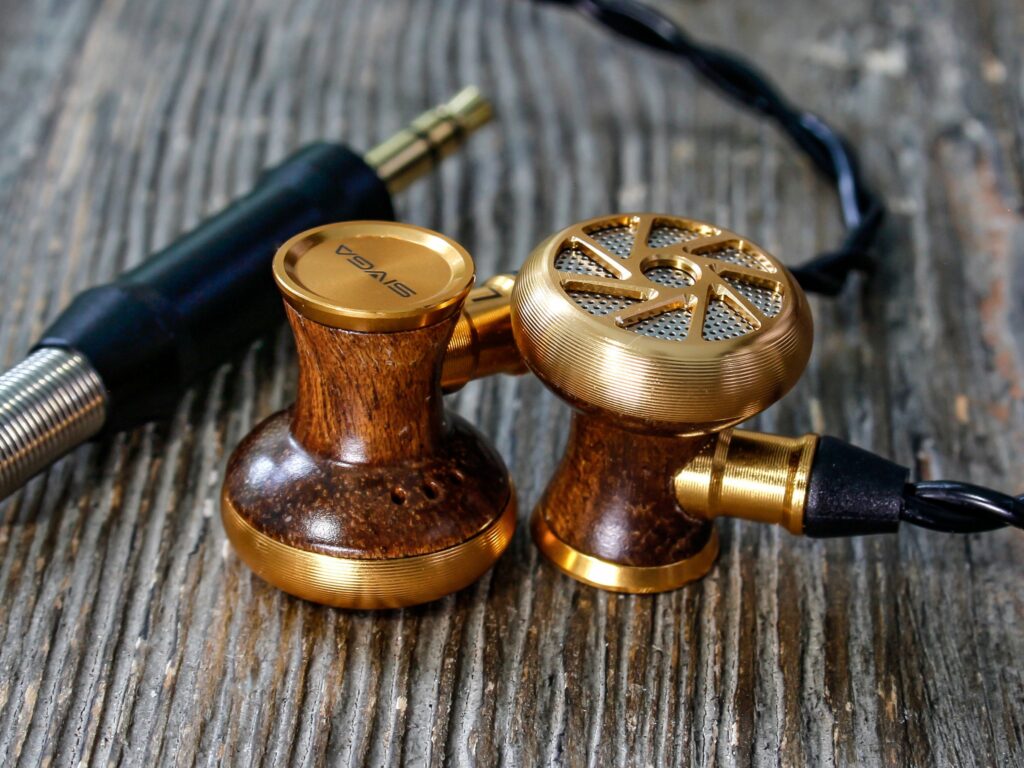
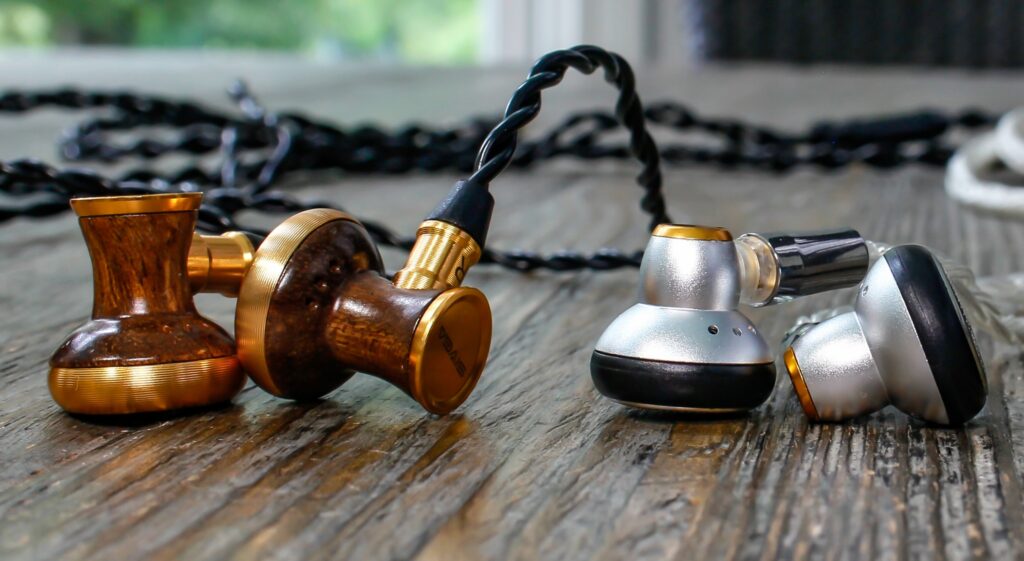
I had the awesome pleasure of reviewing one of the most beautifully crafted earbuds market wide when I reviewed the Sivga M300 (buy it here). Beautifully made, beautifully designed, and very well-tuned. This is one of those sets that you could spend far too much time admiring just how beautiful it is. The M300 sports a very large 15.4 mm single dynamic driver, and it is the more expensive sibling to the M260. Let’s check out some similarities and differences.
Non-Sound Stuff
To start, both sets are accessorized in a similar way except the M260 comes with one more set of foam earbud covers and it has the detachable cable as an accessory top while the M300’s cable is non-detachable. When it comes to build, both sets are made well, made durable, and both are things to be admired. Now, as far as looks, the M300 is simply too stunning. Made of African Ebony wood as the main housing along with gold aluminum is one of the best designs that I’ve seen on an earbud, at any cost. Yes, the M260 is gorgeous too, but it simply isn’t in the same league as its older and more expensive sibling. Once again, one huge plus for the M260 is the detachable cable. For me that is one of the most important assets of this set. While the cable is beautiful on the M300 and doesn’t pose as a problem it would have been nice to swap for a 4.4 balanced cable. The M300 is also a bit larger, not a stem style but it has more girth, more of a robust shell too. I actually love it but I’ve found that the M260 with its smaller stature actually helps with fitment for me. Let’s check out the sound.
Sound Differences
These two are two entirely different sets when it comes to sound. The M300 is warmer, richer, more musically fluent and has a more relaxed sound. Whereas the M260 is cleaner, better clarity, technically more refined, and it is less rich. The M300 is simply more forgiving, less fatiguing (not that the M260 is offensive in that way) while the M260 has more brilliance, more tonal levity, less warm coloration, and tighter transients. The low-end of the M260 is faster, tighter, and better defined with that clean punch sound. However, the M300 has more bass weight, it’s deeper, more haptic and the bass plays a more prominent role in its sound. The mids of the M300 are richer, more intimate, easier for long sessions, and note weight is more robust. Though, I actually like vocals on the cleaner and cleaner and more forward M260. It simply has that embossed quality in the mids. That said, I do enjoy the M300’s richer sound at times too. The treble of the M260 is more brilliant than the M300, more detailed, more bite, better extension and is more forward. Its older sibling is more relaxed, texture is rounder, smoother, less profuse in sparkles and not as wide reaching in extension up top. Technically the M260 wins out. It is tuned closer to analytical with better note separation, detail retrieval, better layering of the sound field, and more of a capable sense of space. I do find the imaging on the M300 a tad better though.
Final Thoughts on This Comparison
Two totally well rounded and well-tuned sets with two polar opposite musical characters. As honest as I can be, I don’t find one better than the other. I know you read that the M260 is better across the board in the technical department, but whoever said that better technicalities make for a better earbud? In my opinion each set displays its particular style of tuning very-very well for the cost of both sets. This comparison isn’t a duel to the death, but it is a definite “preference battle”. Sivga showed their range for the budget class by making two different sets that are good all the way around per their respective tuning. I like em’ both folks.
Genres
I try to add my two cents about what genres mostly work well and which don’t work as well for me and whatever set I’m reviewing. Please understand that these are only opinions. In no way is anything concrete or set in stone. For every good genre I can find plenty of tracks that won’t come across as well. Also, for every not-so-good genre I can easily find tracks that fit the M260 perfectly. I hate to give such generalized opinions, but I feel that my reviews are not complete without at least some opinion on genres. I’d say take this with a grain of salt, but I did spend a crazy amount of time going through these genres and I do give you my honest opinion. However, an opinion is subjective and doesn’t reflect everyone’s view so… take these with a grain of salt… Lol.
Genres Which Work
To begin, really any genre that makes use of the open clarity, genres which lean on voices, clear instruments, separation, and distinct cleanliness will do well. Without question the M260 is not what I’d call an all-rounder, but it does well with a lot. I’d say that most any Pop track works well, especially vocal heavy tracks. Any Acoustic type of stuff, Singer-Songwriter, Folk music all have been bright spots for me. Add to that Country, less intense Rock music too. Especially Classic Rock (unless you prize heavy drum weight). I also really like Jazz with this set as it’s able to pronounce that subtle brush work, complicated mixes, distinct instruments, and it does so well. I’d say that “some” Orchestral music does pretty good, but there is a definite caveat to that. Now, Rap and EDM are less attractive genres for the M260, but I’ve heard many in both genres that come across extremely well. Just not the super bass heavy stuff.
Not So Great Genres
Let’s flip that right around and say that bass heavy jams in Rap, R&B, EDM simply won’t have the presence and bullishness that most would like. Any Club music, general Hip-Hop, also suffer the same fate due to the lack of sublevel weight. I’d also say that one of the best qualities of a good Orchestral set typically has great height and vertical layering. That is not the M260. Not all the time anyways. Yes, it has good separation, great instrument tone, and a bigger open stage. However, Orchestral requires that tall stage where large scale works simply don’t have the big physical impact of many moving parts, that tall ceiling to adequately show off the scale of those tracks, and even a lack of bass weight for impact and contrast. So, while the M260 works well for many genres, there are definitely genres where it struggles more. I realize I only covered a few, but I hope it gives you some blueprint or some idea of how the M260 will sound with your preferred genres.
Last Words on the Sivga M260
Friends, I don’t know if you’ve paid any attention or not, but I only review what I honestly feel is a solid product. Products that are worth considering. I try to break down what I feel are the high points, and the low points too. I was going through my notes for this review (as I always do), and one thing stuck out to me; there are many times more upsides to the Sivga M260 than there are downsides. It isn’t even close. Without the shadow of a doubt the Sivga M260 represents one of the better values that I’ve heard under $45 when considering flathead style earbuds. I don’t know how else to say this, but the M260 gives the consumer a legitimately great product experience. I haven’t heard everything (nobody has) but other sets in its range simply sound less refined and rougher around the edges. The M260 is polished. Every way you turn them and in every aspect, the M260 build, design, fitment, and tuning are all top shelf for under $50. Let alone under $40! This was a no brainer to review folks. Such an enjoyable review period for me. I haven’t really brought it up much, but typically I don’t even like flathead earbuds nearly as much as iems and over-ear cans, but man does Sivga give me a solid argument to start a new love affair with flatheads. For the price, I cannot find one good reason for anyone to not at least consider the M260. The only true drawbacks are for those who simply detest flathead style earbuds as well as for those blatant basshead and hard-core treble heads. For $38 the M260 is a very easy recommendation from me. Truly a fantastic job Sivga.
The Why…
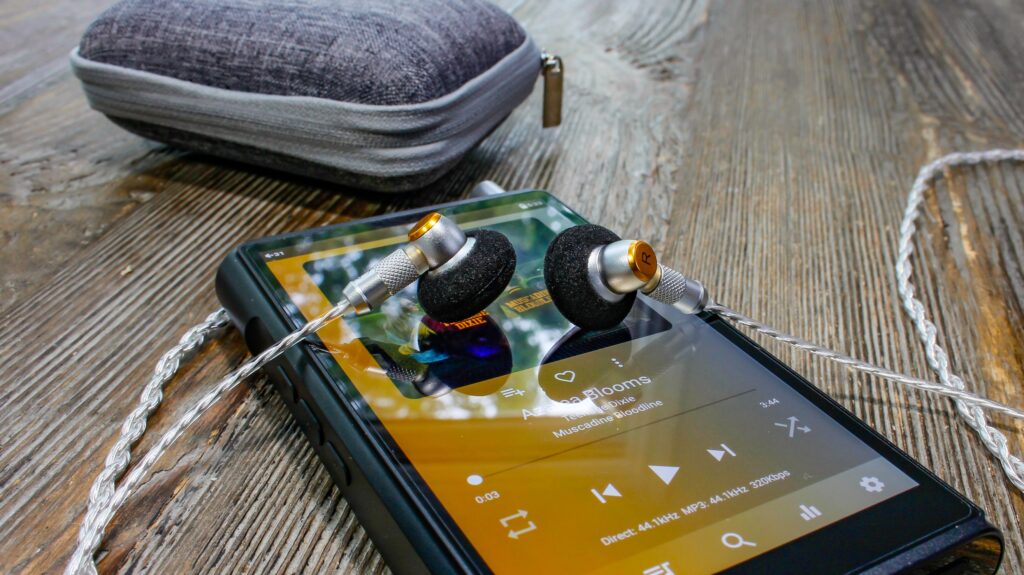
Because you are getting a nicely put together unboxing with all that you’d need, like plenty of foams, nice case, nice detachable cable. When I found out the M260 came with a detachable cable design I was so happy too. Why aren’t other brands doing this with their flathead earbuds is beyond me? The M260 represents value across the board. Look at its build folks. All alloy, aluminum, beautifully machined, with a very clean appearance that looks good in the hand and good in the ear. The M260 is obviously durable, obviously built well for the money. Sure, it is a simple design, but it’s classy, minimalist, and even elegant in a way. Personally, the fitment is about as good as it gets for flathead earbuds, for me. This set is locked in when I drape the cable over my ears and wear the M260 almost like you would an iem. Very comfy, all day style comfort. Granted, many flathead earbuds are very comfortable.
That Sound!
Still, I’d be remiss if I didn’t add that. However, as good as the build is, the design, or the comfort, if the sound isn’t good then the earbuds are nothing more than glorified paperweights. Graciously I was able to find out for myself that the sound of the M260 is in fact… very good for the cost. Again, “sonically” the M260 is one of the better values that I’ve heard in 2026. The sound is so musically gifted as well as technically adept. Two attributes which are typically opposing each other blend together in a very nicely balanced symphonious way. Sure, there are subtle gripes that some may have, but by-and-large the M260 has that versatile type of sound which somehow comes across very mature. Where other budget earbuds sound overly colored, technically weak, or they have some weird timbre or glare issue while the M260 nails that musical/analytical balance. I enjoy the Rigid and tight bass which serves the low-end without muddying up the rest of the mix. Fast twitch style and punchy with just enough sublevel weight. The mids are its best quality with vocals from both male and female artists sounding refreshingly tuneful, forward, naturally bodied, and with solid timbre quality. Also, the treble is not a weakness. Great extension, smooth, clean, well detailed, and it is not a harsh treble. You already know that the technical stuff is all great too. Again, detail retrieval, note separation, decent enough imaging along with a nicely layered sound inside of a fairly large sized soundstage. Really a job well done Sivga. The M260 is worth every last penny, no doubt about it.
Conclusion
To conclude my full review and feature of the Sivga M260 I first have to thank the good folks over at Sivga Audio for supplying their fine budget set. I honestly would have had no clue what type of value the M260 could be without Sivga reaching out. Thank you very much. I also need to thank you, the reader, for actually taking the time out of your busy lives to click the link and check out this review. It means a lot to my partners at Mobileaudiophile.com as each click is of huge importance. We are committed to providing the best content that we can, and we certainly hope it is helpful to you. So, thank you.
Other perspectives
Now that I’ve thanked you for checking out my review of the Sivga M260, I also hope that you’d check out some others. There are so many good reviewers out there folks who care about giving you their authentic take on this set. Just solid people who really do a good job breaking down these products. I hope you’ll listen to, watch, or read other reviews and perspectives so that you can gain an even better understanding of what you are getting with the Sivga M260. Folks, we are all very much different. The guy sitting right next to me may have a completely different opinion than I do. Yes, I really enjoy the M260, but the next guy may not. Hence why I feel it’s important to get as many angles as possible. It’s just more info to help you make an informed purchasing decision. I am not the last word on audio, and I do have my own subjective likes and dislikes, so does the next guy. So please click on some more links. Okay, with that all said I think I’ve covered it all. Please take good care, each and every one of you. Stay as safe as possible and always… God Bless!
M260 Pros
-Feels more “complete” than most any other budget flathead style earbuds
-Great value for the cost!
-Premium style build, all-alloy, durable
-The aesthetic design is simple, classy, elegant
-One of the better fitting/comfort flathead earbuds for me
-Also, a nice detachable cable! Very happy about that
-Solid balance of the spectrum, very clean sound
-Timbre leans natural-fish, very musical with great techs
-Bass is snappy, tight punch, well enough defined
-Midrange vocals are quite nice with strong vocal clarity and presence
-Natural sweet toned midrange timbre
-Treble is detailed without the harshness
-Good note separation outlines distinct elements within the sound field
-Detail retrieval is better than many budget flatheads
-Open, and spacious stage
-Altogether a great value with no huge “realistic” weaknesses at $38
M260 Cons
-The sublevels aren’t particularly super deep or authoritative
-Bass is about quality/control and so bassheads will want to look elsewhere
-Midrange can feel a hair too thin in note body
-The overall sound can tilt a touch brighter than what I’d call lush or rich
-Treble can be a touch more relaxed than I’d like
-Siblance can show up depending on the foam covers you use
-Dense and complicated tracks can expose some limitations for the M260







No Comment! Be the first one.