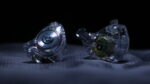

































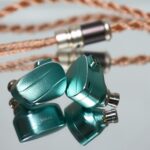




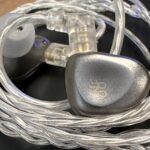

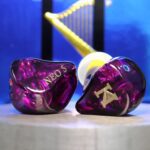
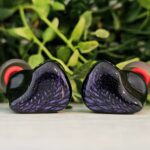
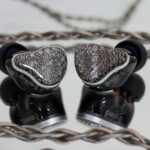
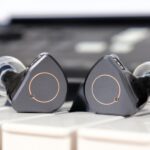



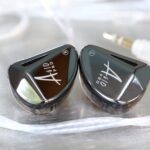






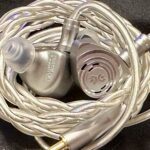
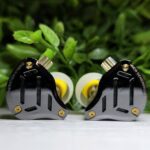


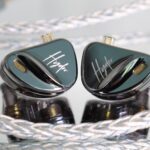




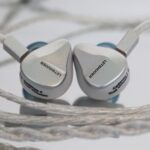
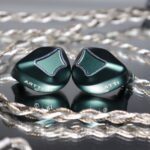
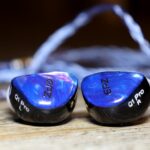







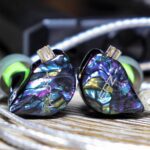
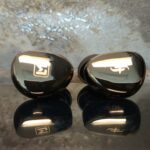
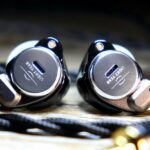
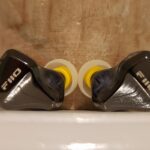

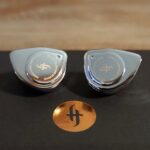

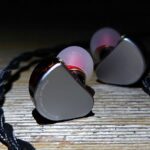




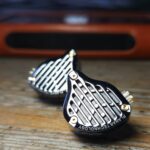
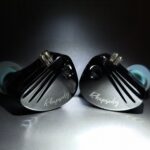




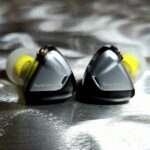

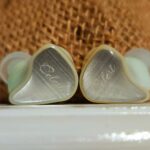




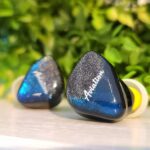
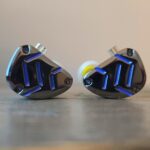





Tipsy Audio is a brand making quiet but deliberate moves in China’s crowded and competitive IEM market. The vision of founder Masan Lee leaves a tangible imprint on every model the company releases: reconcile technical capability with musicality, but never sacrifice staging and spatial perception in the process. Lee’s reference point for this vision is anything but ordinary — he wants to recreate the acoustics of the Shanghai Opera House inside the narrow cavity of an in-ear monitor.
Table Of Content
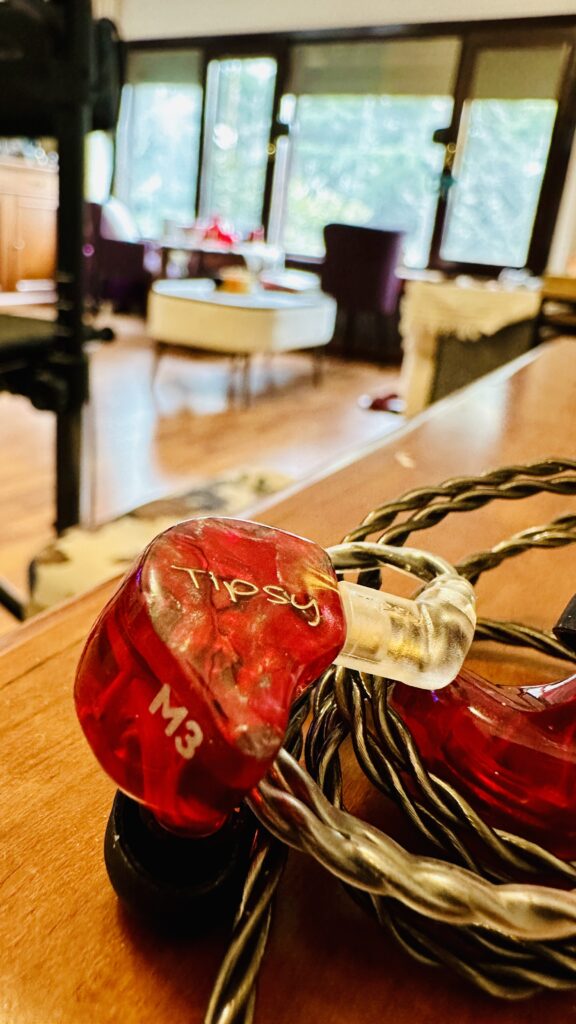
The M series opened with the M1, the first concrete step toward that ambition. Drawing attention both for its material innovation — a bamboo fiber diaphragm — and its sonic character, the M1 planted a seed of curiosity about where the series was headed. A few months have passed, and now the M3 arrives. Same family, second child, but equipped with lessons learned from its older sibling.
This review was built on extended listening sessions across multiple genres and recording qualities. The goal was never to reduce the M3 to a set of technical parameters, but to honestly convey the relationship this IEM forms with music — and the experience it delivers to the listener.
Setup and Test Environment
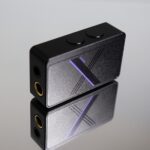
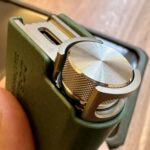
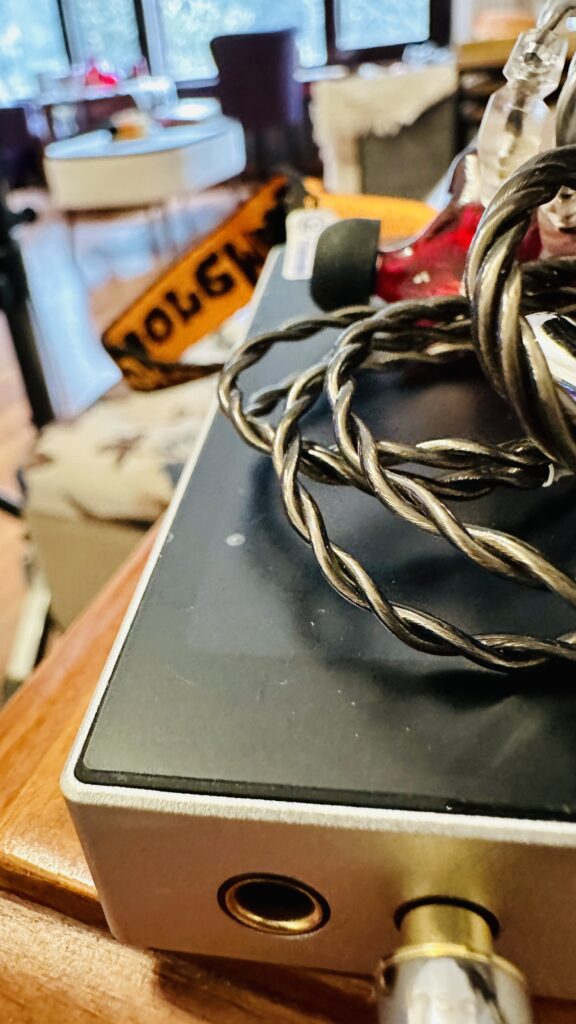
The HiBy R4 served as the sole source throughout testing. It is a portable DAP known for its strong output capacity and a relatively neutral presentation within its price tier. Gain was fixed at medium; for an IEM that does not require high gain to reach listening levels, the M setting offered the cleanest balance between control and dynamics.
Streaming was done via Qobuz in Hi-Res lossless. The test repertoire covered large-scale orchestral works including opera and symphony, jazz trio and quartet recordings, rock and progressive rock with complex multi-layered productions, electronic and ambient, and acoustic instrument-focused chamber music. The M3 holds its ground across all of these genres to varying degrees, but its true identity becomes clearest when confronted with large, complex productions.
Design and Build Quality
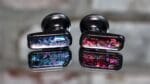
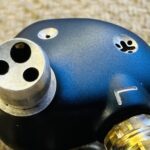
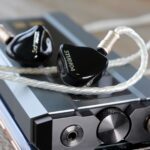
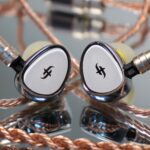
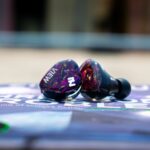
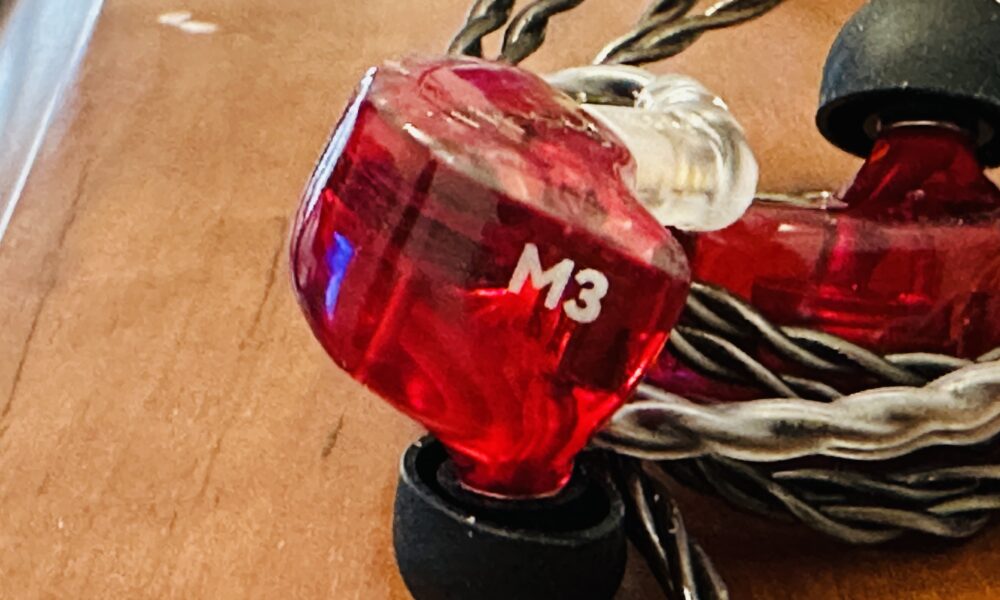
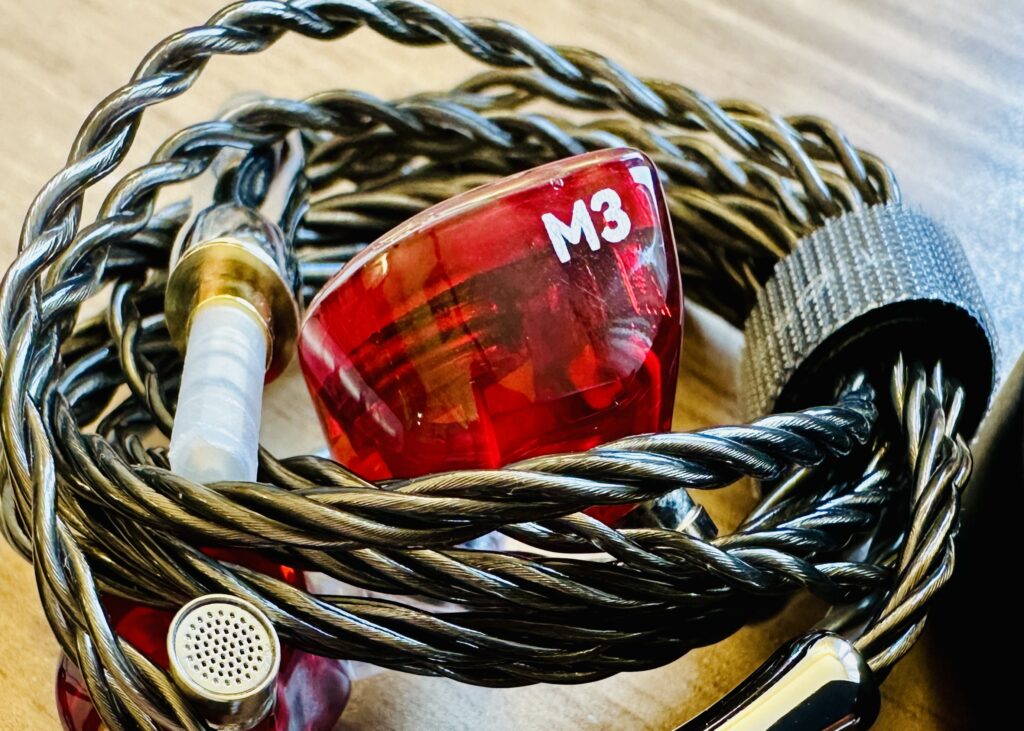
The M3 favors restraint in its aesthetic. Clean lines, no excess. Surface finishing and overall assembly feel proportionate to the price segment — there is no cheap impression when the shell sits in your hand or the nozzle seats in your ear. Fitment is well-suited to medium-sized ears, and extended sessions produce no meaningful fatigue or discomfort. Passive isolation is adequate, a natural outcome of the closed IEM form factor.


The cable is standard and functional. It carries no particular character but causes no problems either. Standard connector compatibility means aftermarket cable experimentation is straightforward for those inclined to explore it.
Sound Character: Detailed Analysis
Overall Presentation
Within the first few seconds of listening, something makes you pause: this IEM does not behave like a conventional in-ear monitor. The stage extends beyond typical IEM geometry; sound does not feel trapped inside your skull but instead spreads into a space in front of you. The impression is initially surprising. After a few minutes, it quietly recalibrates the baseline expectations you bring to the listening session.
The M3 is entertaining, but it is not thoughtless. It has color and energy, but that color is applied with control and apparent aesthetic intention. The midrange recession that characterizes many V-shaped tunings is absent here; transitions across the frequency bands are sufficiently smooth to avoid obvious seams.
Low Frequencies (Bass)
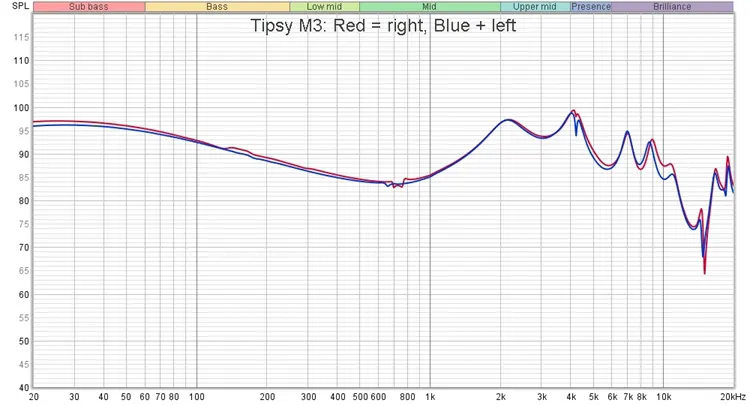
The M3’s bass makes no effort to hide its personality. It is emphasized, physical, and insistent. The natural bass accumulation that comes with a sealed IEM design is present, but it does not spiral into uncontrolled bloat. Drum strikes carry genuine body; while there is no subwoofer-like extension reaching into the deepest sub-bass registers, the low end asserts itself with confidence.
Live concert recordings bring out a particularly interesting dimension in the bass behavior. The deep frequencies rising from a kick drum and the character of a double bass pizzicato are handled as distinct events — neither instrument dissolves into the other. This level of low-frequency separation is a nuance that even some models above this price tier occasionally miss.
In terms of transient speed, the M3’s bass falls between the ultra-fast response of planar magnetic geometries and the slower decay of certain bio-fiber diaphragms. It occupies a musically capable middle ground. On very fast metal percussion passages, a slight residual tail can be detected, but this remains within a range that the vast majority of listeners will not find disruptive.
Midrange
This is one of the M3’s most convincing regions. Despite the bass emphasis, the midrange is not compressed or pushed back. Vocal recordings make this especially clear: the soloist stands in front of you, neither pushed aggressively forward nor absorbed into the mix.
Keyboard instruments perform particularly well in this register. Piano keys carry texture — not cold and mechanical, but genuinely wooden and metallic, the real tonal color born from the union of felt, wood, and steel. In jazz piano solo recordings, this quality becomes a differentiating advantage over competitors in the segment.
When string instruments play in ensemble, the M3 does not collapse them into a single undifferentiated wall. Layering between violin, viola, and cello sections remains perceptible. Even during storm-intensity passages, tracking the individual movements of these groups remains possible. This is directly connected to midrange transparency — and it carries into the staging discussion as well.
High Frequencies (Treble)
The M3’s treble is the least expected and most deserving of recognition. When a fun-tuned IEM leads with elevated bass, the standard design response is to pull the treble back — a deliberate choice to prevent fatiguing brightness over extended listening. The M3 does not fully apply this formula, or at least applies it at a far more nuanced threshold.
Cymbal choke articulations — that precise metallic muting moment when a drummer strikes a cymbal and immediately silences it with a hand — are audible on the M3. This is a technical data point that many IEMs simply do not resolve. Its presence here signals that high-frequency extension and transient response are better than the price point and tuning direction might suggest.
Similarly, electric guitar maintains an independent identity within complex productions. Its tonal color does not dissolve into bass weight or get buried beneath orchestral layers — it remains, distinctly present, with its own character. This points positively toward both treble extension and overall resolving capacity.
Is there sibilance risk? On some recordings — particularly those already mixed bright — a slight emphasis on “s” and “sh” consonants can be detected. It does not reach levels that would force a listening break; a critical listener will notice it, while a relaxed one will largely move past it.
Soundstage, Imaging, and Separation
This is where the M3 is most striking. It delivers a soundstage that exceeds reasonable IEM expectations. Width is satisfying, but the genuine differentiator is depth. Instruments do not simply spread from left to right — they also occupy forward and rear positions within a three-dimensional field. In orchestral recordings captured in large acoustic venues, this depth creates the impression of sitting in a balcony seat overlooking the hall.
Imaging precision — the ability to place instruments at specific, stable positions within the stage — performs above expectation. In live concert recordings, it is possible to track individual drum kit components: kick, snare, hi-hat, crash, and ride each occupy distinct positions in the field. Percussion instruments clustered in the right channel stay there; strings moving as a group on the left can be followed as they move.
The most impressive performance emerges in large choral recordings. A rear-positioned bass-baritone male chorus does not dissolve behind a foreground soloist and orchestra. That choral group exists as a distinct layer at its own depth in the stage — this is a specific demonstration of depth staging and multi-layer separation working in concert rather than in isolation.
Performance by Genre
Orchestra and Opera is the M3’s strongest territory. Large-scale productions benefit most from its staging depth and spatial presentation and come with a strong recommendation. Jazz performs well too — midrange transparency and stage width work together on acoustic trio and quartet recordings, and the live venue impression is convincing. Rock and Progressive Rock delivers high bass energy and engagement, with separation that handles complex mixes; extended treble sessions warrant some attention but the experience is generally good. Electronic and Ambient is a natural fit, with the bass character pairing well and stage width serving the genre naturally. Acoustic and Chamber Music rounds out the picture: breath sounds, bow pressure details, and similar micro-nuances are recoverable, with midrange transparency as the clear hero.
Competitive Context
The M3 manages the balance between engagement and technical delivery better than most of its competition in this price range. Many rivals at this level land in one of two camps: either an over-colored, technically limited fun IEM, or a technically competent but dry and uninvolving one. The M3 operates between those poles — and that is genuinely uncommon at this price. Oh well, the M1? Not only their prices are different, the sub bass power and frailty in sound were so different than M3.
On staging and spatial presentation specifically, the M3 plays above its category. That is the dimension where it most clearly separates from segment peers.
Who Is Tipsy Audio M3 For?
- Orchestral, opera, and jazz listeners who want a live-venue atmosphere on the go
- Listeners who want engagement and technical performance in the same package
- Buyers seeking above-average soundstage depth without moving up a full price tier
- M1 owners curious whether the M series has grown
Who isn’t Tipsy Audio M3 for:
- Reference or measurement-first listeners who need a flat or neutral tuning
- Listeners sensitive to bass emphasis or low-frequency bloom
- Those who require ultra-fast transient response for metal or extreme percussion genres
- Listeners who want a “safe,” characterless daily driver
Pros and Cons
Pros
- Soundstage depth and width that exceed the price category
- Controlled, musical bass with genuine body and layering
- Midrange that holds its ground despite the low-frequency emphasis
- Cymbal choke articulation and micro-detail retrieval above expectation
- Multi-layer separation handles complex orchestral productions convincingly
- Comfortable fit for extended listening sessions
Cons
- Bass emphasis will not suit neutral-preference listeners
- Slight treble emphasis on bright mixes may surface occasional sibilance
- Bass transient speed falls short of planar-level precision on very fast passages
- Cable is functional but unremarkable
- Stage performance, while impressive, depends heavily on recording quality
Conclusion of Tipsy Audio M3 Review
The Tipsy Audio M3 is the second and more mature step in Masan Lee’s project to build the Shanghai Opera House inside a pair of ears. One listening session makes the proposition clear: this is neither a pure reference monitor nor a thoughtlessly assembled consumer product. It occupies a deliberate, self-aware position between those extremes.
The bass has energy — but it is controlled. Soundstage width and depth extend beyond the price category. The midrange is not sacrificed. Treble detail performs above what the tuning direction would lead you to expect. Engagement is high, but it does not overwhelm the technical presentation.
For listeners who favor large-scale productions, seek a concert atmosphere on the go, and want entertainment without abandoning resolution, the M3 is a strong recommendation. It is also a meaningful reference point for understanding where the M series is going.
The question of what the M5 will bring — with its reportedly neutral frequency response — is already worth asking. What does Lee gain in staging when he pulls back the color? Time will answer that. For me and now, the M3 stands as Tipsy Audio’s most bold statement.





No Comment! Be the first one.