















































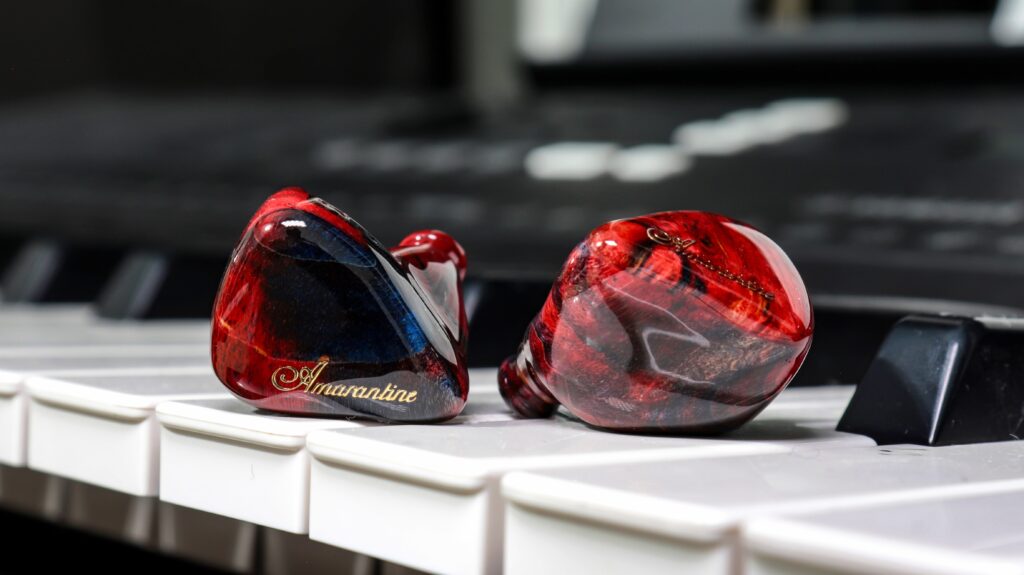
ODA Amarantine A500 “Wood Edition” Review
Intro
This review and feature covers one of the flagship level iems from the newer audio brand ODA (One Dot Audio) named the ODA Amarantine A500 “Wood Edition”. By the way, it’ll be “Amarantine WE” for review purposes, moving on. Folks, if any of you have followed me on my reviewing ventures you have probably noticed that I particularly enjoy all balanced armature iems. Granted, I love ‘em all, any driver configuration (if tuned well), but just like a regular ole’ single dynamic driver, I really enjoy listening to a well implemented balanced armature driver earphone. I think I enjoy them because there are so many ways that BA sets can go wrong. Really, I’ve heard a litany of terribly tuned all-BA iems. However, when an all-BA set is done right… it has the potential to be one of the more natural, transient tight, clean, and precise sounds out of all driver types. Also, I love good balanced armature bass. At any rate, hearing from Jason Tang that ODA would be sending over the Amarantine WE for review was a very exciting realization. I say that because I adore their ODA Hesperus A300 Wood Edition that I reviewed only a few short months ago (Hesperus A300 Review). Truly a wonderfully made, wonderfully designed, and wonderfully tuned all-BA iem. I cannot say enough good words towards ODA and their obvious affinity towards this driver tech as well as their understanding of it. It’s really remarkable. Right away I put the Hesperus WE right in line with legendary sets like the Kiwi Ears Orchestra Lite (Orchestra Lite Review). However, the Amarantine WE sits at a much higher price point putting it square in the cross hairs of some very well regarded “over $400” all-BA sets.
Table Of Content
- Intro
- ODA
- They arrived!
- Non-Affiliated Purchasing Links
- Gear used for testing
- Packaging / Accessories
- Unboxing
- Eartips
- Carrying Case
- Cable
- Build / Aesthetic / Internals / Fit
- Build Quality
- Aesthetic
- Internals
- Fit / Comfort
- Drivability / Pairings
- Sensitivity
- Scalability
- Source pairing
- Sources cont…
- Sound Impressions
- Smooth Transition
- Easy set to like!
- What’s It Sound Like?
- Nothing sticks out
- Bass Region
- Clean, Well Defined, Punchy
- Sub-Bass
- Mid-Bass
- Downsides to the Bass Region
- Midrange
- Midrange cont…
- Lower-Midrange
- Upper-Midrange
- Instruments
- Downsides to the Midrange
- Treble Region
- Treble in a nutshell
- Tone & Timbre
- Technically Speaking
- Downsides to the Treble Region
- Technicalities
- Soundstage
- Separation / Imaging
- Detail Retrieval
- Comparisons
- Softears Studio 4 ($450)
- Non-Sound Stuff
- Sound Differences
- Final thoughts on this comparison
- Last Words on the ODA Amarantine A500 Wood Edition
- Not for everyone
- The Why…
- That Sound
- Genres
- Genres Which Work Well
- Genres Which Don’t Do Quite as Well
- Amarantine A500 Wood Edition Pros
- Amarantine A500 Wood Edition Cons
- Conclusion
- Other perspectives
ODA
One Dot Audio is certainly what I’d refer to as an up-and-coming audio brand which harbors more of a “boutique” style presence in the audioverse. A small Shenzhen based iem maker which keeps a relatively low-profile internationally. I think their somewhat smaller presence worldwide is a useful tool for ODA in that they can stay small, work at their own pace, and perfect their lineup without the grand stage demand similar to the larger brands on the market. In fact, it has only been recently that ODA has ventured westward across the pond to the US with minimal reviews of their products in the western market. I really respect this brand as they aren’t trying to overwhelm the market with countless new releases. Again, they perfect their catalog with a few all-rounder selections available, some flagship level sets, and some less expensive gems. This is why I say they are more of a boutique style brand. Of course, for a person like me who always champions the little guy it was easy for me to take an interest in what ODA was doing. Do you know what’s even better than cheering on the smaller brands? It’s cheering on the smaller brands who have a big heart, big passion, and the ability to turn that passion into something tangible. In the case of ODA, it is in their ability to conceive, design, craft, and create exquisite products which really aren’t all that expensive when comparing market wide. Now, I don’t have a ton of info on ODA, and I don’t have a long history to draw any more commentary. But I can tell you one thing; ODA is not a brand to sleep on.
They arrived!
Most of my reviews I will write an intro prior to even receiving the product. I do this to hype myself up, to get excited, and I do this to get a head start on what will likely be a very long review. However, there are many intros that you will never read because I decided to not review those products. That choice all depends on my enjoyment or whether I feel that a vast number of hobbyists will enjoy it. Yes, I’ve had to explain to many brands that I will not be reviewing their products. I hate writing about something that I don’t like. It’s boring, drab, and it is time wasted for me. Having said that, I’ve had a chance to spend time with the Amarantine WE and I was instantly impressed. One of those iems which does everything well. The build, the aesthetic, the packaging, and the clean balanced sound. However, at $499 does the Amarantine A500 Wood Edition do anything to truly set itself apart? Or is it that the Amarantine WE performs so well across the board that it doesn’t need to stand out? Does it perform well on its own merits, good for an all-BA set? Well, I’ll definitely try to answer that question moving forward from my perspective. Let’s get into this review everyone. Without further ado, the ODA Amarantine A500 Wood Edition…
Non-Affiliated Purchasing Links:
Gear used for testing
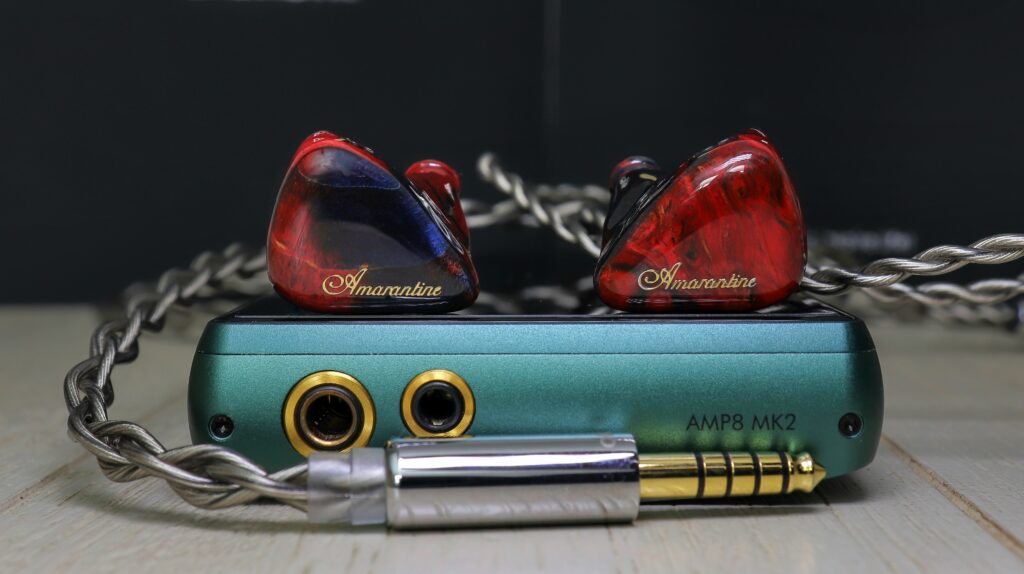
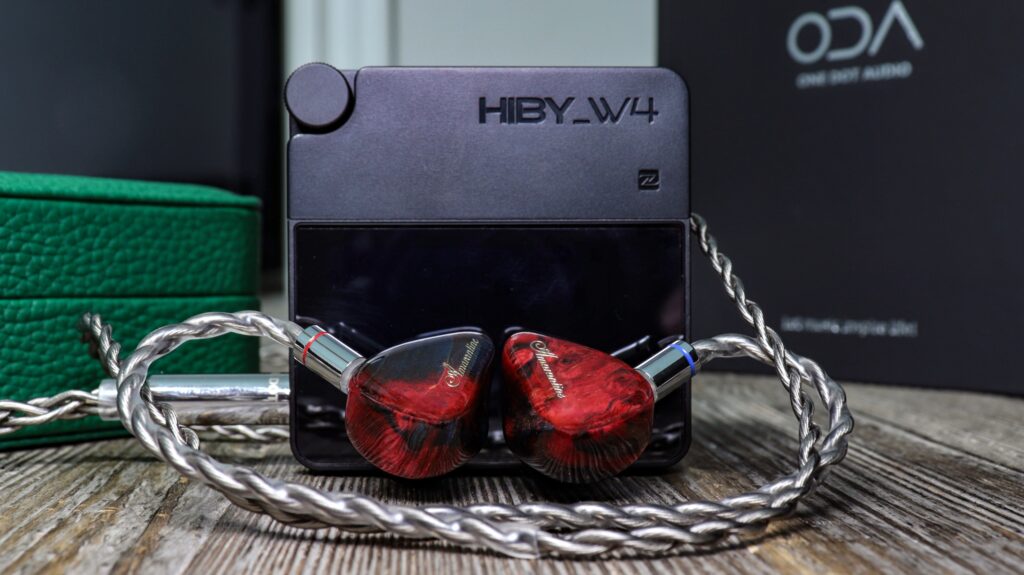
–IBasso DX240 with Amp8 MK2
-Many more sources used including weaker Android 3.5 set phones, iPad, and a few weaker 3.5 se dongles
Packaging / Accessories
Unboxing
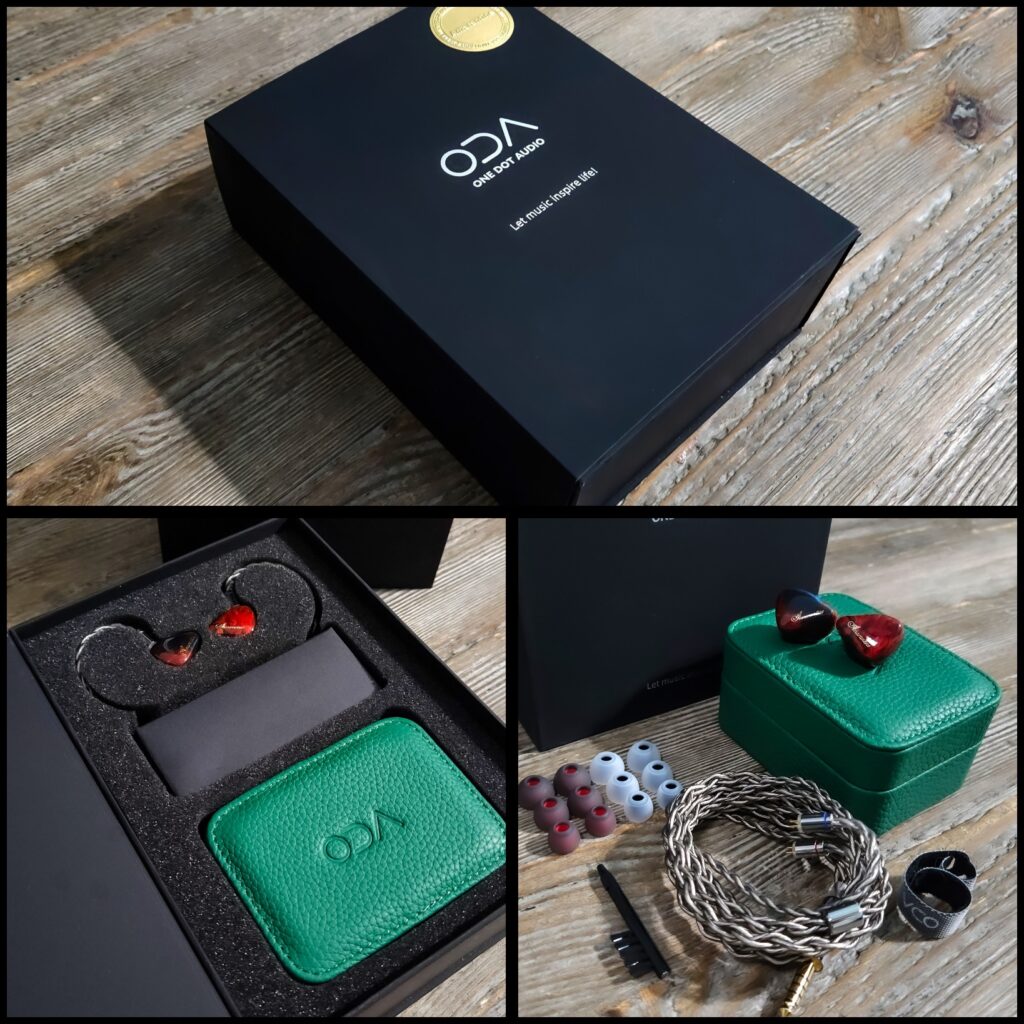
The ODA Amarantine A500 Wood Edition arrived at my home in a regular sized black box, very simple, nothing extravagant on the box or any ornate graphic art. Just a simple “ODA” on the sleeve cover as well as some useful specs on the back of the sleeve. So, take off the sleeve and you’ll be met with the exact black box design with the same lettering on the cover. Now, this box opens like a book and when you do, you’ll right away see the Amarantine WE earphones and the deep green carrying case sitting comfortably in foam cut-outs. The earphones actually come attached to their cable, which is a nice thing to see. Just be careful removing them so that you don’t damage the 2-pin connectors. Basically, all of the accessories are inside of the carrying case. Again, a very simple presentation and one which I am more than happy with. Obviously, ODA prefers to not up the cost on the consumer and keeps things simple. To add to that, I actually like a simple and minimalist design. There’s nothing pretentious or too presumptuous about a simple black box. A box like this tells you exactly where the brands’ intentions rest, that is… the earphones themselves. It won’t blow your mind, but certainly not bad by any stretch of the imagination.
Eartips
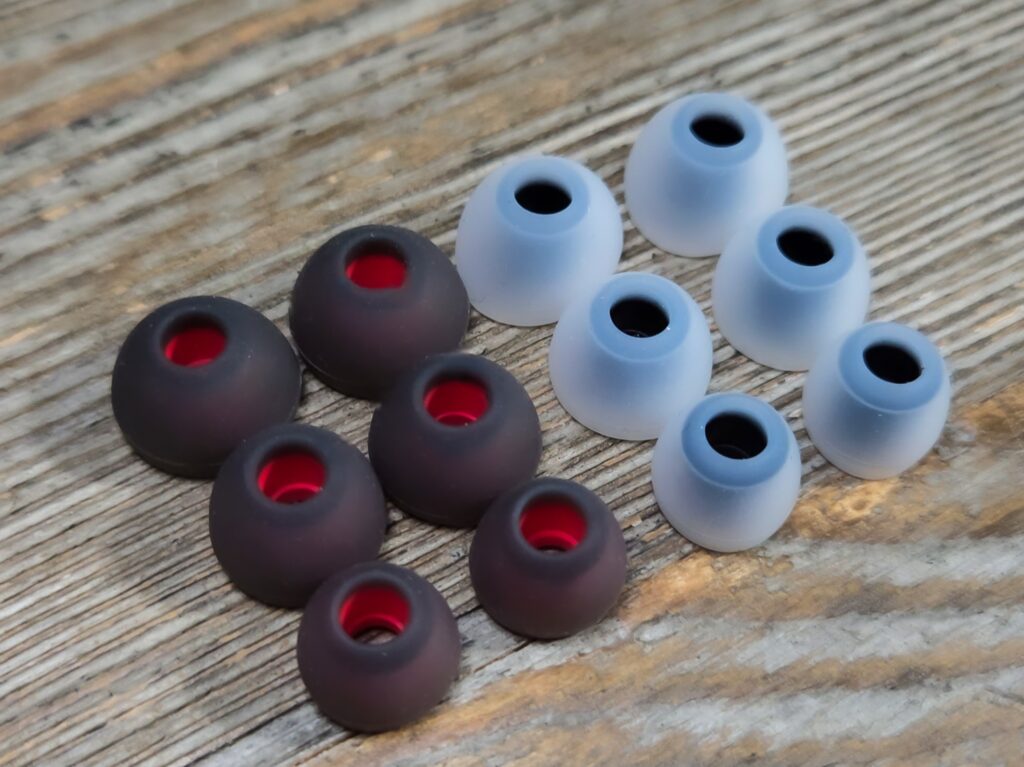
Within the packaging ODA provides a total of six pairs of eartips over two different styles of tips. However, the truth is that both “styles” are very similar to each other. Both sets are close in style, feel, build, to the KBear 07 eartips yet with different colorways. Also, very similar to what Simgot and Letshuoer add into some of their sets too. I happen to love KBear 07 tips and I like what ODA added into the Amarantine WE’s package. Now, the 1st set of three (S, M, L) pairs are white silicone eartips with a black stem, semi-wide bore, very firm in the flange, very rigid in the stem too. The next set of three (S, M, L) pairs is a gray silicone tip with an orange stem, semi-wide bore, firm flange, and also a rigid stem. Really these two are so similar that there is almost no difference in comfort, sealing ability, or sonic impact. Now, as for me, I actually went through so many eartips. I did use the gray set of tips which comes with the packaging for a while, but I instead finally landed on the Divinus Velvet tips for all of my critical listening. There were a few other types of tips which were nice, but the Velvets are simply so comfortable, such an awesome deal, and they pair great with the Amarantine WE very well sonically. Of course, you should check out all tips in your collection and spend some time listening to decide what works best for you.
Carrying Case
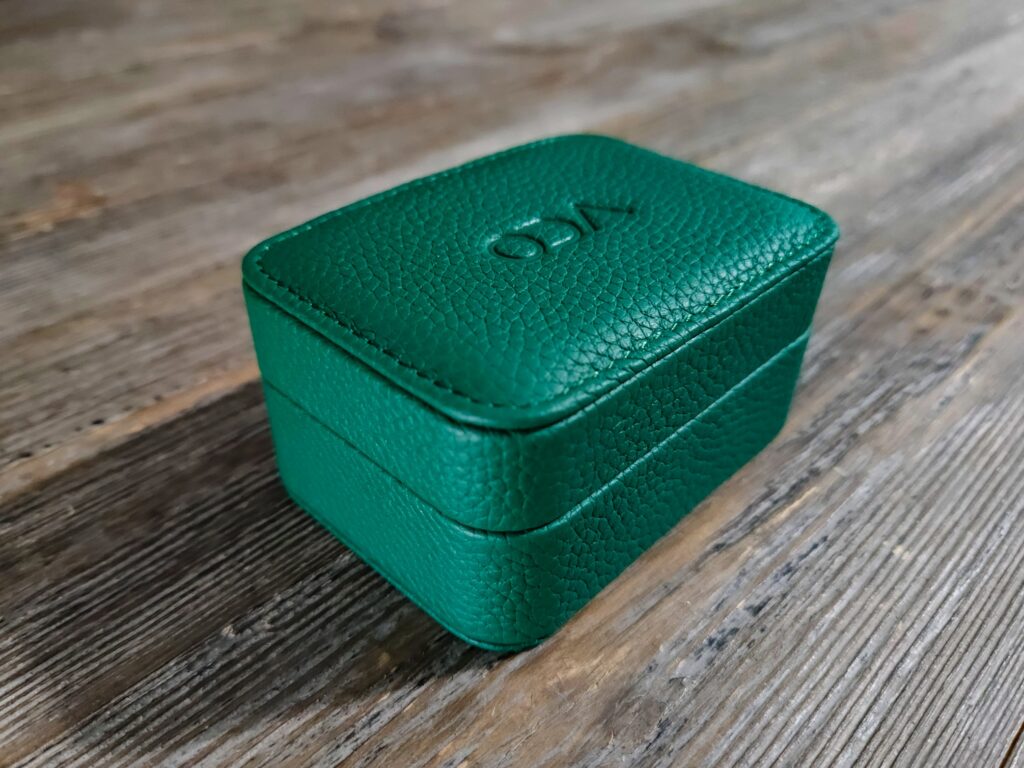
One Dot Audio also provides another high-quality accessory in the carrying case. This is actually the exact same case provided in the ODA Hesperus A300 Wood Edition’s packaging too. Hence why I copy/pasted part of this impression of the case. From my perspective, there’s something about a nice carrying case which makes the entire package better somehow. I rarely even use carrying cases that come with any iem, however, I still want to see a solid, nice, and classy carrying case. Coincidentally, solid, nice, and classy are exactly how I would describe the carrying case added into the ODA Amarantine A500 Wood Edition’s package. In all seriousness, ODA made sure to add a case which color matches the iem and is built very well. So, the case provided is a small rectangular box cladded in grass green leather and almost a “crocodile skin” texture as well. It’s a two-part case held on by a flap and held shut by magnets. The case is just large enough to fit the Amarantine WE, the cable, maybe some extra tips, and perhaps a very small dongle dac. Maybe something like the EPZ TP35 Pro, BASN PA60, or a similarly sized dongle dac. Again, I typically never use cases, but I’ve actually used this case for quite a few occasions.i just throw it in my book bag and I’m good to go.
Cable
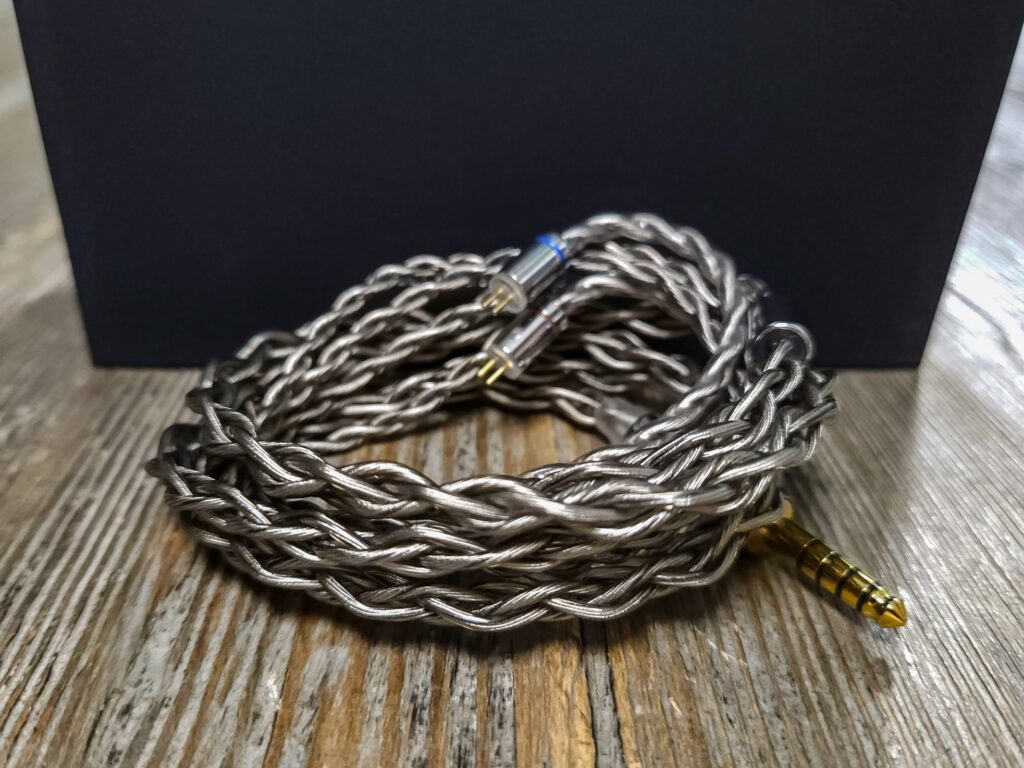
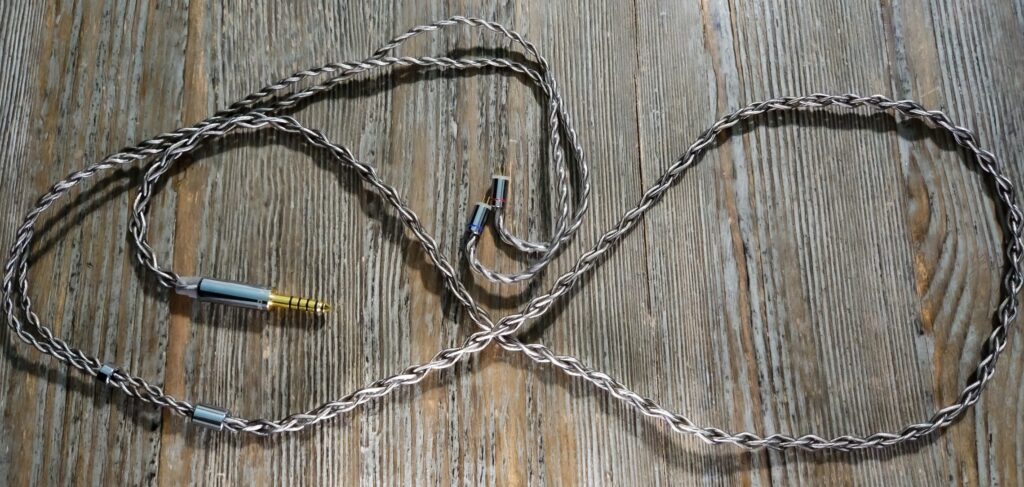
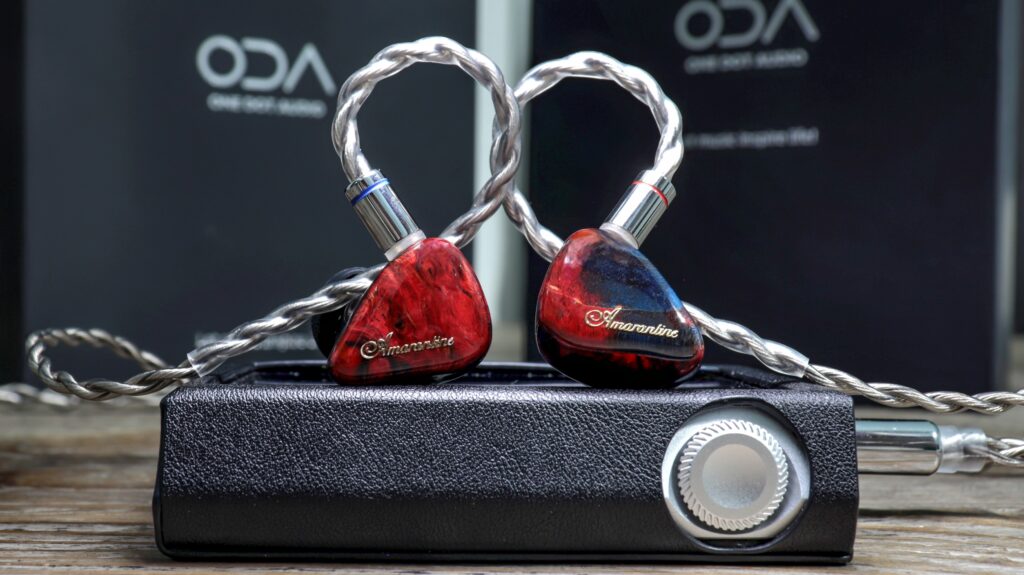
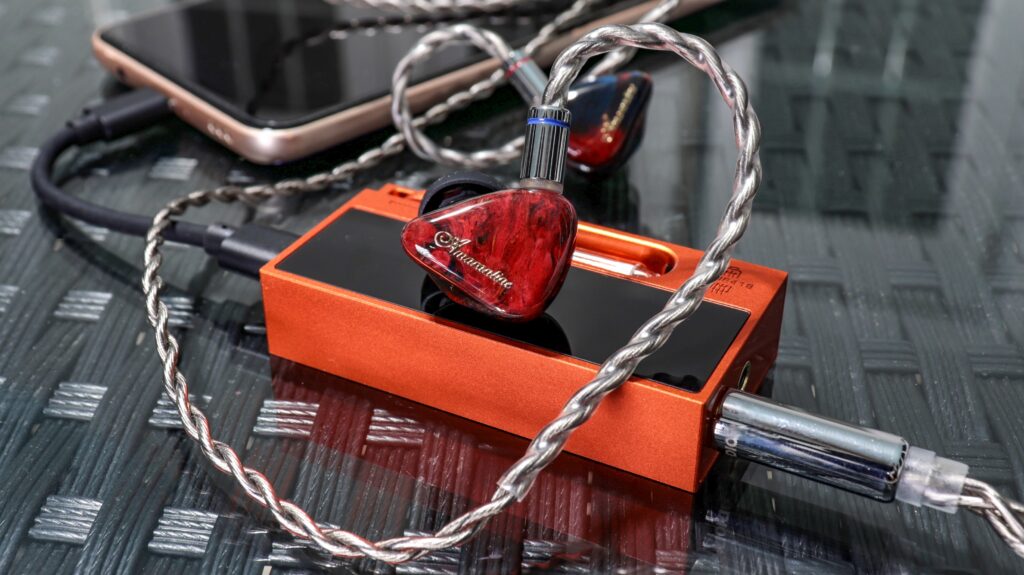
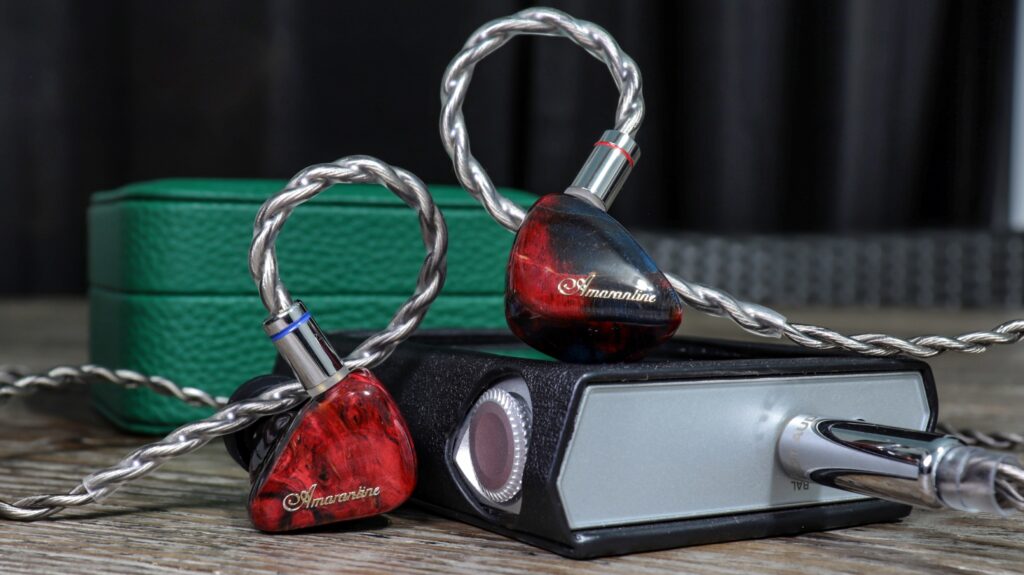
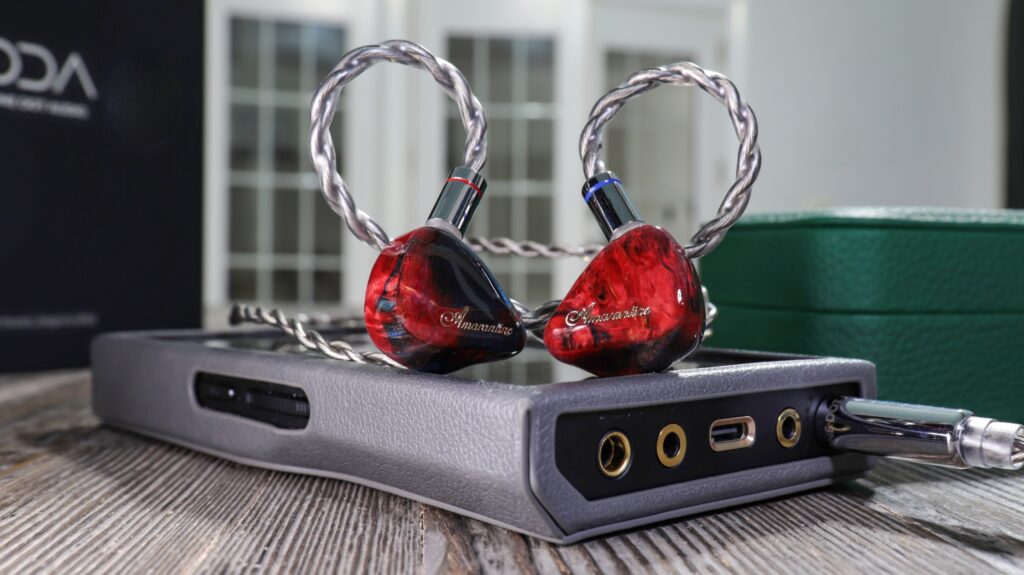
One of my favorite accessories added into the packaging happens to be the cable provided with the Amarantine WE. I love a solid cable folks, and the cable that comes with the Amarantine WE is a very nice-looking wire. I think the light gray/tan coloration makes a nicely stark contrast to the primarily a deep cherry colored stain with accents of black and blue. It’s a nice color mix which looks dope when it’s dangling from my ears. Plus, it’s one of those substantially/decently fat cables and doesn’t look thin or cheap. So yes, I’d say grayish tan with mirror aluminum fittings. Pretty slick looking. Let’s put it this way; I felt no need to upgrade my cable or cable swap which is a win in my book. Now, to be exact, the cable provided is a 2-pin, 4-strand cable made of copper-plated silver plus high-purity copper and terminates in either a 3.5 single ended or 4.4 balanced connections at purchasing. I always go for the 4.4 balanced, but you may like the 3.5. I think it has a nice braiding and is well put together. Obviously, that is my opinion. Anyways, nice job ODA.
Build / Aesthetic / Internals / Fit
Build Quality
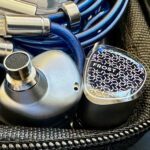
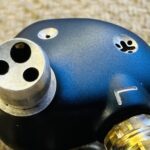
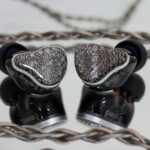
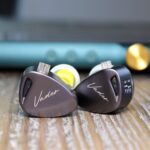
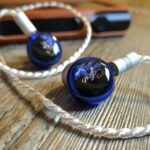
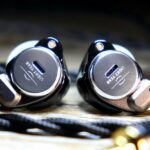
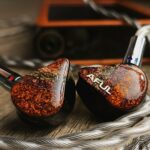
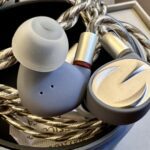
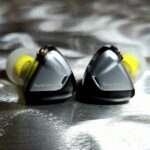
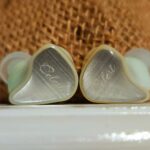
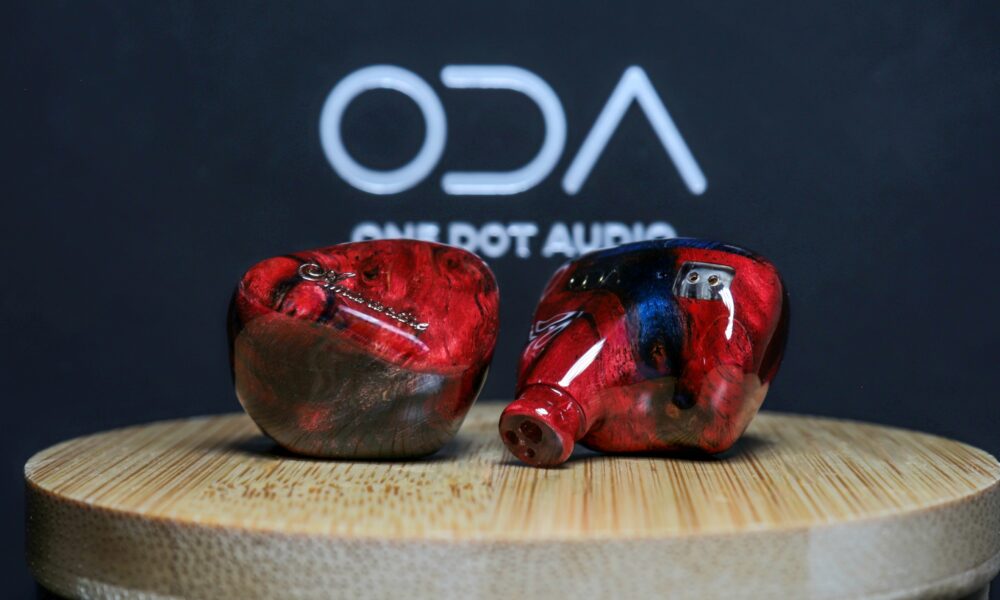
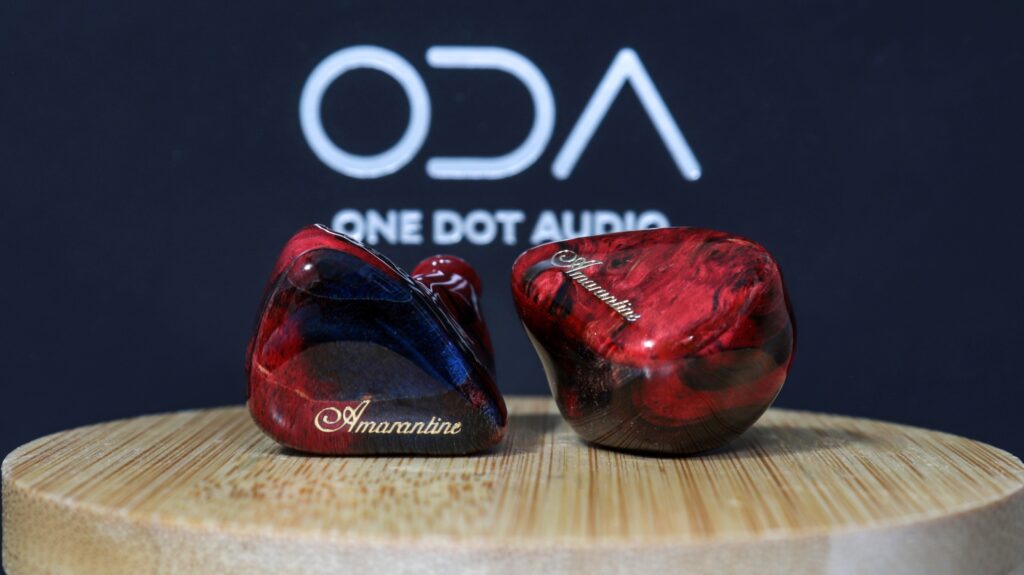
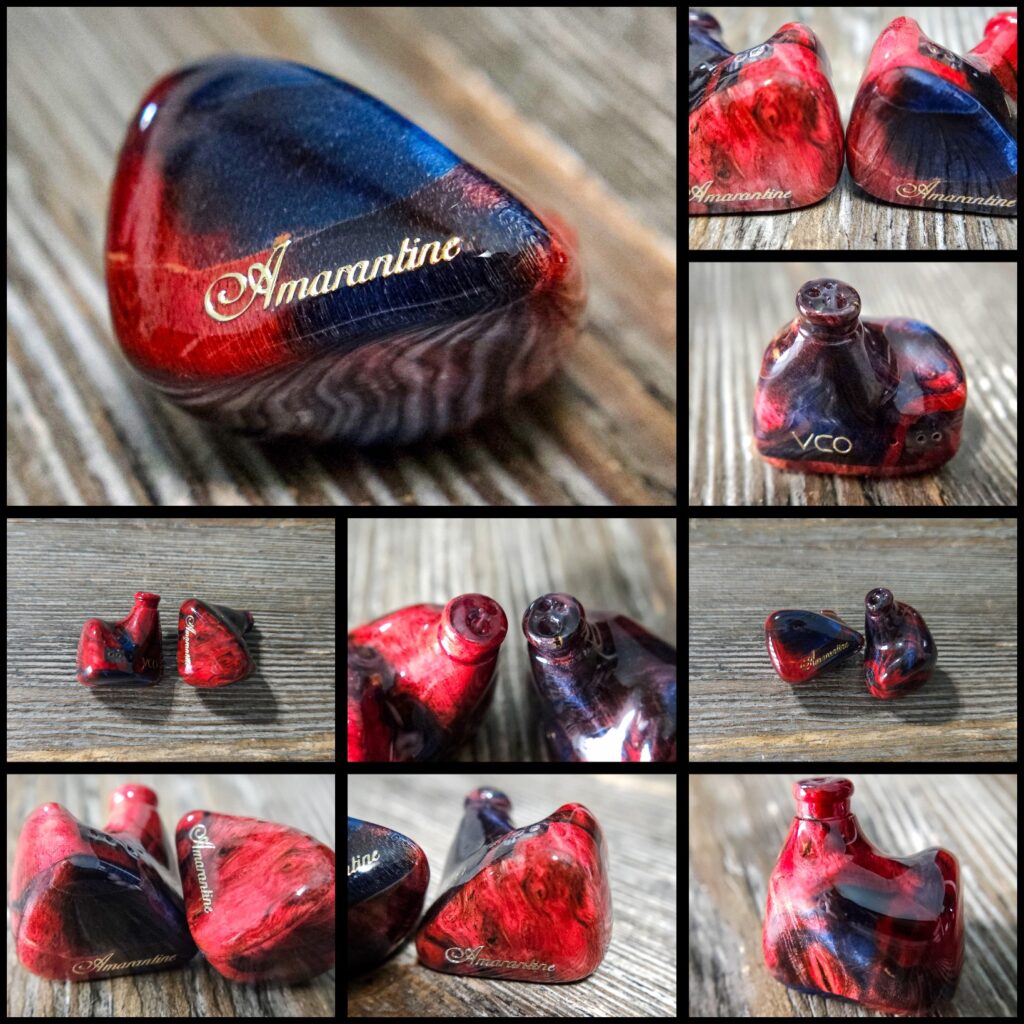
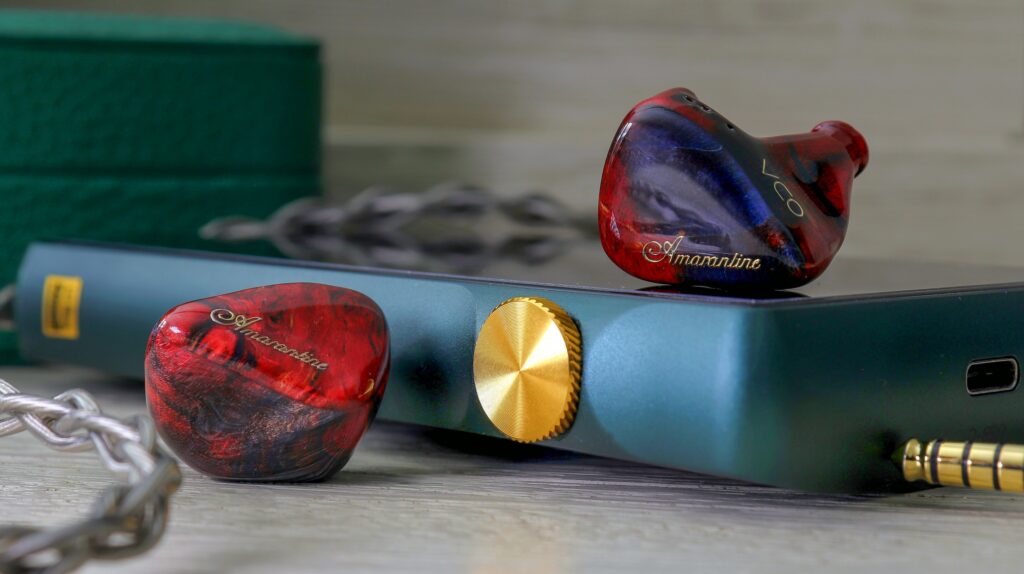
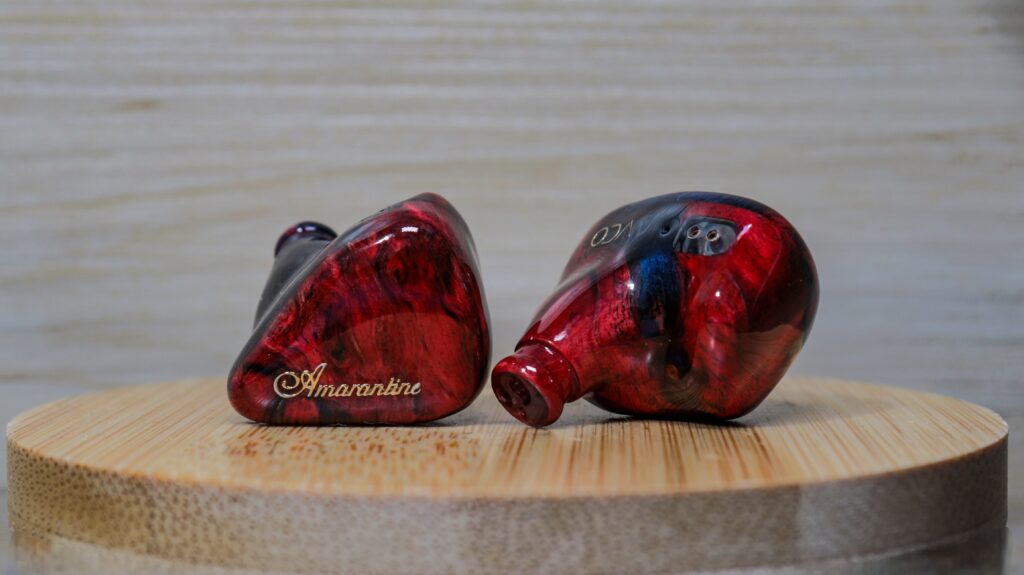
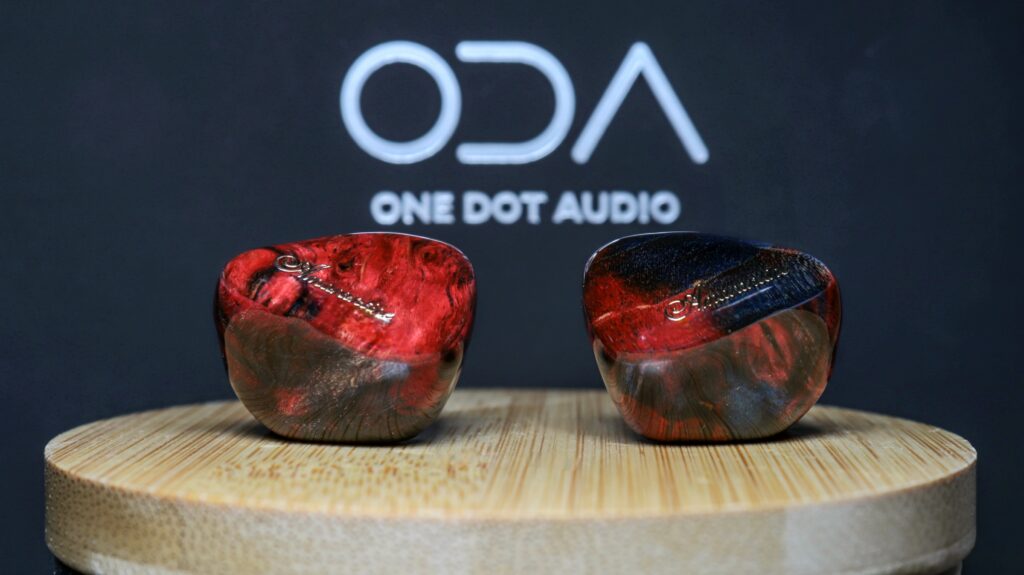
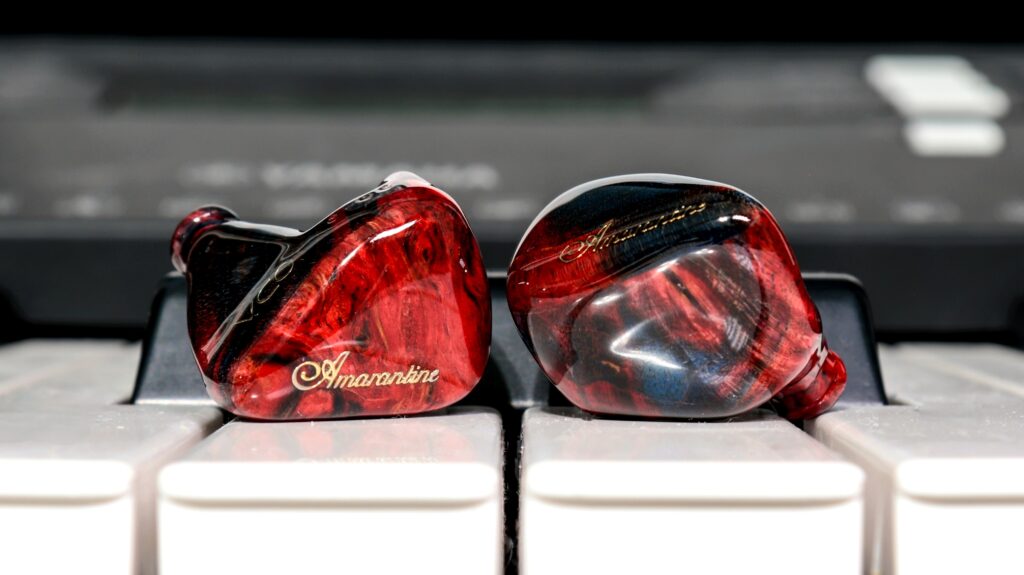
One of the most distinct qualities and “Pros” about ODA’s Amarantine A500 Wood Edition is that it is made entirely out of revitalized wood. I am very impressed anytime any brand tries to craft a wood based iem. However, in the case of both of ODA’s iems that I’ve tested, they were both made beautifully with a perfectly polished finish making them both some of the best wood housings that I’ve ever seen. Holding this set in your hands and twirling it in the light, it appears to be one solid piece of honed out and carved wood. Of course, I know there is a joint there, but you really can barely tell as ODA did a remarkable job on this one. I really couldn’t be more impressed. Working with wood as a housing comes with so many challenges which never seem to get brought up when learning about these types of builds. It is a very craft-heavy process which takes a lot of time and patience to perform correctly. ODA does a nice job with it. Really a very-very nice build. You’ll also notice a pressure relief vent near the rear of the shell, by the 2-pin connectors which is a nice touch. The nozzles are right around standard size of 6mm and right around what I’d call average length. ODA once again did a wonderful job on their Wood series of iems.
Aesthetic
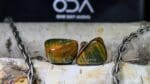
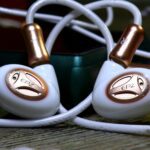
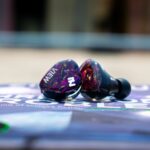
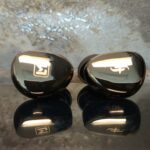
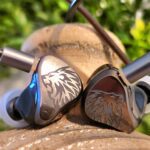
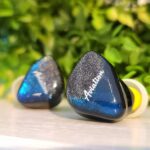
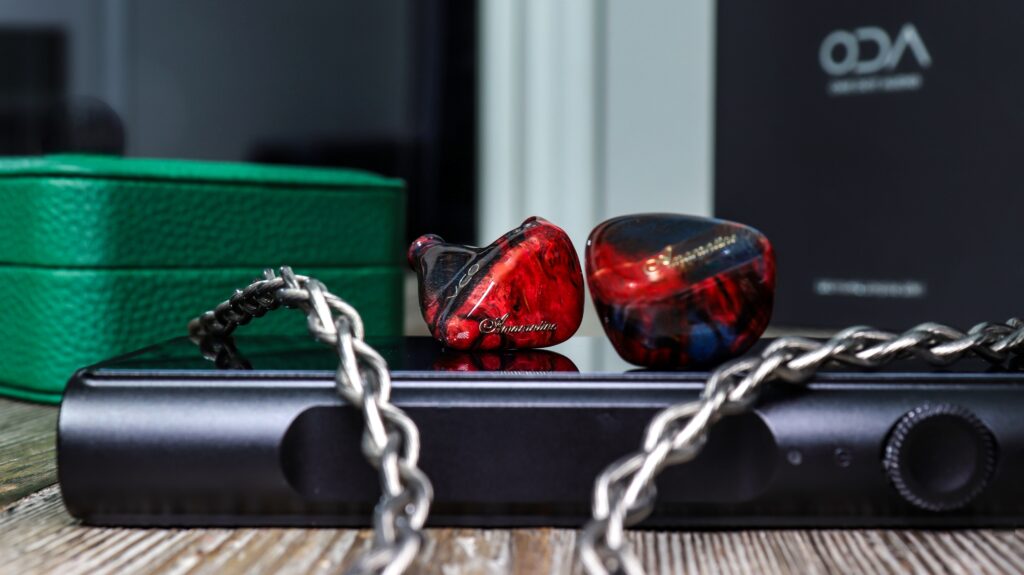
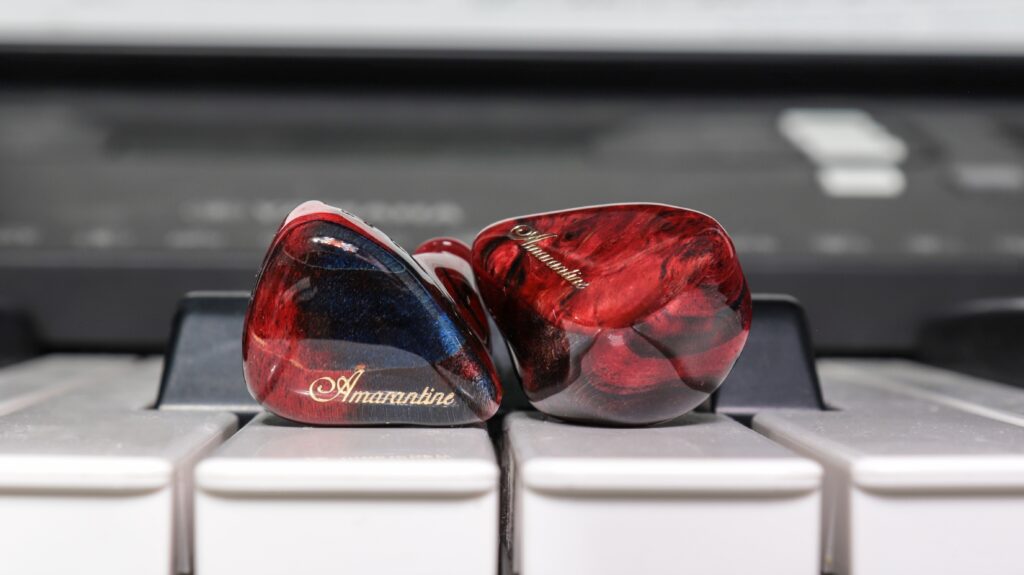
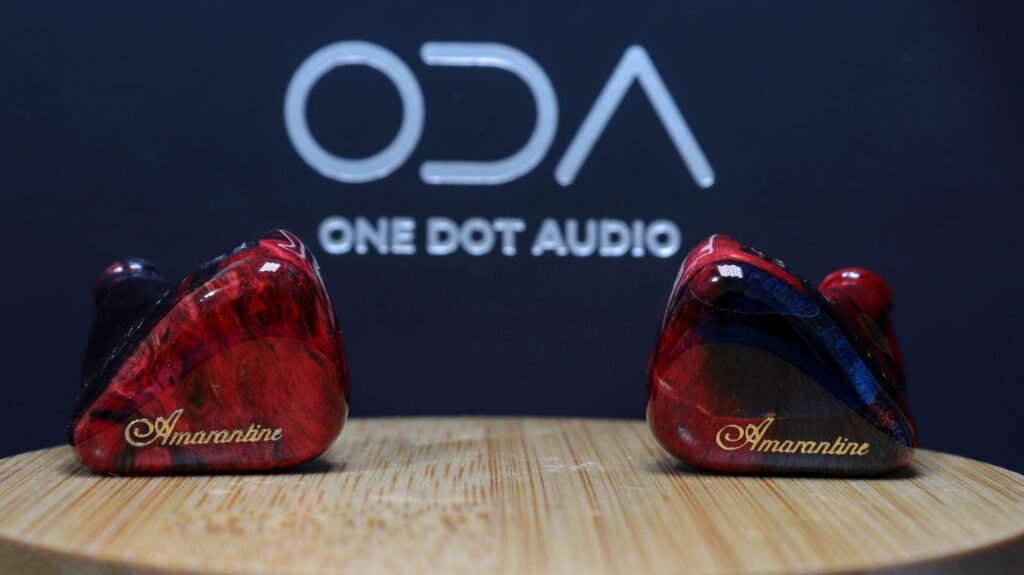
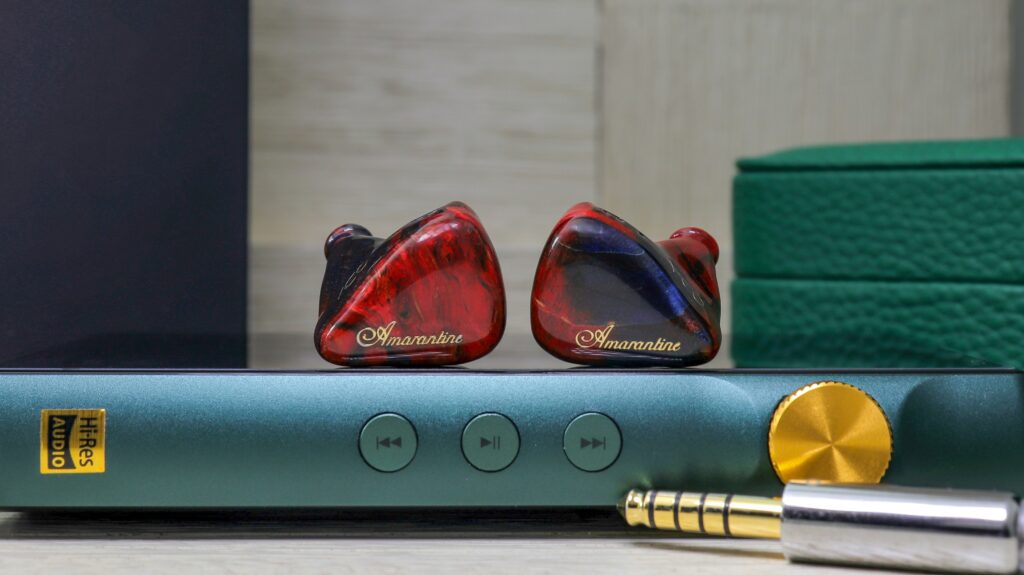
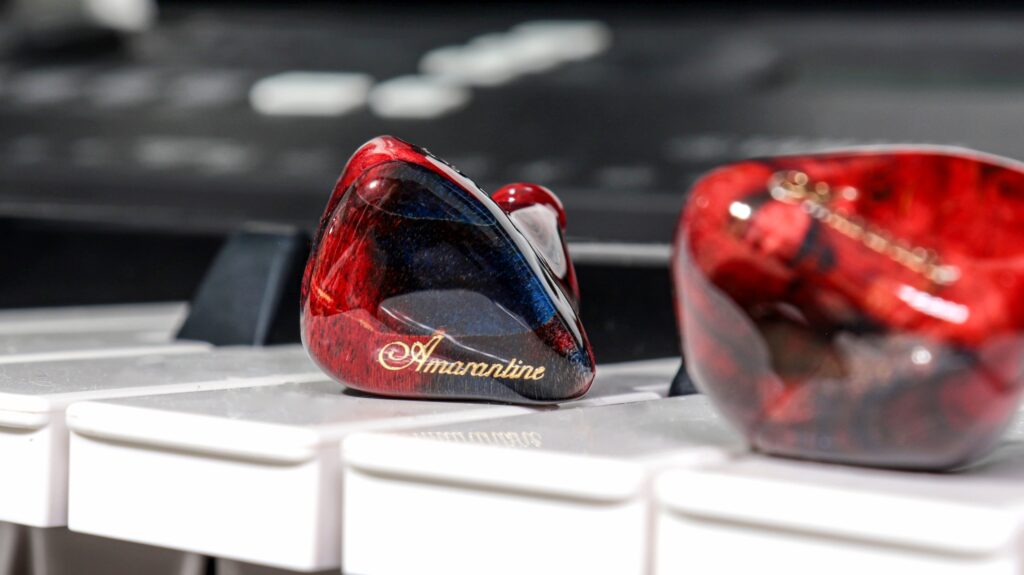
The actual design and appearance of the ODA Amarantine A500 Wood Edition is phenomenal in my opinion. I think, for me, a lot of my praise for the aesthetic appeal is because this has the wood shell body which shows off every grain in the wood very well. The entire look is pristine, no glue seams, nothing off at all actually. Perfectly symmetrical from left to right and gorgeous. As I said, ODA decided upon that deep cherry red or crimson red color as the main base stain. However, they also added in these dope looking accents of black and blue which you wouldn’t think would look nice together, but lo and behold the Amarantine WE looks… so nice! Of course, this is only an opinion. I’m sure there are those who don’t dig the deep red coloration as much. ODA also added a very small cursive “Amarantine” imprinted at the bottom of the faceplates. A classy touch for sure. I happen to find the look to be all class, very regal, very handsome, nothing gaudy or cheap about this set whatsoever. Beautiful work ODA.
Internals
ODA really does some nice work with balanced armature drivers. They really seem to be experts in tuning this particular driver type. Of course, I’m sure they could tune any driver type or driver configuration very well, but all that I’ve personally heard from ODA has been all-BA iems. That said, the Amarantine WE are in fact an all-BA iem which consists of five balanced armature drivers of unknown make & model. So, I have no idea if they used Knowles, Sonion, or any other make of the drivers. There is nowhere that I’ve seen which provides this info. However, who really cares? It isn’t about the driver. I know many people like to think differently, but what makes a set sound good has much more to do with the people who are doing the tuning and those who are doing the engineering. Now, that aside, ODA used one dual balanced armature array for the lows and lower midrange, one BA for the midrange, and one dual BA array for the entirety of the highs (lower treble, mid treble, upper treble). Besides the drivers ODA does use a multi-way passive crossover and sound tubes as well to break up frequency ranges. Beyond that, it would take me tearing this set down (which I would never do) to learn more about the Internals.
Fit / Comfort
As far as the Amarantine WE’s fit and comfort is concerned, I find it to be a very comfortable and lightweight iem that has absolutely zero jagged or coarse edges and corners. It’s a very smooth shell with that nice feeling of polished wood resting against the ear. Honestly, once I found tips that were comfortable and sealed well the Amarantine WE fit like a gem. Obviously, I have no clue how well this set will fit you. We all have slightly differently shaped ear anatomy and so not everyone is going to have the same fit as I get. However, I really cannot imagine that many people are going to have a problem getting a fit.
Drivability / Pairings
Sensitivity
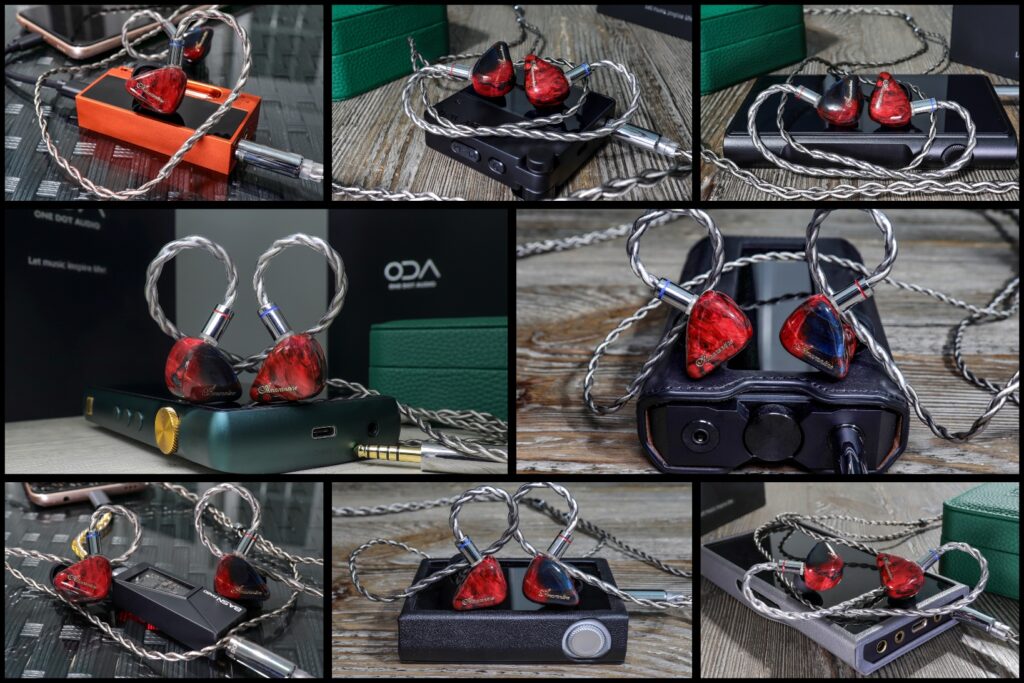
The ODA Amarantine A500 Wood Edition comes with a very low impedance of only 8 ohms as well as a sensitivity of 116 db’s. What this translates to is an extremely sensitive iem, as well as an iem that you need to be cognizant of what source you attach it to. However, I’ll start with the sensitivity because this set can be played loudly out of just about anything. Now, I don’t know how many of you are looking to buy this $500 iem without having a decent source on hand. But hey, maybe you are a newbie who wants to splurge and all you have is a simple smartphone. Unlikely… but possible. Well, you’ll be happy to know that in your unique situation you will have zero issues whatsoever driving this set. I have used every weak source I have, and I can make the volume blare in my ears if I want. Again, a very sensitive set. I used old Android phones with 3.5 se ports, super weak 3.5 se dongle dacs, my iPad, and a few other weak sources (same as every review), and they all played loud, and dynamic with the Amarantine WE. Having said that, I promise you the Amarantine WE will pay off giving them a little juice, with some caveats which cannot be ignored. Which I’ll explain later.
Scalability
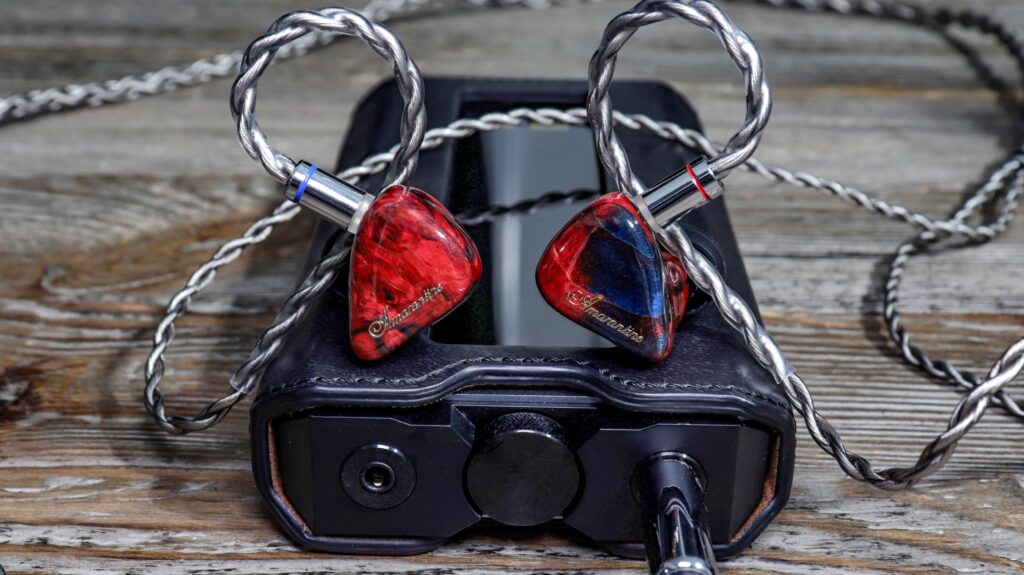
One thing is very clear about the ODA Amarantine A500 Wood Edition; it is a sensitive set that scales very-very well to a “low impedance” powerful and clean source. I notice a direct upgrade in fidelity pairing with many different dongle dacs in comparison with those weak sources I used. They provide an instant upgrade in bass tightness, better layering of the sound field, subtle nuances come across cleaner and more easily recognizable. Also, the soundstage adds a sense of depth that weak sources won’t necessarily give you. It’s actually an easy to hear uptick in sound quality. Of course, it isn’t all about power either as much has to do with “what” sources you choose to use. Most certainly a very clean source is best. I found my best output came from my portable daps like the Shanling M6 Ultra, the Shanling M1 Plus, Fiio Q15, the Hiby R6 Pro II 2025, and a few others. Something with some good juice and good internal components. Of course, I have many dongle dacs that sound amazing like the Shanling UA7, Shanling UA6, the EPZ TP50, Surfans X1, BASN PA60 etc. I guess what I’m telling you is that the Amarantine WE will reward you using better source devices which aren’t weak. I don’t think you need a dap or some strong dac/amp at all. Good dongle dacs will suffice as far as power output scalability is concerned.
Source pairing
Before I speak on the Amarantine WE’s tonal Pairings with different sources, I really need to cover what sources will pair best when it comes to impedance first. Rule of thumb is this; make sure that the impedance of your source is at least ⅛ or less the impedence of your iems. The problem with the Amarantine WE is that it has an extremely low impedance of 8 ohms. This is very important folks. For instance, with this set you should find a source that offers around 1 ohm or less output impedance. Granted, that is almost all of my sources. However, I have a few which are more than 1 ohm and while the sound isn’t terrible you can run into sound distortion, frequency unbalance, you’ll possibly hear some peaks and dips get unevenly amplified, bass can sound a hair more laggy, and in some cases you “possibly” could hear a less tight, less separated, and more cloudy image of the sound field. Please understand that this is not a sure thing, but it is most certainly something to keep your mind on. Other sets which feature lower impedances similar to the Amarantine WE have gotten unfairly reviewed by reviewers who simply didn’t know. Now, as you read, just know that any source I’m using has a solid output impedance for this set. There are some a little higher than 1 ohm output impedance that I use for critical listening but that honestly didn’t make much of a difference as they are so close. Again, that ⅛ is simply a “rule of thumb”, it isn’t etched in stone.
Sources cont…
So, for me and my listening preferences I happen to enjoy just about any source which has a warm/neutral to neutral tonal coloration with the Amarantine WE. In fact, I’d probably call this set just that; warm/neutral to neutral. I would try to stray from any source which leans bright as those can exaggerate the energetic highs of this set. If I were to pick my absolute favorite tonal pairings it would be neutral with a touch of warmth. Sources with just a touch of solid warmth and weight but not enough to blunt note definition and not so much brightness that the sound becomes abrasive or too edgy. You really don’t want an overly warm source either as anything that is too gooey may slightly blur that wonderful note snap and that excellent BA precision, which kind of destroys what makes this set nice in the first place. Of course these are just my opinions, you may feel different. Again, my favorite sources were warm/neutral to neutral, dynamic, resolving. Sources like the Shanling UA7, the Shanling M6 Ultra, Hiby R6 Pro II 2025, Fiio Q15, Hiby R3 Pro II, Shanling M1 Plus and the iBasso DX240 too. Who am I kidding, many other sources paired very well with this set. From more expensive daps to $65 dongle dacs. Also, if I’m being honest, the Amarantine WE actually pairs well tonally with most all of my sources. Nothing sounds outright “bad”.
Sound Impressions
*Note: before I deep dive into the sound of this set, I have to first explain a few things. First off, I did burn-in the Amarantine Wood Edition for approximately about three days. I know, I know, balanced armature drivers don’t necessarily need burn-in. Having said that, I definitely here a more precise and tight sublevel bass after burn-in. I don’t think the Amarantine WE really “needs” burn-in, but it helps to get the most out of this set sooner. Of course, there’s nothing wrong with listening-in and hear the changes over time. All of my listening is done using flac or better files (some MP3) which are stored on my devices and rarely do I stream any music. For all critical listening I used Divinus Velvet eartips and I used the included cable as well. Also, I used many-many different source devices, too many to list out here. The Android music player of my choice (for my daps) is typically UAPP (USB Audio Player Pro), as well as Hiby Music Player on some Hiby daps, or Eddict Player on some Shanling daps.
Smooth Transition
Can I quickly explain to you my headspace when beginning this review period? I realize that none of you asked for that and likely don’t care. Anyways, when I received the ODA Amarantine A500 Wood Edition I was right dab-smack in the middle of multiple warmly tuned, musicality focused, fluid and totally smooth iems. I mean, the Letshuoer Ember, the Hidizs MK12 X DucBloke, the Dunu x-Koto Ito, the EarAcoustics GENESIS G318s, with a couple less warm sets sprinkled in between. However, I’ve had so much warmth of late. My brain had completely adapted to silky smooth and groovy. To the point that I turned down a couple sets which… thinking back… I really shouldn’t have. Then the ODA Amarantine A500 Wood Edition comes across my door and I give it the first listen. However, I did this without a palate cleanser set. Typically I’ll use the HiSenior Mega5P to reset, or the Letshuoer Mystic 8, the Softears Studio 4. Sets which offer very little coloration. Anyways, I went straight to the Amarantine WE, which I figured would’ve thrown me off. Been a hair too precise, clean, and focused for my taste at the time. However, there is something special about this set folks.
Easy set to like!
I know, you’ve heard this a thousand times in many different promising reviews. No really, there is something special about the Amarantine WE that I am right now searching my mind to explain. It’s almost in the same vein that the Kiwi Ears Orchestra Lite is special. That silky smooth yet highly technically and very capable sound. Only the Amarantine WE take that likeness and expounds upon it in every direction. Just as natural but more vibrant, punchier, even tidier across the spectrum, better treble sparkle, better treble air, better stereoscopic dimensional spacing and sound field realism. It offered me a very easy transition. Granted, I really do love just about any signature if that signature was tuned well, but the Amarantine WE seem to be this perfect in between that I so easily melted into. As plainly as I can say it; the ODA Amarantine A500 Wood Edition is simply an easy set to like. Fantastic job ODA!
What’s It Sound Like?
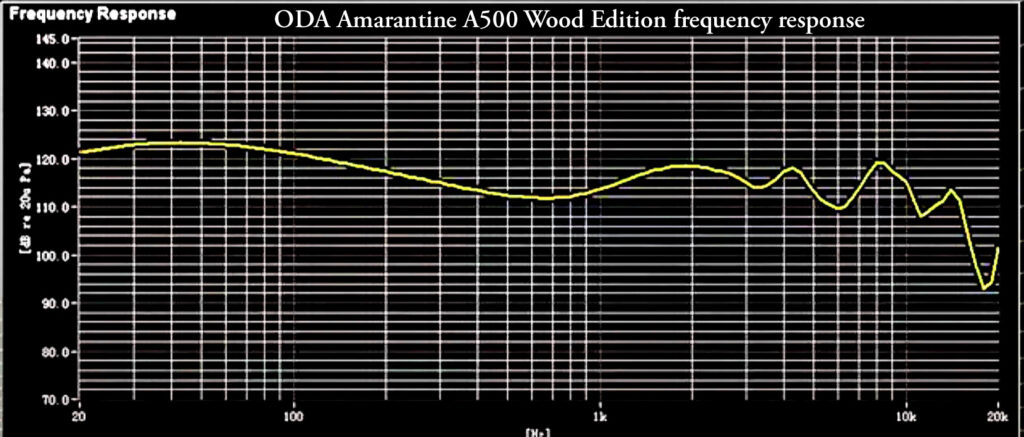
The ODA Amarantine A500 Wood Edition is one of those all balanced armature iems which flat-out nails that realistic neutral-organic tone and timbre. Earthy in tone yet sculpted, airy yet bodied, fluidly cadent yet pinpoint. Balance is everywhere. In my opinion, the Amarantine WE have a natural sounding W-shaped signature with equal balance doled out to each 3rd of the mix (bass, mids, treble). However, that W-shaped sound isn’t too gaudy in sprightly energy. It’s forward, big, tall, and deep with great dimensional cues. The Amarantine WE are also very clean, with an almost effervescent quality to it, something very familiar and easy to adapt to. Again, it’s just so easy to like, so well-manicured, yet also it’s musically proficient. In fact, I’d say this set is more musical than it is technically adept and analytical, for sure. As clean and kept as it is I’d still say the musical/analytical split is closer to a 60/40% split. Give or take. Beyond that, the sound is just big, and like I said it is very well dimensioned coupled with natural note weight. Also, the Amarantine WE carry this very well-controlled agility boasting tighter transients, similar to any good balanced armature experience. However, the Amarantine WE are very much unlike many all-BA sets in that I hear absolutely zero BA metallic tinge to the timbre or any electric fuzz cresting energetic notes. To add to that, the Amarantine is a moderately energetic and very-very engaging all-BA iem with a clean portrayal of the spectrum in my opinion.
Nothing sticks out
I think what sticks out to me is that nothing within this tuning “sticks out”. There’s no sore thumb quality which rears its ugly head on certain tracks. No peaky or shouty moments which screech through my ears, no turning the volume down, no abrasive or knife-edged moments of coarseness. You won’t hear any odd timbre moments, nothing sounds disjointed either. Yet in the very same breath I hear a very delicate dynamism that comes across as punchy, with fairly vibrant macro-dynamic energy, on the verge of being more fun than anything else. Furthermore, nothing about this tuning sounds non-cohesive. The spectrum is very well laid out and controlled. Smooth across the board whilst remaining precise. Sure, there are always some potential subjective tonal issues that some people will have and I’ll outline those. Still, for anyone who’s okay with good balance, great timbre, nice punchy and vibrant bass region, great note definition and clarity, as well as a very well resolving sound… then I think you’d be okay with the Amarantine Wood Edition. Again, nothing sticks out on this set as a glaring weakness unless you are an ardent treble head, a die-hard basshead, or if you simply hate balanced armature drivers, or the color red. Let’s break down each 3rd of the mix.
Bass Region
One of my favorite types of bass replay will always come from a well-done balanced armature driver. Of course, the best you’ll get is typically from a dynamic driver, however a well-done BA bass can be some of the most pleasing bass that I hear. In the case of the Amarantine WE, the bass is fantastic for what it is. This is a low-end which punches above its weight in scale and sheer physicality while remaining very textured, controlled, and very well defined for a 12 dB bass shelf. This bass has an unmistakably punchy nature where each warm/neutral note is very concise, has snap, has some good raw force behind it when a track calls for it. I think that is one of its best qualities actually. The Amarantine WE’s low-end doesn’t enforce its warmth and weight across the spectrum to the point of any mud, veil, or murkiness. This is a high presence bass which matches amplitude and robustness very-very well with the mids and treble. This bass has some of that lean muscle mass, fast twitch, natural decay, and assertive low-ends with a substantially potent and dark vibrant boom. Very satisfying for anyone who can get behind what I’m trying to describe. It’s fast, very high quality, never gets tripped up by complicated bass passages, and the bass handles even intricately complex and nuanced sections with scalpel-like control. Fast like any good BA bass or even planar bass yet very close to a DD style in body and realism. Perhaps not quite as atmospheric and naturally resonant as a DD can be, but some of the best “fun” BA bass that I’ve heard under $700, hands down.
Clean, Well Defined, Punchy
I should probably now explain that the bass is never too much. Not for me anyways. When I hear a track like “Paradigm” by The Head and the Heart absolutely growling with sublevel might while every vocal note comes through with perfect clarity and the melody tunefully floats by unphased by the low-end drone… I knew that ODA made a darn fine bass. It’s never too much. The bass doesn’t smear anything, it doesn’t tend to add any veil at all, and the bass always keeps its composure. Separation shines in complex tracks as sub and mid-bass parts coexist without blending. Most assuredly ODA tuned this set with clarity and cleanliness being of top regard. You have some bleed into the mids but the fast decay of the low-end really does help tremendously to keep those midrange notes from smearing. You simply don’t have any real lag. No resonance-laden harmonics intermingling with midrange notes overlaying nuances, and no greasy fundamentals drowning out anything either. Well, maybe on some overtly bass heavy tracks, but also, who of you are seeking out nuances in overtly bass heavy tracks? Anyways, the point is that ODA has truly figured this balanced armature thing out and crafted a bass which not only sounds fun and very gratifying but also is very mature and very skilled.
Sub-Bass
What I enjoy about the sublevel sound of the Amarantine WE is that it’s very well structured, goes deep in pitch (especially for a BA), and has a physical rumble when called upon. But I also love that it isn’t too clean or clinical either. This isn’t a dry sublevel presentation folks. I wouldn’t say the sub-bass will rattle your eyelids, but it is substantial enough to provide some seriously palpable and haptic feel when listening to “Groove” by Ray Wylie Hubbard. Or, synth drops have that satisfyingly deep and sustained 808 layered bass drone and rumble that is both tactile and textured in the track “Bassnectar” by Speakerbox. On my file it drops at 55 seconds, and it is flat out impressive for a BA set. Not a basshead sound either. I should’ve already stated this. However, the sub-bass offers enough grumbling and guttural low pitch judder to replay a good 808 synth drop appropriately. Perhaps not to the depth and judder of a good DD, but great for a BA set. The best is that the mids and treble shine through with clarity. I wouldn’t call this the fastest sub-bass on planet earth as there is some subtle immersion filled sustain, but the sub-bass rolls-off perfectly before you hear any muddiness. It’s a sub-bass which provides that dense foundational layer without necessarily masking upper end harmonics and still comes across as very fun and very agile. I’d definitely enjoy a solid DD a hair better, but I have nothing but good things to say about how ODA tuned the lowest of the lows.
Mid-Bass
For me and my ears it’s the mid-bass which really shines with its visceral and impactful punchy style. This is a groove filled and physical bass which has that concrete style density cementing every fundamental note with a rigid enough quality that feels and sounds both dexterous and booming at times. The best part is that this emphasis (12 dB) doesn’t seem to extend its warmth in a detrimental way. Basically, the warmth and weight don’t widen midrange notes, it doesn’t sand down fine edges, and resolution doesn’t seem to take a hit. Bass guitars tend to sound full-bodied, guttural, and realistic. You’ll hear a fast and hard snap attack ushering in a solid fundamental note with only a subtle decay trail hanging around just enough for fun, just enough roundness, just enough atmosphere added. Separation is nice too. Again, what you have is much better note definition than many sets with 12 dB and up bass shelves. Providing lead singers with clearly rendered vocals, instruments with fairly clear-cut note outlines and a bass which can meander around tracks like “Anthem Part 3” by Blink-182 with ease. Or “Billie Jean” by Weezer which has those fast, prominent, and very physical successive kick drums. Needless to say, the Amarantine WE handle each kick succinctly, with a tacky snap on each attack and that quicker resonant boom and without fuzz blunting the note clarity. It’s just nice, fun, and high quality for a balanced armature driver bass.
Downsides to the Bass Region
I could list a hundred different ways that the ODA Amarantine A500 Wood Edition’s bass doesn’t come across as great as I’m portraying it. The first type of listener which won’t enjoy the bass would be straight up bassheads. I already know that the Amarantine WE are not going to have the DD-like physicality and overwhelming slam that they’d like. While the sub-bass has plenty of rumbling meat and vibrational feedback, it won’t give you endless, room-shaking and totally bulbous sound. Also, the mid-bass is a touch too clean, textured, and well-controlled for those folks. I already know some will say it lacks that final last thump or aggressive depth. The next type of listener that won’t enjoy this bass are those who describe themselves as “reference” or “neutral” audiophile purists who will unquestionably feel that the bass is too much. I’m sure they’d say the Amarantine WE’s bass comes across too fun, too colored, with a touch too much decay without the ultra micro-detail resolution of much more rapid and less emphasized low-ends. Also, while the bass certainly comes across with solid density and good tactile rigidity, it still is missing that last little bit of dynamic driver validity. There’s some non-verbalized something that a dynamic driver can provide which other drivers simply can’t seem to have. Please don’t take this as me putting down the Amarantine WE in any way at all, because I enjoy it far too much for that. However, as close as the Amarantine WE is to that style of timbre and weight, it still doesn’t quite match a good DD. Having said that, I still love a good BA bass and the Amarantine WE easily feature one of the best fun-tuned balanced armature bass replays that I’ve heard under $500, probably $700.
Midrange
If I were to describe the midrange, I’d first say that it is effortlessly smooth, very natural in timbre, and also very vivid. There’s a lot to unpack in those three descriptors, but the main thing I want to get across is that the midrange certainly prioritizes emotional musicality, smooth fluidity, and clarity-rich presence over a clinical dissection of my music. As nice as the Amarantine WE is in the technical department, it is not some technical beast with analytical skills that illuminate every last detail first. This midrange is much more geared towards melodic rhythm and flow. Which I am more than okay with. Having said that, the technical ability of this set is nothing to frown at. More on that later. Bringing this back to square one, the Amarantine WE’s mids are warm/neutral in tonal color with a very natural, very organic sound for a set which only has BA’s doing the singing. Voices and instruments have a natural body, a realistic body, which infers that note weight is solid, and nothing… at all… feels or sounds… processed or artificial. This is the Amarantine WE’s midrange superpower folks. Remember I said it was special in ways like the Kiwi Ears Orchestra Lite? This is how it resembles that set. That organic feel to the structure of notes is just as natural as the timbre and tone-color, with the only slightly unnatural aspect being its transients which are “possibly” a hair too tidy. That’s me being ultra picky. Basically, timbre is a strong suit.
Midrange cont…
Another aspect of the midrange which I feel helps this set to sound vivid and even lively is its forward nature. Like I said earlier, this set is what I’d call a W-shaped signature. What makes it a “W” in shape? Well, just like every signature, everything is usually predicated on where the midrange sits against the bass and treble. Most certainly the midrange sits right in line with the outer ends of the spectrum, or close to it depending on the track. This forwardness provides the listener with an intimate feel which pronounces stuff like the breathiness of a silky female voice or the authority in a male voice, pulling the listener into the experience. There is a harmonic richness that the Amarantine WE have that doesn’t rely on warmth bled into the mids, or bold and thick note body. This is something different. You have a forward, intimate sound, but you also have that crystalline clarity too, yet in the exact same moment the sound is smooth, nothing jagged, still crisp enough but never edgy. It’s this midrange cocktail that simply works so well to draw the listener into the melody. There’s an unmasked clarity which consists of midrange air, subtle inflections, natural breathy sibilants (the good kind), which provides what I’d call “emotional nuances” that really do evoke an engaging experience for me. Sure there are other sets which can do the same. The Orchestra Lite that I’ve spoken about easily does this along with many similarly tuned iems. I don’t want to sell this set as the second coming. However, I’m not going cheap on my descriptions of what I hear either. I think what sets the Amarantine WE apart from other similarly tuned and even similarly priced iems is that it has such a funky spirit, a fun sound, an emotionally charged sound, and it always keeps its composure.
Lower-Midrange
The lower midrange is one which gains a smidgen of weight and a touch of warmth from the low-end without the sound going bland, dulled, or too boring. In fact, to my ears I wouldn’t necessarily call the low-mids full-bodied as they carry a natural body, as I said earlier. Of course, there are plenty of tracks which will vary one way or the other, but for the most part the low-mids carry a very grounded and even a seemingly authoritative feel to this range. Obviously, this is a help for male vocalists who mostly reside around the low-mids. This region is also not plagued with recession which seems to up the presence without coming anywhere near boxy sounding. Really, the natural and organic theme is alive and well with both instruments and vocals to my ears. It goes without saying that all of this is in the ear of the beholder and everything I say is a subjective opinion, but I don’t think many would disagree when it comes to this region’s timbre. Males like Dermot Kennedy in “Rome” has that nice chesty sound, with his edgy voice cutting through very well. Or David Draimen of Disturbed in “The Sound of Silence” whose voice starts out so gravelly in that low register sounding warm, very well textured, and weighted. However, as his voice raises in octaves the Amarantine WE do an awesome job of promoting his presence sounding crisp without a razors edge. The Amarantine has these very well-controlled transients along with that note weight which captures David’s every vocal intonation with solid transparency for an all-BA iem. This track is a great one for testing and I’d say that the Amarantine WE aced it.
Upper-Midrange
A few things that I really enjoy about the upper-mids is that the pinna gain is a smooth ride uphill without those pesky peaks, metallic edge, and without any nasally timbre moments. This region comes across as very expressive with a more forward tilt than its low-mid counterpart. Females especially benefit from the natural note body, the moistened feel, and the subtle shimmer that ODA tuned into the upper-mids. Resolution and note separation get a certain boost with a more luminant sound, an airier sound too. Illuminated enough to hear crisper articulations and very solid detail retrieval as well. While micro-dynamics aren’t exactly top tier, they are more apparent in certain tracks and definitely more discernible than most musically gifted iems. Though, without question more analytically tuned sets will usually carry even more air, more clear in those upper harmonics too. However, as a whole female vocalist’s shine with their forward intimate nature. Vocalists like Sia in “I Forgive You” can sound very present, bold, and powerful just as easily as she can sound feathery in her beautiful rasp. The trick with her voice is not exaggerating the ultra edgy moments when she belts her heart out. Not an easy trick for many sets. The Amarantine WE perform these moments admirably. Another is Kacey Musgraves in “Deeper Well” which comes across absolutely lovely with the Amarantine WE in my ears. Nothing is forced, every inflection is effervescent, airy, and her voice has the presence to sound soulful and composed. In truth, there aren’t any real problems that I’ve heard dealing with females. Sure, some artists, like the singer Cam in her track “The Otherside” can get a hair exuberant at times, but many sets have this issue. Honestly, I feel that the Amarantine WE are a fantastic vocal iem.
Instruments
I will very broadly describe some instruments with the Amarantine WE. Please understand that describing instrumentation in a generalized way is not always accurate for every track. However, the Amarantine WE is tuned as a great canvas for instruments to generally sound realistic, nicely bodied, and distinct with very nice note separation. Furthermore, instruments tend to sound well layered and depending on the track they can also sound highly detailed. Guitars usually benefit from this tuning with that textured pluck or that almost “woody” resonance along with a slight edge and natural rebound for strings. Excited electric guitars never seem to sound overly edgy either yet clearly having enough sparkle and crispness too, which is nice to hear. Stuff like piano generally sounds so nicely bodied with that sweet attack, the tuneful fundamental, along with well clean harmonics. Percussive instruments snap with controlled transients and a rather right decay. Actually, a pretty believable decay. Woodwinds like flutes and clarinets come across airy enough, even breathy, if that makes sense. I’d say the only real subtle issue will come from extension in the upper mids not always sounding quite as sparkly as some may like, but overall, very solid. The body, the organic timbre, the moderately energized sound, the tighter transients, and the great note control really do help to make most instruments feel and sound natural and also very clean.
Downsides to the Midrange
The midrange certainly isn’t perfect. By the way, when you find a perfect set… please message me. I think the biggest gripes in the midrange will be the same as every other range in that they will be subjective tonal issues that some people will personally have. Like the person who seeks out iems with zero bleed at all into the mids. As nice as the Amarantine WE are with its controlled bleed, it can still slightly bloom or mask on rare occasions and certainly won’t be nearly as perfectly transparent as some may enjoy. I’d also say that while the intimate presentation is nice, it is somewhat of a hindrance towards an open and airy sound. Granted, the Amarantine WE have some definite air, but it won’t be to the level of sets which are literally tuned for air, tuned to sound open. So basically, the Amarantine WE may sound too intimate for some folks. Beyond that, there are plenty of people who much more desire a very warm or even dark midrange with absolute richness and weight. Those smooth lovers who desire a butter cream midrange without a chance at shout or glare. The Amarantine WE aren’t that. Lord knows I’ve heard plenty of butter cream midranges lately and the Amarantine WE were a perfect respite from that for me. Folks, the midrange is easily one of the best attributes of the Amarantine WE, without a doubt. ODA truly tuned a very well-done midrange which has way more upside than any of its downsides.
Treble Region
Treble in a nutshell
If I were to label the treble region anything, I’d say it is “safely-enthusiastic”. This is a treble which follows suit with the other frequencies and comes across as balanced tonally and balanced dynamically. The treble also has that organic style timbre, smooth cadent flow, and also plenty of ever-so-slightly dialed-back note bite but good crispness and very good resolution. Brilliant enough to uplift the spectrum without ever causing fatigue as well. I definitely wouldn’t say that treble heads would be beating down the door to pick up a set, but fans of a musical sound and a solid treble are likely going to enjoy how this treble fits in the overall character of this set. Now, you won’t have that EST bite and perfectly sculpted note contours, but I gotta say, it’s almost there. ODA did a solid job tuning the highs to sound so well feathered-in with the upper mids sounding cohesively blended while each individual note sounds distinct and clean. Extension is also nice too with plenty of sparkle past 10k. I should also note that there is nothing forced in this treble display. ODA has way too much tuning class to add that ultra bright forced resolution. No sir, all details, all crispness, all bite, all note separation, and any other technical aspect of this treble was done with good drivers tuned well. I totally respect that. Overall, I have zero to complain about.
Tone & Timbre
Once again, the timbre sounds closer to realistic than anything else. I’d even go so far as to say the treble sounds very refined for an all-balanced armature iem. Let’s put it this way; there was never a moment where I felt any instrument sounded artificial, too metallic, sibilant, or smeared. You get clean note layers with solid note definition helping the secondary harmonics of a cymbal strike to sound shimmery without the splash. Vocal harmonics also sound refreshingly accurate with a forward tilt that walks right in step with the rest of the mix. For stuff like guitar harmonics, I “generally” don’t hear those thin or overly etched notes, but instead they sound well enough bodied and airy too. Honestly, all string overtones sound distinct as the faster transients help even complicated mixes sound fairly distinct. Friends, I could keep going, I have plenty of notes. The point is that the treble has some very nice timbre and tone flavor bordering on tight and crisp coupled with bodied and smooth. Overall tonality comes across neutral to neutral/bright and never feels warm, dark, or dull. This treble has energy. However, that energy also has very nice control for what it is. I love that every note has that subtle richness, that sweet treble punch which never sounds abrasive or harsh for me. To me, that is priceless for a treble. It’ll take you right to the brink of sharpness, yet it’s dialed back just enough to keep controlled and accurate. And thankfully, thankfully… there’s no BA timbre folks. I hear none. No metallic tinge for my mind to zero in on. Everything is just so natural on this set.
Technically Speaking
Now, when speaking of the technical ability of the treble region I’d tell you from experience that this set is very admirable in this regard. First off, nothing comes across so smoothened that notes sound congested or blended. You really don’t have bass masking and you don’t have smearing up top either. You’ll never hear anything so complicated that the treble turns into a smear of treble tizz. Again, notes have that clean-lined control, good balance, fast transients, and the sound is airy enough. What this does is pave the way for details to emerge. Even the minutiae is easily spotted/discerned sonically. Stuff like those subtle reverb trails on cymbals (you know what I’m talking about), the pluck nuances on strings, and vocal breathiness has that perfectly natural texture. Also, the highs are very well layered too which shows its skill in busy metal tracks keeping high end instruments and harmonics distinctly separated from the mids etc. Basically, notes sound relatively distinct for the musical tuning. Lastly, extension into the highest of highs is also… good. Not top-level extension and not treble head worthy, but good enough to never sound rolled-off. I hear very nice extension and air without sharpness or note attenuation whilst remaining controlled. Having said that, once again, those ultra detail trackers may slightly disagree because while extension is solid for the tuning, it won’t be at the level of a purely analytically tuned set tuned to exaggerate the upper treble. I’d much rather hear a nicely extended but musical sound over a dry and forced sound… any and every day of the week.
Downsides to the Treble Region
Okay, I just spoke on the highlights of the treble, but there are always lowlights. There will always be subjective tonal downsides that somebody-somewhere will have. For the Amarantine WE I’d first mention extension. So, while the extension is very good, even airy and open, great timbre too, it won’t be to the degree of brighter analytical iems. What’s great for me may not be great for you and I have to at least mention it. The ODA Amarantine WE really doesn’t have that “endless headroom” feel to it. While I love the vertical height and openness that it carries up top, it still will not satisfy true treble junkies. Also, for $499, the Amarantine WE doesn’t carry those top shelf EST drivers with perfect note sculpting. The Amarantine WE’s treble is a hair too smooth for that. I definitely hear crispness and even some note bite, but it won’t be to the level of a finely tuned EST, or even a brighter and more treble lifted BA or micro-planar. Again, just like any set the Amarantine WE isn’t perfectly tuned and isn’t flawless. Nevertheless, the treble carries way more upsides than downsides.
Technicalities
Soundstage
When speaking on the soundstage, I’d call the Amarantine WE good. About what I would refer to as “average”. What do I mean by that? Well, it won’t blow your doors off in its width. I’d say that the stage goes just past my ears, which is nice. Average is good folks. Now, I really enjoy the height because you’ll notice some definite vertical layers as I mentioned before. There is a feeling of a tall stage. Sure, it is more intimate and up front, but it’s pretty full sounding too, which is a very nice thing to hear. Lastly, the depth is just-above-average meaning that there is solid depth. You can certainly hear good front to back layering and dimensional cues which provides a fairly holographic feel to the stage. Not out of your head or vast, but solid for the tuning, it fits. In fact, everything about this set fits. There is balance everywhere folks, even in the stage. I think what makes this somewhat intimate stage work so well is the overall dimensionality and superb sound layering and very distinct imaging. Add it all up and you have a sound which comes across as 3D.
Separation / Imaging
I think one of the Amarantine WE’s strong suits is its ability to separate all elements within the imaginary psycho-acoustic stage in a very distinct manner which never feels either congested or smeared. From vocal harmonies, guitar riffs, to smashing percussion, everything sounds intelligible and partitioned off. This is especially great being that musicality is the Amarantine WE’s real forte. Even better is the Amarantine WE’s ability to place instruments. To my ears they are locked in place. Center image is always parked clean and vivid. Whether left to right or layered front to back the Amarantine WE seem to do a very solid job of commanding a well-controlled stage. Sure, the stage isn’t “out of your head” amazingly vast, but the cleanliness, control, and overall technical acuity are very high with this set. Separation, Imaging, and layering are very nicely done.
Detail Retrieval
As far as sheer ability to illuminate details, I’d say that the Amarantine WE are solid. There is never a moment where it feels that micro-details really suffer. Again, you only have bass masking on super heavy bass tracks, the sound is clean and clear, transients are tight to natural across the board, and the tuning has an overall balance where no one area usurps dominance over the rest of the mix. Take all of these attributes and what you typically will get is a set which can draw details to surface at least moderately well. For a musically engaging sound… the Amarantine WE do a great job. Sure, it won’t beat out an analytical-first iem tuned clinical, bright, and dry. But for what it is the Amarantine WE does very nicely.
Comparisons
Softears Studio 4 ($450)
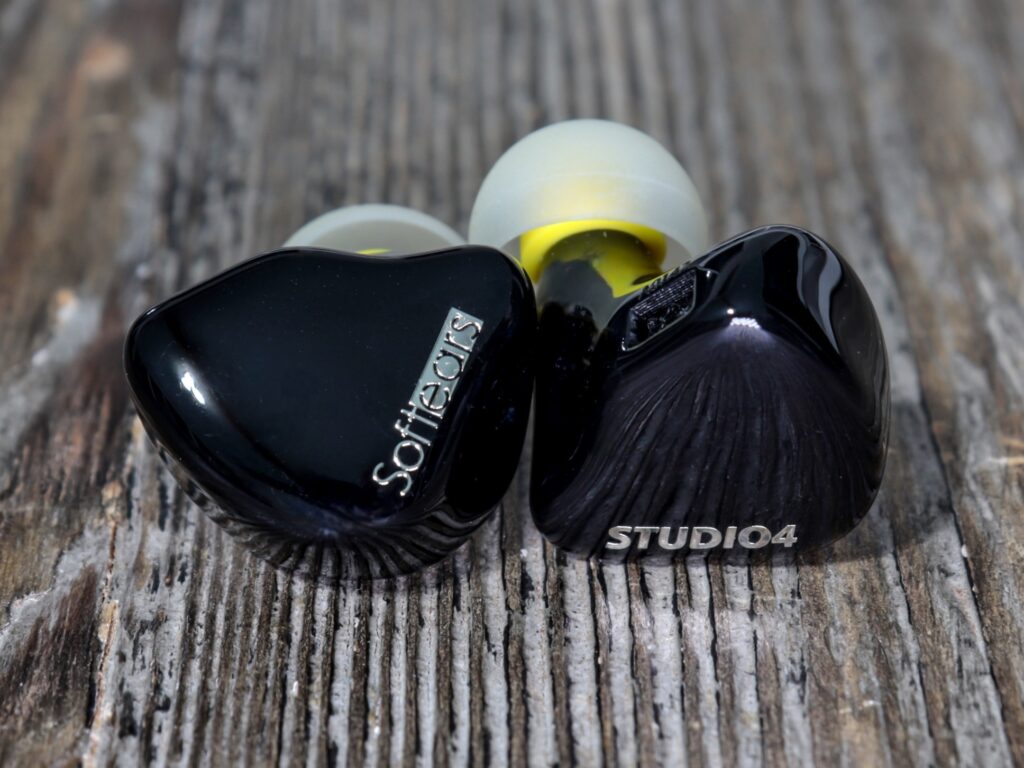
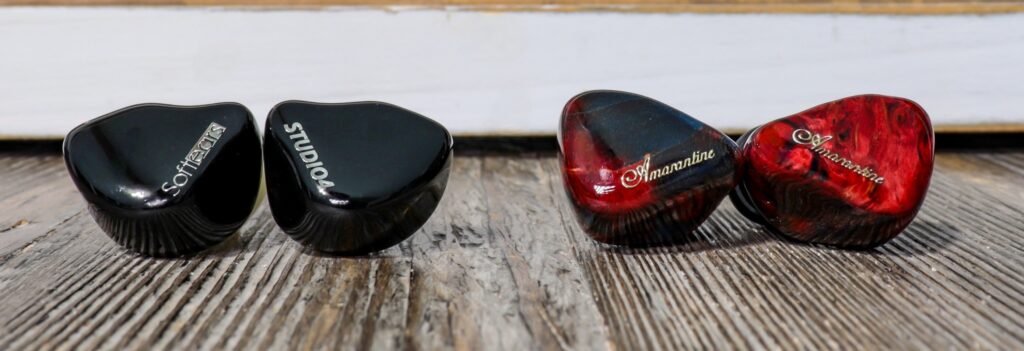
The only comparison that I have is with one of my absolute favorite all-BA iems that I own, the Softears Studio 4. I should note that I had two other sets ready to be compared but I ran out of time. Anyways, I have to admit something. So, I could’ve reviewed this set but chose not to. Yes, I did that. It simply didn’t jive with me at the time. It took well over 6 months for me to even check out the sound after I chose to not review. However, this is one of those sets which absolutely hit me with its spectacular abilities and made me a fan that day I did my re-check. I kick myself for not going the extra mile and reviewing. Anyways, the Studio 4 was actually created and tuned to be perfect for studio mixing, recording, and stage monitoring. Coincidentally, it is also one of the best palate cleansing iems that I’ve ever used. Furthermore, the Studio 4 sounds very-very good. Now, this set is a four balanced armature driver iem, custom drivers, along with a 3-way crossover. Really one of the more pleasing technical sets. Let’s take a look at some differences between these two sets.
Non-Sound Stuff
To begin, the ODA Amarantine A500 Wood Edition absolutely mops the floor with the Softears Studio 4’s packaging and unboxing experience. Much better tips, much better cable, much better carrying case (well, this is debatable). As far as build, both sets are built very nicely, however the Studio 4’s build is much more functional as Softears intended this set to be comfortable, lightweight, and easy to wear. Having said that, there is absolutely zero competition here because the Amarantine WE are built to such a high standard and truly makes the Studio 4 appear to be a budget set in comparison. Also, for as lightweight as Softears tried to make the Studio 4, the Amarantine is only 2 grams heavier (4 grams to 6 grams). I’d take the beautiful wood build over the all-resin build any day. As far as aesthetic appeal, c’mon. Obviously, the win goes to the Amarantine WE. This one needs no explanation. Both sets are very easy to drive with high sensitivity and low ohms as well.
Sound Differences
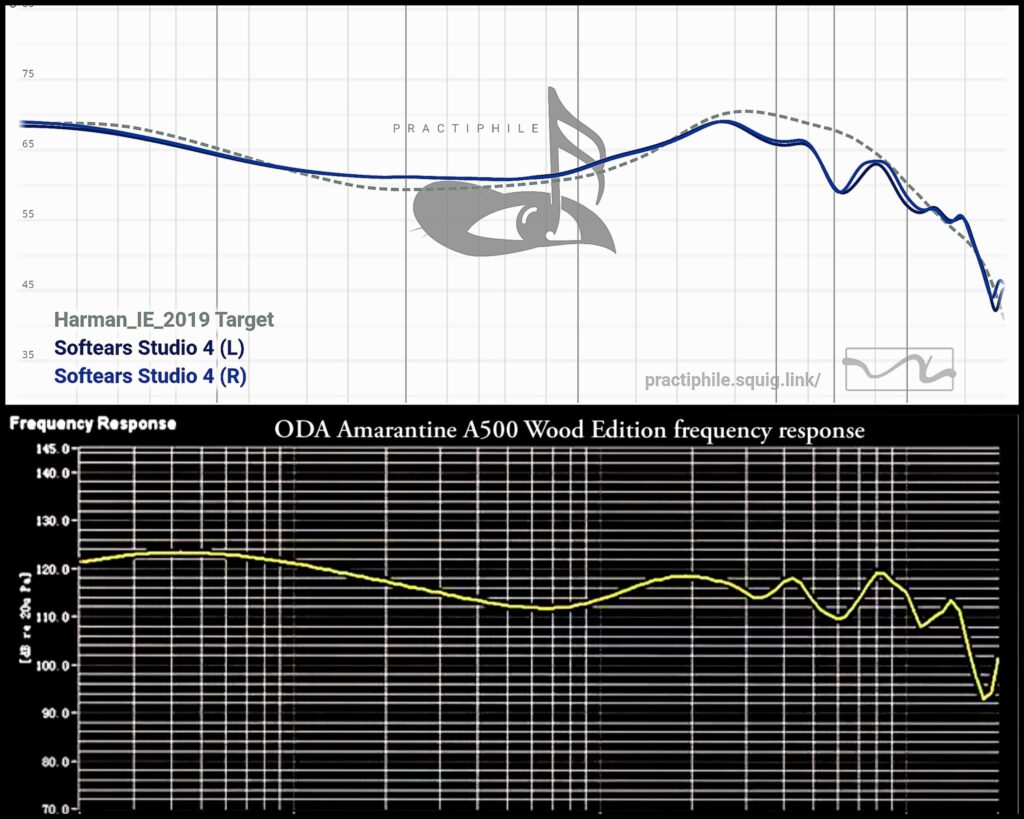
To start, the ODA Amarantine A500 Wood Edition is much more musically inclined, richer, more fun, and simply more enjoyable, generally. I feel that both sets offer a natural sound, but the Amarantine WE have a more organic and warmer presentation. The Studio 4 has a much leaner, less extended bass which has a shallow depth and less emphasis. The Amarantine WE have a heavier, much more punchy, bigger slam, while staying just as defined. You’ll get more bleed from the Amarantine WE, and the Studio 4 does have a better separated and cleaner bass (by a very slight margin), but overall, the Amarantine WE are much more satisfying for me. The midrange of the Amarantine WE have more warmth, still clean, but also smoother with a more forward stance which offers better vocals, intimate presence, and a more vivid display. The Studio 4 has the more linear, more crystalline sound, better separation, much more detail oriented, and neither set are truly fatiguing. The treble of the Studio 4 is a hair brighter, but both sets have superb control. I find the Amarantine WE have the smoother treble, less hard bite than the Studio 4, but more musical and actually much more natural, or realistic. I’d also say that extensioninto the upper treble is better and more lively on the Amarantine WE. It’s close, but most details and note separation go to the much less bass forward Studio 4, but both sets offer great technicalities. Imaging is precise on both sets but the Amarantine WE have the better dimensional presentation. The Studio 4 has the wider stage while the Amarantine WE comes across deeper, more 3D, and taller. Both sets are great for what they are.
Final thoughts on this comparison
I really wasn’t comparing these two to find out which is better. I totally respect both brands and I believe that both sets perfectly hit the target they were shooting for. The truth is, both sets are simply tuned differently. They may be different, but they also are both extremely high in sound quality for those targets. I don’t think one is necessarily “better” than the other. One may fit your preferences better, but they both are really fantastic for what they were tuned to be. I personally love them both quite a lot for different reasons, but way more often than not I reach for the Amarantine WE. Let’s put it his way, I never questioned whether I was going to review the Amarantine WE. Still, this comparison is definitely one to call a “preference battle”.
Last Words on the ODA Amarantine A500 Wood Edition
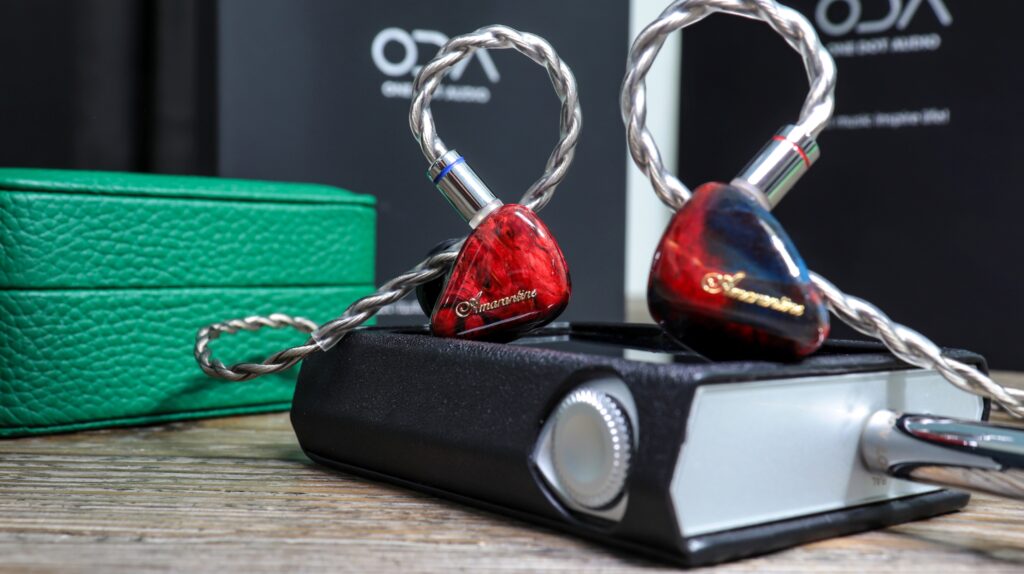
Okay folks, another review is almost in the books, and I am so very thankful that I got to spend time with this wonderful all BA iem. Like I said, going into this review my brain was literally wired for warmth (at the time) and the Amarantine WE were that perfect transition into a more clean-lined and clarity rich sound, closer to neutral, brighter and more resolving too. The Amarantine WE are perfect for anyone who really wants to try out a premium flagship level all balanced armature iem with a very easy to enjoy sound. I am very impressed by ODA folks. For a smaller boutique style brand (my words) to consistently bring to market these extremely well-made products is a true testament to their craftiness, their integrity, to their vision, and ability to see that vision to fruition, as well as their keen ability to tune a set of iems. The Amarantine WE are without question one of the best all-BA sets under $700 that I’ve personally heard. Now, I haven’t heard them all, so keep that in mind. But I have heard most of them in my time and the Amarantine WE stand very-very tall next to them all. Certainly, there isn’t any other all-BA $400-$700 iems which are flat-out better than this set. I really feel that anyone perusing the market for that balanced armature sound who wants something which is tuned wonderfully, built wonderfully, and wonderfully designed, they should really keep the Amarantine WE on their short list. In my opinion, the Amarantine WE showcase why flagships are flagships and budget sets are budget sets. There are levels to this game folks and ODA has proven that.
Not for everyone
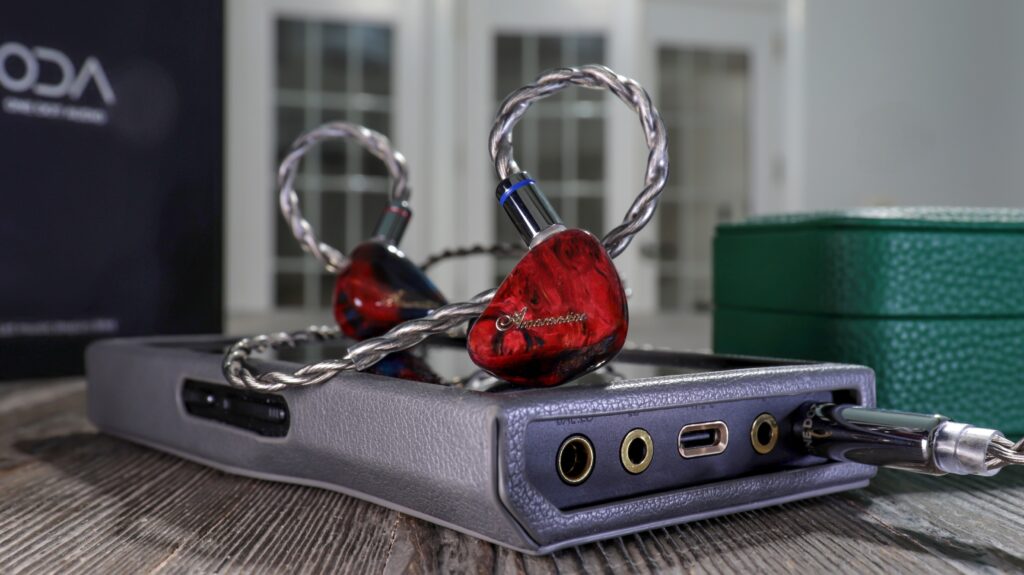
Of course, it should go without saying that the Amarantine WE are not going to suit everyone. We simply have different tastes and preferences, and there are definitely some folks which I feel won’t perfectly jive with this set. For any basshead who craves that endless slam and top-level sub-bass rumble; I’d say that the Amarantine WE’s raw emphasis and BA style bass will not suit those people. I’d also say that true treble heads or those analytical purists who desire a much more laser etched and clinically precise sound with that maximum air and openness, as well as top tier extension will likely not completely enjoy this set. Granted, I think they’d respect it, but it won’t perfectly suit them and there are definitely other sets which fit that style better. Reference listeners would be much more inclined towards a set like the Studio 4 that I just compared rather than the musically talented and totally harmonious sound of the Amarantine Wood Edition. Also, the Amarantine WE do have issues too. Issues like source pairing. Not so much tonally, but definitely when it comes to source output impedance. Again, the Amarantine WE have a very low 8-ohm impedance which forces consumers to make sure they have a source which can replay this set as it was intended. Basically, make sure you have a 1 ohm or under output impedance, or at least something close to that. There are certainly other slight subjective tonal issues too, but I don’t think that those “issues” are straight “cons” or anything. Again, nothing is for everyone, and the Amarantine WE certainly won’t be. That said, I do feel that the great majority of the consumer base will enjoy this set and think very highly of it. Lord knows that I do. In fact, this is a very easy rec for me.
The Why…
Because the unboxing is great, nice accessories, a fantastic cable, and it’s simply a nicely done presentation from this young brand. Also, my word this set is built well! Friends, you will be very hard pressed to find a better build when using stabilized wood. I said something similar in my ODA Hesperus A300 Wood Edition Review too. ODA simply does a fantastic job with this material. More than that, the Amarantine WE are absolutely beautiful. Of course that is my opinion, but truly a handsome iem.
That Sound
However, it’s that balanced and clean warm/neutral sound which really makes the ODA Amarantine A500 Wood Edition worth its price and an easy recommendation. This set has that organic and earthy sound yet has such a nice technical display of my music. The musicality, the fun, the non-offensive sound is simply so well presented. Really a fantastic job. The bass has that speed mixed with guttural depth and a very DD-like depth and slam which never feels congested, slow, or muddy. Also, the midrange presents vocals in a very refreshing and vivid way. That well dimensioned and intimate sound field along with the cleanliness and semi rich smooth demeanor makes for some captivating listening sessions. The treble fits right into this tuning and adds so much clean detail whilst also remaining musically skewed. Never fatiguing, never sibilant, never sharp or harsh, and always clearly defined and enjoyable for me. Detail retrieval is very solid, sound separation is very solid, as well as the Amarantine WE’s ability to layer the sound field with precise imaging. On top of that, there is something nice about this forward stage. I feel like I’m right in the middle of the action. Again, a very well dimensioned stage with solid depth and a more holographic sound. You really cannot go wrong with this set folks. I think that anyone who desires anything that I’ve spoken about in this review will likely really enjoy this set too.
Genres
I have been adding this section of late in hopes to help further dial in some of this sets’ strengths, and even some weaknesses too. Please understand before reading this that there is nothing set in stone here. I’m speaking on which genres will and won’t work for the Amarantine WE in a very broad stroke and generalized way. I need you to know that in every worser genre for the Amarantine WE, I can find tracks which sound fantastic on this set. Also, in every genre which generally works well with the Amarantine WE… I can find tracks which don’t work with its strengths as well. Again, very generalized. So please keep that in mind and also, these are only my opinions friends.
Genres Which Work Well
To my ears the ODA Amarantine A500 Wood Edition comes across fantastic for quite a few genres. In my opinion the Amarantine WE definitely fall into that camp of all-rounder style, with a few subtle caveats. However, I love this set for Rock and Metal. Those punchy mid-bass slam really drives those rhythm guitars while vocals are forward, clean, vivid with just enough treble sparkle for cymbals etc. Also, just a great tonality for those genres too. I’d also say that most Pop tracks fall right into line with the Amarantine WE’s tuning. That controlled bass, the slam, the punch, and also the clean presentation and vocal clarity really help to stand out. I also really enjoy Classical with this set as the imaging, layering abilities, strong separation, the vertical height too all aid the sound. Jazz sounds dope with this set as well with the Amarantine WE’s organic midrange texture and note weight along with its more intimate presentation seems to really work well. There are more great genres but I’m only giving you guys a roadmap here.
Genres Which Don’t Do Quite as Well
Man, I have to say this again, these are so generalized and I hardly even agree with myself here because I know many Hip-Hop and EDM tracks which absolutely slay on this set. However, in comparison with strong DD style iems, the Amarantine WE don’t have that last bit of strong rumble depth like you’ll hear on some other sets. I hate saying this, but I’m having a very hard time finding actual “bad” genres. I should’ve labeled this header something closer to “Not as Good Genres, but still Good”. No joke. Especially when I hear so many tracks which really do sound awesome as those 808 heavy drops sound so groovy and booming with precision only lacking that last bit of sublevel judder. Still, I don’t think the Amarantine WE sound quite as perfect for Hip-Hop and EDM as some others. I have so many tracks that I’ve collected solely for testing and “No Rules” by Rephate is one of them. Not that the Amarantine WE can’t play this track well as the bass has that fast paced, fast reflex control, speed, and good depth, but this track yearns for house shaking rumble, along with some speed. This is the type of track that a good DD will come across better on, for me. In fact, in my mind the Amarantine WE’s only subtle weakness rests in its very subtle lack of ultimate sublevel rumble if we are talking about “all-rounder” status. No genres are truly bad, but some genres are simply better than others.
Amarantine A500 Wood Edition Pros
-Obviously the build is a strong Pro (those real-wood shells are so well done!)
-Obviously the aesthetic design is a strong Pro
-The unboxing is nice with good accessories
-Very well tuned warm/neutral W-shaped sound which is clean and engaging
-Organic timbre, very natural, no real timbre issues
-Punchy and textured style mid-bass with solid rumble for a balanced BA
-Vocals excel in the midrange
-Natural and intimate midrange performance without fatigue is so very musical and what I’d call “immersive”
-Energetic highs are smooth with solid cleanliness and extension without going overboard in brilliance. Never offensive to my ears
-Awesome note separation
-Imaging and layering of the sound field
-Well-dimensioned stage with solid width, height, and depth. Not best in class but very nicely presented
-Easy to drive and scales well with power
-Flagship level playback at $499 for such nice synergy, timbre, musicality, technical ability, and balance
Amarantine A500 Wood Edition Cons
-Needs a low impedance source (1 ohm or less output impedance, preferably)
-Unboxing doesn’t necessarily have that flagship flair. Not as ornate as some sets (this isn’t truly a con for me, but may be for some)
-Bass extension is great for a balanced BA, but lacks that DD-like sublevel rumble
-Intimate and forward stage presentation isn’t for everyone. Less open and airy then it could’ve been
-Doesn’t have that treble head treble bite, luster, and laser etched note definition (I’m reaching)
-You may get some hiss at times on higher output impedance or noisy sources
Conclusion
To conclude my full review and feature of the ODA Amarantine A500 Wood Edition, I first have to give a huge shout out and thank you to the awesome folks over at One Dot Audio and specifically Jason Tang. Thank you for your kindness! ODA has proven to be a reviewers dream brand as I never felt pressured in the slightest, there were no time constraints, and ODA never even once asked anything more out of me than my truth. Thank you, ODA, and keep it up because you are a very easy brand to root for. 2 for 2 with me thus far and I cannot wait to see and hear what ODA does moving forward. Next, as always, I need to thank you for reading my review of the ODA Amarantine A500 Wood Edition. Thank you very much because without you MBA doesn’t exist. It’s the thousands and thousands of folks who visit our website weekly which make this worth the while and what truly brings joy to myself and my partners. I really mean that folks. These are not words without substance. Our greatest hope is that our reviews help you in some way at all. Also, every click to our site is meaningful, so thank you.
Other perspectives
Now that you’ve read this review, go and read someone else’s review of the ODA Amarantine A500 Wood Edition. I’m just one-man folks. One man, with one mind, and one set of ideals and preferences. This hobby is thee single most subjectively judged hobby in the world. Name another one. I’m waiting. Seriously though, this hobby is ridiculously subjective, and one man’s treasure will be another man’s garbage and vice-versa, this I promise you. There will be those who think I’ve lost my mind… and I’m okay with that. There will be those who vehemently disagree with my thoughts… and I’m okay with that too. The beautiful thing is that those who disagree with me aren’t wrong, and neither am I. The hobby where everyone is always right when it comes to subjective feelings on what we hear. It’s just what the hobby is. This hobby deals in likes and dislikes and incremental and subtle aspects of the sound can completely change the view that someone has of that sound. I implore you all to remember that. Please. So check out other reviews, read em, watch em, or listen to em. There are so many great reviewers who really care about helping you too. Many that I really respect and know will provide you with solid info. With that said I am definitely done. I’ve had a great time with the Amarantine WE and now I’m ready to simply casually listen to my music with this set. Take good care, stay as safe as possible, and always… God Bless!
Purchasing Link: One Dot Audio





No Comment! Be the first one.