















































Disclaimer:
Good morning, MBA Readers! Today, we have the JUZEAR Harrier in our hands, and I have to thank Hifigo for sending me this review unit. The Juzear Harrier is a tribrid IEM with a very interesting configuration. Its potential is evident even just by looking at the specs, and my curiosity grows when I read that it was tuned using software.
Table Of Content
- Disclaimer
- What Does “Tuned with Squiglink” Mean?
- Tech Specs
- Packaging
- Design/Build Quality
- Initial sound impression
- Equipment used for testing
- Comfort & Fit
- Squiglink Tuned? How is it?
- EQ Correction?
- Final sound impression
- Bass
- Mids
- Treble
- Soundstage and Imaging
- Comparison
- Conclusion
- More Information
- Q/A
What Does “Tuned with Squiglink” Mean?
“Tuned with Squiglink” is a program developed by Mark Ryan Sallee to help IEM manufacturers create products that sound their best while avoiding common tuning pitfalls. Drawing on over eight years of experience reviewing and measuring more than 500 IEMs, Mark combines careful listening, prototype measurements, expert feedback, and parametric EQ (PEQ) guidance to refine each IEM’s sound. This program isn’t about hitting a specific FR target curve — it’s about tuning IEMs to sound their best for the target customer.
- Juzear Official site
The promises are many, the numbers are there, but as you know, tuning so many drivers, and moreover of different types, requires a great deal of experience and skill.
I’m not an audiophile; I’m just a guy who likes to test out different IEMs and DACs and spends a lot of time listening to music. I fall into the audio enthusiast category.
So I’m not going to use super technical words to review it, but I will do my best to describe it.
Tech Specs:
- 1DD+6BA+2 Micro Planar Drivers: 4th-Generation Composite Carbon-based Coated Diaphragm Dynamic Driver – Custom-Developed Mid-Frequency Balanced Armature Drivers – Knowles High-Frequency Balanced Armature Drivers – Composite Micro-Planar Magnetic Drivers.
- Four-way Acoustic Crossover with Independent Duct Tubes.
- Impedance: 32Ω.
- Sensitivity: 112±1dB SPL/mW.
- Frequency Response Range: 20Hz~20kHz.
- THD+N: ≤0.8%.
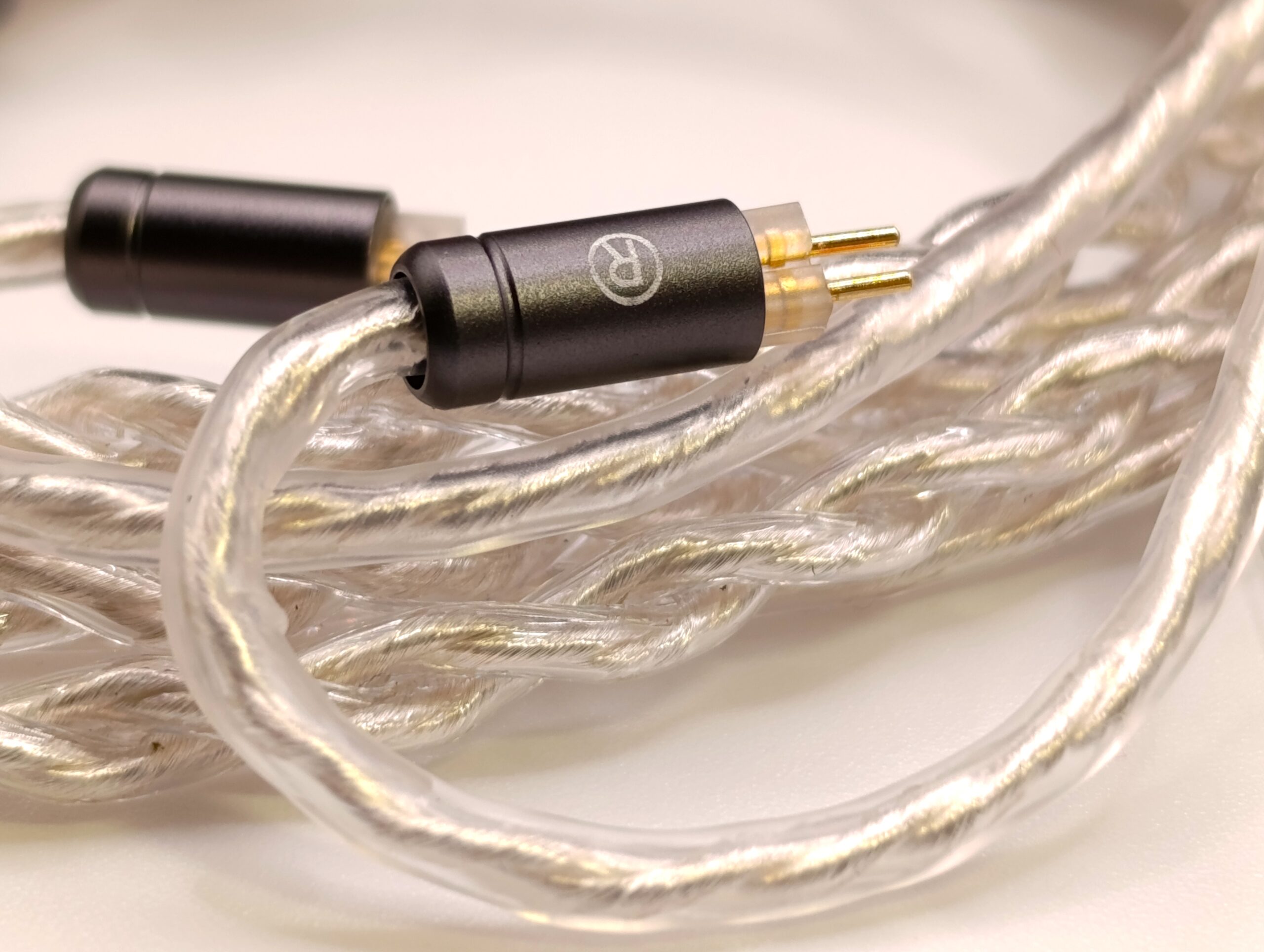
- Cable Type: 6N SPOCC+SCCW Hybrid Cable.
- Connector Type: 2-Pin(0.78mm).
- Termination Plugs: 3.5mm+4.4mm(Swappable Plug System).
Packaging:
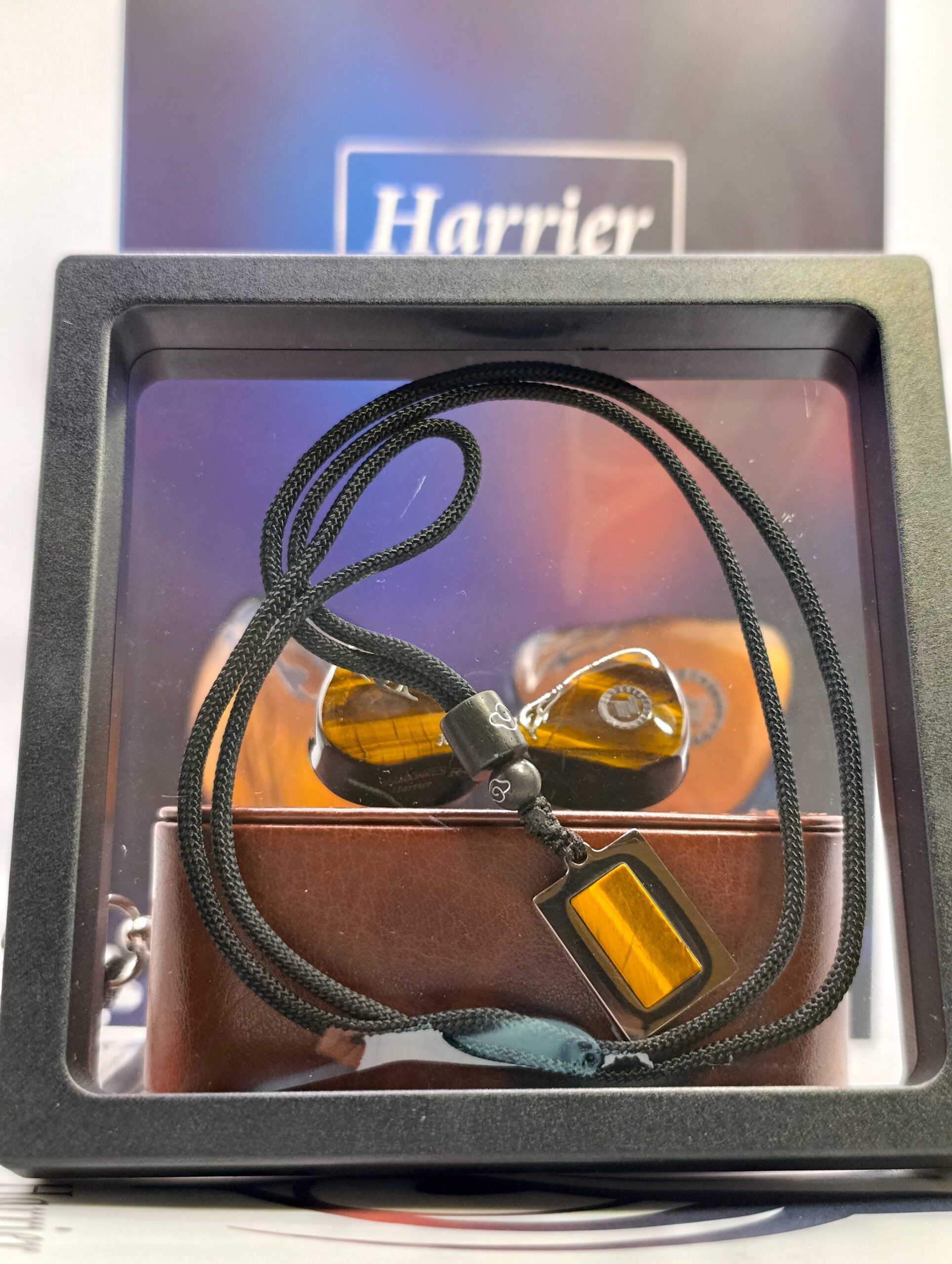
The packaging is somewhat more like an OEM product; it’s well-made, but the box underneath the first card is very plain despite the price of the product. I don’t think this is a problem, as the content is what matters.
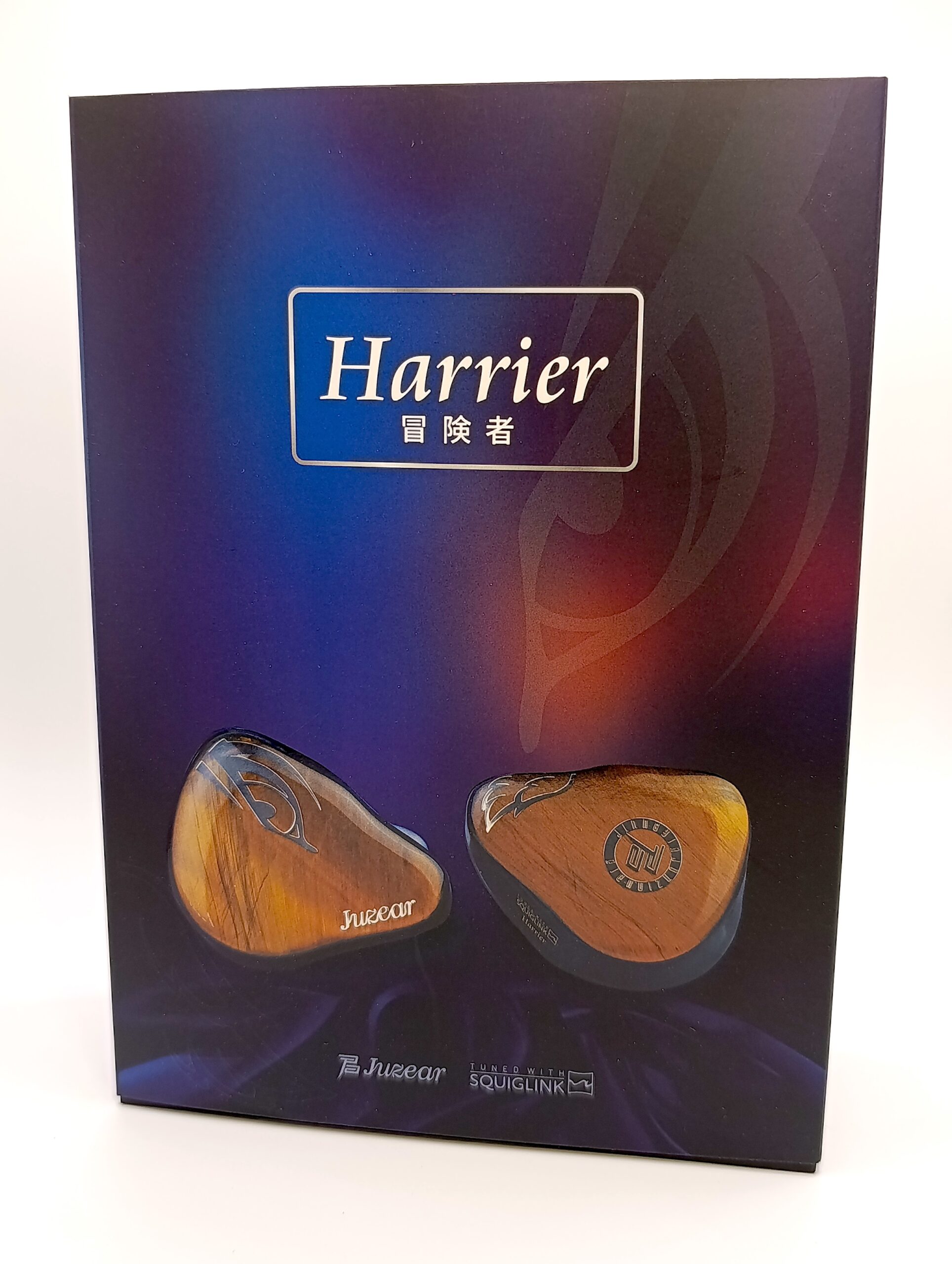
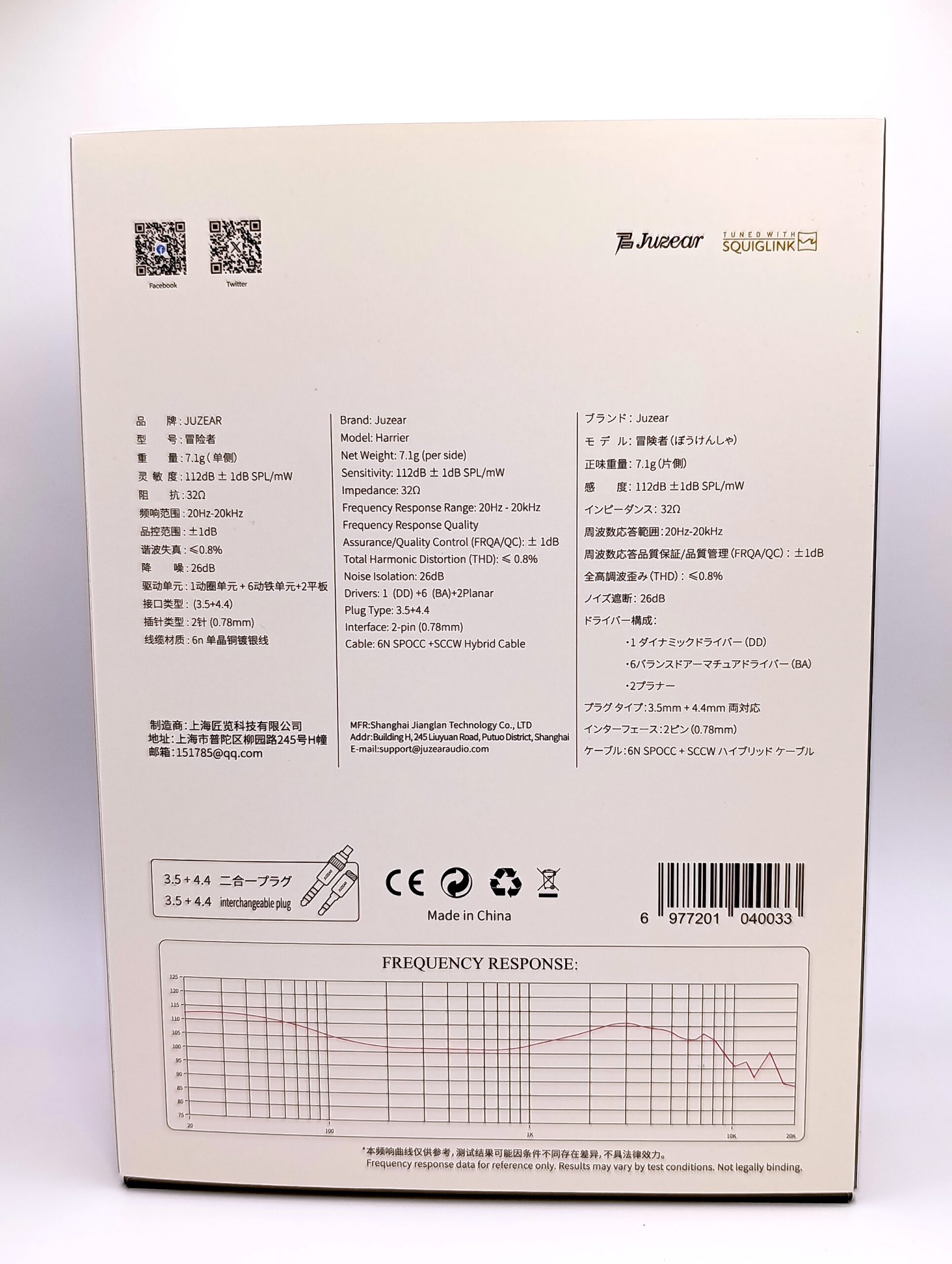
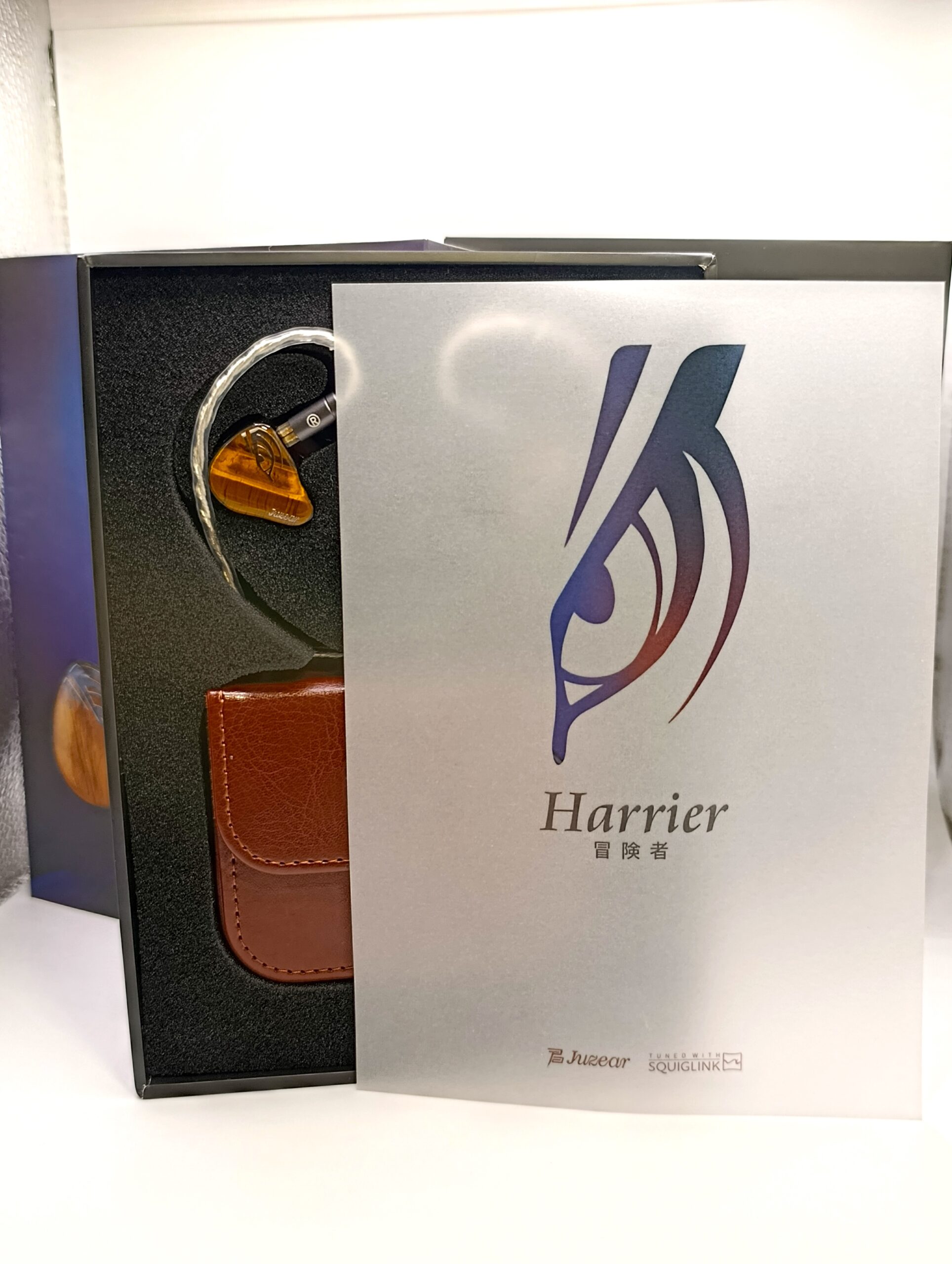
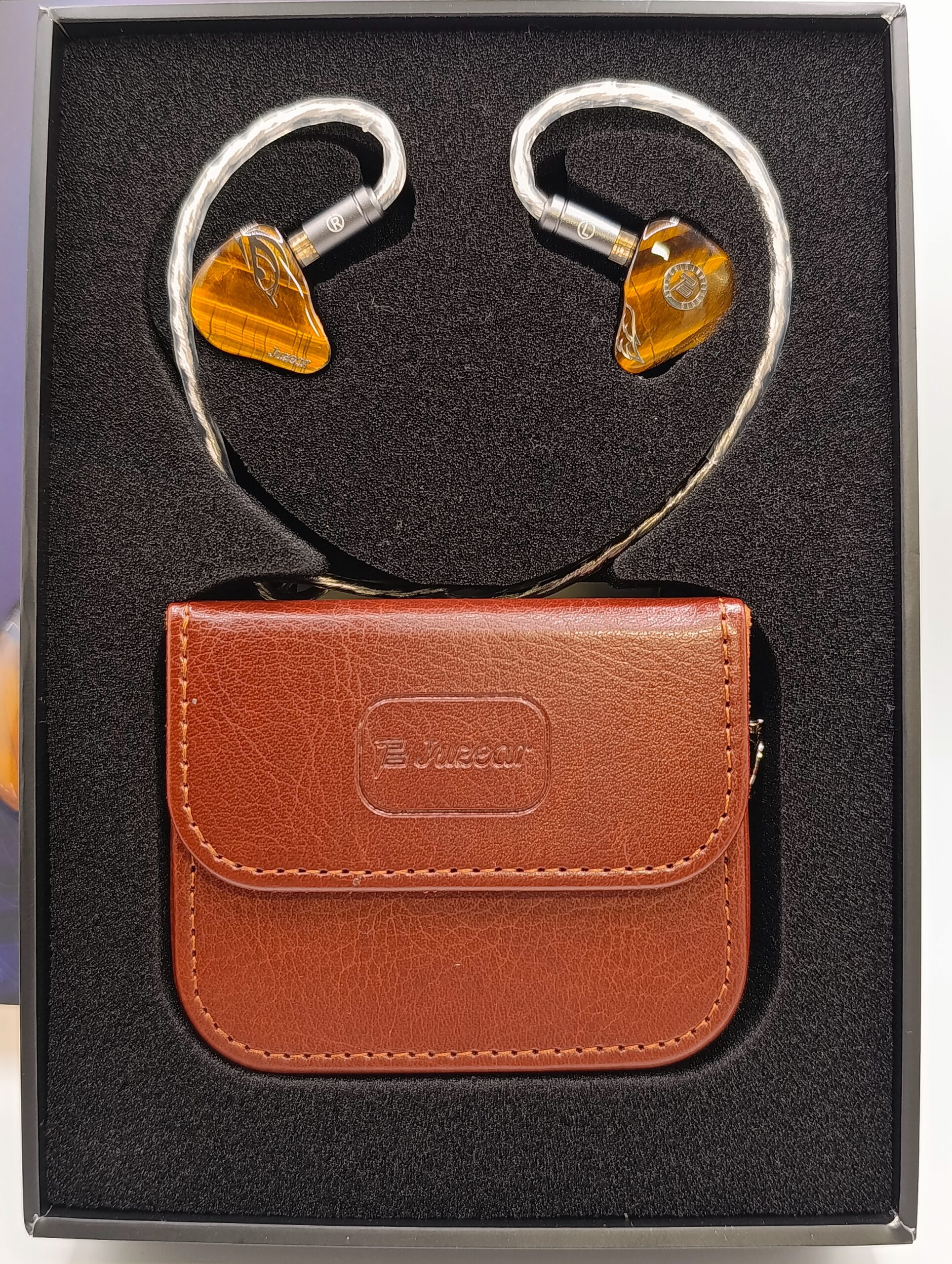
Inside, we find:
- Stylish hard case
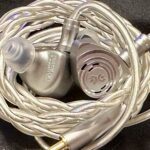
- Excellently made modular cable
- Cloth
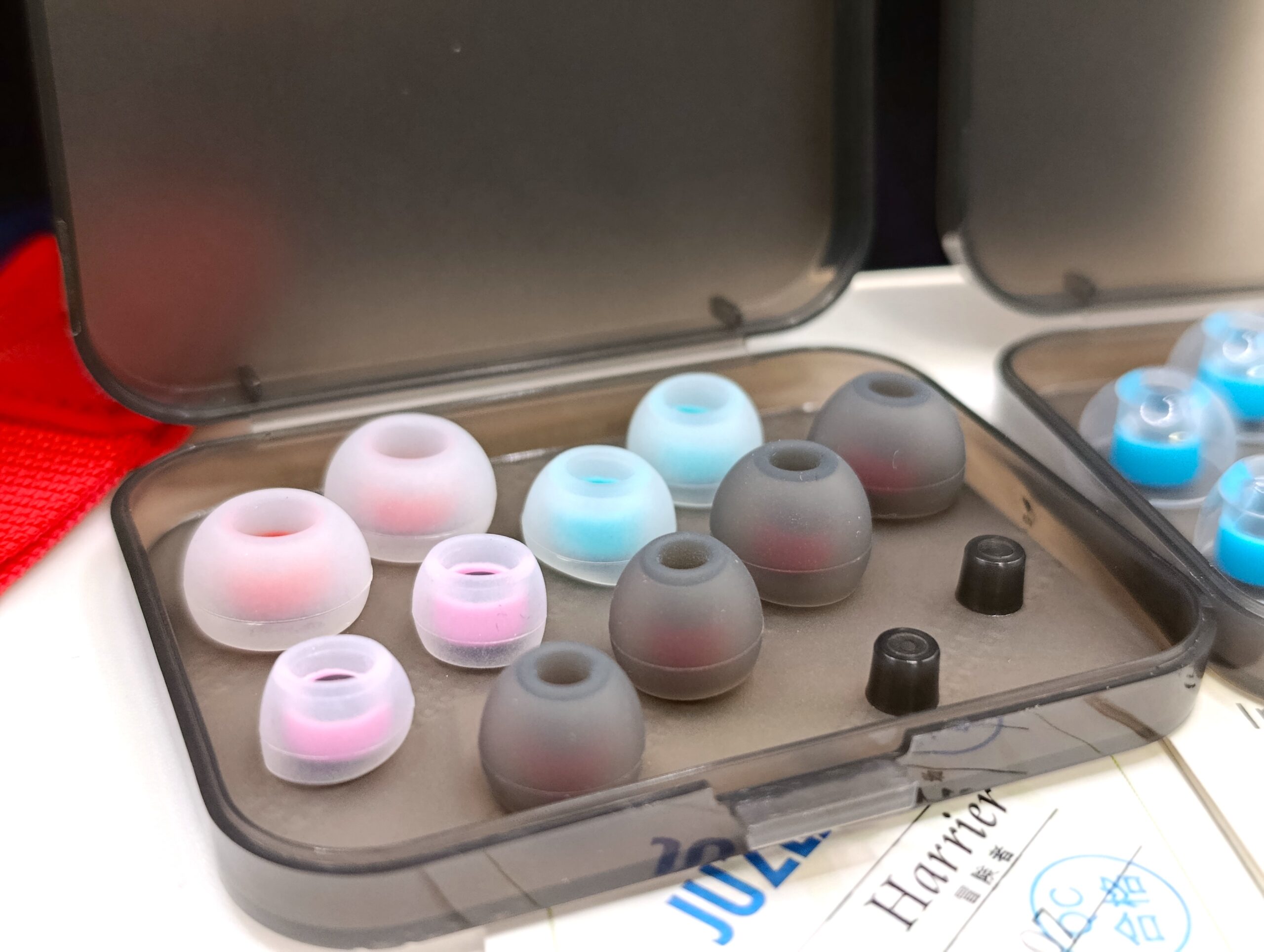
- 2 Eartips cases – 11 Pairs Eartips (Many models)
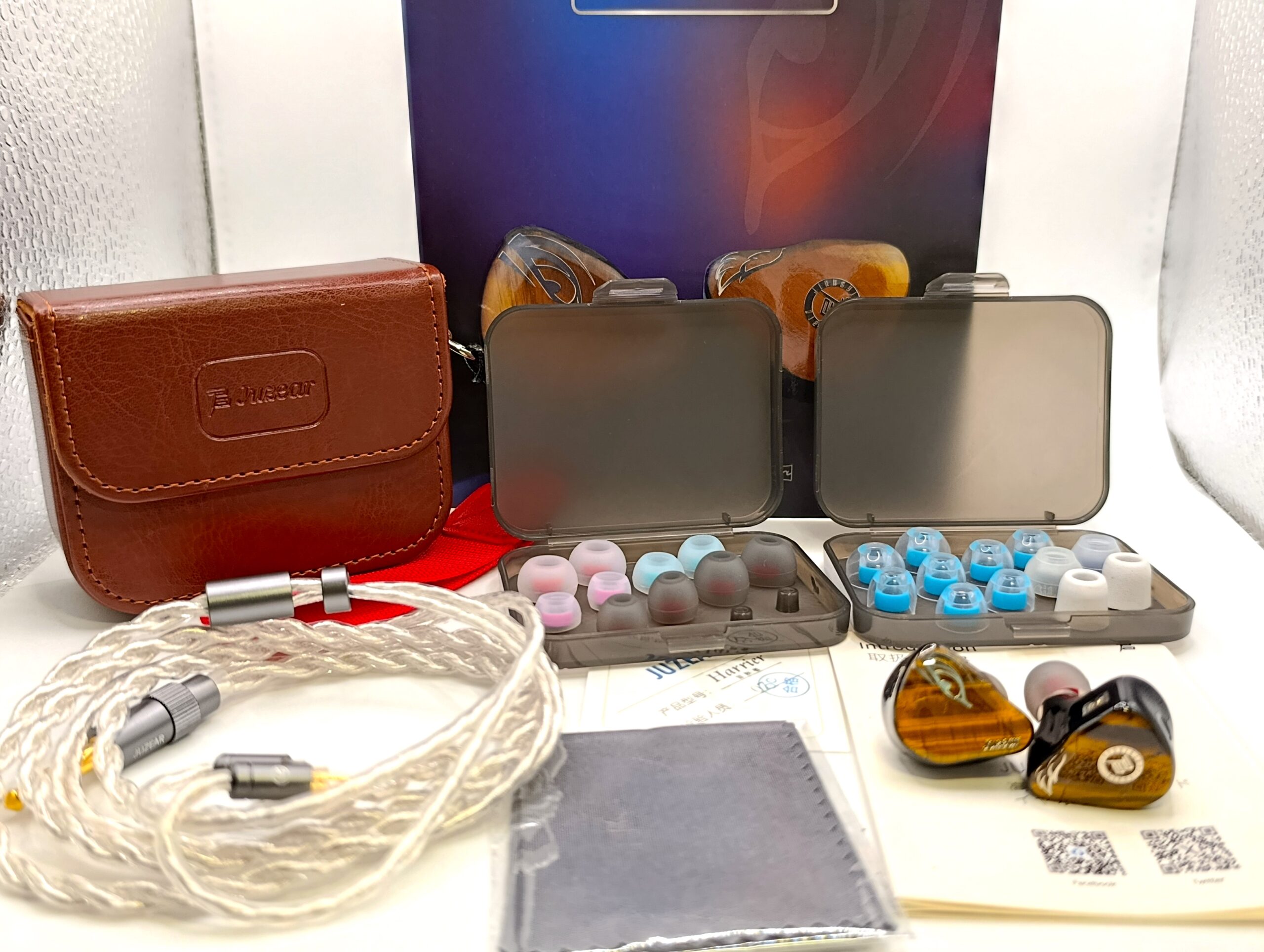
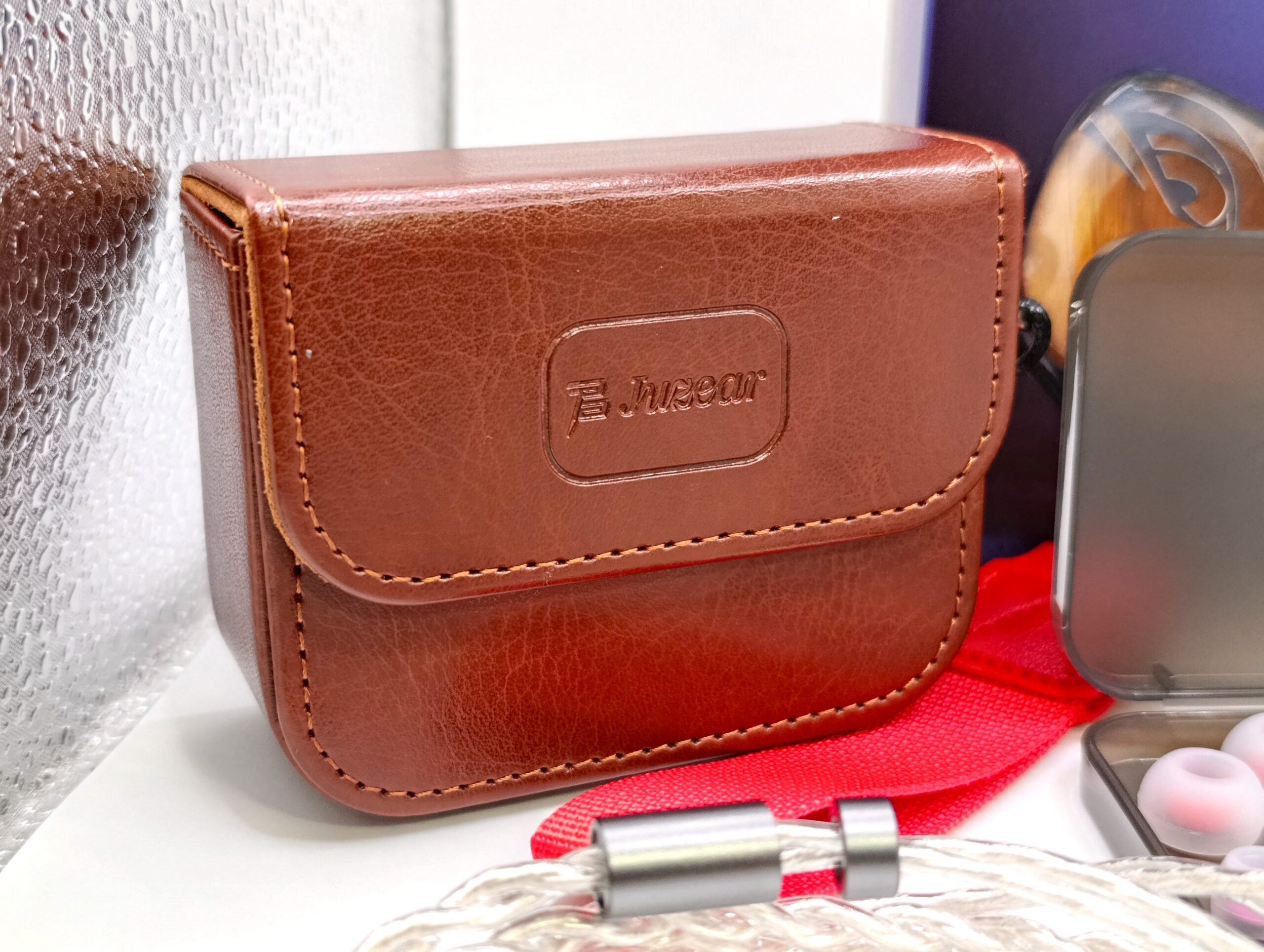
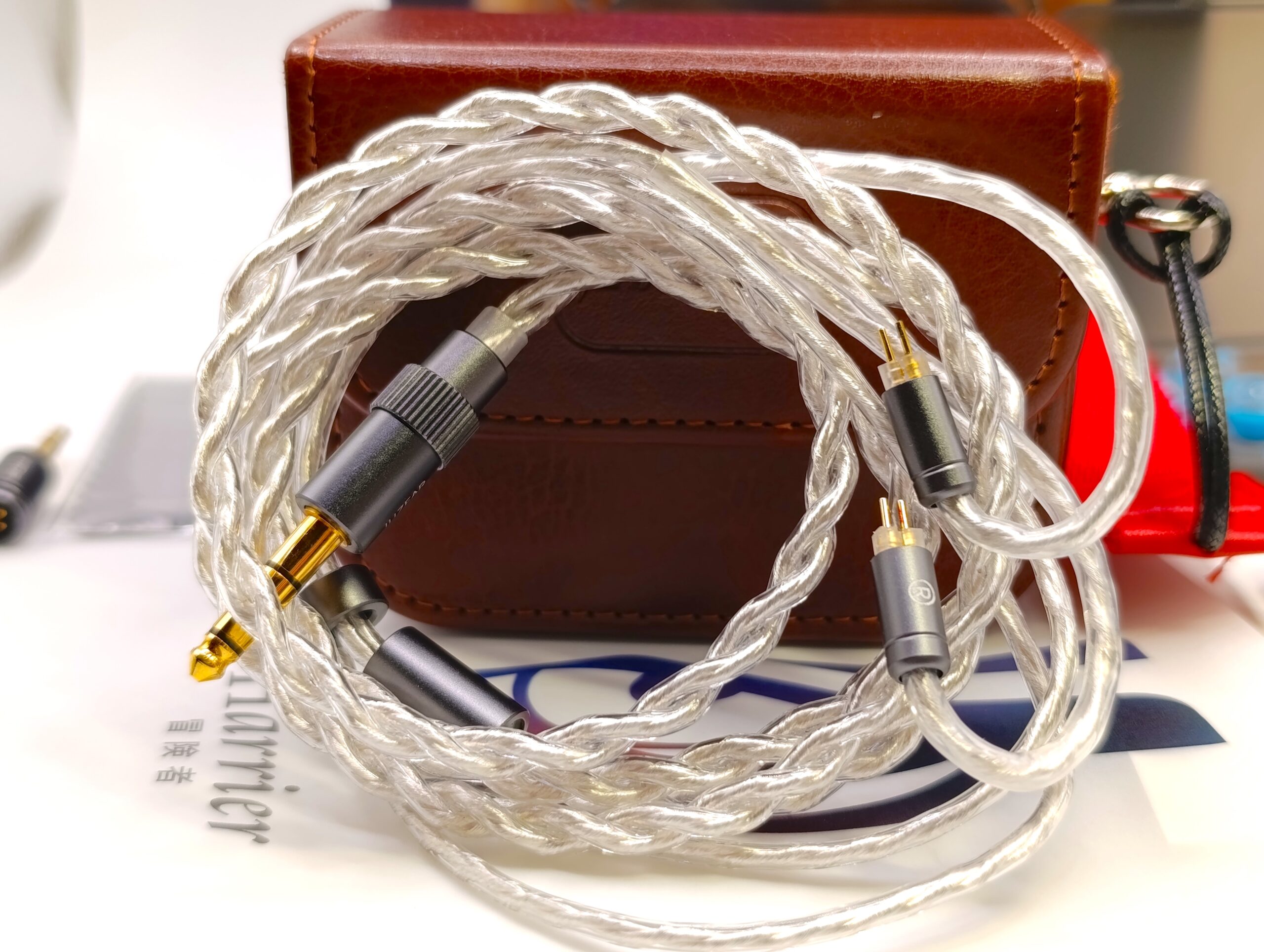
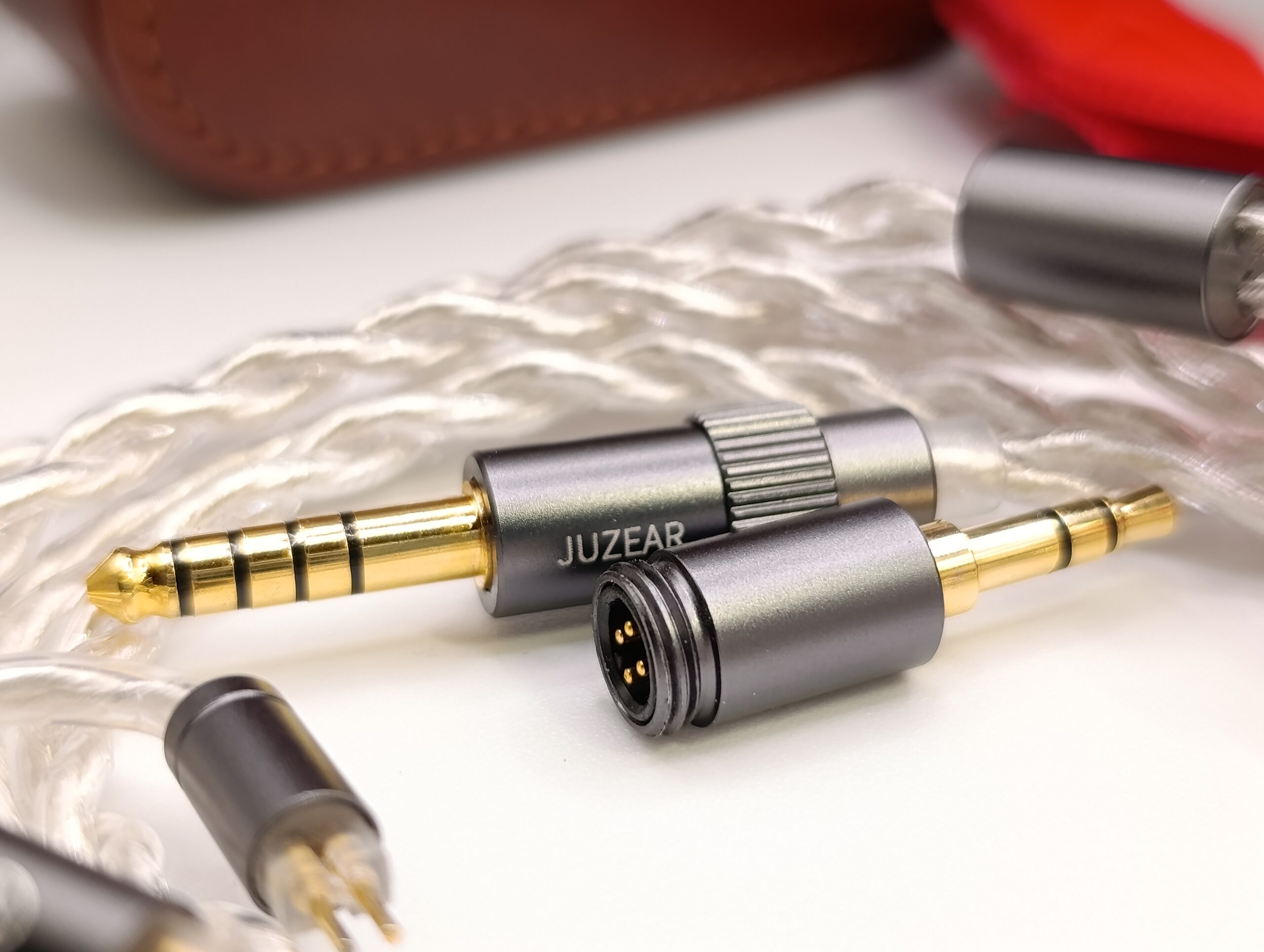
Quality content that complements an IEM of this caliber very well. Of course, for Eartips, I always recommend trying out multiple models.
Design/Build Quality:
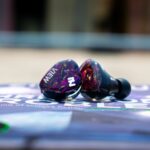
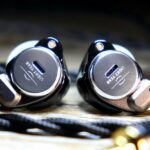
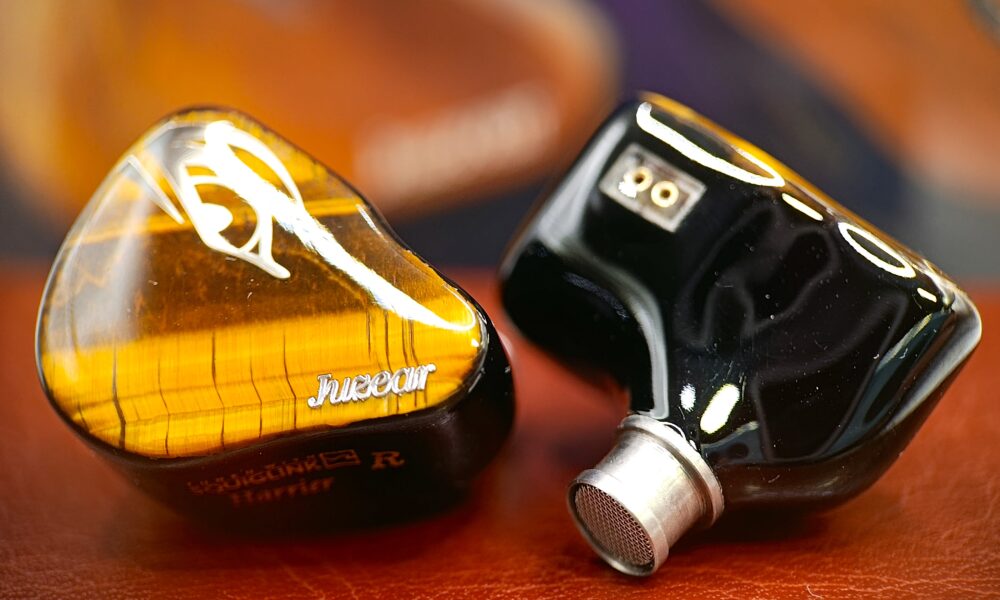
The Juzear Harrier is an IEM with resin shells. When the internal structure becomes complex, many manufacturers simply resort to resin. The few who have made a hybrid with a metal shell are Hidizs with the MS5 and the Kiwi Ears Septet. Of course, resin is always present inside.
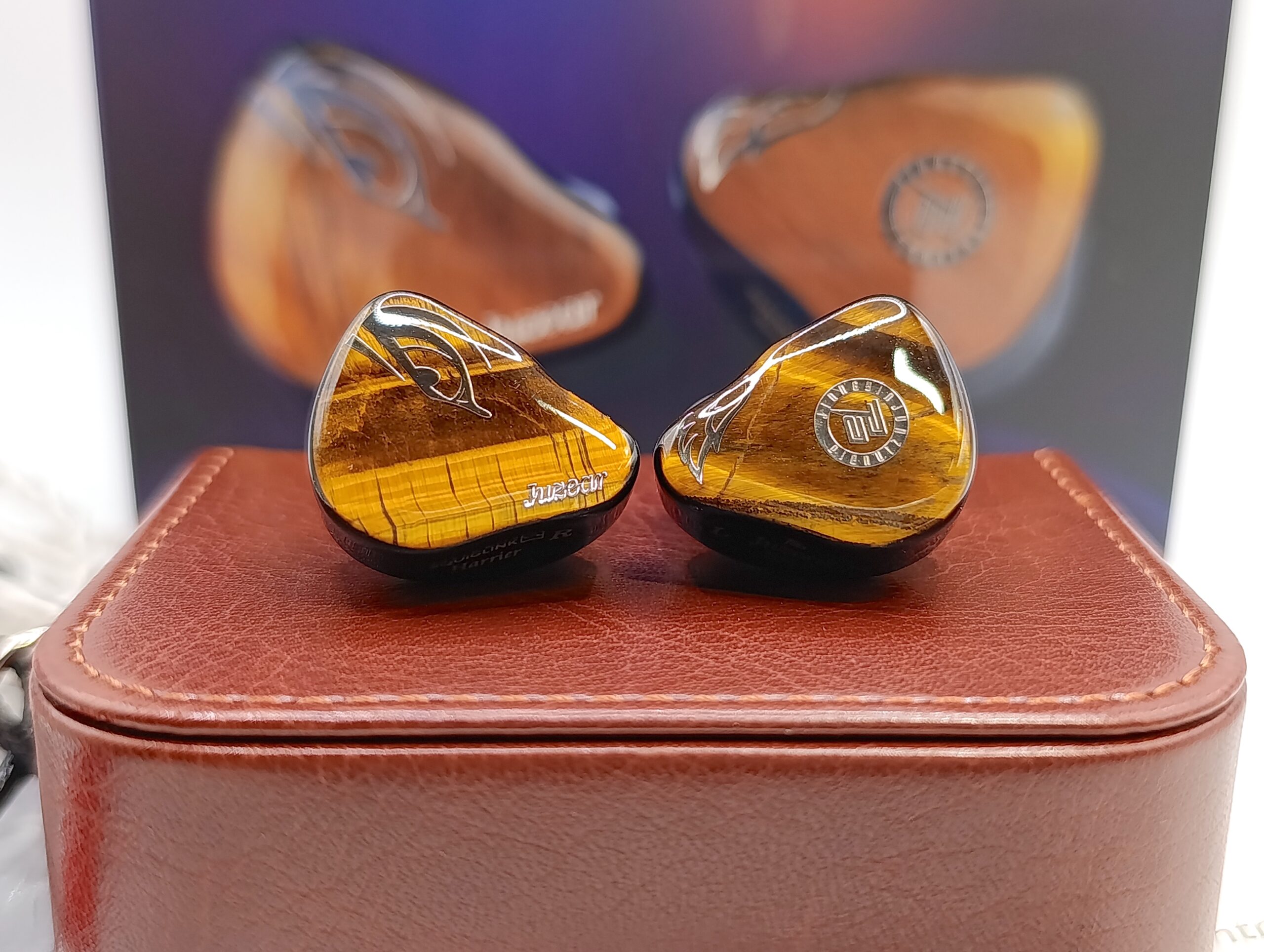
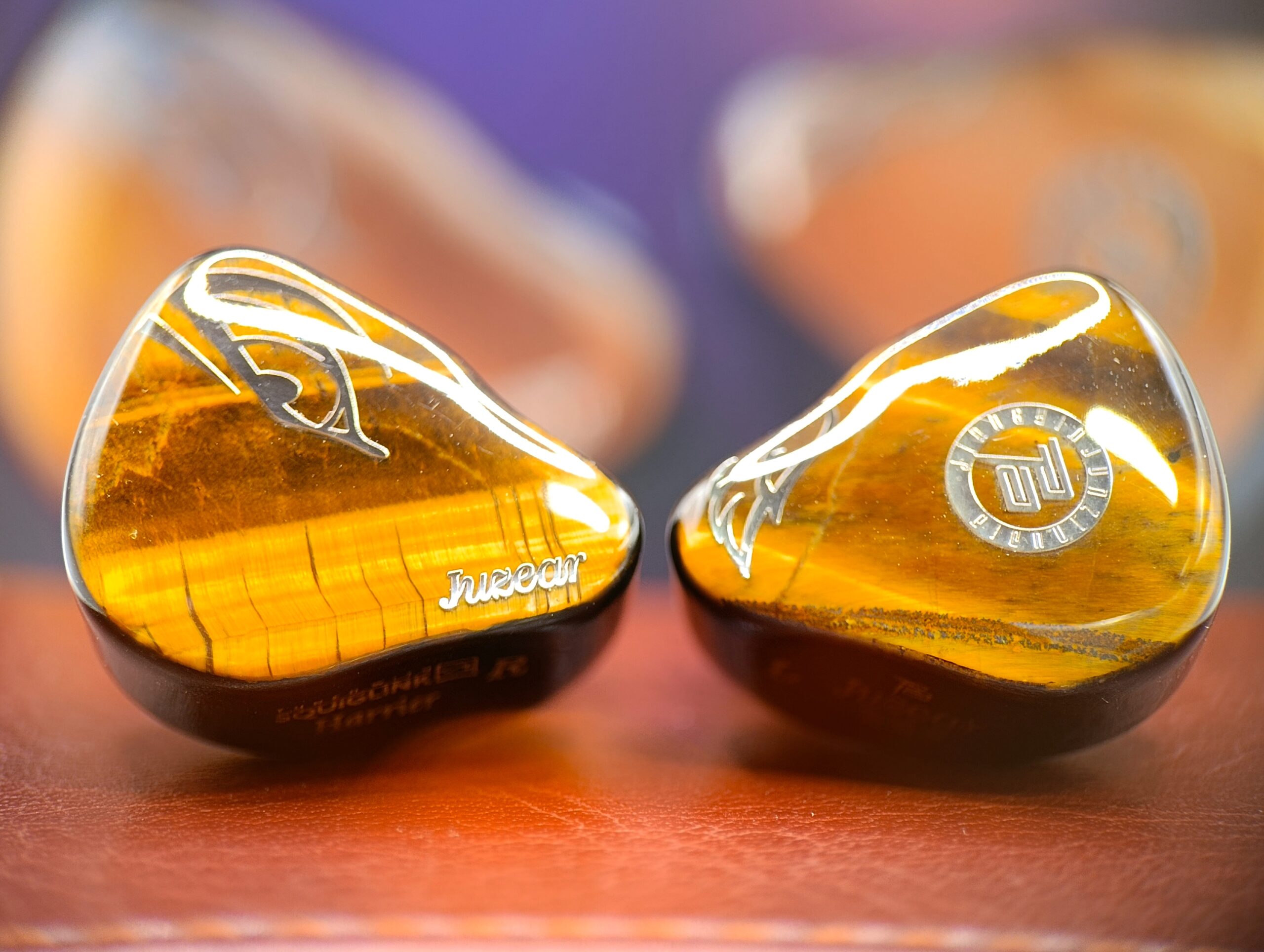
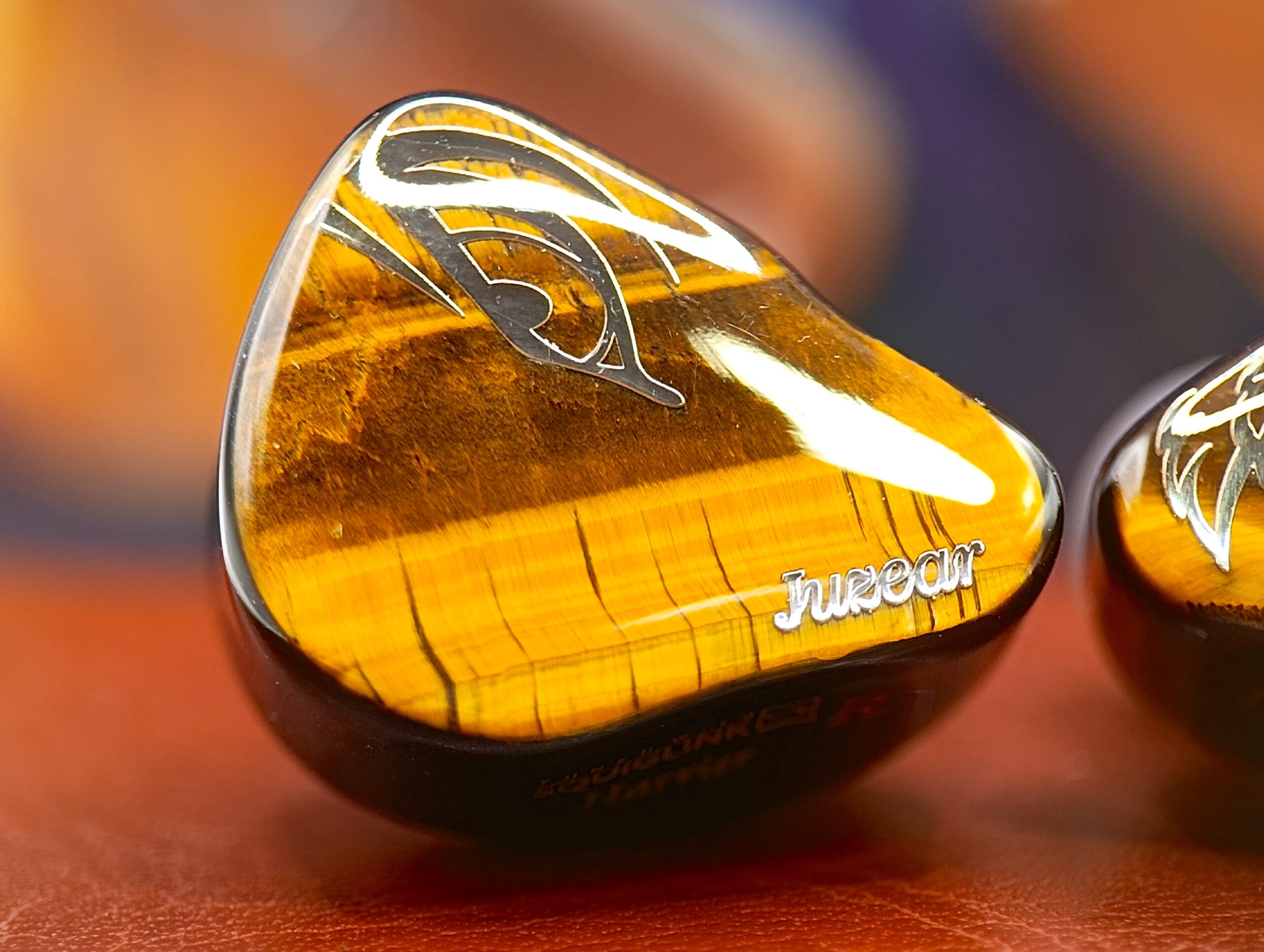
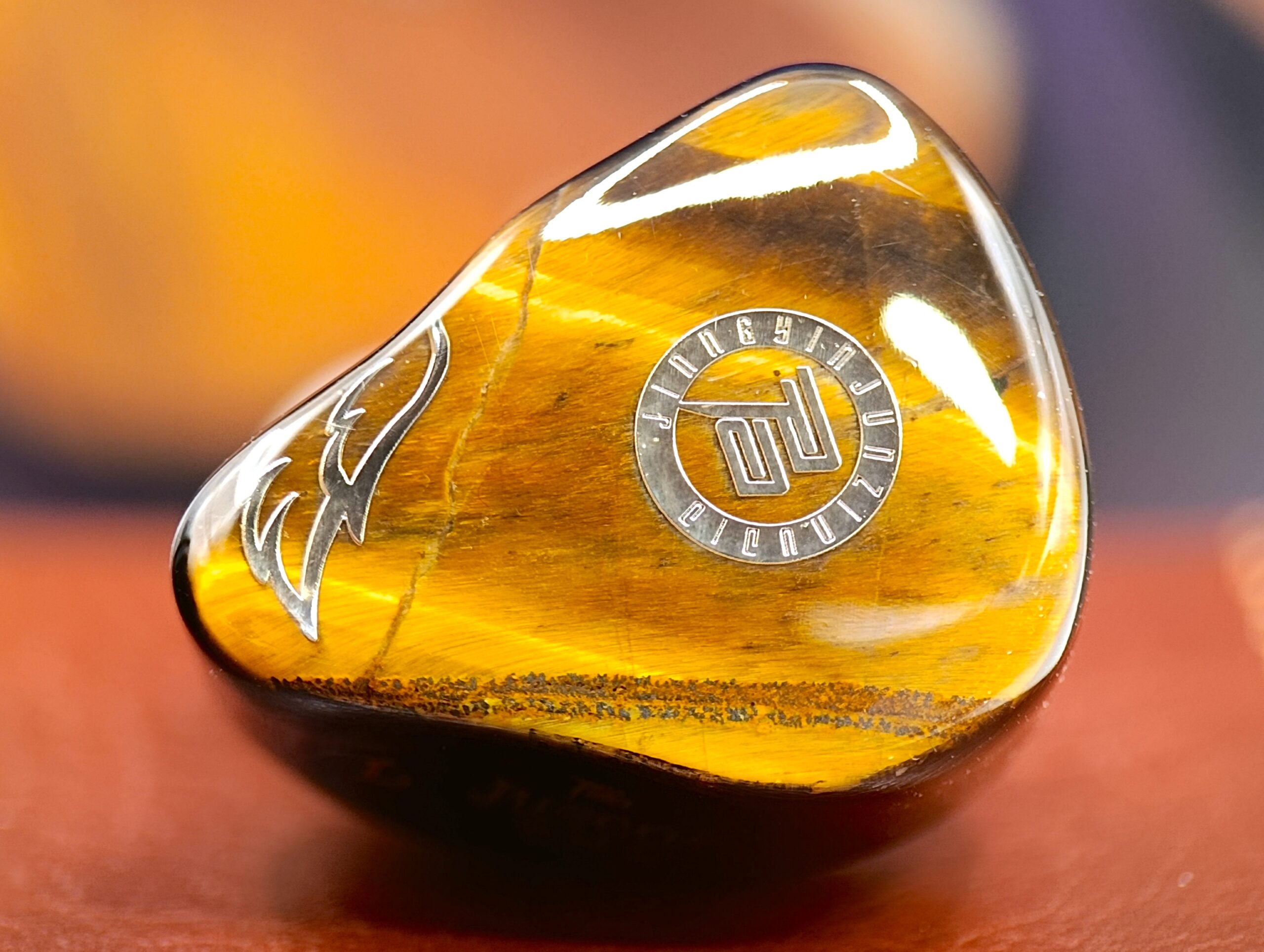
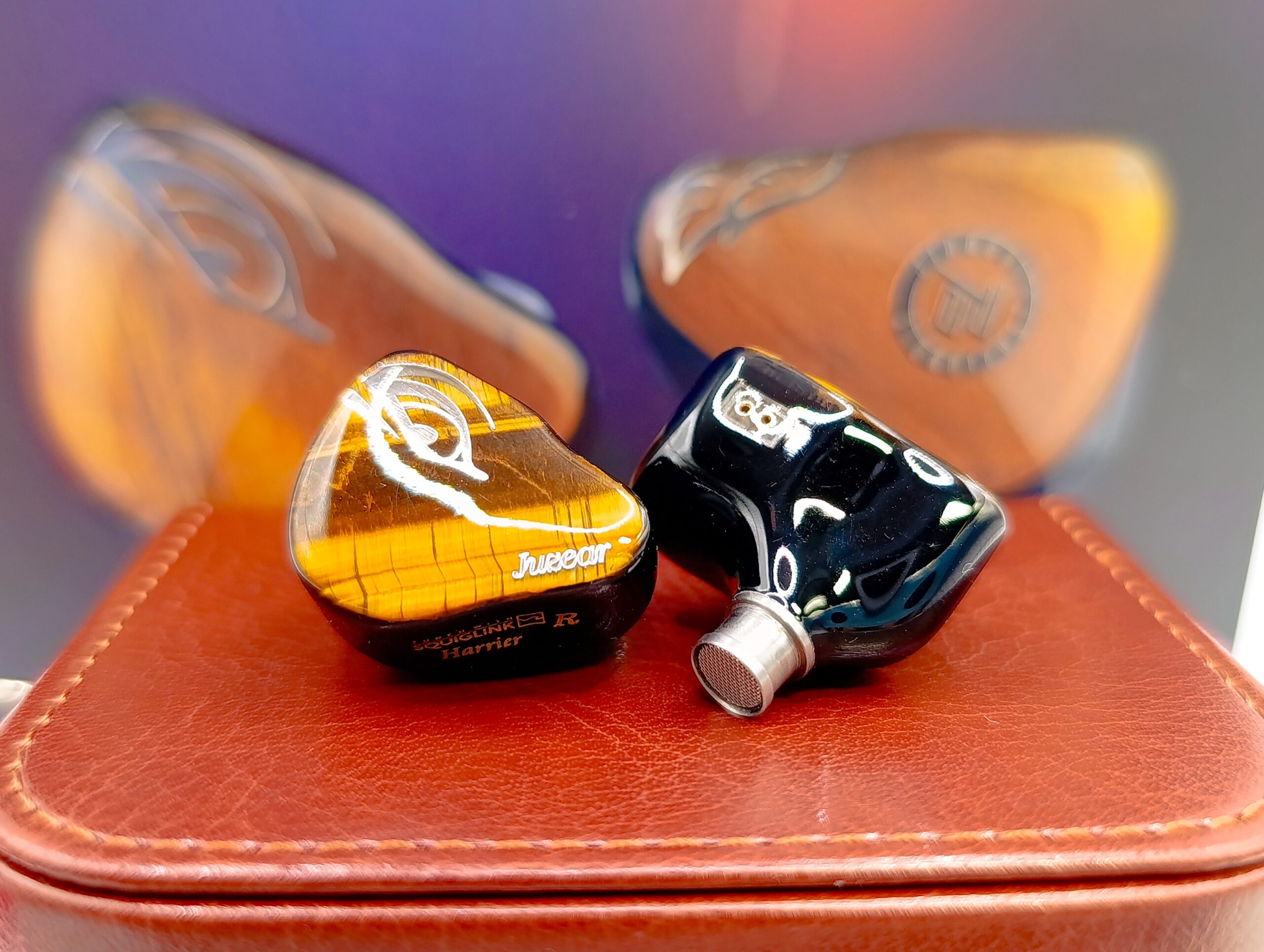
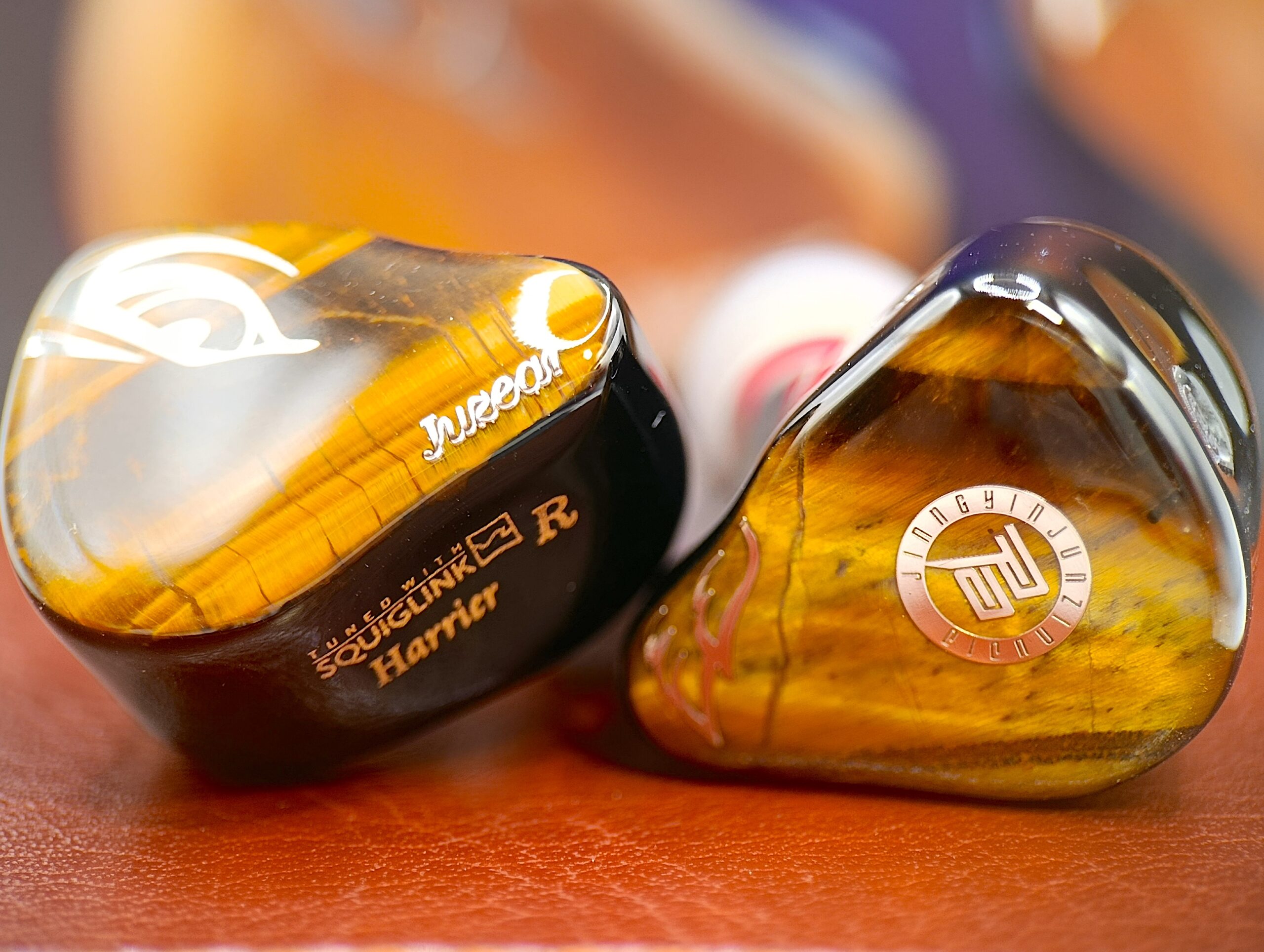
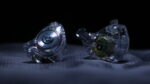
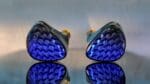
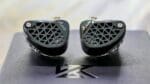
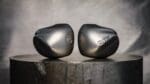
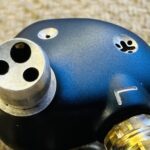
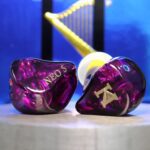
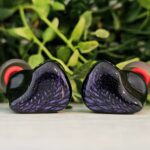
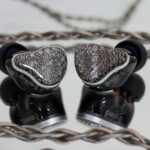
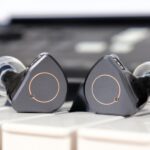
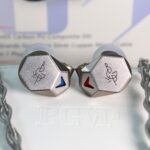
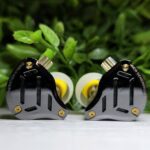
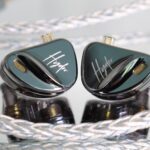
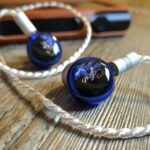
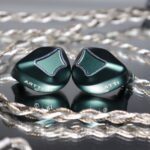
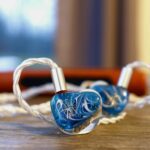
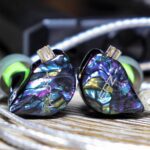
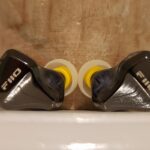
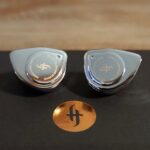
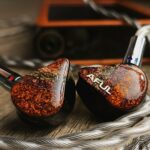
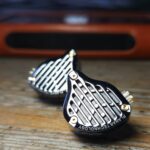
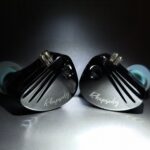
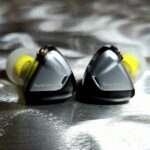
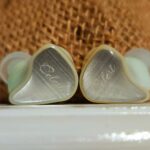
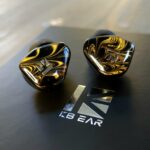
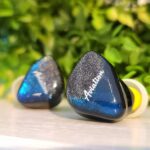
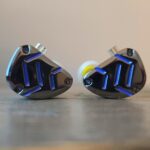
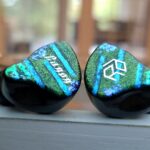
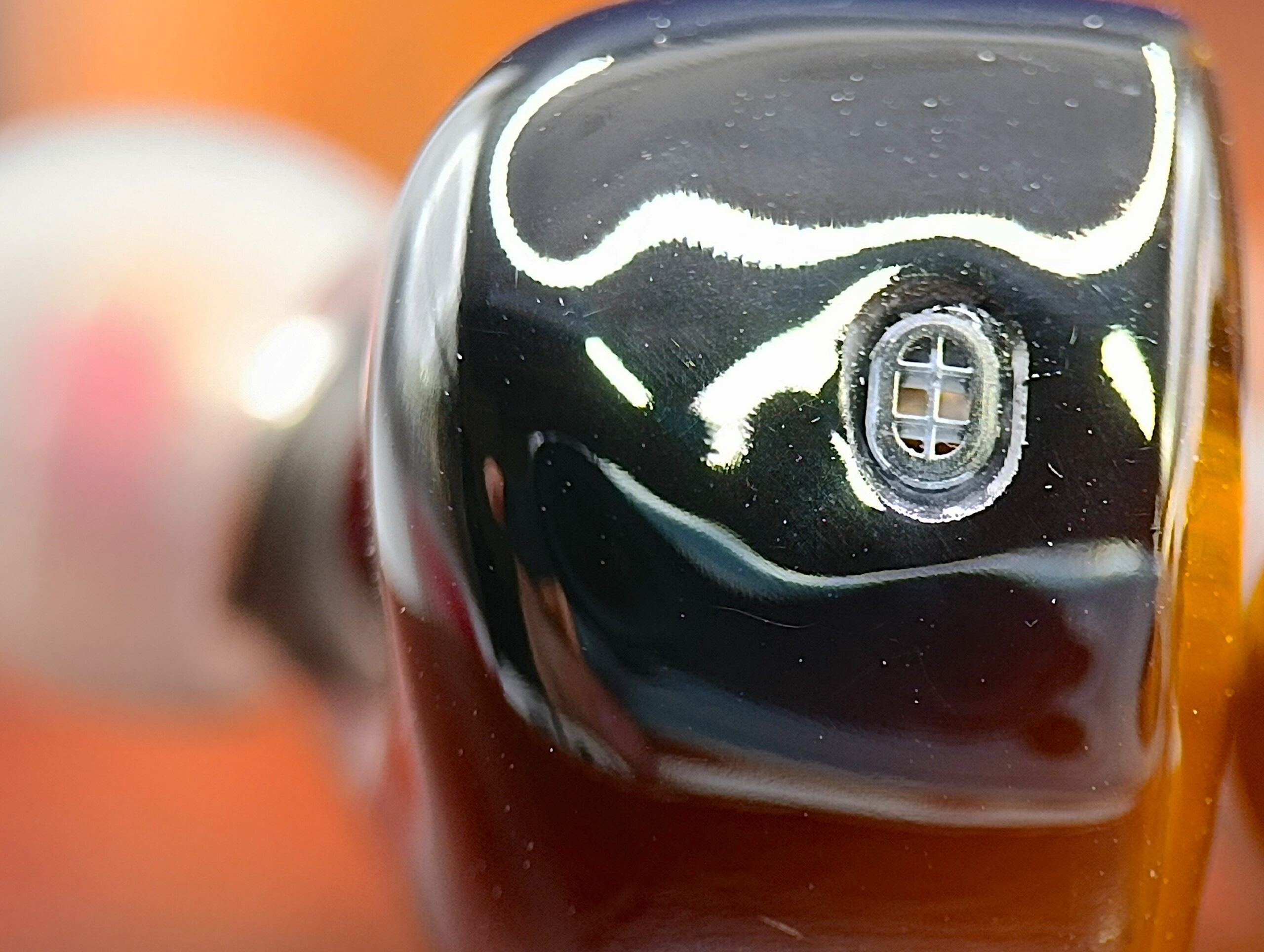
Modeling with resin is certainly much simpler and less expensive, but that doesn’t mean it’s inferior. The Juzear Harrier sports faceplates that shine particularly brightly in the light. The shape of the shells is a bit thick and bulging, but given the number of drivers (not all BAs), it’s slightly bulky. They opted for dark resin, even though a clear shell would have been perfect. The only air intake is on the back and is nothing more than a tube that most likely connects to the DD or nozzle, regulating the pressure of the drivers on the eardrum.
We can see the rest of the details better on the official website.
The structure is very complex, the quality of the IEM itself is very high, as can be seen from the standard accessories. The nozzle is normal-sized and finishes with a real nozzle, not resin.
Initial sound impression:
The Juzear Harrier creates very high expectations, given its specifications and the number of drivers.
I performed my first listening session with the Fosi Audio K7, which theoretically should be sufficient for an IEM, but for some reason, it wasn’t. The Juzear Harrier requires good amplification, not because of the number of drivers, but because of the planar drivers inside. The chosen tuning may or may not be to your liking; what my ears noticed was a strong limitation in the treble region, significantly reducing their perception. The chosen tuning isn’t simply safe, but something much more. What Squiglink recommended might actually be the preference of a particular user, but in my opinion, the brightness could have been much higher.
I don’t consider myself a treblehead, but I would have expected something more, especially given the number of drivers inside.
As for the bass, it’s definitely well done, audible with a good boost (amplified by the limited high-end extension), and the mids are very natural, but at least on the brighter, less deep vocals, they lack that extension you’ll also notice in some instruments.
I’d say it’s a natural presentation, very calm and cozy, and won’t cause you any overload of detail or difficulty. Given the presence of multiple drivers, macro and micro details are not lacking, even if some are slightly veiled.
However, by changing the amplification to the Creative X5, the sound opens up and is already more balanced, and even the trebles have something more to offer.
Equipment used for testing:
Device:
- MacOS
- Redmi Note 14 Pro 4G
Software:
- Amazon Music UHD 24-bit 96kHz
DAC:
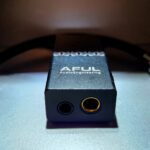
- Fosi Audio K7 on Balanced
- Creative X5 on Balanced
Comfort & Fit:

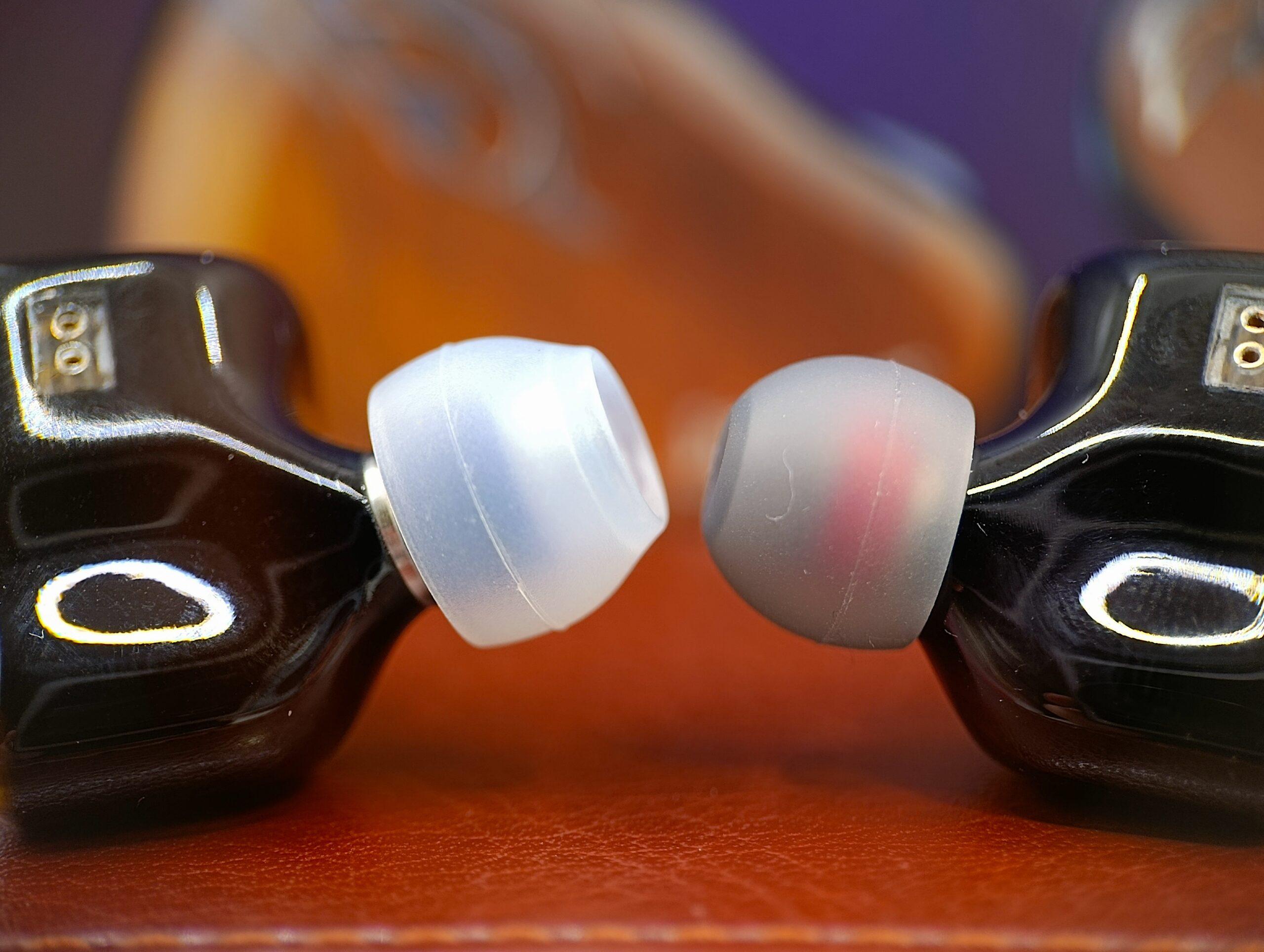
The Juzear Harrier is really quite fat, and it’s an IEM packed with drivers. It’s not a particularly small model, and I think it’s fair to say so, even though they fit in my ears without any problem (I have very large ears). In terms of comfort, the shape is absolutely normal, and there are no sharp edges or other issues. If the IEM is too big for you, you should opt for eartips that push the IEM slightly further away, something with a long nozzle like the S&S Dunu.
However, it is definitely not one of the most comfortable on the market.
Squiglink Tuned? How is it?
I’m not a fan of graphs and often tend to avoid looking at them to avoid influencing my final judgment, but I can tell you that the idea is good, even if it would be interesting to understand how this tuning was developed.
Considering that everyone has different preferences and sensitivities, I’d be curious to understand how the curve was calibrated and why.
What I can tell you is that the drivers are absolutely not being used to their full potential, due to a crater around 6 kHz, which essentially makes the IEM very safe but devoid of personality. In other words, it’s a unique IEM, very catchy, but it doesn’t stand out for its tuning.
Such a target has only one purpose, to be safe and smooth in any situation in any existing musical genre.
EQ Correction?
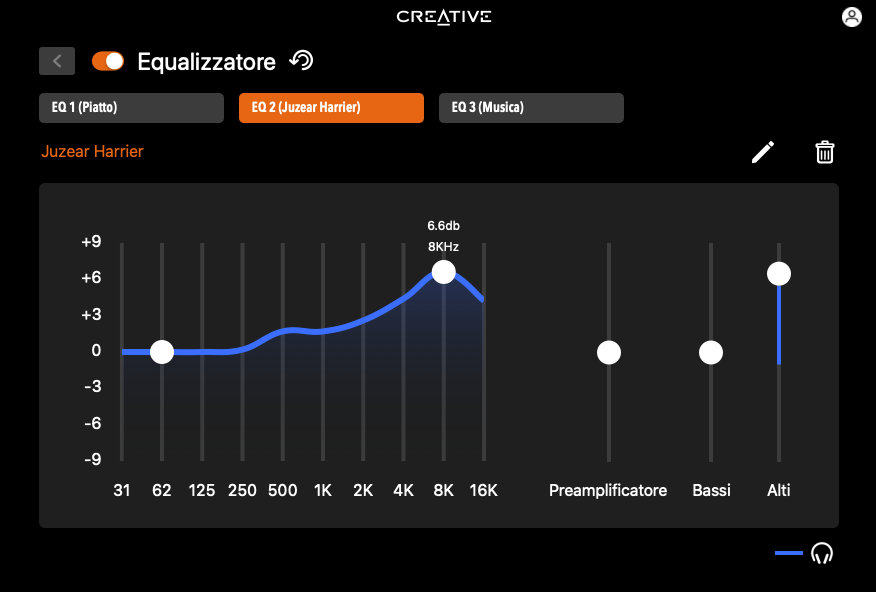
Yes, this time I took the liberty of tweaking the tuning, especially so I can say that the drivers aren’t at 100% of their potential. Nothing extravagant, simply take a flat EQ and boost it between 4 kHz and 8 kHz. You’ll discover that the Juzear Harrier actually has a completely different side. Above 4 dB at 8 kHz, the soundstage really shines. However, the review and its performance are evaluated based on the original tuning.
Final sound impression:
After more than a week of use, I can say they’re well-made hybrids. I think it’s easier to love them than hate them, but it all depends on what you expect. If your goal is an analytical and serious IEM for mostly critical listening, then perhaps you should look elsewhere. But if you’re looking for something fun and carefree, you’re in the right place. The vibrating driver has been perfectly implemented with the Kiwi Ears sound, and the result is pure enjoyment. They may not be perfect, but they’ll definitely make you smile all the time. One thing is certain: Kiwi Ears is putting a lot of effort and dedication into their products, establishing themselves as a brand you can trust.

Bass
Some have said the lows are rich and even close to basshead level, but in my opinion, they’re simply really good punchy bass, especially with little competition from the treble, which seems to be even more powerful. They’re certainly more present and more noticeable than other frequencies, giving this sensation of bass boost with relative warmth and a slightly darker-than-expected soundstage. They’re well-presented and give the impression of being much more powerful due to the treble roll-off.
Mids
The mids are natural and quite pleasant, although the treble rolloff dampens the sparkle a bit too quickly, also affecting vocals, which sound slightly veiled and smoothed out. Overall, vocals are well-positioned in the mix, and thanks to the driver configuration, the detail and depth of vocals and musical instruments are guaranteed. The mids are well-done, worthy of a set at this price.
Treble
When smoothness is taken too literally, it can lead to this result: it’s not a catastrophe; some will love it, others will hate it. This IEM is a take-it-or-leave-it affair. Listening carefully, the macro and micro details are there, but it’s lacking in brilliance. Its super-smooth presentation is so confident that there’s no danger of harshness. The problem is that this aspect doesn’t make it stand out from the crowd, but it does make it something special and different, but not better in my opinion.
The question arises: we have eight drivers per side, but we still have a hole in the treble, only instead of being an annoying peak, it’s an absence. Were all these drivers needed to avoid daring in the treble? Who knows!
Fortunately, using Clarion TRI or S&S Dunus tips improves the treble significantly, but they obviously can’t add what was originally missing. In any case, yes, the treble representation is very unique, and it’s not that I don’t like it, but I think the extension could have been slightly less smooth.
Soundstage and Imaging:
In terms of soundstage, the Juzear Harrier is quite expansive, especially if the track has multiple elements; you can mentally recreate the entire soundstage with little effort. In terms of imaging and layering, the Harrier does well, but the clarity provided by a more pronounced treble isn’t present throughout. Separation is ensured by the multiple drivers, which nevertheless work very well together.
Comparison:
Comparisons are a bit tricky since it’s an IEM tuned using Squiglink as a reference; you’d have to find at least one other IEM that’s similar. Unfortunately, this is the only one I own that uses this tuning. The Juzear Harrier is a premium IEM with a high-quality set of accessories, built and tuned for a specific user.

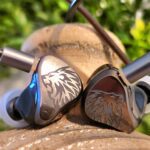
The Kiwi Ears Astral, being the most recent I’ve heard, seemed like a good comparison, both because it too is a fairly complex multi-driver, even if the driver type is less exotic. Kiwi Ears worked on a neutral but already more typical tuning, with pronounced mids and rounded highs but with more pronounced extension. As for the bass, they opted for a slight boost that gives the IEM soul and a certain musicality. In my opinion, this one has a more common balance but is somehow closer to my preferences.
Conclusion:
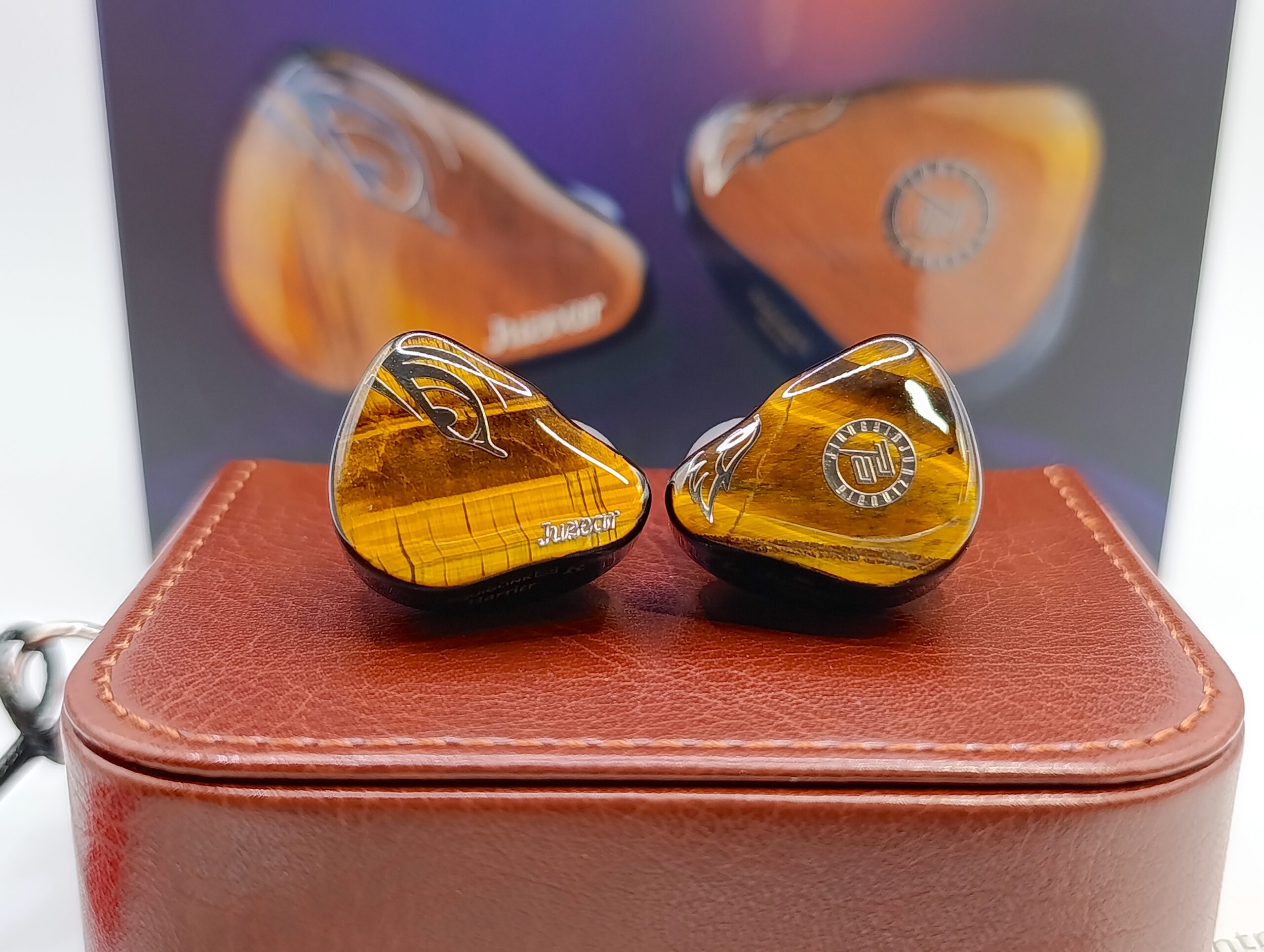
The Juzear Harrier is a truly unique IEM, and I’m confident it will find its market share.
Overall, I’ve found that they’re quite power hungry and not as easy to drive as they might seem. The number of drivers, and especially the presence of planar drivers, requires robust amplification. If these aspects aren’t met, you risk different performance, or, as in my case, less rounded bass and duller highs. You can work on the treble without necessarily resorting to EQ by using ear tips like the S&S Dunu or the Tri Clarion, which work very well with this IEM. Many disparage the Tri Clarion, but they’re widebore tips with a shape that guarantees total comfort.
Overall, this IEM is for those looking for powerful mids that never sound harsh or sibilant for any reason.
While I initially had mixed feelings about the review, which lasted seven consecutive days, I no longer find the shortcomings I initially noted when I quickly switched from a Harman to these. If we give the Juzear Harrier time to express itself and have the patience to briefly reset our hearing with low-volume listening sessions and then increase the volume day after day, we’ll realize how different these are, but not flawed. Obviously, the 6 kHz gap could have been kept a bit more subtle, but being able to listen at high volumes without chasing peaks is definitely worth it.
A unique project, an unconventional challenge that delivers something different, something I appreciate.
7,9/10
Pros:
- Nice Resin Build Quality
- Extra Nice Accessories (Many Tips)
- Mid Focused
- Squiglink Tuned (something different)
- Slightly Bass Boosted
- Sibilance & Harshness Free
- Super Extra Smooth Treble
- Exotic driver mix
- Nice Soundstage
Cons:
- Not For Bassheads
- Not for TrebleHeads
- Needs good AMP to properly sound
- Shell Size (chunky)
More Information:
Q/A:
Who is the Juzear Harrier for?
I believe this IEM has a specific target audience. If you’re looking for an IEM with forward mids but super safe overall tuning, you’re in the right place. Especially if you’re particularly sensitive to high frequencies, this IEM is for you. It might also be very appealing to those who like to turn up the volume more than necessary, as this tuning allows for higher average listening volumes.
Who should avoid the Juzear Harrier ?
However, being an IEM with a certain neutrality, it doesn’t have an abundance of treble or bass, even though the latter are clearly boosted. This level doesn’t make it suitable for bassheads or trebleheads, who would certainly be looking for greater depth and extension in the bass (with more punch as well) and more sparkle in the highs.
Recommended Source Pairing?
Personally, I recommend a source with a lot of power available and if it were even slightly bright or neutral it would be perfect. If you find the right eartips capable of slightly emphasizing the high frequencies you reach a perfectly enjoyable level.
Tricks of the brain?
After a ton of IEMs all targeting the same curve, I can assure you that listening to these won’t make you appreciate the Juzear Harrier at all. Initially, I wasn’t sure if what I was hearing was to my liking, but after a very intense week of consecutive listening sessions, the sound gradually became more normal until it became surprisingly pleasant. At the end of the review, I can tell you that if I only had this model, I wouldn’t have any reason to change it or hope for a better model. All this to say that we reviewers should spend a week with one IEM and a week off to avoid retaining a sort of memory of the previous tuning.
Thanks for Reading!





No Comment! Be the first one.