


















































Disclaimer:
Hello MBA readers! Today we’re finally back to reviewing a Simgot, after a long time of not hearing anything from them. The model in question is the Simgot EG280, a purely gaming model, but those of you who follow me already know I’ll be giving a more music-oriented opinion.
Table Of Content
The IEM has a unique configuration consisting of 1 DD and 1 Planar, which is uncommon among gaming headphones or IEMs. The standard package also includes a dongle and a cable with a microphone to complete your gaming setup.
I’m not an audiophile; I’m just a guy who likes to test out different IEMs and DACs and spends a lot of time listening to music. I fall into the audio enthusiast category.
So I’m not going to use super technical words to review it, but I will do my best to describe it.
Tech Specs:
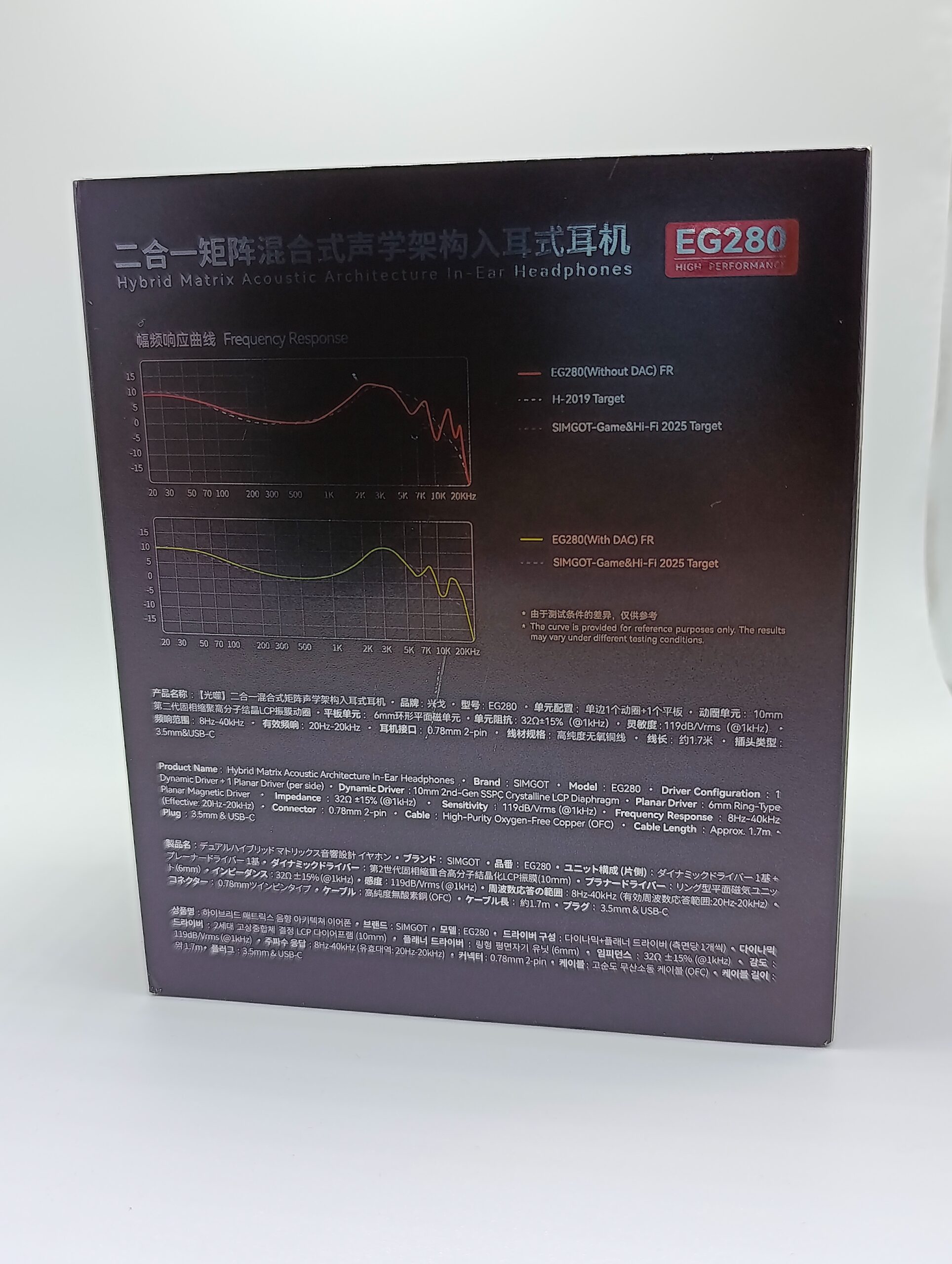
- Driver Configuration: 1 Dynamic Driver + 1 Planar Driver
- Frequency Response: 20Hz – 20kHz
- Impedance: 32Ω ± 15% (@1kHz)
- Sensitivity: 119dB/Vrms (@1kHz)
- Cable: High-purity oxygen-free copper (OFC)
- Cable Length: Approximately 1.7m
- Connector: 0.78mm 2-pin (detachable)
- Plug Options: 3.5mm & USB-C (with integrated DAC)
- Simgot Control App
- Microphone: Goertek high-sensitivity silicon unit
- Price: 79 USD
Packaging:
The Simgot EG280 case is slightly cheaper in terms of materials than previous models I’ve tested, but it retains the Simgot style. The standard features are particularly geared towards gaming.
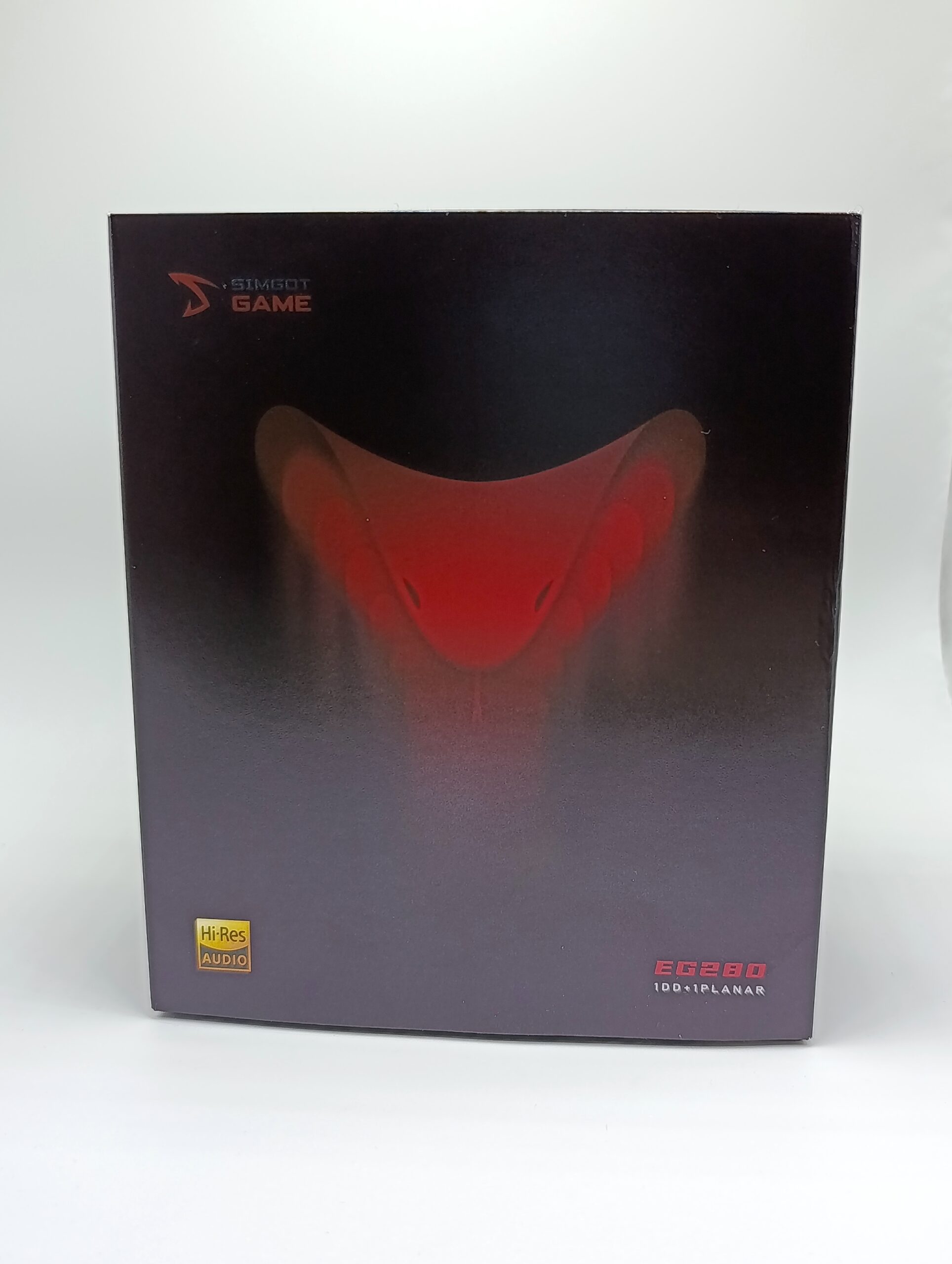
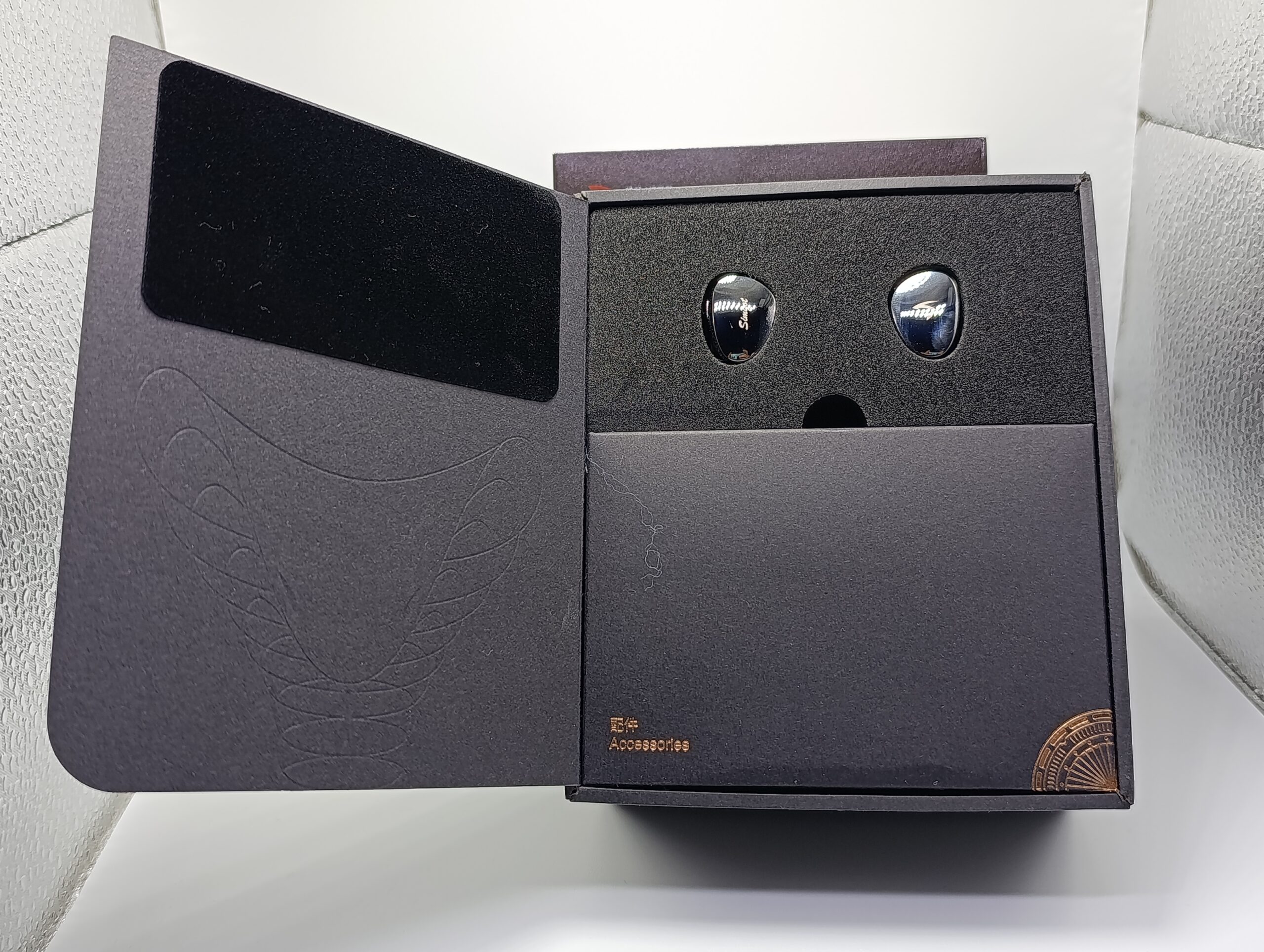
Inside, we find:
- Hard case
- Long Cable with Mic
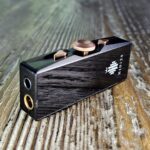
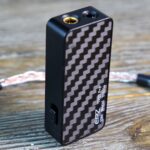
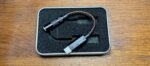
- DAC + USB Adapter
- 2 sets of Eartips
- QC card
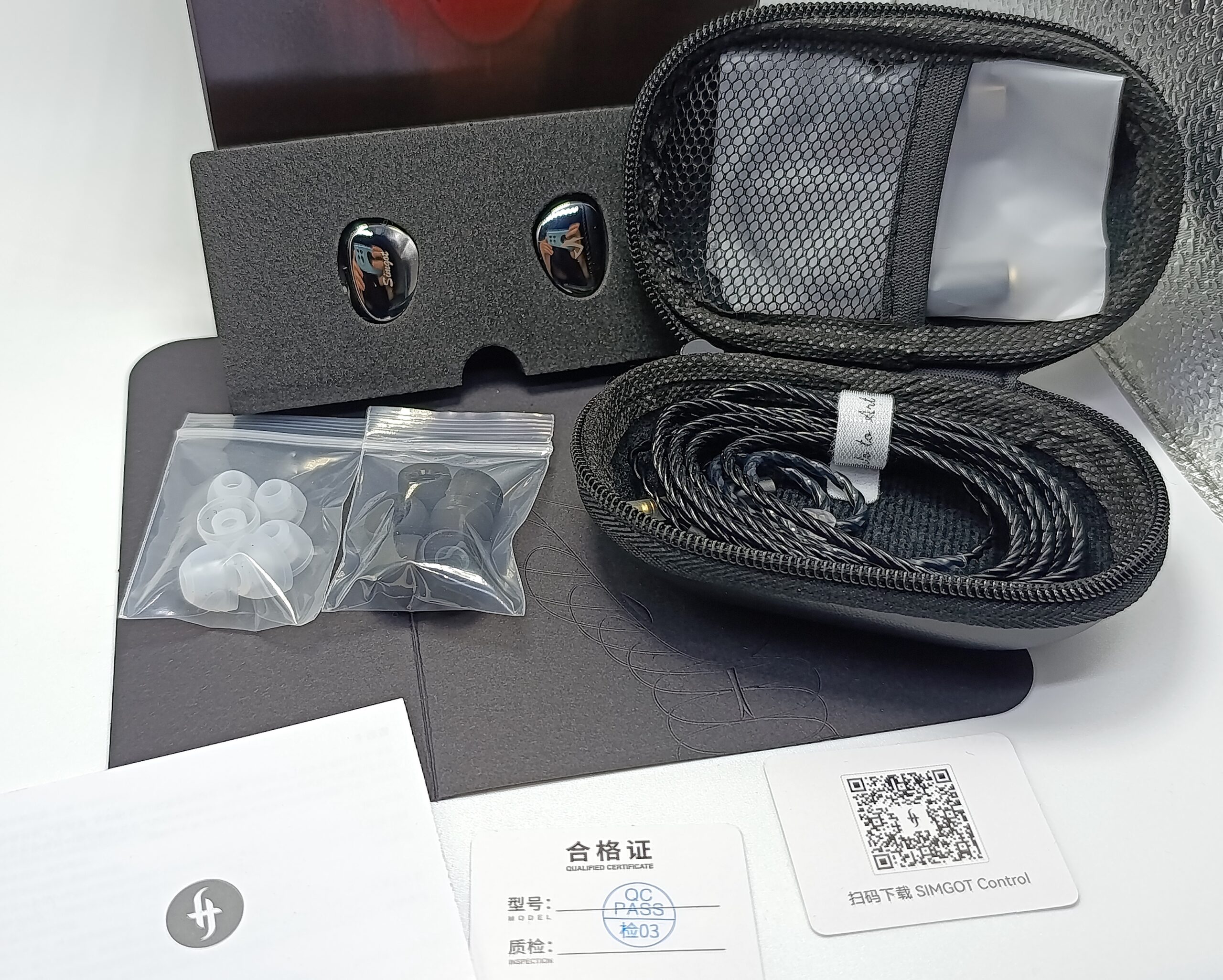
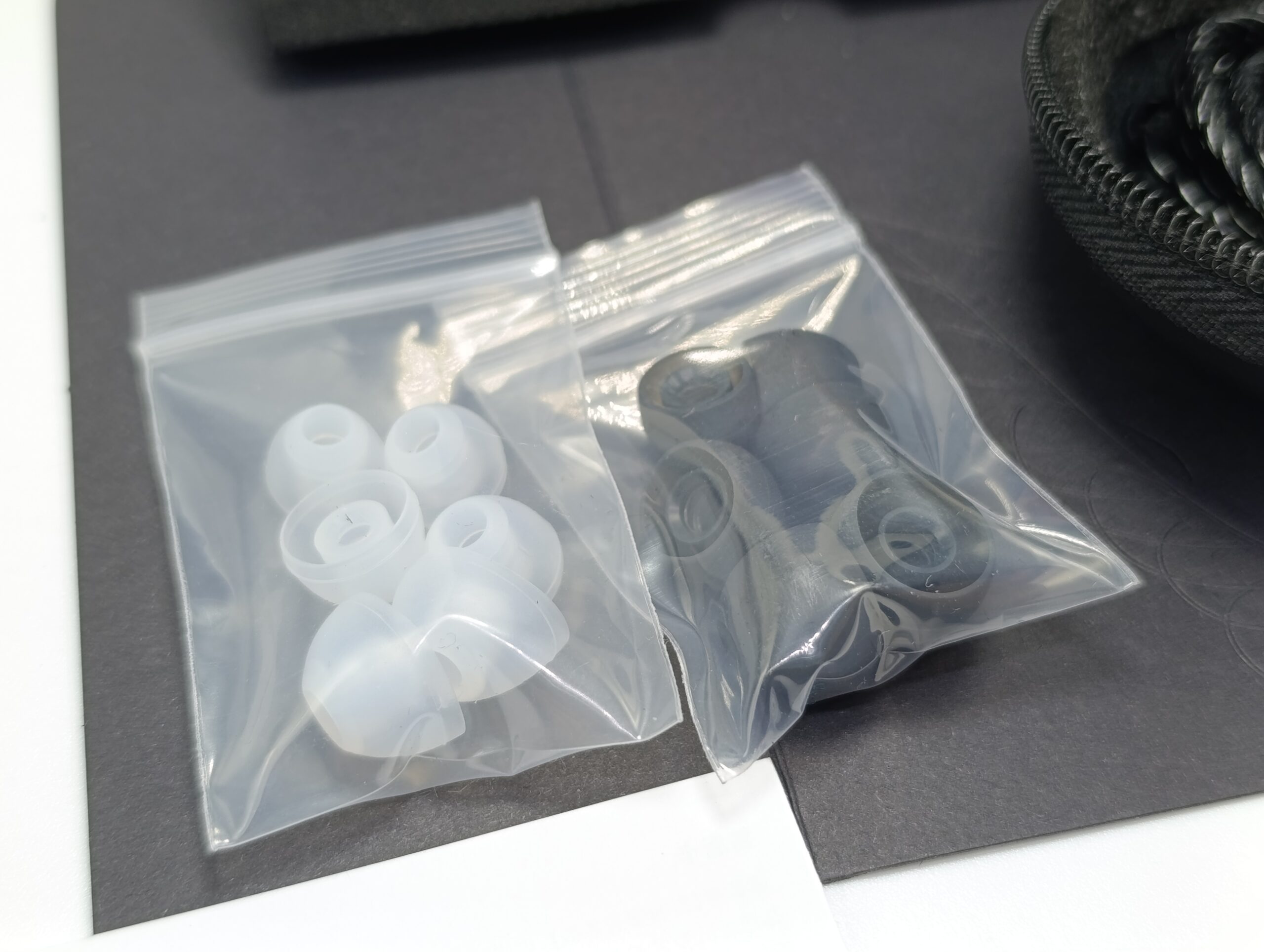
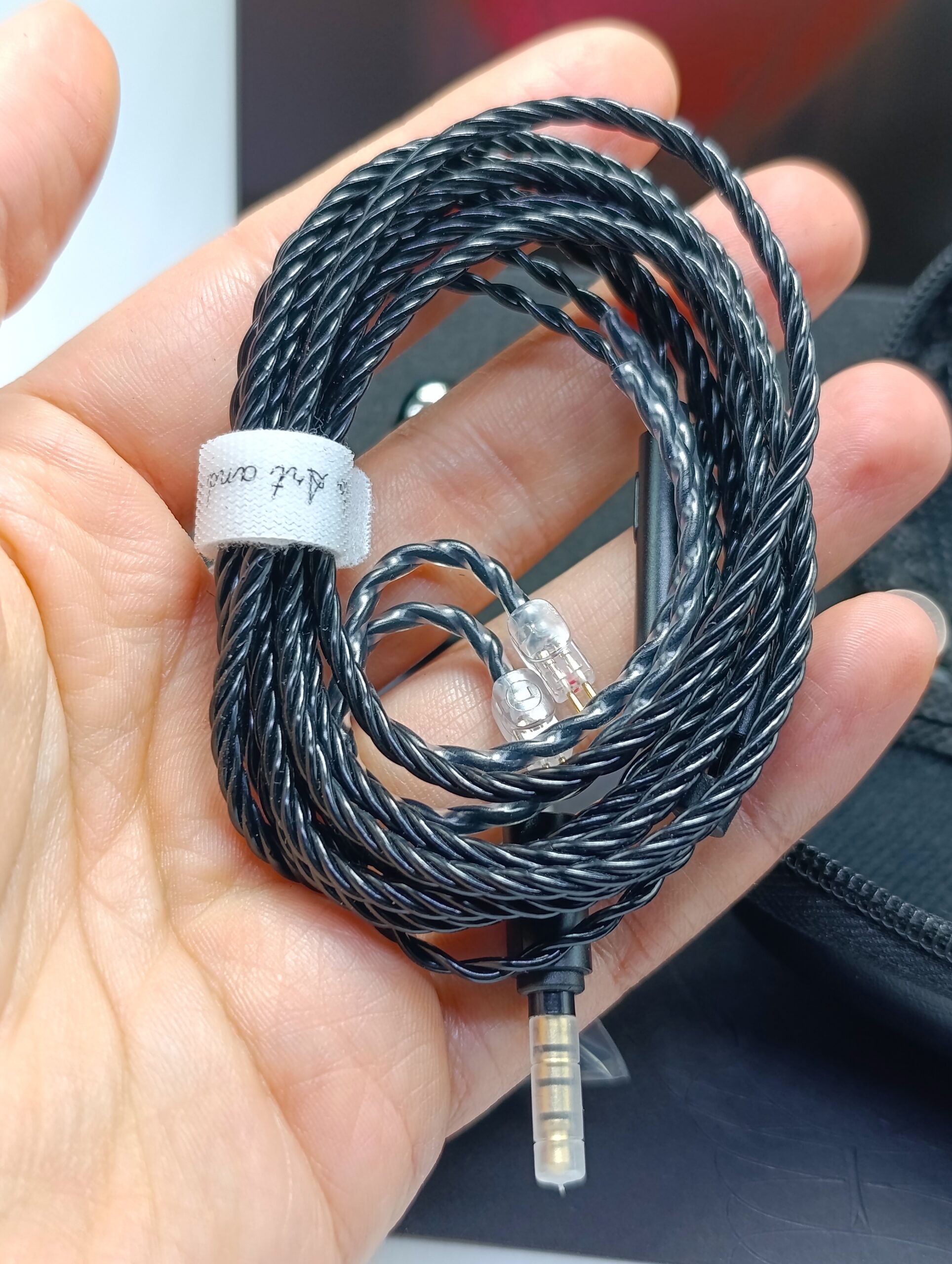
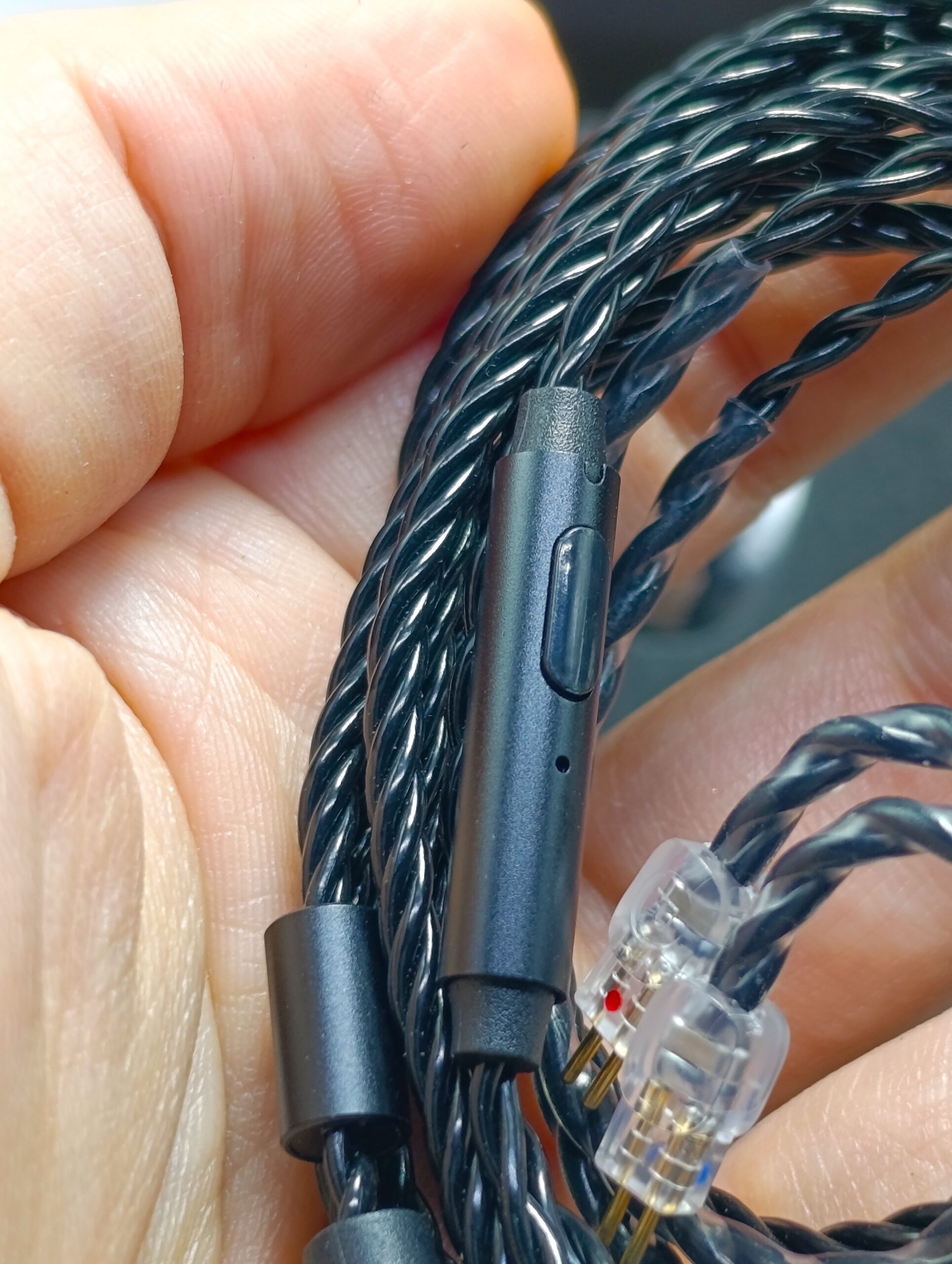
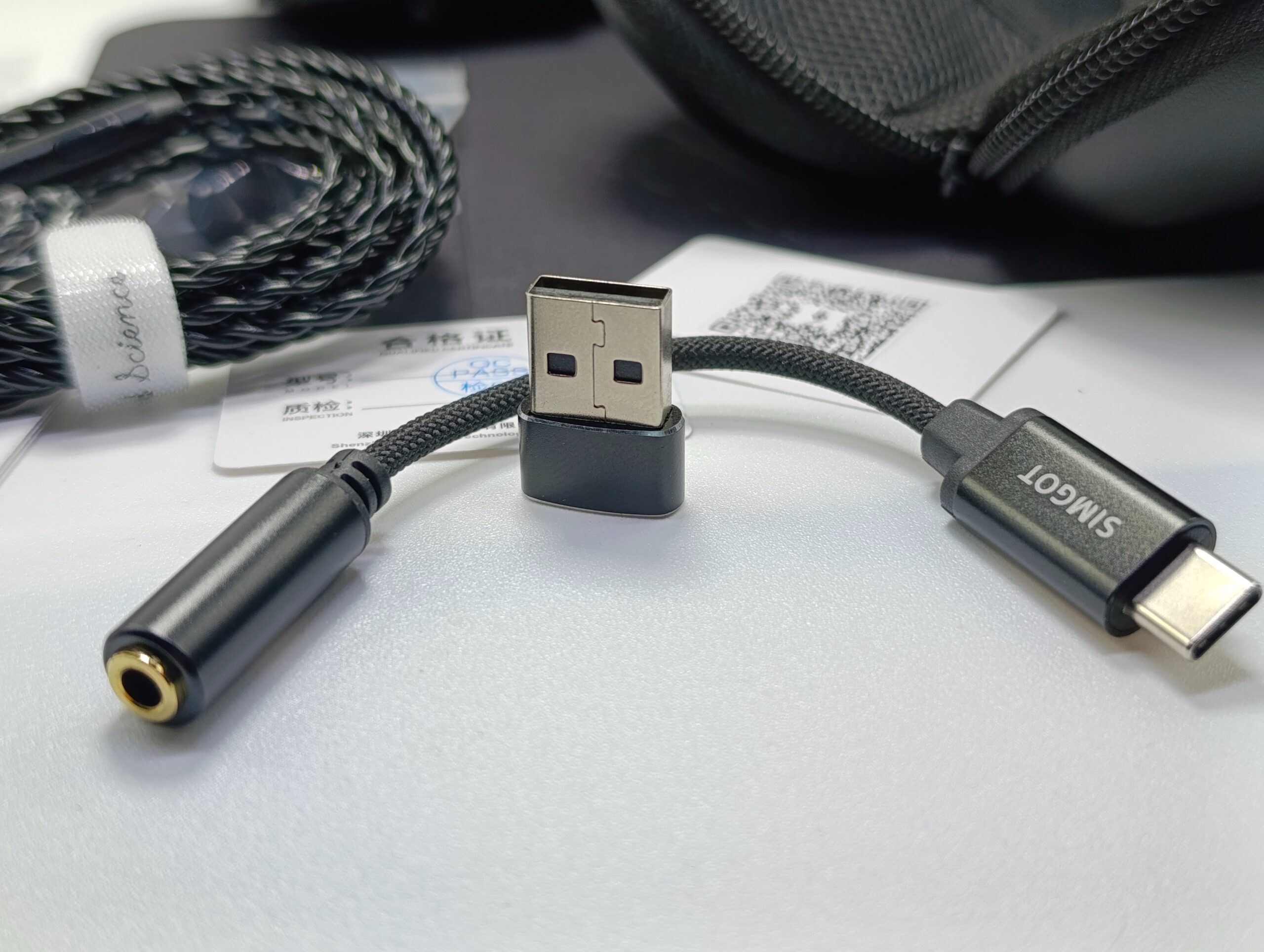
We have a long cable, and most importantly, it comes with a microphone and a small dongle that acts as a DSP that, when paired with the app, allows for some adjustments. However, we’ll talk about that later. Still, it’s a very good package for the price of around $70.
Design/Build Quality:
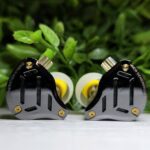
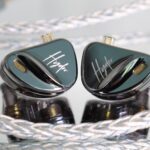
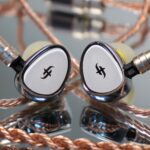
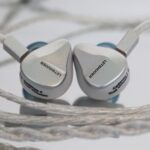
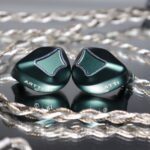
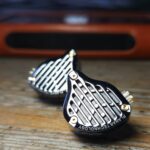
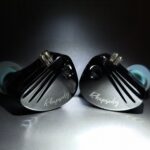
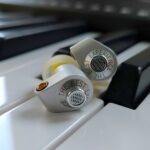
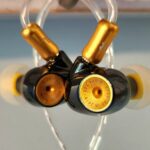
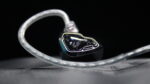
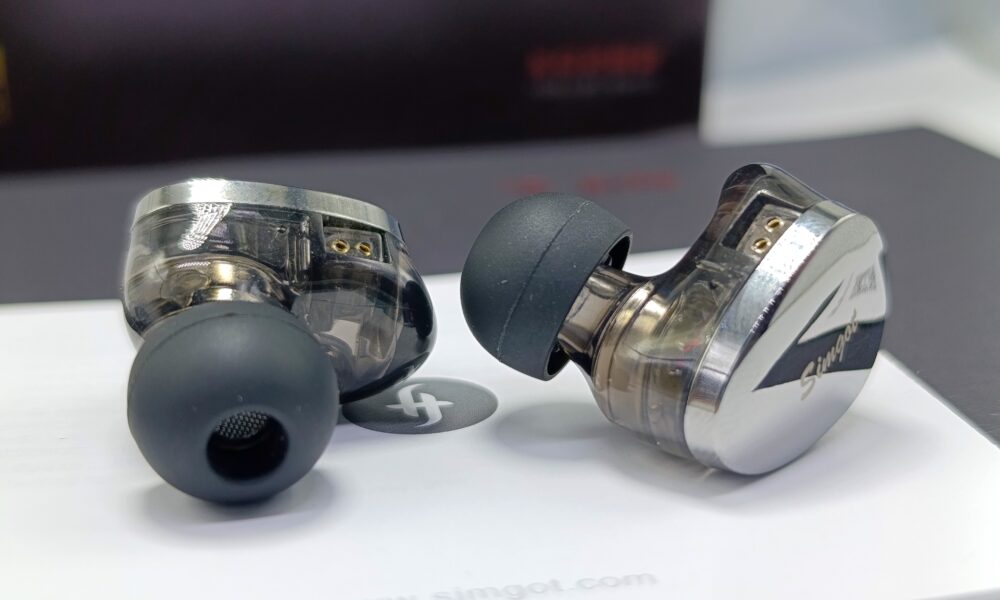
The design of these new Simgots resembles the EA500LM and perhaps the EM6L, a hybrid of the two styles. The build quality isn’t as good as the brand’s more premium models, but I’d still say the shells resemble the EM6L. The faceplates are very Simgot-style; the choice of material and finish makes them fingerprint magnets. The shells feature two ventilation holes, one on the inside centered on the planar driver, and the other near the IEM connector.
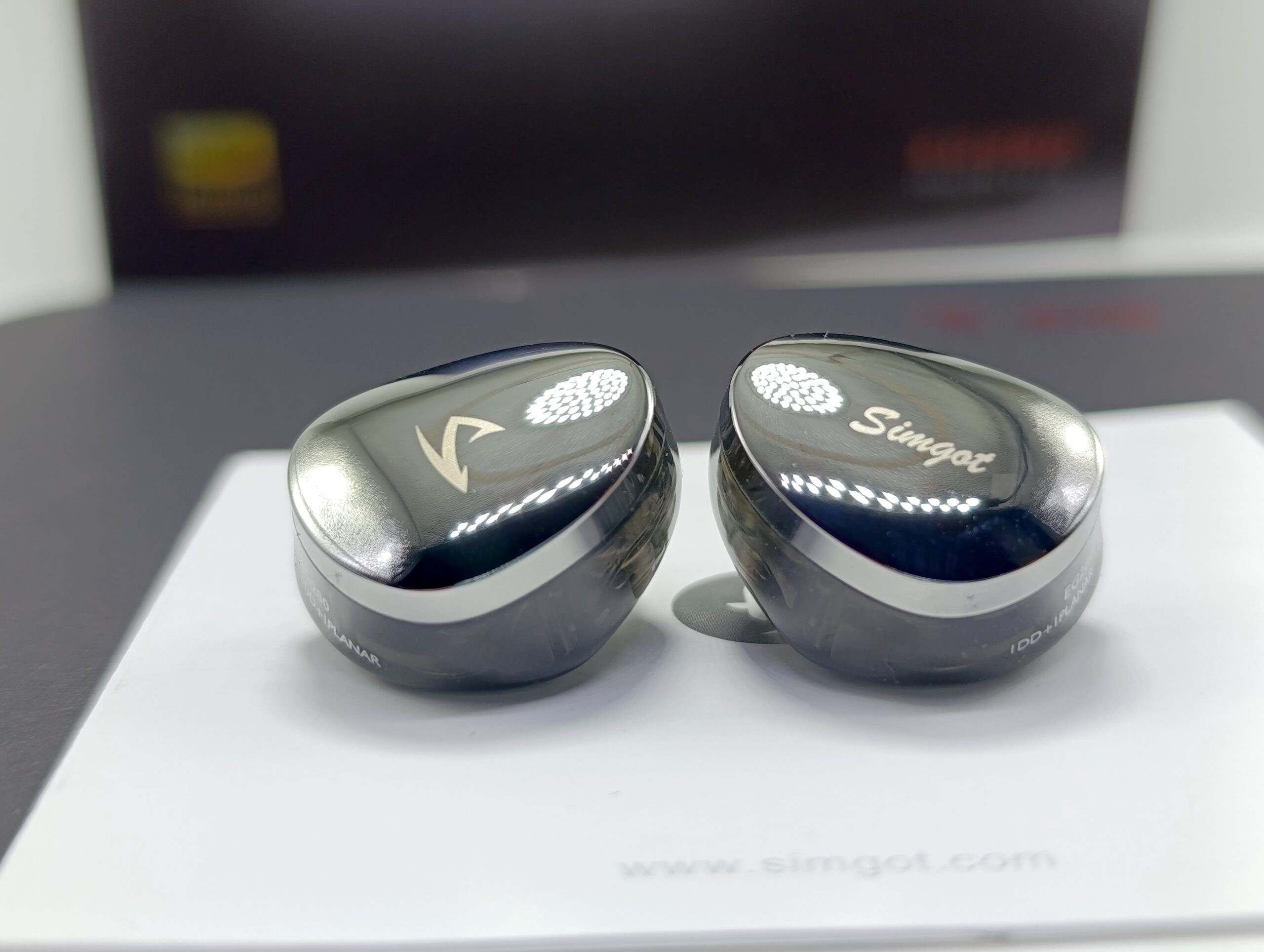
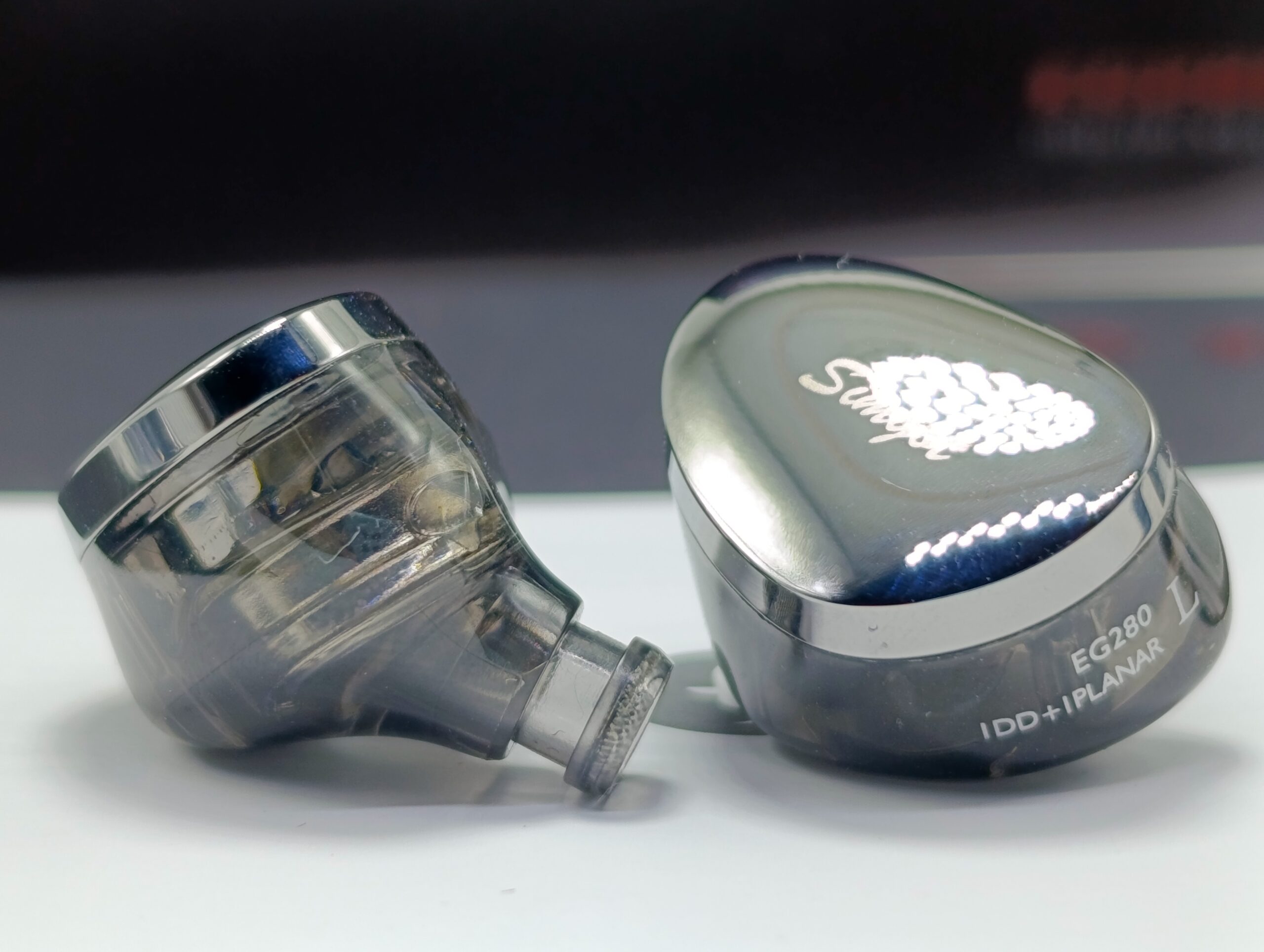
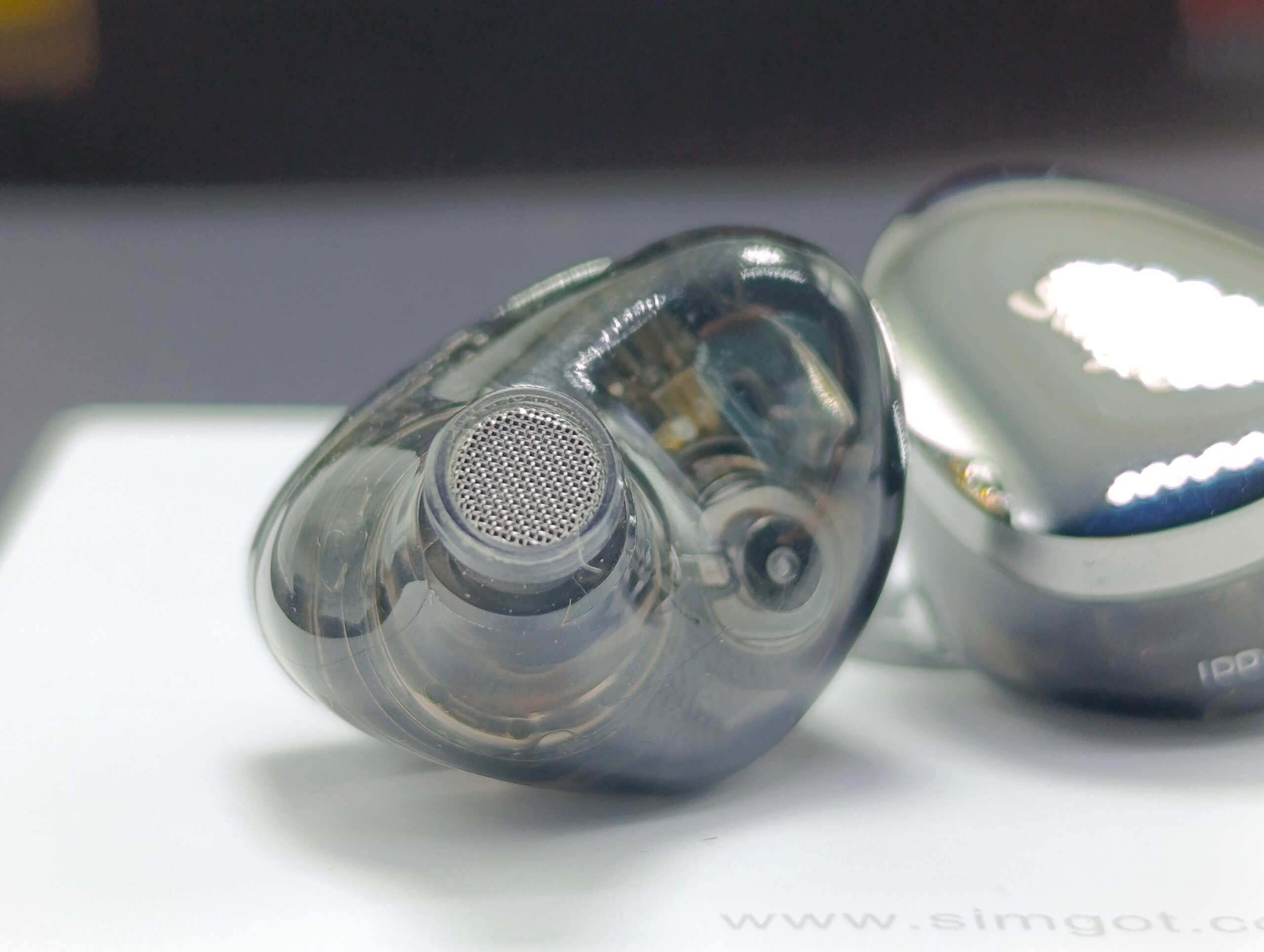
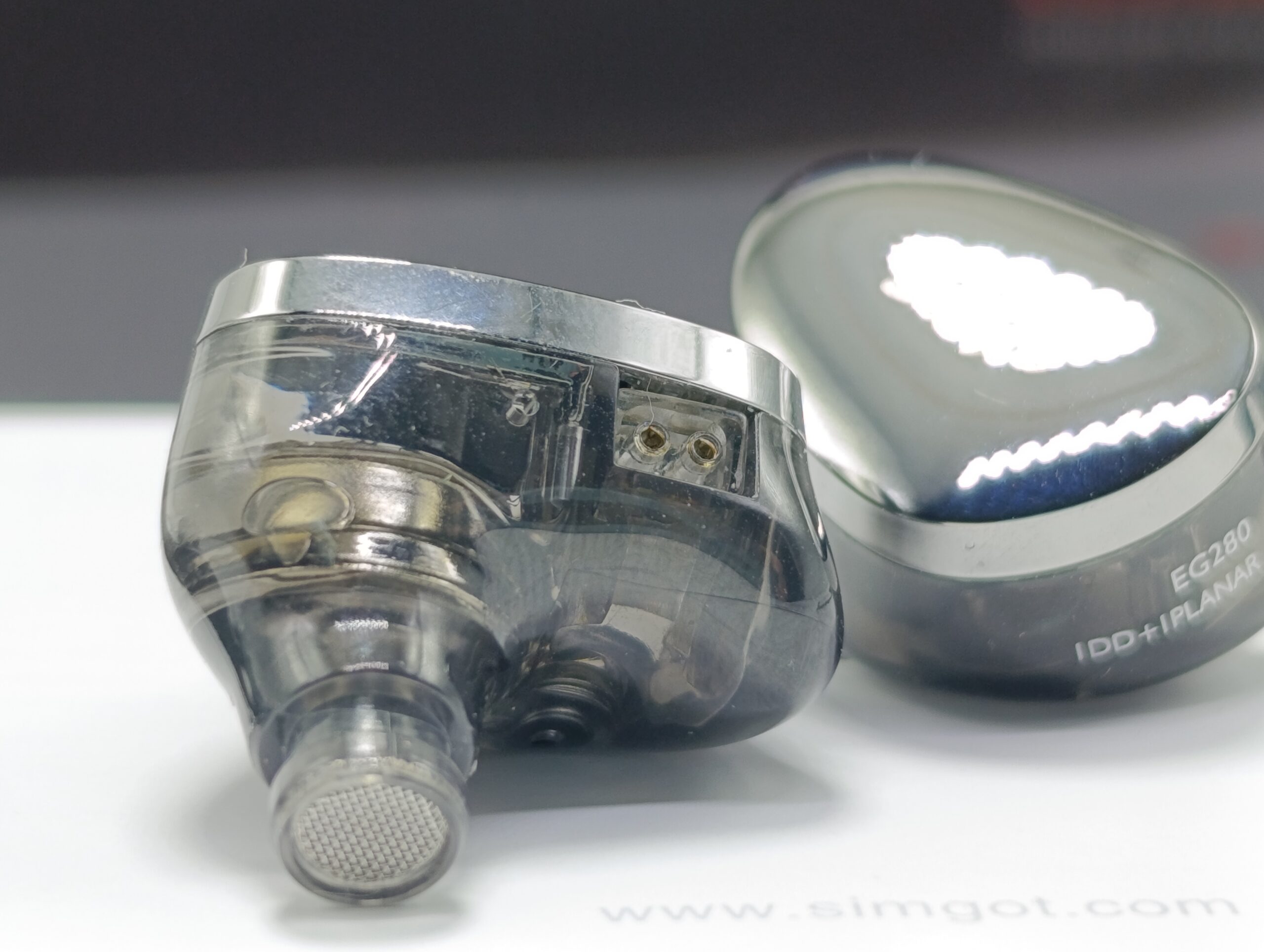
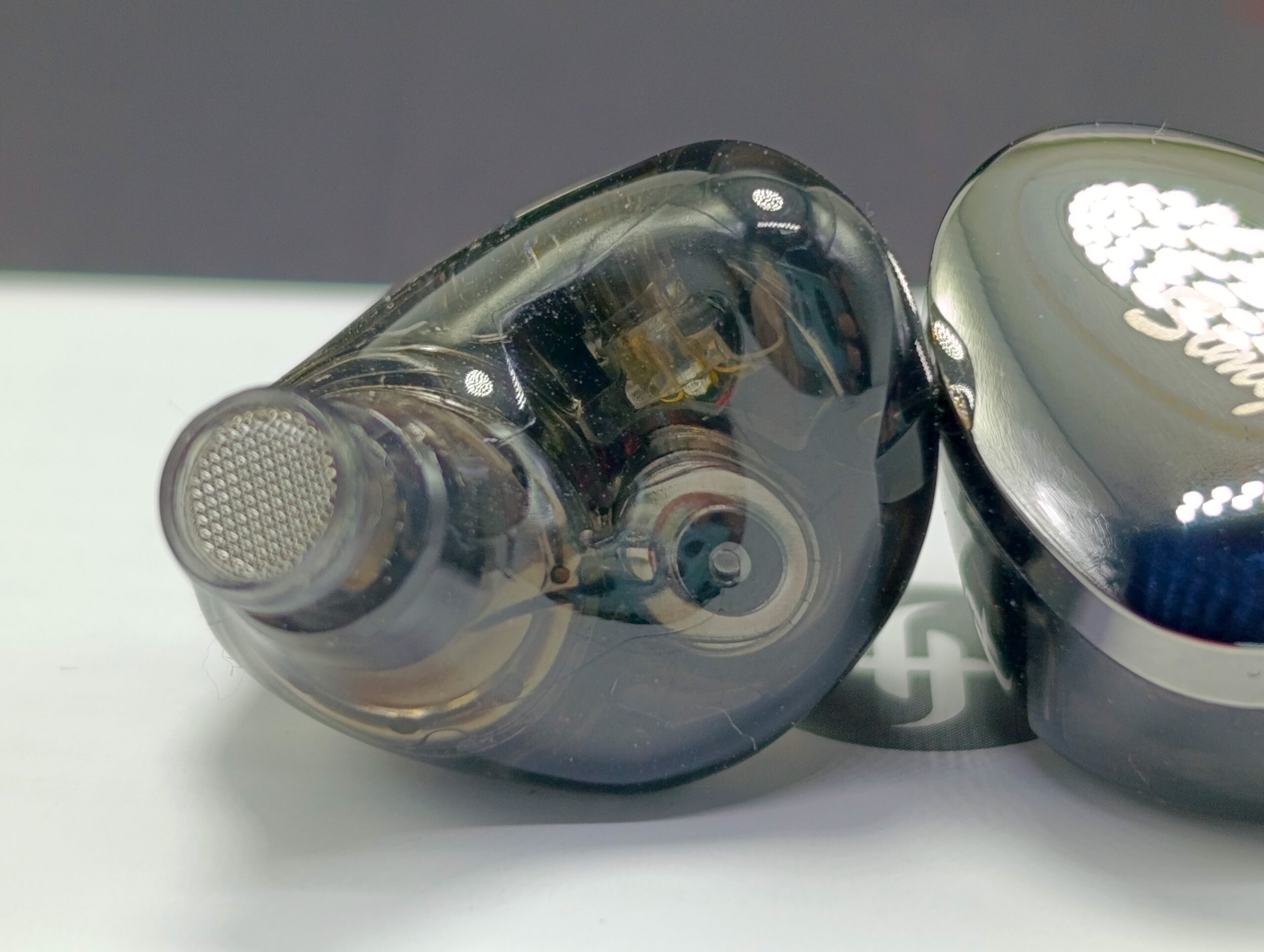
I appreciate the transparent shell, which allows for a glimpse of the internal structure, even if it’s simple.
Inside, there are two drivers: the first, a 10mm dynamic driver, focuses on reproducing the thicker parts, while the other, a 6mm planar driver, focuses on detail and sparkle.
The included accessories aren’t bad and are of good quality; the cable is an excellent length for gaming.
The included dongle/DSP left me a little perplexed at first, to be honest, because the planar certainly needs some power to get going. It’s certainly not a FiiO KA11, which could certainly be a great match.
Initial sound impression:
Being someone who listens more to music than to game, I immediately went for the hard route with a nonsensical upgrade of cable and eartips. It’s not that I didn’t trust the included accessories, but they didn’t seem suitable to fully express their potential. I went straight for the Effect Audio Ares II cable and the Divinus Velvet Eartips, and honestly, I think I made the right choice. They have a style, or rather, a sound, perfect for gaming: very focused yet extremely resolute. They have a sort of energetic and vivid representation that, when gaming, allows you to perceive noises and sounds promptly. The small planar driver is lively and manages to reproduce an impressive amount of macro details while slightly decreasing the micro details, but honestly, on a gaming setup, they wouldn’t be much use.
In any case, that planar driver is as insidious as a cobra, very fast, precise, and lethal. I don’t find it harsh, but if the track calls for it, it becomes very spicy. Personally, seeing how they perform using the Fosi Audio K7, I’m already worried that the integrated dongle won’t be able to get the most out of the Simgot EG280s, but it definitely integrates a DSP that can further balance the sound and make it a bit processed. I’m all for ratings with the most neutral dongles possible, but in the end, this is a bundle.
Comfort & Fit:
I’ve never had any problems with any Simgot. They’re all very compact and easy to place, although I’d probably consider using better eartips if you’re interested in trying them. The Simgot EG280 is lightweight, and the included cable is just the right length, but if you want to try balanced headphones, you’ll need to change the cable. Balanced headphones aren’t necessary, but at least a decent 3.5mm output is a good idea.
Still an extremely comfortable set with good insulation.
Tips Rolling?
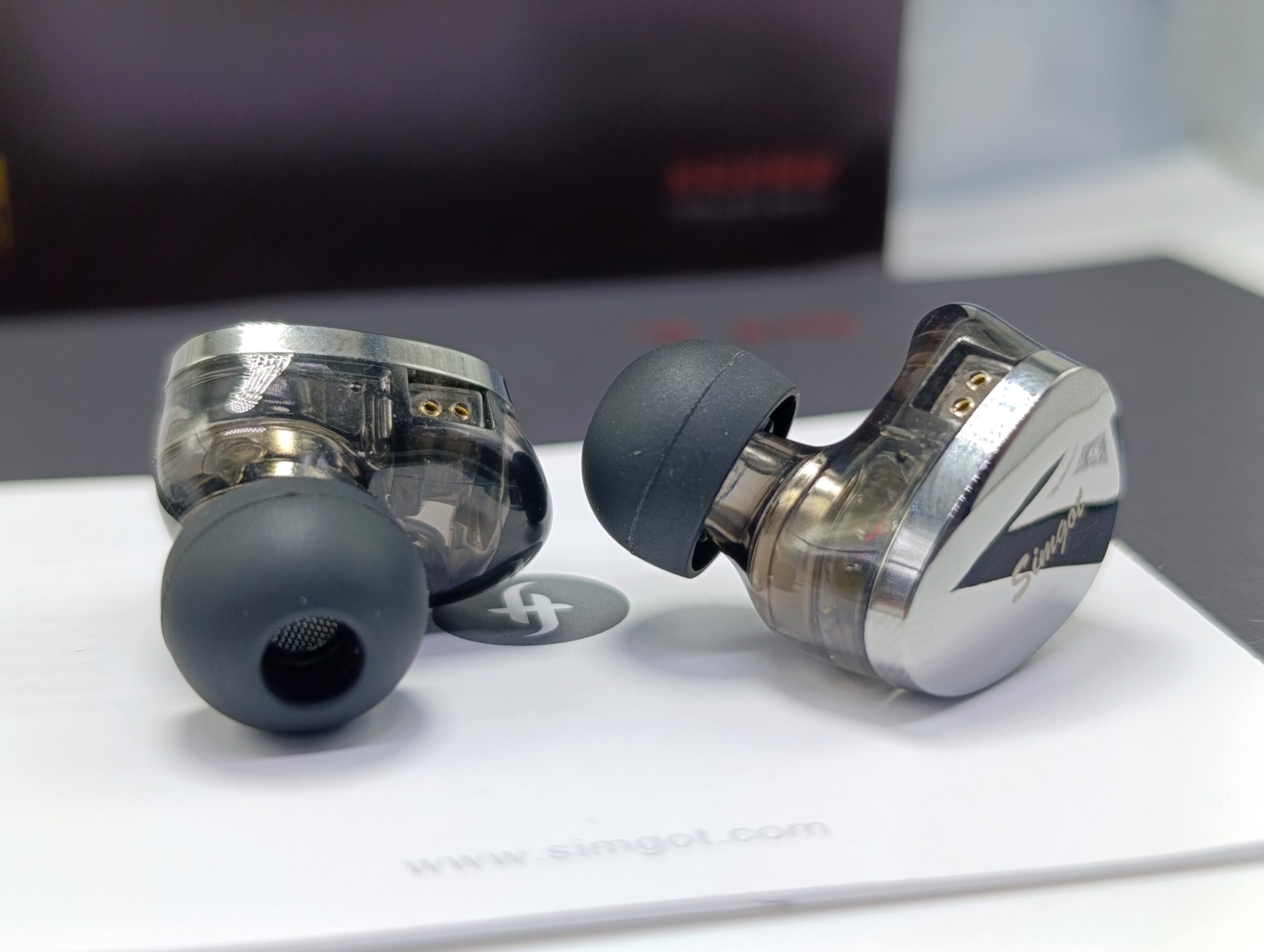
I’ve used the Divinus Velvet in many Simgots, and they’re excellent on this model too, providing stability and comfort.
There are other silicone models I’d like to try, but these felt good right away. A deeper insertion might even yield better results.
Equipment used for testing:
Device:
- Mac mini
- Redmi Note 14 Pro 4G
Software:
- Amazon Music UHD 24-bit 96 kHz
DAC:
- Fosi Audio K7 (Balanced cable)
- Simgot DSP (Stock Cable)
Final sound impression:
I can say that the Simgot EG280, on steroids and well-amplified, offers an energetic sound experience very reminiscent of the EM6L, a sort of rich and brilliant reproduction with that vivid effect that draws you in track after track. Obviously, this result could also be achieved simply by connecting a Fiio KA11, which I’ll compare below with the included stock dongle to get a more complete picture. The balanced test is certainly what brings the IEM to its best, but I’m sure a good 3.5mm output will also do the trick.
But now let’s move on to the test with its standard equipment.
Simgot Dongle DSP:
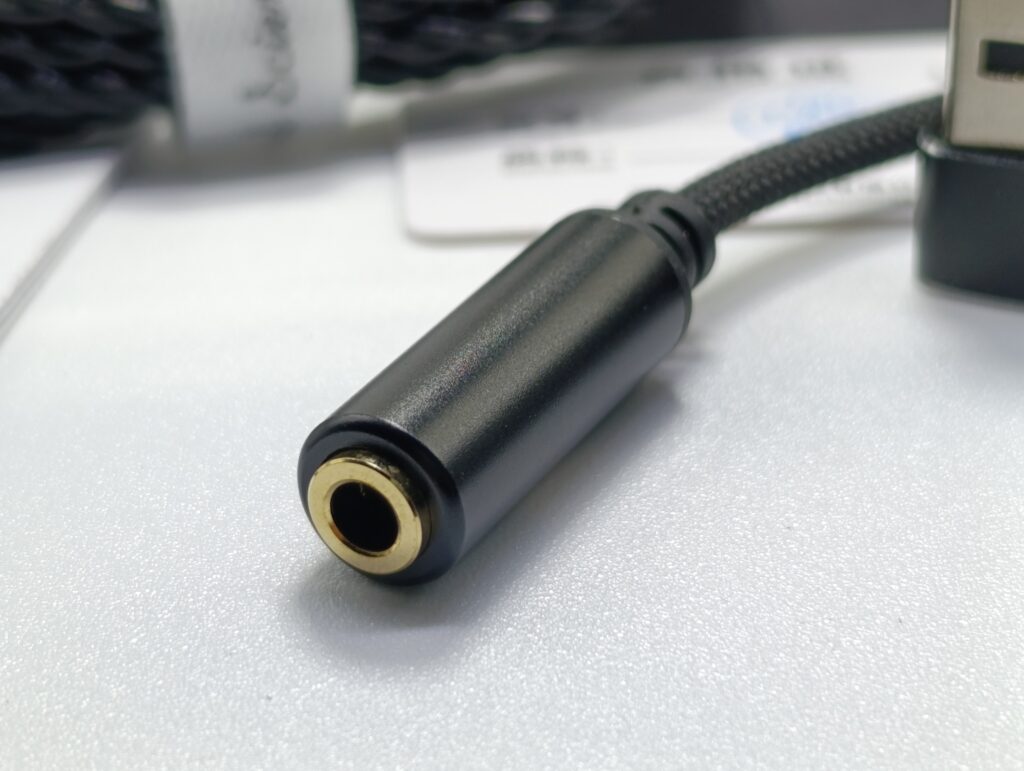
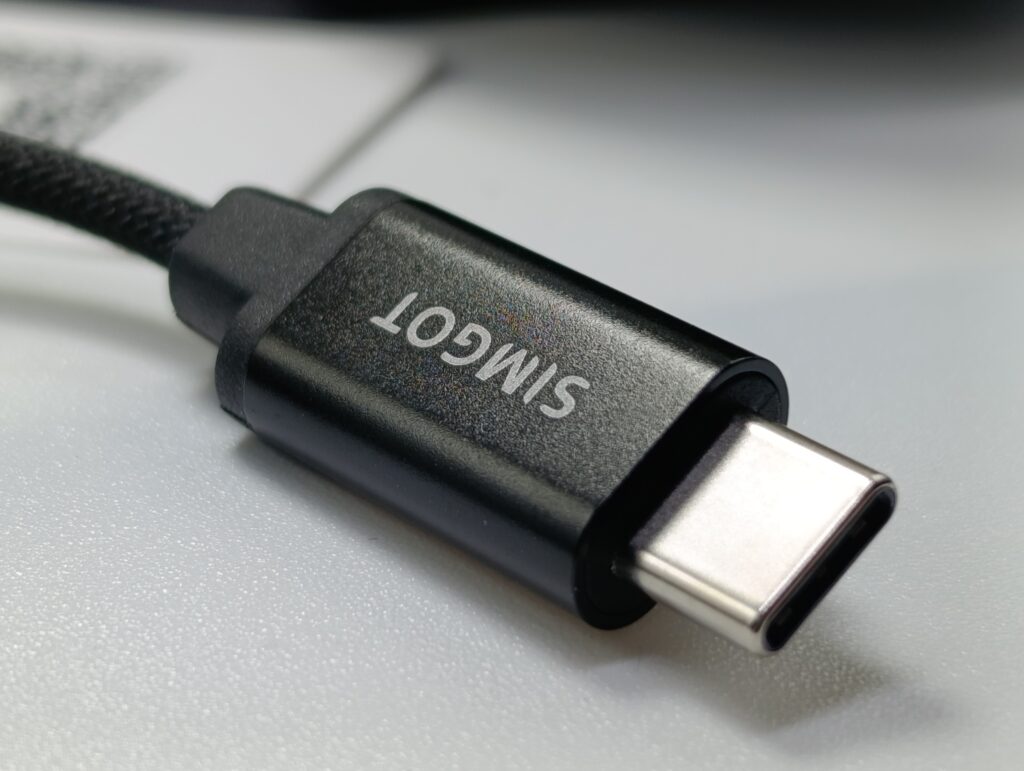
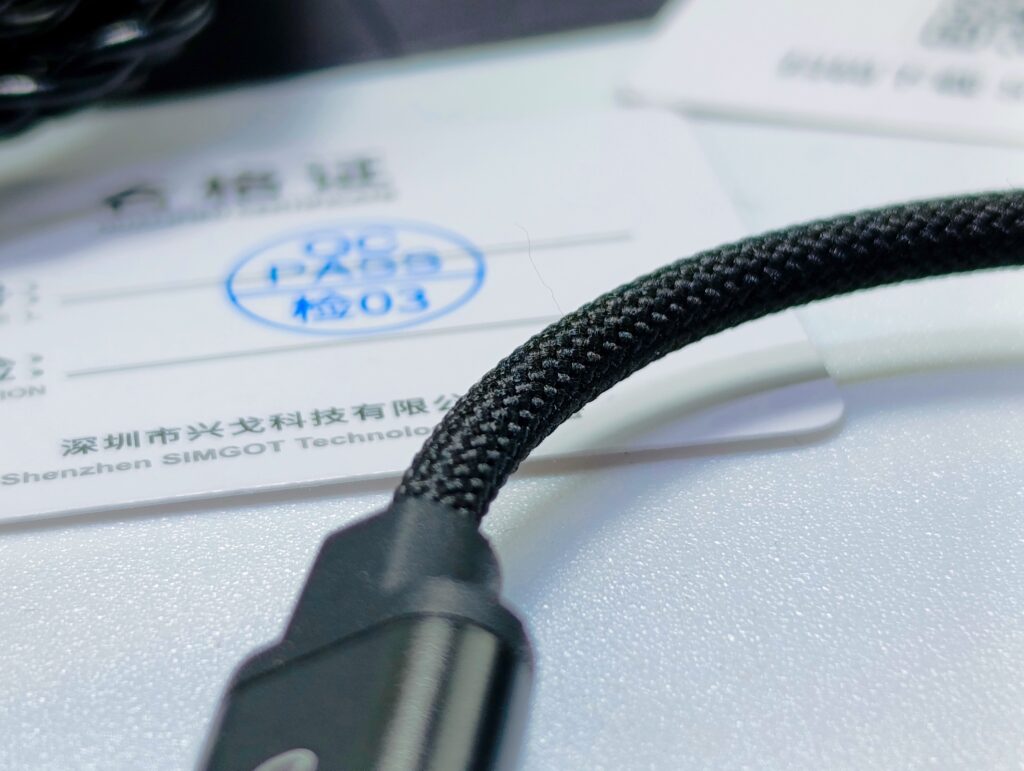
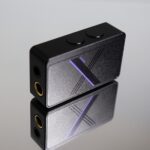
The included dongle undoubtedly offers the advantage of a state-of-the-art DSP for the Simgot EG280, which can be paired with a customization app (which we’ll discuss in the next section).
Typically, these types of dongles feature very basic Conexant or Realtek chips, and I believe this is the case here.
Their power is limited unless paired with an op-amp, so their final output may be a bit disappointing, especially when used with smartphones that may not be able to supply the full current required by the dongle. Switching from balanced to single-ended, I immediately noticed a much less defined bass and a slightly less overall control.
Simgot App:
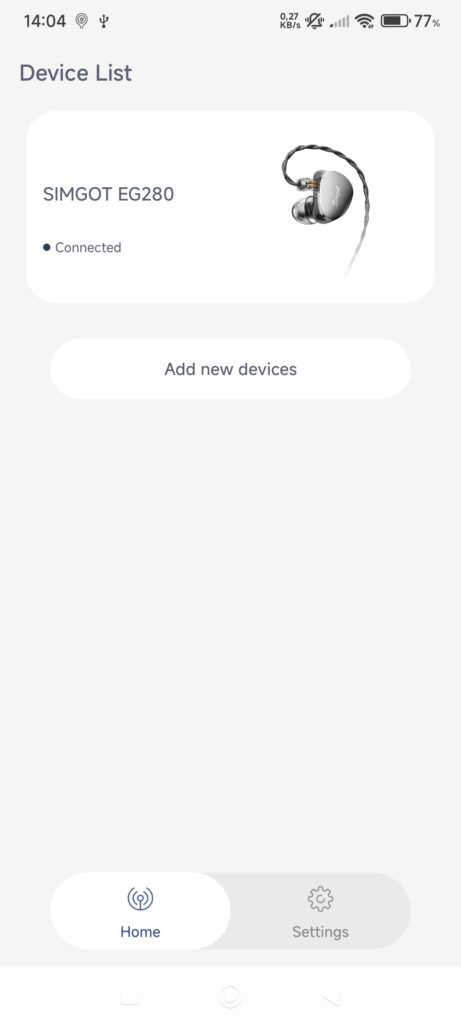
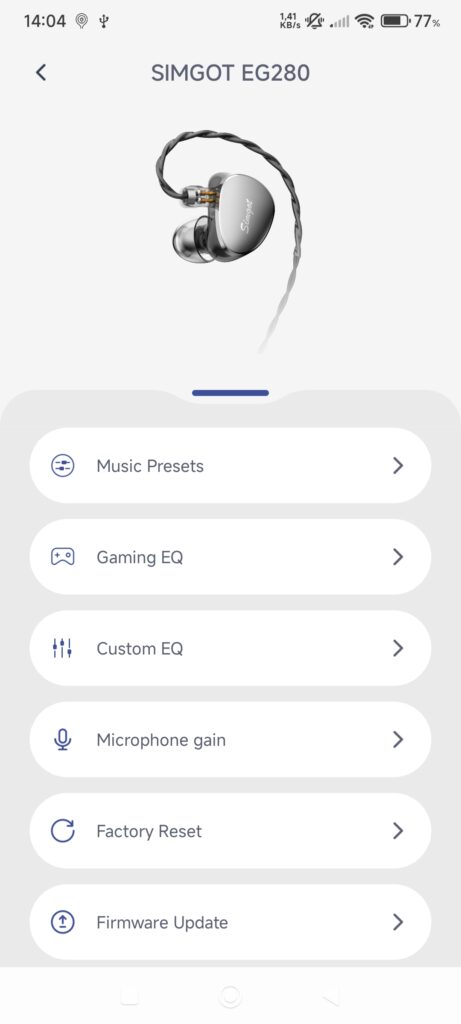
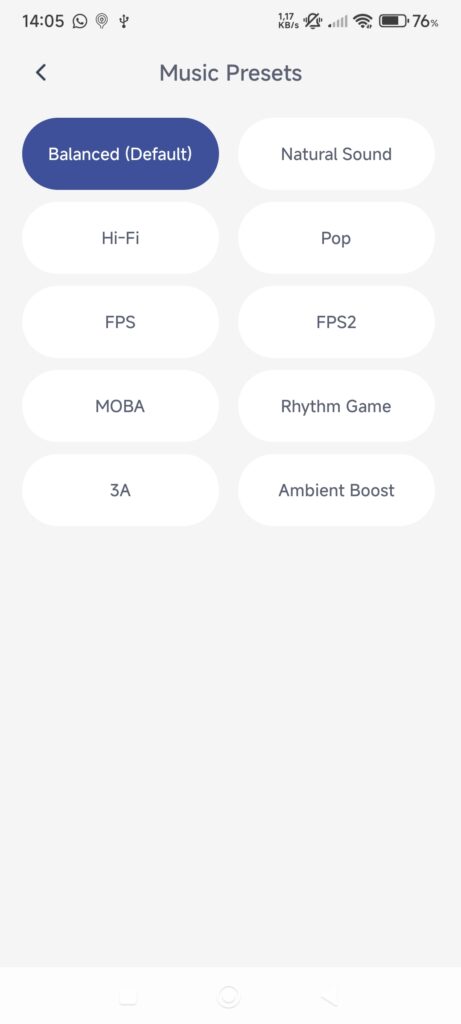
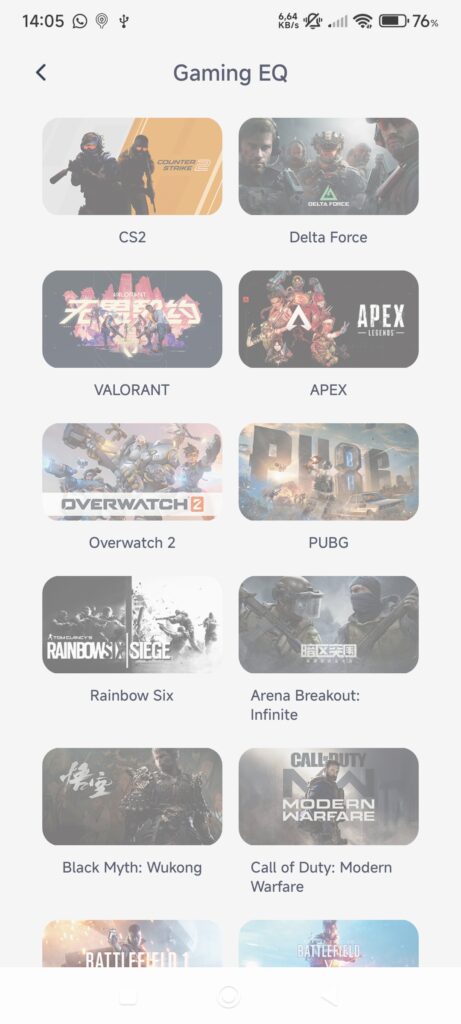
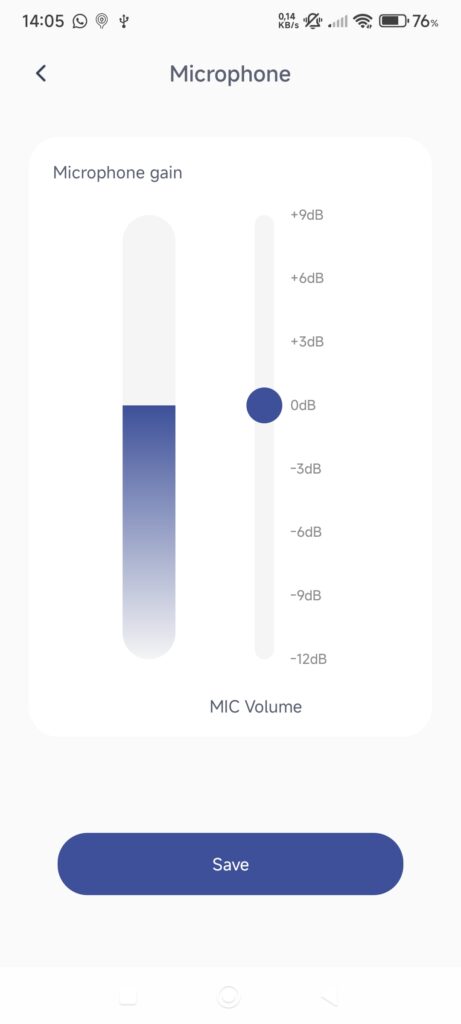
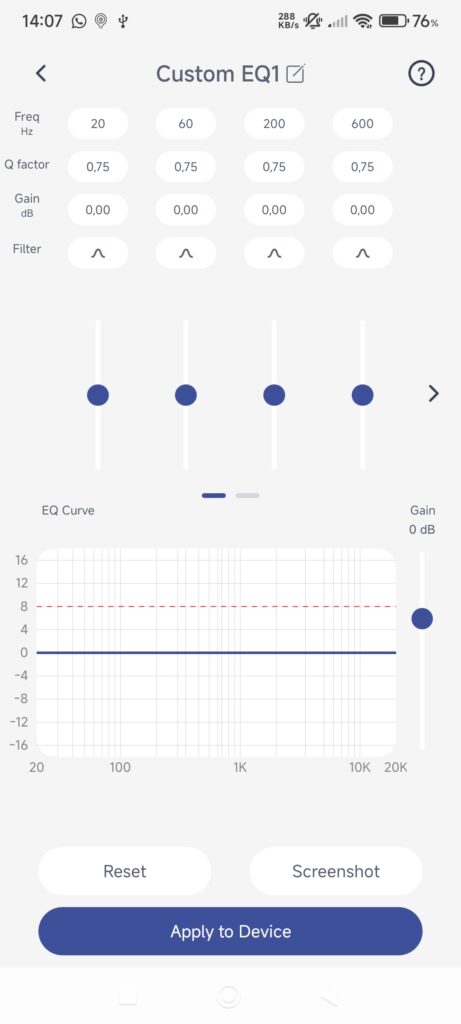
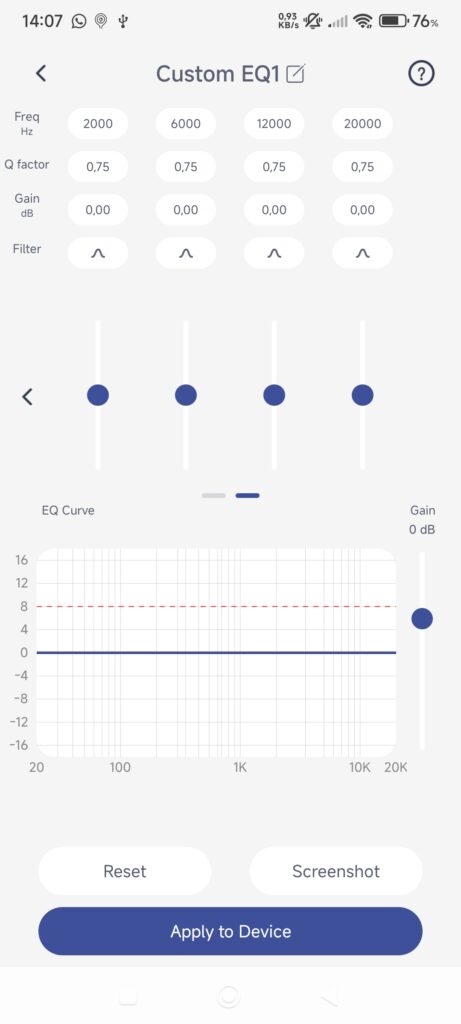
The Simgot app is a pleasant surprise: elegant, fast, and with a variety of settings. The number of simple (generic) presets and even game-specific presets is surprising. The app works really well, and if it were accompanied by a successor to the DEW4X, it would certainly be fantastic. I wouldn’t have expected such a well-made app, and I think it’s also new.
It’s simple to use, but the PEQ is quite advanced, allowing you to adjust all the frequencies you need.
However, I can confirm that the dongle manages to make the EG280 sound good, but the bass becomes very thin compared to a balanced cable with plenty of power. Perhaps in the ambient boost mode, there’s a slight boost, but not the same body. When changing the EQ, you may experience occasional pops; there’s even a message warning you of this possibility.
Bass
I think the Simgot EG280 does a pretty good job with bass, even though the tuning, or rather the final result, is definitely geared more toward gaming. They don’t have much extension, the subbass is a bit weak, preferring a punchy, fast response. Let’s just say that in-game, you don’t need a lot of subbass, but a punchy midbass is preferred. If the track calls for it, the DD kicks in.
Mids
The midrange frequencies, which may seem unnatural at first listen, are actually rich in energy but maintain a natural profile. They are slightly recessed on the graphs, but when actually listening, they are on par with the rest of the mix, ensuring great transparency and also have excellent directionality. Here, DD and planar blend together to ensure a good midrange balance.
Treble
A gaming headset must also be very comfortable for the ear, and not just because of its shape or lightness. I think the micro planar was tuned with this in mind. If they had brightened the treble, gaming sessions in complete comfort would have been reduced. This chosen level allows for a wealth of macro and micro details (perhaps more macro), but with an excellent vividness that lets you spot an enemy beforehand. Transparency and definition are there, without extreme airiness.
Soundstage and Imaging:
I can tell you that for the price this set is offered at, its staging ability is average or just slightly above average. It’s certainly not a huge stage, but it’s certainly of natural proportions and very directional. The imaging is very energetic and vivid, making them the successors to the Simgot EM6Ls. Layering is very good, and the separation of the various sounds is also very balanced.
Comparison:
This new IEM from Simgot looks like a successor to the Simgot EM6L, which was a hit with fans for its power. It also had some structural flaws on the nozzle. However, its features have made it a popular choice for gaming, and in my opinion, this is Simgot’s answer.
vs Simgot EM6L

The two IEMs share a similar soul, they definitely have aspects in common and I like to think so. The EM6Ls weren’t to everyone’s taste, but some loved them (me too). Their overwhelming energy was unique among similar IEMs, and this one reminds me exactly of them. Better or worse? In my opinion, they’re definitely better in several ways, even though the EM6Ls were more musical, these are more gaming-oriented.
Conclusion:
For the modest price of $70 or so, Simgot offers a good gaming set, but it suffers from a few issues. First and foremost, the dongle/DSP has limited power, which doesn’t do the IEM justice. The solution would be to produce a good successor to the DEW4X, compatible with this new app, which allows you to choose from various Simgot IEMs and have a powerful universal DSP. The bass is a bit weak, but that’s partly due to the dongle, so it’s not tied to the Simgot EG280. The microphone isn’t particularly above average, but it’s average for other budget sets. The sensitivity can be adjusted, but it’s not a miracle.
Overall, it’s a reasonably priced gaming set that offers everything a casual gamer needs. The Simgot EG280 manages to reproduce an incredible amount of detail with a well-developed soundstage in all directions and precise positioning.
7.2/10
Pros:
- Nice build quality
- Long 1.7 meter cable
- Really musical, energetic, vivid
- Clarity and details
- EM6L successor?
- Great imagining
- Soundstage & separations
Cons:
- Dongle needs an upgrade
- Bass depends on the dongle
- Not available in 4.4mm balanced
- Not for Bassheads (sub-bass roll-off)
Q/A:
Who is the Simgot EG280 for?
The Simgot EG280 is undoubtedly more suited to gamers; the standard features are geared more toward gamers than those who primarily listen to music. If you’re like me, who listens 98% to music and the rest to video games, then you probably don’t even need a model like this.
Who should avoid the Simgot EG280?
If you are looking for a product specifically for high fidelity, full bass and treble extension then you are not in the right place.
Similar alternatives to consider?
Staying with the Simgot brand at the same price, we have the Simgot EW300 which is definitely more suitable for those who listen to music.
More Information:




No Comment! Be the first one.