































































































Preliminary
Some companies try to appear better than others and smarter than others. Ampapa Q1 clearly belongs to the second category (it is not a race toward maximum performance or better measurements, but rather a problem to solve: a simple, compact, versatile and coherent platform where you can build your system without having to make fixed choices between DAC, headphone amplifier and speaker amplification).
Table Of Content
- Preliminary
- From doubt to test
- The brand: Douk Audio and Ampapa
- The next step
- First impressions
- More than it seems
- Box and accessories
- Small details that matter
- Build, materials and heat management
- Technical specifications
- Numbers vs reality
- Specifications
- The project: ideas and choices
- Two DACs, one idea
- It’s not just the chip
- A system, not just an object
- Connections and controls
- Even when you want to keep it simple
- Where it becomes interesting
- General sound signature
- Desktop listening
- Home system as main DAC
- Using it as a preamp in a home system
- DAC + external headphone amplifier
- Bass, mids, treble, soundstage and imaging
- Desktop: balance and coherence first
- Home system: detail and space construction
- DAC + external headphone amplifier: where it all makes sense
- Power
- Comparison with Topping DX3 Pro+
- Comparison with Aune S9c Pro
- Comparison with Douk Audio K5
- Final conclusions
- The real value
- Who is it for
- Why it makes sense
- VOTE
- 🟢 PROS
- 🔴 CONS
- Q/A
- Thanks and personal note
All of this is part of a system that feels a bit out of place, arriving in a slightly different order than expected, focusing less on pure performance and more on overall balance. And this becomes more important over time, more than you would expect.
And this is the main unique idea: combining two separate DACs inside the same unit. On paper it may sound smart, but for more purist listeners, especially those used to traditional audio approaches, it can raise more questions than answers.
And that is exactly what happened to me.
The idea of having two “souls” in the same device initially felt more like a complication than a real advantage. My first reaction was skepticism. Not about the chips themselves, but about what is behind them: when you put too much together, usually something gets lost.
On paper, it felt risky.
From doubt to test
At the same time, I am not someone who stops at theory. If I don’t try it, I’m not satisfied. There are solutions that you cannot understand just by reading a spec sheet, and this is one of them. That’s why I contacted Ampapa, a brand connected to Douk Audio, and asked to try it and review it.
I made it clear from the beginning that I would be quite critical, because I didn’t really see the point of having two DACs of similar level in the same product.
Because some ideas, especially when they go outside the usual schemes, need to be judged by listening. As we know, numbers don’t really tell you the true quality of a product.
And sometimes, that’s exactly where everything changes.
The brand: Douk Audio and Ampapa
When talking about products like the Q1, it’s important to take a step back and understand where they come from. Because certain design choices don’t happen by chance, but are the result of a path made of experiments and products designed for real, everyday use.
Douk Audio is a Chinese brand that, in recent years, has built a very clear reputation: accessible products, often surprising for their price to performance ratio, with a very practical approach and not really “audiophile snob”.
Their catalog is wide and includes amplifiers, DACs, preamps and hybrid solutions. Often with some attention to experimentation, like swappable opamps or semi-tube designs. Partly for those who like a bit of nostalgia, partly for those who want to try things without spending huge money.
Not everything is perfect. And that’s not even the point.
Douk Audio is not about chasing absolute perfection, but about offering flexible devices. Products that let you enter the audio world without rigidity and without spending huge amounts of money.
It’s a very concrete approach. Sometimes it leads to solutions that are not the most refined, that’s true. But often they are smart, and most importantly, functional.
The next step
Ampapa is basically a more recent and more ambitious branch. And you can feel it immediately.
Here the step forward is clear: fewer products, but more refined. More thought-out, with a clearer identity. It’s no longer just experimentation, but a real intention to build something more complete and more coherent with the audio world. The Q1 is a perfect example of this.
It’s not just a device. It’s a statement.
Ampapa takes the experience from Douk Audio and brings it to a higher level, trying to keep the same philosophy but with more attention to design, components and real versatility.
And this is where you start to see a real difference, not just on paper.
In other words, if Douk Audio is the lab, Ampapa is the finished project.
And the Q1 is probably the first real test of this evolution.
First impressions
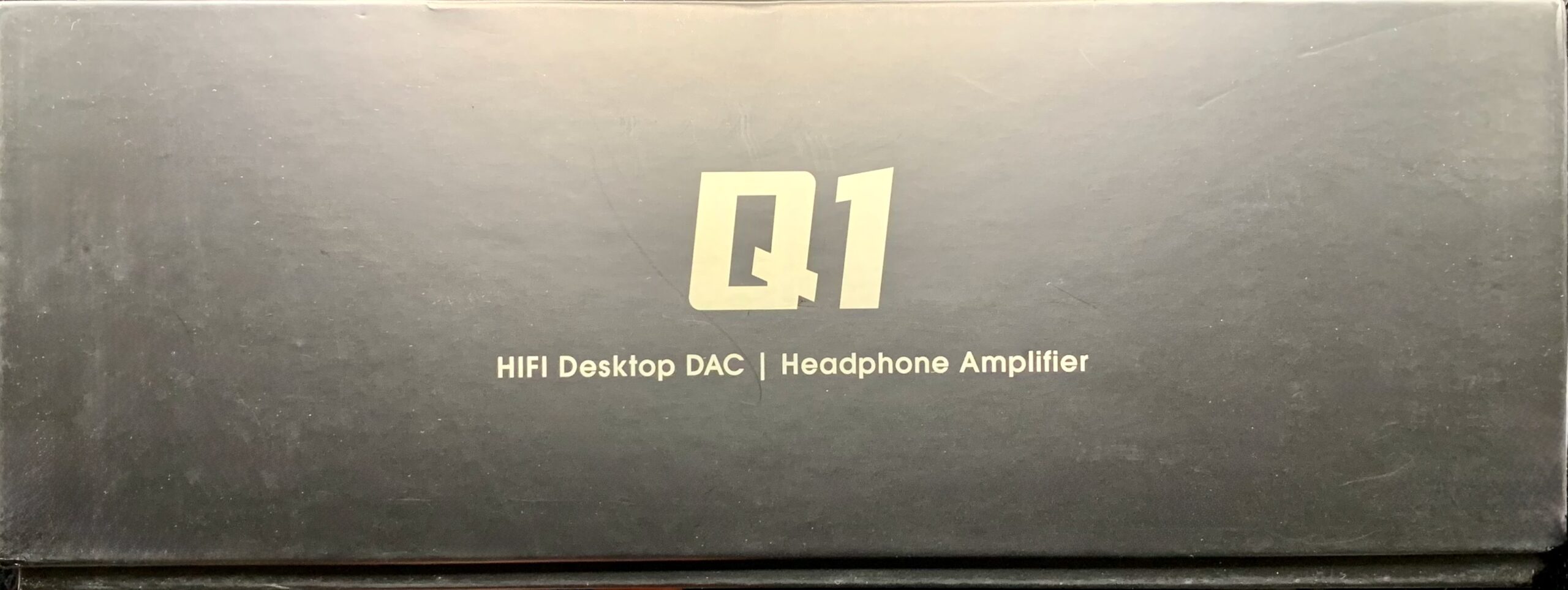
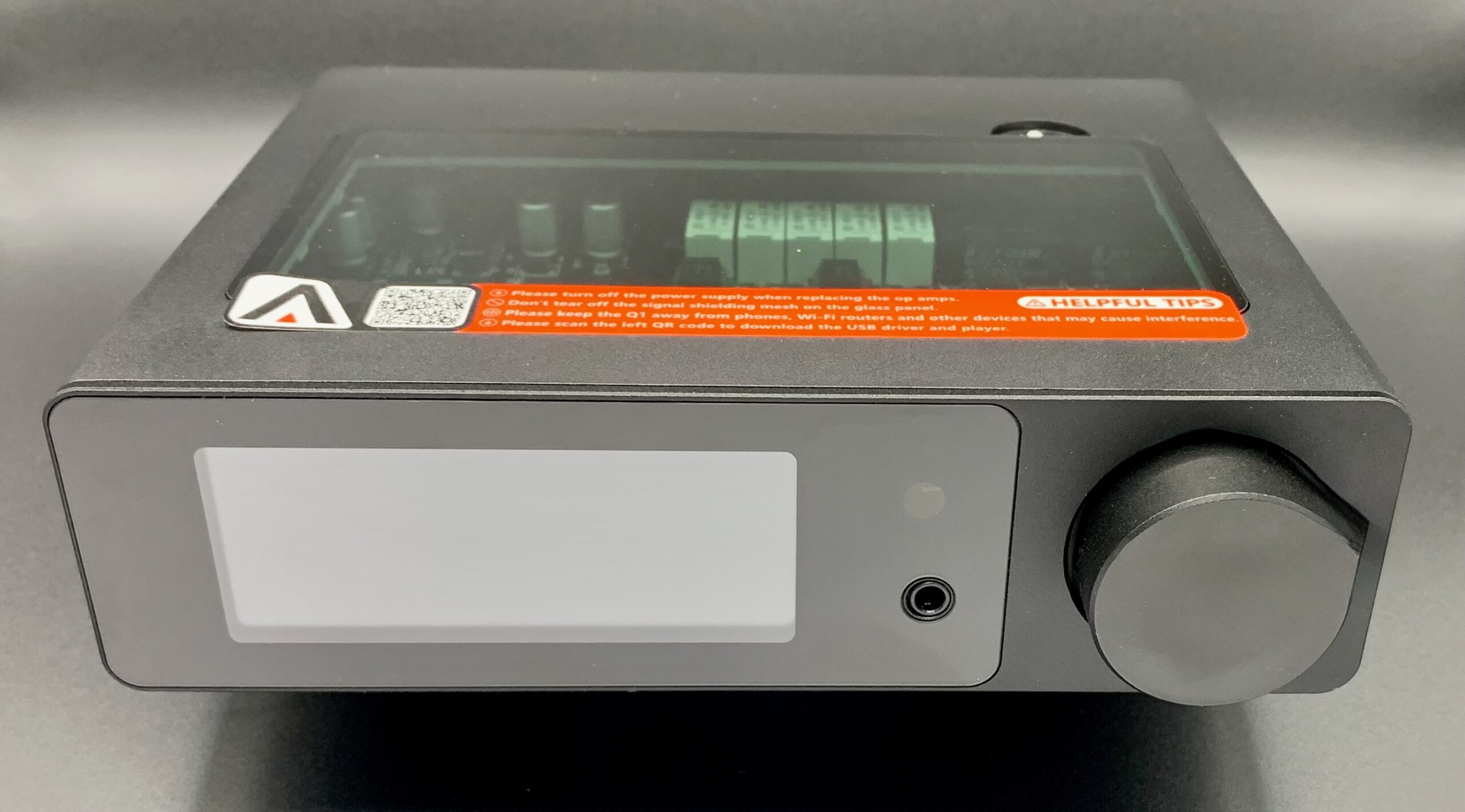
The Q1 gives a very clear feeling right away: it is a well thought object. It’s not the usual anonymous box to hide on your desk, but something that wants to stay there, to be seen and, in a way, become part of your system.
You feel this immediately, as soon as you turn it on.
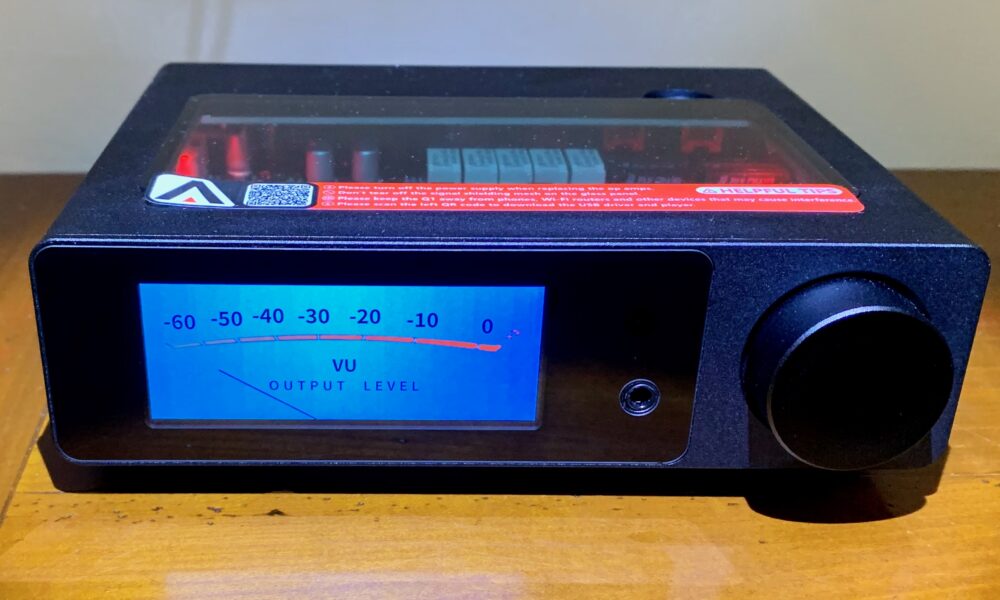
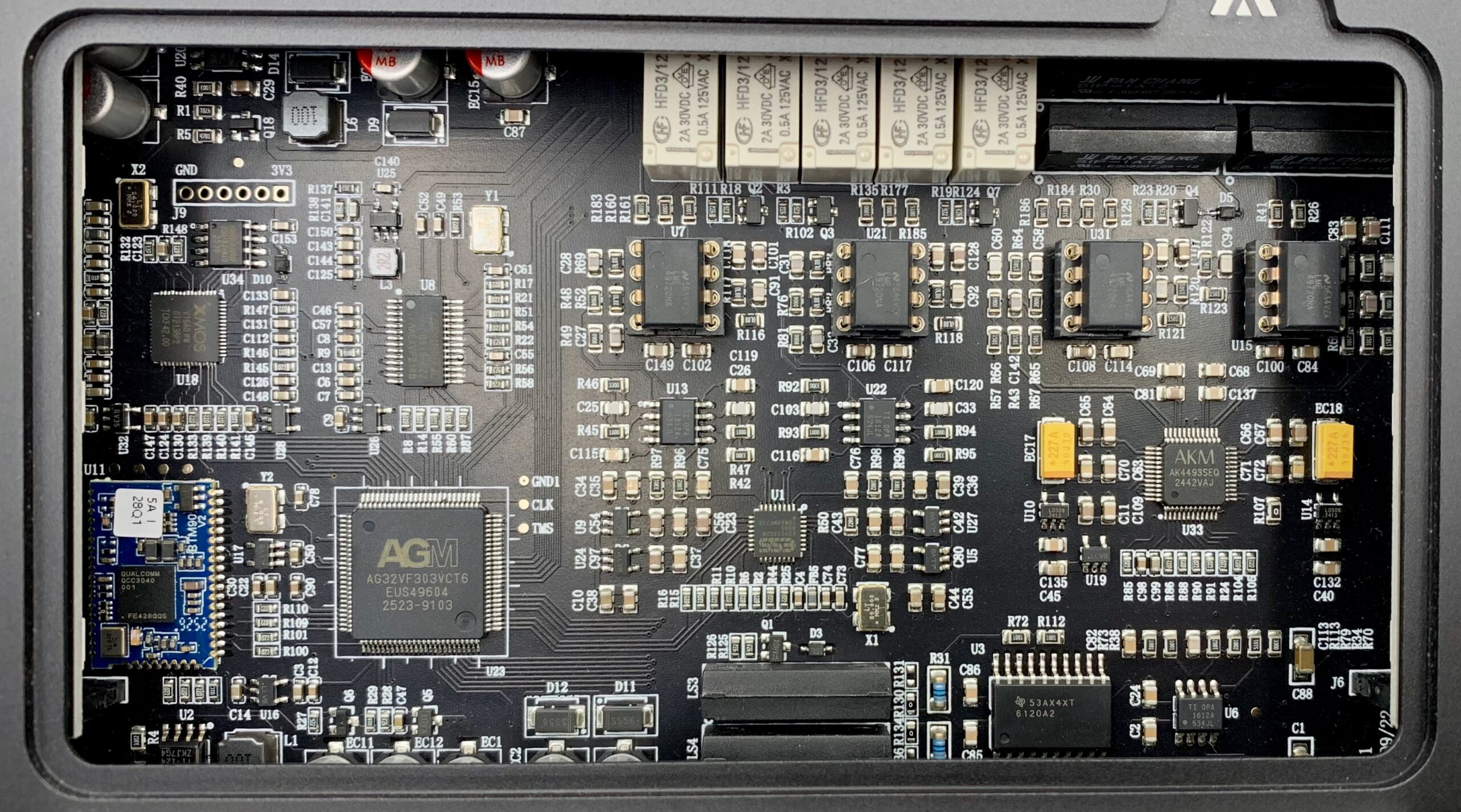
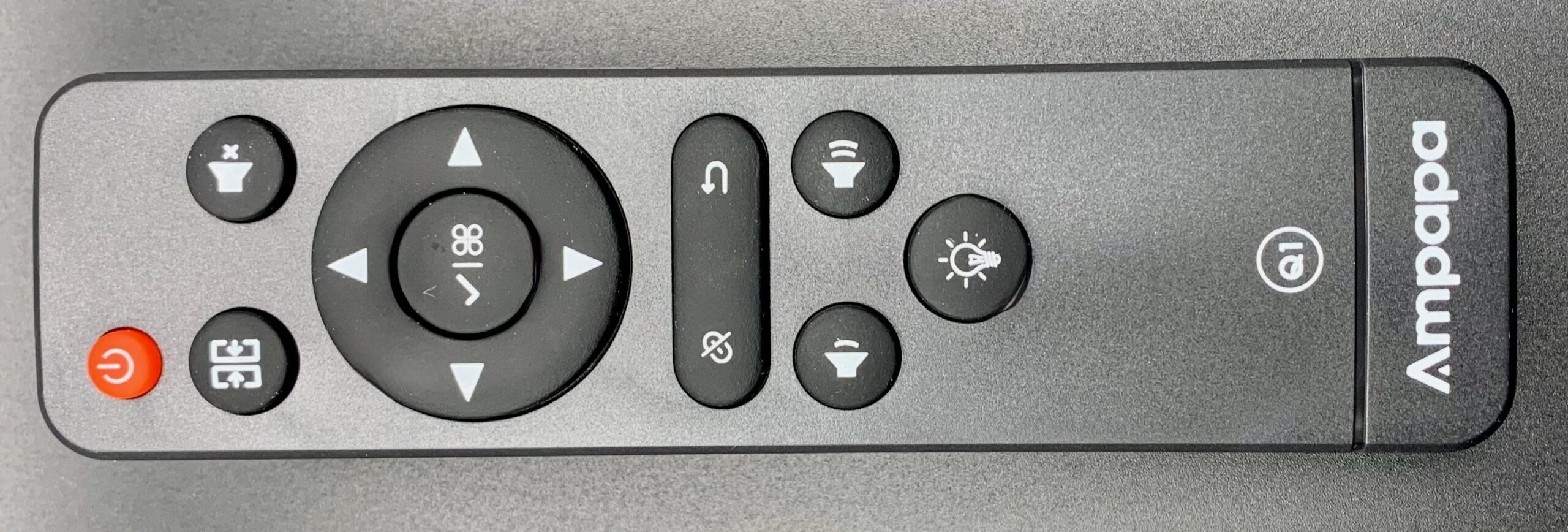
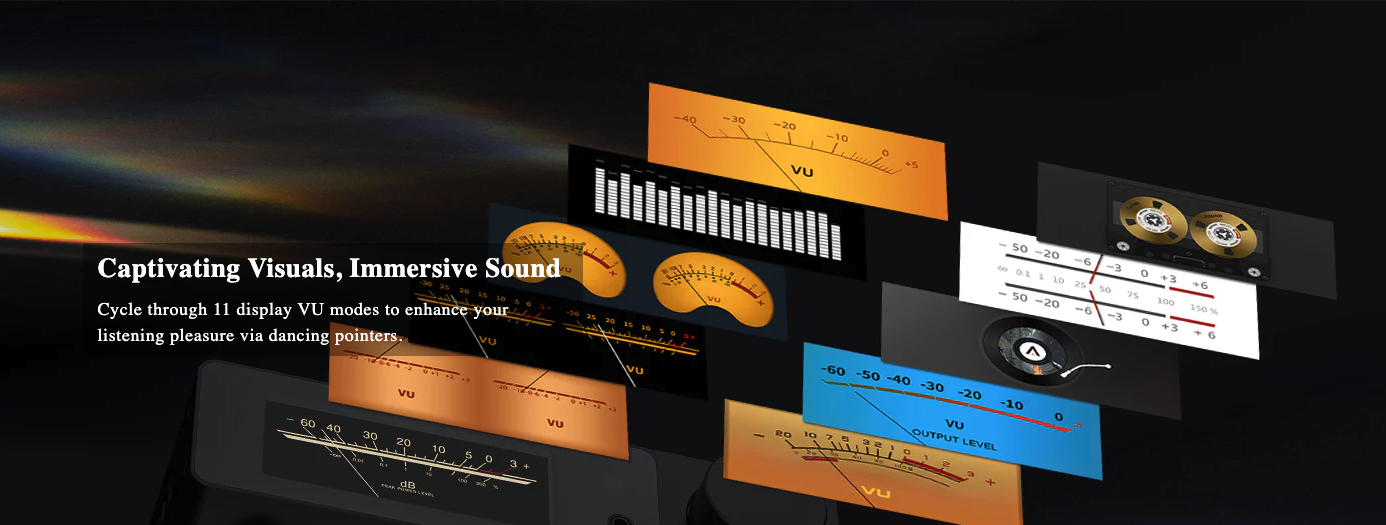
Between the display, the VU meters and the top glass window that lets you see inside, there is a level of care that is not only aesthetic, but also communicative. It makes you understand that this is not a “closed” product, but something you can interact with. Almost like a small instrument, more than just a hi-fi component.
The first impression, in fact, is not really that of a DAC or a headphone amplifier.
It feels like a hub.
A control center that brings together multiple functions without making them feel heavy, without giving you the idea that you need to learn something complicated, like a degree in aerospace engineering. You plug it in, start moving through the few functions, and after a few minutes everything already feels natural.
More than it seems
At the same time, though, you can feel that under the glass there is more than what you see at first glance. It’s not immediate in the sense of being “simple”, but in the right way: it welcomes you right away, then lets you discover its possibilities slowly, going through the menu and selecting different functions.
It’s a subtle difference, but an important one.
The remote control, in this sense, really changes the experience. It’s not just an extra accessory, but something that changes how you use the Q1. It lets you manage volume, inputs and modes without getting up.
It sounds like a small thing, until you try it. Especially at the beginning, when you want to test all the possible combinations. And for someone like me, extremely lazy, it makes a big difference.
Then, like all convenient things, it becomes hard to go back.
Because at that point the Q1 stops being just a desk device and starts behaving like a real music companion. Something you can use in a more relaxed way, almost like part of a home system.
And it’s exactly in this double nature, between practicality and ambition, that the Q1 really starts to make sense.

Box and accessories
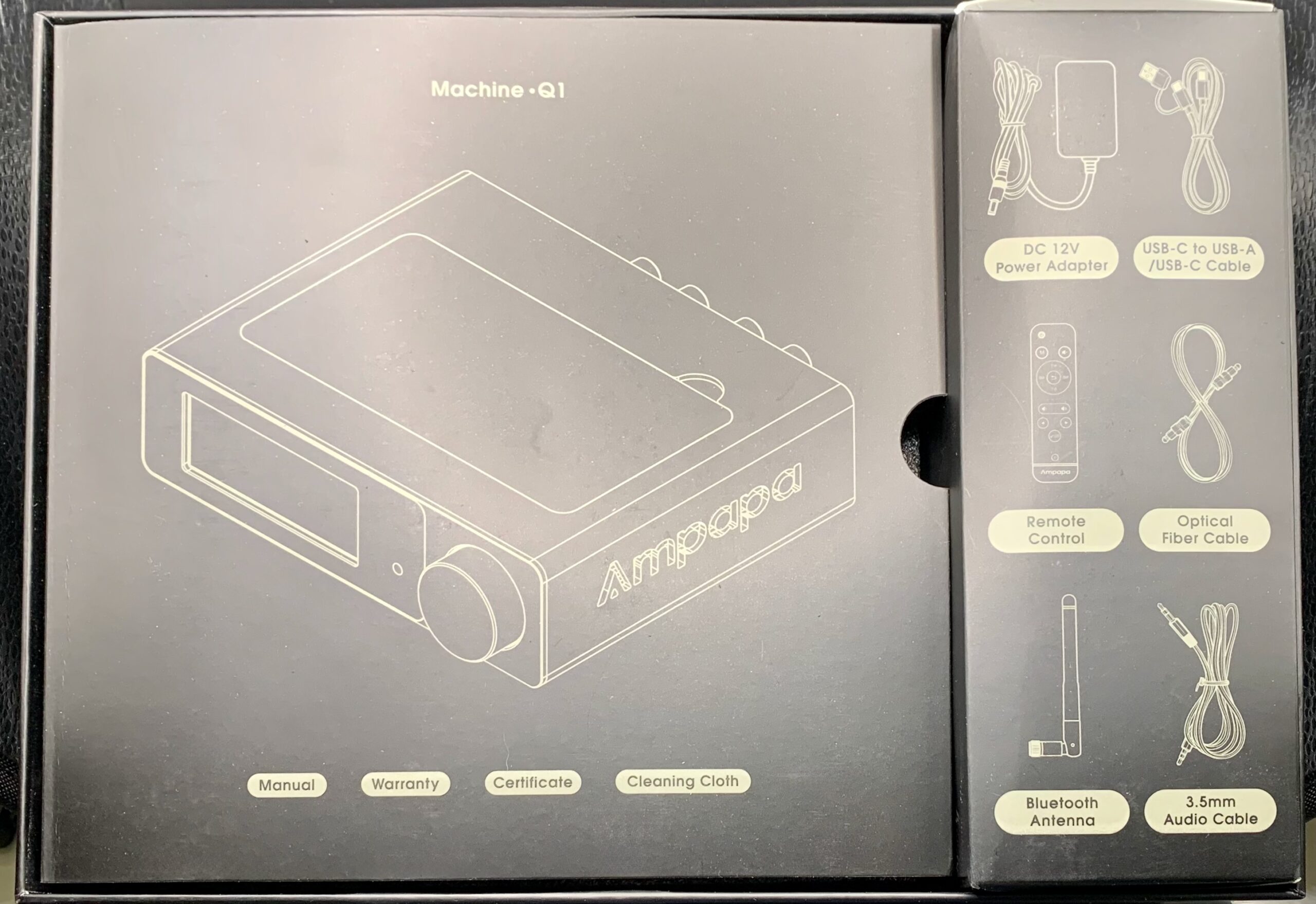
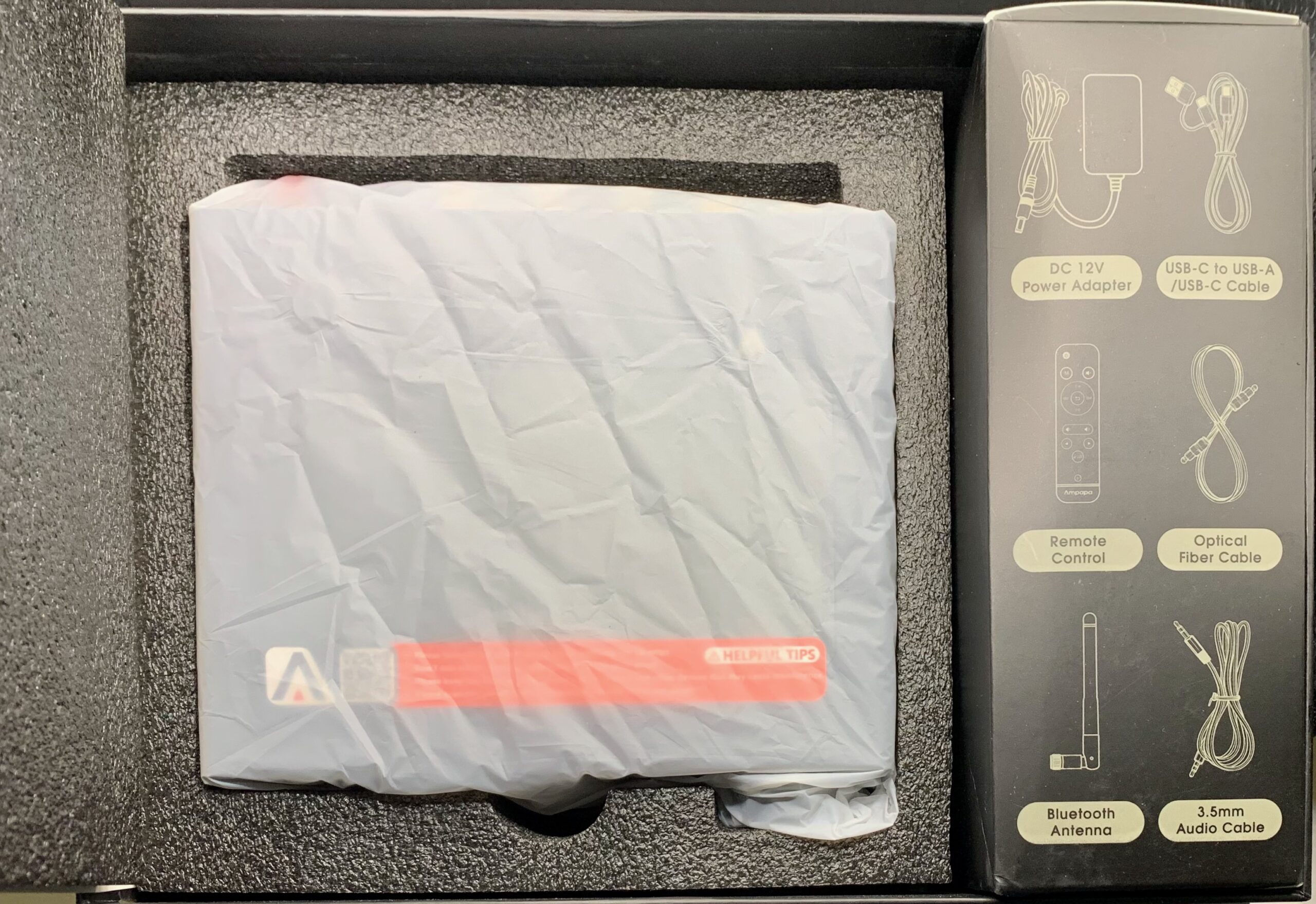
The package is complete and consistent with the type of product, without particular surprises but also without the usual disappointments that sometimes you find in this price range.
You open the box and you find everything you need to start immediately, without thinking about what is missing or what you will have to buy later. How many times it happened that you bought something, not even hi-fi, and once at home you realize that something is missing… the adapter, the battery (with a strange size), the right cable, and so on.
Here, everything is there.
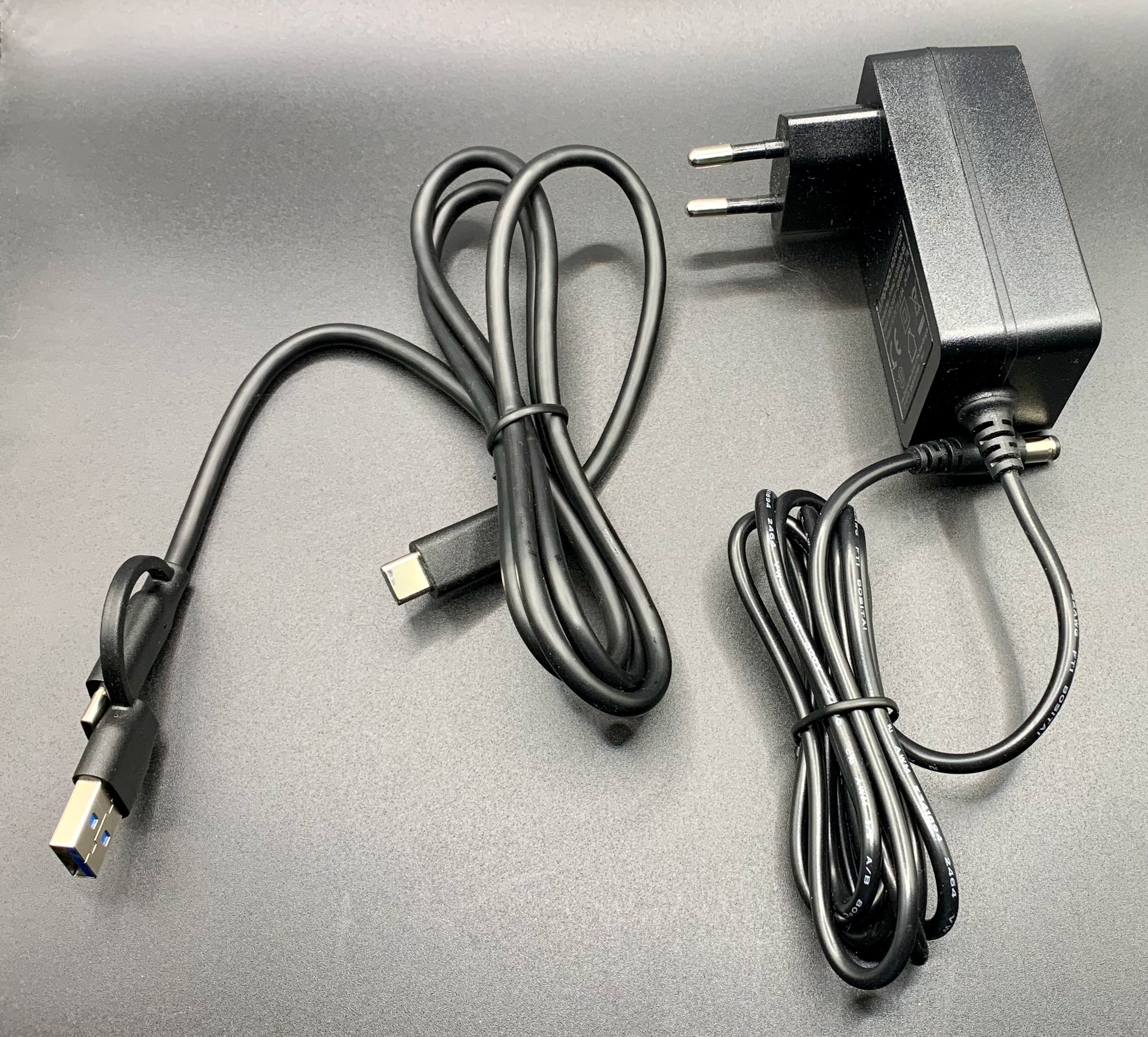
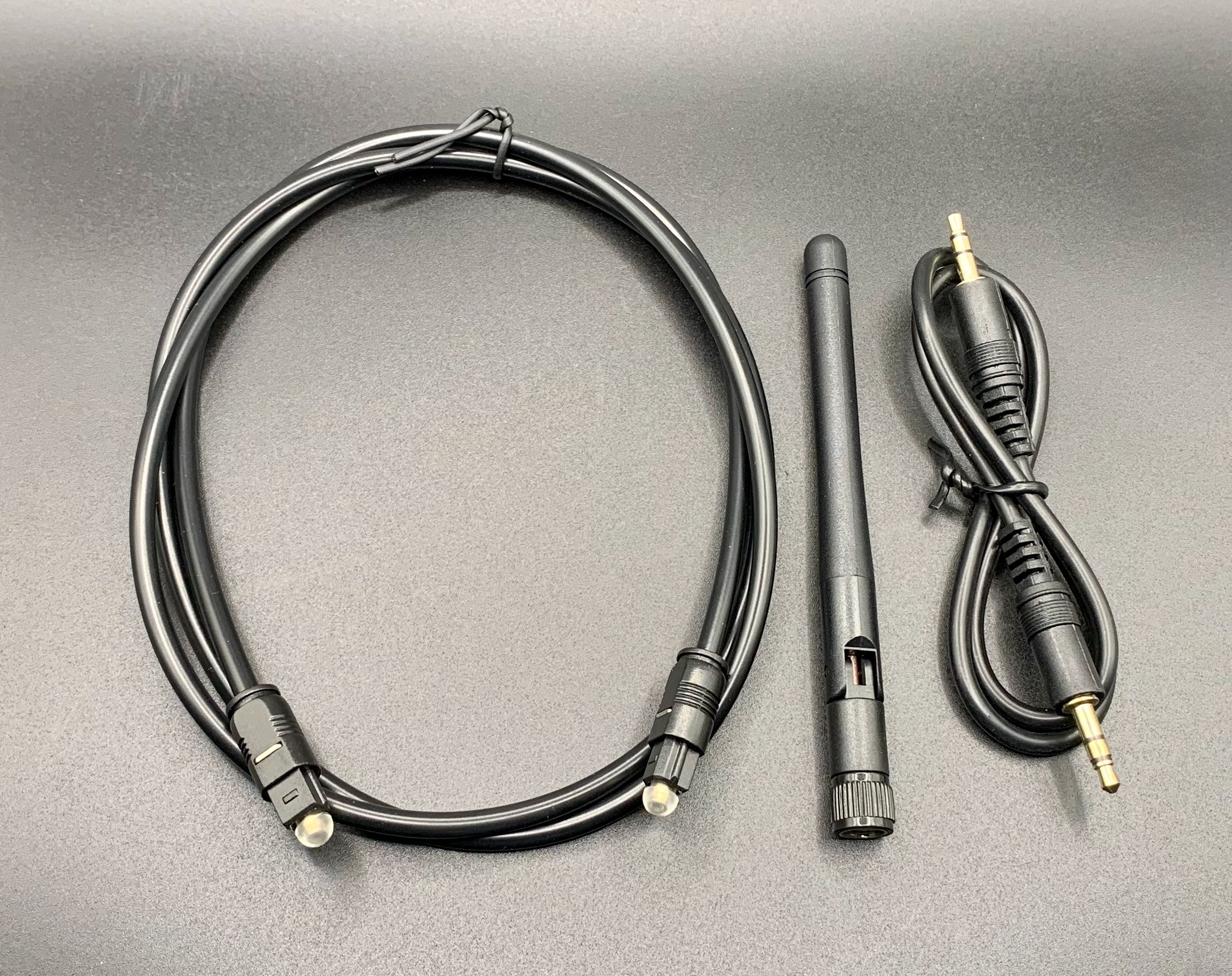
The main unit comes with a 12V power supply, Bluetooth antenna, USB cable (USB-C and USB-A), optical cable, remote control and manual. It’s a solid package: a product designed to be ready right away in different scenarios, from desktop to a more complete system.
There is nothing unnecessary, but more importantly, nothing essential is missing.
Small details that matter
This is one of those cases where what stands out is not what you get, but the fact that everything has a clear purpose. Every item is there because it is needed, not just to fill the box.
Then there is the remote, which here is not just an extra to change volume, but a real part of the experience, as already mentioned. And it’s good that it is included without compromises.
Only one thing to mention, just to avoid surprises: batteries are not included. Not a real problem, but one of those small things you only notice when you actually go to use it.
And at that point, you still have to get up.
Build, materials and heat management
There is also something important to say, which you don’t notice immediately but becomes clear after some hours of use: the Q1 gets warm. Not in a worrying way, but enough to make you understand that it is really working inside, and it’s not just a feeling.
It’s a natural consequence of a design that combines DAC, amplification and a quite dense circuit in a compact space.
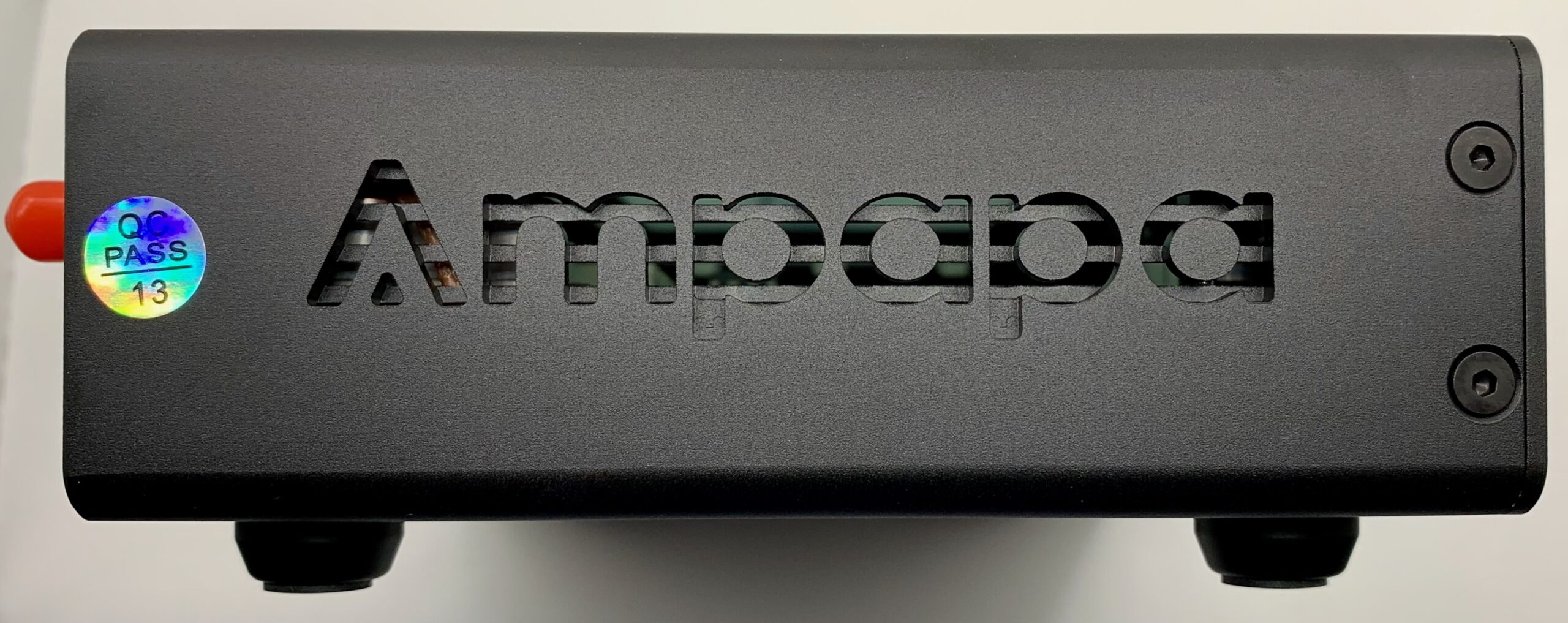
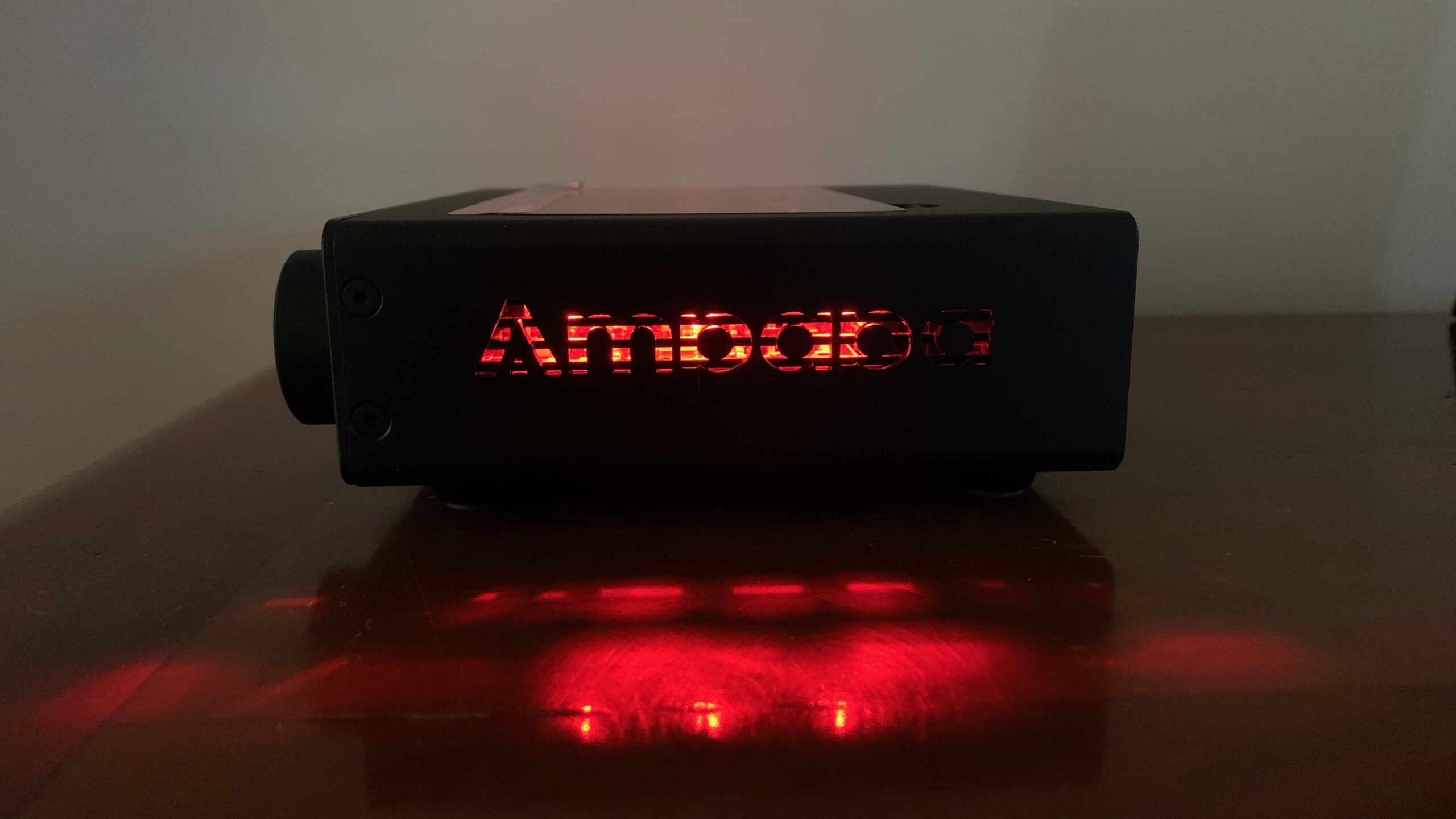
The metal chassis helps with heat dissipation, spreading the heat in a fairly uniform way, and this helps to keep everything under control. It’s not a declared heatsink, but it works in that direction, and you can feel it in real use. The side branding, besides being aesthetic, also shows light through it and helps a bit with airflow.
More particular is the choice of the top glass window. On one side, it’s a smart solution, because it lets you easily access the opamps and adds a visual element that makes the Q1 feel more “alive”, less anonymous. On the other side, it’s not ideal for heat dissipation, because glass doesn’t help to spread heat like full metal would.
So it’s a choice that favors design and usability over pure thermal efficiency. Maybe some holes could help, but then you would have dust entering inside.
The overall build quality is very good, solid, consistent with the price range, but not truly top level. The visible screws, for example, give a more industrial look than a refined one, and may not be for everyone.
Not really a defect, but one of those details that tell you where the product is positioned.
Technical specifications
When you look at the technical side of the Q1, you can see that it is not built with a “cheap” mindset, but rather as a product that tries to mix good components with a clear goal.
There is nothing unusual or “strange”, at least not in a negative way.
Instead, it’s a well integrated mix of known components, put together with the idea of delivering complete performance without forgetting usability. And this is something you can clearly see.
The dual DAC, with ESS and AKM on the same board, together with a latest generation XMOS platform, is the core of the system, providing stable handling of high resolution streams.
Around this, Ampapa builds a system that is not just digital conversion, but also headphone amplification, preamp functionality and output management in a smart way. We will go deeper into this later.
The interesting part is that it never feels like something “assembled”, but more like a product designed as a whole.
Numbers vs reality
No single spec really stands out. It’s more about the overall picture.
On paper, the Q1 covers almost everything you need today: desktop use, headphones, active speakers and even a more relaxed usage through Bluetooth.
The difference is that it doesn’t feel like a group of functions put together, but more like a project designed to actually work in real setups, especially desktop or small home systems.
And this is something that, most of the time, you don’t see just by looking at the numbers.
Specifications
| Feature | Specification |
| Type | DAC + Headphone Amplifier + Preamp + Speaker Output |
| DAC | ESS9039Q2M + AK4493 |
| USB Interface | XMOS XU316 |
| Resolution | PCM 768kHz / DSD512 |
| Headphone Power | up to 1000mW @32Ω |
| Gain | 2 levels |
| Inputs | USB-C, Optical, Coaxial, Bluetooth 5.2 (aptX) |
| Outputs | RCA, Balanced TRS, Headphones |
| THD+N | ~0.002% |
| SNR | ≥120 dB |
| Extra Features | Switchable DAC, Swappable Opamps, VU Meter, Remote Control |
Beyond the numbers, which only tell part of the story, what really stands out is the overall design approach. The Q1 is not interesting because it has better specs than others, but because it brings together multiple functions and different approaches in a functional and logical way, without feeling like a bunch of electronics just thrown into a box.
And this is something that, listening after listening, becomes more evident than just reading the single values.
The project: ideas and choices
This is where the Q1 really plays its game, because it’s in the design that you understand if you are in front of a product with a clear identity or just a set of functions.
And the first thing to clarify is this: the Q1 is not designed as a traditional DAC. It is designed as a multifunction platform.
This may sound like a small difference, but it completely changes how you should evaluate it. It’s not a product made to do one thing in the best possible way, but to adapt, evolve and, in a way, follow you while you build your system or your daily usage.
Two DACs, one idea
The choice to integrate two different DACs, one ESS and one AKM, is not only technical but conceptual. It’s not there to say “it has two sounds”, but to let you interpret the same system in different ways.
This is not an easy concept to explain, but I’ll try based on my daily use.
On one side you have a more precise, faster, almost analytical approach.
On the other side something more rounded, more relaxed, more musical.
But the point is not the difference itself, which exists but remains quite subtle.
The point is that you can decide. And more importantly, you can decide how and when to use it.
And this is where the project takes a step forward. It doesn’t just let you choose a DAC, it lets you manage the signal in an active way, assigning different DACs to different outputs, or keeping full coherence across the system.
The OUT1 and OUT2 outputs, which are the main output lines, are not simple duplicates. They become tools.
It’s not just the chip
There is another aspect, even more important, and this is something that is often oversimplified and something I always point out: the sound of a DAC is never just about the chip.
It’s everything around it. Power supply, output stage, components, layout.
In a traditional design, an ESS DAC and an AKM DAC would have dedicated circuits, built to maximize their characteristics. Here, most of the circuit is shared, and this changes the result quite a lot.
The gap between the two sound signatures becomes much smaller.
The differences are still there, of course, but they are more subtle, more controlled, less strongly characterized. On top of that, we are not dealing with absolute flagship chips, but mid-range solutions, and this also helps bringing the two closer together.
And this is, in a way, the practical demonstration of something I always say: the chip matters, but what matters much more is how it is implemented.
Here, you can hear it.
A system, not just an object
On top of that, there is another level of experimentation and implementation, less obvious but equally important: the possibility to swap opamps.
This is not common in this price range, and it’s not there just for marketing. It means opening the device to real customization, where the sound is not fixed but something you can change over time.
It’s not for everyone. But for those who know what they are doing, it becomes an open door.
Then there is the operational side: dual gain, output management, remote control, display with selectable VU meters. Things that taken alone may seem secondary, but together they build a different listening experience.
You are not just using a DAC or an amplifier. You are managing a complete system, versatile and, most importantly, easy to use.
And in the end, this is the key point. The Q1 is not designed to be definitive, but to be adaptable. It doesn’t tell you “this is the right sound”, it puts you in the position to find it.
And in a price range where most products focus only on specs or sound signature, this is a much more interesting choice than it may seem at first.
Connections and controls
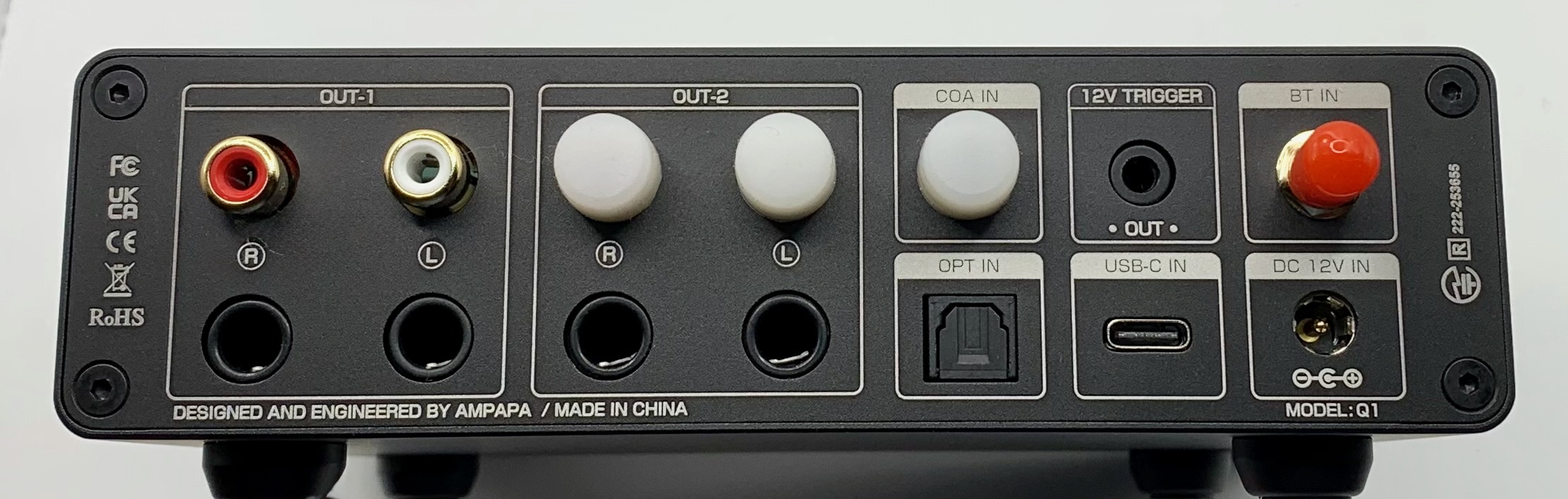
Here it’s hard to find real limits, but more importantly, it’s hard to find such a coherent logic in this price range. The Q1 is not designed to be connected to a single source and left there.
It is designed to stay at the center.
And this becomes clear after a few days of use.
The inputs cover almost all realistic use cases. USB for desktop, which remains the core of more “serious” usage, optical and coaxial for dedicated sources like players or streamers. It’s not a list made to impress, it’s a configuration that actually works in real life.
You connect everything, and then you stop thinking about it.
Even when you want to keep it simple
Part of this flexibility is also the Bluetooth, which here is not just a feature added for the sake of it. The Q1 supports SBC, aptX and aptX HD, so it covers everything needed for practical use, especially on Android.
It’s not meant to replace a wired connection.
And you can hear that.
But it’s stable and clean enough to become a real alternative when you just want to listen without turning everything else on. And in the end, that’s the point: not being perfect, but always being usable.
Where it becomes interesting
Things change when you move to the outputs.
Here it’s not just about quantity, but about control. The OUT1 and OUT2 outputs, together with the headphone section, allow you to build different configurations, even at the same time. And here the idea of the dual DAC comes back: you are not just sending the signal, you are deciding how to send it.
And this is something that, until you use it, feels theoretical.
Then you start playing with it, and everything changes.
The controls follow the same logic. Everything is accessible, direct, without being limiting. You can operate it from the front panel easily, but it’s with the remote that the Q1 really changes.
You are no longer tied to the desk.
And that’s not a small thing.
The interface also helps. The menu is simple, direct, without unnecessary layers, and after a few minutes you use it without thinking. The display, which at first looks just aesthetic, actually becomes useful in daily use.
At that point, the Q1 stops being just something you use, and becomes something that fits into your way of listening.
In the end, more than a DAC or an amplifier, the Q1 behaves like a small audio hub. And the interesting part is that it does it in a natural way, without forcing anything, to the point that you start using it like that without even thinking about it.
General sound signature
The Q1 doesn’t have one sound, and this is the first thing to clarify.
It has two.
But even more important, it has two different ways to interpret the same message.
On one side the ESS DAC, more sculpted, faster, with a more analytical and precise approach. On the other side the AKM, which tends to give a fuller sound, slightly softer and more relaxed, with a more musical overall feeling.
The difference is there.
But it has to be understood for what it is.
That said, there is a fundamental aspect that is often oversimplified: the sound of a DAC is never just the chip. It is the whole project around it that really makes the difference. Power supply, output stage, components, layout. Everything contributes in a decisive way to the final result.
And this is something that comes back every time.
Two DACs with the same chip can sound completely different for this exact reason.
And here the Q1 introduces an interesting variable. In a traditional device, an ESS DAC and an AKM DAC would have dedicated circuits, designed to push their characteristics to the maximum.
Here, instead, most of the circuit is shared.
And this changes the balance.
The result is that the gap between the two sound signatures becomes smaller. The differences are there, you can hear them, but they are more subtle and controlled. They are not pushed, not exaggerated.
On top of that, the chips used are not absolute top-tier, but mid-range solutions. And this also helps bringing the two interpretations closer.
In the end, what comes out is a confirmation of something that is often underestimated: the chip matters, but how it is implemented matters much more.
On the Q1, you can clearly hear this.
The differences between ESS and AKM do not disappear, but they are brought to a more realistic level, less extreme. And paradoxically, this makes them more believable.
And this brings us back to the main point.
The difference exists, it is real, but it is never extreme. It is not a radical change that transforms the listening completely, and that’s actually the right approach. This is not about having two products in one, but about refining the output depending on the context and the system where the Q1 is used.
And the context is what really makes the difference.
Without a resolving system, these variations remain mostly theoretical, or at least only slightly noticeable. The background always stays clean, with no hiss even with sensitive IEMs, and this helps keeping the listening relaxed even in long sessions.
But when the chain is good enough, then they start to show for what they are.
Not revolutions.
Shades.
And very often, those are the ones that change how you experience music.
Desktop listening
In a desktop setup, with headphones directly connected to the Q1 or with active speakers, the difference between the two DACs remains quite limited.
You can hear it, especially when switching directly between them, but it stays subtle. More a general feeling than a clear change.
The Sabre gives a slightly more defined image, with sharper edges. The AKM, instead, adds a bit more body and roundness.
Overall, in this kind of use, the Q1 behaves in a very coherent way.
And in the end, the choice between the two becomes more about taste than a real necessity.
Home system as main DAC
When placed into a more structured system, used as the main DAC in a revealing setup, things change.
The differences start to emerge more clearly, but you need a system that is really capable of showing them.
With a precise and well-balanced chain, the Sabre shows better separation and microdetail. The AKM, on the other hand, gives a more homogeneous and slightly more fluid presentation.
It’s not something that jumps at you immediately.
It builds over time. Listening after listening.
It’s a distinction that requires attention. And above all, a system that works in a very precise way, because in more forgiving setups it tends to fade almost completely.
Using it as a preamp in a home system
There is however one use case that, on paper, may look obvious, but in practice makes a big difference: using the Q1 as a preamplifier in a home system.
And this is where you really understand if this kind of product makes sense.
Placed between source and amplification, in a more revealing and less forgiving system compared to desktop use, the Q1 behaves in a surprisingly coherent way. It never feels like a bottleneck, and more importantly, it doesn’t introduce that “flattening” effect that often happens with devices designed more for versatility than pure audio performance.
The volume control is precise, progressive, and works well even at low levels, keeping balance and control without noticeable channel imbalance. It sounds obvious, but it’s not.
From a sound perspective, the behavior stays consistent with what we already said. The Sabre gives a more analytical and defined reading, while the AKM offers a more fluid and natural presentation. Even here, the differences are never extreme, and what stands out the most is the overall coherence.
It’s not a pure audiophile preamp, and it doesn’t have the depth or refinement of higher-end dedicated units.
But it works.
And more importantly, it works better than you would expect from something with this kind of hybrid nature.
DAC + external headphone amplifier
This is probably the scenario where the Q1 shows the most interesting side of its design.
Used as a pure DAC, connected to a good external headphone amplifier, the differences between ESS and AKM become more noticeable and, more importantly, more meaningful.
Here the Sabre highlights precision, speed and a more incisive detail. The AKM gives a fuller, rounder sound, and is less fatiguing over long listening sessions.
Here things really change.
The difference never becomes extreme, but it gains weight. It becomes something that can actually influence your choice depending on the type of listening you prefer.
That said, the chain needs to be up to the level.
A capable headphone amplifier and sufficiently resolving headphones, even better if planar, are essential to catch these nuances. In simpler setups, everything tends to flatten, and the whole idea of the dual DAC almost disappears.

Bass, mids, treble, soundstage and imaging
More than splitting the sound into isolated bands, it makes more sense to understand how the Q1 behaves in different use scenarios. Because that’s where the differences between ESS and AKM really take shape, not only in terms of tonality but also in space and how the scene is built.
In the end, it’s all there.
Desktop: balance and coherence first
In a desktop setup, with headphones directly connected or active speakers, the Q1 keeps a very balanced presentation. The bass is controlled, present but never invasive, with the ESS DAC making it tighter and more defined, while the AKM adds a bit of body without really changing the quantity.
The mids are clean, easy to read, never aggressive. The Sabre tends to focus more, while the AKM blends things a bit more, giving a smoother flow. On the treble you get the same approach: more brightness and edge with the Sabre, more softness and tolerance with the AKM.
When it comes to soundstage and imaging, in this context the Q1 stays composed. The stage is not particularly wide, but it is ordered and believable, with good stability of the sources. The Sabre defines edges better, while the AKM gives a slightly more compact but also more cohesive presentation.
Nothing stands out in an extreme way.
But everything works.
Home system: detail and space construction
Placed in a more resolving system, the behavior of the Q1 changes mainly in its ability to return microdetail and structure. The bass becomes more articulated, with the Sabre highlighting variations more clearly, while the AKM tends to make everything more continuous and less segmented.
In the mids, the difference between analytical and natural becomes more clear, while in the treble the Sabre can feel a bit more exposed in very transparent chains, with the AKM keeping a more controlled and less fatiguing approach.
But it’s really on the stage where the Q1 shows these differences better. The Sabre tends to open things a bit more, with better separation and more precise positioning, while the AKM prefers a more compact but also more cohesive representation.
It’s not really about width.
It’s about how the space is built.
You need a system that is really capable of showing these nuances, because without a precise chain everything tends to collapse into a much more uniform presentation.
DAC + external headphone amplifier: where it all makes sense
This is the scenario where the Q1 really expresses the meaning of its design.
Used as a pure DAC, connected to a good external headphone amplifier, the differences between ESS and AKM become more evident and, more important, more relevant in the listening experience.
The bass with the Sabre is faster and more impactful, while with the AKM it gains weight and a stronger physical presence. In the mids, the distinction between analytical and natural becomes concrete, with the Sabre bringing out every detail and the AKM giving a more organic presentation.
On the treble, things become even clearer: more air and detail with the Sabre, more control and smoothness with the AKM. But it is especially on soundstage and imaging where you feel the step up, with the Sabre being more precise and the AKM more fluid in reconstruction.
Here the difference starts to make real sense.
But the chain must be up to the level. A capable headphone amplifier and resolving headphones, even better if planar, are essential to catch these nuances. In simpler setups, the risk is that everything flattens and the whole idea behind the project almost disappears.
Power
On paper, the Q1 declares 1000mW at 32Ω, a value that puts it in a more than adequate zone for real use, but it has to be read in the context of the project. It is not an amplifier made to push every headphone to the limit, but to offer power that is consistent with its philosophy: versatility first.
In real use, the feeling is always that there is headroom. With dynamic headphones the behavior is solid, stable, without uncertainty, and you never feel like you are reaching the limit even when increasing the volume. The delivery is clean, controlled, and above all predictable.
The volume control is precise and progressive, without jumps or channel imbalance even at low levels. It is one of those things you don’t notice immediately, but in daily use it makes a difference.
With the OLLO X1, the Q1 works without any effort, keeping good control across the whole range. The Beyerdynamic DT 900 PRO X are not a problem and stay always well managed, while the Yanyin Baker, even if less demanding, still benefit from a clean and tidy amplification.
Things change when you move into more demanding headphones, especially some planar models. Here the Q1 can drive them, but without that feeling of full authority that you get with more powerful amplifiers.
And that is normal.
In general, the power of the Q1 is perfectly in line with its role. It is more than enough for the majority of real use cases and it will rarely struggle with dynamic headphones or not too demanding planars.
Only with more difficult models, typically 300Ω or 600Ω dynamics, you may start to feel a bit less headroom, but we are talking about limit situations, often with very high volume levels and outside normal listening.
In practice, it will hardly be a real problem.
Comparison with Topping DX3 Pro+
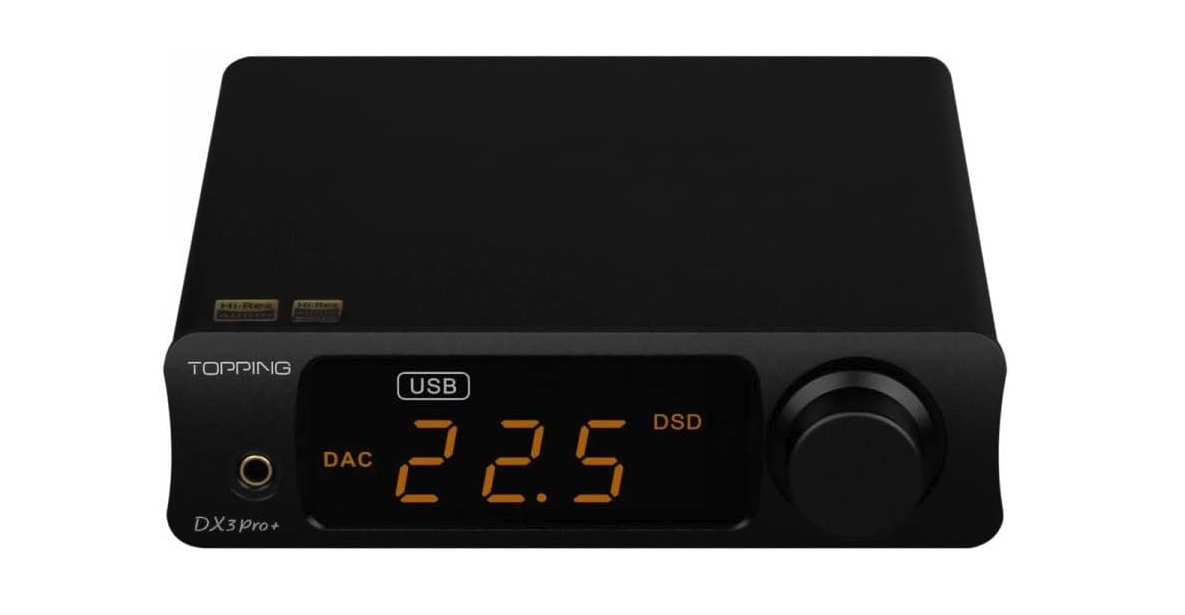
The comparison with a product like the Topping DX3 Pro+ is almost inevitable, because they sit in the same price range but follow very different philosophies.
The Topping represents a more traditional, and in some way more conservative approach. It focuses on linearity, cleanliness and measurements, with a very neutral and predictable tuning. It does exactly what it is supposed to do, without adding much else, and remains a solid choice for those looking for simplicity and coherence.
You already know what to expect.
The Q1, instead, plays a completely different game. Already from a design point of view it is more modern and more articulated, starting from the dual DAC, using more recent chips compared to the one used in the Topping.
But more than anything, it is the whole package that makes the difference.
It is not just about specs, but how those specs are used in the real experience.
In terms of sound, the Q1 is not inferior, actually. In the same price range, it gives a more complete and, above all, more adaptable presentation. The Topping stays a bit more “straight”, more linear, but also more limited in how it can interact with the system.
The Q1, instead, lets you shape the result, adapt it.
And this, over time, matters.
Where the gap becomes clear is everything else. Versatility, output management, dual DAC, swappable opamps, ability to work as a real hub. The Q1 simply plays in another category.
It is not just a DAC with a headphone amp.
It is something more.
In the end, it is not really a choice between two different qualities, but between two approaches. The Topping is simpler, more direct, more predictable. The Q1 is more complex, more flexible and, in the long run, more interesting.
And for this reason, at the same price, it is hard not to see it as a more evolved option.
Comparison with Aune S9c Pro
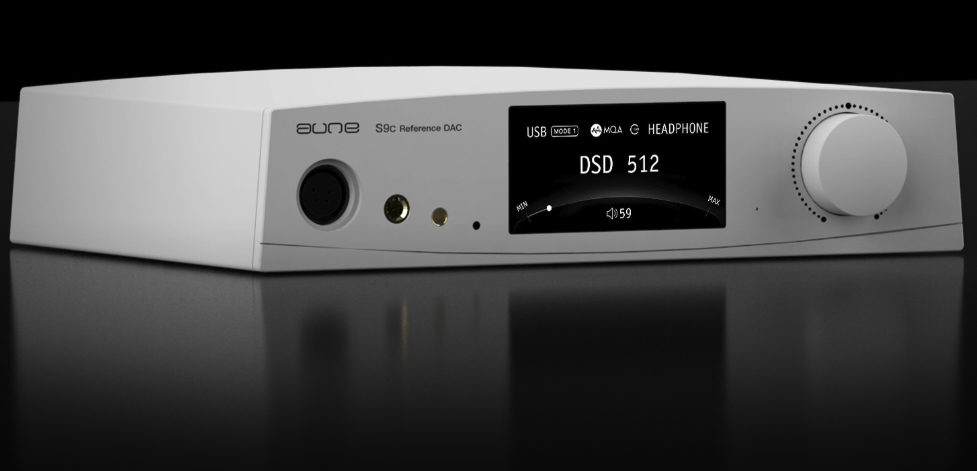
The comparison with the Aune S9c is clearly unbalanced, because you are entering a different price tier, with a product designed in a more traditional way but also more focused on pure performance.
The Aune plays on another level.
The Aune S9c is an audiophile tool in the most classic sense. It has more headroom, wider dynamics and a higher level of microdetail retrieval. It is a device that works on precision, depth and the ability to dig into the signal.
And when the chain is good enough, you hear it.
The Q1, however, does not come out diminished.
Placed in the same context, it holds its ground better than you would expect, especially considering the difference in price and design philosophy. It does not reach the same level of refinement, but it keeps a coherence and musicality that make it always believable.
It doesn’t embarrass itself.
And that already says a lot.
The real difference, though, is not only in performance, but in the idea behind the product. The Aune is a DAC and amplifier built to perform at its maximum in a dedicated system.
The Q1 is a more articulated system, more flexible.
And this changes everything.
In the end, it is not just a comparison between two quality levels, but between two ways of approaching listening. On one side a precise, focused, almost specialist tool. On the other, a smarter and more versatile device, that maybe does not excel in absolute terms, but is always usable.
And often, surprisingly effective.
Comparison with Douk Audio K5

Here the comparison is direct, almost unavoidable, because it stays in the same family and shares the same base philosophy: practicality, accessibility and the will to offer something concrete without complicating the user’s life.
The K5 represents the simplest and most immediate approach. It is a product you turn on, connect and use, without thinking too much about configurations or possibilities. It does what it has to do in a direct way, with a very plug and play logic that makes it perfect for those entering this world without too many variables.
Everything is there, no surprises.
The Q1 starts from the same idea, but develops it in a much more ambitious way. It is not just more complete, it is more structured. It introduces dual DAC, output management, swappable opamps, remote control, and a whole set of possibilities that turn the experience from simple usage into real system management.
Here you start to get hands on.
Where it really changes
Also from a sound perspective you can feel this difference. The K5 is more direct, more “one shot”, while the Q1 offers a greater ability to adapt. It does not necessarily sound better in absolute in every situation, but it allows you to find synergy with the rest of the chain more easily.
And this is something that, over time, becomes more and more evident.
In the end, more than a pure quality comparison, it is about approach. The K5 is immediate, essential, no frills. The Q1 is more complex, more configurable, and in a way also more fun to use.
If the K5 is a solid starting point, the Q1 is that next step where you really begin to shape your system and build it the way you want.
Final conclusions
The Ampapa Q1 is one of those products that doesn’t really make sense to judge with classic parameters. If you look at it as just a DAC or just a headphone amplifier, you risk missing the point. It is not made to be the absolute best at one single thing, but to offer a complete, coherent system that is usable in many different contexts.
It’s a different way of thinking about a product.
It has limits, and it’s fair to say it. The power is not meant to drive every headphone without compromise, the differences between the two DACs are subtle and need a good chain to really come out, and in terms of pure performance there are more refined solutions.
But stopping here would be reductive.
Because the value of the Q1 is in the whole. In the number of connections, the smart output management, the dual DAC, the possibility to customize, the remote control, and how easily it becomes the center of a system.
It is one of those rare products that can really act as a HiFi hub.
It connects everything, manages everything, and does it without making your life complicated. From digital to analog, from Bluetooth to more traditional listening, it always fits naturally, never feeling out of place.
And this is something that, in daily use, matters more than any spec.
The real value
Then there is another aspect, less obvious but maybe even more important. The Q1 invites you to experiment. You start to understand what changes, you try things, you shape your own sound instead of just accepting it.
Not passive at all.
It’s something you actually engage with.
In the end, it doesn’t excel in an absolute way, but it doesn’t do anything wrong. And most of all, for what it offers and how it offers it, it is hard to find something this complete and versatile in the same price range.
And this is exactly what makes it interesting.
More than many products that maybe do one thing better, but fail at everything else.
Who is it for
The Q1 is not for everyone, and it’s better to say it clearly.
It is not the right product if you are looking for the maximum possible performance in a single function, or if you want a definitive and unchangeable system. If the goal is absolute purity or extreme performance, there are more focused solutions.
Here the point is different.
It makes much more sense for someone who wants to build a flexible system, maybe starting from a desk but with the idea to expand over time. It is perfect for those who use multiple sources, switch between headphones and speakers, and want a single control point without complications.
In this sense, it is also a very good solution for people with limited space but who don’t want to give up a complete setup.
It is especially interesting for those who like to experiment. The dual DAC, the possibility to swap opamps and the output management make it something you can play with, understand, and explore.
It is not just a device you use.
It is something that grows with your system, step by step.
Why it makes sense
In the end, it is a very sensible choice for those looking for real value. For the price, it offers a number of features, connections and possibilities that are hard to find in a single product.
It is not perfect.
But it is one of those devices that does many things very well, and above all, stays useful over time.
VOTE
8.3 / 10
🟢 PROS
- Real and concrete versatility, not just on paper
- Dual DAC that adds value and is not just marketing
- Remote control that really changes the user experience
- Complete connectivity, suitable for real use scenarios
- High level of customization between DAC, opamps and output management
- Able to work as a true HiFi hub
🔴 CONS
- Differences between DACs are there but subtle, not immediate
- Not a reference for pure technical performance
- Power is adequate but not meant for very demanding headphones
- Needs a good chain to really show what it can do
Q/A
Is the dual DAC really useful
Yes, but it has to be understood for what it is. It doesn’t change everything, but it allows real fine tuning, especially in more resolving systems.
Do you hear the difference between ESS and AKM immediately
Not always. In simple setups they are subtle, they become more clear only with a good chain.
Can it replace a full system
Yes, in many desktop and home setups it can become the center of everything, managing multiple sources and outputs without issues.
Is it good also just for headphone use
Yes, but it’s almost “wasted” if used only like that. Its value comes out when you use its versatility.
Does it have enough power for any headphone
For most yes. Only with very demanding headphones, especially high impedance ones, you may start to feel some limits, but at already high volume levels.
Is the Bluetooth actually usable
Yes, it is stable and with aptX HD gives good quality, but it remains a convenience feature, not the main reason to choose it.
Is it better than Topping
It depends on what you want. Topping is more direct and linear, the Q1 is more complete, more flexible and overall more interesting as a system.
Thanks and personal note
Thanks to Ampapa for providing the Q1 for this review. No payment, no approval request, no constraints: this review is based only on my listening experience, without filters.
If you want to check it out, you can find it here:
👉 Official site: Ampapa
👉 Amazon Italy: Amazone
👉 AliExpress: Official site AlieExpress
I listened, I wrote, and now it’s your turn.
As always, music does the rest.
All opinions are independent and based on real use, with tracks and situations I know well. What you read is what I heard.
The rest… we leave it to the music.





No Comment! Be the first one.