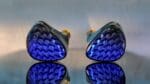
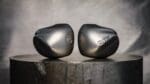
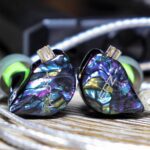
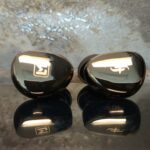
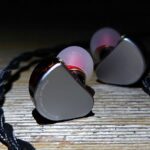
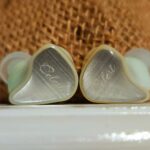
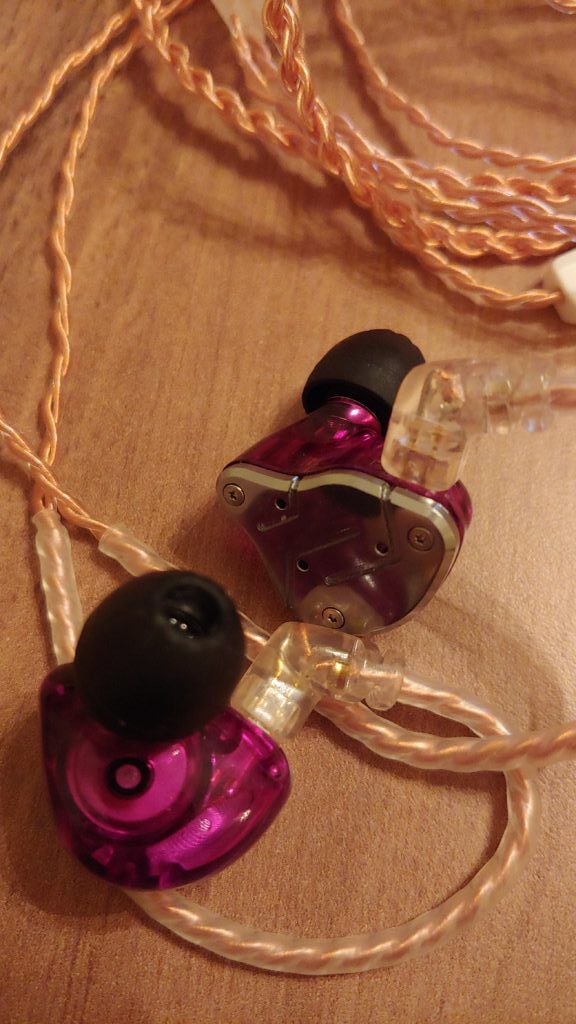
Some IEMs walk into your life with fireworks, some just quietly sit in your ears and start telling the truth. Nora belongs to the second group. It’s not chasing hype, it’s not begging for attention. Lightweight shells, a transparent look, and a sound that needs pat2ience. At first listen it feels a little modest, but after hours, the character unfolds in a very natural way.
Disclaimer: This unit is provided by Tanchjim for my review. Respect..
TL:DR
Tanchjim Nora delivers a wide stage, black background, and clear details even with SE connection. With BAL, resolution, body, and bass weight increase; vocals become more distinct, and upper frequencies open up. From rock to orchestral and electronic music, it offers a balanced, technical, and musically satisfying performance across all genres.
Meet the DMT5
Tanchjim’s DMT5 (Dual Magnetic Circuit, Dual Cavity Dynamic Driver Technology) is their fifth-generation dynamic driver architecture. It combines an internal and external magnetic circuit to create a stronger, more uniform magnetic field around the diaphragm. That field improves driver control, lowers distortion, and increases sensitivity without sacrificing stability. The diaphragm itself is a PU hanging edge with a DLC (diamond-like carbon) ball-top composite — the PU edge provides elasticity for better low-end extension, while the DLC dome adds stiffness and speed for treble clarity. The result is a driver that delivers both authority and refinement: deeper sub-bass, clearer micro-details, and a more stable black background.
Tanchjim Nora Driver
Compared to DMT4, which already featured a single-cavity dynamic driver with optimized airflow and magnetic efficiency, DMT5 refines the entire system. The additional cavity design helps manage back pressure, leading to smoother diaphragm movement and less harmonic distortion (Tanchjim claims as low as 0.049% @ 1 kHz, 94 dB). The double magnetic circuit increases driving force over DMT4, giving higher sensitivity and more dynamic headroom. In practice, DMT5 tends to sound more resolving and spacious than DMT4, with tighter bass response and better layering, whereas DMT4 models leaned slightly warmer and less airy in presentation.Tanchjim doesn’t just reuse drivers between models; each DMT generation is a real engineering step. The earlier DMT4 already gave them a name for clean, balanced sound, but with DMT5 they pushed further — adding a dual magnetic circuit and dual cavity system that lowered distortion and boosted sensitivity. Fun note: Tanchjim actually publishes their lab measurements for these drivers, something rare in the Chi-Fi world, which is why their THD claim of 0.049% @ 1 kHz is not just marketing fluff but tied to their engineering philosophy of “measure first, then tune.” They remind me of the Quewtyle br
Technical Foundation
Technically, Nora plays safe but competent. The stage is not stadium-wide, but it’s organized. Instruments don’t collapse into each other. There’s enough resolution to catch a guitar string’s vibration or a background reverb, though it never screams “look at me, I’m detailed.” Imaging is stable, realistic – left is left, right is right, center has depth. It’s not fake holographic, but believable. Watch the unboxing here
Bass
Nora’s bass is calm and disciplined. Sub-bass extends down but never shakes the chest — it’s a foundation, not an earthquake. Mid-bass is tight, textured, and never bleeds into mids. This makes long listening sessions comfortable, with no bloat or fatigue. For EDM or hip-hop it might feel too polite, but for jazz, acoustic, or classic rock, this politeness works beautifully.
With SE connection on the HiBy R4 in Pure Music mode, the first track “We Can Make the World Stop” already showed me very deep details on top of a clear black background. The bass is not like a subwoofer effect, but realistic and precise. When switching to BAL connection, bass lines gained more body and impact, even giving a tactile feedback that made me smile. In the end, kicks and low hits became fuller, more defined, and transitions between passages were sharper.
Midrange
Midrange is Nora’s strongest card. Vocals are honest and natural, with male voices carrying warmth and female voices staying clean. Instruments like piano or violin sound realistic, leaning neutral rather than colored. It’s not overly sweet, but that neutrality is the reason you can listen for hours. In “And Then There Was Silence,” even through SE connection, I felt Nora could truly sing through progressive/power metal. The track lasted over 14 minutes, and Nora carried every detail and layer with no collapse. Guitars with shifting tonality impressed me deeply. Switching to BAL, Kürsch’s voice became more forward, instruments gained more separation, drum echoes became clearer, and brass tones opened up. The tonal balance felt more spacious and alive.
Treble
Treble here is airy and balanced. Cymbals shimmer, strings have energy, but nothing goes into piercing territory. Extension is enough to add sparkle and air without exaggeration. It never feels harsh, making bright recordings safe and darker ones more open. It’s treble you can listen to for hours without discomfort. In “The Electro Suite,” SE connection already delivered a stage that was wide, deep, and tall, with whispers and vocal effects rendered at high resolution. When the song built into its rock section, the instruments remained separated with no smearing. BAL connection made the playback brighter, clearer, and stronger; every micro-detail became easier to catch, and Zimmer’s orchestration was simply more appreciable. Highs were more open, cymbals clearer, and instruments sat in their own air.
Genre Matching
Nora is not genre-exclusive. With rock, it feels controlled; with jazz, it feels authentic; with electronic, maybe a little too polite, but never wrong. That’s its secret weapon – versatility. Not master of one trade, but good enough everywhere. For a daily driver, that’s a strong argument.
Fun Fact about Tanchjim
Tanchjim has a reputation for clean design language, so much that some people call them “the Apple of Chi-Fi.” What’s less known is their design inspiration: a mix of traditional Chinese poetry and modern industrial minimalism. “Tanchjim” as a name is rooted in elegance and clarity – the same two words you could use to describe Nora’s sound.
Pros & Cons
Pros:
Extremely comfortable and lightweight
Honest midrange, great for vocals
Controlled, fatigue-free bass
Airy treble without harshness
Genre-friendly and versatile
Cons:
Bass may feel too polite for EDM/hip-hop fans
Stage width is average, not expansive
Technical detail stops short of “wow” level
Conclusions of Tanchjim Nora Review
Tanchjim Nora doesn’t sell drama. It sells balance. This IEM is about trust – you can put it on, listen for hours, and nothing disturbs you. It won’t blow you away with gimmicks, but it also won’t lie about the music. For me, that honesty is worth more than a flashy tuning curve. If you’re looking for a lightweight, comfortable IEM with a truthful midrange and a calm personality, Tanchjim Nora is a very safe bet.









































































































No Comment! Be the first one.