






























Hidizs MK10 ArcSonics Review
Intro
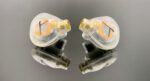
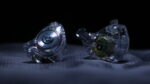
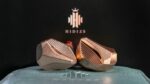
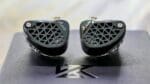
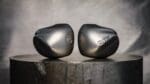
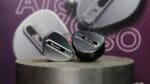
Hello, this review and feature covers the latest from the audio brand Hidizs named the Hidizs MK10 ArcSonics. The MK10 is actually a brand new single dynamic driver earphone with a special driver, as well as some advanced acoustic tech involved, and it comes to us at a solid MSRP of $89. No doubt the market is saturated in quality single DD iems, but the MK10 ArcSonics plans to uproot some of those under $100 sets and take its place amongst the most competitive and compelling that the price point has to offer. Of course, I haven’t received the MK10 yet and so I have zero idea how it sounds at this point. I sure am curious though. As I can see it has a fully alloy housing, looks absolutely gorgeous, and I really want to hear that silicon carbide diaphragm dynamic driver.
Table Of Content
- Intro
- On a roll
- They arrived
- Non-Affiliated Purchasing Links
- MK10 Pro’s
- MK10 Cons
- Gear used for testing
- Packaging / Accessories
- Unboxing
- Eartips
- Leather Pouch
- Tuning Nozzles
- Deep Black (Bass Nozzle)
- Charm Red (Balanced Nozzle)
- Crystal Clear (Treble Nozzle)
- Cable
- Build / Design / Internals / Fit
- Build Quality / Design
- Internals
- Fit / Comfort
- Drivability / Pairings
- Output Power & Sensitivity
- More juice
- Source Pairing
- What do you need?
- Sound Impressions
- Caveats
- What’s it sound like?
- House sound?
- Shouty Moments?
- Bass Region
- Sub-Bass
- Mid-Bass
- Downsides to the Bass Region
- Midrange
- A Definite Charm to it…
- Lower-Midrange
- Upper-Midrange
- Instruments
- Downsides to the Midrange
- Treble Region
- Highly Resolute
- Extension
- Downsides to the Treble Region
- Technicalities
- Soundstage
- Separation / Imaging
- Detail Retrieval
- Final thoughts on the Hidizs MK10 ArcSonics
- Worth every penny
- The Why…
- That Sound!
- Conclusion
- Other Perspectives
On a roll
Folks, Hidizs has been doing some nice things of late. In my opinion they created one of the best single dynamic driver earphones under $500 in the Hidizs MK12 Turris (MK12 Review) and its quick follow-up Hidizs MK12 Turris Titanium Edition (MK12 Titanium Edition Review) topped the OG just weeks later. Both are simply awesome folks. In truth, Hidizs has been on a constant roll ever since they unveiled one of the most legendary iems in the Hidizs MP145 (MP145 Review). Then it was one after the other, well-tuned set after well-tuned set and each seems to really grab the attention of the consumer base. It’s always Hidizs sets which carry some of the highest view counts at Mobileaudiophile.com. It isn’t just their iems which grab attention. Hidizs also has some extremely successful dongle dacs, da/amps, and daps. Especially the AP80 series of budget-oriented daps (digital audio players). In fact, I am in the process of reviewing the brand new Hidizs AP80 Pro Max as I write this. The point is that there are very few brands who can keep a roll going quite like Hidizs. Folks, it’s been years now since they unveiled the MP145 and I’m assuming there’s nothing which can stop their forward progress now. I am very curious about the MK10 Arcsonics folks. Should be here soon.
They arrived
Well, I finally received the MK10, and man am I getting Simgot vibes with this one. Definitely a very solid tuning, extremely well built, and always comes with good accessories. I can’t wait to do some side-by-side comparisons with this one folks. In my opinion, the MK10 definitely will fit a particular style of listener. I’ll have to fit one’s taste in a subjective manner. Having said that, this is definitely another very solid offering from Hidizs. Win after win after win. Let’s check out the MK10 shall we…
Non-Affiliated Purchasing Links:
MK10 Pro’s
-The build is wonderful, substantial
-One of the best looking iems that Hidizs has created (my opinion)
-Nice unboxing experience with solid accessories
-Also a very nice fitment and comfort (for me)
-Highly technical and very clean sound across the board
-Very punchy, tight, and defined bass region with adequate thump
-Forward and detailed midrange with tight transients and solid macro-dynamics
-Sparkly and crisp treble, nice extension too
-Highly detailed
-Great imaging capabilities
-Solid enough depth of stage
MK10 Cons
-Not everyone enjoys that neutral/bright signature. Warm lovers be warned
-Some folks may desire a hair more low-end warmth
-Can come across shouty and sharp at times
-At this cost there’s nothing else to add here that would be a “con”
Gear used for testing
–IBasso DX240 with Amp8 MK2
Packaging / Accessories
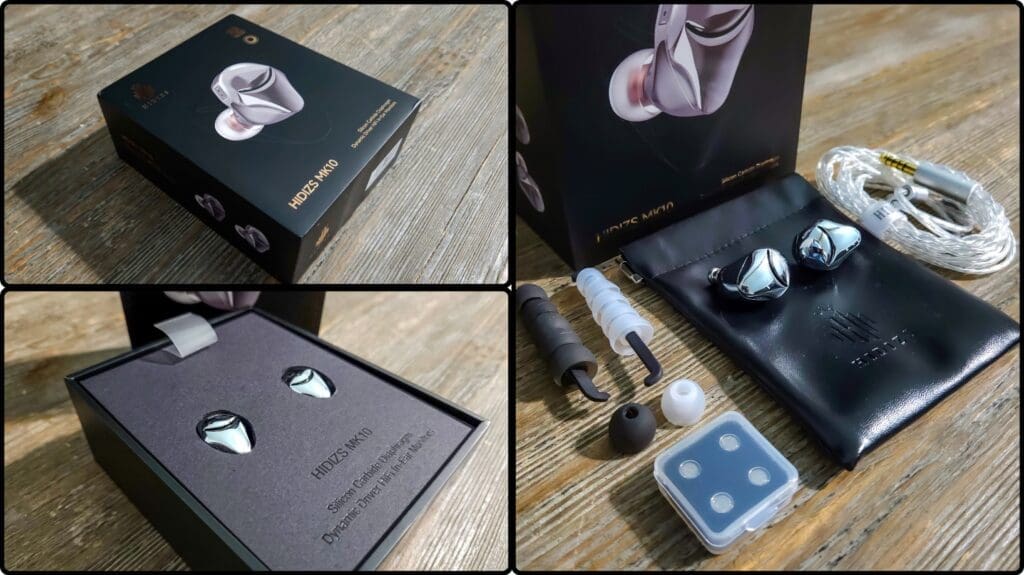
Unboxing
Hidizs knows how to put together an elegant unboxing. They understand that there’s a certain feeling and serotonin drip which occurs when we hobbyists open a new product. Now, I will not ruin the unboxing for you. I will lightly speak on the unboxing though. So, the MK10 arrived at my home in a medium sized (what’s medium Chris?) black box with a nice picture of the MK10 Arcsonics on the cover as well as some specs on the back. Pretty typical, but nice enough, nonetheless. Open the box and you’ll see the beautiful MK10 chillin’ in foam cutouts all by themselves, very elegant, handsome even. I won’t tell you the rest but just know that you’ll receive a leather pouch, three sets of tuning nozzles, the cable, and the eartips. It’s a nice unboxing for the cost folks. Not all brands are cognizant of the consumer’s wishes for a decent unboxing. Even if it’s a fleeting moment which lasts only a couple of minutes. Still, it’s nice.
Eartips
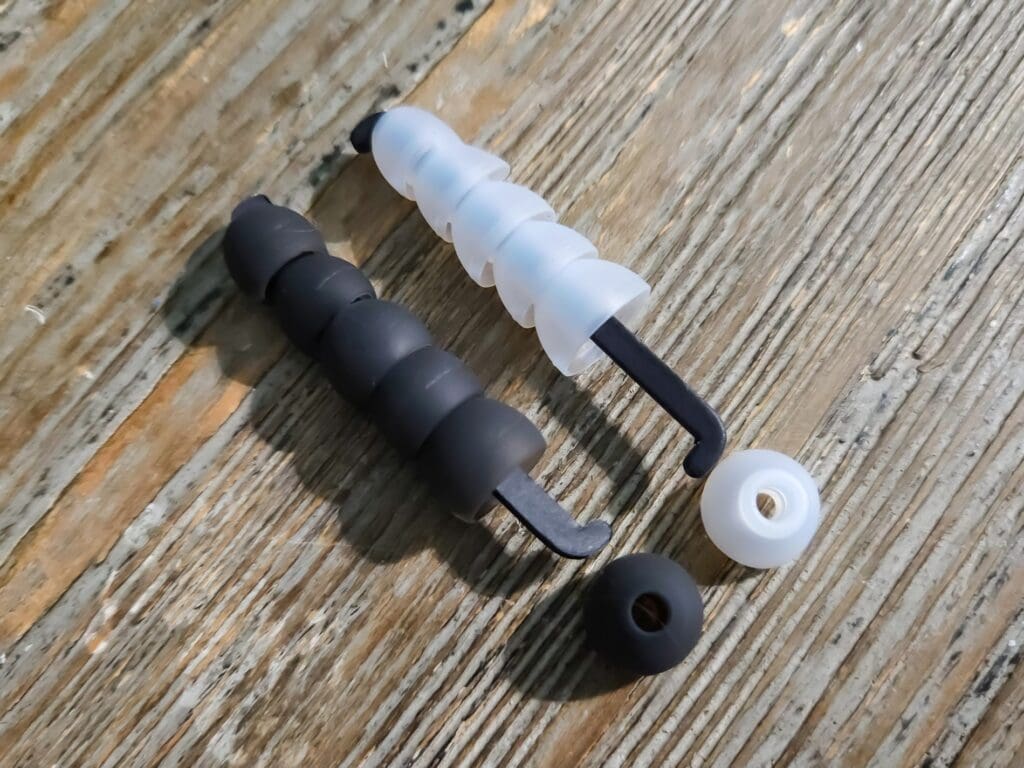
In total Hidizs adds in six pairs of eartips and two different styles of eartips. They provide three pairs (S, M, L) of black silicone eartips with a narrower bore and a mildly rigid flange, slightly longer tips. I did get a good fit with these, but I went a different route. More on that later. The next set of three (S, M, L) pairs of tips are a white silicone eartip with a semi-wide bore, somewhat rigid, and slightly shorter. Again, these tips aren’t bad by any stretch, but I had to tip roll to find what worked the best for me. So, what did I use? Well, I went through many sets of eartips. When I say “many” I mean about twenty different styles of tips. However, I of course came back to my all-time best fitting eartips in the KBear 07 eartips. The fit is just too perfect. There are a few other tips which worked out nicely too, like the Divinus Velvet, the Dunu S&S, as well as some Spinfits, but the KBear 07’s are simply awesome for me. Anyways, the included tips aren’t bad options at all and should work very well for most listeners.
Leather Pouch
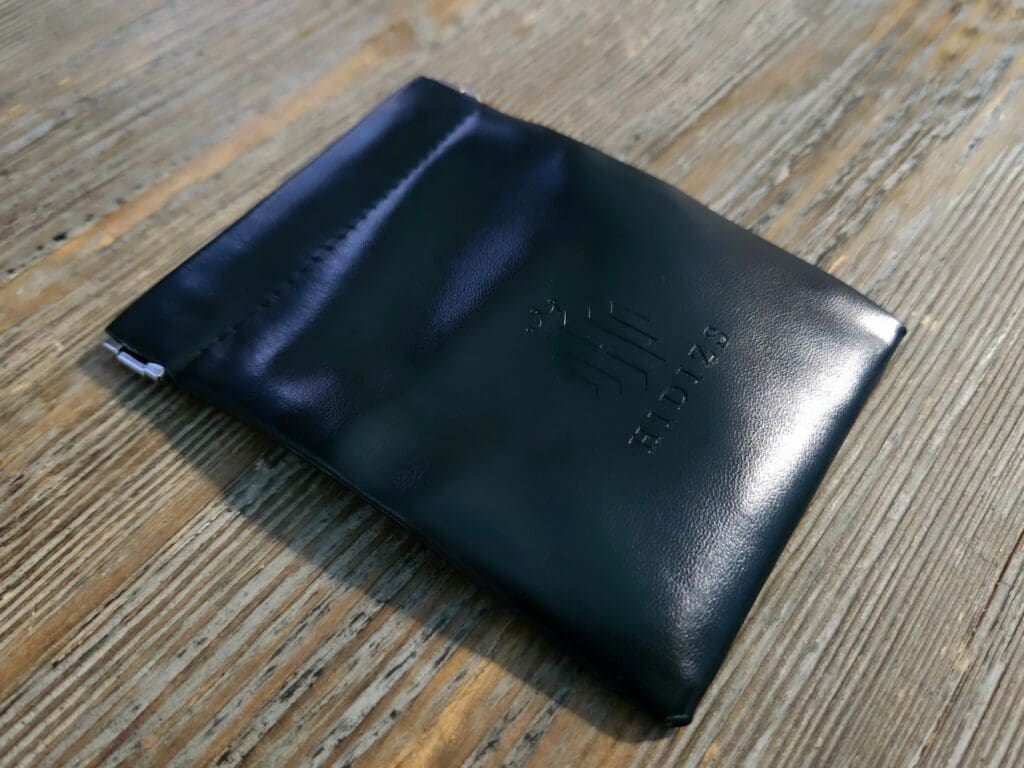
The carrying pouch added into the package is actually the exact same pouch provided with most of Hidizs iems. I suppose some folks would like to see an actual carrying case, but it doesn’t really bother me at all. I say that because I actually love this carrying pouch and use it all the time. I’ve received this same pouch for multiple Hidizs iems and trust me, I always have it in my front pocket for one set or another. So, it wasn’t a bad thing to receive one more. The bonus of this pouch is that you can slide it into a pocket, and you won’t look ridiculous with it there. Also, this pouch is actually made quite well. The pouch is actually made entirely of black leather, very soft, great with a nice snap to open & close. The opening mechanism is done by pinching the sheet metal ends together to open and releasing them to close. Honestly, I don’t mind this pouch, but I know that some are going to complain that Hidizs didn’t provide an actual hard case. Again, not a big deal.
Tuning Nozzles
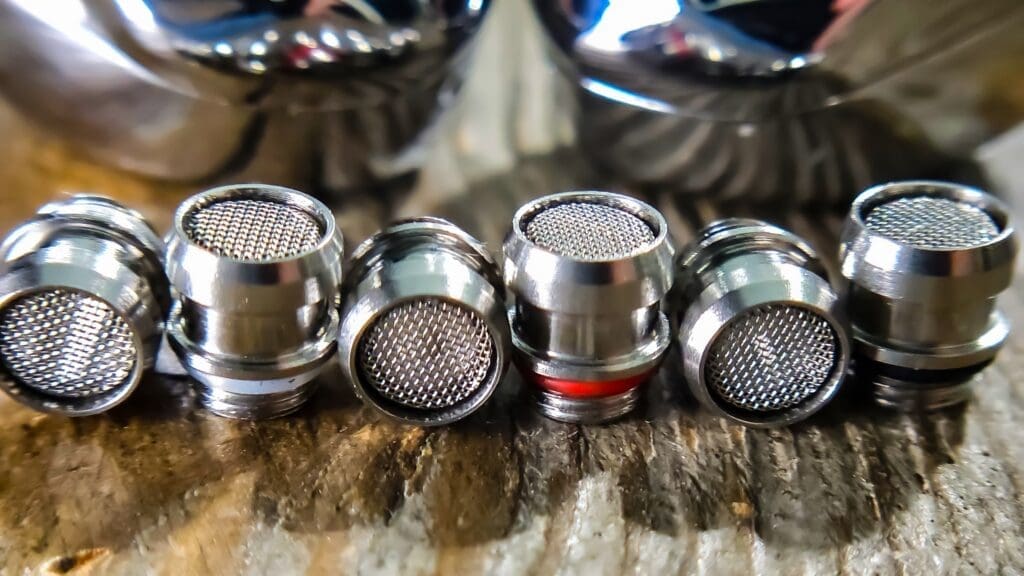
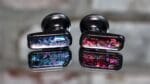
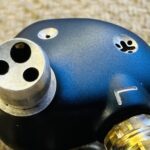
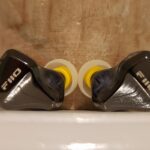
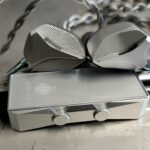
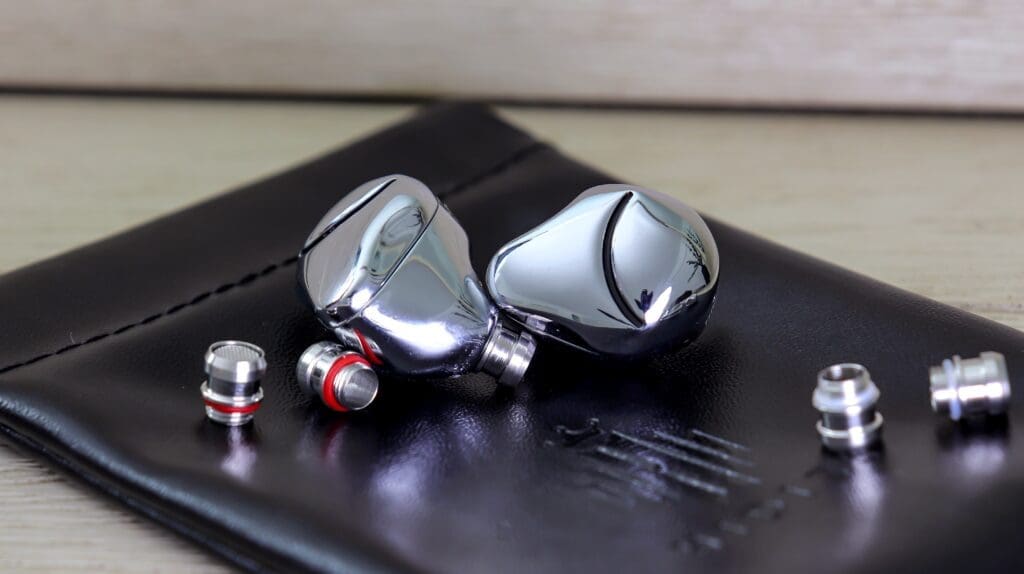
Once again Hidizs crafts another set with tuning nozzles. Something I do appreciate quite a lot. There are few easier ways to give the consumer easy access at passively modifying their iems other than nozzles. Anyways, the MK10 comes with three sets of tuning nozzles in total, and each will provide a slightly altered version of the same base tuning. Hidizs actually has two different names (that I found) for each nozzle, but they all basically tell the same story. Those nozzles are the “Bass Nozzle” that Hidizs calls “Deep Black” or “Midnight Black”, the “Balanced Nozzle” named “Crimson Steel” or “Charm Red”, and finally the “Treble Nozzle” named “Shimmering Silver” or “Crystal Clear”. All three nozzles can be separated visually by the color I’d the rubber gasket above the threads on each nozzle (red, black, clear). In my opinion the nozzle which changes up the sound the most is the treble nozzle while the other two are much less distinct in their changes, however they all make enough of a difference sonically to warrant having them in the 1st place. Before I go too far, I just want to let you all know that I mainly used the “Deep Black” nozzle for all critical listening, though at times I did use the “Charm Red” nozzle as well. Having said that, I actually like all three nozzles. Let’s take a very quick look at each nozzle.
Deep Black (Bass Nozzle)
So, the bass nozzle does exactly as you’d think, that is, it gives the sonic impression that the bass is a hair more lifted and there is a tad more warmth (very little). The bass does come across a hair fuller, but in reality, this nozzle is only a hair warmer than the Charm Red nozzle. All that’s happening with this nozzle is that the tuning mesh inside of the nozzle is dropping the lower treble a few dB’s bringing upon the perception of more bass. In all reality it does sound like it does just that. The graph hardly even shows a change, but I can definitely hear a slight atmosphere shift, a subtle warmth. Again, I mainly used this nozzle. In truth, it’s really just a slightly warmer balanced nozzle as there is very little difference between it and the Charm Red nozzle.
Charm Red (Balanced Nozzle)
This is the other nozzle which I swapped back and forth with over the course of critical listening. Again, the Red and Black nozzles are very similar. So, the red nozzle is most certainly the most balanced, as the name implies. However, it is also the most neutral of the three. I hear nice detail retrieval using this nozzle and a very energetic sound without losing the bass weight and sublevel rumble. There’s a reason I kept going back and forth with this nozzle and the black. That being; they both sound very good.
Crystal Clear (Treble Nozzle)
Now, the treble nozzle is actually the largest departure from the other nozzles as the sound is much brighter, more spicy, more energetic, and possibly sharper or shouty… depending on your tolerances. I can tell you that I don’t like this nozzle quite as much though I could see treble heads using this one. No doubt the treble nozzle boosts some resolution, transparency, and it comes through with much more brilliance. Having said that, the sound is still very precisely controlled and very well detailed. This nozzle will be great for any analytical heads, treble heads, or bright lovers.
Cable
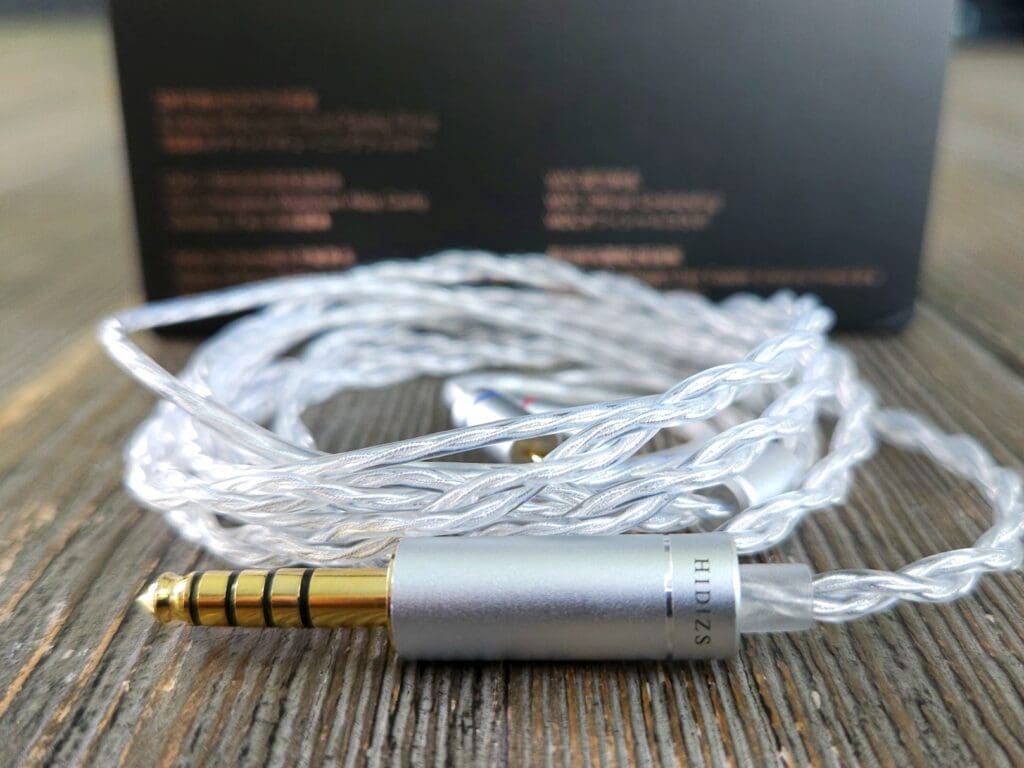
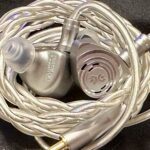
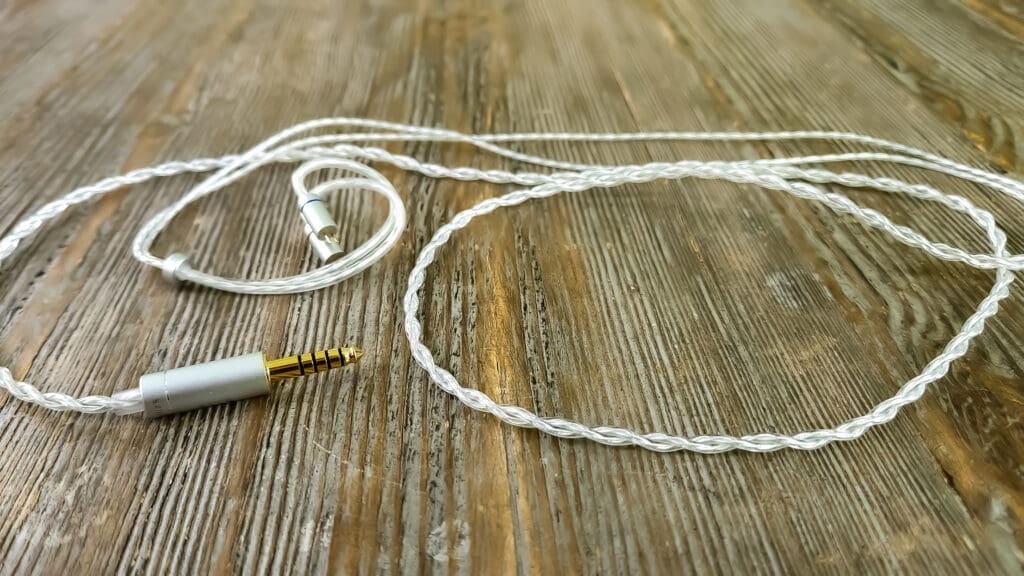
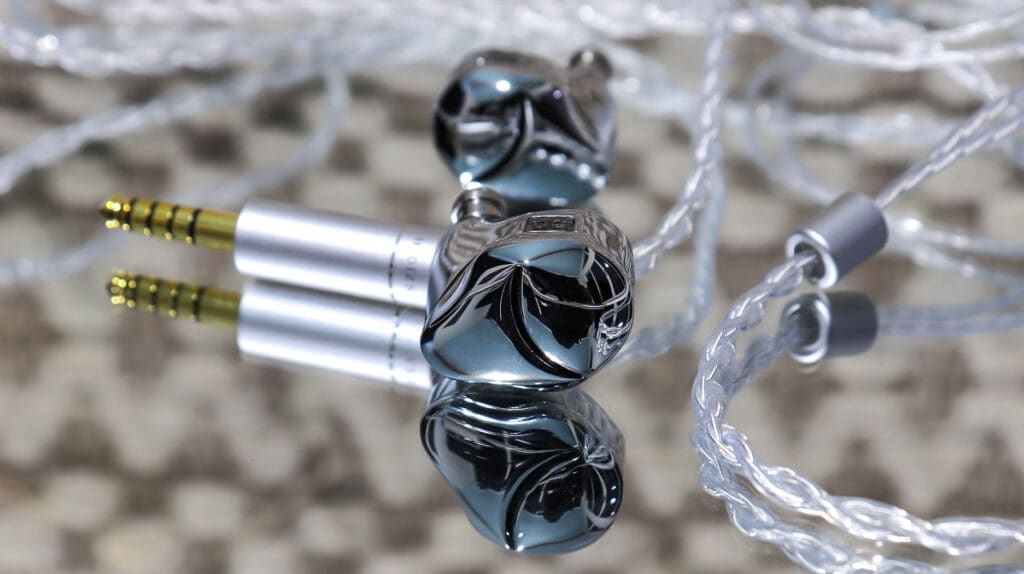
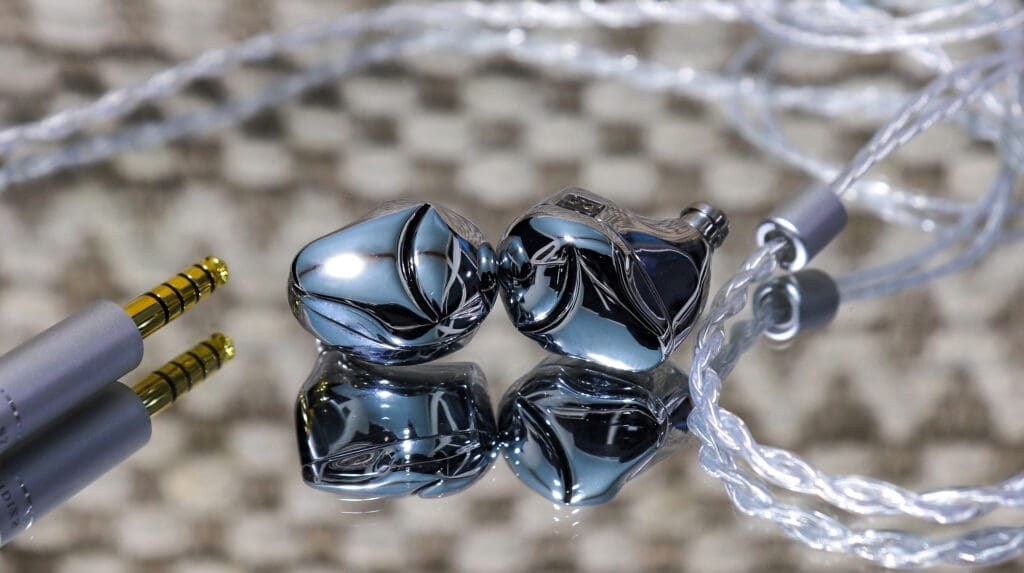
The cable that came packaged with the Hidizs MK10 ArcSonics is the same cable which came packaged with that last few Hidizs iems. Once again, it is a nice working cable which does its job. However, I do not think it’s the most aesthetically pleasing for the MK10. Anyways, the provided cable is a very nice-looking wire, all white, 2-pin, flush mount, silver-plated OFC, and it’s thin, easy to handle. I think this cable was added mostly for its ease of use. It won’t pull down on your earphones and isn’t microphonic. The provided cable doesn’t have issues rolling up either. Functionally it’s a nice cable. Now, you can get the MK10 in either the 3.5 single ended or 4.4 balanced variations as well. I really find the included cable quite nice folks. Though I did cable swap to the KBear Chord 4.4 cable for my listening. To my ears the Chord seems to mesh very well with the MK10. Also, it looks very cool attached in my opinion.
Build / Design / Internals / Fit
Build Quality / Design
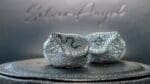
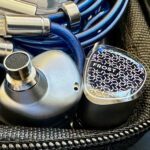
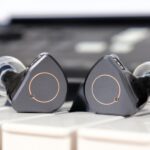
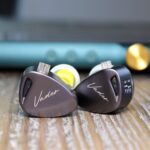
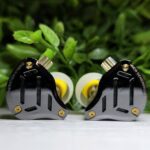
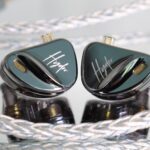
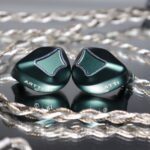
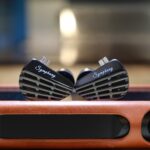
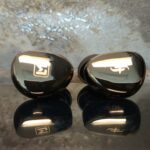
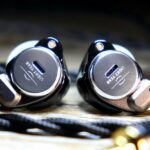
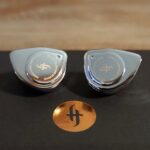
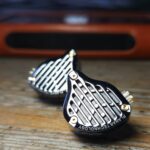
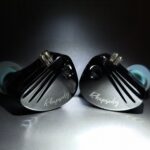
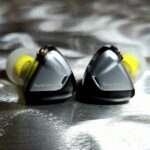
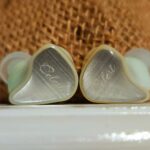
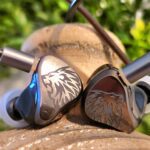
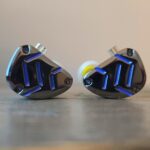
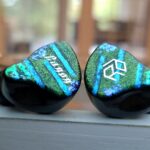
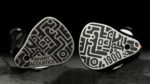
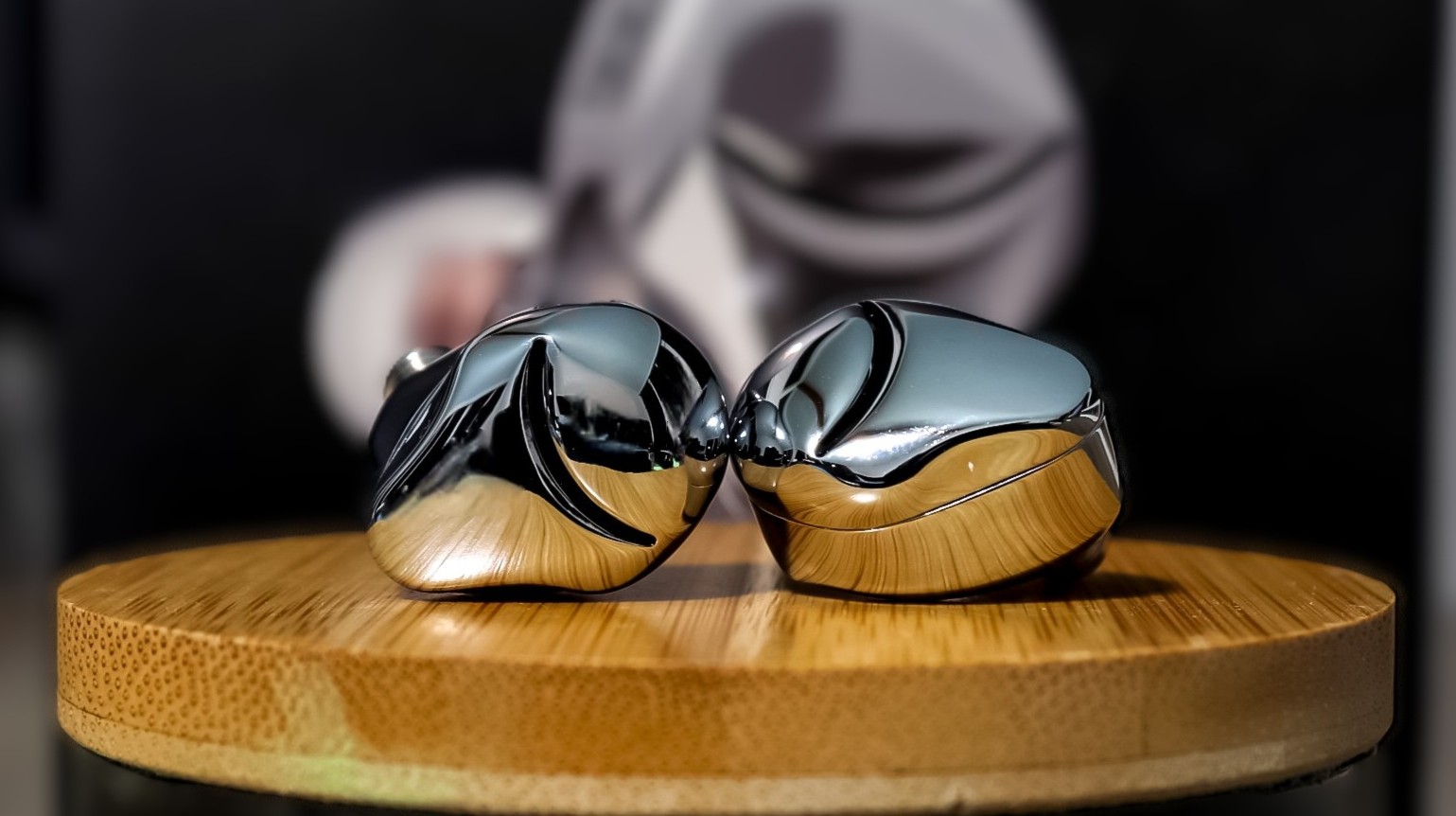
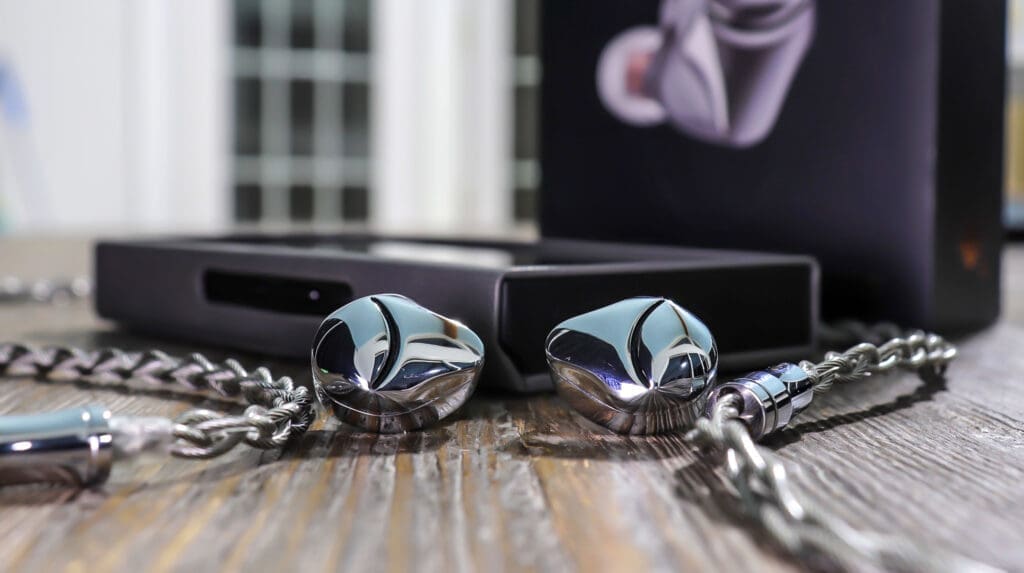
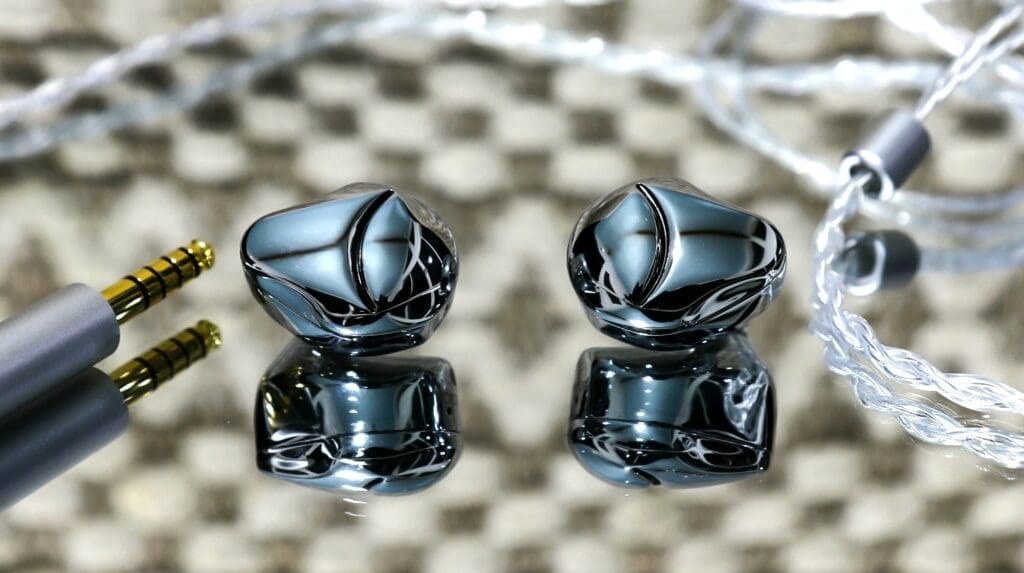
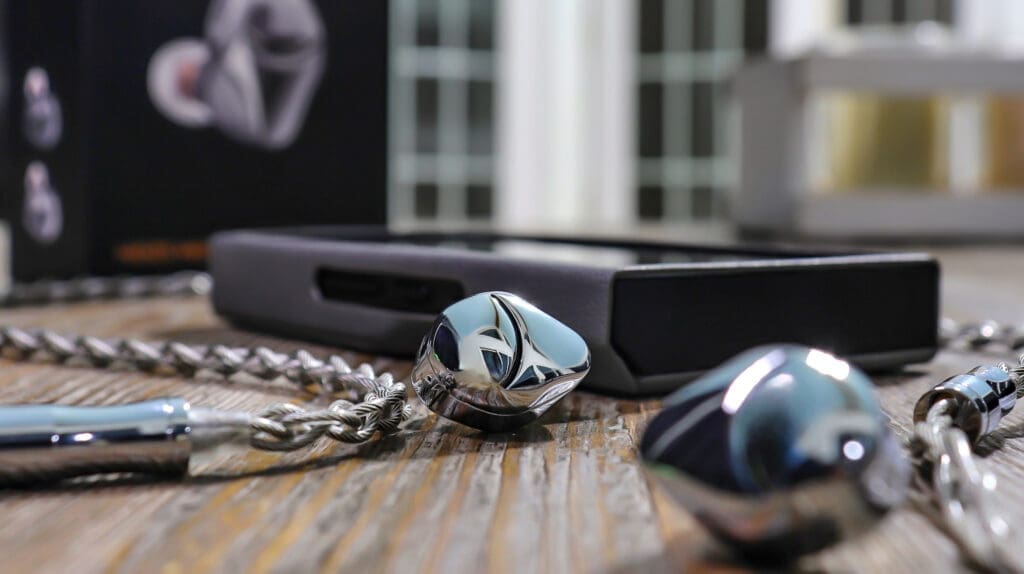
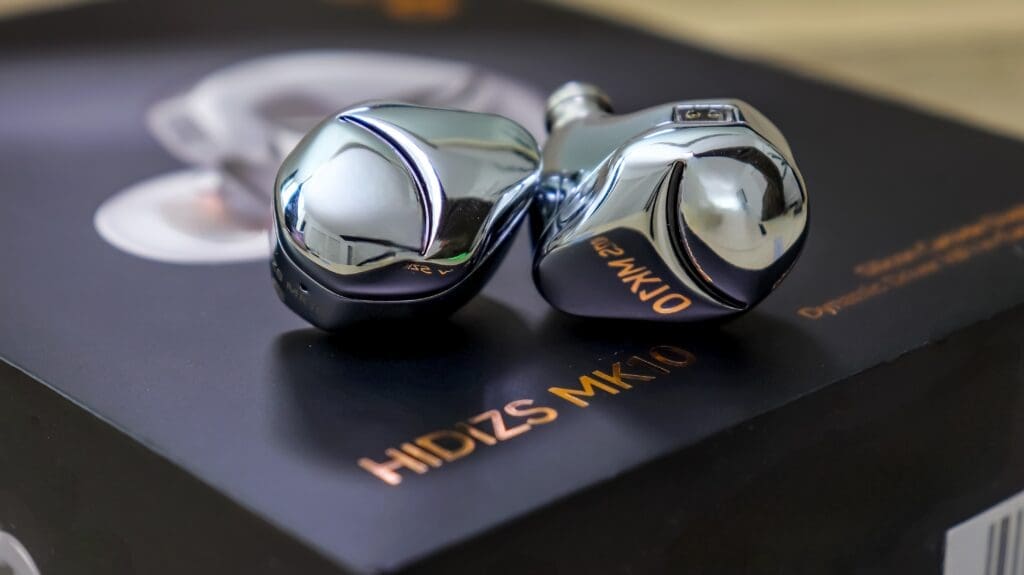
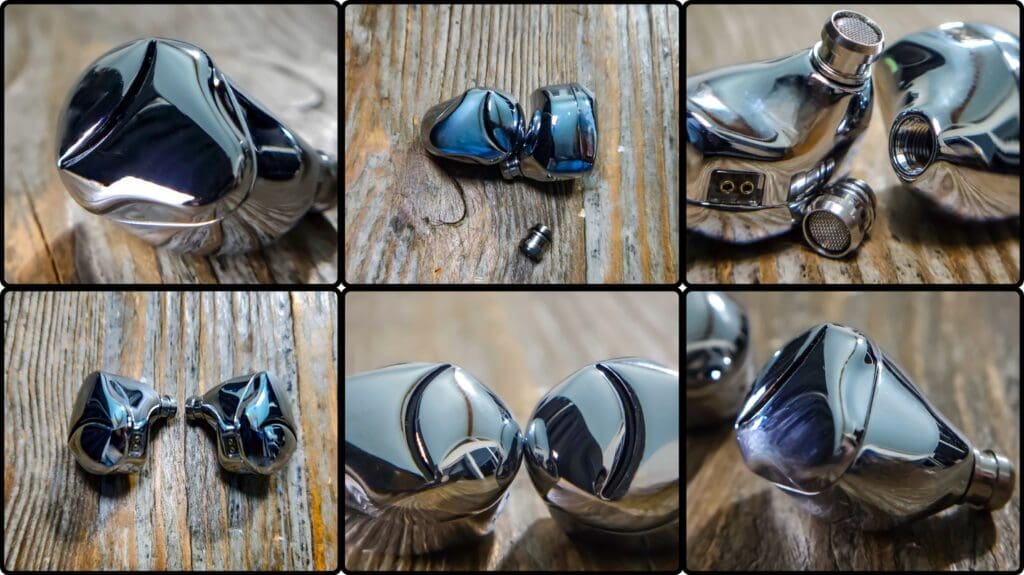
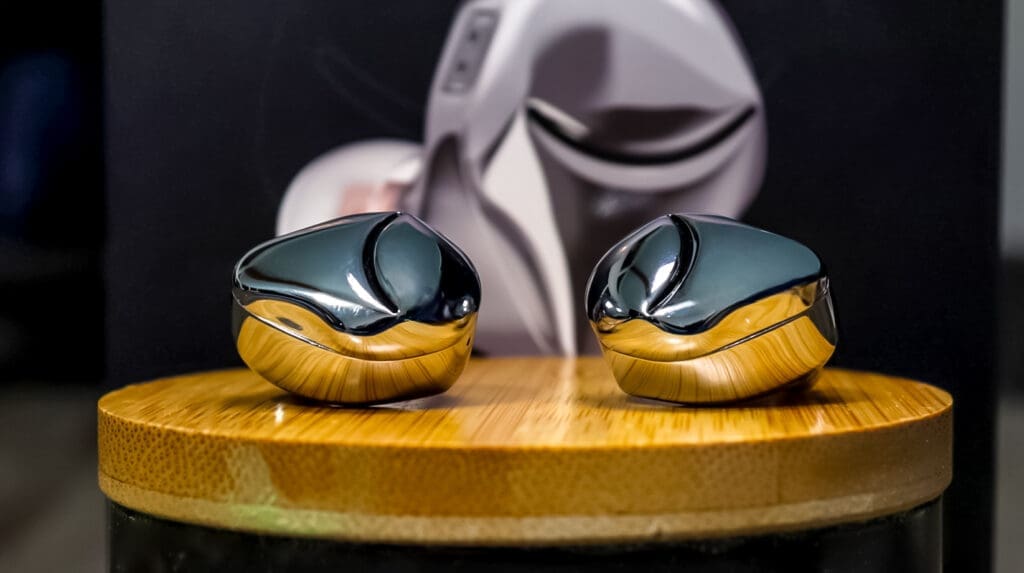
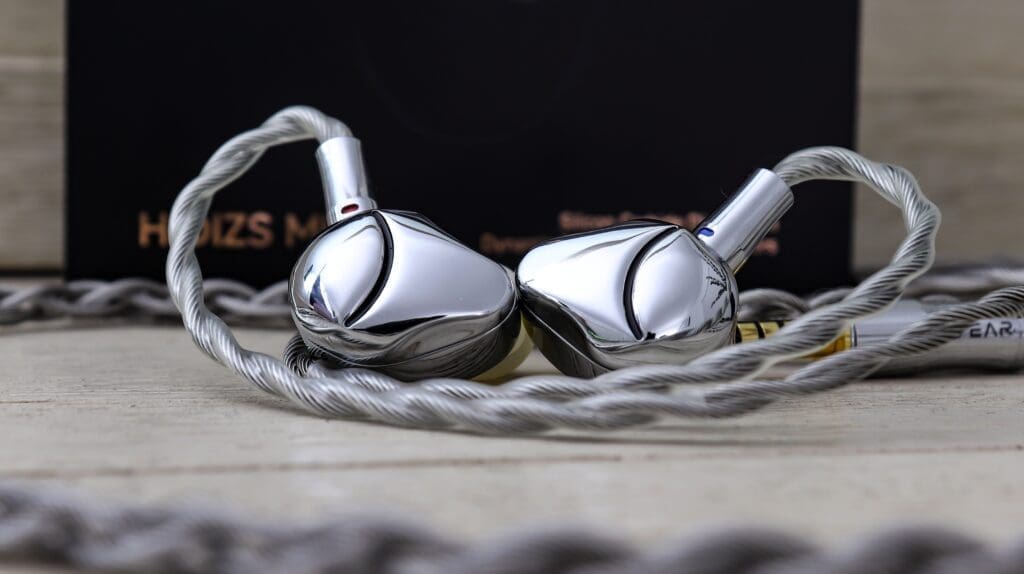
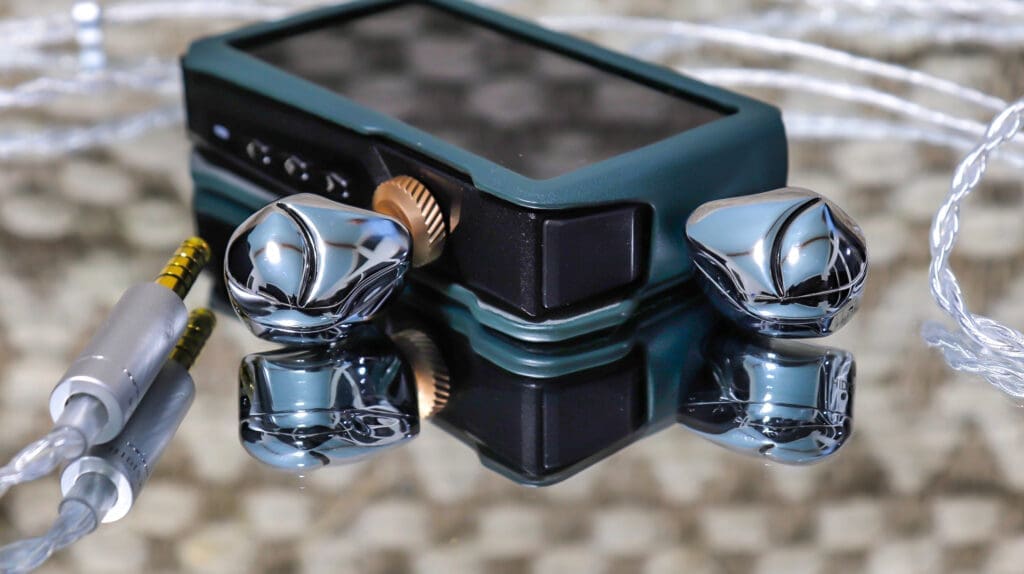
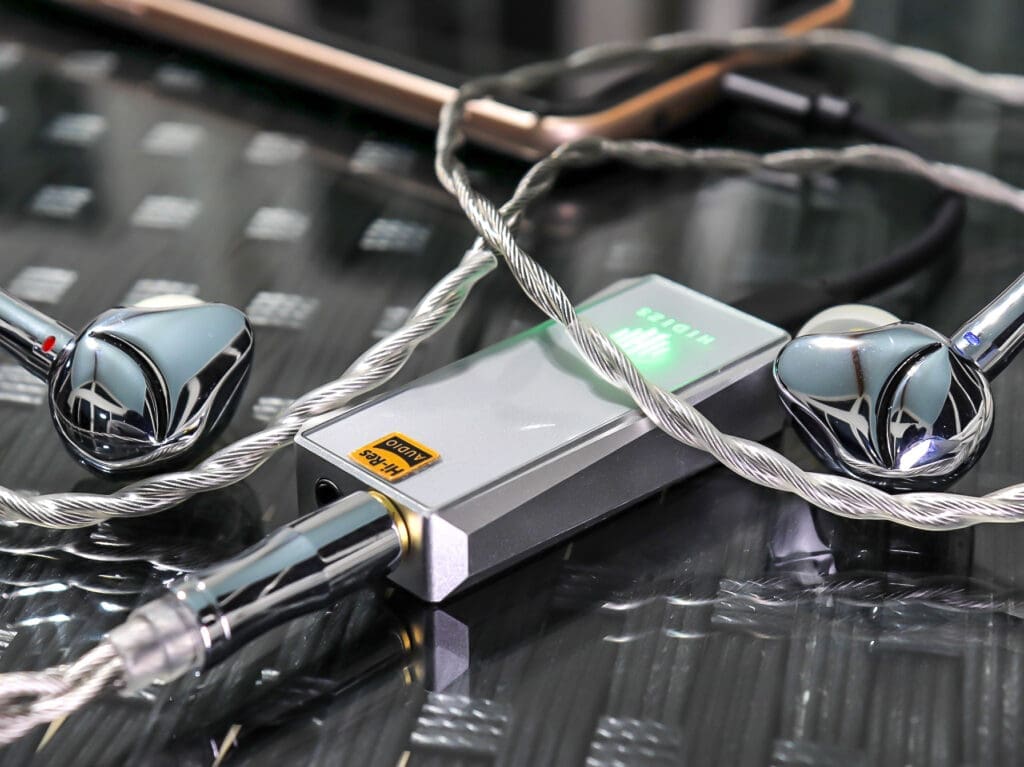
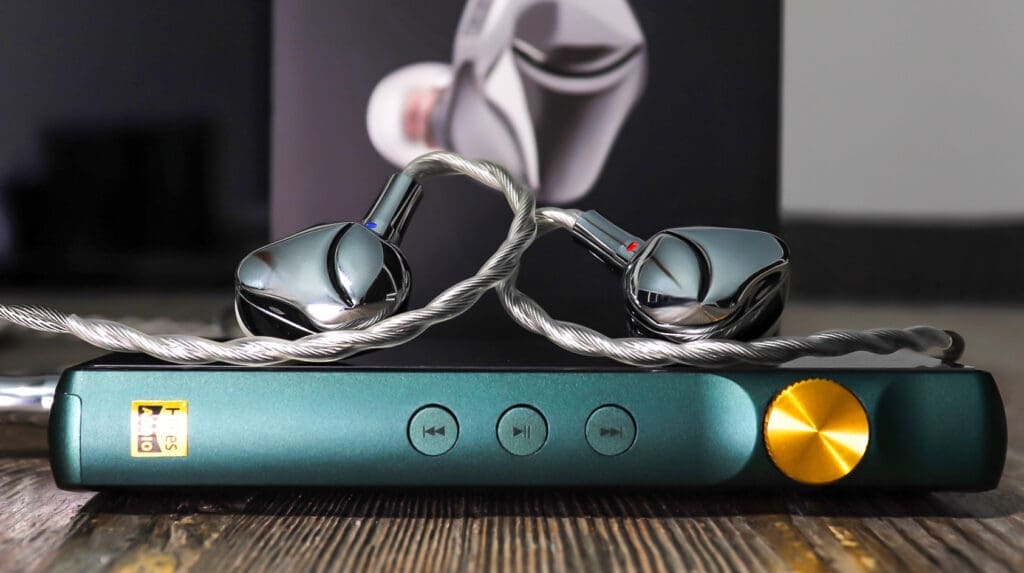
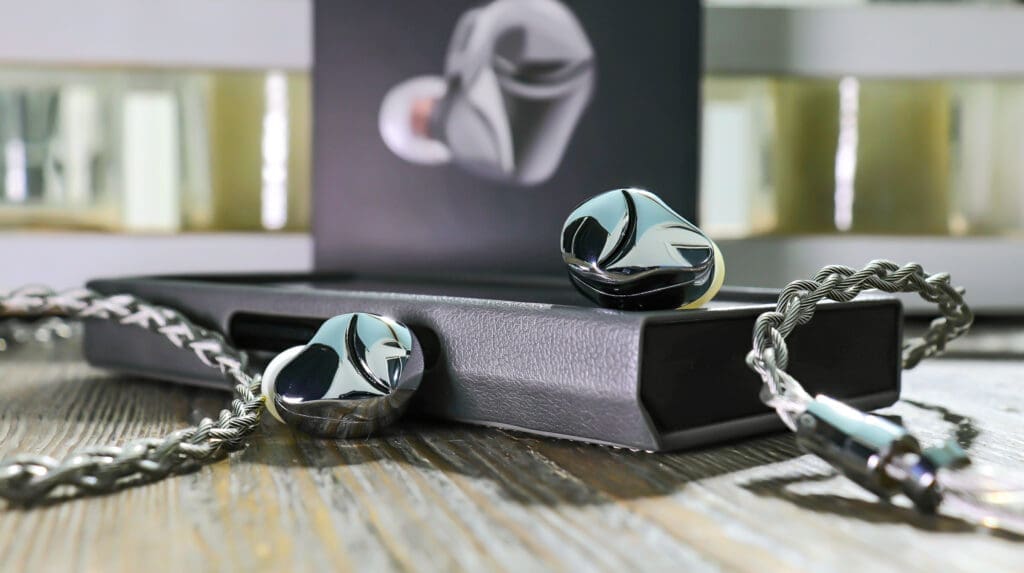
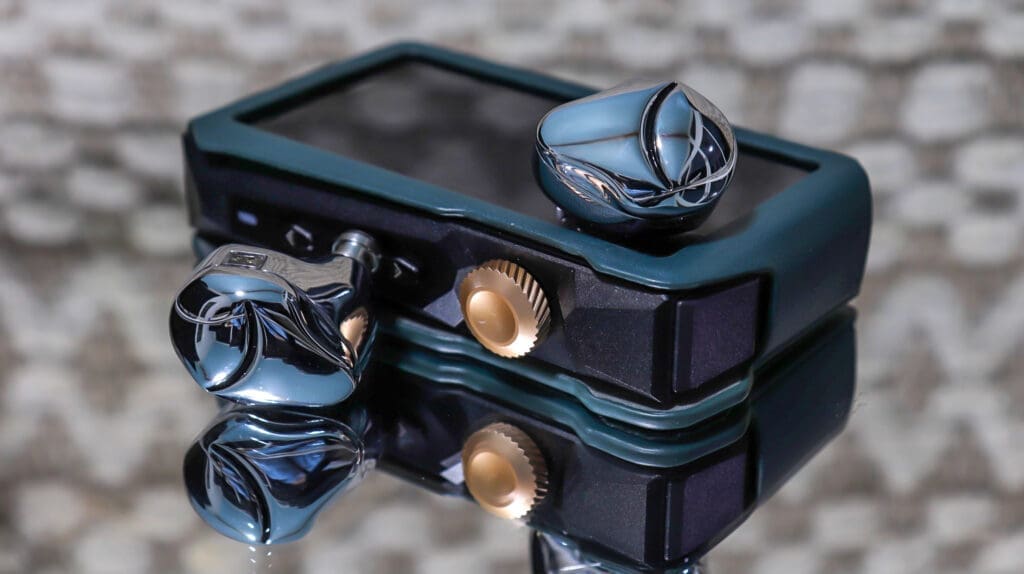
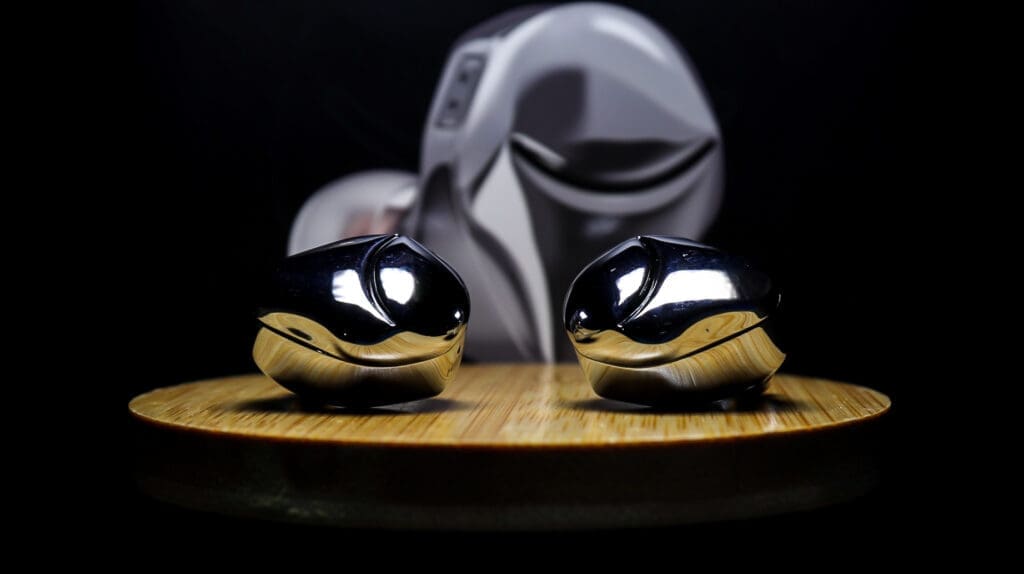
The Hidizs MK10 ArcSonics is made from front to back, and top to bottom out of ZA12 zinc alloy. ZA12 is a fantastic metal to use for earphones as it doesn’t typically corrode and will not obviously rust. The best part is that you can form Zinc alloy into just about any intricate form or shape. Hence why Hidizs was able to form such a dope looking and intricately shaped set. I should add that Hidizs has actually professed that the design and look was inspired by Iron Man’s armor. Which is very cool to know. Now, this is a fairly heavy set of earphones though. Zinc is great for many reasons, but it isn’t the lightest alloy out there. In fact, the MK10 comes in at around 24 grams each side. So, they are definitely not the lightest set out there. Despite that, Hidizs made sure to disperse the weight well enough that the MK10 never is fatiguing. Furthermore, the MK10 is clearly one of the best looking Hidizs sets on the market. It is so very COOL. streamlined and slick. I love the faceplates and the semi-open design. Really a nicely designed set. I should add that the MK10 comes in two color variations. That is, the silver variant as well as what looks like a gunmetal color. Both are very cool.
Internals
This brings us to the Internals of the MK10. So Hidizs decided to once again go the single DD route, and I’m perfectly with that. I love a good single dynamic driver earphone. To be exact, Hidizs went with a 10mm driver with a silicon carbide crystal diaphragm sitting in a dual cavity with dual N52 magnets. They also used an aluminum voice coil with a copper cladding. One of the coolest aspects of this set coming into this review was the diaphragm material. I was very curious to hear how this one turned out. One thing is clear, Hidizs will always push the envelope on their Internals and always come up with something unique. The MK10 definitely fits that bill.
Fit / Comfort
As far as fit and comfort is concerned, the Hidizs MK10 ArcSonics Is a pretty ergonomic set. I actually have a very easy time getting a good fit. Of course, I also used KBear 07 eartips which helped quite a bit. Like I said earlier the MK10 is a fairly weighty set. I believe they come in at around 24 grams each. Again, the weight is dispersed very well. All corners are smooth and rounded and the comfort is great. Of course, I have no clue of knowing whether the MK10 is going to fit your ears. The good thing is that the MK10 isn’t too large. The nozzles aren’t too long either and so you won’t have a feeling of intrusiveness. I think they are very comfortable and very nice for long listening sessions. Well, for my ears anyways.
Drivability / Pairings
Output Power & Sensitivity
Folks, this is a very sensitive iem. Like most iems actually. The MK10 ArcSonics is rated with an impedance of 32 ohms and a sensitivity of right around 113 db’s. Basically, you can play this set from your smartphone with no issue. You can play this set from your cheap mp3 player with no problem. It’ll play nice with your cheap 3.5 set dongle dac. I can tell you this because I have literally tried all of these things for you. I have a slew of weak devices simply to test for you. Whether it be my weak Conexant 3.5 se dongle dacs, no name Amazon dongle dacs, my old Android phones with a 3.5 se port, my iPad, or even super weak devices like the KZ AN01, the AZ20, and I even found an old 1More Bluetooth adapter as well (20mW @32 ohms). They all sounded loud, dynamic enough, and I was able to jam out with the MK10. No problems. So, if all you have is a smartphone with a 3.5 port then don’t be dismayed, the MK10 will fire in all cylinders.
More juice
However, like almost any set which has come to market the last five years, the Hidizs MK10 ArcSonics becomes so much more refined with two things: more power and better sources. Just like most any set, the MK10’s drivers respond very well to some hefty and clean juice. What do I mean by hefty? I mean, get a good dongle dac with a solid 4.4 balanced, put it on high gain and feed this little guy some juice. Trust me, it’ll reciprocate with a tighter and more dynamic sound. The stage will add depth, micro-dynamics will seem more discernable, and macro-dynamics will become more expressive. I also feel that with better sources the MK10 responds well. I realize that seems like a pretty obvious thing to say, but it needs to be said. The MK10 rises to the occasion when you put it on some solid source devices that have that clean amping. I used so many sources for this review that it’s almost too many to even try to speak on. What I learned is this; the MK10 thrives with more power, and it’ll become its best self with good and quality sources. Despite that, the MK10 will sound good with just about anything.
Source Pairing
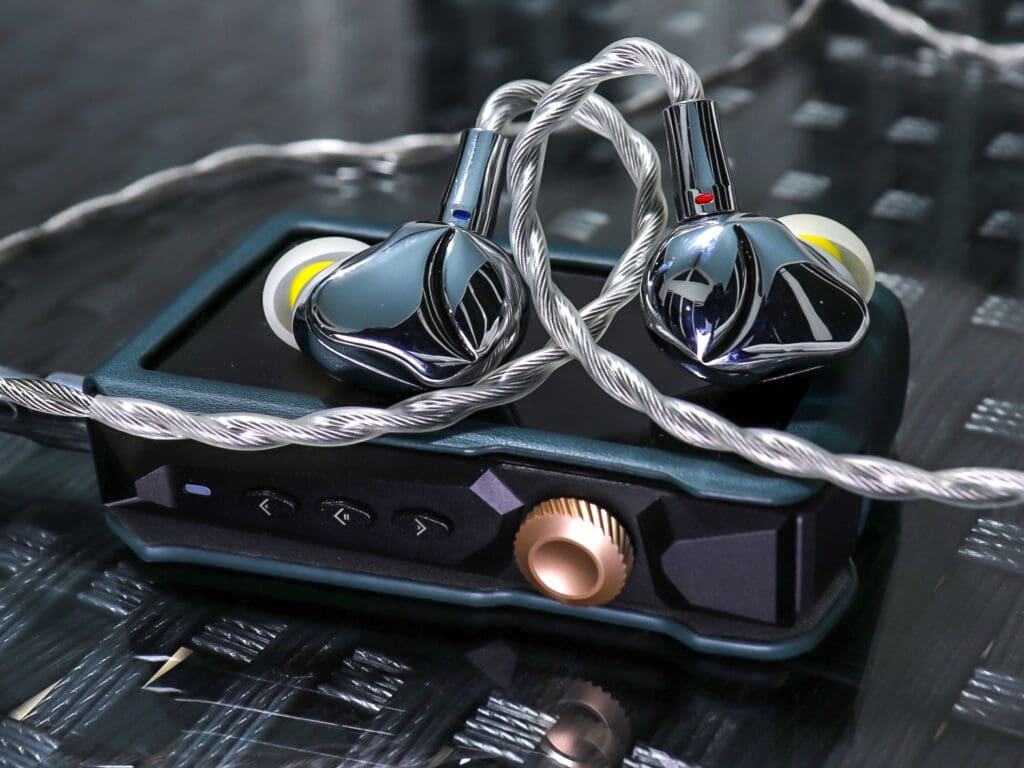
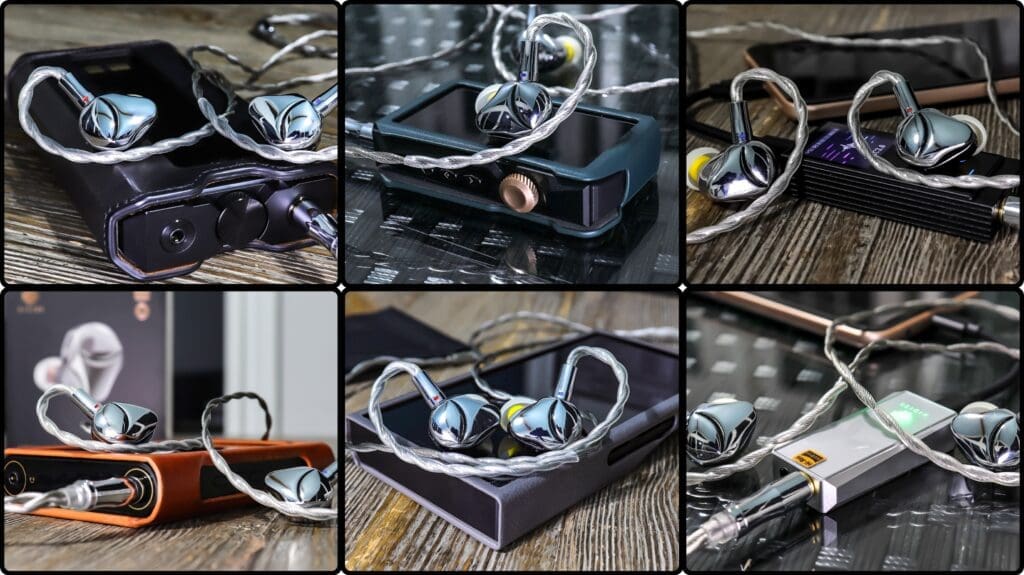
Now, the Hidizs MK10 ArcSonics is without question a neutral to neutral/bright sounding set depending on your tuning nozzles. I mainly use the Bass nozzle with this set to extract a hair more warmth from the MK10, however, even with that nozzle there is plenty of shimmer and brilliance. To my ears, I found that the MK10 most certainly sounds best with warm to neutral sources. I would stray away from brighter or more shrill source devices. This set will get rather shouty with those brighter devices. It’ll sneak up on you when you least expect it…trust me. However, warm to neutral is a huge, enormous, number of devices. In fact, the great majority of source devices land within that tonal coloration range. Almost all of my sources are in between that range. So, I found that there weren’t many that I had any issues with.
What do you need?
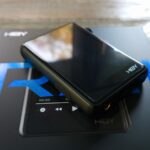
If I were you, just try to procure a decent dongle dac. It doesn’t have to have a 4.4 balanced port. Just some halfway decent juice. I’m not talking a lot either. I mean like 50mW @ 32 ohms. Which is not a lot at all. If you can find some better sources than the MK10 will reward you. There are many devices which can be purchased anymore for under $40 that carry well over 200 mW of power and some solid dac chips. Also, try not to get a brighter leaning source with this set. That’s just my advice.
Sound Impressions
*Note: before I dive into the sound portion of this review, I first want to establish a few things; 1st off, I did burn in the MK10 for about four full days. Without a doubt this helped. Burn-this-set-in folks. There’s this sizzling energy that I heard when I first opened the box and listened. What did I do? I put this little baddie on the burn ins station for a few hours and that began to go away. After four days it was ready for critical listening and enjoying. Next, I swapped cables from the included cable to the KBear Chord 4.4 balanced cable. If you can find one, I’d definitely do this. The Chord’s graphene material seems to really dial this set in, also it looks super dope (silver on mirror-polish is sick!). I also listen mainly to flac or better files which are stored on my devices along with some mp3’s and occasionally I’ll stream some music. The Android music player of my choosing is almost always UAPP (USB Audio Player Pro) as I feel it’s the most complete Android music app. Of course, I also use Hiby Player and Eddict Player for some of my smaller daps too. For all critical listening I tip-rolled using the KBear 07 eartips as well. I truly feel that the semi-wide bore helps to control the upper-mids and adds some punch to the low-end. Lastly, I listened mainly with the “Deep Black (Bass)” nozzle for all critical listening. I feel that the bass nozzle is a titch warmer than the others and not at all less transparent or clean, so it’s the best of all worlds with this set. However, to each their own.
Caveats
Once again Hidizs decided to bring to market another set which is going to capture the attention of the listening public. Now, before I dive head-first into this sound review, I want to throw in a couple caveats. Those caveats are; this set is not going to be for everyone. Please hear me when I say that. This doesn’t mean it isn’t a very highly skilled and quality iem either. What this means is that the MK10 simply isn’t an all-rounder. Not quite anyways. Hey, I like specialty sets. Though I wouldn’t necessarily qualify the MK10 as a “specialty set” either. Okay, enough beating around the bush. Friends, this set can get bright at times. Granted, it’s few and far in between, but it happens. Even with the bass nozzle. Now, it has never been too much for me as I can handle super bright sounds with no problem. But I know many people who simply detest any brilliance and shine in the pinna rise to treble regions. Basically, the MK10 is just as bright, if not brighter (depending on your nozzle) than the Simgot EA500LM (EA500LM Review). If that helps. Now, I do feel that the bass emphasis contrasts that slightly brighter hue very well and altogether we get something close to a balanced sound. Still, overall, the sound does hover between neutral to bright/neutral and so just be aware. In truth, I greatly enjoy this clean and totally energized sound. However, the best thing is the price folks! $69 US is a ridiculously low price. I’ll cover this in my “Final Thoughts”, but man is it a solid deal.
What’s it sound like?
To my ears the Hidizs MK10 definitely has what I’d call a neutral to neutral/bright U-shaped to W-shaped signature. The MK10 has a nicely weighted sublevel response which adds solid haptic density in a very clean form. This is a crispy sound folks. Similar to what some would call a Simgot style sound with clean transients, smooth transitions, and a very precise style cadence. The MK10 has very nice clarity as every ebb & flow, every undulating melody carries a definite clean transparency. Slightly colder in tonality but refreshingly tolerable without causing a constant state of fatigue. It’s a smart tuning friends. You have the strong and hard punch of an emphasized bass region, a somewhat forward and very unsullied midrange with appropriate levels of edge, bite, and clean-lined agility while also holding tight to an “off-natural” timbre. Very nice actually. The treble has plenty of knife-edged snap and crispness along with solid upper treble extension and is highly detailed for a $69 single DD iem. Note body is not rich in a warm and weighted sense to my ears. What gives the MK10 any sense of “richness” is actually caused by its clarity and resolution causing a very appealing lean density to every note.
House sound?
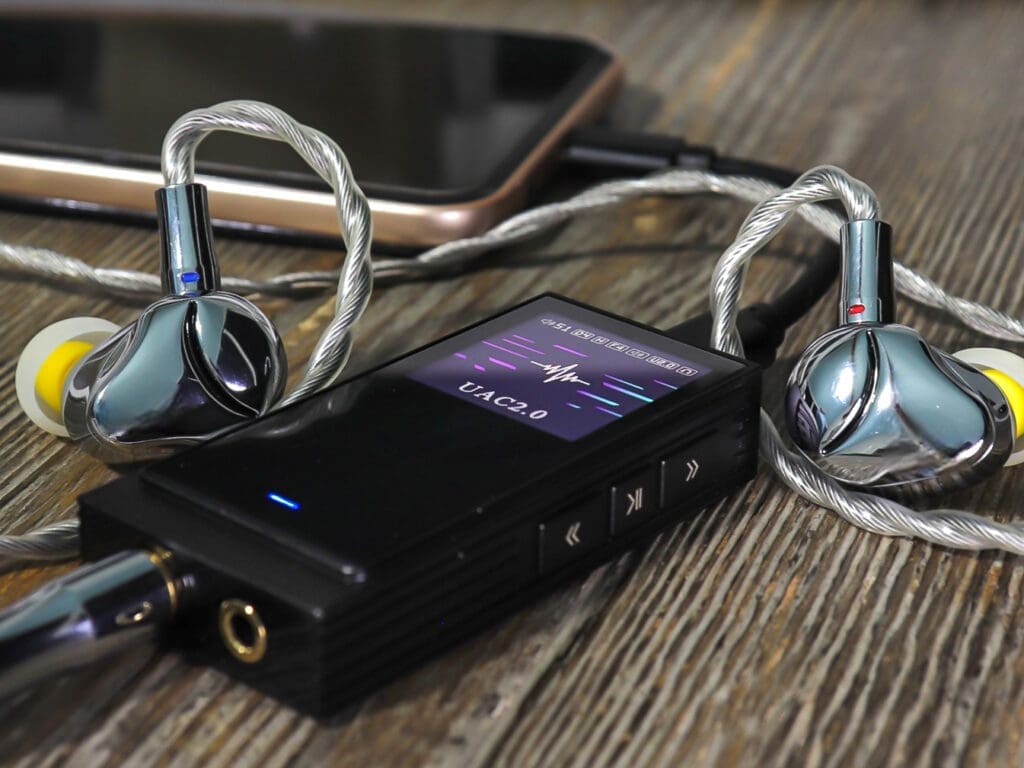
The MK10 presents what I’d call a clean sound for $69, with a more vibrant energy. Certainly, a set which tends towards a transparent sound. Very much different from the musically focused and rhythmic Hidizs MK12 Turris & the Titanium Edition. Very much closer to the Hidizs MS2 Pro (MS2 Pro Review), yet even cleaner, more nuanced, perhaps colder, slightly grainier, but even more clean-lined, more expressive in its dynamics. Which is saying something because the hybrid MS2 Pro is one very talented iem. I like that Hidizs decided to go a different route with this tuning. They (Hidizs) aren’t hanging on one tuning model, or one “house sound” like some brands may do. So, it’s nice to see the change-up. At any rate, the sound (once again) has a definite crispness to it along with an unmistakable vibrance and sparkle. Yet that vibrance and sparkle isn’t due to forced resolution or an aimless boosting of the upper frequencies. Instead, everything seems measured, and weighed, with a balanced brilliance to the sublevel rumble. That vibrance seems to add a very clean edginess, almost like a well etched bite to most notes. It also brings on the perception of energy, of sprightliness, and start/stop transient agility. I’d also say that the sound is pretty big overall. Not chasmic and outwardly grandiose, but full sounding for the cost. Those perfectly ringing resonances bounce off the zinc alloy housing adding a certain weight, some gravity, some roundness, and some dimension to every note.
Shouty Moments?
In all honesty, the MK10 may just be a better version of some of those under $100 Simgot sets. Similar to the Simgot EA500 and the EA500LM in that they most definitely carry an illuminated brightness and brilliance. Of course, you will hear some somewhat more shouty moments in the right tracks to a sensitive listener. To my ears Hidizs did a nice work on this tuning as the emphasis in those upper regions (upper-mids through the treble) seems to take my ears right to the edge of comfort yet stopping just shy of harshness. It’s really a fun and energetic sound that has enough low-end muscle to really create an engaging sound for such a tuning. Again, the MK10 will not be for everyone and no doubt it will have its detractors, but those who enjoy this type of tuning will really enjoy the MK10 ArcSonics. Hidizs did a great job. Let’s check out each 3rd of the mix along with some downsides as well…
Bass Region
Always, the first thing I check in almost every review is the bass region. The bass will tell me so much about the overall sound as it dictates quite a lot. The first thing I noticed is that the MK10’s low-end is not weak at all, it’s very fun, and it can really hit with a strong and very acute slam. There’s some deep and focused weight to its rumble too. It’s definitely the type of low-end which rises to the occasion. What do I mean by that? I mean, the bass is not so bulbous or oversaturated that it is warming the rest of the mix. It doesn’t add any weight to the sound. It won’t add note body to the mids, and it most definitely doesn’t cast any veil. It’s a very tidy and clean bass. Now, this will not be enjoyed by bassheads, or even moderate big bass lovers. Having said that, it is a potent low-end when a heavy hitting track is playing. Basically, the bass shows up if and when a track features a weighted low-end. Also, it’s fast. This is a bass which can take on more complicated tracks fairly well and is pretty nimble. You won’t hear lingering resonances and harmonics and I’d never call this low-end atmospheric. It’s to the point, nice note contours, and well defined. Also, it’s anything but “one-noted”. I should also note that… I really-really enjoy this bass.
Sub-Bass
Like I said, the MK10 has a very fun and pretty potent sub-bass weight and focused rumble. I’d probably say that the sub-bass carries the most actual emphasis of the bass region, but it isn’t perfectly clear how true that is. This isn’t a wide bass, and it isn’t an overly full bass either. However, the sublevels do carry a sort-of dark vibrance that reach some palpable and deeply rendered notes. I love the speed, the dense cleanliness, the fast twitch rumble. Tracks like “Kids With Guns” by the Gorillaz sounds absolutely awesome when it’s played through the MK10. The sharp and groovy rumble frequency feels tactile and even more so by the high-end pick attack all along this bassline. It sounds like a tight and almost compressed pulse as the tone is somehow clean in its dirty and distorted manner. Basically, it’s really satisfying to my ears. You see, the sub-bass has some pent-up aggression to it. Almost like a reserved weight that you didn’t know it had. That may be taking things too far a bit, perhaps, but I really don’t think so. The MK10 is an almost dead neutral sounding set yet it has this haptic and vibrational vivacity within its sublevels that is about as clean as it gets at this price.
Mid-Bass
The mid-bass is what I’d call a “punchy experience”. It’s a very fast, stop & go on a dime style mid-bass which isn’t all consuming and doesn’t overwhelm any area of the mix. Perhaps it has enough gusto to mask some sounds with the right track playing, but just like the sub-bass it shows up when called upon. Also, just like the sublevels it never really shows up until that hefty bassline permits it to. No muddiness, nothing blurry. It’s the type of mid-bass, which is sharp, very well textured, and defined with enough slam and rhythmic cadence to make a rhythm section come alive. It’s a fairly muscular low-end when it has to be and can come across fairly authoritative too with a very streamlined and pointed physicality. However, on the flip side of that coin the mid-bass can also be non-existent and can sit in the background without its presence felt. As I said, the bass isn’t so well endowed that it warms much of anything. You won’t hear a weighted midrange of soft warmth, and you won’t hear that frequency wide smoothness which a boosted mid-bass can have. The MK10’s mid-bass has that clean-lined texture and acute density that never gets in the way. It doesn’t boom with lingering harmonic decay, it punches. Bass guitars won’t sound overly full all the time, but kick drums will have that hard snap and fast robust boom.
Downsides to the Bass Region
It’ll be somewhat difficult to come up with actual downsides short of subjective emphasis issues that some may have. I’d say that one issue that some hobbyists will have with the MK10’s bass region is that it isn’t the most all-consuming in its emphasis. This isn’t what I’d call a big bass. For instance, bass guitars won’t sound super weighted and rich. They’ll be somewhat guttural, nicely textured, and very well defined, but they won’t sound thick. Or those hefty and juddering bass drops in your favorite hip-hop tracks won’t come across quite as bulbous as some may enjoy. I mean, I like the MK10 a lot with many different hard and booming bass drops, but that’s me. I’m perfectly satisfied actually. However, I’m not the next guy. Some folks desperately want that lingering and atmospheric style decay. To many people, that lingering decay sounds even more natural. At any rate, nothing will please everyone, but I enjoy the MK10’s low-end.
Midrange
As you’ve already read, the midrange is the type which sounds very energetic, crisp, and fairly well detailed. While the sound veers towards neutral with a slight tinge of brightness, the sound is not what I’d call outright cold. I don’t hear anything dry or papery either. There’s this thin richness to the sound which seems to be due to its clarity and texture. I hear a certain moistness in this midrange folks. Yes, it’s very clean and very nicely defined, yet in that cleanliness it’s also very melodic. Yes, it can lean bright, but it’s still emotionally engaging. Hidizs didn’t completely sacrifice musicality in exchange for details or clarity. What the mids are is semi-forward, well layered, with a distinct separation between instruments, and the mids have fantastic presence. Having said that, the midrange can also get sharp from time to time as well. So, there is a tradeoff there as Hidizs really dialed in the resolution and thin-lined note density with excellent vibrance, but every now and again with the right track the MK10 may be a hair too energetic. Again, I have yet to be bothered by this apart from a couple tracks which are absolutely prone to such a thing. Other than that, I’ve greatly enjoyed this budget-oriented set.
A Definite Charm to it…
The midrange most definitely has a charm about it. I think it has something to do with the off-natural timbre which is mostly organic and only slightly colored by the top end vivacity. In most tracks I’d say the MK10 sounds natural. Only when those upper-mid notes get a tad too enthusiastic will the MK10’s midrange color come across more illuminated, slightly brighter, and dare I say… a bit too strident for some folks. That said, micro-dynamics are very fine-lined, while macro-dynamics are very expressive and engaging. It’s a fun sound with a vigorous spirit that can be just as dynamic as it is harmonious.
Lower-Midrange
The lower midrange isn’t going to give you super robust and rich male vocals. Instead, males come forth with that clarity that I was referring to. Instruments mostly sound lively and polished with clean note outlines, but they will be lacking some plumpness for some folks. There’s a sense of airy and layered depth to this region with enough of that solid lean density to help lower midrange notes to come across with nice presence. I also don’t find the lower-mids to be edgy, which did surprise me. Sometimes when a sound has that neutral/bright lean they can also have some of that knife-edged grain along with it. I do not find that here. In fact, male vocalists sound really nice folks. Like Jason Isbell in “Wind Behind the Rain”. His voice cuts right through everything and really pops on very nice tonal contrast. Yet his vocals also sound smooth on the edges of notes. It’s actually a fantastic sound. Or Alex Warren in “Heaven Without You”. Once again, another track where the MK10 proves you don’t need warmth and weight to sound full and rich. Clarity, texture, and prominence can create the density, the lean weight, the rich inflections. The more I listened to this set, the more my brain burned-in and the more I could appreciate what Hidizs did here.
Upper-Midrange
Now, the upper-mids most certainly carry a more forward, more sparkling, and more bouncy sound. As per usual. Like I said, the upper-mids can also come across a hair more strident for our more sensitive community members. No doubt this is a slightly brighter portrayal of the upper mids. Though I truly don’t feel that Hidizs took it too far for the great majority of hobbyists. Again, everything sounds measured, very much unblemished too. Females can sound delectable. Like Norah Jones in her track “Alone With My Thoughts”. Wow does she sound so silky smooth, salient, and utterly predominant against the melody which plays along with her. I could repeat similar thoughts about many female vocalists. The track “Twenty-Five” by Lake Street Dive which is sung by their talented lead singer Rachael Price. The clarity of her voice and the way every vocal intonation sounds swelled-up & voluptuous. Her every up and down emotional accentuation sounds forward, centered, and full. Sure, there are moments where things sound a hair more luminous in tone, but I’m okay with it.
Instruments
Instruments generally follow the exact same path as vocalists. Now, instruments also sit just behind vocals and each instrument sounds very distinct, separated, very airy and open. Best of all they have that same “off-natural” type of organic tunefulness. Maybe a tad more radiant at times, but they always come across as a form of natural. Percussive instruments have plenty of snap on attack, some vibrant ping, and they always stay in control. Strings have that nice edge and subtle abrasiveness which help a guitar string to come across realistic and detailed. Piano could use a bit more body at times, but I love the releasing harmonics and tone. They go from feather soft to resounding very nicely. Woodwind instruments go from light, airy, and silvery, to mellow and resonant. Actually, I’m going to stop there as far as instrumentation is concerned as I always generalize too much. Instruments are difficult to relay how they sound as every track is different. Just know that most instruments come across well highlighted and clean and keep a fairly natural hue to their sound.
Downsides to the Midrange
The biggest gripe of the midrange is probably the luminance brought on by the pinna rise, which can be a hair too energetic for some folks. I would think anyway. There is such a hugely diverse community of listeners and each one of those people have their own particular tastes. So, when I’m describing some issues with the MK10’s midrange there is always something to speak about. Another issue will be for anyone who much more desires a warm and smooth, velvet and creamy midrange. The MK10 is definitely not that. As honest as I can be, I like just about every tuning, and I can greatly enjoy a very wide range of tonal characteristics. I can appreciate a set like the MK10 which has that energized and clean sound. Sure, it doesn’t have the note body and fullness, or even the richness of a traditionally “musical” sound. That doesn’t mean it isn’t engaging or emotionally gratifying either. By the way, “engaging” is all in the ear of the beholder. I happen to find the MK10 very engaging, immersive even. However, warm lovers will likely not enjoy this set. Anyone who is sensitive to upper mid glare will also likely not enjoy this set. Those who champion fluidity over precision will probably not like this set as well. Still, anyone who can appreciate cleanliness, clarity, resolution, and an articulate and nuanced approach will probably love this midrange. It’s very good for costing only $69 and for the “type of tuning” that the MK10 has. Very nice.
Treble Region
This naturally brings us to the treble region which in my opinion shares custody of the most gifted region of this set. The treble to me is one which is not oversaturated, overemphasized, or too intense. However, it does have some calculated intensity to it. Better said, the MK10’s treble has some well controlled vibrance. What I enjoy is the delicate and sparkling brilliance that crests each note, accentuating each note, rather than a blanket blinding shine. If that makes sense. I hear a natural transition from the upper mids to the lower treble which may be a slight bit fatiguing for some. Very much similar to the same sets that I’ve spoken of a few times in this review, the Simgot EA series. I should note that with the treble nozzle attached the MK10 can be a flat-out treble-head set. I don’t particularly enjoy the treble head version of this set and much more enjoy the black or red nozzles. Yet even with the black & red nozzles the MK10 has a fairly prominent treble which provides levity, snap, crispness, and luminance to the rest of the mix without coming across as splashy sizzle. Furthermore, I never felt that the treble overpowered the deep bass presence but rather coexists in a very harmonious way. It’s all very cohesive, and there’s just enough of a damping effect reducing most of those resonance peaks with the black & red nozzles, ultimately creating a solid balance. This is not a cold or sterile treble folks. It definitely has some melodic qualities and is nice to the ear.
Highly Resolute
To add to that, the MK10’s highs are highly resolute with a very well-defined treble. Once again, the treble has that nice crispness which does well to help the secondary harmonics of cymbals sound sparkly with a delicate lustrous sheen on decay. It helps to provide the violin with that narrow, focused, silvery and edgy vivacity whilst also coming across mellifluous and non-offensive. To add to that, the MK10 really carries a nice treble bite and note contour for a single DD under $75. I would’ve been happy if the treble was simply cohesive and smooth. I really wasn’t expecting some refined treble punch, and texture. Don’t get me wrong here, I am not placing the MK10’s treble in the same light as a multi-driver set with better BA’s, EST’s, planars, or any other driver type which typically replays the treble more technically on point. However, this driver that Hidizs chose really does a fantastic job spectrum wide and the treble is really not a slouch, at all. It really does have some distinct structure to each note with a solid edginess and note bite. Another aspect of that highly resolute sound comes from the airiness and openness of this treble. That air helps tremendously in that it brings in the perception of space, separation, and helps in the dimensionality of the sound field. Also, I don’t remember hearing anything blatantly congested, or any notes mashed together. I never hear that mishmash of treble tizz like so many sets can have with a boosted treble.
Extension
Also, extension into the upper treble seems to be pretty nice. This isn’t the easiest thing to hear all the time. I usually try my best to pay attention to the harmonics of a cymbal strike first. You just read what I thought about those. Generally, they sound clean, sparkly, tinsley, and they do have some good presence to them. However, those harmonics don’t sound blended or splashy. Of course, there will be tracks which make me look like a liar. Or that I have zero idea what I’m talking about. That’s why I said “generally” cymbals sound natural enough without sounding artificial or congested. Soprano sax is another, such as the solo that you’ll hear at the end of Dan Fogelberg‘s “Same Old Lang Syne”. I’m telling you folks, the MK10 really delivers a sound which is both delicate and rich in tone without sounding sharp. Very nice. Another is the upper frequency Xylophone in “The Gumbo Variations” by Frank Zappa. To my ears the MK10 has a very natural and agile sound up top and clearly the MK10 has a well extended upper treble for the cost of $69.
Downsides to the Treble Region
I said a few times that the treble region is mostly non-offensive. Of course, that’s because I am not sensitive to higher pitched notes as some folks are. My hearing is very good and so it isn’t because I can’t hear these notes either. I honestly feel that Hidizs did a nice job in keeping those higher frequencies under control without pushing the boundaries. That said, there are many people in this hobby who stray from a brighter treble. Something that I do understand. Even if a set isn’t quick to fatigue, they can still cause fatigue over long periods. The same way an ultra-bassy set can cause fatigue. Still, there will be those who simply do not enjoy hearing those higher notes. They sound harsh to them. Those people will probably want to keep on looking. I have plenty of sets that I could help you find which don’t have that brighter treble. Some folks want a warm, dark, or rolled-off treble. Also, not everyone wants a detailed treble. There will be times when I get caught up hearing details on the MK10 rather than listening to the music. I hope that makes sense to you. So, the treble won’t be everyone’s favorite. Again, I happen to think it’s a highly skilled treble for a budget range single dynamic driver earphone. I think the treble has a nice balance, adds a clean feel spectrum-wide, adds air to the sound, and it provides that good energy to make the sound a bit more exciting. Not bad at all.
Technicalities
Soundstage
The soundstage of the Hidizs MK10 ArcSonics is very nice. Let me start by saying that I hear nothing which sounds narrow or closed in. There’s a general grand feeling of fullness to the sound. now, I’m not proclaiming that the soundstage will change your life, but it’s good. Certainly, above average for a $69 single DD. I think a lot has to do with the solid extension both ways, the expressive macro-dynamics, the openness of this set, and the alloy acoustic cavity. In my opinion, I think all of that plays a part. I don’t want to get into the weeds of proclaiming how vast the stage is, but I will say that width is just above what I’d call average. Which is very good. Height is about the same. Yet it’s the depth of field which helps the soundstage of the MK10 to feel well dimensioned. I’m not talking about cavernous depth here either. It’s just enough depth to provide an atmosphere for the MK10 to sound layered. Now, every track is different as not all tracks are recorded in such a way to hear those layers of depth. However, there have been many moments where I can distinctly hear front to back instruments. This is what makes a solid stage in my opinion. I should also note that the stage isn’t pushed back, but it’s a hair more intimate as the midrange is more forward than it isn’t. Something I happen to enjoy. The MK10 is nice in this regard, even if there are many sets which equal it in this way, it’s still something to speak on. The stage is very nice.
Separation / Imaging
Another technical aspect of the MK10’s sound that performs well is in its ability to invoke a sound field that has nicely separated elements (instruments, voices) within its stage. It has tighter transients, very clean, transparent sounding, with a definite airy quality, along with nice note density and a slightly wider, taller, and deeper stage. Roll all of that into a ball and what you usually will have is good note separation. I can usually hear fairly distinct partitioned-off instruments with clear lines around most notes. I think the only real issues arise in very complicated tracks which feature too much bass presence or too much treble presence. Also, some poorly recorded tracks can cause some blurring of those note outlines. Obviously in heavy bass passages you’ll have some masking and to the same degree in saturated treble tracks. Imaging on the other hand is usually very good. I’d say the same issues arise with imaging as it does with sound separation, but for the most part imaging is pretty much spot on. Granted, there are definitely sets which are literally tuned to psycho-acoustically render instruments on a stage better, but those sets also don’t carry the same level of musicality as the MK10. It’s always a give and take in this hobby. In the end, the MK10 performs admirably for such a low cost.
Detail Retrieval
This naturally brings us to detail retrieval, and I would say once again that the MK10 performs above average in this discipline. Having said that, understand that when I say “above average” that is just a very generalized opinion. There is no quantifiable way to scientifically call anything below average, average, or above average for any of the technicalities that I am speaking of today. Especially detail retrieval. I can just tell you that the MK10 is very good. It’s very clean and it registers micro-dynamics very well. Those low volume shifts, or tiny, rapid, and subtle changes in intensity or volume within a section of music. The MK10 picks those things up very well to my ears for a single DD under $75. Which isn’t the easiest, or funnest thing to listen for. Trust me on that. The subtleties within music are generally pretty easy to pick out. Especially in less complicated tracks. All in all, I find the MK10 to do a very nice job with detail retrieval.
Final thoughts on the Hidizs MK10 ArcSonics
In my opinion Hidizs is really on quite a roll folks. The MK10 represents another stellar offering that is most certainly going to satisfy many listeners. No doubt this set is highly talented with a sound that would’ve cost a lot more money even 5-7 years ago. The fact that the MK10 costs under $75 and easily competes with the likes of the Simgot EA500, EA500LM, as well as many other iems considered the best under $100 makes it one of the better offerings within the price point. At least it is in my estimation. Having said that, there are loads of quality iems priced at, or near the MK10 that most certainly compete for your hard-earned money. I think I can confidently say that the $50 to $100 price point is quite possibly the most sought-after ranges in all of audio. More people save up money and spend money in this price bracket than any other, I would think. This is the range that we begin to see actual R&D and more exotic tech being used, different materials, better acoustic cavities, damping etc. Also, $50-$100 will get you what used to cost $300 to $500 not very long ago. So, this range is important and, in my opinion, the Hidizs MK10 falls right into the top of class for its tuning type.
Worth every penny
Like I said earlier, the MK10 will not fit everyone’s exact ideals. However, if you look back at some of the “Downsides” that I wrote about you’ll notice that the majority of those downsides aren’t really tuning or technical issues at all, but rather subjective tonality quirks that individuals may have. I say that because nothing is inherently wrong with the tuning. No odd timbral issues, no violent peaks, nothing oversaturated. Every area of the mix is well controlled, clean, well defined, and tuneful. That’s a lot more than I can say for many iems which come across my desk which never get reviewed. Basically, Hidizs did a very solid job nailing the target sound that they were going for. However, without question there will be those who simply aren’t going to jive with the slightly brighter tinge to the sound. There will be those who want more of a low-end weight and muscle. Also, there will even be those who feel the MK10 isn’t analytical enough. No set will please everyone, but every set will please someone. As I said earlier in this review; I most assuredly feel that the MK10 will be exactly what many folks are searching for in their next under $100 iem purchase. I can tell you this… the Hidizs MK10 ArcSonics is worth every penny of the $69 that Hidizs is asking for anyone who is seeking out this type of sound. Flat-out and hands-down the MK10 is a true performer in this price bracket.
The Why…
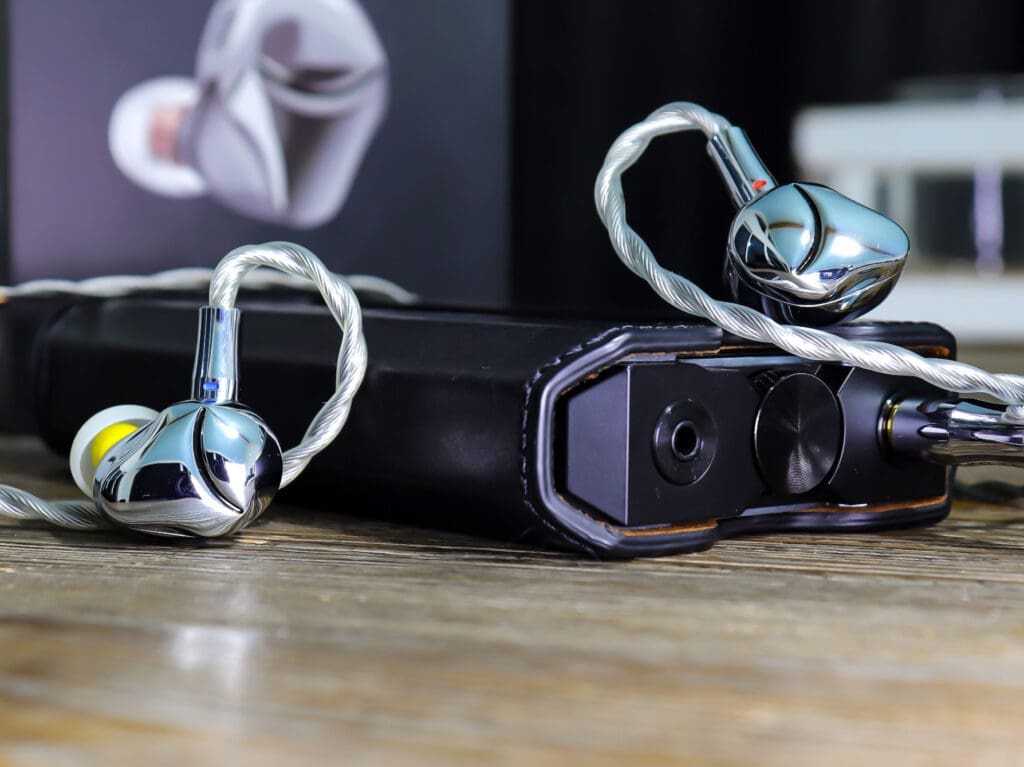
Why is the MK10 worth the cost and why is it a true performer? Well, because Hidizs made sure that this set was a complete package. They leave nothing out and they think of everything, cover all the bases, and they do so with a certain style, a flair, and a certain artistic ingenuity. Friends, the MK10 has a nice unboxing, decent enough cable, usable eartips, that awesome little leather pouch that I like so much, and it comes with actual working tuning nozzles. Really, the tuning nozzles actually change up the sound and give the listener a solid passive way of dialing in the sound. Next, Hidizs went with a very uncommon 10mm silicon carbide crystal dynamic driver inside of these gorgeous shells and a semi-open back design. I am very impressed by this driver and hope we’ll see more of it in the future. Also, the build is very-very premium for such a cost. Like I said, the build quality is like an equal-to-better-made Simgot set. If you can believe that? Made entirely of ZA12 zinc alloy, built like a brick house, and 100% stunning in appearance. How cool is it that Hidizs got the design’s inspiration from Iron Man? I always feel like the MK10 looks dope in my ears. At least three times I have been stopped by young and old people who want to know what is in my ears. To take the design even further, the ergonomically gifted angle by which the MK10’s nozzles enter into my ears helps them to sit perfectly in my inner ear. The fit is so very nice folks. I can only speak for myself, but I really do enjoy the fit. As honest as I can be, the Hidizs MK10 represents true value.
That Sound!
However, every good or bad set begins and ends with its sound. That is the only true reason why any sets have any staying power. By how nice they sound and how long they stay in the public consciousness. This is one set which should stick around for quite some time. I say that because it has that crisp and effortlessly clean sound which is just as fun and dynamic as it is mature and precise. A wonderfully balanced tuning that has deep penetrative bass, clear and forward mids (great for vocalists), as well as a nicely measured brilliance within a highly skilled treble region. The sound is full of macro-dynamic sprightliness as the driver inside of these zinc shells attacks and recovers with very well contoured note integrity and clean-lined dynamism. Extension both ways is stage stretching and the depth of field gives a sense of layering, of space, of dimensionality for a set costing only $69. Having said all of that, I think the best thing about this set is the cost. When I received this set, I had no idea of the price. I really did think they’d be a subtle price point under the Hidizs MK12. Perhaps $119 to $139. At that price I would’ve said the MK10 is a no brainer. Imagine how I felt when I saw that Hidizs was only asking $69!! It’s getting silly out there folks. This set is very-very good for that price. Also, this is a very easy recommendation from me.
Conclusion
To conclude my full review and feature of the Hidizs MK10 ArcSonics I first have to take a moment to thank the awesome people of Hidizs for providing the MK10 in exchange for a review of this set. I cannot thank you enough. I very much respect this group of people and how they go about their business with such a down-to-earth attitude and professionalism. Each person that I’ve dealt with has requested only that I give my honest impression hoping to learn and grow from this set in any way that they can. This is an earmark of a brand that will always do well. If they truly have their ears to the heart of the consumer base, then they will always have a leg up on the competition. If they listen, if they hear the complaints, and if they hear the praise with humility then they will always be in a good space to improve and craft products which are both relevant and en vogue for the times. This is Hidizs from my perspective and that was just a little round of applause from me to them for the nice work they are doing in this hobby. Thank you. Also, thank you to everyone who decided to click the link to get to this review. It is because of you that mobileaudiophile.com sticks around and is thriving as well as we are. We give all the credit to the people who take a moment out of their precious day to read our words, and we always hope our reviews help. So, thank you very much.
Other Perspectives
Now that you’ve read through my long-winded review I do hope you’ll read someone else’s thoughts concerning the Hidizs MK10. I have said this in every review I’ve ever written, and I will continue to plead these words to you. That is; please take the time to check out other thoughts about this set as it will only help you to get a better idea of what you will be getting. We are all very different friends. I cannot tell you how many times I’ve had polar opposite experiences as other reviewers. It happens all the time. What I enjoy, the next guy may not enjoy and that’s a fact of this hobby. So please take in as many reviews as you can and make a solid educated decision before buying. Well, I think I’m done friends. So, please take good care, stay as safe as possible and always… God Bless!!




Thanks for the great review! I’ve seen nothing but praise for these, pretty incredible what you can get for this kind of money now.
Man, thank you for the kind words. Honestly, I am blown away with how incredibly good these earphones are anymore. However, the MK10 is even better. It truly is a special iem.