


































































































Disclaimer
Hello everyone! Before we get started, I want to let you know that FiiO sent me the JM21 4+64 so I could test it, spend proper time with it, and share my thoughts. I’m not being paid for this review, and FiiO hasn’t told me what to write, asked to see my review before posting, or set any publishing schedule.
Table Of Content
- Disclaimer
- Introduction
- Unboxing
- Technical Specifications
- Specs
- Power Supply Parameters
- Build Quality and Design
- Screen and Controls
- Internal Technology and Performance
- Connectivity and Everyday Use
- Playback and Usage Modes
- Performance in Real Use
- Overall Feel and Portability
- Power and Driving Ability
- Sound Quality
- EQ App
- Battery Life
- Conclusion
- Pros
- Cons
- Q&A
Everything you’ll read here is based entirely on my own experience with the JM21 4+64. And I always try to be as fair and objective as possible, but at the end of the day this is still my personal opinion. We all judge products differently, and those differences are part of what makes this hobby so interesting and enjoyable.
Big thanks to FiiO for giving me the chance to review the JM21 4+64, and of course, a huge thank you to you for taking the time to read and support my reviews. It truly means a lot to me!
Introduction
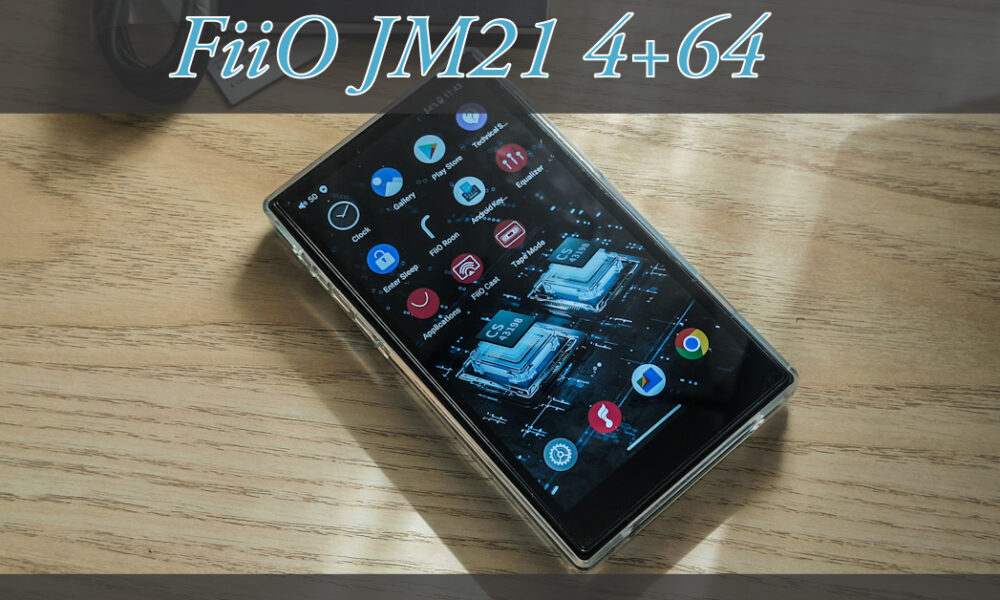
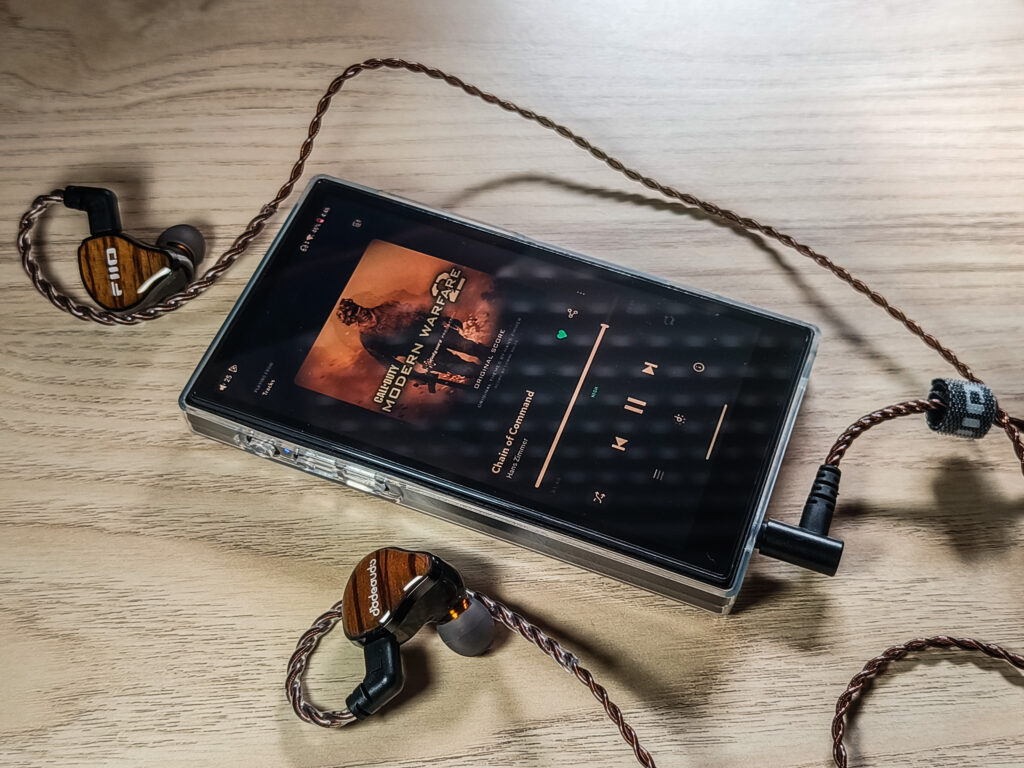
The FiiO JM21 is basically FiiO’s budget friendly Android DAP that you can actually use to drive most of the headphones and, of course, IEMs. It is pretty small, slim, and very lightweight, so it feels more like something you would actually throw in a pocket and take with you, instead of a big “mini desktop” DAP that you carry around.
For this review I am covering the newer 4GB RAM + 64GB storage version, because the original 3GB + 32GB model was already reviewed on MBA by Mahir, and FiiO specifically wanted me to give my thoughts on the updated one. On paper the changes are straightforward, with more memory, more storage, and most importantly, better battery life. They claim that this version can run up to 16 hours from the 3.5mm output and up to 12.5 hours from the 4.4mm balanced output, which is a nice jump over the older model, which was 12.5 hours on 3.5mm and 9.5 hours on 4.4mm.
What I like about the JM21’s is that it tries to give you the “real” modern DAP experience for around 200$. Android, lots of features and settings, convenient controls, and enough driving power that you are not limited only to IEMs. At the same time, Android 13 can be a downside to some, because app support and longevity are always question marks on any Android based player.
So in this review I want to focus on the stuff that matters in real use and how the JM21 overall feels and performs, how stable and smooth it is, how good the battery really is, and of course, whether the sound and driving power make it a great choice or just “good for the price”.
Unboxing
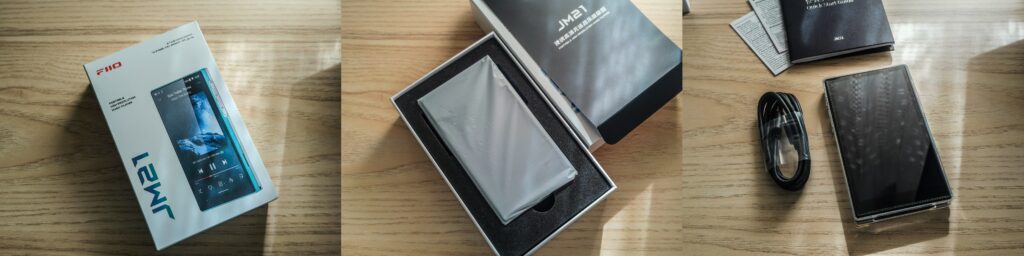
The unboxing of the JM21 is very simple and straightforward. No fancy presentation or accessories, just a clean box with pretty much everything you need. Honestly, that is perfectly fine for a budget DAP like this, and it pretty much fits with Jade Audio’s idea of being the more budget oriented sister brand.
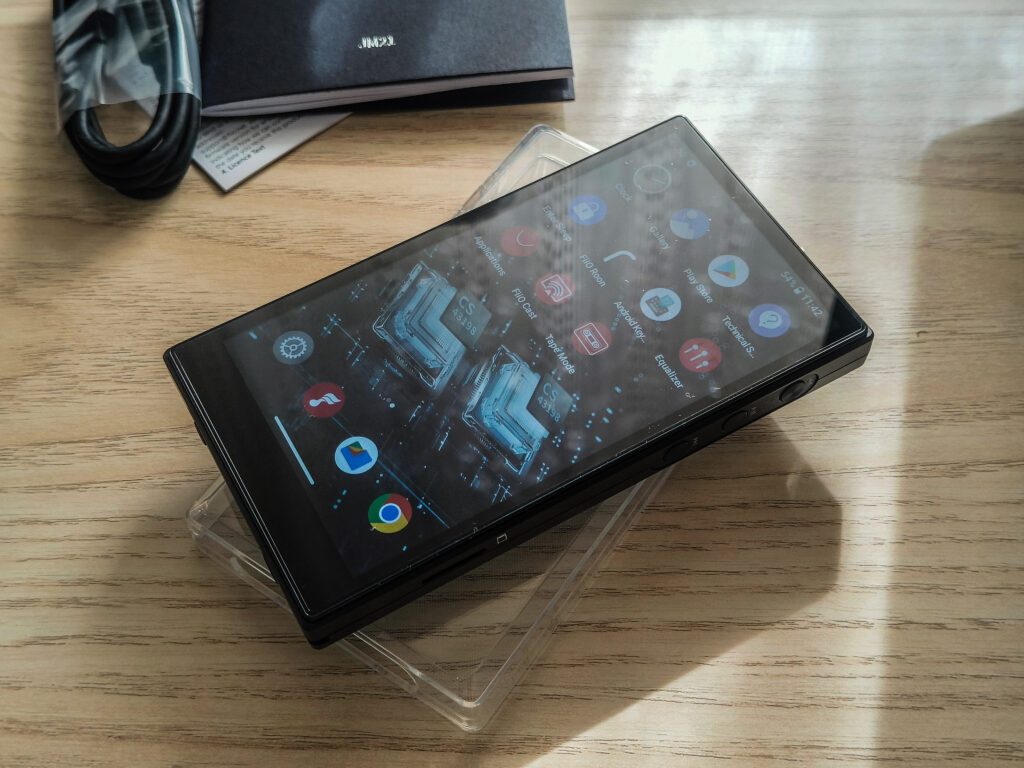
Inside the box, the JM21 itself is well protected, and the first thing I noticed is that it comes with a screen protector already installed, and FiiO also includes a clear protective case, which is already preinstalled as well. That is something I always appreciate, because it saves you from worrying about scratches and damage. In my opinion, every DAP should come with a case and a screen protector, especially one that is meant to be carried around all the time.
Besides the player, you get a Type-C to Type-A cable for charging and data, and of course the usual paperwork and quick start guide.
Overall, the unboxing experience is exactly what I expected from a budget DAP at 200$. It’s simple and practical, and it has all you need so you can actually start using the JM21 right away without having to buy extra stuff.
Technical Specifications
Specs
- Name/Model – JM21 4GB+64GB
- Hardware solution – Main controller: Qualcomm Snapdragon 680; DAC: CS43198×2; Amp: SGM8262×2
- Working mode – Android mode / Pure music mode / USB DAC mode / Bluetooth receiving mode
- Color – Sky blue / Black
- Weight – About 156 g
- Dimensions – About 120.7 × 68 × 13 mm
- Display – 4.7-inch (750 × 1334) bezel-less display
- ROM / Usable storage – 64GB ROM / ~52GB usable
- RAM – 4GB
- Adaptive impedance – PO: 8 ~ 150Ω ; BAL: 8 ~ 350Ω
- microSD card – Single microSD card expansion (theoretically supports up to 2TB)
- Channel balance – L20 ~ R20 (0.5dB per level)
Buttons and Ports
- Power on/off ×1; Volume ×2; Play/Pause ×1; Previous track ×1; Next track ×1
- USB – Type-C USB2.0 ×1 (Charging / Data transfer)
- Headphone output – Standard 3.5mm port
- Balanced headphone output – Standard 4.4mm port
- Coaxial output – Standard 3.5mm port (shared PO)
- Line output – Shared 3.5mm + 4.4mm ports
Special Functions
- Wi-Fi 2.4GHz / 5GHz; Supports DLNA, AirPlay, Wi-Fi song transfer, etc.
- Bluetooth transmission (5.0): AAC / SBC / aptX / aptX HD / LDAC / LHDC
- Bluetooth reception (5.0): SBC / AAC / LDAC
- FiiO Link Android supports Wi-Fi and Bluetooth control; iOS supports Bluetooth control
- Firmware upgrade via local storage + microSD card + OTA
Max Supported Sampling Rate
- USB DAC: Up to 384kHz / 32bit; DSD256 (Native)
- Local decoding: Up to 384kHz / 32bit; DSD256 (Native)
- USB Audio: 768kHz / 32bit; DSD512 (DoP / Native)
- Coaxial output: Up to 384kHz / 24bit; DSD128 (D2P / DoP supported)
Power Supply Parameters
- Supports 5V ≥2A charging
- Charging time (4G+64G): ~2.5h
Battery life and test conditions
- 3.5mm headphone output: ~16h
- 4.4mm balanced headphone output: ~12.5h
- Test conditions: Volume & gain, display OFF, 44kHz MP3, EQ off, load 32Ω
Build Quality and Design
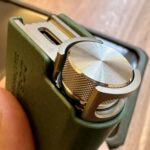
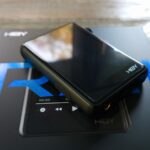
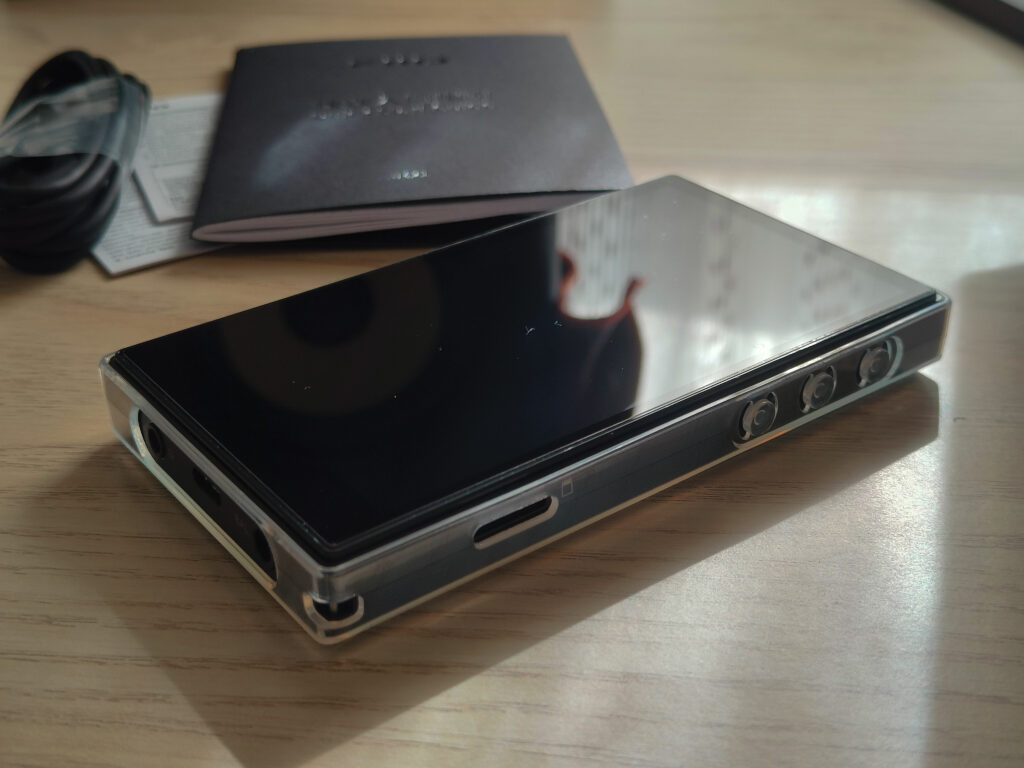
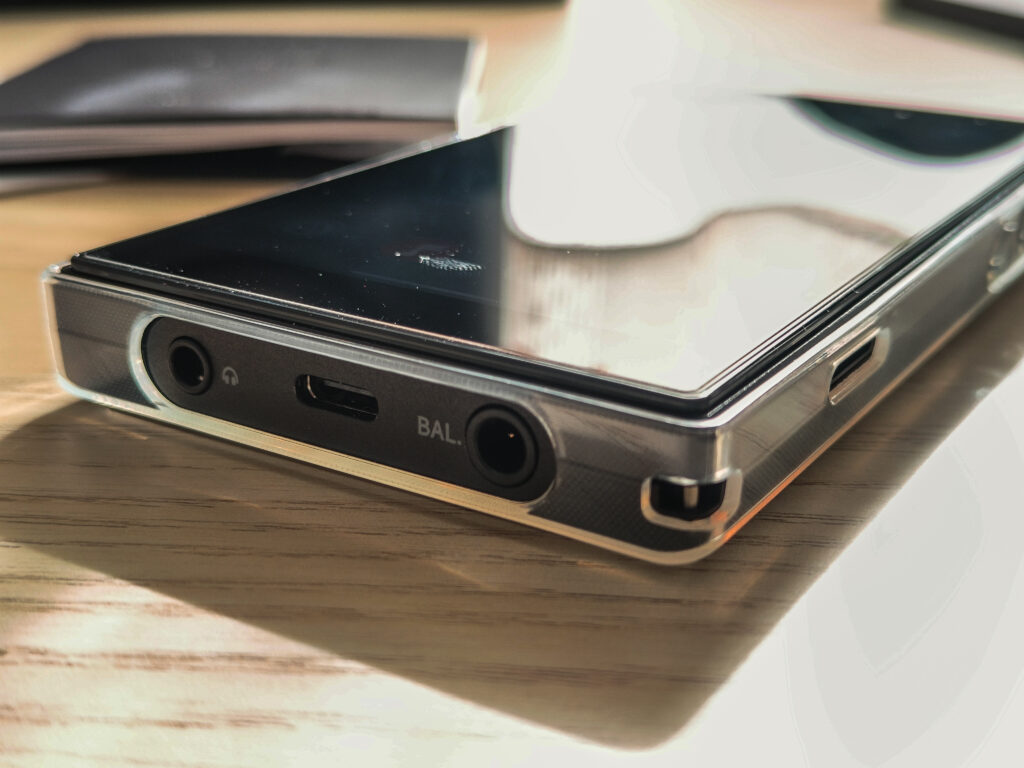
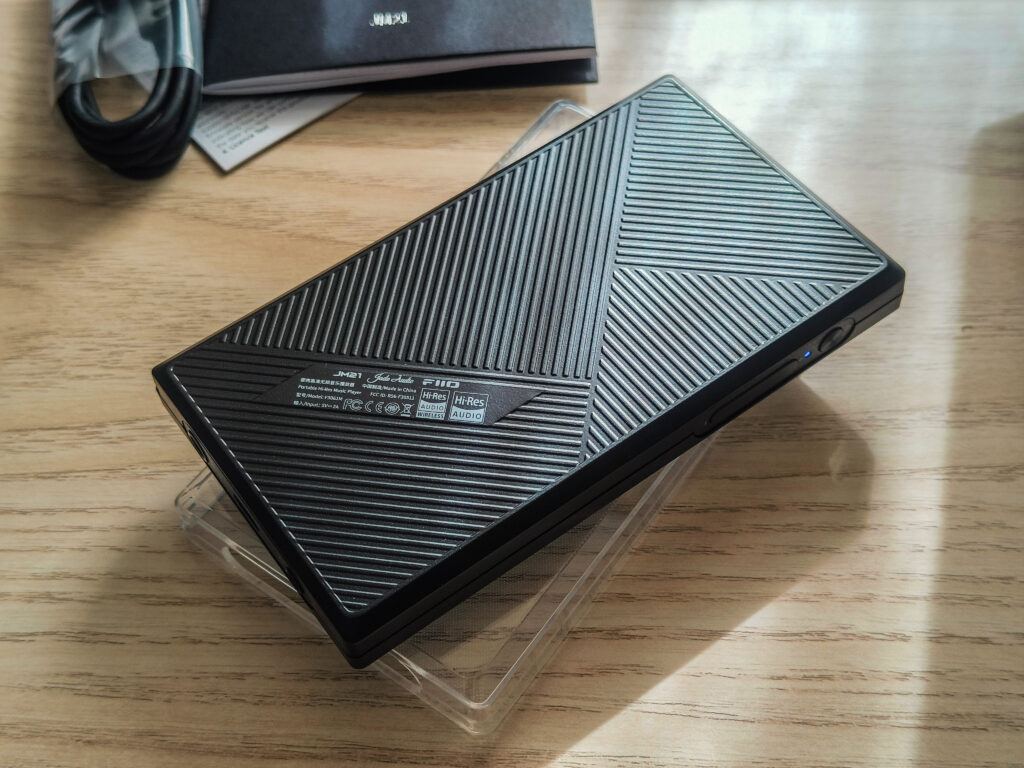
In hand, the JM21 feels light and pretty slim. It is noticeably slimmer and lighter than, let’s say, the M21, which makes it much easier to carry around daily. The body is plastic, but it does not feel cheap or hollow. The buttons have a nice click, and nothing feels loose or poorly put together. Oh, and it also has a small lanyard hole at the right bottom corner, if you like it.
This is not a luxury metal DAP, but it also does not feel like a toy, of course. For a budget Android player, the overall build feels like they did the maximum they could to keep it as cheap as possible.
Screen and Controls
The 4.7-inch screen is simple, but it works well for what the JM21 is meant to be. Text is easy to read, album art looks clean, and the screen is responsive enough, and I have never experienced any major lags or freezes. It is not a high end display, but I never felt limited by it because I still understand that it isn’t a smartphone, and it’s not meant to be one.
The physical buttons are something I really appreciate. Volume, play, and track controls are easy to find and feel, especially when the player is in a pocket. They are spaced well and have enough resistance and a pronounced click that I have never accidentally pressed one.
Internal Technology and Performance
Inside, the Snapdragon 680 does a good job overall. App switching, scrolling through my libraries, and streaming all feel pretty responsive. With 4GB of RAM, the JM21 handles multitasking mostly nicely, and it almost never felt sluggish to me. Of course it can’t compete with a smartphone in terms of speed, but for 200$ and for what it’s meant to be, it does a great job.
On the audio side, the dual CS43198 DAC setup with dual op-amps isn’t the most premium and is more on the budget side, but of course… It’s a 200$ DAP. But still, the JM21 has a great sound, and thanks to FiiO’s DRE function, which mostly eliminates the Cirrus hump, it sounds clean and with a low noise floor. There is enough power to even drive planar headphones (from the balanced output), which is awesome.
Connectivity and Everyday Use
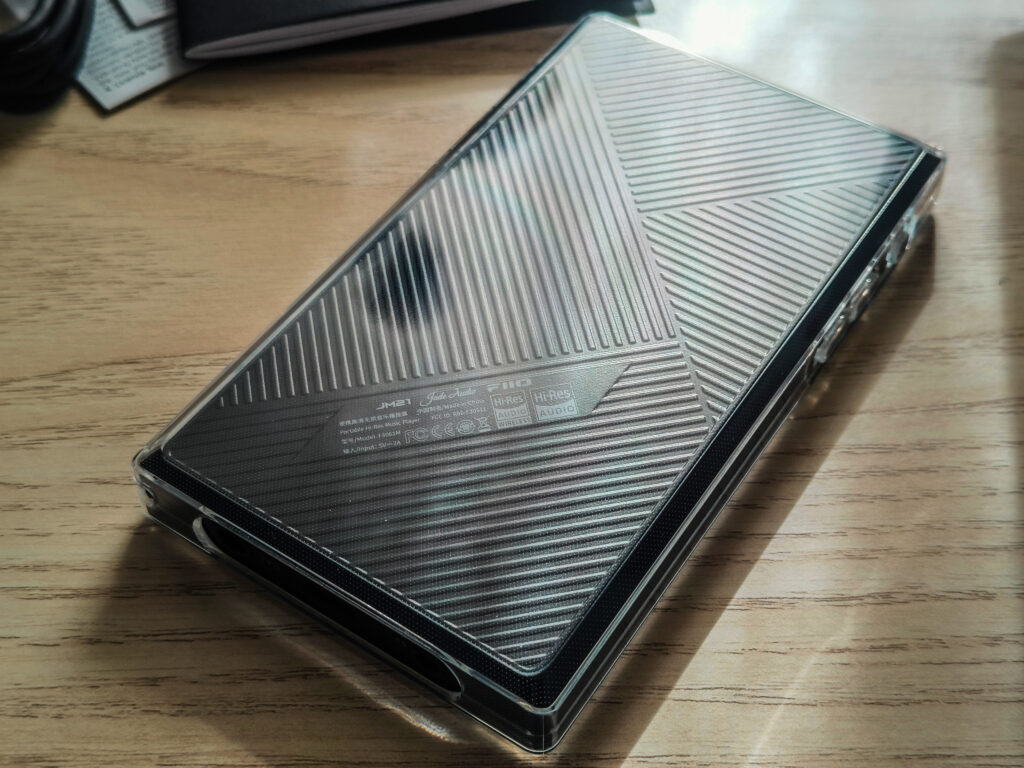
The JM21 covers all the basics. You get both 3.5mm and 4.4mm outputs, and the ability to use line out or coaxial out makes it flexible if you want to connect it to another system. Bluetooth transmit and receive, Wi-Fi streaming, and FiiO Link support all add to the feeling that this is a full featured player, not a stripped down budget device.
The JM21 does not have a desktop mode like the M21, but I think it’s fine, considering the 700mW it can provide, and it also has a microSD port that supports up to 2TB in addition to the default 64GB, which is plenty in my opinion.
Android 13 is convenient but also raises questions about long term app support, which is something to keep in mind. Still, in day to day use, the JM21 feels modern, practical, and fun to use and carry around.
Playback and Usage Modes
The JM21 has a lot of flexibility when it comes to how you want to use it, and this is something I really appreciate.
Android Mode is the standard mode most people will use. You get full Android access, streaming apps, downloads, and all the usual convenience that comes with an Android based DAP.
Pure Music Mode switches the player into FiiO’s Music app only. This cuts out the Android app. If you just want to listen to your library without notifications or background apps, this mode will do.
USB DAC Mode turns the JM21 into a USB DAC and amp for your PC or laptop. In this mode, it becomes like a small desktop device.
Bluetooth Receiving Mode lets the JM21 become a Bluetooth dongle. You can stream music from your phone or computer to the JM21 and then use its DAC and amp section to drive your headphones.
AirPlay, which makes it easy to stream directly from Apple devices if you are in the Apple ecosystem.
Performance in Real Use
Overall Feel and Portability
Talking about sound on modern DACs/AMPs, or in this case DAPs, is never easy, because most of them already sound clean and powerful and overall very good (of course if they come from a reputable brand). So instead of talking about tiny sound differences, I prefer to talk about how the JM21 actually feels to use in real life.
The first thing I noticed is the size and weight. The JM21 is small, slim, and very lightweight, and that makes it much easier to carry around compared to the M21. In a pocket or a small bag, it is simply more comfortable. It does feel much cheaper in hand than the M21, although the M21 is made from metal, but at the same time, it costs around 2/3 of the M21’s price, so I think it’s a fair tradeoff. As a portable player, I honestly enjoyed using the JM21 quite a lot.
Power and Driving Ability
In terms of raw power, the JM21 is closer to the M21 than I expected. If we ignore the desktop mode of the M21, the JM21 gives almost the same power in high gain, which is around 720mW for the M21. And as I mentioned earlier, it can drive almost anything you throw at it.
The difference really shows up when you start using harder to drive headphones at higher volumes. The M21, when used in desktop mode with external power, can push around 950mW per channel. In those situations, the M21 clearly has more headroom and sounds a bit smoother and more refined. The JM21 can still get loud, but you can tell it is closer to its limit. For normal listening levels and regular headphones or IEMs, though, the JM21 never felt underpowered to me.
Sound Quality
Sound wise, the JM21 is clean and refined. To my ears, it sounds very similar to the M21, and I honestly do not feel like you will be giving up on sound quality by choosing the cheaper one. Detail, clarity, and overall balance are all there.
The only time the M21 really pulls ahead is with power hungry headphones played loud, where its stronger amp section gives it more control and headroom. With IEMs and most portable headphones, the JM21 sounds just as good and just as enjoyable to me.
EQ App
FiiO’s EQ tools are one of my favorite parts of using their players. You get a 10-band EQ that works very well and is very easy to use. It lets me change the sound exactly how I like it, depending on the headphone or IEM I am using.
On top of that, there are presets and an AutoEQ feature. You can select your headphone or IEM, choose a target curve, and the player will try to match it as closely as possible. The headphone and IEM library is huge. I honestly struggled to find something that was not listed, as long as it was released before the latest update. This is one of the most useful features that comes with FiiO’s DAPs.
Battery Life
Battery life on the JM21 has been excellent in my use. I do not have the older 3GB + 32GB version to compare directly, but with the 4GB + 64GB model, I usually ended up charging it once every two or even three days, with a good amount of listening each day.
Just as important, the JM21 stayed cool to the touch all the time. Even after long listening sessions, it never felt too warm, which is always good for the longevity of the device.
Overall, the JM21 feels like a very well thought out player. It, of course, can’t replace a more powerful and premium DAP, but as a pretty budget portable device that sounds clean, has enough power for most headphones, has an excellent EQ app, and has great battery life, it does a really good job. The only thing I am really afraid about is the fact that it is Android 13 based, and I don’t know how long the app support will last and how well it will be performing after a couple of years…
Conclusion
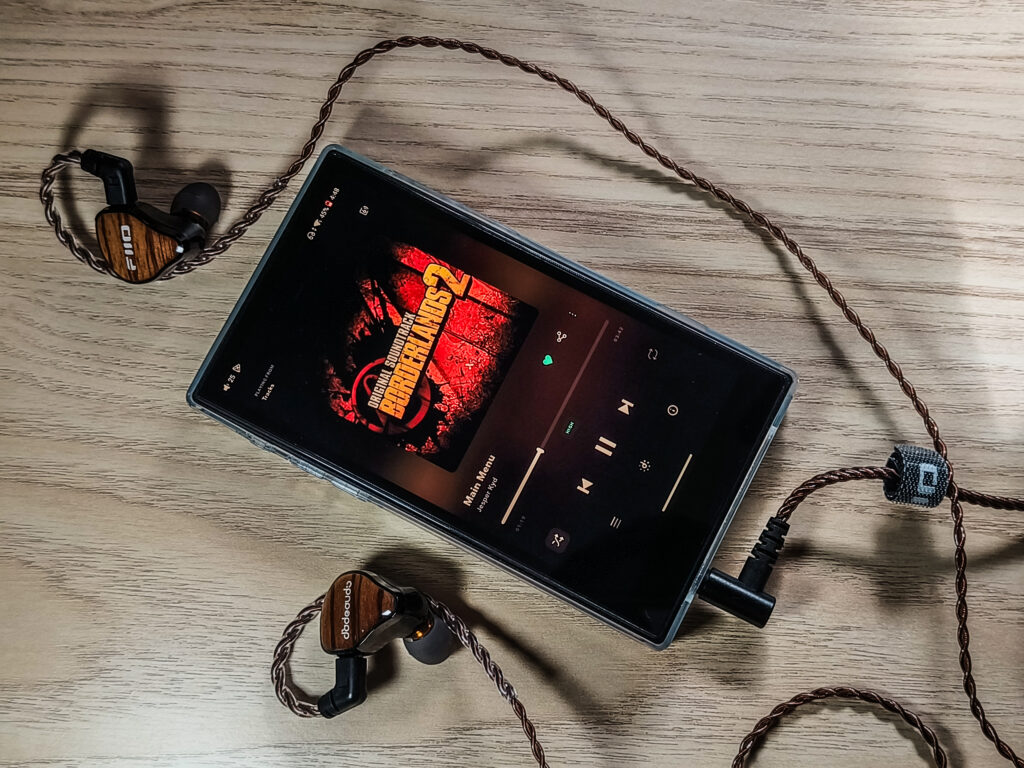
After spending a good amount of time with the JM21 4GB + 64GB, I’m left with almost only positive thoughts about it. This DAP doesn’t try to be a premium one. It is meant to be practical, portable, easy to use every day, and as low as possible in price. And in that role, it does a really good job.
The JM21 is quite small and lightweight, and it makes it easy to carry around and easy to use on the go. It just never feels like a brick in a pocket or bag. Yes, it does not feel as premium as the M21, but when you consider the price difference, it really isn’t an issue. What matters more is that it sounds just as clean and enjoyable, and in normal listening, I never felt like I was giving up on sound quality by choosing to use the JM21.
Power is more than enough for most IEMs and a lot of headphones. The M21 still has the edge if you are using harder to drive headphones at higher volumes, but for everyday use, the JM21 holds up very well. Add in the excellent EQ, the AutoEQ feature, and all the different usage modes, and it’s very apparent that it’s a very flexible little player.
Battery life was another good surprise. Being able to charge it once every two or even three days with regular use is a great thing to have. It also stayed cool the whole time, which is no less important for the life of the device.
In the end, the JM21 4GB + 64GB feels like a great and well made DAP at around 200$. It does not try to be something it is not. It just does the things that actually matter, and because of that, it ends up being very easy to recommend.
Pros
- Very small, slim, and lightweight.
- Clean and refined sound quality.
- Sounds very similar to the M21.
- Enough power for many headphones and, of course, all IEMs.
- Great battery life for an Android DAP.
- Excellent 10-band EQ control.
- Very useful AutoEQ with a huge headphone and IEM library.
- Multiple usage modes, including Android, Pure Music, USB DAC, Bluetooth receiving, and AirPlay.
- Both 3.5mm and 4.4mm outputs are included.
- Stays cool even during long listening sessions.
Cons
- Build feels cheap compared to the M21.
- Less power headroom than something like the M21 with very hard to drive headphones.
- The charging time is a bit long.
- Android longevity is always a question mark.
- The touchscreen is good, but of course not as smooth as a modern smartphone.
Where to buy:(Non-affiliated! None of my reviews use affiliated links!)
FiiO Official AliExpress Store
Q&A
Who is the FiiO JM21 4+64 for?
The JM21 is for someone who really wants the DAP experience, with Android, balanced output, good battery life, and enough power for most headphones and IEMs. Basically an all in one device, and, of course, for a lower budget. So, if you are locked on having DAP, I can see how the JM21 will make sense for you at this price.
Who should avoid the FiiO JM21 4+64?
If your main goal is pure sound quality and you do not actually need a DAP, then the JM21 might not be the best choice. A good dongle paired with a smartphone can already sound excellent, and in some cases, it can even be a better setup than most DAPs. If you do not care about Android, the local library (which you probably already have on your phone), or having a dedicated all in one device, options like the QX13 or even the older KA17 can be better due to their better internal architecture and DAC and amp sections.
What are some good alternatives to consider?
If you are fine with a dongle based setup, the QX13 and KA17 are both great options at a similar price (the KA17 being cheaper). If you still want a DAP but with better build quality, more potential power, and extra features like desktop mode, then stepping up to the M21 is a very solid upgrade and a natural next step.




Great review. My only question is where are you getting the price from? The standard price in the US appears to be $259, buying from China might save a little.
Hi, thank you so much for your kind words.
I’m actually looking at the price on their official AliExpress store as a reference for MSRP. Unless they are explicitly stating to me what the MSRP is. And from this price you can always find it for lower (using coupons or coins in AliExpress is one example).
Great review. I am using mine with a Sundara planar headphone. It seems to have enough power to drive that. With the volume set to 110 out of a max 120 try listening to the last movement of Mahler’s First Symphony on the Gustavo Dudamel live recording with the LA Philharmonic. It’s just plain scarry!
Thanks for the appreciation. Yes portable music players are okay in terms of the playback. Just plug it (sundara) in even a low level desktop amplifier and hear the difference. Get not scared, live a nightmare you never want to wake up 🙏🏻