




































































CCA Phoenix Review (Love’s Take)
Intro
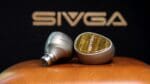
This review and feature covers the latest from the audio brand CCA Audio named the CCA Phoenix ($28). The CCA Phoenix is a single dynamic driver set of earphones and a definite contender in the budget space. Now, the Phoenix has been out for quite some time now and it’s 15 minutes of fame has already come and gone and so I realize how late I am to the party. However, late is always better than never. In truth, the CCA Phoenix is a solid budget offering. After much deliberation and a ton of time in my ears using all different kinds of sources I have come to the conclusion that CCA has a nice foundation to work with moving forward with this set. However, I will get into the strengths and weaknesses of this set later in this review. For now, just know that I wouldn’t even be thinking about reviewing this set if I didn’t think it was a good buy at $28.
Table Of Content
- Intro
- CCA
- Phoenix
- Competition
- Non-Affiliated Purchasing Links
- Gear used for testing
- Packaging / Accessories
- Unboxing
- Eartips
- Carrying Bag
- Cable
- Build / Aesthetic / Internals / Fit
- Build Quality
- Aesthetic
- Internals
- Fit / Comfort
- Drivability / Pairings
- Sensitivity
- More Juice
- Source Pairing
- Sound Impressions
- Another Solid Choice
- What’s It Sound Like?
- Smooth or Crisp
- Some Fermenting…
- Bass Region
- Sub-Bass
- Mid-Bass
- Downsides to the Bass Region
- Midrange
- Lower-Midrange
- Upper-Midrange
- Downsides to the Midrange
- Treble Region
- Quality Treble
- Skilled Highs
- Downsides to the Treble Region
- Technicalities
- Soundstage
- Separation / Imaging
- Detail Retrieval
- Comparisons
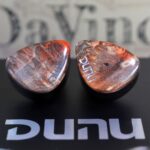
- Dunu Titan X ($32)
- Titan X
- Non-Sound Stuff
- Sound Differences
- Final Thoughts On This Comparison
- Genres
- Genres Which Work
- Not the Best Genres
- Last Words on the CCA Phoenix
- We’ve Come Far
- Not for everyone
- Conclusion
- Other Perspectives
- Phoenix Pros
- Phoenix Cons
CCA
I have reviewed a number of CCA branded iems in the past and I’ve reviewed many of CCA’s sister brand KZ’s earphones as well. Clear Concept Audio (CCA) was actually formed and founded back in 2014 and has made a number of fantastic budget and ultra-budget iems since that time. They’ve had some duds too along with the usual issues which used to plague older KZ/CCA iems. However, it seems that CCA is doing something far different than they used to. CCA is turning over a new leaf. Almost as though they’ve upped their brand, spruced up the place, changed up their themes, and are basically treating CCA as the higher end branding. In the past CCA iems would typically follow KZ and would usually come out with similar iems as their KZ counterpart yet with slightly altered tunings. Some of my absolute favorites from years past have been the CCA CRA+, the CCA Rhapsody, CCA Duo, the awesome CCA Trio, and the one of the better hybrid iems market wide under $150, the CCA Hydro. There are many others, but these seem to stick out. However, something has definitely changed. There’s a certain uptick in quality, build design and they aren’t simply using the same shell molds that they used to. Each set is more unique now, more individual, if you will. Something that KZ and CCA should have done years ago. I can tell you for sure that I am definitely paying attention now.
Phoenix
This name is remarkably appropriate. What is the Phoenix known for? Rising from the ashes! Very much similar to CCA’s apparent reinvention of their brand the Phoenix seems to symbolize that and the name is very fitting. When I heard that CCA was doing this “new thing” I was so very pleased. I absolutely adore any brand, and product, and I adore any person (for that matter) who chooses that they are going to better themselves. I love a redemption story. Rising from the ashes into this beautiful creature starts from a decision. I’m sure inside of that CCA boardroom there were many conversations about reinvention, reclaiming autonomy of their namesake and a separation from the KZ overlords. Okay, that may be a bit dramatic and probably was much more innocent than that. Leave it up to me to over romanticize a situation. Lol. Also, I actually really like KZ and have zero of the issues with them that others have. But I digress, CCA is doing a thing people, it’s kind of good, you may want to pay attention too.
Competition
I think the Phoenix’s largest area of concern is without question the competition within its loaded price segment. I just reviewed two absolute kings under $35 in the Cozoy D1 and the Dunu Titan X and I can tell you right now that the Phoenix has to really bring it to be mentioned in the same space as those two price-to-performance BANGERS. Not to mention the other very well done iems in this range. There’s way too many to list here. At any rate, the Phoenix certainly has the bones to stand next to them, but is it really the best buy within the range? Sure, it can be good. Sure, the Phoenix can be a very solid iem. However, when it comes to the consumer and what you want to put your dollars towards, you’ll want to find the best you can for the cost. This is where the Phoenix may have some issues. I intend to figure this out. That said, I’m ready to get into this review folks. So, without further ado, the CCA Phoenix…
Non-Affiliated Purchasing Links:
Gear used for testing
–IBasso DX240 with Amp8 MK2
-Many more sources used including weaker Android 3.5 set phones, iPad, and a few weaker 3.5 se dongles
Packaging / Accessories
Unboxing
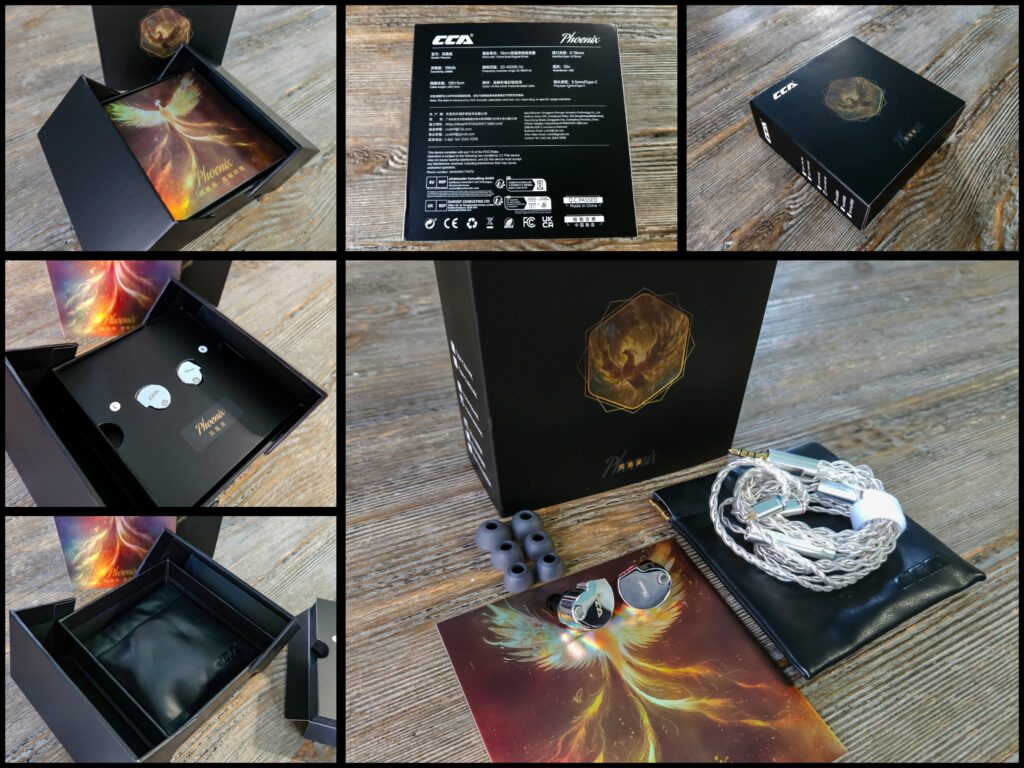
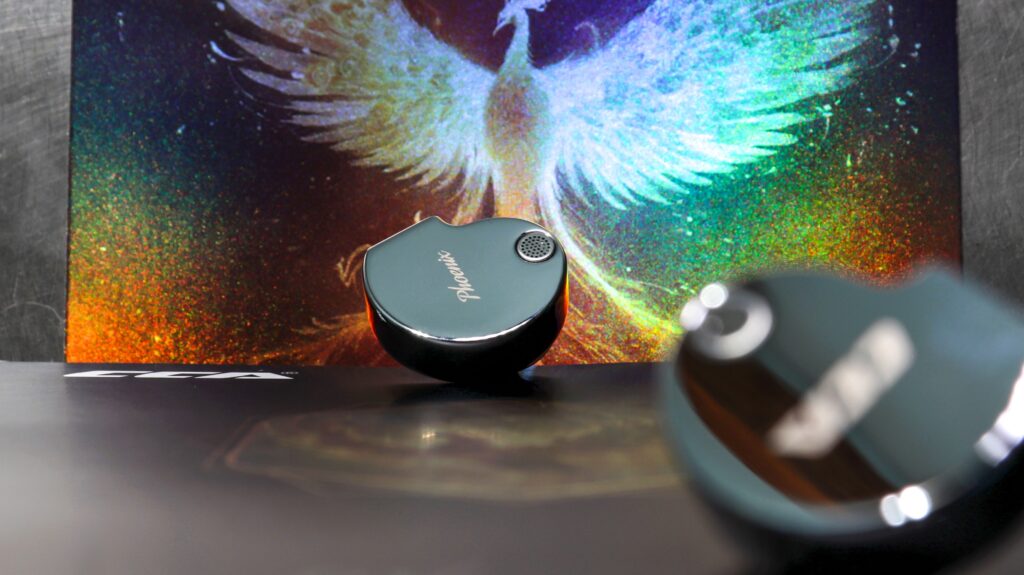
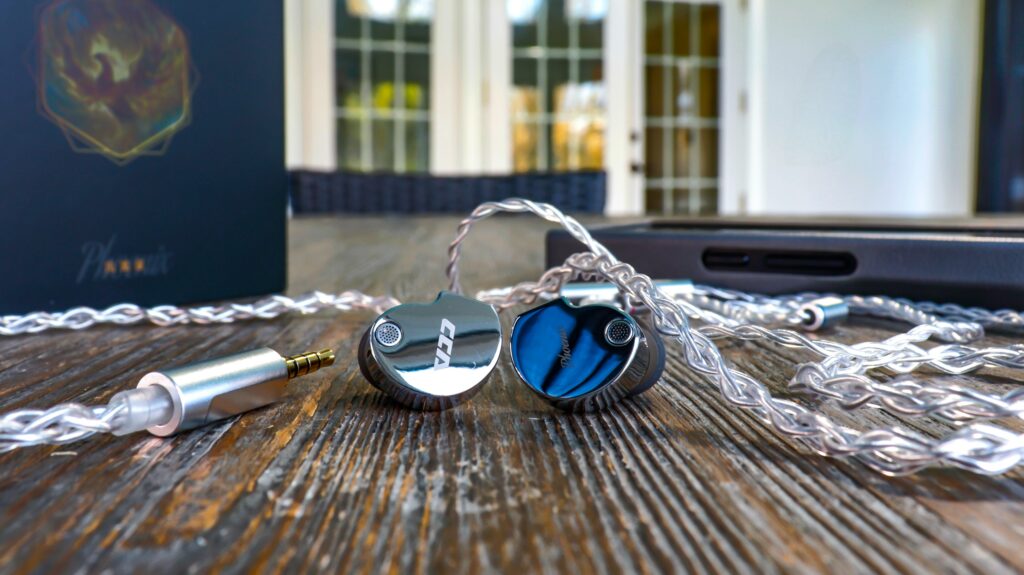
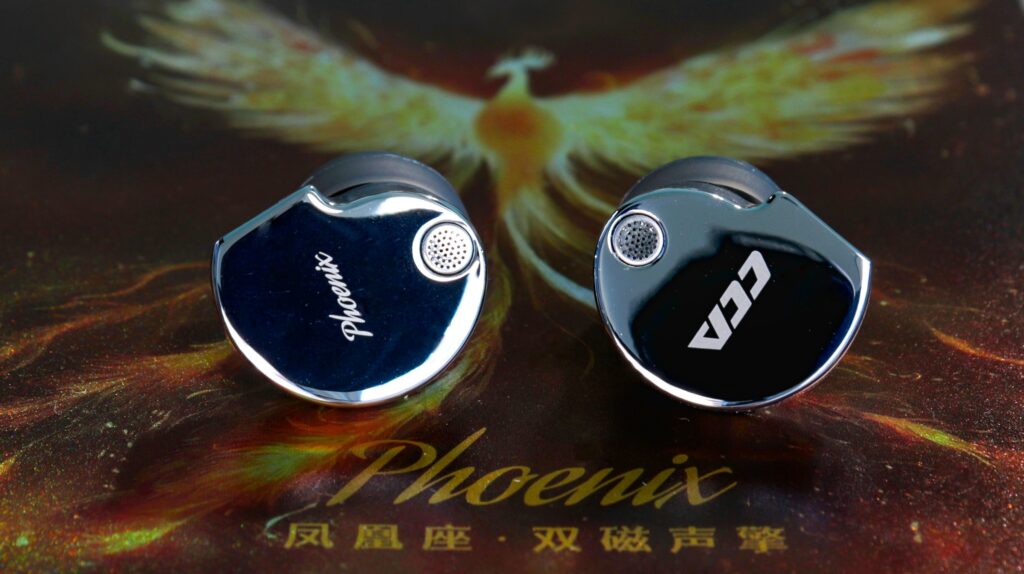
The Phoenix arrived at my home in a beautifully designed black box with a sleeve covering sporting an imprinted image of the Phoenix in the center. Take off the black sleeve and you’ll see a black box which separates in the middle and opens from there. Lift off both halves and the first thing you’ll see is a picture of a Phoenix in all of its glory, wings spread, very cool and so unlike anything I’ve ever seen for the KZ/CCA partnership of the past. Much more premium and ornate than anything we’ve seen from CCA. Take out the picture and the beautiful Phoenix earphones will be sitting pretty and shiny in cardboard covered foam cut-outs with the name “Phoenix” imprinted under them. Take out that layer and you’ll see something we’ve almost never seen before from a budget CCA product, that is a leather carrying bag! Wow CCA! Good to see! Inside of the bag you’ll find the eartips (not KZ Starlines), and the very nice cable too. Friends, I am absolutely baffled at this unboxing. Honestly, it is every bit as good, if not better than the Dunu Titan X’s unboxing. Just… Wow!
Eartips
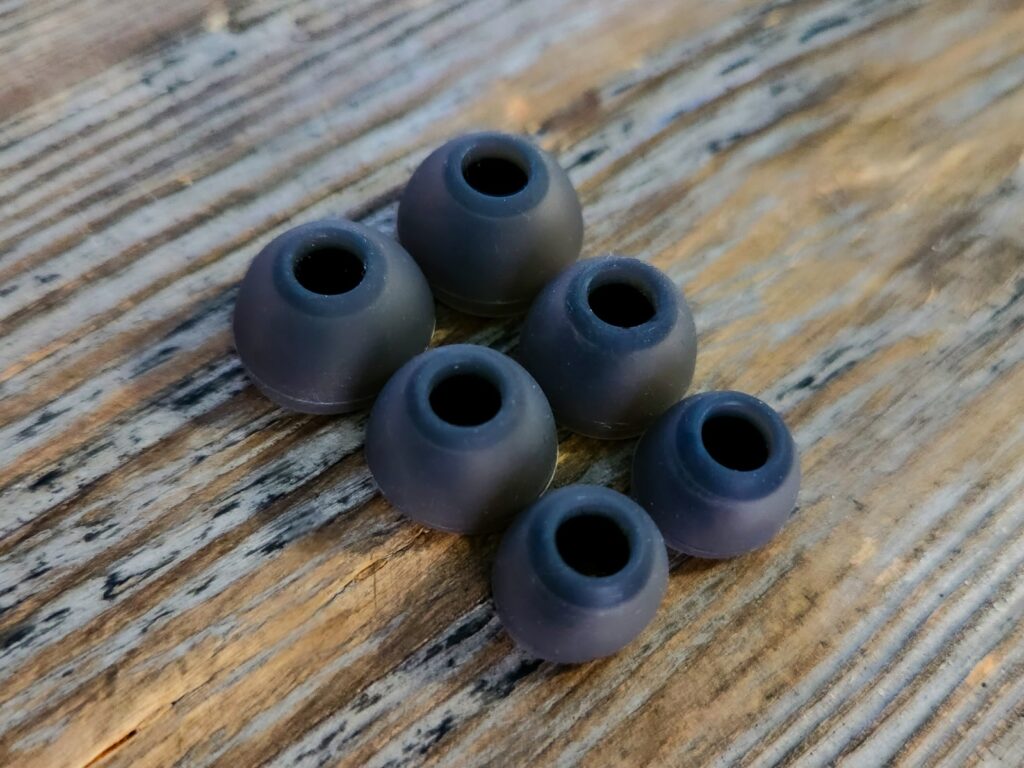
I actually really like the eartips that CCA adds into the package. They provide three sets of tips which are remarkably similar to KBear 07 tips. Some of my all-time favorite eartips. Anyways, they give us three Paris (S, M, L) of dark gray silicone eartips which come with a firm flange, semi-wide bore size, and a rigid stem. These types of tips will always help pronounce the snap in the bass, add some density down low, and will typically promote the upper mids while slightly decreasing perceived sibilance a hair. I did try to tip roll and went through many eartips until I went right back to the tips provided. I landed in the large size of the included eartips.
Carrying Bag
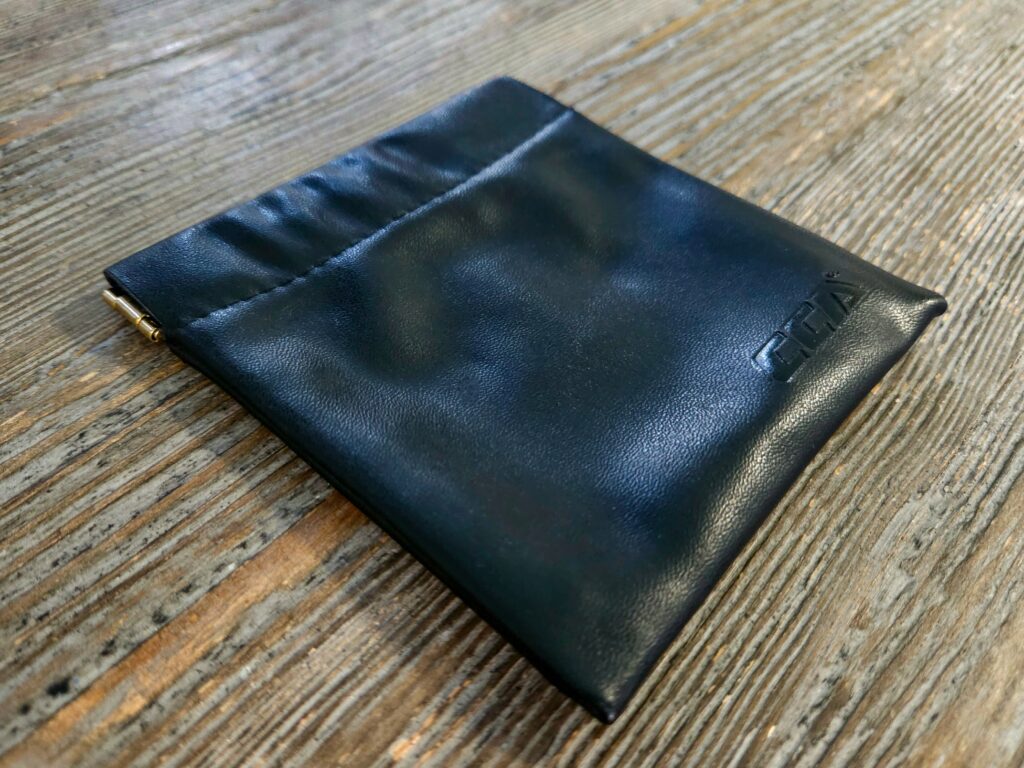
So, another crazy revelation was seeing that CCA actually provide us a way to carry the Phoenix when out and about. They added in a very nice faux leather bag. Literally almost identical to the faux leather bag that Hidizs provides most of their iems. I love those bags and I love this one. It fits perfectly in my pocket and isn’t too gaudy. Of course, it isn’t the largest bag I’ve ever seen and can only fit the earphones and cable comfortably, maybe a dongle dac like the EPZ TP35 or TP35 Pro too, but it’s nice to see. CCA did a nice job here. Nevertheless, this baggie probably cost about $2 to make which makes me wonder why they never added these in in years past. At any rate, the faux leather bag is once again all black, with the snap shut top keeping your precious earphones safe. A nice addition to see.
Cable
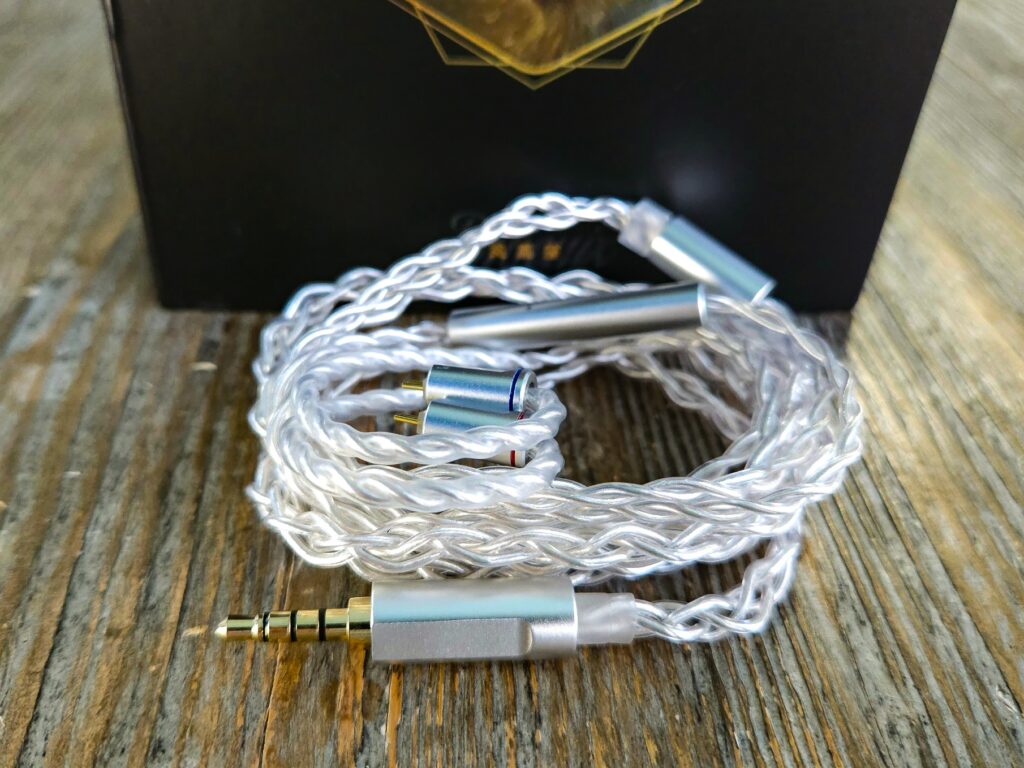
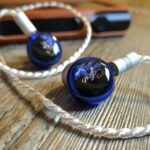
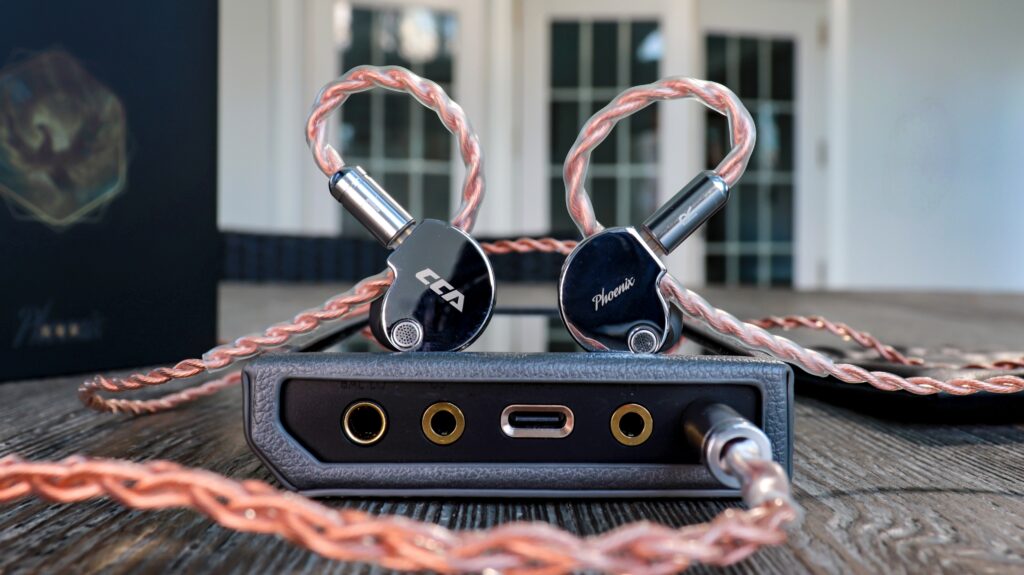
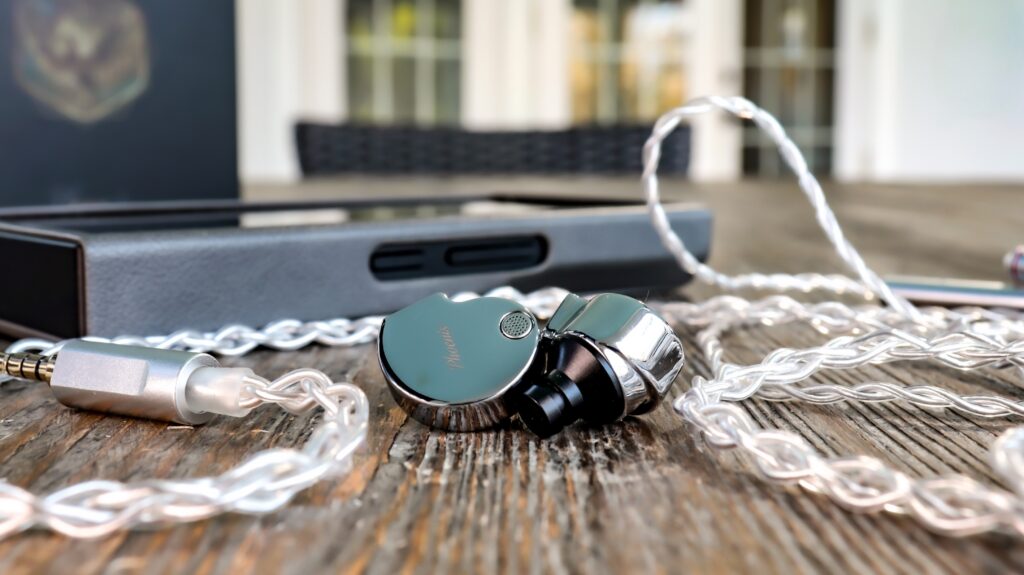
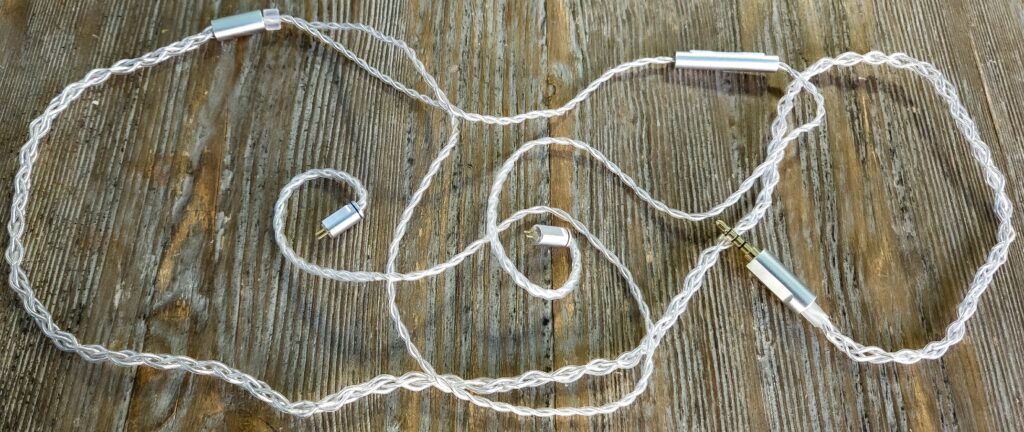
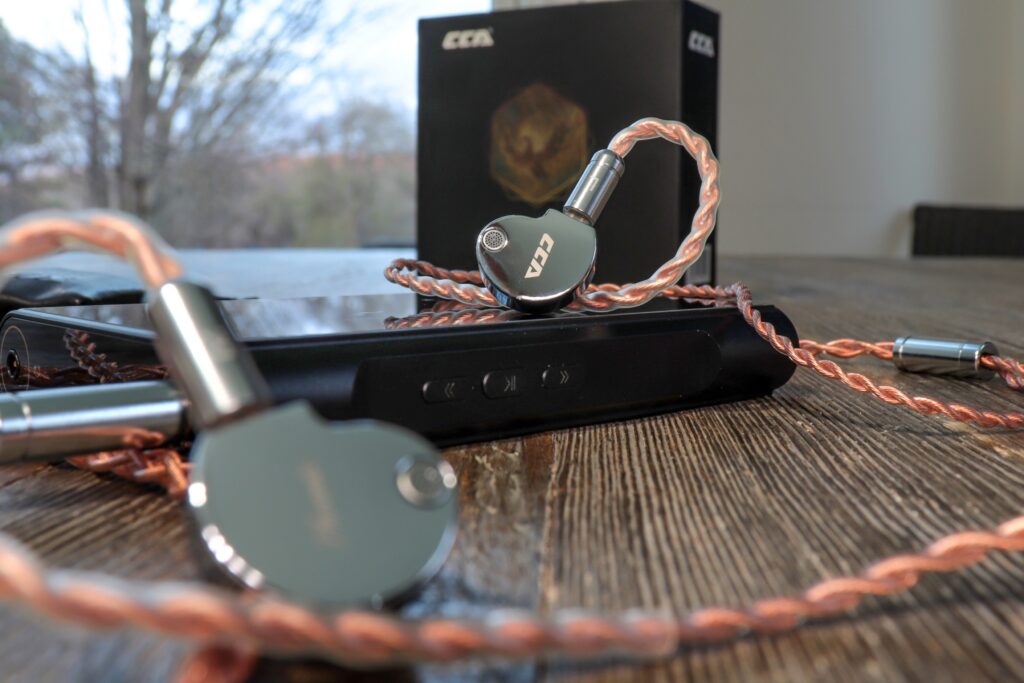
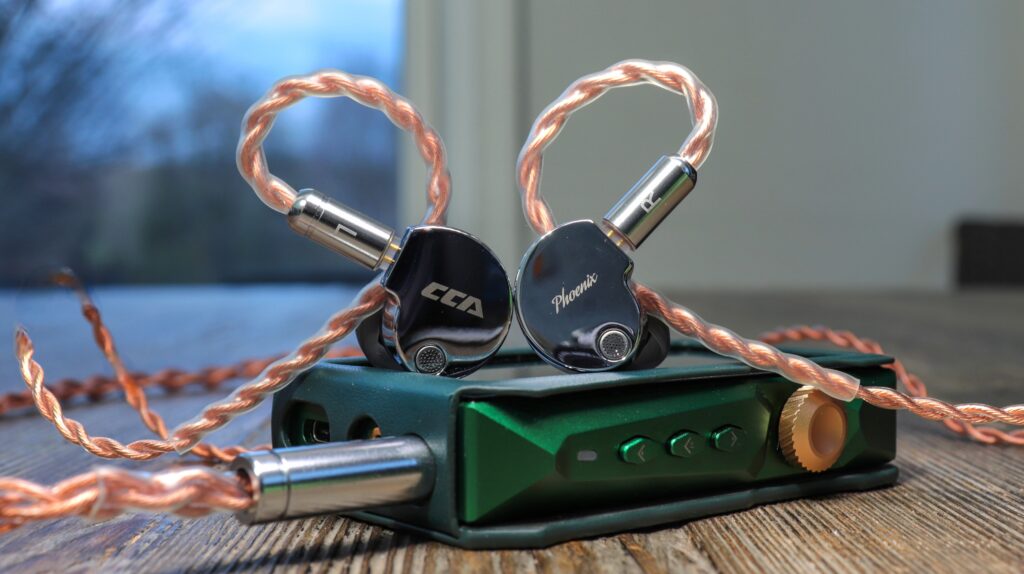
Another huge surprise. Folks, I’ve been reviewing this brand for a very long time. I have gotten so used to the same exact cable over and over again. Of course, I must have 50 KZ/CCA blah white cables collecting dust. I couldn’t believe that I actually saw a nice cable when I opened up that carrying pouch. To be exact, the cable is a very nicely braided and semi fat white cable which matches the mirror polished appearance of the Phoenix very well. It is a 0.78 2-pin cable which ends with a 3.5 or USB-C termination (you can elect for either of the two at purchasing). CCA describes this cable as a 156 core and is made of silver-plated copper. Definitely a thicker gauge wire, but I have no specs to back that up. It’s a nice-looking wire, folks. However, I love to use 4.4 balanced with my sources and so I did cable swap for most of my critical listening. I actually went with a very cheap FAAEAL Hibiscus fully copper 4.4 balanced cable instead of the included cable. Still, the included cable is very nice looking, it sounds nice, it isn’t microphonic, and it rolls up well for storage.
Build / Aesthetic / Internals / Fit
Build Quality
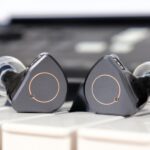
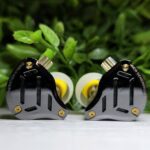
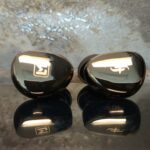
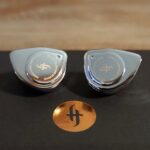
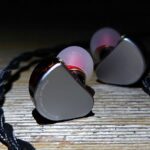
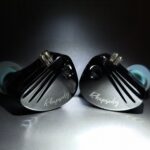
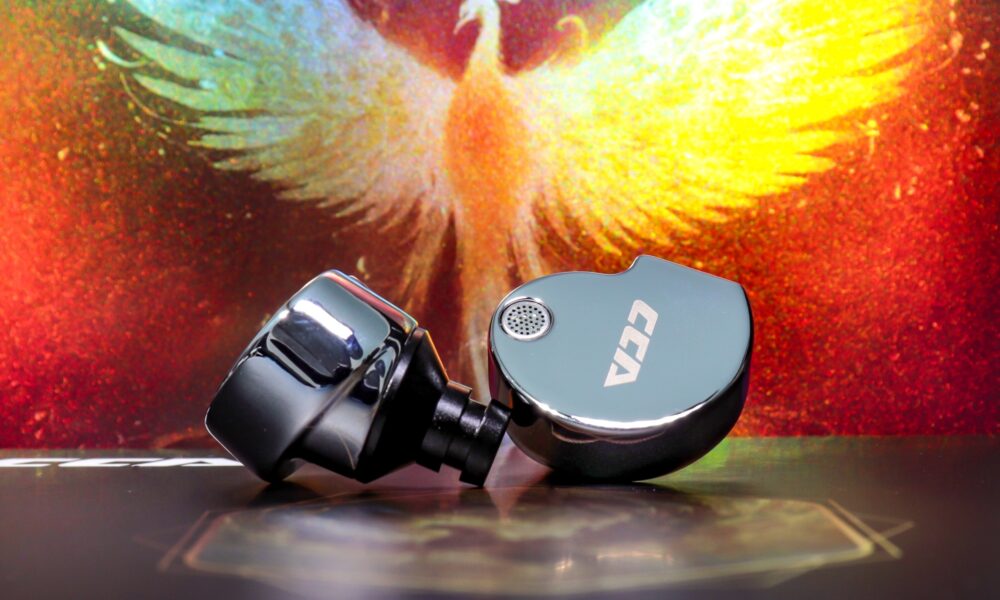
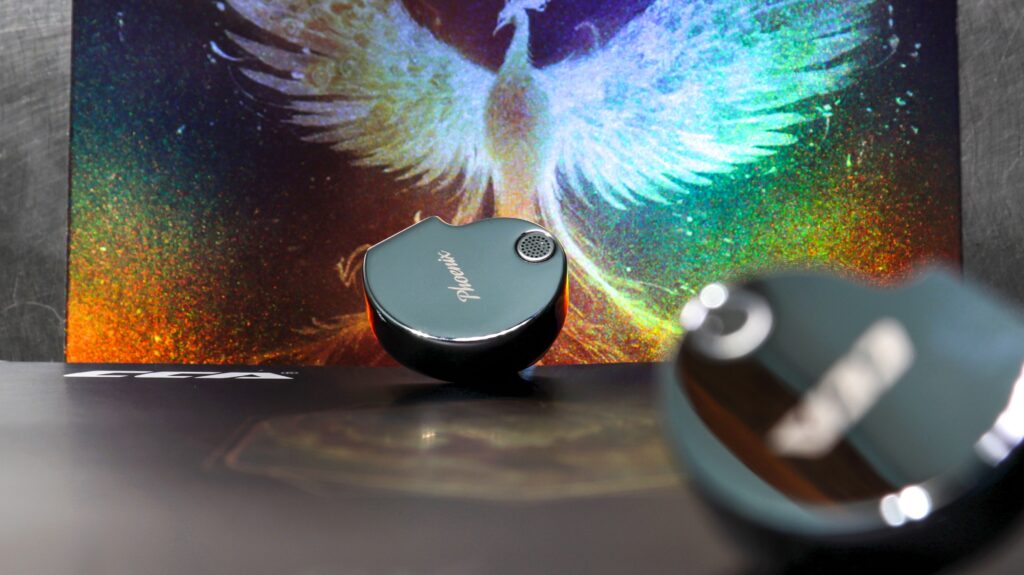
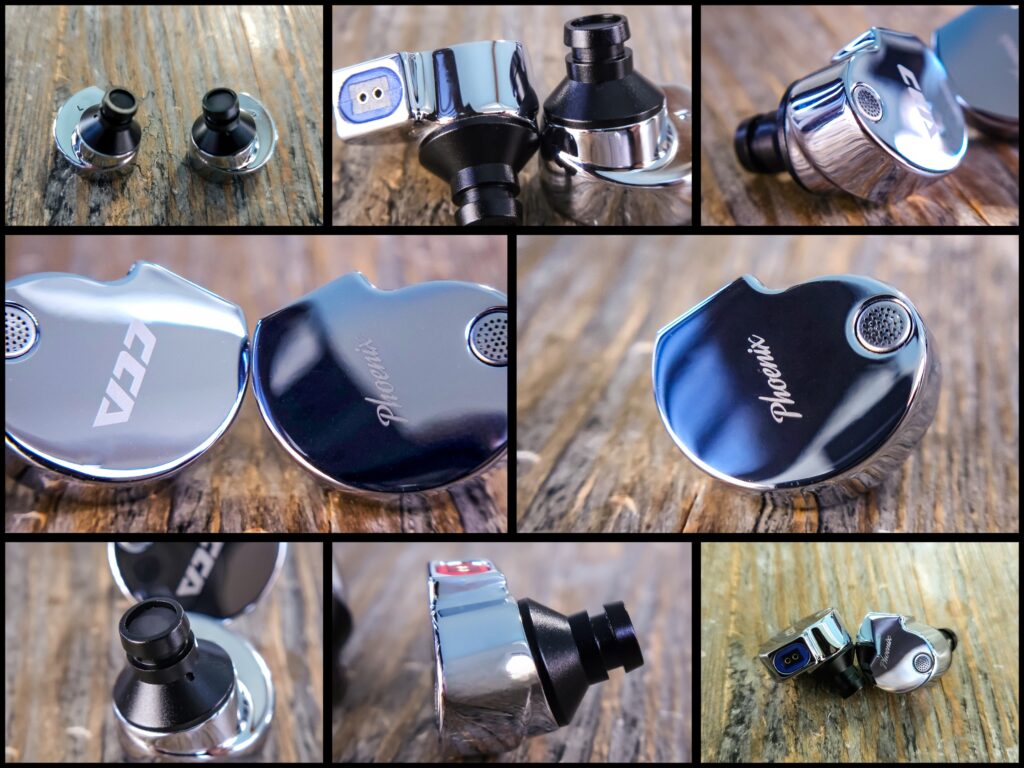
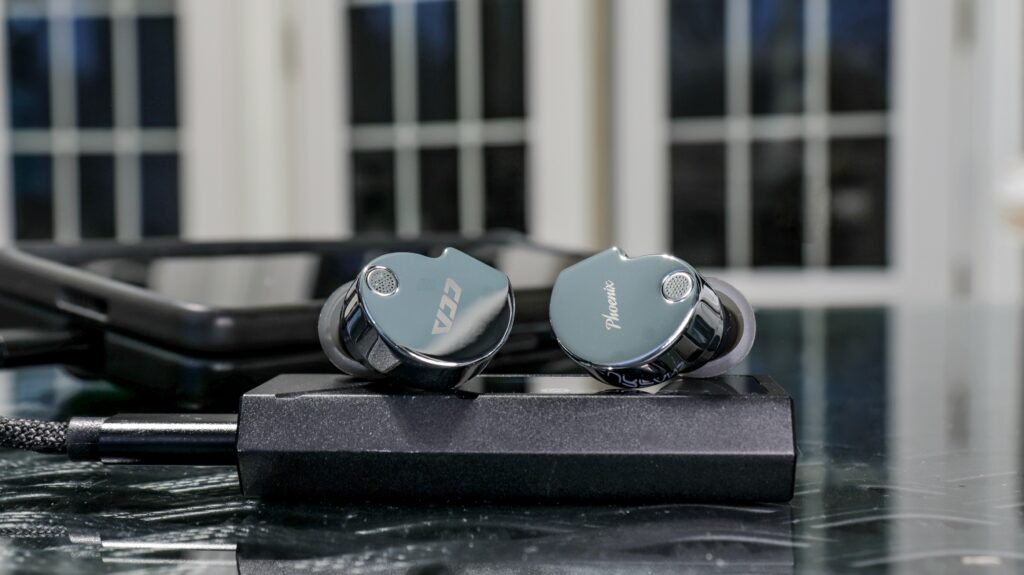
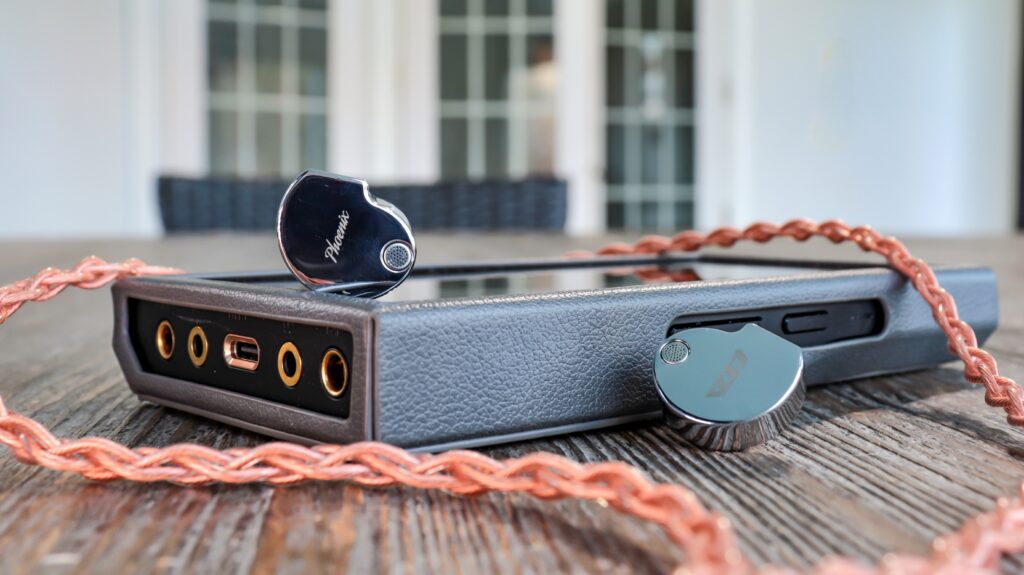
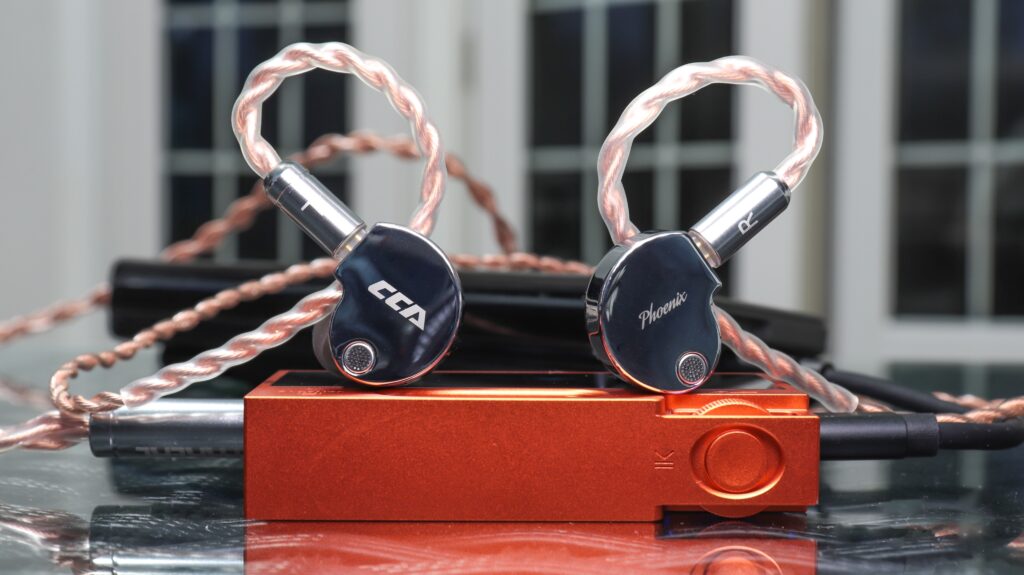
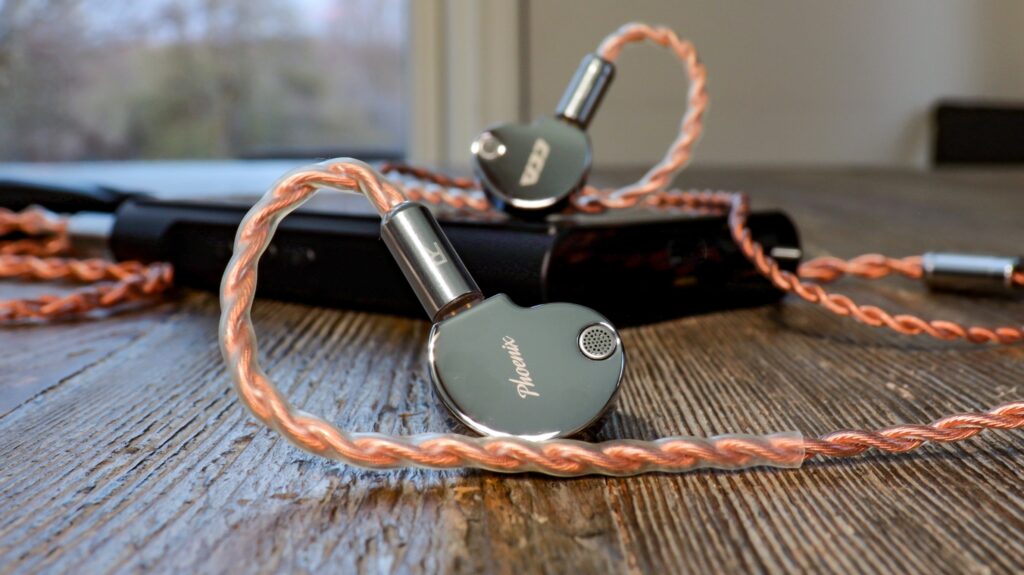
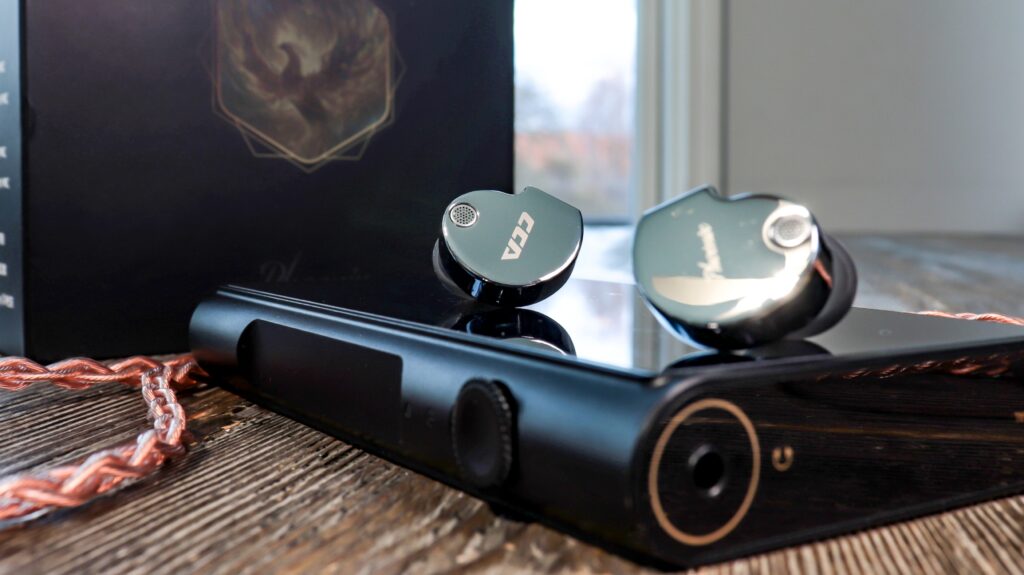
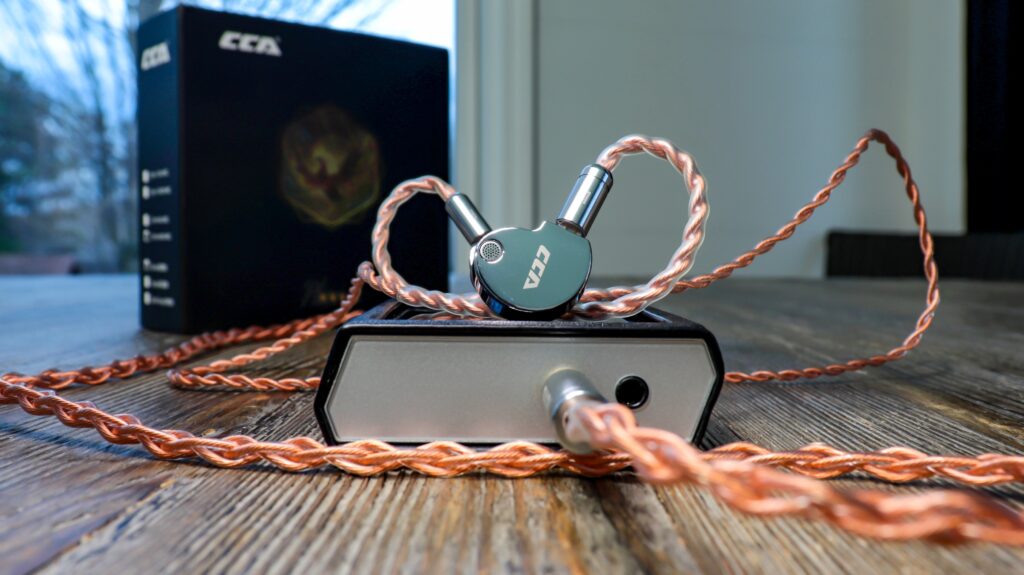
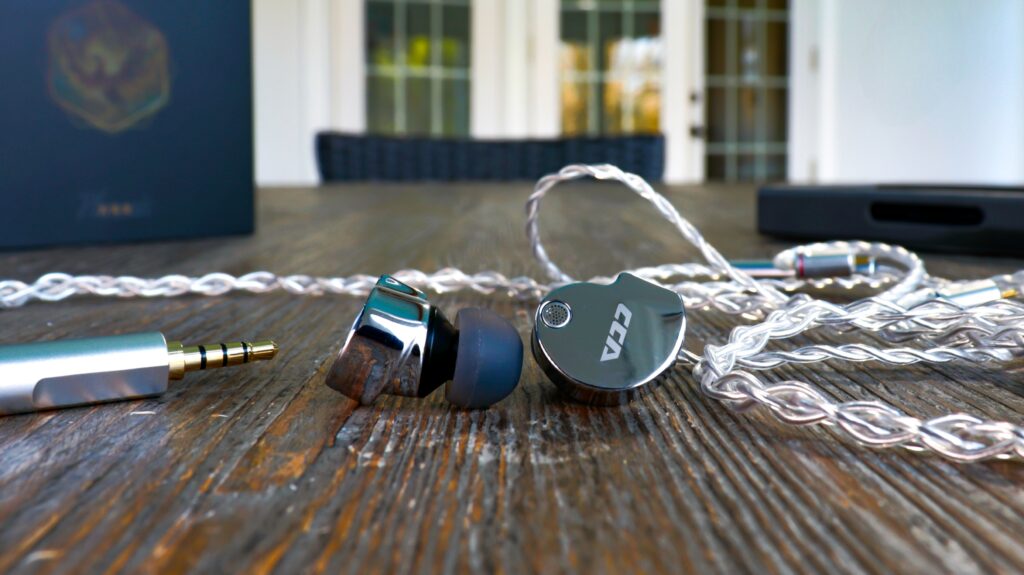
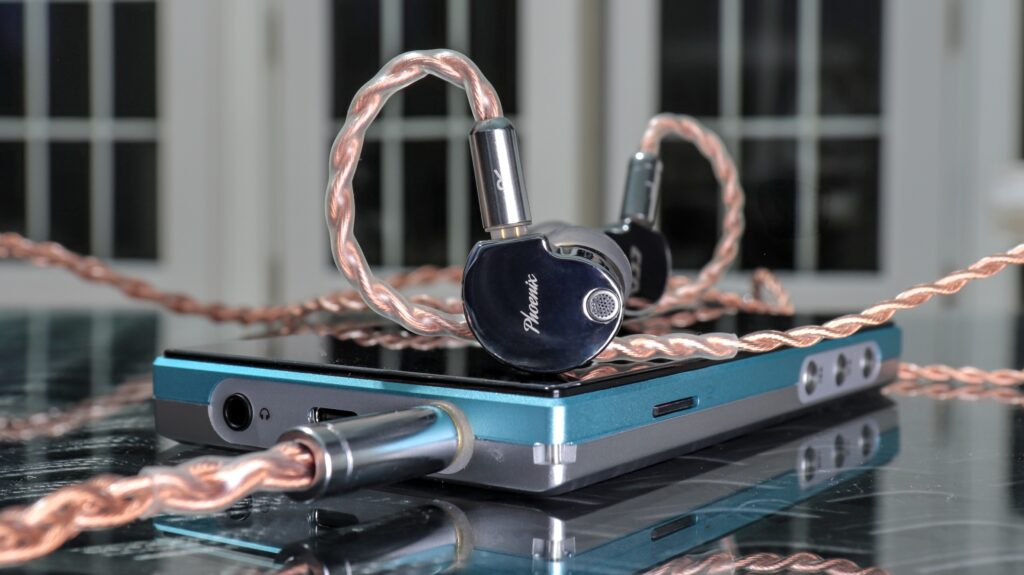
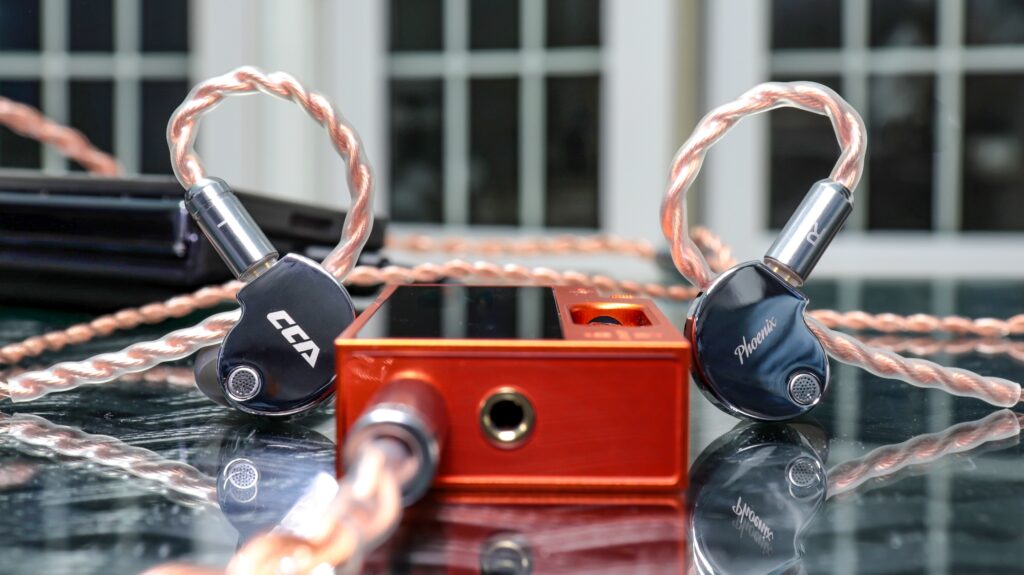
One of the best qualities of the CCA Phoenix is that it is built like a fully-fledged stud! Folks, this set costs $28. Maybe I should say that again…2-8-$. Since when are these brands able to construct brand new housing designs made 100% out of metal? That’s right, the $28 Phoenix is made out of all-alloy. I have no clue what alloy that is either. I’m assuming zinc alloy, but there is no way for me to find that out. At any rate, the shells have a round drum-like shape, polished to a high mirror glass-like appearance, and that has been done by way of CNC machining. It has that anodized lightweight feel, yet I don’t think it’s aluminum. Anyways, it’s very nice and should cost twice as much (at the least). The Phoenix has flush mount 2-pin connections which is also very much “not” something we’ve ever seen from a CCA branded iem. The nozzles are right around 5.5-6 mm in width and not very long, yet also not short and stubby either. I find this set to be a good fitting iem as well. Really, I have nothing to complain about with the build. Great job.
Aesthetic
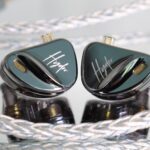
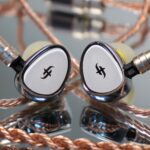
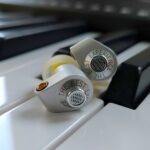
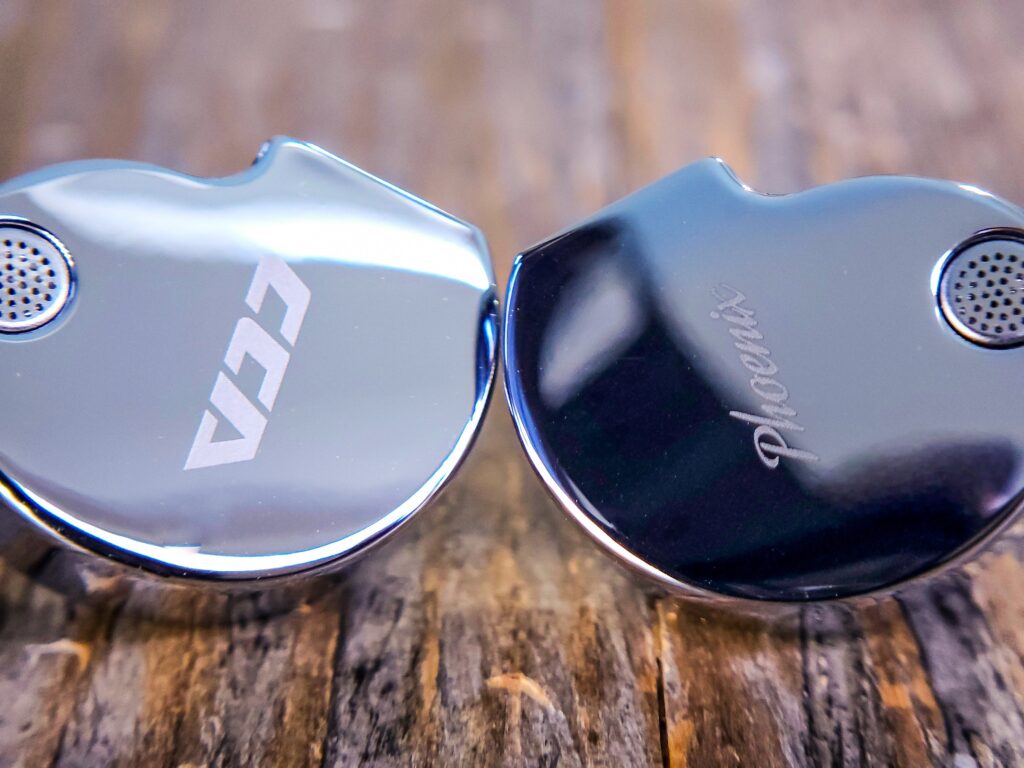
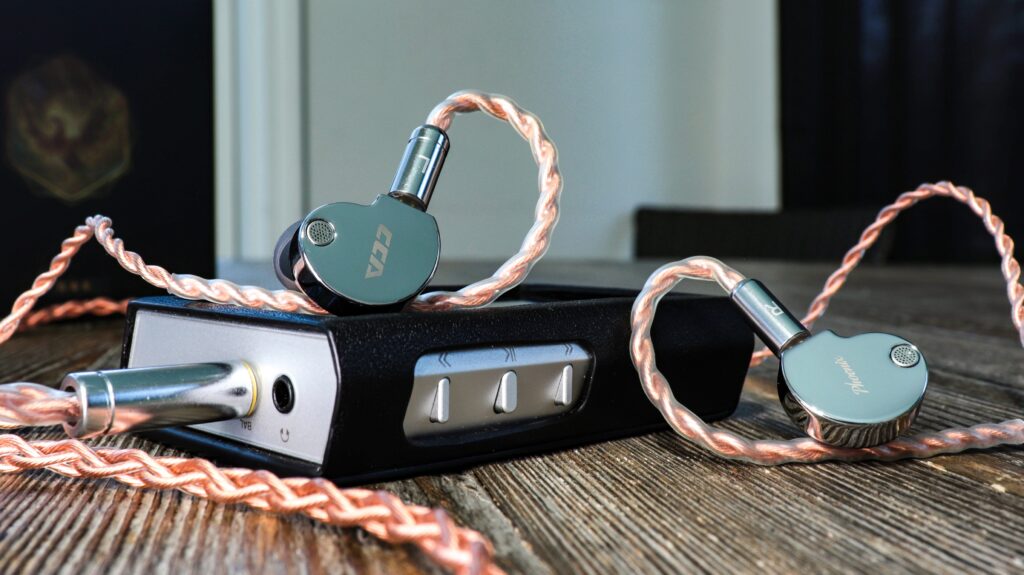
The next best thing is how nice this set looks. The Phoenix has such a “class act” style of appearance with its beautiful cylindrical housing, clean lines, mirror polished appearance and it looks far more premium than the cost would indicate. The faceplates are flat and have “CCA” on one earphone and “Phoenix” on the other, both written in white. You can choose to purchase the Phoenix in either mirror silver colored or purple. I happen to like the silver mirror colorway on this one, but that is me. I think that CCA made a very nice looking iem and it flies right in the face of just about any set they’ve ever made. Truly a good-looking budget iem which honestly appears to be much more expensive.
Internals
Now we get to the heart of the Phoenix which comes equipped with a single 10 mm LCP (liquid crystal polymer) diaphragm dynamic driver. This was another nice thing to see as LCP drivers can be extremely thin and rigid. Much harder than any PET or paper type drivers and typically sound pretty darn nice. The LCP DD is surrounded by dual magnets and sits in a single cavity where the target curve is met by way of venting, nozzle length/width, driver position, and the internal cavity is also very particular to get the sound that CCA wanted. For a budget set the Phoenix is actually nicely equipped.
Fit / Comfort
The Phoenix is one of those sets which fit rather well for me, though I could see them possibly being an issue for others. Something about the round design will give some people fits. However, this is a totally subjective section (“Fit /Comfort”) which literally only means anything to me, myself, and I. Still, this set isn’t super heavy, isn’t super large, and once I found tips which work well, I was great.
Drivability / Pairings
Sensitivity
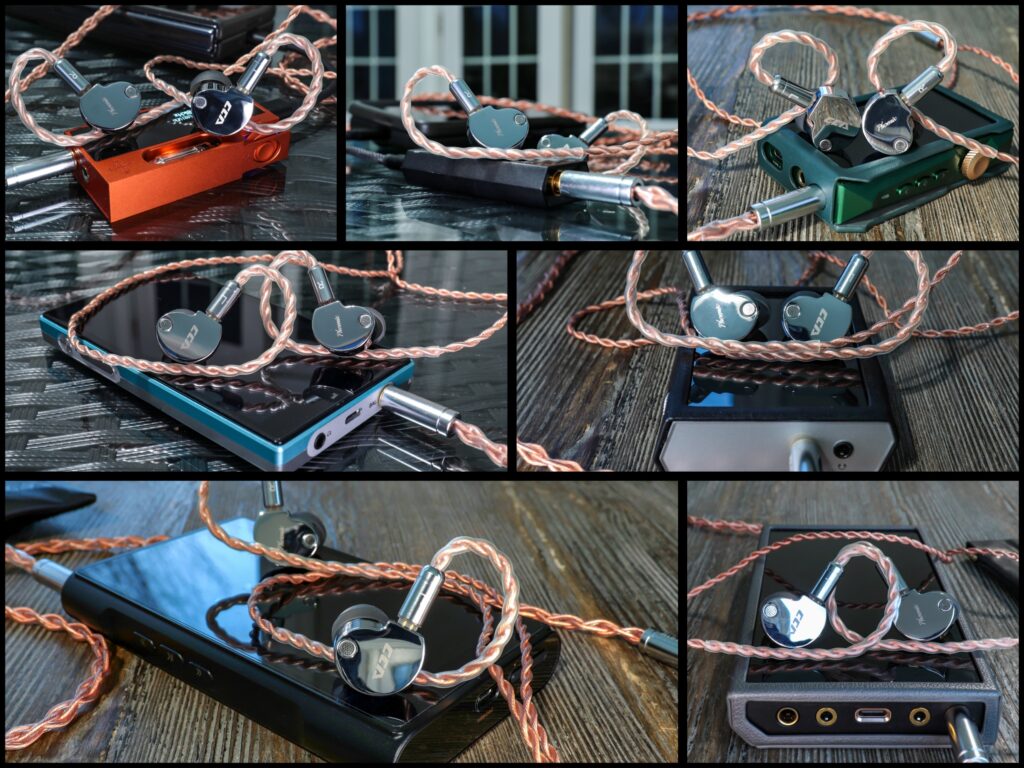
One thing is clear, the CCA Phoenix is a very sensitive iem that can be driven very easily from just about anything with at least a 3.5 single ended port. Folks, this set has a rated impedance of 33 ohms and a sensitivity of 108 db’s, which means that you can plug-in-play with just about anything. Furthermore, this should be expected. How many brands are creating budget (almost ultra-budget) iems that are difficult to drive? Ya know what, I’ll answer that… none. Budget sets are budget for a reason and typically those who need or want a budget set are either gamers, new to the hobby, or simply don’t have the funds for a better set. Also typical of these people is that they “typically” won’t have some amazing source to use. So, obviously brands want to make money and get their iems to as many ears as possible and of course make sure they are sensitive. No doubt the Phoenix is. I was able to play this set off just about everything that I have. Scratch that, I “was” able to play this set off of everything that I have. This includes two old Android phones, my iPad, super weak 3.5 se dongle dacs, Bluetooth earhook adapters like the KZ AN01. All of them replayed this set with good dynamics, relatively dynamic, and fairly clean too. So, if all you have is a smartphone, or a weak dongle dac then don’t fret, it will do a nice job with the Phoenix. That’s said, without question the Phoenix does better with better sources, cleaner sources, and more powerfully amped sources.
More Juice
I do my due diligence, and I do it for you, not me. I already know the answer to the question of drivability and scaling with this set. Basically, it scales nicely. Don’t feel that you need some massive dap with loads of power to bring the Phoenix to its best sonics fidelity though. All this set needs is a decent dongle dac with a clean presentation. It doesn’t even have to be super powerful because there is a cap to the Phoenix’s scaling when it comes to raw power. Maybe a good “under” 50 dongle dac with reasonable output and possibly a 4.4 balanced port (if possible), maybe (at least) 75 mW @ 32 ohms. By the way, just about every dongle dac above $40 will give you far more than that. So, get a decent dongle dac, try to pair it well tonally, and you are set.
Source Pairing
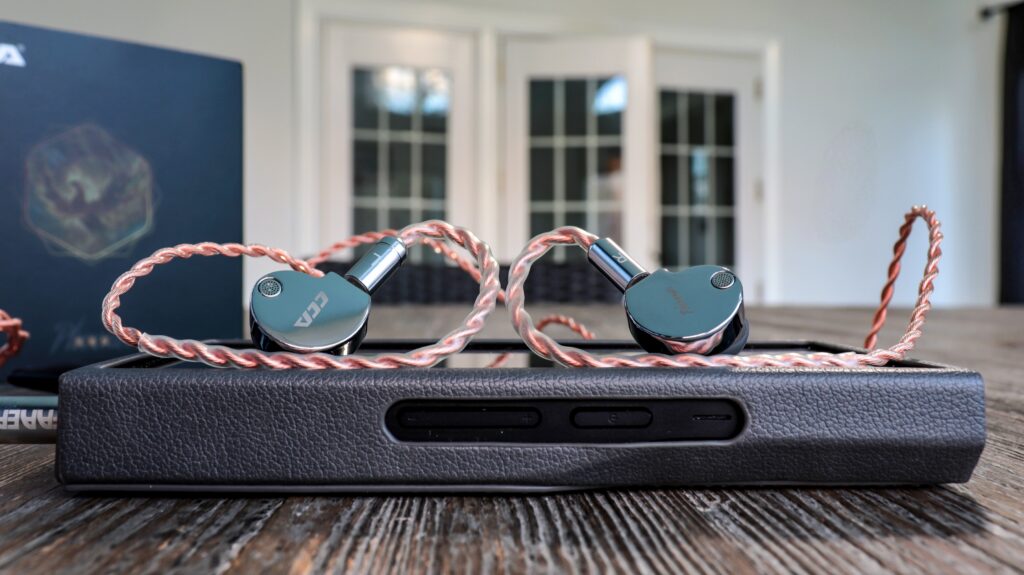
Okay, so, as far as source pairing goes, I have two suggestions. So, if you want to uphold the clarity and neutral-natural coloration (subtle warmth) of this set then go with a neutral and clean source. Something like the EPZ TP35, for instance. However, if you want to combat some of the subtle glare up top then pick out a source closer to warm/neutral. I don’t necessarily like super smooth or straight warm sources as they seem to extinguish everything which makes this set what it is. To a degree anyways. Personally, I enjoy any source ranging from warm/neutral to neutral without any additional brightness up top.
Sound Impressions
*Note: before I explain the sound of this set, I am going to explain what I did to get to critical listening. First off, I did perform burn-in on this set when I first got them. If I recall it was around 2-3 full days. I was wanting to get rid of some subtle upper mid metallic timbre at times and I do find that this is all but gone. So, you may want to burn-in the Phoenix. Next, I did all my listening with the included large size eartips. The cable that I chose for this set was the FAAEAL Hibiscus 4.4 balanced fully copper cable for all critical listening. I used too many sources to list here. The tips I used were the large sized packaged eartips. For all critical listening I use flac or better files (some MP3) which are stored on my devices. The Android music player of my choice is mainly UAPP (USB Audio Player Pro) and Hiby Music Player (for HIBY Daps) and Eddict Player for some other Daps as well.
Another Solid Choice
The CCA Phoenix is another high quality iem in the budget space that should be well known by this point. Truth is, I’m so late on reviewing this set that the Phoenix may all but be forgotten by now. Side note: I think the life span of audio products in this hobby is utterly ridiculous. You get the hype, then the fall into the blank nether regions of the Audioverse. I love it when a set falls out of hype. Though, it’s true that I would always much rather review AFTER a set has gone through its hype phase. I don’t need the clicks/views that bad, and I don’t need to be the first to publish a review. Too many reviews drop within days of every release and then we don’t hear about them again. A big push and then the roll-off into audio obscurity. I only bring this up because the Phoenix seems to have fallen into that obscure place, and I am wondering why. I’ve been with this set for around a month, and I have been nothing but pleased with them. A surefire solid budget offering. Having said that, it is not my favorite under $40. There are certainly other iems that I personally enjoy more, though my “preference” isn’t the barometer for everyone and I’m positive that many people will enjoy this set. I’ll try to lay out those reasons as we get further into this review. Furthermore, I’ll try to speak on what makes this a quality single DD under $40, why it is a solid choice, and who might think that. Let’s take a look.
What’s It Sound Like?
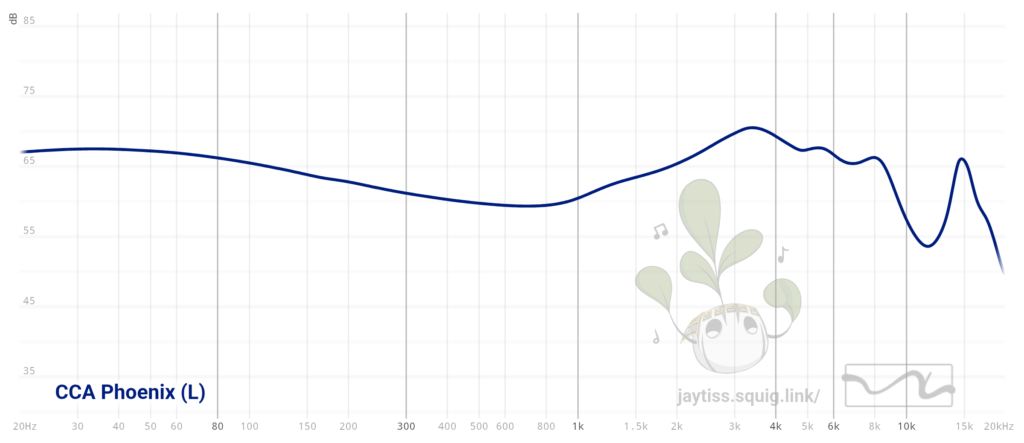
The CCA Phoenix is what I would probably refer to as neutral with a low-end & upper mid boost. I hear a reasonably balanced sound dynamically without any area of the mix (bass, mids, or treble) sounding overly dominant over the spectrum. There are certainly areas which are more emphasized than others, but by-and-large the Phoenix keeps a pretty steady balance. In my opinion the Phoenix is what I’d call a mildly V-shaped iem. Like I said, it carries that sublevel to mid-bass shelf around 7-9 db’s (depending on whose graph you read) as well as a pinna rise of about 10-11 db’s followed by a moderately emphasized treble. However, it’s the midrange (by ear, not by graph) which truly marks this sound signature distinction for me. I say that because the midrange is not overtly recessed. You do have a slight lower-midrange recession, but everything stays fairly well balanced. Now, tonally, I’d say the Phoenix is a mixed bag. Which isn’t a bad thing. Overall, I’d call the Phoenix neutral with a touch of bass warmth offset by a brighter upper midrange. Again, somewhat of a mixed bag. Some tracks will sound a hair warmer, and others might come across brighter in tonal coloration. As far as timbre, I’d call that a neutral-natural style. You could say that the Phoenix loosely follows a Harman signature, but to the ear I simply wouldn’t say that. It’s close, but it carries a bit more mid-bass warmth and weight, rendering the Phoenix a touch warmer than a typical Harman sound with slightly better upper treble extension. Still, most people (reviewers) would probably label this Harman and be done with it.
Smooth or Crisp
To my ears the Phoenix rests right in that in-between zone as far as fluidity and cadence is concerned. This set is not the richest, and it doesn’t have that thick or rich note weight. At best I’d say “semi-rich”. That’s important because while it does have some bass bleed, it isn’t so much to endow the mids with a lush character. On the flipside, the treble is not so boosted to create that forced analytical style or sound. It isn’t so airy or bright that notes come across etched or clinical. Without going into too much nuance and boring you more than I already have, I’d call the Phoenix “moderately smooth yet crisp leaning”. Treble is somewhat airy and relatively detailed, but not even close to outright brilliant or aggressive. Again, I go back to balance. I said similar things in my Dunu Titan X Review. A good balance without anything necessarily dominating the spectrum. Note bite and hard snap is moderate, it isn’t the punchiest sounding iem, and surface textures definitely aren’t jumping out at me. Stuff like macro-dynamics are nicely contrasted and fairly exuberant. I’d definitely call this a clean sound for its style of tuning, with better macro-details than micro-details. Just a solid all-around set. Smooth when it has to be smooth, and crisp when it has to be crisp.
Some Fermenting…
In truth, the CCA Phoenix is really just a well-tuned iem that isn’t doing too much to win over fans of any one style. A great starter set that you cannot go wrong with and a nice set for going out and about in the market, chores around the house as well as a pretty cool set which is pretty good all the way around for its class. You won’t hear much (if any) sibilance as the treble isn’t so boosted or loose. Notes generally have good control, nothing flabby, nothing overtly grainy. Also, the timbre is quite nice for a lean to semi-rich sound with that neutral-natural flavor. Not too boosted in warmth with notes maintaining some semblance of clarity and even some precision too. You won’t hear anything outright harsh either, unless you are very sensitive to upper mid glare. No doubt some tracks will make me a liar (“Sensitive” by Megan Trainor, “Otherside” by CAM), but for the most part that solid control keeps those sharper and harsher timbre moments in check. I’d also say that energy is solid. Not rambunctious, not reeling in effervescent shimmer and shine, but solid fun energy. Certainly, more engaging/organized rather than laid-back and not even close to bland. While I’m not singing its praises, by not really complaining about anything… that is kind of a testament of its own. For a $28 iem to have no glaring faults, that’s saying something. Just as I said in the Titan X review; I didn’t want to like this set. It took some fermenting for me to hear and see the beauty of the Phoenix. Let’s check out each 3rd of the mix (I’ll try to keep it less wordy… commence eye rolling).
Bass Region
For a budget single dynamic driver earphone, the CCA Phoenix has a solid bass presentation. It is not what I’d call a focal point but manages the low-end with a solid foundational presence. Having said that, the Phoenix’s bass region is far from basshead and barely reaches the “fun level” for me. But it gets there. It has a nice rumble, some decent slam, and it carries some authority when pushed. This is not the type of bass which influences other regions and is much more of a “shows up when it’s called upon” style. Which when done well can be some of the best tunings. CCA did it well. The Phoenix’s low-end has almost equal footing (emphasis) between the sub & mid bass regions yet with a slight edge to the mid-bass. Very slight. Note definition is good but not what I’d call “top shelf”. Surface texture is nice, perhaps a touch softer than the Titan X, not knife edged, not super textured, but good for the cost and clean, fairly snappy. Basically, it’s a step above what you should expect at $28. It has enough lift and presence to sound full and even fun, but not enough to dominate the mix or come across bullish in any way. This isn’t a bloomy, muddy, or sloppy bass either. To my ears it’s cleaner than anything else with a nice leading edge on attack, good “fairly dense” fundamental note body, and a natural decay, typically. Nothing to write home about, but well composed, well-tuned, appropriately measured per the tuning also. It’s a nice bass. More quality than quantity yet it doesn’t lack in quantity either. Certainly not weak, thin, dry, or plastic. You won’t hear anything too soft, plush, or pillowy which is great. Overall… well done CCA.
Sub-Bass
The sublevels on the CCA Phoenix are pretty rigid, moderate rumble, with a dense enough judder and drone when listening to a solid bass guitar riff. This is a decently palpable sound down low with good dynamic driver haptic recognition and feedback on those nice and big bass drops. However, this is not a sub-bass that is always present. The sub-bass is nicely defined apart from the mid-bass and is (what I’d call) clean, especially for $28. Certainly not ultra snappy like a less emphasized set, or like a planar style, or a good BA, but it does have a clean enough note delineation down low. Definitely limited for any big bass and rumble lovers and the sub-bass isn’t going to win any awards amongst bassheads, but it should appeal to casual listeners who expect to hear some rumble present in “The Hardest Part” by Washed Out. The Phoenix replays this track in that “shows up when called upon” way and sounds very clean, without any lagging harmonics, nothing feels stuffy, and the rolling notes have good density and feel to them. I’d probably describe the sub-bass’s role as more of a supportive role, and it does a very good job of being that. CCA made sure to provide a solid level of weight without sacrificing clarity in the process. Again, well measured, appropriate.
Mid-Bass
As I said, to my ears I hear a very slight mid-bass boost over the sub-bass which resonates in its ability to have some nice slam. Enough fullness for a solid kick drum boom which is easily shown off in the track “Billie Jean” by Weezer. By the way, an awesome track for testing (you can thank me later). This track begins, right out the gate with many multiple successive kick drumbeats. The bass has that taut leading edge, clean, tacky on the initial strike. That tacky edge is a touch softened, not concrete, but clean, not fuzzy, which is good. However, each strike is quickly followed by that nice hollow boom, with resonance, with some authority to each one and very satisfying in its own way. I should also add that the mid-bass doesn’t display those long atmospheric style decay trails, which is also good. A very nice showing for a “just-above-moderate” mid-bass. I’d call the mid-bass nicely textured, clean enough note outlines, with a punchier nature to it…typical of less emphasized bass replays. Also, this set does have some bleed, but not enough to make this a warm overall tuning. Enough to help male vocalists sound present, but not enough to add true thickness to notes. Basically, it has a tasteful bleed into the midrange.
Downsides to the Bass Region
The biggest gripe about the bass will be due to quantity and thickness, from my perspective. I definitely could use a hair cleaner rumble, density, weight, and forceful slam, but it’s hard to say that the bass is anything other than good for its cost. This bass will have more of a preferential issue for most listeners rather than any inherent flaws. Definitely bassheads are going to want to keep looking, and even warm heads, they will likely not enjoy the low-end on the Phoenix. I’d also say that those folks who would much rather have an even more textured sound, better defined, less softened and more rigid in demeanor, more tactile, and an even more snappy bass, might have an issue. While the Phoenix does fairly well down low with complicated tracks, there’s no doubt that it can blend some notes from time to time. So, it doesn’t have that scalpel-like precision on those congested joints. Nor would I have expected that with a 7-9 bass shelf fairly evenly spread amongst the sub & mid-bass. So, I’m sure that for some there’s simply not enough tonal contrast, layers, and focused definition. This is a bass for those who like a more disciplined style yet also like some surprising slam to grace their ears. Not big and immersive, more controlled, cleaner, and as far as I’m concerned… the bass is well done for the cost.

Midrange
When I think of the midrange, I think clean, less rich, and moderately open sounding with solid presence and a more intimate sound field. I’d say that the midrange favors clarity over warmth, separation over physical engagement, and reasonably well-balanced mix of smooth and crisp yet favoring crisp, favoring the technical side. The timbre is right around neutral-natural with a touch of warmth nearing the lower-mids and some spice in the upper-mids leading to a somewhat smooth cadence overlaid with solid enough note edge detail for a set costing $28. I’d actually say that notes carry a more textured feel as well as a slightly leaner profile. I really don’t hear anything so smoothened, plush, or glass-lined that those surface textures and details are sanded down. Again, I’d go so far as to say that the mids lean analytical (to an extent) yet maintain some semblance of solid musicality and fluidity. Note weight is a hair under semi-rich for me. Certainly, on the lean side, even with the feathered-in bass bleed. Though that really only offers any weight to the lower mids. In truth, the midrange has some good presence too with a more energetic experience than it is laid-back. Again, macro-dynamics won’t exactly jump out of the transducers, but I do hear some contrast tonally as well as a pretty vivid presentation within the mids. In my opinion, the midrange is probably the star of the show but really acts like a supporting actor in an ensemble cast.
Lower-Midrange
The lower midrange is actually quite interesting. On one hand you could call the low-mids the Phoenix’s worst area of the spectrum. Which is kind of typical of budget single DD’s. Usually they’ll be recessed the most, least amount of vibrance, most bland etc. I’d actually say this is all true of the Phoenix, with one caveat, it actually sounds very good for a budget set. Males in particular. I think because CCA sort of skirts the line between warmth, clarity, technical ability and musicality. Also, because the Phoenix also carries some decent low-mid clarity. I always say, if your set is weak in low-mid note weight, it better have clean-lined clarity as that clarity will almost pronounce and sculpt each note well enough to act as density. That is the Phoenix for me. The low-mids have that subtle warmth from the bass bleed but it remarkably doesn’t sound too softened, or subdued. Note weight is moderate, slightly lean, but the nice note separation, clean background, and clean note outlines provide that pronounced inflection to lower midrange notes. Even in the midst of the subtle recession. I personally would like a hair more note weight and don’t need the clarity as I’d rather hear something emotionally gripping. Still, I find it very difficult to cast any shade on this region, especially when this set costs so little. Furthermore, males actually sound pretty darn good. I hear nice textures, vocal textures, edgy snap on string plucks, and a sort of micro-dynamism which grew on me. Quite easily actually. Males will come across a hair lean but vivid and instrumentation follows suit better than I would’ve expected.
Upper-Midrange
Now, if there was a real focus of this iem, it would be the upper mids. I hear fantastic vocal clarity, vocal presence, and a very clean energy. Definitely the upper mids are the most boosted region on this set, forward, and yet they stray from true shout. Those who are sensitive may disagree, but this is my review and in comparison with other sets the Phoenix does a nice job of controlling glare whilst remaining lively and vibrant. The upper midrange supplies the entire mix with that good note separation, crispness, percussive snap, openness, and a very revealing sound uplifting the overall tuning with a presence-forward feel. To add to that, the upper mids have an energetic and analytical cadence without sounding abrasive or too knife edged, which is great for a budget set. Females obviously benefit from this type of tuning. Like Norah Jones in “Come Away With Me”. Her voice is pronounced folks. That chesty and breathy vocal prowess is elevated, brought forth, coming across with solid levity while not diminishing the emotional sentiment in this track. Also, her voice is nicely textured too. Chesty even. Another is Kacey Musgraves in “Butterflies” which really shows off this set’s bubbly spirit. Her voice has solid clarity against the rest of the mix and never sounds artificially boosted.
Downsides to the Midrange
I said a lot of good stuff about this midrange because the Phoenix deserves it. Granted, I’m speaking on a $28 iem here, so keep expectations in check. Of course, the Phoenix also has a less plush, less rich experience which leans analytical (to a slight degree) and so you won’t have that completely engaging experience like you’d have on a more musically inclined iem. Those who would much rather listen to a less energetic sounding midrange that concentrates on fluid tone and a smoother cadence will obviously want to keep looking. Also, those who desire zero bass bleed, with a more crystalline sound (yes, they exist under $40) will also not find that here. Again, the Phoenix is a well-balanced sound in almost every regard. True it leans analytical, precise, separated, detailed, uplifting, but there are plenty of tracks which really come across immersive, vividly enthralling, and emotionally gratifying for me. That all said, the Phoenix doesn’t really have that nice note weight and body which takes it away from what I’d call perfectly natural. It doesn’t have a vocal-centric or mid-centric tuning and so while vocals are nice for the tuning, they aren’t top shelf either. I don’t find the midrange bad by any stretch of the imagination, but there are some better midrange displays. I’m talking about you, DunuTitan X .
Treble Region
Okay, so I’ve bragged (somewhat) about how the Phoenix replays the bass, and the mids, but I think one of its overlooked and most unsung regions will be the Phoenix’s treble replay. No, the treble won’t be a treble head’s paradise, it won’t cover the region with ultimate tact, perfect treble bite, or pristine note diction. However, this is a treble which truly does a nice job of balancing extended and airy extension, better control than it should have, and a nice textured sound with a fairly non-aggressive and smooth demeanor. CCA did not boost this set to the stars and certainly didn’t artificially boost this region which is a check in the positive column right off the bat. No tricks here. Just solid driver control, smart emphasis, and smart attenuations, along with a nice housing which absorbs those pesky treble reflections sounding concise, focused, and resolute. Also, the treble has some very nice timbre. CCA did a solid job for not having a crazy amount of R&D and they hit that clean and sparkly target without anything overtly harsh, which is not at all typical of budget iems.
Quality Treble
This is not a shy treble either. The Phoenix has enough lift to illuminate those nice micro-details too. There’s nothing worse than forced resolution for me and if the Phoenix had that then you’d never see me reviewing this set. Thankfully, everything is tasteful. I hear some pretty distinct note separation with a clean-lined approach. Nothing hazy, no tizzy treble smear, no metallic or grainy edge, and not radiant treble sheen. Instead, I hear a semi-brilliant luminosity that provokes clarity in other regions and does a great job of contrasting the lows so that you don’t really have any masking and instrumentation or vocals come across more pronounced by the clarity alone. Macro-dynamics are what I’d call snappy, they’re immediate, and transients move along with some speed. Cymbals strike with some punch, violins sing rather than scream, vocalists sound effervescent rather than sibilant. Friends, it is a very fine line that CCA chose to walk with this set. To some it will be too uplifted, and to others the treble won’t be lifted enough. That said, I think that the majority of listeners will really appreciate the quality of treble per the price and per the tuning.
Skilled Highs
Again, micro-details will come across far better than the price range would usually dictate whilst remaining controlled. This is no small thing. Furthermore, the Phoenix’s treble has better speed than I expected. Typically, a smoother cadent flow coupled with a less spirited emphasis would indicate an afterthought sort of sound. Instead, the treble has focus. Clean lines, pretty precise notes, good note separation, and a transient attack through sustain that hits quick and recedes even quicker. Not planar fast enough but fast enough for a balanced tuning of a single DD at any cost to come across non-congested and distinctly transparent. Even in complicated tracks folks. I mean, even in tracks like “Ice Bridges” by Billy Strings. Those mandolin, guitar, and rapid-fire banjo notes have some body, there is some space between those notes. Or “Evil Twin” by Lindsey Stirling which sounds close to natural, edgy without coarseness, silvery, and each note sounds bright, airy, and charming without losing control, smearing, or becoming painful. Folks, my notes have seven different treble littered tracks that I went wild explaining this set’s treble with. Another is “Bishop School” by Yusef Lateef which really shows off those upper treble flutes with its urban flavored jazzy groove. No masking from down low but clean, crisp, and delightful treble notes. Horns sound in focus, strings sound biting but intact, hi-hats and cymbals have sparkle without sheened-out splash. Again, not for treble heads, but definitely for those who can respect a decent treble response from a cheap set that isn’t devoid of musicality.
Downsides to the Treble Region
Not for true treble heads. Of course, what treble heads have any true choice with under $40 iems? You either have shrieking brightness and forceful treble screech begging to add false clarity, or you have a less enthused and less sparkly sound. Yeah, yeah, yeah… there are some outliers in the budget segment, and the Phoenix is not the best in its treble response. There are a few iems that come across a hair more uplifted without killing your ears, maybe more refined, and there are slightly better controlled treble displays. Like the 7hz Salnotes Zero, Zero 2, KZ ZS10 Pro 2, the KZ PR3, CCZ Melody, Tripowin Vivace, and a handful of others. Still, that fact alone does not dispute how well the treble can come across and I refuse to speak negatively about it just to gain some street cred in the reviewer world. I’m not that guy. Always honest, all the time. However, the Phoenix doesn’t best/trump “the-best” in its price segment, it won’t be for warm heads, or sensitive listeners, and the treble won’t delight treble bois. That’s about it. I cannot in good faith sit here and talk down on such a cheap set which pulls it all together (at least) reasonably well per the tuning. Remember, this is a single dynamic driver earphone. Remember, this set costs what a few Big Macs cost. Also, remember, there aren’t any true “tonal” issues up top while sounding airy, controlled, and detailed.
Technicalities
Soundstage
The soundstage of the CCA Phoenix is what I’d call “good for the cost” and “good per typical expectations”. Width is not its strong suit. I’d call it average at best. The sound field just hits my ears and isn’t super expansive for me. This is almost a non-issue though because spatiality is good, separation is solid, and nothing sounds outright congested. The height of the sound field is definitely above average for me. By the way, I get “above average” from how I hear it at the moment. It’s something which sticks out. Not extreme in its height or vertical layering, but for a $28 iem it’s very good. Now, depth of field isn’t class leading and won’t create a 3D environment, but the depth is well structured. Furthermore, the stage depth is absolutely NOT a flat plane of sound in front of me. There are certainly front to back layers that I’m hearing. However, out of all of these descriptors, I want to clearly indicate that what makes the soundstage work as well as it does is the Phoenix’s nice intelligible and contoured notes, separation, and placement of elements within the stage. Again, when everything is where it is supposed to be it almost doesn’t matter if the Phoenix doesn’t have some chasmic and cavernous sound field.
Separation / Imaging
As I said about thirty times (a small exaggeration) in this review, the note separation is a strong point. Even denser mixes can come across relatively distinct in note separation. Again, a black background, clean forefront instruments and vocals, taut enough transients, good airiness, etc. all help the Phoenix to come across clean in its separation abilities. Imaging is decent to good. Not ultra pin-point, but nice. I definitely hear instrumentation panning nicely left to right, vocals locked dead center (depending on the track), and fairly good front to back planes for instruments to plant their sound, but not top shelf. Good for the tuning, good for the cost, transparent enough, and nothing comes across either out-of-focus, veiled, murky, or congested. All in all, pretty nice.
Detail Retrieval
When it comes to detail retrieval, the CCA Phoenix falls right into the “better than you’d think” category, but not best in class. Having said that, details come through very well. Obviously more congested mixes won’t sound quite as detailed and micro details won’t pop-out at you as well. However, there also isn’t anything which really masks the spectrum. The bass isn’t so elevated that it veils or clouds the mix, and it doesn’t really mask over any subtle details unless it is a very heavy bass jam. It’s hard to label these sets as above average, or average when it all comes down to the signature class that these iems are tuned to. It’s great for the Phoenix that it really does have a more balanced sound, a clean sound, somewhat taut transients, it’s somewhat airy and open as well. I’d definitely say that macro-details are much easier to discern than micro-details. All things considered I’d have to say that the Phoenix does an admirable job of drawing subtleties to the surface.
Comparisons
Dunu Titan X ($32)
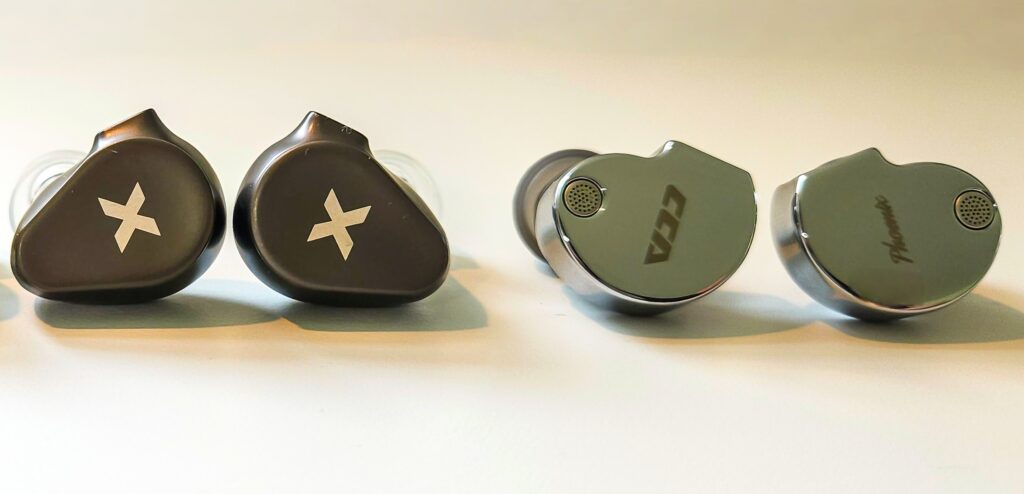
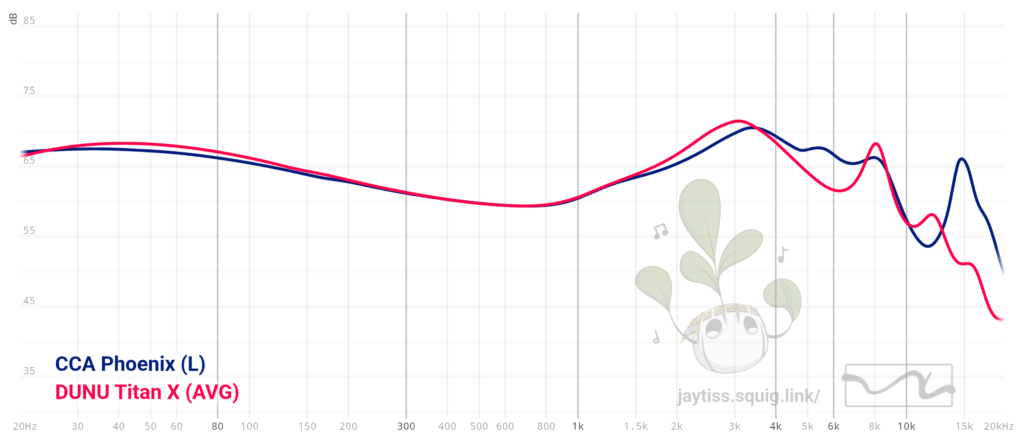
I actually did a comparison of these two sets in my Dunu Titan X Review and so I’ll just copy paste the majority of that here. Let me just say, before I get into this comparison, that the Phoenix competes very well. However, I definitely prefer the Titan X. It simply suits me better. Of course, I’m not you. The Phoenix stands right next to it in many ways actually. Which is speaking volumes for this set.
Titan X
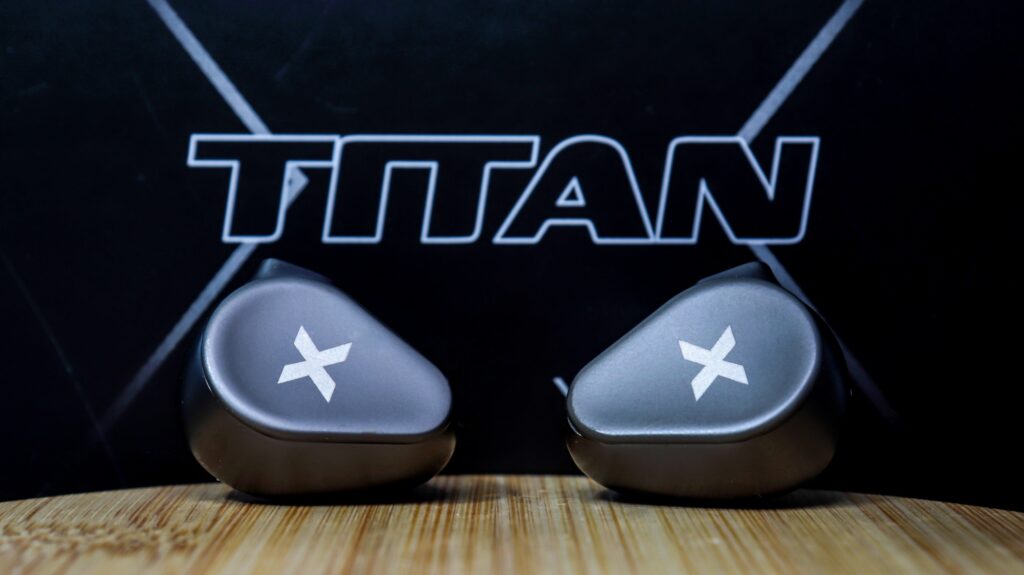
The Dunu Titan X is clearly one of the best iems that money can buy under $40 if you enjoy a musically focused sound, great bass, and a very engaging sound that doesn’t necessarily skimp on the technical stuff. It also happens to be my favorite under $40 iem right now. The Titan X carries a single 10 mm DLC dynamic driver housed within a gorgeous shell and outfitted very well. Let’s take a look at some differences…
Non-Sound Stuff
Beginning with the unboxing, I find both sets to offer better experiences than you’d typically find in budget iems. However, besides the slew of eartips that Dunu offers, the CCA unboxing is a bit better, better cable, better leather carrying bag than the cloth Titan X carrying bag, and it’s simply more ornate of an experience. As far as build, how could I choose? Both sets are built like they should cost three times the amount. That goes for the design/aesthetic too. How could I choose? I’m torn! I love-love-love the mirror polish design of the Phoenix, so dope. However, after much deliberation with myself I cannot help but give the nod to the Titan X here. It’s just too slick looking. It looks even more premium, simple as that. Both iems cost close to each other although the Titan X is a few dollars more. Though I’m sure those prices will rise and fall in due time.
Sound Differences
As far as the sound, both iems are V-shaped, nicely robust in the low-end, and decently balanced dynamically. There are some definite similarities, but I’d most certainly say that one set is a step above the other in my experience. Also, the Phoenix is a few “volume steps” harder to drive, but both are sensitive sets. When it comes to the bass the Titan X is simply better, to a slight degree. It has a deeper, more authoritative, and more grippy bass, more dense fundamentals, more textured leading edge, and somehow tighter even with the greater emphasis. The Phoenix is a hint softer on attack. Still fantastic for a budget set, but a hair looser in bass swells, but also a hair faster too and less convex. In the mids the Phoenix has a touch greater lower-mid recession, and it comes across a hair leaner in note body with a better chance for glare in the upper mids. However, the Phoenix is also better detailed, better note separation, better clarity, higher resolution. The Titan X is more musical, closer to warm-organic whereas the Phoenix is closer to neutral-natural. Now, the Phoenix’s treble is more sparkly, brighter, more bite, better extension while the Titan X is more reserved with less chance of fatigue. I definitely feel the Phoenix does a better job with its highs. Both sets offer a more musical sound, but the Phoenix is better detail retrieval, overall. Imaging is better on the Titan X by a slight degree with better left to right panning and front to back layering. The stage of the Titan X is better, with better depth, less narrow. Macro-dynamics are more abundant on the Phoenix with more of a tonal contrast and so these two go back and forth a bit. Both sets are fantastic for the cost.
Final Thoughts On This Comparison
I really-really like both iems, but for me (personally) the better set is the Titan X. It’s simply more refined, better timbre (for me), better bass presentation, slightly better vocals, and less fatiguing to a small degree as well. These are very small differences though. I’m telling you, there are days where I listen more to the Phoenix and it hits my fancy even better so again, they go back and forth. You cannot lose with either set.
Genres
I will always try to speak on some genres which I find work out better or worse with each set that I review. I started doing this a while ago and while it is a good template for you to follow, I wouldn’t take my words as gospel. For a couple reasons. First off, I’m not you. This is always the most important distinction. I’m not you and you aren’t me and we probably don’t have exact preferences. Furthermore, we probably expect different nuances for each genre. Next, just because I say the Phoenix will be great (generally) for a genre, doesn’t mean that every track in that genre is amazing. Similarly, any less great genre can have some amazing tracks for this set. Basically, take my words lightly. These are not set in stone, and half the time I’m arguing with myself over what I deem good and not good.
Genres Which Work
The first genre type that I’d say generally works great with this set is any sort of Pop music. Open, clean, airy, and engaging tend to work perfectly for Pop music. Any sort of Rock music like Classic Rock, Alternative, Progressive stuff all sounds awesome. Energetic guitars, punchy drums, snappy and clean percussions, solid definition for crazier congested stuff. For the same reasons Country music sounds great. Most metal sounds great too with a few exceptions in my opinion. Classical or Orchestral music comes across well too. While this set isn’t perfectly set up for Classical, it has all the inherent tools (tuning wise) to replay them well. Detailed sound, nice height of stage, clear, airy, somewhat brighter treble, more defined analytical approach, with enough low-end oomph when needed. A lot of Jazz comes across well too. Now, bass focused, or stuff like double bass heavy stuff jams won’t suit it perfectly, but everything else comes across very well for me. Very satisfying. Electronic music tends to benefit from this tuning too along with some EDM, some Hip-Hop & Rap, as well as most R&B joints. Of course, the last three could go either way and there are probably better sets suited for those genres. Still pretty good though. Anyways, I’m going to stop there but the Phoenix typically has the inherent ability to gel with many different genres reasonably well. Not quite an all-rounder, yet sufficiently good at most genres.
Not the Best Genres
Again, warmer leaning Jazz stuff or bass heavy stuff doesn’t really do it for me. Tracks within Hip-Hop or Rap, EDM, which rely on those ultra heavy bass tracks to truly shine won’t sound totally satisfying for some fans, definitely not all the time for me. The Phoenix simply doesn’t carry that warmly weighted and bullish low-end like some other sets. I’d also say that while vocals come through nicely, I typically enjoy a forward leaning and slightly warmer vocal presentation. So, stuff like Singer-Songwriter, some Folks music, and anything where you are relying on emotional connection to an intimate voice will probably sound better on other sets. Granted, I’ve actually enjoyed many of these types of tracks on this set. I just spoke of a bunch of females and tracks which sound fantastic. Still, the Phoenix is missing that last bit of intimacy and pronounced vocal inflections to come across perfect. Lastly, any Metal which is hotly recorded, brighter thrashing, and really cooking in the upper regions have a potential to sound too bright, and even harsh on this set at times. For me anyways. The Phoenix generally does well with Metal, but there are some tracks which are simply a bit too rambunctious for the Phoenix. Anyways, I think you get the picture.
Last Words on the CCA Phoenix
The CCA Phoenix most certainly represents a couple different things in this day and age of personal audio. The first thing is this; everything is simply getting better. I can tell you with absolute assurance that the $28 Phoenix is light years ahead of what I would’ve gotten for the same cost five to ten years ago. Friends, the hobby has come ridiculously far. To think that we can have a beautiful, all-alloy, mirror polished iem, wonderfully built, no issues, no structural flaws, and using quality drivers for under $30 is silly.
We’ve Come Far
Remember those cheap Sony sets, the Panasonics, the Sound Magic sets, the Final Audio series sets like the E1000, E2000, E3000, those terrible Brainwavz sets (Delta), the Mee Audio iems. Even those old school KZ sets (ZST, ZST Pro). I thought all of those sets were the pinnacle of budget sound value and were absolutely lauded at the time, adored. Truth is, I was saying the exact same thing I’m saying now about those sets 5-10 years ago; “Look how far we’ve come!”. Having said that, I feel that I am perfectly correct in saying that the recent sets of the last 3 to 4 years are remarkably better. The $32 Dunu Titan X could easily be a “2015” $300 iem. The Cozoy D1 would cost substantially more. The hobby would have gone nuts for that type of clarity and speed. Of course, the Phoenix would have been a staple iem and easily would battle with the top under $150 single DD’s of yesteryear. Please tell me I’m wrong. Think of 2015-2017…what was truly “better” under $300? The JVC HA-FW01? Absolutely not! A muddy mess. The RHA T20 or T20i (I still own) … Nope! Periodic Audio Berylium… Nope. There are so many more, but I think you get the point. No doubt there were much better sets and I don’t want to talk smack on the entire industry because I greatly respect many of these brands and what it took to get us here. However, I find it absolutely awesome how far the hobby has grown and the CCA Phoenix is a good representation of that.
Not for everyone
I also want to bring this back down to earth and declare that the Phoenix is not going to be for everyone. As with any set, at any price, the Phoenix is not going to fit everyone’s preferences. The obvious folks like bassheads or trebleheads are definitely not going to be people clawing to get to the Phoenix. Those people who want a more musicality focused iem with a more engaging sound, slightly more robust bass, and a smoother cadent flow will probably not totally enjoy this set. Also, those people who desire an even cleaner, tighter, snapper, better detailed, and brighter sound should probably stray from the Phoenix. The Phoenix has to meet your preferences for any of my words to ring true in this review. Furthermore, the Phoenix can get a bit rambunctious and too shouty in certain tracks within the upper midrange area. It isn’t perfect. However, I keep going back to $28. For all that the Phoenix brings you at such a low cost I find it very difficult to truly complain about anything. Honestly, it’s an easy rec for me. No, the Phoenix isn’t my favorite under $40, but it’s a qualified and solid offering you truly cannot go wrong with.
Conclusion
To conclude my full review and feature on the CCA Phoenix I want to thank Kate Garcia of Keephifi for providing the Phoenix for review. This set took me a very long time to publish folks. For one, I thought I lost them, and two, I wasn’t even going to review them. So, it took me a while to get here, but here I am. In the meantime, I never heard a peep from Kate or Keephifi which is a very nice thing. So, thank you very much. I also need to thank you, the reader, for taking the time out of your busy schedules to read the words that I wrote today. To say it means a lot is an understatement. I am so very thankful and so are my partners at Mobileaudiophile.com. Views, clicks, and success in helping you is our currency folks. So, thank you so much.
Other Perspectives
Now that you’ve read all of my words about the CCA Phoenix, go and read someone else’s. Folks, I’m not about mobileaudiophile.com getting all the love, all the views, all the clicks. I’m about you finding what works for you. Nothing brings me more joy than knowing that each one of you is finding what works for your life, something you enjoy. It’s always all about the music folks and if you are like me there is no better hobby. Nothing is as good as getting lost in your music with a fine set of earphones. However, to find that joy it helps to read, watch, or listen to other perspectives from other reviewers and get different points of view. We are all very much different, each one of us. Each one of us has our own ideals and our own ideas of what “good” sounds like. What’s good to me may not be good for you. So please, take the time to check out other thoughts. With that, I think I’m done. So, take good care, stay as safe as possible and always… God Bless!!
Phoenix Pros
-Great price-to-performance. This set costs $28
-Build Quality is next level for the cost
-Far better unboxing experience than I would have thought for such a low budget set
-Very nicely balanced, neutral-natural tuning, smooth enough, crisp enough
-Nice bass quality. Not for big bass lovers but a clean, well defined and punchy bass
-Midrange has great clarity, presence, and wonderful female vocals, nicely separated notes, airy too
-The treble has plenty of sparkle, good extension, smooth in cadence yet nice note contours and mostly non-offensive
-Separation and layering are well done for a budget offering
-Soundstage is laid-out well with solid dimensionality
Phoenix Cons
-Fit may not be perfect for everyone with the Phoenix’s cylindrical build
-Source matching definitely helps
-Not a thick, lush, or rich note weight experience
-Not the most emotionally engaging, but immersive for a cleaner balanced tuning
-Upper mids and treble can get a bit hot with the right tracks
-Big bass lovers and especially straight up bassheads will not enjoy the sound
-Treble heads will probably want to keep looking. Though, the treble is actually quite good for the rest of us




No Comment! Be the first one.