






































































Sivga M300 Review
Intro
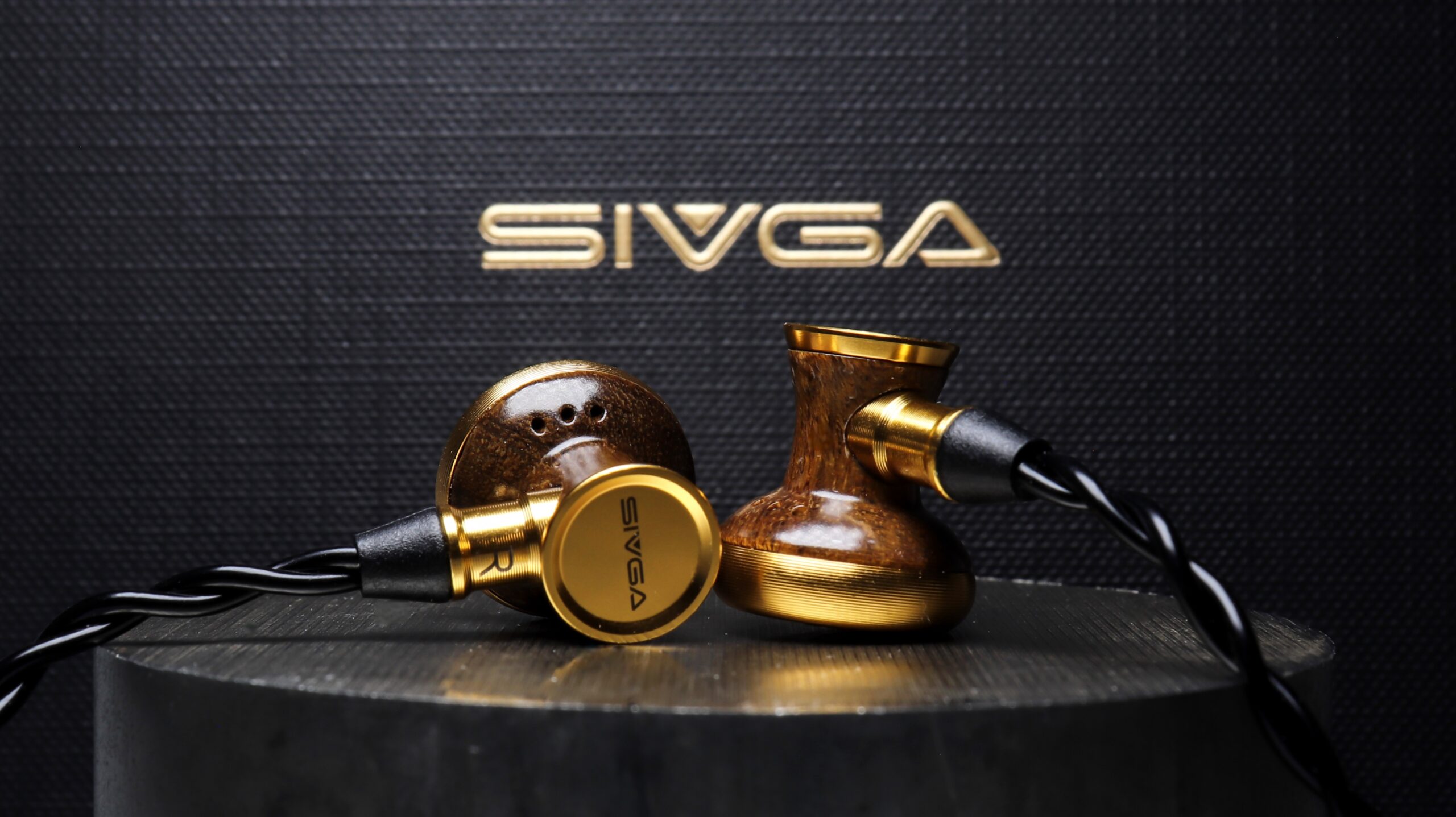
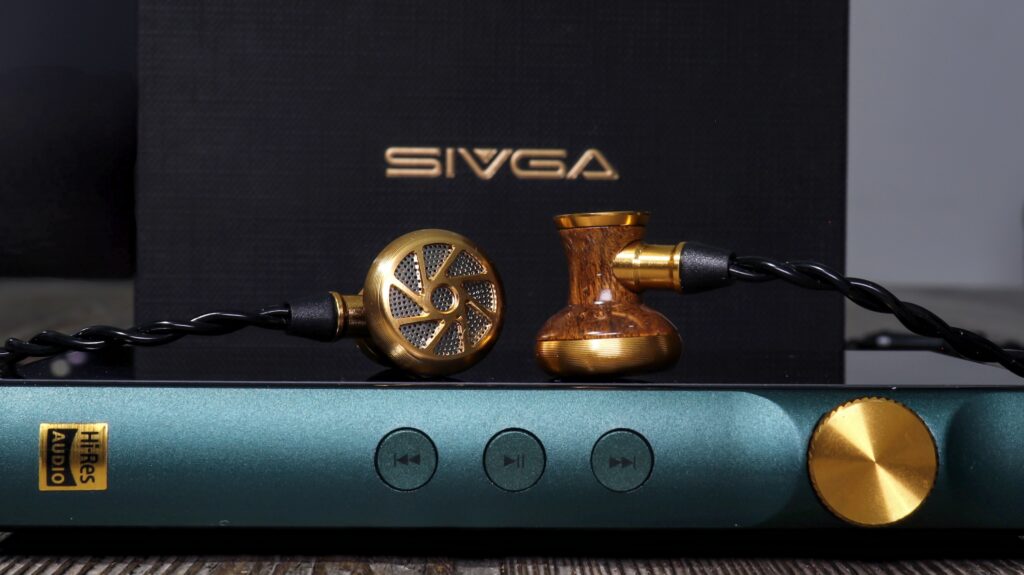
Hello, this review and feature covers the latest from the audio brand Sivga named the Sivga M300 ($58). The M300 are actually flathead style earbuds (I’m sure you already know this… Lol) with a very unique and gorgeous design as well as an enormous 15.4 mm dynamic driver producing the sound (more on that later). So, the M300 is actually the successor to one of Sivga’s earlier flathead style earbuds named the Sivga M200. The M300 was consistently lauded for its natural sound and its gorgeous build for the cost. Obviously not much has changed in that regard with the M300. Now, I was asked whether I’d like to take a look at the M300 and it was an easy decision for me. For one, I want to hear everything on planet earth. If it makes sound, plays music, and it’s an earphone of any kind… I want to hear it. Secondly, I have always been a fan of flathead style earbuds. Now, they are definitely not my 1st preference, but I really do enjoy the sound that can come from a good set of flathead style earbuds. There is something so organic and open about a good set of earbuds too. Anyways, thank you to the good folks over at Sivga for the opportunity to feature the M300.
Table Of Content
- Intro
- Sivga
- From conception to the finished product…
- M300
- Non-Affiliated Purchasing Links
- M300 Pros
- M300 Cons
- Gear used for testing
- Packaging / Accessories
- Unboxing
- Carrying Case
- Foam Pads
- Cable
- Build / Aesthetic / Internals / Fit
- Build Quality & Aesthetic
- Internals
- Housing
- Fit /Comfort
- Drivability / Pairings
- Sensitivity & Power
- Source Pairing
- Recap, what you need
- Sound Impressions
- What’s it sound like?
- Over the ear or hanging?
- Details?
- Won’t be for everyone, but will be loved…
- Bass Region
- Sub-Bass
- Mid-Bass
- Downsides to the Bass Region
- Midrange
- Lower-Midrange
- Upper-Midrange
- Downsides to the Midrange
- Treble Region
- Tuneful
- Extension
- Downsides to the Treble Region
- Technicalities
- Soundstage
- Separation / Imaging
- Detail Retrieval
- Comparisons
- Dunu Alpha 3 ($64)
- Non-Sound Stuff
- Sound Differences
- Each 3rd of the mix
- Final thoughts on this comparison
- Last Word on the Sivga M300
- Should be a contender…
- The Why…
- That Sound!
- Conclusion
- Other Perspectives
Sivga
Friends, I have to give a shout out to Sivga for a moment because I think in this hobby we tend to take some of the workmanship and craftsmanship for granted at times. I think we can all agree that the market is absolutely and almost absurdly inundated every week with new audio products. Sometimes a good and quality brand can get lost in the shuffle and sometimes we really don’t stop and give credit where credit is due. I say all of that to give Sivga a little pat on the back and a nod of respect for their constant effort to create some of the most classy and handsome products that always come at a respectable price. Now, I’ve only been able to publish one review from Sivga. In fact, it was my first time hearing a Sivga iem at all. That was the Sivga Que UTG (Que UTG Review). One thing I emphasized was how gorgeous this set was along with refined sonics which made it a candidate for contender at its price. Thankfully Sivga has also sent me this beautiful set that I’m reviewing today, the M300, as well as their brand new Sivga Nightingale Pro. I think what prompted me to write this little blurb of glowing words came when I was simply looking at these sets. Thinking “This brand really tries very hard to make a good impression”. It speaks volumes about Sivga. About their work ethic, their creativity, and about their seemingly constant pursuit to provide value for your dollar.
From conception to the finished product…
Sivga has actually been around for quite some time actually. They’ve been at this audio game since 2016. To add to that, it appears that Sivga (correct me if I’m wrong) not only does all their own R&D (research and development), and designing all of their models, but they also build them all too. Now, not that this is unheard of because quite a few brands do the same, but I find that commendable. They don’t outsource the production of their products. They have a cradle to grave operation which may be part of the reason why they can sell their products as low as they do. Shoot, they even make and produce many of their drivers. Besides sets like the Que UTG whose driver uses a special ultra-thin glass diaphragm. In that case Sivga used a Japanese company called NEG to produce those special DD drivers. Still, I find this very interesting and wonder how many other brands go to the extent that Sivga does. Meaning… from raw materials, empty table, to the vision finalized, finished product? It’s a very cool thing to see and helps me to respect Sivga even more. I suppose the great thing is that you know with a Sivga product you are getting the vision, creativity, effort, skill, labor and workmanship of one brand… from conception to the finished product. I think that’s pretty cool.
M300
Okay friends, well I’ve had plenty of time initially hearing the M300 and I have to say, the organic quality beloved by the M200 is definitely alive with this set. Of course, there are also some potential issues to speak on. Though I will say, the M300 will likely fit a sizeable enough portion of earbud enthusiasts as well as those who want to try out flathead style earbuds for the first time. Having said that, I have to burn this set in for a good long while. I’m thinking at least four full days. Being that it uses a graphene coating I’d imagine that it will be worth my while. Anyways, beyond that I think I’m ready to dive into this one. So, without further ado, the Sivga M300…
Non-Affiliated Purchasing Links:
M300 Pros
-Price
-The build is just like every other Sivga set… very good
-The design/aesthetic is just like every other Sivga product…all class, dope. The African Ebony wood housing is undeniably awesome!
-Comfort, the M300 is very lightweight, stays put in my ears
-Warm & musical character which is non-offensive to the core
-Note weight is nicely bodied, rich, yet not slow or sluggish
-Solid bass presence for a set of flathead earbuds. Nice texture, nice body
-Earthy and organic timbre within the midrange
-Completely non-fatiguing treble with an open quality
-Surprisingly tight delivery for a rich and warm sound
-Soundstage is nice
M300 Cons
-Fit is extremely important to get the best sound
-Fairly large set of earbuds
-Bass is on the atmospheric side, less defined
-Treble presence will lack for some
-Not the most energetic sound I’ve ever heard
-Non-detachable cable, no 4.4 balanced
-I believe the M300 needs some solid driving power
Gear used for testing
–IBasso DX240 with Amp8 MK2
Packaging / Accessories
Unboxing
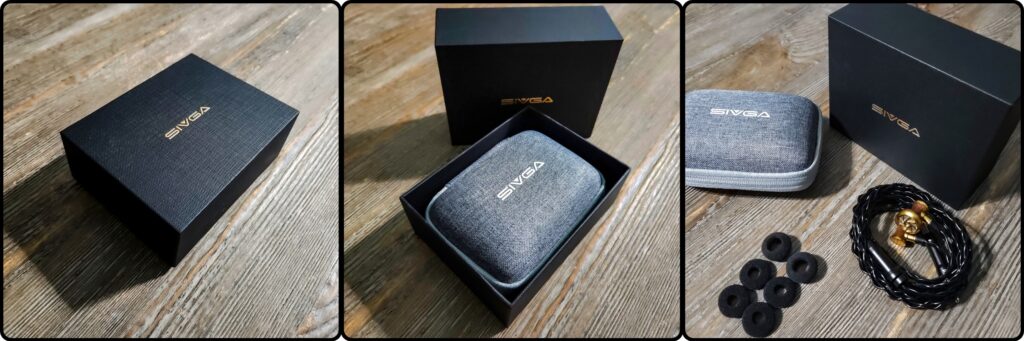
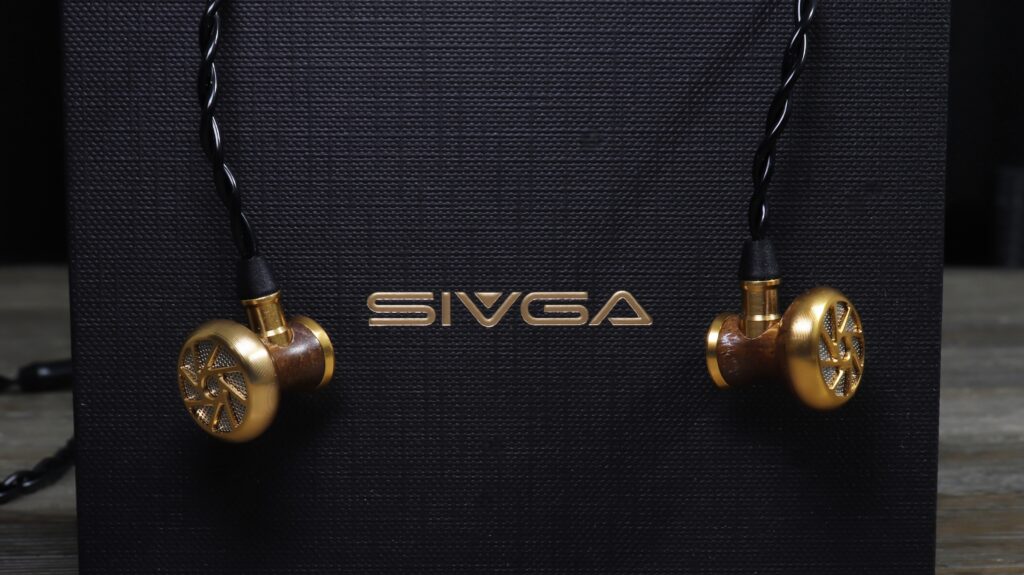
The Sivga M300 arrived at my home in a smaller sized box (rough guess: 4″x3”). The box itself is black cardboard with a gold “Sivga” centered on the front. The back of the box simply has a few specs, nothing too glamorous. Anyways, the unboxing is fairly simple. Open the box top and take out the separating cardboard and you’ll see the carrying case provided with the M300. Open up the carrying case and you will see the M300 as well as the donut style foams. Honestly folks, that’s about it, nothing spectacular. That said, I don’t need a nice unboxing if the brand puts that money and effort into the product. I can comfortably say that Sivga did just that. Nobody who is buying on a budget should EVER argue with that. You should want that.
Carrying Case
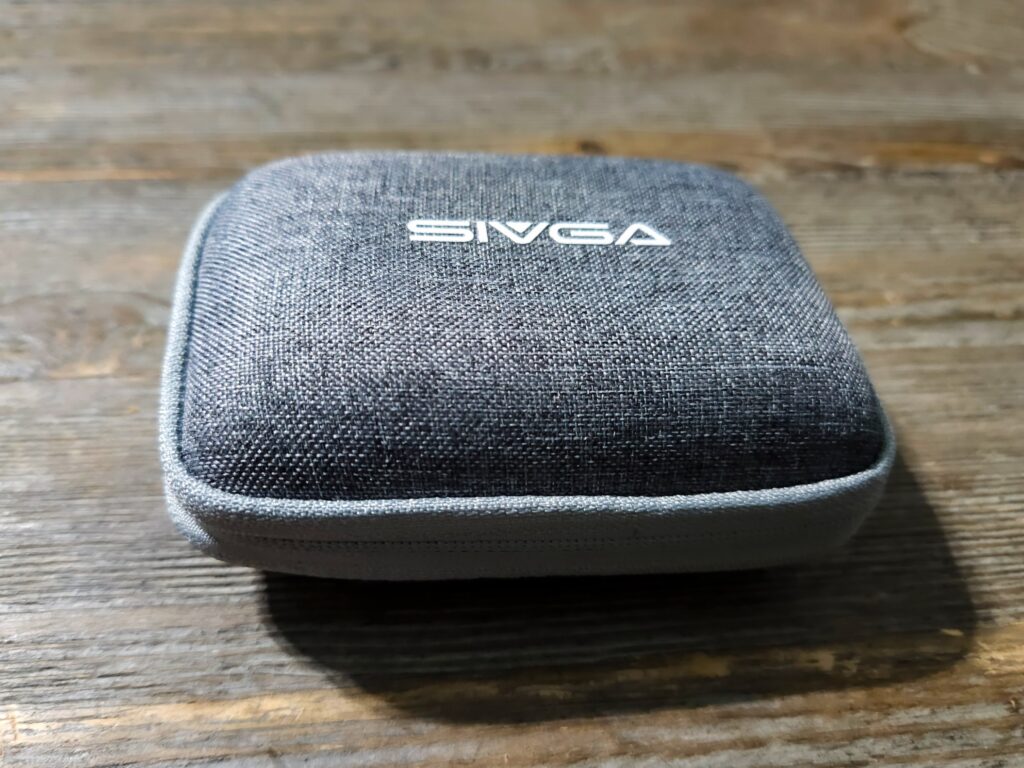
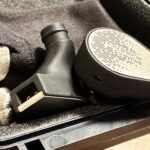
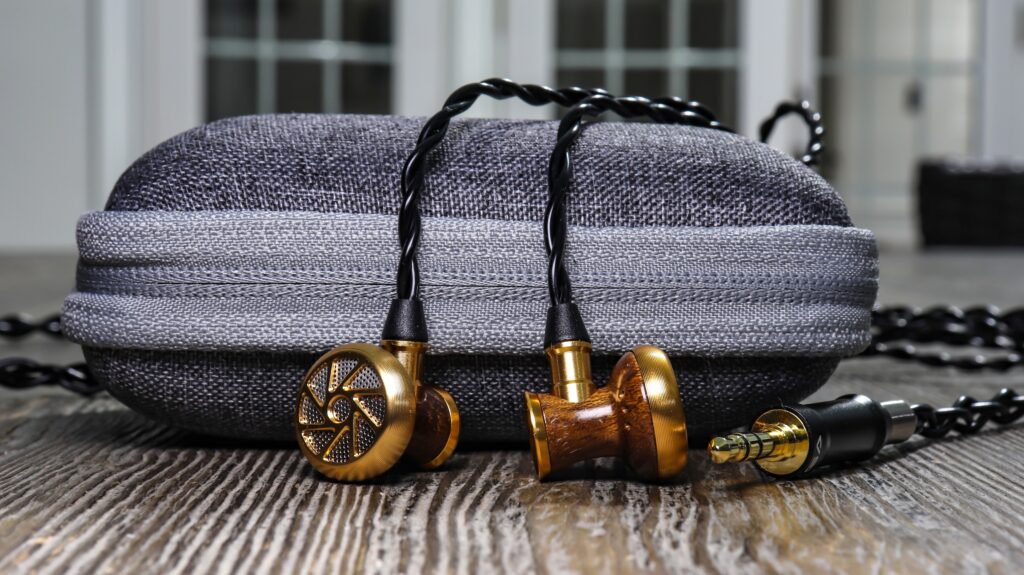
Now, what I didn’t expect at all was to see an actual carrying case. Folks, I looked at the M300 in Sivga’s promotional page before I got this set and I figured for sure that it would come with next to nothing when I saw the low-price tag. Well, I was wrong. The case is what you’d expect from a budget set. It’s a simple zipper case, nice looking too. It’s got gray fabric cladding the outside of the case and a zipper which actually zips and unzips… Weird I know. A zipper that works. Lol. So, the case is easily large enough to carry the M300 and its attached cable as well as all of the ear pads (donut foams) that you’d want to squeeze in there. I’d say you can also fit a small dongle dac as well. At any rate, it’s a nice feature in the package.
Foam Pads
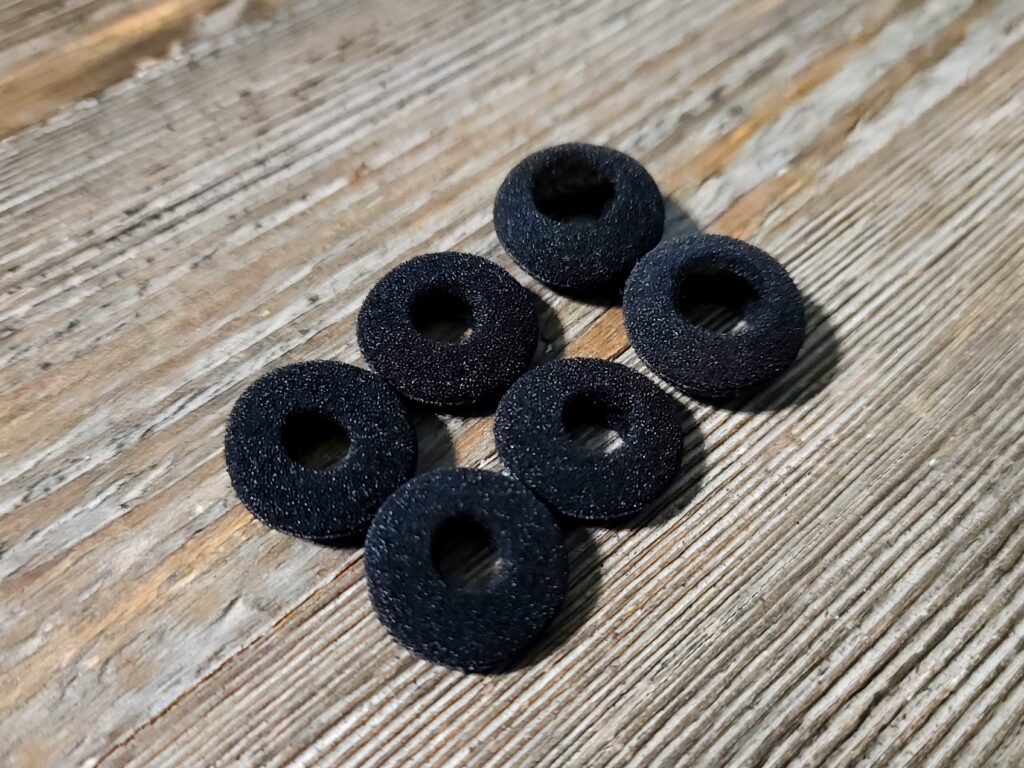
Sivga also provided within the packaging three sets of donut style foam pads which should be expected. I thought I’d see some full coverage foam pads, but Sivga wisely only included donut foams. Now, I have hundreds of foam pads of all kinds that I can choose from, and I quickly found out that there’s a reason that Sivga only included donut style. Basically, this is a warm set and full coverage foams would make that sound even warmer. I know this because I tried some of my own. So, unless you are a total warm-head, I’d keep on the donut style. Or find some of those silicone style pads. I don’t have any more and so I cannot comment on how well they do pair with the M300. That all said, I agree with Sivga, donut style works and they really do help quite a lot in both sound as well as fitment.
Cable
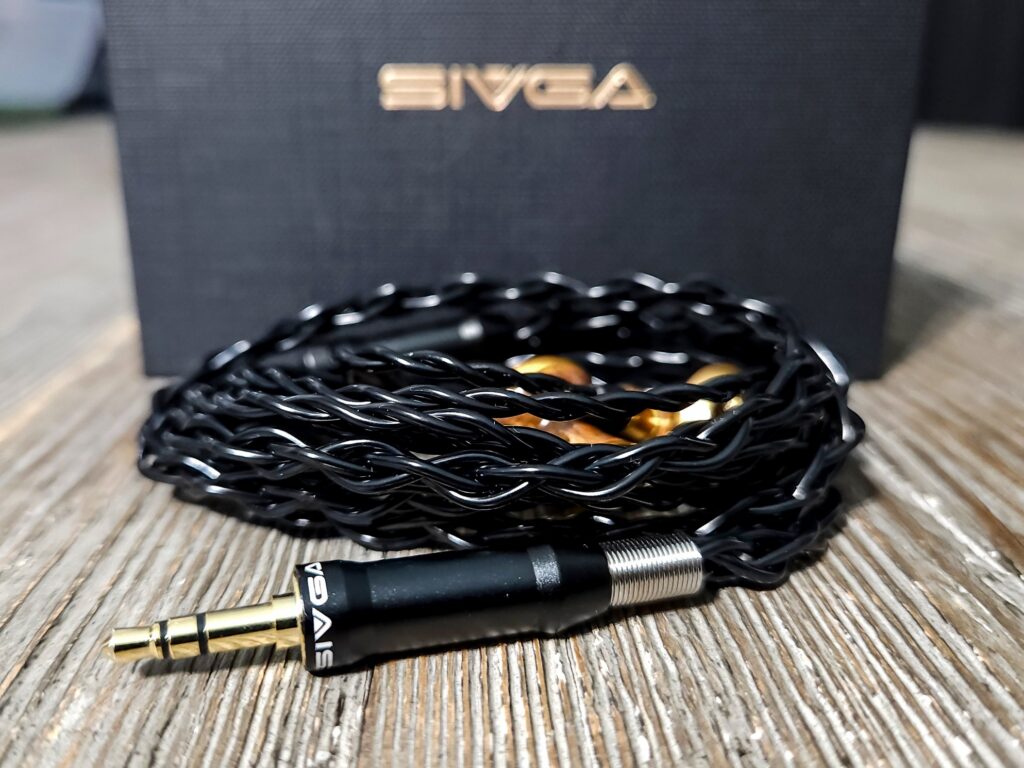
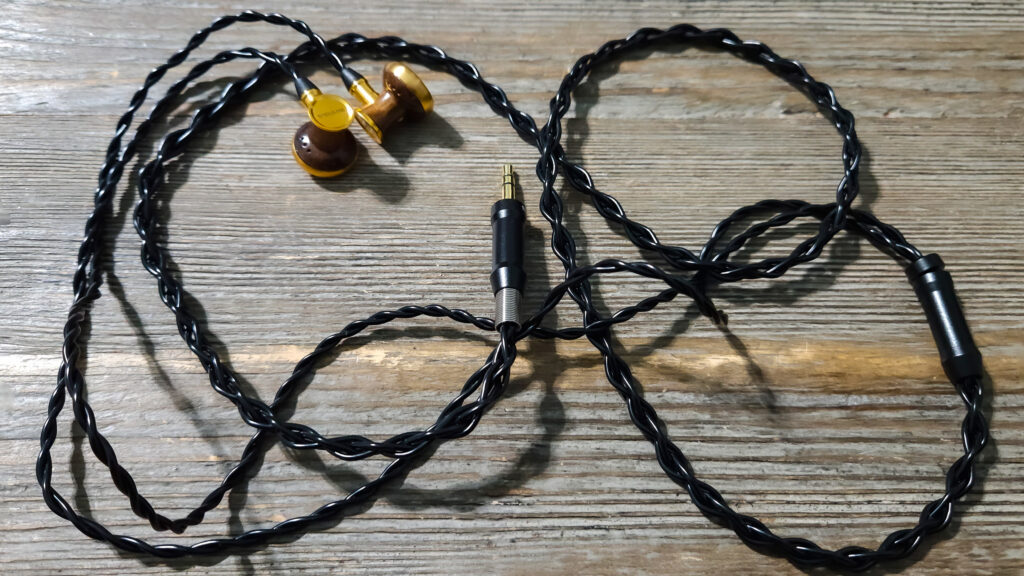
Okay folks, here is the big elephant in the room. It pains me to say that Sivga did not make the M300 with a detachable cable. Now, this is not the end of the world as the cable that is attached to the M300 is actually quite nice. To be exact, the cable is a black braided cable, silver-plated OFC (oxygen-free copper) cable which terminates in a 3.5 single ended jack and has seven cores of seven wires. So, it’s a decently fat cable which would calculate to around 25 to 25 AWG in total. Also, it’s a nice-looking cable. I like the gloss black. I like that the cable rolls up and doesn’t spring all over the place or the earbuds themselves don’t get wrapped up and tied up in a knot every time I go to roll em’ up and store them. However, with all of that said, I think Sivga would have been better served if this cable was either a 4.4 balanced cable, or if it was detachable. We all know that these earbuds typically like a hair more juice which 4.4 balanced usually can provide a bit easier. Also, it’d be nice to be able to put my own cable on these. Having said that, the cable is actually very nice, it looks nice, and it does its job perfectly fine. So, not complaining, I just wish it was detachable or 4.4 balanced.
Build / Aesthetic / Internals / Fit
Build Quality & Aesthetic
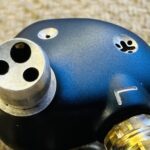
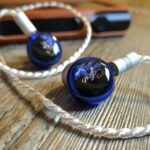
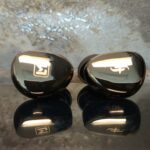
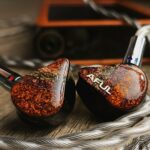
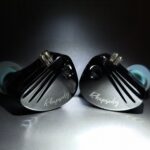
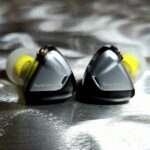
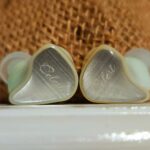
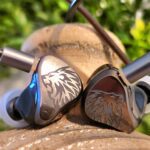
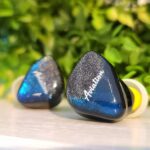
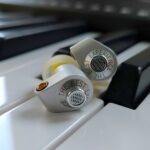
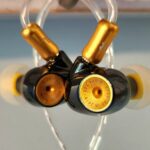
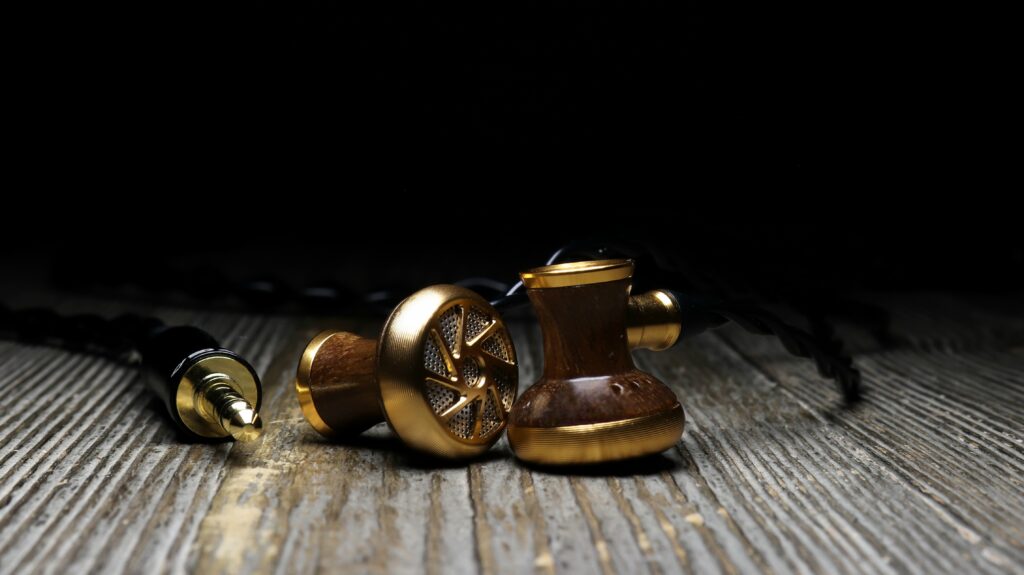
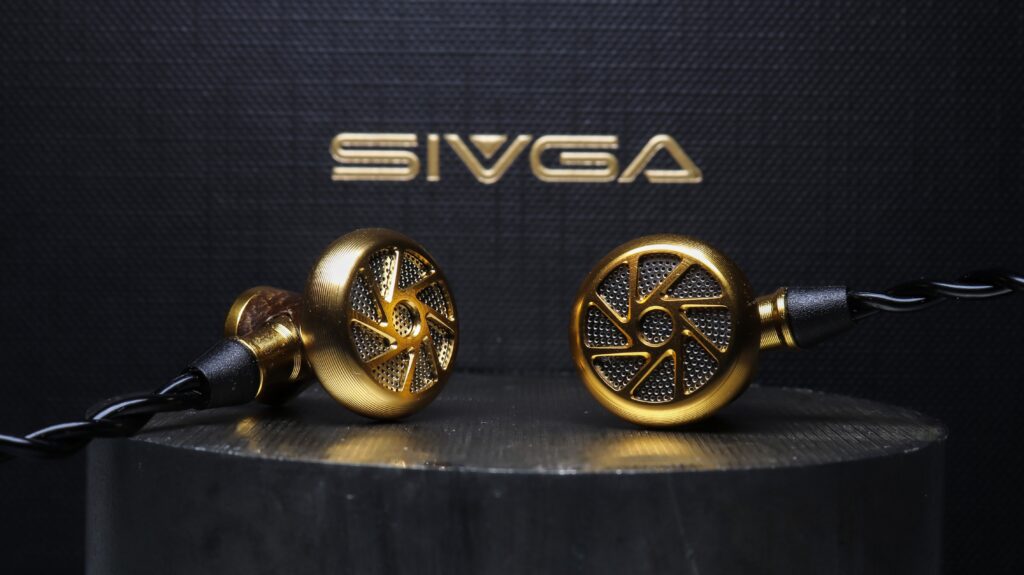
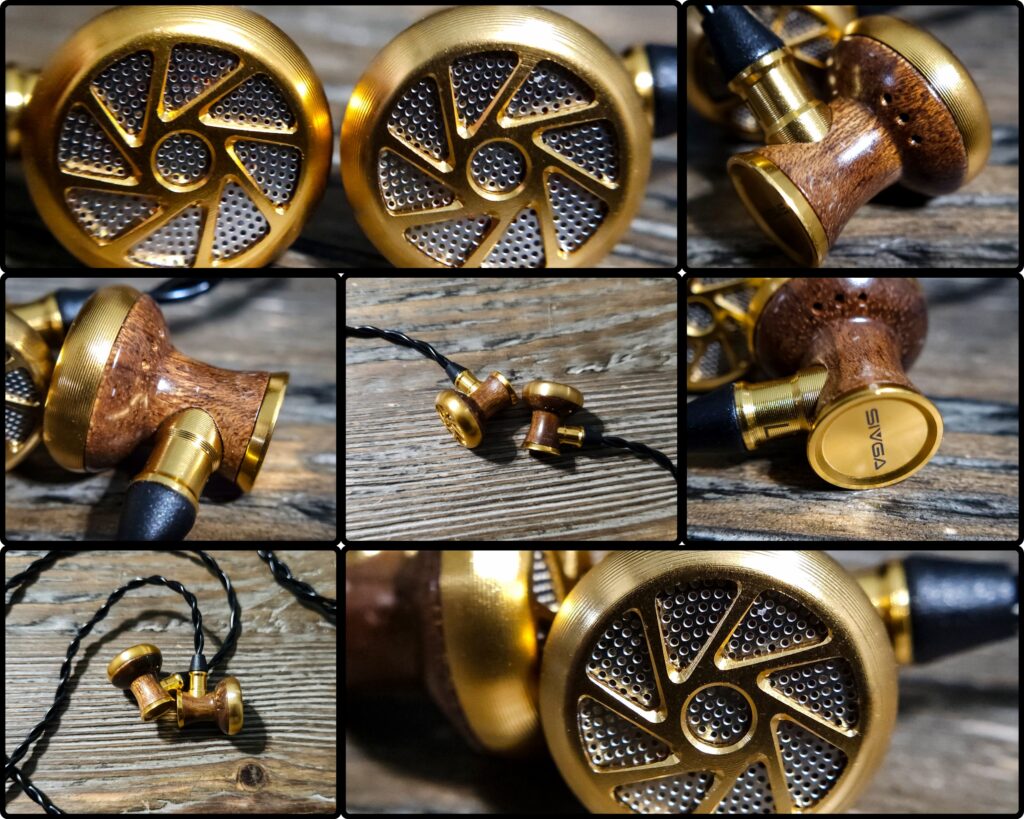
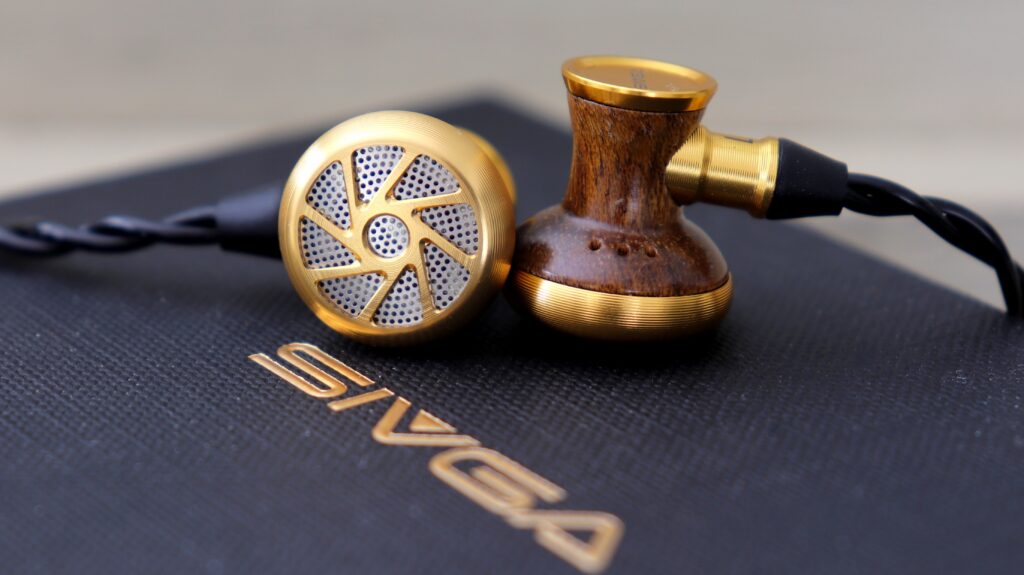
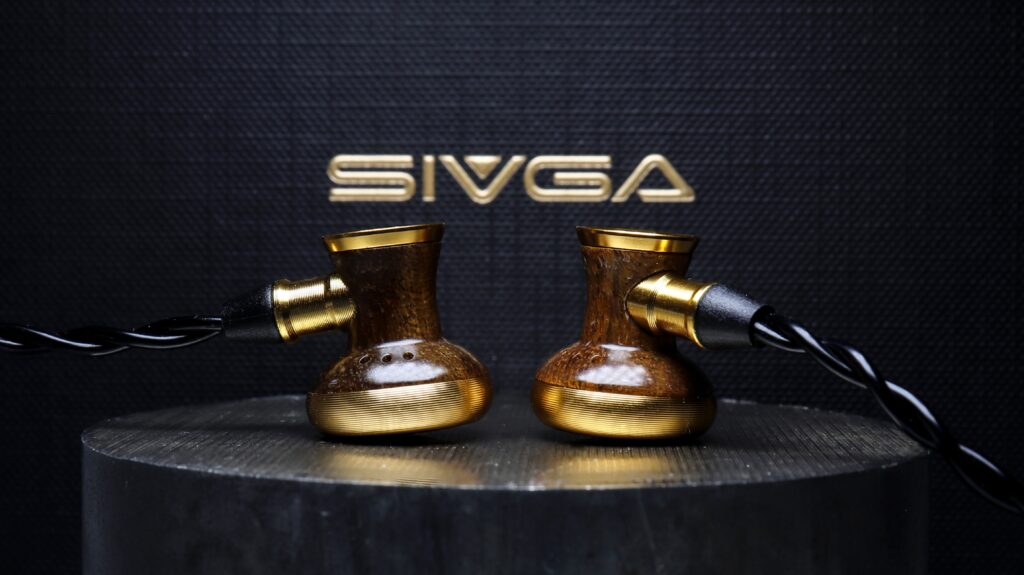
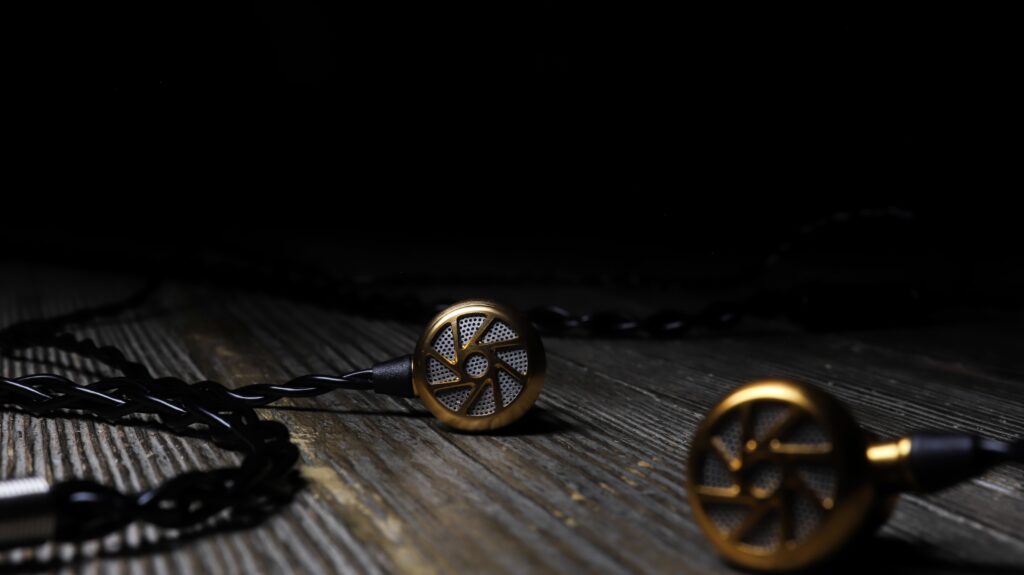
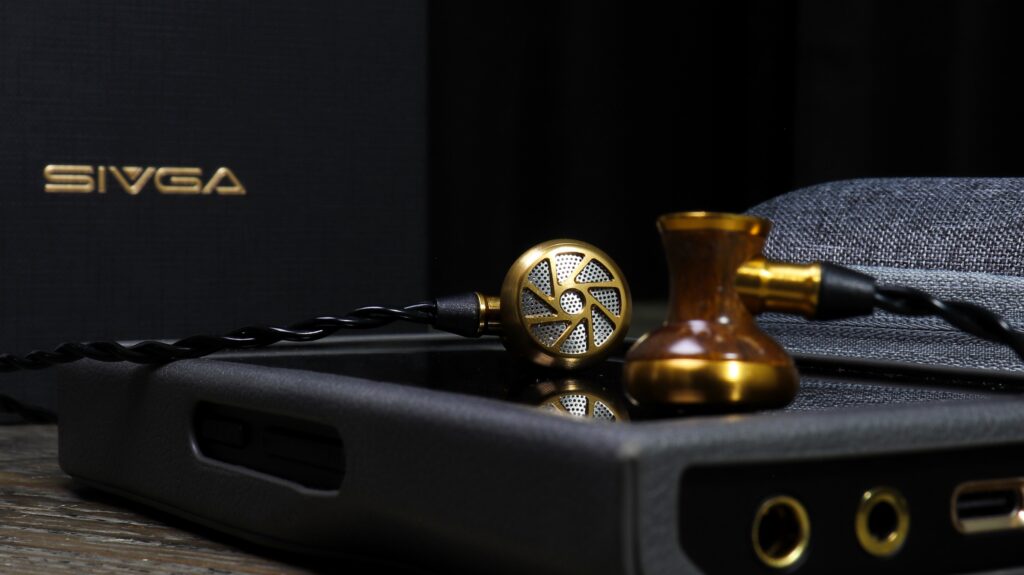
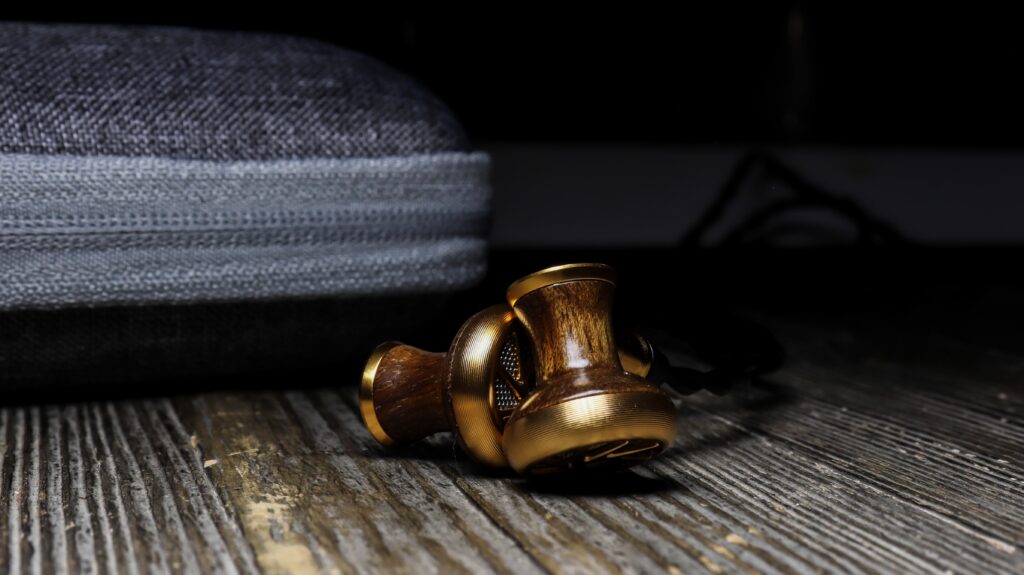
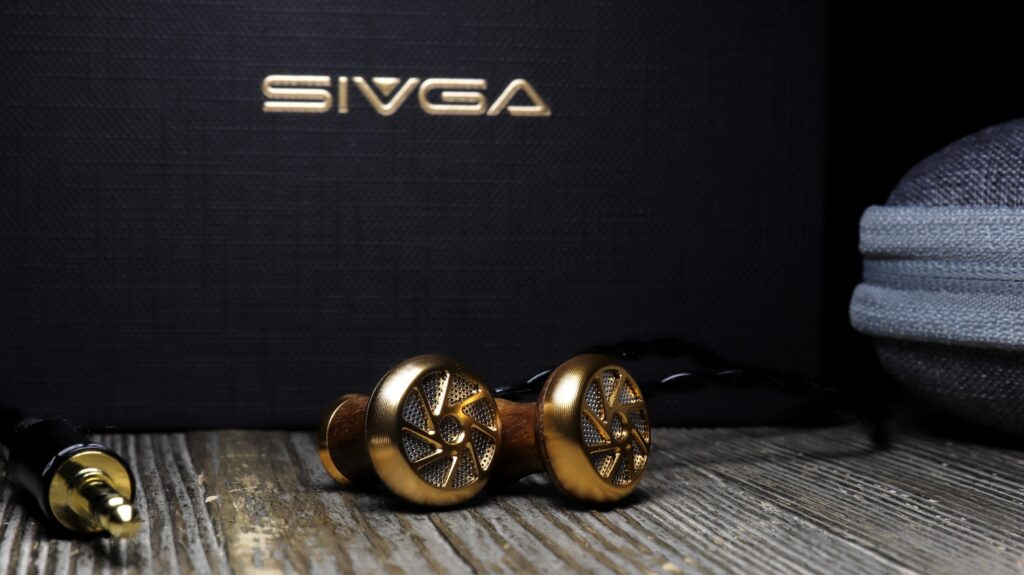
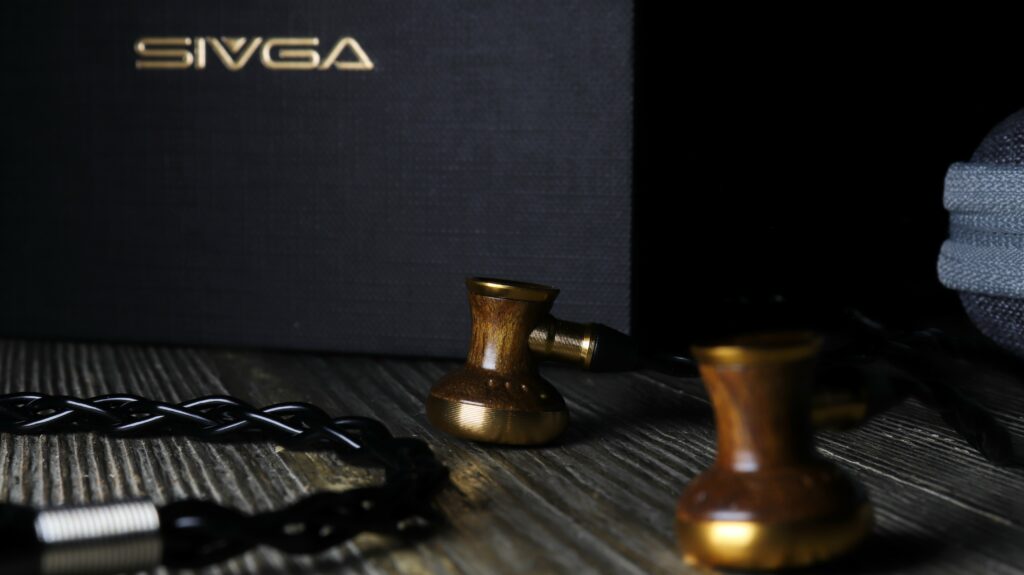
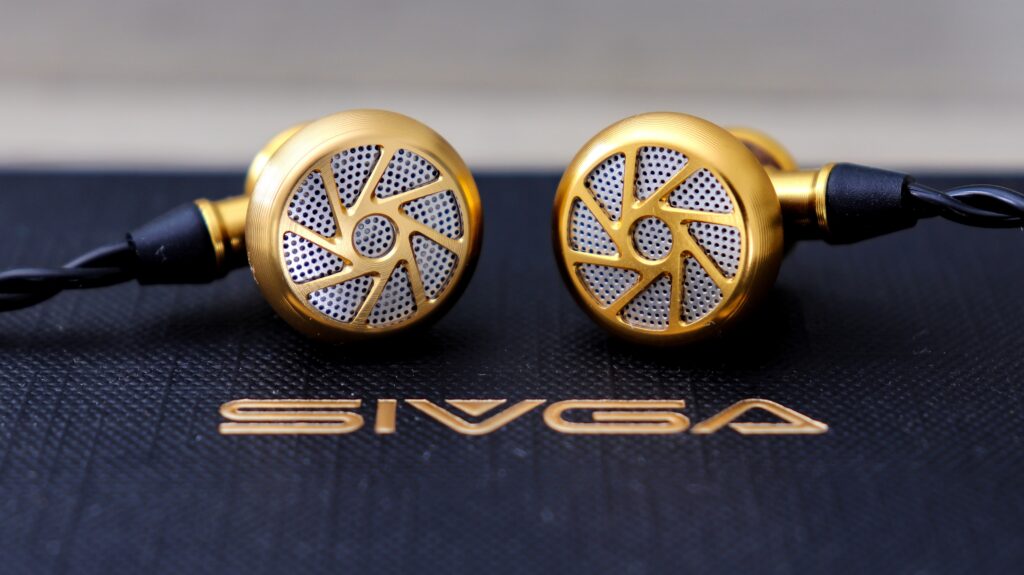
When it comes to build quality, I feel that Sivga is almost second to none. Of course, there are a few brands who prioritize design similar to Sivga, like Kinera and Simgot. However, that takes absolutely nothing away from how well Sivga did on this set. Friends, the M300’s speaker cover and back housing alone is made out of CNC machined aluminum alloy, which is no small thing. However, Sivga had to also source out African Ebony wood for the shells, likely CNC machine them down to a certain point and then finish off with hand polishing and shaping followed by coating and polishing. It isn’t a quick process folks. Remember, the two halves have to be perfectly in line. Not “almost perfect” but… perfect. So, the making of these ear buds is not a super simple task. Also, they are absolutely beautiful. I really mean it when I say, “Kudos to Sivga”! The class with which they craft their products is truly class leading (no pun intended). I’m so taken by the deep brown base color and the darker wood grains; they are so well done. However, they chose the most stylish color to contrast that deep brown color by using gold for the speaker cover and back housing. Not only that, but they also chose a nice-looking gold colored aluminum fitting for the cable connection. I’m telling you, with both the build and the aesthetic I’d say that the M300 looks premium and tops in class whichever way you spin them. Just a fantastic job Sivga!
Internals
Okay folks, so Sivga decided to use a very large 15.4 mm dynamic driver to produce the sound inside of the M300. Actually, that is a 15.4 mm DD with a graphene coated diaphragm. Graphene is actually an allotrope of carbon and not an alloy like so many people believe. Similar to how brass is an allotrope of copper. You get the idea. However, the nice thing is how structurally rigid graphene is. Hence why so many great sets have graphene drivers. The hexagonal lattice structure of graphene makes it incredibly rigid, very lightweight, can be made extremely thin while keeping its stiffness as well as very durable too. Now, I know that not many of you asked for that brief 10,000-foot explanation of graphene, but I think it’s important to highlight some of the materials in these transducers. Every material has their own typical “tonal properties”. Graphene “usually” (not always) carries a very clean sound with solid clarity whether the earphones themselves come across warm & bass heavy or cool and emphasized in the highs. It’s usually a slightly cleaner sound. Also, take that for a grain of salt as it’s simply something that I’ve noticed. At any rate, I like the big driver and clearly it is a well-made driver at that.
Housing
There’s really not much more to report about Internals other than the fact that the wood housing greatly contributes to the overall sound as well. Yes, the housing itself makes a difference. All materials have their own resonances and frequencies which they resonate or vibrate to. African Ebony Wood has its own acoustic benefits in that it is one of the most dense and heaviest wood on the planet. In fact, it’s so dense that it doesn’t even float on water… which is wild. This density greatly helps in absorbing, damping many of the unwanted resonances and vibrations which come from the drivers. This results “usually” in a more organic, possibly warmer, and also typically less euphonic sound. All typical housing materials (resin, alloys, etc.) used in earbuds, or iems have their own resonant effects like ringing or vibrations which massively contributes to the sound which reaches your ears. This is why I always like to see exotic and cool materials being used. Okay, sorry for all of that, I suppose I should move on. This is why I complain to myself about my reviews being too long; sharing information that nobody asked for. Lol
Fit /Comfort
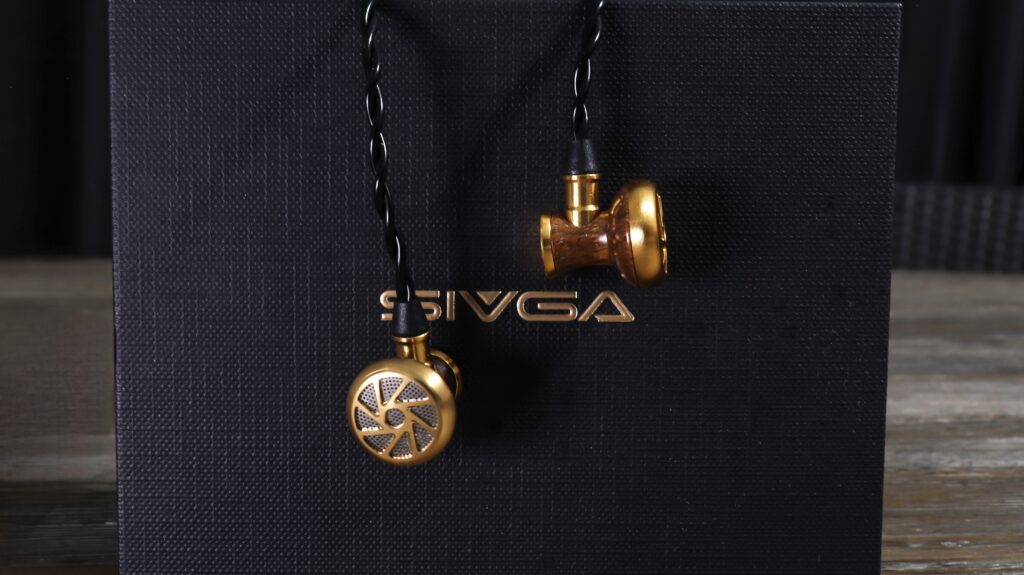
This brings us to the fitment and overall comfort of the M300. In my opinion I find this set to be so well made and about as ergonomic as a set of earbuds can get. Now, earbuds are truly the antithesis of ergonomics as they are huge, they don’t seal, they just sit in your ears. However, the nice thing about the M300 is in the build itself. Mainly in the cable stem length and the overall size. For whatever reason they fit nice in my ears. They don’t obviously seal, but they do sit better than most flathead earbuds. I can confidently say that they haven’t fallen out of my ears, I haven’t accidentally pulled them out, and they fit kind of snugly, which is very rare. Of course, I almost always have to re-seat almost all earbuds after some time. Nevertheless, I most certainly have to do that much less with this set. I do feel that the short stem has a lot to do with that. There’s simply nothing weighing them down and pulling on the M300. Of course, I don’t know how well they will fit your ears. Still, I really like the fit.
Drivability / Pairings
Sensitivity & Power
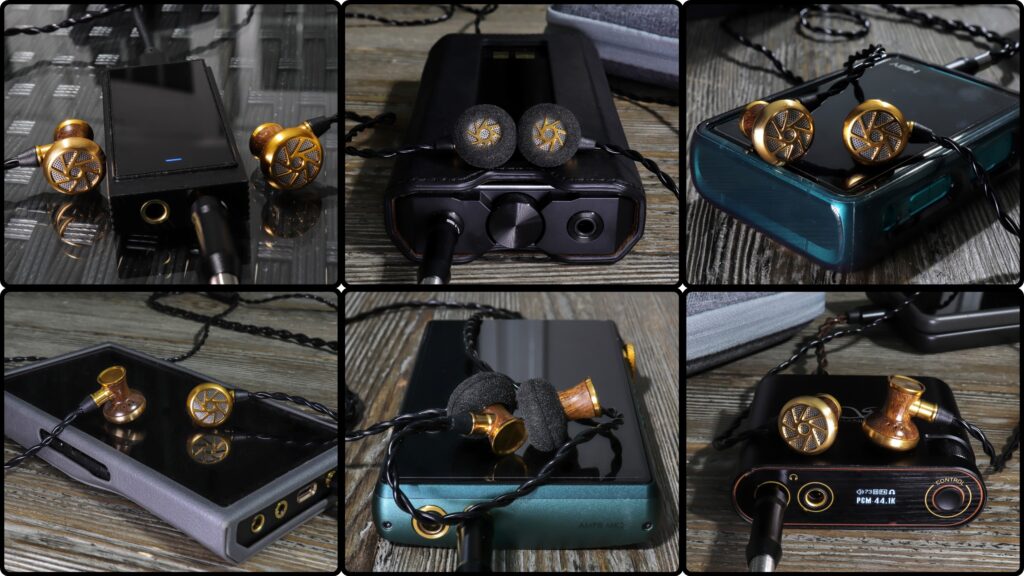
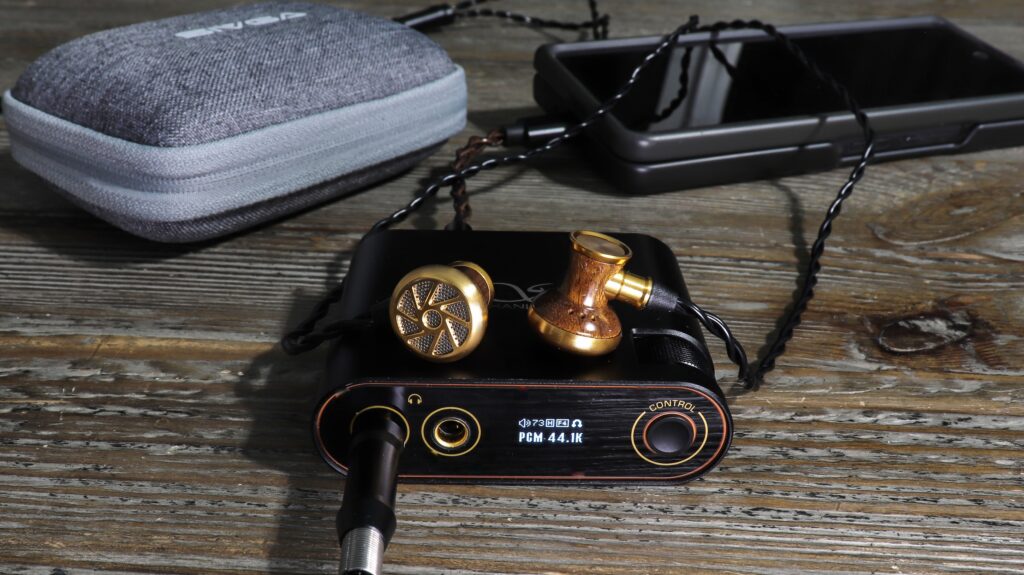
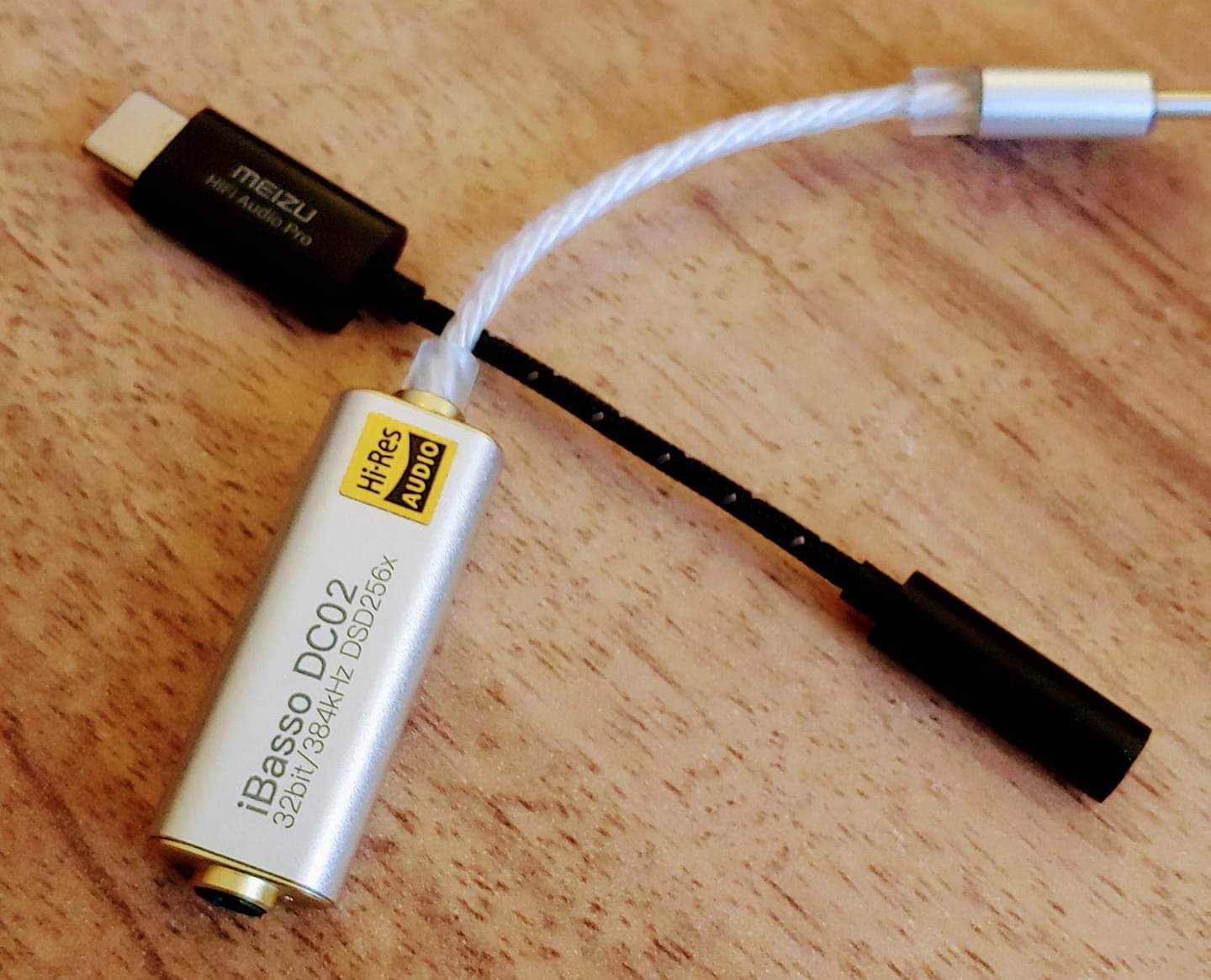
The Sivga M300 is rated with an impedance of about 64 ohms as well as a sensitivity of about 109 db’s. With those facts in mind, I have to say that the Sivga M300 is fairly easy to drive to good volume as I am well able to drive the M300 from many weaker sources. Usually, these flathead style ear buds do take a bit more to properly drive them to good dynamics and best fidelity. As honest as I can be, I really feel that you should at least try to find a good dongle dac to drive this set. At 64 ohms the M300 simply is more restricting of the electrical current than something that is… say… 32 Ohms. Your source will have to work that much harder. I find that at 64 ohms you most certainly should have some sort of good amplifier. Now, I’m not saying that you need one as the M300 will get to decent volume and decent dynamic contrast with somewhat weaker sources. Still, there really is a fairly big difference between driving this set with a more powerful source and a weaker source. Again, I’m not saying you need a $700 dap. I’m simply saying that a good 150-200 mW amp with high gain is what brings this set to its best fidelity. Nowadays you can find numbers like that for very cheap ($35-50) in relation to what the prices used to be. I used every source that I have and some dongle dacs were better than others and stronger & cleaner sources were even better still. So, the M300 scales well.
Source Pairing
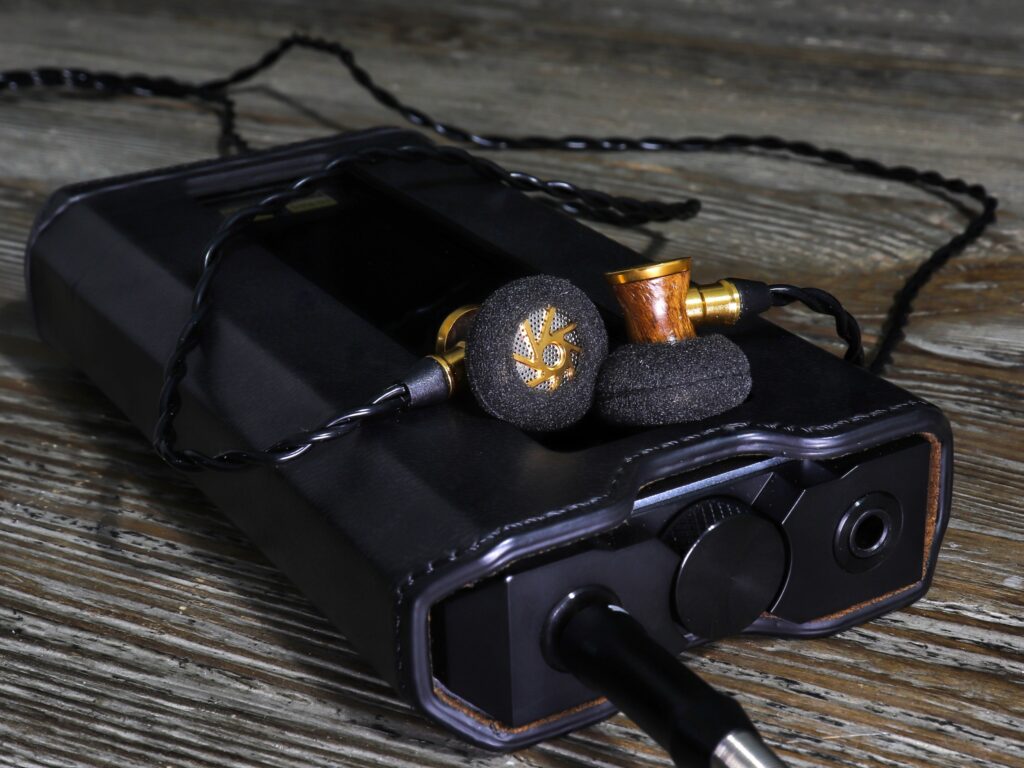
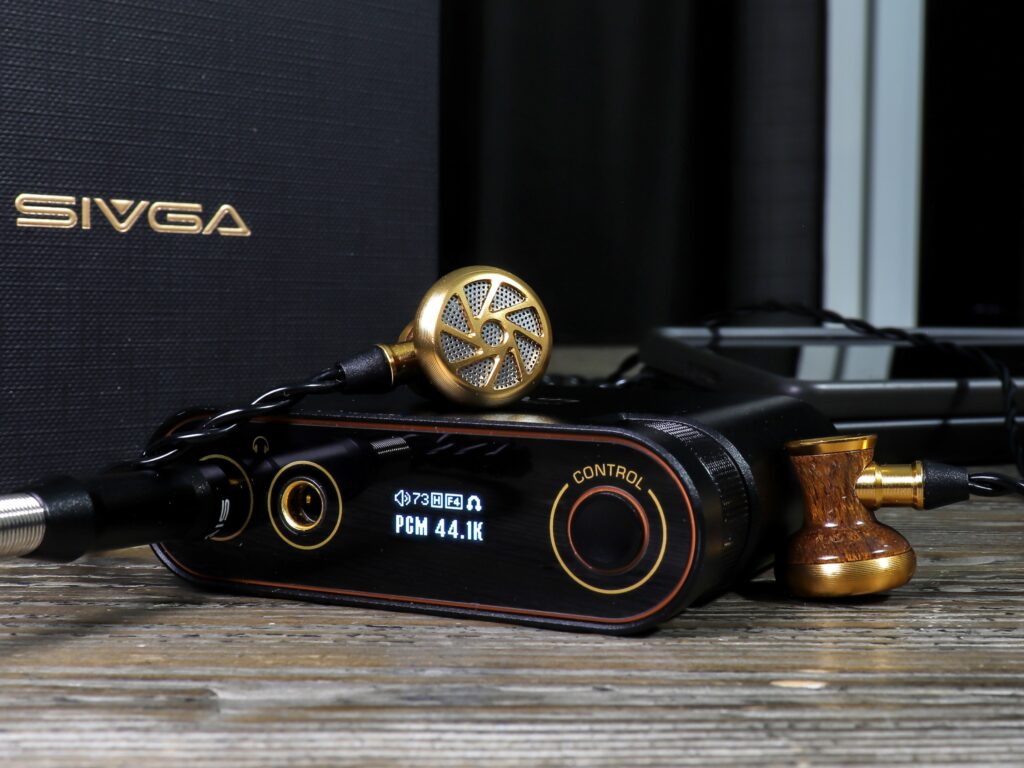
Now that we’ve talked a little bit about power output, I want to discuss tonal source pairing. So, the Sivga M300 most certainly comes across warmer than neutral. I usually don’t get too caught up in tonality pairing between source and earphones, but the M300 really does pair much better with neutral and open sounding sources or neutral/bright sources. The M300 definitely needs a source which will work to balance the prevailing warmth. Unless of course you are a straight warm-head who only desires warmth within your music. Yes, they do exist. Having said all of that, the M300 does sound good as a warm sounding set, but it just sounds better when your source can counter that warmth to a degree. Now, I got my best sound using the iBasso DX240, the EPZ TP50, and the Fiio Q15 out of all of my devices. Each one hovers around neutral with only slight variations between them. At any rate, the M300 does open up a bit more with less veil when listening with a more neutral source.
Recap, what you need
So, just to recap some of my thoughts in this section; you really should try to spring for a pretty powerful source. You can find these on a budget too. I mean, for $40-50 US you can find dongle dacs with power over 250-300 mW of listed power output. There are also most certainly less expensive daps which can also give you some crazy power numbers anymore too. Of course, those cost a bit more money. Anyways, power helps as the M300 scales very well. Also, in my opinion, I feel that the M300 needs a source which hovers around neutral to neutral bright. Once again that warmth of the M300 sounds much more open with a brighter source. It helps to get some contrasting tonal coloration.
Sound Impressions
*Note: before I deep dive into the sound of this set, I want to speak on a few things first. For one, I definitely gave the M300 a lot of burn in. Right around five days in total. I simply let this set play on the burn-in rig and repeat many burn-in special tracks. Next, I listen almost entirely to flac or better files (some mp3) which are stored in my devices. The Android music player of my choice is almost always UAPP (USB Audio Player Pro) as well as Hiby Music Player at times as well. One last thing, I actually used this set without and with foam earpads. I like them both ways though bass is a hair more prominent with pads.
What’s it sound like?
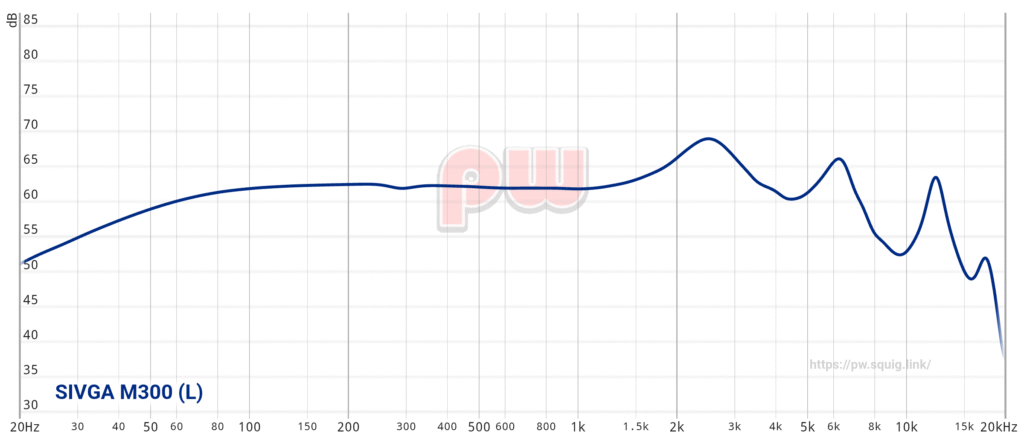
To begin, the Sivga M300 comes across as very much warm-organic to my ears. If I were to categorize its sound as anything I’d call it musical with a nicely engaging quality, very immersive for a warmly weighted sound too. I’d call the M300 an L-shaped sound which is completely non-aggressive. The M300 is easy listening to the max. Not a bright inflection anywhere, yet there is a definite openness which provides spacing, dimensionality, and is not too closed in. Very much an organically earthy sound with a definite mid-bass emphasis as well as a very emotionally charged sound. Very melodic and rhythmic to the core. It has a very groovy sound, full-bodied, and relatively clean in respect to that full-bodied and groovy sound as well as pretty open sounding. As honest as I can be, the sound is actually pretty unique in how its sound is presented. I hear good dynamism for a warmer sound and while macro-dynamics aren’t going to wow anyone, you will hear enough energy within the soundscape to keep your head bobbing and your feet moving.
Over the ear or hanging?
Really quick, I have to relay this info to you. So, the M300 actually has a small enough stem for me to wear over my ears. Friends, for whatever reason the fit that I get when I wear the M300 this way is absolutely awesome. Granted, I get a good fit either over ear or hanging, but the over ear is much better. Usually, these sets will have a long stem preventing me from being able to do this… not the M300. I would implore you to at least try if you have a pair. I found that iver the ear definitely helps to press the M300 earbuds closer to my ear holes and not nearly as loose. There’s a certain difference in the bass output as well as the extension in the treble, density of its notes (to a small degree), and the sound almost comes across richer & more dynamic.
Details?
Without a doubt the M300 is not what I’d ever call a technical beast, but certain macro details do rise to the surface along with a nice transient response. Do not pick this set up if you desire every last detail to be heard in your listening session. Absolutely do not pick this set up if you enjoy an analytical style, a crystal-clear sound, or if you desire a strong treble emphasis. Do pick up the Sivga M300 if you greatly enjoy a musicality-first sound that is extremely smooth, very rich, and creamy in its delivery. Having said that, the M300 actually has an airy-ish sound, pretty open, yet in a warmer climate. Very strange, in a good way. Obviously, the open ear style of a flathead earbud is what provides this. However, I’d also say that the warmth in its sound doesn’t necessarily cloud or veil the mix either. Again, it has a clean-warmth.
Won’t be for everyone, but will be loved…
Having said all of that, this set is absolutely not going to be for everyone. In my opinion the M300 won’t be loved by everyone but will be adored by some. Basically, the M300 is not an energetic sounding set. You will not get those high-end shimmery hues and bright inflections. The M300 is not going to come across as that super high resolution and clarity rich sound on certain tracks too. Now, I do believe that for a warmer sound the M300 has nice clarity, but generally a warmer sound won’t be perceived as the most transparent. Just like any set ever made, the M300 is not going to fit everyone’s likes and dislikes perfectly. Now, I say all of that to then say resoundingly that the M300 will absolutely fit many people. It’s a warm set which works very well with many different genres or types of music. The only genres which may not work are those which require that deeper sublevel rumble and depth or any genre which lives off of those brighter and more energy rich tones. I find that acoustic stuff, like Singer-Songwriter tracks, Jazz, Classical music featuring piano, strings, violin etc. work great, any live music typically sounds great too, or Classic Rock as well. I’d also say that Indie/Folk jams or Alternative Rock works well with the M300. I could also add Pop, or even R&B (non-bass-driven R&B). What won’t do as well is Hip-hop, Big Orchestral segments, Metal/Metal Core, EDM and probably Techno will not be a perfect fit. Of course, that is just my subjective opinion. The good thing is that the M300 does fit a pretty wide range of genres.
Bass Region
The low-end of the Sivga M300 depends largely on your fitment. Just fiddling around with the M300 in your ears while listening to music will tell you that right away. Of course, this is always the case with flathead style earbuds. The truth is that, with a solid fitment the M300 sounds fantastic in its low end. I hear an audible thump and some pretty nice slam for a pair of earbuds with a relatively tight control of its transients. In no way was I expecting to have actual good bass. I wasn’t expecting actual surface texture and perceived tactility. By all means, the M300 won’t match any good in-ears with its texture, but it really does fare very well against similarly priced earbuds. To my ears I hear a moderate level of solid emphasis which certainly peaks out in the mid-bass yet doesn’t exclude the sublevels at all. Having said that, do NOT expect a super heavy level of deep earthy rumble and bulbous slam. Naturally earbuds don’t have the seal to bring that juddering bullish weight of a good in-ear, but it’s nice and existent. This bass is afforded just enough low-end weight to give fullness to bass guitars (just enough), some body to kick drums, and some richness to baritones. Yet on top of the moderate level of oomph given to this region the bass is actually very clean too. Nicely defined, never one-noted, and pretty compact as well. You see, this is not a sloppy bass, not a muddy bass, and not a bass which will invoke its will frequency wide. I want to stress… the fit is a huge key.
Sub-Bass
I’ll be quick with this because you already know that you aren’t going to hear some super rigid and dense sub-bass with juddering levels of rumble. It’s not going to happen folks. In spite of that truth, the M300 also doesn’t disappoint considering the style of earphone. Some tracks will come through with a hair more depth and rumble than others, but for the most part the sub-bass is always clean and comes with solid definition. So many earbuds will have a pillowy and flat sound in this region unless they are boosted to the stars to make up for the fit. Sivga has done a tremendous job of creating a solid acoustic cavity which does well to manage the resonances & airflow provided from its massive 15.4 mm dynamic driver. If you can achieve even a partially solid fit then you should be able to hear that somewhat stiff and impliable style sublevel rumble. On top of that it’s a reasonably nimble sublevel response too. Really not bad at all. Much better than what I expected.
Mid-Bass
The mid-bass takes the mantle for emphasis in this low-end because with the looser fit of an earbud style the mid-bass naturally sounds more robust. In any event I still find a good balance of the mid-bass with the rest of the mix. Now, there is some bleed into the midrange, and the bass definitely adds some richness to that region, but I find that it is a healthy and appropriate enough amount. Tracks like “Kids with Guns” by the Gorillaz actually sounds pretty heavy with its rolling bassline feeling fairly weighted and fun. I love that the M300 reciprocates what a track is asking of it. Let’s get a couple things clear; this is in no way a basshead caliber bass, and on the flip side it isn’t a weak bass either. That should tell you a lot. What it doesn’t tell you is how well defined the mid-bass can be and how well textured it can be too. Again, remember the caveats; good fit and these are ear buds. For an earbud the contour to notes is better defined than many under $100 earbuds. It can tackle complex bass passages well, with solid control. Again, not sloppy. The bass also adds some nice presence and prominence to the overall sound acting as a pretty strong footed foundation. I said a few times that the sound (as a whole) is warm, it’s rich, it’s liquid in its cadence, smooth in its demeanor. So much of that comes from the bass region and the measured lift that Sivga tuned it to have. Really, it’s a fun sounding bass, but also a quality bass. I’ve been very pleased.
Downsides to the Bass Region
The obvious downside is that you need that solid fitment with at least a semi-close fit with this set. Again, I’m able to go over the ear which drastically helps me to get the speakers close and to easily maintain that fitment without the M300 moving. However, with that said, this bass region will not carry enough oomph for many folks. Just the nature of the beast. Next, the sublevels are never really authoritative or bullish to my ears. Sure, they are there, and they can be heard, but the sublevels do tend to lack a bit more than the rest of the bass. As honest as I can be, the M300 has a pretty high-quality bass which mixes fun and maturity rather well. It will not please bassheads, and it won’t please analytical-heads, but it should please casual fans of quality bass.
Midrange
This naturally brings us to the midrange of the Sivga M300 and it is arguably its best quality. I did say “arguably”. No doubt the bass has a lot to say about that. In my opinion, the mids represent the focal point of the sound even with its warmer bass prominent sound. No doubt the bass. Anyways, I’d argue that the midrange presents the heart of the spectrum with a very warm-natural and earthy sound which comes across as a nicely colored version of organic. Very smooth, fluid, cadent, and definitely tuneful. A great midrange for a nice acoustic guitar riff on a singer songwriter track. Now, with that smooth cadent delivery the M300 also has a sharper and more distinct note outline for a smooth sound which contributes to the overarching theme of warmth and cleanliness. I hesitate to say that micro-detail retrieval is better than I anticipated because the M300’s midrange will not compete with in-ears at this cost, but it will draw some minutiae to the surface nicely. Really, it has a pretty tidy sound with better-than-decent clarity. Furthermore, the M300 shows off natural transients that hit the ear with clean note outlines (for a flathead earbud) which aren’t full of the veiled murkiness of other sets with a predominantly warm and bass driven sound. Additionally, the midrange does have a subtle layer of air which provides some space for notes to breathe. As warm as it is, I don’t find it to be congested. Now, there is a slight lower-midrange recession, and the upper midrange is not that sparkly and shimmery style, but the midrange has a very well adjusted and even-handed delivery which gives male & females a good canvas to operate within my music library.
Lower-Midrange
The low-mids on the Sivga M300 come across as full bodied, certainly rich, and they definitely have enough energy to sound as though they don’t lack presence. However, there is a subtle recession in this region. I don’t think it’s enough to cause stuff like male vocalists to sound too pushed to the rear of the sound field. But there is a slight recession. Now, being that the low-mids have a richer sound, in complex tracks this region does sound a hair too cramped. Less distinct note contours, less air, and slightly less definition too. Everything is a give and take in tuning and the low-mids seem to be on the short end of the stick on the M300. Having said that, I do not think that this is a bad sounding region at all. Just complicated tracks. In fact, most male vocalists come through with pretty good clarity, authoritative, and moist. Also, the timbre within the low-mids sounds very close to natural with its warm leaning and earthy sound. This helps instrumentation tremendously. All things considered, the lower midrange are well tuned.
Upper-Midrange
Now, the upper midrange cleans things up a bit with a touch more energy, sprightliness, and airiness. There isn’t a harsh or sharp note to be found in this part of the spectrum. Yet this region also has plenty of toned-down vibrance providing great presence for females to shine. Speaking of shine, there is some shimmer too. Granted, that “shimmer” stays well within the framework of a non-offensive and totally warm/smooth sound. Basically, it’ll never make you wince from pierce or force you to turn your volume down. I can appreciate this very much. Just very clean and clear along with what I’d call an emotionally gratifying tone and timbre. Definitely it’s one of those sets which carry a very engaging inflection to just about every note within this region, and the midrange as a whole. Now, the upper midrange won’t provide that ultimate sparkle or analytically clean displays and it won’t be considered the picture of technical ability. This is a very musical, very rhythmic, and very well bodied sound which isn’t without solid texturing. Without question, the M300 does the upper midrange in a musically rich and even moderately airy way. Females definitely thrive with this particular tonality. Nothing thin, nothing dry, nothing harsh, no sibilance whatsoever, and there’s nothing even close to grainy. The sound simply flows in a very wavelike manner without a coarse, aggressive, or abrasive edge to be found.
Downsides to the Midrange
The largest and easiest to spot issues in the midrange (in my opinion) is the fact that even with the subtle warm airiness, the sound somehow never sounds perfectly transparent. I’d even say that detail retrieval isn’t bad at all. Still, when a sound is this warmly coated it won’t sound as clarity rich as a set with more sprightly and vivacious dynamics. Nevertheless, I really only have good things to say about the M300’s midrange. Of course, I have had plenty of time for my brain to process the sound, to take it in, and plenty of time to find the beauty in its sound signature. Something that not everyone has the good fortune to have. Still, the midrange isn’t that super clear, super clean lines, super spaced, super airy, and super detailed sound. This midrange is for those who appreciate and admire a musically gifted sound. It’s fluid in its cadence, as every intonation and accentuation moves along with rounded corners and smooth tones. Very likely it’s the midrange which is the M300’s best quality.
Treble Region
This brings us to the treble region. Now, if I were to have a gripe concerning any region in general, it’d be the treble. Nevertheless, since this is a set of open ear earbuds I find that all those tonal gripes almost go out the windows. I only say that because there isn’t a whole lot of vibrant energy or uplifting tonal energy. However, the beauty of the M300 and some other flathead style earbuds is that there is still a very open feel to my music. Make no mistake, this set has a very smooth treble. Meaning, the crispness and edge bite are all but smoothened over… just like porcelain. Here’s the kicker, the treble is certainly on the warm side of the aisle, it’s certainly not bright, and it certainly could use some vivaciousness… but it’s still very clean. I mean, very nice clarity even with its bodied note delivery and creamy textures. In an odd way the sound is actually decently detailed and resolute. You’d never say this about a set of iems. At least, you’d rarely say that. The M300 actually has a very steady, very balanced and measured approach which does uplift the sound in openness, which does add space for instruments, and does provide some levity to the sound. So much so that I wouldn’t call it dark or too rolled off. No, you won’t have that tinsley bright edge detail on a silvery violin, and you won’t have that sparkly harmonic from most cymbals etc.
Tuneful
However, you will have good sonic representation from the treble. It helps the overall sound to come across as musical and as tuneful as it is. Obviously Sivga was tuning this treble to be a good supporting actor, and they tuned this treble to follow suit with the rest of the mix. It’s actually a very fitting treble. Now, could I use some more lustrous inflections and a livelier expression of this region? You betcha. I do think that Sivga would have had a more balanced sound and more of an all-rounder with a bit more zest and crispness. That said, the treble plays its part just fine. The perfect mix of relaxed overtones and open spacious air for anyone who enjoys a warm, rich, and euphonious sound.
Extension
One of the key benefits of the M300 is its very nice treble extension. I really mean it folks. It has very nice extension without all the shimmering radiance that most sets carry. Furthermore, the treble doesn’t kill your ears in fatigue. Folks, there has literally never been a moment that I had even a whisper of glare from this region, yet it comes across as a definite aid to the soundstage. The extension does provide some psycho-acoustic depth of field and slight stretching of the sound field. Also, that air and openness that I’ve been talking about is easy to hear. Sure, it won’t give you the nice, brilliant note rendering that so many enjoy, but I also don’t think it’ll let many people down either. I suppose this is where I say that this set is obviously NOT for treble heads.
Downsides to the Treble Region
This set has a very obvious downside in its treble region, and I really don’t think that I need to explain it again. I’m pretty sure I did that. Granted, I also praised it for the way it goes about not having ample brilliance. Still, there are so many people who need some energy and true vitality from this region. I think it’s pretty clear that we are lacking some energy in the presence region. I think it’s pretty easy to decide if the M300 will fit your preferences because this set is so one sided in its delivery up top. With all that said, the M300 could absolutely use more emphasis all throughout the treble. It would have been awesome to hear a bit crisper note outline, better textures, and a hair more knife edged snap to this treble. In the end, the M300 will fit well with many just as quick as it will turn some people away. I think the treble fits the overall tuning just fine and it is without question one of the easier sets to listen to for hours on-end.
Technicalities
Soundstage
As far as the soundstage I have nothing but good things to say about this set. In truth, I’ve been saying this the entire review. That is, the soundstage is spacious. It may have average height, but the M300 has great stage width. What’s even more impressive is the M300’s depth of field. This set has some decent to very good front to back recognition and very-very good dimensionality. I find this to be the single most important feature of any soundstage, but particularly with the M300. Overall, it has a spacious and open sound which is very nice to hear.
Separation / Imaging
When it comes to sound separation, or instrument separation, to my ears the M300 is about average. Meaning, it won’t come across congested, but it also won’t have Ultra distinct space between notes. How many times have I said that the M300 carries a very rich and smooth sound? Maybe fifty? It isn’t meant to be the best technically. This set wasn’t tuned to sound perfectly transparent with lightning-fast transients. The M300 wasn’t made to pick up every last detail. Yet the bonus of this style of sound as well as the expert tuning within the M300 is that I truly never hear anything that I’d call “congested”. Maybe horribly compact, complicated, and poorly recorded tracks. That is about it. Now, Imaging on the other hand is actually pretty spot on. No, it isn’t the most clearly defined imaging, and it’s much more smoothly rendered, but it has very nice positioning. Sure, you can tell the difference between a very analytical, dry, and clinical set over the musically rich sound of the M300. However, I do find this set to be very clean for what it is and for how it was tuned.
Detail Retrieval
Another feature technicality that the M300 does well enough to be called average in is detail retrieval. The M300 does great with less complicated tracks and will surprise some people. Remember, this set does have better than average clarity. This is not some veiled mess of bass mush and for all of its warmer hues I still find resolution to be very nice. It has clean note outlines, sufficient space between instruments, transients which come across natural and not sluggish, as well as a very spacious stage. Add all of that up and you come to the same conclusion. That is, the Sivga M300 does an admirable job at drawing out the details in just about every track.
Comparisons
Dunu Alpha 3 ($64)
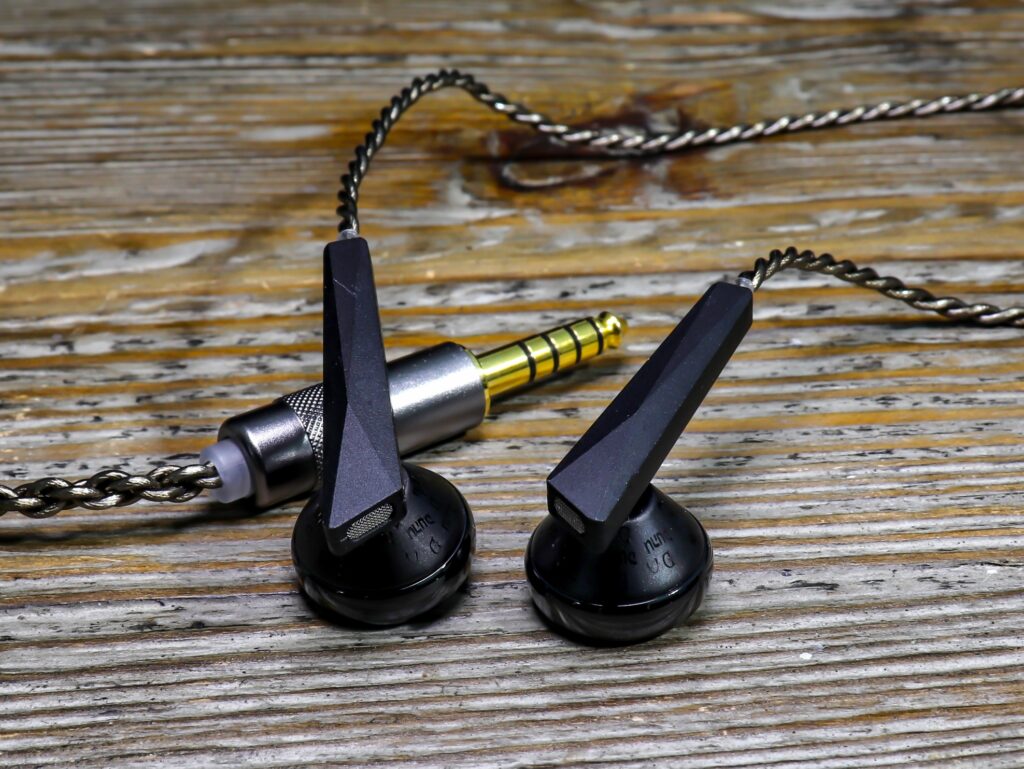
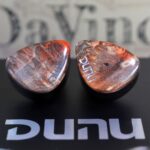
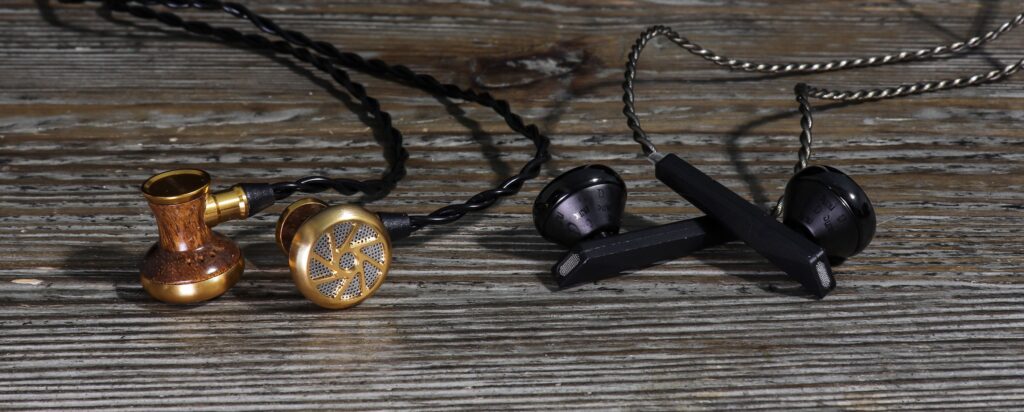
The one comparison that I felt like doing today was with one of the better tuned flathead style earbuds under $75 named the Dunu Alpha 3 (Alpha 3 Review). The Alpha 3 carries a 14.2 LCP dynamic driver as its transducer and has a long stem design with one of Dunu’s tight braid cables. The beauty of this set is that it also has Dunu’s tuning as well. In all truth, both sets fight within the same under $75 price point, and both are two of the top flathead style sets within that price range too. So, I find these two are a nice comparison for a couple reasons. For one, it helps the consumer know which may suit them better, and two, it helps me to explain the M300 a bit better. Anyways, let’s check out some differences as well as some similarities.
Non-Sound Stuff
Both the M300 and the Alpha 3 come with a nice enough unboxing for the cost. Both have nice carrying cases of about equal value, though the Alpha 3 comes with both donut style foam earpads as well as full coverage (standard) earpads. When looking at the build quality I think there is no question that the M300 is far and away the better built set with a much more meticulously crafted and artistically designed set. I’m sorry but the African Ebony wood is light years better and much better looking. Also, the M300 has the short stem which means it’s less heavy, and you can wear it over the ear as well as hanging. Remember, I wore this set over my ear for most of my critical listening. That short stem is a game changer. However, you can see that Sivga simply knows how to design with much more care, and much more desire to impress. Also, the cable of the M300 is definitely better… looking. Those super tight braided Dunu cables get a bad rap because they aren’t the nicest looking cables, but they are made well. So, I’ll give them that, but the design isn’t even close. Aesthetically the M300 just demolishes the Alpha 3. No contest! Now, one thing that is much better in the Alpha 3 is the fact that you can purchase this set with a 4.4 balanced cable. In fact, the set that I own and compared today has a 4.4 balanced cable. This makes a huge difference. Both sets desire ample power delivery, and both sets scale very well. It would have been very nice to see the M300 with a balanced cable.
Sound Differences
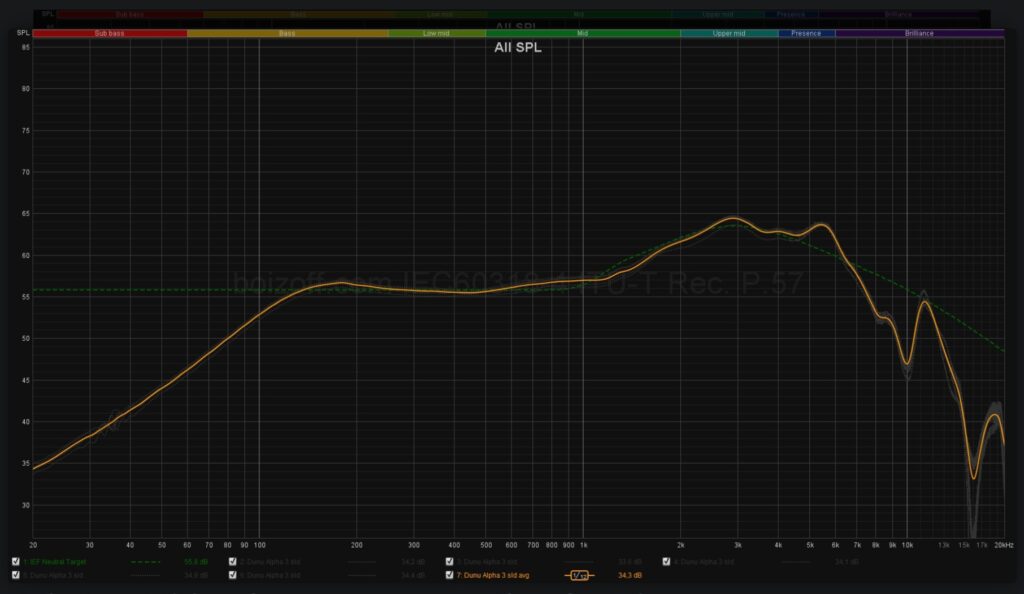
When it comes to sound differences, I can say for sure that the M300 comes across as warmer, more velvet in its character, smoother, richer, and traditionally more musical sounding. The Alpha 3 has a more balanced approach with slightly more brilliance up top and a slightly better detailed sound. In my opinion I have to label this “almost” a preference battle. They are different enough “tonally” or “tuning-wise” to not really compete against each other. Yeah, they are close in price but these two will offer the audio faithful two different tunings which complement each other very well. I will say that the M300 is a hair harder to drive as it comes in at 64 ohms with a sensitivity of 109 db’s to the Alpha 3’s 32 ohms and 105 dB sensitivity. It’s actually plain to see. Furthermore, the M300 has a blacker background, cleaner, and it does scale a bit better in that it clearly sounds better with more power. This is either a good thing or a bad thing. However, both scales well. Next, I find the Alpha 3 pairs ever-so-slightly better tonally with more sources in that it has a more balanced approach to its tuning.
Each 3rd of the mix
Beginning with the bass region, I find that the Alpha 3 has less of a low-end prominence. You can hear the more guttural, deeper, more earthy bass of the M300 along with what I feel is the more authoritative and also better-defined bass. The midrange of the M300 is silkier, richer, more forward, more emotionally engaging to my ears. However, the Alpha 3 carries a higher resolution simply due to its more shimmery sound. It has better detail retrieval, note separation too. Also, the treble on the Alpha 3 has more energy, it’s more vibrant, more brilliant. With that said, the M300 actually has even better upper treble extension. Which is neat, being that it has a less luminous treble. I find that the M300 does have a wider, and deeper soundstage with better layering of sounds. The Alpha 3 takes the award for the better details, and it has tighter transients along with better note distinction, more energy and better tonal contrast. But the M300 has better and more realistic sound field positioning and layering abilities. Honestly, they are just different but both fine sets for the cost.
Final thoughts on this comparison
As honest as I can be, I just think that the M300 is a more refined earbud. Its musically rich style is so much easier to engage with. Especially with earbuds. I just feel that if you aren’t going to be a super technical and ultra detailed set of earbuds, you better be fun, at least somewhat bass driven, emotionally charged, and immersive. That is definitely something that the M300 has going for it. Again, both sets are very solid for the cost, but the M300 seems to have more going for it at this cost, for me anyways.
*Note: I couldn’t find a comparison graph for these two sets. So, I’ll simply add in the graph for the Alpha 3.
Last Word on the Sivga M300
I won’t go too long in this last segment as I think we’ve run this review through the paces. We’ve talked about a lot folks. What did we learn? Well, we learned that the Sivga M300 is a very musical sounding set with plenty of upsides and easily has one of the most engaging sounds under $75 for a flathead earbud. I give Sivga a ton of credit for creating an extremely unique, classy and gorgeous set of earbuds that also can really deliver a solid audio performance for the money. Having said that, this is also one set which most certainly requires every buyer to be into its tuning style. Like I said earlier, the M300 is quite polarizing in its tuning. It leans so heavily in the warm/musical direction “timbre-wise” that the buyer must have a preference for this type of tuning and understand the M300’s special signature. I happen to like that Sivga tuned this set the way that they did. Folks, hear me out; so many brands make the same sets, re-packaged, similar tuning, copy/paste style products and it is less common to see a brand craft and create particular tuning styles which lean hard one way or the other. Specialty sets, if you will. The M300 isn’t quite a “specialty set”, but it definitely does have a particular style tuning which most certainly does lean heavy to the left. It is a musicality-first earbud with all the wonderful trappings of a well-done musical set, yet also with the cleanliness, clarity, and precision that you’d typically hear in a more analytical tuning. I guess my point is that the Sivga M300 is certainly going to be enjoyed by many, however, it does have some caveats to be aware of.
Should be a contender…
Now that I’ve gotten that out of the way I can speak on what I want to speak on, that is, the M300 is without question worth every last penny of the $58 that Sivga is asking. Friends, if you enjoy what I’ve described in this entire review then you will have a very well done “price-to-performance” flathead style earbud in the M300 to add to your short list. I have a boatload of earbuds that I’ve never reviewed, never gave them the time of day, and simply didn’t jive with them. I could list those sets but I am not the type who disgraced products publicly. Speak with me privately and I can divulge that info. At any rate, it speaks volumes that the M300 was able to make it to my personal short list of very well done, tops-in-class, musical style earbuds under $75. Without a doubt the M300 is a very well-crafted set that should be a contender.
The Why…
Because the Sivga M300 has a better and more aesthetically pleasing build/Design then earbuds which cost three times it’s price. That is an entirely subjective thing to say, but I feel that it is also very true. One thing that Sivga is becoming more and more known for isn’t just that their products sound very good, but that they craft premium level sets with a rare artistic ability to create centerpiece products yet sell those products far less than one would think. Look at the M300! My word folks! By appearance alone the M300 looks as though it has no business costing only $58. That African Ebony wood housing is one of the more beautifully shaped, stained, and polished housings that I’ve personally seen. Couple that with the gold-colored aluminum fittings and you have one of the most gorgeous audio products that you can buy for under $60. I find that the M300 is perfect for wrapping over your ears, which is a big plus for me. And it’s very lightweight as well. So, it’s a very-very well-made set. On top of build and design, you also get a relatively good cable (though I wish it was a 4.4, or detachable) for the cost. However, an audio product cannot be good if it doesn’t sound good.
That Sound!
It’s all about the sound and I can tell you that for what the M300 is and how it was tuned, it is a very well-done set. This is a warmer sound, notes have some body, smooth across the board, very clean for such a warmth too. Timbre is what I’d call warm-organic where you don’t have a ton of vibrance, some nice bass coloration, but you also don’t have anything artificial either. Now, the bass hits nicely for a flathead earbud. Extension obviously isn’t going to win any awards, but it is there, which is saying alot for earbuds. But it’s tight and defined. The mid-bass has some oomph, some slam, and some nice density too. I really like the bass on this set. Certainly, a quality bass. Next, the midrange is silky. So luscious and creamy with a clean-lined sound that never feels cramped to my ears. There’s a certain air about the sound. Likely due to the style. Vocals come through with very good presence against the rest of the mix. The treble is non-offensive to the core. Decently detailed, nice note body, great toned-down extension, no splash whatsoever, no sibilance whatsoever, and nothing even remotely artificial sounding. Overall, I find detail retrieval to be good for a warm, rich, and smoothly tuned set of earbuds. Sound separation is better than I would’ve guessed, transients are what I’d call natural and imaging is smoothened-over, but spot-on. Really nice. Oh, and the soundstage has nice dimensionality, nice depth, and very nice width too. Honestly folks, if you like what you are reading, I really don’t think you can go wrong. Sivga did a great job! Easy rec from me for $58.
Conclusion
To conclude my full review and feature of the Sivga M300, I first have to thank the great people over at Sivga for providing the M300 for review. It means a lot to deal with brands who don’t push an agenda. Sivga simply sends the set, answers any questions that I have and waits for the review. That’s it, and it’s wonderful. They don’t ask me to skew my words, and they don’t pressure me to make any changes. They’re a good group of people and I like how they operate. Anyways, Thank you. Also, I always have to thank you, the reader, for taking your time to hit the link which brought you here. Thank you for checking this review out and thank you for spending time here. You are what keeps this website afloat, and we cannot thank you enough.
Other Perspectives
Remember that we are all different folks. Each one of us can hear our music a little bit differently than the next guy. Not all of us have been down similar roads through audio, we may not all have similar musical tastes or libraries. We may have different likes and dislikes and who knows, we may not even hear the same. So many variables. Please, I am asking you to watch, read, or listen to other reviews of the Sivga M300. I’m telling you it will help you to make a more educated decision. Also, there are so many great reviewers out there with fantastic perspectives. It’s worth it to check em’ out. Beyond that, I think I’m done friends. I hope you enjoyed this review, and I hope each and every single last one of you are well and good. Please take good care, stay as safe as possible and always… God Bless!!



No Comment! Be the first one.