

























































Disclaimer
Hello everyone! Before we start, I want to let you know that Fosi Audio sent me the MD3 so I could test it, spend some time with it, and share my honest thoughts. I’m not being paid for this review, and Fosi Audio hasn’t told me what to write, asked to see my draft before posting, or set any publishing schedule.
Table Of Content
- Disclaimer
- Introduction
- Unboxing
- Technical Specifications
- Specs
- Special Features
- Overall design
- Magnetic design
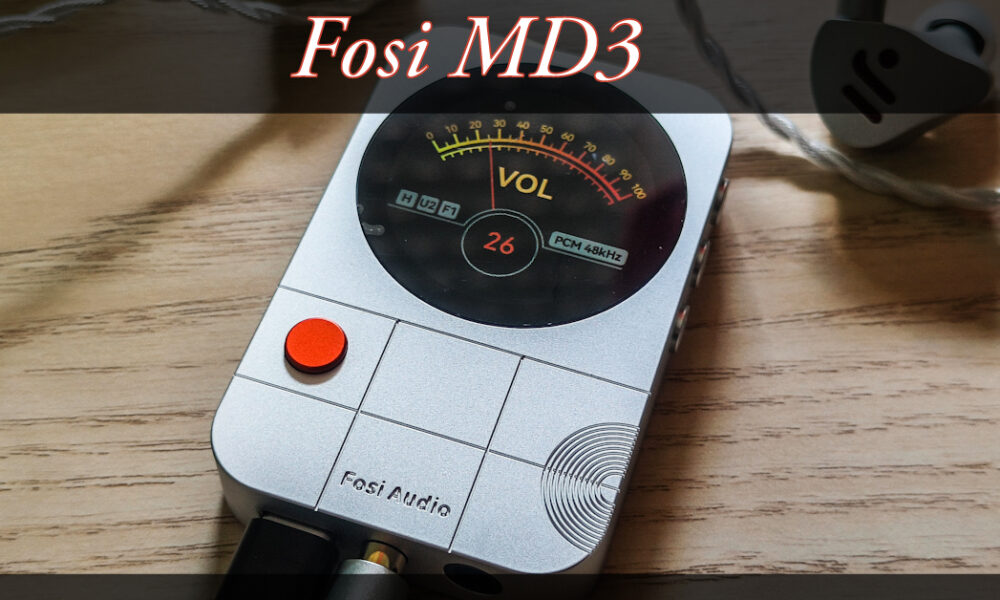
- Screen and customization
- Mini games and extra fun features
- DAC and amp section
- Dual USB C setup
- Physical buttons and usability
- Settings
- Sound and General Use
- Sound and Power
- Daily convenience
- The screen
- Comparison to the Fosi Audio DS3
- The features
- The sound
- Conclusion
- Pros
- Cons
- Q&A
- Who is it for?
- Who should avoid it?
- Are there better alternatives?
Everything you’ll read here is based entirely on my own experience with the MD3. I always try to be as fair and objective as possible, but at the end of the day this is still just my personal opinion. We all judge products differently, and those differences are part of what makes this hobby so interesting and enjoyable.
Big thanks to Fosi Audio for giving me the chance to review the MD3, and of course, a huge thank you to you for taking the time to read and support my reviews. It truly means a lot to me!
Introduction
The Fosi Audio MD3 is not the smallest dongle DAC out there, and compared to the DS3, it is a much bigger one. It is more noticeable in daily use, but that is also because Fosi was going for something a bit different here. The MD3 is magnetic, so it is designed to stick to the back of your phone, which makes a lot of sense for the way this dongle is designed to be used.
What really makes it stand out is that it has a large circular screen where you can upload your own image or use some of the cute built in animations. It also comes with a few little mini games like dice roll, bottle rotation, and rock paper scissors, which gives it a lot more character than most dongles in this price range.
Of course, the MD3 is not only about looks and fun features. Fosi is also using a more premium DAC chip here, and later in this review I will talk about how it actually performs, what makes it different from the DS3, and which one makes more sense depending on what you need. The DS3 sells for $99.99, while the MD3 seems to be priced at around $100 to $112 depending on where you look, which makes them pretty much in the same price category.
And without further ado, let’s get into the review.
Unboxing
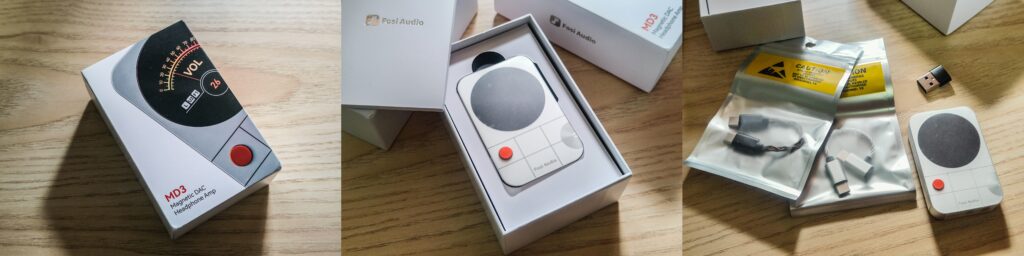
To be honest, the unboxing here is actually very nice. For a product that sells for around $100, Fosi did a really good job making the whole package feel good, well protected, and more premium than I expected.
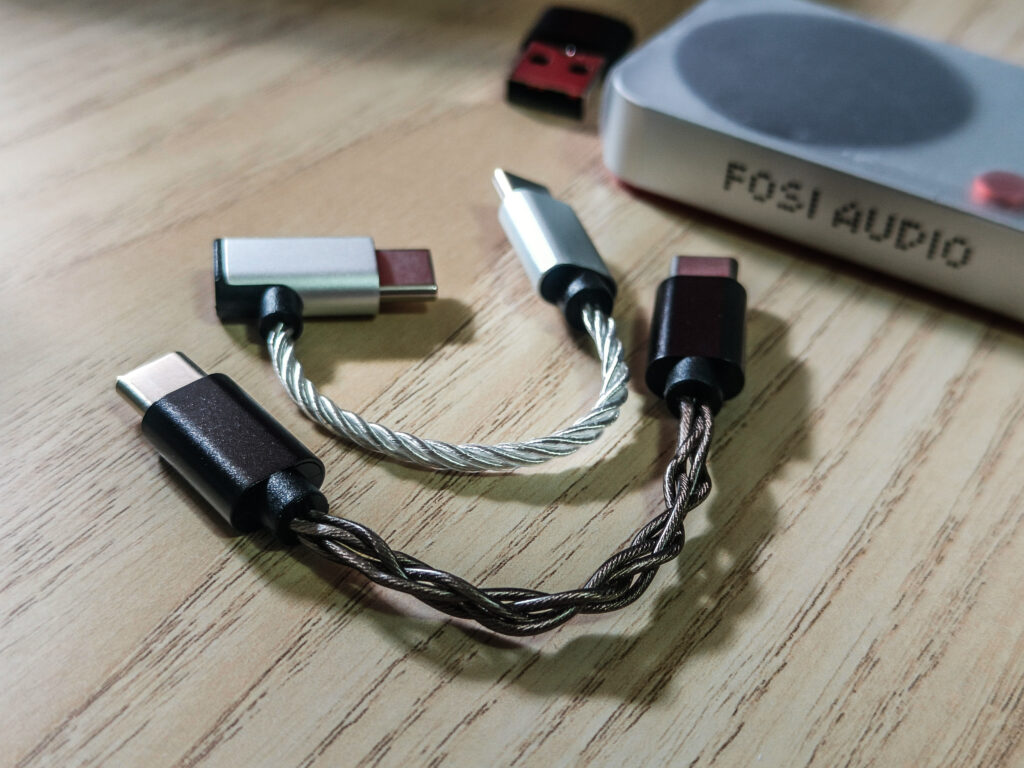
Inside the box, you get the MD3 itself, two USB Type C cables, a USB A to Type C adapter, and the usual paperwork. What I liked here is that Fosi included two different cables because the MD3 has two USB ports, so it makes sense for convenience depending on the connector you use. One cable is right angled, while the other is straight, and both of them actually feel well made.
One small detail that I personally really appreciated is that the cables came inside antistatic bags. Since I work as an electronics technician, that is the kind of thing I pay attention to first, and honestly, I wish more companies paid attention to details like this. Modern devices do have decent protection against static electricity, but still, better be safe than sorry, and for me, it just shows extra care.
Overall, everything here feels nice, properly protected, and quite premium for the price and definitely leaves a great first impression.
Technical Specifications
Specs
- DAC chip: ESS Sabre ES9039Q2M
- Amplifier chips: 4x ESS ES9603Q
- Outputs: 3.5 mm single ended, 4.4 mm balanced
- USB modes: UAC 2.0 and UAC 1.0
- PCM support: up to 32-bit / 384 kHz
- DSD support: native DSD256
- Output power (3.5 mm): at least 80 mW x2 at 32Ω
- Output power (4.4 mm): at least 180 mW x2 at 32Ω
- Frequency response: 20 Hz to 48 kHz, ±0.2 dB
- Signal to noise ratio: at least 115 dB from 3.5 mm, at least 120 dB from 4.4 mm
- THD+N: below 0.0015% from 3.5 mm, below 0.0008% from 4.4 mm
- USB ports: 2x USB C
- Top USB C port: audio decoding, image transfer, charging
- Bottom USB C port: audio decoding, image transfer, firmware upgrade
- Package contents: MD3, right angle USB C to USB C cable, straight USB C to USB C cable, USB C to USB A adapter, paperwork
Special Features
Overall design
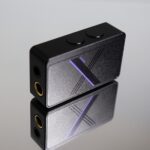
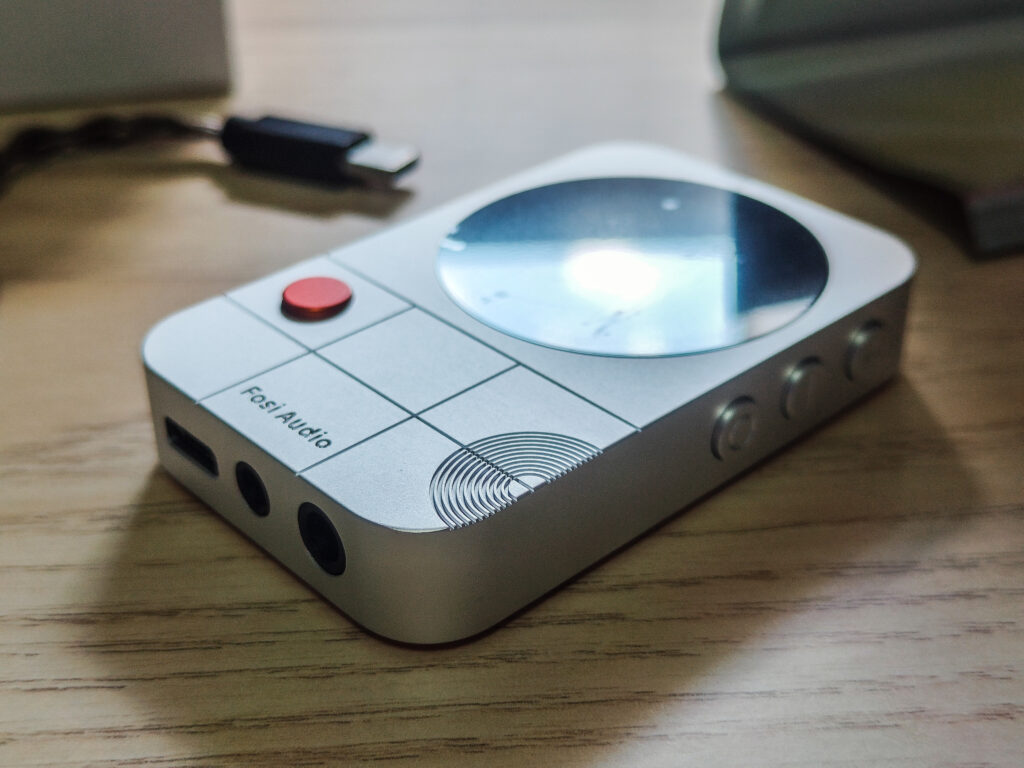
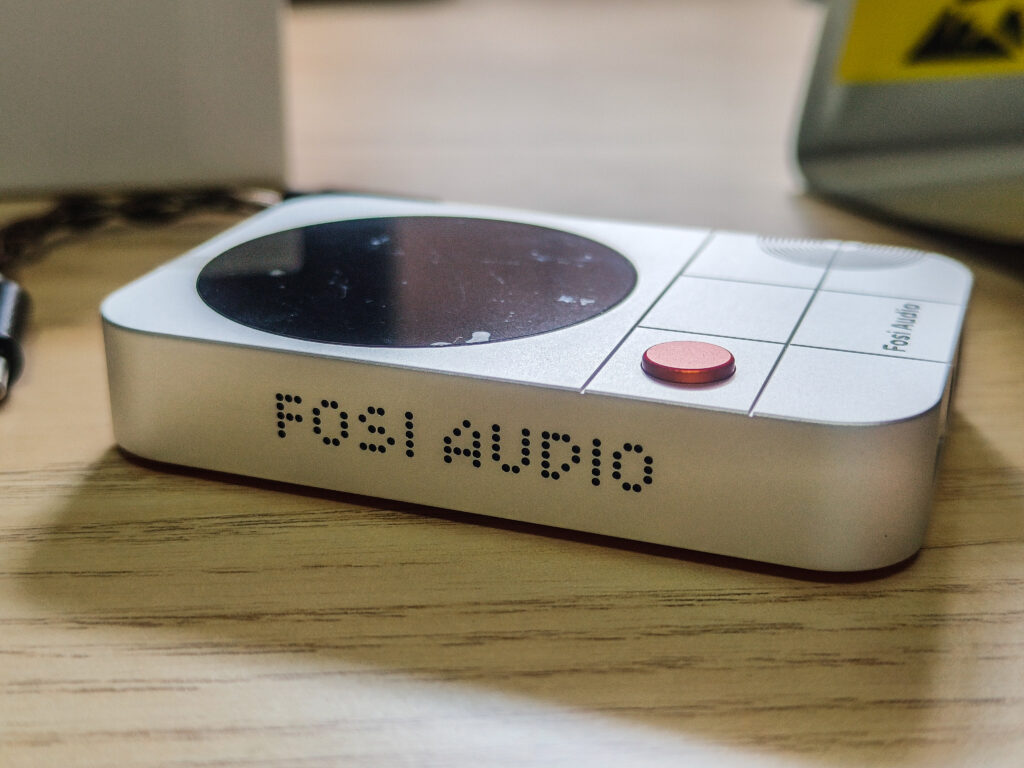
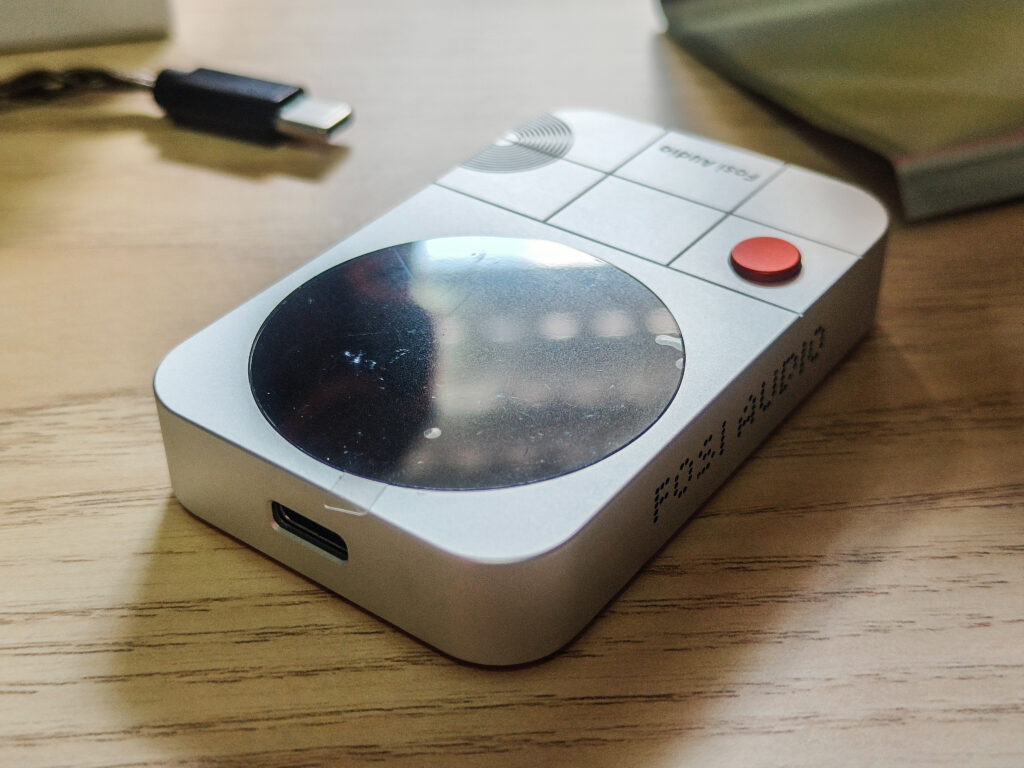
The overall design is honestly one of the most unique things about the MD3. It does not look like a typical dongle DAC at all. Between the magnetic body, the screen, the physical controls, and the playful extra features, it feels like Fosi wanted to make something that stands out both in looks and in the way it is used.
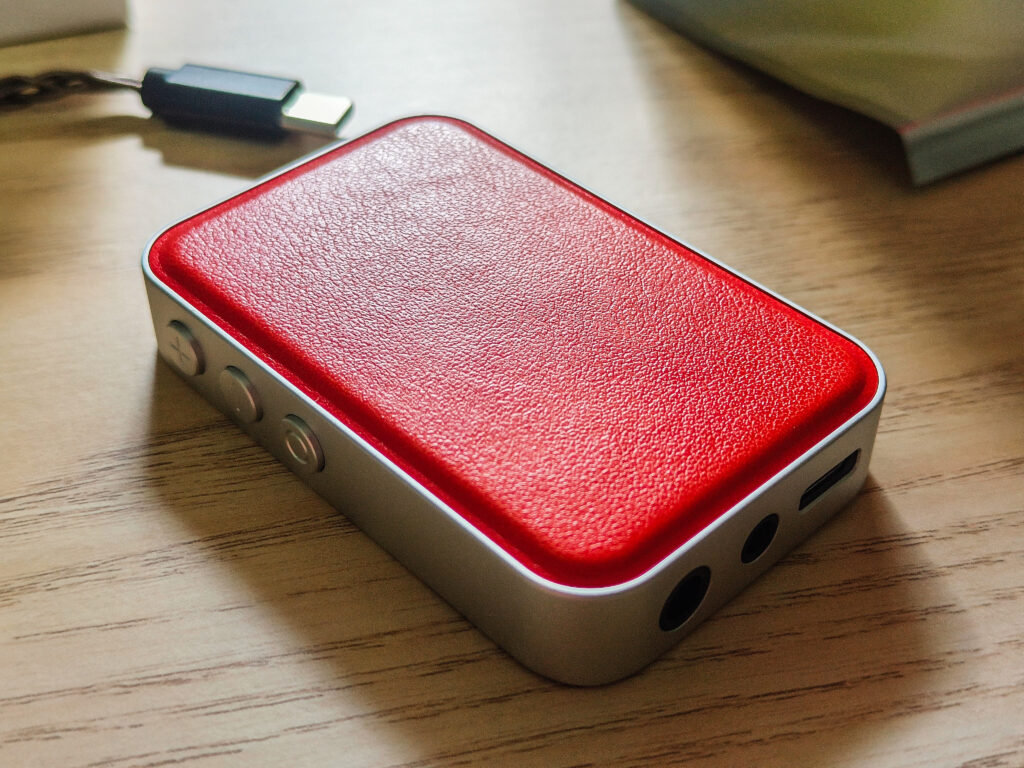
It is very quality built, has a full metal body, and the magnetic part is pleather like so it won’t scratch the phone.
Magnetic design
One cool thing that makes the MD3 different is the fact that it has a built in magnet and does not rely on a magnetic case. It is made to stick to the back of a phone, which makes the whole setup feel cleaner and more practical in daily use. Instead of hanging loosely like a regular dongle, it feels more like part of the phone’s setup itself. Fosi also claims that there is a thick separation for the magnets so it won’t affect the sound.
Screen and customization
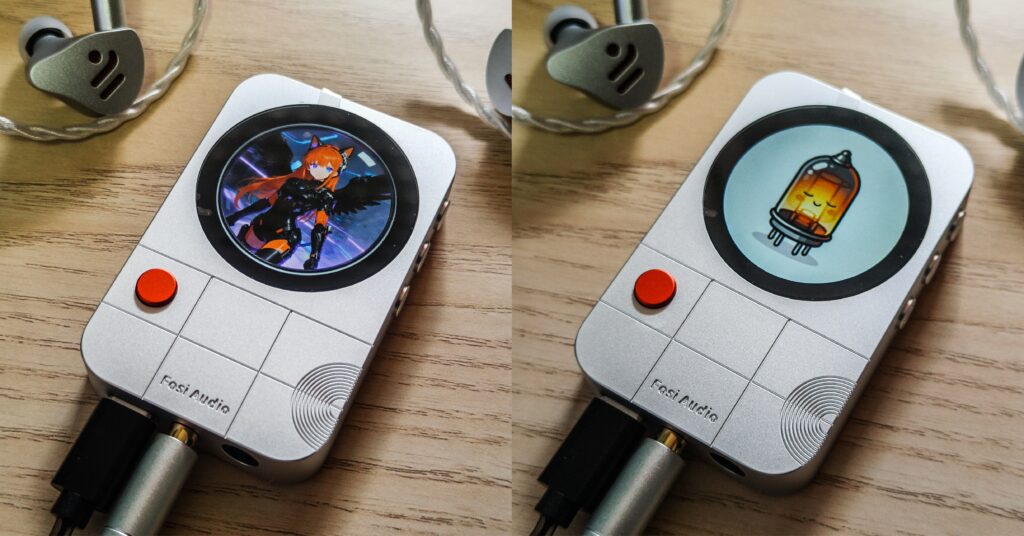
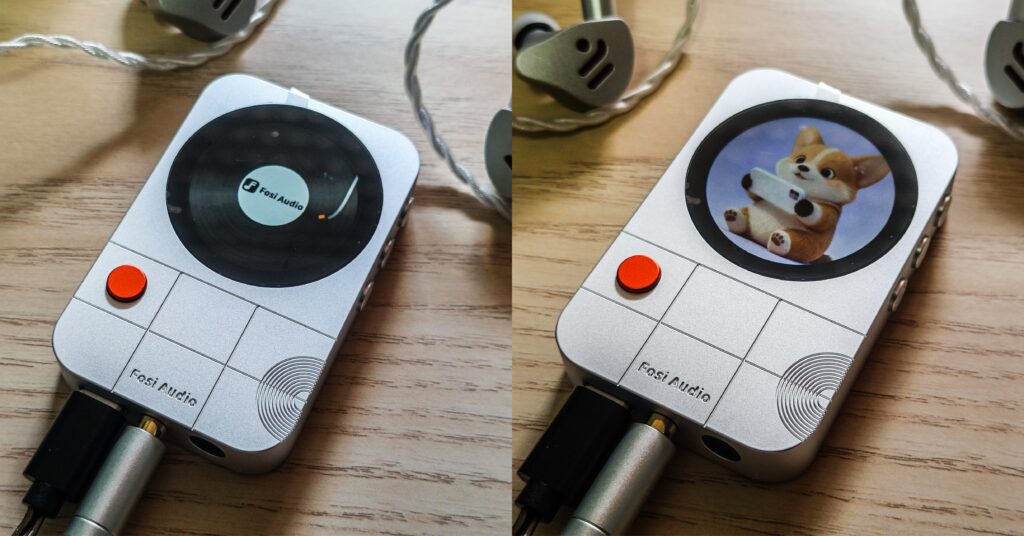
Another big feature here is the screen. The MD3 comes with a large circular display that is not just there for volume or settings. You can upload your own images to it and use the built in animations, which is something unique in this category.
Mini games and extra fun features
As I have mentioned in the introduction, Fosi added a few small minigames like dice roll, bottle rotation, and rock paper scissors. These are obviously not the reason someone buys a dongle DAC, but I still think it gives the MD3 a lot more character. It makes it feel less plain and more fun and unique compared to most other dongles around this price. Even if you won’t use these features, I still think it’s cool.
DAC and amp section
The MD3 is using a more premium DAC chip together with four amplifier chips, so it should have much more to offer than just cool design. On paper at least, this is a more serious product in terms of sound as well, and not just something that looks cool.
But I honestly do find it a bit strange that for such a big dongle, with 4 amplifier chips, it still produces only 180 mW balanced. It will be definitely enough for IEMs but will be limited for big power hungry headphones.
Dual USB C setup
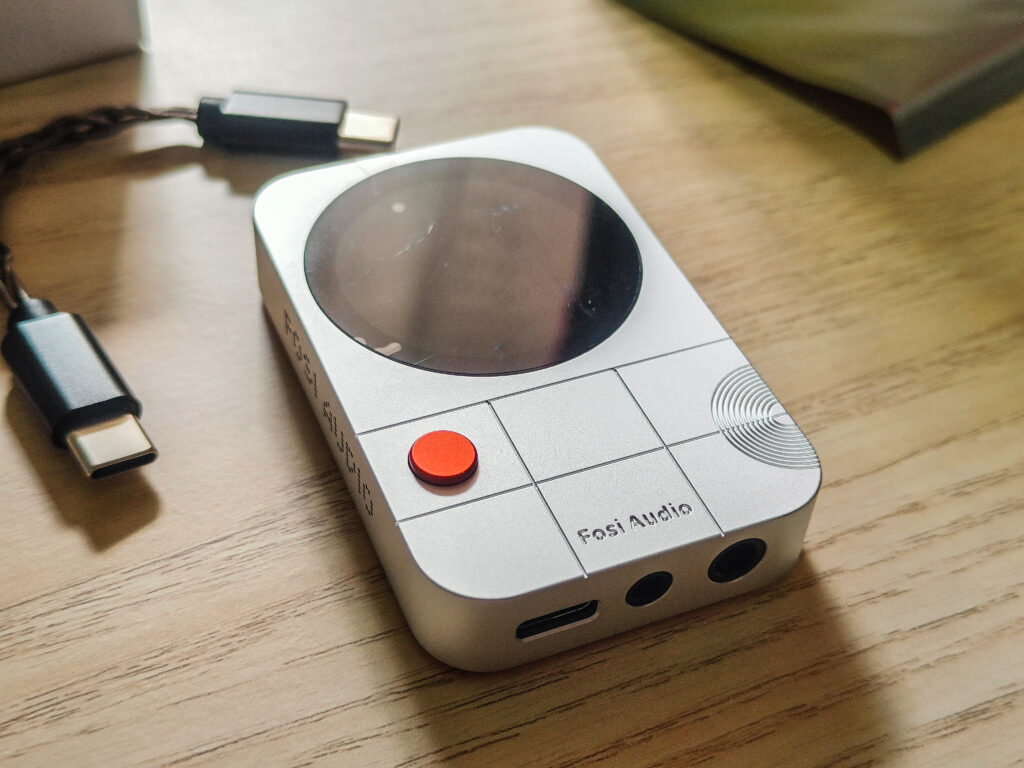
The MD3 also has two USB C ports, which is a pretty useful feature. One can handle charging as well, while the other can be used for music as well and also for firmware updates, so it gives the device a bit more flexibility than a normal basic dongle. It also makes more sense when you use it like a whole phone magnetic system, so the cable won’t block ports or be prone to breaking.
Physical buttons and usability
The MD3 has physical volume and menu buttons on the side, plus the front Vista button for screen related functions and navigation. In daily use, that is quite useful, but I would have loved to see another menu button, as it’s a bit annoying that in order to go back to the menu, you have to scroll down to the back button and press it, instead of having a separate button for that. But that’s nitpicking from me. UPDATE; Fosi actually pointed out to me that you can use the Vista button as a return button, which I somehow missed, so that’s on me.
Settings
The MD3 actually gives you a pretty decent number of settings to play with. You can choose the USB mode, so it can work either as a DAC or in image transfer mode, and you can also select the output gain between low and high depending on what you are using.
There is also a UAC mode setting, source volume on or off, and digital filter selection, so you do get some control there. On the screen side, you can adjust the brightness, set the screen saver timer, choose if the screen saver stays off or shows an image, enable a slideshow, and also rotate the screen.
Other settings include language selection, software version info, and factory reset. So overall, the MD3 also gives you a fair amount of control and customization, which is nice to see.
Sound and General Use
Sound and Power
As usual with sources like this, it is not always easy to describe the sound. Unlike headphones, which really do sound different, DACs nowadays tend to have very minor changes to the sound because most modern DACs from reputable brands already sound very good, and the MD3 is no exception. It really sounds great. The presentation is clean, transparent, neutral to me, and with no obvious coloration. I did not hear any hiss, buzz, and the background stays pitch black, which is, in my opinion, the most important thing, especially with sensitive IEMs, because if there is a background noise, it’s already changing the sound for the worse.
In terms of power, the MD3 has more than enough for IEMs, and that is clearly what it was made for. With IEMs, I had no real issue at all, and it felt perfectly capable in daily use. At the same time, it will definitely struggle with more power hungry headphones. For something this size, and especially for a dongle that is not exactly tiny, the 180 mW from the balanced output is honestly not that strong. Still, I do not think that is a huge issue once you look at the kind of product this is supposed to be. It is clearly meant to be a portable DAC for use with a phone, and most people are probably not going to walk around with big planar headphones anyway.
Daily convenience
One thing I really liked in actual use is that you can keep it connected to the phone and still charge the phone at the same time. In my case, the bottom USB Type C was connected to the phone, while the top one was connected to a charger, and it started charging the phone without any issue. That is a really nice feature to have, because with many dongles, once you connect them, your phone battery just keeps going down. Here, Fosi gave it a more practical setup, and for daily portable use, that makes a real difference.
As for heat, it does get a bit warm during use, but nothing out of the ordinary. I would not call it hot, just normally warm like many small portable DACs tend to get after some time.
The screen
And then there is the screen, which honestly is one of my favorite things about the MD3. It is really there mainly for show (of course it also shows useful information, but its there more for animation), and it’s very cool! The animations are very nice to look at, and I was enjoying them quite a bit. And it even got a cute tube figure in addition to the cute animals and cool animations. The fact that you can also upload your own images makes it even cooler, and it gives the MD3 a lot more personality and customization than most dongles on the market.
Comparison to the Fosi Audio DS3
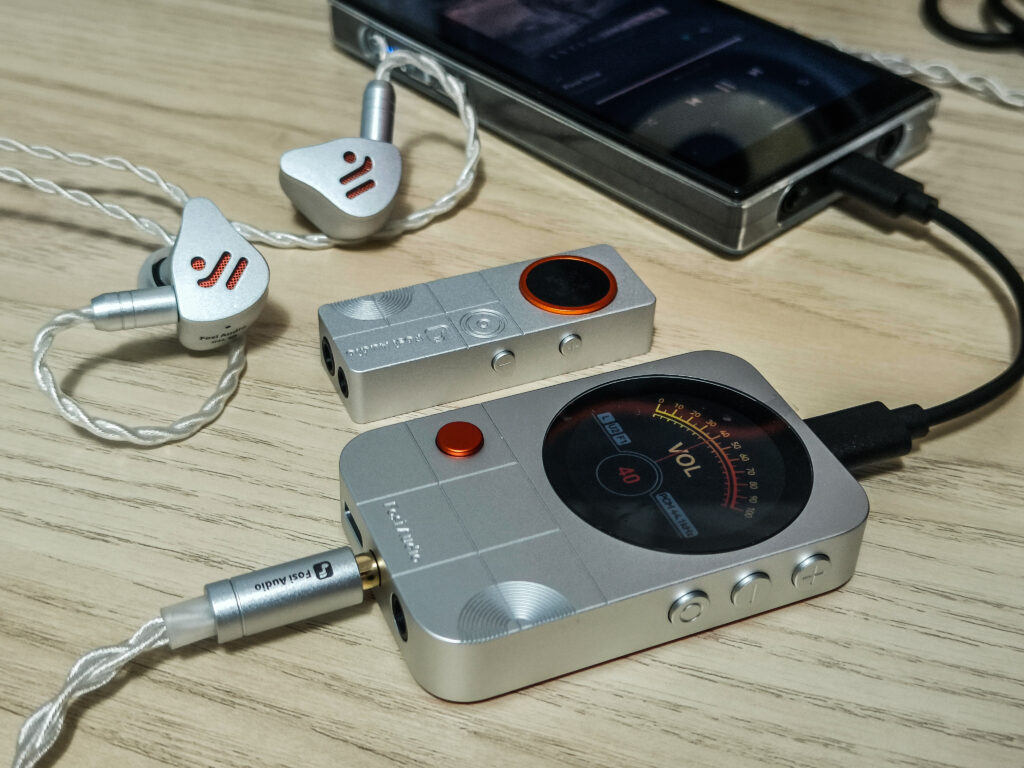
Compared to the DS3, the MD3 feels different, even though both come from Fosi and cost around the same. The first thing you notice right away is the size. The DS3 is much smaller, simpler, and feels more like a normal dongle DAC. The MD3 is bigger and chunkier, but that is because it was made with a different idea in mind. It is magnetic and made to sit on the back of your phone, so it feels more like part of the phone setup.
The features
Another big difference is the screen. The DS3 is much simpler. The MD3, on the other hand, feels much more playful. You get the large circular screen, the built in animations, the option to upload your own pictures, and even a few mini games. It is not really necessary, but it makes the MD3 feel more fun and more special.
The DS3 also has its own advantage, and that is the gaming side of it. It is made for people who want a small DAC with gaming features, while the MD3 feels more like it was made for people who want a fun portable dongle they can keep attached to the phone and enjoy on the go.
The sound
When it comes to sound, the MD3 and DS3 are actually very similar to my ears. Both use the ESS ES9039Q2M DAC chip, and both sound clean, clear, and transparent. The main difference is more on power and features than on sound itself. The DS3 is rated a bit higher at up to 220 mW at 32Ω from the balanced output, while the MD3 gives up to 180 mW at 32Ω balanced, so the DS3 has a small edge on paper, although in reality it doesn’t really matter as the extra 40 mW won’t suddenly drive big power hungry cans. Still, with IEMs and easy to drive gear, both of them perform really well, and I do not think most people will hear a big difference in sound between them.
So really, I think it comes down to what you want more. If you want something smaller, more simple, and with gaming features, the DS3 makes more sense. If you want something more unique, more fun looking, and better suited to stay attached to your phone while you carry it around, then the MD3 makes a lot more sense.
Conclusion
The Fosi Audio MD3 is a product that is easy to like. It is not a small dongle DAC, and it is also not the most powerful one. Fosi went in a different direction here, and honestly, I think that is what makes the MD3 stand out.
What you get is a dongle that sounds excellent, has a clean and black background, enough power for IEMs, a very nice screen, fun animations, the option to upload your own images, and a magnetic design that actually makes a lot of sense for daily use with a phone. On top of that, the fact that you can still charge your phone while using it is a really useful feature without buying a specific cable or device.
Of course, it is not perfect. It is bigger and chunkier than a normal dongle, and the power output is not very impressive for something of this size, especially if you are thinking about using big cans. But if your main use is with IEMs, and you want something that feels a bit different, a bit more fun than the usual dongle DAC, then the MD3 does a really nice job.
At the end of the day, I think the MD3 is an awesome product. It sounds great, looks cool, feels well made, and brings something a little different to the table. And in a market full of dongles that all start to feel the same, that alone already gives it something special.
Pros
- Clean, transparent sound with a pitch black background
- More than enough power for IEMs
- Unique magnetic design that sticks to the back of the phone
- Large screen with cute animations and image upload support
- Fun extra features like mini games
- Can charge the phone while using it
- Good build quality and premium presentation
- Nice amount of settings and customization
Cons
- Bigger and chunkier than a typical dongle DAC
- Power output is not very strong
- Not the best choice for power hungry headphones
Where to buy:(Non-affiliated! None of my reviews use affiliated links!)
Q&A
Who is it for?
The MD3 is for someone who wants a dongle DAC that sounds good but also feels fun and different. If you mostly use IEMs, like portable setups, and want something that can stick to the back of your phone while adding a bit more personality, this one makes a lot of sense.
Who should avoid it?
If you want the smallest possible dongle or something with more power for big power hungry cans, the MD3 is probably not the best choice. It is clearly more for IEMs and people who care about the big screen and design features.
Are there better alternatives?
That depends on what you want. If you want something smaller and more simple, the Fosi DS3 makes more sense. If you care more about having a unique design, screen features, and a more fun daily use experience, then the MD3 can be the more interesting option.




No Comment! Be the first one.