








Hidizs x Linsoul AP80 Pro Max Review
Intro
Hello, this review and feature covers the latest budget-oriented dap (digital audio player) from the well-known audio brand Hidizs, named the Hidizs X Linsoul AP80 Pro Max. To be correct, the AP80 Pro Max is actually a collaborative effort between Hidizs and the very popular audio store Linsoul Audio. You have to imagine any collaboration between such high profile and respected audio cornerstones would create one awesome device. So far that checks out folks. To be even more correct, the AP80 Pro Max is part of a Kickstarter program which kicks off on 10/9/2025. The bonus is that early bird pricing is a ridiculously low $139. Folks, I know you haven’t read this review yet but for $139 this is the easiest no brainer of the year.
Table Of Content
- Intro
- Do I want to review? Trick question?
- Hidizs
- I’m Ready…
- Non-Affiliated Purchasing Links
- AP80 Pro Max Pros
- AP80 Pro Max Cons
- Packaging / Accessories
- Unboxing
- Protective Case
- Build / Aesthetic / Internals
- Build Quality
- Design / Aesthetic
- Ports / Wheels / Buttons
- Hidizs AP80 Pro Max — Specifications
- 🎵 Audio Architecture
- ⚡ Output Power
- 📲 Operating System / UI
- 🖥️ Display & Design
- 🔌 Connectivity
- 🔋 Battery & Power
- 💾 Storage & File Support
- 🔉 Additional Features
- 📦 In the Box
- Software / UI
- Hiby OS
- Hiby OS cont…
- Hiby OS functionality
- Tiles and usage
- Features
- Screen
- Dac Chips
- Bluetooth
- Hiby Link
- Battery Output
- MSEB
- How does it work?
- Parametric Equalizer & Graphic Equalizer
- SOC Chip
- Streaming / WIFI
- Sound Impressions
- What’s it sound like?
- Great for the cost
- Tonally, very nice
- A nice influence
- I’m impressed
- Each 3rd of the mix
- Bass Region
- Midrange
- Midrange cont…
- Treble Region
- Technicalities
- Details
- Stage
- Separation / Imaging
- Comparisons
- Shanling M1 Plus ($209)
- Differences
- Sound Differences
- Each 3rd of the mix
- Final thoughts on this comparison
- Hiby R3 Pro II ($199)
- Differences
- Sound Differences
- Each 3rd of the mix
- Final thoughts on this comparison
- Final thoughts on the Hidizs AP80 Pro Max
- Complaints/Problems
- Comparatively Good
- The Why…
- That sound!
- Conclusion
- Other Perspectives
Do I want to review? Trick question?
Okay friends, when I was asked if I wanted to check this little guy out and give it a review, I thought it was a trick question. Of course I do! I loved the old AP80 Pro and I enjoyed that little fella for quite some time. Really great for mobile purposes, great sound for the cost, and a decent enough UI. When I was asked, I naturally went seeking out info on the AP80 Pro Max. What does it look like? Does it have the same design, once again? What processor? Did they change up the dac chips? Output power? Of course, it’s a Hidizs product and so I already know it will be built well, and they are only going to release something like this if it has some solid improvements over its predecessor. What I found was pretty compelling folks. Understand, this is a series. Usually, a series will carry much of the same aesthetic, side grade changes with slight deviations from previous adaptations of that series. We see it all the time. Look at those Hiby daps (prior to the R3 Pro II). They too were rehash products year after year with just enough of a feature change to warrant a new product with the ever-present name delineation of “pro” “plus” or “MK**” added to differentiate each variation. As far as the Hidizs AP80 Pro Max is concerned, there are some significant changes and upgrades folks while Hidizs chose to keep some things which have worked. I can tell you straight up that this latest dap in the series makes sense, and I can already tell you that it’s the best that this series has to offer thus far.
Hidizs
The Audio brand Hidizs has been in this audio game for a long time friends. They have been a very successful audio brand at that. Believe it or not, Hidizs was established by a man named Tamson all the way back in 2009. If you don’t feel like counting, that’s going on 16 years! That’s what I call a successful venture. I personally have conducted many reviews of Hidizs products and the rest of the team over at Mobileaudiophile.com has also completed their fair share of reviews as well. I’d say the constant theme with Hidizs products has been “quality”. The wild thing is that they’ve only gotten better. With every new product I find that build quality goes up, tuning gets better too. It’s gotten to the point that the entire hobby at large is dialed in to find out about the next Hidizs product. The AP80 Pro Max that I’m reviewing today has gotten some very high acclaim so far, and it hasn’t even been released yet. In fact, I just got done featuring the Hidizs MK10 ArcSonics (MK10 Review), the Hidizs MK12 Turris Titanium Edition (MK12 Titanium Edition Review), as well as the OG MK12 and each one is quite literally some of the best that I’ve heard in their respective price points and per their respective driver configuration & tuning. To say that Hidizs has taken over the audio landscape of late is a valid argument to be made. Feel free to check out a few of my Hidizs reviews below:
MM2, MS5, MS3, MP145, MS1, S9 Pro Plus, SD2, S8 Pro, MP143, ST2, MK12
I’m Ready…
At any rate, back to the AP80 Pro Max. So, I’ve had this little gem of a dap for roughly about two weeks and one thing that I’ve taken away from that time is that Hidizs has managed to successfully combine convenience, build quality, and audio performance in a way that I have yet to see within the Audioverse. It falls right in line with some other huge name daps which hover around that $200 price point. Devices like the Shanling M1 Plus, and the Hiby R3 Pro II (R3 Pro II Review), and the Fiio JM21 (Android). Thankfully, I have those other daps in my possession to compare against. With that said, I think I’m ready to get this one going folks. So, without further ado… the Hidizs AP80 Pro Max…
Non-Affiliated Purchasing Links:
AP80 Pro Max Pros
-Build Quality is phenomenal
-Design is very cool, sleek (design may also be a con).
-UI is very responsive for this type of non-Android device
-Nice looking screen, nicely contrasted colors, vibrant
-Ultra portable, more so than any other $200 dap. This thing is very small
-Finally streaming (Tidal, Qobuz)
-Every good Bluetooth audio codec
-Bi-directional wireless (Transmitter, Receiver)
-Battery Life is solid for such a small dap
-Hiby Link works flawlessly (as it usually does) (is this a pro? I think so)
-Very nice updated processor (X1600E) (Same as Hiby R3 Pro II)
-Of course, MSEB Equalizer
-Nice musical sound, balanced, warm/neutral & technically sound
-Slight bass emphasis, adds a punchy influence, fun
-Melodic midrange, forward, clean, well detailed
-Treble has nice sparkle, some crispness, and won’t come across harsh
-Stage size is above average with a fairly vast, airy, and open sound
AP80 Pro Max Cons
-The size is a Pro, and the size may be a Con too
-Same goes with the design. I think it’s a Pro, but may be a Con
-UI not as fluid and smooth as an Android DAP
-Nothing else for this cost / style
Packaging / Accessories
Unboxing
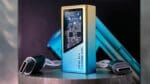
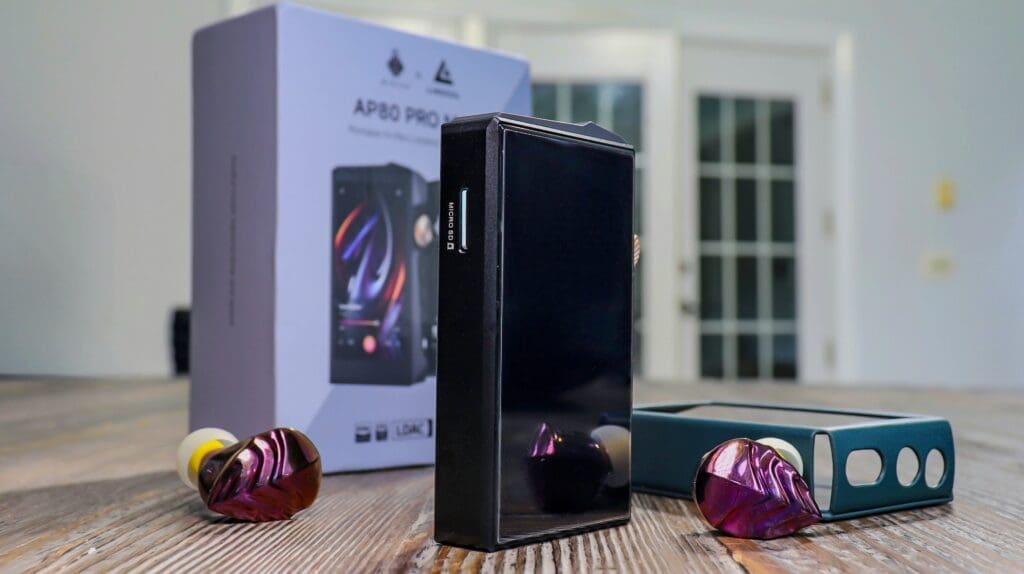
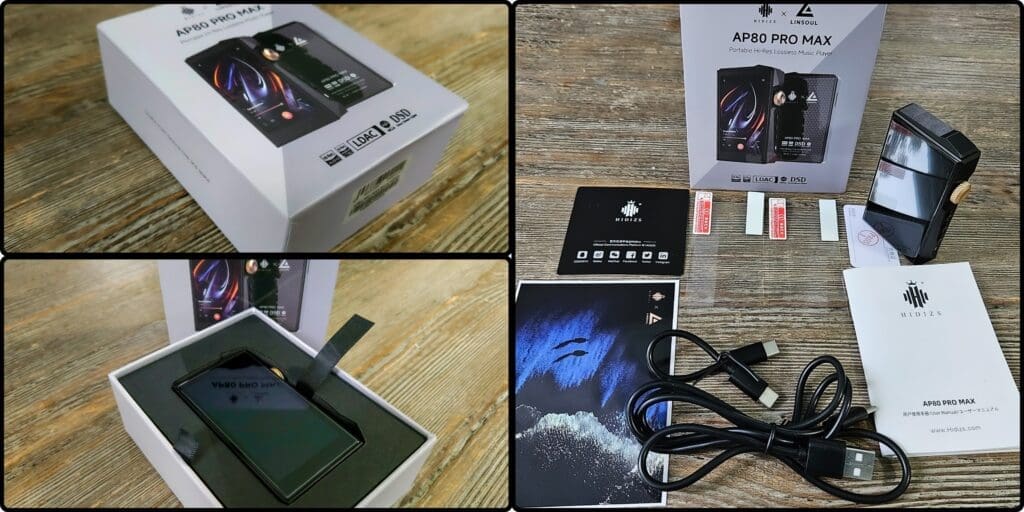
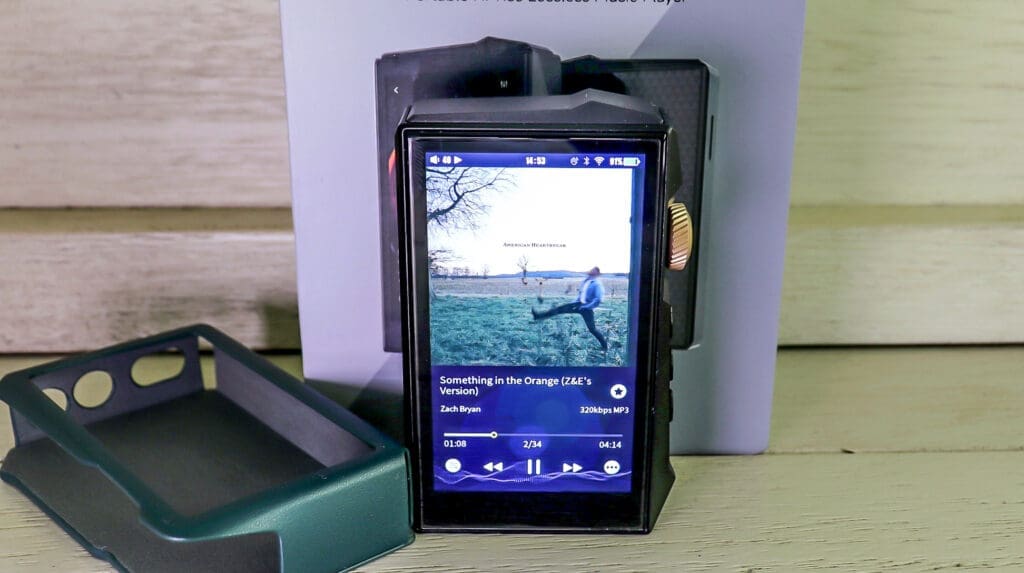
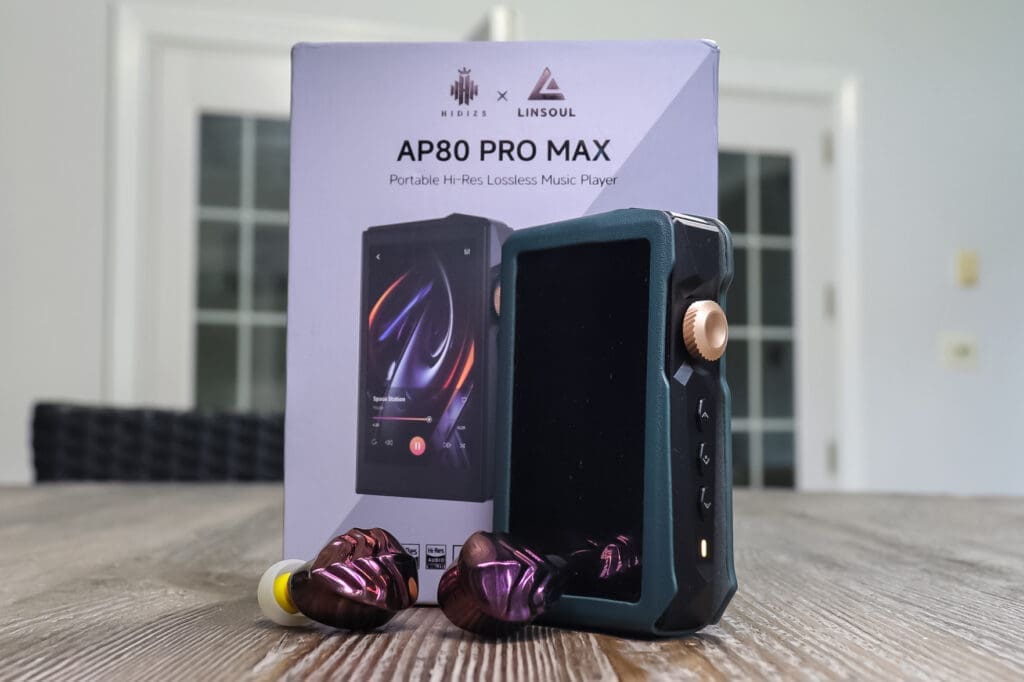
The Hidizs AP80 Pro Max arrived at my home in a very small box. No waste with this packaging at all, which is nice. Anyways, the box itself comes with a two-toned cover and a picture of the AP80 Pro Max in the center, some specs on the back. I’ll keep this quick. Take off the box top and you’ll immediately see the AP80 Pro Max sitting all pretty in the center of a foam cut-out. Of course, you’ll have to take off the film on the screen. Under that layer you’ll also find the USB-C to USB-C data cable as well as a USB-C to USB-A charging cable. You’ll also find the warranty card along with the user manual. That’s about it, and that’s about what one should expect. Now, in the Kickstarter program you can elect to get the case with the AP80 Pro Max. Thankfully, Hidizs did send over the case with my unit, and it is a very nice addition as well.
Protective Case
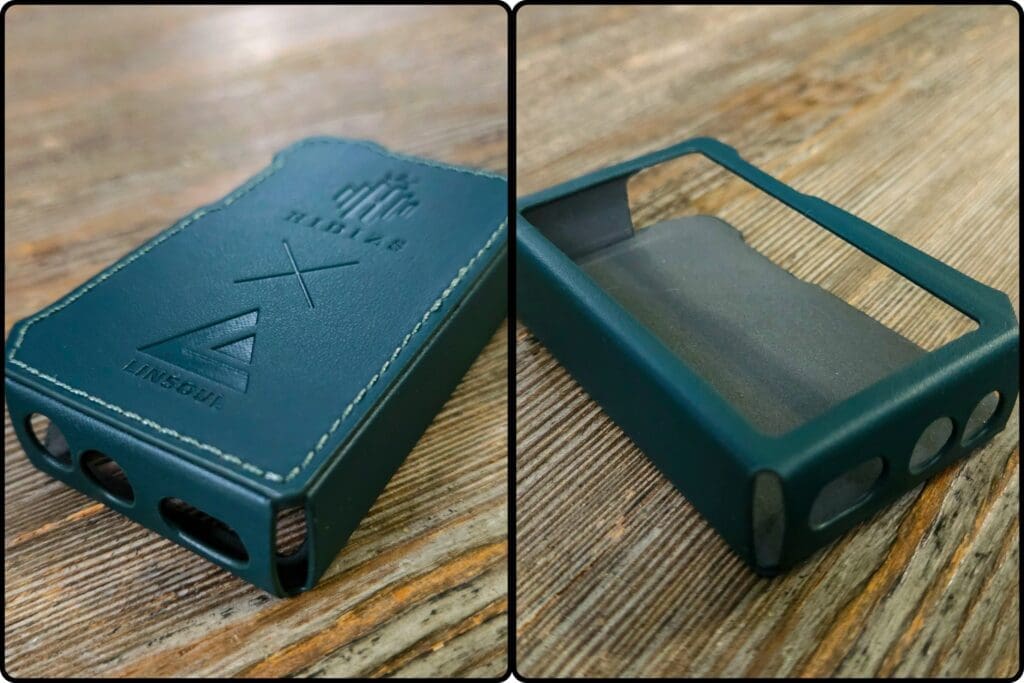
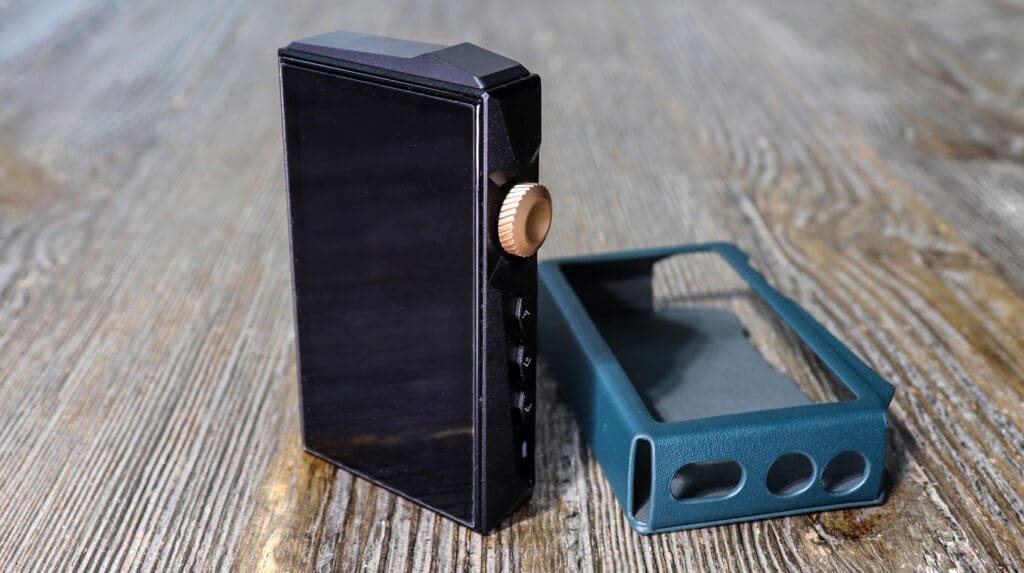
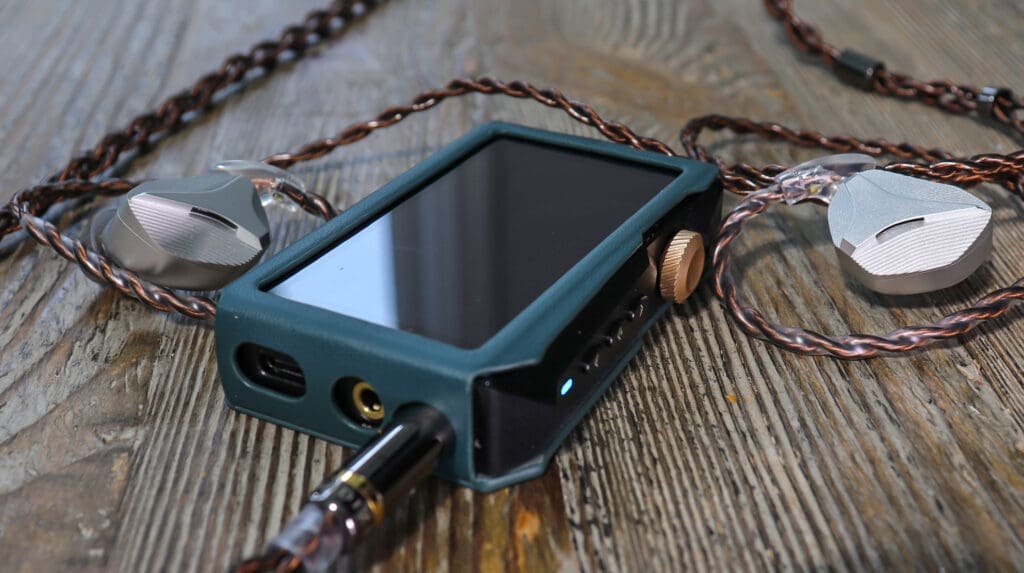
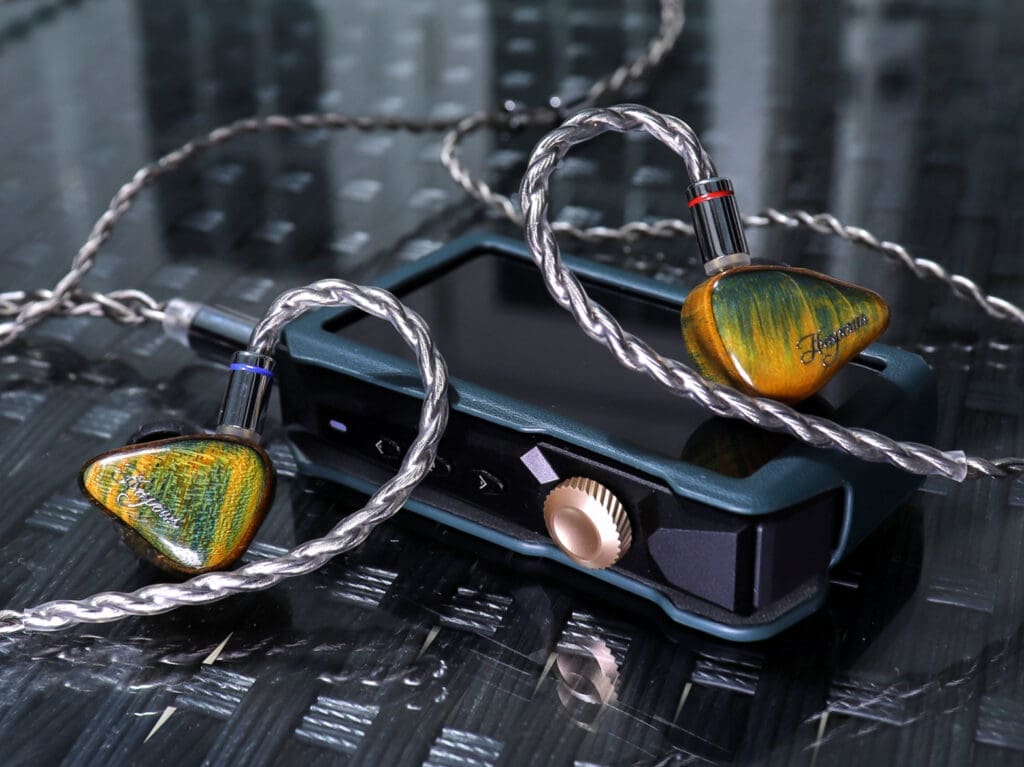
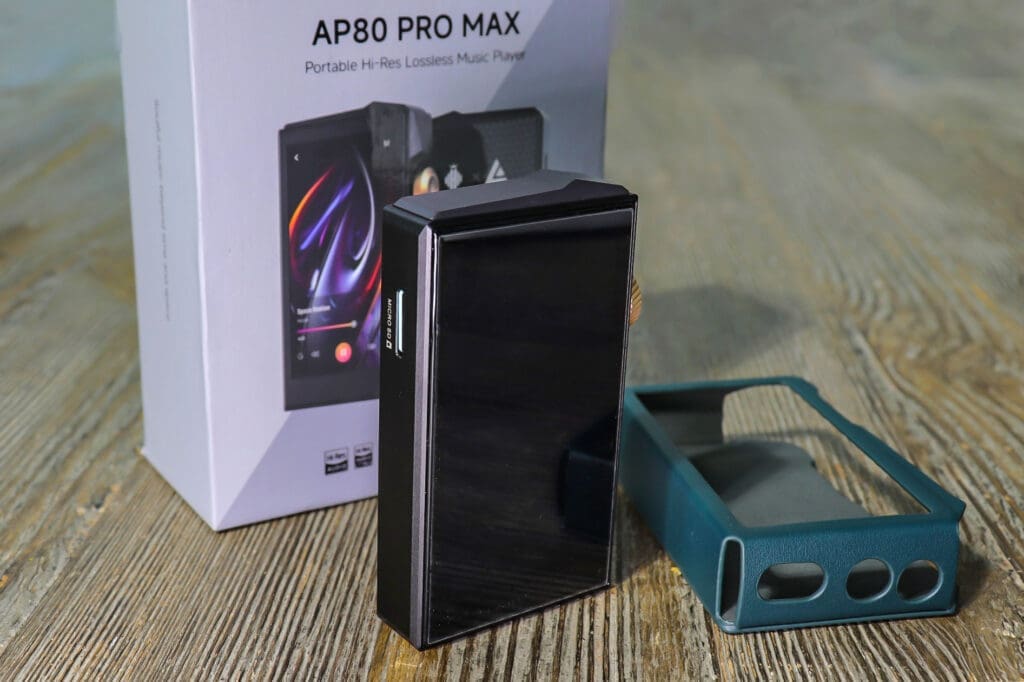
One accessory which can be purchased separately from the original packaging is the very nicely made leather protective case. Now, I cannot find any official listing for the leather case, but I feel it is necessary to have, for a few reasons. The first reason being that the AP80 Pro Max has glass on two sides of the body which, last time I checked, glass breaks fairly easily. Just a thought. Secondly, this case looks flat-out slick on this little guy. I think it is a no brainer. Also, it actually feels like leather and not the faux leather that we always see so often. Basically, like other cases for other daps, the case for the AP80 Pro Max simply slides right on, no issues. Also, the case actually is tight enough to not budge. The only subtle gripe would be that I cannot get to the scroll through letters (in Album folder) on the right side of the screen quite as easily. Of course, it can be done and so that’s a very minor complaint. Everything else is good. Really a nice case.
Build / Aesthetic / Internals
Build Quality
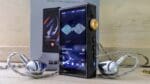
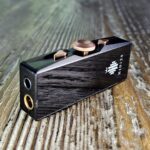
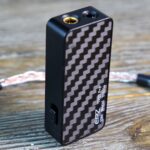
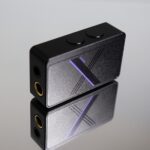
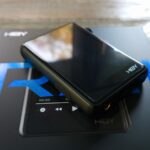
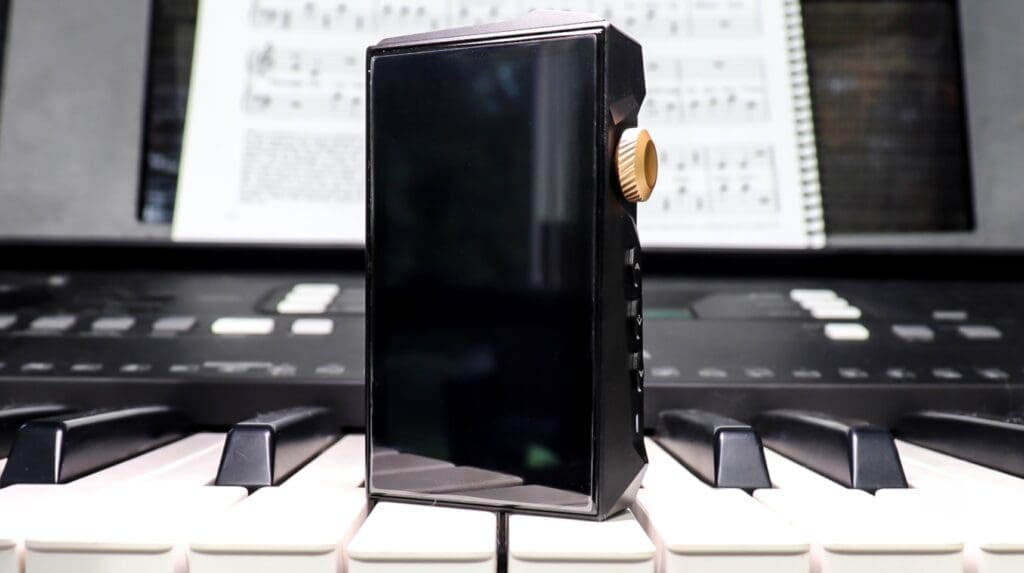
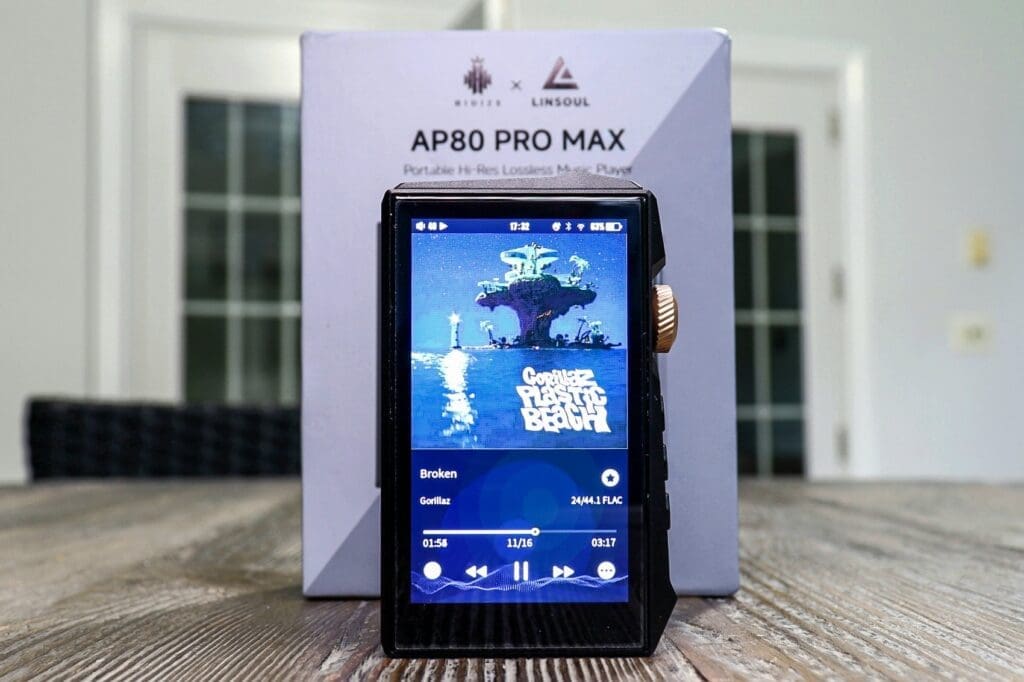
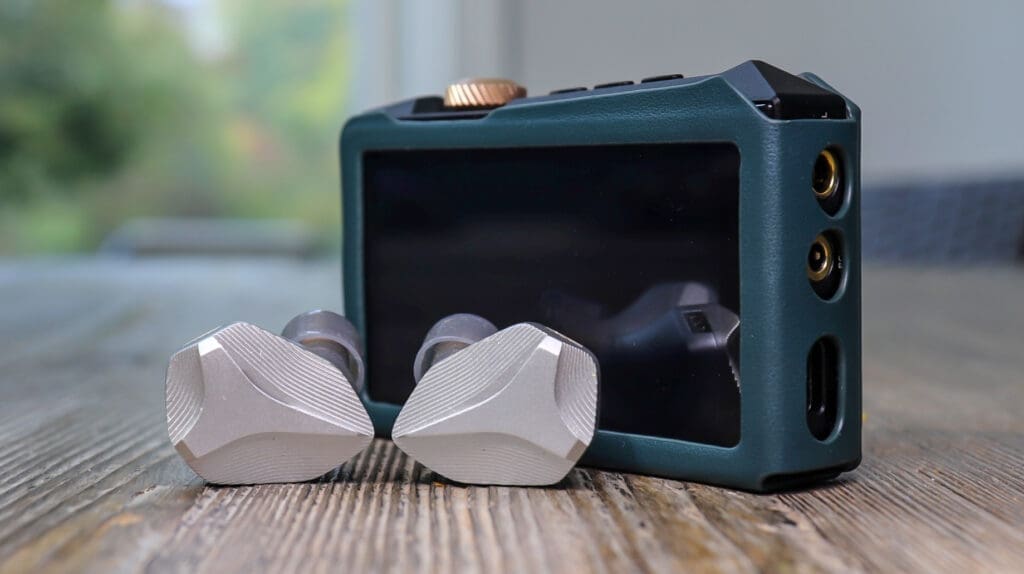
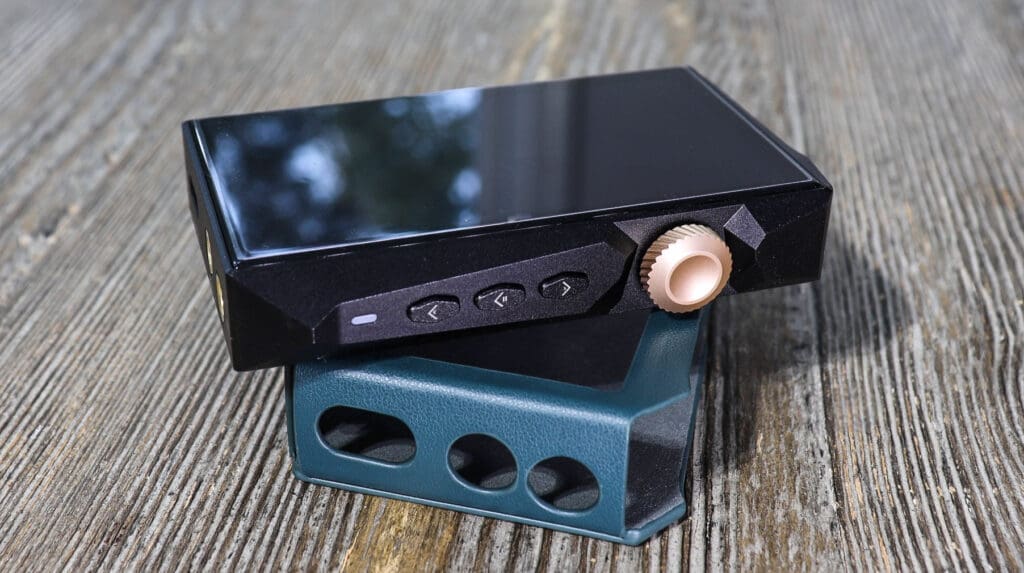
One of the things that Hidizs is most known for (other than nice sonics) is their constant pursuit for the best build quality. Folks, they prove it time and time again. If it’s made by Hidizs, it’ll be made well. You can count on that. I could list product after product and the same conclusion will be had, that is; all of them are built wonderfully. The AP80 Pro Max is no different. It’s actually made from CNC machined aluminum on the actual frame, which is both sturdy, durable, non-corrosive, and also lightweight. In fact, this little guy only weighs 81 grams. However, Hidizs also decided upon using glass on both the front and back panels which really ups the elegance of this device. The AP80 Pro Max is very small folks. I mean… tiny. This will either be a good thing, or a not-so-good thing for you. I happen to like all sized DAPS and so I think the tiny frame is very cool, kind of cute actually. On the front is a 2.95-inch IPS HD touchscreen as well. You have three physical buttons on the right side along with a volume knob. Also, on the left you’ll find the SD card slot. Lastly, the bottom of the AP80 Pro Max has both the 3.5 single ended and 4.4 balanced ports as well as the USB-C port. Hidizs did a fantastic job with this build folks. Again, I wasn’t surprised at all.
Design / Aesthetic
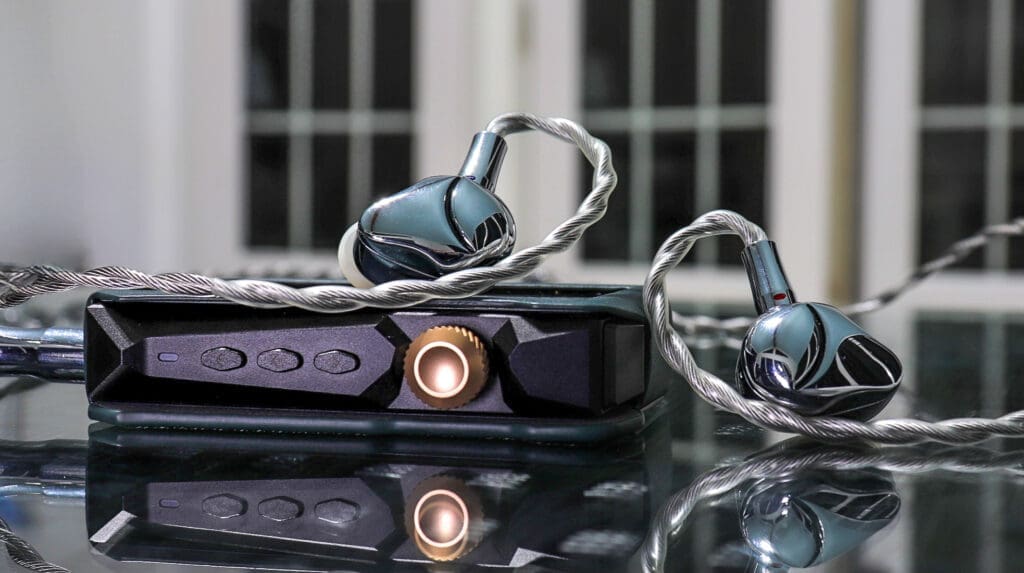
As far as the actual design of the AP80 Pro Max; I think it is so cool looking. Of course, I realize that is a totally subjective thing to say but it is seriously dope looking. I love the polygonal sides, the rectangular bright and vivid screen. I adore that I can do everything one handed with absolutely no issues. Again, I do feel that the design and build is something that you’ll either like quite a lot or find it too small. I think the AP80 Pro Max is great for its purpose and looks slick in the process.
Ports / Wheels / Buttons
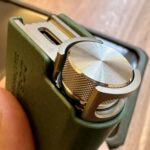
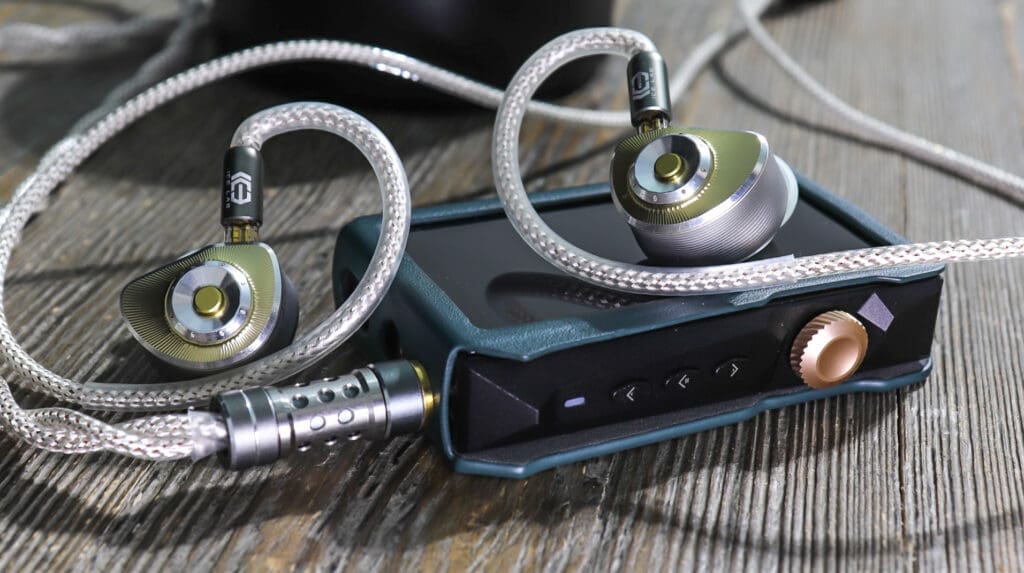
Like I said, the AP80 Pro Max has a total of three physical buttons which are located on the right side of the unit along with a very nice volume wheel. So, the volume wheel is gold in color and sticks out enough to get your finger on easily. It also has ridges to help with functionality. I find it very easy to use with a nice click to it. You can also push the volume wheel to power the device both in & off. Directly under the volume wheel you’ll see three buttons. The 1st button is the previous track, the 2nd button is play/pause, and the 3rd button is the next track. Pretty simple. You’ll also notice that on the underside of the unit is the 3.5 single ended port as well as the 4.4 balanced port. I happen to like the ports in the bottom for such a small device even though typically I like them better on the top. It just makes sense on a small DAP. You’ll also find the USB-C port which doubles as a USB-C charging port as well as a place to connect dongle dacs, or a computer/phone for various reasons that I’ll speak on later. Other than that, there is also a mice-sd card port on the left side.
Hidizs AP80 Pro Max — Specifications
🎵 Audio Architecture
-DAC Chipset: Dual ESS ES9219C (Sabre DACs)
-Audio Decoding: PCM up to 32-bit / 384 kHz • DSD native up to DSD256 • MQA 16× hardware decoding
-Amplifier Type: Fully balanced architecture with independent DAC channels
-Frequency Response: 20 Hz – 90 kHz
-THD + N: ≈ 0.0005 % (balanced) / 0.0007 % (single-ended) @ 1 kHz
-Signal-to-Noise Ratio: ≈ 120 dB (BAL) / 119 dB (SE)
-Crosstalk: SE- 78 dB BAL (crosstalk)- 110 dB
-Dynamic Range: SE- 120 dB BAL- 122 dB
—
⚡ Output Power
-Balanced (4.4 mm): 340 mW @ 32 Ω
-Single-Ended (3.5 mm): 112 @ 32 Ω
-Output Impedance: < 1 Ω
—
📲 Operating System / UI
-System: HiBy OS (Linux based architecture)
-Master Chip: Ingenic X1600E
-User Interface: Touch navigation + side buttons
-EQ: Gapless playback, MSEB, 10-band EQ, gain selection, PEQ will be added in future firmware update
—
🖥️ Display & Design
-Screen: 2.95-inch IPS touch display (480 × 640 resolution)
-Body Material: CNC-milled aluminum unibody with stereoscopic glass front and back
-Dimensions: ≈ 82.8 × 51 × 15.5 mm
-Weight: ≈ 81 g
-Volume Knob: ~ Japanese ALPS
-Physical Buttons: ~ Yes, three buttons including volume knob push button
(Play/Pause, Previous Track, Next Track, On, Shutdown)
-Color Options: ~ Black, Blue, Gray
—
🔌 Connectivity
-Headphone Outputs: 4.4 mm balanced / 3.5 mm single-ended
-USB Interface: USB-C (USB DAC mode / USB Audio out / charging)
-Bluetooth: v5.1
-Bluetooth audio codecs: aptX, aptX HD, LDAC, HiBy UAT, and HiBy Link remote control
-Wi-Fi Support: 2.4 GHz DLNA, AirPlay streaming, Hiby Link
-Digital Out: Supports bit-perfect USB audio output to external DACs
-Streaming: Yes (Tidal & Qobuz)
-S/Pdif DoP: USB Audio & local support
—
🔋 Battery & Power
-Battery Capacity: 1300 mAH 3.8V
-Playback Time: (8–10 hrs Balanced & 10-12 hrs SE)
-Charging Time: 1 Hour
-Standby: About 60 days
-Charging: USB-C fast charging supported
-Power Management: Independent power supply rails for DAC, AMP and digital stages
—
💾 Storage & File Support
-Storage: microSD card support (up to 2 TB confirmed)
-Internal Memory: No built-in storage (stores to microSD only)
-Supported Formats: FLAC, ALAC, WAV, APE, WMA, AAC, MP3, OGG, DSD, MQA
—
🔉 Additional Features
Hi-Res Audio certified (Hi-Res & Hi-Res Wireless)
Dual gain modes (Low / High)
USB DAC function (PC / Android compatible)
MSEB sound tuning engine for tonal customization
Physical volume wheel and side control buttons
Parametric Equalizer (future update promised)
10-Band Graphic Equalizer
Compatible with Headphone w/mic
Hiby Link (Hiby Music Player needs to be downloaded on linked device)
Digital antialiasing filters: 8 in total
—
📦 In the Box
Hidizs AP80 Pro Max player
USB-C to USB-C OTG data cable
USB-C to USB-A charging cable
Extra screen protector: Front & Back plus one which is pre-applied
User manual, warranty card, QC card
Software / UI
Hiby OS
There’s a reason why so many DAP makers which are non-Android choose to go with the Linux based Hiby OS. The reason why is because it is so well crafted and has been toiled over for years getting it right. The Hidizs AP80 Pro Max most certainly uses the non-Android Hiby OS, and it comes across very well on this little player. I should add that one of the key features of this little DAP is that it “isn’t an Android player”. There are many purists who will always try to skirt around the Android strangle hold that it has on the hobby’s DAP scene. There are times where I definitely agree, and others I wish I had the ease of use that an Android DAP provides. However, the Hidizs AP80 Pro Max is actually very much usable and easy enough to manage. Obviously, if you use Hiby Link it makes matters much-much easier. Still, if you are using the DAP itself to scroll through files, songs, settings, and screens then you will be just fine because the screen is responsive, every icon, and every file is recognized quickly, little lag (except in some situations) and scrolling is pretty much a breeze. The only time the AP80 Pro Max will give you some trouble is in the first moments after booting up and it is trying to load everything.
Hiby OS cont…
Again, HibyOS is a Linux based system and is much more refined than it used to be. Obviously time, upgrades, and changes have been good to Hiby because the OS itself is intuitive and user friendly for a non-Android dap. Now, if you are coming from an Android based device, I’d say the HibyOS is much less easy to walk through as you simply have more options from an Android device. Not to mention you can choose any music player in the appstore on an Android device. However, the bonus is that HibyOS is very clean, easy to navigate after some practice and commits to muscle memory fairly quickly. Plus, non-Android devices don’t have all the bloatware, and you get a cleaner source from a device like the R3 Pro II. Below I’ll quickly jot down some thoughts about the OS:
Hiby OS functionality
What to expect from Hiby OS with the AP80 Pro Max. Expect a lite version of the Hiby Music Player. You don’t have nearly as many options to search out albums, artists, tracks, or files in that you don’t have an ability to search by date or any other attribute than the Android version, but it’s simplified, streamlined. You also don’t have a regular keyboard as you only have a T9 keyboard. The Hiby OS does provide alphabetical letters on the right side of the screen that you can scroll through though. Having said that, it does take a moment for photos and album art to populate. Also, there can be a lag when searching this way. Having said all of that, the whole experience is very easy to use and the way the tiles are laid out is very easy to maneuver through.
Tiles and usage
From the beginning screen you will see a total of six tiles labeled Music, Stream Media, Wireless, Books (who would read on this tiny thing?), System Settings, and About. Each tile will take you deeper into each one. For instance, the Music tile will bring you to six more tiles labeled All (all songs), Files Albums, Artists, Genres, and Album Artist. Just above the tiles you’ll see a search function to seek out any song, artist, or album. You’ll also see the star symbol which brings you to your playlists, your favorites, recently played, and recently added tracks. Next to the star symbol is a settings tab which takes you to all music settings. Inside of music settings has way too many settings to write out here but just know that they have it all. Same goes for the system settings. There’re many different settings which take a finger to toggle. I also like the pull down or pull up menu (you can choose down or up in settings) which shows you five of the settings of your choosing. Those settings tiles can be adjusted in the settings. I won’t bore you anymore folks. There’s way too much to write out here. In fact, I think I’ve gone a bit too far as it is. Basically, everything is very user friendly, intuitive, and you’ll be able to figure it all out right away.
Features
Screen
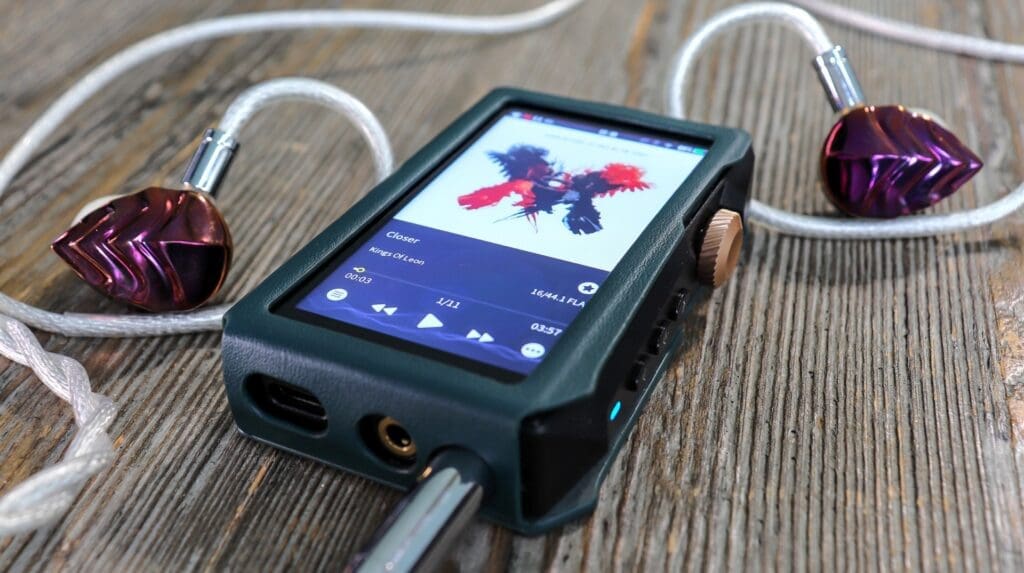
So, usually you won’t hear of brands downsizing, but I imagine that maybe Hidizs felt that they needed to do something to differentiate themselves from the other $200 non-Android daps. Instead of going bigger, they went smaller. More pocket friendly, easier to carry around, and dare I say… cuter. Let’s pretend I didn’t say that. Well, a smaller device equals a smaller screen. However, that smaller screen is actually very crisp. I tried to capture it in my pictures and none of them did the screen justice. Not that it’ll amaze you or anything, but it’s a nice 2.95” IPS screen, HD quality, even small lettering is easy to see. I’d say it’s one of the better qualities about the AP80 Pro Max. Thankfully, Hidizs decided not to go cheap on that part of the build. Actually, they didn’t go cheap on anything. At any rate, the screen is actually 480 x 640 resolution which makes for some tight pixel density at 2.95”. Also, it isn’t a 2.95” square. No sir, this is a rectangle. In fact, it’s what Hidizs calls the golden ratio. I’ll take their word for it. I know one thing: it’s a darn nice screen for being so small.
Dac Chips
Hidizs decided to once again go with dual ES9219C dac chips. The same dac chips that they used in previous devices. I am actually happy they went this route as I already like the general sound of these chips. Basically, if it ain’t broke then don’t try to fix it. The ES9219C dac chips have been used for years and there is a reason why they are still being used to this day. Another nice reason why these dac chips are used is the inbuilt amplifier within them. However, for a small portable device such as the AP80 Pro Max, these dac chips are very efficient, very easy to work with, and they also have some pretty nice specs. Granted, they aren’t top of the line, but very good for their purposes. These chips will get the AP80 Pro Max 32bit & 384khz audio, MQA unfolding up to x16, and DSD 256. So, for audiophile purposes these chips have us covered. However, for the regular Joe who simply needs a device for running, workouts, or milling around the house, the ES9219C dac chips are going to sound amazing compared to whatever smartphone or no name MP3 player that they’ve been using.
Bluetooth
One area where the AP80 Pro Max certainly excels at is with its multitude of ways that you can use Bluetooth on this device. First off, the AP80 Pro Max will get you Bluetooth 5.1 both ways (receiving/transmitting). Obviously, you can use the Hidizs AP80 Pro Max with Bluetooth earbuds and you’d be able to use all of the latest codecs. It has SBC, AAC, Aptx (send only), LDAC, and Hiby’s UAT codec. So that is very nice to see. Beyond that, you can also use the Hidizs AP80 Pro Max to stream audio wirelessly directly from the AP80 Pro Max to wireless headphones, earphones, or speaker units. Also, you can use the AP80 Pro Max as a hi-res Bluetooth dac as well. Utilizing the sound & output of the AP80 Pro Max by connecting this device through a USB port and then wirelessly shooting the audio over to a set of Bluetooth headphones, earphones, or a Bluetooth speaker system etc. So, you can definitely make use of its two-way Bluetooth. I’ve tested these methods, and everything works very well. Lastly, Hiby Link can also be used over Bluetooth as well, but I’ll cover that more next.
Hiby Link
Hiby Link is a remote-control feature of Hiby daps which lets you remotely operate your device from a phone or tablet etc. Anything which you can install Hiby Music Player onto. Now, Hiby Link is a service which other players have, to a degree. Like, some Fiio and Shanling daps. I must say, the Hiby Link is by far the best from my experience. It links up super easy and lets you control the dap from your phone. You can link up through Bluetooth or Wifi. Just scan the QR code with your phone from the AP80 Pro Max and then pick your device and you’re done, linked up. I use it all the time and it helps tremendously with the inconveniences of a smaller screen. Like scrolling through music for example is 100 times easier on your phone. I usually have my iems attached to my Hidizs AP80 Pro Max which is usually nestled comfortably in my pocket and control everything right from my Samsung Galaxy Z Fold 5. I also use it when I attach my AP80 Pro Max to my stereo system and play music throughout the house. It works flawlessly. Granted, using the AP80 Pro Max without Hiby Link is solid too and there are occasions where I don’t use it. However, the ease of Hiby Link is a game changer. Most certainly check it out as it is the easiest way to scroll through your music… by far.
Battery Output
The Hidizs AP80 Pro Max is rated with a battery life around 8-10 hours using balanced listening and around 10-12 hours using single ended listening. The actual battery size, or capacity, is right around 1300 mAH which means it is a fairly large battery for such a small device. Now, this is by no means the longest battery life out there. Especially in similarly priced daps, but it’s very close. This is the surprising part as the AP80 Pro Max is very small folks. I did not expect anything more than 6-7 hours and so I am very happy with these numbers. In no way did I think they’d be able to squeeze a 1300 mAH Battery inside this little chassis along with everything else. I promise you folks, to get 8-10 hours on balanced listening on a device with 340mW of power is fantastic for its size. Now, obviously these numbers change at listening volumes (the higher the volume= more battery), or if you are using Bluetooth. That hour count will also lower quite a bit if you keep the screen on as well as a bunch of different parameters. Still, for the size of the AP80 Pro Max, I think these are great figures. In real world usage this is certainly not a device where I’m actively watching the battery percentage drop.
MSEB
One feature that is always worth noting within the Hiby Music ecosystem, and one which is featured on the AP80 Pro Max is the fantastically designed and well imagined “MSEB”. Or “Mega-Sound 8 Ball Tuning”. If you don’t already know, MSEB is extremely popular and almost universally praised for how well designed it is and how simple it is to use. One of the easiest to understand and simplest EQ designs ever to hit the market. By the way, you can download Hiby Music on Android, and you’ll get this feature as well. However, we are talking about the R3 Pro II now. So, as you scroll through settings you will easily find the “Audio Settings”. Inside the audio settings tab you can swap different filters among other things relevant to a digital audio player. You’ll also notice MSEB tuning which is a Hiby exclusive and does a fantastic job of tuning your music per your preferences. If you haven’t checked it out, then I would most certainly push you to do so. Again, MSEB is actually a type of equalizer which really helps to dial in the sound of any set to your own preferences. Actually, it’s about as easy as it gets. Hiby basically uses their own adjustable version of preset settings which are labeled and made ridiculously easy to learn and play around with. I don’t usually use any equalizer settings but for those who do, MSEB is a game changer. I should add that HibyOS also carries a 10-band equalizer for anyone who wants to play around with a bit more fine-tuning ability.
How does it work?
Once you go into the MSEB settings, you’ll notice a series of sliders which basically offer one end of the spectrum on the left side and the opposite end of the spectrum. Each slider is labeled with a characteristic of sound, and the slider can be used to shape that sound to your desired preferences. For instance, they are labeled things such as Overall Temperature, Bass Extension, Bass Texture, Note Thickness, Female Voices, Air, along with many more. All you do is take your finger and slide to adjust. Very simple. For example, the “Overall Temperature” tab has “Cool / Bright” on the left side and “Warm / Dark” on the right side. It really is a genius way of adding some equalizer values into your music without it being too cumbersome, complicated, or hard to understand. Basically, you don’t have to be an Audio savant to understand. At any rate, it’s very cool and you should check it out.
Parametric Equalizer & Graphic Equalizer
Hidizs also offers a 10-band graphic equalizer within the same Hiby OS which is nice for those who like doing their EQ’ing the old-fashioned way. I haven’t really used the 10-band graphic equalizer yet as I simply don’t touch EQ settings for reviews, but it is just like any other graphic EQ. It’s also very simple when you get a basic understanding of the spectrum and how it works. Another very cool feature which has been promised in a future update, which, I was told, is going to be very soon. So, you’ll have MSEB, a graphic equalizer, and Parametric Equalizer as well. Friends, you literally have no excuse if you cannot get your desired sound using this device.
SOC Chip
Another new feature on the Hidizs AP80 Pro Max is the SOC chip itself. The actual brain which makes this tiny little device function. Hidizs actually upgraded to a very nice SOC chip called the Ingenic X1600E which actually enables the Hidizs AP80 Pro Max to feel as smooth as it is. Certainly, an upgrade from previous devices in the series. Now, there’s a few other devices which share this exact chip, and coincidentally, those devices perform pretty smooth as well. Going to the link provided will tell you a whole lot more if you are so inclined, but I’m definitely not going to explain that here. Too much info that’ll put you to sleep. At any rate, it’s a nice chip for sure.
Streaming / WIFI
Another feature of the Hidizs AP80 Pro Max is its ability to connect to the internet through wifi connection. This allows the user to perform firmware updates, use Hiby Link (also can be used over Bluetooth), as well as stream music. As far as the streaming, the AP80 Pro Max is set up to stream over both Tidal and Qobuz. Now, I rarely stream music as all of my music is located on the SD card. However, you do have the ability to stream for those of you who have Tidal accounts or Qobuz accounts. This is the first Hidizs model which allows streaming and so it’s nice to see.
Sound Impressions
*Note: I want to preface the entire sound section with a few things which may or may-not be of importance to you. For one, I let the Hidizs AP80 Pro Max play music till its battery about died for a few days just to burn it in. Is this important? Probably not, but I did it anyway. Also, source device reviews are always difficult when it comes to explaining their overall contribution to the sound quality of your iems or headphones. After all, the sound has much more to do with the iems or headphones you choose to use. However, source devices can and will sway the sound in one direction or the other. I will do my best to explain the sound in a way that will help you. Moreover, I used way too many iems during this review period to report in all of them. I will simply use some examples which stand out the most to help you better understand the Hidizs AP80 Pro Max. Also, I didn’t use any full-sized cans during review. Only iems.
*Note #2: For all critical listening I didn’t use any type of EQ at all. I didn’t use any MSEB functionality either. I of course wanted to give you the raw impressions of the Hidizs AP80 Pro Max.
What’s it sound like?
To my ears the Hidizs AP80 Pro Max comes across as a very fun, yet also pretty clean player for the cost. Remember it uses those dual ES9219C dac chips which are most always characterized by having a cleaner, neutral, highly detailed and highly energetic sound. However, the way that Hidizs utilized and implemented these chips has provided what I’d call a warm/neutral sound, heavier bass influence, with an ever-so-slightly colored midrange, somewhat forward, and an energetic treble. Certainly, a hair more bass punch than I’d usually say for these chips. This is simply a reminder that the same chips can have varying sound based off of a brand’s implementation of those chips. Much to the dismay of those who argue against that. At any rate, the sound is very musical at its heart, more fun in its dynamics, yet also the AP80 Pro Max does a good job of imparting a very transparent sound to my iems for a device which costs so little.
Great for the cost
Honestly folks, the sound is seriously well laid out with this device. I have many of the $200 non-Android daps on hand and I cannot tell any one area where the AP80 Pro Max doesn’t stand right next to the best of them. Though each is different in its own way. This hobby has truly become amazing in the price to performance that we are seeing. Especially with these non-Android devices. In truth, the AP80 Pro Max almost comes across as a perfect middle ground to the Hiby R3 Pro II and the Shanling M1 Plus. Certainly, the Hidizs AP80 Pro Max can stand side by side with those two and offer a very high-quality music experience. In truth, even against some of the best dongle dacs under $200, like the awesome Shanling UA6 (UA6 Review). The AP80 Pro Max is better in some areas and not as good in others depending on your preferences but looking at these devices side-by-side, the AP80 Pro Max is no joke folks and really does give a powerful sound, a technically proficient sound, and a sound which seems to enhance my music.
Tonally, very nice
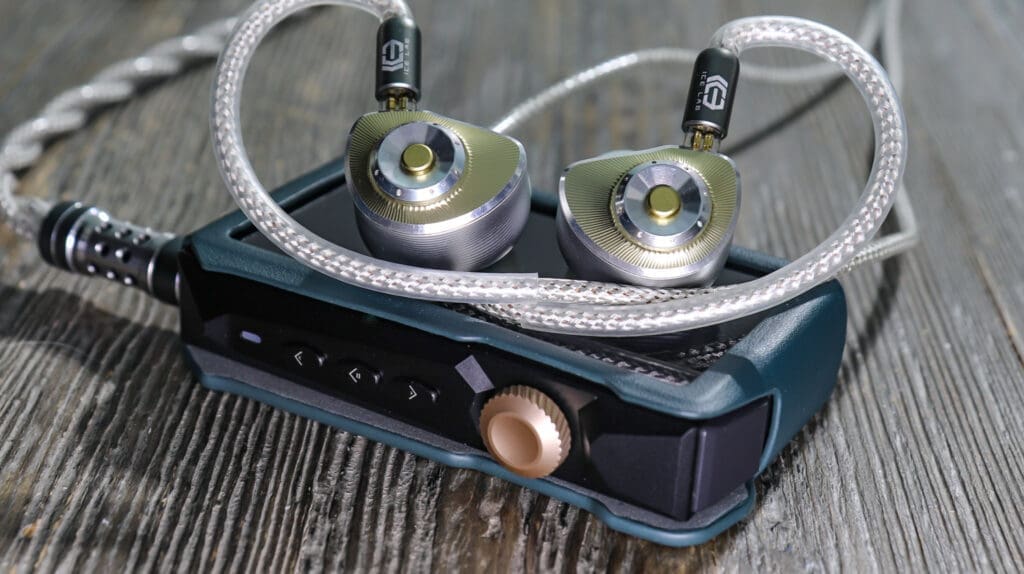
The AP80 Pro Max definitely has some solid upper end energy which sits somewhat forward, yet I hear none of the well-known “Sabre Glare” that past ESS Sabre chips used to provide. Actually, the timbre is very nice as it doesn’t really influence any of my iems in a negative way. None that I’ve heard anyways. I’ve used too many to name and none of them sound bad to my ears. Let’s put it this way, the Hidizs AP80 Pro Max isn’t going to exaggerate any high frequency, or over saturate with any extra bass emphasis. Tonally the AP80 Pro Max really won’t influence your iems in any such way that will embellish certain tonal aspects of the spectrum. I really like this quite a lot. Of course, this doesn’t mean that the AP80 Pro Max doesn’t add any influence at all tonally, just not so much that a slightly brighter iem isn’t going to all of a sudden have screaming highs. For instance, the Sivga Que UTG (Que UTG Review) is what I’d call a “bright leaning” iem with brighter treble. Thankfully the AP80 Pro Max doesn’t increase the treble luminance any further, but instead I find the treble to actually have a hair more punch and clean edge in comparison with some other devices. Same goes with the Simgot EA1000 which commonly is referred to as a brighter set. It actually sounds well controlled, perhaps even less glaring than many $200 dongle dacs, and daps. On the flip side, the bass influence also isn’t boosted to the point that a set like the CatchEar CE6T (for example) is going to sound muddy or too bass infused. That is a bass heavy iem and the AP80 Pro Max sounds decently defined, though never muddy, yet also very punchy. You see, there is a very nice tonal balance of the spectrum, as well as a dynamically balanced sound, and that pays off with just about every set I use with this little guy.
A nice influence
Now, what the AP80 Pro Max does provide is added texture to notes from the bass to the treble. For instance, the Kinera Nott Phantom comes through with a nice and clean attack and with the AP80 Pro Max. Good midrange textures. Whereas with the M1 Plus (for example) I hear a slightly less rigid note delivery, slightly softer. There is just a nice dynamic contrast added to my iems using the AP80 Pro Max. Its punchy nature provides almost a vibrance to the sound. It doesn’t sound mellow or laid back at all. This device has some energy folks. Yet that energy doesn’t come in the form of brilliance, vivacity, or knife-edged abrasiveness. It’s really quite nicely done for the cost. While I would never say that the AP80 Pro Max will create such contoured notes that it’ll turn the Penon Fan 2 into a detail beast, but this device will influence a tighter replay of your musical to a degree.
I’m impressed
With this energy and texture, the AP80 Pro Max also has more of a fun approach to my ears. This is not a dry analytical sound to my ears. In the same breath it also sounds very clean as well. Very composed for the cost. Notes have some density to them. So definitely not a dry or clinical sounding DAP. More laid-back sets like the Dunu X-Gizaudio DaVinci sounds slightly less smoothened over, with nicely etched notes while also coming across more uplifted in tone & timbre. To a slight degree anyways. Remember, it is not easy trying to discern what comes from the source and what comes from the iems. The only real tell is that I can compare with other sources. However, I can’t help but be impressed with the AP80 Pro Max’s ability to influence both a clean sound, as well as a fun sound.
Each 3rd of the mix
Bass Region
Like I said, it seems that the AP80 Pro Max was tuned to have a hair more bass weight to the low-end which does add a some more fun oomph to this region. Now, the bass is not the most articulated that I’ve ever heard. Which should be expected at this cost. However, what I enjoy about the bass is the punchy attitude of the AP80 Pro Max. I can easily hear a more potent, and tight forceful attack with what I’d probably call a natural decay. Perhaps decay is a touch tighter than most, but it’s very hard to tell against other similar devices. One thing is clear; there is some added emphasis in this region which will aid less bass focused iems to have a touch more authority in their slam and note density. Again, this bass doesn’t exactly add any definition to the bass, but it does add some oomph. I can easily make out the additional weight with the Hidizs MK12 Turris Titanium Edition. I should also add that there’s just a smidgen of extra warmth as well. Not to the point of bleeding and warming the mids, but there is a slight warmth. It’s actually great for such a device, and fun for casual listeners to audiophiles who simply yearn for a hair more weight to their bass.
Midrange
Now, the midrange has what I’d call a clear and clean presentation with some decent energy compared to other devices. You have to remember that the AP80 Pro Max uses a typically very energetic ESS dac chip. Hidizs toned these down and the result is very nice. I find the midrange influences better detail retrieval in my iems without those same iems coming across brighter, or abrasive. The midrange actually has a smoothness to them. Timbre is very nice. Especially when you have an iem which already has a natural hue to them. In fact, the AP80 Pro Max sounds downright organic in the midrange with just a touch of upper mid focus. This is also a semi-forward midrange which really aids vocal rich iems with even more of a prominent feel to those vocals. Sets like the Hidizs MK10 is one of those sets which really displays some nice and forward sounding mids. There’s also this unmistakable richness and precise note density with this little guy, aiding my iems with more of a succinct and tight portrayal of my music. However, that richness seemingly comes more from the clarity and distinctness of each note, rather than warmth and bass bleed adding the richness. If that makes sense. It has a nice natural hue to the sound, nice rigidity to notes, nice timbre too, and it’s definitely smoother than it isn’t. Not like… velvet smooth, but more like glass-lined. It’s not what I’d refer to as lush, instead the AP80 Pro Max’s midrange is smooth in its rhythmicity and cadence. Really a nice sounding midrange for the cost.
Midrange cont…
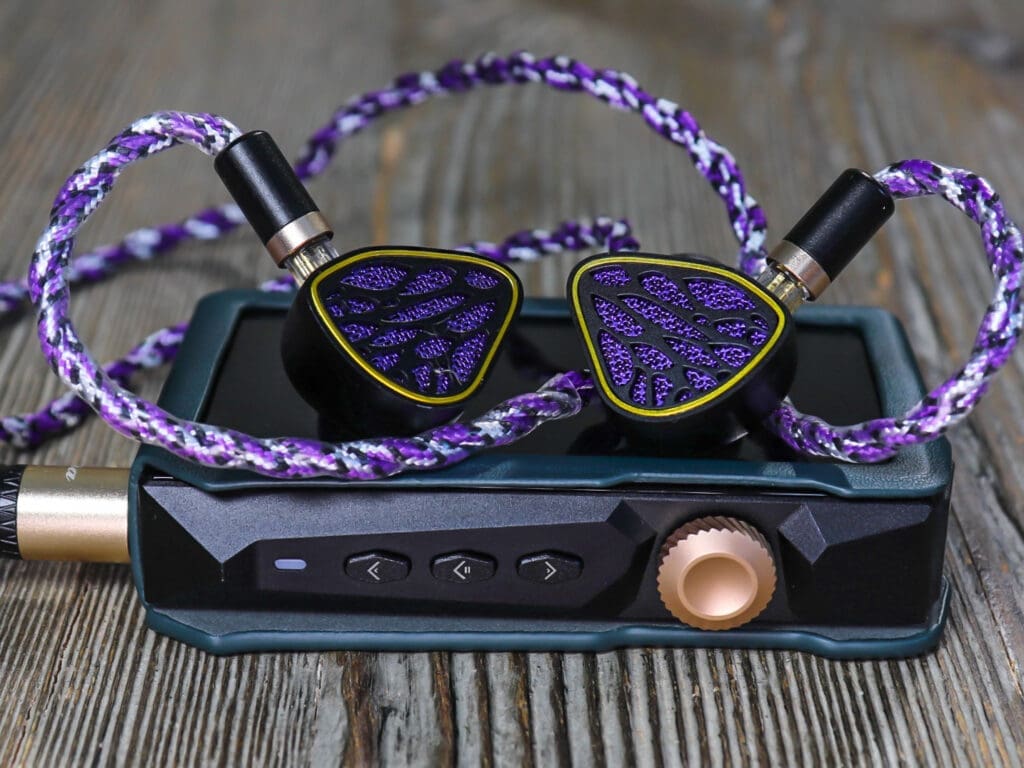
I touched on this a bit, but detail retrieval is actually heightened with the AP80 Pro Max, to my ears anyways. I say that because the midrange certainly has nice note separation, and while it’s smooth in cadence, it’s also very precise in its note definition. Also, there’s some added vibrance in this range which does well to illuminate the subtleties. Now, the AP80 Pro Max is not going to turn the QOA Adonis New into some amazing detail monster. In fact, no source device will do that. What the AP80 Pro Max will do is clean up the note edges in comparison with some other devices. Granted, this difference will not be world changing, but I do find that the midrange does sound nicely detailed. Again, a very clear and clean midrange, neutral with a spritz of warmth, great note separation, it’s got some air to the sound too. The bonus is the note density and semi-rich note body I was talking about earlier. To have a detail rich sound which is rich in body is a bonus folks. For all intents and purposes, the midrange is nice.
Treble Region
To my ears, the treble is really a wonderful bow on this device friends. I mean, it has that nice sparkle to it, that added air to the sound, along with just enough of a forward tilt to its presence to sound like a great supporting actor. Again, the sound is so well balanced, and the treble doesn’t introduce any added sheen of color to the sound, which is great. One thing I always worry about with these ESS Sabre chips is the touch of glare present in many cases. Thankfully, the AP80 Pro Max doesn’t have any of that. I hear a detail rich sound which influences my iems to have a pretty tight delivery, aided in resolution, added clarity. Folks, for treble heavy sets the AP80 Pro Max really does refine the sound. Again, the Sivga Que UTG is a perfect example. It is a treble focused set (for the most part) and the AP80 Pro Max does not exaggerate those high tones. I don’t hear an even more abrasive or harsh sound. Which is fantastic. Instead, the treble sounds more punchy, more precise, and the Que UTG has that subtle crispness which creates a very concise and shimmery treble. I cannot say this for all devices. Hidizs really did a solid job in keeping a control over the spectrum with a device that won’t proliferate any of those more radiant tones. The treble isn’t peaky, but it is brilliant. It isn’t harsh, but there’s plenty of air and crispness. That, my friends… is pretty nice. For a $200 tiny little dap Hidizs did a nice job and the treble is a huge reason for that.
Technicalities
Details
Once again, I hear better than average detail retrieval. What is average you ask? That’s a great question that I don’t have the answer to. The only thing I can say is that when I’m listening to the AP80 Pro Max with most any iem, I find that the subtle minutiae comes through a bit better than some other DAPs in the $200 market. Having said that, the AP80 Pro Max is certainly not the best in this area, nor would I want it to be. The AP80 Pro Max is a musicality-first DAP yet also carries a sound technical foundation. This is due to the clarity within the ranges, the airiness and open feel to the sound, as well as the slightly less drawn-out transient response etc. There’s actually a number of reasons, but in my opinion the AP80 Pro Max will only help your iems by slightly influencing a more detail rich environment. Again, without losing its musical nature.
Stage
Another aspect of the AP80 Pro Max’s perceived solid technical performance is it’s larger than average stage size. Certainly, a more expansive stage than the M1 Plus or the R3 Pro II by a slight margin. In my estimation, when you have a more transparent, more airy sound it naturally introduces a psycho-acoustic width, height, and sometimes depth. Now, I don’t find the depth to be quite as impressive, but also, depth isn’t the easiest thing to discern with source devices. I’d probably call the depth of the stage about average. Which is good by the way. I definitely hear nice enough front to back layering with iems which are capable of such things. Again, the best thing I can do is compare to other DAPs of a similar price. I can tell you this; the AP80 Pro Max will not influence a less layered or deep sound in your iems, it won’t take away from your iems, and it generally won’t create a more congested sound in your iems. The soundstage is certainly one of the Pros of this device.
Separation / Imaging
Like I said in the review, the AP80 Pro Max’s ability to create space is one of its best qualities where “technical skills” are concerned. Note separation in particular is very nice. You have to remember that the source is not going to all of a sudden make a set like the Aful Explorer become a set with outstanding instrument separation. I don’t want my praise of this little guy to carry greater than normal expectations. The truth is that the AP80 Pro Max really does have a clean-lined ability to make distinct lines between notes. Obviously, congested tracks, or lesser quality tracks, and less technical iems will downgrade its ability to a degree. Having said that, the AP80 Pro Max only helps my iems to have better imaging abilities. Well, more-so than other devices I’d say.
Comparisons
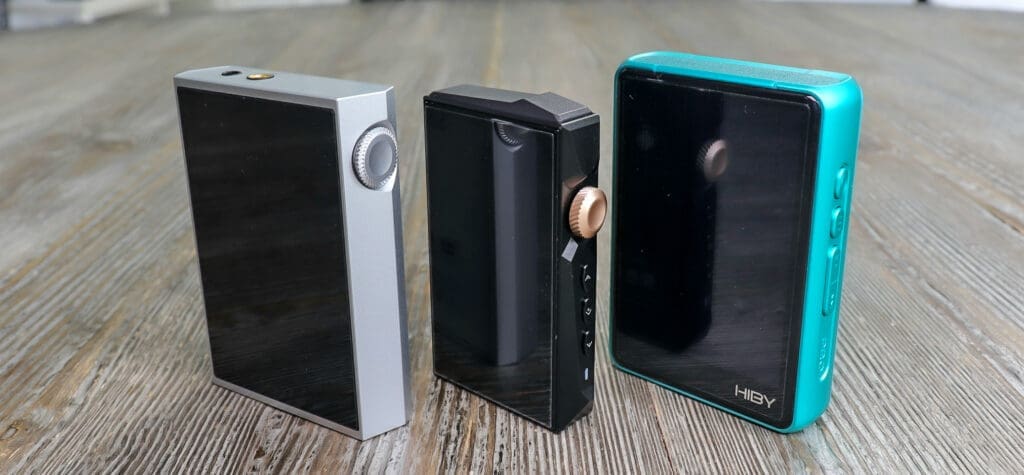
Shanling M1 Plus ($209)
The Shanling M1 Plus is without question one of the best sounding $200 price point non-Android DAPs on the market. It has that Shanling house sound which is always intriguing. Now, the M1 Plus has its share of issues just as well as it has some high upsides, but man is it a dope device. The M1 Plus uses the highly capable ESS9069Q dac chips as well as a pair of SGM8262 amplifiers. Folks, I actually chose to not review the M1 Plus. Only because at the time, I wasn’t impressed. I know, I know, that was foolish. Months after is when I realized how foolish that was. Perhaps I will still review the M1 Plus. If I could ever get through my backlog. Anyways, it is a wonderful DAP friends. One which is easily one of the best purchases at its price point. However, is it a better device than the AP80 Pro Max? Maybe “better” is the wrong way to go about this, let’s check out a comparison of the two.
Differences
There are a few defining characteristics which mark distinct differences with the M1 Plus and the AP80 Pro Max. For one, the M1 Plus is larger, slightly larger screen and it too is built out of aluminum. Both devices are built very well. Also, both devices can easily be used with one hand. Obviously the smaller AP80 Pro Max is easier in this effort. I do like the screen on the AP80 Pro Max a lot more, better vibrancy and the colors pop a lot more, better bit depth, and simply more vivid. Though the M1 Plus makes it easier to actually engage with the screen. By a slight margin. I love the design on both devices though the AP80 Pro Max is simply awesome folks. Both devices have volume wheels (I like the M1 Plus volume wheel better), both devices are non-Android, and both devices use a Linux based operating system. I will say that the M1 Plus uses a better Ingenic X2000 processor compared to the X1600E processor of the AP80 Pro Max. In real world testing the difference really isn’t as enormous as you’d think. The M1 Plus has almost twice the output power at 660 mW @32 ohms while the AP80 Pro Max sits at right around 340mW max output. Of course, believe it or not, real world listening doesn’t show a huge difference, which is odd. I definitely like the AP80 Pro Max’s UI better as Hiby OS is certainly more polished than Shanling’s version. Also, the AP80 Pro Max is easier to pocket and quicker to link to Hiby Link than Shanling is to its Sync Link. Also, battery life is about the same on both devices as the M1 Plus does have a ton more in power output but also a larger battery too. In all truth, these non-sound differences are very small in some sense and very large in others. If size is a determiner of your choice, then they are very different, or if output power is as well.
Sound Differences
As I said, the M1 Plus comes with a boatload more power which does aid it in driving slightly harder to drive iems and headphones. So, there’s that. Now, when it comes to actual sound quality, I’d say that I do slightly prefer the AP80 Pro Max as it is better balanced across the mix. The M1 Plus carries more warmth, which is great, but the AP80 Pro Max has the sparkle up top that the M1 Plus doesn’t have. I should note that with 660 mW of output in the M1 Plus, it’s already a more versatile device. It can drive harder to drive iems a touch better and it can drive some over-ear cans too. Again, the difference is not enormous in real world listening, but it’s a difference nonetheless.
Each 3rd of the mix
I find the bass of the AP80 Pro Max to be tighter, punchier, whereas the M1 Plus is more beefy, more earthy in timbre, and warmer as well. The midrange of the AP80 Pro Max is better detailed, crisper, airier, while the M1 Plus is more traditionally musical and smooth across the board. The AP80 Pro Max simply has a more vibrant sound to go with its overall warm/neutral midrange. Also, the AP80 Pro Max’s midrange sounds a hair more forward, better for vocalists. Of course, these are preferential opinions that I’m giving you. Now, the treble of the AP80 Pro Max has a hair more brilliance, more of an open feel, crisper, more treble bite. However, the M1 Plus has that smooth treble, still very clean, very enticing, but less technically proficient in my estimation. The AP80 Pro Max has a larger stage, more open, vaster in size. It also has sightly better detail influence, and better note separation. Still, the M1 Plus is certainly the more musical sounding device. As honest as I can be, the actual tuning isn’t very much different between the two devices. A little smoother musicality on the M1 Plus and a bit more precision and clarity on the AP80 Pro Max. I love both devices for different reasons. Personally, I do find the AP80 Pro Max to be slightly better tuned, but that opinion could change for me tomorrow… Lol.
Final thoughts on this comparison
Man do I love these two. In fact, I adore all of these devices that I’m comparing today. However, let’s stay on topic; the AP80 Pro Max and the M1 Plus. Listen folks, both devices are “Grade A” awesome non-Android DAPs. This is why I chose the DAPs that I chose for comparison. I have plenty to choose from. However, there are obvious differences which may alter your choice here. First off, the M1 Plus has a ton more power. Granted, in real world listening the difference isn’t as huge as you’d think. The M1 Plus can drive some harder to drive sets and many over-ear headphones. Also, the AP80 Pro Max is smaller, which does appeal to many people a whole lot more. Shoot, it weighs half as much as the M1 Plus. Much more pocketable. I enjoy them both folks and I think both are fantastic devices to own or spend your money on. It really comes down to size, output power, and what tuning do you prefer.
Hiby R3 Pro II ($199)
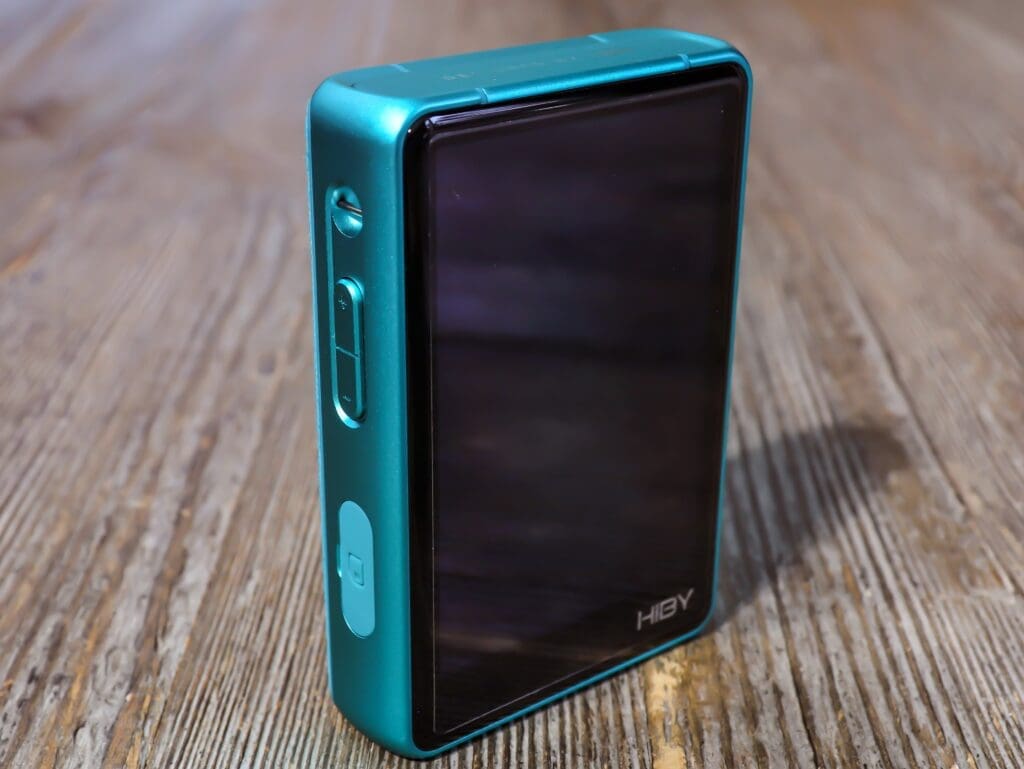
The obvious other choice for a comparison is with the Hiby R3 Pro II (R3 II Review). I feel that without question the R3 Pro II is right in there with the best that the $200 non-Android DAP scene has to offer. I was going to add in the Fiio JM21, but it simply didn’t seem to make sense being that it is an Android device. Anyways, the Hiby R3 Pro II is a fantastic device with everything that one would need to have a great listening session. The R3 Pro II comes with dual Cirrus Logic CS43198 dac chips, 480 mW of max power, and one of the best screens that you can get for these smaller devices, plus a ton of battery capacity. Of course, like anything it has its share of small issues which I will try to speak on in this comparison.
Differences
The non-sound difference between these two devices is even more so than the last comparison, in my opinion. First, the R3 Pro II is much more weighty, bigger, fatter, and more like a block than the very small and petite AP80 Pro Max. This may be a huge upside of downside depending on your preferences. The R3 Pro II is simply gorgeous folks. Hiby added in that beautiful suede backing, that super vibrant HD screen. Just beautiful. However, the AP80 Pro Max also has a very vibrant screen as well. It’s a wash for me. The AP80 Pro Max does have a volume wheel whereas the R3 Pro II does not. I don’t know how important that is to you. Both devices are almost identical in UI as they both use the same processor, the same Hiby OS, and both feel identical in usage. Other than the fact that one DAP (AP80 Pro Max) is simply smaller, and one is larger with more girth (R3 Pro II). In truth, the actual experience of dealing with the operating system is close to the same. Responsiveness is the same, smoothness of scrolling, searching, and just about everything else is identical. Again, one is small, one is large. Now, the Hiby R3 Pro II has a lot more output power with 480 mW max on 4.4 balanced to the AP80 Pro Max’s max output of 340 mW. It’s a substantial difference. However, once again, just like the comparison with the Shanling M1 Plus, the difference really isn’t huge when actually listening to music. Volume steps are very similar, loudness is similar, but harder to drive headphones will be slightly easier with the R3 Pro II. Iems are the same on both devices to my ears. Lastly, the R3 Pro II has much-much better battery capacity. It can get you 20 hours of 3.5 single ended listening compared to the 10-12 on the AP80 Pro Max. It’s actually most of the reason why the R3 Pro II is so fat.
Sound Differences
Now, as far as the sound differences, I hate to even do this. I think both devices are hands down great. I won’t go long with this sound comparison because there isn’t a whole lot of huge difference between the two. In reality, the AP80 Pro Max is slightly warmer whereas the R3 Pro II is closer to neutral tonally. I find that timbre is probably a hair better on the R3 Pro II, whereas technical ability is probably better on the AP80 Pro Max. The AP80 Pro Max is more crisp, airier (by a slight margin) with a cleaner sound than the R3 Pro II. Now, to my ears the R3 Pro II is actually slightly closer to what I subjectively call “organic”. That said, the AP80 Pro Max is slightly more dynamic in presentation, bigger and more expressive macro-dynamics. They actually trade blows very well.
Each 3rd of the mix
There’s a hair more warmth in the R3 Pro II, a bit more bass heft. However, the AP80 Pro Max has plenty of bass oomph itself. Both get pretty deep in extension, but the R3 Pro II has a more hard-lined note surface. I find both midranges are forward, great for vocalists, and both are nicely detailed with the AP80 Pro Max being slightly cleaner, more defined, crisper. Though I’d say that the AP80 Pro Max has the more textured midrange. I don’t find either one better than the other, per say, just slightly different. The treble of the R3 Pro II and the AP80 Pro Max are very close to equal too. Perhaps the AP80 Pro Max has a touch more sparkle up top. I will say that the extension into the upper treble sounds very similar too. Really these two are very similar. I do hear some texture differences as the AP80 Pro Max has a touch more of that texture to notes. It is really not by much folks. Of course, the AP80 Pro Max’s stage size is larger, wider, and probably a hair deeper too. Though once again, not by much. Both offer a well separated, well layered sound. Also, I don’t think you know how hard it is to go back and forth finding these differences between devices. I look like a crazy person rapidly going back and forth. Still, I am not willing to say one is better than the other when both devices are so very compelling of a listen and both will fit wonderfully into a collection. It’ll come down to preferences here folks.
Final thoughts on this comparison
Like I said, these two are very similar tonally apart from some small deviations from one another. In truth, that’s the case with all of these small non-Android DAPs. They each have completely different dac chips, amp sections too, but no doubt there are some distinct similarities as well as some differences which set them apart. The bonus for us (the consumer) is that they all sound fantastic. I cannot stress this point enough. Between the R3 Pro II & the AP80 Pro Max the difference tonally is some bass weight and some details. Very minor differences at that. What I honestly feel that this comparison comes down to is size and maybe output power depending on what you are driving. If it’s iems then the output power doesn’t matter. If it’s over-ear headphones, then the R3 Pro II is the device that would make most sense. However, the size difference may be the key for most of you. Do you want a heavier square block, albeit a beautiful square block? Or do you want a small dope looking rectangle? Once again, I like them both. Also once again, this says multitudes about how well Hidizs tuned the AP80 Pro Max.
Final thoughts on the Hidizs AP80 Pro Max
Okay folks, you’ve stuck it out with me this long, by some miracle you’ve actually read through my words. I really put some time into the AP80 Pro Max. Well, I had time to spend. At any rate, there’s quite a lot to like about this little guy. So much so that I have it easily right there with the best sounding $200 non-Android DAPs. Without question. In fact, I keep saying “non-Android”, but I would put the sound quality of the AP80 Pro Max against any $200 dap… period!
Complaints/Problems
There are some subtle complaints however. One possible complaint about this device may be the size itself. I could see some folks with fatter fingers having subtle issues with the AP80 Pro Max’s smaller screen. I could see that. Also, another possible problem may be that this simply isn’t an Android DAP. I get that. Scrolling and meandering through the UI is always easier with an Android DAP. However, for those purists who desperately want nothing to do with Android, or they simply are sick of the Android architecture (yes there are many), then a non-Android DAP like the AP80 Pro Max may be exactly what you need. So, these are definitely things to think about. As far as I’m concerned, these aren’t issues at all because this thing is too good in my opinion. Hidizs nailed it folks!
Comparatively Good
I compared two of thee absolute best DAPs that one can compare the AP80 Pro Max with. These two devices (R3 Pro II, M1 Plus) are absolute BALLERS! In both comparisons I walked away choosing the AP80 Pro Max when directly comparing. Granted, that could change by tomorrow when I want a slightly different sound. But in my hours long comparisons, the AP80 Pro Max easily held its own and proved to me just how adept that Hidizs is at tuning these products. No doubt their pedigree is on full display. How cool is it to have this tiny DAP in my hands. Beautiful, vibrant screen, easy to read lettering, HD screen, album art looking gorgeous. Sincerely, I love to connect Hiby Link, put the AP80 Pro Max in my pocket and hit play on my Galaxy Z Fold 5. I find it utterly amazing how something this small could sound so big, so vast, and so dynamic. So, I suppose what I’m getting at is this… the Hidizs AP80 Pro Max is worth every penny and an easy rec from this reviewer.
The Why…
Because look at this thing. I cannot get over how cool it is that it is so small, so sleek, so pocketable, and dare I say…cute. It is so cool folks. The best part is that it feels so durable, so structurally sound, robust even. It reminds me of the Ifi Go Blue in how substantial the build is. Just like any Hidizs products. And the design, look at the curves, the polygonal intersects on its sides, the dope little volume wheel. Also, if you can, get the case, it’s slick looking. The AP80 Pro Max has everything that the Hiby OS has to offer, and it does so seamlessly. Just as good as any non-Android DAP in its price point. Also, 340 mW is nothing to sneeze at. I won’t go through every feature and setting here as I’ve already done so, but you get the gist. Another reason why I rec this device is because there’s this innate joy, I get from having my entire collection of music available in this tiny pocket friendly little DAP. I find it so cool. That’s not really anything which sets this DAP apart from other DAPs, but it’s still worth speaking on. However, it’s always about the sound folks.
That sound!
The most significant reason that the Hidizs AP80 Pro Max is an easy rec from me and worth every penny is because of the sound. Just enough bass elevation to keep my feet moving, some slight added warmth, some viscous fluidity added to the spectrum. Oh, and the mids, perfectly forward, such a nice mix of musical and analytical. It’s so well detailed, excellent separation, Imaging tends to be helped by the AP80 Pro Max too. However, those vocals friends are really special. Trust me, pair the AP80 Pro Max with a mid-centric set of iems and you’ll see why I choose this aspect of its sound as a reason. The mids have that shimmer too. It’s just nice. Also, the treble is never peaky and won’t exaggerate more brilliantly rendered tunings. I told you all, even the Que UTG is not giving me problems. Also, the resolution is certainly high folks. There’s this unmistakable clarity which is very nice to hear from a $200 DAP. The stage is above average, wide, tall, and relatively deep with a nice way of influencing my iems in their layering abilities, Imaging capabilities, and very nice note separation. Beyond that, it’s just a musical and tuneful device. However, it is musical and tuneful whilst also coming across as technically adept. I’m not saying it’s the best thing I’ve ever heard, but for the cost it’s a good buy. In my humble opinion.
Conclusion
To conclude my full review and feature of the Hidizs AP80 Pro Max, I first need to thank the great folks over at Hidizs for supplying the AP80 Pro Max in the first place. There’s nothing I could say here that I already haven’t said. Except, these folks are so nice to work with. Meaning, they absolutely never impose anything in me at all. Never. They are always kind, personable, and quick to reply to questions. Please believe me, this is not always the case. Thank you Hidizs and thank you to the contact who I mostly deal with. Also, I want to thank you, the reader, for taking the time to read this long review. You are a warrior if you got through it all. However, I’m just glad that you clicked the link and spent some time trying to figure out whether this device is even for you or not. To us at Mobileaudiophile.com, the visit alone means a lot. We are always hoping our reviews help you in some way or another. Thank you.
Other Perspectives
Like all reviews I end this one by pleading with you to check out other thoughts. Don’t just hang your hat on my words. I am only one man with my own opinion. Granted, I give you my exact opinion, but it’s mine. I hear things the way that I hear them. The next person may hear things a bit differently. Take the time to search out other perspectives so that you have a good idea whether the AP80 Pro Max fits your own preference or not. It’ll only help you. With that, I’m done folks. So, take good care, stay as safe as possible and always… God Bless!!





A great and detailed review…but I am still none the wiser about how to use it. I can’t see how to get music onto the device. Where can I find instructions for tech-idiots not the savvy tech professors for whom your detailed review will be ideal!
Thanks sir! Just plug a usbc cable to your laptop or PC / MAC and the other end to the device and you are good to go.
I am sorry David. Sometimes I forget who I am writing to. You aren’t wrong. So, the best way that I’ve found to get music into the AP80 Pro Max is by putting a micro sd card into the AP80 Pro Max and connecting it to a computer of some sort. From there you can simply transfer the files over to your AP80 Pro Max. Copy/paste.