



























































Fiio JT3 Review – Easy to Drive, Everyday Sound & Who It’s Really For


Disclaimer
Hello everyone! Before we get started, I want to let you know that FiiO sent me the JT3 so I could test it, spend some time listening, and share my honest thoughts. I’m not being paid for this review, and FiiO hasn’t asked me to say anything specific, check my review before posting, or set any publishing schedule.
Table Of Content
- Disclaimer
- Introduction
- Unboxing
- Accessories
- Technical Specifications
- Specs
- Build Quality
- Driver and Acoustic Design
- Cable and Connectivity
- Comfort and Weight
- Sound Performance
- Bass
- Mids
- Treble
- Technicalities
- Comparison with the JT7
- Conclusion
- Pros
- Cons
- Who is the Fiio JT3 for?
- Who should avoid the Fiio JT3?
- Source pairing & daily use
- Similar alternatives to consider
Everything written here is based entirely on my own experience with the JT3. I always do my best to stay as fair and objective as possible, but at the end of the day, this is still one person’s opinion, and everyone judges things differently. That’s what makes this hobby so much fun.
Huge thanks to FiiO for giving me the chance to try out the JT3, and of course, a big thank you to you for taking the time to read my review. Your support truly means a lot to me!
Introduction
If you have been following me for a while, you must know that I love FiiO and their products. Lately FiiO has been releasing a lot of amazing products, and among them were some great headphones, like the FT1, FT1 Pro, FT7, and the FT13, and now, after all this success, FiiO and Jade Audio released a very budget friendly open back set, the JT3.
The JT line is part of Jade Audio, which is basically FiiO’s sister brand that focuses on more budget friendly products. Their goal has always been to bring good sound to people who don’t want to spend a lot, and the JT series is their entry level over ear headphones line.
The JT3 comes in at around 70$, and they went for an open back design with a 50mm dynamic driver. For this price, I’m really curious what FiiO and Jade Audio have to bring us. The question is how well it performs and if it actually offers something special in this budget range. FiiO says they put most of the cost into the acoustic side rather than accessories, so I really want to see if that translates into sound quality.
In this review, I will also compare the JT3 to its bigger brother, the JT7. The JT7 is a planar headphone and costs a bit more at around 110$ so it will be very intriguing to see how the JT3 holds up against it and whether the jump in price is worth it.
Unboxing
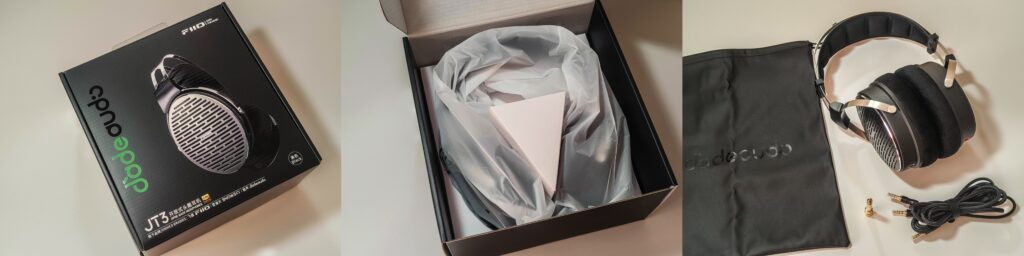
When the JT3 arrived, the first thing I noticed was that the box looked pretty nice, but you can immediately tell that it’s part of a more budget line from FiiO. It’s nowhere near the premium presentation you get with the FT series, but honestly, for the price, I think it does exactly what it needs to do. It looks clean, it feels decent in the hands, and most importantly, it protects the headphones very well during shipping.
Opening the box, everything is packed in a simple and straightforward way. The headphones are wrapped inside a protective plastic bag, and underneath you will find the accessories. It’s nothing fancy, but everything sits securely in place, which is, in my opinion, what matters at this price point.
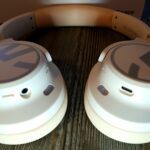
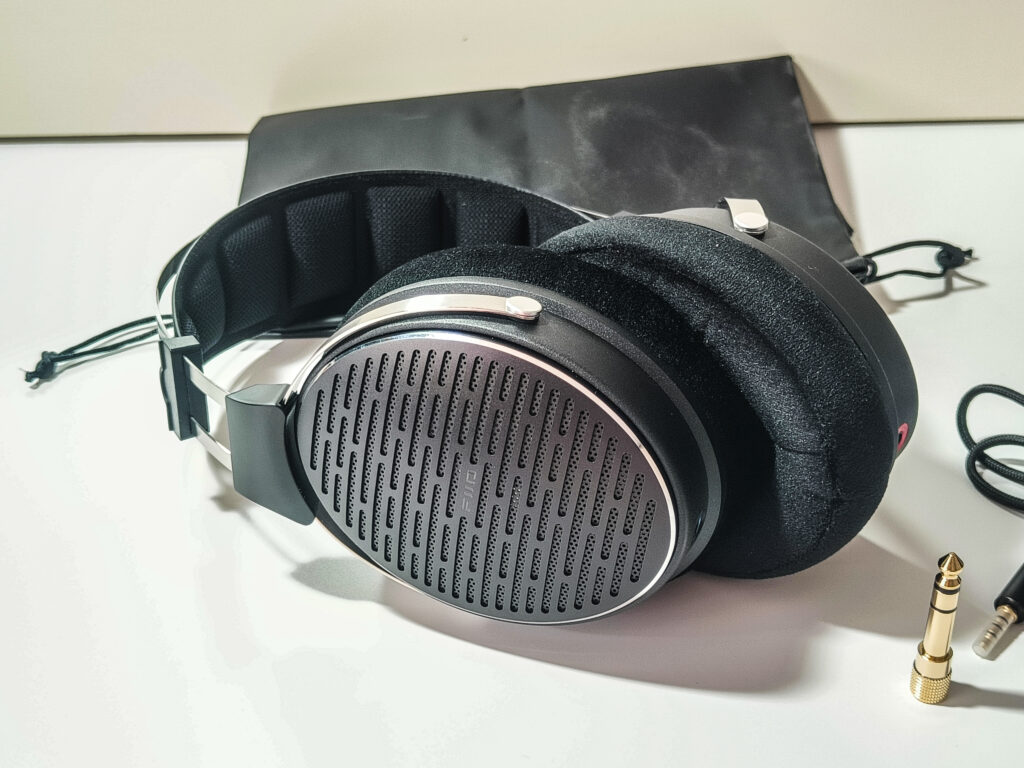
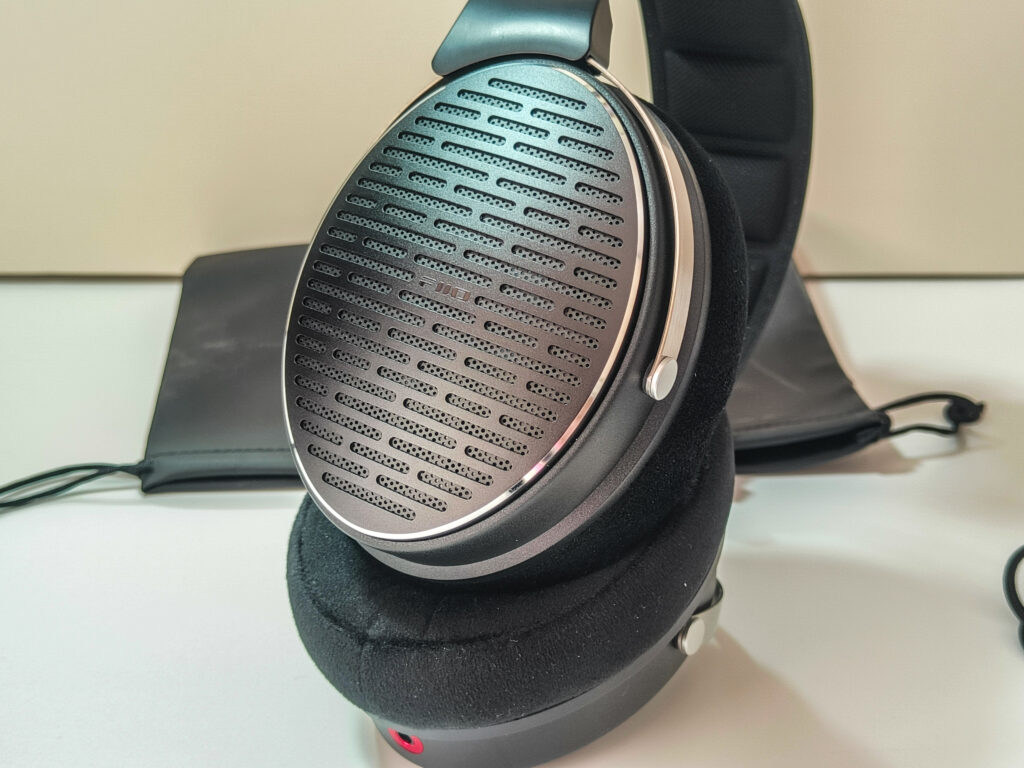
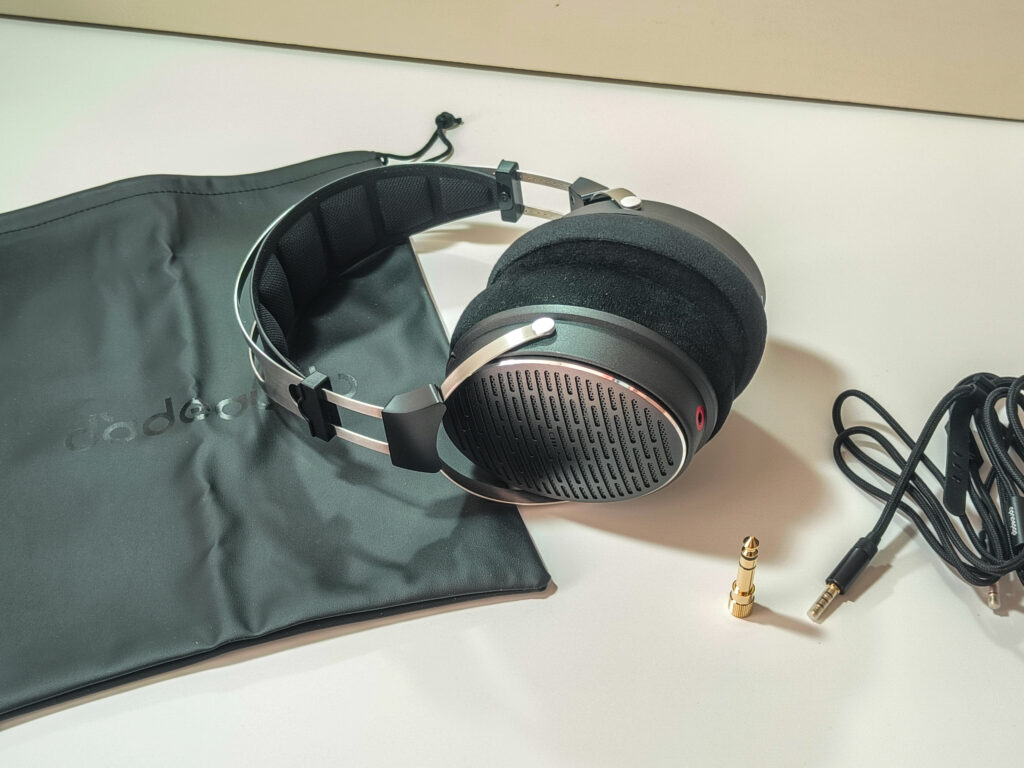
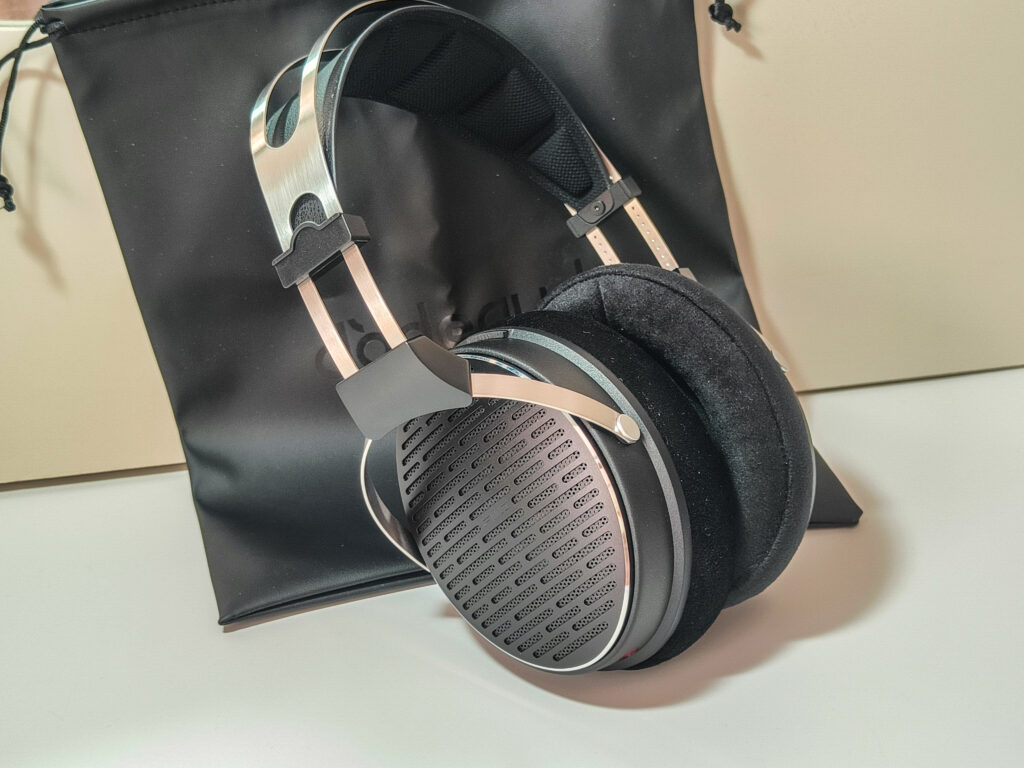
Taking the JT3 out for the first time actually surprised me. For a 70$ headphone, they feel better than I expected. The headband is made from metal, the side panels are also metal, and the suede on the earcups gives it a soft and comfortable feel. The headband has a fabric finish with some padding, and the whole thing is very light, which I will talk about more in the specifications section, but it’s definitely a pleasant first impression. One downside to mention is that the earcups have very little side to side movement, and it can bother some people.
Accessories
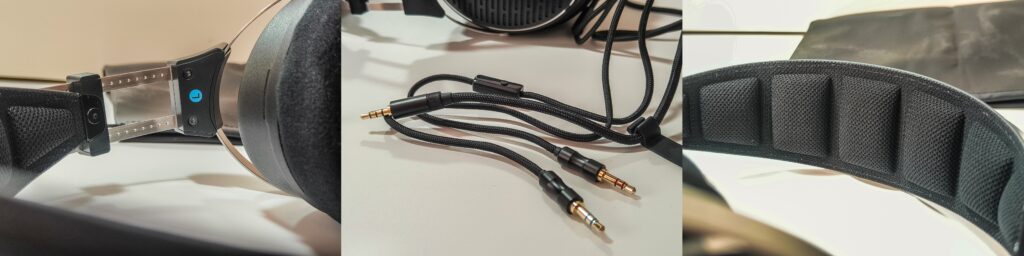
The cable is braided and has metal connectors, and it even includes a microphone, so from the outside it looks pretty solid. But once I started handling it, I realized it was a bit stiff and springy. It works fine, but it’s not the most flexible, soft, or premium cable you will find.
You also get a carrying bag, and this one actually surprised me. It’s made from a pleather like material and feels nicer than what I expected at this price (actually, I didn’t expect a carrying bag at this price, as even european headphones for 3x the price don’t come with one). The only issue I had is that it was a bit difficult to close. Even when pulling the strings, it didn’t fully tighten at the top, probably because the material is a bit stiff when new.
The last thing in the box is the 6.35mm to 3.5mm adapter, and of course, the usual papers like the manual and warranty card.
Overall, the unboxing experience is simple but honestly pretty good for the price. Nothing flashy, and it just gets the job done and gives you everything you need to start using the JT3 right away.
Technical Specifications
Specs
- Color: Black or Silver
- Driver size: Φ50mm
- Diaphragm: British imported PU+PEK composite with copper rings
- Voice coil: Japanese imported TIL tube high tension CCAW black wire voice coil
- Magnet: Powerful N52 magnets
- Impedance: 80Ω at 1kHz
- Frequency response: 15Hz to 30kHz
- Sensitivity: 97dB/mW at 1kHz, 110dB/Vrms at 1kHz
- Headphone connector: Dual 3.5mm TRS
- Frame material: Composite ABS plus aluminium alloy metal faceplate
- Weight: About 330g excluding cable
- Cable specifications: 1.5m dual 3.5 to 3.5 with microphone, high purity palladium plated oxygen free copper wires
- Packing list:
- Headphones x1, 3.5mm termination cable with built in microphone x1
- 3.5mm female to 6.3mm male adapter x1
- storage pouch x1
- quick start guide x1
- warranty card x1
Build Quality
When I first held the JT3 in my hands, I honestly didn’t expect it to feel this good for the price. The metal headband and earcup faceplates give it a very nice feeling the moment you pick it up. Everything feels well finished without too many rough edges or cheap looking parts. Even though it is still a budget model, it doesn’t behave like one.
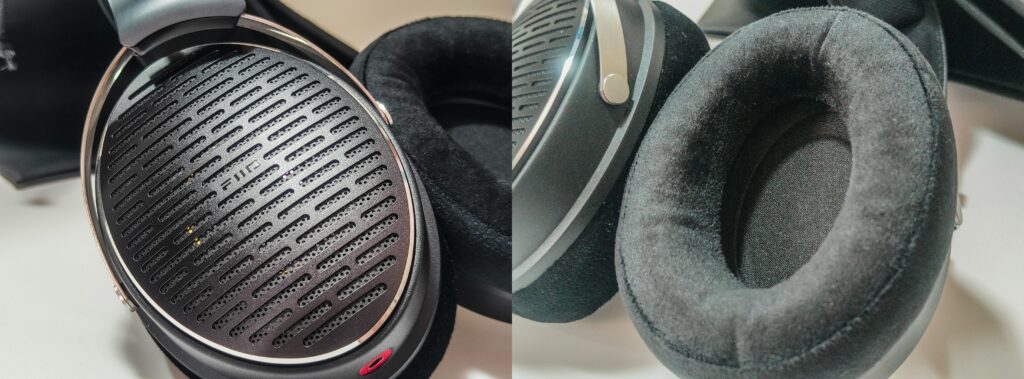
The suede earcups are great. They feel soft when you put them on, and the memory foam inside adjusts quickly to your head. The headband has this padded fabric layer that feels a bit cheap but still is fine for the price.
But as I have mentioned earlier, the earcups don’t quite rotate as I would have wished they did, so it can be uncomfortable for some people.
Driver and Acoustic Design
The JT3 uses a 50mm dynamic driver. The diaphragm is made from a PU plus PEK composite material. FiiO claims that this material is chosen because it is light and strong, which helps the driver move cleanly without creating too much distortion.
There is also a brass damping ring added around the driver. Again, based on what FiiO says, its job is to keep the diaphragm steady and reduce unwanted vibrations during playback.
The driver is placed slightly to the side inside the earcup, and the outer grille is made from aluminium magnesium alloy. This design should help the headphone let air flow more freely since it is an open back. The goal is to make the sound more open and natural.
Cable and Connectivity
The cable they include is decent and looks nicer than I expected at this price. It has metal connectors, it is braided, and it even has a microphone, so it covers a bit of everything. The only thing that bothered me was how stiff and springy it feels. It works completely fine, but it doesn’t move around as smoothly as I would like. The good thing is that the JT3 uses standard dual 3.5mm connectors, so upgrading the cable later is very easy if you want something softer or even a balanced cable.
Comfort and Weight
The weight of the JT3 is around 330 grams, so it isn’t the lightest, but it’s not heavy either. The pads feel very nice around the ears, and they are not squeezing too much, and the headband adjusts with clear steps, so it’s very easy to change and keep the same size.
Sound Performance
Bass
Let’s start with the bass. As usual, I love testing bass with Lorn’s ENTROPYYY and The Haxan Cloak’s Consumed, and the first thing I noticed was that the JT3 hits pretty hard. There is rumble, there is energy, and the whole low end has a very warm and heavy character that you immediately feel. But the thing is, it wasn’t hitting in the way I personally prefer. The mid bass comes forward a bit too much, and the sub bass feels weaker in comparison, which makes the whole bass presentation feel a bit bloated.
Instead of getting that deep, clean rumble I like, the bass here feels muddy, and it gets into the mids. With Home Free’s Everybody Walkin’ This Land, their voices sounded thicker than usual, and that extra warmth creates this slightly muffled character that felt a bit odd to me. It is clear that FiiO and Jade Audio were aiming for a warm signature, but for my taste, it goes a bit too far here. But I can really see how people who like warmer and more bassy sounds would really like this bass.
Mids
The mids are affected quite a bit by the strong mid bass. With Everybody Walkin’ This Land and with Patty Gurdy’s Grieve No More, the mids feel a little pushed back, and the warmth from the bass adds a thickness that makes some vocals sound less clean than I would like. Sometimes it really sounds recessed and muddy.
But it is not all negative. When Patty Gurdy reaches her higher notes, the upper mids actually sound quite nice. They are clearer and with more presence, and you can hear that the JT3 is capable of giving good vocals when the music moves away from that mid bass heavy area. Still, the overall tonal balance feels a bit strange at times, because the strong mid bass always finds a way to enter the mids.
Treble
The treble on the JT3 is smooth and easygoing. There are no sharp peaks, nothing harsh, nothing that pierces my ears. It is very safe, maybe a little too safe. I noticed the treble rolls off earlier than I would prefer, especially when listening to Gravity by Steven Price. Near the end of the track, when the vocals reach those higher notes, I usually get this long, airy decay on headphones like the FT7 (I know I can’t compare the JT3 to the FT7, but still, I wanted to mention this feeling), and it gives me goosebumps. With the JT3, that extension just isn’t there in the same way. Everything is smoother and a bit shortened, so you lose some of that magic. But the biggest plus here is that nothing is sharp and fatiguing, so it will be easier on the ears for longer sessions.
Technicalities
With Yosi Horikawa’s Bubbles, the soundstage is actually quite wide. The imaging is good enough that I can tell where the balls are falling around me, and that was a pleasant surprise. It has a nice sense of space for a 70$ overear headphone.
But when it comes to layering and detail retrieval, it struggles. On Hans Zimmer’s Retreat and Reveille, things start to blur together. The bass warmth thickens everything, and small details get lost. The track becomes a bit muffled, and the layering collapses in busy sections. Nothing sounds bad or broken, it just doesn’t have the clarity and separation I would hope for. Again, considering the price, it is not terrible, but I am personally very picky, so it stood out to me.
Comparison with the JT7
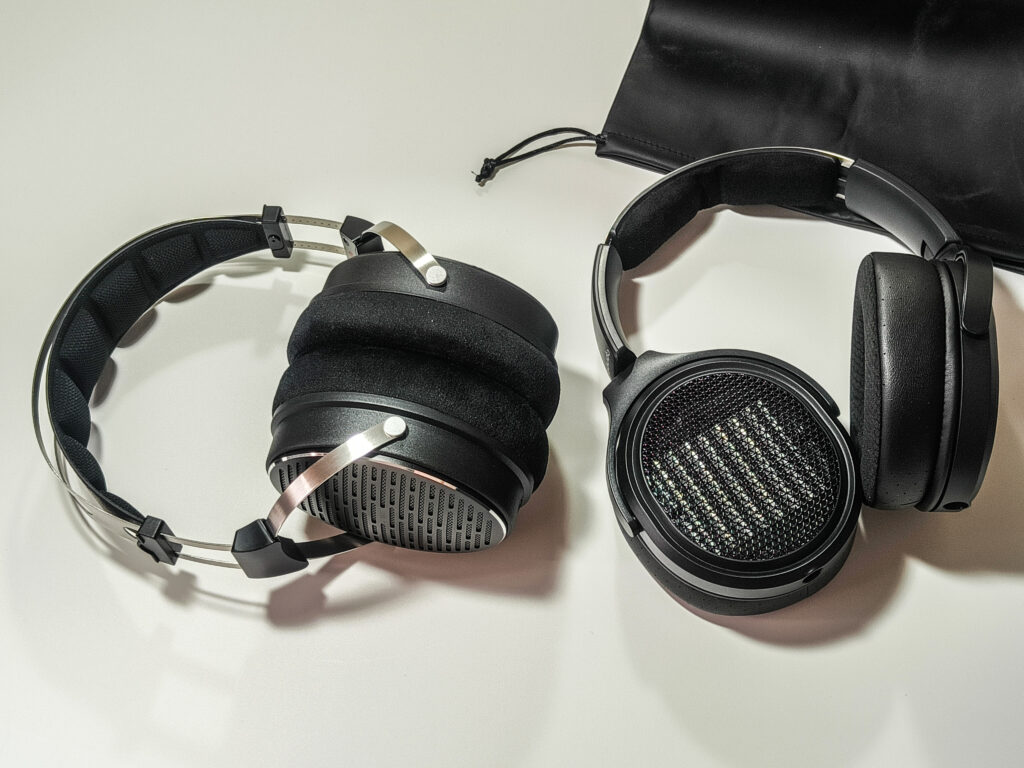
Now comparing it to the JT7 is where it gets much more interesting. The JT7 is a planar magnetic and costs more at 110$, but its tuning feels on a completely different level. It reminds me a lot of the FT1 Pro in terms of balance and cleanliness. The mid bass is very well controlled, the mids sit more naturally, and the treble extends much better. The JT7 feels cleaner, clearer, and more precise overall, and the technicalities are much better than those of the JT3.
But build quality is where the JT3 fights back. The JT7 can fold and takes up much less space, which is very convenient. But if you asked me which one would survive a fall to the floor, I would pick the JT3 without any hesitation. It feels more sturdy, more solid, and less plasticky and fragile.
So it really comes down to what you like. If you enjoy a very warm presentation with a big bass presence, the JT3 might honestly be more fun for you. But if you want something more balanced, controlled, and technically capable, the JT7 is an amazing choice for 110$.
Conclusion
After spending some time with the JT3, I’m left with mixed feelings, but not in a negative way. Jade Audio and FiiO clearly aimed for a warm and thick tuning, and if that is the kind of sound you enjoy, the JT3 can give it to you. It hits with good weight and keeps that warm character all the way through.
For my taste, the mid bass is a bit too strong, and it affects the mids more than I would like. The treble stays safe and smooth, though, which makes the JT3 easy to listen to, but also takes away some sparkle and extension. Technically it performs about where a 70$ openback overear headphone should and even a bit better in terms of soundstage, which is very good and wide here.
What actually stood out to me the most was everything outside the sound. The build quality is surprisingly nice for the price, the comfort is good, and the whole design feels durable. I only wish the earcups rotated a bit more for a better fit, but overall, it offers nice value as a complete package.
So to sum it up, if you feel like you want a warm, relaxed presentation and something that feels nice in terms of build quality, the JT3 can be a good option. But if you prefer a cleaner, more balanced tuning with better technicalities, the JT7 is absolutely worth the extra money in my opinion. And I hope this helped you figure out which one matches your taste better.
Pros
- Excellent build quality and materials for the price.
- Comfortable and lightweight enough for long listening sessions.
- Warm and full bass presentation that some users will enjoy.
- Good soundstage for a budget open back headphone.
- Includes very decent accessories.
- The treble is smooth, with no harshness or sharp peaks.
Cons
- Very mid bass dominant.
- Sub bass depth is weaker relative to the mid bass.
- Treble roll off is a bit early.
- The cable is stiff and springy rather than flexible and soft.
- Ear cups have too little of a swivel/rotation.
Who is the Fiio JT3 for?
The Fiio JT3 is a good fit for listeners who want an easy-to-drive, lightweight headphone for everyday use. It works well directly from phones, dongle DACs, and portable players without needing extra power. If comfort and relaxed listening sessions matter more than extreme detail chasing, JT3 makes sense.
Who should avoid the Fiio JT3?
If you are looking for a highly resolving, studio-style headphone or plan to use powerful desktop amplifiers, the JT3 may feel limited. It is not tuned for analytical listening or critical monitoring. Those expectations should be set clearly before buying.
Source pairing & daily use
During testing, the Fiio JT3 showed no sensitivity issues with portable sources. Volume headroom is generous even from low-power outputs, making it suitable for casual listening, work setups, or travel. It does not demand special amplification to sound coherent.
Similar alternatives to consider
Listeners comparing the Fiio JT3 may also want to look at other entry-level headphones in the same price range that focus on comfort and ease of use. Personal tuning preference and wearing comfort will be the deciding factors here.
Where to buy:(Non-affiliated! None of my reviews use affiliated links!)




Taking all the analysis into account, were you able to find an equalization setting that improved the sound of the headphones?