


































































Table Of Content
- Dynamic Drivers (DD): The Baseline Everything Is Measured Against
- Balanced Armature (BA): Precision at a Price
- Planar Magnetic: The Speed Argument
- Electrostatic Drivers (EST): The Detail Layer
- MEMS Drivers: The New Variable
- Hybrid Configurations: Addition Isn’t Always Addition
- What Actually Matters: A Framework for Decisions
- Comparison at a Glance
- The Short Version
There’s a question that comes up constantly in audiophile communities, and it almost always gets the same answer: a wall of specs, driver diagrams, and theoretical physics that leaves the person more confused than before. The question is simple. Does the driver type actually change how the IEM sounds? And the honest answer is: yes, meaningfully — but not in the way most guides suggest.
Driver type isn’t destiny. Two dynamic driver IEMs can sound completely opposite. Two planars can be worlds apart. What driver technology does is set the ceiling and floor of certain capabilities, and create tendencies that tuners then work with or against. Understanding those tendencies is what actually helps you make better buying decisions.
This guide is built from real listening, not spec sheets. Every driver type discussed here has been heard, evaluated, and compared on the same source chain under the same conditions. The goal is to give you a working framework — something you can take into your next purchase with actual utility.
Dynamic Drivers (DD): The Baseline Everything Is Measured Against
The dynamic driver is the oldest and most common transducer in personal audio. It works exactly like a speaker: a voice coil suspended in a magnetic field moves a diaphragm back and forth, displacing air. That displacement is what you hear as sound.
Most IEMs — including some of the most well-regarded sets in the hobby — use a single dynamic driver. This isn’t a compromise. When done well, a single DD IEM can outperform far more complex configurations in the areas that matter most to long-term listening.
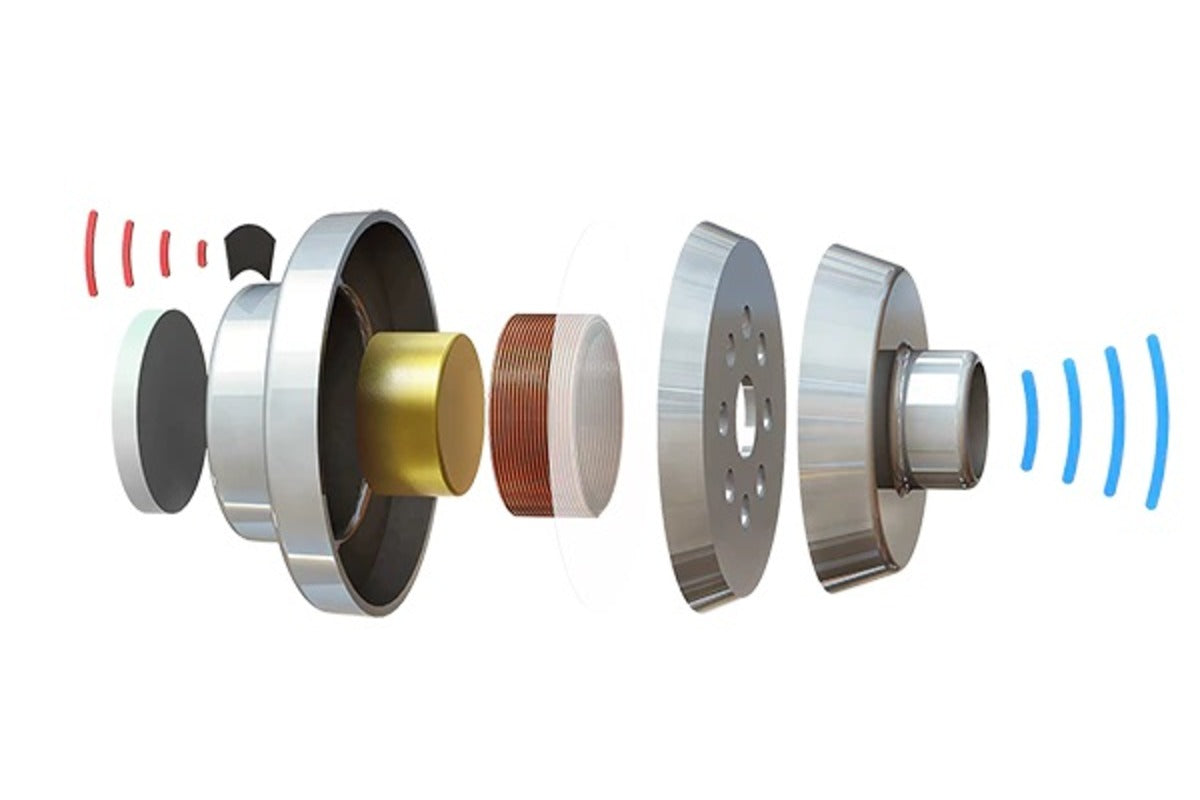
What you actually hear: Dynamic drivers are defined by two things — bass physicality and tonal naturalness. The sub-bass rumble that you feel as much as hear, the sense that a kick drum has weight and not just presence, the way a cello sounds like it has a body — these are things DD does better than almost any other technology. The diaphragm’s physical movement produces something called “air displacement,” and that physical quality is difficult to replicate electrostatically.
The mid and treble performance of a dynamic driver depends almost entirely on the diaphragm material and the tuning. Liquid crystal polymer (LCP), bio-cellulose, beryllium, carbon nanotube composites — each material has different resonance characteristics. Beryllium, for instance, is exceptionally stiff for its weight, which pushes the breakup resonance higher and generally produces better extension at the top end. Carbon nanotube diaphragms tend toward speed and detail. Bio-cellulose tends toward warmth and texture. These aren’t rules, but they’re reliable tendencies.
The limitation: Dynamic drivers struggle with fast, complex passages at high SPLs. When a lot of information arrives simultaneously — dense orchestral sections, heavily layered electronic music — a less capable DD can blur or compress. The better the DD, the narrower this problem, but it doesn’t fully disappear. This is part of why hybrids exist.
Who this is for: Anyone. The dynamic driver IEM is the format that rewards the widest range of listeners. If you’re new to the hobby, a well-tuned single DD is the most forgiving and most satisfying entry point. If you’ve been in the hobby for years, the best single DDs still compete at the top.
Balanced Armature (BA): Precision at a Price
The balanced armature was not invented for audio enthusiasts. It was developed for hearing aids — a technology that needed to be tiny, efficient, and capable of intelligible speech reproduction in a miniaturized format. At some point, IEM manufacturers realized that fitting multiple BAs into a shell was a path to extended frequency coverage without the size constraints of a large dynamic driver. That insight built an entire segment of the market.
A BA driver works differently from a dynamic driver at a fundamental level. Instead of a diaphragm moving air directly, a small armature pivots between magnetic poles, moving a tiny pin that drives a diaphragm. The entire mechanism is sealed, which is why BA drivers are almost universally described as “fast” — there’s very little moving mass, and the system responds quickly to input signals.
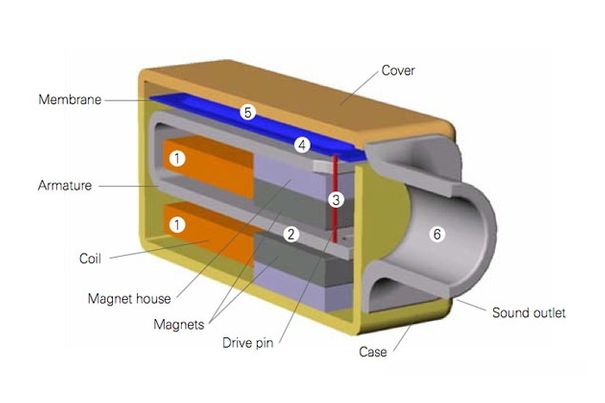
What you actually hear: Clarity, separation, and detail retrieval. BA drivers are excellent at resolving micro-detail — the breath before a vocal note, the slight scrape of a bow on a string, the reverb tail as it decays. This is largely a function of that low moving mass and fast transient response. In the midrange and lower treble, a well-implemented BA can be exceptional.
The speed also contributes to imaging precision. Multi-BA IEMs with good crossover design can place sounds in a convincing three-dimensional space, with sharp boundaries between instruments. For genres where that matters — classical, jazz, acoustic — BAs earn their reputation.
The limitation: Bass. This is the central problem of balanced armature design, and no tuning effort fully solves it. Because the BA mechanism is sealed and physically small, it cannot move enough air to produce genuine sub-bass rumble. What you get instead is a kind of tightly controlled mid-bass punch — present, defined, but ultimately lacking the physical weight a dynamic driver produces. This is not a tuning issue. It’s physics. The best BA bass available still doesn’t feel like a good DD bass.
There’s also the question of timbre. BA drivers have a characteristic “dryness” — a lack of harmonic richness that can make instruments sound slightly artificial on extended listening. For some listeners this is negligible. For others it’s a dealbreaker.
Who this is for: Listeners who prioritize detail, clarity, and separation over tonal richness. Studio monitors, analytical listening, genres where texture matters less than precision. If you’ve ever listened to a great speaker system and thought “I wish my IEM sounded this resolved,” a well-implemented multi-BA is worth trying.
Planar Magnetic: The Speed Argument
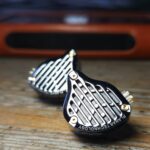
Planar magnetic drivers scale up from the same basic principle used in full-size planar magnetic headphones — a thin membrane with a conductive trace printed on it, suspended between opposing magnetic arrays. When current flows through the trace, the entire membrane moves uniformly, rather than a single point driving a cone. That uniform excursion is the defining characteristic of the technology.
In IEM form, planar drivers require careful housing design because the magnetic arrays need to be on both sides of the membrane, which makes the shell thicker than most BAs. Early planar IEMs had real ergonomic problems as a result. More recent designs have gotten substantially better at packaging.
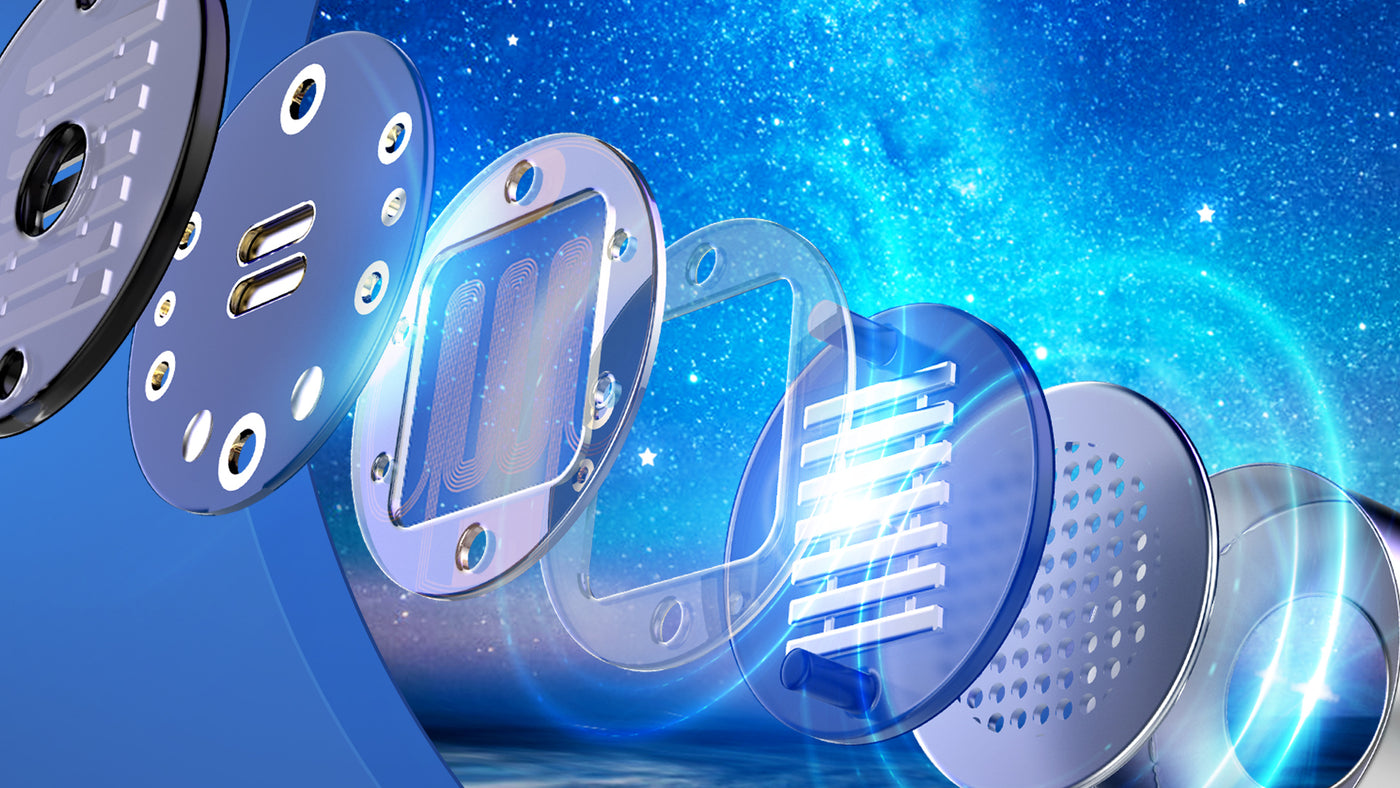
What you actually hear: Speed and texture. Planar IEMs have a particular quality in the midrange — a sense of even-handedness across the frequency spectrum, where nothing feels artificially emphasized. Transient response is very fast, which gives percussion and plucked strings a particularly satisfying quality. The attack is sharp and the decay is controlled.
The bass on a good planar IEM is technically capable — better than BA, with real sub-bass extension — but it still lacks the physical sensation of a dynamic driver. The difference isn’t volume; it’s the kind of tactile quality that comes from air displacement. Planar bass is precise and extended. It’s just not visceral.
Treble on planars tends to be well-extended and smooth, avoiding the spikes that can make some BA-based IEMs fatiguing. This makes planars relatively safe choices for long listening sessions, even at moderate SPLs.
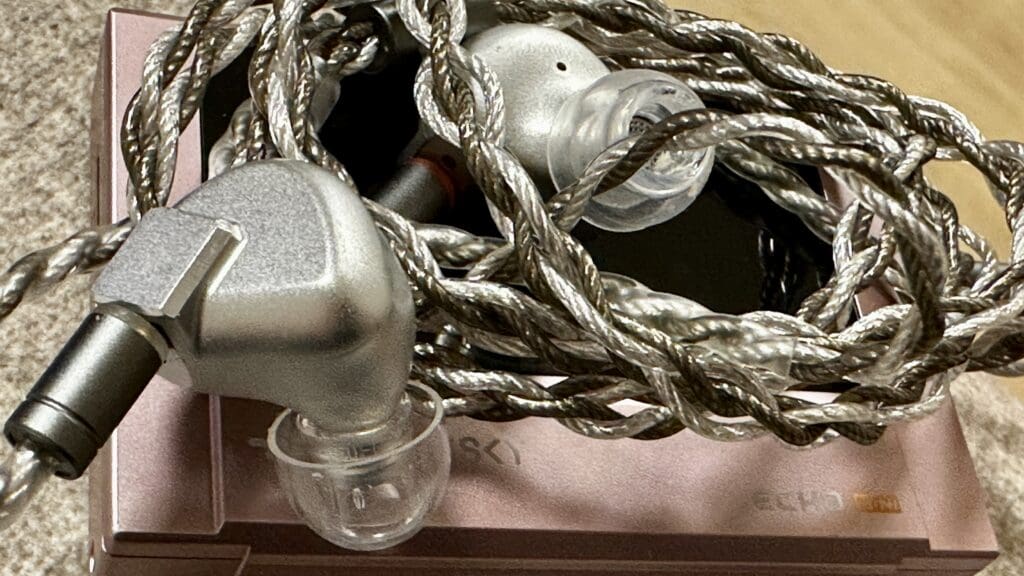
The Letshuoer S12 is a useful reference point here. It’s a planar that punches well above its price largely because the tuning doesn’t try to compensate for what planars can’t do — it plays to the format’s actual strengths. The midrange is even and composed, transients are fast without feeling artificial, and the treble extension is smooth enough for extended sessions. What it doesn’t do is sub-bass weight, and if you go in expecting that, you’ll be disappointed. Go in expecting technical coherence, and it delivers.
The limitation: Sensitivity is the practical challenge. Planar IEMs are typically harder to drive than their BA or DD counterparts — not dramatically so, but enough that the difference between a mediocre dongle and a capable DAC/amp becomes audible. The gap between a planar IEM underpowered and properly driven can be significant. You’re not just getting louder; you’re getting more control, tighter bass, and better dynamics.
Who this is for: Listeners who value technical resolution without the dryness of BA, and who can provide adequate amplification. Planars reward good sources more consistently than most other driver types.
Electrostatic Drivers (EST): The Detail Layer
Electrostatic drivers operate on a completely different principle from the other types. A thin, electrically charged membrane is suspended between two perforated electrode plates. When a voltage bias is applied and the audio signal is added, the membrane moves toward and away from the plates with extreme precision and speed. No magnets, no coils — just electrostatic attraction and repulsion. Example
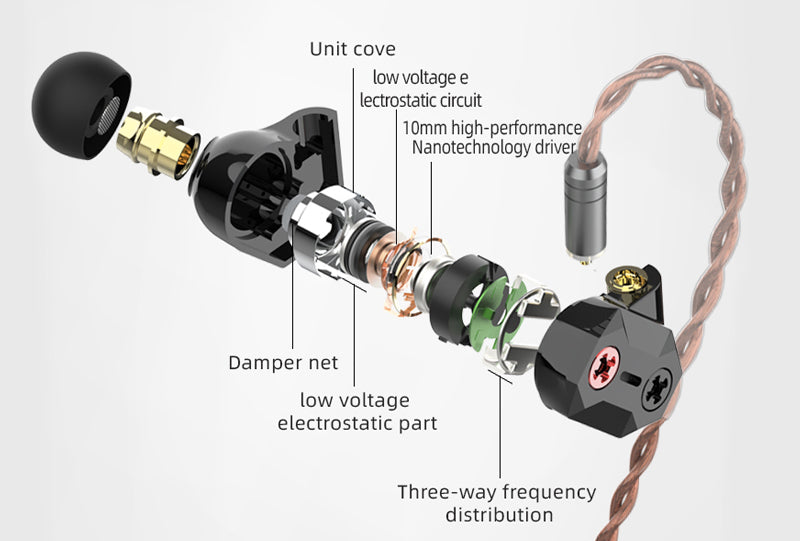
In practical IEM terms, ESTs are almost never used as the sole driver. The technology produces extraordinary detail and air at high frequencies, but generating meaningful bass output from an electrostatic element in an IEM housing is essentially impossible. What you find instead are hybrid configurations — typically a DD for bass, BAs for mids, and one or two EST drivers handling the upper treble and “air” region above roughly 10kHz.
What you actually hear: The contribution of an EST driver is easiest to notice by its absence. With a well-implemented EST in a hybrid, there’s an openness and extension at the very top of the frequency range that makes high-hat cymbals feel like they have more air around them, that makes spatial cues more convincing, and that adds a subtle sense of space to recordings. It’s not dramatic. But it’s real.
The risk is that poorly implemented ESTs add grain, harshness, or an artificial brightness rather than genuine extension. EST units require careful crossover design to integrate cleanly with the rest of the drivers. When that integration fails, the EST stands out as a problem rather than a feature.
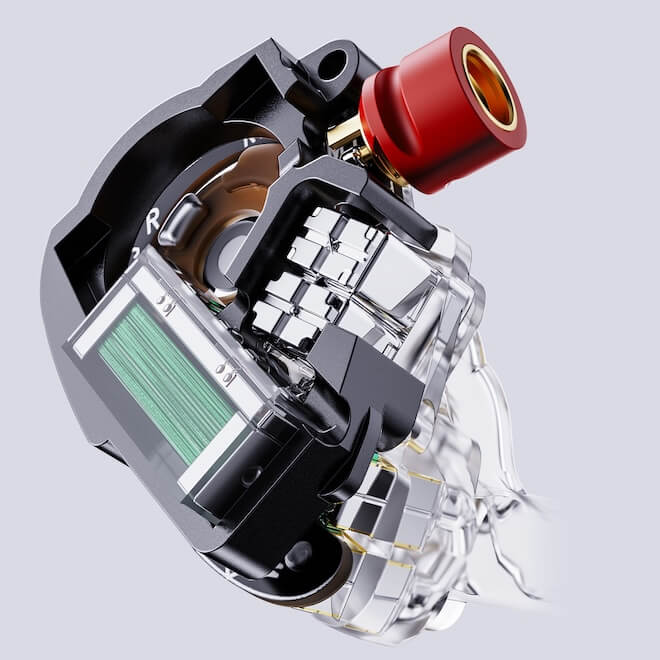
The limitation: Cost and implementation complexity. Getting an EST driver to integrate seamlessly takes significant engineering effort. Many IEMs that include EST drivers don’t fully realize what the technology is capable of. At lower price points, an EST badge often means less than the marketing suggests.
Who this is for: Listeners who are already satisfied with the rest of the frequency range and want to push the ceiling of treble performance. This is an incremental gain, not a transformation. If bass or midrange are your priorities, EST is unlikely to be the reason you buy or don’t buy an IEM.
MEMS Drivers: The New Variable
MEMS — Micro-Electro-Mechanical Systems — is the most recent driver technology to appear in consumer IEMs at scale. The driver is fabricated using semiconductor manufacturing processes, producing a silicon-based transducer that can be made with extreme consistency and very small tolerances. The technology was originally developed for microphones; applying it to playback is a relatively recent direction.
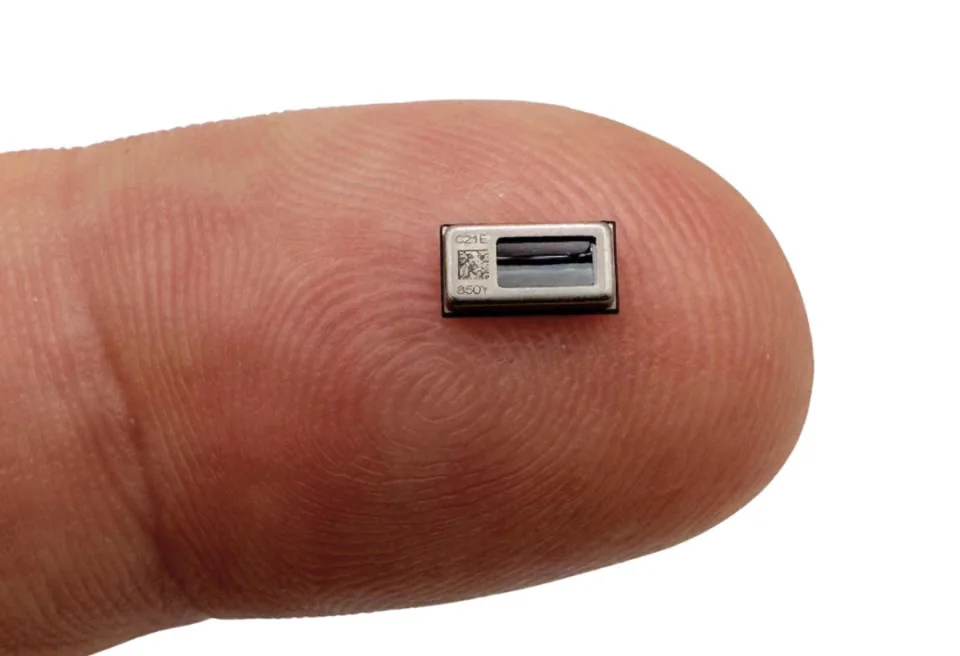

The practical implications are significant. Unit-to-unit variation, which is a real problem in conventional driver manufacturing, is dramatically reduced in MEMS production. Two MEMS-based IEMs from the same production run should measure nearly identically. For consistency across left and right channels, and across different units of the same model, this is a meaningful advantage.
Sound-wise, MEMS drivers have a character of their own. The frequency response can be tuned during fabrication, and the transient behavior tends toward the clinical — very fast, very detailed, potentially less forgiving of poorly recorded material. Early MEMS IEMs sometimes described as “diagnostic” rather than musical — precise to the point where the listening experience feels more like analysis than enjoyment.
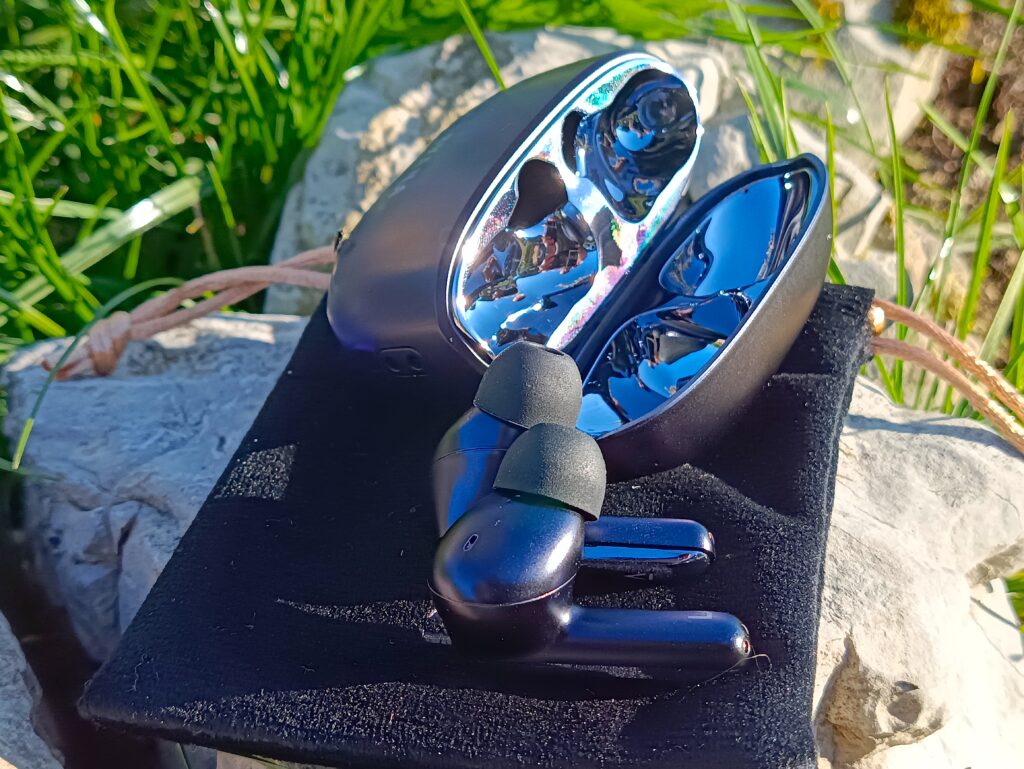
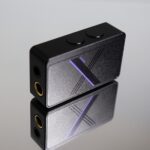
What you actually hear: The clearest way to describe what the EP321-MEMS does is through a reaction that kept happening during the first few sessions on the R4: stopping a track mid-listen and going back thirty seconds. Not because something was wrong. Because something was there that hadn’t registered before — a decay, a gap between two notes, the exact position of a sound in the mix. The MEMS driver doesn’t announce these things. It just stops hiding them.
Bass on the EP321 isn’t built for impact. What it does instead is trace the instrument — the physical contact of a pick on a string, the vibration as it travels, and then the air that follows when it stops. On simple recordings that depend on execution rather than production, that distinction matters more than sub-bass quantity. It’s a different kind of honesty than what a dynamic driver produces, and it takes a few tracks to recalibrate to it.
The other thing that stands out is that the sound doesn’t sit against your head. Instruments aren’t pointed at locations — they hang slightly outside the geometry of the IEM itself. It’s a presentation that makes you stop evaluating and just keep listening, which is either a sign that something is working correctly, or that you’ve completely lost track of what you were supposed to be writing. Not dramatic. Not showy. Just quietly showing you things you didn’t know were in the recording. (First impressions: Binary Acoustics EP321-MEMS)
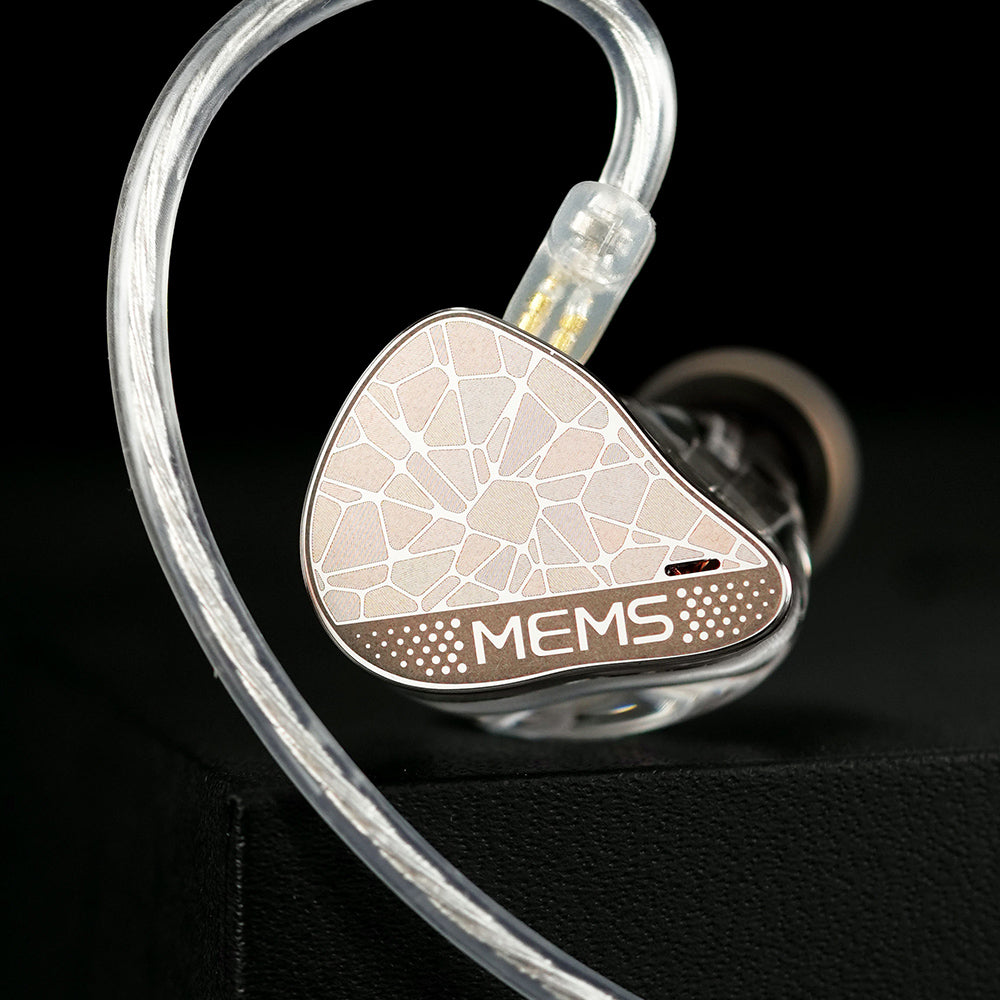
The technology is still maturing in IEM applications, and the sonic character of current implementations shouldn’t be taken as the ceiling of what MEMS can do.
Who this is for: Technically curious listeners willing to be demanding about source material. If you listen primarily to well-recorded music — lossless files, audiophile recordings, high-quality streams — MEMS is worth exploring. If your library includes a lot of compressed streaming content, the transparency might work against the experience.
Hybrid Configurations: Addition Isn’t Always Addition
Once you understand what each driver type does well and where it struggles, the logic of hybrid designs becomes obvious. A dynamic driver handles bass, balanced armatures cover midrange and treble detail, ESTs add air at the top — you’re playing to each technology’s strengths. In theory. In practice, integration is everything.
The crossover is where hybrids succeed or fail. Getting multiple driver types to blend their frequency ranges without audible seams, phase issues, or tonal inconsistencies requires precision engineering and significant tuning iteration. A tribrid with three driver types and a poor crossover will sound worse than a well-tuned single DD at a fraction of the price. Driver count is a specification. Sound is a result.
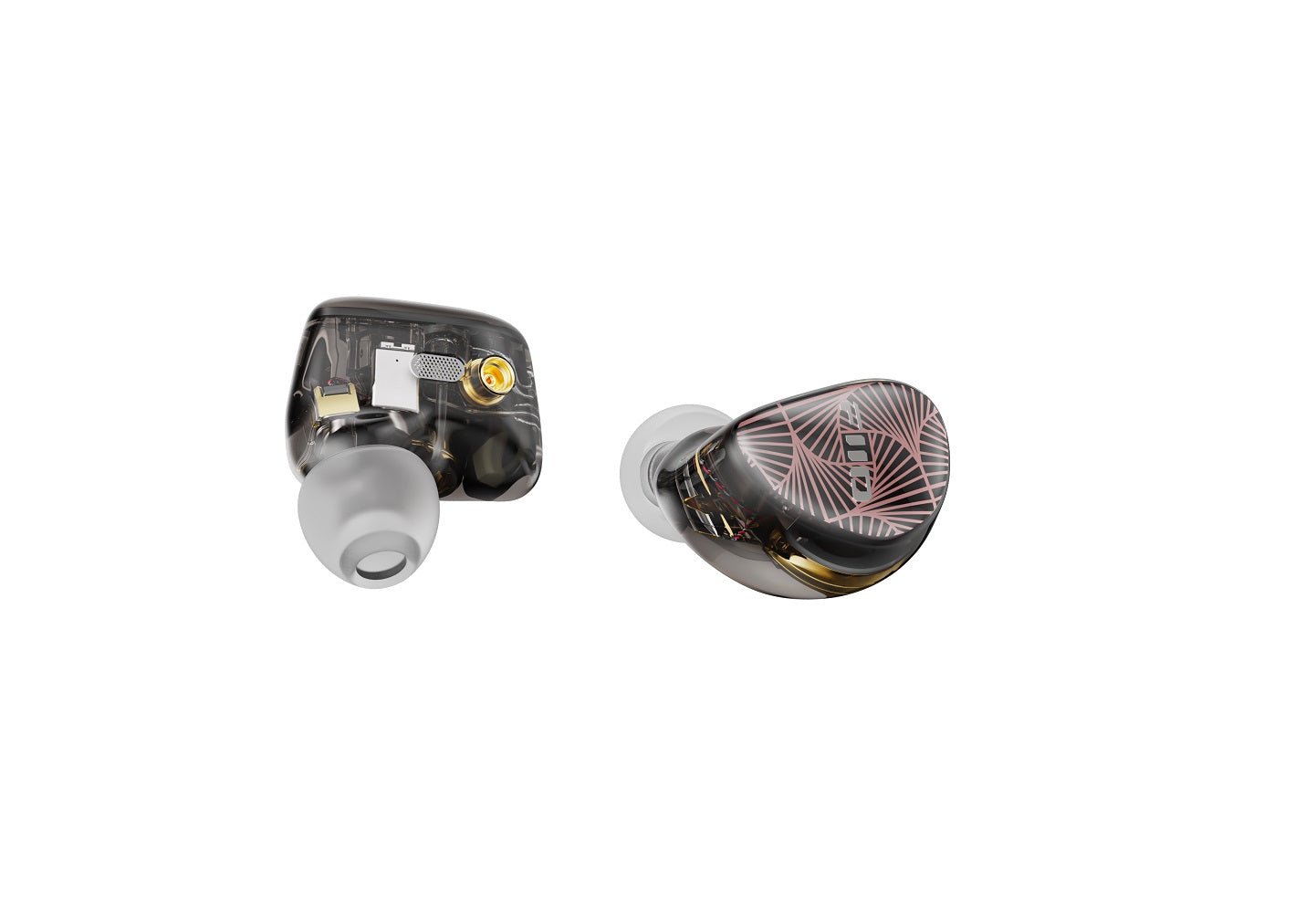
The other variable is driver matching. BA drivers have a different impedance characteristic than DDs, and ESTs often require a dedicated bias voltage. How the amplification section handles those differing loads affects the sound more than most reviewers acknowledge. This is one reason why source matching matters more for complex hybrids than for single-driver IEMs.
The practical question to ask about any hybrid: Are the drivers integrated or merely coexisting? You can often tell by listening to transitions — the handoff between bass and midrange, midrange and treble. A seamless transition suggests good engineering. An audible seam or a sense that different frequency ranges “belong to” different sounds suggests the crossover work wasn’t finished.
What Actually Matters: A Framework for Decisions
After listening to hundreds of IEMs across all these driver configurations, the conclusion is straightforward: driver type is a starting point, not a verdict.
Start with your listening priorities. If bass texture and physicality are central to why you enjoy music, dynamic driver IEMs will serve you better than almost any alternative. If resolution, separation, and analytical listening define your sessions, a multi-BA or planar will give you more of what you want. If you’re genuinely unsure, a well-tuned DD is the most forgiving starting point.
Amplification matters more than people acknowledge. A planar IEM on a quality DAP will outperform the same planar on a smartphone by a margin that’s hard to ignore. A good dynamic driver is more forgiving of the source, which makes it better suited to mobile use cases.
Tuning overrides technology, except at the extremes. A warmly-tuned planar can be more engaging than a badly-tuned multi-BA with “better” specs. The frequency response is the sound. Driver type shapes what’s possible within that response.
Price-to-performance is not uniform across driver types. Single dynamic drivers scale well at budget price points — excellent value exists below $100. Planar IEMs require more careful engineering and generally deliver their best performance in the $150–$300 range. Multi-BA and tribrid configurations often don’t reach their full potential below $200 because crossover quality correlates with cost.
Comparison at a Glance
| Driver Type | Bass Quality | Detail/Resolution | Timbre Naturalness | Ease of Drive | Typical Price Entry |
|---|---|---|---|---|---|
| Dynamic Driver (DD) | ★★★★★ | ★★★☆☆ | ★★★★★ | ★★★★★ | $20+ |
| Balanced Armature (BA) | ★★☆☆☆ | ★★★★★ | ★★★☆☆ | ★★★★☆ | $80+ |
| Planar Magnetic | ★★★★☆ | ★★★★☆ | ★★★★☆ | ★★★☆☆ | $100+ |
| Electrostatic (EST) | N/A (hybrid only) | ★★★★★ (treble) | ★★★★☆ | ★★☆☆☆ | $200+ |
| MEMS | ★★★☆☆ | ★★★★★ | ★★★☆☆ | ★★★★☆ | $150+ |
| DD + BA Hybrid | ★★★★☆ | ★★★★☆ | ★★★★☆ | ★★★☆☆ | $60+ |
| Tribrid (DD+BA+EST) | ★★★★☆ | ★★★★★ | ★★★★☆ | ★★☆☆☆ | $200+ |
The Short Version
Dynamic drivers produce the most physically convincing bass of any IEM driver type. Balanced armatures resolve micro-detail and midrange clarity better than DD at equivalent price points, but sacrifice bass weight and tonal richness. Planar magnetic drivers offer a middle path — technically capable across the spectrum, with a speed and smoothness that rewards extended listening. Electrostatic drivers contribute to treble extension and air in hybrid configurations but don’t function as standalone transducers in IEM form. MEMS drivers are the newest variable, defined by consistency and transparency, and still maturing as a technology.
None of these is universally superior. What they are is different — and knowing the difference is how you stop guessing and start choosing.
Tested on HiBy R4 via 3.5mm and 4.4mm single(balanced output with Qobuz lossless streaming. Driver types covered include personal listening sessions across single-DD, multi-BA, tribrid, planar, and MEMS configurations reviewed on Mobileaudiophile.com.





No Comment! Be the first one.