









































































Nobody agrees on what neutral sounds like. That’s the whole problem.
Table Of Content
- What Harman Actually Does to Music
- What “Harman-Tuned” Actually Means in Practice
- Enter the New Meta
- What New Meta Does Differently
- Where the New Meta Gets Complicated
- Head-to-Head: Where Each Philosophy Wins
- The Answer Nobody Wants to GiveNeither one wins.
- What This Means for the IEM Market Right Now
- Verdict of Harman vs New Meta IEM tuning
Walk into any IEM discussion long enough and you’ll hit the same wall: one person calling an IEM “perfectly tuned,” another calling the same set “thin” or “bass-heavy,” and both of them pointing at a frequency response graph to prove their point. The graph looks like proof. It rarely is.
The debate between the Harman target and what the community now calls the “New Meta” sits at the center of this problem. Two competing ideas about what good sound looks like on paper, and by extension, what it should feel like in your ears. The problem isn’t that one is wrong. The problem is that both are partially right, for different reasons, and the audio community has a habit of treating preference research like physics law.
Let’s talk about what each actually is, where each one came from, and what happens when you put either philosophy inside a real IEM and press play.
How Harman Happened
Sean Olive and the research team at Harman started this project in 2012. The goal was simple to state and genuinely hard to execute: figure out what frequency response a headphone needs to sound good to most people, then validate that target with blind listener testing.

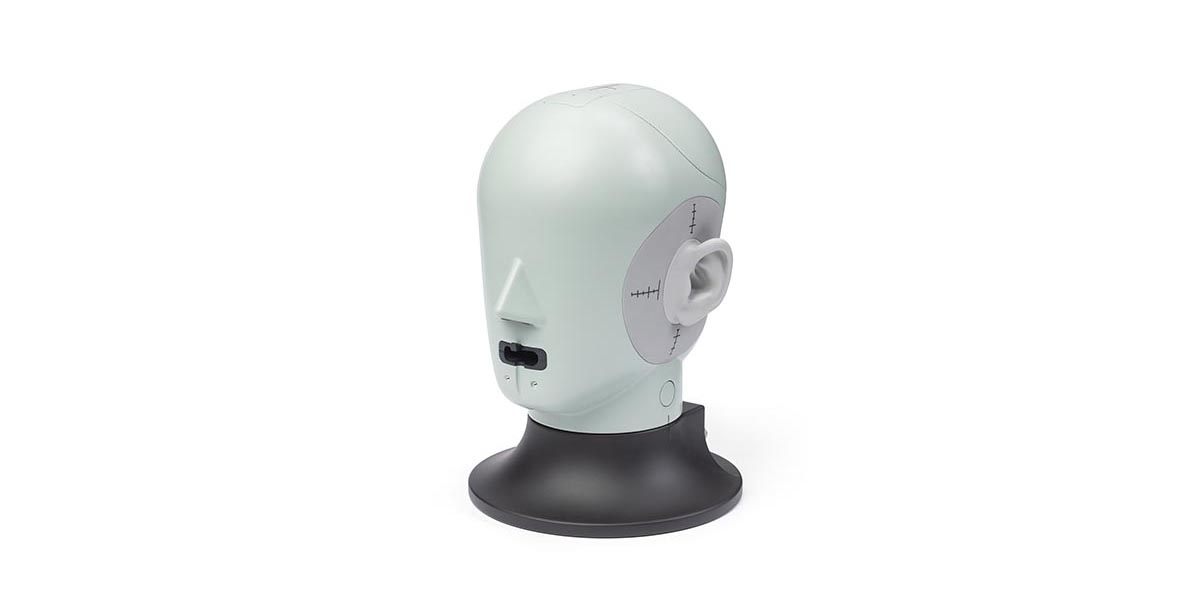
The starting point was a pair of well-measuring loudspeakers in a reference listening room. They measured what those speakers sounded like at the eardrum of an artificial head, a measurement that includes room acoustics, the head’s own reflection of sound, and the ear canal resonance. That measurement became the acoustic reference. From there, trained and untrained listeners adjusted bass and treble levels until they found their personal preference zones. The average of those adjustments, validated across hundreds of listeners in multiple countries, became the Harman target.
What it produces is an IEM that has a significant bass shelf, roughly +10 dB below 100 Hz relative to the midrange, a moderate dip in the 200–300 Hz region, a prominent upper midrange rise peaking around 3 kHz, and a controlled treble rolloff above that. It is, by design, a warm-leaning, slightly V-adjacent sound with good perceived clarity from that upper mid energy.
For a long time, it was the most scientifically defensible answer anyone had given to the question of what an IEM should sound like.
What Harman Actually Does to Music
The bass shelf is the most controversial piece, but it solves a real problem. When you sit in a room with good speakers, low frequencies build up in the space around you, in your chest, in the walls, in the floor. IEMs bypass all of that. Without compensation, bass-accurate IEMs consistently feel bass-thin to most listeners because the body sensation is missing. The Harman shelf is an attempt to put some of that back.
And it works. For the majority of popular music, hip-hop, R&B, electronic, pop, a Harman-tuned IEM sounds fuller, more complete, and less clinical than a flat one. The kick drum hits with something. The sub doesn’t disappear into nothing. For listeners who grew up on consumer speakers or earbuds, this is close to what music “should” sound like.

The 3 kHz presence peak is doing something too. Human speech intelligibility centers in that region. Vocals cut through. Guitars have bite. Acoustic instruments have texture. The tradeoff is that some recordings, particularly anything mixed hot, will read as slightly bright or even shouty on a strict Harman tuning. That’s the deal.
The most honest criticism of Harman isn’t that the bass is wrong. It’s that the relationship between sub-bass and mid-bass can be weird. The shelf lifts everything below roughly 200 Hz, but the dip just above that creates a contrast that can make the kick drum punch feel detached from the sub rumble. Bassy, but sometimes missing the body. As one head-fi member described it: “too bassy and bass-light at the same time, sometimes even in the same song.” That’s an exaggeration, but not a baseless one.
What “Harman-Tuned” Actually Means in Practice
Here’s the real issue with Harman in 2025: the label has been abused into near-meaninglessness.
Any IEM with a visible bass shelf and a forward upper midrange gets called “Harman-tuned.” Whether or not it was actually designed against the target curve, regardless of where that bass shelf starts and ends, regardless of the treble behavior. Brands stamp it on marketing copy. Reviewers use it as shorthand. Buyers repeat it.
The actual Harman IE 2019 curve is specific. It has defined parameters. Most IEMs described as “Harman-tuned” are approximations at best, and some are barely in the same genre. The Moondrop Aria series comes close. A lot of KZ products do not, despite years of the community calling them Harman-adjacent. This dilution is part of why the conversation eventually shifted.
Enter the New Meta
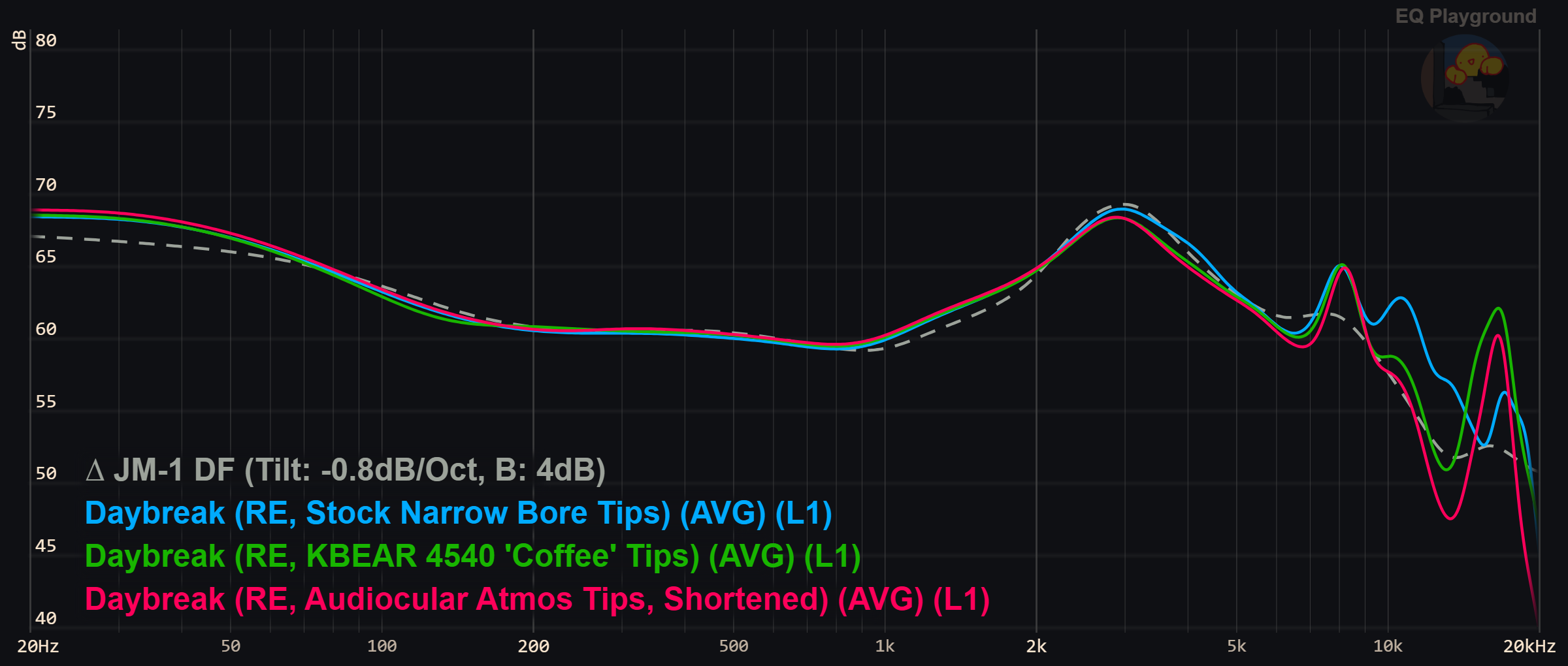
The “New Meta” label came into wider circulation around 2023–2024, primarily through headphones.com and the IEF (In-Ear Fidelity) community, and it refers to IEMs tuned to what’s known as JM-1 + 10 dB tilt.
To understand what that means, you need to know what JM-1 is. It’s the population average anatomical baseline, specifically, the Diffuse Field Head-Related Transfer Function (DF HRTF) measured on the Brüel & Kjær Type 5128 test head. That’s a newer, more anthropomorphically accurate measurement system than the IEC 60318-4 (commonly called the “711 coupler”) that most reviewers were using for years. JM-1 represents what a flat-frequency-response source sounds like to an average ear, without room acoustics, without speaker placement effects, just the ear’s own filtering of incoming sound.
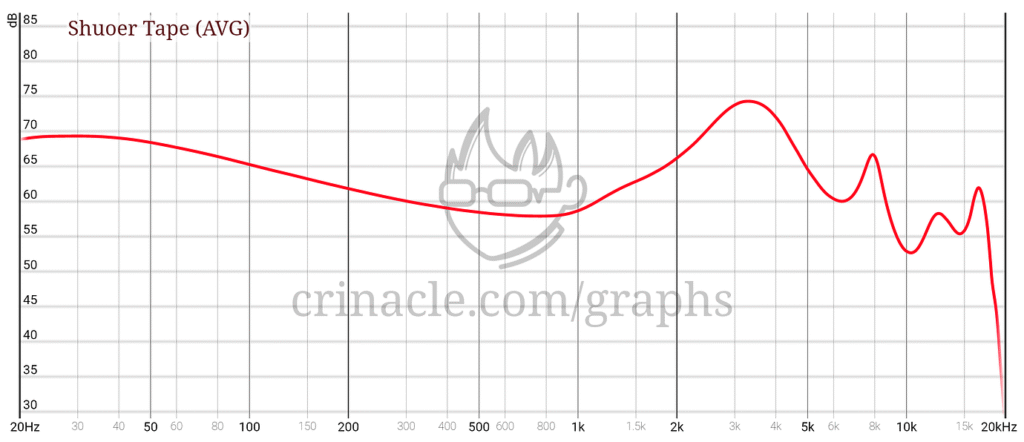
On its own, JM-1 sounds thin to most people. Bass rolls off. It’s the acoustic equivalent of “technically correct but kind of sterile.” So you add a 10 dB downward tilt from 20 Hz to 20 kHz, meaning low frequencies are louder, high frequencies are quieter, but the change is gradual and proportional rather than targeted at specific bands. The result is a sound with a moderate bass presence, a less prominent upper midrange compared to Harman, and treble that comes down more gently and naturally.

The CrinEar Daybreak is the most-cited embodiment of this approach right now. Truthear’s Nova is often listed as one of the closest implementations of the underlying JM-1 target. Headphones.com has been the loudest institutional voice arguing for this framework, though they’re also careful to note that the “New Meta” label is somewhat misleading, JM-1 + 10 dB tilt is a tuning region, not a single target, and preference bounds allow for meaningful variation within it.
What New Meta Does Differently
The clearest difference you’ll hear moving from a Harman IEM to a New Meta one is in the midrange. The upper mid energy around 3 kHz is less pronounced. Vocals step back slightly. Some listeners experience this as more natural; others experience it as loss of detail, both reactions are legitimate, because neither one is wrong about what they’re hearing.
The bass is a different shape too. Where Harman has a more targeted shelf that lifts the sub while leaving a relative dip in the lower mids, the JM-1 + tilt approach distributes energy more evenly below 300 Hz. The kick drum and the sub-bass sit in the same relative space. Less “sub jumps out, upper bass slightly hollow” and more of a coherent low end that connects.
Treble behaves differently as well. Harman’s treble rolloff is relatively steep after about 5–8 kHz. New Meta’s descent is more proportional, which in practice means slightly more air and extension, though it also means some IEMs following this target can be sensitive to upper treble peaks that Harman tuning would have naturally suppressed.
Where the New Meta Gets Complicated
Here’s the thing nobody really wants to say: there isn’t actually consensus on whether New Meta is better. There’s research, a 2024 study by Dr. Sean Olive using the B&K 5128 found that trained listeners gave both the Harman IE 2019 and the SoundGuys Preference Curve essentially equivalent scores, and both were preferred over three other targets by roughly 72% of listeners. The New Meta JM-1 tilt was not a direct contender in that study, but the finding that bass-light and bass-heavy curves can score equally well when treble levels scale proportionally is relevant.

Crinacle himself has been careful not to oversell the IEF targets as the final word. The IEF Preference 2025 update acknowledges that different driver types, DD, BA, planar, interact differently with measurement systems, meaning a universal delta between the B&K 5128 and the older 711 coupler may not exist. An IEM that measures “correctly” on a 5128 can still read differently on a 711, and the correction factor varies by driver architecture. This isn’t a fatal flaw, but it does mean the precision implied by “measuring to JM-1” is messier in practice than the tidy graph on a comparison tool suggests.
There’s also the HRTF problem, which neither camp can solve. Individual ear canal anatomy creates 15–20 dB of variation in high-frequency response across people. JM-1 is a population average, which means it is the right answer for a theoretical average person and a meaningful approximation for most people, but it is not your ear. Neither is the 711’s HRTF that Harman used. This is the argument for using any target as a starting point rather than a destination.
Head-to-Head: Where Each Philosophy Wins
This is where I’ll be direct. Because I’ve heard a lot of both.
Harman wins when:
The music is casual and the listener is not a trained audiophile. Hip-hop at the gym. R&B in the car. Most pop music played at normal listening levels by someone who doesn’t spend their evenings on graph comparison tools. Harman sounds good in that context, full, warm, present. The bass shelf fills in the body that IEMs structurally can’t reproduce any other way. The upper mid presence keeps vocals intelligible and engaging.
It also wins in genres with dense low-end production, electronic, metal with tuned bass runs, anything where the sub needs to actually show up. New Meta IEMs can feel a touch polite here.
New Meta wins when:
Classical music, jazz, acoustic recordings, anything where the space around instruments matters. The more proportional tilt means instruments sit in a realistic acoustic relationship to each other. Strings don’t feel overshadowed by low-end bloom. The midrange doesn’t shout when a recording is already mixed with some upper mid energy.

It also tends to win for long listening sessions. The less aggressive upper mid presence reduces fatigue on recordings that aren’t carefully mastered. When you have a source that was mixed by someone who really knew what they were doing, a New Meta IEM will reward it more honestly than a Harman one.
For critical listening and review work specifically: New Meta gives you more accurate information. If you’re trying to evaluate an IEM’s technical performance, how it resolves micro-detail, how it stages complex arrangements, whether the upper midrange is actually transparent or just artificially forward, a JM-1-adjacent reference tells you more useful things.
The Answer Nobody Wants to Give
Neither one wins.
I know that’s not a satisfying conclusion. But the 2024 preference research is actually encouraging rather than disappointing: it confirms that well-implemented tuning in either direction, with proportionally scaled bass and treble, lands in the preference zone for the overwhelming majority of listeners. The war between Harman and New Meta is at least partially a war between communities, not between physics.

What the last several years of this argument has genuinely established: the 711 coupler is outdated for serious measurement work, and the B&K 5128 produces more accurate and more repeatable data. That part of the New Meta movement is correct and worth adopting. The claim that JM-1 + 10 dB tilt is the revealed truth of what IEMs should sound like is a different claim, and it hasn’t been validated to the same standard that Harman’s preference research was. It might be. That research hasn’t been done yet.
What this means practically is that you should treat both as tools. If you’re buying based on graphs, IEMs targeting JM-1 are a more accurate starting point for the average ear, less chance of the sound feeling excessive in any direction. If you love bass and you’re not doing critical monitoring, Harman-adjacent tuning will feel more satisfying without EQ. If you EQ, neither camp matters much, both are within easy reach of each other’s sound with a few dB of adjustment.
The most honest advice is also the most boring: listen before you conclude. A graph predicts. Your ears decide.
What This Means for the IEM Market Right Now
The shift toward New Meta has already happened in the mid-tier and above. Most serious releases in the $100–500 range released in the last two years have been tuned closer to JM-1 than to Harman. The Chifi mid-tier is catching up fast. Budget IEMs are still largely Harman-adjacent because the bass-heavy presentation sells to general consumers.
The interesting tension is in the $50–150 range, where brands are now explicitly caught between the two philosophies. Some sets, Ziigaat Lush, early Truthear models, try to split the difference with a moderate bass shelf and a slightly laid-back upper mid. This is less a position than a compromise, and whether that works depends more on driver quality and tuning execution than on which camp the graph sits in.
If there’s a practical takeaway here it’s this: graphs have gotten better, the measurement debate has pushed IEM tuning toward more defensible territory, and listeners have more accurate starting points than they did in 2018. That’s a genuine improvement. What it is not is a solved problem.
The next person who tells you a flat frequency response is neutral for an IEM, or that following any single target curve guarantees a good listen, hasn’t spent enough time with the music. Which, when you think about it, is the whole point.
Verdict of Harman vs New Meta IEM tuning
Harman built something real, a preference-validated, listener-tested framework that was genuinely better than what the industry was doing before it. It’s also being misused, overapplied, and badly implemented by most of the brands that claim it.
New Meta / JM-1 is built on more accurate measurement science and better test equipment, and the tuning philosophy is more anatomically grounded. It has not yet been validated against Harman’s body of preference research. For critical listening and review work, it’s the better reference. For casual enjoyment of bass-forward music, Harman’s approach still wins.
The best IEMs you’ll hear are the ones where the tuner had a clear sonic vision and the execution matched. The curve they used to get there is relevant to the reviewer, an interesting data point to the enthusiast, and largely irrelevant to the person who just wants their music to feel right.
Both camps have been right. Both camps have been wrong. The answer lives in your ears, not in a graph tool.
Harman vs New Meta IEM tuning






No Comment! Be the first one.