
















































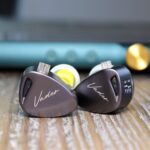


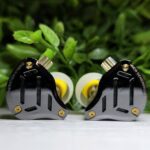































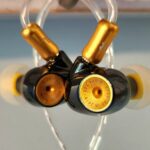





SMSL R1 Review — with Letshuoer S12 and iPad Pro
The SMSL R1 marks a small shift for the brand—away from sterile measurement gear and into a more tactile, creator-friendly direction. Yet, its sonic DNA remains unmistakably SMSL: clean, exact, and honest.
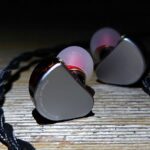
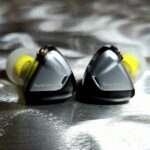
Paired with the Letshuoer S12 and iPad Pro, it turns into a tiny studio hub. Every slider movement feels purposeful, every LED flicker communicates something. The aesthetic sits somewhere between a compact mixer and a reference DAC, which makes sense—because it’s a bit of both.
Unboxing & Build
Inside the sturdy, foam-padded box, you’ll find the R1 unit, a USB-A → USB-C cable with a pull loop, and a 3.5 mm TRS interconnect. Everything is snug, clean, and typically SMSL in presentation.


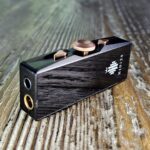
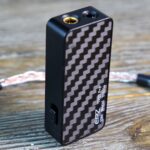
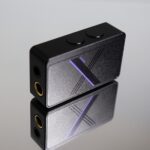
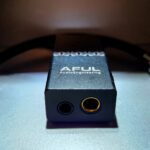
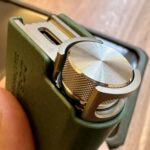
The chassis is fully metal with a smooth matte finish that feels premium. The oversized volume knob, accented with orange, glides smoothly with balanced resistance. Three EQ sliders—Bass, Treble, and Mic Volume—move cleanly and add a sense of control that’s hard to find in this size category. It’s the kind of tactile feel that makes you want to keep adjusting even when you don’t need to.
Sound Impressions (iPad Pro + Letshuoer S12)
From the first note, the R1 announces itself: clean, disciplined, and quick. It’s noticeably leaner than the HiBy R4, focusing on clarity rather than musical warmth.


The stage is wide, and imaging is precise. Depth isn’t as layered as R4, but the overall focus and separation compensate beautifully. There’s no extra gloss or artificial bloom — what you hear is what’s in the track.
Bass
The R1 keeps bass lines tight and punctual. The planar nature of the S12 thrives here — transients snap into place and decay naturally.
Pushing the Bass slider around 20% gives just enough weight for more fun without overdoing it. It’s a clean, technical low end — less about subwoofer rumble, more about impact and texture. The R4 still carries more body, but the R1 feels quicker and cleaner.
Midrange
Midrange is crystal clear and highly articulate. Vocals step forward but stay controlled.
Male vocals sound leaner; female vocals, especially on acoustic or jazz recordings, come through with remarkable presence and air. Compared to the R4, which lends a warmer hue, the R1 sounds flatter but more honest — like studio monitoring rather than consumer playback.
Treble
Treble is extended and vivid. There’s a slight analytical bite, but it never crosses into harshness unless the track already leans that way.
Cymbals and strings have excellent separation. R4’s treble is smoother, while R1’s is more revealing — a matter of preference. If you enjoy hearing every shimmer and micro transient, R1’s your pick.
Music Impressions
With The HU – Echos of Thunder, as soon as “This Is Mongol” starts, the planar drivers of the S12 wake up. Raising the Bass slider slightly brings in just the right energy — drums hit firm, guitars stay sharp, and the throat singing keeps its eerie texture intact. Even under dense layering, the R1 keeps every instrument distinct. The control it shows in the low end is impressive for a 5V-powered DAC/amp.
Switching between The HU and İncesaz shows how the R1 adapts across genres.
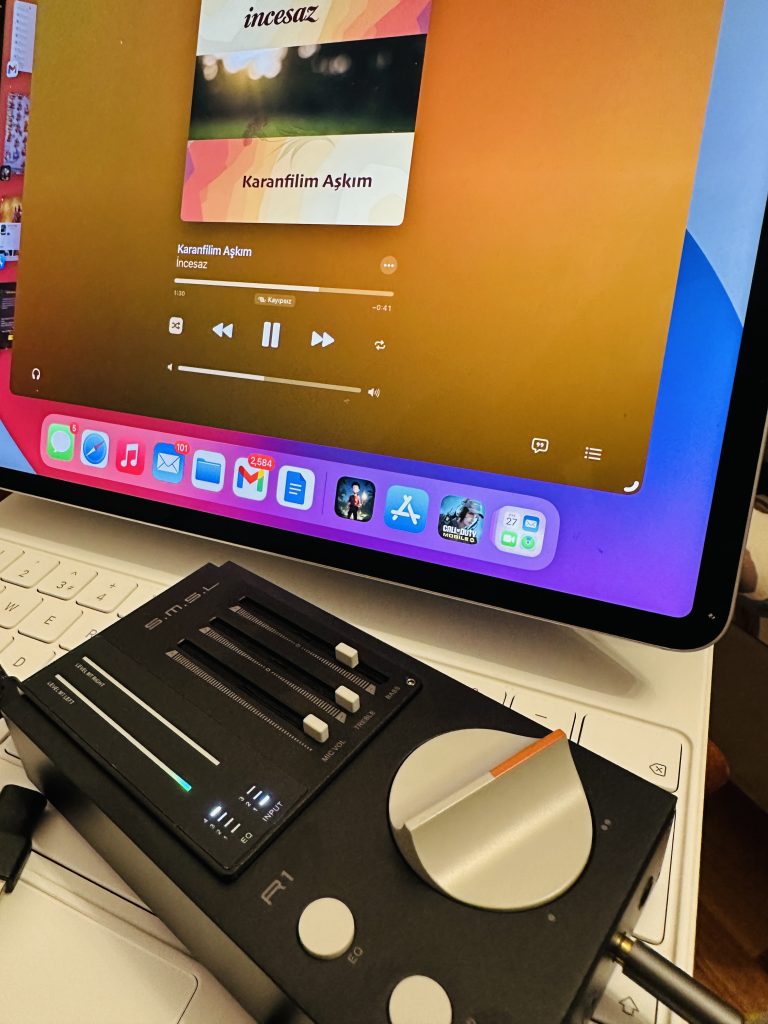
Then comes İncesaz. Switching genres feels like stepping from a storm into calm air. With Bass set to neutral, the R1 gives Turkish classical arrangements a grounded and graceful tone. In “Çok Aşıklar Var Diyorlar,” the kanun sparkles lightly, and the clarinet breathes with the right amount of grain. Melihat Gülses’s voice comes through as clear as daylight — textured, emotive, and uncompressed. “Karanfilim Aşkım” flows with space and realism, every pluck and nuance easy to follow.
There’s no artificial glow or warmth here. The R1 keeps everything steady, while the S12 adds that hint of liveliness that saves the presentation from sounding sterile. Together they create a sense of balance that feels deliberate — music as it is, not as it’s dressed up to be.
Performance & Synergy
On the iPad Pro, setup is effortless—plug it in and play.
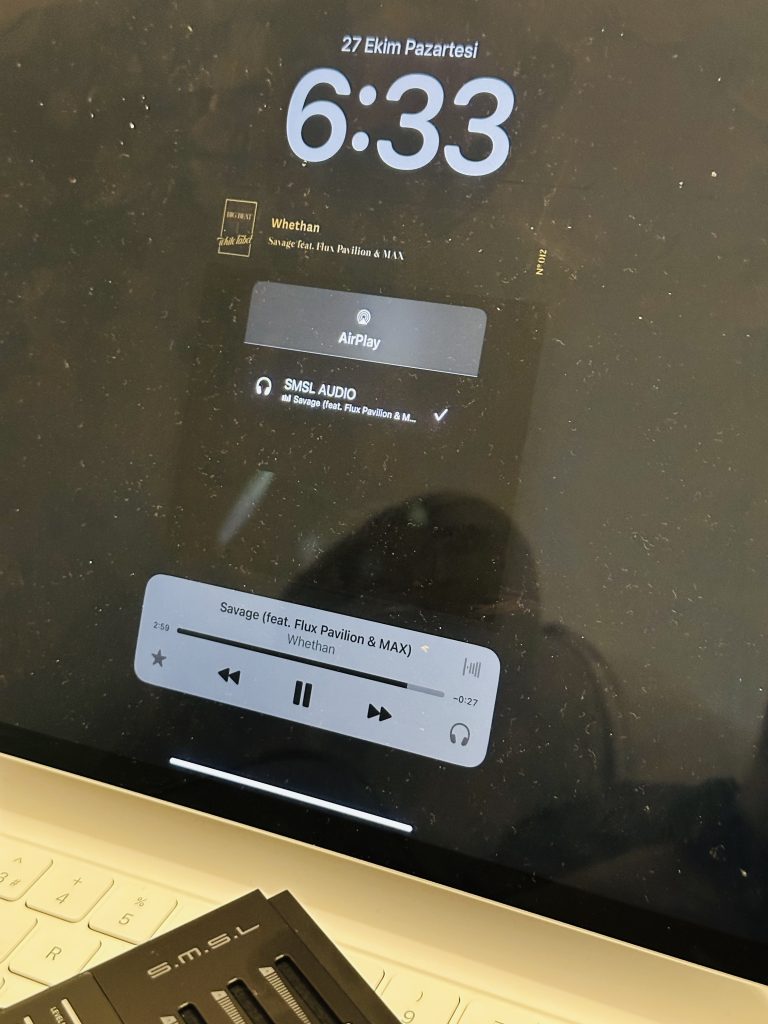
The R1 pulls just enough current to stay cool and stable, even during long sessions. With IEMs like the S12, it feels made for the job: dead silent background, zero hiss, and enough headroom to keep dynamics alive. It doesn’t have the brute power for demanding headphones, but with sensitive IEMs, the pairing feels perfectly judged.
Gaming Test — Call of Duty: Mobile Warfare
Once plugged into the iPad Pro, the SMSL R1 turns into a little control deck.
In Call of Duty: Mobile Warfare, latency stays below 50 ms — no lag, no desync. Footsteps, reloads, and environmental cues land exactly where they should. The R1’s channel precision makes positional awareness effortless — left, right, above, behind — all clear.


Explosions are controlled, with texture rather than boom. Boosting the Bass slider by 30% gives the right amount of weight without masking detail. Treble clarity highlights every casing drop and sniper echo. The mic input stays clean and easy to adjust on the fly.
Compared to the HiBy R4, the R1 feels faster and more direct. R4 gives you a more cinematic battlefield, R1 gives you the tactical one. For competitive play, that focus can make all the difference.
Pros
- Clean, neutral, and revealing sound
- Great imaging and channel balance
- Solid metal construction with studio feel
- Dual headphone outs + mic input
- Physical EQ sliders that actually matter
- Zero-latency USB-C connectivity
Cons
- Slightly dry midrange compared to R4
- Limited power for large headphones
- Bright treble on poor recordings
- No balanced output
Conclusion of SMSL R1 Review
SMSL R1 doesn’t dramatize music; it organizes it.
With Letshuoer S12, it opens a window into the mix — precise, fast, and quietly confident. Against the HiBy R4, it gives up warmth but gains structure. If you value neutrality and control, R1 earns its place on the desk.
It’s best suited for those who prefer a clean, reliable reference rather than colored excitement. You don’t buy it for mood or flavor — you buy it for truth. After a while, that honesty becomes its charm. The R1 doesn’t exaggerate emotion; it lets the recording do the work.
With iPad Pro and S12, the setup feels light yet professional. For games, it’s razor-sharp; for music, it’s exact. In short, SMSL R1 might not romanticize your playlist — it just lets you finally hear it properly.
Enter if you like more info than my review.


Congratulations on the blog analysis, see if you can get the Akliam D3, it’s a very interesting one coming from them.