






















































Preface
When I reviewed the standard Aune N7, one thing became clear to me very quickly. This was not an amplifier made to impress you in the first five minutes.
Table Of Content
- Preface
- The Philosophy Behind the N7
- DAC Architecture and Internal Design
- N7D Technical Specifications
- Dual CS43198: Technical Choice or Sound Choice?
- Build Quality and Daily Use
- N7 or N7D? Spot the Difference
- Display and User Feedback
- Connections and Versatility
- First Sound Impressions
- Tonality and Timbre
- Long-Term Listening
- Microdynamics and Resolution
- Balanced Output and Control
- Headphone Pairings
- Using It as a Preamplifier
- N7 vs N7D
- A Definitive Desktop System?
- Final Thoughts
- VOTE
- 🟢 PRO
- 🔴 CONS
- Frequently Asked Questions
- Thanks and Final Note
It was a product built around continuity, coherence, and long listening sessions without fatigue. A real Class A amplifier able to drive pretty much any headphone, but also capable of fitting naturally into a speaker chain as a serious and very believable preamp.
Over time I used the N7 with many different DACs. Some more technical, some more musical, some more analytical, others smoother and more relaxed.
And this is exactly where the N7D becomes interesting.
Because the question is no longer:
“What DAC should I pair with the N7?”
The real question becomes:
“What happens when Aune decides to close the circle and build the DAC section directly around the sound philosophy of the N7 itself?”
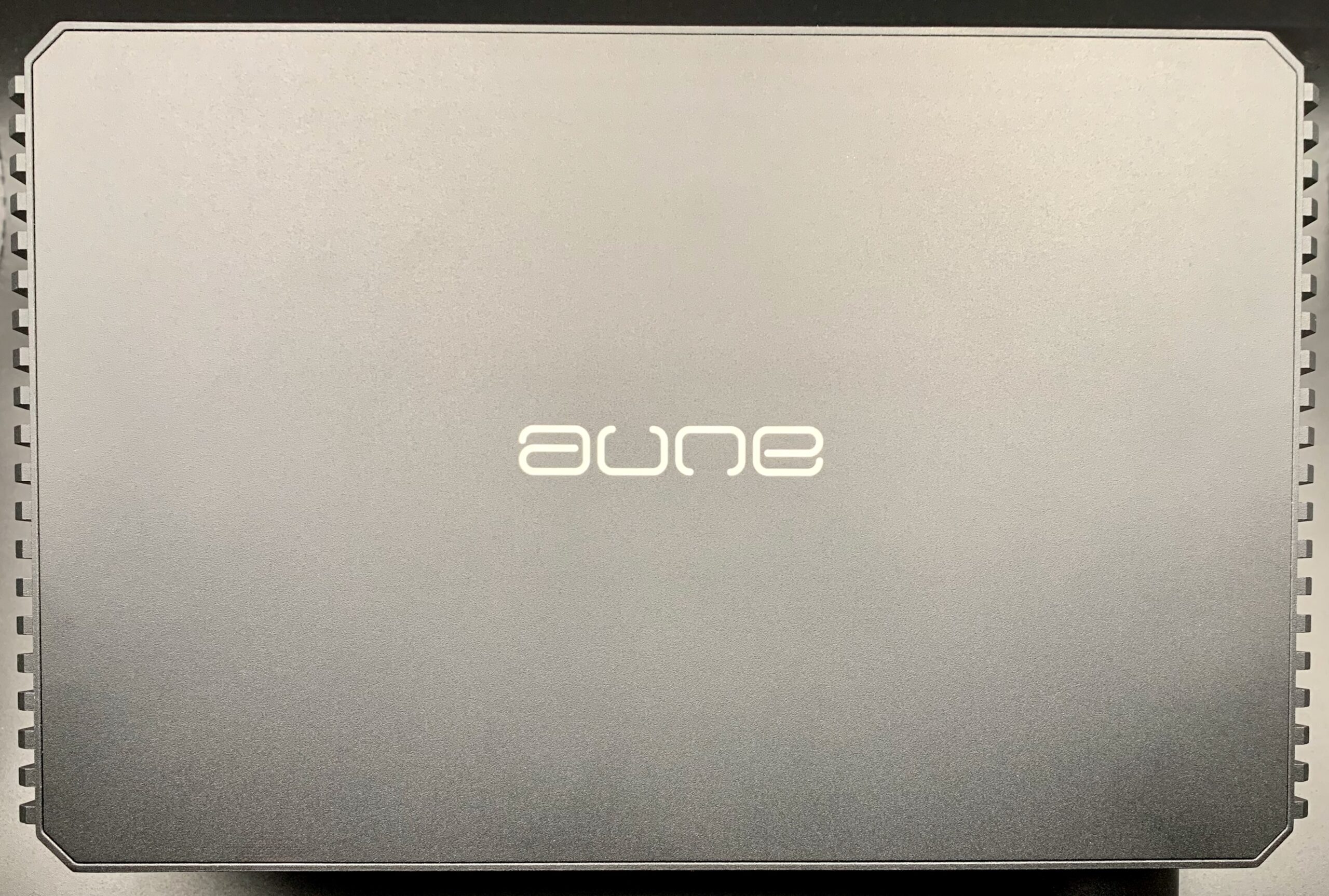
The N7D is not a completely different product.
It feels more like the natural evolution of the original idea.
An integrated machine where DAC, preamp, and pure Class A amplification were designed to work together as one complete system, instead of separate components combined later while chasing the perfect synergy.
And after several weeks of listening, that difference becomes surprisingly easy to notice.
The Philosophy Behind the N7
Before talking about the DAC section, it’s worth quickly remembering what makes the original N7 special.
The N7 never tried to win through aggressiveness, exaggerated detail, or technical showmanship.
Its real strength has always been balance.
Music is presented with an extremely natural flow, without that fragmented feeling many modern solid-state amplifiers tend to introduce. Notes move organically, dynamics stay continuous, and the musical message always keeps a strong sense of coherence.
You can clearly hear the Class A character here, but not in the usual “warm and romantic” way people often describe.
The N7 is not slow.
It doesn’t sound soft.
And it’s definitely not dark.
It feels stable.
Fluid.
Natural.
Detail is never pushed artificially forward, but at the same time it never gives the impression of lacking resolution either.
This is one of those products that slowly convinces you more and more over time, instead of trying to impress you instantly with some fake wow effect.
And this identity remains completely untouched in the N7D.
What really changes is the way the whole chain now works together.
DAC Architecture and Internal Design
The DAC section inside the N7D clearly follows the same philosophy as the amplifier itself.
Instead of chasing sterile measurements or an ultra analytical tuning, Aune seems to have focused more on tonal coherence, signal continuity, and a more natural presentation from the DAC section.
And honestly, integration is where the real difference comes from.
With external DACs, even very high-end ones, there is always some level of separation between source and amplification. Different power supplies, different grounding, different electrical behavior, and often completely different design philosophies.
The N7D removes a big part of that separation.
DAC stage, analog section, and amplifier all share the same architecture and the same sound philosophy.
And you notice this much faster than I expected.
The background stays extremely clean and stable, but more importantly, the transition between notes feels more natural. There’s less of that “digital reconstruction” feeling and much more sense of musical continuity.
The result is not soft in a negative way.
It simply sounds more coherent and more unified.
And honestly, that’s probably the thing that defines this whole machine better than anything else.
N7D Technical Specifications
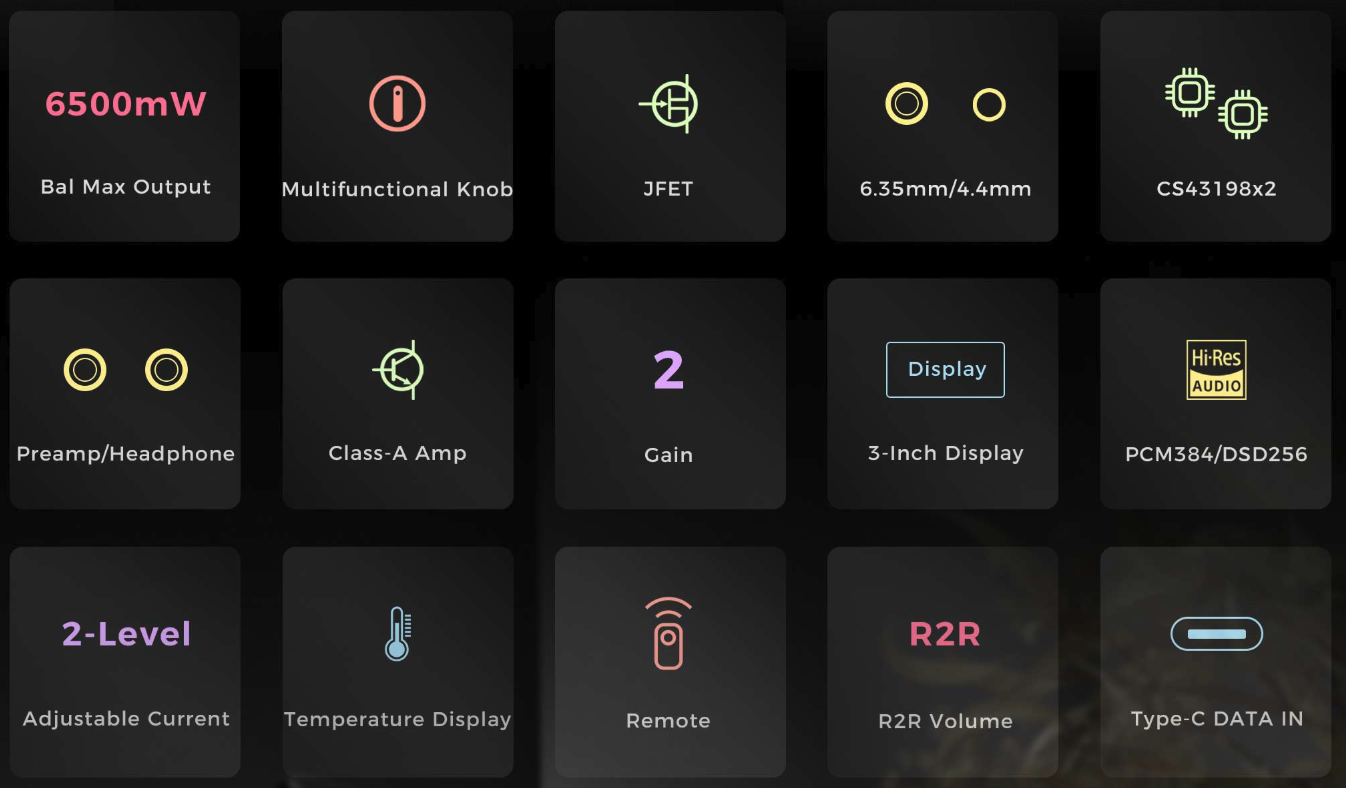
Before going deeper into the listening impressions, it’s worth taking a look at the full specs of the N7D, because they actually say a lot about the philosophy behind the product.
Even here, Aune doesn’t seem interested in the usual “numbers first” approach. The whole design feels more focused on balance between digital conversion, analog stage, and pure Class A amplification.
| Feature | Specification |
| DAC | Dual Cirrus Logic CS43198 |
| Amplification | Discrete Pure Class A |
| Architecture | Fully Balanced |
| Input Stage | Twin JFET |
| Output Stage | Discrete BJT |
| Volume Control | R2R resistor ladder, 30 steps |
| Balanced Power @ 32Ω | ~6.5W |
| Power @ 600Ω | ~370mW |
| Digital Inputs | USB-C |
| Analog Inputs | RCA / XLR |
| Headphone Outputs | 6.35 mm / 4.4 mm balanced |
| Line Outputs | RCA / XLR |
| PCM Support | Up to 384kHz / 32bit |
| DSD Support | Up to DSD256 |
| THD+N | < 0.0004% |
| SNR | >105 dB |
| Output Impedance | ~1Ω |
| Gain Modes | Dual gain |
| Class A Bias | Two levels |
| Power Consumption | ~36W |
The specs make one thing very clear:
The N7D is not simply an “N7 with a DAC added inside.”
It was designed as a complete machine, where digital conversion, preamp stage, and amplification all follow the same circuit philosophy and the same overall sound direction.
Dual CS43198: Technical Choice or Sound Choice?
The choice of using dual Cirrus Logic CS43198 chips is probably one of the most interesting things about the N7D.
Because honestly, Aune could have gone after much flashier solutions on paper. More extreme DAC chips, more “impressive” specs, or something built mainly to create technical wow factor.
Instead, they chose two chips that have always been appreciated more for naturalness, smoothness, and a very musical presentation.
And that’s exactly what you hear.
The CS43198 is not the kind of chip designed to impress you with exaggerated contrast, hyper detail, or artificial brightness. Its real strength is tonal coherence, background cleanliness, and a very organic presentation.
Using two of them in dual mono configuration allows the N7D to improve separation, dynamics, and signal stability, while still keeping that natural character that clearly seems to be the real goal of the project.
And honestly, I think there’s something important to say here.
A lot of modern DACs try to impress you immediately. They hit you with aggressive detail, very strong separation, and an almost surgical presentation.
The N7D takes a different road.
It doesn’t try to make you “see” the detail.
It tries to preserve musical continuity.
And honestly, the dual CS43198 probably plays a huge role in creating this overall feeling of smoothness and natural flow.
Build Quality and Daily Use
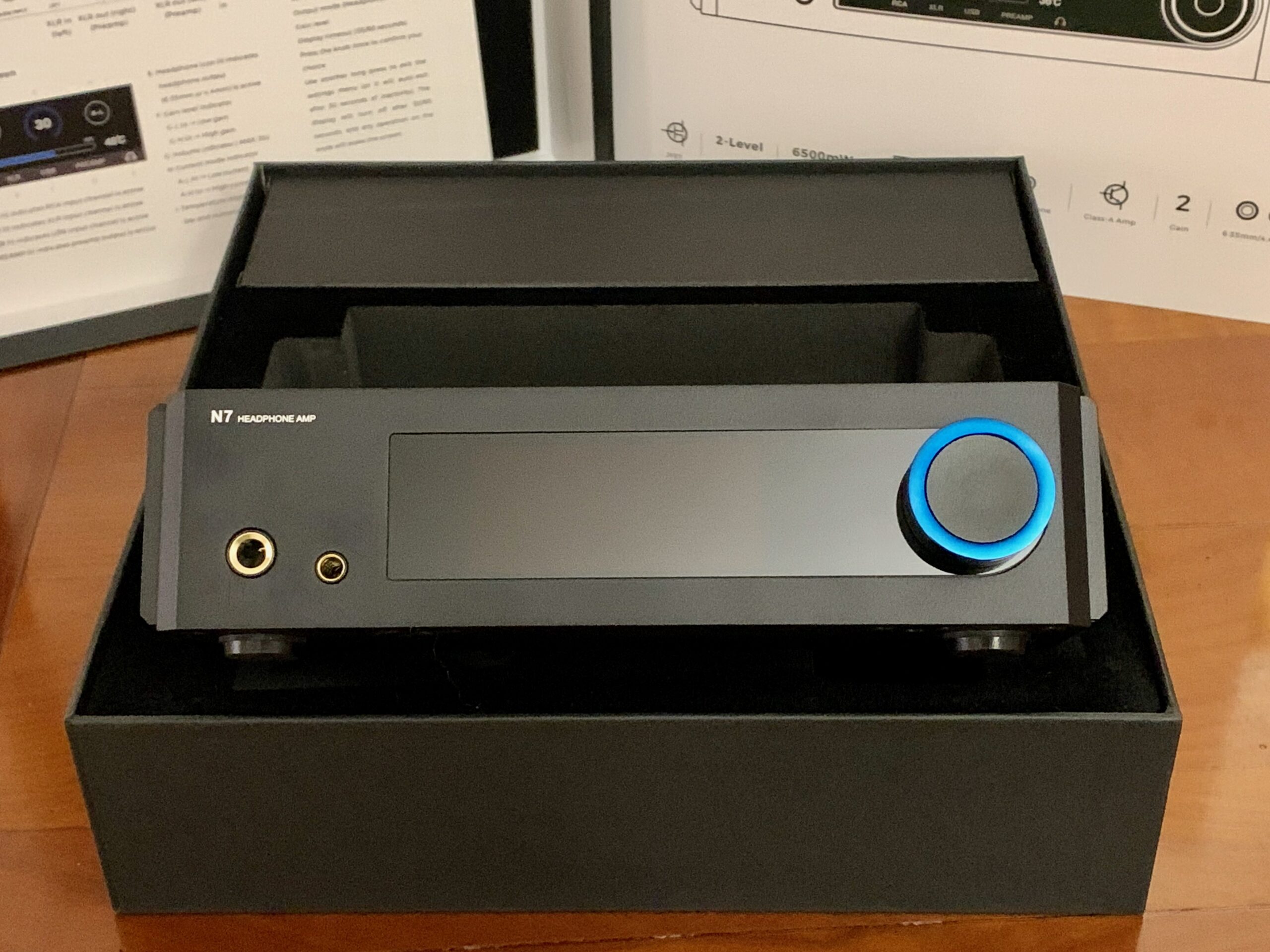
From a design standpoint, the N7D keeps exactly the same philosophy as the original N7.
No useless visual effects.
No giant chassis made only to look impressive on a desk.
Everything feels extremely rational and purposeful.
The size is compact enough to fit easily into a desktop setup, but at the same time it still gives the feeling of a real high-end product.
Weight, chassis rigidity, and connector quality immediately make it clear that this is a serious piece of equipment.
The volume control also remains one of the best parts of the whole project.
The stepped resistor ladder solution keeps that precise and mechanical feeling that instantly separates it from normal digital volume controls.
Even the remote deserves another mention.
At first it almost feels too simple, but the moment the N7D becomes part of a more complex chain, especially as a preamp, its practicality becomes very obvious.
This is clearly a product designed both for desktop use and for a real speaker system.
And honestly, this dual nature remains one of its most successful aspects.
N7 or N7D? Spot the Difference
There is however one small thing that I think Aune could have handled better.
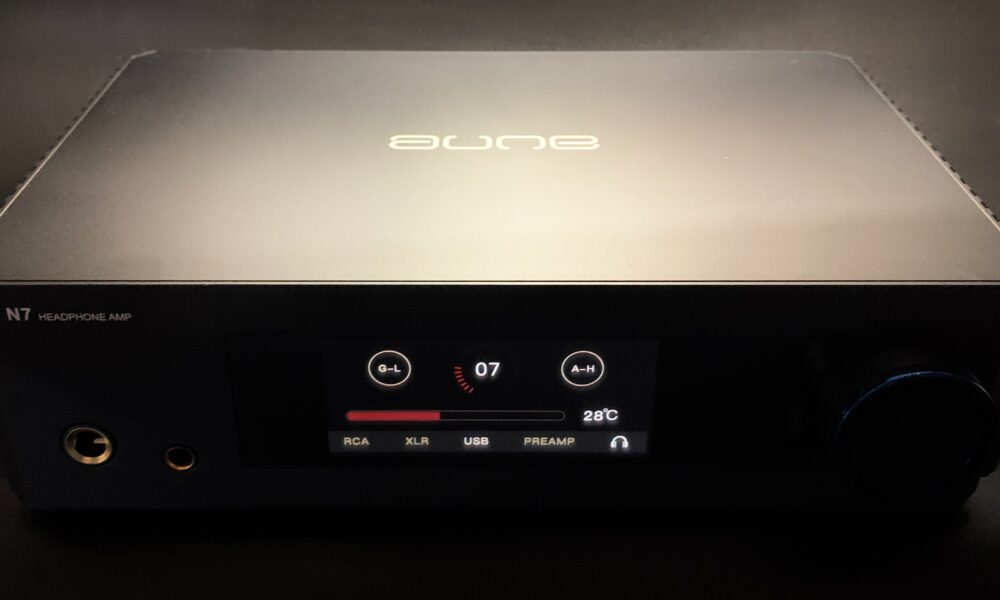
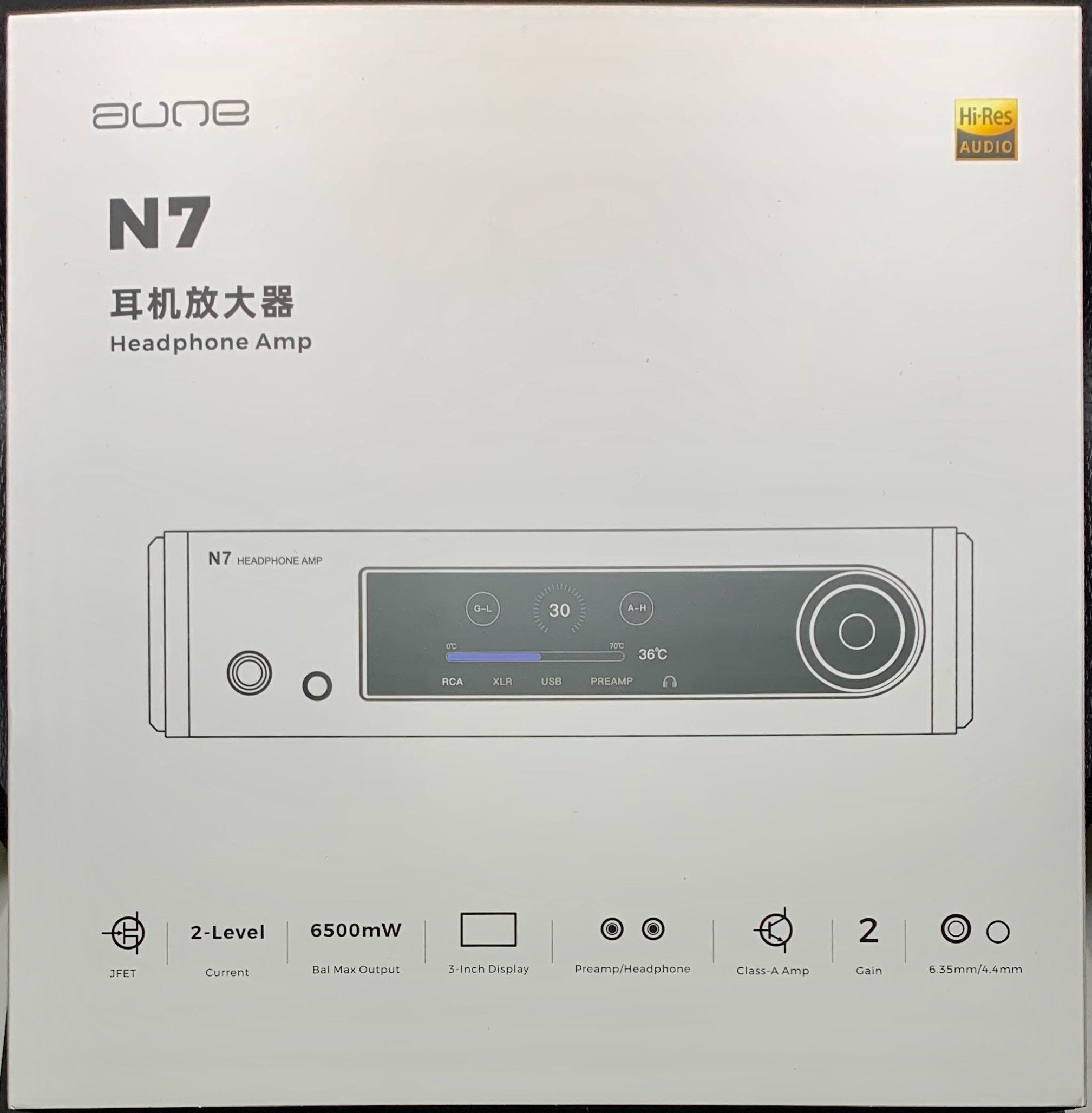
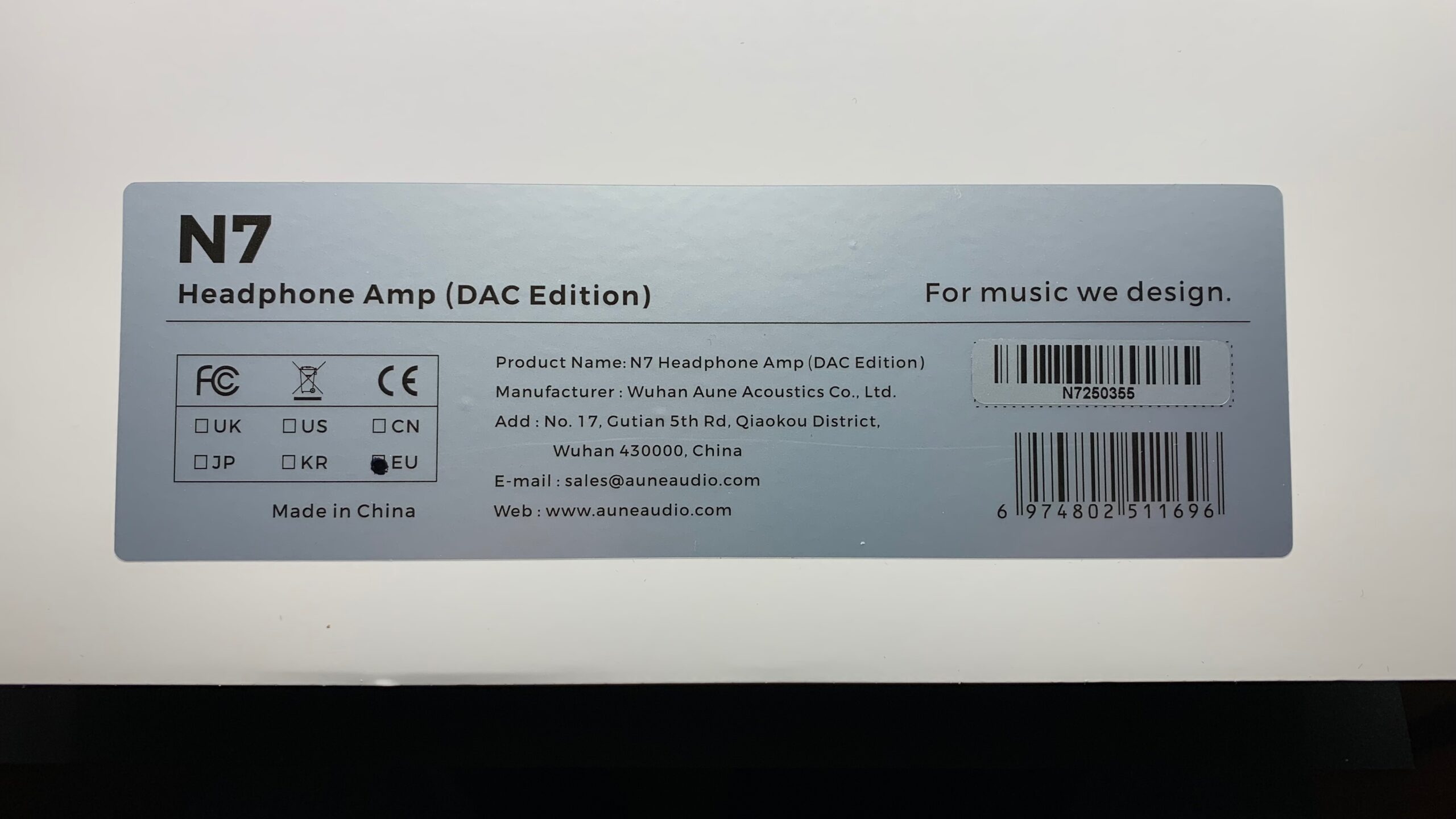
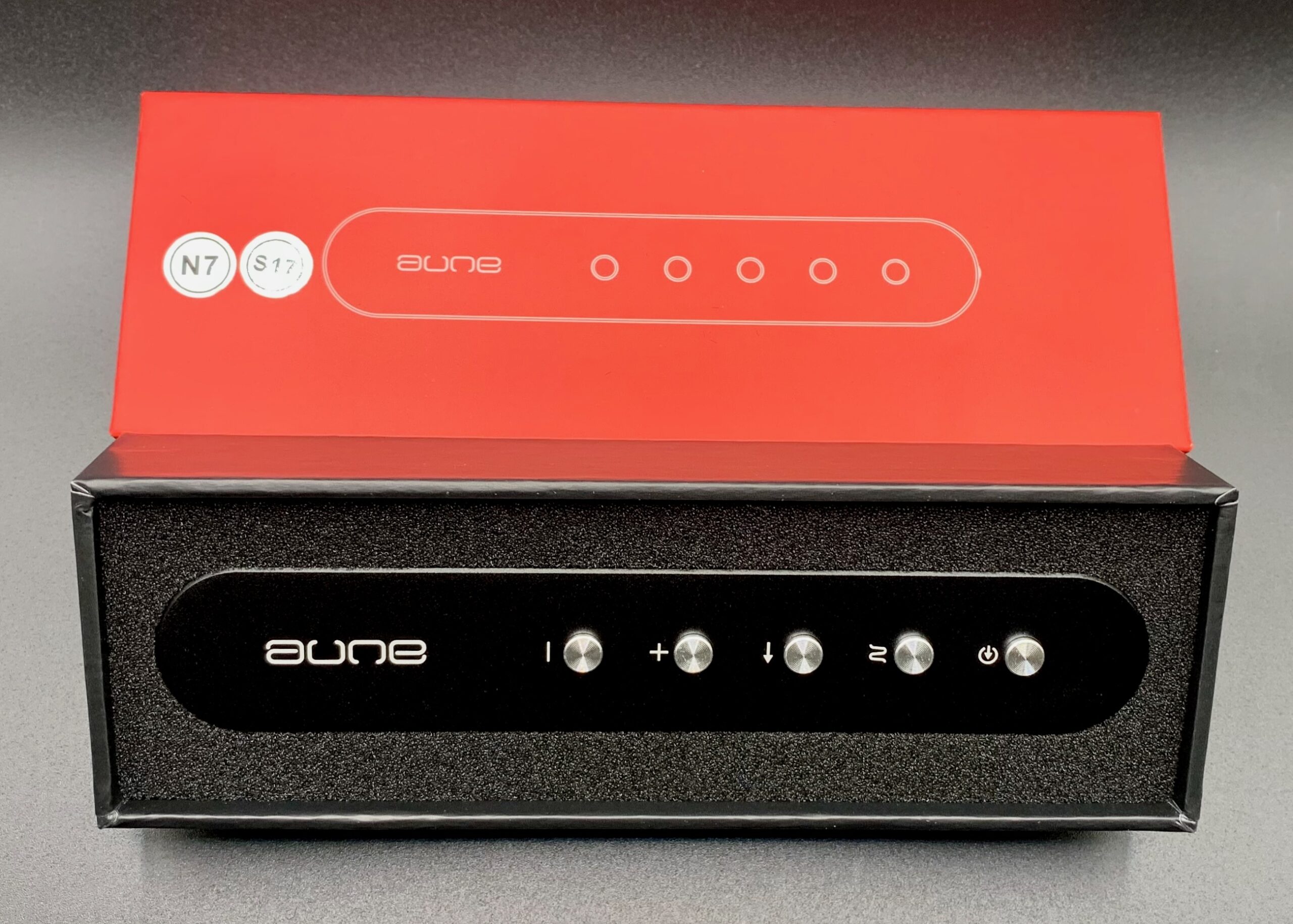
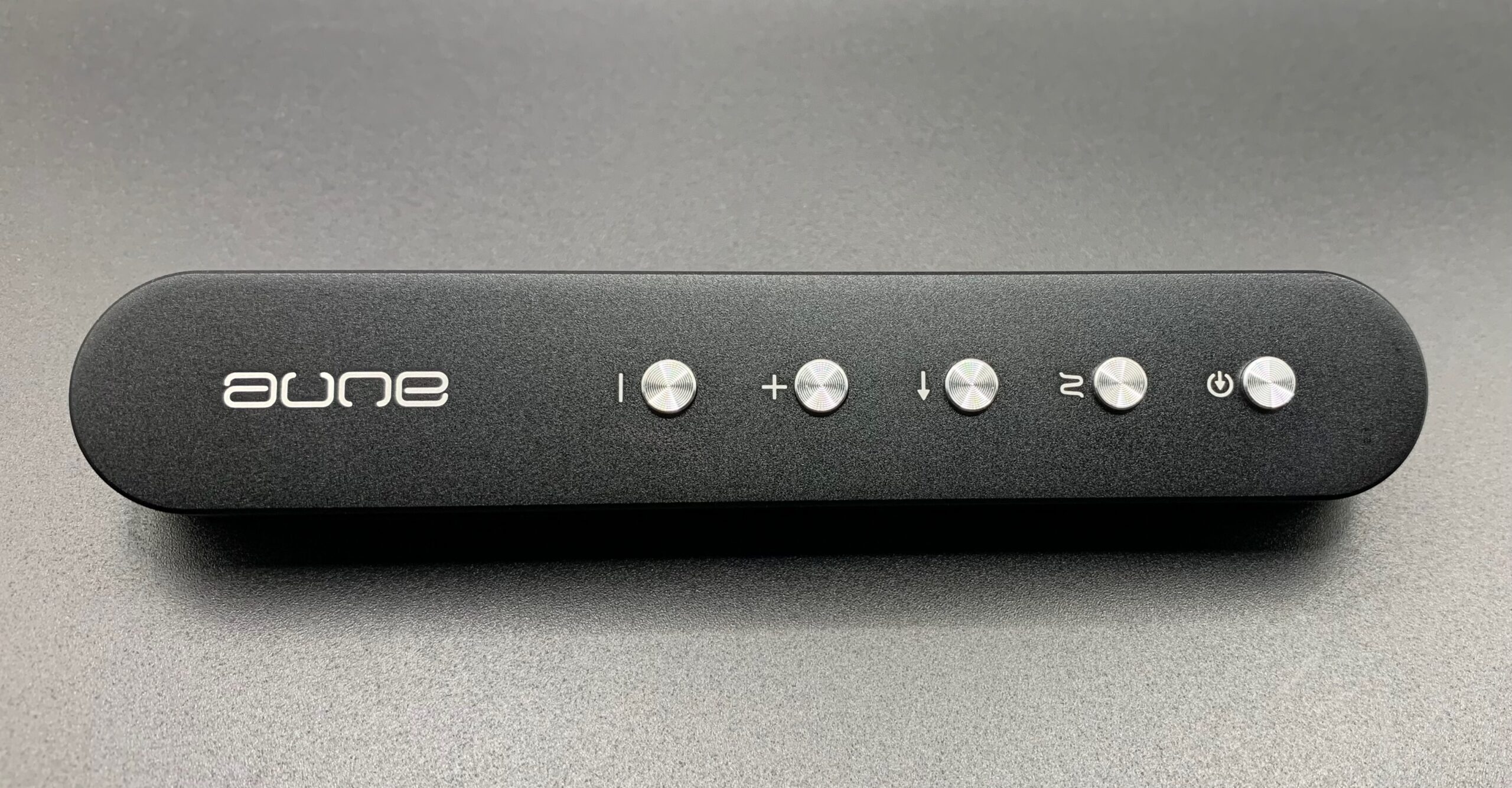
Visually, the N7 and N7D are almost impossible to tell apart. There is no real differentiation on the front panel, and even the packaging barely mentions the integrated DAC version.
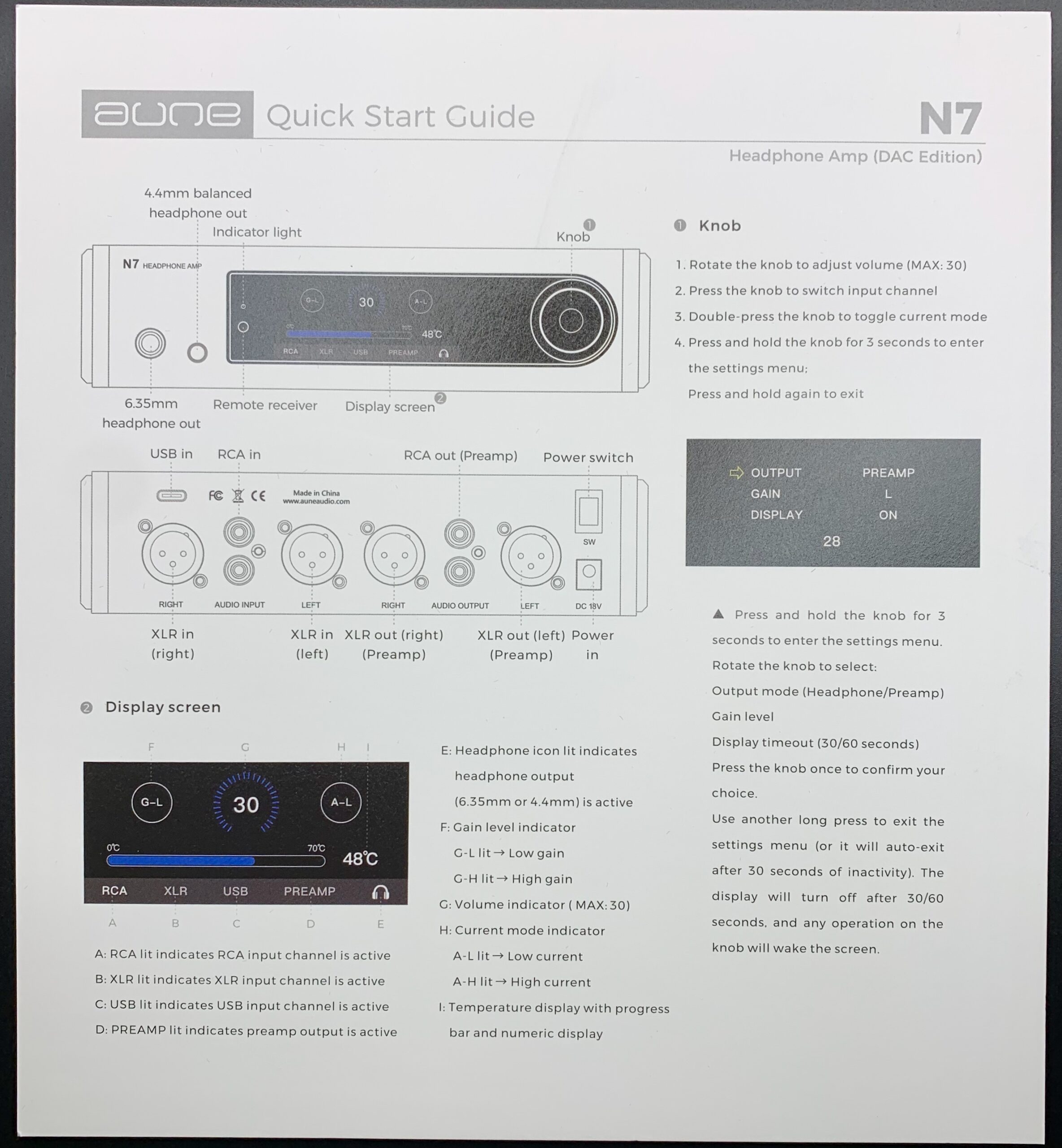
In practice, the only immediate way to recognize the N7D is the USB-C port and the small reference to it inside the connection diagram sheet.
And honestly, that’s a bit of a shame.
Because the integrated DAC is not some minor extra feature. It’s actually a central part of the product’s identity.
Even a small variation on the front panel name or a clearer distinction on the box would probably have helped give more recognition to a version that, once you listen to it, has a very specific personality of its own.
Display and User Feedback
There is however another aspect of the daily user experience that I personally would have liked to see implemented differently.
Despite the N7D featuring a very capable DAC section, the display provides virtually no information about the incoming digital signal.
There is no indication of the signal type, sample rate, or whether the unit is receiving PCM or DSD content.
In everyday use the DAC works flawlessly and I never experienced any issues with signal lock or stability, but I still think some basic feedback would have been useful.
Being able to see at a glance whether you’re playing a standard 44.1 kHz file, a high-resolution recording, or a DSD stream is something many enthusiasts appreciate, and it is a feature commonly found even on far less ambitious products.
This doesn’t affect sound quality in any way, but it does feel like a small missed opportunity from a usability standpoint, especially considering how much attention was given to the rest of the design.
Connections and Versatility
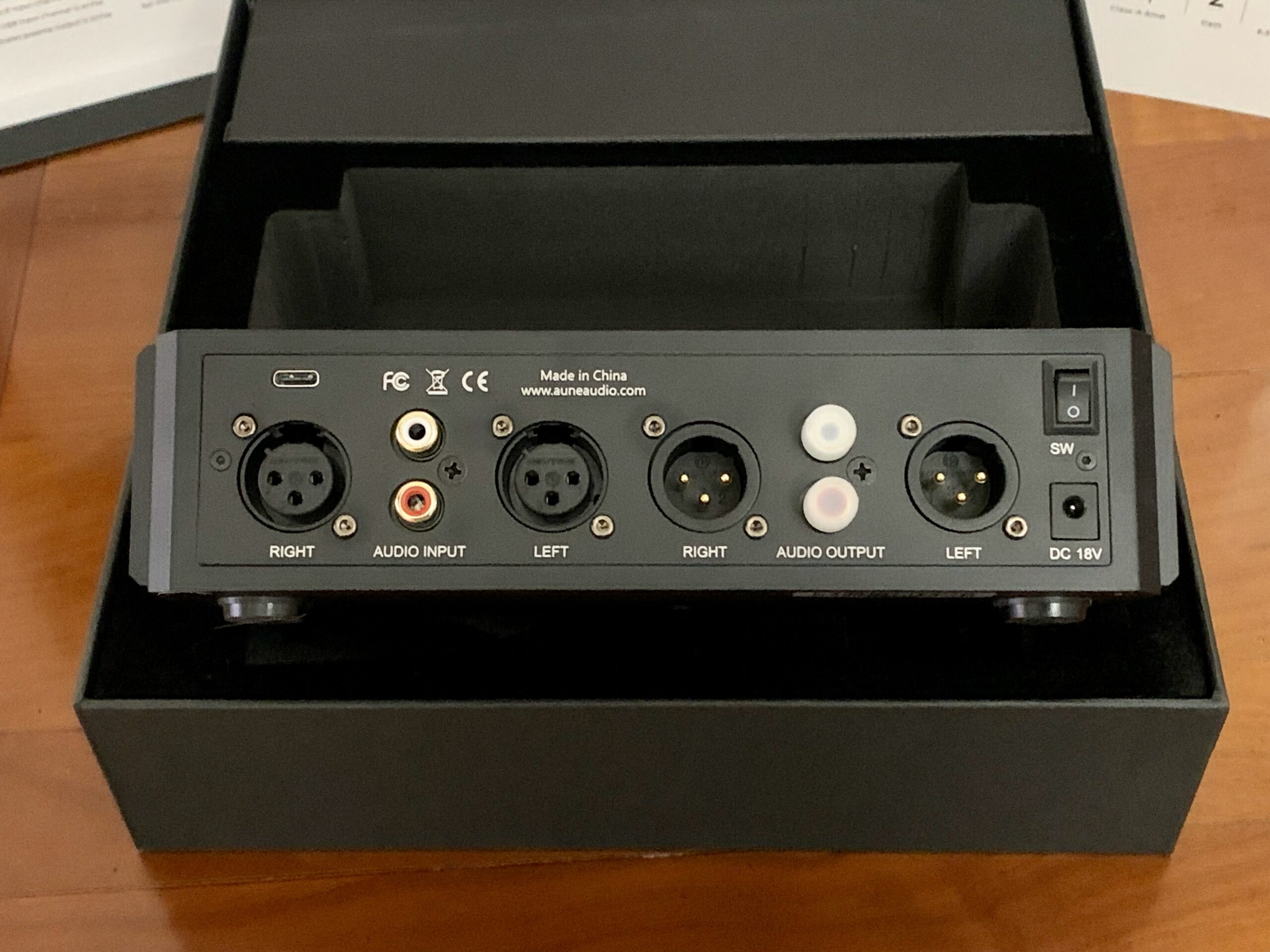
The N7D is clearly designed to become the central piece of an audio chain.
Connectivity is complete and very well thought out.
Inputs
• USB
• RCA
• XLR
Headphone Outputs
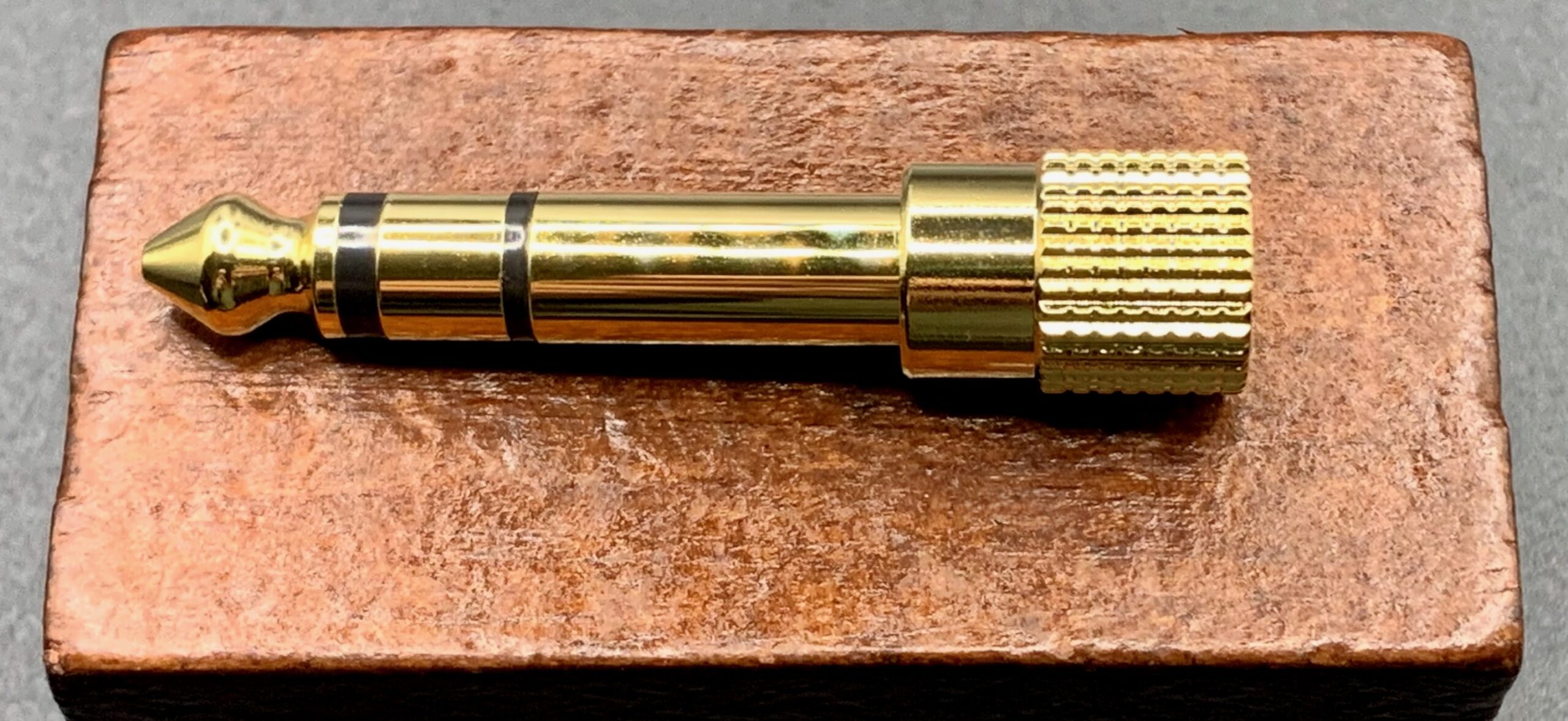
• 6.35 mm
• 4.4 mm balanced
Line Outputs
• RCA
• XLR
And honestly, this versatility completely changes the way you experience the product.
As a headphone amplifier, it works extremely well.
But as an integrated DAC/preamp, it becomes even more interesting because it simplifies the whole chain without ever feeling like a compromise.
And this is probably one of the strongest aspects of the N7D.
Instead of stacking boxes, power supplies, and cables everywhere, you end up with a single machine that immediately feels complete.
First Sound Impressions
The first thing that stands out with the N7D is not exaggerated detail.
It’s continuity.
And this is probably where the dual CS43198 setup clearly shows the direction Aune wanted to take.
Music flows in an extremely natural way, without sounding artificially soft or smoothed over. There’s never the feeling of a machine designed to impress you through forced contrast, hyper separation, or artificial brightness.
Everything feels more organic.
And what’s interesting is that you can clearly hear the typical character of the CS43198, but without the limits that often appear in less refined implementations. Here you don’t get that overly soft or excessively relaxed feeling that some Cirrus Logic based DACs can have.
The N7D keeps the smoothness and natural flow, but with a much more stable and believable structure underneath.
Tonality and Timbre
Bass stays controlled and textured more than spectacular. Sub bass reaches deep, but always remains connected to the rest of the tuning. There’s body, but never artificial bloom or impact made only for show.
The midrange is probably the most convincing part of the entire system.
Voices sound dense, believable, and extremely natural without becoming overly warm. Instruments keep realistic texture and harmonics without losing separation or clarity.
Guitars especially benefit from this kind of tuning. String vibration, body resonance, and harmonic complexity all come through in a very natural way, never becoming sharp or edgy.
Treble follows exactly the same philosophy.
There’s air and extension, but without that typical “spotlight effect” many modern DACs use to immediately create the impression of detail and resolution.
The N7D doesn’t push information directly in your face.
It lets details emerge gradually and naturally from the recording itself.
Long-Term Listening
And honestly, the combination of dual CS43198 chips and the pure Class A analog stage is probably a huge part of why this constant sense of smoothness works so well.
The result is that long listening sessions become incredibly easy.
Not because detail is missing.
But because nothing ever feels forced.
Microdynamics and Resolution
One of the most interesting things about the N7D is the way it handles microdynamic variations.
And this is exactly where the dual CS43198 setup shows a very different approach compared to many modern DACs that sound more aggressive or hyper-analytical.
Small details emerge naturally without needing to be artificially pushed under a spotlight. Breaths, reverbs, harmonic tails, and vocal nuances appear inside the mix in a very natural way, without turning into special effects designed to impress during the first few minutes.
The overall feeling is not one of “boosted detail.”
It feels more like a very fluid and continuous reading of the musical event.
This creates a presentation that feels more believable and more relaxed, where resolution is absolutely high, but never artificially separated from the rest of the music.
And honestly, this is probably one of the most mature aspects of the N7D.
It doesn’t try to impress through contrast or hyper detail.
Its goal is to preserve balance, coherence, and musicality even during very long listening sessions.
Balanced Output and Control
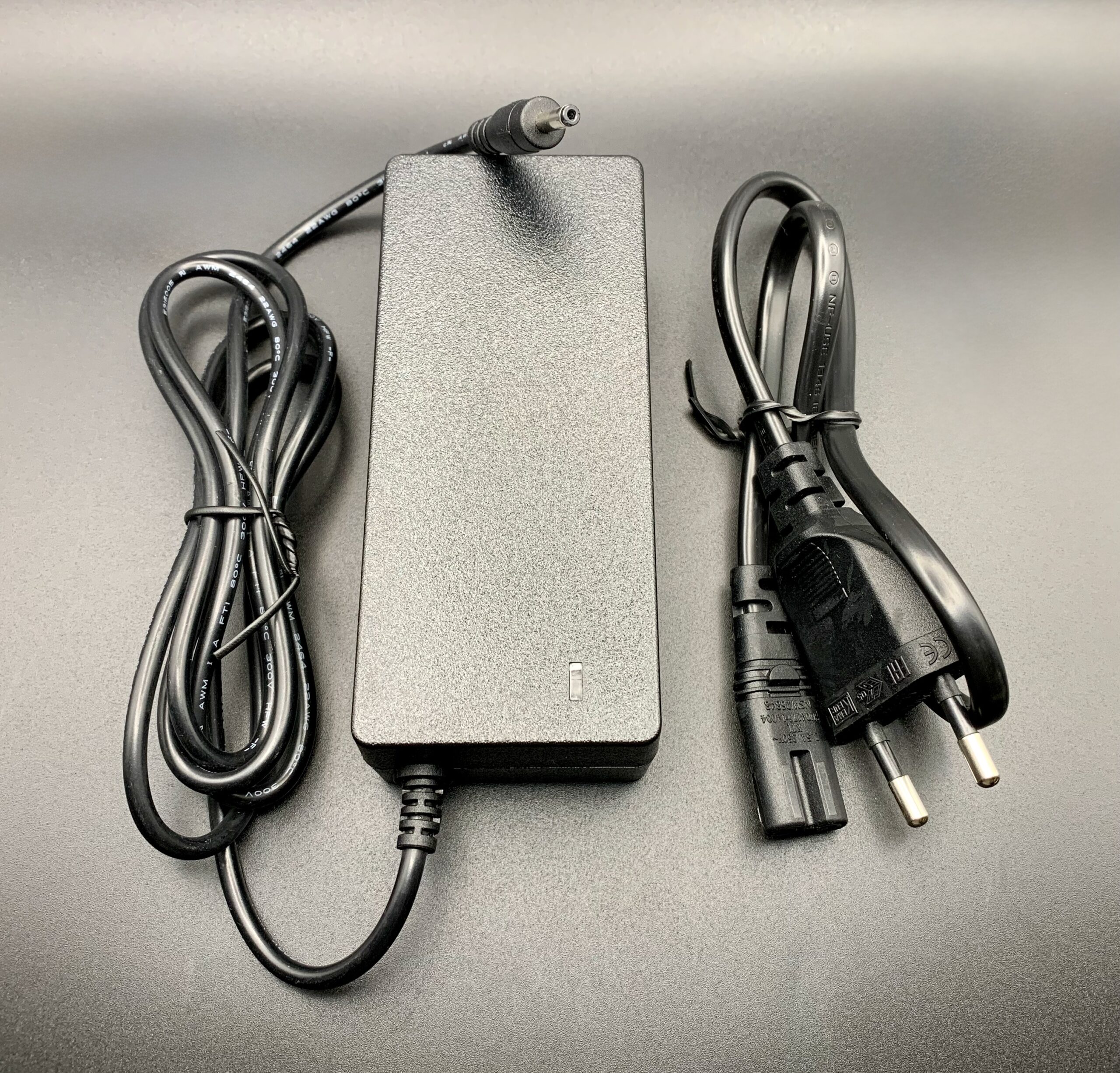
Just like the original N7, the N7D clearly performs at its best in balanced mode.
Using the balanced output gives you more headroom, better dynamic control, and a slightly more stable soundstage.
The difference is not huge in terms of tonality, but you can clearly hear it in the ease with which the amplifier handles everything.
Planar headphones especially benefit from the extra current delivery.
That said, the single-ended output still keeps the same overall sound philosophy perfectly intact.
It never feels like a “limited” or compromised mode.
Balanced simply allows the internal architecture to express itself more completely.
Headphone Pairings
The N7D works extremely well with pretty much every type of headphone I tried.
With planar headphones, it delivers control, stability, and an immediately noticeable sense of headroom. Even when pushing the volume higher, the character always stays stable and relaxed.
With dynamic drivers, what stands out the most is tonal coherence. Voices remain very realistic, and the whole musical presentation keeps that same smoothness and natural flow.
Even with very sensitive IEMs, the background remains surprisingly clean and controlled considering the pure Class A design.
Using It as a Preamplifier
Even when used as a DAC/preamp feeding an external power amplifier, the N7D keeps the same sound philosophy you hear in headphone mode.
The overall presentation feels very continuous, fluid, and stable, without any sense of stiffness or artificial character across the chain.
The integrated DAC section helps even more with this overall coherence, removing part of the variables normally introduced by external sources, separate power supplies, and more complicated system matching.
Maybe it doesn’t reach the level of absolute top-tier dedicated preamps, but it still manages to fit into very serious systems with surprisingly high credibility.
N7 vs N7D
This is probably the most important question.
And the answer is not simply:
“The N7D is better.”
The standard N7 still makes a lot of sense for people who already own high-end DACs and enjoy experimenting with different combinations.
In some systems, that kind of modularity remains a real advantage.
But the N7D changes the overall experience completely.
With the standard N7, you keep thinking about the chain.
You keep wondering how it could sound with another DAC.
With the N7D, that curiosity drops dramatically.
Not because better or more expensive DACs don’t exist.
But because the overall coherence of the system already feels genuinely satisfying as a final destination.
And honestly, that’s probably one of the biggest compliments you can give to a product like this.
A Definitive Desktop System?
The N7D is probably one of the most successful interpretations of the “ultimate high-end desktop system” idea.
Inside a single chassis you get:
• DAC
• pure Class A amplification
• balanced architecture
• preamp functionality
• real power
And most importantly, you get all of this without the feeling of using a compromised product.
A lot of integrated systems sacrifice part of their refinement in exchange for convenience.
The N7D never gives that impression.
Actually, it feels like the exact opposite.
An extremely coherent project where convenience simply becomes the natural consequence of good design.
Final Thoughts
The Aune N7D does not reinvent the original N7.
It completes it.
The identity remains exactly the same:
naturalness,
smoothness,
coherence,
and an incredible ease of listening.
What really changes is the level of integration.
The DAC section does not feel like a feature added only for convenience. It feels like an integral part of the amplifier’s character itself.
And honestly, this changes the experience much more than I expected.
The N7D reduces the constant urge to change your system.
The endless need to swap components slowly fades away.
The endless search for the “perfect synergy” slowly fades away too.
And almost without noticing it, you stop obsessively optimizing everything.
You sit down.
You listen.
And time just disappears.
Entire albums play effortlessly.
Hours of listening become completely normal.
The system itself disappears.
And in the end, this is probably the hardest thing for an audio component to achieve.
Not making you analyze music more.
But making you listen to it longer.
VOTE
9.3 / 10
🟢 PRO
- Extremely coherent and natural sound
- Very convincing DAC/amplifier integration
- Refined Class A presentation without artificial warmth
- Very relaxing and fatigue-free listening even during long sessions
- Excellent control with demanding headphones
- Great versatility as DAC, amplifier, and preamp
- Balanced architecture that actually makes a real difference
- Compact size considering the level of performance offered
🔴 CONS
- Not designed for people looking for an ultra-analytical sound
- Stepped volume control is not always perfect
- Functional interface, but very minimal
- The display does not show the incoming audio format or sample rate
- People who enjoy DAC rolling may still prefer the standard N7
Frequently Asked Questions
Many of the considerations from the original N7 review still apply here, especially regarding the pure Class A amplification stage.
The real new element in this version is the integrated DAC section and the way the dual CS43198 setup changes the balance, continuity, and overall coherence of the system.
Is the DAC analytical?
No.
The conversion is focused much more on coherence and naturalness than on artificial hyper detail. Resolution is absolutely high, but never exaggerated.
Can it replace separate DAC + amp stacks?
Absolutely.
And honestly, this is probably one of its strongest points. After some time, many separate chains start to feel unnecessarily complicated.
Does it get very hot?
It is still a pure Class A device, so some heat is completely normal.
That said, temperature always remains manageable and far more practical compared to many large Class A amplifiers.
Is it better than the standard N7?
Not in an absolute sense.
The original N7 still makes perfect sense inside modular systems with dedicated DACs.
The N7D simply gives a stronger feeling of completeness and overall coherence.
Thanks and Final Note
Thanks to Aune Audio for providing the N7D for this review.
No payment, editorial control, or approval requests were involved in the creation of this article.
Everything written here comes entirely from my personal listening experience across different headphones, different sources, and many hours of real use.
As always, in the end, music decides everything.
For anyone interested, the Aune N7D is available through the official Aune website, Italian distributors/importers, and also through Amazon.






No Comment! Be the first one.