
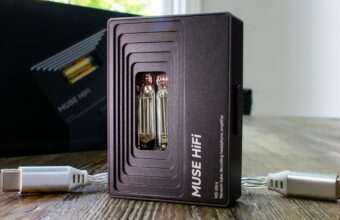
Muse Hifi M3 Ultra Review
The Muse Hifi M3 Ultra is one of the least expensive dongle...











































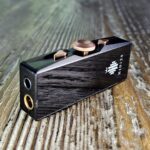

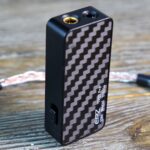
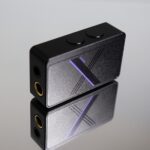











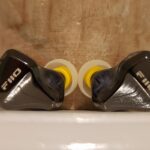
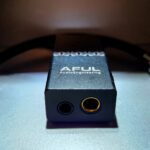
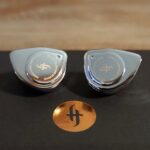

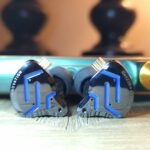



















The Muse Hifi M3 Ultra is one of the least expensive dongle...
INTRODUCTION: Kefine as a brand has put up some serious...
The CCA Falcon is CCA Audio's budget range iem which...
Disclaimer: Good morning, MBA readers! After a pause for...
Preface When you talk about Beyerdynamic, you’re...

Sound Over Specs: A Brief Summary
I have a solid baseline for what quality sound and a wide soundstage should feel like, having spent years with high-end gear like the Sennheiser HD-650 and Hifiman Sundara. However, my appreciation for the Fosi Audio IM4 isn't based on the "tech side" or the spec sheet—it is based solely on the sound they produce. Despite the hearing degradation and tinnitus from 20+ years on an aircraft carrier flight deck, these IEMs deliver a lifelike, "airy" experience that stands out through pure performance. Whether it is the superb left-to-right separation or the fatigue-free clarity provided by the swappable nozzles, my liking for this set comes down to how well they translate music in real-world use.
Reviewer Background: I typically use full-sized, over-the-ear headphones. My primary home rigs include the Sennheiser HD-650 and Hifiman Sundara powered by either a FiiO K7BT or a Monoprice Monolith amp. While 20+ years on an aircraft carrier flight deck has definitely degraded my hearing and left me with tinnitus, I have a solid baseline for what quality sound and wide soundstage should feel like.
Brass Nozzles (The "Critical" Choice)
Aluminum Nozzles (The "Productivity" Choice)
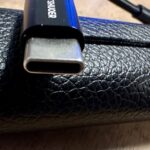
If you’re planning to run these straight off a phone, be careful. My Pixel 10 XL Pro did not have enough juice to drive these to "workout levels" using a standard USB-C cable ($9 Amazon special). It felt thin and weak.
I originally had some "skips" in the audio. After testing, I’ve realized this was a broadband deficiency (Bluetooth/streaming bandwidth issues on my phone) and not the IEMs themselves. On the FiiO JM21 in "Pure Music Mode," the audio was rock solid.
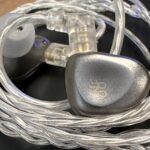
While the IM4 comes stock with a high-purity, silver-plated 3.5mm cable, I also tested it with the 4.4mm Balanced and USB-C cable variants. Across all three, the build quality is outstanding:
Beyond my modern gear, I also tested the IM4 with my FiiO X3 using the 3.5mm connection. Even on this older hardware, the IM4 played beautifully. It proves that while the Pixel 10 XL Pro struggled for power, a dedicated player—even an older one—is all it takes to make these Beryllium drivers sing. Whether I was using the modern JM21 or the classic X3, the consistency of the "airy" open-back sound remained a standout feature.
Final Verdict: The Pros and Cons
|
Pros |
Cons |
|
Open-Back Spatiality: Exceptional left-to-right separation; "airy" and lifelike sound that doesn't feel "clogged" or pressurized. |
Power Hungry: The Pixel 10 XL Pro failed to drive these to "workout levels" via USB-C; they require a dedicated source (DAP or Amp). |
|
Tinnitus-Friendly: Aluminum nozzles effectively tame "brash" vocals and high-mid spikes for fatigue-free, all-day listening. |
High-Gain Sensitivity: The Beryllium drivers will clip/distort if pushed too hard on High Gain settings (Medium Gain is the "sweet spot"). (Not necessarily a “Con”) |
|
Premium Cable Experience: Whether 3.5mm or 4.4mm, the cables are soft, pliable, and have zero microphonics (no rustling noise). |
Low Isolation: Because they are open-back, they do not block out background noise and will leak a small amount of sound to those nearby. |
|
Versatile Scaling: Plays beautifully on everything from older gear like the FiiO X3 to modern balanced players like the JM21. |
|
|
Spacious Storage: The included case is high-capacity, easily holding the IEMs and up to 3 different cables simultaneously. |
Final Summary: A Reality Check
I’ll be honest: I struggled to find legitimate 'cons' for the Fosi Audio IM4. While my Pixel 10 XL Pro initially struggled for power, I’m now convinced that was either a broadband deficiency or the result of using a cheap $9 cable rather than a fault of the IEMs. Once I switched to a proper source like the FiiO JM21 or X3, they performed beautifully.
Coming from the HD-650 and Sundara, I was particularly impressed by the noise floor. There is absolutely no hiss or hum, even when cranking the volume during silent passages. While high-gain settings on my desktop amps caused some clipping, dropping to Medium Gain offered much better headroom and a cleaner signal.
As for the open-back design, it’s a non-issue for those around you. Unless you’re playing at 'unsafe' levels, the leakage is subtle and shouldn't be annoying to anyone nearby. For a guy used to high-end open-back cans, these IEMs offer a similar 'airy' experience in a portable, fatigue-free package. I'm not trying to 'sell' these, but I am definitely working them into my everyday rotation for 'on the go' music—whether I'm in the yard or the shop—when using high-dollar cans isn't ideal or practical.

Wonderful writeup bro! Looks like the Fosi started to take technicalities seriously.
Our site uses cookies. By using this site, you agree to the Privacy Policy and Terms of Use.