


















































Ziigaat X-Fresh Reviews Arete II Review
Intro
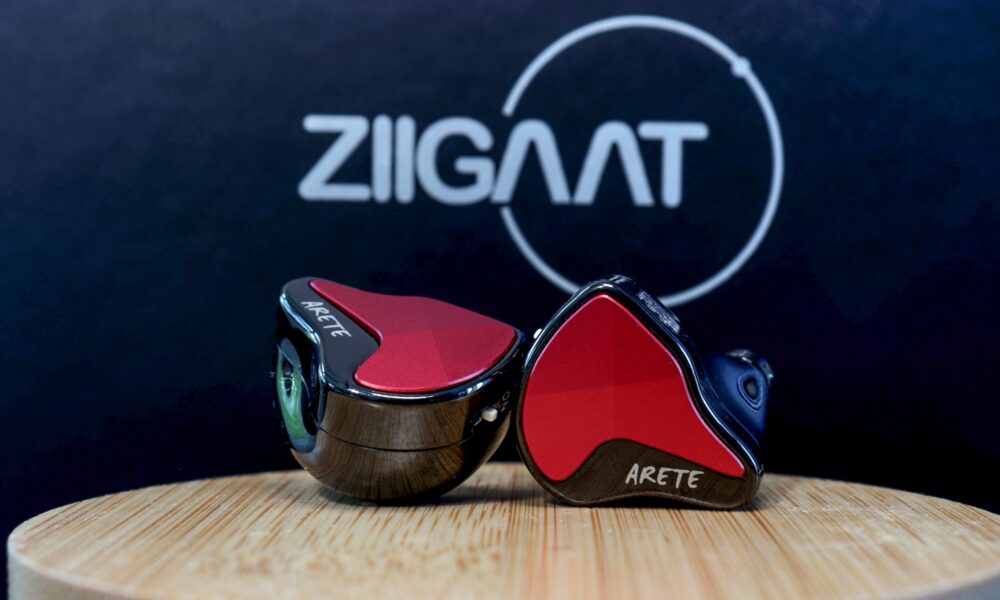
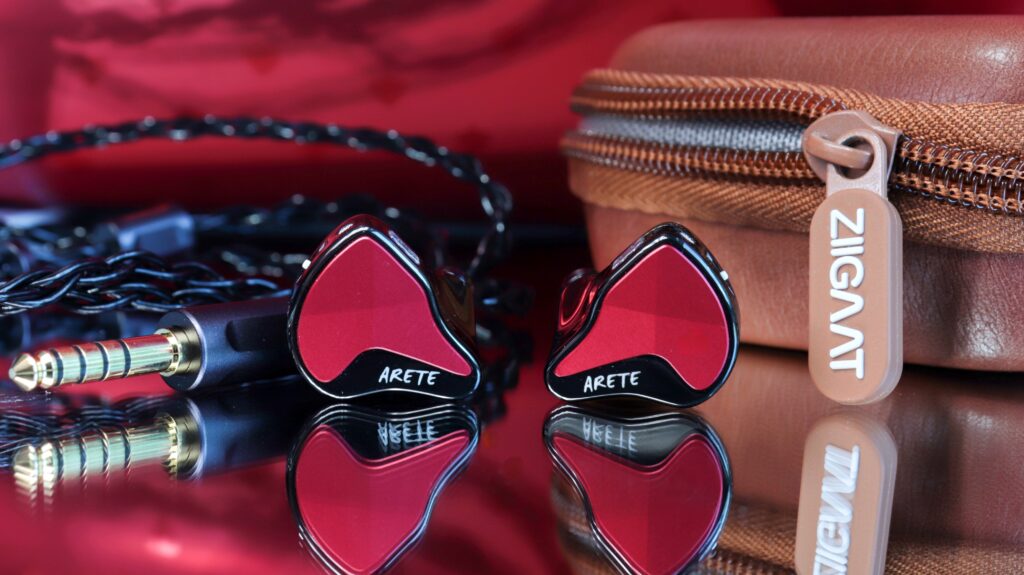
Hello, this review and feature covers one of the latest hybrid iems from the audio brand Ziigaat named the Ziigaat X-Fresh Reviews Arete II ($279). The Arete II is actually a five-driver hybrid iem consisting of one dynamic driver and four balanced armature drivers. Not the most ambitious of driver configurations and one might even say it’s a pretty common configuration at that. However, I don’t discriminate just because this isn’t some tribrid/quadbrid setup but rather love to hear things which simply sound good. Friends, I typically write my intros to every review days before I even get the product that I’m reviewing. However, I wanted to sit on this one. I heard far too many solid opinions concerning the Arete II and felt it best to experience them first. To see, to hear for myself. I figured this was another hype piece, with gushing words that land somewhat flat when I get them in my ears. In truth, I didn’t think I’d even like this set and had a hunch I wouldn’t review them. I’m just being honest with you all. I thought for sure this would be a copycat tuning, smooth, warm, big bass, and nothing unique. As honest as I can be. I’ve turned away more expensive sets for even lesser reasons, seriously. That all said, the Arete II is one of those iems that connected with me on an emotional level… pretty much instantly.
Table Of Content
- Intro
- Long Haul Review
- Fresh Reviews
- Ziigaat
- They Make Good Stuff
- Competition
- Non-Affiliated Purchasing Links
- Gear used for testing
- Packaging / Accessories
- Unboxing
- Eartips
- Carrying Case
- Cable
- Build / Aesthetic / Internals / Fit
- Build Quality
- Aesthetic / Design
- Dip switch
- Internals
- Fit / Comfort
- Drivability / Pairings
- Sensitivity
- Added Output
- Source Pairing
- What Do I Prefer?
- Sound Impressions
- What’s It Sound Like?
- Timbre
- Musical? Analytical?
- Bass Region
- Don’t Forget the Switch
- Sub-Bass
- Mid-Bass
- Downsides to the Bass Region
- Midrange
- Lower-Midrange
- Low-mids Cont…
- Upper-Midrange
- Females
- Instruments
- Instruments cont…
- Downsides to the Midrange
- Treble Region
- Timbre
- Technically Speaking
- Downsides to the Treble Region
- Technicalities
- Soundstage
- Separation / Imaging
- Detail Retrieval
- Comparisons
- Kefine Quatio ($129)
- Non-Sound Stuff
- Sound Differences
- Between the 20’s
- Final Thoughts on This Comparison
- Genres
- Genres Which Work
- Genres Which Don’t Pair as Well
- Last Words on the Ziigaat X-Fresh Reviews Arete II
- The Why…
- Conclusion
- Other perspectives
- Arete II Pros
- Arete II Cons
Long Haul Review
I say all of that to say this; I just wanted to preface this entire review by giving you all a heads-up. This is absolutely NOT a hype piece. I don’t do that. Yet this is going to be a very long review (as per usual), and a mostly positive review, for those fans of the Arete II’s particular style of tuning. I will speak on its negative qualities and its highlights, what genres work and which don’t. I’ll explain who this set is or is not for. Also, I will cover every last thought which comes to mind. And I’ll do it over a two-month period. So, just know that this is a long-haul review. I conduct them on my favorite sets. This is only the beginning as I just received this set a few days ago. I do long haul reviews whenever I can because they are better reviews. You’ll never catch me hearing a set one day and reviewing the next. Still, two months is long. I only conduct these types for those sets deserving of a very long, very intimate understanding over a longer period of time. I can hear how the set changes, and I can gather my thoughts better. Anyways, I hope that my words and thoughts help you in some way or another. I love doing this!
Fresh Reviews
This is the 2nd collaboration that Ziigaat has done with a well-known YouTube personality Fresh Reviews. The first (that I know of) was with the original Ziigaat X-Fresh Reviews Arete. Which got some fairly high acclaim when it was released. Now, Fresh Reviews is really a gaming channel focused primarily on competitive play and higher rank testing of gear, in this case “iems”. So definitely much more focused on gaming and finding the perfect gear to help in that approach rather than audiophile dreams. However, you’d be surprised how closely the two hobbies can coexist. We’ve seen this time and time again. Awesome gaming iems which also happen to be amazing music listening sets too. So, there’s no wonder why this collaboration seems to really work for the music fans. I will say, his YouTube is really a mix of both gaming and casual listening features, but the gaming aspect surely dominates what I’ve seen. I simply wanted to highlight this collaboration before I dive deeper into this set and not gloss over a very well-done teaming of Fresh Reviews and Ziigaat.
Ziigaat
The audio brand Ziigaat has not always been an Audioverse household name. In fact, they didn’t even get their iem portion of the brand moving until the early 2020’s. I found it kind of cool that Ziigaat has been an OEM/ODM manufacturer for the great majority of their lifespan, over 10 years before they decided to take the leap at an iem lineup. I find that brands who start out this way tend to have a better understanding of the market, of the trends, and typically they have a leg-up on the competition out of the gate. In the case of Ziigaat, that seems to be exactly the case. In fact, did you know that in the short time Ziigaat has been bringing iems to market that they’ve produced over 18 models already?! These aren’t cheap mass-produced KZ models either. These are mid-fi hybrid iems with intricate components, nuanced acoustic cavities, crossovers etc. which require some R&D and serious attention. Especially when their iems do as well as they do. Friends, this is really amazing.
They Make Good Stuff
There was a time when I almost looked down on Ziigaat thinking they were simply mass producing overpriced sets. Boy-oh-boy was I dead wrong for assuming something so stupid. You see, I actually got to hear some of their sets. Granted, there’s a couple I decided not to review as they simply didn’t jive with me completely. But I’ve also heard some top class sets in different price points that really changed my mind. Obviously, they take a lot of pride in their work. I just reviewed possibly the best all-BA iems under $400 in the Ziigaat Luna (Ziigaat Luna Review). I was and still am in love with that set. I’ve also owned a number of their iems now and it all started with the Ziigaat Cincotres. I never reviewed it because I was biased when I received them and decided it wasn’t good enough. Though months later I revisited the Cincotres and found out the absolute beauty of that set. Still one of the better hybrid iems under $300, if you enjoy a rich, bassy, and musical sound with fantastic clarity, nothing harsh, very fun. Something I’ve learned over time is to not give up on these sets too early. You’d be surprised what a little time can do for your preferences. At any rate, I’ve honestly been so very impressed with this brand of late. I haven’t been fortunate enough to check out all of their iems and I have a very small pool to draw my impressions, but I like what I’ve seen. Ziigaat has a fan in me.
Competition
I think that the one major hurdle for the Arete II is that there is some major competition in its price point. In my opinion, every price point which surrounds the Arete II offers hybrid iems which perform very well. Sets like the Simgot SuperMix 5, Ziigaat Odyssey 2, Ziigaat Horizon, Ziigaat Cincotres, Kiwi Ears Astral, Aful Performer 5+2, Dunu X-Gizaudio DaVinci, Dunu DN142, Kiwi Ears Septet, Myer-Audio Sliivo SL224, among many-many others. Friends, there are sets which get you very close for much less like the SuperMix 5 I listed, shoot, the SuperMix4 too. In truth, sets like the Kefine Quatio, for quite a bit less definitely bring into question the price-to-performance of a set like the Arete II. Having said that, it’s during these moments when I have time on my hands to actually listen to both sets and compare that it becomes very evident that the Arete II offers a bit more. I find it pretty clear that Ziigaat has no worries of price-to-performance. Still, who is the Arete II for? Who “isn’t” this set for? What genres work best with this set? These are questions that I hope to answer as I continue learning about the Arete II. Again, this is a long term, long-form review which will be slowly, melodically, and quite joyfully tested. Let’s get into it folks. So, without further ado, the Ziigaat X-Fresh Reviews Arete II…
Non-Affiliated Purchasing Links:
-Ziigaat
-Bloom Audio
-Amazon
Gear used for testing
-Shanling UP6
-Shanling UA6
-Ifi Go Blu
-Surfans X10
-Hidizs S9 Pro Plus
-Shanling UA7
-Shanling H0
-Hidizs AP80 Pro Max
-Fiio JM21
-Hiby R3 Pro II
-Hiby R6 Pro II 2025
-Shanling M1 Plus
-IBasso DX240 with Amp8 MK2
-Shanling M6 Ultra
-Fiio Q15
-Many more sources used including weaker Android 3.5 set phones, iPad, and a few weaker 3.5 se dongles
Packaging / Accessories
Unboxing
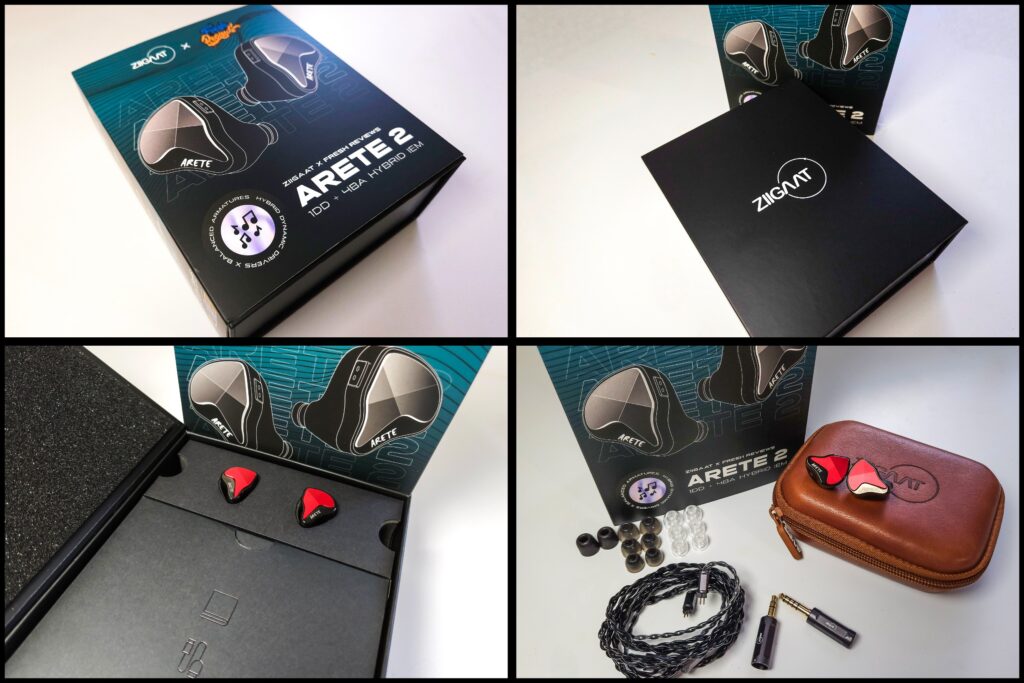
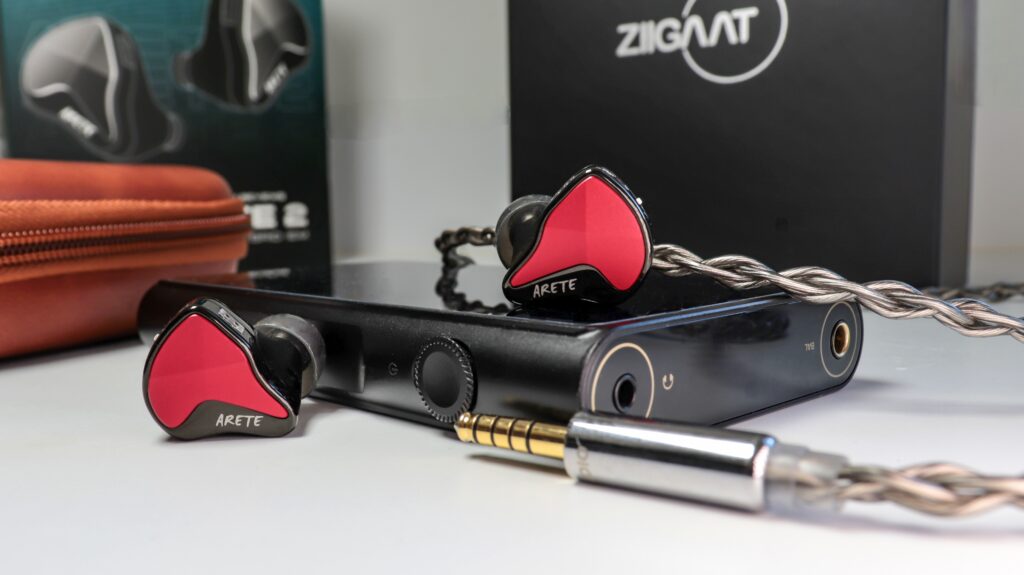
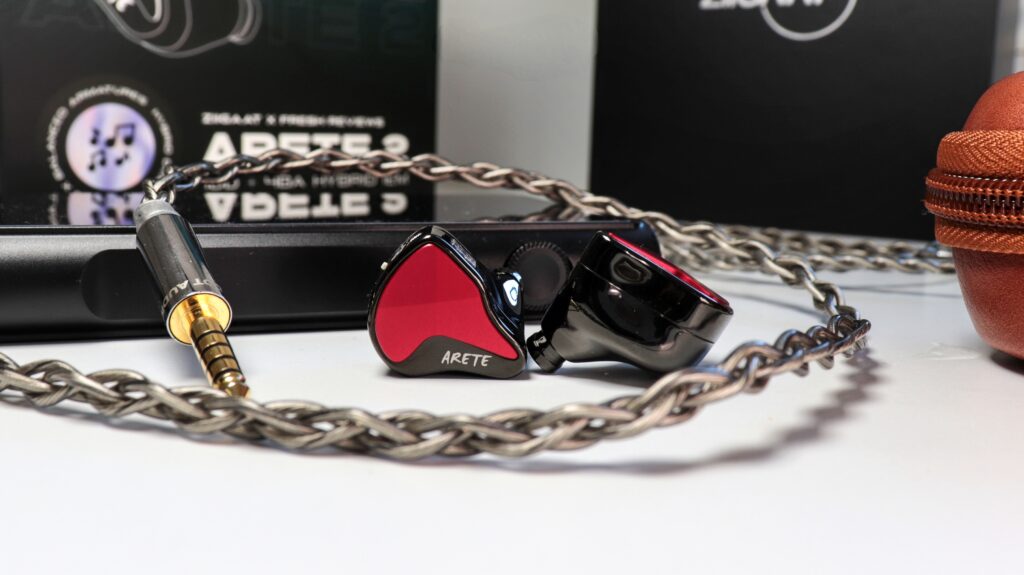
The Ziigaat X-Fresh Reviews Arete II arrived at my home in a medium sized box (6 ½” x 5 ½”) with a nice drawing of the Arete II on the sleeve cover, the Ziigaat X-Fresh Reviews wording at the top in a very “graffiti art” style. On the back you’ll see a short description of the collaboration effort between Ziigaat and Fresh Reviews. Not much else. So, take off the sleeve and you’ll unveil a simple black box with “Ziigaat” imprinted in the center. Open the box and you’ll see a large box as well as the Arete II sitting pretty in cardboard cut-outs. It’s actually a very simple unboxing, something I’ve come to expect from Ziigaat. Anyways, take out the larger box and open it up. Inside you’ll see the big and gorgeous carrying case. Inside the case are the eartips, some nozzle mesh’s, as well as the modular black cable and its two cable termination adapters (3.5 se & 4.4 balanced). Really, a quick and easy unboxing, nothing over-the-top, nothing grandiose. It’s simple, and nice.
Eartips
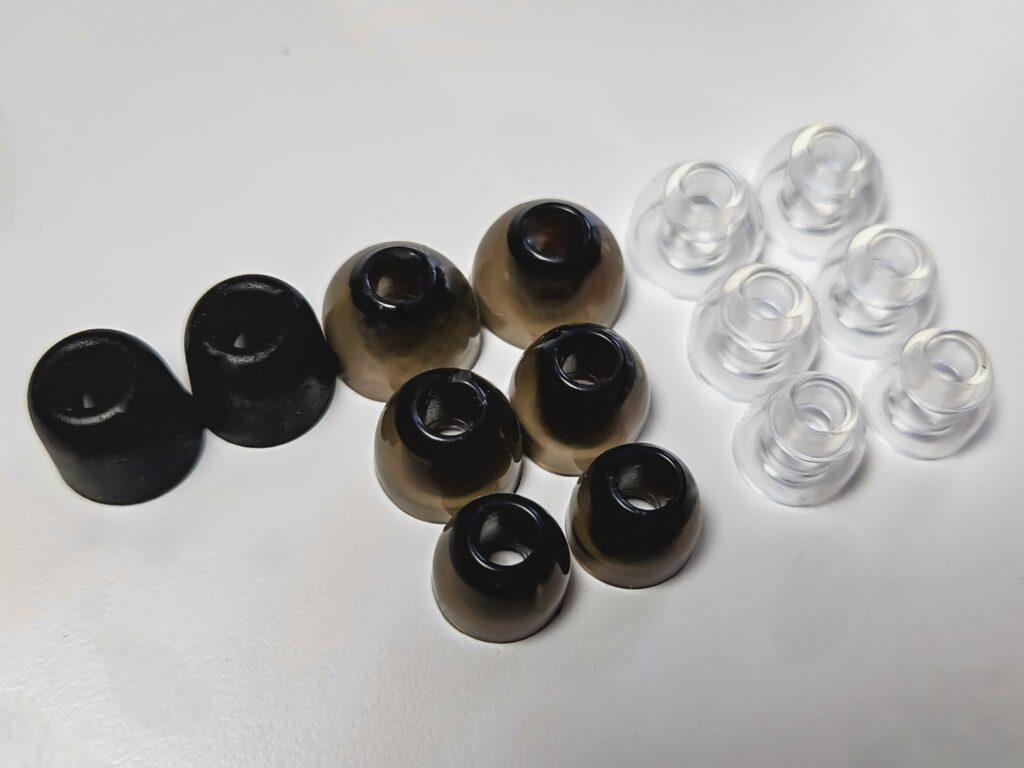
Ziigaat provides a total of seven pairs of eartips over three different styles. The first style are foam eartips of which Ziigaat adds one pair. They are the slow-rise style, longer, probably medium sized. The next set of three (S, M, L) are some tips similar to the EPZ M100 eartips which are clear liquid silicone tips. I think these are fantastic tips for when you need them. Very tacky, very nice for sealing in the ear. However, they are also very flimsy too. For whatever reason eartips NEED to be firm for my ears. I need rigidity to get a seal “most” of the time. Still, I’ve used these tips for certain sets and they are great, at times. The three pairs (S, M, L) are also liquid silicone. These are a dark gray, ultra tacky type of eartips only these have a much firmer build. Much more rigid. I love these tips folks. I did try to tip roll a little bit but found the provided gray liquid silicone eartips perfect for my ears and so I did use them for all critical listening.
Carrying Case
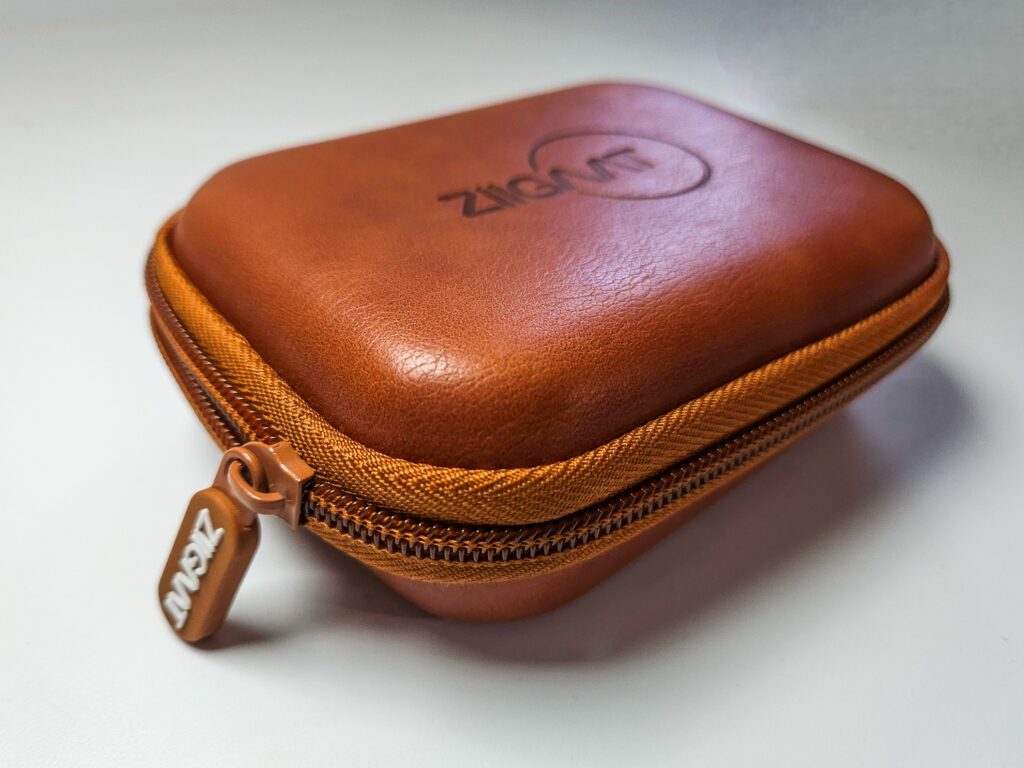
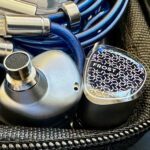
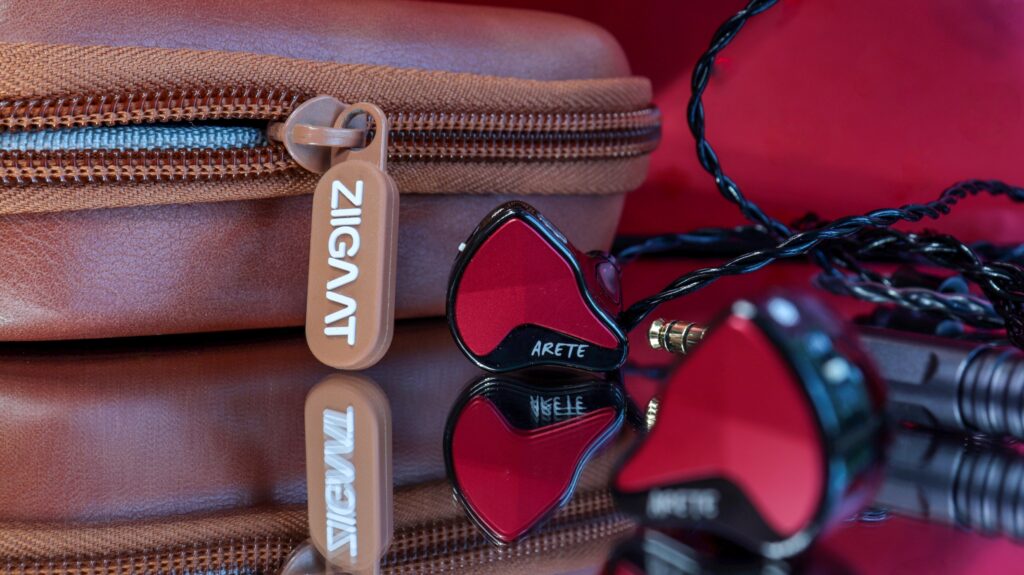
I love this case. Ziigaat has used this one on a few different sets. Typically, their higher end “mid-fi” type sets. The case provided is pretty large (4” x 5”) and certainly too large to fit in any pocket. It is a zipper case cladded in a faux leather type of covering and feels pretty premium in hand. Of course, this case probably costs less than a large McDonald’s fry, but it’s still nice. The inside of the case is setup to wrap your cable around a center protrusion and empty spaces for your iems. I also like that the inside is covered in a soft felt style wrap that does a nice job of protecting your precious iems from scratches. One nice thing is how large this case is as you can easily store a couple sets of iems, cable, tips, and adapters too. It’s a nice addition to the package for sure.
Cable
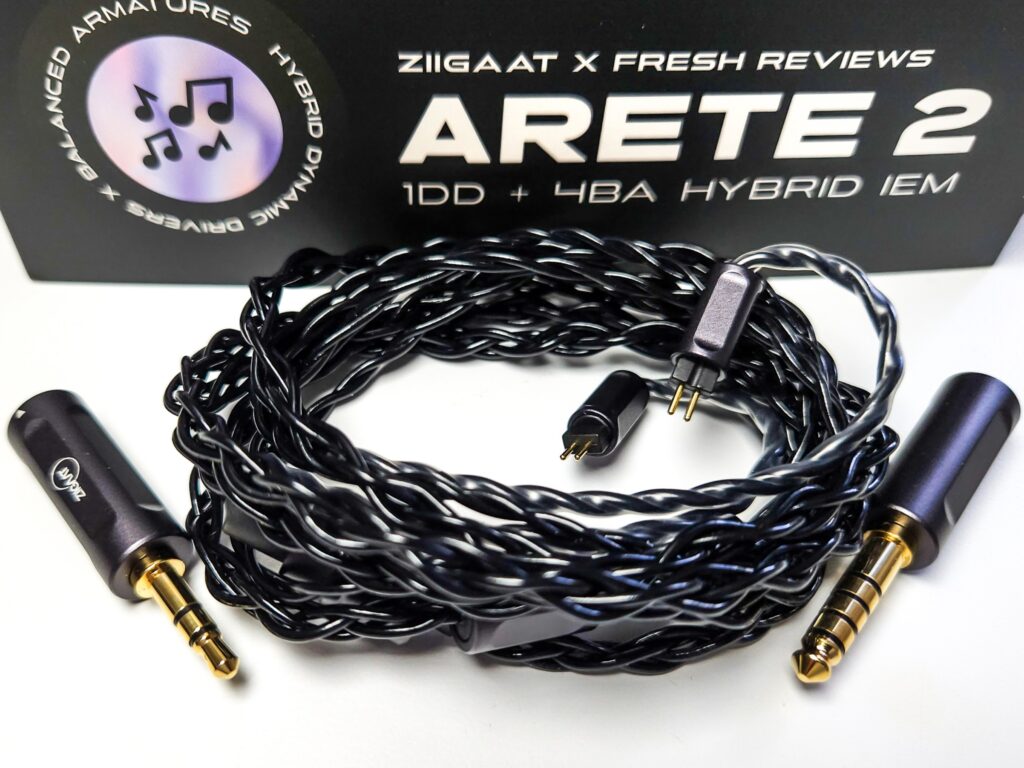
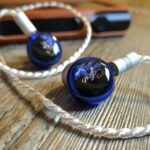
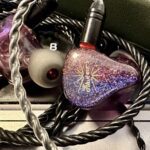
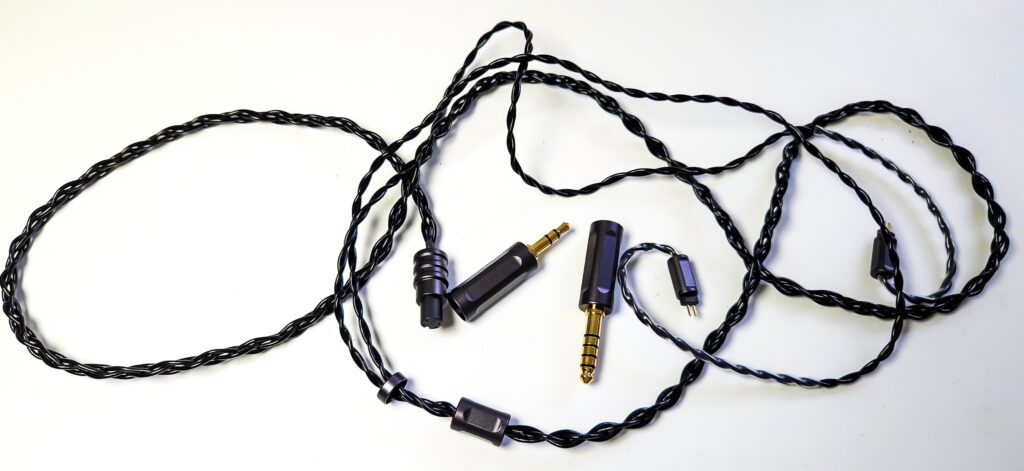
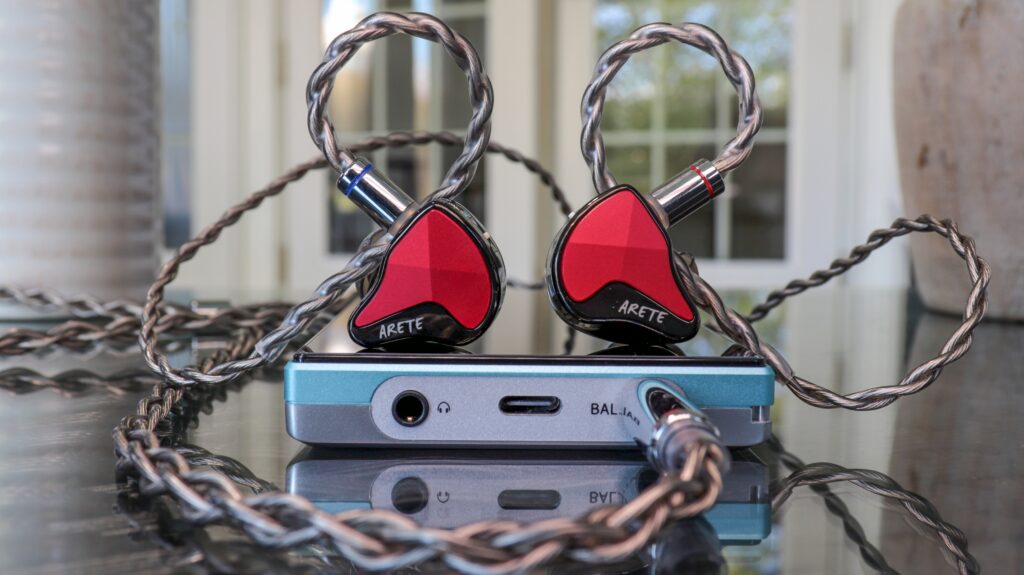
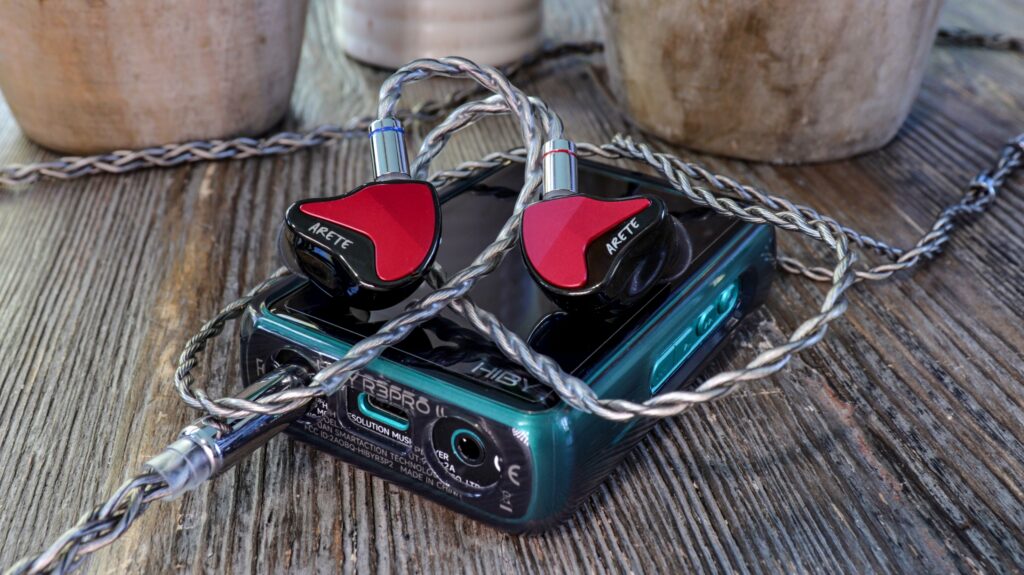
Now, the cable provided is one which doesn’t seem to fit the price point. As honest as I can be, the cable doesn’t look very nice. It looks budget. However, that doesn’t mean it is not a solid enough cable. It simply isn’t some fat and beautiful wire that will draw out the design cues of the iems. To be exact, the cable provided is a thinner black wire featuring a modular setup and comes with two cable adapters (3.5 single ended and 4.4 balanced). Made from ultra-pure silver-plated OFC (oxygen free copper) and designed to be functional rather than beautiful, I would think anyway. The bonus of this cable is that it is very lightweight, it doesn’t seem to tangle super easily, it isn’t microphonic, and it’s simply easy to use. I want to say it again that the cable provided really isn’t bad at all, however I am a definite cable aesthetic snob, I can admit it. I need to see a nice cable on any set in my possession. Having said that, I actually used two different cables with this set. The first cable is a Nicehck deep red modular cable named Nicehck RedLava, and I used its 4.4 balanced connection. You’ll notice a few pics using the red cable. Though most of the time I used the Dunu cable that came with the Dunu X Koto Ito. I went through many cables trying to find ones which look nice enough but sound very good as well. Those are the two I landed on.
Build / Aesthetic / Internals / Fit
Build Quality
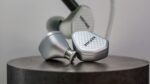
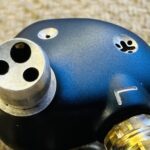
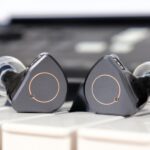
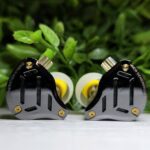
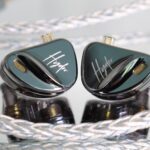
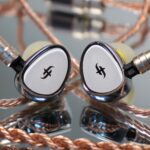
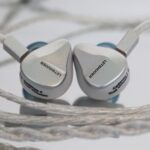
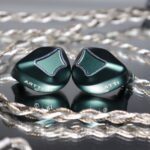
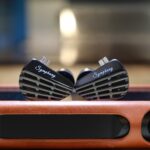
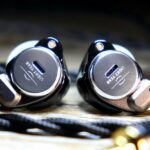
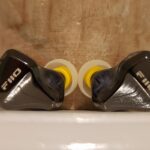
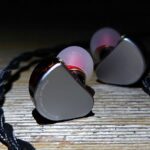
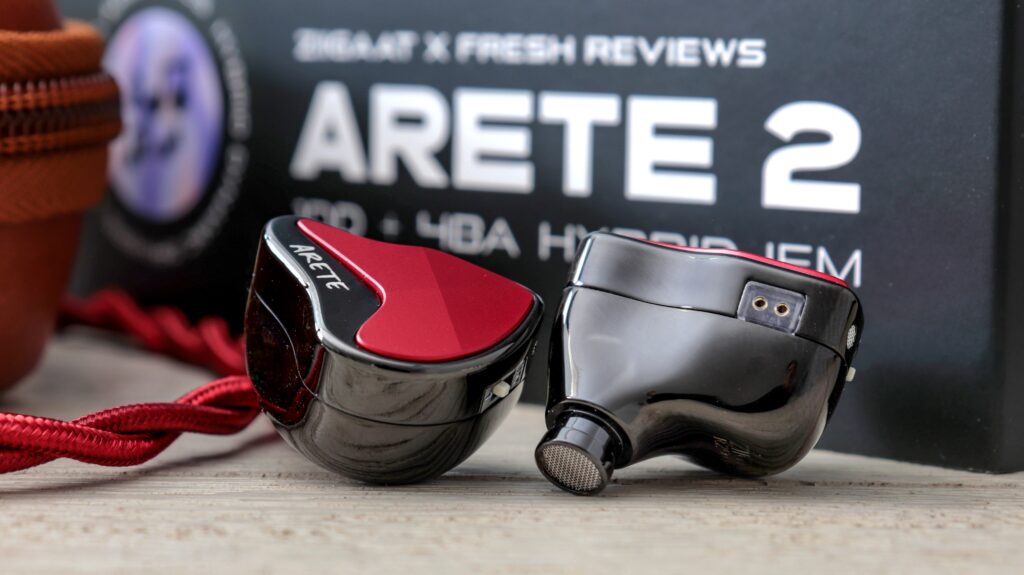
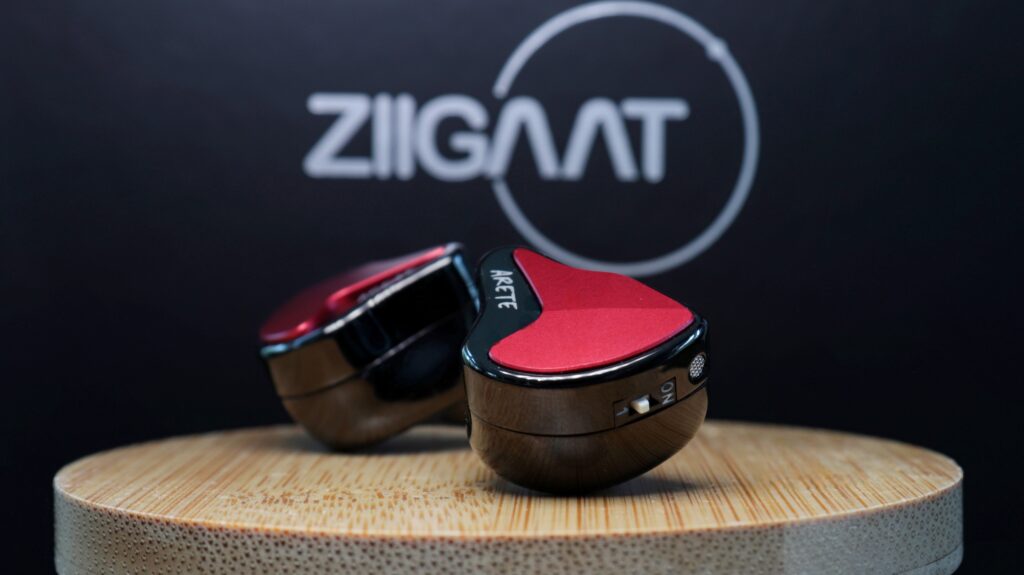
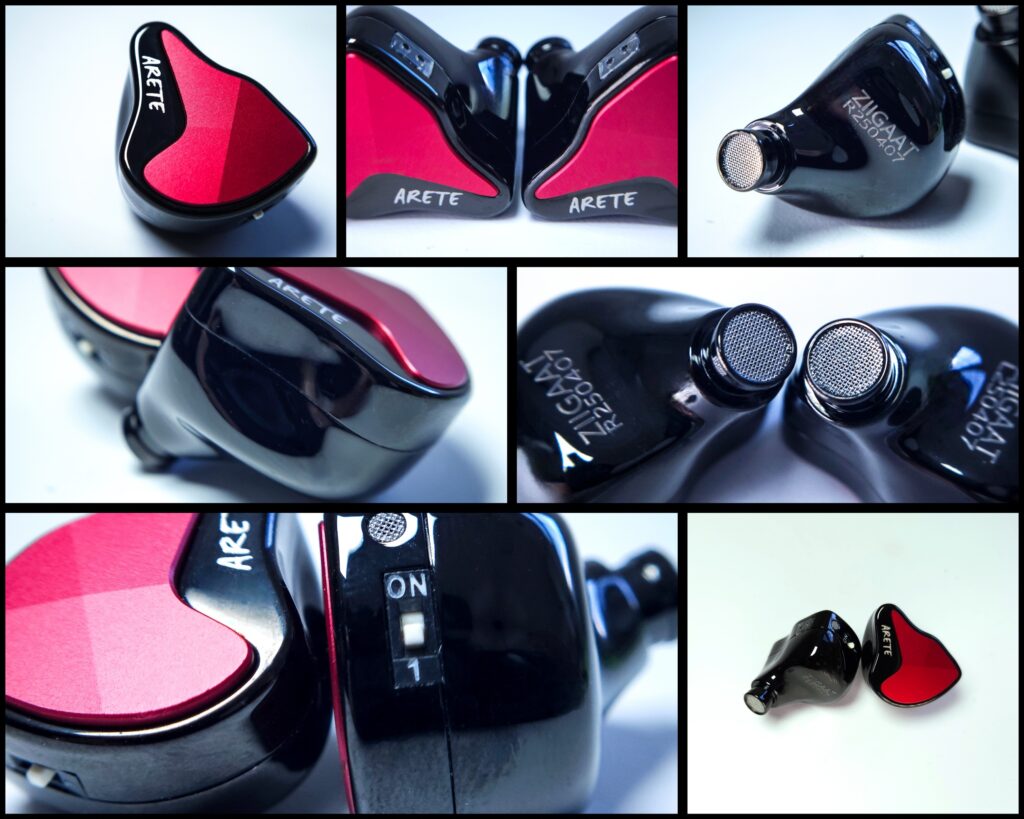
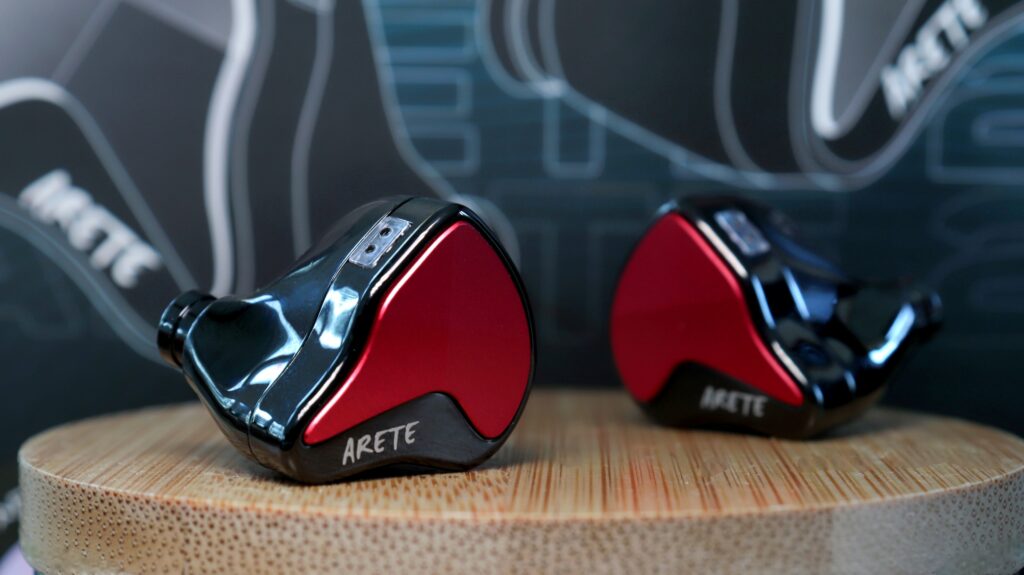
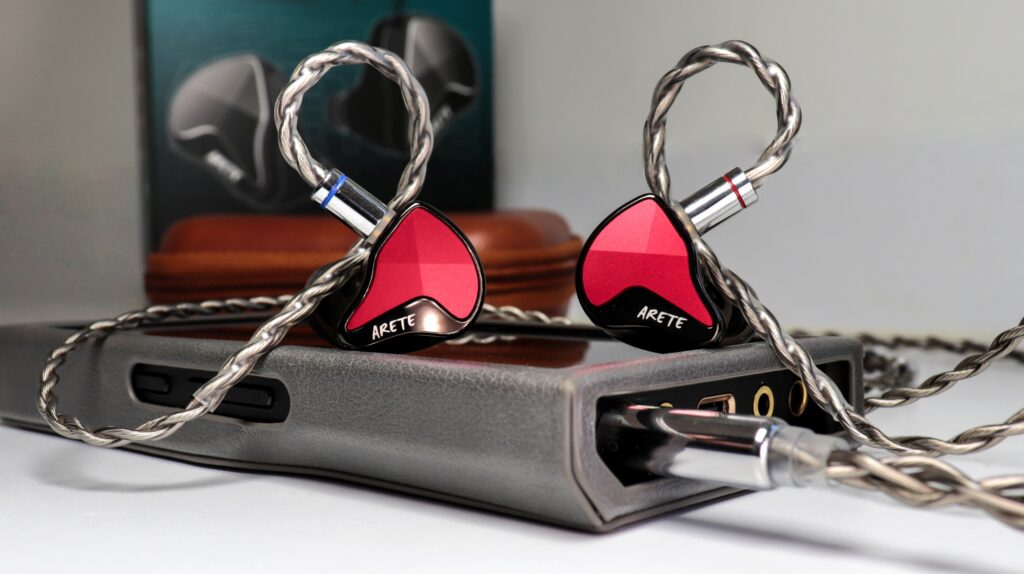
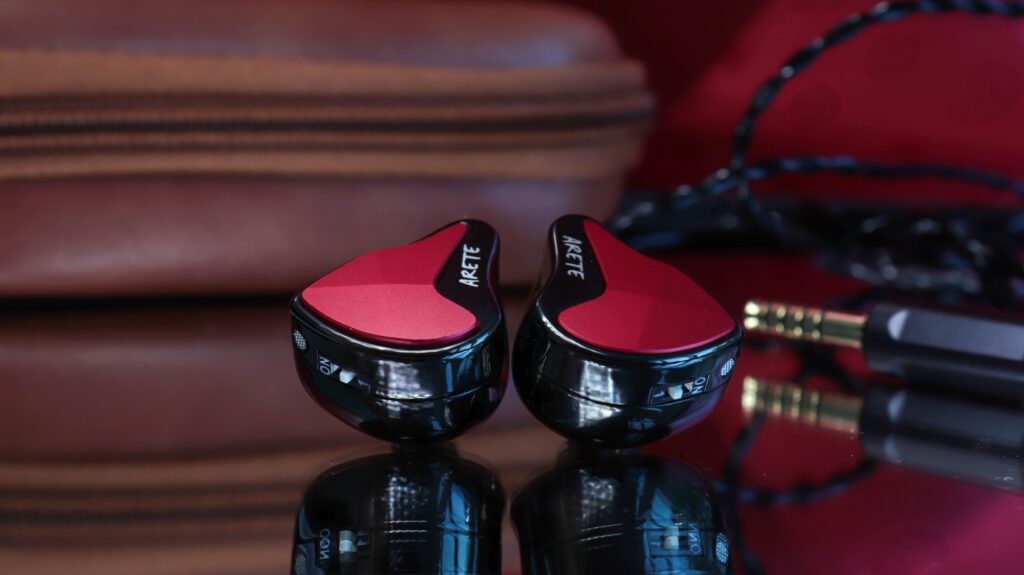
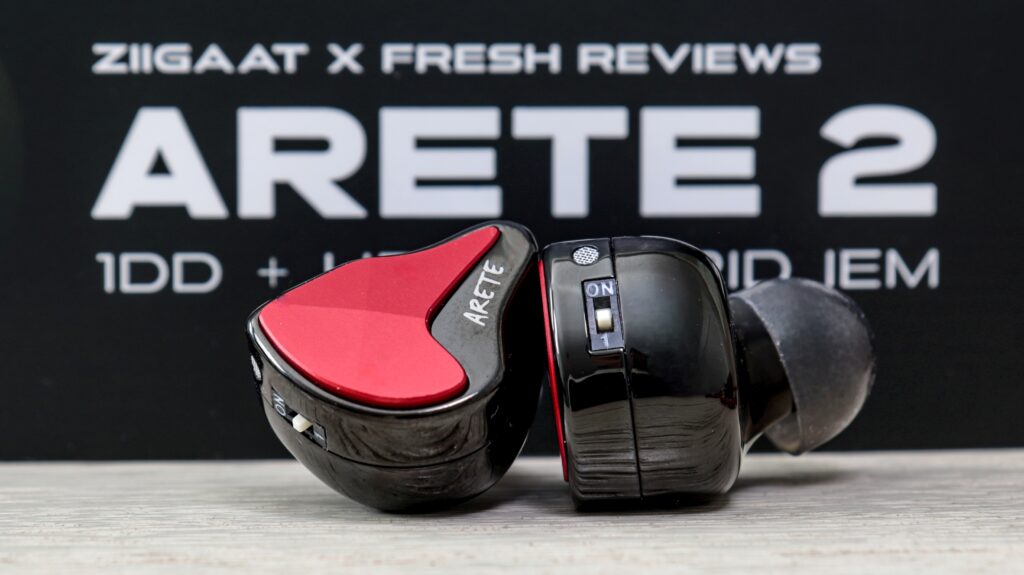
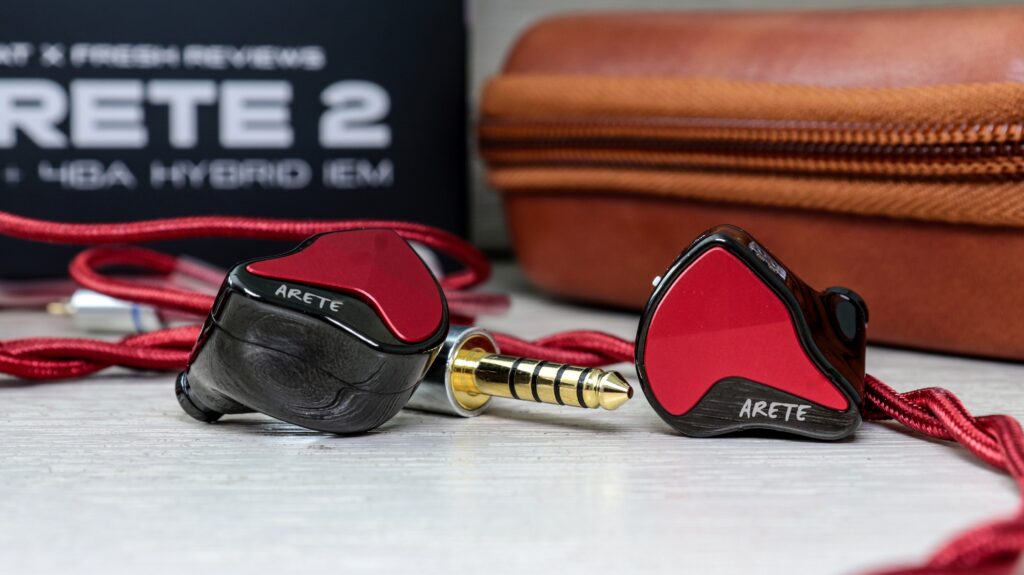
When it comes to the build quality of the Ziigaat Arete II I find it hard to not be pretty happy with what Ziigaat created. Made entirely from a solid chunk of aerospace grade aluminum by way of CNC machining and done so in a very streamlined manner. They have the build design of a typical iem, and a very minimalist approach. This set feels substantial in hand. They certainly aren’t the lightest set either, of course they aren’t the heaviest either. In truth, somehow this set feels premium, even in its weight. It isn’t some ultra thinly carved aluminum like so many sets are crafted with. It has some body to it. Made from what appears to be a shell body and faceplates with no visible seam sealant, no glue, and everything is polished nicely. I see only one vent, fairly good sized and towards the rear of the Arete II near the two pin connections. The nozzle is what I’d call medium length and market standard size at about 6 mm in width. Of course, on the back of the shells you’ll also see a bass switch which is not like a typical dip switch in that you don’t need a needle tool to activate this switch. All you need is a fingernail, which is awesome. Folks, this set is built very-very well. Perhaps Ziigaat’s best build yet. Every set I’ve ever tried from Ziigaat has been all resin and so it was cool to see a metal (aluminum) build on this one.
Aesthetic / Design
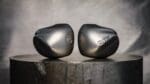
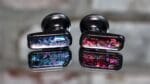
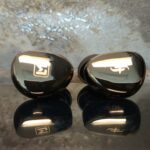
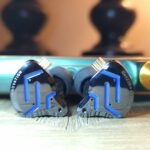
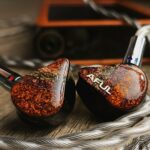
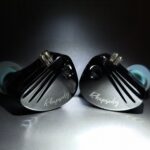
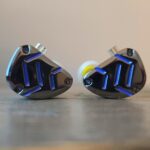
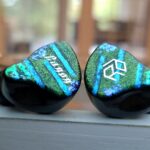
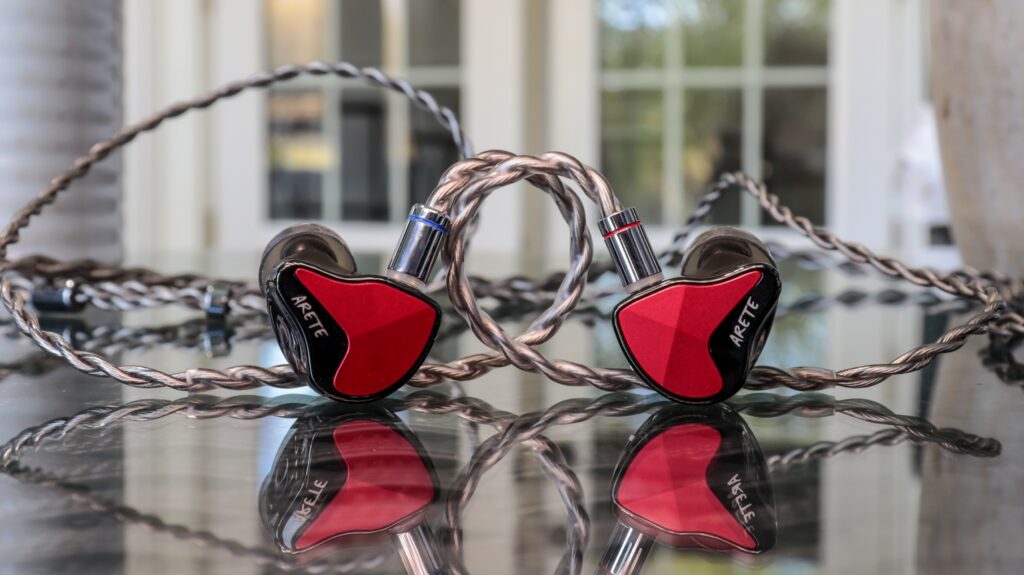
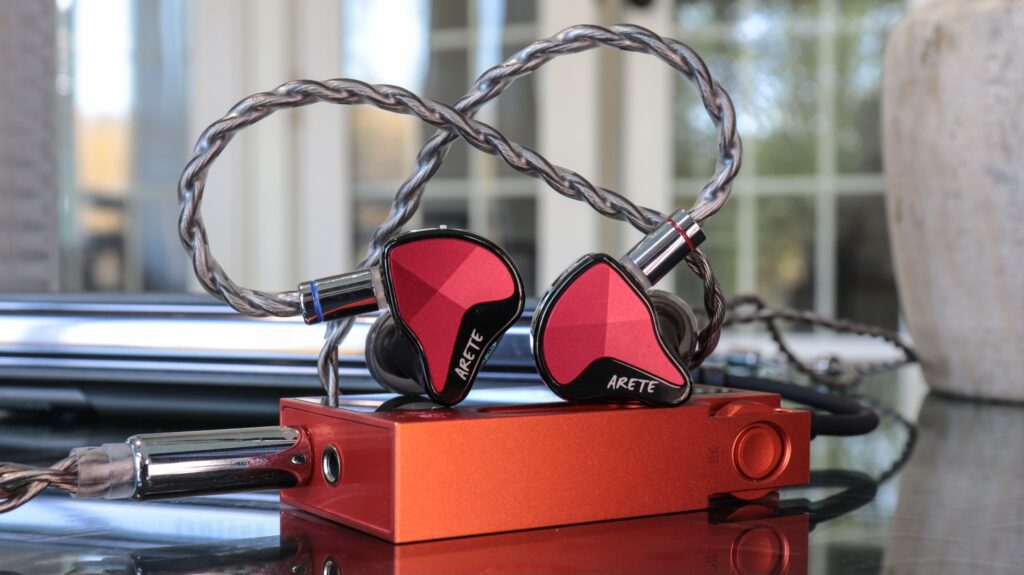
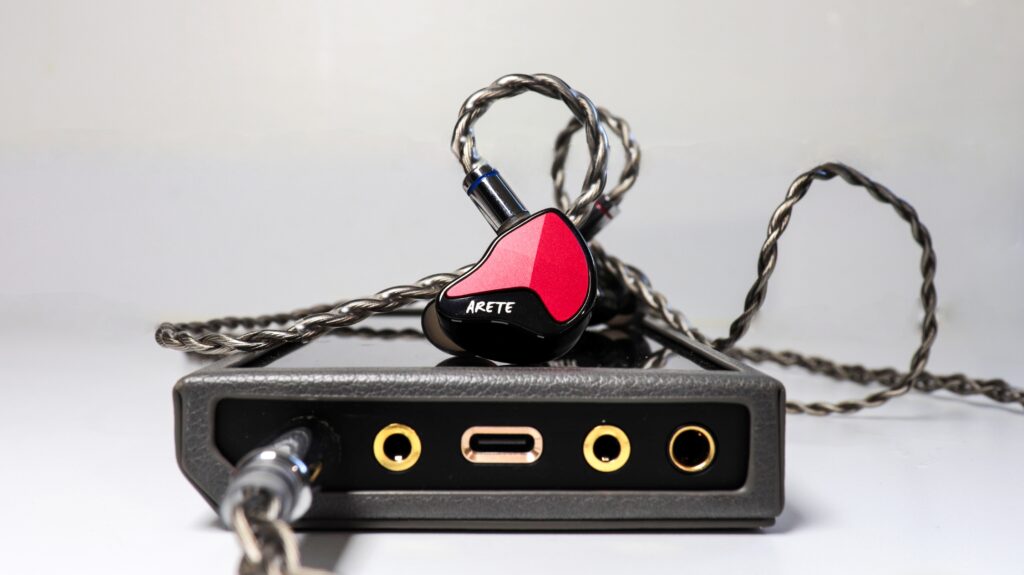
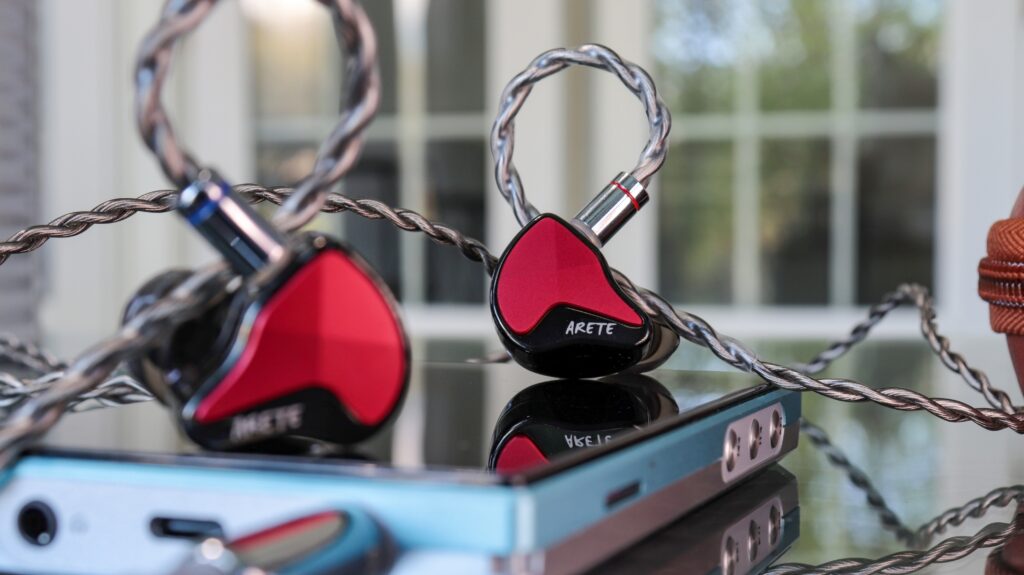
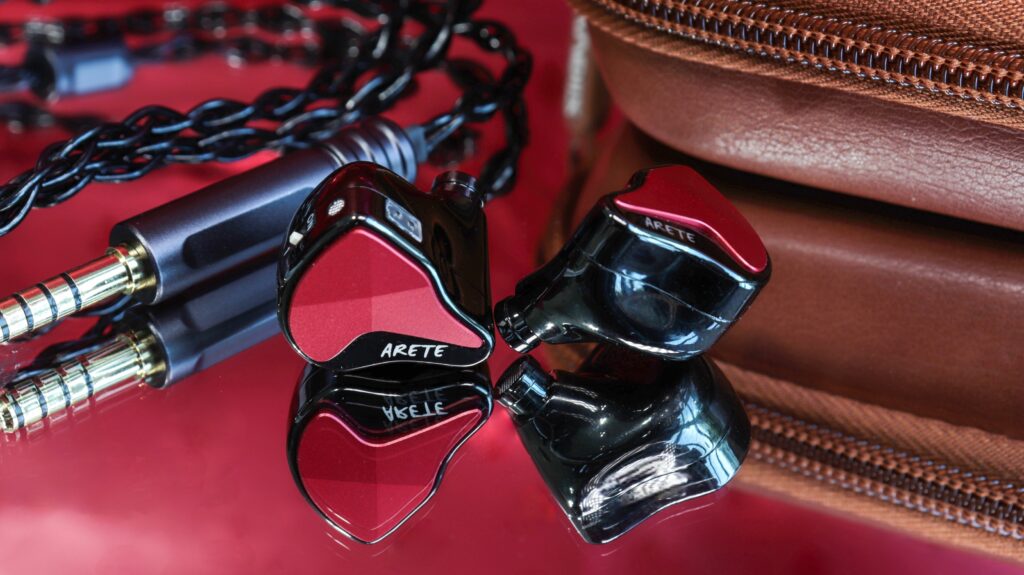
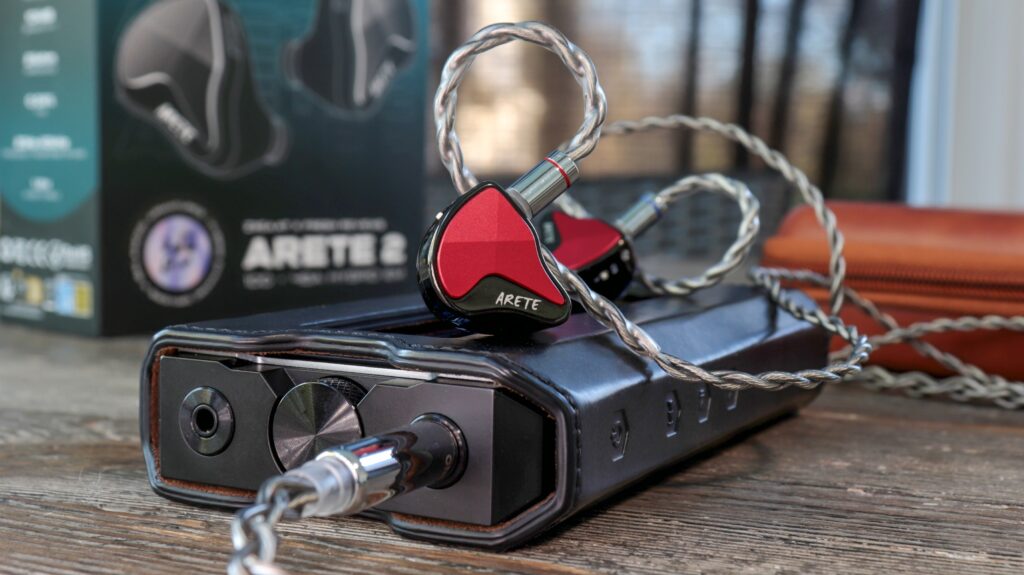
The Ziigaat X-Fresh Reviews Arete II is fashioned in what I’d call an industrial modern design language with a very minimalist approach that is so very refreshing. Don’t get me wrong, I enjoy an ornate and extravagant design, just like the rest of you. However, it is really nice to see a brand not trying to blow us away with superficial ornamentation but rather just crafts a dope looking and simple design. That’s called class folks. Nothing flashy, nothing abundant in flowery and intricate appeal. Just black, metallic, aluminum shells, polished, clean, and a clean faceplate that is splashed with a very nice contrasting color accents. You can purchase the Arete II in either red or blue. I like them both. I am partial to the blue I think, but the red looks very slick too. Actually, I take that back, both are equally dope. Both color variations are bolder colors which form the perfect accent. At the bottom of the faceplates, you’ll notice the name “Arete” in bold white lettering, very small, but looking fly against the black aluminum base color. Overall, it’s a nice looking iem. Perhaps not as flashy as some of you would like, but simple, handsome, and appealing.
Dip switch
As I said, Ziigaat added in one simple and easy to understand dip switch. I actually love the thinking of Ziigaat for this switch making it very useful for those of us who like a hair more weight ushered in down low when the switch is turned on. Basically, when the switch is in the “on” position it will add roughly about 3-5 db’s of added emphasis from 20hz through the bass region and into the lower mids. You’d be surprised how much richer 3-5 db’s of bass presence can add to the sound. Now, the bass boost will not make this set a basshead iem and it won’t turn the Arete II into a straight-up warm head sound either as the upper frequencies still shine through. Still, there’s no doubt that the bass becomes more impactful, fuller in body, a touch slower and less defined, but also more earthy in timbre, the bass gets warmer, the sound becomes more bullish. This weight does spill over into the lower mids creating a more emotional sound, more warm-musical rather than balanced. Note edges get a touch more sanded down and clarity suffers a hair, but the switch never muddies the mix to any detrimental degree, and the switch won’t turn this set into a bloated mess either. It’s a finely tuned switch with just the right measure of emphasis. Keeping the switch in the “off” position helps clarity, helps transparency, and helps the note resolve on a set which already isn’t the most resolving iem on planet earth. It’ll come down to preference for you, but both on and off the sound is great in my opinion. For the record, all critical listening was accomplished with the dip switch in the “off” position.
Internals
As I said in the intro, the Arete II consists of five drivers in total. To be exact, that is one dynamic driver and four balanced armature drivers. The dynamic driver is a very nice 10 mm second generation driver made of composite materials and a liquid silicone suspension, very nice. The DD handles the sub and mid-bass regions and does so very-very well. The mids are controlled by two Knowles ED29689 balanced armature drivers. These drivers are very well known in the community specifically for their midrange capabilities with a typically great tone and fullness. Lastly, the highs (treble) are covered by two Knowles SWFK 31736 tweeters. Obviously these two handle the treble and the upper treble extension. Ziigaat adds that these particular tweeters were chosen to add that air, the sparkle, and the perceived detail retrieval up top aided by exact driver placement and wider tubing than normal. Beyond that, Ziigaat uses a sophisticated crossover which does a good job of feathering-in each frequency range cohesively. This is not some wild driver arrangement folks. I happen to love this. In fact, it’s actually a quite common arrangement if anything. I happen to love that Ziigaat isn’t trying to wow us with crazy configurations but instead chooses to wow us with intricate placement of drivers, good drivers, and a solid tuning.
Fit / Comfort
I alluded to it earlier and I will remind you again that the fit of this set is perfect for me. Granted, I can’t remember the last iem that fit me badly. I have ears that seem to fit everything well. However, the Arete II is just the right size folks. Their weight displacement is well done, and the build shape seems to fit the curve of my ear very well. As always, I don’t know if this set will be a good fit for you. I have no clue whatsoever, of course. However, I cannot imagine the Arete II being thought of as a set that isn’t a good fit for most people.
Drivability / Pairings
Sensitivity
The Ziigaat X-Fresh Reviews Arete II sounds lively, loud, and dynamic from even weaker sources as it is rated with an impedance of 24 ohms and a sensitivity of 104 db’s. I had no trouble driving the Arete II from my weakest sources at my disposal. Those being two older Android phones with 3.5 single ended jacks. I also used my iPad, as well as three super weak Conexant no-name 3.5 single ended dongle dacs. They are all probably (at most) 25-30 mW in output power. Basically, pretty darn weak. I say that to help ease the worry of anyone who doesn’t have at least a decent dongle dac on hand to drive this set. There’s no doubt that you can have a very fun and musically engaging listen with just about anything. Which is nice to know.
Added Output
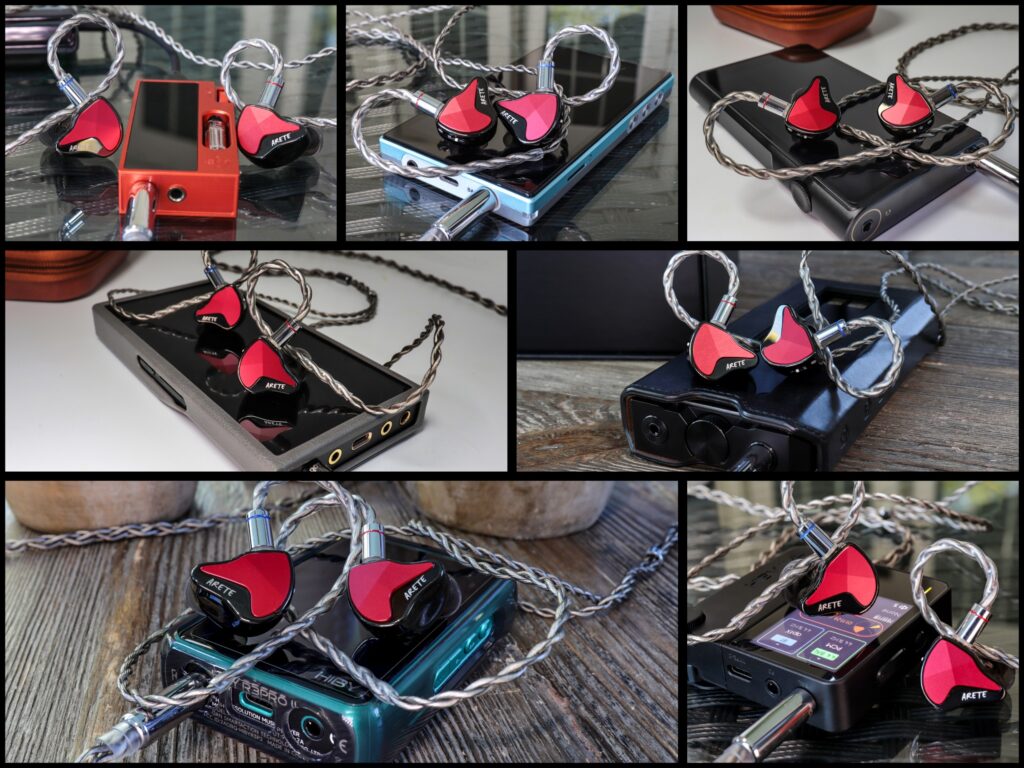
With that all said, I can say with absolute assurance that the Arete II scales very well with added clean output power. I’m talking at the least a good 150 mW dongle dac, high gain, and a 4.4 balanced port. Give these bad boys some juice. I hear a more spacious, deeper and more distinctly dimensional sound field. The bass becomes more taut, more rigid, more dense, more agile in its ability to navigate complex tracks. Also, the sound has better resolve too. Of course, it isn’t just power which helps, but also simply using better sources with better internal components helps tremendously, as one would likely think. The Arete II responds very well. In fact, I got the best sound out of my 1-watt daps and dac amps. For the most part because even my less powerful daps like the Hiby R3 Pro II, the Fiio JM21, or the Shanling M1 Plus sound flat-out great. Or dongle dacs like the Shanling UA7, the EPZ TP50, etc. also drives this set well adding that clean dynamics to the sound.
Source Pairing
When it comes to source pairing with the Arete II, I’d first ask you to know what your preferences are. Here’s the thing, this set is somewhat source sensitive. It’s a wonderfully tuned iem, don’t get me wrong, but it’s also a slightly perplexing tuning too. Meaning, they have a nice bass presence, warmth (more like warm/neutral), smoother in cadence, and you don’t have a ton of shout, but there is certainly a good treble presence and the mids are well highlighted. Typically, for a warm/neutral set I’d tell you that you could go with just about any source tonality other than the extreme warm or extreme bright/cold. For the Arete II I still walk that line, but I have noticed on more mid-heavy neutral sources (like the wonderful iBasso DX240) the treble most certainly shows its energy more and the mids are very full and forward and might be too prominent. Just something to take note of. Not that it’s a bad thing, but for me any mid-forward source will most certainly make the mids very pronounced. Again, not a problem, not bad, but definitely a preference thing. So, it isn’t about tonal coloration as much as you should choose a source based on the source frequency emphasis. Sorry if this makes no sense, I’ll get to my personal recommendations.
What Do I Prefer?
Now, for me, I love a slightly warmer source, maybe warm/neutral matching the tonal coloration of the Arete II’s default tuning. For the most part. Granted, my taste changes a lot and so I go back and forth. Anyways, with a slightly warmer source the warmth doesn’t blur the bass or add veil, and the upper frequencies won’t come across quite as forward. Sources like the Shanling UA7 (tube mode), M6 Ultra, Fiio Q15, my Burr Brown dacs, etc. all come across very well. Having said that, I do like a forward and immersive midrange at times too and so the iBasso DX240, Shanling UA6, EPZ TP50, Hiby R3 Pro II etc. all sounds very nice, uplifting, and they don’t kill the punch nor the depth in the low-end or exaggerate the highs too much either. Still, to wrap this section up I honestly find just about any source in my arsenal to work when they range from warm/neutral to neutral. I do not like bright sources with this set and straight warm sources are tolerable. Not that the highs are sharp or harsh, but they can be too luminous to sound organic on brighter sources. I’d stay away from thin, dry, bright, cold, or sterile sources. My opinion. Also, sorry for any confusion in this section.
Sound Impressions
*Note: before I begin, I want to add some notes. So, I got this set already burned-in and so I have zero idea if burn-in helps. I am apt to say that it would help, being that the highs have some good emphasis and so does the bass. However, I don’t know. Perhaps just listen-in. Next, I used the packaged dark gray liquid silicone tips for all critical listening. The cable that I did most critical listening with is the cable that comes packaged with the ODA Hesperus A300 Wood Edition. It is so nice with this set. I also used the Nicehck Red Lava too. All listening is done with flac or better files (some MP3 sprinkled in too) which are stored on my devices. I mostly use UAPP (USB Audio Player Pro) as my preferred music app as well. All critical listening was conducted in the Arete II’s default tuning, without the bass switch turned on.
What’s It Sound Like?
I am flat-out impressed folks. Ziigaat has made a true all-rounder style set out of the Arete II that can play just about all genres well with a very nicely balanced and moderately warm U-shaped to W-shaped sound signature with a highly present midrange, authoritative bass, and sparkly treble. What I enjoy about the Arete II is that it doesn’t discriminate against any area of the mix (bass, mids, treble) as each 3rd of the mix are all very well represented. Cadence is both smooth and mildly crisp, replaying the acute localized focus of each individual note in each individual track as they come. Meaning, if a note is recorded with some bite, some edge to it, then the Arete II will reciprocate to an extent. That said, there is an ever present smoothness and cadent fluidity, or a musicality-first focus at all times. Also, the dynamic balance is wonderful folks. This cannot go understated. When you have a balance such as this you’ll notice (or not) that you won’t have a lot of bass masking, you won’t have veil, you won’t have blatant shout or anything harsh. Furthermore, you’ll hear equal energy, dynamism, and vibrance throughout the frequency range too. Another thing you may notice is how cohesive this tuning is as each range is very well feathered-in to the next. Almost to the degree of how a single dynamic driver can sound cohesive, with very amalgamated and harmonious drivers working in unison.
Timbre
As far as timbre is concerned, I’d call the Arete II organically tuned. Without question this set comes across naturally, as I don’t hear those unnatural and artificial boosts or metallic tinges to my music. Instruments and voices sound more earthy-organic with the warmer hue to the sound while not missing the soft sparkle in a female voice or the weight needed for a solid strumming guitar. Of course, nothing is perfect, but I really enjoy that Ziigaat was able to create a set which walks that fine line of timbral coherency and vivaciousness. There’s this analog feel to this set which is very engaging. You don’t get that grainy etched note definition like you’d have on a dryer sounding iem. There’s a certain moist and fluid demeanor to its timbre with a semi-rich and full-bodied presence along with that immersive, well dimensioned and intimate sound field. It all comes together and does a great job at focusing the sound toward the listener, rounded notes, voluptuous and palpable notes, nothing synthetic, voices and instruments generally sound naturally colored and tangible. Sure, the Arete II won’t appeal to those who desire that super transparent or ultra snappy sound. It certainly won’t be for everyone. Still, for $279 to have a naturally leaning timbre without losing all sight in technical skills is pretty nice. Let’s take a look at that mix of tone-flow and precision…
Musical? Analytical?
In my opinion the Arete II offers a sound that carries a solid mix of musicality and analytical accuracy. I’d say that the musical/analytical split is somewhere around 60/40% (give or take) which is always good to hear. This means that it’s both fun as well as clean and it’ll get your feet moving whilst keeping its composure. It’s engaging yet has some decent enough edge defining clarity too. I’d call it “Mature with a fun side”. Now, no doubt the Arete II has that groovy rhythmic flow at a greater scale and does an excellent job of drawing out the emotional sentiment within my music and so it definitely leans melodically inclined rather than clinical. Having said that, there have been many moments where micro-details shined through from the nicely emphasized treble region providing air, nice note separation, taut transient speed and very solid micro-dynamics for a musicality-first set. The Arete II executes those subtle shifts in attack, volume shifts, with its taut transient decay, black background, and can illuminate subtle articulations well without sounding dry or clinical. Basically, you won’t miss many details if you enjoy tracking details. The beauty of this set is that it won’t “force” you into tracking details. To my ears the Arete II offers a very cohesively tuned hybrid sound with a darn near all-rounder ability to tackle just about every genre, and it wasn’t made to cause fatigue… I like it a lot.
Bass Region
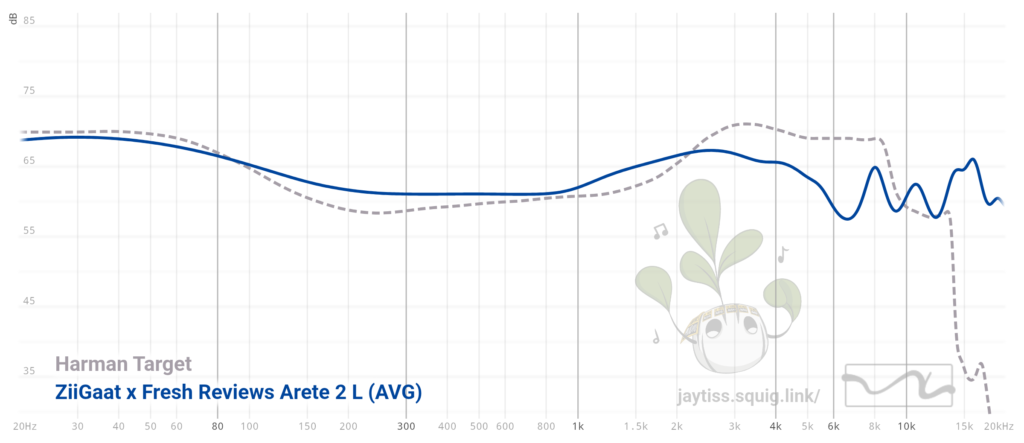
I know I said that the Arete II has a nice balance of all frequencies… and it does. A very nice balance both in emphasis, in dynamics, in texture too (smooth to tactile). However, in my humble opinion the bass region is the focus of this set as far as “emphasis” is concerned. It’s barely the focus, and the midrange is right there with the bass, but that just speaks to the dynamic balance of this sound. Nevertheless, the bass region has the fullness and hard-lined attack of a fun bass, yet also the clean-lined tactility of an agile one, and it’s always measured well against the rest of the mix. Never in my listening (except with the bass switch turned on) do I feel that the bass became overtly pronounced against the overall sound. In fact, if anything the bass region only aids the sound of this set providing just enough warmth, weight, and richness helping to color the timbre just right. Having said that, the low-end isn’t that ultra snappy, fast twitch or quick punch style. You’d think it was by looking at the graph as it has only about an 8 dB bass shelf. Regardless of the shelf, I hear some authority. Not quite bulbous, and not overbearing either, but authoritative, realistic, punchy and full-bodied while remaining taut, agile, and natural. It’s quick enough for reasonably complicated bass tracks and meaty enough to reproduce a deep and gravelly bass guitar with a satisfying growl. I hear nothing pillowy, fuzzy, or softened on attack and I don’t hear that long lingering atmospheric decay. Again, more natural. Certainly not a basshead set, but a good choice for anyone who tips their hat at good quality bass.
Don’t Forget the Switch
Now, using the bass switch will slow things down a tad, subtle weight is added, low-end notes sound widened, less defined (to a degree), and the bass switch creates more of a lingering & atmospheric decay. Still very nice to my ears, but not quite my favorite for this one. Hence why I conducted all of my critical listening without the switch engaged. In truth, I’m impressed with the switch on or off. I wouldn’t say it provides two distinctly different styles of bass tuning, but you can definitely hear an uptick in slam, boom, and impact. Still, for this guy, I simply enjoy the switch off a bit better.
Sub-Bass
It’s fairly easy to hear that the sublevels of the bass region are where most of the true emphasis is at. I wouldn’t say it’s heads and shoulders more bullish than the mid-bass, as it coexists beautifully with it, but I would say that Ziigaat deliberately gave this set some deep rumbles. Not just deep either, but also haptic, tactile, textured (for its weight), and well defined too. Again, this is a very solid bass which somehow carries both quality and quantity while helping the rest of the mix in the process. I love a solid kick drum fundamental on this set folks. Tracks like “Glass House” by Kaleo begins with sonorous and impactful successive kick drums and the Arete II’s sub-bass extension, tight note outlines, attack density, and rigidity really drives those drums well. The beauty is that it sounds somewhat natural to me. Granted, “natural” is wholly subjective and defined by the ear of the beholder, but it isn’t too gaudy and all-encompassing and doesn’t smear the mix, which is fantastic. It’s always so refreshing to hear a bass which can reach deep and sound impactful while keeping tighter reigns on its note control. There are many tracks that do well at showing off the Arete II’s sublevel authority, but I think you get the picture. Big, but not too big. Emphasized, but never too emphasized (for me), and seemingly always tidy.
Mid-Bass
This brings us to the mid-bass which is a touch more restrained than the sublevels which was a good decision. Boosted in a way that makes a solid impact and slam yet never so bloated that it blunts note definition. Also, I really like the measure of bleed into the mids that Ziigaat chose to tune the mid-bass with. Now, the mid-bass isn’t weak friends, if that’s where you think I may be going with this. I find the mid-bass is just a smidgen less rigid than the sublevels with a hard fundamental body and a slightly less hard-edged attack. Not softened per say but not concrete in its note outline all the time. I happen to think the mid-bass sounds great. It provides some very gratifying electric bass guitar fullness and guttural meatiness in “Feel Good Inc.” by The Gorillaz and does so with very nice presence. There’s this nice dark vibrance which seems to sit just forward enough to to really establish most bass lines, Hip-Hop bass drops, synth bass etc. with that clear presence. Something hard to define but easy to hear. I like it folks. I like the slight restraint of this region. No doubt it helps the bass as a whole to have good note shape, not contour, some note separation, along with a quicker start-stop reflex. Certainly not the type of mid-bass to quench the desires of bassheads, but good, nonetheless.
Downsides to the Bass Region
The largest gripe, I would think, comes from bassheads. Granted those people could turn on the bass switch and get very close to their desired authority and bulbousness. In all reality, I really don’t have any hard cons for the low-end for the cost, but there are some very petty things that I’ve jotted down. Like the slightly plush initial hit in attack within the mid-bass. Of course, this does nothing to smear, mud, or mash together complicated tracks, but for those who prefer only clean lined Impact, they might be let down. Another range of fans who might not enjoy the bass region all that much are those who really don’t want a lifted bass. Plain and simple. As good as I find the Arete II, others won’t. I totally understand that. I have many iems with barely visible bass which sound absolutely awesome. Of course, for me the Arete II really is close to an all-rounder style and so I do not think it is so exaggerated in emphasis (switch turned off) that it becomes an issue, but some might.
Midrange
The midrange (to my ears) became one of my favorite aspects of this set fairly quickly. While the bass region may take the tonal focus, it’s the midrange which ties this whole tuning together. This is a midrange which sits more forward, more anterior within the sound field, and never comes across as distant to my ears. Tonal coloration is right around warm/neutral and with plenty of luminous vibrance across the midrange (mainly the upper-mids) which aids the sound bringing levity and some crispness to an otherwise very smoothly rendered tuning. Fantastic for vocal lovers and for anyone who really desires something fun and wildly engaging at the same time without losing sight of the technical stuff. I find that macro-dynamics are spirited, bouncy, and they have this kinetic way of coming across immersive. Something about the rounded notes, the nice note texture, the dimensional and layered sound field, and the organic style timbre. Note weight is another plus for me. Anytime I hear a mildy energetic sound, solid resolution, and a clean background along with that nice semi-rich note weight, I know I have a solid set. That means there’s a touch of warmth, of weight, and it also means that the mids are at least somewhat transparent. I know I said that the bass is the lead actor of this iem, but I am starting to think that it’s the midrange which steals the show. The sound is groovy, fluidity for days, and there’s an ease with how the Arete II shows its dynamism. Hard to explain… but easy to hear. Midrange details are nice, micro-dynamics are evident, transients are slightly taut, and the entire midrange has nice note control and tonal control. No overly exaggerated pinna gain, no outright glare, and zero metallic BA timbre.
Lower-Midrange
The lower midrange of the Ziigaat Arete II is the most recessed area of the range without considering it downright “recessed”, and it’s the richer portion of the midrange without referring to this range as “thick”. In fact, there are tracks which come across a touch too lean, or less dense. Generally, the Arete II’s low-mids have a very nice tonal character which leans warm/neutral, semi-rich (most of the time) and organic in accentuation. Next to denser passages of music presence may feel less robust, less forward too. But besides those moments I find that presence within the range is solid. The type of bold presence which helps a man’s voice sound fairly robust. Well able to draw out the emotion and in some tracks the passion in male vocals. Nevertheless, you could call the low-mids a weak spot and I wouldn’t argue. Be that as it may, I still find myself really enjoying most male vocals with the Arete II.
Low-mids Cont…
Anyways, there are many tracks which completely defy any weakness on this set within the lower midrange. I mean strong male vocals. Tracks like “How it Feels” by Zayn is one. The Arete II shows off vocal prowess sounding propped up, smoothened, with his satisfying raw texture. Those ultra raspy and chesty vocal notes sound about as silvery and realistically edgy as you’d want. Or Jay Buchanan in the song “Sway”. My word does he sound awesome, so clean too. Every powerful and resounding intonation has great clarity, and his vocal notes sound just robust enough. At the core of most male vocals on the Arete II is a fairly rigid fundamental note body, aided by the ever-so-slight spill-over from the low-end, as well as the clarity afforded from the upper ranges. Male vocals definitely aren’t the Arete II’s strong suit, but they’re far from bad. I also wouldn’t say the low-mids are the most detailed region on this set, nor would I say that this region is the most resolving either. However, the low-mids are covered well. In spite of that last comment, if you are either an ultra-rich male vocal lover or if you desire ultimate forward clarity then I suppose you’d disagree with me. Truth is; it’s hard to find true negative aspects of this tuning for me and I hardly feel the low-mids are a negative.
Upper-Midrange
The upper midrange on the other hand is clearly one of the most prominent regions of the frequency range with a sound that’s energetic, has some nice tonal contrast, great note control, solid vibrancy, and they’re far from boring or dull. To my ears the upper-mids are crisper than they are soft or feathery and more forward in the sound field with a resolving nature to them. Yet this region isn’t so boosted that the timbre falls apart. Which makes for a very nice sound. However, with this type of mildly boosted pinna energy the upper-mids are still smooth in cadent flow and even somewhat organic to my ears. This type of rhythmic flow is helped “in part” by the Arete II’s ability to be vivacious, transient-taut, and shimmery without adding unwanted glare and still keeping some decent enough note density. The kicker is that I rarely ever hear anything truly harsh. Perhaps timbre is a tad dryer than the low-mids, but also more resolute, more clean-lined, and closer to an analytical sound. Having said all of that, to me the upper mids are all about female vocals. They just sound so nice. Bolstered with some nice “icing on the cake” shimmer & sparkle with realistic radiance. Almost like an organic euphonious glow. Female vocals in particular seem to sound pronounced and well highlighted against the surrounding melody in just about any track that I listen to.
Females
I always use Norah Jones in “Don’t Know Why” because everyone knows this track and her voice is angelic. Well, the Arete II assuredly does her voice justice. She sounds forward in the sound field with a gently warmed coloration yet boosted in presence. There’s this emotional intimacy that hits me in many tracks, but this one props up her natural note body which is almost always breathy in texture. She simply sounds great. Another voice which really stands out is Rachael Price‘s vocals (from Lake Street Dive) in the song “Twenty Five”. Rachael’s voice is very bold yet also extremely well controlled, and very elegant, pronounced with the Arete II. As she sings to the piano her voice obviously sticks out and is very intimate. The ability of the Arete II to sound both emotionally gripping and engaging with well separated notes which are full-bodied along with very clean note outlines helps every inflection to sound bolstered, clear, and immersive. There aren’t many good ways to describe it folks. Also, Ellie Goulding in “How Long Will I Love You” is stunning with the Arete II in my ears. Another absolutely dulcet and euphonic voice that sounds as though I am right next to her. Folks, there are many great female led tracks that I could list but I hope you get the idea. Basically, females are very nice on the Arete II for me. Granted, many sets on the market offer solid female vocals and not all are tuned similarly. So, the Arete II isn’t some female vocal specialist set, but it is very good at portraying a woman’s voice.
Instruments
Instruments also really sound well pronounced while never losing that musicality-first demeanor. I figured I should give a quick and very broad rundown as to how I feel instruments tend to sound in the Arete II. Honestly, for the most part… they sound very nice. You’d really have to be opposed to this tuning to not agree with me. As controlled and clean as most instrumentation comes across, they always seem to have that groovy nature about them. Both natural and vibrant, with round notes, dimensional, unsullied, clean separation and crisp when they need to be. Again, hard to explain with English words, but as always, I’ll try.
Instruments cont…
At any rate, strings are very gratifying to my ears. With such a nice mix of smoothness and detail providing all of the textural info to sculpt that nice edge of a violin, or the reverb of an acoustic guitar without ever sounding dry or too etched. Percussion is so clean, punchy, and easy to separate from the mix. Kick drums have some body without sounding booming, snap on attack, no blur. Snares have that impactful and snappy “pap” with subtle crunch. Also, cymbals and hi-hats never sound splashy (the negative splashy), with solid harmonic extension, nothing smeared or tizzy, but clean. I enjoy the cello quite a bit too as the Arete II offers lower strings a nice rosin texture, sounding full-bodied without coming across hollow to my ears. Piano also has the ability to sound soft and chimy as well as sonorous and resounding. Most woodwinds majorly benefit from this tuning too. The Arete II has the airiness, sparkle, slightly forward presence, and clean leading edge and the timbre keeps that natural cadent harmony. Maybe not perfectly organic, but close. One thing is clear; woodwinds generally sound very tuneful. Granted, there are even more natural, and more realistic playbacks from other quality iems, but I find it easy to report on the Arete II’s ability to portray most instruments. In fact, it’s probably one of its better qualities. Also, full disclosure, please understand that these descriptions are really just some grossly generalized words stolen from my many-many notes that I’ve taken in moments that I’m caught up enough to write them down, so… keep that in mind.
Downsides to the Midrange
The first possible “issue” that some hobbyists may have (and myself to a degree) is in the lower midrange. Listen, I love the cohesive nature of this set and the smooth transition from bass to mids, but the Arete II’s low-mids could use a hair less smoothness, a bit more clarity, and a touch more richness. As I said earlier the low-mids can sound a titch recessed and may sound less clearly defined in either complicated tracks or bassier tracks. Of course, I personally find male vocalists to sound authentic enough, organic, and very gratifying. Still, for those who desire clean-cut clarity and forward presence… they will probably feel they are too softened, smooth, and may want to keep looking. The other “issue” would be one I didn’t even speak on earlier (because it’s truly not a problem for me) is the upper midrange around 2.5khz and the way the upper treble pronounces that region which can (if very sensitive) sound a hair too intense. Man, I hate saying that. However, we have all different kinds of people in this hobby with different tastes, and I do not want to lead you astray. $279 is a lot of money to throw down on a set of iems for so many people out there. Me included. I happen to feel the midrange is one of this set’s best features. Vocals are clear, defined, and lucid with an organic quality. Instruments are very well separated with clean intelligible details and harmonics. Lastly, nothing is really harsh. You won’t hear any roaring glare on this set, no real sibilance, and there’s no BA timbre which rears its ugly head.
Treble Region
The treble region is going to be for those who don’t need some ferocious treble punch and bite and will not be a treble head’s delight. I feel the treble is right where it needs to be so that it can draw out some details, gently highlight crisp moments, while maintaining good quality timbre. This is a treble tuning which is modestly emphasized in the lower treble and well boosted past 8k. What this does is provide the tuning with a nicely extended, crisp, and reasonably boosted sound that’s measured well tonally. I’d definitely say that the Arete II’s highs aren’t lacking brilliance, nor do I ever hear any razor-sharp peaks. Its emphasis is well calculated, well measured, and again, it’s capped off with a fairly organic timbre quality. The Arete II’s highs play a crucial role in how this set comes across. From the upper mids through the treble you’ll hear a nice glazing of shimmer, and when a track calls for it you’ll hear some radiant sparkle. The type of treble which has some airiness and openness, giving the region a sense of lift, some needed levity, while it opens up the stage. However, it’s (once again) well measured in that…it isn’t so emphasized that I’d call the treble fatiguing. I can show you fatiguing treble sets, and this is not one of them. In my opinion the highs on the Arete II cohesively and uniformly transition from one region to another and do so without sounding choppy, abrasive, coarse, or artificially boosted. So no, the treble won’t appease those diehard treble worshippers amongst us, but it will appease anyone who desires a treble which is airy & clean rather than hot & bright.
Timbre
As I said, the timbre of the Arete II’s treble region leans on the safe but organic side with just enough treble bite, treble punch, and treble crispness to define notes in a natural enough way. Something casual listeners should enjoy. To my ears I’d say the treble is more like smooth-over-crisp, while in the same breath treble notes keep a solid note contour. There’s an organic fluidity to it. Not quite silky, viscous, or moistened, but cadent and lively, while holding enough of a carved leading edge to sound defined. I’ll keep saying it because there are only so many ways to say it; the treble is well measured. A solid supporting actor who could play the lead when it needs to. So, from my perspective the Arete II offers a pretty natural sound up top for a hybrid set. Timbre is good. Stuff like upper string harmonics, or cymbal crashes come across realistic enough and reasonably bodied without sounding dry, grainy, or etched. Brass instruments really sound great too. I love the “almost abrasive” robustness and clarity of most brass instruments as they stay forward, punchy, and have fantastic presence in the mix. Or piano which seems to shine as the upper register notes sound both delicate and bold with some air and sparkle at times as well. Basically, for a $279 hybrid the Ziigaat X-Fresh Reviews Arete II has solid timbre. Is it “tops in class”? Probably not. But also, who decides what set has the best treble timbre? Let me know when you figure that out. All I can say is that Ziigaat did a solid job for my taste.
Technically Speaking
I find that “technically speaking” the Ziigaat Arete II’s treble region offers an above average replay for a “musicality-first” low mid-fi iem. Does that break it down for you? No? Okay, well I can say with some good assurance that driver speed is strong, transient attack-through-decay is tight, and note clarity is distinct. Those Knowles SWFK-31736 tweeters are definitely very capable drivers as instrument note edges have enough snap to sound lively, not overly smooth, and they carry that clean contour. They have some mild bite to them. Micro-details come through nicely (depending on the track) without sounding too clinical or “reference” analytical. Ziigaat wasn’t going to sacrifice timbre for some artificially illuminated details, yet I still hear plenty of the subtleties in the treble when I pay attention to them, which is a good balance. Again, driver speed is very nice for a musical set as racks like “Evil Twin” by Lindsey Stirling offer very fast and rapid notes that sound articulate, well separated, and clean enough without sounding like a blur of treble tizz. I hear some pretty believable nuances on many tracks without that forced edge. Micro-dynamics aren’t top tier and aren’t up to an analytical set’s standards, but the miniscule, little volume shifts inside of individual notes sound pretty lifelike, not flattened, and again… believable. Extension into the upper treble is very strong. One of the best attributes of this treble actually. Airy, extended, and open providing the perception of a wider stage as the upper treble shows no signs of roll-off. So, the treble is both strong in timbre quality and technically strong too. In fact, there isn’t much to complain about. But I’ll try…
Downsides to the Treble Region
Of course, the number one complaint of the Arete II’s treble region will come from treble heads who buy this set without reading any reviews first. Lol. Tisk, tisk, tisk…read or watch some reviews folks! You would know that those ultimate treble lovers, bright lovers, and treble focused hobbyists would probably find that the treble region on the Arete II is of good quality, but not to their standards. At least I would think so. However, I’m not a treble head. Anyway, the treble has some slight issues which are really just very picky. Like, in some super hotly recorded tracks for sensitive listeners the upper-mid/lower-treble region may get a bit too sharp for their taste. The treble was tuned for presence, air, and nice detail retrieval without losing timbre quality and musicality, but that doesn’t mean that some brighter recordings won’t screech in sensitive ears. So, I guarantee that you’ll hear some dark treble lovers or rolled-off treble fans who feel that the treble is too hot on this set. Nothing pleases everyone folks, not even a measured treble such as this.
Technicalities
Soundstage
The soundstage to me is one which is both intimate and open. I hear a full soundscape of music which comes across as both spacious and immersive for me. I wouldn’t say the stage is some huge holographic stadium of sound, but I definitely feel the sound field has a nice dimensional feel, closer to the listener, yet wide, with decent vertical air and reasonably deep. Most certainly not class leading but solid. Width is really nice and I’m sure you’ll hear this fairly quickly. This set has very solid extension both ways (sub-bass & upper treble), as well as a dynamic and expressive mid-section which gives off the psycho-acoustic mental image of something stretched, open, and wide. It’s hard for me to say how wide, but it certainly sounds and feels very open laterally. When it comes to stage height, I’d say the Arete II has what most people would consider average height. Not constricted, decent enough vertical layering, and the height definitely adds to the perception of dimensionality. Now, depth is (best guess) just above average for an “under $300” hybrid iem. I’d love to say it is crazy deep, but it just isn’t. Good enough to layer sounds from front to back, but not so cavernous that I’d call this a “holographic” stage. This may be a problem for stage hunters, but in my opinion the stage is not an issue at all. It’s actually pretty awesome. We have such a skewed understanding of what a “good” stage should sound like, and I really don’t know why. The truth is that a good stage incorporates so many variables including imaging, layering, sound separation, dynamism, and more. However, what it comes down to is that the Arete II has a very immersive and dimensional stage that doesn’t sound congested, doesn’t sound narrow, but it does sound enveloping, very coherent, and three dimensional enough.
Separation / Imaging
I’d say straight up that the Arete II has easily distinguishable sound separation. In fact, for a musicality-first iem the Arete II may have some of the best I’ve heard. Much of that is because of that wider stage, intelligible and clean note definition, clarity, and very nice driver control. At least, that’s how I see it. To add to that, even in some more complex tracks like “ABC (feat. Sophia Black)” by Polyphia. Seriously, the Arete II handles those fast multi-layered drums, multiple guitars (I think), synth, all played in an almost irregular way sounding very capable with clearly separated notes and centered vocals. Separation is good folks. Well, unless a very heavy bass track begins to mask some sounds. Imaging ability is flat-out a “strength” of the Arete II. Remember, this set is meant for not just music, but also gaming. Friends, the imaging ability of this set is a definite “Pro”. With such clean note definition, the wide & well dimensioned stage, as well as the spot on spatial recognition, I honestly feel that the Arete II is simply great at creating an accurate stage presentation. I also hear very nice layering abilities too. Again, not the deepest, but very organized and articulate in how the stage is presented with laft to right placement that sounds great and vocals locked in the center position.
Detail Retrieval
Okay, I’ve said a lot of great things about the Arete II’s technical skills, and I agree with myself on all of it (that doesn’t always happen, lol). However, when it comes to straight detail retrieval, I’d say that the Arete II is more on the average level for both its price, and class. That said, for the Arete II’s “tuning”, it’s warm, musical sound, I find this set to be quite solid. It will not compete with analytically tuned sets meant for detail tracking. I’d say the Arete II’s tuning lends itself more for big picture clarity and macro-details rather than minute subtleties and micro-details. That’s not to say that some tracks won’t seriously go against that though. There are moments that the Arete II sounds like a full-fledged detail monster and other times not so much. It simply doesn’t have that ultra-etched and hyper focused and acute ability to draw out details. That said, I very seriously do not want it to be. I love this set just the way it is. Clean, very clear, good enough resolution, the sound is fun, smooth, non-fatiguing, balanced dynamically, and totally musical at heart. Again, good but not great at detail retrieval. The funny thing is; it just so happens that what makes this tuning merely good at detail retrieval is the same quality which makes the overall sound great.
Comparisons
Kefine Quatio ($129)
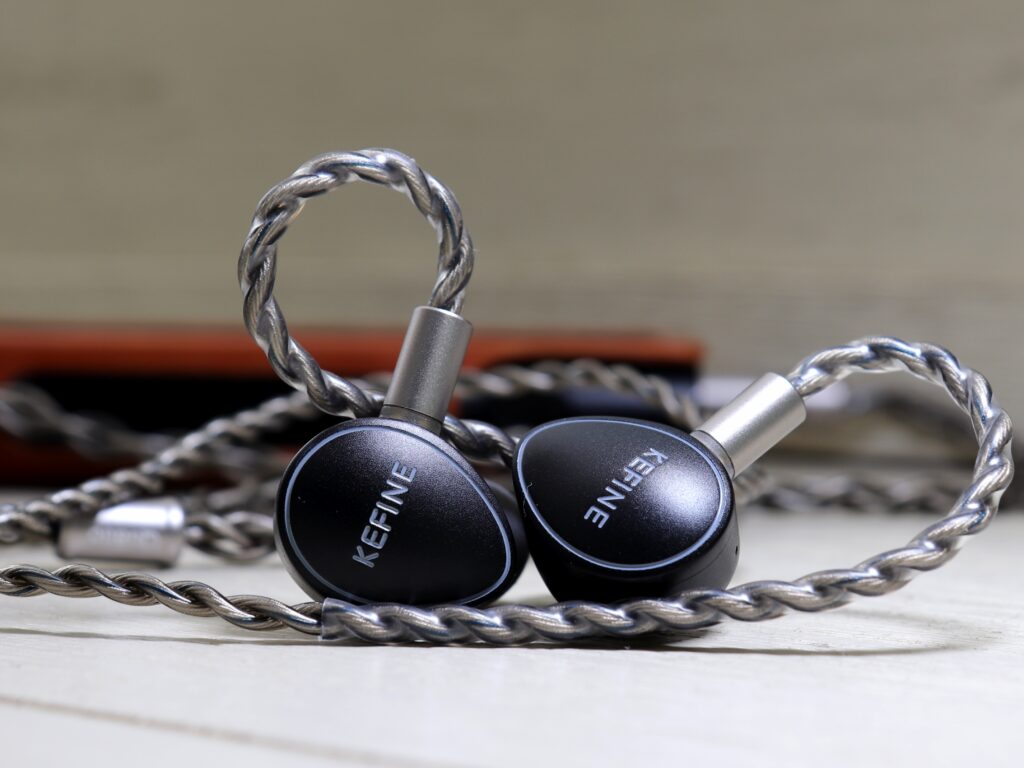
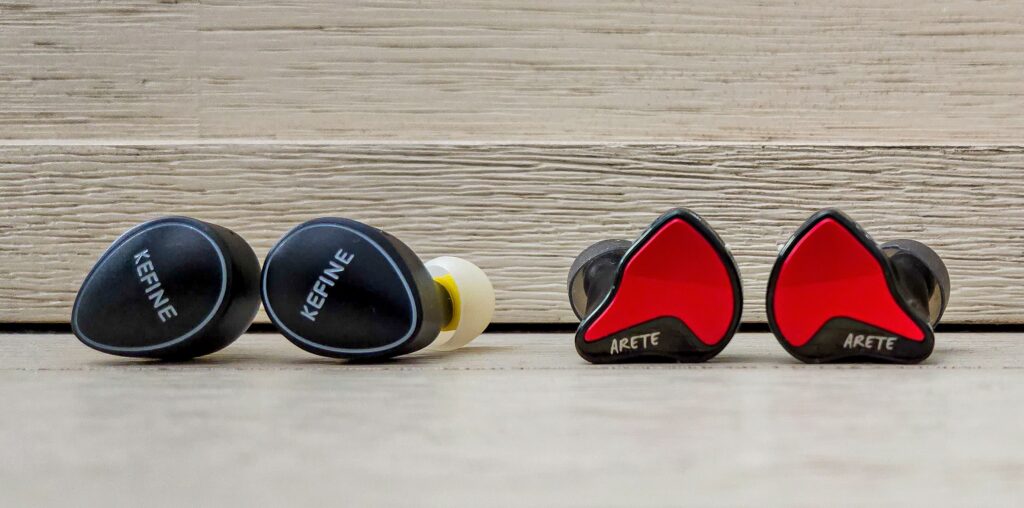
The 1st comparison that I have today is going to be with the Kefine Quatio which I reviewed all the way back in July of 25’ (Quatio Review). Friends, I can confidently tell you that everything I said about the Quatio in that review holds up today. One of the first sets which I bring up for anyone seeking out an under $200 hybrid set. Now, the Quatio is much less expensive ($279 to $129) than the Arete II and I could have used many different iems for comparison, but I chose the Quatio to hopefully show the reader a very solid and less expensive option. Now, the Quatio is a 2DD & 2BA Hybrid and is clearly one of the best iems coming from Kefine. Additionally, the Quatio was the 1st hybrid set that Kefine had ever created. This was a set that hit the scene with widespread praise for its undeniable musicality and dynamic presentation.
Non-Sound Stuff
To start, I feel that the Quatio and the Arete II have equally good unboxing experiences. Even with the $150 premium you’d pay for the Arete II the Quatio has a noticeably better cable. However, the Arete II does have much better eartips provided as well as that dope carrying case. I’d say they cancel each other out. Both sets are built very well, fully aluminum, very durable too. I do like the fit of the Quatio a hair better, but I have zero issues with either set as far as comfort is concerned. Neither is too large and both sets are lightweight enough. Once again, the Arete II is much more expensive and so this review isn’t really fair. Granted, cost does not equate to performance, but in this case it definitely does. Both are fabulous for their cost.
Sound Differences
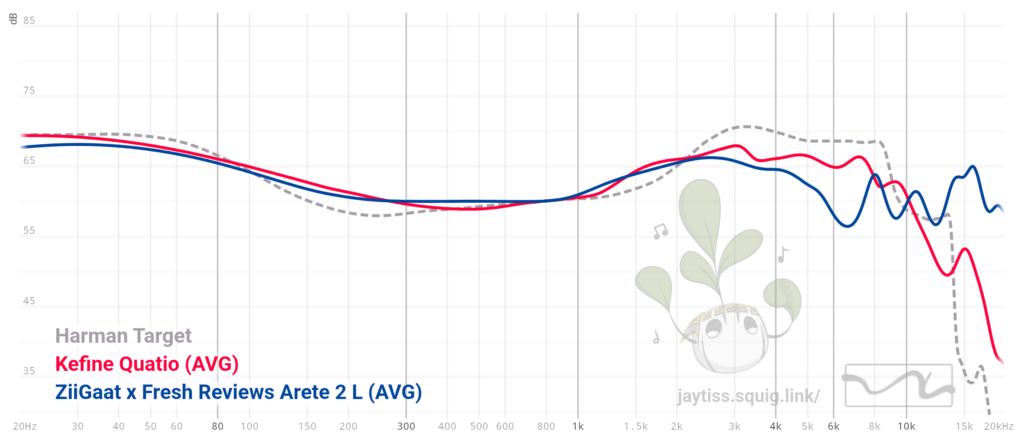
To begin, the Quatio and the Arete II both have that slightly warmed, and highly musical sound. Both are fantastic for casual listening and engaging with your music. Now, the Arete II is a hair easier to drive though the difference is small. However, there are definitely differences between the two sets and a big difference is in just how polished the Arete II is in comparison. Granted, these are always incremental differences, but this is a hobby judged by inches people, hair’s breadth differences, and incremental improvements can cost hundreds of dollars. The Arete II simply has a much cleaner sound.
Between the 20’s
Starting with the bass as it is denser, more rigid, punchier, and deeper. The Quatio has a touch slower bass with a more atmospheric decay. Then you look at the mids. I love the Quatio’s midrange, it’s sweet toned, velvet, and totally harmonious with great timbre. However, the Arete II has all of that, cleaner lines, less glaring, just as smooth but also crisper too. Also, there’s this prominence in vocals on the Arete II which the Quatio doesn’t quite have to the degree that the Arete II does. Also, the treble on the Arete II is simply better in all ways. Unless you love a smooth and somewhat rolled-off treble. In fact, it’s the treble which makes the biggest difference between these sets and how each set’s treble region effects the overall sound. The Arete II has a touch less lower-treble brilliance, but it makes up for it with much better upper treble air, extension, and is much better illuminated up top for details, with a more analytically inclined precision. The Arete II has a more spacious stage. Though I do notice the Quatio has a touch better depth. However, the Arete II has absolutely stellar imaging (more distinct, clearer) and better layering, which makes the stage so much more intelligible and dimensional.
Final Thoughts on This Comparison
Again, this wasn’t a fair comparison. However, the Quatio is a great set for anyone who wants that well done musical sound for less money. I do have to admit that there are moments where the Quatio is the set I want in my ears. There are times when I don’t desire that slightly thinner treble. Those moments are few and far in between, but they happen. At any rate, both iems are fantastic at their price points and I really do recommend both.
Genres
I always try to give you my opinion on what genres seem to work with each particular iem I’m reviewing as well as which may not sound as nice, and the Arete II is no different. Generally, I’d say that the Arete II has a sound which is very close to an all-rounder style tuning. There are certainly some areas where it misses that boat for a few genres, and for other genres the Arete II absolutely kills it. Having said that, the Arete II does a respectable job with all genres. I really want to make that clear. I should also add that even in genres that I feel pairs perfectly with the Arete II, there will be tracks which do not. This is true when speaking on genres which may pair less ideally too. Of course, in less perfect genres I’ll listen to many tracks which sound fantastic. Basically, what I’m trying to say is that these “genre” impressions and opinions are mostly a crap shoot. Don’t take it for a grain of salt but also don’t take my opinion as gospel either. Let’s check it out.
Genres Which Work
I will start by saying that EDM, Hip-Hop, and really any bass heavy Electronic stuff is going to sound really nice. That deep, rumbly, and textured sublevel weight and solid mid-bass slam help those hearty and fast synth rumbles feel and sound present and haptic. Of course, Rap is right there with EDM sounding great. R&B is another as the strong mid-bass assists the tone, and the rhythmical nature of the Arete II really shows off well. Any Rock music sounds great. Classical, Progressive, Alternative, etc. all generally work perfectly. That awesome midrange separation helps complex passages of music stay clean and well resolved and the bass slam really drives those kick drums well. Just the same, I really enjoy Metal with the Arete II in my ears. Complex guitar moments aren’t a problem, and the Arete II has enough clean bite and brilliance to sound satisfying. However, I personally enjoy any type of vocal forward Singer-Songwriter music, Folk or Country too. Everything from frontline leads to backing vocals sound very clean, semi-rich in weight, and intimate, while the nice separation helps instruments like guitars, piano, etc. come across rounded and authentic enough. Very tuneful. Jazz sounds pretty awesome too as well as most Pop style tracks (which is a very generalized thing to say). Also, Orchestral music is surprisingly gratifying. Again, clean separation of those complexities within the genre, the stage is wide and spacious giving all instruments room to breathe, and the timbre simply sounds great. I could keep going but as you can see the Arete II can play just about any genre pretty well, with a few minor exceptions. Those are next.
Genres Which Don’t Pair as Well
When I speak on genres which don’t pair as well, I’m not really going to speak on full genres as a whole. More-so it’s different types of some genres which 2ont come across quite as nicely. Perhaps a hair mismatched. For instance, I find that slow Jazz, the darker stuff, can sometimes sound a hair too thickened, almost too cozy, too softened for me. Also, I know I said that Orchestral or Classical music mostly comes across great, there are moments that I need a bigger stage. Particularly better vertical layering and some more depth would be better. Sure, it can take on complex passages of music, but sometimes it doesn’t come across as grand as I’d like. Generally, pretty darn good though. Lastly, I’d say that super-ultra-and bulbous basshead lovers who enjoy monumental rumble with their favorite EDM tracks. Yes, the bass has some heft and is robust, but it isn’t that robust. So, some listeners might take an issue with the Arete II there. I know I’m forgetting some, I don’t have my notes in front of me, but my deadline awaits. So, I’m ending this here. Plus, you get the idea, I would hope so anyway. Basically, this set is very close to all-rounder territory. However, I do not hand out the “All-rounder” moniker easily. To call something all-rounder it had better be great across the board. Yes, the Arete II is close but just misses. Still, a fantastic iem.
Last Words on the Ziigaat X-Fresh Reviews Arete II
This was such a fun review period. No pressure, no one bothering me, and I was able to take an appropriate amount of time “actually” getting to know the Arete II. Yes… two months. I always say, if a reviewer is reviewing a set after two days of having it, I wouldn’t listen to that person anymore. There is no way you can truly get a good gauge (as a reviewer) if you review that quickly. I’m sorry, but those reviewers are what I call “sample chasers”. Plain and simple. These things take time, our brains take time to adjust, and you learn so much more over longer periods. I really mean that folks. I’m not some golden ears amazing reviewer but these brands know I need my time. Now that I’ve said that just know that the Arete II is a very decisive and very conclusive recommendation from me for anyone who desires a slightly warmed, fun, but also pretty mature sound. Extremely musical, and so well adept to take on many different genres without any serious tuning issues arising. Nothing is exaggerated on this set folks. No area of the mix has potential for saturating the sound too much. Just a very clean and well separated tuning that does sweet justice to so many tracks. Honestly, this set is beyond perfect for casual listening. One of the best I’ve heard anywhere near the “under $300” price point. Ziigaat has done a tremendous job. It’s arguable, but the Arete II has a good shot at being Ziigaat’s best tuned iem. I adore the Luna, and before the Arete II I would have said that it was their best attempt yet, but the Arete II just surpasses that for me. Sure, it loses out in most ways technically, but for musicality and engagement you likely won’t find a better tuned Ziigaat. Also, this set is worth every last penny of that $279.
The Why…
Because the Ziigaat X-Fresh Reviews Arete II is a solid package. Nice case, great eartips, the cable might need to be swapped, but it’s serviceable. The build is flat-out nice, all-alloy, nice fitment, and I can listen for many hours on end. Also, something I didn’t speak about is that the Arete II actually blocks out noise passively pretty well. Next, the simple design is dope. At first, I thought it was too minimalist, but it really grew on me over time. However, as always, it’s the sound which separates this set from other musicality-first iems between $250 and $300. You have this clean sound, ever-so-slightly warmed, semi-rich, and very nice liveliness without losing control. It’s a fun sound which can rumble in the depths and slam with an intensity that is very gratifying. Also, vocals are simply great, especially female vocalists. That forward and organic timbre, the pronounced inflections, the embossed note outlines to every vocalist just does it for me. The sound is very close to natural, just enough coloration for that (in my opinion) while keeping that clean-lined groove, or the rhythmical cadence. It’s very addicting. The treble is much better than I had originally thought, but it took me a good three weeks to really understand that. Again, these sets take time to review. Anyways, the treble has the brilliance, the sparkle, the extension, and it has the smoothly rendered tuning while never sounding overly aggressive. Again, no area is oversaturated. Maybe some tracks will make me a liar, but by-and-large the Arete II keeps a steady dynamic balance that is great for enjoying music. The stage is wide, spacious, and never congested, details are above average, separation of instruments is quality, and imaging is spot-on. It’s a well-tuned iem folks and once again it is worth every last penny that Ziigaat is asking.
Conclusion
To conclude my full review and feature of the Ziigaat X-Fresh Reviews Arete II I have to give a huge thanks to those of you who took the time to read this review. These things take a lot of work and a lot of time folks. I’m not some AI user who can drum up a review in five minutes. Integrity is important to me. They take time and I consider it a labor of love. At any rate, both myself and my partners at Mobileaudiophile.com greatly appreciate you clicking the link and spending time here. It’s because of you that we even exist. So, thanks.
Other perspectives
Now that you’ve read this review, go and read someone else’s review of the Ziigaat Arete II. I’m just one-man folks. One man, with one mind, and one set of ideals and preferences. This hobby is thee single most subjectively judged hobby in the world. Name another one. I always say that maybe wine tasting equates to the subjectivity of our hobby, but that’s about it. This hobby is ridiculously subjective, and one man’s treasure will be another man’s garbage and vice-versa, this I promise you. There will be those who think I’ve lost my mind and I’m okay with that. It’s just what the hobby is. This hobby deals in likes and dislikes and incremental and subtle aspects of the sound can completely change the view that someone has of that sound. I implore you all to remember that. Please. So, check out other reviews, read ‘em, watch ‘em, or listen to ‘em. With that said I am definitely done. I’ve had a great time with the Arete II and now I’m ready to simply casually listen to my music with them. Once again, before I go, I want to state that I do personally recommend this set for anyone seeking this signature under $300. Take good care, stay as safe as possible, and always… God Bless!
Arete II Pros
-Build Quality is great (all-alloy)
-Comfortable for my ears, even over long periods
-Design is either good, or not-so-good. For me, I think it’s a dope look
-Tuning works well with many genres. Near all-rounder
-Organic-ish timbre, smooth and cadent, great clarity, very musically gifted
-Great dynamic balance of the spectrum
-Bass digs deep, tactile, textured, and with a hearty slam, not muddy
-Mids excel in vocal delivery, pronounced, forward, and non-fatiguing
-Treble carries a nice measure of brilliance and fantastic extension, non-offensive and clean
-Imaging is a definite strong point of this set (great for gaming), strong separation
-Nicely layered for a slightly warmer, smoother sound
-Spacious stage and well dimensioned sound field
Arete II Cons
-Look may not be everyone’s favorite
-A touch heavier than all resin sets
-Included cable is no where near what I’d expect at this price
-Bass may be too boosted for some and not enough for bassheads
-Lower mids are a hair recessed, less clean-lined clarity
-Very sensitive listeners may possibly find this set too luminous up top (I do not)
-Treble hunters (treble heads) will not be impressed
-Detail retrieval is good for the tuning, but average overall





No Comment! Be the first one.