

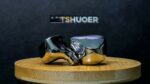
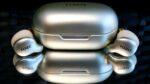
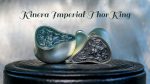

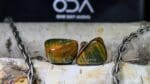








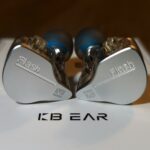
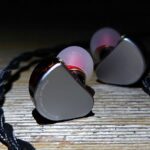



Twistura Beta Review
Intro
What is up my friends, this review and feature covers the latest from the audio brand Twistura named the Twistura Beta (119). The Beta is what Twistura refers to as a “flagship” single dynamic driver earphone which oddly enough doesn’t exactly go for flagship prices. I suppose the word “flagship” can mean whatever you’d like it to. In the case of the Beta, I am more than curious to hear what Twistura feels is a flagship caliber set. Especially since I just reviewed the wonderful Twistura WoodNote (WoodNote Review) and was completely caught off guard by its special tuning. If you ask me, the Beta has a world of climbing that it needs to do to usurp the quality and sheer class of the WoodNote. I mean it when I say it…the WoodNote is one of the more special single DD iems that I’ve heard over the last couple years under $200, featuring some of the most authentically neutral-natural timbre that I’ve heard in quite some time. Having said that, obviously Twistura knows a thing or two about tuning a single dynamic driver set of earphones. In fact, the Beta is also a single DD and from what I’ve read it has a very unique driver material which has me reeling to get this set in my hands. Twistura also knows a thing or two about unique driver materials as the WoodNote’s driver is made out of… well… wood. Friends, it is almost unheard of to see a new brand taking the chances that Twistura is taking, seemingly operating a special brand of confidence and expertise. Needless to say, I can’t wait for the Beta to arrive and test them out against some of the other quality single DD iems between $100 and $150.
Table Of Content
- Intro
- Twistura
- The Beta are here
- One week later… Let’s talk about competition
- Non-Affiliated Purchasing Links
- Gear used for testing
- Packaging / Accessories
- Unboxing
- Eartips
- Carrying Case
- Tuning Nozzles
- Gold Nozzle (Vocal Enhanced)
- Black Nozzle (Instrumental)
- Silver Nozzle (Standard)
- Cable
- Build / Aesthetic / Internals / Fit
- Build Quality
- Aesthetic
- Internals
- Fit / Comfort
- Drivability / Pairings
- Sensitivity
- Scalability
- Source Pairing
- Sound Impressions
- Second Preface
- What’s It Sound Like?
- A Version of Natural
- Glass Driver
- Bass Region
- Sub-Bass
- Mid-Bass
- Downsides to the Bass Region
- Midrange
- Mids cont…
- Lower-Midrange
- Upper-Midrange
- Downsides to the Midrange
- Treble Region
- Timbre
- Technically Speaking
- Downsides to the Treble Region
- Technicalities
- Soundstage
- Separation / Imaging
- Detail Retrieval
- Comparisons
- Twistura WoodNote ($151)
- Non-Sound Stuff
- Sound Differences
- Between the 20’s
- Final thoughts on this comparison
- Fiio FD15 ($149)
- Non-Sound Stuff
- Sound Differences
- Between the 20’s
- Final thoughts on this comparison
- Genres
- Good Genres
- Not So Great Genres
- Last Words on the Twistura Beta
- Some Mods
- Enjoyable
- The Why…
- Beta Pros
- Beta Cons
- Conclusion
- Other Perspectives
- Non-Affiliated Purchasing Links
Twistura
The Audio brand Twistura is what I’d refer to as a brand-new company as they got their start roughly around 2024 and leaning heavily on single dynamic driver tech. I have only heard one Twistura iem thus far, but from what I’ve gathered, I think I can say that Twistura is one which seeks out a natural, fun, and technically astute sound. Their own branding states that they create everything from “Character, Clarity, & Soul” and based off of the WoodNote, I couldn’t agree more. As I said earlier, Twistura is obviously a brand willing to take some risks and try something new. Well, at least relatively new. Again, the WoodNote uses a wood diaphragm DD, the Beta uses a glass dome DD, and while neither is unheard of, they are both certainly unique within the market. I think this is why I really enjoy this brand and what their outlook is. Everything is so clean, the packaging, the presentation, the designs, the tunings. Very much Tanchjim-esque or Apple-esque in how they present their products. Clean, classy, and elegant. For a brand to know this already is quite special. They came out of the gate walking their mission statement out. That is; “At TWISTURA, we blend technology, design, and emotion to craft earphones that bring music to life — with character, clarity, and soul.” Literally, those are their words. The name itself gives you even more meaning as “Twist” represents innovation and individuality, and “Aura” represents soul in music and emotional connection making up “Twistura”. Basically, this young brand gets it and seems as though they’ve been around for years. Certainly, old souls are running the show (I could obviously be wrong about that). At any rate, it is pretty easy to be impressed with Twistura and I am very interested to see what they have cooking up down the road.
The Beta are here
The Twistura Beta arrived at my home a couple days ago and I have had plenty of time to get to know them a bit. Being stuck in my office for two days straight with my review iems and audio devices is a great way to pass the time. Right away I can tell that the Beta certainly carries a different transient and timbral flavor from the completely natural sound of the WoodNote. A different form of natural you could say. Perhaps more technically capable, cleaner even. Having said that, it’s also much brighter out-of-the-box. I can tell you right away that not all tuning nozzles completely agree with me. There’s always that one though (Silver Nozzle) which is the saving grace. At any rate, right away it’s a hair bright and I need to see if some burn-in and brain burn will remedy that for me. Still nice though. However, while I’ve had plenty of time to listen, it hasn’t been nearly enough time to confidently speak on my findings yet. Still, thus far, I hear a very clean, punchy sound with great precision. Obviously, the glass driver has been implemented well. No doubt I need to find out where the Beta sits amongst some of the other great single DD iems under $150? I’d say that’s an important question.
One week later… Let’s talk about competition
Well, burn in is complete (talk about that later) and I feel I can say that the Beta will definitely have its place amongst some of the better single DD’s in its range for its technical chops. Though that is a very difficult thing to say right now for me as the Beta is amongst one of the most difficult groupings in all of audio to faithfully assess. Especially when trying to declare “What are the top single DD’s under $150?” question. The consumer always wants to know. Probably why you are reading this. Is this set good for you or is there something better? In my opinion there are many which make my listening ears very happy. Between $100 and $150 (in no particular order) some of the better single DD’s (for me) are the Hiby Yacht 10, the Dunu Kima 2, the Twistura WoodNote, the Fiio FD15, the Meze Audio Alba, and a quite a few others. Of course, there are older single DD’s like the Tanchjim Hana 21’, the Moondrop Kato, Dunu Falcon Pro and many many more which are still pretty nice in that range and still hold up decently. Basically, what I’m getting at is this; figuring out which are the top single DD iems between $100 and $150 is a very nuanced and compartmentalized task, but also a very fun one too. The Beta definitely is a highly skilled iem, yet I’m still trying to figure out where it lands for me amongst some of my personal favorite. I think I’m ready to get this show on the road. So, without further ado, the Twistura Beta…
Non-Affiliated Purchasing Links:
Gear used for testing
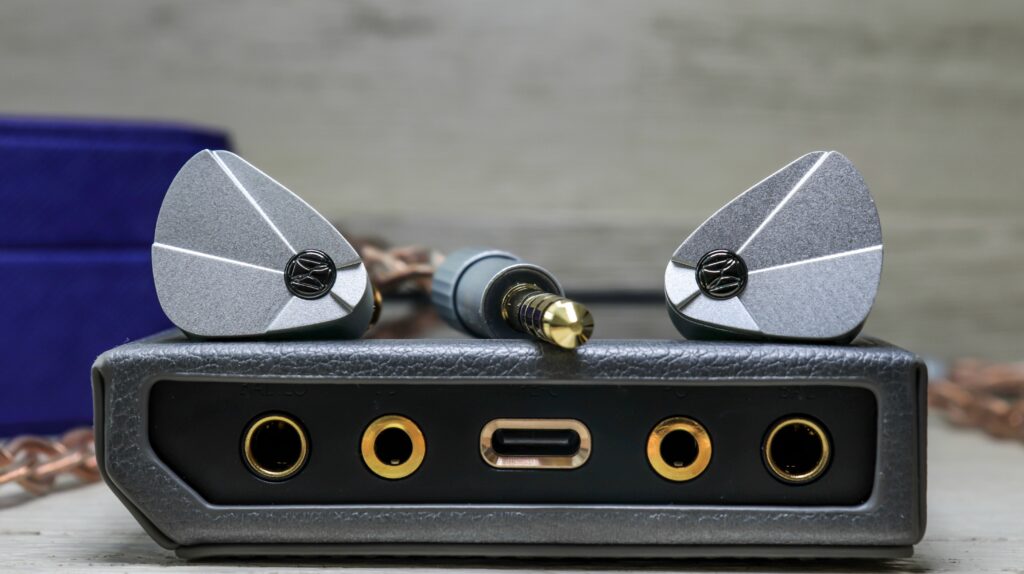
–IBasso DX240 with Amp8 MK2
-Many more sources used including weaker Android 3.5 set phones, iPad, and a few weaker 3.5 se dongles
Packaging / Accessories
Unboxing
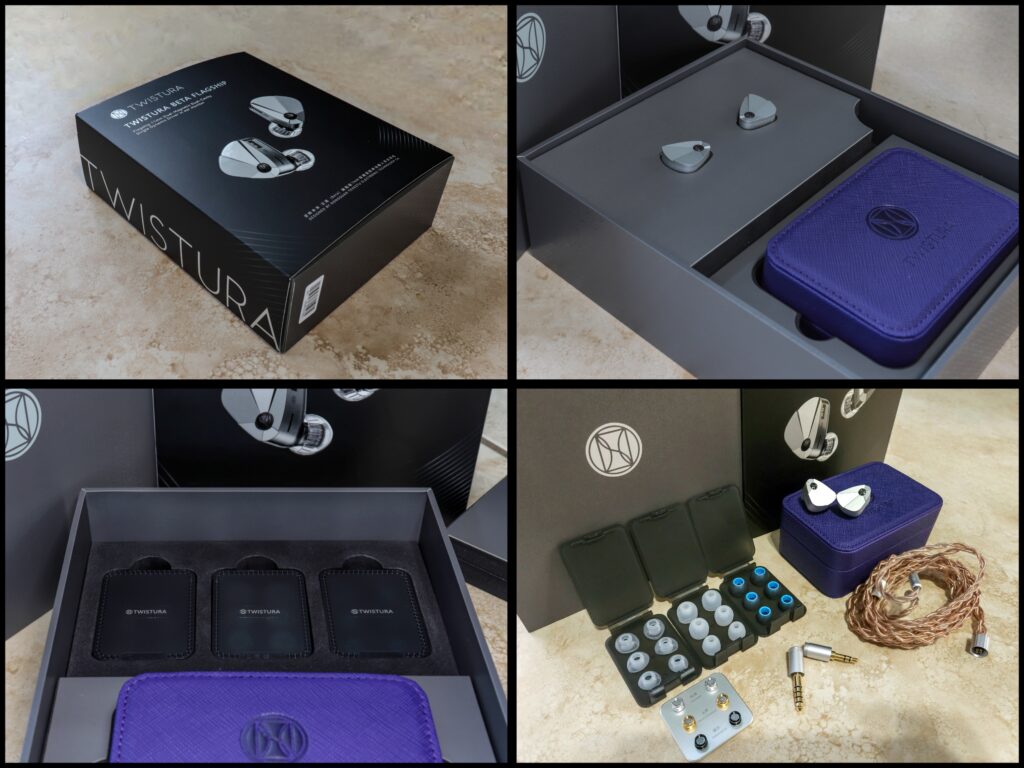
The Twistura Beta showed up in my home in a similarly sized box as the Twistura WoodNote (8” x 6.5” x 2 ½”) looking very nice. The box has a decorative black outer sleeve which shows off a picture of the Beta and has “Twistura Beta Flagship” on the front as well as a graph and some specs on the back. Take off the sleeve and you’ll see a very classy looking gray box which only has the Twistura logo imprinted in the middle. Next, take off the box top. However, I recommend you remind yourself to be patient because the suction on this box makes it a very difficult process of actually getting the thing off. Slow and steady is my advice. Once you get the box top off you will instantly see what I was talking about earlier. The presentation is very nice folks. Again, very much in line with a more premium layout. You’ll see the gorgeous Beta chilling… looking pretty in cardboard covered foam cut-outs as well as the stark purple carrying case also sitting in cut-outs. Take off the layer of foam which holds the iems and underneath you’ll see the same exact thing that I found on the WoodNote’s packaging. You’ll see three plastic cases sink down into three cut-outs in the foam and each one carries three pairs of eartips. Very well done. Now, back to the carrying case. Inside of the case you’ll find the cable and the cable adapters as well as the nice tuning nozzle holder (I’ll speak on in a bit). Of course, I just majorly downplayed the experience. You’ll like it. Nice work once again Twistura.
Eartips
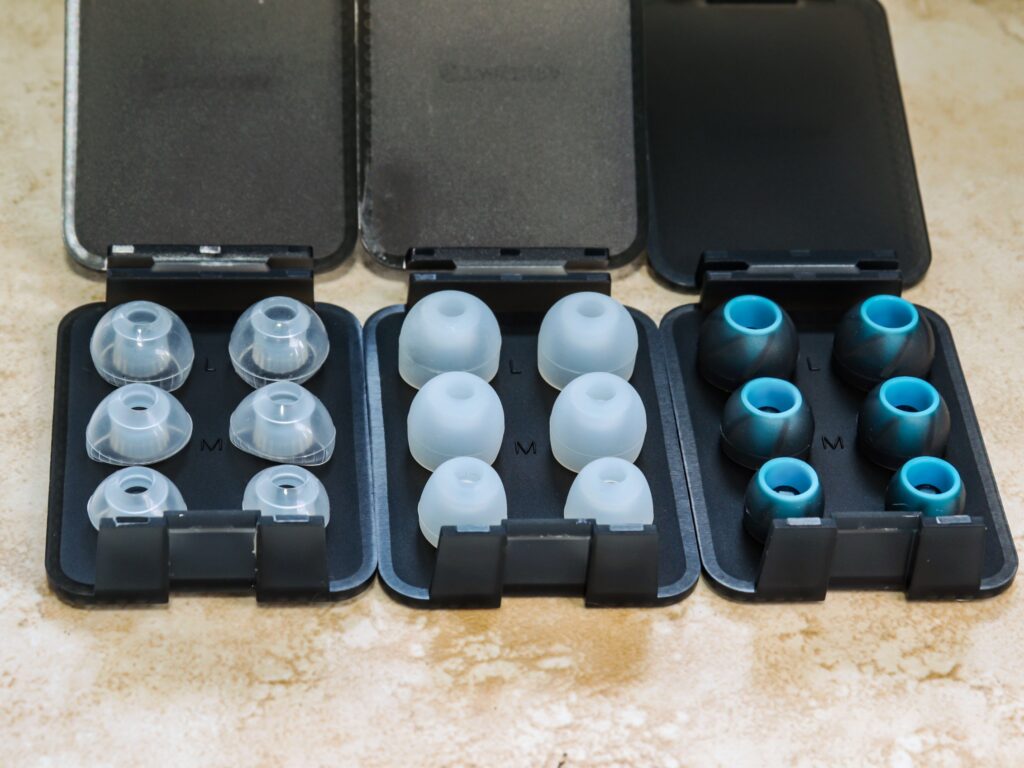
Just like the WoodNote’s packaging, the Beta also comes with the same three plastic cases, and each case has three sets of tips, each plastic case is also a different style of eartips. The first case features three pairs (S, M, L) of white silicone eartips which come with a narrow bore, a very wide stem, and these tips are long. Good for a deeper fit. I also like these tips because the flange is actually firm, not flimsy. The next plastic case carries three sets (S, M, L,) of liquid silicone tips. Which I love. Very tacky style silicone, seals amazing. Anyways, these tips are semi-wide bore, firm enough flange, very comfy. The last sets of three pairs (S, M, L) of eartips are some of my absolute favorite wide bore eartips on planet earth, they are carbon copies of Tenmak Whirlwind eartips yet in a different color. They could actually be Tenmak Whirlwind. Anyways, they are identical, and awesome. So, these tips are a gray silicone with a blue stem, wider bore, shallow fit, as well as very rigid & firm everywhere. You’ll notice the curved ridges on the flange adding structure to the tips. I think these are some of the best wide-bore/shallow-fit eartips on the market. Having said that, I didn’t like the wide-bore’s with the Beta. I wanted something to slightly dial back the upper mids. I used many different tips during the process of tip-rolling. However, I finally landed on the Dunu S&S tips as they simply fit my ears best. The provided tips would slowly make their way out of my ears, though they sounded great. Especially the liquid silicone tips. That said, the S&S tips really did the trick.
Carrying Case
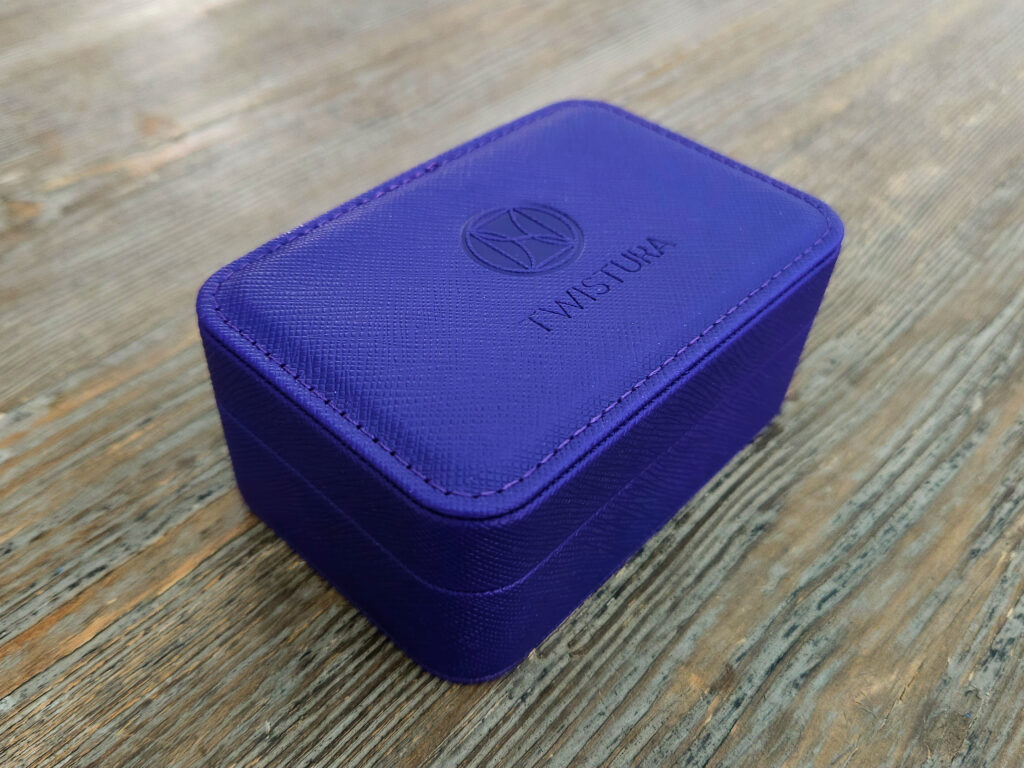
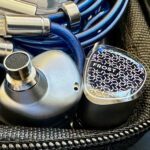
This brings us to the carrying case provided in the packaging and of course it’s a good one. Identical in every way to the case that came with the Twistura WoodNote. One of the cooler looking carrying cases that I’ve gotten recently. This case is so dope. It’s a very nice looking deep purple colored hard case which is cladded in a faux-leather material and has such a nice textured feel to it. You’ll notice “Twistura” imprinted on the center of the case top as well as nice looking stitching encircling the top. It’s a very nice-looking case. The case top closes shut with a strong magnet. To add to that, it’s also a nicely sized case. Too big to put in a pocket but large enough to fit plenty. I can easily put the earphones, cable, nozzle filters, and the eartips inside as well as a very small dongle dac. The case is a very rough measurement of 4” x 3” x 2”. So, it’s a very good size. Also, it feels durable in hand. As far as carrying cases go; this is a good one.
Tuning Nozzles
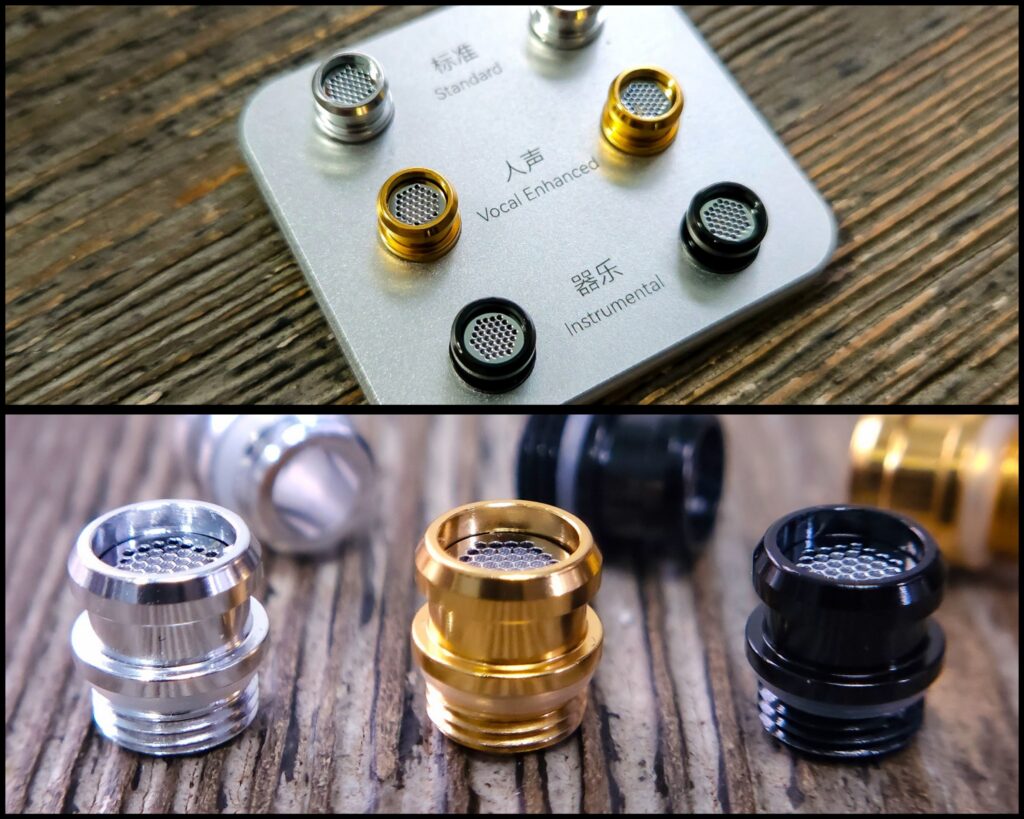
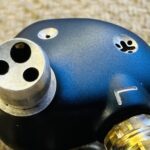
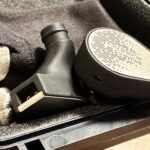
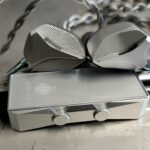
One nice feature of the Twistura Beta are the tuning nozzles which come with the packaging. Twistura provides a nice little metal slab with threaded holes for storing the nozzles, which is nice. Can I just tell you, it is rare that these brands provide “tuning nozzles” which actually switch up the tuning. Granted, of late we’ve seen better implementations of tuning nozzles actually making a decent enough difference. However, the three sets of nozzles that Twistura provides definitely do change up the signature just enough to follow each nozzle’s name well. That is “Standard Nozzle”, “Vocal Enhanced”, & “Instrumental”. I should point out that none of these nozzles will sound like a completely different iem. They don’t totally alter the sound either. You see, inside of each color-coded nozzle is some tuning mesh or damping filters of different density which obviously affects the sound. Typically, these types of filters affect the upper mids through the treble region. Coincidentally, that is exactly what is happening on the Beta. It’s a nice way to slightly alter the sound without totally changing the core tuning. At any rate, below are some quick thoughts on each nozzle.
Gold Nozzle (Vocal Enhanced)
The Gold Nozzle is boosted within the upper mids to lower treble by a few db’s making the sound very crisp, more forward in the midrange, and as the name would suggest (Vocal Enhanced), it most certainly does enhance vocals from the standard nozzle. However, please do not expect some amazing vocal delivery. Vocals are all in the ear of the beholder. This nozzle just slightly brings those mids more forward and provides a slightly more vibrant, crisp, and technically proficient sound. Not bad at all, but when there is a Silver “Standard” Nozzle with a better balance than I would go with that first. The Gold Nozzle sounds decent though. I still find the Gold Nozzle a hair too enthusiastic and bright.
Black Nozzle (Instrumental)
The Black Nozzle is without question the brightest and more luminant nozzle. Of course, it’s also the nozzle which adds the most shout, pierce, sharpness, and even sibilance. This nozzle would be for the treble bois who enjoy their ears taken right to the brink of harshness. Twistura did a good job. The Black Nozzle provides a nice neutral/bright signature. Highly detailed, very manicured, highly resolute as well. Not for me, but this nozzle will certainly be for those bright-heads who enjoy being taken right to the brink of sharpness. If I’m honest, and I always am, the Black Nozzle is too bright for me unless I have a seriously warm source. Otherwise, it’s a bit too much. Maybe for treble Bois.
Silver Nozzle (Standard)
Okay, now we get to my favorite nozzle and the only nozzle that I choose with this set. I understand brighter sounds and some folks love a technically savvy sound, but the other two nozzles aren’t really my cup ‘o tea. I suppose that’s why Twistura made three different styles. At any rate, the Silver Nozzle is the tamest of the three, but still highly resolute, very-very clean, and not nearly as piercing. Especially in the upper mids to lower treble region. In fact, the Standard Silver Nozzle is easily the most balanced of the three. Well, closest to balanced. Definitely, without question… my favorite.
Cable
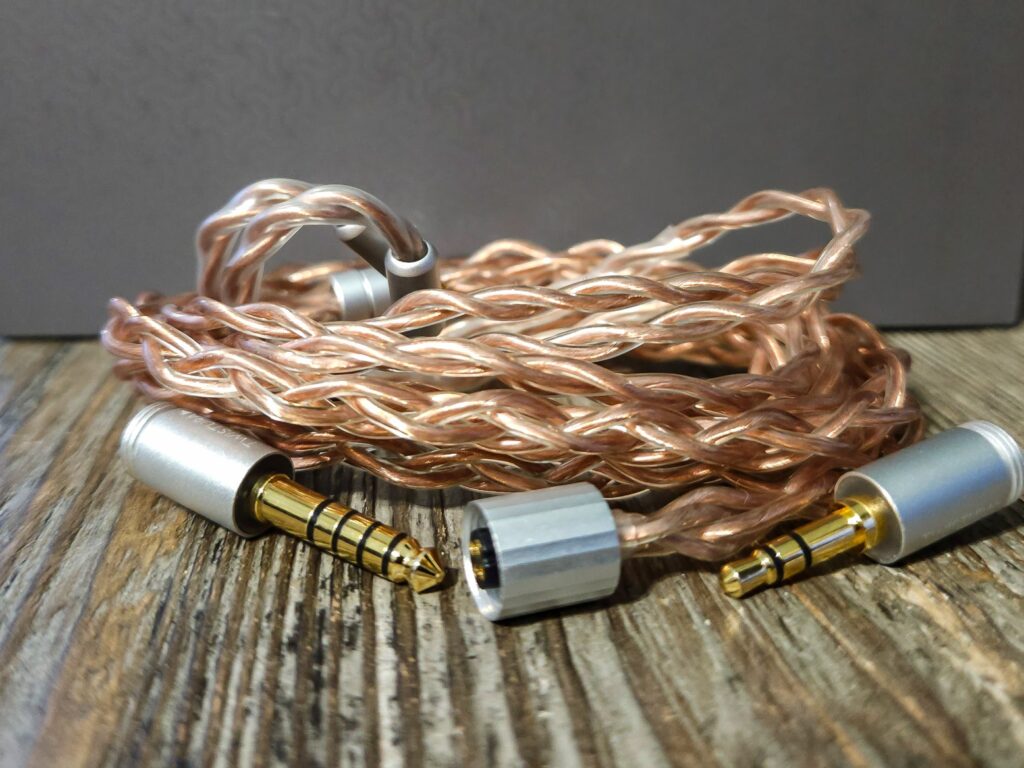
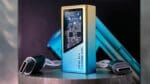
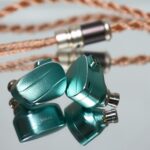
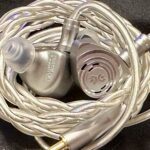
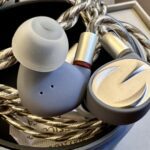
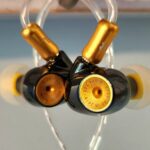
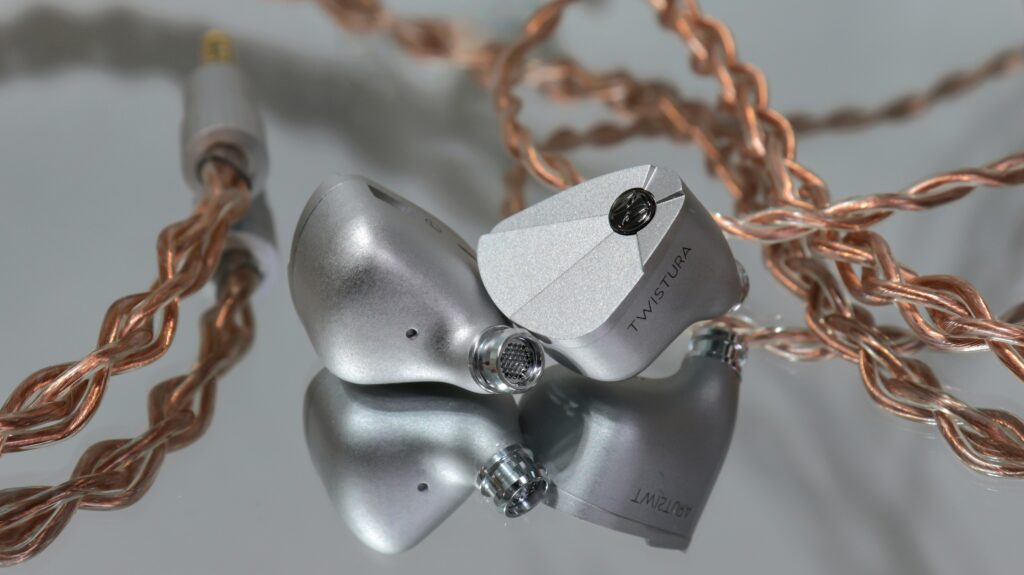
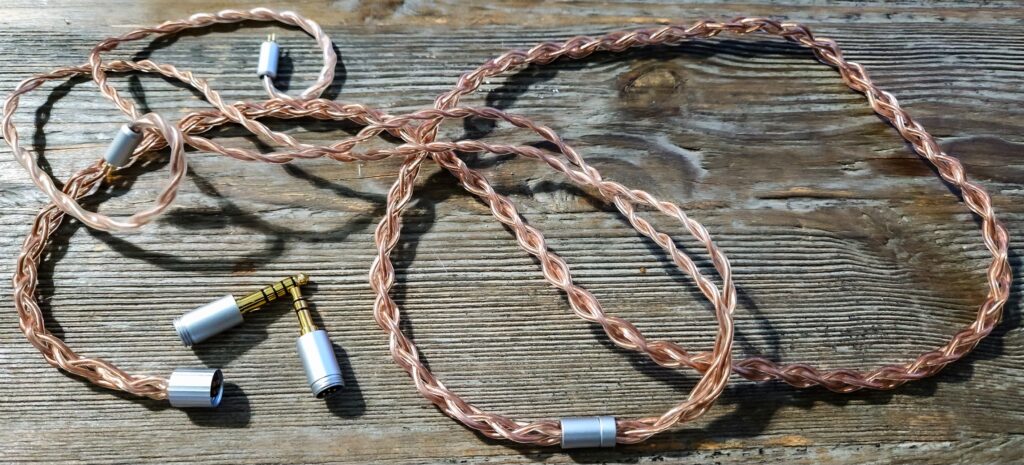
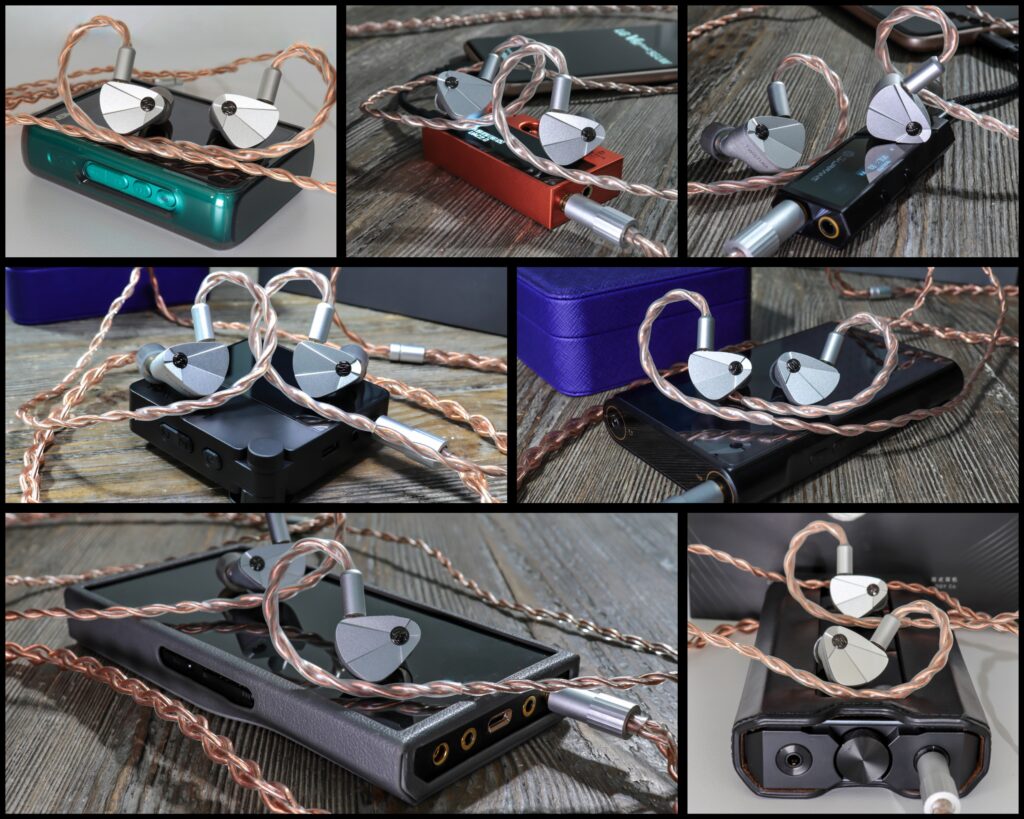
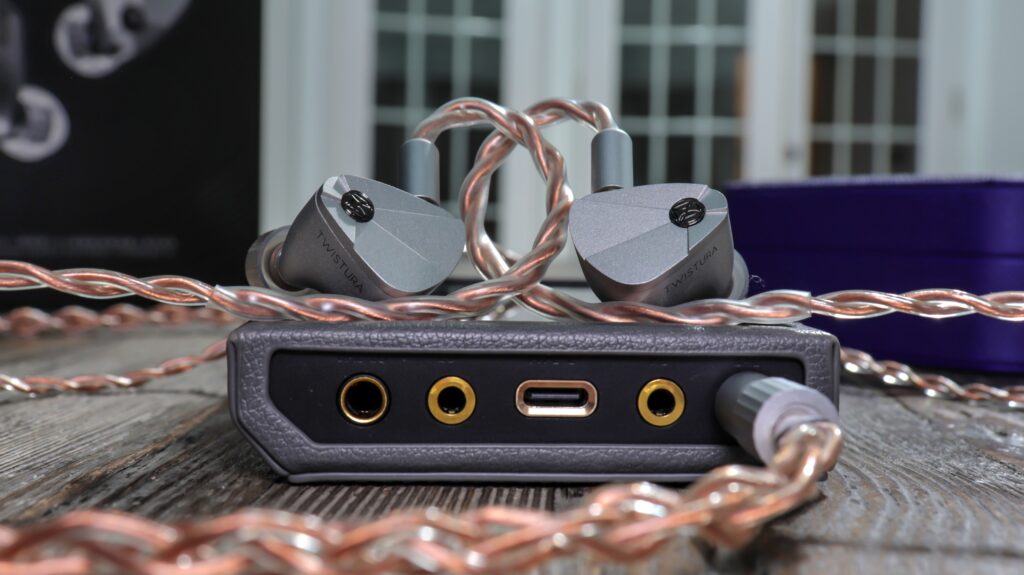
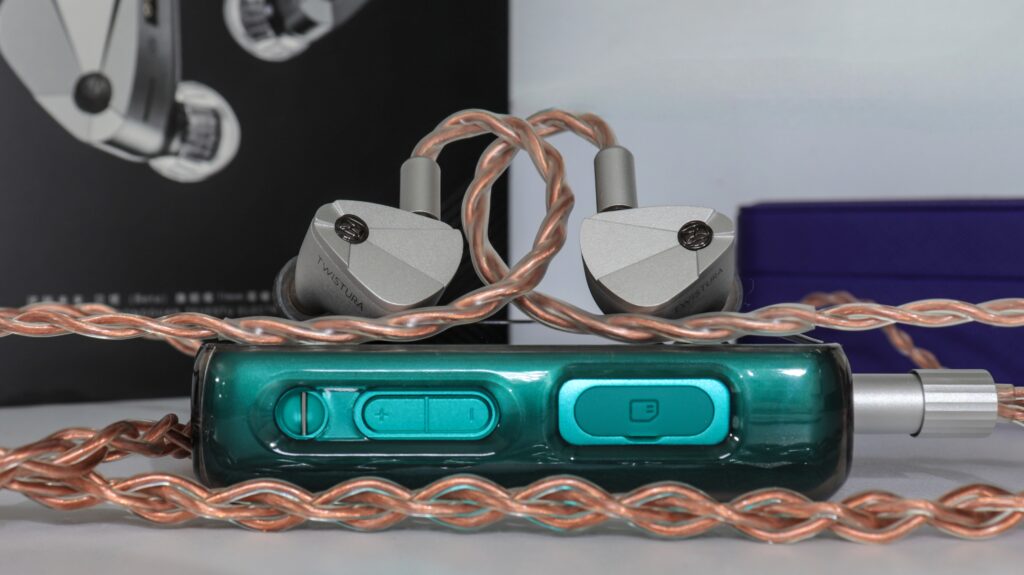
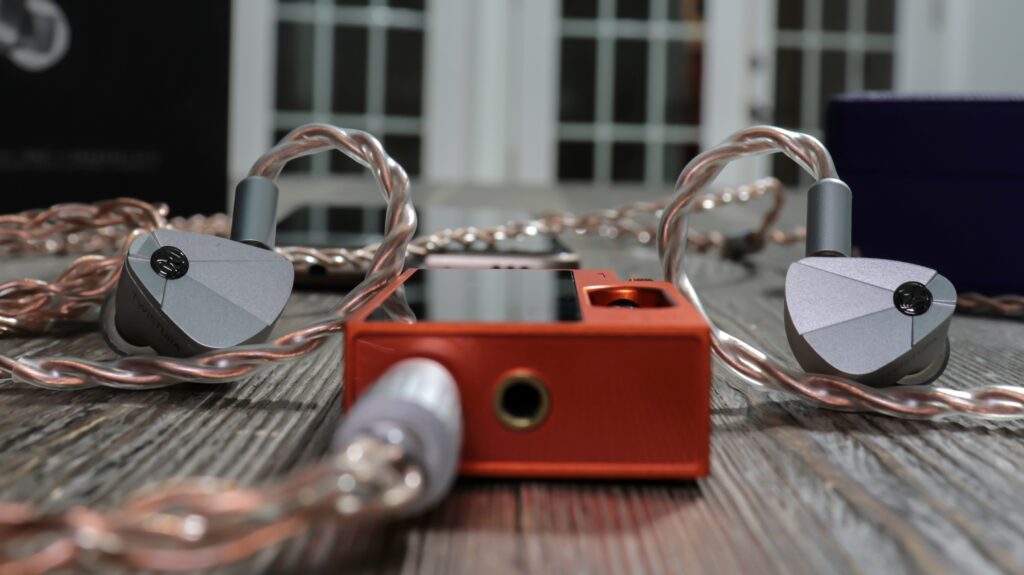
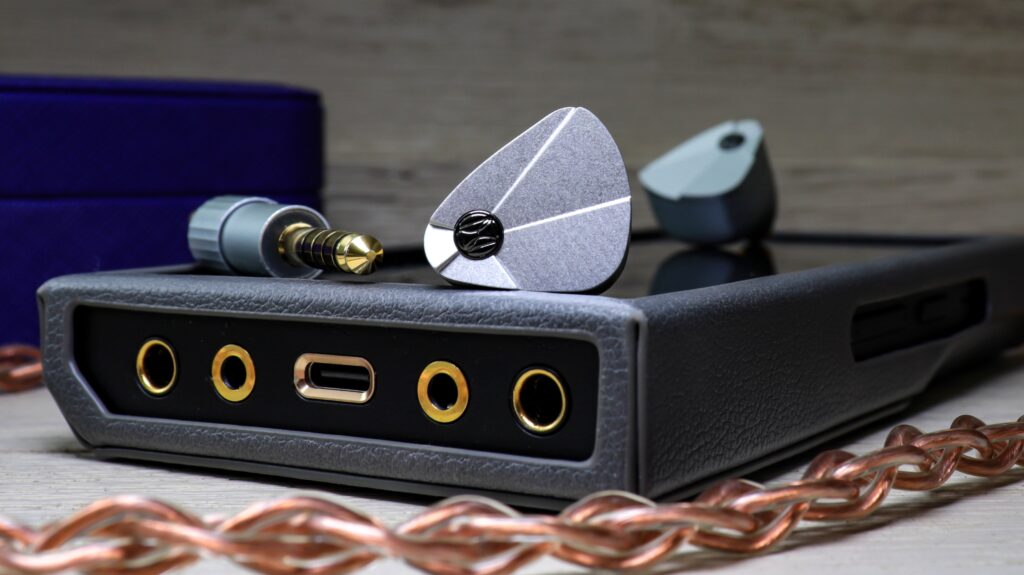
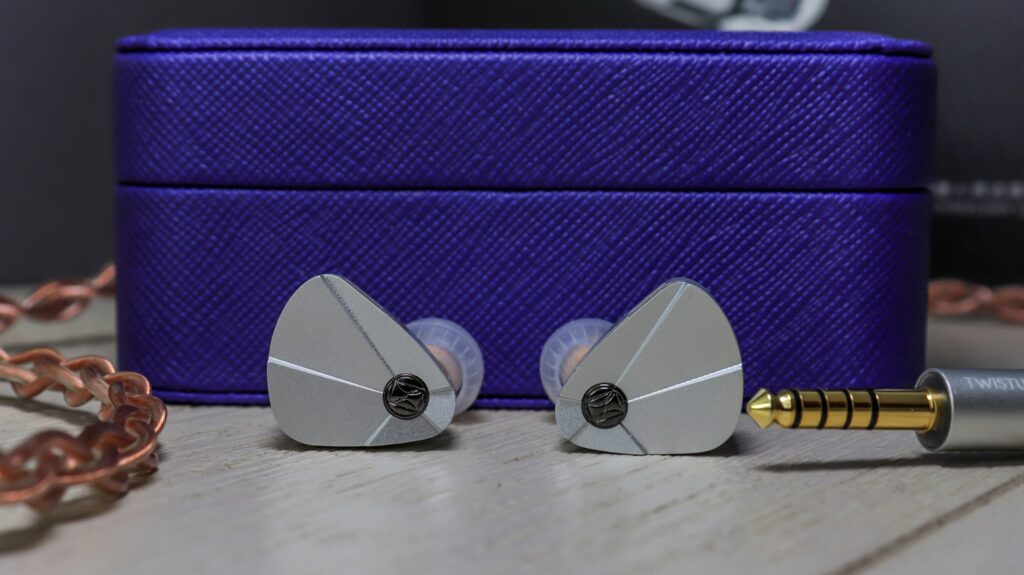
The cable that comes packaged with the Twistura Beta is a beefy boy, no doubt about it. Have I ever told you that I love a big fat and beefy cable? Especially when the color scheme pairs well. Folks, this is a very nice cable. In fact, I’d go so far as to say it’s one of the best cables on the market that a $119 iem can get you. I told you all, Twistura provides an awesome package. Anyways, the cable is copper in coloration, it is a 2-pin, 4-core OFC (oxygen-free copper) cable which comes with a modular connection and 3.5 & 4.4 balanced adapters. This cable has a nicely braided design and a slightly firmer insulation covering which still is pliable enough to roll up nicely without springing apart (I hate that!). The cable is certainly reminiscent of other “flagship” quality cables. Again, it’s fat. Now, I tried figuring out what gauge it is but I’m assuming it’s a lower gauge (lower is fatter). Honestly, the cable simply looks nice attached to the Beta. That silver of the Beta paired with the copper fat cable. It’s really-really dope y’all. I never even thought for a second of cable swapping.
Build / Aesthetic / Internals / Fit
Build Quality
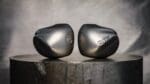
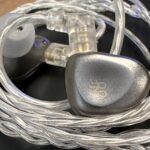
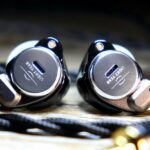
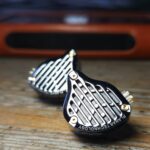
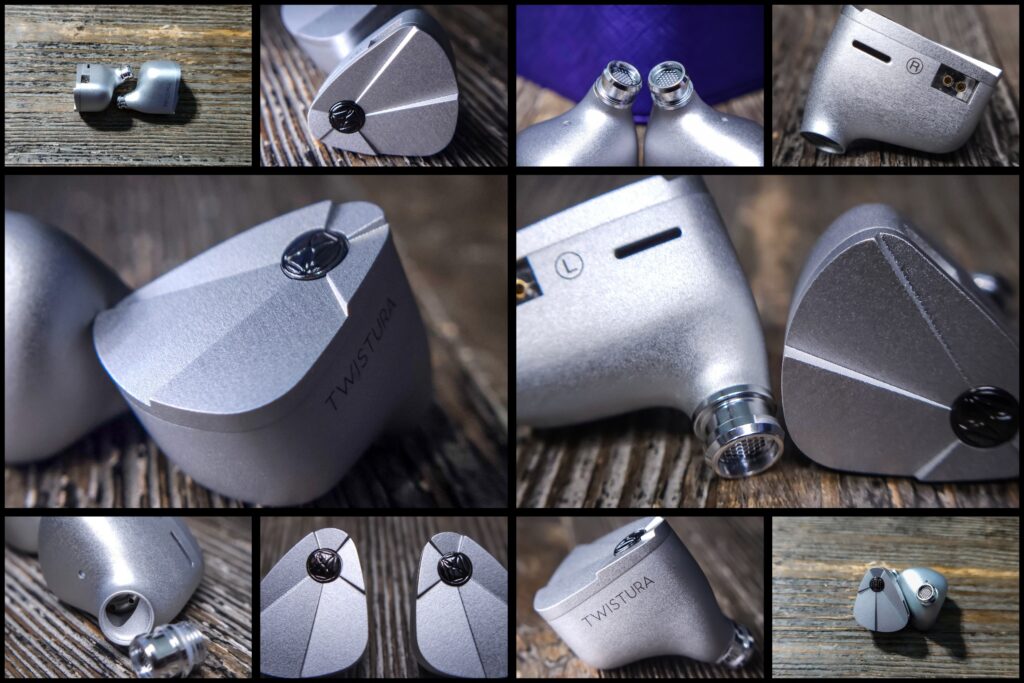
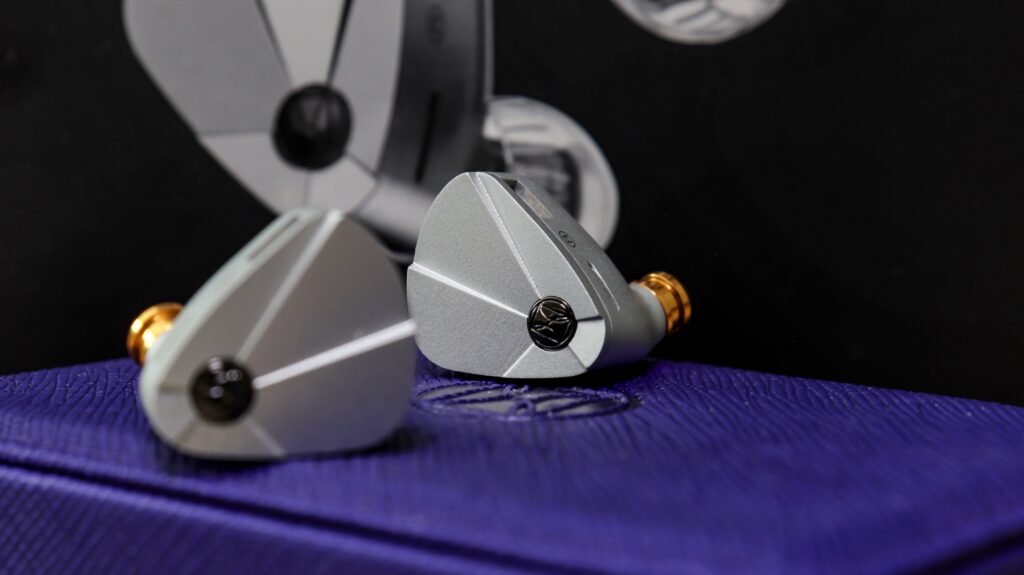
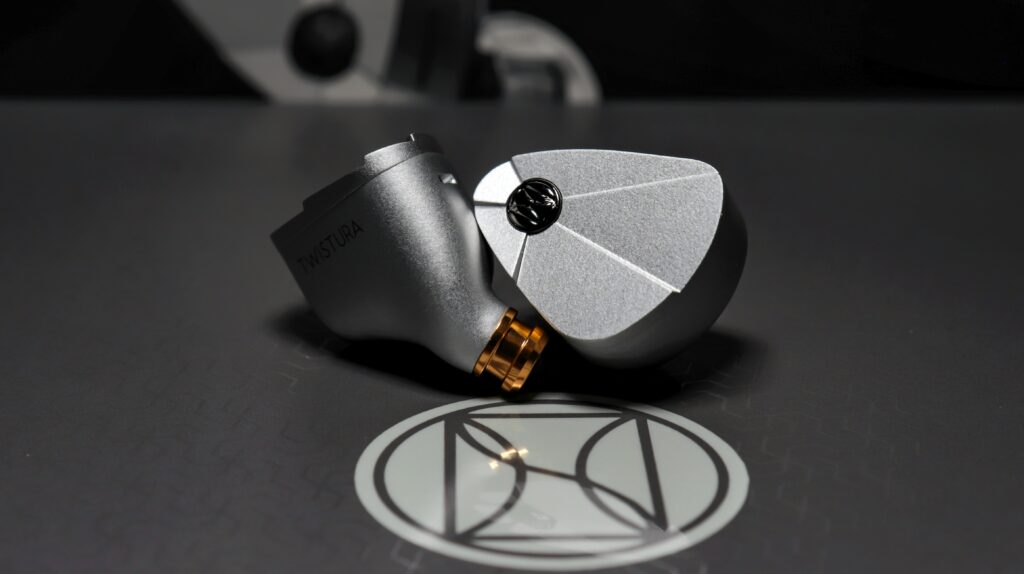
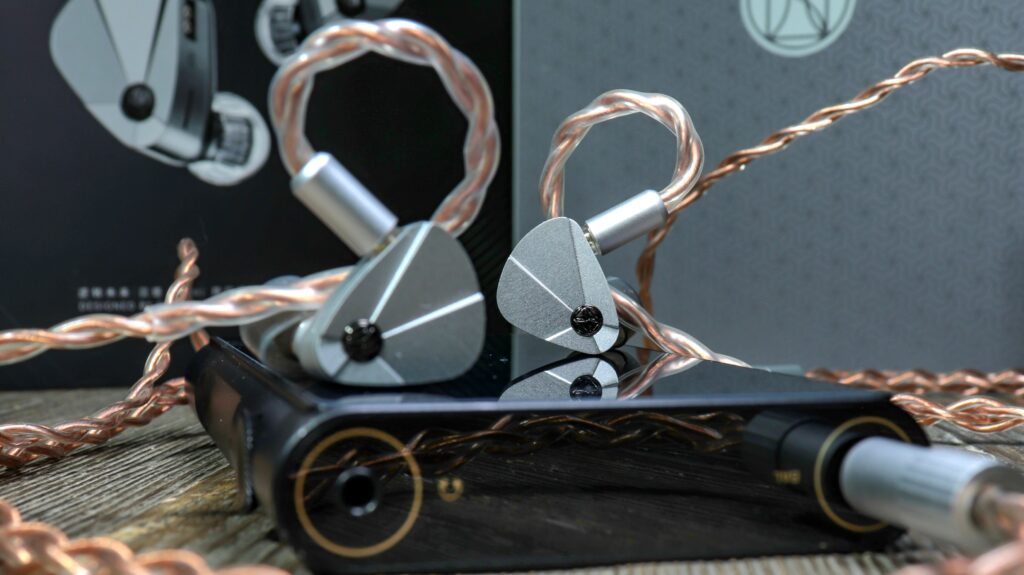
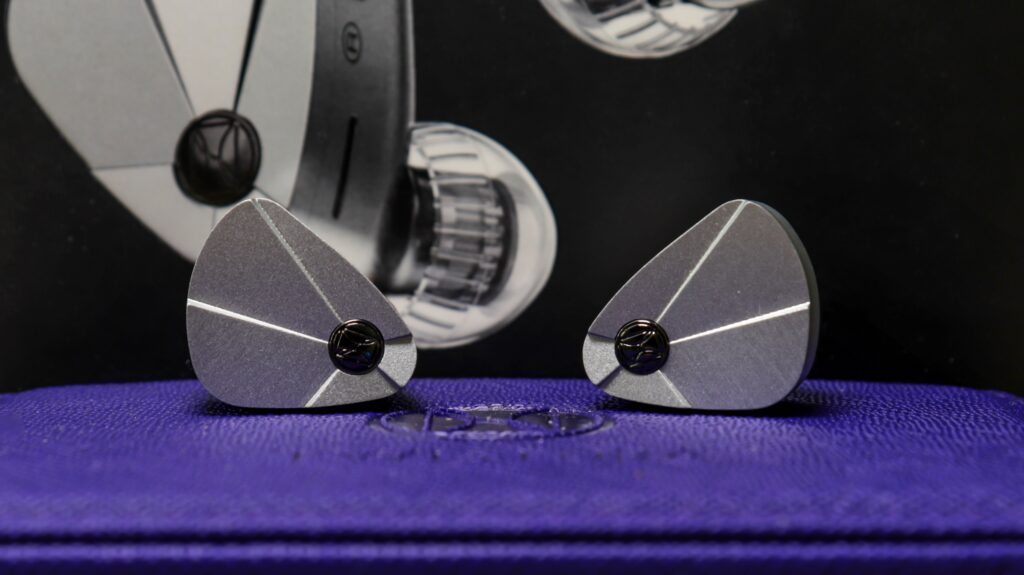
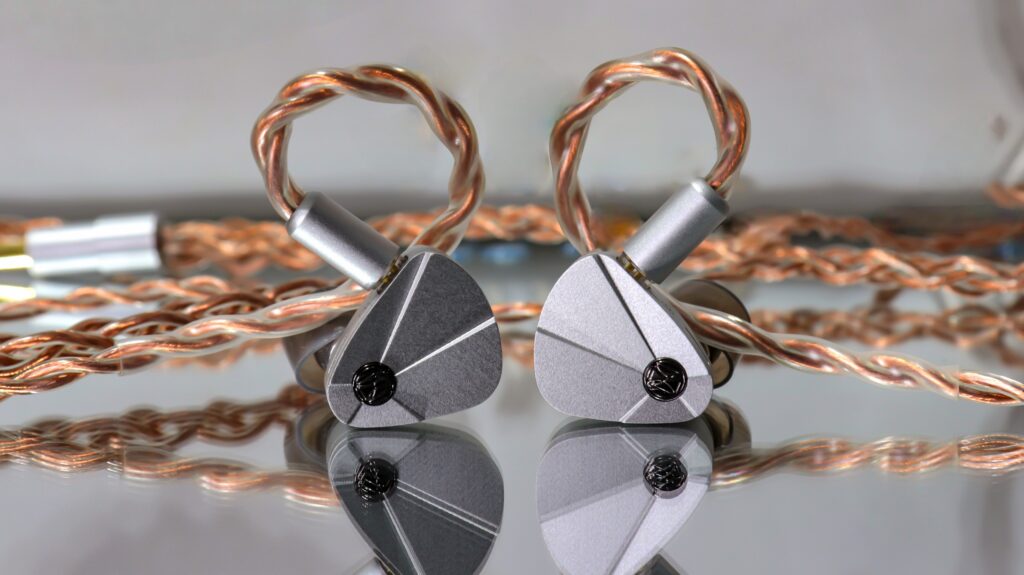
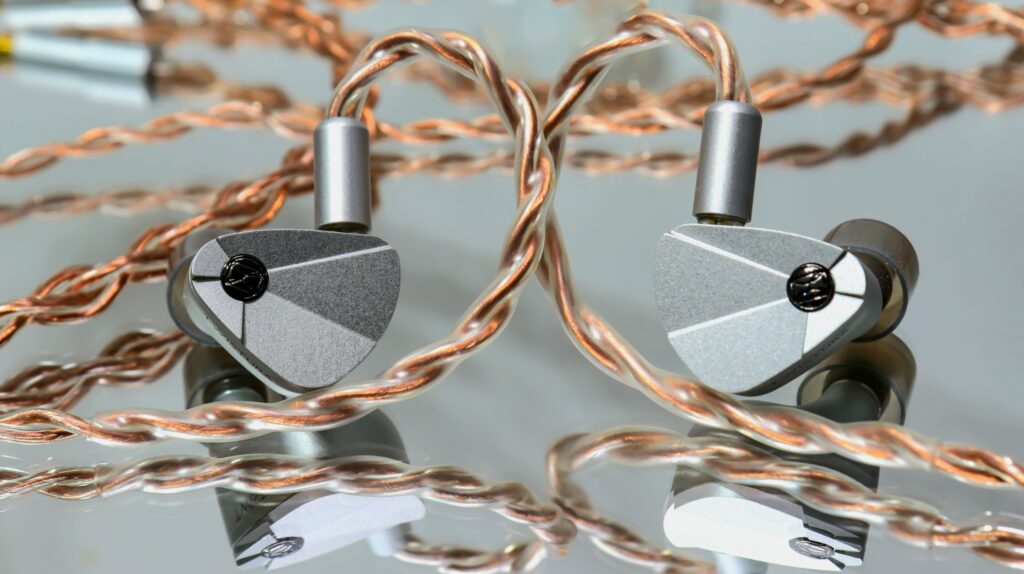
Okay, so, it’s about time we start praising Twistura correctly. Folks, this set is built ridiculously well for the cost. The design, the machined angles… all top tier, top notch. I’m just thrilled with how this set turned out. Grade A job Twistura. In my journey through audio, I’ve seen many really well-built sets around this price point, but 9 times out of 10 every brand will try to figure a way in making their sets a touch cheaper and usually it’s the build which suffers. They will take out that last angled cut, or not polish as they should, do all they can to make the production simpler. Not Twistura. No sir, this brand is about crafting something worthy of their name. At least that’s how I want to think about it. Anyways, the Beta is made entirely out of aerospace grade aluminum and carved 100% from 5-axis CNC machining. The Beta are very lightweight as well thanks to the thinly carved aluminum. Friends, the Beta comes in at only 6 grams an earphone. Which is very light. You don’t feel this set. In fact, the cable is the bulk of the weight. Twistura added in a couple vents as well, one for each cavity in the dual cavity design and one being a large pressure relief vent towards the rear. The nozzles are medium length, around 6mm in width (standard) and create a good fit. I realize that I went a bit hard on how nice this build is, but I really feel it is well deserved. It’s so easy to overlook nowadays. Anyways, CNC machining is fairly simple, but it gets more and more complex with strategic angles, lines, and especially when the aluminum is as thin as the Betas is. Also, a cut like this demands 5-axis milling as it is just too complex. Really a nice build.
Aesthetic
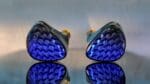
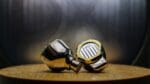
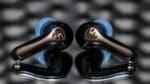
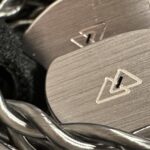
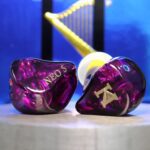
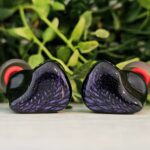
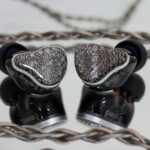
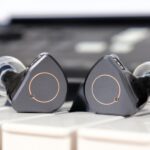
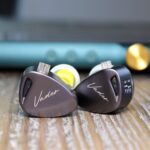
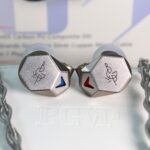
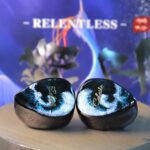
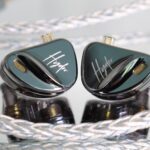
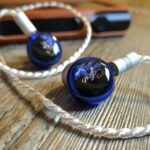
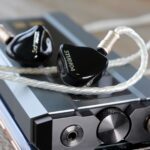
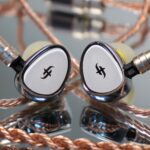
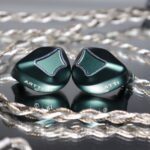
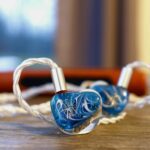
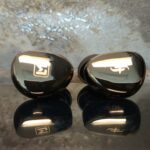
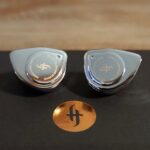
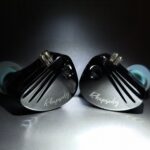
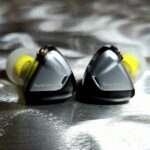
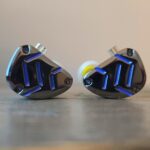
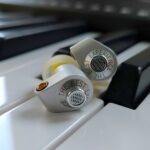
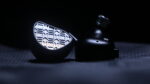
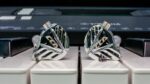
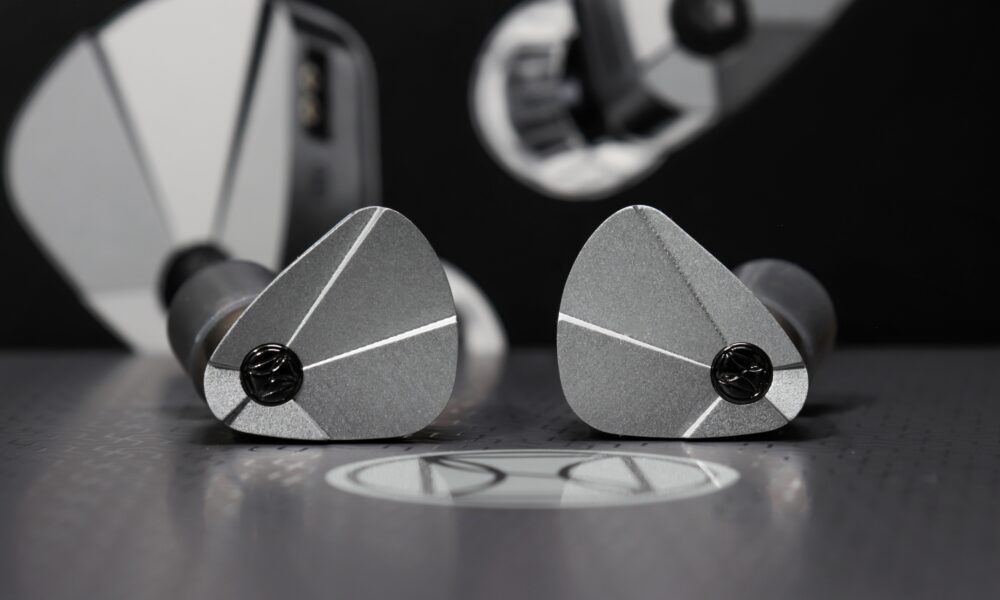
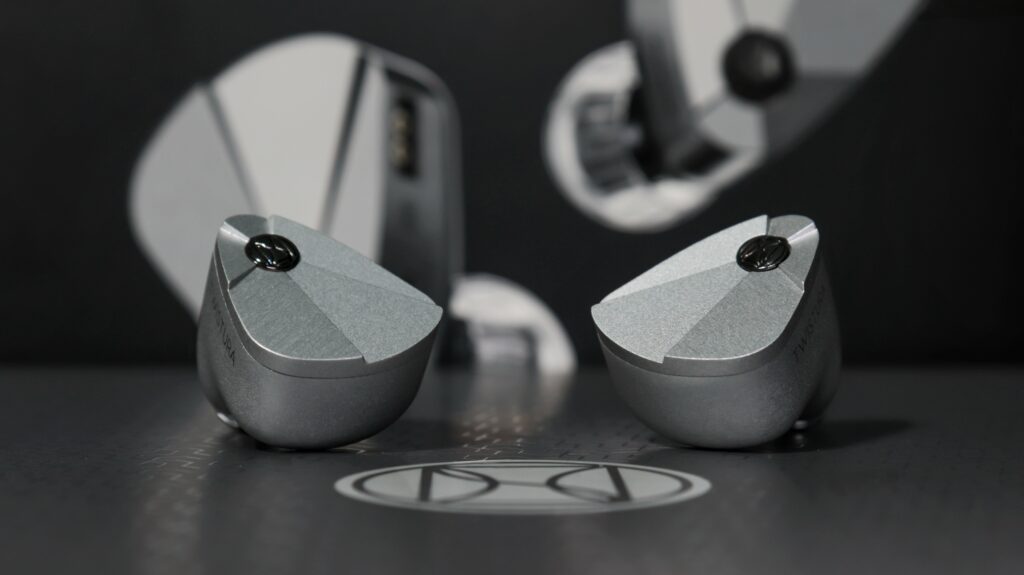
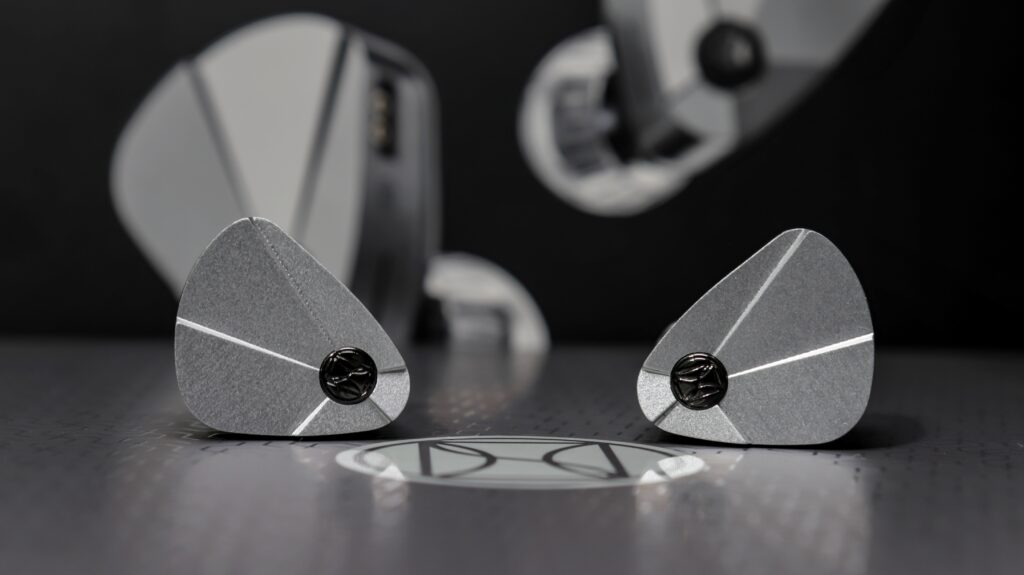
I think the Beta is a nice-looking set. I’d probably call it a modern industrial design-aesthetic which is both understated/minimalist as well as sleek and premium. The Beta’s faceplates have slick looking laser carved angled and converging geometric lines which all intersect at a small circular Twistura logo. The finish of the Beta is this really nice matte texture of brushed aluminum. Then you have the polished nozzles which make a nice-looking contrast. However, when you couple in the copper braided cable it brings the aesthetic together quite well. Ya know, I said similar things about the WoodNote which also is a beautiful looking set. Both are class acts… all the way. Somehow, they are both handsome and elegant at once. Anyways, nice work on the design Twistura.
Internals
Without question, one of the Beta’s hottest selling points is that it carries an 11 mm glass composite dome with micron-scale glass fibers in a planar-like flat structure. Please don’t confuse me though, I am not saying the Beta has a planar diaphragm. The Beta has a piston-like motion flat structure bonded to a composite surround. The glass DD sits in a dual cavity along with N52 neodymium dual magnets. Basically, it has a dope driver. Lately we’ve seen a few glass fiber dynamic drivers, similar to the Sivga Que UTG. From what I’ve seen and heard, glass drivers respond very fast, and somehow sound exactly as you’d think glass would sound. I can tell you that the driver used in the Beta is very well tuned, never seems to distort, and can take a ton of power with no issues. Seemingly.
Fit / Comfort
As far as fit, I actually get a decent fit, not perfect. I think for me it feels as though the Beta was slowly making its way out of my ears with the provided eartips. As I said, I went with the Dunu S&S eartips to help me with this. Once I got my tips right the Beta fit like a charm. As always, I have no clue how well the Beta will work for your ears, but altogether the Beta are very lightweight, not huge, and are fantastic over long sessions.
Drivability / Pairings
Sensitivity
One thing is clear, the Twistura Beta is a very sensitive iem. With an impedance of 24 ohms and a sensitivity of 124 db’s the Beta can literally be driven off of just about anything with zero issues. Listening with a simple 3.5 single ended connection from my older Android phone sounded just fine. Actually, they sounded pretty darn good. Same with slightly more powerful cheapo 3.5 se dongle dacs, my iPad too. It sounded nice. So, you do not need a ton of output power for the Beta to sound good. For real folks, if all you have is a $25 3.5 se dongle dac then you’ve found the right set because I hear very nice dynamics, tight transients, clean background, and a refined sound out of the Beta using weak sources.
Scalability
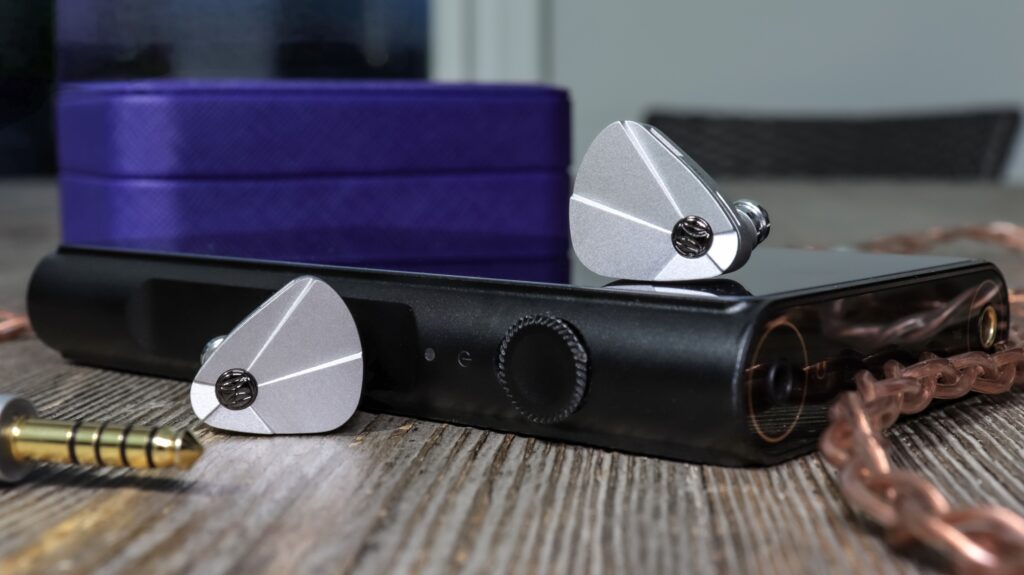
Having said all of that, I do hear some better sound quality off of slightly more power. Nothing crazy, you don’t need any big +1-watt daps or desktop units. All you really need for an uptick in sound quality is a good and quality dongle dac. However, I don’t think power is going to scale much more than what 100 mW @ 32 ohms can give you. It seems as though the Beta does plateau a bit, at a certain point. That said, the greatest amount of scaling occurs with better sources, cleaner sources, and sources that are simply of higher quality. Power helps to a good degree, but the real true upgrade comes with how well the Beta reacts to better source quality. This would seem obvious, but you’d be surprised how well the Beta reciprocates with quality. Still, as far as power and source quality is concerned, I certainly had my best experience with the Beta when using my Shanling M6 Ultra dap, the Fiio Q15, the Shanling UA7 and a few others. Many dongle dacs pair very well too, but in my opinion the Beta definitely pairs best with a certain source tonality.
Source Pairing
The Twistura Beta can run anywhere from neutral with a sub-bass lift (a touch of warmth), to neutral/bright, depending on the nozzles that you choose. As I said earlier, I went with the Silver “Standard” Nozzle for all critical listening which gets you closer to neutral with a sub-bass lift, still brighter up top, or rather… vibrant, luminous up top. I really enjoy warm to slightly warmer sources with this set. Meaning, warm/neutral sources. I have quite a few neutrally tuned sources as well which pair decently too, but they absolutely cannot be too energetic or even leaning bright. Bright is very bad with this set. This is crucial folks. Sources with even a hint of coolness, brightness, or treble emphasis are really going to exaggerate the brighter inflections on the Beta. So, without question something with a hair more warmth really does round out the sound very-very well. For me anyways. If you enjoy something very bright, crazy treble head style… then switch nozzles and go with a neutral-to-neutral bright source. However, if you enjoy a warmer sound, you may be out of luck. This set is very open sounding, very clean, the bass is not stuffy in the slightest, never sounding overbearing, and it’s brightly lit. So, providing a source with at least a touch of added warmth does a nice job for calming those harsher tones.
Sound Impressions
*Note: I need to preface a few things prior to taking the deep dive I’m about to take into the sound of the Twistura Beta. Things like; I definitely burned this set in for much longer than I initially wanted too. I started with three full days. However, after those days I still had the slightest tinges of sharpness with the Silver Nozzle. So, I went two more full days. After those five days the Beta no longer had any of that, plus the bass actually sounds denser too. So, there’s no doubt in my mind that you should really try to give this set a lot of playing time before you judge, or just burn them in. Or, just give ‘em four days and check them. I used Dunu S&S eartips for all critical listening, and I mainly went with the 4.4 balanced adapter on the packaged cable. Also, I listen mainly to flac or better files which are stored on my devices. The Android music player of my choice is mainly UAPP (USB Audio Player Pro), as well as Hiby Music Player, and on some Shanling daps I use Eddict Player.
Second Preface
Okay friends, I have to make a small preface before I delve into the sound. First off, Twistura used a glass driver. What do you think “glass” is going to sound like? If you said that glass seems like it’d have a brighter hue to it than you answered correctly. Well, the Beta most certainly has a slightly brighter top end. This set is going to be “somewhat polarizing” depending on your nozzle choice. Any set which leans more towards either bright or warm will be that… polarizing. Now, I really enjoy an analytically strong, technically inclined, and slightly brighter set, if done well. On the flipside, I enjoy a good bright set just as much as I enjoy a warm, smooth, and rich sound, if tuned well. I actually like ‘em all, all signatures. I am definitely in the minority there. However, the Beta “can” lean too bright (for me) with any nozzles but the Silver Nozzle. With that said, this is why I choose the Silver Nozzle as there is a pretty distinct difference between them. Still, even with the Silver Nozzle you cannot be sensitive to the upper frequencies. However, anyone who enjoys detail tracking and seeking out all of the micro-defined subtleties in your music should take note of the Beta. Sure, the silver nozzle helps a lot and makes everything pretty darn nicely tuned, but this set is not going to be for everyone folks. Actually, I should have lost about half of you by now. We’ve lost all of the warm, smooth, bass heavy, and rich fans. However, those who are still with me are going to like what I’m going to say because the Beta is a very well done, very mature, reasonably balanced and technically refined. One which isn’t without some solid musicality & rhythm and one which will scratch that edgy, biting, detail prioritizing itch. Also, I really enjoy this set. Okay, moving on.
What’s It Sound Like?
The Beta has a very lively, sprightly, crisp, clean, and very fine-lined sound featuring solid dimensional cues which aid its unmistakably holographic feel to the sound field. Pretty vast for $119 with its outward sonic projection which comes across as big, and fully immersive. To my ears, the sound as a whole is highly capable as far as technical abilities and musicality are concerned. One of the better micro-detail single DD iems within its price point. Another being the Sivga Que UTG (Que UTG Review), which also carries a glass driver. At any rate, I hear a forward timbre on this set, in every region, with this cleanly lined presence (seemingly) making all notes sound prominent, embossed with presence yet slightly etched, creating very well defined and distinct note outlines. Most certainly the Beta leans analytical over musical, but I do not feel that musicality is non-existent. To add to that, Twistura didn’t have to oversaturate the upper spectrum to achieve such a clean-lined and resolute sound. So, while it is bright with the Silver Nozzle, nothing is overtly overbearing or glaring for me. Having said that, I also have a high tolerance for brighter iems.
A Version of Natural
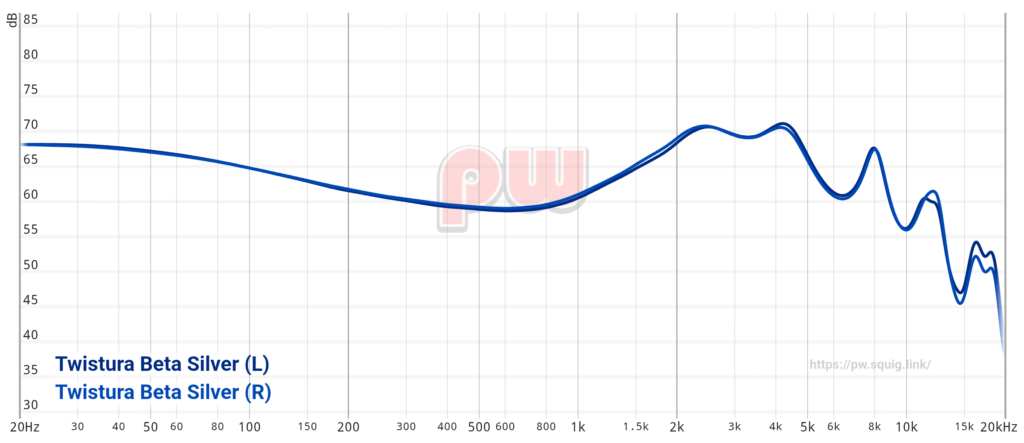
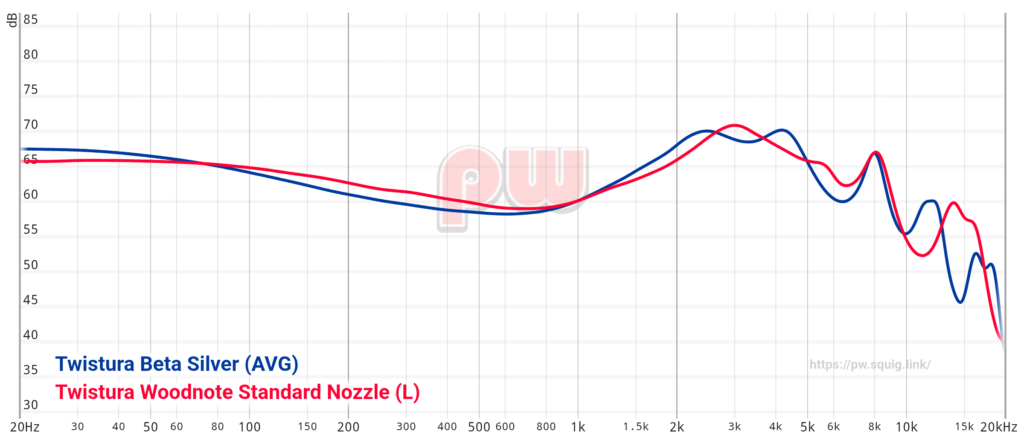
Now, to my ears the Beta comes across with a W-shaped signature carrying a slight sublevel lift and a certain upper-mids/lower-treble prevalence. I would say U or V-shaped, but the mids are not really recessed for me. Perhaps just looking at the graph you could come up with that conclusion, but to the ear this set has that present and vibrant midrange with nice placement against the rest of the mix. So, to me… W-shaped it is. I have heard from many people (prior to hearing them) that the Beta is a very natural sounding iem. Well, I want to slightly push back against that. I do find that tonally the Beta is a bit too upper mid/lower-treble heavy with slightly dryer notes up top and not enough bass presence to offset that brightness. This moderately brighter hue slightly colors the sound which takes its timbre to the brighter side of natural. Definitely close. However, another thing which leans this set away from “perfectly natural” is the faster and tighter transients. You’ll hear some harmonics being slightly clipped, similar to how a planar can sound. So not quite natural. Having said all of that… who cares? Whoever said that “perfectly natural” is the correct way to listen to music? I know a plethora of people who adore a brighter and analytically adept sound far more than “perfectly natural”. Certainly, the Beta is a version of a neutral-natural sound, but simply too energetic, too clean-lined, with notes defined by razor edge precision. Realistic to life doesn’t involve razors edge precision. Not in my world anyways. Life has some smoothness, it’s atmospheric. Sure, realistic timbre has clean and defined edges, but not so acutely defined like you’ll hear on the Beta. Does that make sense? Furthermore, the Beta has been a set that I’ve grown to really-really enjoy.
Glass Driver
This glass driver is no joke as it feels and sounds almost like a planar in its attack through sustain with a quicker overall speed and recovery. Complex tracks have proven to not be a problem. For the most part. There’s something both exciting as well as immersive about this set and I hope to put my finger on it in a way that makes some sense to you. Really a nice analytical set with enough fluidity and groove to be enjoyable for $119.
Bass Region
The low-end of the Twistura Beta is one of speed and punch with what I’d call a moderate level of actual bass emphasis. In fact, very similar to a Harman style shelf with a sub-forward and decently rumbly attitude. Enough weight to come across authoritative when a track displays such a thing, yet not enough to overly warm the mix, beef up the midrange note weight, or add any veil. I’d say it has enough slam to carry a healthy and palpable kick drum, bass drop, bass guitar, or any other low-toned instrument. For the most part anyways. Again, the bass region is sub-focused with a decently guttural judder when a track calls for it. No where near basshead levels either. However, the bass boys had already left this review at my “Sound Impressions” intro. Nevertheless, the bass region on the Twistura Beta is very well controlled, well defined, and nicely contoured. In fact, I’d say the entire low-end tuning is predicated on control, texture, and fast-twitch impact. This is a low end which can resolve even more complicated tracks, but it won’t show off a forceful and bulbous slam. The bass acts more as a foundation to contrast the upper mids with its nice fundamental slam and clean release. So, one thing you cannot call this bass is atmospheric. You won’t have those lingering decay trails mucking up the low-end but rather you’ll hear very distinct sub and mid-bass separation. I think it’s safe to say that this glass driver is very talented. Certainly, one of the more textured displays for a single DD at $119 with that hard snap attack, compact and fairly dense body, as well as perceivably tight note contours. Obviously, not all tracks will display such a thing, but for the most part you will not find many songs which are going to trip up this bass. Very resolving, clean, and fun enough when a track has some meaty bass.
Sub-Bass
The sublevels carry the most emphasis down low and they do so in a compact form to my ears. I think it’s pretty evident that Twistura didn’t want the bass to be a focus at all, but rather a well-balanced partner which will never enforce its warm will across the mix. Twistura’s glass driver takes full command of the region without any lag, blur, and with very precise starts & stops whilst also doing so with solid rumble and extension. I wouldn’t call the sublevel weight overpowering by any measure, but it is realistic in its presence. Not exactly chest thumping and bulbous, but appropriately measured, working with the rest of the mix rather than confirming domination. Let’s put it this way, the sublevels definitely carry authority. I can plainly hear this in many tracks. Songs like “Got Your Back” by Washed Out bring that hard low-level extended and droning bassline. With the Beta, the sound is dense enough, very well textured, and satisfyingly guttural. I like that the sub-bass isn’t overbearing or so profuse that it begins to smear the mix. Everything is tightly wound, hard-lined, and very clean. Also, the sub-bass performs the task of grounding the upper mids/lower treble very well. Altogether a nicely tuned region, with clean and compact notes which add to my music without congestion. This glass driver is no joke.
Mid-Bass
Twistura tuned the Beta with a slightly less potent mid-bass in comparison to the sub-bass, although it still has plenty of punch for most genres. Excluding anything which needs ultra-physicality as the Beta’s mid-bass is predicated on keeping the mix clean, free of veil, free of smear, free of masking promoting a clean midrange with only minimal bleed. One thing I’ve noticed is the Beta has some nice snap on attack, bodied punch, and quick rebound on kick drums, as well as nicely bodied bass guitars too. Enough kick and boom for Metal/Rock genres, but far from basshead. This is a very defined and agile mid-bass which can keep up with complicated bass passages well. The glass driver really does have a reaction time similar to a planar with its perceivably tight transients. With those tight transients you’ll hear subtly sharper leading edges, more cleanly lined, with a harder and less fuzzy attack edge followed by enough physicality for a strong groove. It’s a pretty fun mid-bass, a clean mid-bass, and a mid-bass which doesn’t sacrifice any other area or blur any fine lines across the mix. In fact, to my ears stuff like bass guitars, kick drums (for example) sit rigidly under most vocals and guitars etc. Certainly not too far forward but still foundational with plenty of that good shapely and contoured bass judder. Certainly, a quality bass all the way. Sorry bass-bois.
Downsides to the Bass Region
To my ears, I feel the only real drawbacks to the bass region will come from those who are avid bassheads, or those who really enjoy a beefy fundamental followed by a long, drawn-out resonant decay. No doubt there are a few sets that I greatly enjoy which have some big, boosted boom trailed by an atmospheric decay. Without question there will be some folks who will feel unsatisfied with the output of the Beta in that regard. Other than that, I really don’t hear anything else that I’d call out. The bass is very fast, it’s rigid, never pillowy, nothing fuzzy, it’s got great extension and moderate slam without clogging the mix or muddying the mix.
Midrange
To my ears the midrange is generally forward with an energetic feel to it. Slightly warmer in the lower half of the mids and more luminant in the upper midrange. I find timbre to be nice for a slightly more energetic sounding iem as well. Like I said, the Beta has what I’d refer to is an “off-natural timbre” or a vibrant version of a neutral-natural timbre. Some of the core points about this midrange are very clear and forward leaning vocals which have that lean density style note body, and very solid presence. I’d also say that the midrange is one which will draw out just about every miniscule bit of detail within your music. The mids have excellent note separation, airy, with distinct note contours. The midrange sound is smooth in its cohesiveness with nice transitions for a more energetic and dynamic sound. Especially impressive because the low-mids do carry a hair more warmth than the brighter and more radiant top end. At any rate, as crisp and exact as it is, the Beta has a smoother overall cadence and flow. Certainly not a warm, analog or earthy style and it definitely doesn’t carry any velvety inflections. Yet the Beta has an almost porcelain note groove and rhythmus. Not jagged, or coarse in its delivery. Listening to the Beta, I hear clean edges, crisp note peaks, very acute micro-dynamic shifts (noticeable in the right track) which marry wonderfully with a zestful macro-dynamic expression. Soft to loud or even slow to fast swings of dynamic energy come through cleanly without smearing. Big riffs and resounding choruses sound very engaging, musically saturated, and aren’t too shouty for me (using the Silver Nozzle). Clearly the glass driver is a very skilled DD which seems to naturally have that manicured demeanor that’s also tuneful as well.
Mids cont…
The midrange is certainly on the analytical side (as I alluded to), yet it isn’t without some euphonic and symphonic qualities. To my ears a lot has to do with the sound field dimensionality and the controlled dynamics. Sure, there is some upper mid sprightliness (which could be a problem), but using the Silver Nozzle I really don’t find this a huge issue. With all of that said, I do not find note weight and body to be thick, lush, or anything resembling full bodied in a traditional sense. If you desire heavy and rich note weight, then this is not the set for you. It’s too airy, too transient tight, a touch too vibrant, and simply too clean-lined to be “rich”. Be that as it may, the Beta has that nice lean-density to every note which (in my mind) is brought on by the distinctly clear note definition and dynamic, controlled timbre. Every note feels solid, sure they’re lean, but they have solid structure to them. Great for an analytically leaning single dynamic driver costing under $120. Basically, the mids won’t be to everyone’s taste, but I can assure you that they will please many hobbyists.
Lower-Midrange
For me, the lower-mids are the closest thing to natural on this set as there is a touch of warmth which makes the tonality skew more towards that organic sound. However, even with the subtle bass bleed, the low-mids are nowhere near thick, or lush. In truth, the low-mids are actually fairly close to what I’d call “realistic” in note body. I can hear this in many male vocalists. The measured bleed from the bass provides just enough that bass singers, baritones, snares, piano, guitars etc. feel implanted. Singers like David Draimen of Disturbed in the track “The Sound of Silence” does just that on the Beta. His lower register bassier moments have the guttural deep-rooted warmth and timbral accuracy to pull off his voice very well. The bonus is that all instruments sound separate and nicely placed within the sound field. Contrastingly, male vocalists with brighter voices come across slightly leaner, as well as more vibrant in pitch from natural. Noah Kahan in “Stick Season” will come across a hair leaner as his voice starts to climb in pitch. Though I never felt there was anything artificial, which is key. Males generally sound nice on this set if you can dig this style of tuning.
Upper-Midrange
Okay, for me, it’s the upper mids which are the focus of this set. They can either be the saving grace for some, and they can be the downfall too for others. I really feel that it comes down to nozzle choice. Using the Silver Nozzle the upper-mids come across clearly elevated and they characterize the entire presentation. No doubt they sound forward where vocals and guitar have a definite anterior and intimate sound. This can be amazing, and it may also be what keeps folks from enjoying this set. For sensitive listeners the upper-mids may sound a hair too forward, too dry, and they do have a slight lack in fullness. They can also sound a hair peaky, emphasizing articulation and precision over refined fluidity. Having said that, I find most tracks to be very engaging because of that forward tilt and very nice presence. The upper-mids have shimmer without the sizzle, they can sound effervescent, even symphonic at times too. Very much “presence focused” and cleanly displayed. I hear solid note textures in this region as well. The good thing is that the texture I hear rarely turns into abrasiveness. Females especially benefit from this signature. Females like Olivia Rodrigo in “Deja Vu” which presents her soft and silky voice in such a dulcet and intimate way that it almost feels made for her. Or a less flowery voice like Lady Gaga in “Shallow”. She sounds awesome. The texture in her voice, the clarity, the breathy inflections, they come across very enriched. Instruments generally sound pleasing too. Sure, they aren’t perfectly natural, but they also aren’t artificial either. There’s an obvious measured energy which Twistura has seemed to harness nicely.
Downsides to the Midrange
There’s no doubt in my mind that the largest downfall and issue with the tuning as a whole will be the upper mids. Oddly enough, I also think the greatest strength of the tuning can also be the upper-mids. It comes down to preference, as always. The upper midrange will be shouty and peaky to one and then enriching and engaging to another. However, I don’t feel this way with all nozzles. I almost wish that Twistura would’ve added a nozzle with a touch more warmth and bass reach. At any rate, the upper mids aren’t perfectly natural and can be a hair too pronounced for some. The other thing that I’ve noted is there are moments of dryness and the midrange does slightly lack richness and body. Perhaps “lack” is the wrong word. Still, preferentially, for some, the midrange won’t feel as easy and as pleasurable of a listen due to the less rich and organic timbre. I usually prefer more of a warmly tilted sound. However, in this case (with brain burn) I can enjoy its analytically tilted and brighter sound. Be that as it may, I do understand anyone who would find the midrange to be a bit too far in that direction. However, I have to stop there because I feel like Twistura nailed what they set out to do with a rare and unique driver type as they produced a highly detailed, extremely skilled set, airy, great note separation, a big and dimensional sound field, as well as a very transparent sound.
Treble Region
The treble region of the Twistura Beta is all about balance, yet with a touch of glimmer and solid extension. No doubt, the Beta’s treble is on the slightly brighter side of the aisle without ever sounding metallic or truly harsh using the Silver Nozzle. That’s very important. I say that because when the Beta is paired with the wrong nozzle, or the wrong source, it may become a hair too peaky for some folks. Remember, I did all critical listening with the Silver Nozzle. Anyways, the Beta’s treble is one of clean lines (just like the rest of the mix), highly transparent and actually quite smooth. No doubt I was expecting something a bit more jagged and edgy, but to my surprise, when using the Silver Nozzle I find the treble to be well-controlled and airy with more of a balanced approach to the upper end tuning. I do have to add that the treble is one of the areas which made the most change after all of those hours of burn-in. The treble most certainly calmed down after this. The point is that the treble is quite nice. I enjoy how cohesive the treble is and how well it transitions without any real issues. Certainly a well emphasized region as a whole, and it definitely has plenty of bite inducing & snap inducing brilliance… but it is never over-the-top for me. I think of the treble tuning is one which prioritizes crisp-yet-forgiving treble sheen and extension and I’m here for it.
Timbre
Friends, when I first heard this set, I really didn’t think I was going to review the Beta. I really did feel it was too upper mid and lower treble heavy with too much gleaming brilliance which turned an otherwise awesomely tuned set into a peaky problem. Brain-burn did the trick, source pairing is a must, tip rolling definitely helped, and burn-in definitely seemed to help. The treble most certainly calms down over time and usage, and even takes on a position of balance, rather than peaky problem. I actually enjoy the treble timbre using the Silver Nozzle. Timbre is actually very close to natural for me as this glass diaphragm renders treble notes unforced, and not too forward. I hear string harmonics which aren’t too edgy, cymbals and hi-hats which don’t sound splashy, with certain overtones sounding crisp enough revealing stuff like percussive snap or the silvery nature of a violin. Not perfectly natural, but not overtly artificial and metallic either. It’s a slightly enhanced version of a natural sound that really does highlight the subtle details very well. Notes sound distinct and contoured, and sibilance doesn’t ravage my listening sessions. Overall, timbre is actually quite nice. Of course, there is a huge caveat. That is; if you are sensitive to treble radiance, perhaps you should look elsewhere. Dark treble and rolled-off lovers should’ve stopped reading a while ago. Regardless, I happen to enjoy a crisp and lifted treble with good extension, and I certainly find that here.
Technically Speaking
As far as the treble region’s technical ability, the Beta seems to be one of the better single dynamic driver earphones in its class when it comes to attributes like detail retrieval, sound separation, imaging clarity, transient speed, etc. and the treble has a lot to do with that. Though, it’s really the talented driver that Twistura chose which probably makes the most difference. Definitely, one of the Beta’s strong suits is its technical ability, boasting impressive note control along with very clear treble resolution & It has a very transparent and airy presentation. The Beta has those fast transient highs which certainly help it to excel at illuminating the minutiae within my music. This region has some very solid micro-details and comes across as very well textured without sounding too dry or etched. Like I said, the treble actually has a smoother cadence in a very resolving atmosphere while treble notes still sound very distinct with solid separation. Furthermore, the upper end layering and imaging seem to be fairly precise with very solid spatial cues. Stuff like cymbals sound locked in place, vocalists sit dead center too. Also, extension into the upper treble is airy, voluminous, and brilliant enough without sounding sizzled and I haven’t really heard any splashiness or treble smear. This extension aids the stage very well and aids the overall tonality very well too.
Downsides to the Treble Region
The first thing I’d say is that the treble is not going to be loved by any warm-treble lovers. Those who desire a more rolled-off and less brisk sound up top have many different sets tuned for their preferences, the Beta isn’t one of them. As I have said many times in this review, the treble region is on the brilliant side and is more elevated in levity and emphasis. I’d also say that many straight-up tried-and-true treble heads are not going to find the Beta bright and biting enough. However, I’m sure there will be some treble lovers who enjoy the output here. Besides those two types of listeners I don’t think there are many others who will have issues. Now, I definitely hear some mild shout and peakiness with the Silver Nozzle, and that only escalates as you choose the other nozzles (Gold, Black). Any harshness is most certainly manageable and can be modded or skewed one way or the other by passive means (tip changes, source, nozzles). Or you can do like I did and simply mod the “Gold Nozzle” with a slightly denser mesh, which really helps this set sound AMAZING. I wish Twistura would’ve added different mesh material within the packaging so that the consumer could mod the sound in this way. Having said that, I am not reviewing any mods for this set. Obviously. Only the out-of-the-box sound.
Technicalities
Soundstage
The soundstage is one of the more pleasing and mildly holographic stages that I’ve listened to for a $119 single DD. I wouldn’t say it’s massive and it won’t set the soundstage standard within its price point. However, it is very impressive and truly aids the overall sound character of this set. In fact, the stage is one of the better qualities for me. As far as width, the Beta has what I’d call above average extents left to right. Not class leading and not what a typical DD presents near its cost. Not quite as impressive as the Beta’s older sibling, the WoodNote either. Now, I’d also say that the stage height is definitely on the taller side as you can make out top to bottom layers with good vertical imaging. Lastly and most impressive for me (always) is depth. I believe a stage needs some depth folks. This is one area that the Beta seems to surpass some of its class. Background elements of the stage are clearly behind vocalists with solid front to back layering which helps tremendously in giving the Beta’s stage presence a “wrap-around” feeling rather than a 2D flat plane of sound. You can quite easily image in your mind where the guitar is located, the drums, the secondary vocalists, and this is quite easy with the help of a fairly wide, fairly tall, and pretty deep stage. My opinion of course.
Separation / Imaging
In my opinion instrument separation and imaging are clearly stand-out features of this set. For the price range I have to include the Beta right up there with the ebst in its class. Granted, these are simply opinions, and I’m sure there are some even more analytically precise sets which do an even better job. Still, for a set with as much musical ability as the Beta to have such clearly defined placement and separation is quite awesome. I’d even say that denser passages of music with more complicated tracks the Beta resolves each individual instrument and layer much better than I would’ve thought. A track that I use solely for testing is “Bleed” by Meshugga. If you don’t know, this track is ridiculously complicated with so many fast-moving parts. You have crazy drums, chaotic double-kicks, along with wild guitar sequences and the Beta with its precise and speedy glass driver separates everything very well. Granted, it’s not the easiest thing to pick apart, but trust me, the Beta handles these complicated tracks just fine. Imaging walks hand in hand with the Beta’s ability to separate instruments. Imaging is precise, very clear, easily distinguished, and everything sounds as though they are locked in place. I have to imagine that the Beta would be excellent for gaming, though I have to admit I haven’t tried the for that purpose. All-in-all, the Beta does very well in these two metrics.
Detail Retrieval
I’d say that detail retrieval is excellent. Strong words for a strong performer. I personally have zero issues picking apart micro-details frequency wide. No doubt that detail trackers or analytical minutiae hunters would love this set. All of the subtle textures, micro-textures, or delicate minute subtleties are zeroed in on with relative ease. There are some rare moments of bass and treble masking, but for the most part this set is so well-controlled that this is a very few and far in between issue. I want to say that the Beta is tips in class for single DD detail retrieval under $150, but I could be wrong. Plus, I’m mostly going from memory, so take that as a grain of salt. Anyways, detail retrieval is excellent folks.
Comparisons
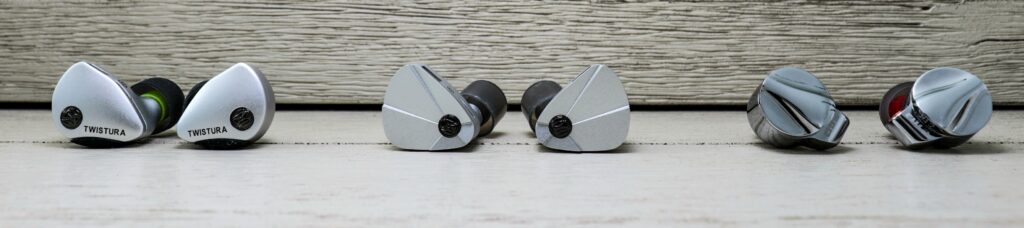
Twistura WoodNote ($151)
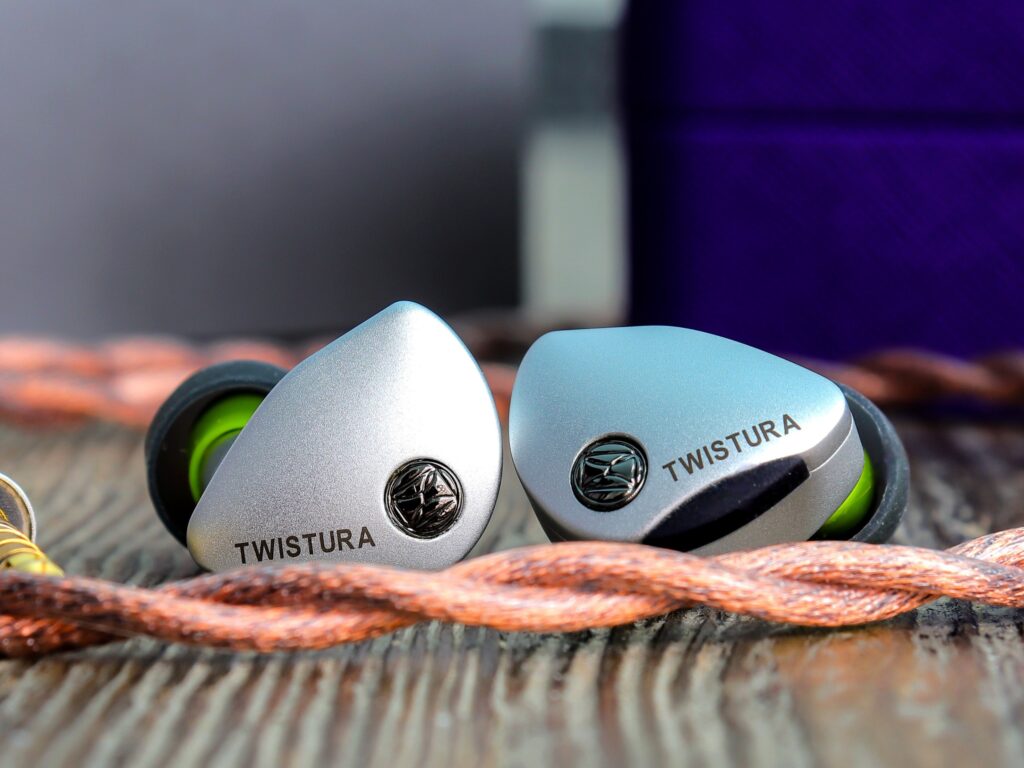
I reviewed the Twistura WoodNote (WoodNote Review) a couple months ago and I declared it one of the better single DD sets under $250. Quite easily actually. The sound value in this set is flat out awesome. Not just the sound value though. The “everything” is quality with the WoodNote. Take my word for it, it’s very good. Having said that, this is an unfair fight. The Beta is not as good as the WoodNote in many capacities. However, it does do a better job in some key areas too. Both are very solid additions to the market from this young brand. No doubt about it, Twistura should be proud of what they’ve accomplished. Now, the WoodNote is a 10mm wood grain diaphragm dynamic driver with some of the sweetest timbre I’ve heard for a DD anywhere near its price. No DLC can give you that, no titanium driver, no berylium driver, no LCP, no sir. It’s the earthy flavoring of the wood driver and the aluminum acoustic cavity along with every other tuning trick that Twistura was able to craft this set with which makes the WoodNote special. Also, it’s so musical. Musicality dripping out of every inflection from those nozzles. Just a great job. Again, unfair, but a good measuring stick for the Beta.
Non-Sound Stuff
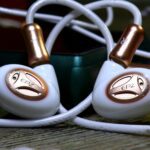
Everything about the packaging is similar, except the WoodNote comes with three more sets of eartips as well as a slightly better modular cable. Everything else is similar. Both sets have the same case, and both sets have similar tuning nozzles. Both sets also have wonderful packaging for their price point. Great accessories. Now, as far as the build is concerned, both sets come with very lightweight and very comfortable shells (Beta-6g WoodNote-7g). The WoodNote is a touch larger but not less comfy. Perhaps the Beta has sharper edges which might clip the ear at times, but both are nice. The Beta has an 11mm Glass Diaphragm Dynamic Driver and the WoodNote has a 10mm Wood Diaphragm Dynamic Driver. Both offer impeccable designs. I do like the matte smooth texture and beautiful design of the WoodNote a hair better, but I think both are ridiculously dope in aesthetic design.
Sound Differences
These two are vastly different in sound. The WoodNote is warm smoother, more richly weighted, and organic in timbre. While the Beta is sprightly, energetic, more analytically tuned, and brighter. Also, less of a natural hue to its sound. I find that both sets scale well, but the WoodNote scales further. It’ll sound even better with more clean power and better sources. Both sets represent their tuning styles very well.
Between the 20’s
Looking at the bass mids and treble, I’ll start with the low end. So, the WoodNote certainly has the denser, beefier, and more robust bass while the Beta keeps it tight, defined, and more streamlined. The WoodNote has the more organic and realistic bass whereas the Beta is simply better controlled, cleaner (by the slightest margin). Of course, the WoodNote is more fun and positively effects the rest of the mix better while the Beta has less of a rich bleed into the mids. Which brings us to the mids. No doubt the WoodNote carries that wonderful organic timbre, it’s warm/neutral, very clean but also smoother while not negatively effecting details and imaging ability. The Beta in the other hand is precise, transient tight, excellently transparent, and better detailed. For casual liste in the WoodNote is the better choice. The Beta is better for detail tracking, more clinical and also more shout inducing. The treble of the WoodNote is one which isn’t emphasized as much but has a more realistic sound, it’s smoother, more forgiving, and has better upper treble extension with less brilliance, which is awesome. Of course, the Beta carries that dryer, more tightly controlled and brilliant sound showing off a more energetic and spicy treble. As far as detail retrieval, the Beta is simply tuned in a way that it picks up those subtle sounds better. However, the WoodNote is no slouch whatsoever. Imaging is excellent on both sets, but the Beta has the better clarity to pronounce those images better. Layering on the WoodNote is better in all directions. Furthermore, the stage is simply better in all ways too on the WoodNote. Better width, better depth, and more immersive and engaging.
Final thoughts on this comparison
Honestly folks, I can’t really say one set is “better” than the other because both sets are differently tuned. This is a clear “Preference Battle” in which whatever tuning you enjoy more there will be a clear winner for you subjectively. For me and my wildly eclectic library of music which ranges all genres, I’d most certainly go with the more expensive WoodNote. It is an all-rounder set. The Beta is more of a niche style tuning. Both fantastic at their cost and fantastic for their tuning target.
Fiio FD15 ($149)
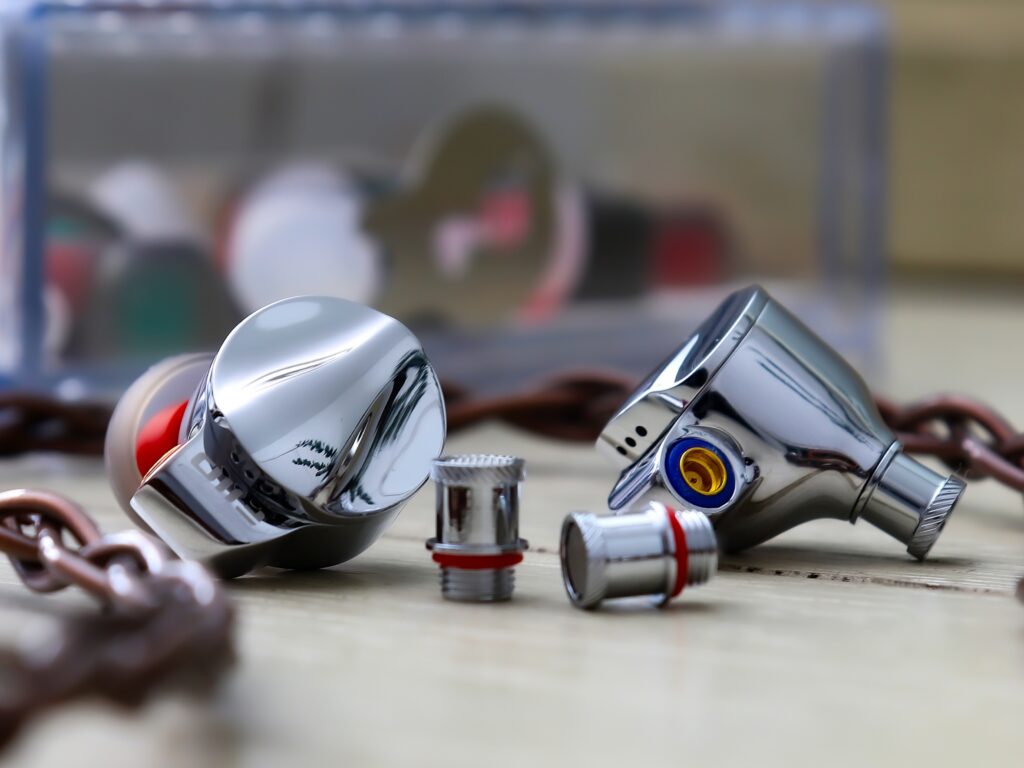
Oh the sweet and unheralded Fiio FD15 found it’s way to me and it was at that moment that I began a love affair with this set that has yet to die. Friends, I reviewed the FD15 all the way back in December of 2024 (FD15 Review) and I easily described this set as one of the best sets (not just single DD) under $200 for anyone who desires almost perfectly natural timbre and perfect balance. The tuning is absolutely lovely. What I found out was that this set is absolutely amazing for any modifications (after my review). Ask me about it and I’ll explain, for now I’m comparing them both out-of-the-box. Anyways, the FD15 has a huge 13mm DLC diaphragm single dynamic driver which has some of the sweetest neutral-natural timbre. It’s gorgeously designed, great everything really. Let’s check out some differences.
Non-Sound Stuff
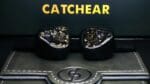
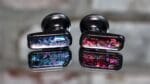
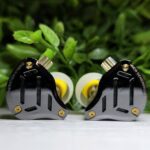
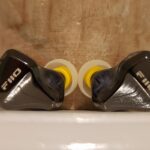
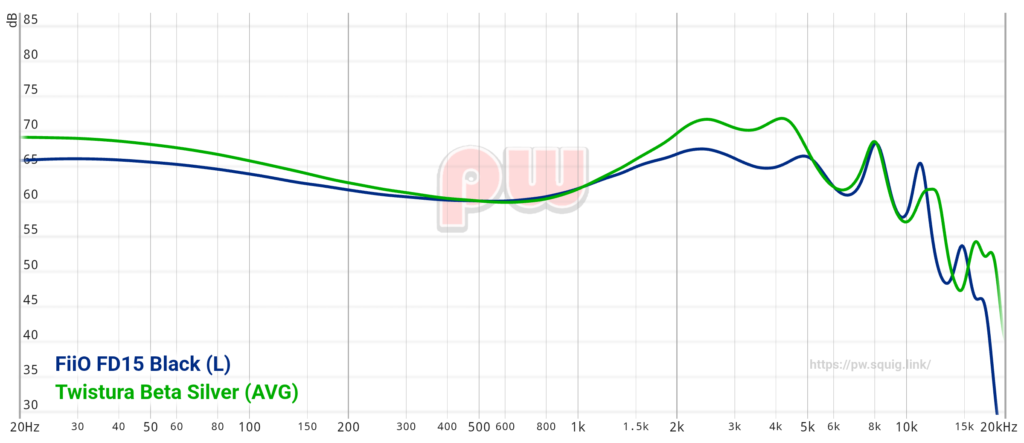
To begin, I do feel that the Beta comes with the better accessory haul and packaging altogether. As good as the FD15 comes packaged, it has one less set of tuning nozzles, the cable isn’t quite as good (it is still great and modular) and the case is that super weird drawer style case that Fiio was handing out. Weird. Anyways, the FD15 does come with more eartips, so there’s that. Beta wins. Both sets are built extremely well. However, Fiio built the FD15 out of hand polished and 5-axis CNC machined 316 grade stainless steel. I love aluminum for all of its strengths (lighter, still alloy), but stainless is simply better. Both are built very well though. Now, the Beta is much lighter (Beta-6g FD15-13g) while the FD15 is much smaller. As you can see in the picture, the FD15 is one of those really small cylindrical style designs, while the Beta is larger and more elaborate in design. I love the look of both. I couldn’t tell you which I think looks better. Probably with the Beta’s cable attached it has the more dope appearance, but that’s me. Both dope. The fit of both sets is good, and both are comfy though the FD15 is slightly less easy to get a seal for me. The FD15 has a larger 13.8 mm DLC single DD to the Beta’s 11 mm Glass DD.
Sound Differences
Once again, we have two top tier single DD sets for their particular tuning styles, and both are very different from each other. The Beta has a brighter hue to its overall sound whereas the FD15 comes across more like warm/neutral and better balanced. To my ears the FD15 has the more natural sound with its wonderful neutral-natural tuning. The Beta is clearly more energetic, more expressive in macro-dynamics, and livelier and more vibrant across the mix. To my ears the FD15 is slightly laid back, still good energy, but less intense. Again, much better balanced. Overall, the Beta is more of a technical beast while the FD15 is a purity beast. Again, both are solid for their tuning strategies.
Between the 20’s
When it comes to the bass region both sets offer slightly different tunings as the Beta is more sublevel boosted and punchy while the FD15 is mid-bass focused and warmer. The Beta has the cleaner, better defined, better separated, and flat-out higher quality bass. The FD15 has more of that warm slam, that satisfying boom (in a balanced way, never oversaturated). The midrange of the FD15 presents vocals in more of a honeyed and soothing way, more forward, intimate and musical in the mids.Also, the upper mids on the Beta are much more lively, much more boosted. Of course, the Beta has that energy, possibility of fatigue, but also the more technically skilled approach. Better details, better imaging clarity. Next, the treble of the Beta is much more intense, more bite, more treble punch, and better extension, better air, instrument separation too. The FD15 is more laid back, balanced, still solid extension, but better timbre, more laid-back. The Beta wins in all technical aspects (details, separation), except imaging is awesome on both sets though the Beta has cleaner and easier to discern imaging. Both sets layer the sound field well. Also, both sets have large stages with a holographic feel to the stage.
Final thoughts on this comparison
I came away from this comparison thinking once again that I’ve compared two totally different single dynamic driver earphones. One is balanced, smooth throughout, non-fatiguing, and perfect in its timbre realism. The other is so clean, so transparent, transients are tighter, cleaner, and it simply is the more skilled set. I should note that I’ve been harping on how good the FD15’s timbre is, but for the Beta’s tuning approach it’s timbre is really nice too. Honestly, both sets offer very nice listening experiences. This winner will be whatever tuning style you enjoy. You can’t lose with either set.
Genres
I have been adding in the “Genres” section because I figure it may help you out a bit when deciding. However, please take these thoughts very loosely. I explain this in every review but my thoughts on genres are very generalized. Nothing is set in stone. For every great genre for the Beta, I’m sure there are plenty of tracks which won’t do as well and vice versa, for every less solid genre there will be tracks which make me a liar. So take it in stride. I wouldn’t tell you to take it as a grain of salt, because I mean what I say, but take it loosely. This hobby is so diverse, just as diverse as these genres.
Good Genres
So, in my opinion the Beta does very well with Metal and Rock and all sub-genres of the two. You have the speedy driver, tight transients, fast bass control, crisp treble for resolving guitars and cymbals etc. It just works. Of course, there will be some moments of brilliance which may be too much. Any Pop music generally sounds great along with stuff like R&B as well. Another which I quite like is Acoustic Jazz joints. The natural textures, the speed, and separation of complex passages of Jazz music works very well on the Beta. Also, Live music actually comes across awesome on this set. Something about the stage, the brilliance, the punchy bass which really makes for a nice listen. I also like Classical and Orchestral stuff too as larger compositions are well separated and very clear to my ears. Lastly, Hip-Hop is a mixed bag. Mid-bass punch is great, but it lacks that basshead feel for those banger tracks.
Not So Great Genres
Anything which requires a bigger bass. It could be some Dubstep stuff, EDM, bass heavy Hip-Hop too. The bass is nicely emphasized and speedy enough, but the Beta isn’t going to provide that depth and overall slam needed. Also, any Opera (I have very few Opera tracks) which feature females can sound piercing at times. That upper mid lift really does escalate quickly with these types of tracks. However, I’m no expert in Opera and so you can take that for a grain of salt. Basically folks, any genre or track where you risk the upper midrange exaggerating the brilliance can be a problem. So, use your head, think logically, this is just to give you an idea. I hope it helps.
Last Words on the Twistura Beta
This review period was one of constant change for me. Only, from the point that I received the Beta until now, that change has only been for the better. Ya know, as a reviewer I realize that I have a huge benefit of being able to test these products over a long period of time. I get to see the changes that they undergo. I have time for brain burn to take effect, I have time for the drivers to settle, for burn-in/listen-in to do its good work. The consumer doesn’t have this opportunity all the time and so you have to take my word for it. If you remember, at the beginning of this review I said that the Beta was a hair too bright, too upper mid forward for me. I was not going to review this set. But, like any reviewer should do, I decided to put this set in the burn-in station and let the cards fall where they may. Thankfully, I didn’t have to write an email to Twistura telling them why I couldn’t review their product. I say that because everything settled. What once was bright and overbearing became very tolerable and even closer to balanced. The sound rounded out and really did surprise me. I’m still pretty surprised by the turn around. Now, I have a high tolerance for bright sets. Always have. Even so, I do feel that the general population of hobbyists will enjoy this iem if they enjoy a more analytically tuned sound. You just have to do the work to get this glass driver where it needs to be.
Some Mods
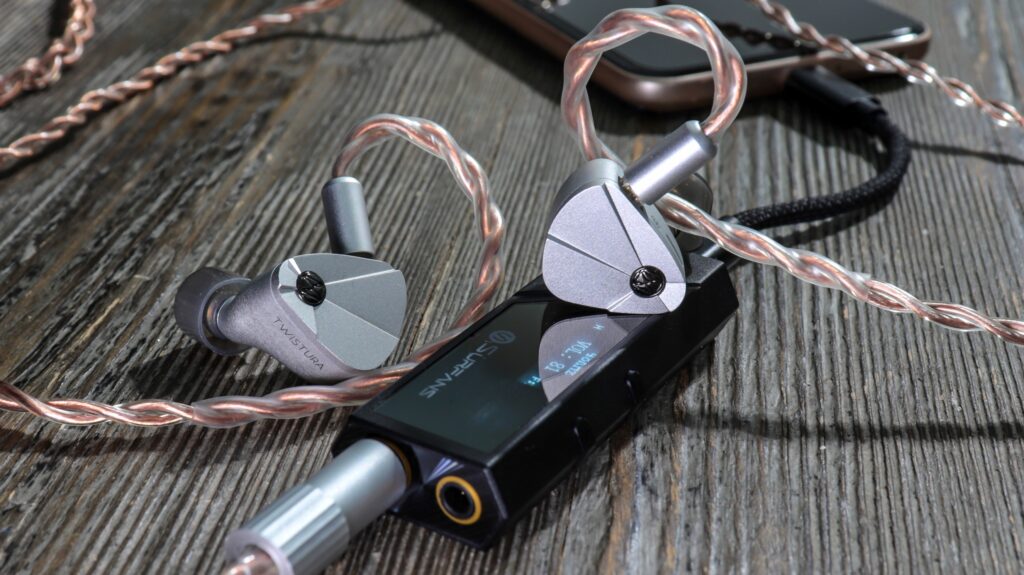
Past burn in, I did a couple other things which saved this set for me. For one, I switched to Dunu S&S tips. They go deeper in the ear which helps tremendously, and I decided I’m only using the much more tolerable Silver Nozzle. Now, with that all said, I do recommend that Twistura add in a nozzle with a bit more density to their mesh. I actually modded the Gold Nozzle and put a thicker mesh inside, just for fun. That damping helped the upper-mids to smoothen out, the bass became warmer, the treble less spicy, and the overall signature gained musicality very well. The bonus is that the technical ability was still very high. At any rate, this set is absolutely fantastic for modifications folks. It has the tuning template to be able to really dial in the sound. Just with some easy to perform passive modifications. However, this whole paragraph is a side note. Back to the review.
Enjoyable
With the competition being so great I find it hard for me to crown any one set as the best. It’s almost impossible. Maybe some all-rounder single DD under $150 takes that crown. However, for me the Beta is always going to be more of a niche tuning which will do extremely well for some genres and not as great for others. I actually like sets like this. They specialize in certain genres or tracks. You know what you are getting and with the Beta you know you are getting a solid sub-$150 single dynamic driver earphone which can and will perform just as well “technically” as any single DD in the market within its class. I’ve heard most of them folks, some I reviewed and some I decided not to. I can tell you with absolute assurance, if the Beta sounds like the type of tuning that you’d enjoy, then it will be very much loved.
The Why…
Because the Twistura Beta comes packaged very well. Easily one of the best unboxing experiences within its price point. Twistura did a fine job. The build is stellar as the Beta is very lightweight at 6 grams each earphone and sits perfectly snug in my ears without worry of ear cramping or growing uncomfortable. Just a nice fitting iem. Also, the Beta looks so cool. So understated yet stylish with its modern Industrial design. Twistura only makes beautiful things. However, it’s the sound which makes this set a definite good purchase. The sound is so energetic and lively with expressive macro-dynamic energy that quite literally is one of the best Controlled iems that run under $150. The note control and note definition are uncanny, so clean, so transparent, so layered and so enjoyable. Folks, this isn’t even my favorite tuning. I typically enjoy a more warm and musical experience. However, the clean layers, the fast and perfectly contoured notes, the brilliance which takes me right to the edge. It’s AWESOME. This is what makes a mostly analytical iem fun. Also, although it’s “mostly” analytical the Beta has plenty of melodic and musical rhythm and groove. This set is not without fluidity. That said, the technical ability is very nice with easy to identify details throughout the mix, great note separation, distinct imaging (probably great for gaming), and a holographic sound field. I have no doubt in my mind that the Beta will fit a large portion of the listening public very well. This is another easy rec. Nice work Twistura.
Beta Pros
-Price to performance
-Build Quality is nice
-The design/aesthetic is great
-Packaging and accessories haul is top tier for the cost
-Very clean
-Exceptional technical performance
-Very clean sound, speedy in transient ability, very transparent
-Controlled and highly textured bass with a good hard punch, nice extension too
-Midrange is very energetic, crystal clear, hard-lined notes, good density
-Treble sparkles, controlled-brilliance, greater extension without pierce (only with Silver Nozzles)
-Detail retrieval is fantastic
-Imaging is fantastic
-Layering of the sound field is very solid for a $119 single DD
-Nice and deep stage with solid width and height
Beta Cons
-Fit may not work for everyone
-Very much a tip sensitive set
-Also very source sensitive (important)
-Gold and Black nozzles can be fatiguing, pretty brightly tuned
-Not for smooth, warm, and rich lovers
-Upper midrange can be fatiguing with any nozzle for those sensitive to shout
-Not everyone likes such an analytically focused iem (still has some decent musicality)
-If you are a basshead or even a moderate bass lover… keep looking, the Beta isn’t for you
Conclusion
To conclude my full review and feature of the Twistura Beta, I have to thank the good folks over at Twistura. Thank you so much for being helpful and never asking anything of me but my honest opinion. Sure, this review was positive in that… I like this set. But it wasn’t all positive and I definitely outlined that the Beta won’t be for everyone. I had the freedom to express exactly what I felt, and for that I thank Twistura. Thank you for sending the Beta to me, I am very grateful. I also need to thank you, the reader, for taking the time to actually click the link to this review and spend some time here. Thank you so very much. Every click, every view, every minute spent at our website mobileaudiophile.com helps. It really does mean the world to us.
Other Perspectives
So you’ve just read my entire review. Now, go and read someone else’s. Not everyone is going to be of the same opinion as me folks. I guarantee that not everyone will have the same view of the Beta as I do. This set is too polarizing with its tuning for everyone to enjoy it. That’s just a fact of life and certainly a well-known understanding in the hobby. We are all so very different. We don’t all have the same music library, likes and dislikes, or audio gear. On top of that, we don’t all hear the same. Also, we haven’t all been down the same road in audio. These are very important differences from one person to another. This is why I say to you that you should take a moment and read the perspectives of other reviewers. It can only be a good thing. With all of that said, I think I’m done folks. So please take good care, stay as safe as possible and always… GOD BLESS!!
Non-Affiliated Purchasing Links:





No Comment! Be the first one.