





























































































































What Different Music Genres Do to Your Mood: A Practical Map of Sound and Emotion
Table Of Content
- Classical — structure, complexity, and emotional range
- Jazz — social warmth and moderate complexity
- Electronic music — tempo and the body
- Hip-hop and R&B — narrative engagement and social emotion
- Rock and metal — arousal, catharsis, and the anger paradox
- Folk and acoustic — grounding and presence
- Using this map
Most people treat their music library the way they treat a refrigerator — they open it, look around, and reach for whatever they feel like without thinking too hard about why. That works. But there’s another way to use it, one that relies on something the research is pretty clear about: different musical structures reliably produce different emotional states, and those effects are consistent enough to be useful.
This isn’t about assigning simplistic moods to genres. Jazz doesn’t make everyone feel sophisticated. Metal doesn’t make everyone feel aggressive. The picture is more interesting and more specific than that — it’s about what the underlying acoustic and structural features of music do to the nervous system, and how genre maps onto those features with enough regularity to give you a working guide.
The variables that drive emotional response
Before genre, it helps to know what’s actually doing the work. Researchers studying music and affect have identified a cluster of features that predict emotional response more reliably than genre label: tempo, mode (major vs. minor), dynamic range, timbral brightness, rhythmic regularity, and melodic contour.

Fast tempo with regular rhythm and major key reliably produces arousal and positive valence — energy, happiness, activation. Slow tempo with minor key and sparse texture produces low arousal and negative valence — sadness, nostalgia, introspection. These are not cultural effects; studies conducted across cultures without prior exposure to Western music find similar responses to these features. They appear to be rooted in how the nervous system processes acoustic information.
Genre is essentially a bundle of these features with particular cultural context attached. When a genre reliably uses specific combinations of tempo, mode, and timbre, it produces predictable emotional tendencies. Not guarantees — personal associations, memories, and lyrical content all modify the base response — but tendencies you can actually work with.
Classical — structure, complexity, and emotional range
Classical is a wide category, but its core characteristic as a listening experience is structured complexity at low-to-moderate tempo. The emotional range is enormous, which is why generalizing is difficult. What the research shows is that complex, formally structured music — the kind where your brain is tracking multiple voices, anticipating resolution, processing harmonic tension — produces an engaged, alert state with strong aesthetic emotion but not high physiological arousal.
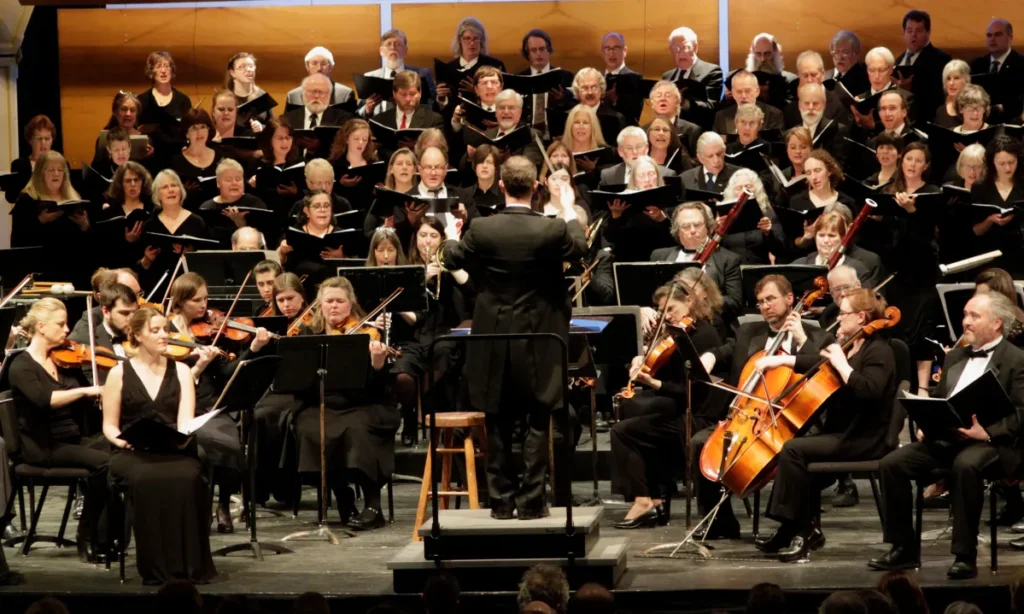
Baroque in particular — Bach, Handel, Vivaldi — with its mathematical regularity and moderate tempo has been studied extensively in concentration research. The regularity of the rhythm provides a kind of predictive scaffold that seems to free cognitive resources rather than consume them. People working on complex analytical problems often gravitate to Baroque without knowing why.
Late Romantic and contemporary classical — Mahler, Shostakovich, Pärt — operate differently: high dynamic range, emotional extremity, more ambiguity in resolution. These tend to produce stronger affective states, more frisson, more of what researchers call sublime emotion — the awe-adjacent feeling that involves both positive and negative valence simultaneously.
Jazz — social warmth and moderate complexity
Jazz’s most consistent emotional signature, across styles, is social warmth. The call-and-response structure between instruments mimics conversational dynamics, and the brain processes this with the same neural regions involved in social cognition. Listening to jazz activates the mirror neuron system more than most other genres.

Tempo and subgenre matter significantly here. Hard bop and post-bop at medium tempo — Coltrane’s ballad period, Miles Davis’s Kind of Blue era — tend to produce relaxed alertness, the state associated with reduced cortisol and maintained attention. These are among the most studied genres for stress reduction, and the results are consistent.
Free jazz and avant-garde work differently. The removal of regular structure and resolution creates sustained mild tension that some listeners experience as stimulating and others as aversive. Individual tolerance for ambiguity predicts which response you’ll have.
Electronic music — tempo and the body
Electronic music’s emotional effect is unusually direct because it operates primarily through tempo, rhythm, and bass frequency rather than harmonic complexity. The body responds to rhythm before the cognition does — a strong, regular beat at 120–140 BPM produces a measurable increase in heart rate and motor activation regardless of whether the listener is paying conscious attention.

This is why techno and house are effective for physical tasks — running, training, sustained physical output. The effect isn’t purely psychological; regular rhythmic entrainment genuinely syncs with physiological rhythms, and the synchronization produces arousal that persists.
Ambient electronic — Eno, Stars of the Lid, slower drone-based work — operates at the opposite end. Very slow tempos, wide reverb, sustained rather than rhythmic, produce a distinctive low-arousal state that’s different from silence: quiet without emptiness. Useful for recovery, creative work where you want cognitive openness without stimulation, or simply winding down without the abrupt transition of silence.
Hip-hop and R&B — narrative engagement and social emotion
Hip-hop’s emotional register is unusually broad because its primary vehicle — language — carries content that dramatically modifies the base acoustic response. The beat and production provide the floor, but what you end up feeling tracks closely with what you’re being told. Aggressive lyrical content over the same production raises cortisol levels compared to introspective content; this distinction doesn’t appear in most instrumental genres with the same force.

What hip-hop and R&B do consistently is produce social engagement. The genre’s deep connection to identity, community, and shared experience activates the same neural systems as social belonging. For listeners with strong personal history with the genre, this is amplified significantly through autobiographical memory.
Tempo-wise, boom bap and lo-fi hip-hop at around 80–90 BPM produce a state similar to mid-tempo jazz: relaxed but not soporific. This is why lo-fi has become ubiquitous study music — the tempo and layered but non-complex texture occupy the auditory cortex without competing heavily for cognitive resources.
Rock and metal — arousal, catharsis, and the anger paradox
Rock and metal have a counterintuitive emotional profile that took researchers a while to untangle. High-tempo, high-distortion, aggressive music raises arousal and sympathetic nervous system activity — heart rate, cortisol, physiological readiness. Intuitively, you’d expect this to produce anxiety or agitation in negative emotional states. Frequently it does the opposite.
The catharsis effect is real, though its mechanism is debated. One explanation is that music matching your emotional state provides validation and reduces the sense of isolation in that state. Another is that the energy output of physical response to loud, driving music depletes arousal faster than passive emotion processing. Either way, studies on listeners who choose heavy music when angry or stressed consistently report feeling calmer afterward, not more agitated.

The key variable is listener choice. When people choose heavy music in a negative state, it helps. When heavy music is imposed on them in a negative state, it doesn’t. This points to agency and prediction as part of the mechanism — which maps back to the dopamine research from the neuroscience piece.
Post-rock and progressive rock occupy an interesting middle ground: the dynamic arc from quiet to loud and back, often without lyrics, produces a formal emotional journey that audiences track consciously. The buildup-climax structure of bands like Explosions in the Sky is almost cinematic in how it engineers the anticipation-reward cycle.
Folk and acoustic — grounding and presence
Acoustic music — folk, singer-songwriter, traditional forms — has a distinctive quality that electronic and produced music lacks: physical immediacy. A recorded acoustic guitar captures the sound of a physical object in a physical space, and the brain processes that differently from synthesized or heavily produced sound. There’s something in timbral naturalness that produces presence rather than spectacle.
The emotional signature of folk and acoustic tends toward grounding — a settling effect that’s different from relaxation. Relaxation reduces arousal. Grounding reduces what researchers call mind wandering and self-referential rumination. People prone to anxiety often find acoustic music more effective than ambient electronic for quieting a busy mind, despite ambient’s lower tempo.

Lyrical content matters a great deal here. Folk lyrics that deal directly with loss, memory, or hardship are processed as emotional narrative, not just musical structure, and produce a particular bittersweet state that listeners often describe as simultaneously sad and comforting. The term for this in affect research is “mixed affect” — the coexistence of negative and positive emotional valence — and music is one of the few reliable ways to produce it intentionally.
Using this map
The practical application is straightforward once you accept that your emotional state and your listening choice have a genuine relationship that goes both ways. Music doesn’t just reflect how you feel — it moves you toward something.
For focus and sustained cognitive work, low-vocal, moderate-tempo music with structural regularity works best: Baroque, lo-fi, ambient electronic, jazz at 70–90 BPM. For physical energy, regular high-tempo rhythm, elevated bass, 120 BPM and above. For emotional processing or catharsis, match to state before shifting — heavy music for heavy moods, then let it migrate. For recovery and presence, acoustic and folk, preferably low production complexity.
And for pure listening — the kind where you sit down, close your eyes, and let the session be the thing — complex music that rewards attention: post-rock, late Romantic classical, jazz that goes somewhere, anything with enough architecture to keep you tracking without effort. That’s the state this hobby is really built for.
If you want the full picture on how listening habits affect your health, the Sound & Health guide covers all of this in one place.






No Comment! Be the first one.