


















































Disclaimer
Hello everyone! As always, before we get started, I want to let you know that FiiO sent me the Snowsky Melody to review. I’m not being paid for this, and FiiO hasn’t asked me to say anything specific, check my review before posting, or given me any schedule for publishing.
Table Of Content
What you will read here is 100% based on my own experience with the Melody. I always try to be as fair and objective as possible, but at the end of the day this is just my take, and everyone values things differently, and that’s part of what makes this hobby so enjoyable.
Big thanks to FiiO for giving me the chance to test out the Snowsky Melody, and of course, a huge thank you to you for reading and supporting my reviews. It really means a lot to me!
Introduction
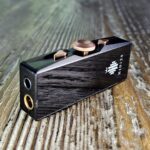
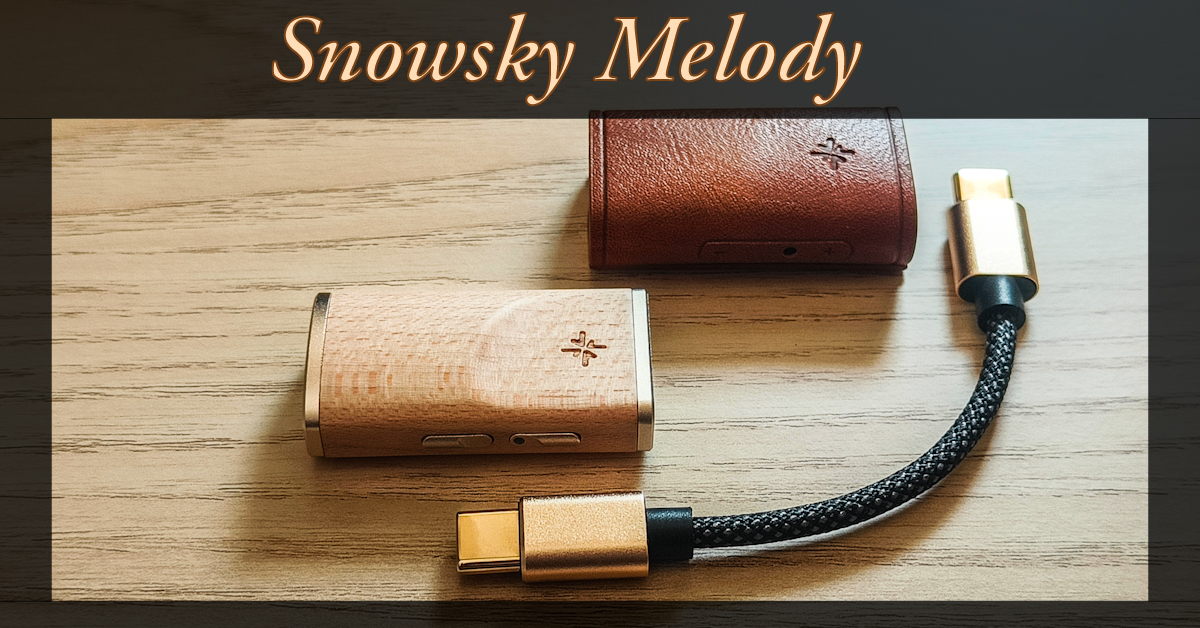
I see a lot of tiny DAC dongles on the market, but the Snowsky Melody made me pause and smile because it is a tiny dongle wrapped in real wood, and it looks so nice and different from the competition. Snowsky sits under FiiO as the more retro style and budget focused line.
The Melody, as no surprise, runs on dual CS43131 DACs, as do most of the dongles around this price. Of course you get both ports, 3.5 single ended and 4.4 balanced, and the best part is that for just 40$ there is a proper 10 band PEQ I can edit from my phone, in line mic support on 3.5 for quick calls, an SPDIF out, and a couple more options in the FiiO Control App, which we will talk about later in this review.
So without further ado, let’s get started with the review of the Snowsky Melody.
Unboxing
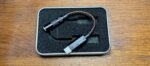
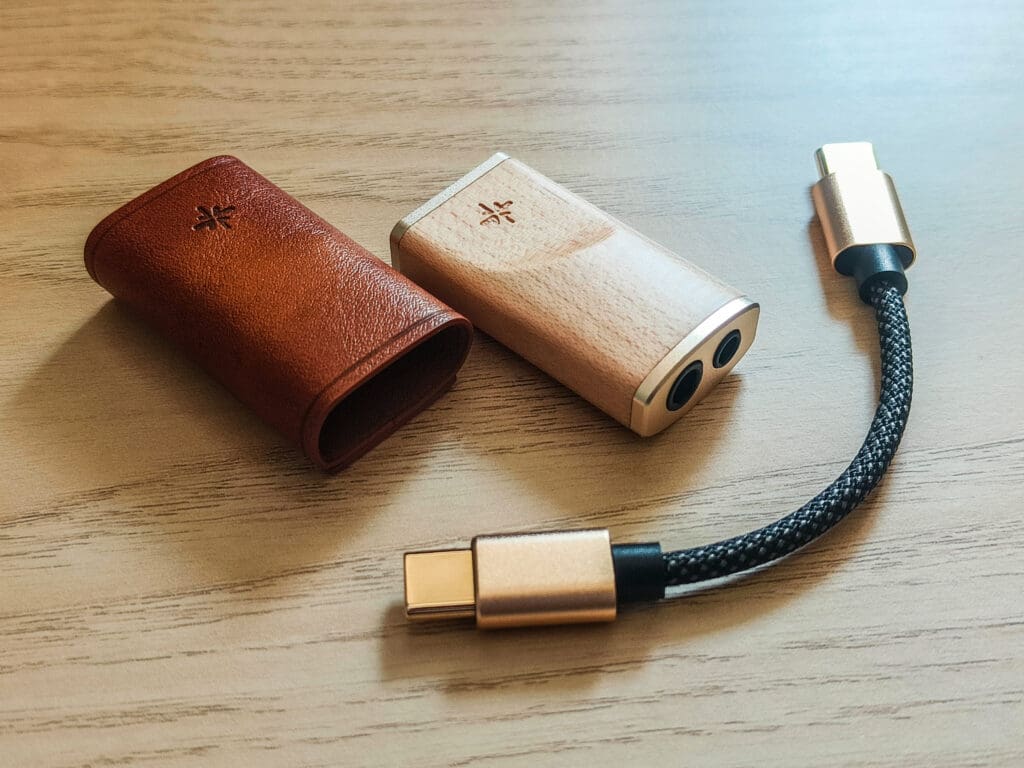
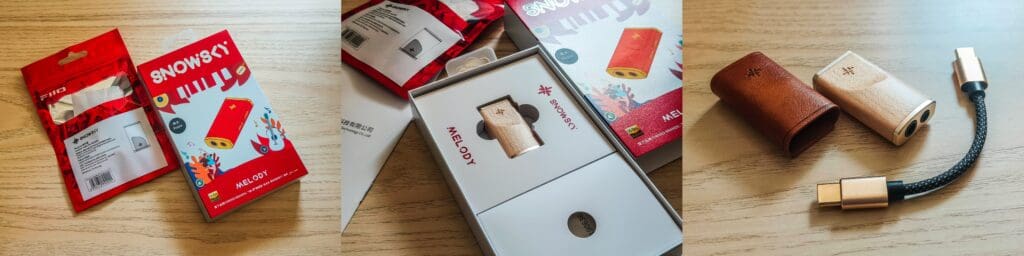
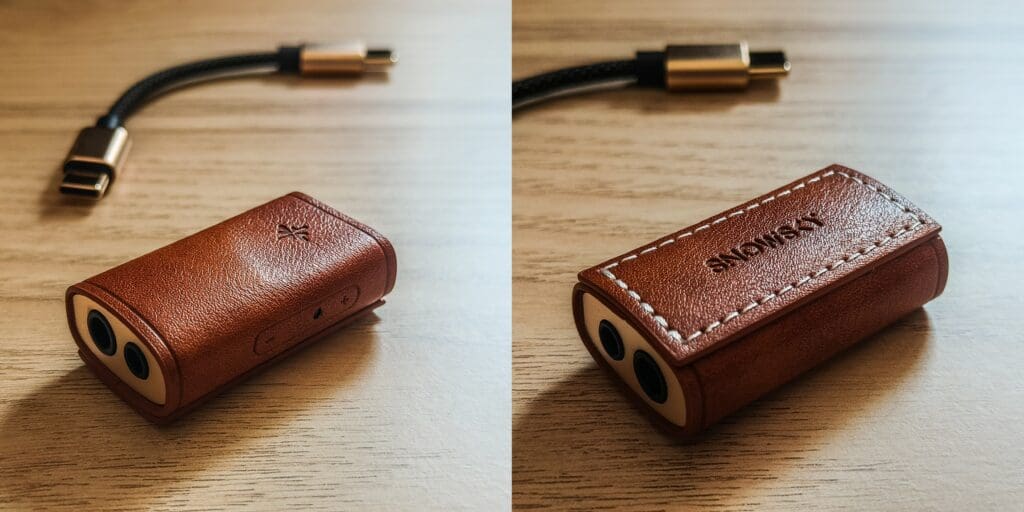
Small, bright box, very Snowsky like. Inside, the Melody sits in a snug cutout. Under it I get a short braided USB C to C cable and the papers. The leather case in my photos is sold separately for about 10 dollars.
The cable is genuinely very good. Soft, flexible, and the plugs feel very good and high quality. I like using it, and it’s probably the best cable I’ve seen in this price range.
My only complaint is the missing USB A to USB C adapter. That would help with older laptops or desktop fronts.
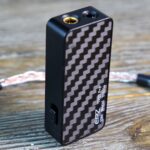
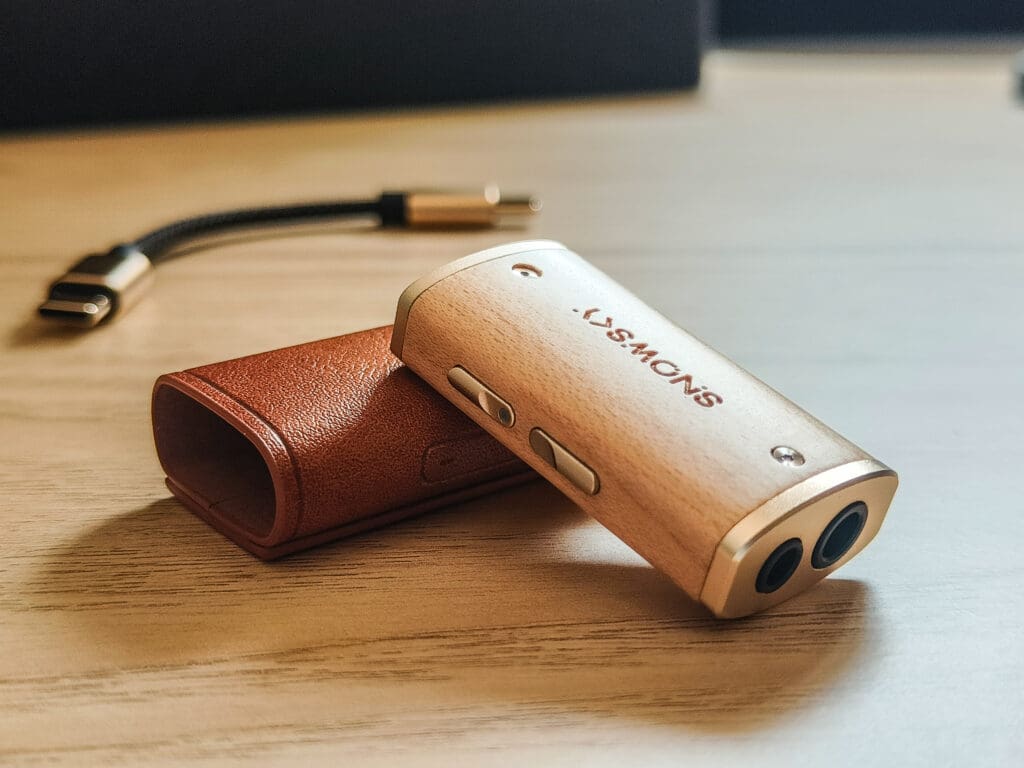
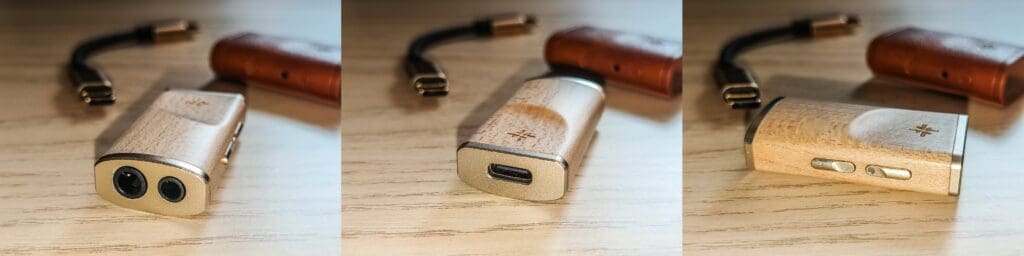
The build is high quality and looks super clean, and in my opinion, this is one of the best looking dongles out there. The wood is smooth, the metal ends line up well, and both jacks sit straight. For 40 dollars it feels very well made.
Technical Specifications
Specs:
- DAC: Dual Cirrus Logic CS43131. USB/DSP: SPV5048.
- Decoding: PCM up to 384 kHz, 32 bit; DSD256.
- Outputs: 3.5 mm single ended with inline mic and button support; 4.4 mm balanced; 3.5 mm can output S/PDIF coax via adapter.
- Power (3.5 mm): 100 mW per channel at 32 Ω. SNR: 124 dB A weighted. THD+N: 0.0006 %. Crosstalk: −76 dB. Output Z: <0.5 Ω.
- Power (4.4 mm): 250 mW per channel at 32 Ω. SNR: 127 dB A weighted. THD+N: 0.0003 %. Crosstalk: −121 dB. Output Z: <0.5 Ω.
- UAC modes: UAC 1.0 and UAC 2.0. Platforms: Android, iOS, Windows, macOS, plus consoles in UAC 1.0.
Build quality
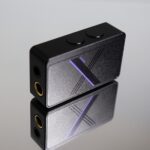
I have the Maple version. There are two finishes, Maple and Walnut, both real wood and looking very nice. The shell is a small rounded block with metal end caps and volume buttons and two jacks on one side, 3.5 mm single ended and 4.4 mm balanced, and USB Type C on the other side. Size is about 42 x 22.5 x 11.5 mm and the weight is around 10 g, so it feels light in the pocket but very solid and quality in the hand. The wood grain gives it a warm and classy look that really stands out next to the usual metal dongles. Oh, and there is an RGB indicator that shows the sample rate.
Internal components
Inside it runs a dual Cirrus Logic CS43131 DACs. It handles up to 32-bit 384 kHz PCM and DSD256. Power is rated at about 100 mW per channel into 32 Ω from the 3.5 mm jack and about 250 mW per channel into 32 Ω from the 4.4 mm jack. The 3.5 mm port can also act as a coaxial S/PDIF out, and also supports a mic input.
FiiO Control app features
- UAC version: UAC 1.0, UAC 2.0
- Gain: High gain, Low gain
- HID button mode:
- A: short press once to decrease or increase volume by 1 level, long press 2 seconds to switch to next or previous track
- B: short press once to switch tracks, long press 2 seconds to decrease or increase volume continuously
- Indicator light: On or Off
- Blue: PCM ≤ 48 kHz
- Yellow: PCM > 48 kHz
- Green: All to DSD
- Inline microphone: On or Off
- PEQ: 10-band PEQ
- S/PDIF enable: On or Off
- DRE: On or Off
- DAC work mode: Class AB, Class H
- Volume control mode: 60 steps, 120 steps
- Audio level based on volume control mode
- Channel balance
- Digital filters: minimum phase fast roll-off, linear phase fast roll-off, minimum phase slow roll-off, linear phase slow roll-off, non-oversampling filter
Sound performance
Describing a DAC’s sound is always tricky. If it is clean, quiet, and has enough power, it will probably already sound good. The Melody surely does those for me. With all my IEMs there is zero hiss, even on high gain. The background is completely silent, and I can listen absolutely quietly without any noises.
Power is fine for what it is. The 4.4 output gives me enough power for many of my headphones. It will not drive hard to drive planar headphones, but it can handle easier to drive headphones just fine, and of course it runs every IEM I own with ease.
Tonally, I hear it a tiny bit on the warm side compared to some other dongles I use. And it might just as well even be a placebo effect. Either way, it sounds good, and I have absolutely zero complaints here. It feels very clean, and the dynamics are great at normal listening levels, and even on high volume, I don’t hear any noises. It just does a great job for what it is.
What makes it more fun for day to day is the control I get from the FiiO control app. I can set gain, pick my volume step, and use the 10 band PEQ to change the sound how I like. This much customization is pretty rare at this price.
Bottom line: I like how it sounds, and I like how it looks. Quiet, clean, and versatile. For 40$ it’s an easy pick and a no brainer.
Comparisons
Tanchjim Space
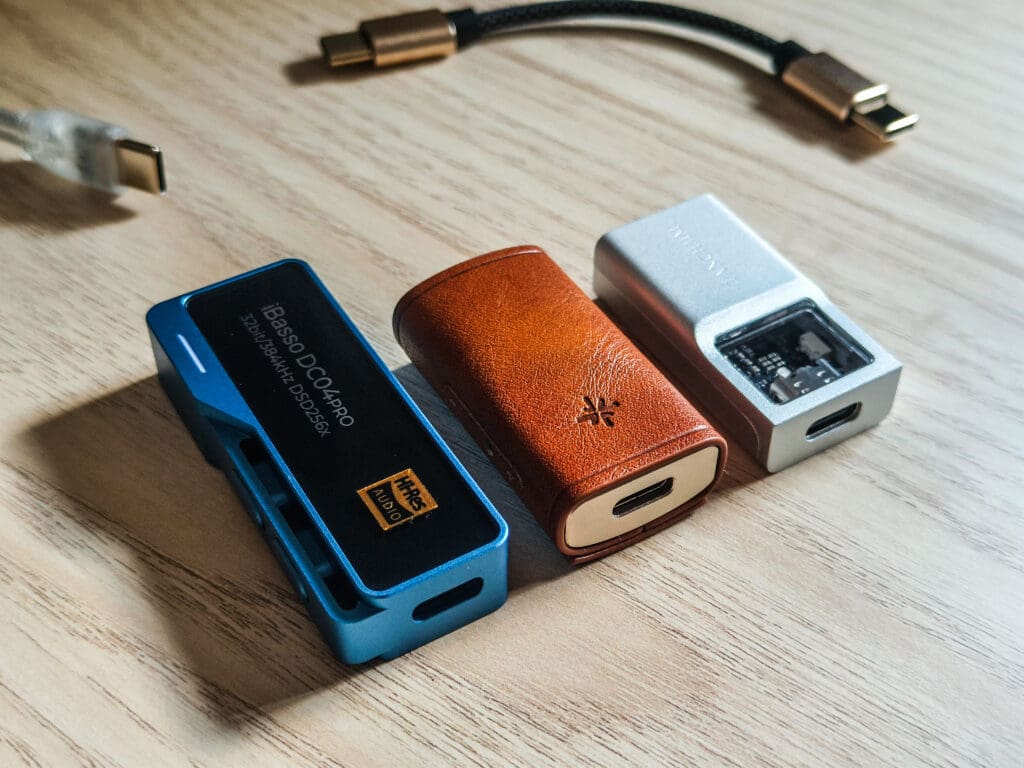
Both are tiny. The Space and the Melody take up almost no room, and they are the tiniest dongles that I have seen. On paper the Space does 230 mW balanced, and the Melody does 250 mW balanced, so power is basically the same in real use. The Space costs much more at full price, though it often goes on sale and can be found for much less than the asking 90$ MSRP. Build is where I lean toward the Melody, although the see through window of the Space is very nice. The real wood body feels nicer in the hand, and overall it looks cleaner. Soundwise, they both sound clean and clear. Maybe, and just maybe, I hear the Melody as a touch warmer. It is a small change, so small that it might be a placebo.
iBasso DC04Pro
The DC04Pro is still a benchmark for CS43131 dongles in my opinion. It has a bit more power at 280 mW balanced and a larger body. The Melody is smaller, and I actually prefer its build and the way it looks. In day to day listening, all three are excellent and land in the same clean, quiet, and mostly neutral zone, with the Melody again feeling a a bit warmer to me. Pricing swings a lot. The DC04Pro costs 120$ MSRP but also can often be found for a much lower price. Even so, the Melody wins on price to performance for what I need. It does the job, looks great, and the FiiO Control app gives me more tuning and quality of life options than most rivals at this level.
Value
All three sound great. The Melody gives me the most for the least. Its tiny size, great build quality, and clean output, and the FiiO Control App give a lot of versatility. For 40 dollars it is the easy pick.
Conclusion
The Snowsky Melody hits pretty much all the points for me. It is tiny, well built, and the real wood finish looks very good. The build quality is great, the included C to C cable is genuinely amazing, and the only miss in the box is the lack of a USB A to C adapter. The optional case is nice, but it is sold separately.
Sound is clean and quiet with zero hiss or noise. Power on 4.4 is enough for most of my headphones, though it will not drive hard to drive sets. Soundwise it sounds a bit warm to my ears compared to some other CS43131 dongles I own, but nonetheless it sounds great.
What seals the deal, in my opinion, is the FiiO Control App. The FiiO app gives me proper PEQ, two gain modes, details like volume step range and HID button behavior, and much more.
Bottom line, if you want a tiny dongle DAC that looks very nice and sounds no less, drives IEMs perfectly, and gives you a lot of control for just 40$, the Melody is the one I would buy.
Pros
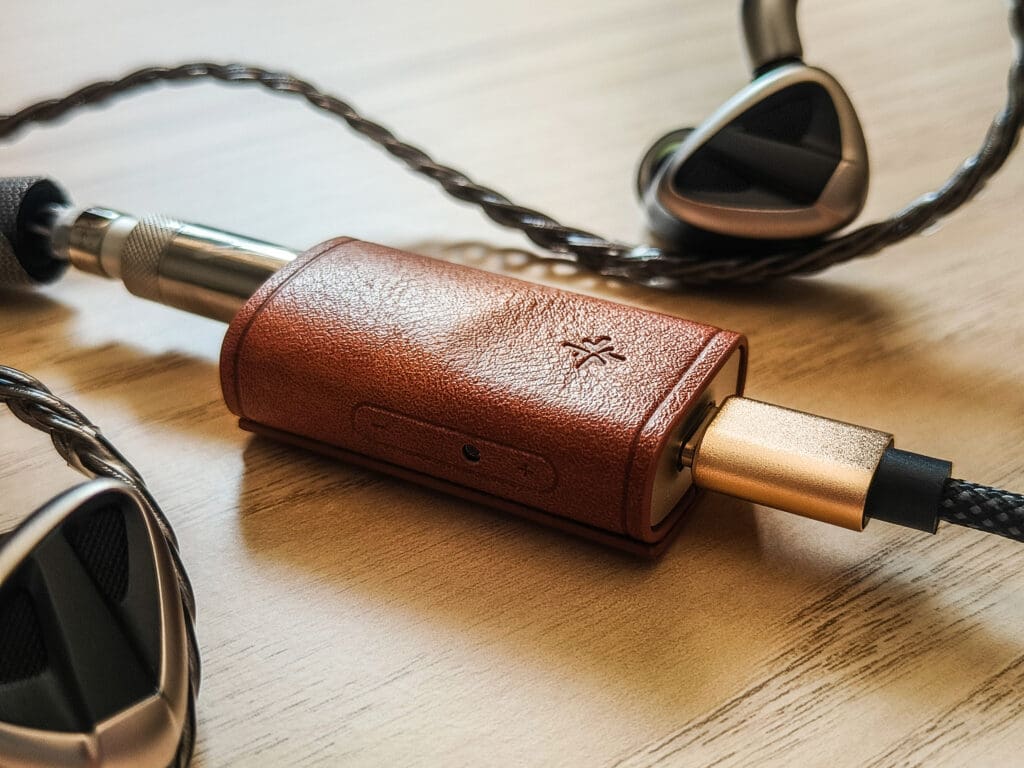
- Tiny real wood build (Maple or Walnut) that feels great and looks amazing.
- Clean, hiss free output.
- Both 3.5 with inline mic and 4.4 balanced, plus S/PDIF out.
- Great app control.
- Included USB C to C cable is great, soft, and well made.
- Outstanding value at 40$.
Cons
- No USB A to USB C adapter in the box.
- Not enough power for hard to drive headphones.
Where to buy:(Non-affiliated! None of my reviews use affiliated links!)




No Comment! Be the first one.