
















































































Technics AZ80 Review (2025): Real Audiophile Sound in a Modern Flagship TWS


I’ve spent years testing true wireless earbuds and rarely does something arrive that immediately shifts the room’s center of gravity. The Technics AZ80 did exactly that — not with theatrics, but with a quiet self-assurance that becomes clearer the longer you listen. The moment the first track played, I found myself stopping whatever I was doing. The clarity, the balance between musicality and technicality, the subtle layering — it all hinted at a product crafted by people who truly understand audio.
Table Of Content
- Build & Design – Elegant, but Quietly So
- Fit & Comfort – Custom-Earbud Level Stability
- Connectivity & App Experience – Good… After You Install the App
- ANC & Transparency – “Good Enough” for Most, Not Class-Leading
- Bass
- Midrange
- Treble
- Soundstage & Imaging – Spacious and Organized
- Call Quality – A Real Strength
- Battery Life – Reliable, No Surprises
- Pros & Cons
- Pros
- Cons
- Conclusion – A Modern “Audiophile-Casual” Flagship
Over several days of listening, from electronic to acoustic, from pure masterings to deliberately rough mixes, the AZ80 revealed itself as a TWS that doesn’t fall into the usual traps. It doesn’t flatten dynamics, it doesn’t smear textures, and it doesn’t aim to impress with excessive warmth or artificial brightness. Instead, it presents music with a confidence that feels earned rather than tuned-in by committee. This review is the result of hours of real-world use across multiple devices and environments.
PS. This unit is a loaner from am old friend
Build & Design – Elegant, but Quietly So
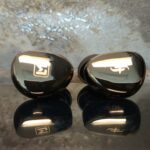
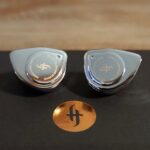
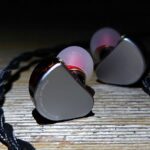
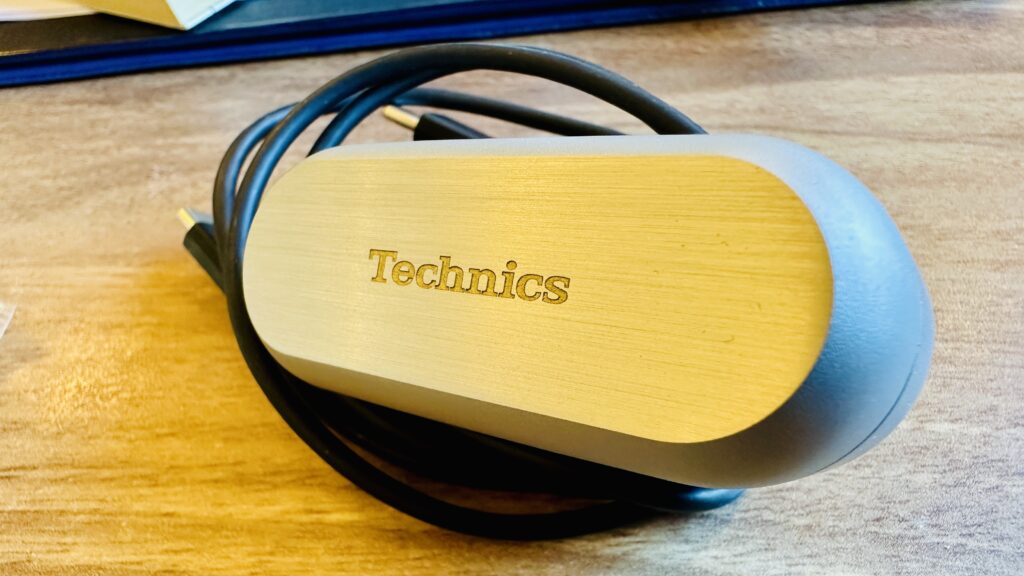
The design follows the Technics philosophy: understated luxury. At first glance it might look simple compared to some competitors, but the closer you inspect it, the more the small things reveal themselves. The matte finish resists fingerprints, the metallic ring around the faceplate adds a hint of sophistication, and the overall curvature feels like something refined through iteration rather than rushed to market.
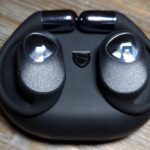
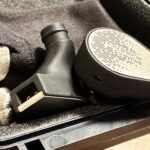
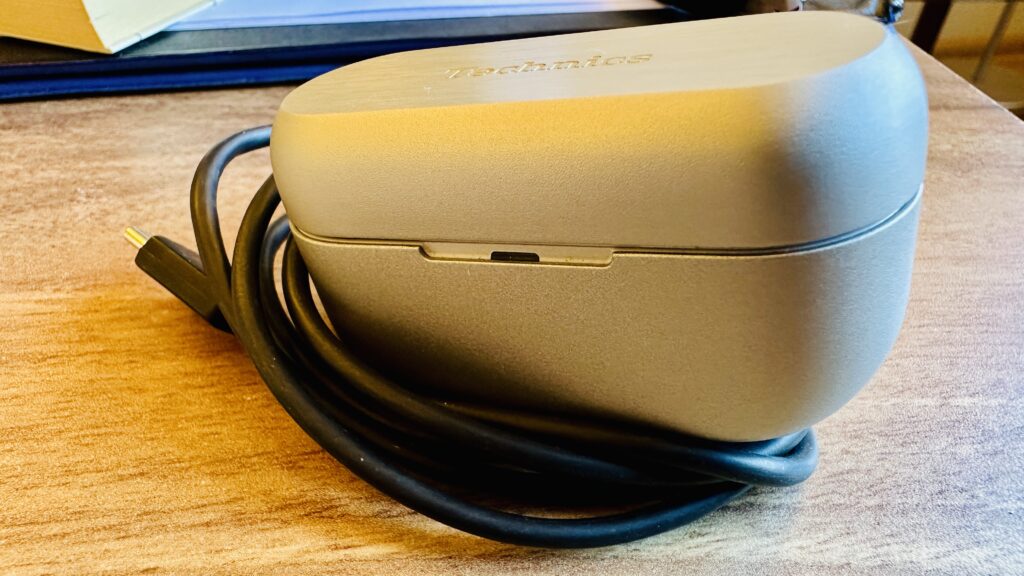
The charging case is compact, sturdy, and moves with a precise hinge action that gives confidence. Magnets seat the earbuds with a satisfying snap — never too strong, never too weak. It’s a case you don’t think about because it never gets in the way, which is ultimately the highest compliment for a daily-carry audio product.
Every part of the AZ80’s physical design feels intentional. It’s not the kind of design that begs for attention, but it’s the type you quietly appreciate every day without realizing just how well it’s working.
Fit & Comfort – Custom-Earbud Level Stability
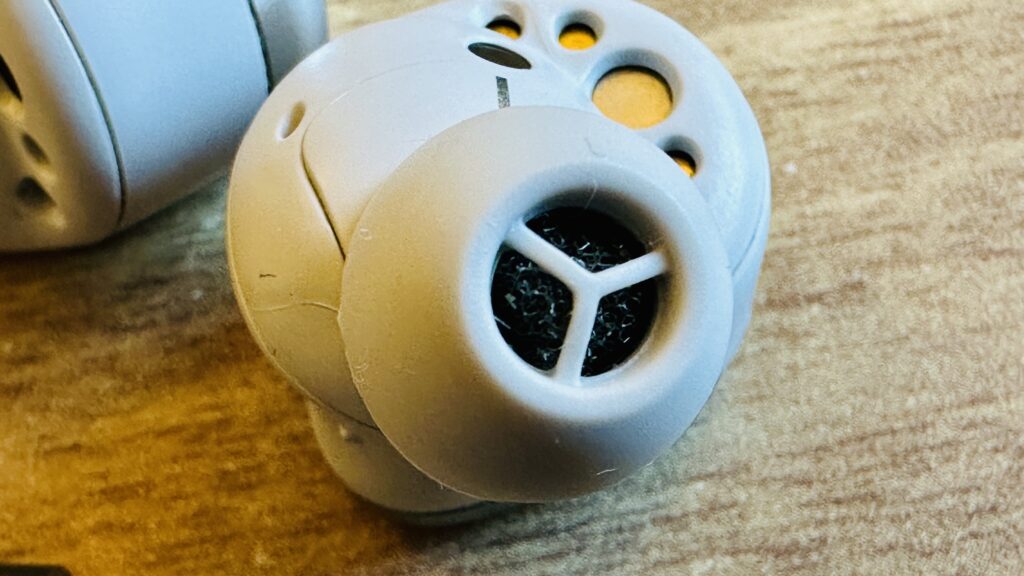
Right out of the box, the AZ80 fits like something made with human ears in mind rather than abstract CAD models. The body rests in the outer ear naturally, while the angled nozzle guides the tip into place without creating pressure. You don’t have to force it, twist it aggressively, or constantly adjust it — just insert, and it settles in.
I tested it during long walks, cooking, phone calls, and even while lying on my side. It never created hotspots or that slow, creeping ear fatigue some earbuds cause. The lightweight shell helps, but it’s the geometry that matters most here. Technics clearly put serious thought into comfort longevity rather than just “fit at first insertion”.
Whether you use the stock tips or aftermarket ones, the AZ80 remains a stable, forget-it’s-there type of earbud. That is rare, and it matters more than people realize
.
Connectivity & App Experience – Good… After You Install the App
Out of the box, the AZ80 performs well, but you only unlock its full potential through the Technics Audio Connect app. Manual pairing works fine, yet the app gives you access to EQ customization, ANC tuning, multipoint refinements, and other quality-of-life features that shape the overall experience.
Before installing the app, I noticed something surprising: removing one earbud instantly paused the music. Simple, yes, but the responsiveness was unusually good. These are the kinds of small touches that make a device feel polished instead of patched together.
Multipoint performance is excellent. Switching between two phones — one for music, one for calls — was smooth and predictable, with no erratic handovers. Bluetooth stability remained rock-solid across all test devices. Indoors I genuinely forgot it was wireless.


ANC & Transparency – “Good Enough” for Most, Not Class-Leading
The AZ80’s ANC is competent but not aggressive. It handles low-frequency hum (air conditioners, cars, background rumbles) reasonably well. But in metro settings or aircraft cabins, it doesn’t quite match the isolation of ANC leaders like Sony or Bose. Voices and sudden noises still seep through at times.
What Technics gets right is the preservation of sound quality. Some earbuds lose clarity or collapse the stage when ANC engages. The AZ80 doesn’t. Dynamics stay intact, tonality doesn’t shift, and imaging doesn’t flatten.
Transparency mode is clear and natural. Not amplified or exaggerated — simply realistic. You can hold conversations without removing the earbuds, and there’s no annoying hiss in quiet environments. It’s the kind of transparency that supports daily use without calling attention to itself.
Bass
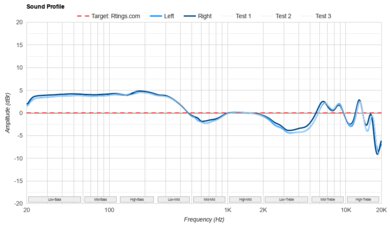
The low end is the AZ80’s most obvious signature. It’s punchy and rounded, giving rhythmic tracks satisfying impact. This isn’t a bass meant to overwhelm — it’s a bass meant to move. Sub-bass extension is respectable, and mid-bass carries a warm, energetic thump that adds excitement to modern genres like EDM, pop, and hip-hop.
Beyond quantity, what impressed me was the texture. There’s definition in the way bass guitar strings vibrate, in how kick drums bloom and decay, and in the layering of electronic bass lines. Even fast passages keep their shape, showing that Technics prioritized clarity over sheer weight. The tuning gives body without muddying the mids.
That said, the bass does lean full. In acoustic or jazz tracks, it sometimes adds a thickness that isn’t strictly neutral. But this feels intentional — AZ80 is tuned for enjoyment first, accuracy second. And in that role, it performs beautifully.
Midrange
The midrange sits slightly behind the bass and treble, forming the familiar V-shaped contour. Yet it never feels hollow or overshadowed. Vocals come through with clarity, and instruments maintain their identity even when the mix gets busy. Female vocals usually pop a bit more than male vocals, but both remain intelligible and well-shaped.
Tonally, the mids blend smoothness with enough bite to retain realism. Guitars have recognizable edge, pianos strike with both body and transient clarity, and strings carry a believable sense of resonance. What stands out most is the separation — each element occupies its own space cleanly without crowding others.
For mid-centric listeners, the recessed positioning may feel distant at times. Singer-songwriter and intimate vocal recordings don’t take center stage the way they would on more neutral tunings. But the AZ80 prioritizes a modern, broader soundstage, and within that approach, the mids are executed with care and confidence.
Treble
Treble is crisp, airy, and surprisingly well-controlled for a wireless model. Cymbals shimmer with clarity, ambient details float in the mix, and the upper harmonics add liveliness without crossing into metallic sharpness. There’s genuine extension here, giving the soundstage a sense of openness many TWS models lack.
The retrieval of micro-details is noteworthy. Room reverbs, subtle breaths, finger movements on strings — these tiny elements surface naturally. Most TWS smooth these out to avoid digital harshness, but the AZ80 preserves them without creating fatigue. It’s a delicate balance, and Technics handles it gracefully.
If you’re treble-sensitive, the brightness may occasionally feel assertive on certain recordings. But it avoids sibilance and rarely feels piercing. In many ways, this treble lift is what gives the AZ80 its “wired IEM” character.
Soundstage & Imaging – Spacious and Organized
The soundstage is wider than most TWS I’ve heard so far, with genuine layering in depth. Instruments occupy organized positions, not a smeared horizontal blob. Imaging is precise — movements in the stereo field are easy to track, and busy mixes remain digestible.
This spaciousness contributes significantly to the AZ80’s premium feel. It sounds less like a sealed Bluetooth device and more like a well-tuned portable IEM with a bigger canvas to paint on.
Call Quality – A Real Strength
Technics continues its tradition of excellent microphone performance. My voice consistently sounded natural to others, not filtered or “compressed TWS-style”. Wind reduction works effectively without choking the mic signal. Outdoor calls remained stable, and indoor calls were as clean as using a dedicated Bluetooth headset with is NC capabilities
For work calls, Zoom meetings, and general communication, the AZ80 is absolutely reliable.

Battery Life – Reliable, No Surprises
With ANC on, expect around 6.5 hours. With ANC off, closer to 8. The case provides multiple recharges, and wireless charging support adds convenience. I didn’t encounter sudden drops or inconsistent drain — battery behavior was predictable, which is what users need most.
Pros & Cons
Pros
- Excellent clarity and layering
- Punchy, textured bass
- Airy, detailed treble
- Wide, realistic staging
- Comfortable long-term fit
- Reliable wear detection
- Excellent multi-point performance
- Natural call quality
- Premium build
Cons
- Slightly recessed mids
- ANC not class-leading
- Treble can feel energetic for sensitive listeners
- Bass may add thickness on neutral recordings
- App needed for full functionality
Conclusion – A Modern “Audiophile-Casual” Flagship
The Technics AZ80 achieves something rare in the TWS space: a blend of fun and technical refinement without tipping too far in either direction. It’s not trying to be a reference monitor, nor is it chasing a basshead crowd. Instead, it lands squarely where most listeners actually enjoy music — energetic, clear, spacious, and textured.
The ANC won’t dethrone the kings, but the sound quality easily competes with the best in the segment. If your preferences lean toward lively bass, crisp highs, and a layered presentation that feels closer to wired IEMs than typical wireless buds, the AZ80 delivers a convincing case for itself.







No Comment! Be the first one.