














































Preface:
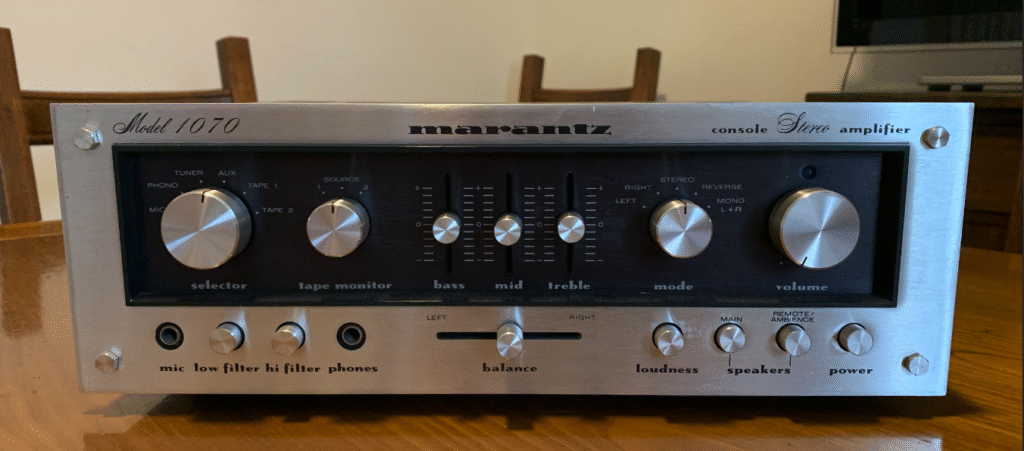
I needed a preamplifier to drive a Marantz 1070 amplifier (completely overhauled), and I came up with the idea of purchasing this very compact tube preamplifier/headphone amplifier. The FX-AUDIO-TUBE-05 model represents an interesting entry-level tube solution for those, like you, who love experimenting with NOS tubes and listening to music with an analog feel.
Table Of Content
- Preface
- FX-AUDIO-TUBE-05: Unboxing
- Box contents
- FX-AUDIO-TUBE-05: Features
- Accessories included in the box
- Aesthetic and build quality evaluation
- Output Power
- Keys and Buttons
- Power Consumption
- FX-AUDIO-TUBE-05: Timbre
- Filters
- Comparison Test
- Personal opinion
- Vintage System
- Main System
- Example
- Second HiFi System
- FX-AUDIO-TUBE-05: But how does it sound with headphones?
- Issues
- 5814A JAN SYLVANIA ECG PHILIPS 12AU7 E82CC NOS/NIB
- FX-AUDIO-TUBE-05: Conclusions
- RATING
- ⭐️ 6.9 / 10
- 🟢 PROS
- 🔴 CONS
- Who sells it?
The product reviewed is the FX-AUDIO-TUBE-05 unit with a PSVANE (ECC82/12AU7) tube installed and an included remote control, used in a dedicated headphone/preamp setup.
FX-AUDIO-TUBE-05: Unboxing
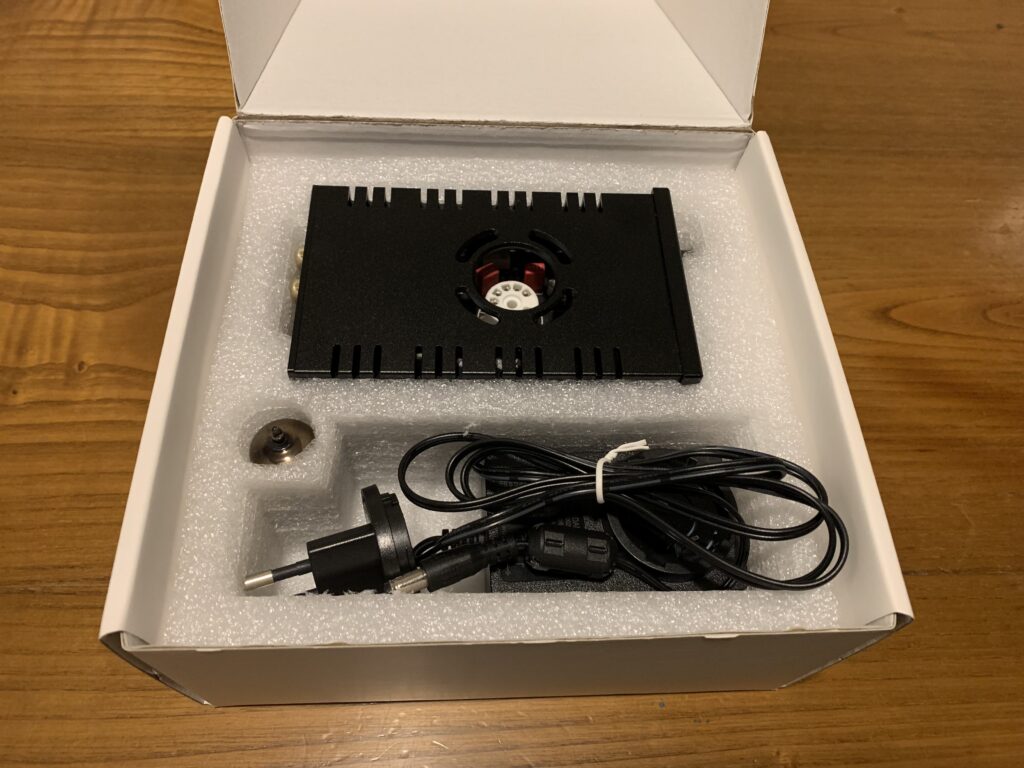
The packaging is simple and functional, without excess: a white box with minimal branding.

Box contents:
- FX-AUDIO TUBE-05 unit with ECC82/12AU7 tube, still unassembled.
- External 12 V DC / 2 A power supply.
- Infrared remote control.
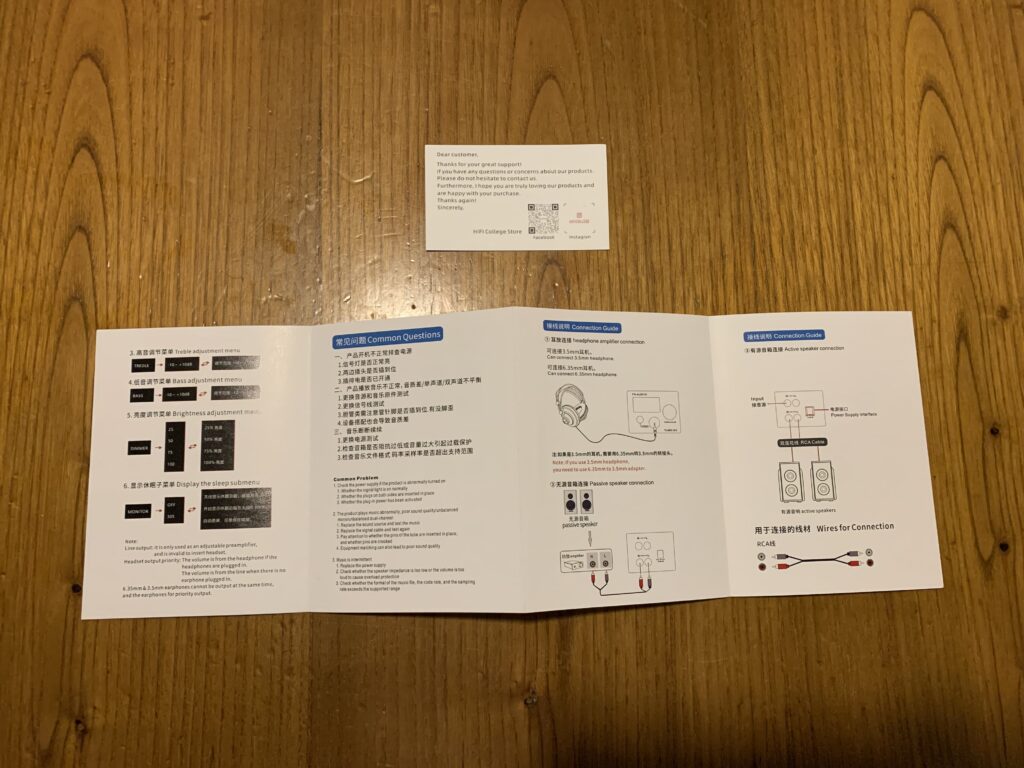
- User manual and warranty.
Missing items or notes: A premium RCA cable or dedicated accessories for tube or headphone upgrades are not included. Considering the price, the equipment is decent but very basic.
From a budget perspective, the TUBE-05 is positioned in the affordable range for a tube product; therefore, the choice of minimal equipment is understandable and consistent with the brand’s “low budget” policy.
FX-AUDIO-TUBE-05: Features
Manufacturer Description & Main Specifications:
Type: Tube preamplifier/headphone amplifier.
- Tube: 1× PSVANE ECC82 (12AU7), a double triode, also compatible with other 12AU7/ECC82 tubes and usable with tubes such as 6N10, 7316, CV4003, 5814, B749, and 6189. I recommend careful assembly with cotton gloves or a cloth handkerchief to avoid leaving harmful fingerprints on the tube glass.
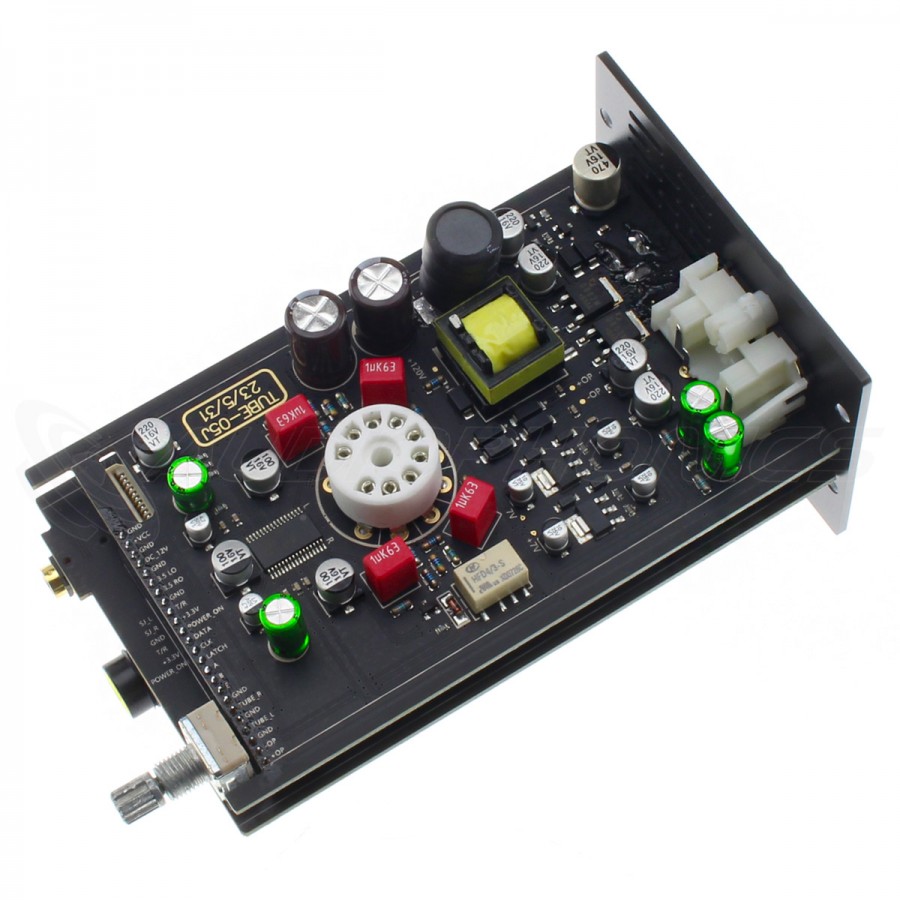
- WIMA and Nichicon capacitors and a JRC NJW1194 volume control chip with output selector and tone control.
- The front panel features essential indicators and adjustable brightness.
- Inputs: 1× stereo RCA line-in.
- Outputs: 1 stereo RCA line-out, 3.5 mm unbalanced headphone jack, 6.35 mm unbalanced headphone jack.
- Headphone output power: approximately: 960 mW @ 32Ω, 750 mW @ 64Ω, 430 mW @ 150Ω, 245 mW @ 300Ω, 125 mW @ 600Ω.
- Frequency response: 20Hz-40kHz.
- THD+N: Tube mode ~0.6%; Direct mode ~0.1%.
- Controls: Potentiometer + remote control + Tube/Direct mode selection + tone control (bass/treble).
Accessories included in the box:
- 12V DC 2A power supply via 5.5/2.1mm DC jack
- IR remote control (battery-free)
- ECC82 valve to be installed
- User manual
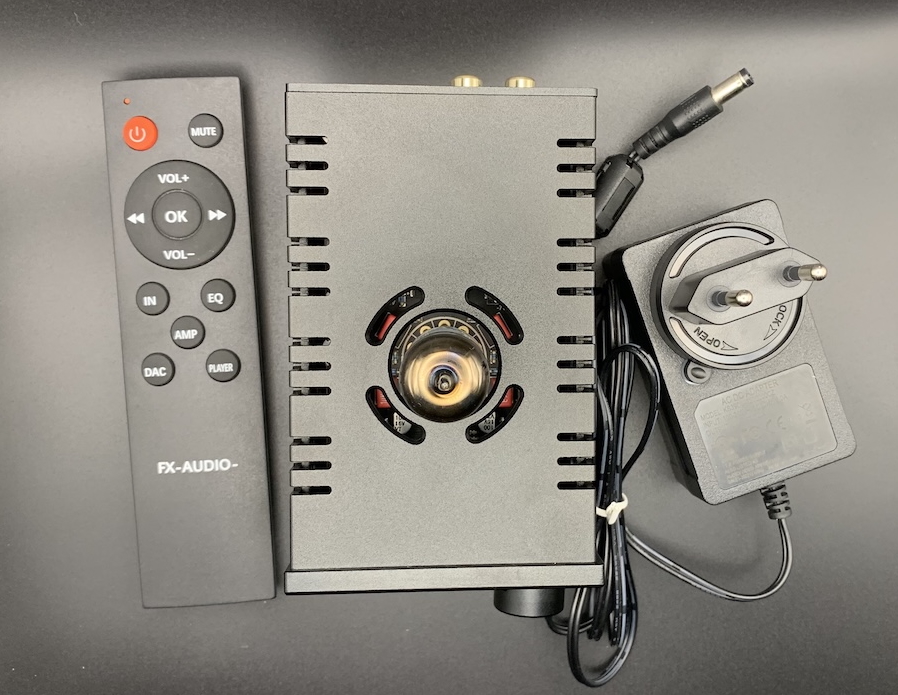
Aesthetic and build quality evaluation:
The FX-AUDIO TUBE-05 features an all-metal body with very compact dimensions (~78 × 70.6 × 141.4 mm) and a weight of approximately 400 g.
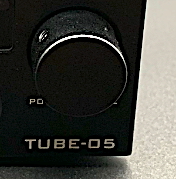
The tube is visible on the top (without protection), with side ventilation through slots and a satin finish. The front potentiometer is smooth, the overall appearance is quite solid for the price range, and its weight helps you use even heavy cables without having to weigh down the unit. As with all tube electronics, you need to be careful of heat and avoid burns. The chassis also gets warm after 30-45 minutes, not worryingly, but warm.
To the touch, the sensation is good: not a “luxury” product, but well made for the price.
Output Power:
Based on the specifications, with 32Ω headphones, the rated power is almost 1W (960 mW), making it sufficiently powerful for medium-impedance dynamic headphones.
However, for high-impedance headphones (e.g., >300Ω) or very demanding planar headphones, the “push” isn’t very high, and you might notice some limitations. If the recording is particularly quiet or whispery, you risk hearing almost nothing.
In line-out mode (preamp) at maximum volume, the RCA output can generate noise. I believe this is due to the tube, which doesn’t have the proper circuitry to reduce the typical hissing noise: be careful in tranquil environments.
Keys and Buttons:
- Front: Main potentiometer + push-knob for menu selections; remote control included.
- Menu functions: “Tube”/”Direct” mode selection, bass-treble control, brightness display, sleep/auto off.
- There are no complex digital filters or multiple dedicated gain modes; simplicity is part of the company philosophy.
- Only one RCA input is considered too few; there should be at least two, otherwise you risk constantly plugging in and out.
Power Consumption:
To operate the FX-AUDIO-TUBE-05 requires an external 12V DC / 2A power supply.
In operation, power consumption depends on the headphones used; otherwise, it is very low.
In standby it consumes less than 0.1 mW (manufacturer’s note).
FX-AUDIO-TUBE-05: Timbre
In “Direct” mode: clearer, more defined sound, with less color. It may seem a little “cold” or less engaging.
In “Tube” mode, the character changes: the tube introduces a warmer and sweeter timbre, almost silky at times, with greater roundness in the mids, more “human” and very natural vocals, and a slight smoothing of harshness. Instruments and vocals gain presence and involvement. An almost lively effect, very pleasant. The soundstage and imaging are adequate for the price range, but don’t expect a high-end “wow” effect.
Filters
This preamp features tone controls (bass and treble) through the menu, which act as a “tone control” rather than a true hi-fi filter. Personally, I don’t use these and don’t want to use them, but in certain cases, they can be useful for correcting room defects, resonances, or, in the case of headphones, poor performance.
There are no selectable digital filters or gain options.
Comparison Test:
Considering a price range of ~110-120 USD at the time of review.
~-30% Range (~70-90 USD):
A simpler tube headphone amplifier or basic preamp without a remote control or tone control: less versatility and power, and also a smaller soundstage and sound quality.
Even in the same price range (~110-120 USD):
The FX-AUDIO TUBE-05 appears well-equipped for its price point: tube included, remote control, tone control, decent power. It has a few competitors, but for now, it’s the most versatile and musically sounding one in my opinion.
~+30% Range (~$150-$170 or more):
Tube headphone amps/preamps with dual tube stages, more refined filter controls, dedicated power supplies, and fewer compromises can be found. If you’re looking for a serious upgrade, it might be worth going in that range or even above $200.
Personal opinion:
And now we come to the most interesting part, the one not found on the datasheets: how it really sounds.
The tests were done on two different systems.
Vintage System:
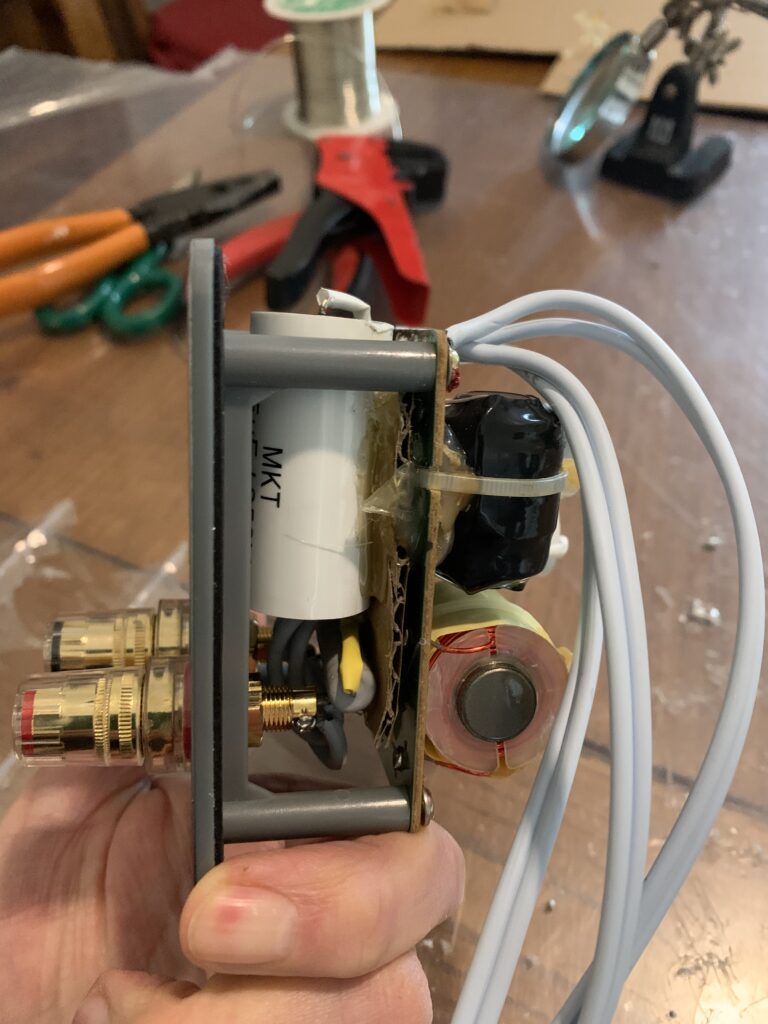
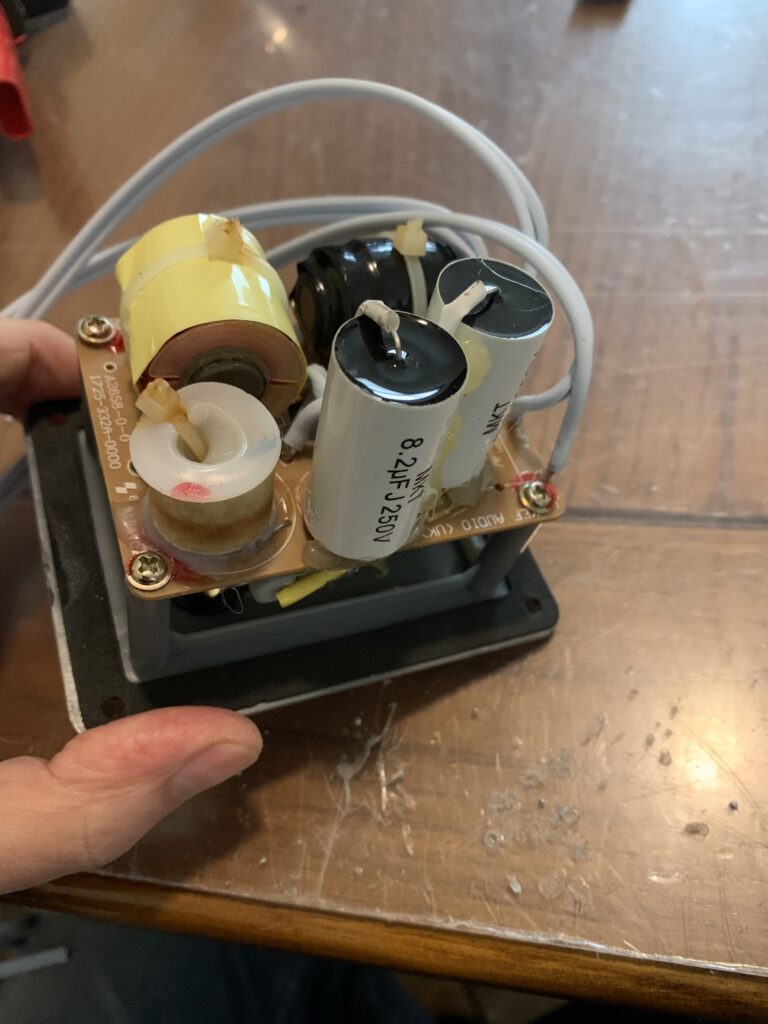
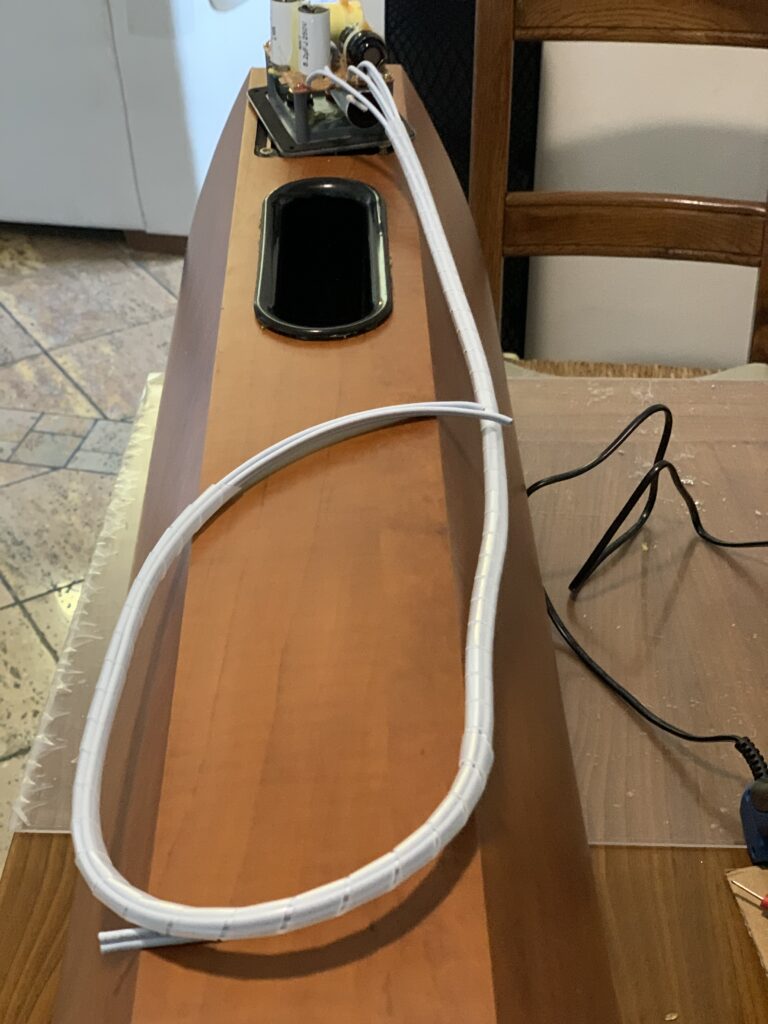
Consisting of a completely overhauled and recalibrated Marantz 1070 amplifier. KEF Q5 case with a “rejuvenated” crossover. Replaced resistors, HIFI-grade capacitors, and quality internal cables, including homemade speaker cables. CD Audio Analogue Maestro (which also functions as a DAC).
Main System:
AM Audio A5 preamplifier (pure class A), AM Audio PA40 Reference II power amplifier (pure class A), Aliante (Italian) NOVA speakers and Aliante ONE Zeta HEX speakers (my second daughters), liquid music with IFI ZEN DAC Signature V2, Supra and homemade cables.
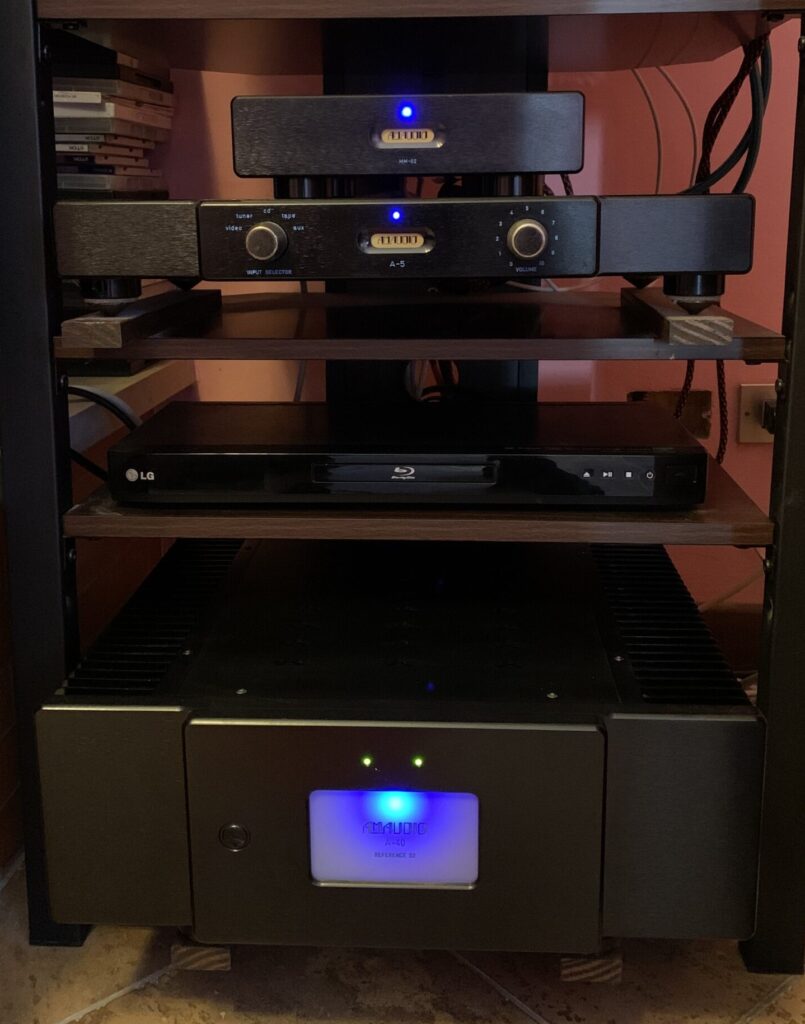
In the vintage system, which has a very ROCKY sound, the Marantz and the KEFs provide a classic punch of the era, and the English speakers produce a more rounded sound. The Marantz can also be used as a pure preamp or pure power amp. I connected the FX-AUDIO-TUBE-05 directly and used the Marantz as a pure power amp.
This setup had two advantages: first, I got a remote control, which, since I live in an apartment, prevents me from disturbing the neighbors while listening to music; second, it gave the Marantz a very unique touch. The sound became more detailed and less ‘vintage’. Now you might think I’ve gone loopy; I said vintage system, and now it’s not, let’s be clear. Basically, the sound became less closed-in, less muddy, not that it was, but the valve provided much more air, as if a filter had been removed from the mid-highs and a tighter sound from the bass. Basically, the good old, beloved ’70s rock sound you used to hear at concerts.
Example:

Incredibly, this setup really brought the system to life, taking everything to a more musical and “mean” level, like on Ted Nugent’s album Double Live Gonzo!. When he plays “Baby, Please Don’t Go“, it seems more aggressive and “damn rock” than before. The guitar comes alive, and contrary to those who say tubes are “slow” (remember, guitar amplifiers of the time were tube-based), in this case it gave Ted an extra edge: faster, more lively, more dynamic, and extremely rock.

Like another live performance I particularly love, Bob Seger & The Silver Bullet Band on the double Live Bullet album, when they play Bo Diddley, Ramblin’ Gamblin’ Man, and Heavy Music, my leg starts dancing, and whatever he’s doing, I’m spellbound. This is the unmistakable sign that he’s struck a chord with me and that he sounds like engaging music should.
Second HiFi System:
I also did a test with the main system, even if it wasn’t exactly “correct.” We’re talking about driving a $4,000 power amp with a $100 preamp. I admit, I was mean.
Let me start by saying that the pairing is disadvantaged by the fact that a project that includes preamps and power amps is built with very specific characteristics, and disconnecting them doesn’t always work correctly. I won’t bore you with technical terms and rivers of words; just take it as fact and trust me.
As I was saying, it wasn’t correct, but since I have them at home, why not give it a try?
I connected everything up, and I have to say it’s “not like its original preamp,” but it did its dirty work.
To my amazement, the FX-AUDIO-TUBE-05 drove the power amplifier admirably. It didn’t have the detail and musicality of its original, but overall it was more than satisfactory. The only flaw, but I expected it, was that it gave a softer and “longer” touch on the bass, and the soundstage was narrower than its preamp.
Overall, I’d say it did its job honorably. Looking for a more suitable NOS tube might bring it closer to its original sound, but something would still be missing and it doesn’t make sense anyway.
FX-AUDIO-TUBE-05: But how does it sound with headphones?
I’ve tried different types of headphones, both planar and diaphragm, such as over-ear and IEMs.
For planar over-ear headphones, the declared output seems high, but in the end, it isn’t. I always had to keep the volume at 80-90% to hear it decently. Had there been a balanced output, perhaps it would have been better. While there aren’t any problems with IEMs, if you want to ruin your eardrums, you can easily do so, but I don’t recommend it, otherwise you’ll lose your ability to hear the music afterwards.
The same goes for diaphragm headphones. It depends on their efficiency: some are good, others are at the limit of their useful volume, which becomes a problem when the recordings are very low.
Let’s get to the heart of the matter: does it sound good?
I’d say so, although I have some reservations. The soundstage is good, not extended, and slightly rounded on the highs, which isn’t a bad thing with headphones for long listening sessions and listening to jazz or heavy metal. The mids are slightly recessed, which is a shame because, as a preamp, the mids are quite adequate, and much less recessed, and the edges of the soundstage are slightly narrower, not by much, but it is quite noticeable.
Issues:
The problem that bothered me the most is the volume. Being electronic and not mechanical, you have to turn the knob a lot before reaching maximum volume, even with the remote, you have to press it for at least 7-8 seconds before reaching 80-90%. For example, if on a normal potentiometer, we make one turn to go from 0 to 99, here to get to 99 you have to make 6-7 turns, which is a pain, especially for quiet recordings, as I mentioned before.
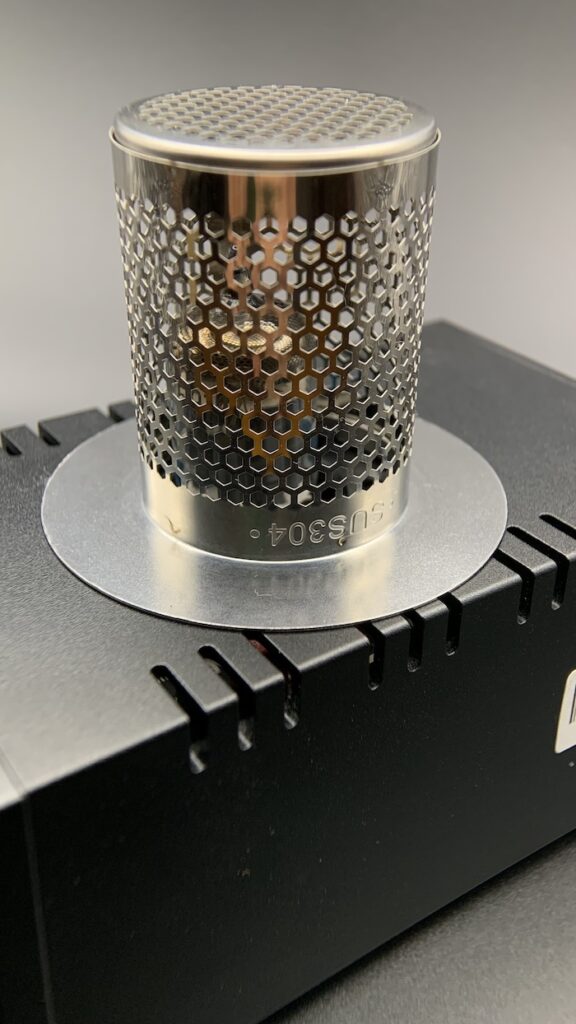
Another thing I don’t like is that there’s no tube protection. This should be considered carefully, especially if you have small children (sometimes even older ones) or pets; you can get burned after an hour. I solved the problem with something simple: I bought a chrome-plated aluminum sink filter (it looks like the original) and I put it on after I’m done listening, so no one gets hurt and the tube doesn’t get ruined.
I could conclude by saying that it’s nothing exceptional, but it does its job, it does it well, and for the price, it allows you to experiment with various tubes, if you want, at a reasonable cost (you only need to buy one tube, since it’s a double triode). But I’m not one to give advice without trying, so I bought a NOS tube, and now I’ll tell you how it went.
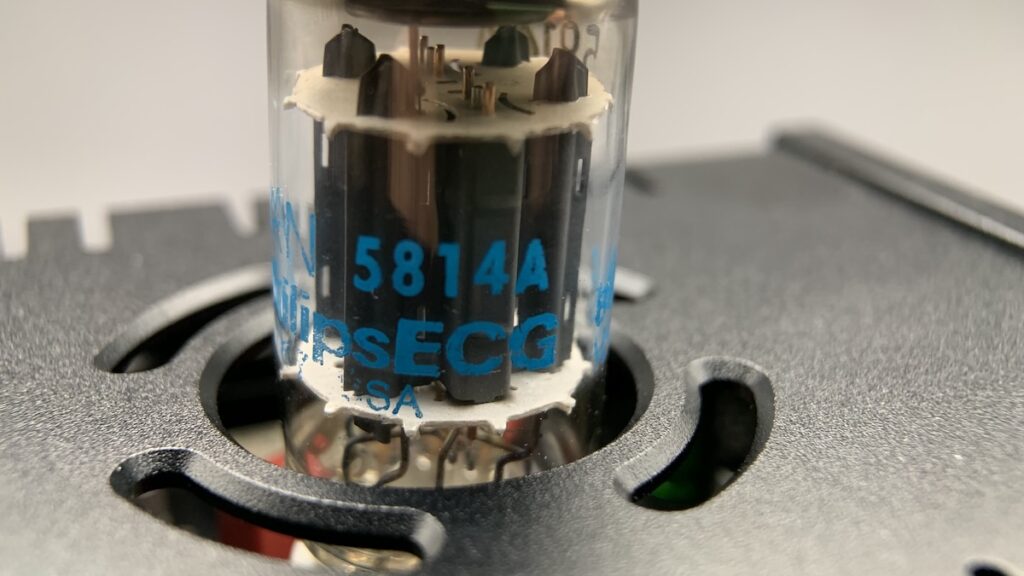
5814A JAN SYLVANIA ECG PHILIPS 12AU7 E82CC NOS/NIB
After doing a lot of research and considering which one or more to buy, my choice fell on this NOS Philips tube, which, on paper, would give me even more aggressive punch and more detail at the same time.
I ordered it, it arrived, and I did a good 60 hours of burn-in at various loads to give the components time to settle in.
To begin with, I started with some classics, like Dire Straits, Eric Clapton, Van Morrison and Led Zeppelin, and then moved on to something more refined, with more incisive jazz and soul.
I don’t want to bore you with everything I listened to, but I can say that the original tube is already very good, but with this one, as I expected from the reviews online, it gave it an extra boost. Now the softness of the bass has become tighter, maintaining a roundness that is never soft.
The mids have advanced slightly, giving the singers more body and more color to the voices. In the choirs, the space between the singers has increased, and in the second choirs, the support is better heard and the figures are more distinct.
The highs are at their best here. Clearer, not sharp, but more airy. The cymbals, in addition to their sound, are vibrating and you can hear the stick hitting them. On a recording featuring a performance with a saxophone played with love, you can perfectly hear the musician’s breathing and hissing. This makes it clear that you don’t need tens of thousands of dollars to listen well; it’s just a matter of finding the right combinations and everything appears to our ears.
FX-AUDIO-TUBE-05: Conclusions
The FX-AUDIO TUBE-05 is an excellent entry point for those who want to explore the world of tube amps without spending a fortune. It has good power for medium-impedance headphones, offers tube-rolling capability, and a reasonably flexible tone control.
If you’re looking for something truly high-end or need to drive ultra-demanding headphones, it’s best to consider a higher-end preamp.
For serious listening but without extreme expectations, it’s a more than valid choice. If you want to step up a level, you can consider this higher-end model, also from FX AUDIO and reviewed here.a good choice.
I can imagine it sitting well on a desktop, taking care not to burn yourself, and connected to an entry-level DAC or a balanced-output dongle (jack-RCA cable) and a pair of planar IEMs, and the world opens up to your ears, with an enveloping, never harsh sound.
As a preamp, I recommend it to anyone who wants to use a remote control and perhaps pair it with a new-generation Class D amplifier like the FOSI Audio V3 (not the mono one, it’s not worth it), removing the potentiometer to use it as a pure power amp, or a pair of ZeroZone power amps.
With this preamp, you’ll get a more natural sound, a remote control, and the ability to play with tubes and discover a world you never imagined.
RATING:
⭐️ 6.9 / 10
🟢 PROS:
- Tube sound with some more transistor-like nuances (depending on the tube)
- Good price/performance ratio for a tube preamp/headphone amp
- Versatility: Direct/Tube mode, remote control, tone control, and headphone amp
- 12AU7/ECC82 tube compatibility, excellent for those who like to experiment
- Small and heavy, not a problem for demanding cables
- Digital potentiometer
🔴 CONS:
- For very high-impedance or demanding planar headphones, it may be a bit limiting; in fact, it certainly is.
- Only one RCA input; at least two would have been better.
- No selectable filters or premium gain stages like more expensive models (this can be a problem for those who use them).
- Tube heat: The tube gets hot, and good ventilation and protection from possible accidents are essential.
Who sells it?
Available from European hi-fi retailers and online audio marketplaces (Amazon, Audiophonics ecc).




No Comment! Be the first one.