












































Disclaimer
Hello everyone! Before we get started, I want to let you know that FiiO sent me the Snowsky ECHO so I could spend proper time with it, test it, and share my honest thoughts. As always, I’m not being paid for this review, and FiiO hasn’t told me what to write, asked to see my draft before publishing, or set any deadlines.
Table Of Content
- Disclaimer
- Introduction
- Unboxing
- Technical Specifications
- Features, UI, and settings (how it actually feels to use)
- Simple UI, built around files
- Music settings that matter
- System settings and everyday features
- Bluetooth limitations (a bit disappointing)
- Sound performance and actual use
- Sound quality and power
- Screen and day to day UI
- The real pain points: Bluetooth and storage
- USB dongle mode: good idea, but a bit clunky
- Bottom line
- Conclusion
- Pros
- Cons
- Q&A
- Who is it for?
- Who should avoid it?
- Alternatives?
Everything you’ll read here is based entirely on my own experience with the Snowsky ECHO. I always try to stay as fair and objective as possible, but at the end of the day this is still my personal opinion. We all judge products differently, and those differences are part of what makes this hobby so interesting and enjoyable.
Big thanks to FiiO for giving me the opportunity to review the Snowsky ECHO, and of course, a huge thank you to you for taking the time to read and support my reviews. It truly means a lot to me!
Introduction
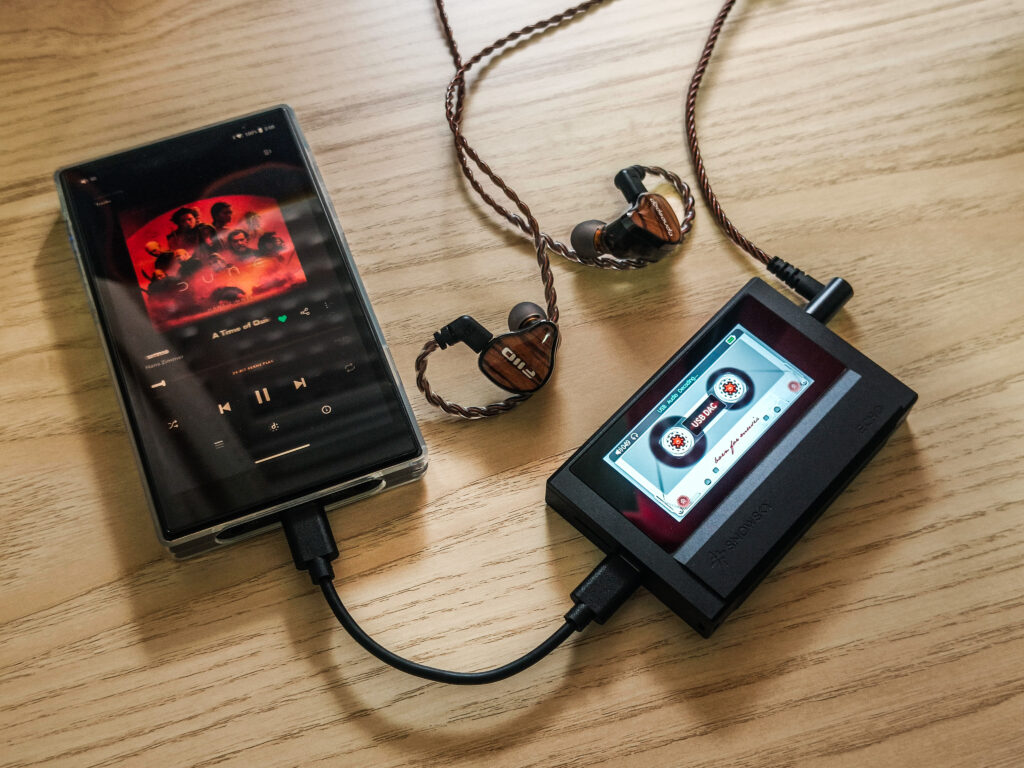
Most DAPs today are mostly small Android devices, similar to a smartphone with WiFi and streaming apps, but dedicated to high quality music listening. The SNOWSKY ECHO is not exactly that. It’s a simple, offline music player with its own cool UI, and it mainly plays music from a microSD card.
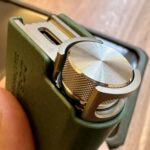
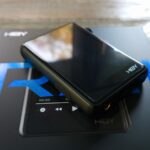
FiiO already released the ECHO Mini (Mahir reviewed it here), and today I’m reviewing the bigger brother, which is the ECHO. You still get the idea, but with a bigger and more detailed screen and a more serious metal build, with both 3.5mm and 4.4mm outputs.
It can also work as a USB DAC, so you can plug it into your phone or laptop and use it like a big dongle when you want.
But let’s keep the details for the right section of this review, and now let’s move on into the review itself.
Unboxing
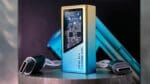
The SNOWSKY ECHO comes in a small, colorful box, like all Snowsky products, with the ECHO cassette style DAP on the front. I like it because it gives all Snowsky products their own vibe.
Inside, it’s clean, straightforward, and definitely lets you know that it’s a budget product (by no means bad! just more budget oriented). The ECHO sits in a white tray and feels well protected. For a budget DAP (I’m seeing it around $75 on AliExpress, while the ECHO Mini is closer to $55), the first impression is actually pretty good. The player feels good in the hand with its metal body and not like a cheap plastic toy.
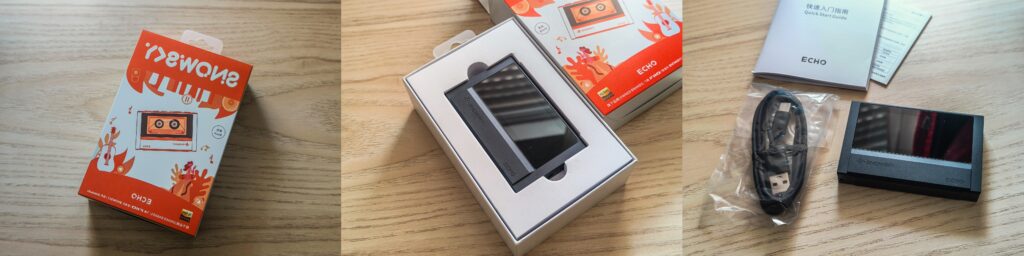
In the box you get:
- The SNOWSKY ECHO
- A USB-A to USB-C cable
- Quick start guide and papers
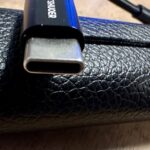
My only real minus is the cable. There’s no USB-C to USB-C in the box, so if you want to use the ECHO with a phone as a USB dongle, you’ll need your own Type-C to Type-C cable (or an adapter). Other than that, for the price, the unboxing is simple but totally fine.
Technical Specifications
Hardware and build
- Body: aluminum-magnesium alloy shell (CNC)
- Colors: Black, Green, Orange, Sky Blue
- Weight: approx. 85 g
- Dimensions: 85 × 55.5 × 14.3 mm
- Screen: 2.39-inch IPS, 222 × 480
Audio
- DAC: Cirrus Logic CS43198 × 2
- Outputs: 3.5 mm single-ended, 4.4 mm balanced
- Output power (3.5 mm): L+R > 120 mW + 120 mW @ 32 Ω (THD+N < 1%)
- Output power (4.4 mm): L+R ≥ 260 mW + 260 mW @ 32 Ω (THD+N < 1%)
- SNR: ≥ 131 dB (32 Ω, A-weighted)
- THD+N: 0.0004%
- Noise floor: 0.8 μV
Storage and formats and battery
- Internal storage: 8 GB
- microSD (TF): up to 256 GB
- Bluetooth output: SBC
- Supported formats (listed): DSD, WAV, FLAC, APE, MP3, M4A, OGG
- Sample rates (local playback listed): DSD64/128/256, WAV 24-bit/192 kHz, FLAC 24-bit/192 kHz, APE 24-bit/192 kHz
- USB DAC mode (listed): PCM 16-bit/48 kHz
- Battery: 1100 mAh, up to around 14 hours playback (claimed) (pretty accurate in my experience)
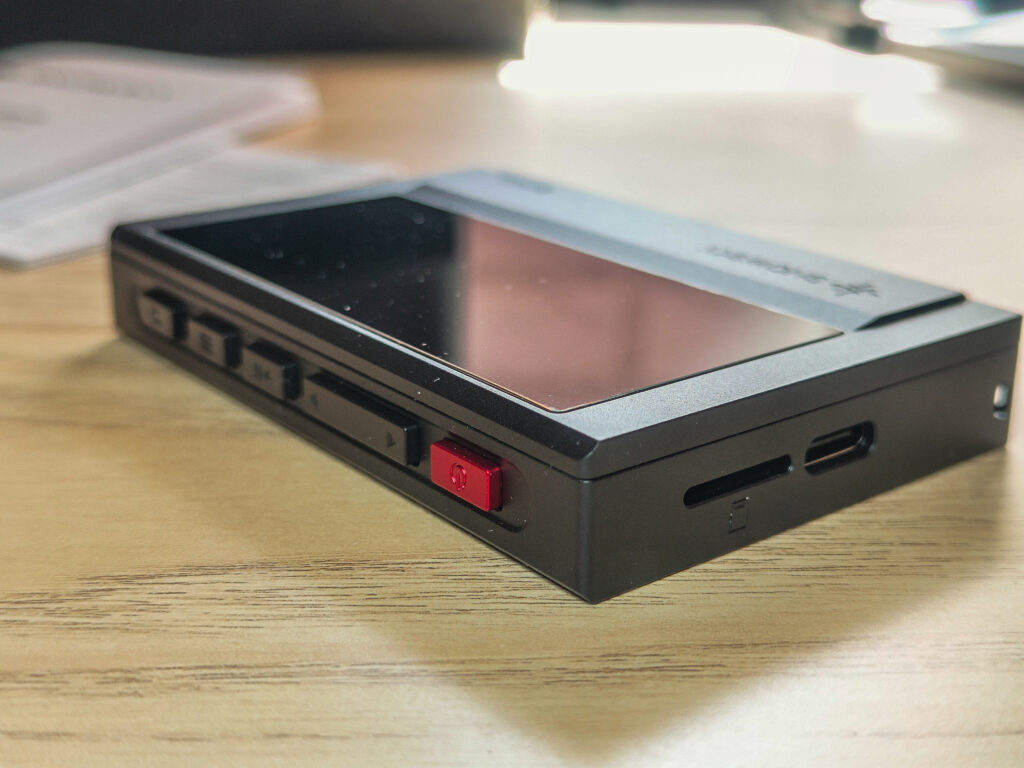
Features, UI, and settings (how it actually feels to use)
The screen and the whole “retro” vibe
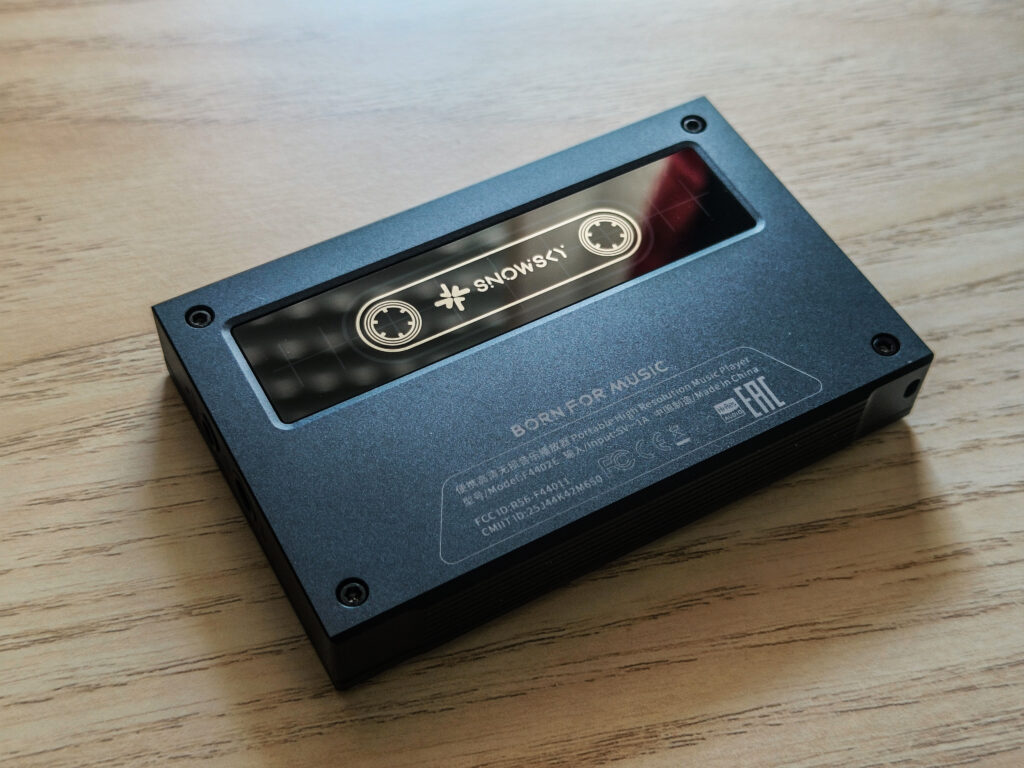
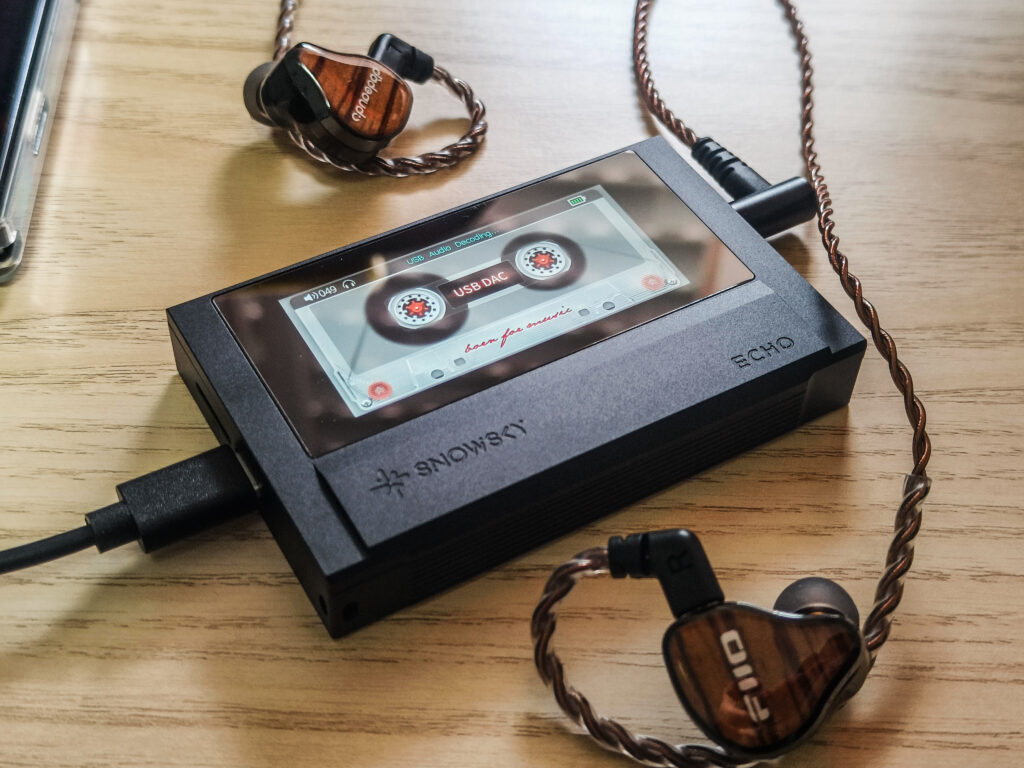
The first thing you notice is the screen. It’s not huge, but at 2.39 inches, it’s big enough to feel comfortable, and it’s sharp enough for album covers and text to look clean (222 × 480 IPS).
FiiO, of course, made the background as a tape style animation and also gave the option for VU meters, album pictures with descriptions, and cadence style.
Simple UI, built around files
The ECHO is all about local music. The menu is basically what you’d expect from a pure music player: a file browser (local storage + microSD), playlists, and the normal “now playing” screen.
There’s also a separate reading section, because it supports TXT files for lyrics, which is funny and very cool for such a screen and device.
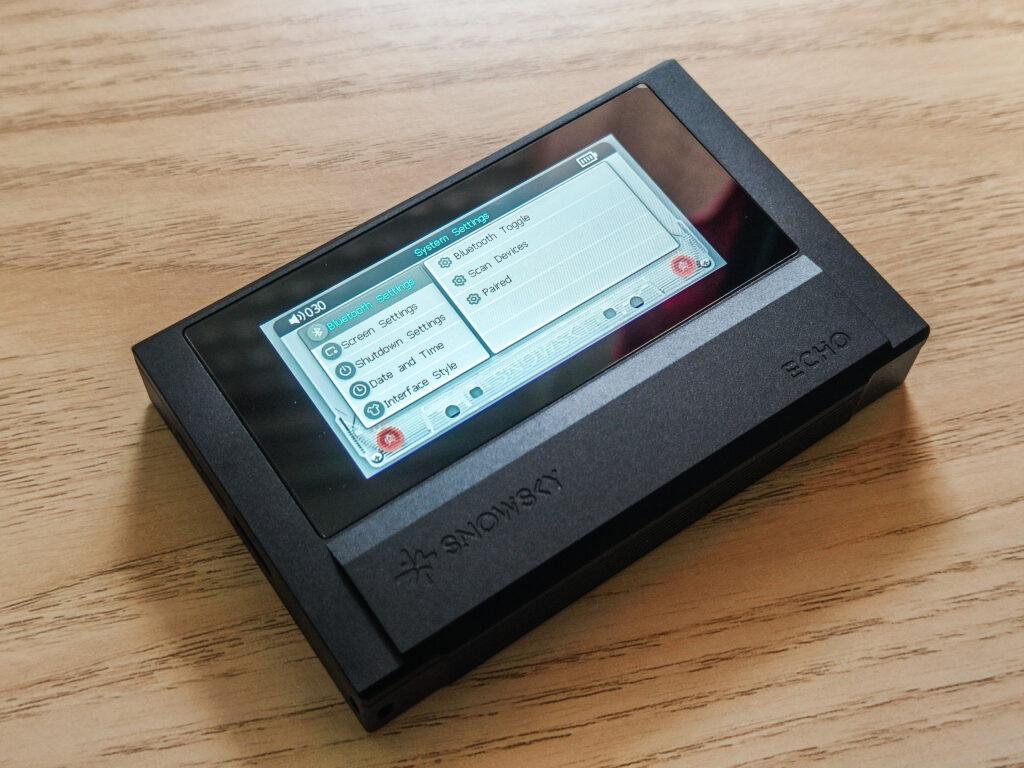
Music settings that matter
In the music settings, the ECHO of course has the practical stuff, which is loop mode, volume limit, EQ, filter type, gain, channel balance, volume button modes, and fast forward function.
It’s always good to see all these settings, and nowadays they are pretty much mandatory to have in order to compete in this market.
System settings and everyday features
In the main settings, you get the usual quality-of-life options like system language, screen settings like brightness and time off, date and time, white or dark mode, and firmware and technical information.
It, of course, supports headphone remote controls for play/pause, skipping tracks, and volume, which is pretty much a must have and it makes life much easier.
Overall, I would say that there are plenty of options and settings to customize it how you like.
Bluetooth limitations (a bit disappointing)
One thing that I think is worth saying clearly is that Bluetooth on the ECHO feels pretty limited.
First, it doesn’t seem to have Bluetooth input (so no receiver mode), which means I can’t just stream music from my phone to the ECHO and use it like a Bluetooth DAC. That would have been a really nice extra feature, and without it, it takes a lot from its versatility.
Second, even for Bluetooth output, it’s SBC only. So there’s no LDAC for higher quality and no AAC for Apple devices. In real life that means Bluetooth is more of a basic “convenience” option here, not something you buy the ECHO for if wireless quality matters to you.
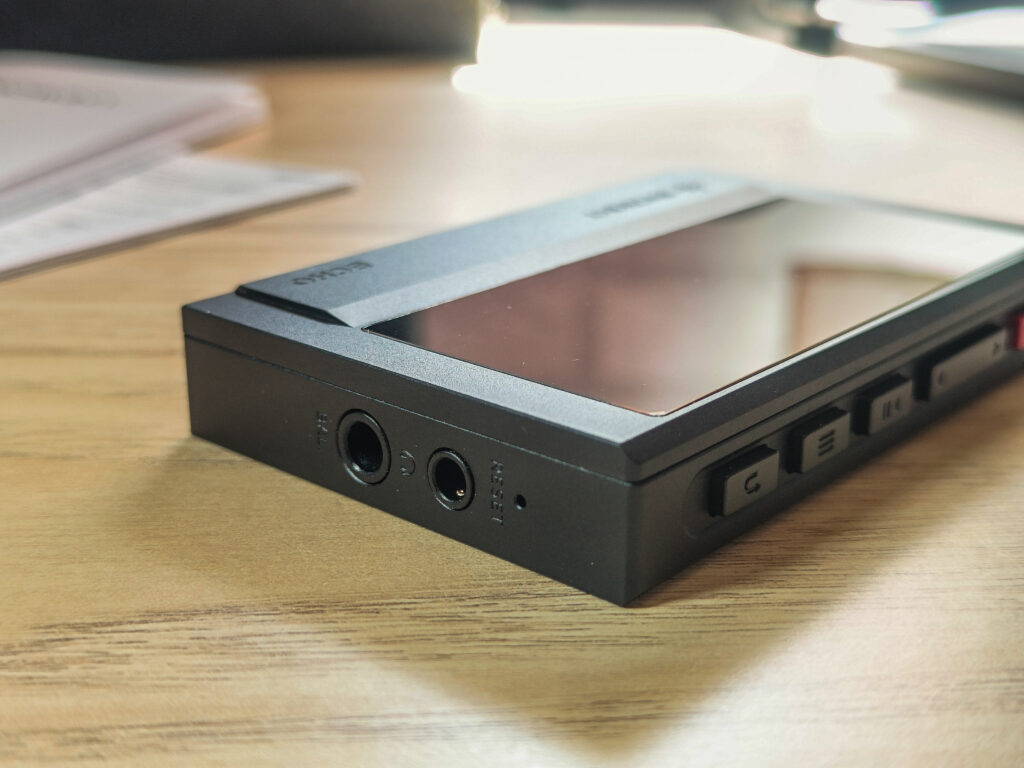
Sound performance and actual use
Sound quality and power
Let’s start with the most important part, which is that the ECHO sounds good. It’s not using the newest or any kind of flagship high end DAC chip, but in real listening it really doesn’t feel like a weak performer. The sound is clean and enjoyable, and I never felt limited. Nowadays, modern DACs from reputable brands will mostly sound good, and it’s really hard to tell real life differences. I truly believe that most of the people won’t ever notice the differences between different DACs (AMPs are another story).
Power wise, it did totally fine with IEMs. I threw a bunch of different sets at it, and it drove them without any issues. Where you do hit the limit is full size headphones. The balanced output is rated at 260 mW at 32 ohms, which is solid for IEMs and easy headphones, but it’s not the kind of power that will wake up more demanding full cans. So for me, I see the ECHO as an IEM focused player first.
Screen and day to day UI
I actually really like the screen. It shows a lot of info, and I didn’t feel like I was missing stuff while using it. For a simple DAP, it gives you enough information and features for most of what you need, and it fits the whole “retro music player” experience nicely.
The general UI is simple, and that’s kind of the point. This isn’t an Android DAP, so you’re not getting streaming apps or the phone like experience. It’s more like a modern offline Walkman where you load your music, press play, and you’re good.
The real pain points: Bluetooth and storage
My biggest issue is still Bluetooth. It’s very limited, and I think this is where the ECHO misses an opportunity to be really great.
It’s Bluetooth output only, and it’s SBC only. No LDAC and no AAC for Apple devices. So, as I said earlier, wireless here feels like a basic convenience option, not a buying point. And the bigger thing is that there’s no receiver mode. Personally, I really wanted the option to stream from my phone to the ECHO sometimes, especially when I discover a new song and just want to play it immediately. Without Bluetooth input, you’re stuck in the “offline only” mode all the time.
And now to the next thing, which is the internal storage. Realistically you get about 7 GB usable, which is just not enough for most people’s libraries. Yes, you are supposed to use a microSD card, and that’s what you’ll probably do anyway, but relying only on a microSD card can still feel limiting if you just want to open an app and play anything you want.
USB dongle mode: good idea, but a bit clunky
I do like that it can work as a USB DAC, because it makes it more versatile. But it can also be a bit awkward.
First, the box only includes a USB-A to USB-C cable. So if you want to use it with a phone as a “big dongle”, you’ll need your own USB-C to USB-C cable or an adapter.
Second, when you connect it by USB, it makes you choose between data transfer and USB DAC. That’s fine, but if you miss that selection, you can’t just go back and pick again. You have to unplug and reconnect to get the prompt again. That also made it harder to connect it to the FiiO Control app, because you can end up in the wrong mode without noticing.
Bottom line
Even with those complaints, I still think the ECHO is a good product for the right person. If what you want is a simple offline portable “Walkman” that sounds good and drives IEMs easily, it’s honestly a very pretty device. And if FiiO can fix some of the issues I had and the connectivity behavior with firmware updates, it can become even easier to live with.
Conclusion
After spending time with the SNOWSKY ECHO, I see it as a simple product with its goal being an offline “just play my music” DAP that focuses on sound and basic daily use, instead of trying to be a mini smartphone.
Sound wise, I honestly have no complaints. It sounds clean, it drives IEMs easily, and for this kind of budget player, it does the job really well. Just keep your expectations realistic for full size headphones, because the 260 mW on the balanced output is not meant for power hungry cans.
Where the ECHO loses points for me is convenience. Bluetooth is very limited because it’s output only and SBC only, with no LDAC and no AAC. On top of that, the internal storage is small (around 7 GB usable), so you basically have to rely on a microSD card if you want to have a real library there. USB DAC mode is a nice bonus, but the whole “choose DAC or data transfer” pop up can be annoying if you miss it, and the lack of a USB-C to USB-C cable in the box makes phone use pretty much impossible out of the box, but it’s not hard to find a USB-C to USB-C cable.
So the way I see it is if you want a small, good sounding, offline player for IEMs, and you’re fine relying on an SD card, the ECHO can be a really fun and satisfying budget DAP. But if you care a lot about wireless quality or streaming convenience, or you want one device that can also act as a Bluetooth receiver, then the ECHO will probably feel a bit too limited.
For more Info: (Non-affiliated! None of my reviews use affiliated links!)
Pros
- Clean, enjoyable sound and no issues driving IEMs
- 4.4mm balanced and 3.5mm single-ended outputs
- Solid metal build and a screen that shows plenty of useful info
- Works as a USB DAC, so it can double as a big dongle
- Cool, simple offline “just play music” experience like with the old Walkman
Cons
- Bluetooth is very limited: output only and SBC only (no LDAC, no AAC, no receiver mode)
- Small usable internal storage (around 7 GB), so you basically need a microSD card
- No USB-C to USB-C cable in the box for easy phone dongle use
- Not enough power for power hungry full size headphones
Q&A
Who is it for?
If you want a simple, offline “Walkman style” player that sounds good and drives IEMs easily, and you don’t care about streaming apps this much, the SNOWSKY ECHO can make a lot of sense, especially if you already keep your library on a microSD card.
Who should avoid it?
If you rely on streaming, care about good Bluetooth quality (LDAC or AAC), or want Bluetooth receiver mode so you can play music straight from your phone, the ECHO will feel too limited. I’d also skip it if your main plan is powering full size, power hungry headphones.
Alternatives?
If you still want the same idea but cheaper, the SNOWSKY ECHO Mini is the obvious one. If you don’t actually need a DAP and you just want better sound from your phone, a good dongle DAC can make more sense for the money. For example, the Melody, or if you want a Bluetooth receiver one, the Snowsky RETRO NANO is a great option.




Im looking into retro inspired yet new tech mp3 players (as all of genZ are doing rn) that hold your own music and you listen to it as you please, with wired headphones/earpods preferably and this is the top one product I’m considering getting at the moment. You have helped me make up my mind and I think this is the right product for me. Thank you for the thorough review and while I needed a couple of tries to find time and get back to reading it through, it was super helpful, and I particularly appreciate the cons listed. So thank you for your easy to read review! 🙂 May your pillow be always fluffy and cold
Thank you so much for your kind words! I’m so happy that my review was helpful to you and that you enjoyed it. It motivates me to do even better.
I wish you all the best!