














































BASN PA60 Review
Intro
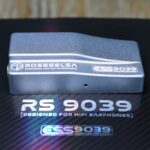
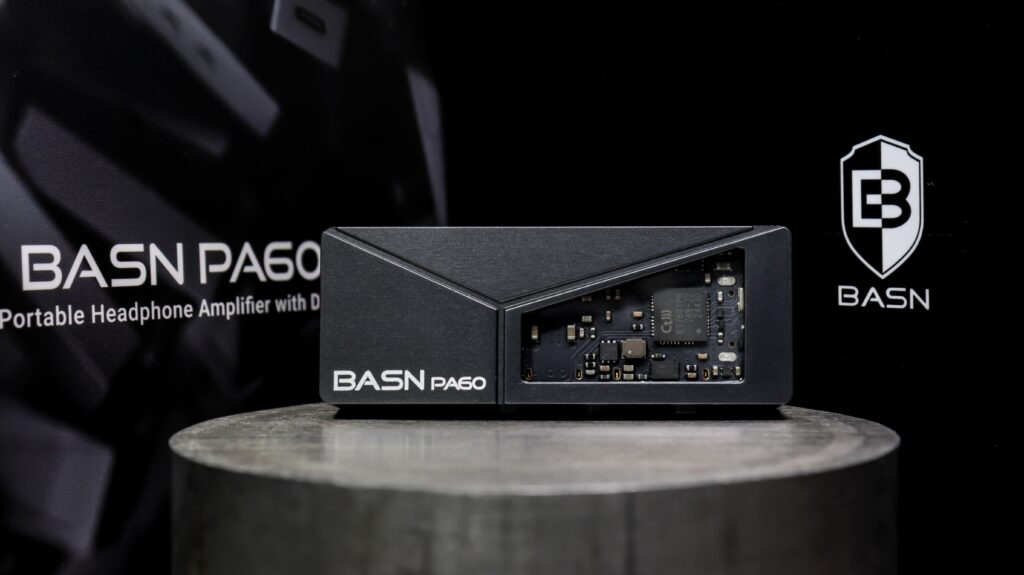
Today’s review and feature covers the latest from dongle dac from BASN Audio named the BASN PA60 ($73). The PA60 seems to be another fine dongle dac in that special class of “under $100” portable dac/amps. I was more than happy to receive the PA60 about a month ago and have used this device daily for both reviews as well as casual listening. So, I’ve had way more than enough time to truly get a good handle on the audio quality, usability, and pairing characteristics. For the record, I think all source reviews should have at least three weeks of user experience before any impressions are spoken of. I have easily blown by that personal standard with this one. Of course, being bogged down with reviews certainly helps to delay any publishing. But I digress, the BASN PA60 is one which sits very comfortably under $75. Truth be told it is a solid device, but it has some things which could be seen as issues for some and for others this little guy will really dial in their listening experience. Like anything it isn’t perfect, but also like anything; it’ll be perfect for someone. I’m happy to report on those things today.
Table Of Content
- Intro
- BASN
- Reviews
- Competition
- Non-Affiliated Purchasing Links
- Packaging / Accessories
- Unboxing
- Cable
- Specifications
- General
- Included Components
- Audio Decoding & Processing
- Supported Digital Audio Formats
- Output Power / Driving Capability
- Connectivity
- Compatibility: Wired USB audio output with
- UAC Modes:
- Controls & Features
- Physical
- Power & Operational
- Use Cases
- Package Contents
- Build / Aesthetic / Internals / Controls
- Build Quality
- Aesthetic
- Internals
- Controls
- Features
- Dac Chips
- Output Power
- Gain
- PCM Sound Filters
- Battery Drain
- Sound Impressions
- Source Reviews
- What’s It Sound Like?
- Fly on the Wall
- Snapshot
- Sound Between the 20’s
- Bass Region
- Midrange
- Takes the Edge Off
- Treble Region
- Perceived Differences
- Technicalities
- Soundstage
- Separation / Imaging
- Detail Retrieval
- Comparisons
- Simgot Dew4x ($68)
- Non-Sound Stuff
- Sound Differences
- Final thoughts on this comparison
- Last Words on the BASN PA60
- Difficult to say…
- The Why…
- PA60 Pros
- PA60 Cons
- Conclusion
- Different Perspectives
BASN
BASN was founded much longer ago than I had expected. The trusty internet says that 2009 was their genesis as it was birthed from the idea of one audiophile named Louis Lee. Louis felt there was a vacancy within the audio world and so he decided to create a brand which created affordable audio gear for both stage/monitoring and casual listening. His approach is kind of unique as their mission statement is placed within the acronym of their name…” BASN”, meaning… “Be A Sincere Newcomer”. The name and its meaning are a constant reminder to everyone in his brand to keep the companies’ original mission and to stay humble. Folks, this is not a bad thing, at all. In fact, that’s a lesson we can all get behind. At any rate, BASN seems to have spent the great majority of their years supplying in-ear monitors more for stage use although every now and again, I’d see some BASN sets making their rounds. Back in the day anyways. However, the last five or so years (best guess) BASN seems to have turn the tides and crafted lines of sets that cater more towards the casual listener. I know because I’ve reviewed their iems and they are certainly very-very solid sets. Granted, it’s only been a few, but with a few we can establish a track record. Oddly enough, for a brand that has been around as long as BASN, it seems that people are just now becoming hip to them. Well, I suppose “late” is always better than “never”. I would suggest not sleeping on them.
Reviews
As I said, I’ve reviewed a handful of their iems thus far and haven’t turned any away, which is saying something. Actually, I’ve been pleasantly surprised. It all started (for me) during the years of the “Planar Wars” where the driver tech was booming. BASN reached out to me to review their BASN ASONE (ASONE Review). Friends, as honest as I can be, I didn’t expect much. I hate to say that, but I really didn’t. Well, to my surprise the ASONE was, and still is one of the best planars anyone is going to find under $150. My opinion of course. Such a well-balanced and totally technical sound, tight punchy bass, and just a well-rounded “all-rounder” style listen. Next was the BASN Bmaster5 (Bmaster5 Review) which is a 1DD + 4BA hybrid that is a very well-tuned fun iem with a smooth demeanor, bigger bass, and it’s a very pleasant listen. After that I was able to review their BASN Matalen Pro (Metalen Pro Review) which is this gorgeous mirror-polished all-alloy four driver hybrid (2DD + 2BA) that certainly hangs with any set in its price point just fine. Again, smooth, clean, nice note weight, fun and another which is great for casual listening. So, they have yet to strike out with me and I’ve only had overall positive things to say. Granted, everything has shortcomings and I’ll always describe those. So, when BASN reached out to me to take a look at their BASN PA60 I was quickly on board. I’ve yet to hear any source devices from BASN, and for all that I know it is their 1st source device that they’ve created. So, needless to say I was more than happy to oblige.
Competition
I think it’s clear that any dongle dac under $75 most definitely has some fairly extreme competition. And I think it’s the competition which will be the PA60’s biggest hurdle. Seriously folks, take a moment and think of all the quality dongle dacs under that cost. It is difficult for any brand to craft and create a clear top tier source device under $75, let alone a brand like BASN who has never (to my knowledge) brought a dongle dac to market. So in my review I will try to find where the PA60 lives up to these other devices, as well as where it falls a bit short. I have many under $75 dongle dacs to test the PA60 against and I plan on taking the time to do so. Obviously, everything you read is my opinion. However, I think I’m ready to get into this review folks. So, without further ado, the BASN PA60…
Non-Affiliated Purchasing Links:
Packaging / Accessories
Unboxing
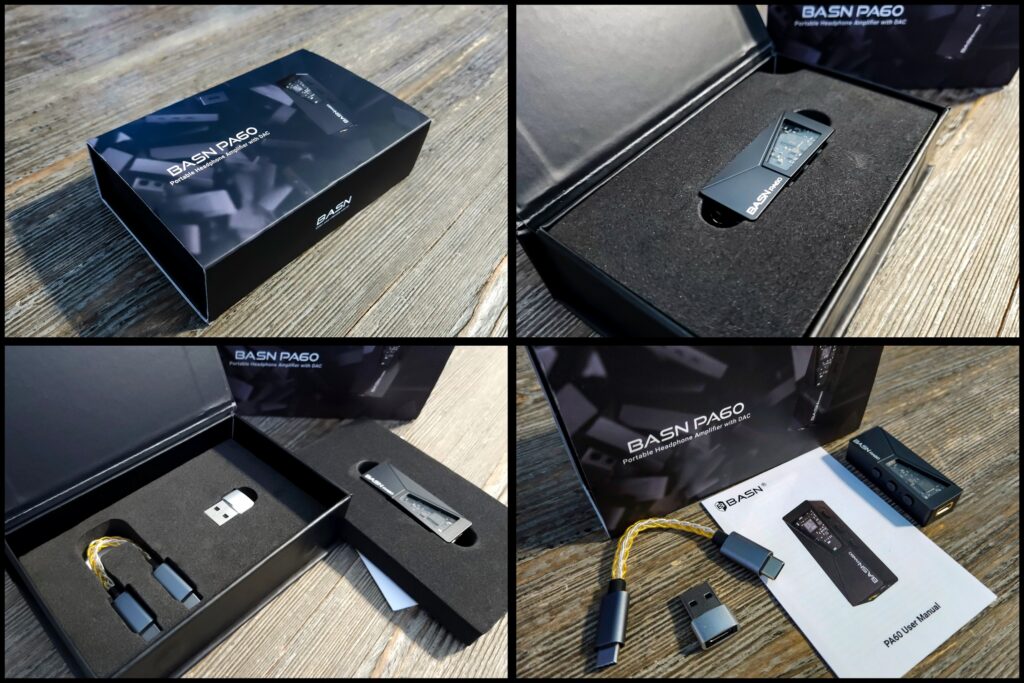
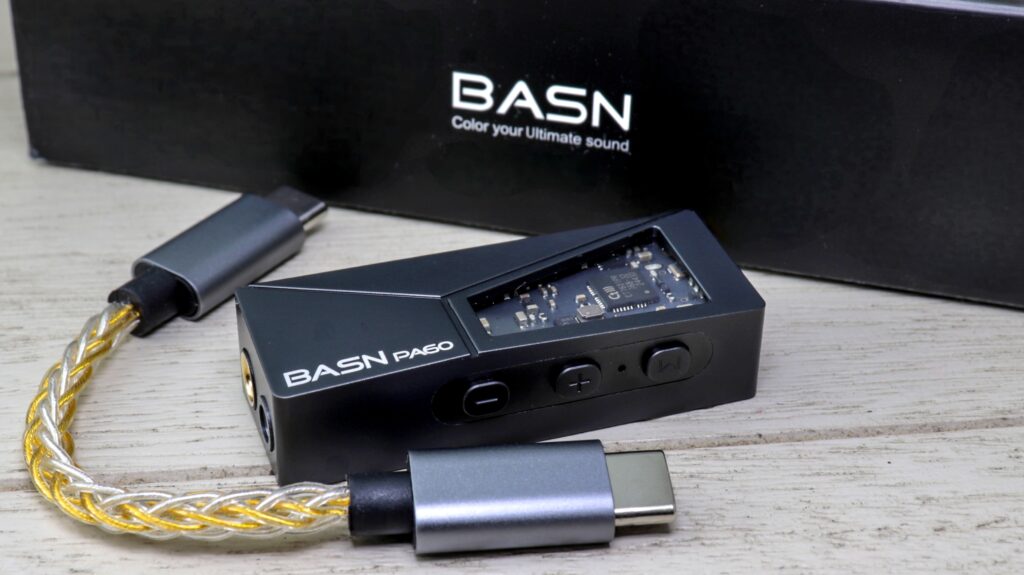
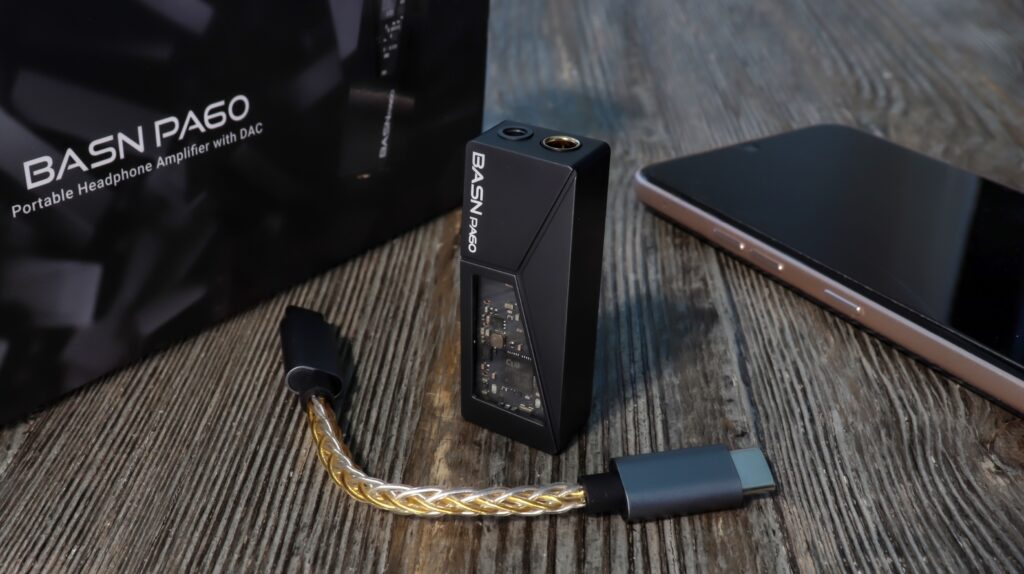
The BASN PA60 arrived at my door in a fairly small rectangular box with a sleeve covering it. On the front is a picture of the PA60 as well as some other decorative writings. Take off the sleeve and you’ll find an all-black box with the BASN logo imprinted on the center top. Open the box and of course the first thing you’ll see is a foam cut-out with the PA60 looking all dapper within it. Take out that layer of foam and you’ll see another layer of foam with cut-outs holding a type-c to type-c data cable as well as a usb-a to usb-c adapter. Honestly, it is what you and I and everyone else should expect in a source device unboxing. There simply aren’t many accessories to add to the overall package. Still, they added a nice cable for using with a phone, tablet and an adapter for connecting to some laptops etc. Not bad at all folks.
Cable

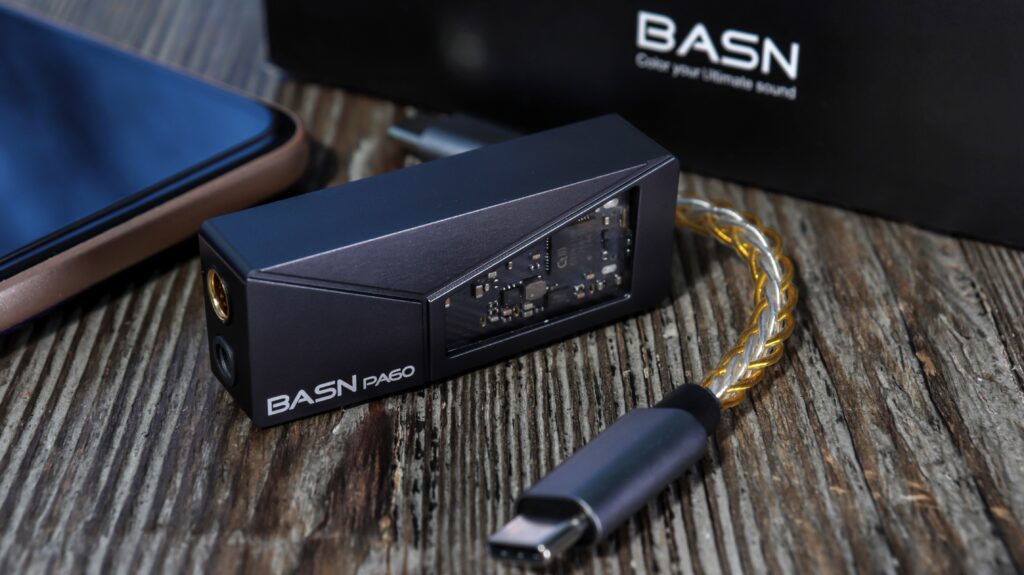
The only real accessory that I can speak on is the cable. Also, there really isn’t much to say as BASN doesn’t disclose what the materials of construction are. I can tell you this, the cable provided looks super dope. I love a good type-c to type-c cable. This one is white and yellow with a slick looking braid, pretty fat too. It isn’t some super thin and weak data cable. In truth, I have a metric ton of dongle dac cables that are made with that black coated hard and stiff material, and I really cannot stand that. I like that BASN added a very pliable, soft, and easy to use cable that also looks nice. In fact, I wish I had about ten more of these.
Specifications
General
Model Name: PA60
Brand: BASN
Product Type: Portable USB-C DAC & Headphone Amplifier
Form Factor: Compact DAC dongle / USB-C connected amplifier �
Included Components:
-PA60 DAC/Amplifier unit
-USB-C to USB-C cable
-USB-C to USB-A adapter
– User Manual
Audio Decoding & Processing
DAC Chip: ESS ES9039Q2M flagship decoding chip
USB Controller Chip: High-performance CT7601PR USB audio interface
Supported Digital Audio Formats:
• PCM up to 32-bit / 768 kHz
• DSD512 native decoding �
Output Power / Driving Capability:
3.5 se @32 ohms: 125 mW (2 vrms)
4.4 Balanced @32 ohms: 240 mW (2-4 vrms)
High Z: 3.5 se: 2 vrms 4.4 Balanced: 2-4 vrms (auto gain)
Impedance Range: 3.5 se: 16ohms to 600 ohms 4.4 Balanced: same
Connectivity
Input: USB-C (host)
Outputs:
– 3.5 mm single-ended headphone jack
– 4.4 mm balanced headphone output
Compatibility: Wired USB audio output with:
– Phones & tablets (USB-C)
– PCs & laptops
– Game consoles (Switch, PS5 via UAC mode) �
UAC Modes:
Auto or manual switch between UAC 1.0 and UAC 2.0 for broad device compatibility
Controls & Features
Volume Control: Precise 60-step volume adjustment independent of source device
Sound Filters: 8 selectable audio filters for tonal customization
Gain Modes: Automatic High / Low gain adjustment
Impedance Detection: Intelligent auto-switch gain based on connected headphones/IEMs
Physical:
Material: CNC-machined premium aluminum alloy housing
Dimensions: ~2” (L) × 0.5” (W) × 0.8” (H) (~5.1 × 1.3 × 2 cm)
Weight: ~17 g (~0.60 oz)
Color: Available in Black or Blue
Power & Operational:
Power Source: USB bus-powered (no battery)
Plug-and-Play: Driver-less operation on supported OSes
Use Cases:
Hi-Res Music Listening
Portable Gaming Audio Upgrade
Enhanced Smartphone/Tablet Audio
Laptop/PC Desktop Sound Improvement
Package Contents:
BASN PA60 DAC/Amplifier
USB-C to USB-C Cable
USB-C to USB-A Converter
User Manual
Build / Aesthetic / Internals / Controls
Build Quality
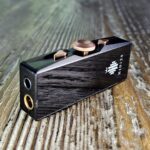
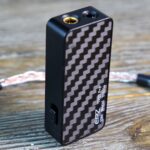
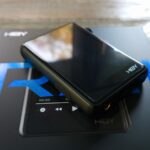
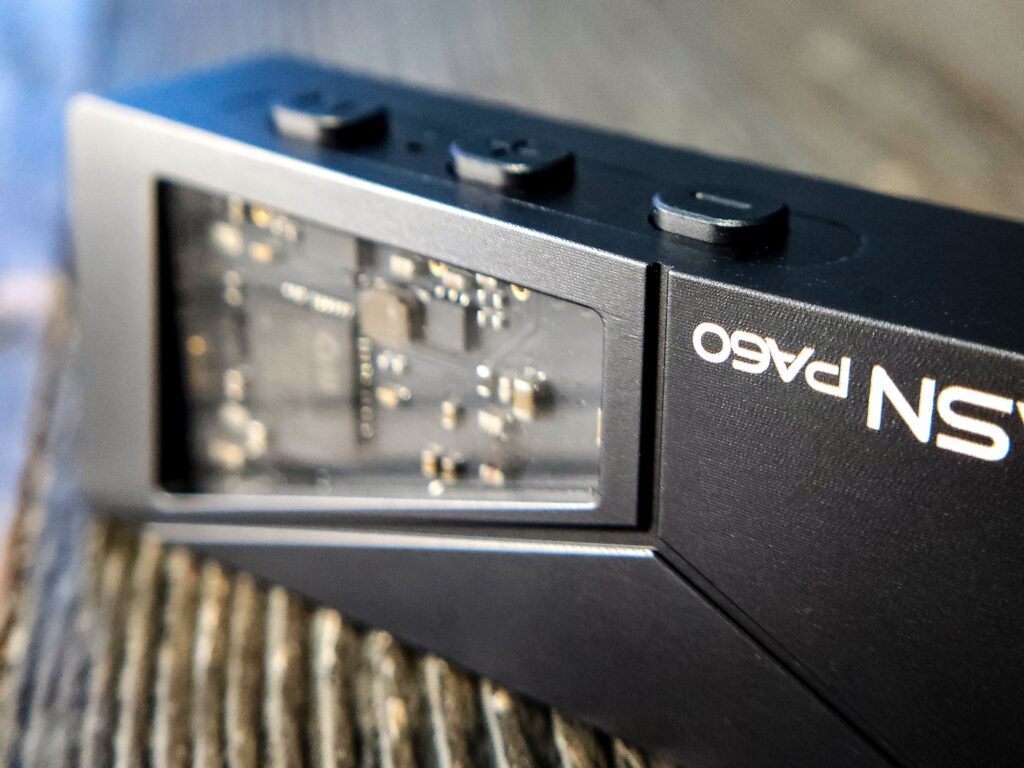
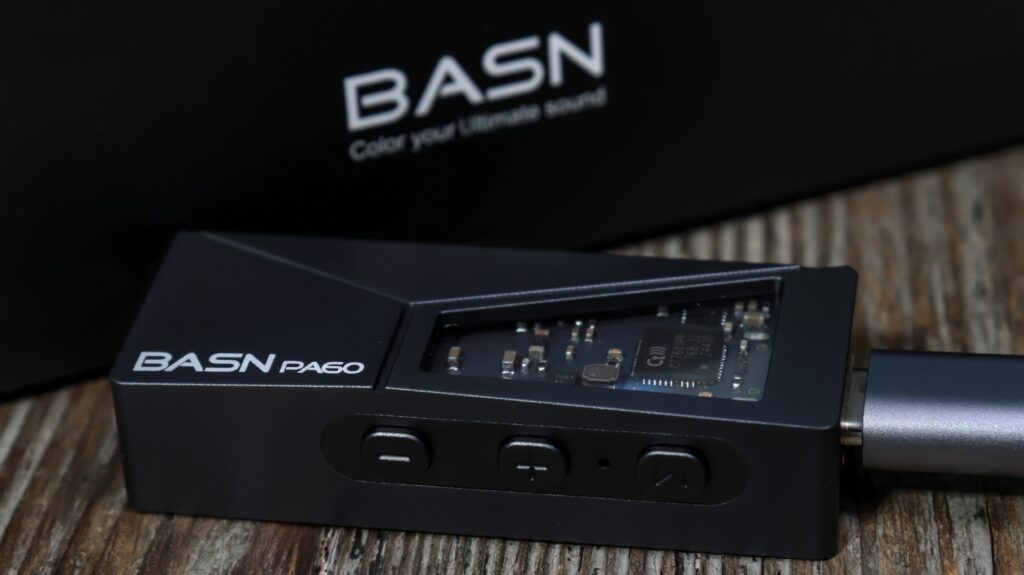
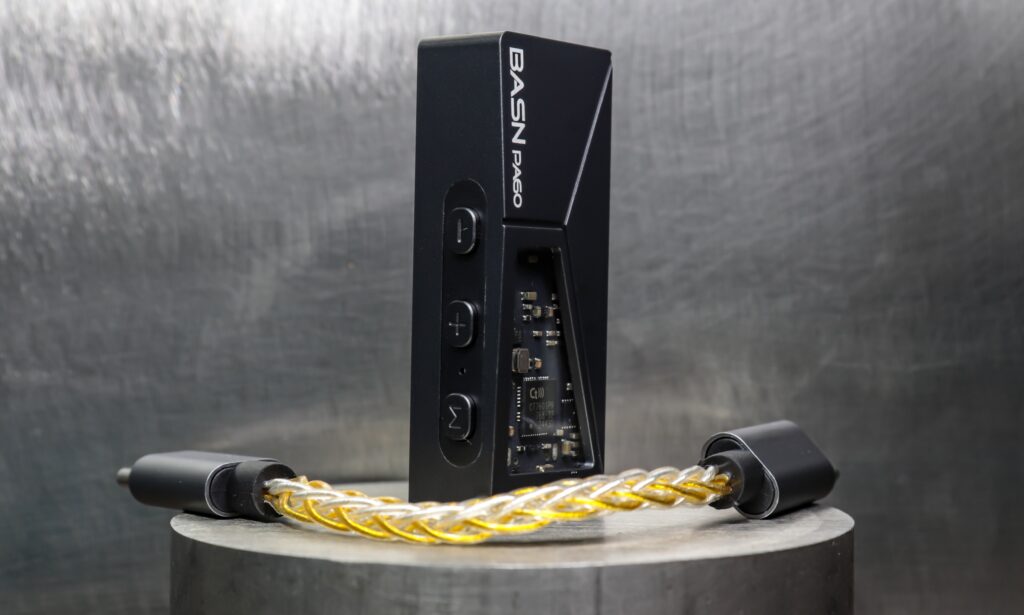
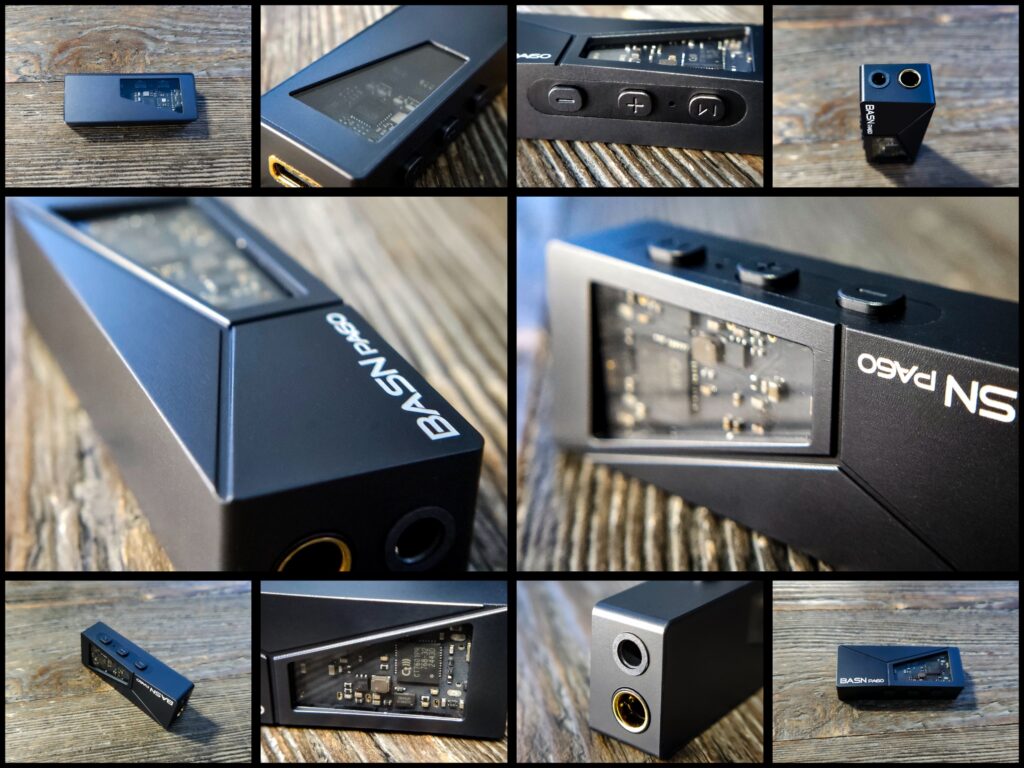
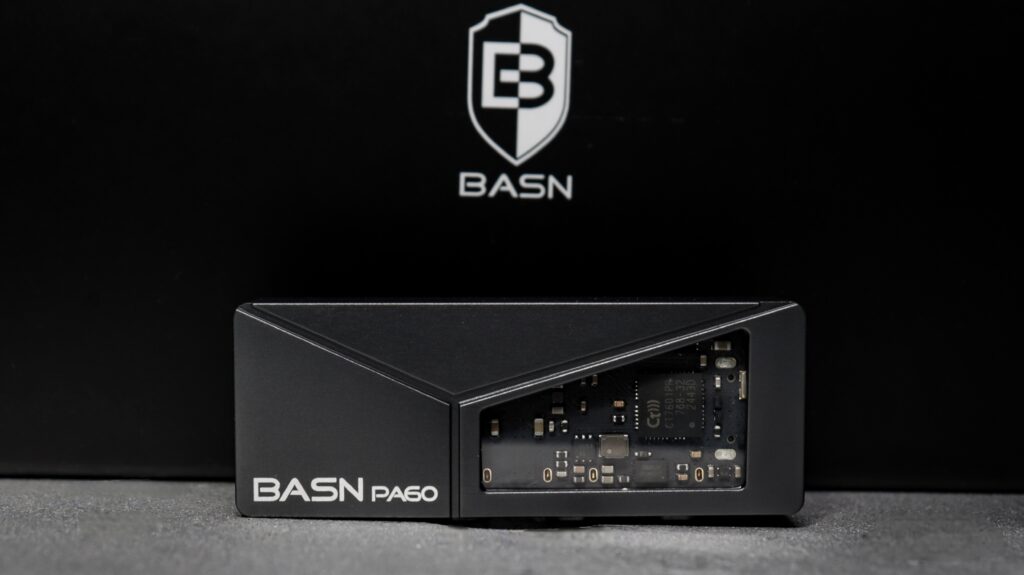
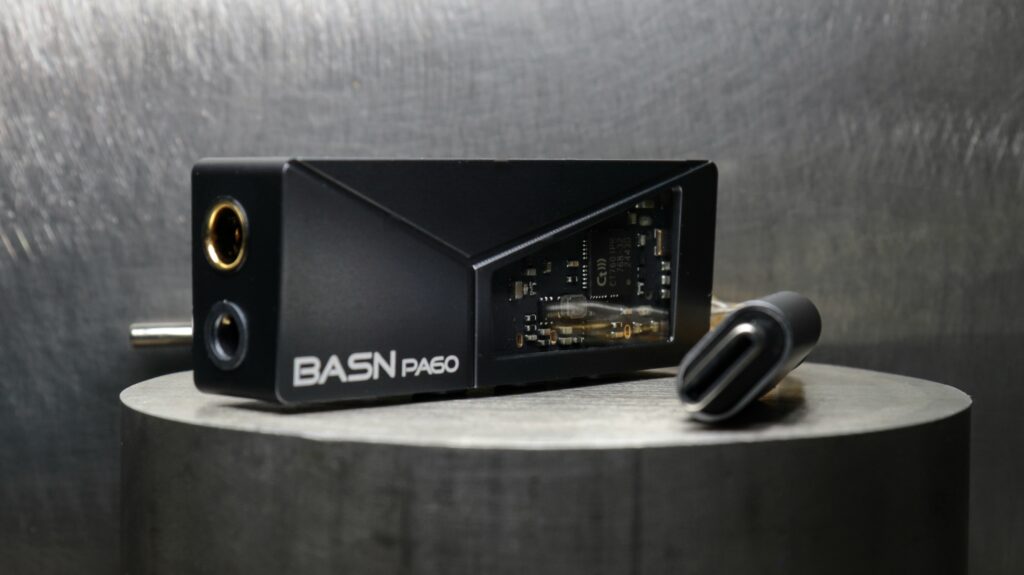
I find that the BASN PA60 is built well. Rarely do you find a badly built dongle dac past $50 anymore and the PA60 is certainly built nicely for $73. So, the entire housing is built primarily out of CNC machined aluminum alloy. This is a fairly small device as well, which makes portability a key component of the PA60. To be exact, the PA60 comes in at 57 mm in length, 23 mm in width, and only 13 mm fat. Furthermore, the PA60 is very lightweight adding almost no strain at all on type-c ports. On the body you will notice three buttons. Using my scale at home the PA60 came out to only 18 grams, which is very-very light. It’s amazing how much power comes out of this device for being so small. You’ll also notice three buttons/controls on the left side of the unit, and I will cover those later. Of course, the PA60 has 3.5 se and 4.4 balanced ports on one end and the type-c port on the other. Par for the course there. Honestly, as far as build quality is concerned, the PA60 hits it out of the park for its small stature, lightweight build, and its overall usage due to its size. I should also note that at $73 it would have been nice to see a digital screen as many devices have them anymore. Of course, this would’ve also increased the cost. Having said that, I could care less. I never look at those screens after I change settings. It doesn’t bother me in the slightest. Still, it’s something to note.
Aesthetic
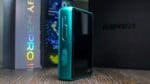
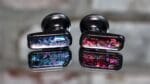
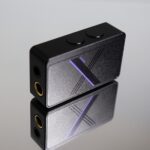
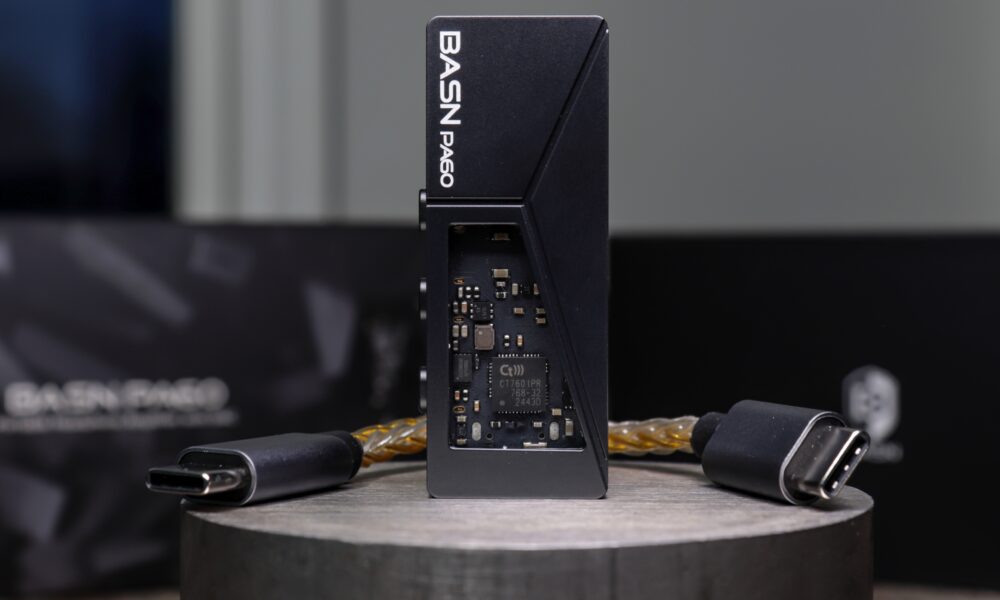
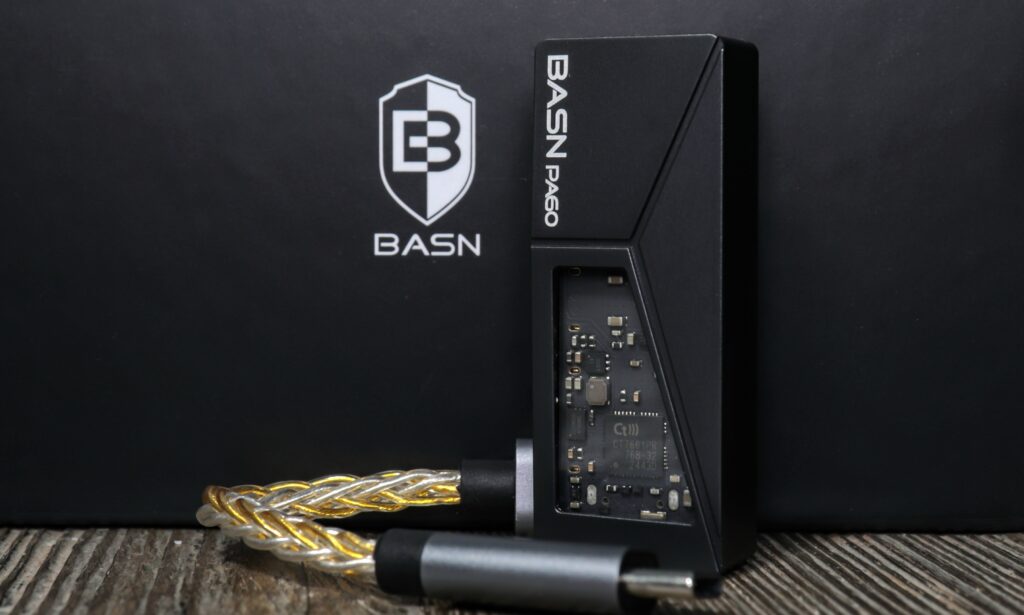
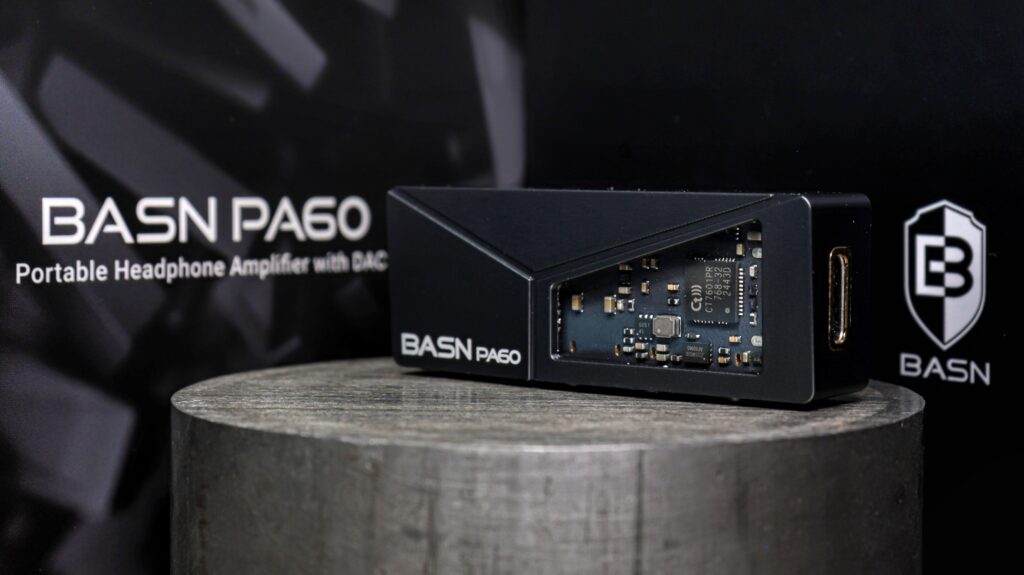
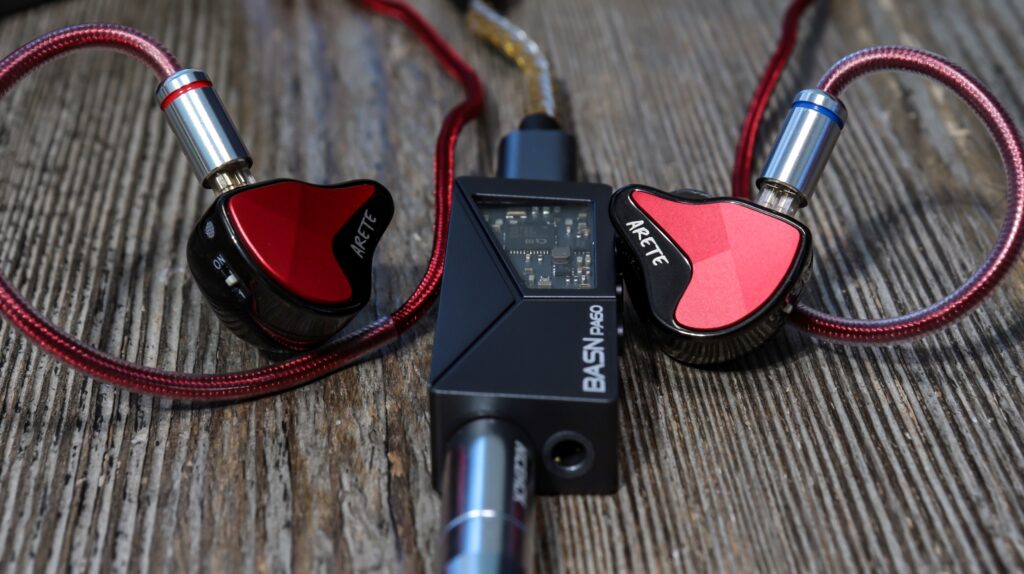
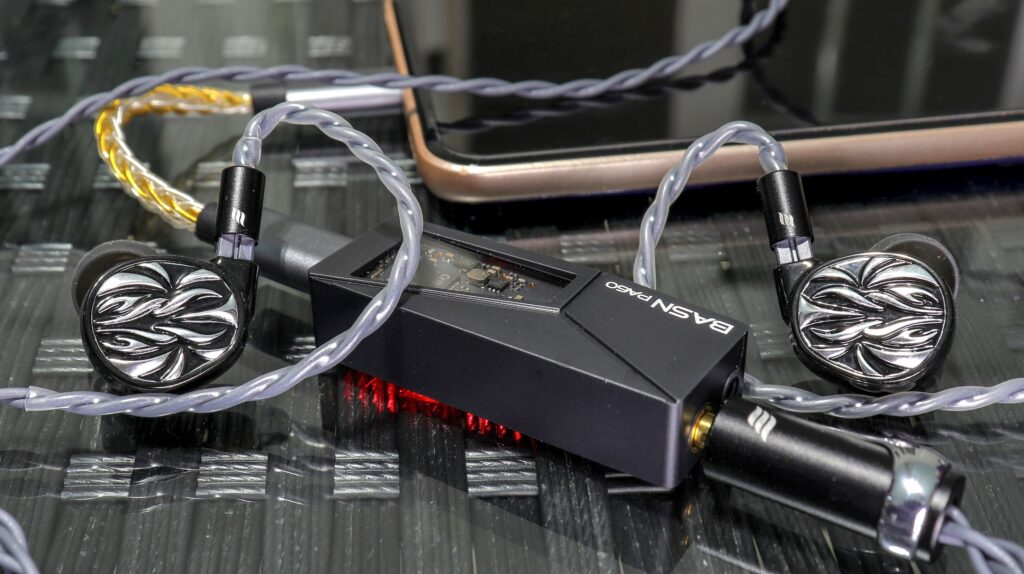
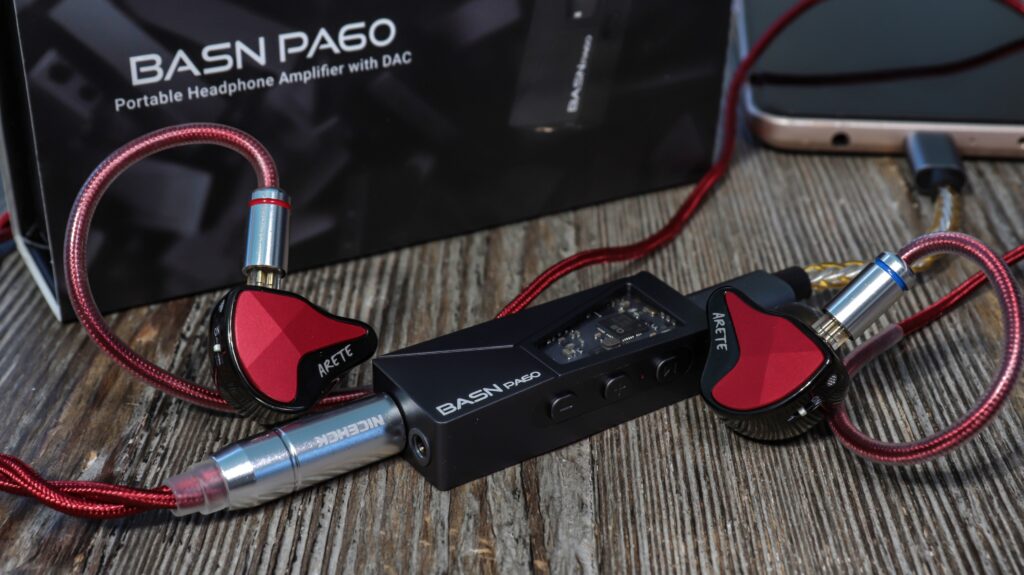
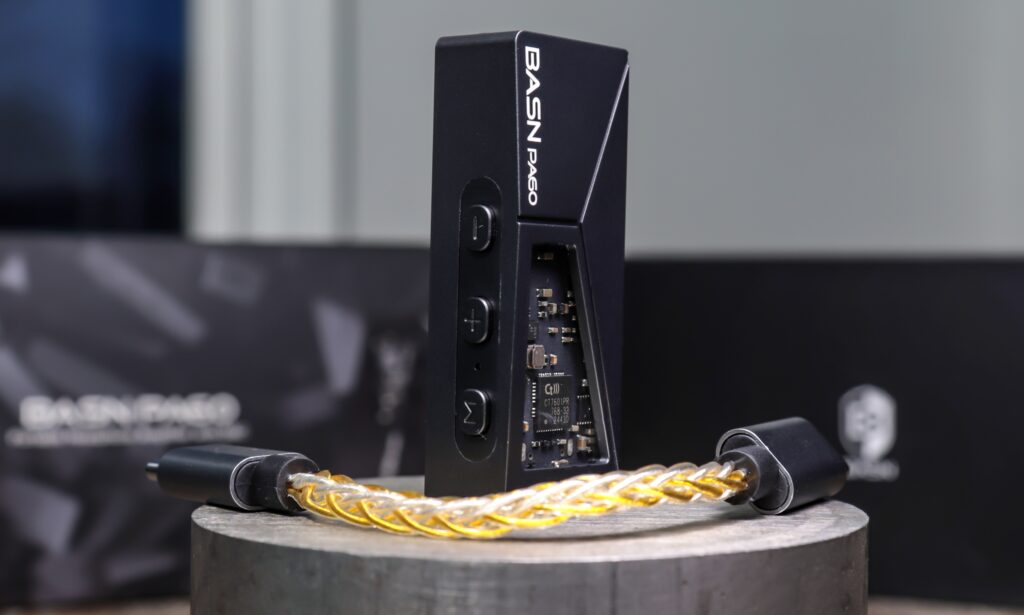
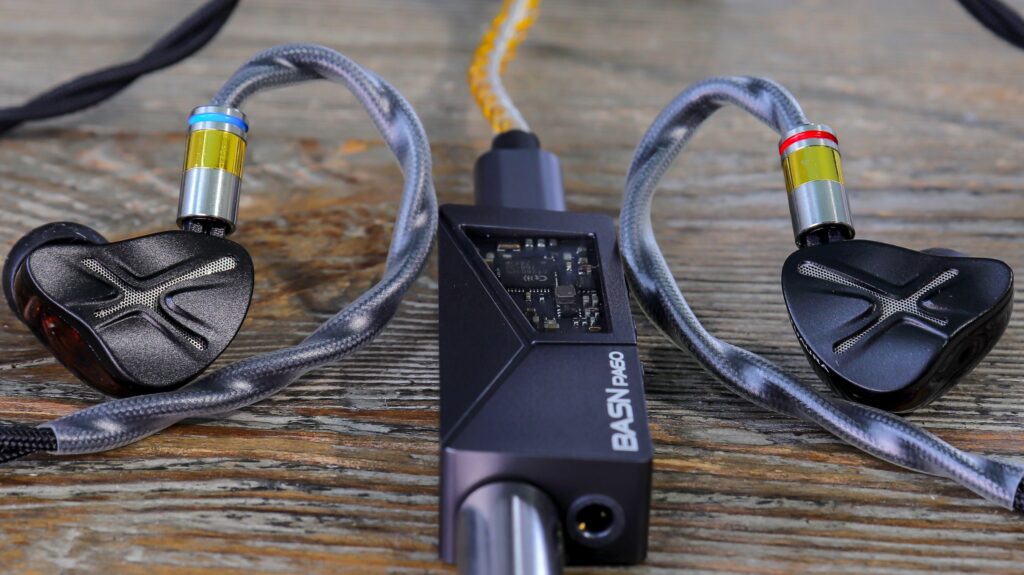
This is also a pretty nice-looking unit too. I mean, as far as dongle dacs go there are only so many design/aesthetic looks that you can have. From what I was told the PA60 can be purchased in two colorways, “Blue” & “Black”. Both slick looks. Although, I happen to like the black colorway that I have the most. To each their own. Now, you’ll notice on both sides of the PA60 there are perfectly transparent oblong rectangular glass windows so that we can peek inside at the PCB layout and other inner components which is always a tough look. There are also some converging lines which outline the windows. It’s a dope look. Nothing earth shattering, but also, it’s a dongle dac. Very similar to the EPZ TP35 Pro in that regard. So, we’ve seen this aesthetic before on many different dongle dacs of late. Though, I cannot take anything away from how nice the PA60 looks and how well built it is. BASN made a nice and trendy looking device with fantastic portability.
Internals
Like I said, we get to peak into the inside of this little guy and see the nice-looking PCB layout that BASN put together. Inside the PA60 carries a very-very nice flagship quality single dac chip which handles both channels very well. That is the ES9039Q2M. I will speak on the dac chip later, but it was nice to see this Sabre ESS chip on board. The PA60 also has a solid USB/Receiver interface chip CT7601PR which handles the USB inputs. Stuff like UAC1.0 1.0 & UAC 2.0 as well as manages the high-speed data for any of those higher res formats. WAV, Flac, etc. Next, the amplifier is not disclosed, but it very well could be the integrated opamps on the ES9039Q2M chip or discrete circuitry around the dac chip. Inside there is also a RGB LED sample light which provides us an idea what gain we are using, sample rates, and what filter mode we are using at any given time. As honest as I can be, the Internals typically would be found in slightly higher cost dongles. Not much more, but very good for $73. Of course, the output power could be higher, but seriously, how much do you need?
Controls
As far as on board controls the BASN PA60 has three buttons which control certain functions of the PA60. Those buttons can be found on the left side (depending on what direction you are holding it). You’ll find a Vol+, a Vol-, as well as a button labeled M. I’ll be pretty brief, but I wanted to give you an idea of what controls can be used on the device itself. So, the “M” button acts as a “Play/Pause” button in a single tap while a double tap issues the “Next Track” and a triple tap commands “Previous Track”. Also, if you hold down the M button for 3 seconds you can change output modes. Those being Phone, PC, UAC1.0 & UAC2.0. Next, the Vol+ button obviously raises the volume with singular clicks and raises the volume continuously when you press it down. Of course, the Vol button does the exact same thing only the volume lowers. Now, if you press both the Vol+ & Vol buttons together you will be able to switch between the 8 sound filters. These are the commands that I am aware of at this time.
Features
Dac Chips
As I said, BASN provided the PA60 with a very solid dac chip that I really don’t think gets enough love from the community. Really, any device which features this dac chip is always solid. Anyways, once again the PA60 carries a very nice ES9039Q2M dac chip. This chip is the better and newer version of the extremely popular ES9038Q2M chip found in hundreds of devices. This one is much better in many regards. There is no dual dac confusion on the PA60 as the ES9039Q2M handles both channels on its own. It also supports PCM up to 768khz / 32bit as well as native DSD up to DSD512. It also carries a very low distortion rating of -105dbs on 3.5 se, and -110dbs on 4.4 balanced. Again, any device with this chip usually has a slightly warmer sound with a resolving character and great dynamics as well as a good balance. Of course, every chip can be implemented differently, but overall, this has been my experience. In fact, the ES9039Q2M reminds me quite a bit of those older AKM chips. Usually leaning musical over analytical and having great listening sessions.
Output Power
Now, I think the one area where the PA60 sits more average is in the output power as anymore we are seeing similarly priced dongles with output power numbers quite a bit higher. The PA60 can output a max of 125 mW at 32 ohms on 3.5 single ended and 240 mW @32 ohms on 4.4 balanced. So, definitely very good numbers. It certainly isn’t weak. Fantastic for any iem not named Final Audio E5000. I have absolutely zero issues driving any iem I have. None of them have issues. Even harder to drive planars sound great with this one. Again, 240 mW sits right around average for $73. Not great and not at all bad either.
Gain
One thing I wished I would’ve seen on this device is the ability to change gain depending on what set I’m using. The PA60 definitely lacks there. However, I could argue that they did one better (in some cases) by providing auto-gain. The PA60 will detect the impedance of your iems and change between low and high gain based on that detection. What this does, and why it is good is that it keeps the noise floor as low as possible without you or I even having to think about it providing the right amount of juice for your earphones to sound dynamic. Another high quality of this device is its low THD+N which honestly sounds very clear and clean even near the max volume level. I realize not having gain switches may be an issue for some, but really folks, how often are you dealing with gain switches on your dongle dacs? As real as I can be, I usually set all of my dongle dacs to high gain and leave them. The only time I switch to low gain is if I’m hearing noise. That’s it. Otherwise I switch and forget it. I should also add that I have not even once thought about which gain mode I am in, though the indicator light will tell you if you need to know.
PCM Sound Filters
Another nice feature that the BASN PA60 has are the eight PCM sound filters which come equipped on the ES9039Q2M dac chip to help you dial in the sound a touch further. Just so you are aware, these filters make very-very minimal changes. Just like any device, PCM filters will only make a difference to those who have a very discerning ear for sound. I personally can make out each filter fairly well, but the overall sound really doesn’t change a lot. These are not EQ profiles as they won’t add and take away DB’s across the mix. Still, the changes are so small that it is likely you won’t even worry about it. Anyways, the filters present are Minimum Phase Slow (default setting), Minimum Phase (Standard), Linear Phase Apodizing Fast Roll-off, Linear Phase Fast Roll-Off, Linear Phase Fast Roll-Off (Low Ripple), Linear Phase Slow Roll-Off, Minimum Phase Fast Roll-Off, Minimum Phase Slow Roll-Off (Low Dispersion). At any rate, the filters are there if you want to subtly tweak your PA60.
Battery Drain
This feature isn’t really a feature at all, but it is a very useful attribute of the BASN PA60. I’m talking about battery drain and how good the BASN PA60 is at not draining my phone’s battery too quickly. Now, I haven’t sat there with a timer checking how long it takes for my phone’s battery to reach zero, but I can tell you with absolute assurance that the PA60 is near tops in class. I’ve tried so many dongle dacs folks, spent too many hours with them, and I am always, I repeat… ALWAYS… checking my phone’s battery. It is a glitch in my system where I constantly look at how fast or slow each dongle dac is sucking the life out of my phone. I cannot help this. However, one advantage of doing this is that I can tell you, the reader, that from personal lived experience how good, or, not so good each dongle dac is in this regard. It is clearly and plainly obvious that the PA60 is certainly one of the better dongle dacs under $75 for battery drain.
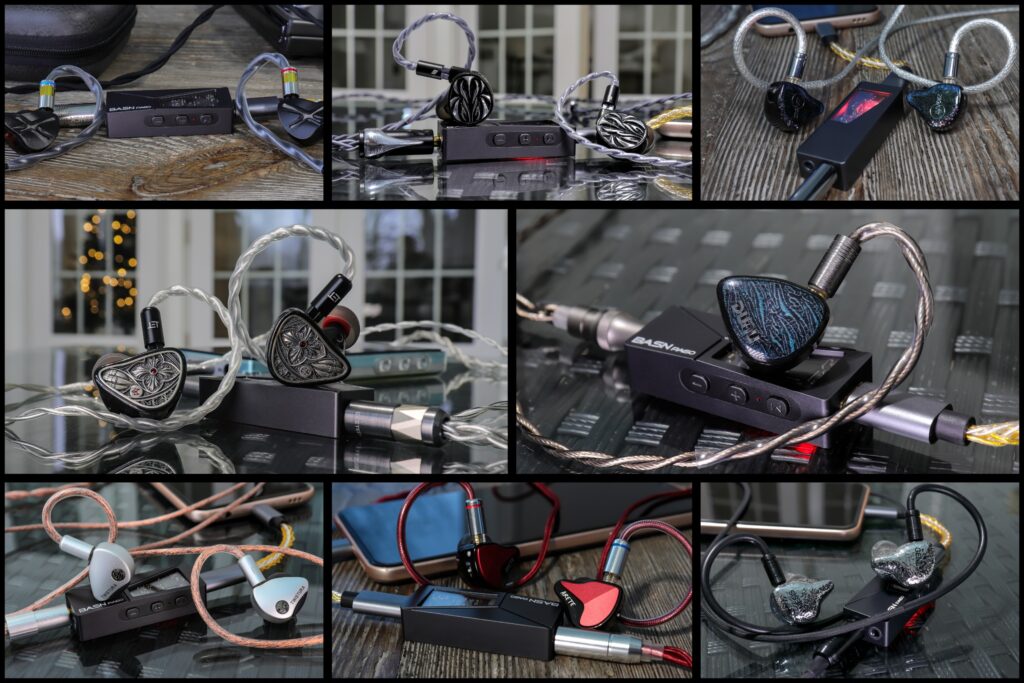
Sound Impressions
*Note: Before I do my deep dive into the sound I first want to speak on a few things. First off, I used far too many iems to list them out here. I used many. I will touch in some of the more telling iems which can help me in describing the sound best within my review. Next, I did not do a controlled burn-in of the PA60. I typically only would do that if it is recommended to. However, I did perform many-man hours of listen-in which I’m sure got me close to burn-in length. I listen using flac or better files (some MP3) which are stored on my devices for all critical listening. Rarely, if ever, do I stream music.
Source Reviews
I also want to touch on something that not many people talk about when describing source sound. That is, it is very difficult to say exactly what part the source plays in the final sound which hits your frontal cortex. Without question any source device will veer the sound in a certain direction based entirely off of how they were tuned and how they interact with your iems/headphones. Having said that, the sound which does hit your ears is almost always impacted mostly from the tuning of your iems/headphones. Without a doubt a source will certainly influence the sound enough to make very distinct changes although it’s more of a variation to the tuning of your earphones. The only good way I’ve ever come across to truly hear how a source influences the sound is in direct comparison with other sources, using the same earphones, using the same track. Over and over again. This is definitely something that I do. Partially because I am crazy enough to actually sit for an hour comparing, but also because I never-ever want to get things wrong. The point is that describing source sound is not some black & white thing and there is plenty of gray area. One thing which is extremely difficult to mentally measure and discern is how timbre comes across on these source devices. In truth, almost all effects on timbre come from the transducer, my iems. However, source devices most assuredly influence and push and pull the tone color of my iems one way or another based on their own tone color and dynamism. As I go through testing the PA60 against many dongle dacs it is clear that not all are tuned the same. They all have their own flavor, their own subtle harmonic signatures affecting transients (to a very slight degree) , clarity, detail illumination, and soundstage dimensionality. No doubt the PA60 has its own flavor, and it’s worth talking about.
What’s It Sound Like?
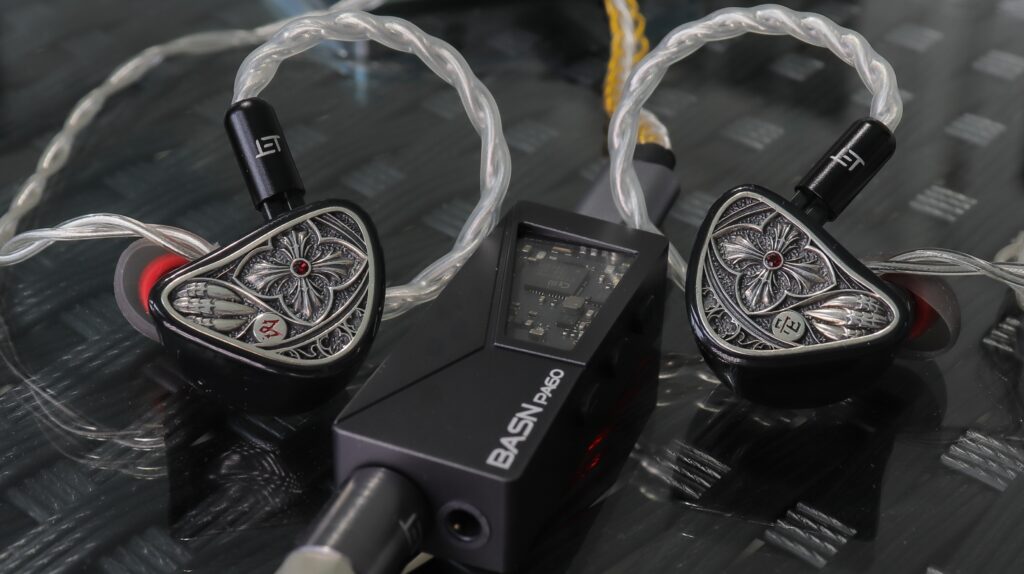
The BASN PA60 comes across as a slightly warmed, probably warm/neutral in tone color. In my opinion the PA60 is another clear, high-resolution device which is propped-up and emphasized in all the right places. There is definitely a slight bump, or bass influence in the low-end which adds a touch of impact to my iems. Beyond the impact, this emphasis provides that subtle touch of organic warmth to an otherwise flat neutral sound. In truth, the absolute best quality of this dongle dac is its sound and the way that BASN was able to create what I call a “musically skewed canvas” and melodic sway to its sound, which pairs with just about every iem in my arsenal very-very well. I always say that warm/neutral is the goldilocks zone if you enjoy an organic sound. No, it isn’t neutral for me; it’s “warm/neutral”. To me, warm/neutral with a touch of upper end brilliance is the key. Most reviewers will tell you that a good source will come across as completely flat, linear, and neutral letting the transducer, the iem affect all tonal aspects of the sound. I don’t completely subscribe to that, but I do understand it, and with some iems/headphones neutral, flat, and linear work like a charm. To me, the PA60’s “slight infusion” (I said slight) of atmospheric density bolsters a clarity rich and clean sound that is great for a dongle dac. My opinion of course. Neutral dacs are great, I have many of them, but to me… life has a touch of color, of warmth, as there’s a realistic feel to what I call warm/neutral. Especially for dac/amps. This is what the PA60 carries. Now, does this mean it is perfect in all respects? Absolutely not. However, the PA60’s greatest attribute, feature, or skill, is without question its influence on the sound of my iems. Great for a $73 dongle dac.
Fly on the Wall
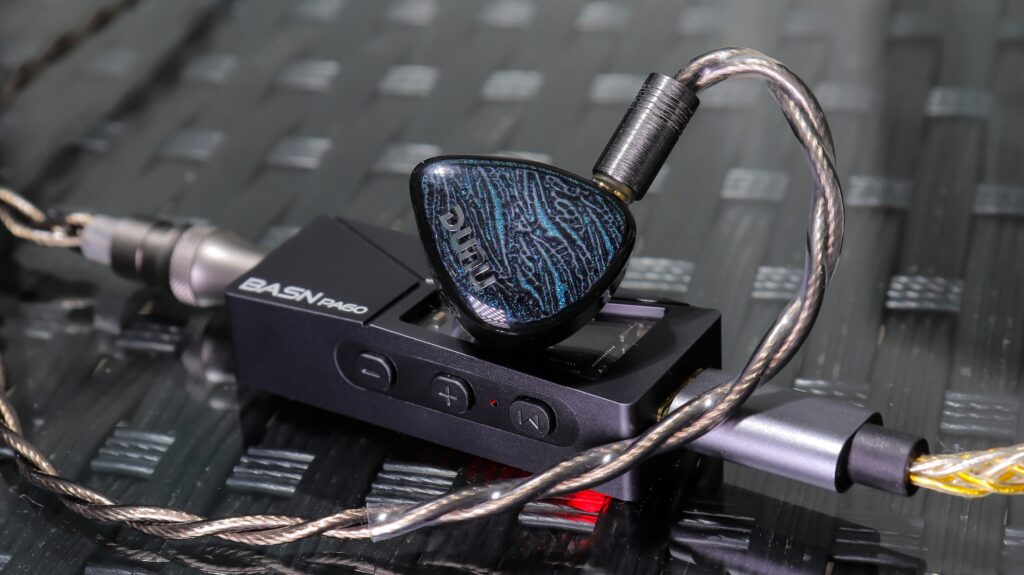
Now I have to back up what I just said. Friends, if you could be a fly on my wall you’d see me, on my bed, with about 20 dongle dacs aligned in a row. You’ll see the BASN PA60 out front, the Ziigaat Luna in my ears, and you’d watch me frantically going from one to the next, using the same song, over and over again. When using a song for these types of tests I go with a track which has good, weighted drums, strong vocals, some midrange instrumentation, dynamism, and some treble activity, extension. For the PA60’s grueling showdown I went with “Wild Blue” by John Mayer. Trust me, a great test track because it carries many good qualities for testing. Also, the drums begin right away which is huge. No waiting, just boom. Of course, there’s a thousand other quality tracks. Perhaps one day I’ll release my test Playlists for every metric of testing. But I digress, if you were a fly on the wall you’d see me putting dongle dac after dongle dac to the left side pile. There’s a few which go to the right too. So you know, the right side is the good side. After I’ve gone through them all I then pick a new track, go through the good pile again. One after the other. This took me about two hours and what I came away with is this; the BASN PA60 is (in my opinion) a strong competitor sonically.
Snapshot
Granted, there are many other dongle dacs which fare very well against the PA60. Some with a more technical acuity, some with better features (companion app, PEQ etc.), some have a screen, gain switches too, and some have much more power. So, this review is not to declare the PA60 as the best dongle under $75. No sir. This review is to give you an understanding of this device and let you make up your mind on where it sits in the “Best dongle dacs under $75” as well as hopefully give you a snapshot of how this device sounds.
Sound Between the 20’s
Bass Region
As I said, the bass region is propped up with a slight emphasis which can be heard in a set like the Ziigaat Luna. Against some other $60-70 dongle dacs the Luna sounds a hair more punchy, hard-edged, with a slightly more vibrant bass. Now, the PA60 is not going to turn your Letshuoer DX1 into a bass boi. In fact, a set with as little bass impact as that one will likely have zero effect taking place. I find the bass to truly show its colors when listening to sets which have a solid bass presence as the PA60 seems to tighten the delivery to a slight degree as well as add a sense of forward density. Sets like the EarAcoustics GENESIS G318s, or the Dunu x-Koto Ito. You can hear the slight shaping of the region from other dongle dacs. I feel that it is the sublevels where you find the most influence on the PA60 as the sub-bass does render some iems a hair more physical in their rumble, and a hair more guttural. Of course, nothing is overwhelming, not in the slightest. I want to make it clear that the PA60 will not add bass bloom and won’t endow your iems with a basshead caliber fullness. What it will do is sound a hair punchier, and more robust than what you’ll hear on a dead neutral dongle dac. Furthermore, the bass region takes absolutely nothing away from the midrange or the treble region and only issues a subtly warm influence, and I’m all for it.
Midrange
The way that I would describe the midrange of the BASN PA60 is more like a slightly color filtered pass through of a mostly neutral midrange. Like putting a subtle color filter on your sunglasses. There’s a very minor hue of warmth, but I’d still declare the midrange to be pretty much warm/neutral overall yet leaning towards neutral. On top of that, the PA60 does carry a hint of vibrant energy as well which comes across much more like reserved dynamism rather than illuminated brilliance. If that makes sense. The mids definitely carry a slightly smoother cadent flow rather than edgy or crisp. Also, I find that the midrange really does let my iems be what they are. I hear something more akin to a mild/corrective influence in the midrange rather than a strong coloration. I say that because the mids are generally a clarity rich region with decent note density.
Takes the Edge Off
You won’t hear any influx in plasticky sounding instruments, or anything being exaggerated to sound more metallic. Of course, if you have iems/headphones which sound plasticky and metallic, well, all bets are off. Again, the midrange lets iems be what they are with subtle technical upgrades. More analytically precise iems will still sound precise, detailed too. Brighter, edgier, and even glaring sets will feel a touch smoother and slightly less abrasive, it’ll take the edge off as dry signatures will gain that touch of density so that they don’t sound too etched. Warmer, smoother, and richer sets generally sound less veiled or murky. Now, Imaging and midrange separation are aided by a black background on the PA60 as well as solid note definition with distinct enough lines from note to note. I really like these ES9069Q2M dac chips. Great for dongle dacs as the midrange is a good example on how a device can offer something both a musically gifted sound as well as a technically capable sound. Once again, just like all other source devices the PA60 can only influence the sound one way or the other. However, it carries a very nice balance which does seem to pair very well with many-many iems of mine.
Treble Region
The treble is one which seems to give a little clarity boost to my iems while staying controlled enough and generally non-fatiguing too. Of course, the BASN PA60 is not going to completely dial back the ripping highs on the Moondrop Stellaris (I chose not to review because of that). However, the treble will slightly uplift a set like the Penon Fan 2 in a way which offers a black background, clean note lines, a sense of air, and a touch of added luminance. The PA60 will not “brighten” the sound. It’ll aid with clarity. Turning smoother treble sets, less defined treble sets, and more rolled-off treble sets into a slightly more condensed and cleaner version of themselves. I do have to note that there are many dongle dacs which do the same exact thing, and some even better. Especially in the treble region where slightly brighter dongles with a more analytical swing to their tuning will help even further in this regard. Still, the PA60 does a very nice job of achieving a balance tonally while issuing little corrective actions to my iems.
Perceived Differences
Some sets have larger perceived differences than others. I would also call the treble somewhat sparkly, with a crispness about it as well as a subtle stage enhancement as well. Like I said, the PA60’s treble region has decent enough extension influence on my iems adding a sense of air. To a degree anyways. However, one thing I can say for sure is that if you have a set with fantastic treble detail retrieval then you will be very happy with how well the PA60 furthers those micro-details without the addition of more brightness or forced resolution. Like on my Letshuoer Cadenza 12 2024. Something about the black background and note definition without infused brightness which helps the Cadenza 12’s treble details to sound even more clear from other dongle dacs. I spent a lot of time with all different iems, different signatures, and by-and-large the PA60 seemed to constantly battle each set’s weaknesses. Again, little corrections as a bright set will sound slightly less dry, piercing, and edgy. While a warm and rolled off set typically comes across a hair more luminant. Again, some sets offer bigger differences than others. All things considered, the treble rounds out the PA60’s tuning nicely.
Technicalities
Soundstage
One of the most difficult aspects of source device sound to try to explain is soundstage. I don’t want to commit to anything here as on some sets I hear a distinctly more dimensional and vast stage. Without question. However, on other sets I hear a slightly less expansive stage from left to right. However, I always feel that there is some decent front to back dimension. Especially on sets which already have great depth. Still, I don’t want to commit to any descriptor explaining the soundstage, other than… it’s good, it’s not congested, it’s not narrow, and it isn’t a 2D flat plane of sound (depending on your iems).
Separation / Imaging
Another quality of sound that is very difficult to pin down. The only thing I can do is compare against other dongle dacs. As I said earlier. I do feel that the PA60 has a more clarity-rich sound, especially in the midrange and treble regions and I constantly heard a slight uptick in note separation ability. I do feel that this comes from the blacker background giving my iems a cleaner canvas to showcase their abilities. This helps with imaging too. You simply have a cleaner picture, less out of focus and grainy mental images. Again… good.
Detail Retrieval
I really don’t like speaking on how sources aid any of these technical attributes. It is so very difficult to assign the source as the real contributing factor. However, a source really can aid an iem just with how it (the source) is tuned. Again, a black noiseless background is the first hurdle. Thankfully the PA60 has that part nailed. Next, the PA60 does add a touch of upper end levity without also adding brightness or smearing the spectrum. Again, very well controlled. I’d like to say that detail retrieval is better on the PA60 than other dongle dacs, but it is very difficult to say it is better than some of the best under $75. That said, this is a skilled unit with a great dac and good clean dynamics with a balanced sound and nothing that truly inhibits details from rising to the surface.
Comparisons
Simgot Dew4x ($68)
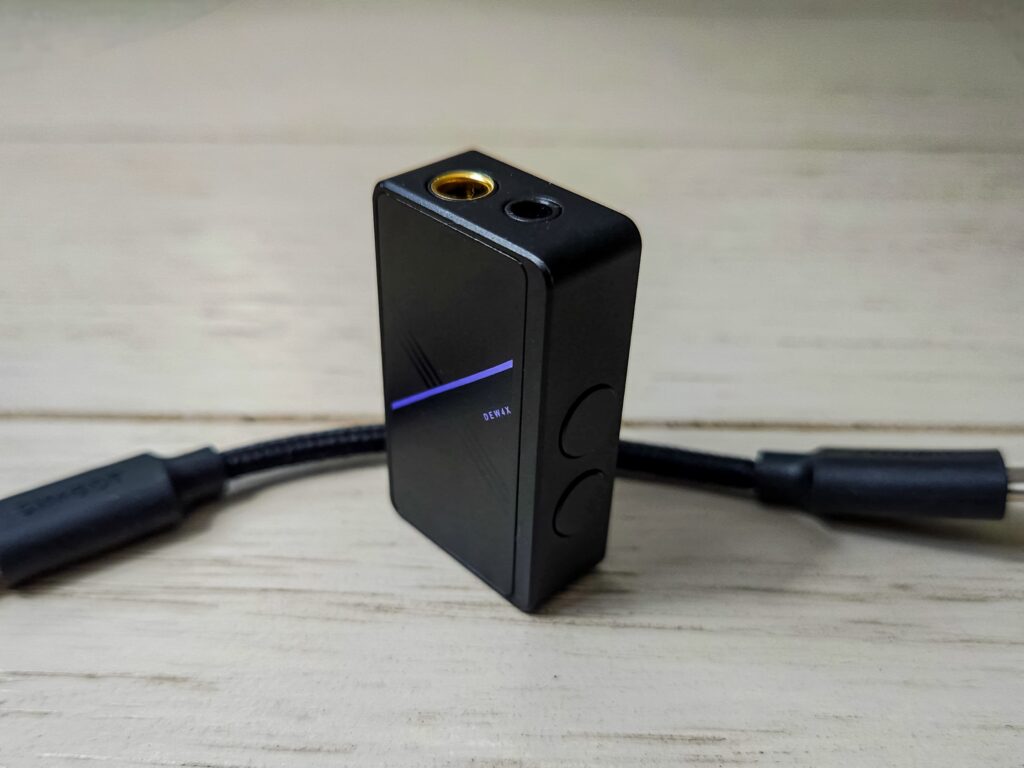
Well folks, I reviewed the Simgot Dew4x (Dew4x Review) all the way back in April of 2024 and I still find it to be right in the top three under $75. Sonically speaking. Eh, it’s also great on battery (one of the best), super small, and has all the features you’d need. Still, when it comes to pure sound the Dew4x was a dongle dac that I knew I’d always have to keep. This is one that constantly got better over time. Truly, one of the best implementations of the Cirrus Logic CS43198 Dac Chips that I have heard under $75. Please hear me folks, I went through exactly 23 dongle dacs trying to choose which one I would compare. I picked the best that I personally heard to go up against the PA60, again, sonically. Without question the Dew4x stood tall and was one of the best you can find. The only one I left out is the Surfans X10 which I am reviewing soon. That one can easily compete with the PA60. So, look for that comparison in my X10 upcoming review. It’ll be good. Let’s take a look at some differences folks.
Non-Sound Stuff
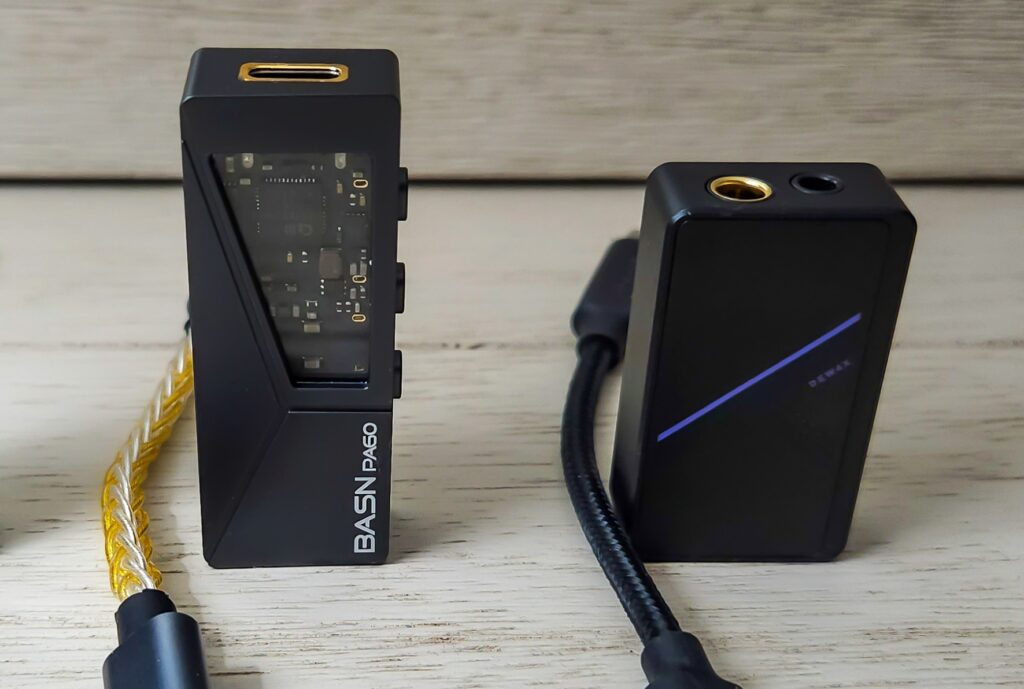
To start, the PA60 comes with a better and easier to use cable. However, build quality is the same in both. They both are made using all-alloy and lightweight. However, the PA60 is lighter in weight even though it is taller. As far as design/aesthetic I’d say the PA60 is obviously the better-looking device. Obviously. The Dew4x is pretty bland in design. Of course I do like a simplistic approach, but the winner here is clear. Next, the Dew4x carries dual CS43198 dac chips. That’s “two” of them. Folks, one ES9039Q2M dac chip is better. It’s my opinion, but I really find the ES9039Q2M to be a solid dac. Now, as far as output power, the PA60 has quite a lot more at 240mW (4.4 balanced) whereas the Dew4x only has a max of 150 mW (4.4 balanced). Grab Ted neither device has any trouble whatsoever with 99% of iems, but the PA60 certainly drives harder to drive iems a hair better and even some over ear cans. You’ll notice if you compare. Both devices are amazing on battery drain though the Dew4x stakes its claim on this. Both are awesome, top tier under $75 dongle dacs when it comes to battery drain, but the Dew4x is better. Again, I watch it like a hawk. The PA60 carries 8 PCM sound filters while the Dew4x does not. Even though the CS43198 dac chips allow them, Simgot never implemented them. However, the Dew4x does have gain switch ability whereas the PA60 has that auto gain switch. I happen to like to be able to switch myself. Win for the Dew4x there. I find both devices to be very portable, easy to handle, very light, and both are wonderful for iems. Let’s check out the sound…
Sound Differences
Overall, both devices carry a slightly more musical experience with both coming in at warm/neutral. Though, the PA60 has a touch more low-end oomph and added bass vibrance sounding denser and more lifelike. The Dew4x does have a slight bass boost, but it doesn’t seem to have the same dynamic fast twitch ability. As far as the midrange, the Dew4x has the more technical sound (by the slightest margin) with a touch better detail retrieval influence while the PA60 sounds more musical, emotionally gratifying, and fixes brighter and more glaring iems better. The Dew4x has a touch closer sound field making vocals come through very nicely, though I do find the organic timbre of the PA60 to make for a better overall experience. As far as treble, I find both to be very similar. Both are nice for brighter iems, and both do a good job with rolled-off and warm sets too. The PA60 has a touch better extension, meaning it doesn’t take away from better extended iems, and I still enjoy its timbre a hair better. Again, technically the Dew4x is a touch dryer, with more etched notes which seems to cleanly display some sounds a bit better. At one point I could’ve gone either way with this until I heard “Hook” by Blues Traveler. Some of those harmonics and technical fine lined moments of that track simply came through a touch better. The stage sounds more dimensional on the PA60, though that’s close too. Both sound fantastic.
Final thoughts on this comparison
Really, I think the real difference here is that both devices are slightly different. They are equal at sounding great for their respective tunings. I just think I like the PA60 better. Simple as that. Now, there are iems which will come across better on the Dew4x too, so, this isn’t some apples-to-apples comparison. For me and my money I’d buy the PA60, but both are very nice. Nuff said.
Last Words on the BASN PA60
When it comes to source devices, dongle dacs, dac/amps, daps, it is so hard to really speak on what makes one better than another. Similar to iems. Everything comes down to taste. I spoke with one gentleman who said that the PA60 wasn’t that great. It simply wasn’t his flavor. Of course, I’ve spoken to many more who align with me, but I find the PA60 to be a substantial upgrade “sonically” to many dongle dacs under $75. Believe me, I’ve done the testing. Of course, I haven’t and couldn’t hear all dongle dacs under that cost, but from what I have heard the PA60 stands very tall. At any rate, the PA60 will align with many who desire a more balanced-musical sound and who don’t want any of the technical stuff disappearing from their listening experience. It truly does have a well-rounded approach to its sound and a more satisfying bass region than I’m typically used to under $75.
Difficult to say…
Still, it is not easy to truly label any one dongle dac “better” than another. Some people will look at the fact that the PA60 doesn’t have a screen as a huge issue. Some folks will feel that they can get more power out of another dongle dac, that the PA60 doesn’t carry enough driving power. It is very true that many dongle dacs carry more max output power than the 240 mW on the PA60. For that I’d argue that if you only listen with iems than a dongle dac with 500 mW is almost unreasonable. Like the Surfans X10 that I mentioned earlier which has 530-ish mW of output. Other folks may simply feel that the BASN PA60 is overpriced for the lack of some features. No screen, no gain switches, no companion app, no PEQ etc. I get all of that. However, I also don’t care about any of that… at all. I care about “SOUND”. Folks, I still think the buttonless Moondrop Dawn (non-pro version) is one of the best sounding dongle dacs under $100. Features are just nice add-ons. I want sound. I want a listening experience that I can soak in, get lost in, and I love something which doesn’t need all the bells and whistles. Having said that, the PA60 still has some nice features. However, the way our minds are geared anymore most hobbyists feel they are getting less, ripped off, when the boatloads of features and a million watts of power aren’t there. I’d argue that the ES9039Q2M alone is worth it, but I guess I’m old school. All things considered and many devices tested I feel the BASN PA60 is one of the better sounding dongle dacs and easily worth every penny of the $73 it takes to own it.
The Why…
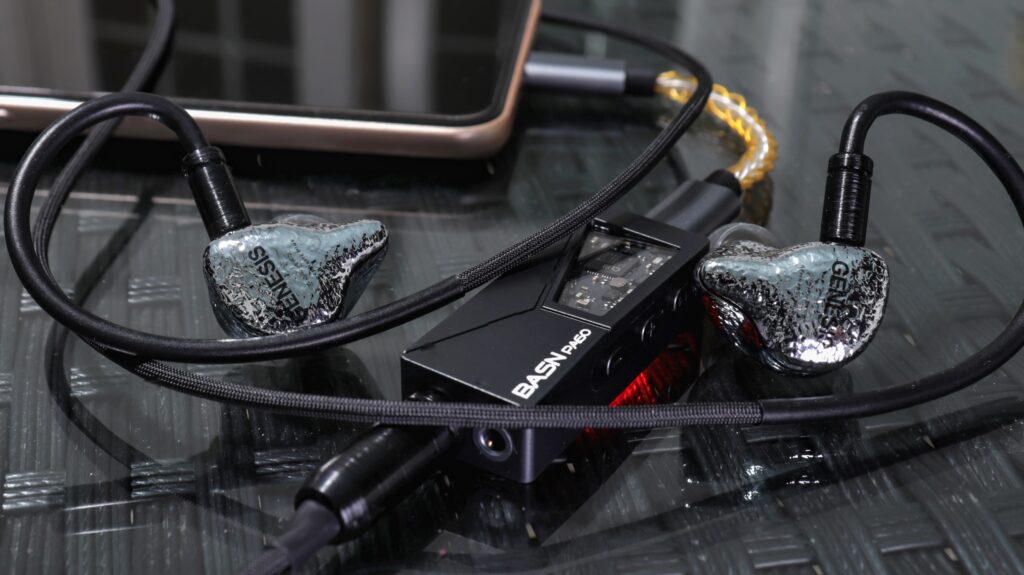
Because this device is built using all aluminum, built well, yet super lightweight which never pulls and tugs at any of my usb-c ports. I never have to hold it in my hand for fear of ruining my phone. It just lightly dangles, no issues. Plus, this device looks slick. I love the double sided glass, perfectly transparent enabling us to see the entire PCB layout. That look never gets old. The PA60 has decent driving power at 240 mW of max output, perfect for any iems and it carries (what I consider) one of the best dac chips of any dongle dac under $100 with the ES9039Q2M chip. There are a few others, but BASN did a great job rounding out the sound nicely. You get 8 sound filters and sampling lights, auto gain functionality, as well as full control using the buttons on the PA60, but what makes this device worth it is the sound. I really enjoy its slight musical tilt. That subtle bass enhancement, the warm/neutral and organic timbre, the clean-lined and clarity focused approach. I hear solid clarity from a black background, clean transients (generally), and a good balance of bass oomph and upper end luster. Again, it is just nicely rounded, nicely balanced, and adds just the right tone color to not negatively affect my iems. BASN did a fine job on their first dongle dac and I really am interested to find out where they go from here. Great job BASN. Worth every penny, and an easy recommendation.
PA60 Pros
-Build Quality is great. All aluminum, 18 grams (lightweight)
-Slick looking little guy too
-Nice cable
-EES9039Q2M Dac Chip was a very solid choice
-Overall balanced warm/neutral sound is very well tuned
-Great bass response, adds punch influence, weight, fluidity
-Musical midrange, technically savvy but rhythmic and non-fatiguing
-Treble adds a touch of sparkle, some crisp note edges, nice extension
-Detail influence is fairly high with it’s clean and black background
-Note separation
-Price to performance
PA60 Cons
-No screen (is this a big deal?)
-No companion app
-No gain switch (auto gain detection instead)
-240 mW max output is only average anymore (fine for iems)
Conclusion
To conclude my full review and feature of the BASN PA60, I have to give a huge shout out to Chrissy White and the people of BASN for reaching out and being very helpful too. Folks, this review sat waiting for a month and a half and I didn’t hear a peep from BASN. Never once did they ask, “When is your review going to be published?” Never. They never asked anything out of me actually. To me, this is priceless folks. They have a quiet confidence in their product because they believe in it. They know what they’ve made. Anyways, thank you BASN. As always, I also have to thank those of you who chose to click the link to get you here. Thank you for taking the time to check out this review, or any review at Mobileaudiophile.com for that matter. Thank you. You are the reason we do this.
Different Perspectives
Friends, please check out other thoughts of the BASN PA60. We are all very much different as each one of us has our own ideals, likes & dislikes. We all have different gear, different hearing abilities and we all haven’t been down the same journey through audio. Each of these differences can completely skew our thoughts for any particular product. It will be very beneficial to you if you just click a few more links. Don’t simply rely on me. I’m only one man and while I do give you my absolute most honest take, the next guy may feel entirely different. So please check out other thoughts about the PA60. With that said, I think I’m done folks. I hope you all are well and good. Please take good care, stay as safe as possible and always… God Bless!




No Comment! Be the first one.